Facebook
 X
X
 Pinterest
 Copy Link
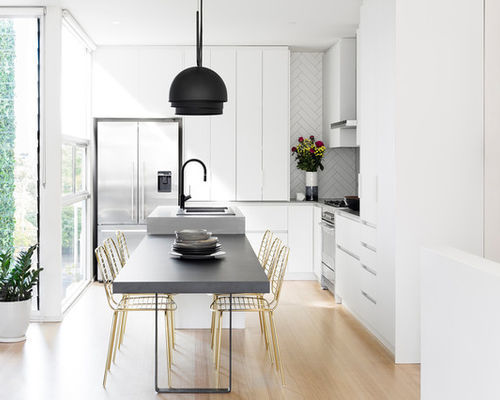
White-on-white kitchens have been a classic look for many years. Why does this trend endure? For starters, white connotes cleanliness, makes small spaces appear larger, and brightens rooms that are naturally dark.
Although many all-white kitchens are just lovely, some can appear a bit stark or cold. To help clients warm up their white, I recommend a variety of strategies, such as mixing metals and adding contrasting paint, fabric or wood. Read on for inspiration for personalizing your white kitchen so that it stands out from the crowd.
White Kitchen 1: Allard Ward Architects, original photo on Houzz
1. Warm metal accents. Copper, bronze, brass and polished nickel are just a few of the metals that can warm up an all-white kitchen. The gold sconces above the window and the white pendant lights, with their subtle hint of gold, add warmth and a touch of luxury to this all-white kitchen.
Related: Kitchen Lighting in Copper, Bronze, Brass, and Nickel
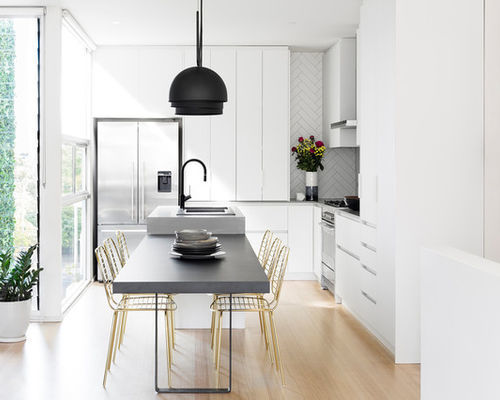
White Kitchen 2: GIA Bathroom & Kitchen Renovations, original photo on Houzz
2. Color and metal. Moving beyond metallics alone, a single contrasting color when combined with metals can create drama in a white kitchen. In this photo, a modern white kitchen intermingles black pendants and countertops with gold seating. This combination contributes to the room’s sleek contemporary look.
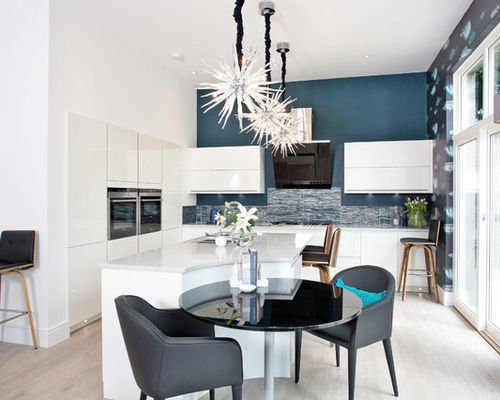
White Kitchen 3: Orchid Newton Ltd, original photo on Houzz
3. Wallpaper. I love wallpaper, especially in kitchens. Wallpaper can introduce color, movement and dimension to a white kitchen. When applied to a lone wall, wallpaper can create a dynamic focal point, as shown in this photo. The bright white cabinets and crisp white walls are softened by the shades of blue in the fish swimming on the side wall. This kitchen’s under-the-sea motif is enhanced by the blue tile on the back wall and the sea urchin-shaped pendant lights.
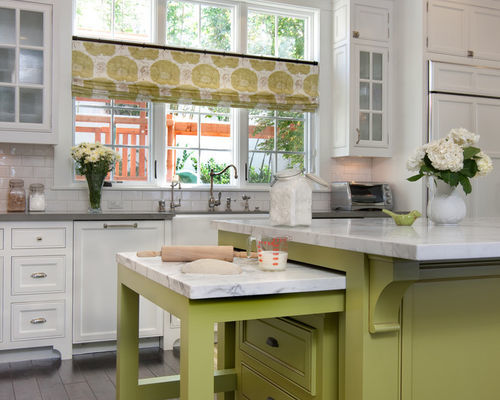
White Kitchen 4: IS Architecture, original photo on Houzz
4. Colorful island. Wood-stained islands often appear in white kitchens because of the richness and contrast they bring. This kitchen shows a creative alternative, pairing a chartreuse island with a chartreuse Roman shade. Together they lend a whimsical, personalized feel. To give your white kitchen a personal touch, consider painting your island your favorite color.
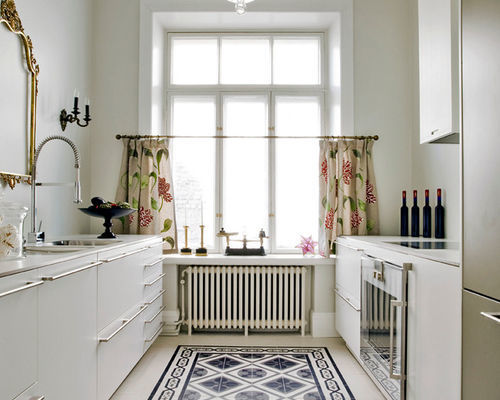
White Kitchen 5: Mosaic del Sur, original photo on Houzz
5. Tile rug. Layering in a rug is a great way to introduce color and texture to an all-white kitchen, but some clients worry that a rug could be an added source of dirt as well as a possible tripping hazard.
This clever kitchen resolves both issues with a tile rug instead of a fabric one.
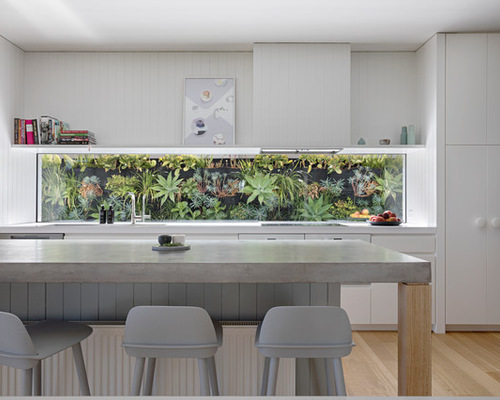
White Kitchen 6: Hindley & Co, original photo on Houzz
6. Backsplash. A tile backsplash also can bring color and texture to your white kitchen. But who says a backsplash must be tile? This kitchen has a counter-level window in lieu of a tile splash. The window faces a luscious succulent garden, thus creating a green vista for an otherwise monochromatic kitchen.
By Barbra Bright, Houzz


 The average home price in the region rose 12.6% year-over-year to $290,811.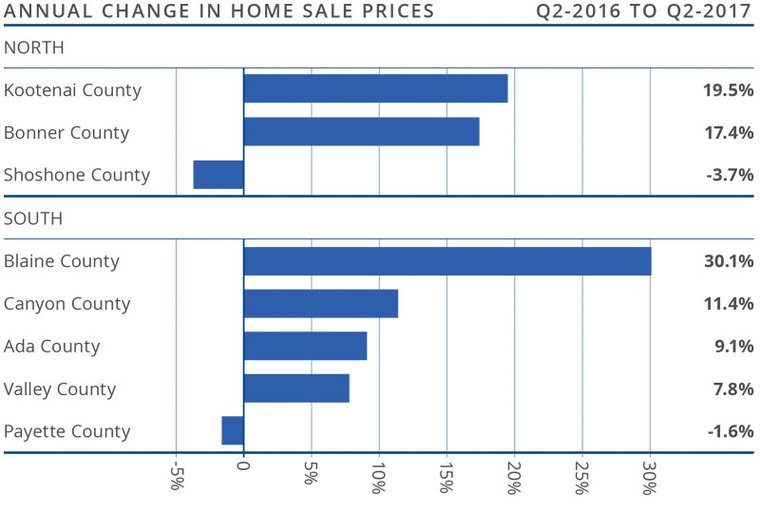
 The speedometer reflects the state of the region’s housing market using housing inventory, price gains, home sales, interest rates, and larger economic factors. Consumer confidence in the housing market seems to have returned, causing the markets in this report to perform well overall and for home prices to continue trending upward.
 Matthew Gardner is the Chief Economist for
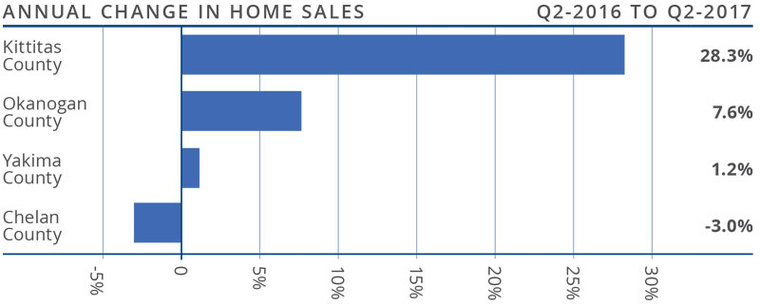
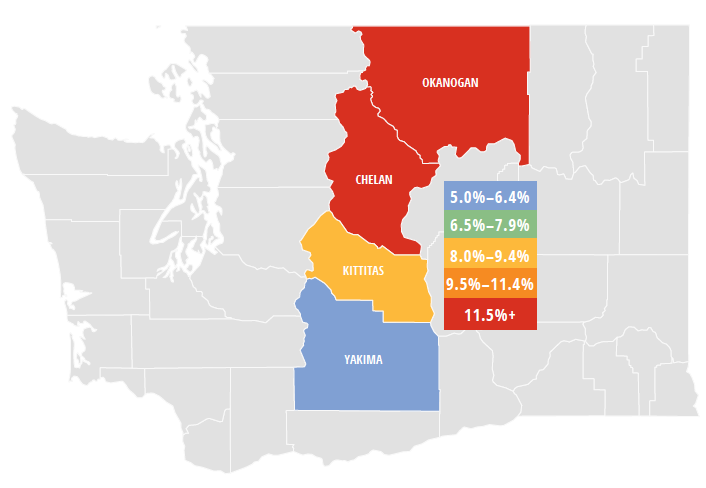 Year-over-year, the average home price in the region rose by 9.1% to $275,979. Price growth remains robust as demand exceeds supply.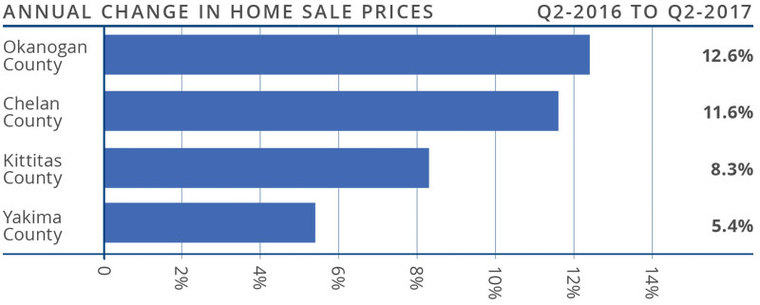

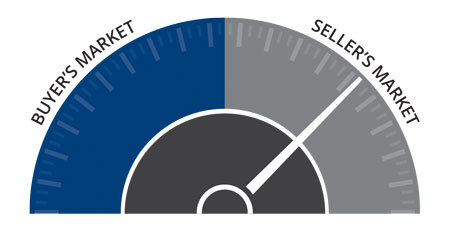 This speedometer reflects the state of the region’s housing market using housing inventory, price gains, home sales, interest rates, and larger economic factors. For the second quarter of 2017, the needle is well into sellers’ territory. Prices in several markets are still trending above average and inventory issues remain.
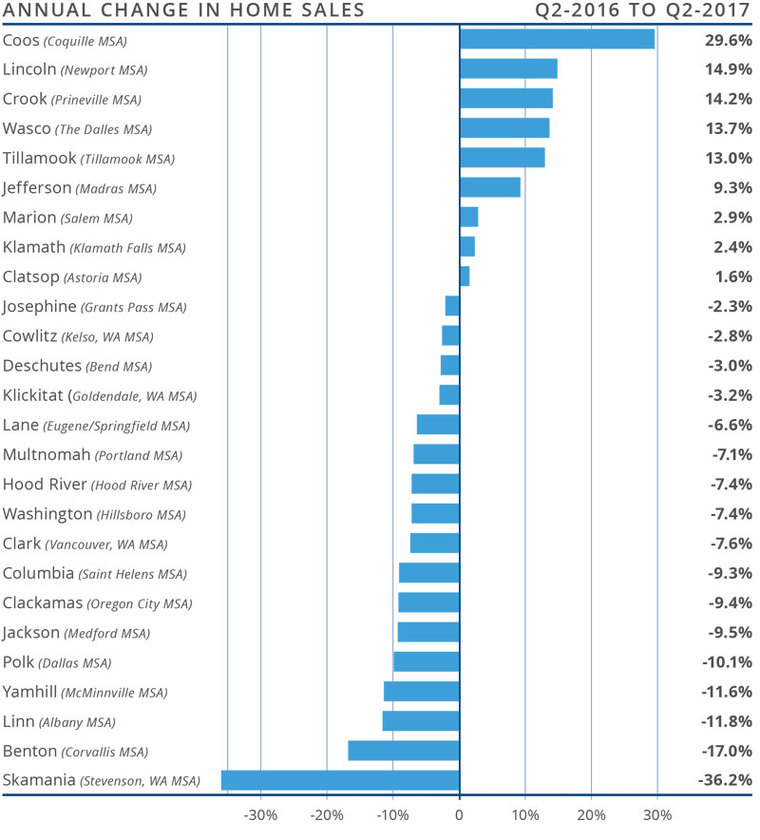
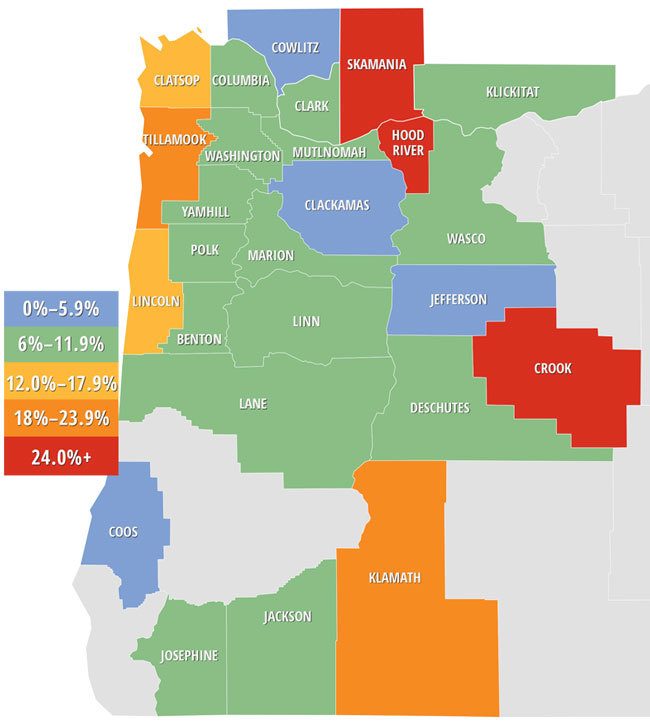 The average home price in the region rose 7.8% year-over-year to $362,845. This is down from 9.4% in the first quarter of 2017.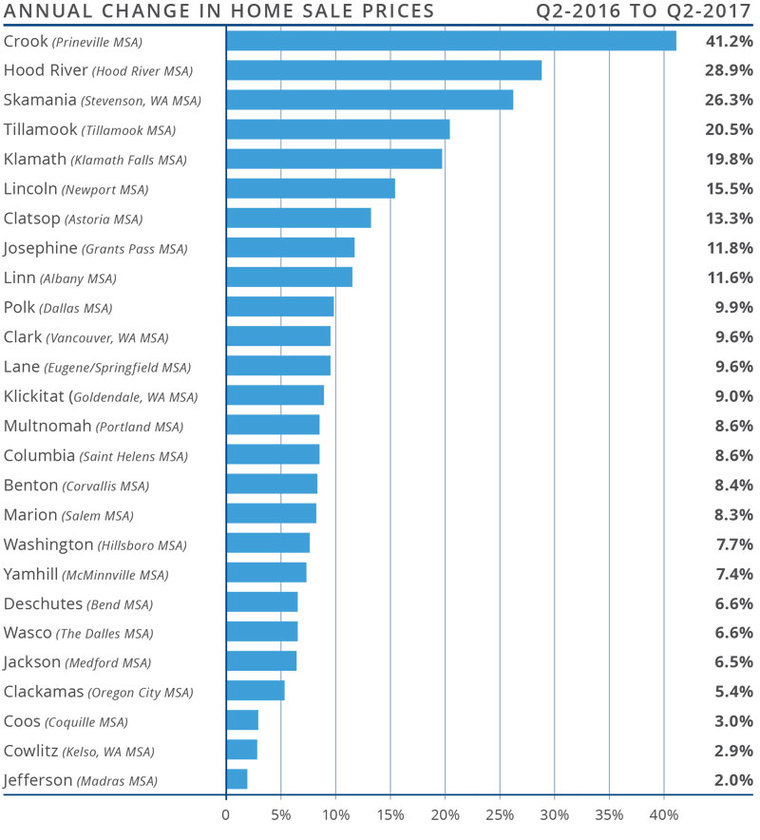
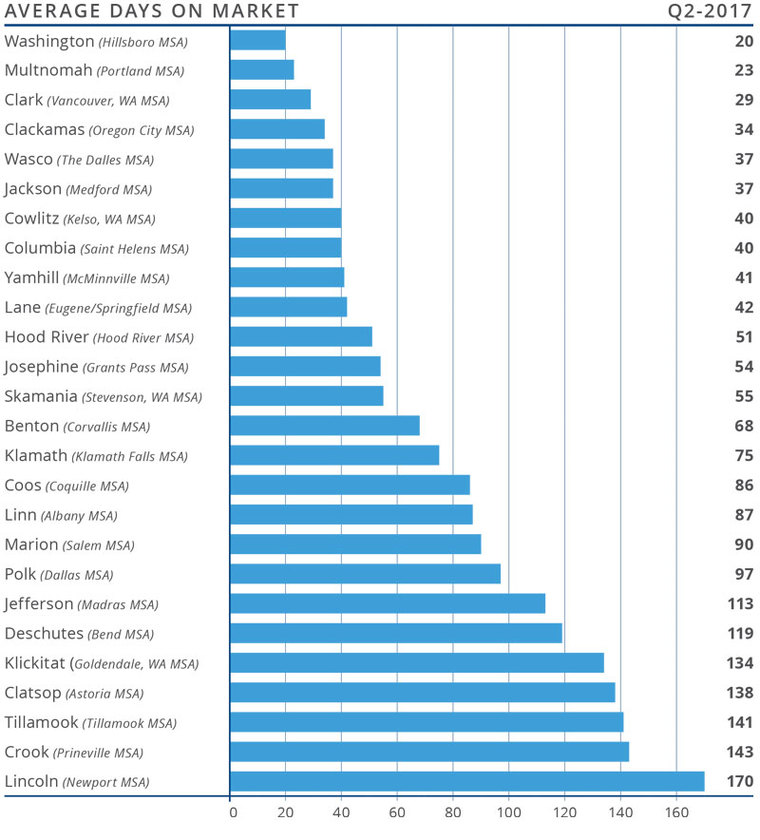
 The speedometer reflects the state of the region’s housing market using housing inventory, price gains, home sales, interest rates, and larger economic factors. Housing markets throughout Oregon continue to benefit greatly from the robust regional economy. Even as home sales have slowed in some counties, the market is remarkably tight and will likely remain that way for the balance of the year. As such, I have moved the needle slightly more toward sellers for the second quarter.
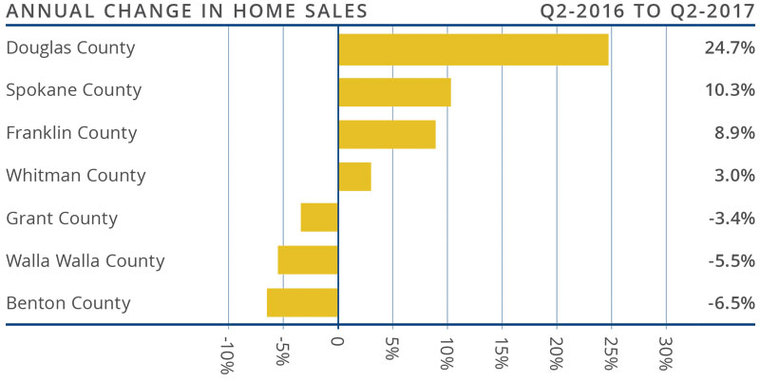
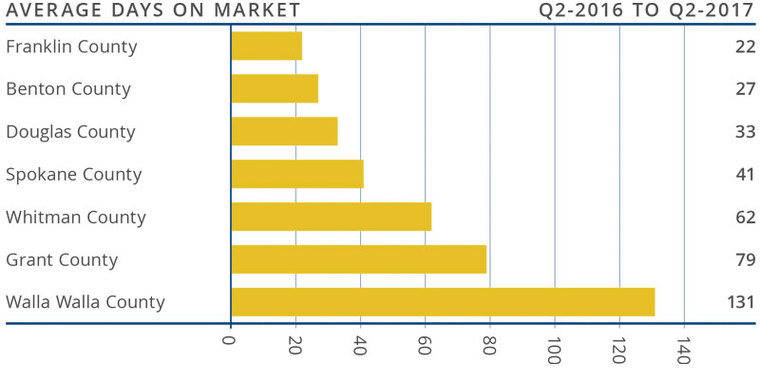
 Year-over-year, the average home price in the region rose by 6.2% to $242,059. Price growth has been tapering across the region, but several counties are still seeing appreciation well above the average rate.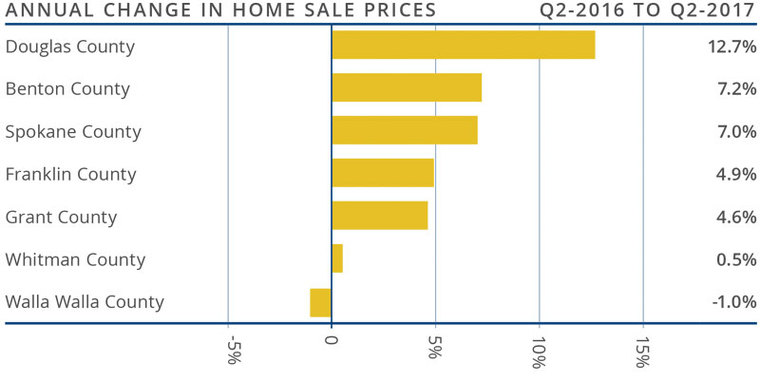
 This speedometer reflects the state of the region’s housing market using housing inventory, price gains, home sales, interest rates, and larger economic factors. For the second quarter of 2017, I left the needle at the same level. Though prices in several markets are still trending above average, the rate of growth has slowed a little. I still believe that 2017 will continue favoring sellers and, even with a slowdown in price appreciation, demand will continue to exceed supply.


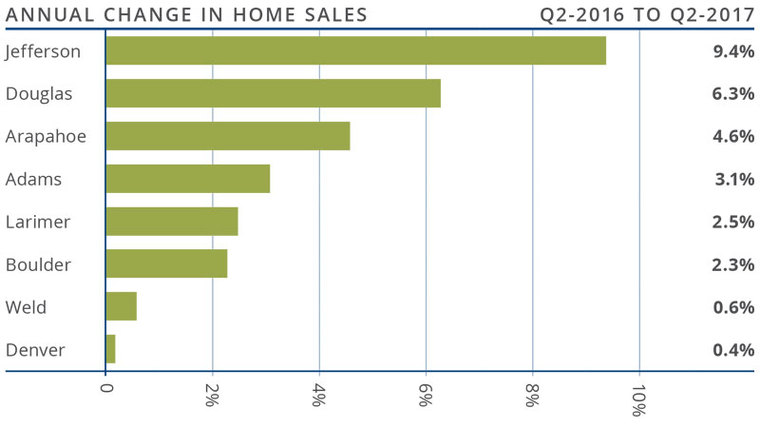
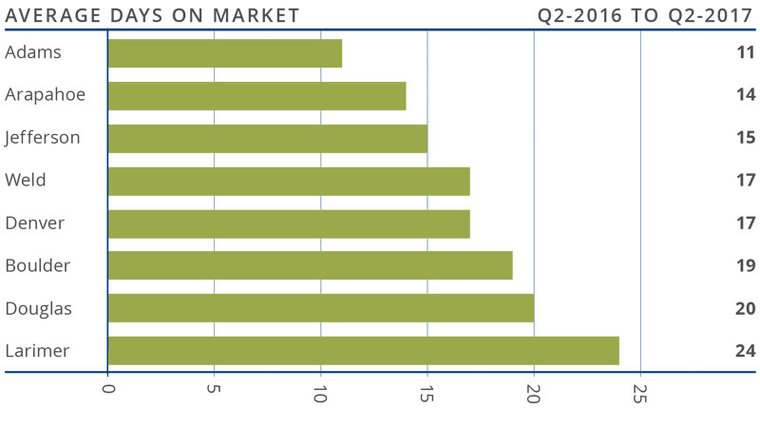
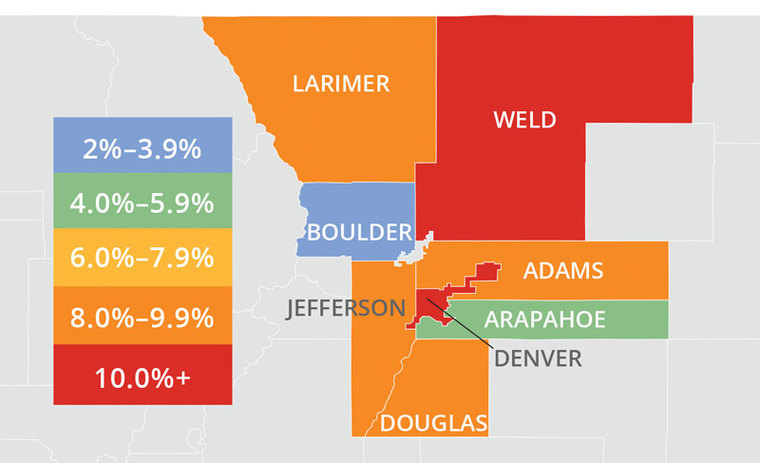 Due to solid demand, home prices continue to rise with average prices up by 8.5% year-over-year to an average across the region of $438,980.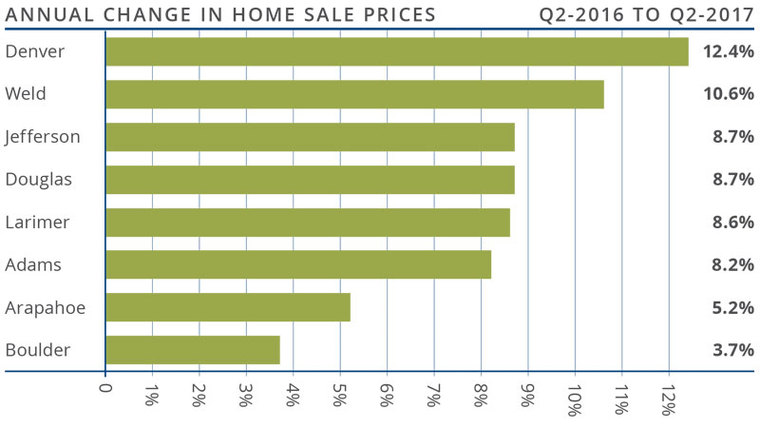
 This speedometer reflects the state of the region’s housing market using housing inventory, price gains, home sales, interest rates, and larger economic factors.
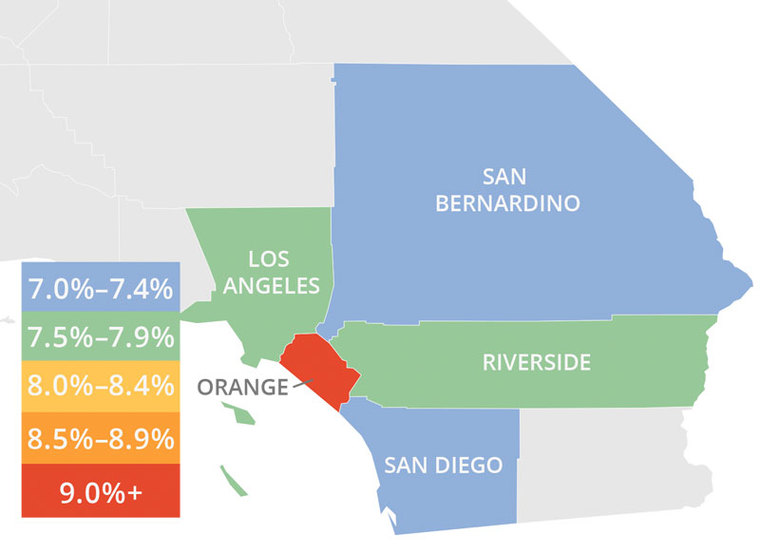 There were 54,516 home sales in the second quarter of this year. This was only 1.8% higher than the same period in 2016, but 34.4% above the level seen in the first quarter of this year.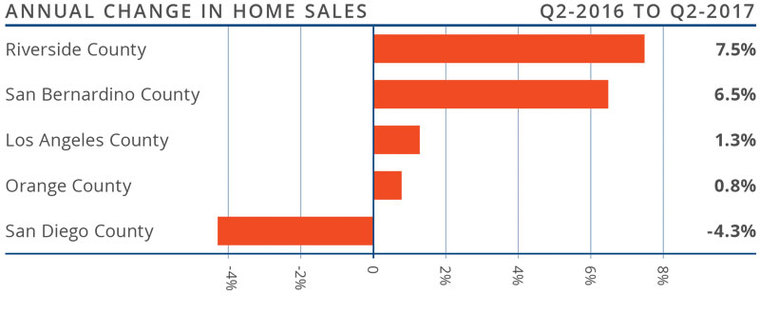
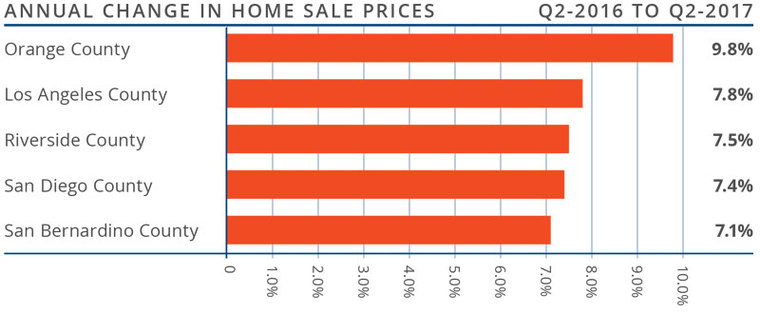
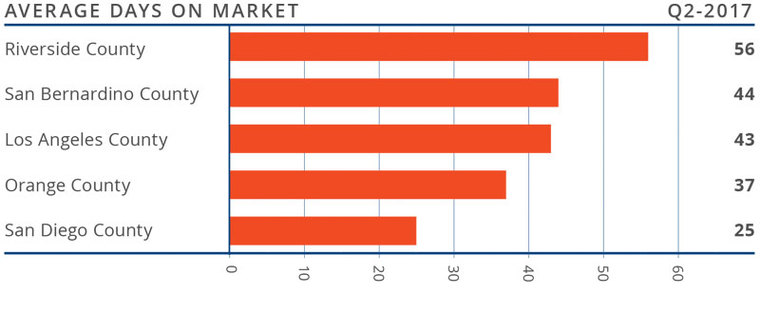
 The speedometer reflects the state of the region’s housing market using housing inventory, price gains, home sales, interest rates, and larger economic factors.