Facebook
 X
X
 Pinterest
 Copy Link
Article updated on July 13, 2026.
Don’t love your popcorn ceiling? You’re not the only one stuck with some unwanted stucco overhead. There are many options for moving on from it, but not all of them are equally effective or equally easy. To help you decide how to address your popcorn problem, here are some ways to remove, cover, or distract from stucco ceilings.
Brief History of the Popcorn Ceilings
From the 1950s to the 1980s, so-called popcorn ceilings (with their prickly stucco texture resembling the popular movie theater snack) were a major architectural staple in America. Eventually, the asbestos commonly used in the application was found to be toxic, and demand severely dropped.
However, a textured ceiling does have its advantages. It reduces echoes and hides ceiling plane imperfections, which is why it’s still used (in asbestos-free formulations) today.
Despite its practical uses, popcorn ceilings, for many people, are considered an unfashionable eyesore, especially with contemporary demand for “clean lines.” Also, popcorn ceilings can gather dust and be difficult to clean or repaint, which means they don’t always age beautifully. But don’t worry, if you’re looking to replace your popcorn ceilings, you’ve got plenty of options.
10 Alternatives to Popcorn Ceilings
1) Dry Ceiling Scraping
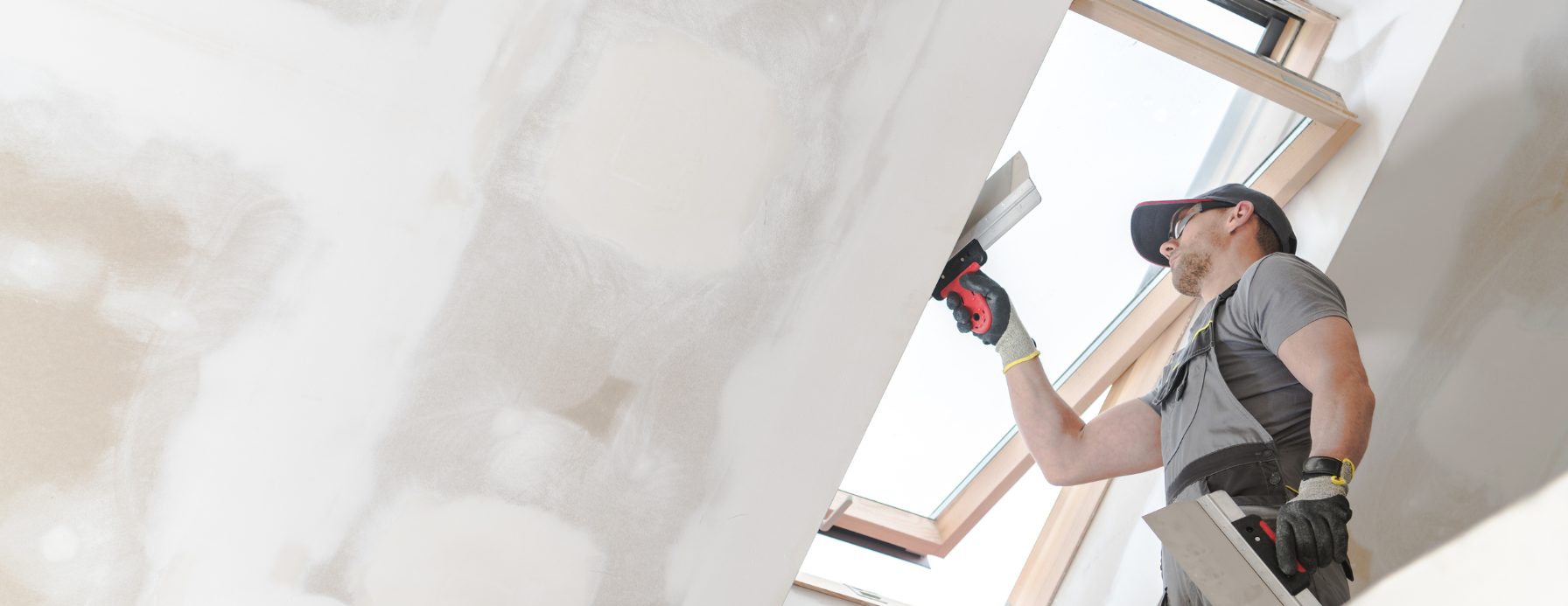
The good news is a sprayed-on stucco coating can be scraped off to reveal the original ceiling surface, a process usually known as “ceiling scraping” or “stucco removal.” A specialist typically does this because (here’s the bad news) the process can be somewhat costly at around $1 to $5 per square foot. It’s a messy, labor-intensive process, hence the high cost.

Also, in some cases, the results may not achieve the crispness of a ceiling that had not been stuccoed in the first place, especially if the stucco has been painted over, which greatly complicates the removal process. Even in the best cases, the exposed ceiling will typically require at least some smoothing and patching to create a more even and crisp final product, which makes this a relatively challenging undertaking for DIYers.
While ceiling stucco no longer uses asbestos in modern applications, homes built before the early 1980s may include asbestos. If there is any doubt, a professional asbestos test should be conducted before any resurfacing, which could release heavily toxic dust.
Even if you get back a “negative” test, this process creates a lot of dust, so mess containment is essential. Professionals recommend multiple plastic layers on floors, plastic sheeting on walls, taping and sealing all HVAC registers and doorways, and PPE usage (respirator, goggles, Tyvek suit or coveralls, and gloves). Investing in a dust-extracting pole sander makes the job much easier.
2) Wet Ceiling Scraping
Similar to dry scraping or sanding, the wet removal method involves lightly misting sections of a popcorn ceiling with warm water to soften the texture, then scraping it off with a putty or drywall knife.
Even better results can come from using a pump sprayer with a warm water and vinegar mix (roughly 1:4 ratio). Pre-scraping the peaks on painted ceilings helps the vinegar solution penetrate.
Specialized tools such as wide-blade scrapers or vacuum-attached models (for example, Homax or Popeeze-style attachments) improve containment and efficiency.
3) Ceiling Replacement
One of the simplest alternatives to scraping is removing and replacing the ceiling drywall entirely. Take out the old drywall and install new sheets. This option is best for major renovations if you plan on replacing wiring or insulation.
4) Covering with Drywall
Alternatively, you can have the ceiling layered over with new drywall. Consider installing 1/4-inch drywall sheets directly over the popcorn texture, screwed into the joists. The drop in the ceiling plane will often be minimal, and this method can encase asbestos rather than releasing it into the air, delaying the issue, if not resolving it. Re-drywalling a ceiling will cost closer to $4 to $6 per square foot, but the results will be more predictable.
Speaking of layering, there are many other materials besides drywall that can be installed over a popcorn ceiling, many of which add extra personality to a room. Consider the next three covering options.
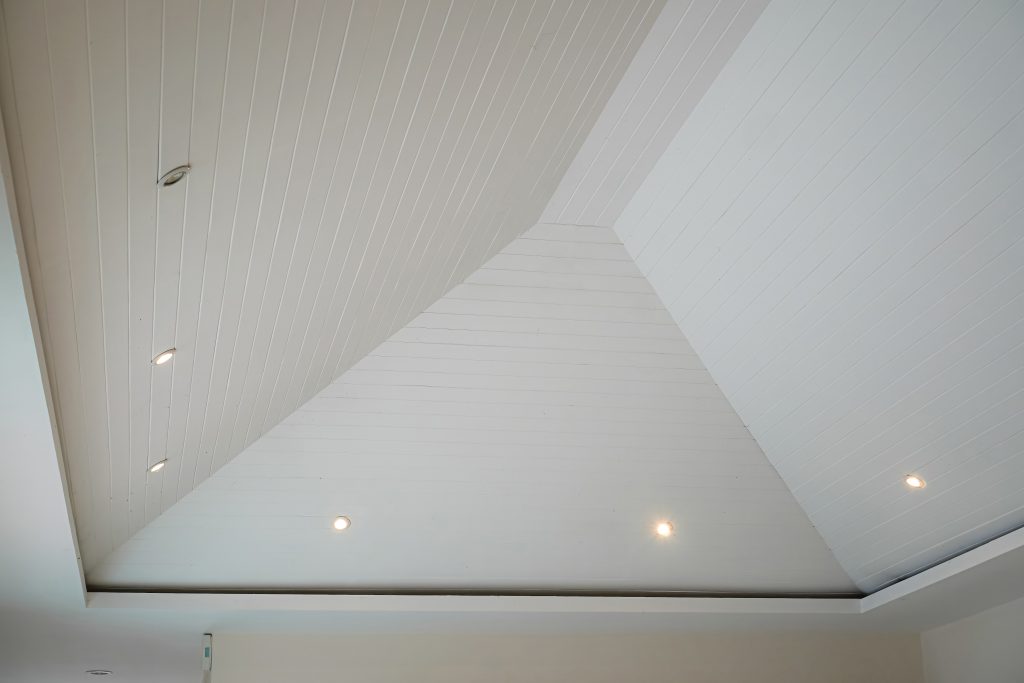
5) Cover with Beadboard
Classic beadboard makes a charming ceiling treatment, and not just in a rustic cottage. Painted white, the subtle texture of beadboard paneling works well in traditional spaces or modern ones, adding a layer of depth in an unconventional place.
Panels of beadboard often cost less than $1.50 per square foot, making this a very affordable option. For a contemporary twist, try finishing the ceiling in a gloss paint. This slow-drying finish will take more labor to complete, but the results have incredible depth and elegance.
 6) Cover with Warm Wood
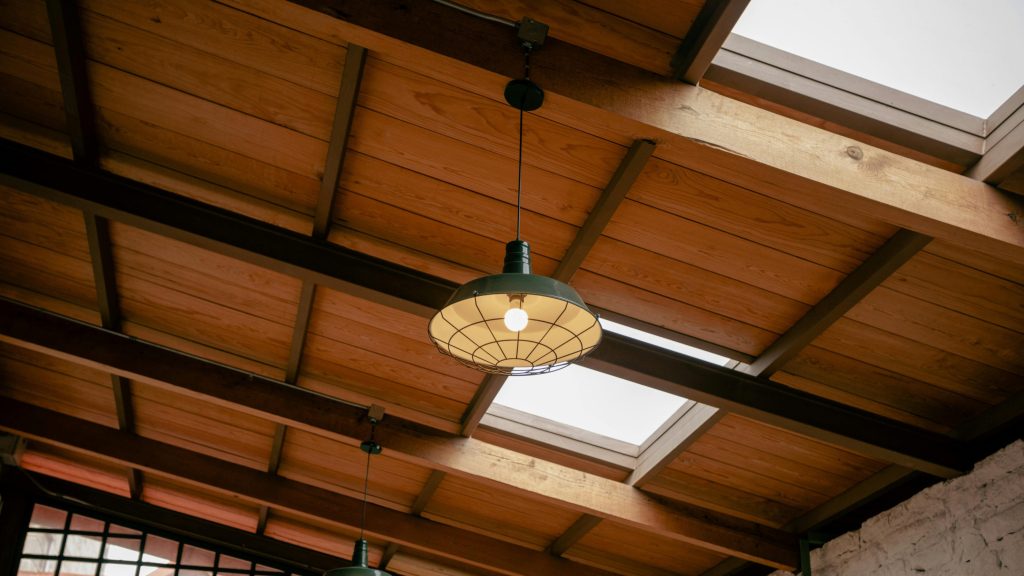 6) Cover with Warm Wood
If you’re not into painted beadboard, try multi-tonal wood for a rich, inviting treatment that’s great for a den or sitting area.
Contrast it with white molding and crossbeams, or let the wood speak for itself. This approach works well with rustic decor, as a gentle touch in a modernist space or somewhere in between.
7) Cover with Pressed Tin
Whether you use true pressed tin tiles or a fiber substitute, this classic ceiling look recalls speak-easy style and makes a great cover-up for a kitchen ceiling. You can paint it white or pale gray to keep the look breezy, or an inky dark hue (like charcoal or navy) for moody atmosphere.
Or choose a metallic finish for extra sheen and drama. Many companies now provide faux pressed tin and other panel systems specifically designed to cover stuccoed or damaged ceilings. They typically cost $3 to $6 per square foot. To have a professional install these materials for you, expect to pay several hundred dollars extra.
8) Lighting
Sometimes the best way to deal with ceiling stucco is to de-emphasize it, and smart lighting choices can go a long way toward that.
To avoid highlighting unwanted ceiling stucco, choose lights that aim downward, rather than upward or outward, so light is cast on beautiful surfaces below and not on your ceiling itself. Try pot lights, or semi-flush mounts (or pendants) with an opaque shade to aim light downward rather than multiple directions. Layering table lamps, floor lamps, and wall sconces can also shift visual attention away from the ceiling while creating a warmer, more inviting space.
9) Paint
Ultimately, the best way to deal with a popcorn ceiling may simply be to learn to live with it. Think about it: How many people do you know who live with popcorn ceilings? I bet you can’t specifically remember who has it or doesn’t, because unless a ceiling is highlighted, we don’t typically spend much time looking at it.
Try painting the walls and the ceiling the same color to blur the lines between them, and then create drama at ground level to draw the eye down. You’ll soon forget about your stucco altogether.
10) Skim Coat the Ceiling
Rather than removing or covering the existing texture, many contractors apply a thin skim coat of joint compound over the popcorn ceiling to create a smooth finish. This method works best when the existing texture is stable and free of asbestos. While it still requires professional finishing and sanding, it can be less disruptive than full drywall replacement.
Related resources: