Design February 24, 2020

Designing Your Home Office

Image Source: Canva

Working from home is an aspiration for many of us, but to do so effectively takes effort. A disorganized space at home can be just as troublesome as a hectic office. The most disciplined telecommuters will tell you that you need a structured routine and organization in order to be successful.

Having a designated workspace is one of the most important elements to your success when you make the switch to telecommuting. Even if you live in a small space, you need to find a balance between home and office. People who work from home often have a difficult time separating their work hours from their non-work hours because it's so easy to keep at it late into the night. But maintaining a balance and shutting down the computer is important for overall wellbeing. What are some other must-haves for a successful home office? Here are the top five:


  1. Natural Light Study upon study tells us that natural light is needed to boost productivity and mood. Make sure to set your desk up as close to a window as you can. If being near a window isn’t an option, a natural light lamp is the next best thing. It helps balance your body clock and leaves you feeling rested and refreshed.
     
  2. To-Do List or Planner – Start each day off by making a to-do list outlining what you need to get done before the end of the workday. Make sure to set a realistic time frame in which all of that should be completed, so you can check each one off the list and feel immense accomplishment once you've completed them all.
     
  3. Storage – If you have a big enough space, put in a large bookshelf where you can organize everything (think storage boxes). It reduces clutter and looks stylish. Using your walls and cabinetry is the most efficient use of space.
     
  4. Calendar – Many people tend to rely on digital calendars these days because of their convenience. When all of your devices sync together and pop up with reminders, you never have to worry about missing an appointment. However, many people find that it helps to keep a paper calendar handy too so you can easily view your whole month at a glance. Choose which options works best for you by playing with both options, or something in between and see which one lets you be more productive with the least amount of stress.
     
  5. Space for Inspiration – It doesn't matter what field you work in, having a source of inspiration in your workspace is essential. Whether it's a photo of your family, your dream car, or that vacation you've been dying to take, having that inspiration right in front of you provides a constant reminder of why you do what you do.

More February 19, 2020

What to Consider When Adding to Your Home

Image Source: mimagephotography 

When dissatisfaction with your current home strikes, it can be exciting to launch into a plan for a new addition. A new living room, bedroom, or more can add value to your home while improving your quality of life. 

On the other hand, even a modest addition can turn into a major construction project, with architects and contractors to manage, construction workers traipsing through your home, hammers pounding, and sawdust everywhere. And although new additions can be a very good investment, the cost-per-square-foot is typically more than building a new home, and much more than buying a larger existing home.


Define your needs

To determine if an addition makes sense for your situation, start by defining exactly what it is you want and need. By focusing on core needs, you won’t get carried away with a wish list that can push the project out of reach financially.

If it’s a matter of needing more space, be specific. For example, instead of just jotting down “more kitchen space,” figure out just how much more space is going to make the difference, e.g., “150 square feet of floor space and six additional feet of counter space.”

If the addition will be for aging parents, consult with their doctors or an age-in-place expert to define exactly what they’ll require for living conditions, both now and over the next five to ten years.


Types of additions

Bump-out addition

“Bumping out” one or more walls to make a first-floor room slightly larger is something most homeowners think about at one time or another. However, when you consider the work required, and the limited amount of space created, it often figures to be one of your most expensive approaches.


First-floor addition

Adding a whole new room (or rooms) to the first floor of your home is one of the most common ways to add a family room, apartment or sunroom. But this approach can also take away yard space.


Dormer addition

For homes with steep rooflines, adding an upper floor dormer may be all that’s needed to transform an awkward space with limited headroom. The cost is affordable and, when done well, a dormer can also improve the curb appeal of your house.


Second-story addition

For homes without an upper floor, adding a second story can double the size of the house without reducing surrounding yard space.


Garage addition

Building above the garage is ideal for a space that requires more privacy, such as a rentable apartment, a teen’s bedroom, guest bedroom, guest quarters, or a family bonus room.


Permits required

You’ll need a building permit to construct an addition, which will require professional blueprints. Your local building department will not only want to make sure that the addition adheres to the latest building codes, but also ensure it isn’t too tall for the neighborhood or positioned too close to the property line. Some building departments will also want to ask your neighbors for their input before giving you the go-ahead.


Requirements for a legal apartment

While the idea of having a renter that provides an additional stream of revenue may be enticing, the realities of building and renting a legal add-on apartment can be sobering. Among the things you’ll need to consider:

Special permitting

Some communities have regulations against “mother-in-law” units so they have zone-approval requirements.


Separate utilities

In many cities, you can’t charge a tenant for heat, electricity, and water unless utilities are separated from the rest of the house (and separately controlled by the tenant).


ADU Requirements

When building an “accessory dwelling unit” (the formal name for a second dwelling located on a property where a primary residence already exists), building codes often contain special requirements regarding emergency exits, windows, ceiling height, off-street parking spaces, the location of main entrances, the number of bedrooms, and more.


In addition, renters have special rights while landlords have added responsibilities. You’ll need to learn those rights and responsibilities and be prepared to adhere to them.


Average costs

The cost to construct an addition depends on a wide variety of factors, such as the quality of materials used, the laborers doing the work, the type of addition and its size, the age of your house and its current condition. For ballpark purposes, however, you can figure on spending about $200 per square foot if your home is in a more expensive real estate area or about $100 per foot in a lower-priced market.

You might be wondering how much of that money your efforts might return if you were to sell the home a couple of years later? The answer to that question depends on a number of variables, but the average “recoup” rate for a family room addition is typically more than 80 percent.


The bottom line

While you should certainly research the existing-home marketplace before hiring an architect to map out the plans, building an addition onto your current home can be a great way to expand your living quarters, customize your home, and remain in the same neighborhood.

Buying February 12, 2020

Vacation Home or Income-Producing Investment

Image Source: Alex Master Shutterstock

Whether you’re a skier who loves the mountain slopes of Colorado, a lover of the beaches of Southern California, or a potential retiree seeking to escape the snow-laden Northeast for the wide-open, sunny lands of Arizona, there are homes available to meet a wide range of budgets. The biggest decision a potential second homeowner must make is whether they are going to solely own their vacation home or turn it into a vacation rental. Here are the advantages and disadvantages to both options:


Investing in vacation rentals

  • Pros:
    • A good vacation rental property generally provides a healthy rental revenue which could potentially cover mortgage payments while also generating healthy additional profit.
    • Using an online short-term rental service like Airbnb makes it convenient to manage your rental property. Their website interface makes pricing, marketing, and communication with potential guests quite straightforward and easy. Airbnb will also oversee the billing process for you.
    • You may qualify for federal tax breaks and deductions related to your investment property. Everything from professional fees or commissions – including property management services- to cleaning and maintenance are potential tax write-offs.
  • Cons:
    • Vacation rentals can be costly to manage, both in terms of time and money. These properties may require seasonal upkeep and special maintenance considerations. You may even incur costs to maintain or monitor the property even when it’s not actively being utilized.
    • Vacation rental properties are particularly sensitive to seasonal fluctuations and economic downturns, which could leave you financially exposed if you suffer a lack of booking revenue.
    • Many states and cities are cracking down on short-term rental services. In California, for example, the fight has been primarily local, reaching a fever pitch in the San Francisco Bay Area. Increasingly state and local municipalities are seeking to reign in short-term vacation rentals, which could put a damper on potential revenue from these properties.
    • You may experience higher renovation and repair costs on a short-term rental. Most travelers expect the latest appliances and furnishings, so you will have to update every few years. Unfortunately, short-term renters are less likely to report any necessary repairs and guests are far less likely to treat the property with respect since there’s no sense of ownership or obligation.


Owning a vacation home

  • Pros:
    • Long-term profits: While assets fluctuate in value in the short term, vacation properties are more likely to retain their value and appreciate because they are located in popular areas with a geographically limited supply.
    • Familiarity: Returning to the same place time and after time can be comforting as you become familiar and comfortable with the location. It allows you the freedom to be yourself and the opportunity to expand long-term friendships with residents.
    • Convenience: The ability to conveniently store items that are used exclusively at the second home simplifies travel and packing.
    • Retirement head starts: Though we may love where we work and live, every place has its drawbacks. A common goal of retirement is to have a place to retreat for the times of the year we dislike the most at our main residence. Locating and buying a second home prior to retirement enables you to experience the benefits of a refuge before actual retirement, a time to correct and amend your plans if the reality is different than the dream.
  • Cons:
    • Initial purchase costs: Most people have higher expectations for a property that they intend to own, rather than to rent. These expectations can translate into high prices.
    • Home maintenance: As the homeowner, you are responsible for all home maintenance work.
    • Travel time: A second home will be located hours from your primary residence, requiring either long auto trips or airline flights.
    • Inflexibility: If you are paying a significant amount of money each month for a second home, you may feel that you need to constantly visit the property to justify your investment.
Market News February 6, 2020

Big Island of Hawaii Real Estate Market Update

​​


The following analysis of the Big Island real estate market is provided by Windermere Real Estate Chief Economist Matthew Gardner. We hope that this information may assist you with making better-informed real estate decisions. For further information about the housing market in your area, please don’t hesitate to contact your Windermere agent. 


ECONOMIC OVERVIEW

Hawaii saw employment grow at an annual rate of 0.5%, adding 3,100 jobs over the past 12 months. In November, the state’s unemployment rate was 2.6%, matching last year’s rate.

On the Big Island, total employment continues to contract; the region lost 2,260 jobs over the past year. Annualized employment growth has been negative for the past 14 months. That said, the Island’s unemployment rate was a respectable 3.5%, up from 3.4% a year ago.


HOME SALES

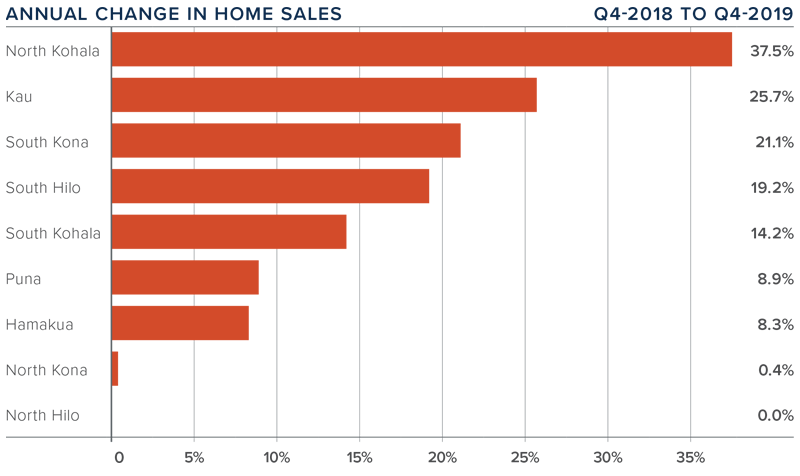
  • In the final quarter of 2019, 824 homes traded hands, representing an increase of 10.2% compared to the fourth quarter of 2018, but 0.6% lower than in the third quarter of 2019.
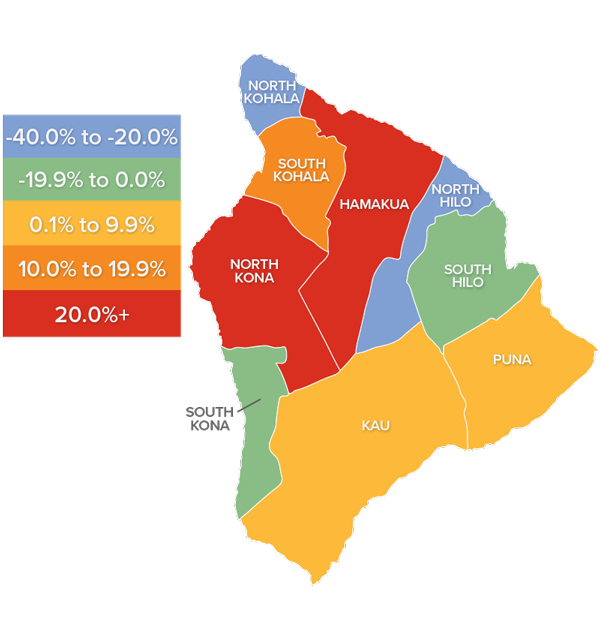
  • Sales were higher than, or matched, levels seen a year ago. There was significant growth in sales in the North Kohala market and sales rose by double-digits in four other markets.
  • The growth in sales came as inventory levels fell 1.8% from a year ago. The average number of homes for sale in the quarter was down 2.3% from the third quarter of 2019.
  • Pending home sales dropped 0.8% compared to the third quarter of this year, suggesting that closings in the first quarter may show few gains.


HOME PRICES

  • The average home price in the region rose 10.2% year-over-year to $580,180. Prices dropped by amodest 0.8% between the third and fourth quarters of 2019.
  • Affordability remains an issue, but the current low interest rate environment has been motivating buyers and, as a result, prices continue to rise.
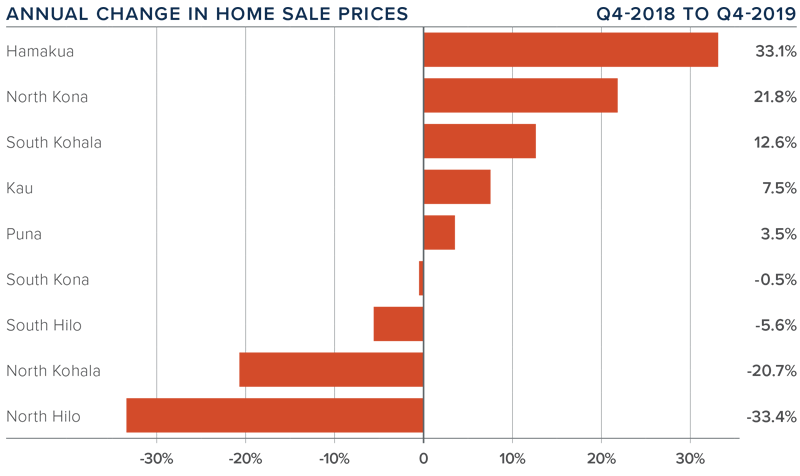
  • Prices rose in five markets but dropped in four. Appreciation was strongest in the small Hamakua market area, where prices rose 33.1%. Home prices dropped the most in the smaller North Hilo market area.
  • All things considered, and despite ongoing affordability issues in many Big Island market areas, I still expect home prices to rise into 2020.


DAYS ON MARKET

  • The average time it took to sell a home on the Big Island dropped three days compared to the fourth quarter of 2018.
  • The amount of time it took to sell a home dropped in five market areas and rose in four.
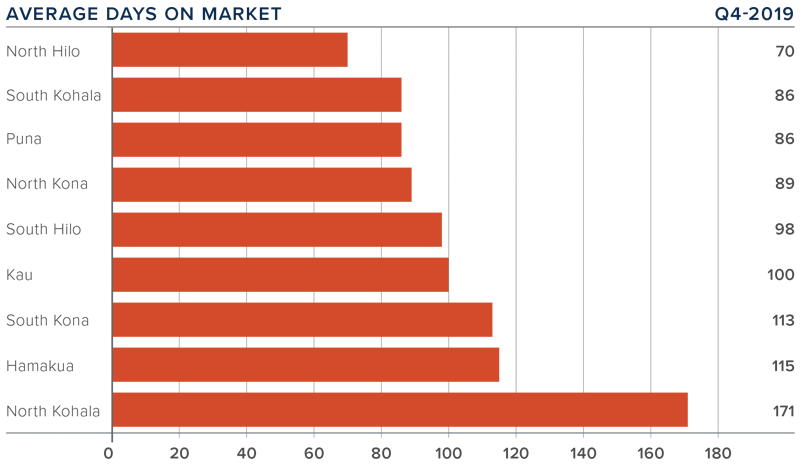
  • In the fourth quarter, it took an average of 103 days to sell a home. Homes sold fastest in North Hilo and South Kohala and slowest in North Kohala.
  • It took 11 fewer days to sell a home in the fourth quarter than in the third quarter of 2019.


CONCLUSIONS

This speedometer reflects the state of the region’s real estate market using housing inventory, price gains, home sales, interest rates, and larger economic factors.

For the final quarter of 2019, I have moved the needle a little more in favor of home sellers. With inventory levels remaining low, prices rising, and interest rates very favorable, it appears that the market, which had been moving toward balance, has shifted again to favor sellers.


ABOUT MATTHEW GARDNER

As Chief Economist for Windermere Real Estate, Matthew Gardner is responsible for analyzing and interpreting economic data and its impact on the real estate market on both a local and national level. Matthew has over 30 years of professional experience both in the U.S. and U.K.

In addition to his day-to-day responsibilities, Matthew sits on the Washington State Governors Council of Economic Advisors; chairs the Board of Trustees at the Washington Center for Real Estate Research at the University of Washington; and is an Advisory Board Member at the Runstad Center for Real Estate Studies at the University of Washington where he also lectures in real estate economics.


Market News February 6, 2020

Hawaii/Maui Real Estate Market Update


The following analysis of select Maui real estate markets is provided by Windermere Real Estate Chief Economist Matthew Gardner. We hope that this information may assist you with making better-informed real estate decisions. For further information about the housing market in your area, please don’t hesitate to contact your Windermere agent. 


ECONOMIC OVERVIEW

Hawaii saw employment grow at an annual rate of 0.5%, adding 3,100 jobs over the past 12 months. In November, the state’s unemployment rate was 2.6%, matching last year’s rate.

On the island of Maui, employment continues to contract, with a drop of 0.9% from last year. I would note that year-over-year employment growth has been negative for the past 23 months. Even given the lack of new jobs, the island’s unemployment rate was 2.5%, down from 2.6% a year ago.


HOME SALES

  • In the fourth quarter of 2019, 551 homes sold, an increase of 7.6% compared to the final quarter of 2018. Sales were down 4.7% compared to the third quarter of 2019.
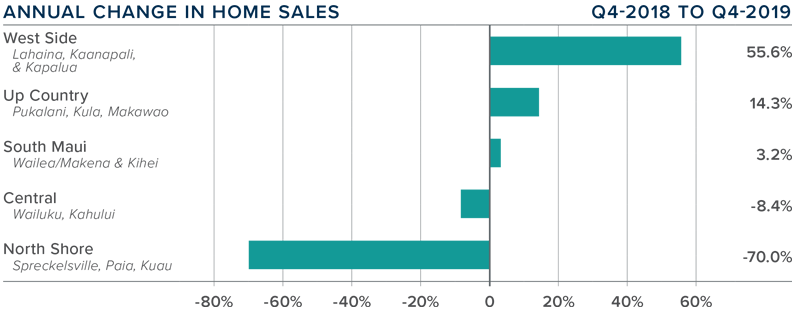
  • Not all markets saw a drop in sales. The Westside market saw a notable increase in sales compared to the fourth quarter of 2018.
  • The rise in sales came as inventory levels dropped 10.3% from the same period a year ago.
  • Pending home sales in the quarter were down 4.7% from the third quarter of 2019, suggesting that 2020 first quarter closings may disappoint.


HOME PRICES

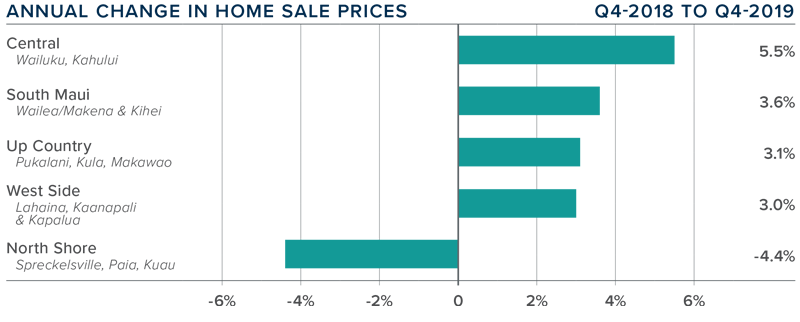
  • The average home price in the region rose 8.1% year-over-year to $934,302 and was up 5% compared to the third quarter of 2019.
  • Affordability continues to be a significant issue. That said, very favorable mortgage rates appear to be allowing home prices to continue to rise.
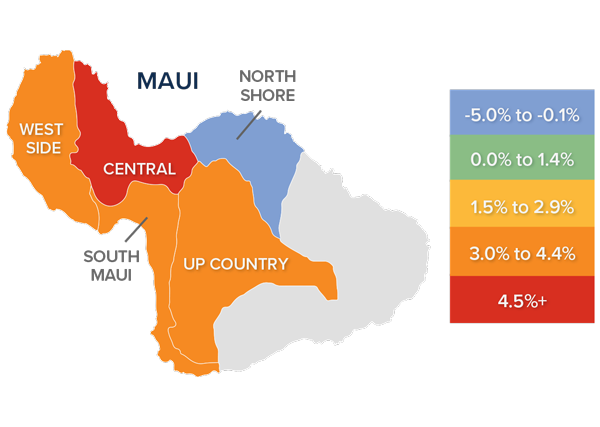
  • Price changes by market were interesting: all but one market saw respectable home price appreciation. There was a drop in the expensive Northshore sub-market, but this is a very small area and price growth can be frenetic.
  • I expect to see ongoing price growth in 2020, but gains will be somewhat modest.


DAYS ON MARKET

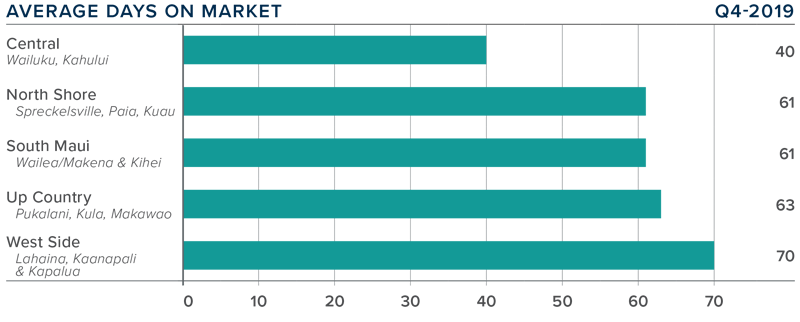
  • The average number of days it took to sell a home on Maui dropped eight days compared to the final quarter of 2018.
  • The amount of time it took to sell a home dropped in all markets other than the North Shore market area.
  • In the fourth quarter, it took an average of 59 days to sell a home. Central market homes sold at the fastest pace, while homes sold the slowest in the Westside market.
  • I believe the length of time it takes to sell homes on Maui will continue to trend slightly lower as we move through the spring of 2020.


CONCLUSIONS

This speedometer reflects the state of the region’s real estate market using housing inventory, price gains, home sales, interest rates, and larger economic factors.

For the final quarter of 2019, I have moved the needle a little more in favor of home sellers. Inventory remains tight, home prices have picked up, and mortgage rates are expected to remain very favorable in 2020.


ABOUT MATTHEW GARDNER

As Chief Economist for Windermere Real Estate, Matthew Gardner is responsible for analyzing and interpreting economic data and its impact on the real estate market on both a local and national level. Matthew has over 30 years of professional experience both in the U.S. and U.K.

In addition to his day-to-day responsibilities, Matthew sits on the Washington State Governors Council of Economic Advisors; chairs the Board of Trustees at the Washington Center for Real Estate Research at the University of Washington; and is an Advisory Board Member at the Runstad Center for Real Estate Studies at the University of Washington where he also lectures in real estate economics.

Market News February 5, 2020

Montana Real Estate Market Update


The following analysis of select Montana real estate markets is provided by Windermere Real Estate Chief Economist Matthew Gardner. We hope that this information may assist you with making better-informed real estate decisions. For further information about the housing market in your area, please don’t hesitate to contact your Windermere agent. 


ECONOMIC OVERVIEW

Montana added 5,700 new non-agricultural jobs over the past 12 months, representing an annual growth rate of 1.2%. Montana’s growth rate remains below the U.S. as a whole. My current forecast is for statewide job growth to rise 1.2% in 2020 with the addition of 5,800 new jobs. In November, the state unemployment rate was a healthy 3.4%, down from 3.7% a year ago.


HOME SALES

  • During the final quarter of 2019, 760 homes sold, a drop of 4.7% compared to the same period a year ago.
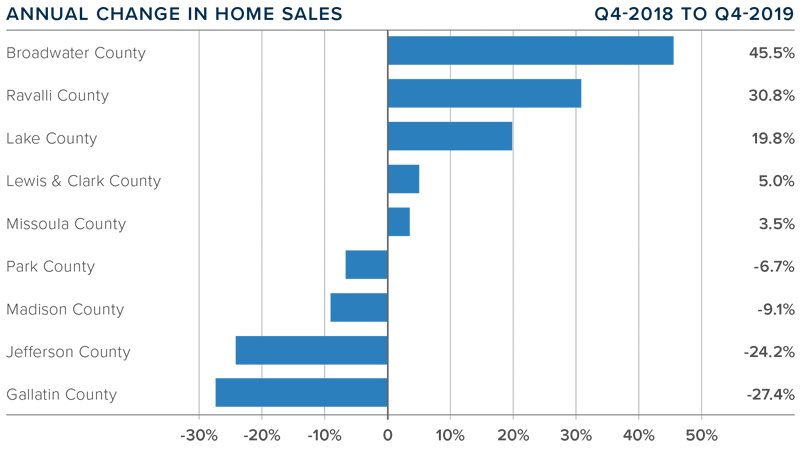
  • Similar to last quarter, total sales activity was a mixed bag: there were increases in five counties and declines in four. The largest annual increase was in Broadwater County, where sales were up more than 45%, though the increase was only five units. The largest decline in sales was in Gallatin County.
  • The number of homes for sale remains well below levels I would like to see, with an average of 1,149 listings in the fourth quarter within the counties contained in this report.
  • I believe low inventory levels are holding sales back. I am optimistic that we will see some growth in listing inventory in the spring of 2020, but the market is still far from balanced.


HOME PRICES

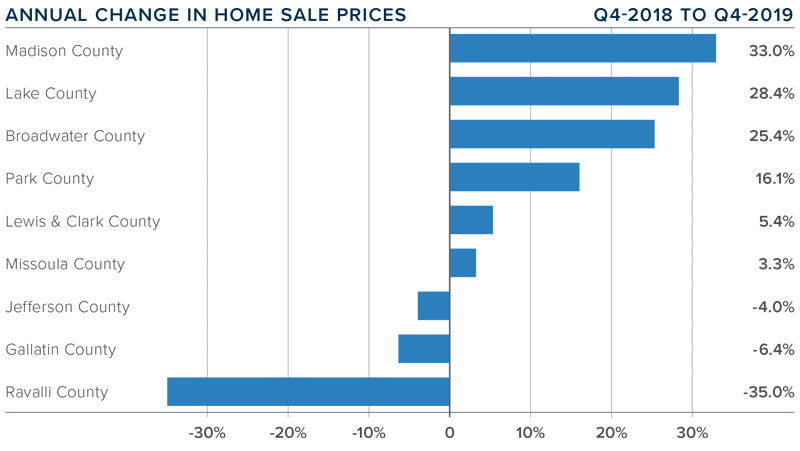
  • Year-over-year home prices fell 4.6% compared to the same period a year ago to an average of $345,617.
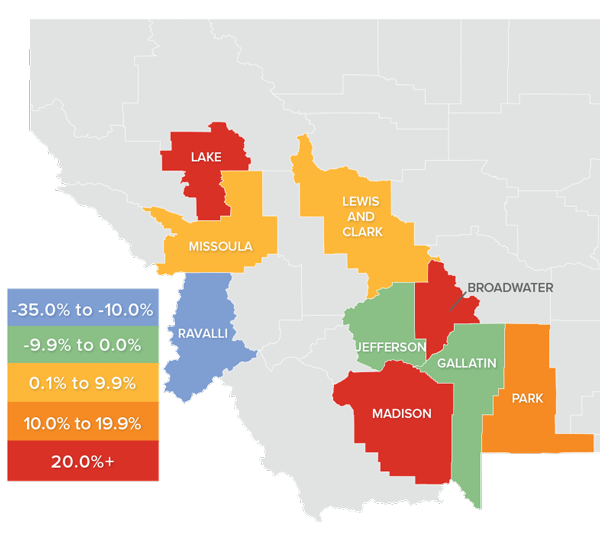
  • Average home prices dropped the most in Ravalli County, but I believe this is somewhat of an anomaly and would not be surprised to see prices pick back up in 2020.
  • Even though the region as a whole saw prices drop, six counties experienced price growth. Madison, Lake, and Broadwater counties all saw significant price increases.
  • The takeaway from this data is that, in aggregate, home prices continue to contract but not all markets are created equal.


DAYS ON MARKET

  • The average number of days it took to sell a home rose 12 days compared to the fourth quarter of 2018.
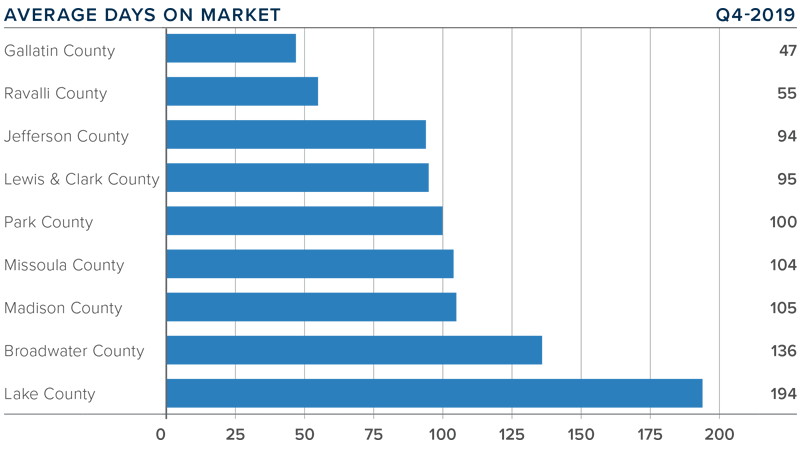
  • Homes sold fastest in Gallatin County and slowest in Lake County. Ravalli and Missoula counties were the only markets where days on market dropped compared to the same period a year ago.
  • During the final quarter of 2019, it took an average of 103 days to sell a home in the region. This is down 15 days compared to the third quarter of 2019.

  • The takeaway here is that, although aggregate market time declined modestly, this was due to a significant drop in days on market in only two areas, not an overall market trend.


CONCLUSIONS

This speedometer reflects the state of the region’s real estate market using housing inventory, price gains, home sales, interest rates, and larger economic factors.

For the final quarter of 2019, I have moved the needle just a little bit more in favor of buyers, though it continues to be a seller’s market. Mortgage rates remain at very attractive levels and home price growth has stalled. Additionally, the number of homes for sale, although still very low, should pick up and home sellers may start to rethink list prices if the market does not resume its buoyancy.


ABOUT MATTHEW GARDNER

As Chief Economist for Windermere Real Estate, Matthew Gardner is responsible for analyzing and interpreting economic data and its impact on the real estate market on both a local and national level. Matthew has over 30 years of professional experience both in the U.S. and U.K.

In addition to his day-to-day responsibilities, Matthew sits on the Washington State Governors Council of Economic Advisors; chairs the Board of Trustees at the Washington Center for Real Estate Research at the University of Washington; and is an Advisory Board Member at the Runstad Center for Real Estate Studies at the University of Washington where he also lectures in real estate economics.

Market News February 4, 2020

Oregon and Southwest Washington Real Estate Market Update


The following analysis of the Oregon and Southwest Washington real estate market is provided by Windermere Real Estate Chief Economist Matthew Gardner. We hope that this information may assist you with making better informed real estate decisions. For further information about the housing market in your area, please don’t hesitate to contact your Windermere agent. 


ECONOMIC OVERVIEW

Oregon added 30,900 new jobs over the past 12 months, representing an annual growth rate of 1.6%. The pace of job growth continues to taper, but it remains positive and I expect that this trend will continue as we move into 2020.

The Southwest Washington market (Clark, Cowlitz, Skamania, and Klickitat counties) added 3,180 new jobs over the past 12 months, which represents an annual growth rate of 1.4%.

Oregon’s unemployment rate was 3.9% in November, down from 4.3% a year ago. In Southwest Washington, the unemployment rate was 5%, up from 4.8% a year ago.


HOME SALES

  • Fourth quarter home sales rose 6.5% compared to the same period last year, with a total of 15,199 transactions occurring.
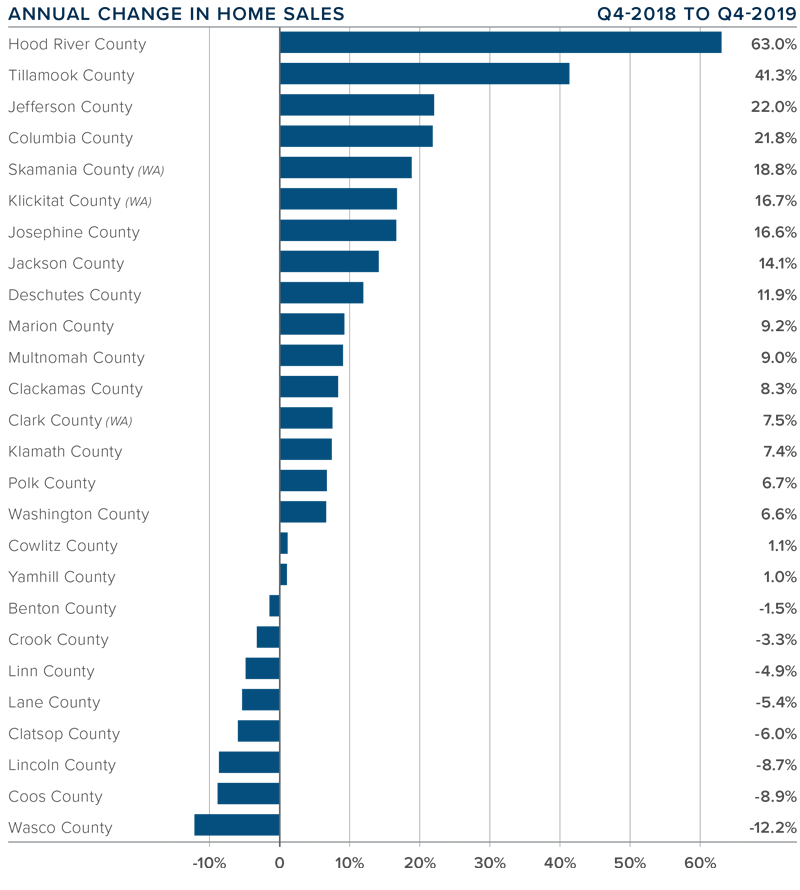
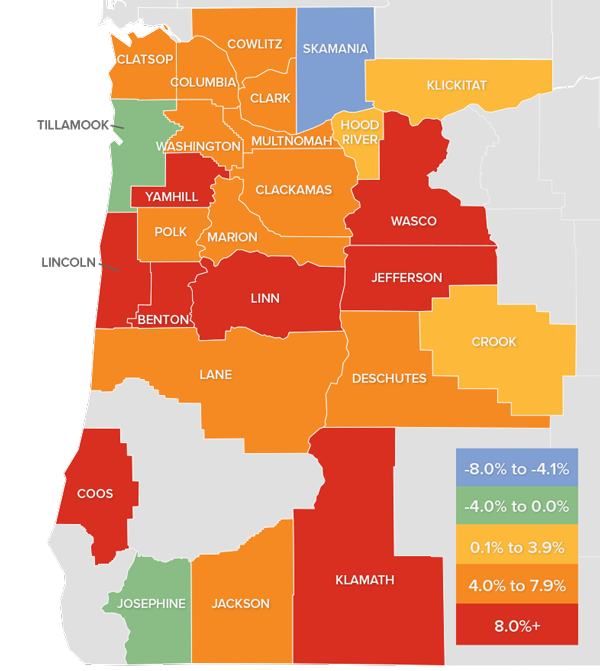
  • Sales rose fastest in Hood River County, which saw a significant 63% increase compared to the fourth quarter of 2018 (though it should be said that this was an increase in sales of only 29 units). There were also solid increases in Tillamook, Jefferson, and Columbia counties. Five other counties had double-digit increases in sales as well. Home sales fell the most in Wasco County but, as it a relatively small market, I am not overly concerned.
  • Year-over-year sales rose in 18 counties and dropped in the other 8 counties contained in this report.
  • Sales in the final quarter of 2019 dropped 15% compared to the third quarter of the year, suggesting that closings in the first quarter of 2020 will likely be lower.


HOME PRICES

  •  The average home price in the region rose 6% year-over-year to $400,714, but prices were 0.7% lower than in the third quarter of 2019.
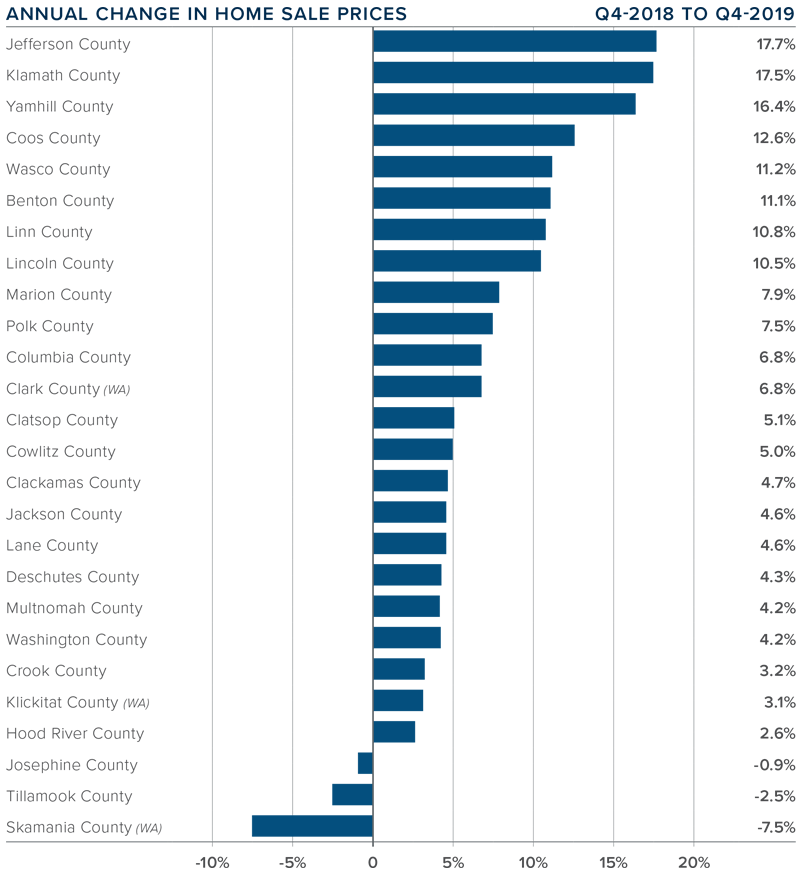
  • Jefferson County led the market with the strongest annual price growth. Homes there sold for 17.7% more than a year ago. The greatest drop in sale prices was in small Skamania County. As I have mentioned previously, smaller markets can be prone to significant swings and I am not overly concerned at this time.
  • All but three of the counties contained in this report experienced price growth compared to the final quarter of 2018. Although prices continue to appreciate, we are seeing some softening in many markets.
  • The takeaway from this section is that price growth continues to moderate. Low mortgage rates will cause prices to continue rising, but more slowly than the past several years.


DAYS ON MARKET

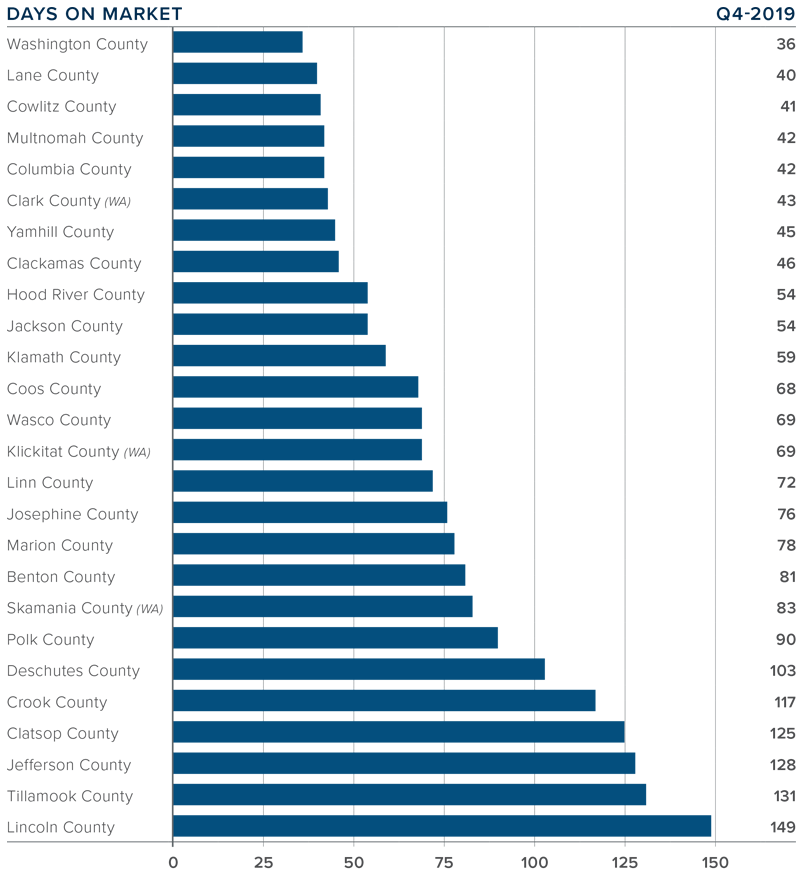
  • The average number of days it took to sell a home in the region rose 2 days compared to the fourth quarter of 2018 and was up 13 days compared to the third quarter of 2019.
  • The average time it took to sell a home last quarter was 75 days.
  • Eleven counties saw the length of time it took to sell a home drop compared to a year ago, 2 remained static, and 13 saw market time rise.
  • Homes sold fastest in Washington (36 days) and Lane (40 days) counties.


CONCLUSIONS

The speedometer reflects the state of the region’s real estate market using housing inventory, price gains, home sales, interest rates, and larger economic factors.

Home sales rose in the quarter, which is certainly a good sign that there is still significant demand for housing in the region. Inventory levels are still a concern and remain lower than I would like to see. Given economic vitality in the state, as well as low mortgage rates, I expect to see more home buyers start their search for a new home as we move into the new year.

Because of these factors, I have moved the needle a little more in favor of home sellers.


ABOUT MATTHEW GARDNER

As Chief Economist for Windermere Real Estate, Matthew Gardner is responsible for analyzing and interpreting economic data and its impact on the real estate market on both a local and national level. Matthew has over 30 years of professional experience both in the U.S. and U.K.

In addition to his day-to-day responsibilities, Matthew sits on the Washington State Governors Council of Economic Advisors; chairs the Board of Trustees at the Washington Center for Real Estate Research at the University of Washington; and is an Advisory Board Member at the Runstad Center for Real Estate Studies at the University of Washington where he also lectures in real estate economics.


Market News February 3, 2020

Central Washington Real Estate Market Update


The following analysis of the Central Washington real estate market is provided by Windermere Real Estate Chief Economist Matthew Gardner. We hope that this information may assist you with making better-informed real estate decisions. For further information about the housing market in your area, please don’t hesitate to contact your Windermere agent.


ECONOMIC OVERVIEW

Employment in Washington State continues to soften; it is currently at an annual growth rate of 1.7%. I believe this is a temporary slowdown and we will see the pace of employment growth improve as we move further into the new year. It’s clear that businesses are continuing to feel the effects of the trade war with China and this is impacting hiring practices. This is, of course, in addition to the issues Boeing currently faces regarding the 737 MAX.

On a seasonally adjusted basis, the counties within Central Washington added 5,116 new jobs over the past 12 months, representing a growth rate of 2.2%. The local unemployment rate rose compared to a year ago from 5.9% to 6.2%, but this is largely due to a 2.6% increase in the civilian labor force.


HOME SALES

  • In the final quarter of 2019, home sales throughout Central Washington rose 0.6% year-over-year, with a total of 1,229 homes sold.
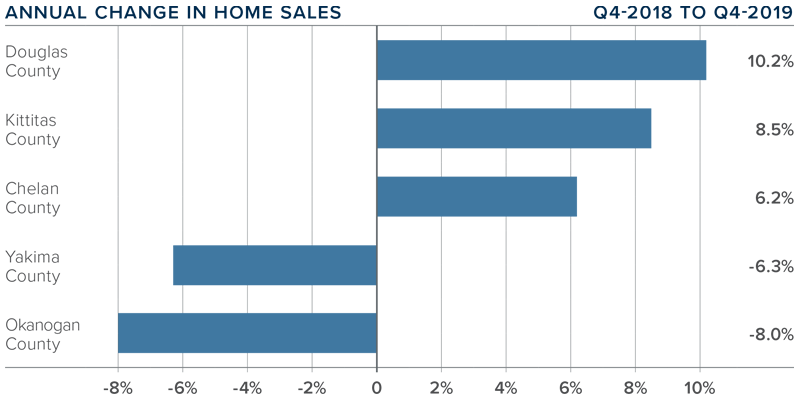
  • Sales rose significantly in Douglas and Kittitas counties, which saw increases of 10.2% and 8.5% respectively. Sales rose by a more modest 6.2% in Chelan County. We saw a drop in sales in Yakima and Okanogan counties, though in absolute terms the contraction was only 41 units.
  • The number of pending home sales — an indicator of future closings — was up 4.1% compared to the third quarter, indicating that closings will likely rise in the first quarter of 2020.
  • Listing activity in the quarter decreased 7.8% compared to a year ago, but there was a small increase in Yakima County. I remain somewhat hopeful that buyers will see inventory levels rise in the second half of 2020.


HOME PRICES

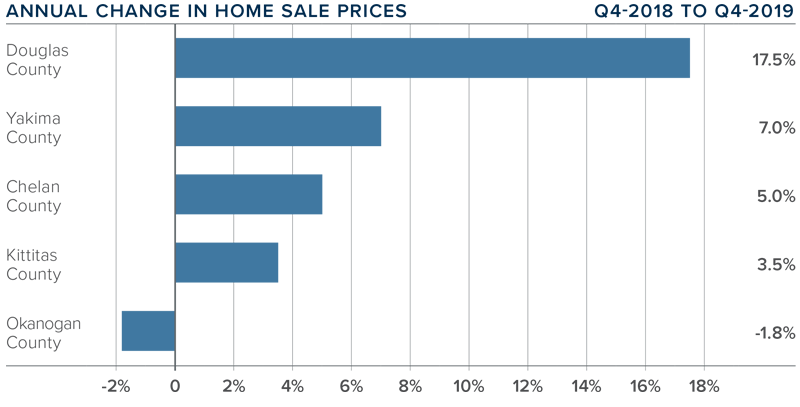
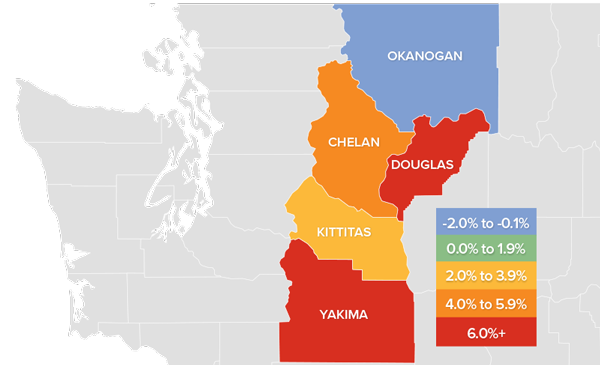
  • Year-over-year, the average home price in the region rose 7.7% to $352,643. Price growth continues to trend well above the long-term average, with limited inventory pushing prices higher.
  • Sale prices were 2.3% lower than in the third quarter of 2019.
  • Prices rose in all counties contained in this report except Okanogan. Douglas County had significant, double-digit growth compared to the fourth quarter of 2018.
  • The takeaway from this dataset is that significant home-price growth continued in the quarter, but I expect to see a modest slowdown in the pace of home price appreciation as we move through 2020.


DAYS ON MARKET

  • The average number of days it took to sell a home dropped three days compared to the fourth quarter of 2018.
  • The average time it took to sell a home in the region was 68 days, up 10 days compared to the third quarter of 2019.
  • Three markets contained in this report —Okanogan, Yakima, and Kittitas — saw days-on-market drop from the same quarter in 2018. The balance of the region took slightly longer to sell a home.
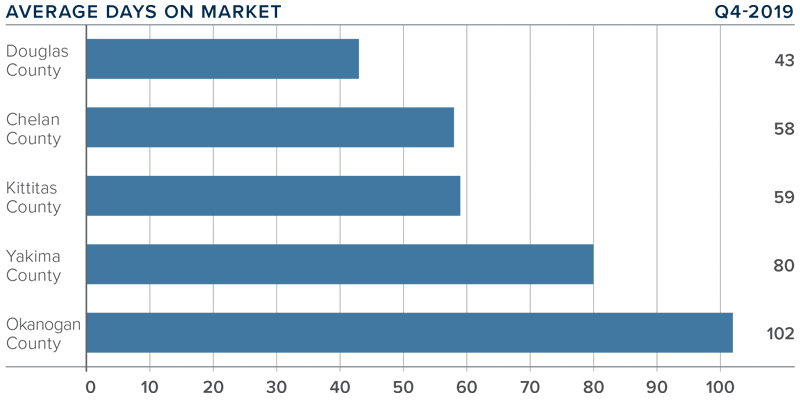
  • Homes again sold fastest in Douglas County, where it took an average of 43 days to sell a home. The greatest drop in the time it took to sell a home was in Okanogan County, where it took 15 fewer days than in the final quarter of 2018.


CONCLUSIONS

This speedometer reflects the state of the region’s real estate market using housing inventory, price gains, home sales, interest rates, and larger economic factors.

For the final quarter of 2019, I have moved the needle a little more in favor of sellers. Inventory levels remain low, and prices continue their upward trajectory. This, in concert with very favorable mortgage rates, continues to bode well for home sellers.


ABOUT MATTHEW GARDNER

As Chief Economist for Windermere Real Estate, Matthew Gardner is responsible for analyzing and interpreting economic data and its impact on the real estate market on both a local and national level. Matthew has over 30 years of professional experience both in the U.S. and U.K.
In addition to his day-to-day responsibilities, Matthew sits on the Washington State Governors Council of Economic Advisors; chairs the Board of Trustees at the Washington Center for Real Estate Research at the University of Washington; and is an Advisory Board Member at the Runstad Center for Real Estate Studies at the University of Washington where he also lectures in real estate economics.

Living January 31, 2020

Incorporate Pantone’s Color of 2020 into Your Home

Image Source: Pantone

Classic Blue has officially been anointed Pantone’s 2020 “Color of the Year”.  Pantone says it picked this color because of its ability to instill calm, confidence, and connection as we cross the threshold into a new decade. A dependable color, Classic Blue is timeless, and enduring, making it a great addition to just about any room in your home.

Here are some ways to add this stunning shade of blue to your home:


Furniture

Image Source: Stacy Zarin Goldberg 

Add a splash of color to any room with Classic Blue furniture, such as these dining room chairs, which express a sense of tradition and elegance, as well as unexpected boldness.


Tile Work

Image Source: Stacy Zarin Goldberg 

Geometric patterns are all the rage this year, so why not liven up your kitchen backsplash with tiles that incorporate the color of the year? Here’s an example that achieves this through bold, colorful design that doubles as a piece of art.


Cabinets

Image Source: Davonport Kitchen Designers and Remodelers. 

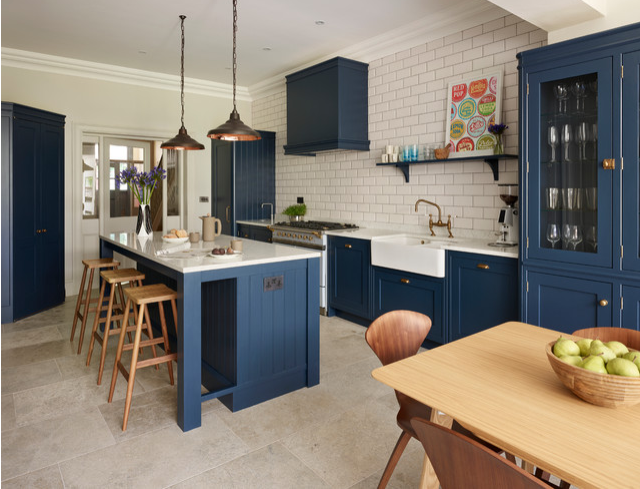
If geometric tile isn’t your thing, the are other ways to bring your kitchen to life with this stunning shade of blue. If you’re not in a position to purchase all new cabinets, simply paint your current cabinets for a more affordable update.


Walls

Image Source: Stacy Zarin Goldberg

Whether it’s built-ins, panels, or an accent wall, Classic Blue can make your furniture and décor pop. Consider this color when you paint your living room or bedroom as a way to encourage calm and confidence in your favorite spaces.

Market News January 30, 2020

Nevada Real Estate Market Update


The following analysis of the greater Las Vegas real estate market is provided by Windermere Real Estate Chief Economist Matthew Gardner. We hope that this information may assist you with making better-informed real estate decisions. For further information about the housing market in your area, please don’t hesitate to contact your Windermere agent.


ECONOMIC OVERVIEW

Job growth in the Las Vegas metropolitan area picked up in the fall of 2019 with the addition of 27,100 new jobs over the past 12 months. This represents an annual growth rate of 2.7%. Employment growth is now well above the national average (1.4%) and a pleasant surprise following the poor rate of growth in the middle of the year.

The unemployment rate in the Las Vegas metro area was 3.7%, down from 4.5% a year ago.


HOME SALES

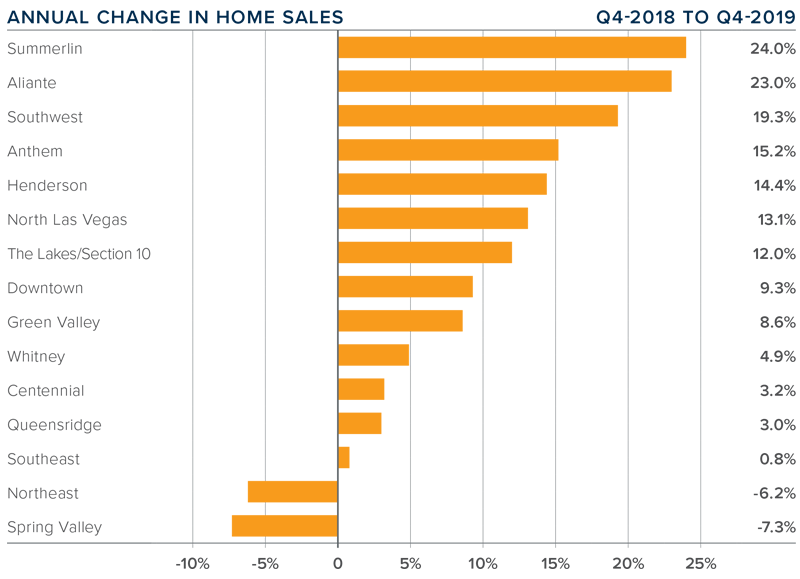
  • A total of 8,151 homes sold in the final quarter of 2019, an increase of 9.4% compared to the same period a year ago, but 13.5% lower than in the third quarter of the year.
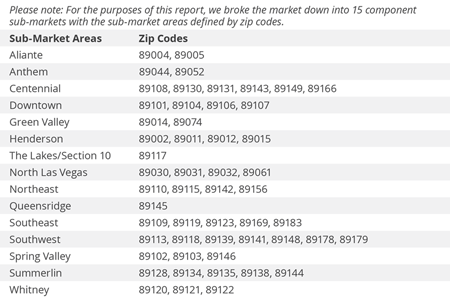
  • Home sales rose the most in the Summerlin neighborhood. There were double-digit increases in an additional six neighborhoods.
  • Sales activity was mostly positive. Sales rose in thirteen sub-markets but fell in two. The most significant drop was in the Spring Valley neighborhood, but the drop was only 20 units.
  • Pending sales rose a significant 17.6% year-over-year but were 19% lower compared to the third quarter of 2019, suggesting that closings in the first quarter of 2020 may be slower than in the final quarter of 2019.


HOME PRICES

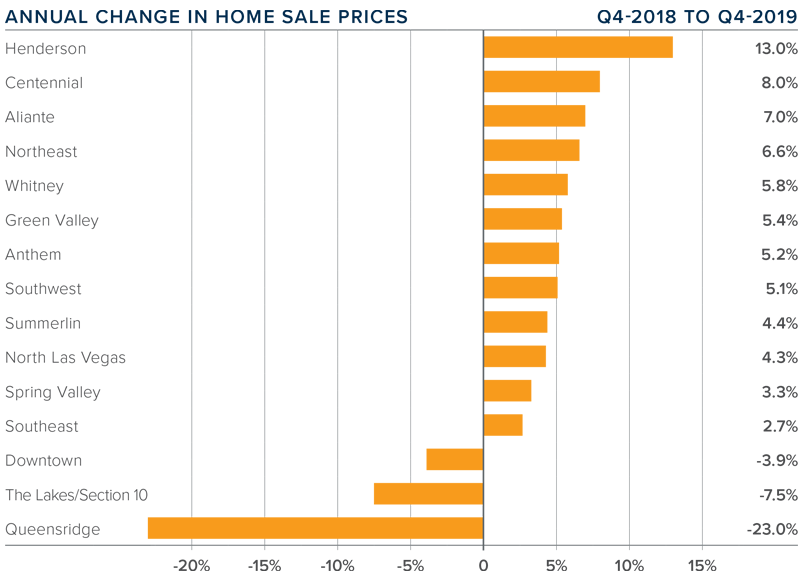
  • Home prices in the area rose 6.1% compared to the fourth quarter of 2018 to an average of $325,668. Prices were up 1.3% compared to the third quarter of 2019.
  • The rate of home price growth picked up in the final quarter of the year and continues to rise at rates well above most of the nation. Demand appears to be robust and, in concert with very attractive mortgage rates, I anticipate home prices will continue rising through 2020.
  • Prices rose in all but three sub-markets compared to the same quarter last year. The strongest growth was in the Henderson sub-market, where prices were up 13%.
  • The takeaway here is that demand for housing remains robust, allowing prices to continue to rise.


DAYS ON MARKET

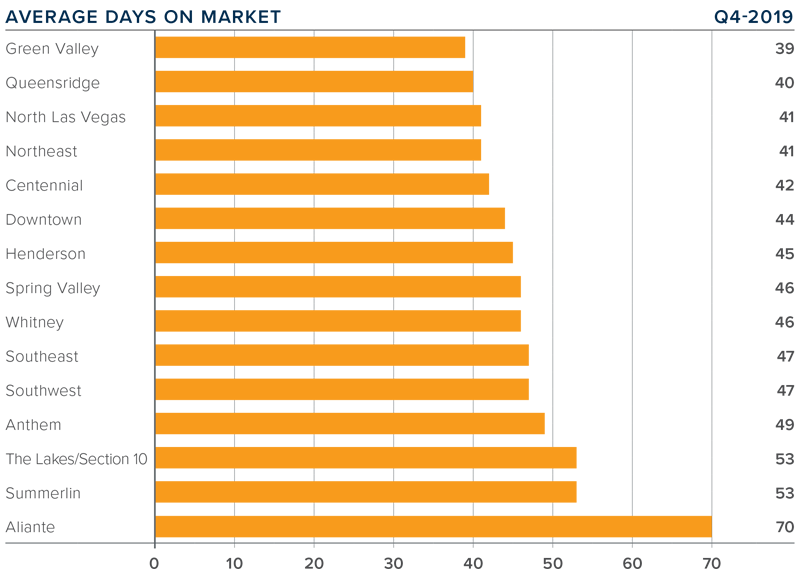
  • The average time it took to sell a home in the region rose 11 days compared to the fourth quarter of 2018.
  • Regionwide, it took an average of 47 days to sell a home in the fourth quarter of 2019, and it took 3 days longer to sell a home than in the third quarter of the year.
  • Days on market rose in all of the sub-markets compared to a year ago.
  • As mentioned above, market time rose compared to the fourth quarter of 2018. The greatest increases were seen in the Aliante, Southeast Las Vegas, Summerlin, and Whitney neighborhoods.


CONCLUSIONS

The speedometer reflects the state of the region’s real estate market using housing inventory, price gains, home sales, interest rates, and larger economic factors.

Employment growth in Clark County has picked back up and demand for ownership housing is robust. In addition to this, mortgage rates remain at very attractive levels. Given these factors, I anticipate the Las Vegas area will be one of the best performing markets in the Western U.S. in terms of home price growth in 2020. As such, I am moving the needle slightly more in favor of home sellers.


ABOUT MATTHEW GARDNER

As Chief Economist for Windermere Real Estate, Matthew Gardner is responsible for analyzing and interpreting economic data and its impact on the real estate market on both a local and national level. Matthew has over 30 years of professional experience both in the U.S. and U.K.
In addition to his day-to-day responsibilities, Matthew sits on the Washington State Governors Council of Economic Advisors; chairs the Board of Trustees at the Washington Center for Real Estate Research at the University of Washington; and is an Advisory Board Member at the Runstad Center for Real Estate Studies at the University of Washington where he also lectures in real estate economics.