To be a homeowner is to understand that things can change at a moment’s notice. It’s only a matter of time before the systems in your home break and your appliances are on the fritz. But this inevitable truth isn’t meant to be all doom and gloom. Fortunately, you can protect yourself against these events with a home warranty.
A home warranty and homeowners insurance both protect homeowners against unexpected events. A standard homeowners insurance policy typically covers your home, your belongings, injury, or property damage to others, and living expenses if you are unable to live in your home temporarily because of an insured disaster.
The policy likely pays to repair or rebuild your home if it is damaged or destroyed by disasters, such as wildfires, a winter storm, or lightning. Your belongings, such as furniture and clothing, are also insured against these types of disasters, as well as theft. Some risks, such as your home flooding, are routinely excluded from homeowners insurance policies.
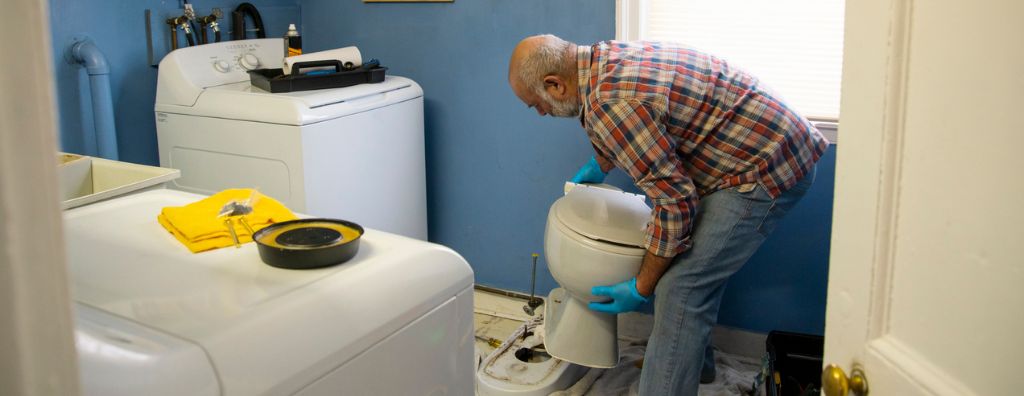
A home warranty picks up where homeowners insurance leaves off by covering some or all of your HVAC, electrical systems, plumbing, and major appliances. A home warranty contract pays for the repair costs associated with these household items. However, if something in your home has not been properly maintained, your home warranty likely won’t cover it. Clarify the specifics of your policy’s language regarding proper maintenance with your warranty provider to avoid potential disagreements. Most home warranties are good for one year with the ability to renew annually.
What does a home warranty cover?
Home warranty policies vary by provider and location. Different coverages offer different protections among your home’s systems and appliances, or a combination of the two. Fees vary as well, based on your plan’s coverages and applicable service fees.
Home warranties have several benefits both for buyers and sellers. For buyers, you can rest assured that your appliances are covered if and when they break down. This saves you from unexpected repair bills from having to hire a contractor. And when selling your home, a home warranty can serve as a way to differentiate your property over other listings. When buyers know a home is protected with a warranty, they can buy with confidence.
Finding the Right Home Warranty
As with anything in the home buying or selling process, it’s important to shop around when searching for the right home warranty policy. During your discovery process, ask questions about the policy’s costs, its dollar amount limit, which items it covers, and its applicable fees including service calls. Talk to your agent about trusted warranty providers in your area.
For more information on protecting your home, visit the Living section on our blog:
The following analysis of select counties of the Northern California real estate market is provided by Windermere Real Estate Chief Economist Matthew Gardner. We hope that this information may assist you with making better-informed real estate decisions. For further information about the housing market in your area, please don’t hesitate to contact your Windermere Real Estate agent.
Regional Economic Overview
Total employment in the Northern California counties covered by this report rose 64,800 over the past 12 months. Though this was a significant slowdown from earlier in the year, it’s not surprising given the expectation of a possible national economic slowdown in 2023 and its impact on hiring decisions. The regional unemployment rate fell from 3.9% to 3% between November 2021 and November 2022. The lowest jobless rate was in Santa Clara County at 2.4% and the highest rate was in Shasta County at 4.3%. I expect the region to continue adding jobs in 2023, but I believe the pace of growth will slow.
Northern California Home Sales
❱ In the final quarter of 2022, 8,388 homes sold, a significant drop from the more than 14,000 homes that sold in the fourth quarter of 2021. Sales were 26.8% lower than in the third quarter of 2022.
❱ Year over year, sales fell across the board. The largest drop was in Santa Clara County but the decline in sales was pronounced across the region.
❱ Listing inventory was down more than 31% from the third quarter of 2022, but increased over 46% compared to the fourth quarter of 2021. Potential buyers have more choice in the market than they have seen in several years.
❱ Pending home sales fell 35% from the third quarter, suggesting that the market continues to soften.
Northern California Home Prices
❱ Higher financing costs continue to impact sale prices. The average price of a home sold in the region dropped 5% from the same period in 2021. Sale prices were 6.6% lower than in the third quarter of 2022.
❱ Median listing prices in the region fell in all markets other than Contra Costa and San Luis Obispo counties compared to the third quarter. The market with the biggest drop was Napa County, where the median list price fell 4.2%.
❱ Year over year, prices increased in Napa and San Luis Obispo counties but fell in the balance of the region. Only San Luis Obispo County saw prices increase compared to the third quarter of 2022.
❱ With falling prices and growing inventory across most of the region, the market is clearly starting to reflect the higher mortgage rate environment.
Mortgage Rates
Rates rose dramatically in 2022, but I believe that they have now peaked. Mortgage rates are primarily based on the prices and yields of bonds, and while bonds take cues from several places, they are always impacted by inflation and the economy at large. If inflation continues to fall, as I expect it will, rates will continue to drop.
My current forecast is that mortgage rates will trend lower as we move through the year. While this may be good news for home buyers, rates will still be higher than they have become accustomed to. Even as the cost of borrowing falls, home prices in expensive markets will probably fall a bit more to compensate for rates that will likely hold above 6% until early summer.
Northern California Days on Market
❱ The average time it took to sell a home in the Northern California counties in this report rose 12 days compared to the final quarter of 2021.
❱ Year over year, the length of time it took to sell a home was static in Napa County but rose across the rest of the region. Compared to the third quarter of 2022, market time rose across all counties except Placer County, where it fell 13 days.
❱ It took an average of 44 days to sell a home during the fourth quarter, which was 9 more days than in the third quarter of 2022.
❱ As we’ve seen over the past several months, the increase in homes for sale is allowing buyers to be more selective. Moreover, there are likely buyers waiting until the spring in the hopes that prices and mortgage rates may be more favorable.
Conclusions
This speedometer reflects the state of the region’s real estate market using housing inventory, price gains, home sales, interest rates, and larger economic factors.
Employment continues to grow, but the pace of growth is slowing, which may be acting as a modest headwind to the housing market. Buyers have not disappeared completely, but the market is continuing to move away from the frenetic pace of the pandemic period. Home values in the region will likely continue to fall due to the highest mortgage rates in more than 15 years. That said, I expect rates will pull back as we move through 2023. Although they may be higher than buyers would like to see in the coming months, I believe the market will find stability later this year. As rates get closer to 5%, more buyers will start to look for a home.
Given all the data discussed here, I am moving the needle further in favor of buyers and into what can best be described as a neutral position.
About Matthew Gardner
As Chief Economist for Windermere Real Estate, Matthew Gardner is responsible for analyzing and interpreting economic data and its impact on the real estate market on both a local and national level. Matthew has over 30 years of professional experience both in the U.S. and U.K.
In addition to his day-to-day responsibilities, Matthew sits on the Washington State Governors Council of Economic Advisors; chairs the Board of Trustees at the Washington Center for Real Estate Research at the University of Washington; and is an Advisory Board Member at the Runstad Center for Real Estate Studies at the University of Washington where he also lectures in real estate economics.

The following analysis of select counties of the greater Las Vegas real estate market is provided by Windermere Real Estate Chief Economist Matthew Gardner. We hope that this information may assist you with making better-informed real estate decisions. For further information about the housing market in your area, please don’t hesitate to contact your Windermere Real Estate agent.
Regional Economic Overview
The Las Vegas area continues to add new jobs and employment is at its lowest level ever. There are now 1.075 million people working, 50,000 more than a year ago, which represents an annual growth rate of 4.9%. Even with such a robust employment market, the unemployment rate has started to notch just a little higher. This is a function of growth in the labor market as more people look for work. The non-seasonally adjusted unemployment rate in November was 5.6%, up from 5.3% a year ago. The seasonally adjusted rate was 6%, up from 5.7% a year ago.
Nevada Home Sales
❱ A total of 4,945 homes sold in the final quarter of 2022, which was a drop of 52.4% compared to the fourth quarter of 2021 and down 24.3% from the third quarter of 2022.
❱ Sales fell significantly in every neighborhood covered by this report compared to the same period in 2021. All areas also reported fewer sales than in the third quarter of 2022.
❱ Listing activity continues to grow significantly. The number of homes for sale was up 151% year over year but was down 7.2% from the third quarter of the year.
❱ Pending sales, which are an indicator of future closings, fell 25.3% from the third quarter, suggesting that the market may not see much improvement in the first quarter of 2023.
Nevada Home Prices
❱ Though there were fewer home sales than during the fourth quarter of 2021, the average sale price was up 2% to $467,794. However, sale prices were down 2.3% from the third quarter of 2022.
❱ Higher financing costs are impacting the number of sales as well as sale prices. Sellers are starting to adjust to this new market reality, as demonstrated by lower median listing prices in all neighborhoods except Aliante when compared to third quarter of 2022.
❱ Year over year, prices rose in ten neighborhoods but fell in the remaining five. Compared to the third quarter of 2022, prices increased in the Henderson, Queens Ridge, and Summerlin neighborhoods, but fell in all other market areas.
❱ The Las Vegas market will likely see home prices fall given higher supply levels and higher mortgage rates, but I don’t think this will result in systemic price declines. Rather, prices will pull back to account for higher mortgage rates before they will then resume growing again, but at a far more modest pace.
Mortgage Rates
Rates rose dramatically in 2022, but I believe that they have now peaked. Mortgage rates are primarily based on the prices and yields of bonds, and while bonds take cues from several places, they are always impacted by inflation and the economy at large. If inflation continues to fall, as I expect it will, rates will continue to drop.
My current forecast is that mortgage rates will trend lower as we move through the year. While this may be good news for home buyers, rates will still be higher than they have become accustomed to. Even as the cost of borrowing falls, home prices in expensive markets will probably fall a bit more to compensate for rates that will likely hold above 6% until early summer.
Nevada Days on Market
❱ The average time it took to sell a home in the region rose 20 days relative to the fourth quarter of 2021.
❱ It took an average of 43 days to sell a home in the fourth quarter, which was 18 days longer than it took in the third quarter of the year.
❱ Days on market rose in all neighborhoods compared to the same period in 2021 and the third quarter of 2022.
❱ The combination of more choice and fewer buyers is causing the market to slow down from the frantic pace of 2021 and most of 2022.
Conclusions
This speedometer reflects the state of the region’s real estate market using housing inventory, price gains, home sales, interest rates, and larger economic factors.
It is likely that a price ceiling has been reached in the Las Vegas market. Home sales are still occurring, but the frenzied nature we experienced during the pandemic has worn off. Higher financing costs have started to act as a significant headwind. While mortgage rates are likely to pull back in the coming months, they may not fall enough to result in a flood of home buyers. I expect prices to drop further before buyers start to believe that the market has bottomed. When this level is reached, mortgage rates will likely be closer to 5% than 6%, which should encourage more buyers to enter the market.
The bottom line is that the market has to pay the price for the very rapid pace of home-price appreciation in 2021 and part of 2022. Prices have a little further to drop, but I firmly believe that conditions will stabilize this year and then resume the pace of pre-pandemic home-price appreciation. As such, I have moved the needle more in favor of buyers and into neutral territory.
About Matthew Gardner
As Chief Economist for Windermere Real Estate, Matthew Gardner is responsible for analyzing and interpreting economic data and its impact on the real estate market on both a local and national level. Matthew has over 30 years of professional experience both in the U.S. and U.K.
In addition to his day-to-day responsibilities, Matthew sits on the Washington State Governors Council of Economic Advisors; chairs the Board of Trustees at the Washington Center for Real Estate Research at the University of Washington; and is an Advisory Board Member at the Runstad Center for Real Estate Studies at the University of Washington where he also lectures in real estate economics.

The following analysis of select counties of the Utah real estate market is provided by Windermere Real Estate Chief Economist Matthew Gardner. We hope that this information may assist you with making better-informed real estate decisions. For further information about the housing market in your area, please don’t hesitate to contact your Windermere Real Estate agent.
Regional Economic Overview
Utah’s economy continues to add jobs, but the pace of growth has started to slow. Over the past 12 months, the state added 43,300 jobs. At an annual rate of 2.6%, this was the slowest pace of growth since the state started recovering jobs post-COVID. The counties covered by this report added more than 35,000 new jobs over the past year, which was also a growth rate of 2.6%. The state’s unemployment rate in November was 2.2%. This was marginally below the rate of the prior year but impressive all the same. It is equally impressive to see that the unemployment rate remained at a very low level even as the state added over 52,400 people to the workforce.
Utah Home Sales
❱ In the final quarter of 2022, 5,145 homes sold in the areas covered by this report. This was down 45% compared to the same period the previous year and down 27.8% compared to the third quarter of 2022.
❱ Sales fell across the board compared to both the fourth quarter of 2021 and the third quarter of 2022.
❱ Inventory levels have skyrocketed, with the average number of homes on the market up a remarkable 248% from the same period in 2021. Listing activity fell 8.3% from the third quarter, but that wasn’t surprising given seasonal factors.
❱ Significantly higher inventory levels gave buyers a lot more options than they have become accustomed to. This, combined with higher mortgage rates, likely impacted sales in the fourth quarter.
Utah Home Prices
❱ The average sale price in the fourth quarter rose a modest .6% from the fourth quarter of 2021 to $604,105. Prices were 3.7% lower than in the third quarter of 2022.
❱ Median listing prices were 3.6% lower than in the third quarter, suggesting that higher financing costs may have created a price ceiling. That said, listing prices were higher in Morgan, Wasatch, and Summit counties compared to the prior quarter.
❱ Year over year, prices rose in four markets but pulled back in the other three. Compared to the third quarter of 2022, average home prices fell in every area other than Summit County, where they rose .8%.
❱ The bull market that has been in place for quite some time appears to have lost its momentum. I am not concerned by this and expect the market to moderate as it comes to terms with higher financing costs.
Mortgage Rates
Rates rose dramatically in 2022, but I believe that they have now peaked. Mortgage rates are primarily based on the prices and yields of bonds, and while bonds take cues from several places, they are always impacted by inflation and the economy at large. If inflation continues to fall, as I expect it will, rates will continue to drop.
My current forecast is that mortgage rates will trend lower as we move through the year. While this may be good news for home buyers, rates will still be higher than they have become accustomed to. Even as the cost of borrowing falls, home prices in expensive markets will probably fall a bit more to compensate for rates that will likely hold above 6% until early summer.
Utah Days on Market
❱ The average time it took to sell a home in the counties covered by this report rose 27 days compared to the same period in 2021.
❱ Homes sold fastest in Salt Lake County and slowest in Summit County. All areas saw average market time rise compared to the third quarter of 2022 as well as the fourth quarter of 2021.
❱ It took an average of 55 days to sell a home during the fourth quarter. Market time rose 22 days from the third quarter of 2022.
❱ It is likely that home buyers are waiting for asking prices to fall further and hoping that mortgage rates do the same.
Conclusions
This speedometer reflects the state of the region’s real estate market using housing inventory, price gains, home sales, interest rates, and larger economic factors.
The state’s economy is still performing very well, but this is not enough to push the housing market forward at the pace we saw during the height of the pandemic. I expect the region will continue to see downward pressure on home prices, but a major correction is unlikely. It’s more likely that as mortgage rates continue to decline, the market will find a solid floor in the summer and prices will resume their upward trend as we move into the fall.
The Utah housing market does not yet significantly favor home buyers but, given the data discussed in this report, it has certainly shifted away from sellers and into neutral territory. I have moved the needle accordingly.
About Matthew Gardner
As Chief Economist for Windermere Real Estate, Matthew Gardner is responsible for analyzing and interpreting economic data and its impact on the real estate market on both a local and national level. Matthew has over 30 years of professional experience both in the U.S. and U.K.
In addition to his day-to-day responsibilities, Matthew sits on the Washington State Governors Council of Economic Advisors; chairs the Board of Trustees at the Washington Center for Real Estate Research at the University of Washington; and is an Advisory Board Member at the Runstad Center for Real Estate Studies at the University of Washington where he also lectures in real estate economics.

Sleek, sustainable design, open concept floor plans, minimalism, and eco-conscious thinking are defining characteristics of modern architecture. These concepts were formed in the early to mid-twentieth century as part of the modern art movement which encompassed art deco interior design and mid-century modern architecture among other styles. Here’s a breakdown of the features that define modern architecture.
6 Features of Modern Architecture
1. Clean Geometric Lines
At the heart of modernist values lies the simplification of form. Ornate decorations quickly became a thing of the past as designers became focused on taking a no-frills approach to home design. Modernist homes have a very linear feel with straight lines and exposed building materials, as opposed to more irregular shapes that were popular in the past.
2. Multifunctional Spaces
Multifunctional living spaces are a foundational element of modern homes. Built-in storage is commonly used to reflect this multi-purpose, space-saving feel. This gives added significance to the spaces in a home by upping each one’s utility. It creates an environment where everything has purpose.
3. Eco-Friendly
Modern homes are well suited for technological and eco-friendly home upgrades, as well as eco-friendly building materials and energy efficient practices, and flat roofs to accommodate solar power. A new trend is to decorate each room with plants for a calming, soothing effect. Large windows are abundant in modern architecture, allowing light to fill and expand the interior space, bringing the natural world indoors.
Exposed wood posts and ceiling beams are classic elements in modern architecture and modern offshoots like farmhouse interior design. Modern homes significantly emphasize the structure rather than hiding the bones behind drywall. In new modern homes the post-and-beam structure can be made of concrete, iron, or other materials. The visible horizontal and vertical beams reinforce the clean geometric lines of the space.
5. Open Concept
Modern design strives to “open” the space by eliminating enclosed rooms. A common design method is to open the kitchen and dining room into an open living space, allowing the spaces to flow into one another.
6. Minimalism
With open and connected modernist spaces, careful curation of furniture, décor, and household objects is paramount to incorporating the modernist aesthetic. Generally, modernist homes have art and furniture that reflects the clean geometric lines and the natural materials of the architecture, leaving less space for clutter. Minimalist philosophies encourage few household items that serve both form and function, which work well within this design and architectural style.
The terms “contemporary” and “modern” are thrown around interchangeably. They do possess a certain degree of overlapping qualities, but specifically in the design world, “modern” refers to styles influenced by the early to mid-twentieth century movement, while contemporary design is what is popular in the present. Whatever interior design trends are at the forefront can be said to be contemporary, while modern interior design is still influenced by a specific period in the past.
For more information on home design, read about how to keep up with trends while decorating your home colorfully:
The following analysis of select counties of the Montana real estate market is provided by Windermere Real Estate Chief Economist Matthew Gardner. We hope that this information may assist you with making better-informed real estate decisions. For further information about the housing market in your area, please don’t hesitate to contact your Windermere Real Estate agent.
Regional Economic Overview
The slowing job growth trend that started in the summer of last year continued into the fall, with employment increasing only 1.3% year over year. With only 6,500 jobs added over the past 12 months, annual job gains are now below 10,000, a pace we have not seen since the pandemic started having an impact on the job market. Regionally, the picture was the same: all metro areas added jobs but at a far slower pace. Montana’s unemployment rate in November was 2.9%, matching the level of the year prior. In the metro areas covered in this report, the lowest jobless rate was in Billings at 2.1%, followed by Missoula at 2.2%, and Great Falls at 2.5%.
Montana Home Sales
❱ In the final quarter of 2022, 1,203 homes sold in the counties covered by this report. This was a 27% decline from the fourth quarter 2021 and down 40.5% compared to the third quarter of 2022.
❱ Listing activity was 19.3% lower than the same period the prior year and 26.1% lower than in the third quarter. Although a drop in listings is expected as the region enters the winter months, the decline from a year ago was unexpected.
❱ Year over year, sales increased in Broadwater County, were flat in Jefferson and Ravalli counties, and fell in the balance of the markets included in this report. Compared to the third quarter of 2022, sales rose in Broadwater, Jefferson, and Madison counties but fell in all other markets.
❱ Pending sales fell 52.8% from the previous quarter. This may be a function of lower supply levels, but I am noticing that listing prices are starting to pull back in some areas. Higher mortgage rates may have started to affect prices.
Montana Home Prices
❱ Home prices were up 5.5% year over year to an average of $783,588. Prices were 10.5% higher than in the third quarter of 2022.
❱ I still expect price growth to slow as we move through 2023. The question is whether prices will experience a tangible fall or if they will be able to hold onto modest gains while waiting for mortgage rates to fall, which would stimulate demand.
❱ In many parts of the country, prices have started to soften due to higher mortgage rates, so it was surprising to see the region’s home prices increase from the third quarter. While median listing prices were higher across the board, they did drop in Broadwater, Ravalli, Park, and Gallatin counties.
❱ The Montana housing market is faring much better than most of the country. Whether this can continue, however, is still uncertain.
Mortgage Rates
Rates rose dramatically in 2022, but I believe that they have now peaked. Mortgage rates are primarily based on the prices and yields of bonds, and while bonds take cues from several places, they are always impacted by inflation and the economy at large. If inflation continues to fall, as I expect it will, rates will continue to drop.
My current forecast is that mortgage rates will trend lower as we move through the year. While this may be good news for home buyers, rates will still be higher than they have become accustomed to. Even as the cost of borrowing falls, home prices in expensive markets will probably fall a bit more to compensate for rates that will likely hold above 6% until early summer.
Montana Days on Market
❱ The average time it took to sell a home rose eight days compared to the same period the prior year.
❱ Homes sold fastest in Gallatin County while homes in Broadwater County took the longest time to sell. Missoula, Lake, Lewis and Clark, and Jefferson counties saw market time fall year over year. Market time rose in the rest of the region.
❱ During the fourth quarter, it took an average of 73 days to sell a home in the markets covered by this report.
❱ Compared to the third quarter of 2022, average market time rose in all counties other than Lake, where it took an average of four fewer days to find a buyer.
Conclusions
This speedometer reflects the state of the region’s real estate market using housing inventory, price gains, home sales, interest rates, and larger economic factors.
So far, the Montana housing market has been unaffected by the significantly higher financing costs that have led home prices to fall across much of the country. Whether the region can continue to move through 2023 without seeing any substantial drop in home values remains to be seen, but it appears to be in a far better position today than most states. Pending sales in the quarter fell across most counties contained in this report, but whether this can be attributed to slower demand or simply the fact that inventory levels have pulled back is also unclear.
What is clear is that the market remains resilient. For this reason I am not moving the needle more in favor of buyers, unlike most markets across the U.S. Instead, I am leaving it in the same position as the third quarter of 2022. Hopefully, the spring market will provide more clarity about what we can expect from the rest of the year.
About Matthew Gardner
As Chief Economist for Windermere Real Estate, Matthew Gardner is responsible for analyzing and interpreting economic data and its impact on the real estate market on both a local and national level. Matthew has over 30 years of professional experience both in the U.S. and U.K.
In addition to his day-to-day responsibilities, Matthew sits on the Washington State Governors Council of Economic Advisors; chairs the Board of Trustees at the Washington Center for Real Estate Research at the University of Washington; and is an Advisory Board Member at the Runstad Center for Real Estate Studies at the University of Washington where he also lectures in real estate economics.
The following analysis of select counties of the Idaho real estate market is provided by Windermere Real Estate Chief Economist Matthew Gardner. We hope that this information may assist you with making better-informed real estate decisions. For further information about the housing market in your area, please don’t hesitate to contact your Windermere Real Estate agent.
Regional Economic Overview
The pace of job growth in Idaho continues to slow. That said, with the addition of 23,800 jobs over the past 12 months, the pace of growth was still an impressive 3%. The Boise metro area grew at a more modest 2.5% rate. The job market there is clearly showing signs of fatigue, adding only 200 new jobs over the past three months. Idaho’s unemployment rate was 3%, down modestly from 3.2% a year ago. In the Boise metro area, 2.6% of the labor force was unemployed, down from 2.8% a year ago. Even if the country enters a recession this year, I expect that Idaho will still add jobs, but at a much slower pace than we have seen since the post-pandemic recovery started. My current forecast shows that the state will add about 114,000 jobs in 2023, which suggests that employment growth will slow to around 2%.
Idaho Home Sales
❱ In the final quarter of 2022, 4,777 homes sold, which was 36.1% lower than in the fourth quarter of 2021 and down 8.9% from the third quarter of 2022.
❱ Listing activity fell 12.7% from the third quarter, but was 52.9% higher than fourth quarter of 2021.
❱ Compared to the same period a year prior, sales fell in all markets covered by this report. Relative to the third quarter of 2022, sales rose in all Northern Idaho markets but fell in every southern market other than Gem County.
❱ Pending sales were 19.2% lower than in the third quarter of the year, which means it’s unlikely that the first quarter of 2023 will show any substantial increase in sales.
Idaho Home Prices
❱ The average home price in the region rose 1.4% year over year to $614,027. Relative to the third quarter of 2022, prices fell 1.8%.
❱ Compared to the third quarter, prices rose in Bonner and Boundary counties in the northern part of the state. In Southern Idaho, prices fell in all counties other than Blaine and Valley.
❱ Year over year, prices rose by double digits in Boundary County and were higher in all Northern Idaho counties except Bonner. In the southern part of the state, prices rose in four counties but fell in Payette, Gem, and Boise counties.
❱ Median listing prices in the fourth quarter were down 1.6% from the third quarter, but they were higher in Blaine, Valley, and Kootenai counties.
Mortgage Rates
Rates rose dramatically in 2022, but I believe that they have now peaked. Mortgage rates are primarily based on the prices and yields of bonds, and while bonds take cues from several places, they are always impacted by inflation and the economy at large. If inflation continues to fall, as I expect it will, rates will continue to drop.
My current forecast is that mortgage rates will trend lower as we move through the year. While this may be good news for home buyers, rates will still be higher than they have become accustomed to. Even as the cost of borrowing falls, home prices in expensive markets will probably fall a bit more to compensate for rates that will likely hold above 6% until early summer.
Idaho Days on Market
❱ The average time it took to sell a home in the region rose 14 days compared to the same quarter of 2021. Average days on market rose 21 days from the third quarter of 2022.
❱ Year over year, days on market rose in all Southern Idaho counties. In Northern Idaho, market time rose in every county other than Shoshone.
❱ It took an average of 86 days to sell a home in Northern Idaho and 63 days in the southern counties covered by this report.
❱ Homes again sold the fastest in Ada County in Southern Idaho and in Shoshone County in the northern part of the state.
Conclusions
This speedometer reflects the state of the region’s real estate market using housing inventory, price gains, home sales, interest rates, and larger economic factors.
Housing affordability has become a significant concern in Idaho, and high mortgage rates are impacting the ability for buyers to finance a home at current prices. While mortgage rates are expected to fall later this year, they will still be higher than buyers have become accustomed to. This means prices will likely decline as we move through the year, but they should level off as we enter the fall.
Although there is ample choice for buyers, I am wondering if listing activity will taper in the coming months as sellers hold off until the market improves. It’s also foreseeable that many of them will decide not to sell because they would lose the historically low interest rate on their current mortgage. Given all of this, I am moving the needle towards a more neutral market. If the number of homes for sale rises significantly in the spring, it’s likely the market will start to favor buyers.
About Matthew Gardner
As Chief Economist for Windermere Real Estate, Matthew Gardner is responsible for analyzing and interpreting economic data and its impact on the real estate market on both a local and national level. Matthew has over 30 years of professional experience both in the U.S. and U.K.
In addition to his day-to-day responsibilities, Matthew sits on the Washington State Governors Council of Economic Advisors; chairs the Board of Trustees at the Washington Center for Real Estate Research at the University of Washington; and is an Advisory Board Member at the Runstad Center for Real Estate Studies at the University of Washington where he also lectures in real estate economics.
The following analysis of select counties of the Central Washington real estate market is provided by Windermere Real Estate Chief Economist Matthew Gardner. We hope that this information may assist you with making better-informed real estate decisions. For further information about the housing market in your area, please don’t hesitate to contact your Windermere Real Estate agent.
Regional Economic Overview
Central Washington lost 3,431 jobs over the past 12 months. Although it’s never good to see a region shed jobs, I believe the declines in total employment are due to businesses pulling back in anticipation of a slowing economy. A recession in 2023 is far from guaranteed though, and if we manage to avoid one, I expect businesses will start hiring again. When adjusted for seasonality, unemployment levels in Central Washington were 6.2%, up from 5.4% a year ago. The lowest unemployment rate was in Chelan County, where it was 4.9%. The area’s highest jobless rates were in Yakima and Okanogan counties, where 6.7% of the labor force was unemployed.
Central Washington Home Sales
❱ There were 941 home sales in Central Washington in the final quarter of 2022, which is a decline of 37.5% from the same quarter the prior year.
❱ Pending sales, which are an indicator of future closings, fell 44.2% compared to the third quarter of 2022, suggesting that the market may not show much growth in early 2023.
❱ Sales fell significantly across the board relative to the same period the previous year. The number of homes sold was also down 33.8% from the third quarter of 2022.
❱ Inventory levels rose 24.6% year over year, giving buyers who were still in the market significantly more choices.
Central Washington Home Prices
❱ The average home price in Central Washington rose 4.3% year over year to $489,710. Prices were down 5.3% from the third quarter of 2022.
❱ Median listing prices fell in every county other than Kittitas compared to the third quarter of 2022. It appears that sellers are being more realistic about prices given the significant increase in mortgage rates.
❱ All counties other than Douglas saw prices rise year over year, with an increase of more than 10% in Kittitas County. But prices fell across the board compared to the third quarter of 2022.
❱ The winter months typically see a slowdown in the real estate market. The question now becomes whether buyers will restart their home search in the spring despite higher mortgage rates, or if sellers will have to lower prices further to entice the buyers back into the market. I believe the latter is more likely.
Mortgage Rates
Rates rose dramatically in 2022, but I believe that they have now peaked. Mortgage rates are primarily based on the prices and yields of bonds, and while bonds take cues from several places, they are always impacted by inflation and the economy at large. If inflation continues to fall, as I expect it will, rates will continue to drop.
My current forecast is that mortgage rates will trend lower as we move through the year. While this may be good news for home buyers, rates will still be higher than they have become accustomed to. Even as the cost of borrowing falls, home prices in expensive markets will probably fall a bit more to compensate for rates that will likely hold above 6% until early summer.
Central Washington Days on Market
❱ The average time it took to sell a home in Central Washington in the final quarter of 2022 was 54 days.
❱ Relative to the same period the year prior, it took 17 more days to sell a home.
❱ On average, it also took 17 more days to sell a home in the fourth quarter of 2022 than it did in the third quarter of the year.
❱ All counties saw the average time it took for homes to sell rise compared to both the third quarter of 2022 and the fourth quarter of 2021.
Conclusions
This speedometer reflects the state of the region’s real estate market using housing inventory, price gains, home sales, interest rates, and larger economic factors.
Employment growth has turned negative and uncertainty about the economy is sure to impact demand for housing. Mortgage rates have started to pull back, but I do not see them falling enough in the near-term to result in a surplus of home buyers.
That said, buyers have not abandoned the market entirely. I expect they are waiting for listing prices to soften a little more. If they see this happen and mortgage rates break below 6%, they are likely to resume their home search. Given these dynamics, I am moving the needle to slightly favor buyers, though I would describe the market as being quite neutral.
About Matthew Gardner
As Chief Economist for Windermere Real Estate, Matthew Gardner is responsible for analyzing and interpreting economic data and its impact on the real estate market on both a local and national level. Matthew has over 30 years of professional experience both in the U.S. and U.K.
In addition to his day-to-day responsibilities, Matthew sits on the Washington State Governors Council of Economic Advisors; chairs the Board of Trustees at the Washington Center for Real Estate Research at the University of Washington; and is an Advisory Board Member at the Runstad Center for Real Estate Studies at the University of Washington where he also lectures in real estate economics.
The following analysis of select counties of the Eastern Washington real estate market is provided by Windermere Real Estate Chief Economist Matthew Gardner. We hope that this information may assist you with making better-informed real estate decisions. For further information about the housing market in your area, please don’t hesitate to contact your Windermere Real Estate agent.
Regional Economic Overview
Year over year, total employment in Eastern Washington fell 2,909 jobs. Spokane and Grant counties collectively lost 3,253 jobs. There were minor job losses in Lincoln, Walla Walla, and Whitman counties, but employment rose in Benton and Franklin counties. Unadjusted for seasonality, the regional unemployment rate was 5%, up from 4.2% a year ago. Seasonally adjusted, the jobless rate was 5.3%, up from 4.4% a year ago. Businesses may be looking to consolidate in anticipation of a possible economic slowdown this year. Although I am not particularly worried now, I will be watching to see if job losses continue as we move through the spring, which would be a greater concern.
Eastern Washington Home Sales
❱ In the fourth quarter of 2022, 2,167 homes sold, which was 42.8% lower than the same period the previous year and 34.4% lower than the third quarter of 2022.
❱ Listing activity rose 111% compared to the fourth quarter of 2021, but the average number of homes for sale was 12.5% lower than in the third quarter of 2022. This is expected given the slowdown that is traditional during the winter months.
❱ Year over year, sales fell across the region. Compared to the third quarter of 2022, sales were flat in Lincoln County but fell everywhere else.
❱ Pending sales fell 39.9% from the prior year, suggesting that the market will likely not see a buoyant early spring.
Eastern Washington Home Prices
❱ Year over year, the average home price in Eastern Washington rose 4.3% to $442,603. Average prices were down 4.5% from the third quarter.
❱ Compared to the third quarter of 2022, prices fell in all counties with the exception of Franklin (+1.9%) and Walla Walla (+0.7%).
❱ Average sale prices increased year over year in every county but Lincoln. Walla Walla County experienced significant price increases.
❱ Mortgage rates peaked in the quarter, which undoubtedly impacted home prices. Additionally, median listing prices fell in all counties compared to the prior quarter, which also impacted the pace of price growth.
Mortgage Rates
Rates rose dramatically in 2022, but I believe that they have now peaked. Mortgage rates are primarily based on the prices and yields of bonds, and while bonds take cues from several places, they are always impacted by inflation and the economy at large. If inflation continues to fall, as I expect it will, rates will continue to drop.
My current forecast is that mortgage rates will trend lower as we move through the year. While this may be good news for home buyers, rates will still be higher than they have become accustomed to. Even as the cost of borrowing falls, home prices in expensive markets will probably fall a bit more to compensate for rates that will likely hold above 6% until early summer.
Eastern Washington Days on Market
❱ The average time it took to sell a home in Eastern Washington in the final quarter of 2022 was 35 days, which was 11 more days than the same period the previous year.
❱ Compared to the third quarter of 2022, average days on market in the region rose 11 days.
❱ All counties except Lincoln saw the average number of days it took for a house to sell rise compared to the same period the year prior.
❱ Higher financing costs and economic uncertainty have led market time to rise, but it’s possible that buyers are waiting for both mortgage rates and prices to fall further before starting their home search.
Conclusions
This speedometer reflects the state of the region’s real estate market using housing inventory, price gains, home sales, interest rates, and larger economic factors.
I suggested in the last Gardner Report that higher financing costs were starting to act as a significant headwind in the market, and I stand by this statement. That said, seasonality always skews the numbers, so I will see how the spring market performs before I consider the region to be firmly in the hands of home buyers.
I expect prices will fall a little further before stabilizing and then starting to rise again at a significantly slower pace. Because the current market favors neither buyers nor sellers, I have moved the needle to the center.
About Matthew Gardner
As Chief Economist for Windermere Real Estate, Matthew Gardner is responsible for analyzing and interpreting economic data and its impact on the real estate market on both a local and national level. Matthew has over 30 years of professional experience both in the U.S. and U.K.
In addition to his day-to-day responsibilities, Matthew sits on the Washington State Governors Council of Economic Advisors; chairs the Board of Trustees at the Washington Center for Real Estate Research at the University of Washington; and is an Advisory Board Member at the Runstad Center for Real Estate Studies at the University of Washington where he also lectures in real estate economics.
Penthouses take the luxury lifestyle to new heights; they boast the best views in the city, offer unparalleled exclusivity, and often include outdoor spaces not typically found in other units throughout the same building. These perks, however, come at a cost. For those considering renting or purchasing a penthouse, the following information will help to inform your discussions with your real estate agent.
What is a penthouse?
At its core, a penthouse is a luxury apartment/condominium. Located on the top floor of an apartment building, condominium complex, hotel, or tower, its luxury features differentiate it from the building’s lower-level units. The living space of a penthouse is usually set back from the building’s outer edge and the remaining square footage of the roof deck is typically used as a yard, hot tub, pool, outdoor kitchen, etc.
Pros
The View: Even in a densely populated metropolitan area, living in a penthouse is your best chance at an unobstructed view of the city. Perched above the vast majority of other apartment and condominium buildings, a penthouse provides a bird’s eye view of your surroundings without being blocked by neighboring units.
Indoor and Outdoor Space: A penthouse is more than a luxury apartment; it’s your own private outdoor terrace. With access to the outdoors, you have more room for your favorite at-home activities, plus an array of entertaining opportunities. Penthouses are typically designed with open-concept floorplans which emphasize their extra square footage. For those looking to increase their living space while remaining in the city, a penthouse may be the perfect solution.
Privacy: Because penthouses only have neighbors below them, a penthouse floor sees fewer visitors than the lower floors in a building. Some penthouse floors have a separate, private entrance for added security.
Cons
High Price: Gaining access to this exclusive lifestyle is expensive. The high price tags reflect its unique characteristics: being far away from street noise, having more square footage and outdoor space, added privacy, etc. In some places, the costs to purchase or rent a penthouse can outpace the average monthly mortgage payment for a single-family home in the area, especially if you have Homeowners Association (HOA) fees tacked on.
Home Maintenance: Having more indoor and outdoor space means there’s more to maintain. Owning or renting one of these units comes with a longer to-do list than a smaller apartment or condominium. You’ll either have to carve out additional time for upkeep or consider hiring a professional to clean your home regularly.
Work closely with your real estate agent to determine whether renting or purchasing a penthouse is right for you. Learn more about other housing types and the differences between them here: