Facebook
 X
X
 Pinterest
 Copy Link
Windermere Real Estate Chief Economist Matthew Gardner explains the ways zoning rules and regulatory costs can limit housing affordability.
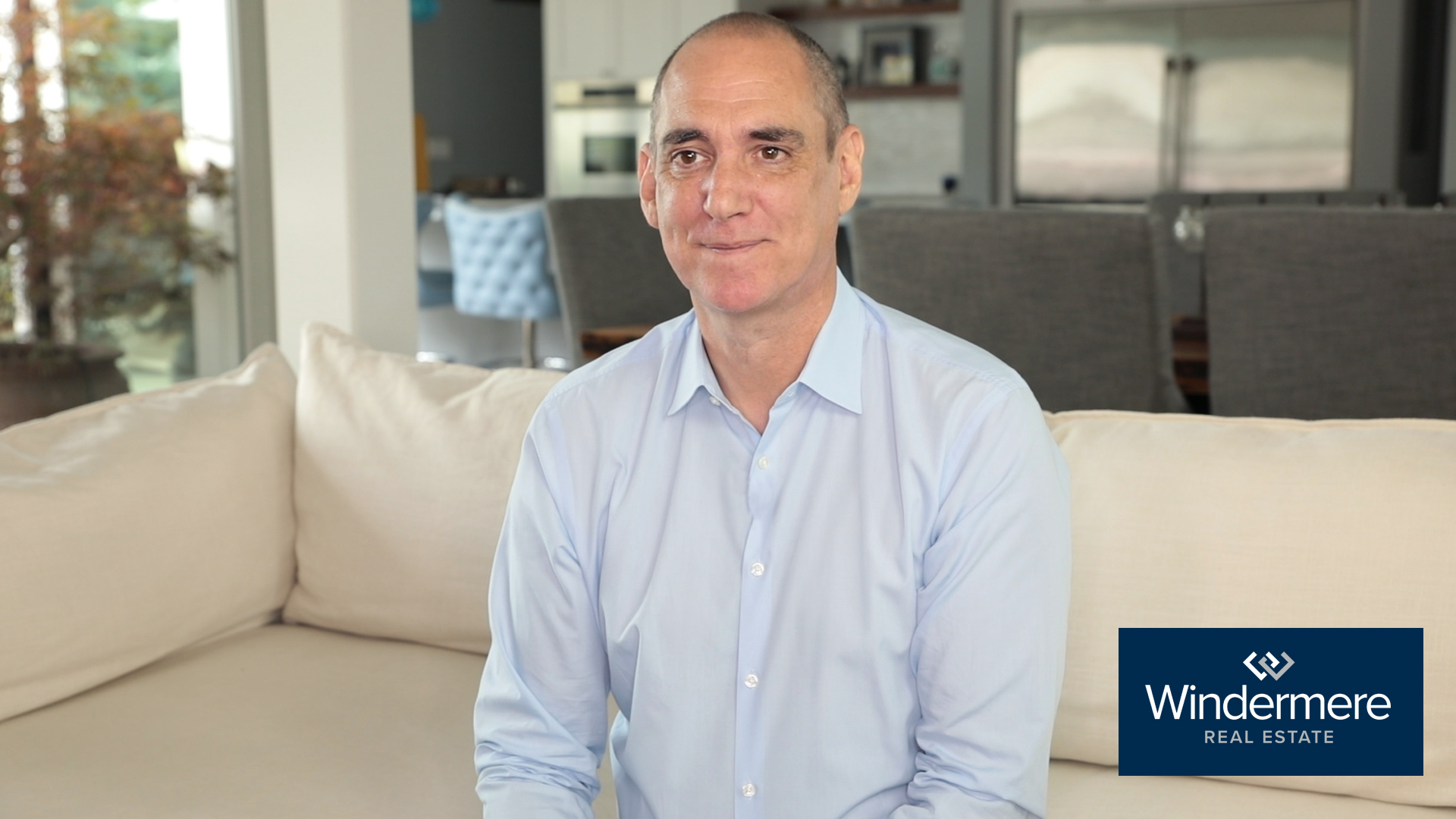
Windermere Real Estate Chief Economist Matthew Gardner explains the ways zoning rules and regulatory costs can limit housing affordability.

When it comes to luxury home design, if you can imagine it, it can be done. In-home spas, luxe bowling alleys, and glass wine rooms are just a few examples we’re seeing out there. The same idea extends outdoors to swimming pools, which are a must for most luxury homes. But we aren’t talking about just any old backyard pool; they’re usually more masterpiece than mainstream. We consulted a few designers to get some insights into what’s trending in the world of luxury pools and here’s what we found.
Fire Features
Photo credit to AAA Custom Pools Inc.
Custom Art Accoutrement

Photo credit to Van Kirk & Sons Pools and Spas.
Nature-Infused Design

Photo credit to HomesOfTheRich.Net.

The yearning to move lives in the spirit of many homeowners, but that desire for something new is often at odds with what feels feasible. That sense of newness needn't come from a dramatic uprooting, however. The great part about having a home of your own is you can make improvements and give your home a chance to evolve over time. You just need to help your home live up to its potential! We picked seven of our favorite improvements to help you make the most of your home.


The following analysis of the Montana real estate market is provided by Windermere Real Estate Chief Economist Matthew Gardner. We hope that this information may assist you with making better-informed real estate decisions. For further information about the housing market in your area, please don’t hesitate to contact your Windermere agent.
ECONOMIC OVERVIEW
According to the Labor Department, Montana added 2,900 non-agricultural jobs over the past 12 months, representing an annual growth rate of 0.6%. For perspective, the U.S growth rate is running at about 1.6%. Although the state has experienced significant increases in employment since the last recession, the pace of growth has slowed significantly, which is mainly due to a lack of workers, rather than a lack of demand for new employees. Although the annual growth rate was somewhat tepid, I believe Montana’s non-farm employment will increase by 2% by the end of 2018.
In June, the state unemployment rate was a healthy 3.8%, down from 4.0% a year ago.
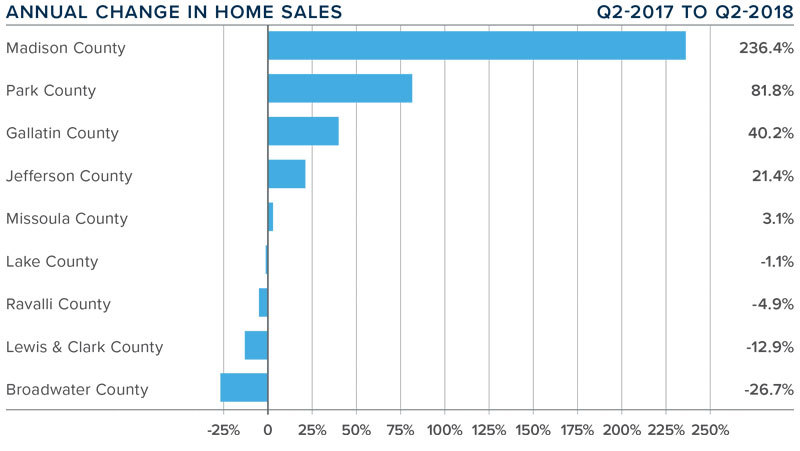
HOME SALES ACTIVITY
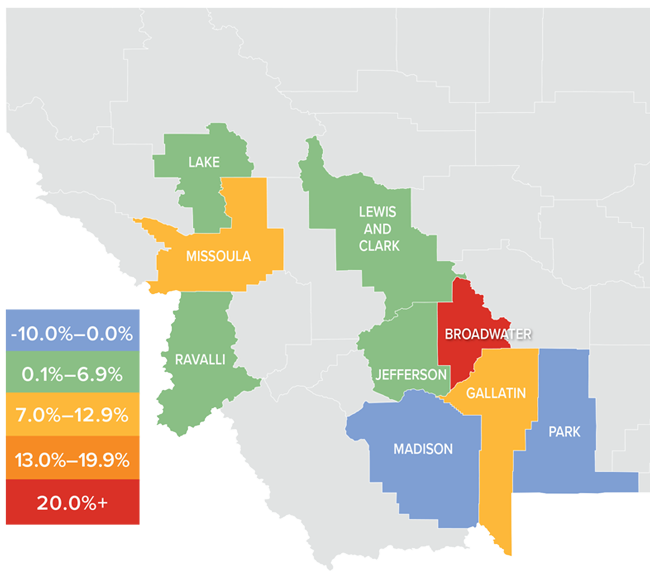
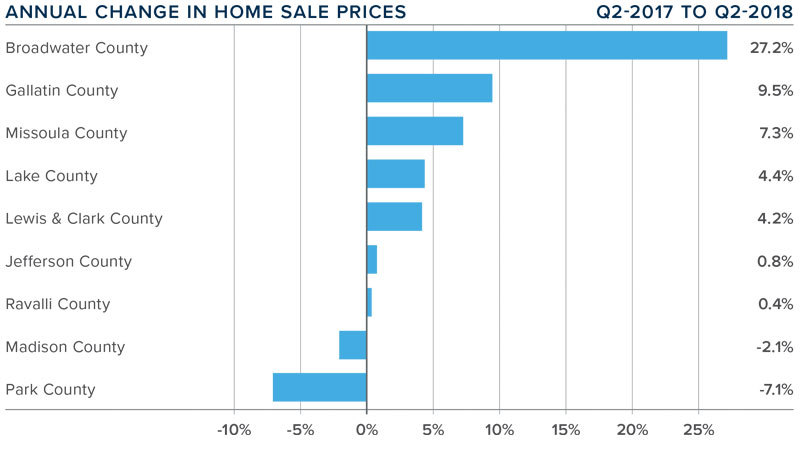
HOME PRICES
DAYS ON MARKET
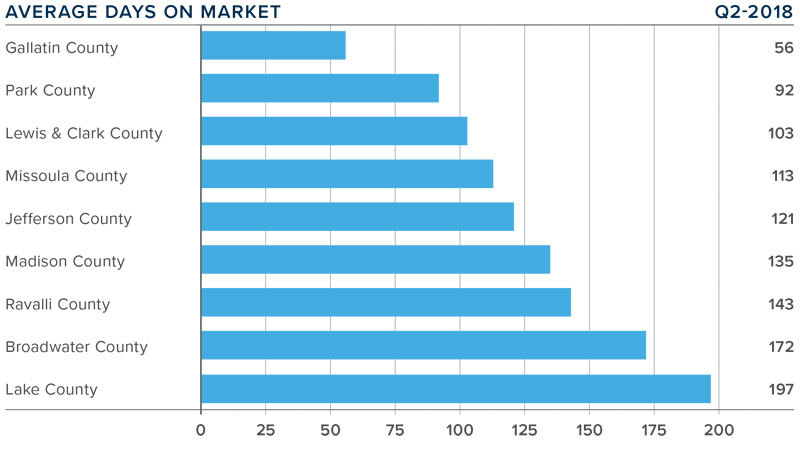
CONCLUSIONS
 The speedometer reflects the state of the region’s housing market using housing inventory, price gains, home sales, interest rates, and larger economic factors.
For the second quarter of 2018, I have placed the needle well into sellers’ territory despite the growth in inventory, which will be a relief to home buyers. Well-priced and well-positioned homes are selling quickly and regional price growth is well above the long-term average as demand still exceeds supply. Housing affordability is still a concern in some markets, and this is something that I will be watching as we move through the balance of 2018.

Matthew Gardner is the Chief Economist for Windermere Real Estate, specializing in residential market analysis, commercial/industrial market analysis, financial analysis, and land use and regional economics. He is the former Principal of Gardner Economics and has more than 30 years of professional experience both in the U.S. and U.K.

The following analysis of the Oregon and Southwest Washington real estate market is provided by Windermere Real Estate Chief Economist Matthew Gardner. We hope that this information may assist you with making better-informed real estate decisions. For further information about the housing market in your area, please don’t hesitate to contact your Windermere agent.
ECONOMIC OVERVIEW
The State of Oregon has added 30,400 new jobs over the past 12 months, representing a reasonable annual growth rate of 1.6%. It is clear, however, that job growth in Oregon has started to taper, with the annual rate dropping below 2% in the early spring of this year. This is no great cause for concern as the state has essentially reached full employment, which tends to slow employment growth.
The Southwest Washington market area added 5,580 new jobs over the past 12 months, representing an annual growth rate of 2.7%.
Oregon’s unemployment rate was 4.0% in June, marginally below the 4.1% rate seen a year ago. In Southwest Washington, the unemployment rate was measured at 5.3%, marginally lower than the year-ago rate of 5.4%.
HOME SALES ACTIVITY
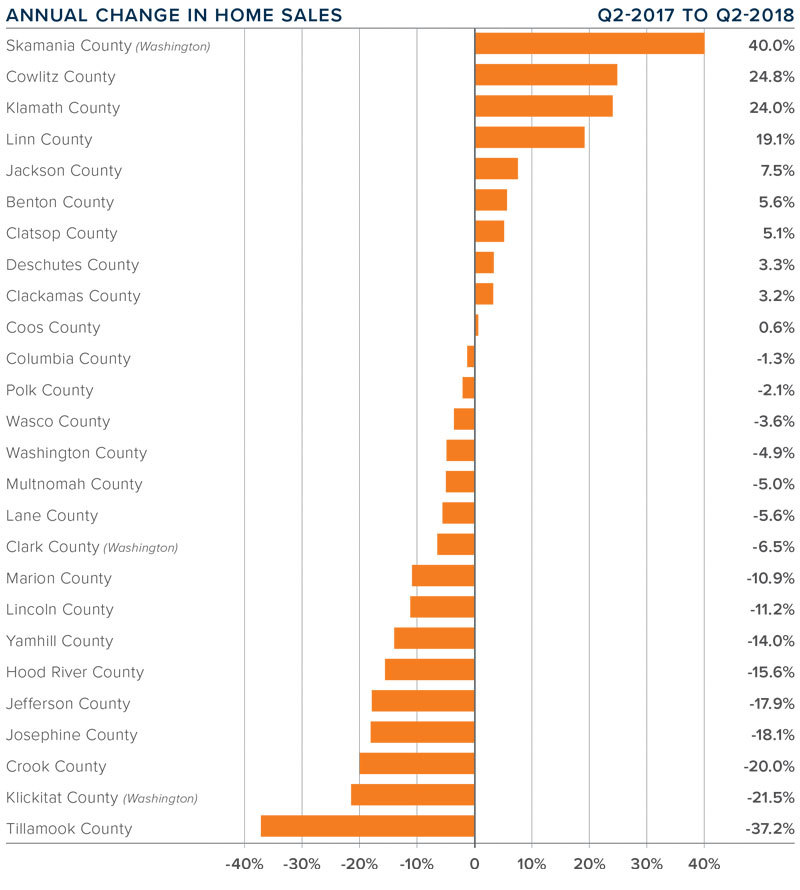
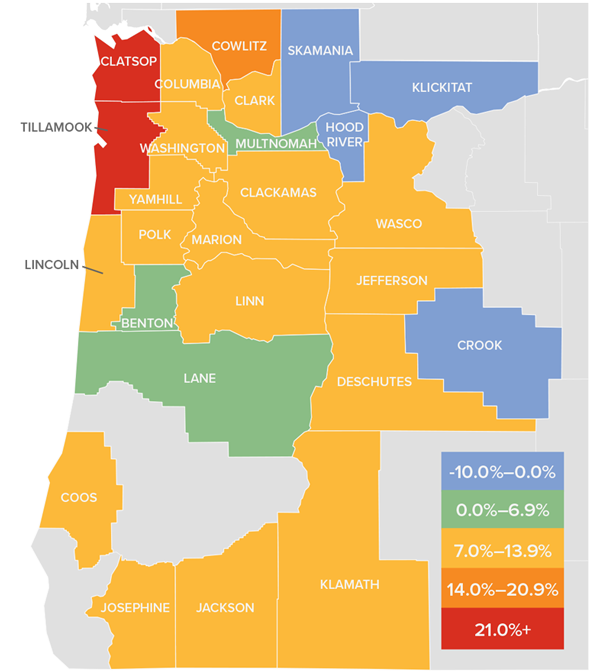
HOME PRICES
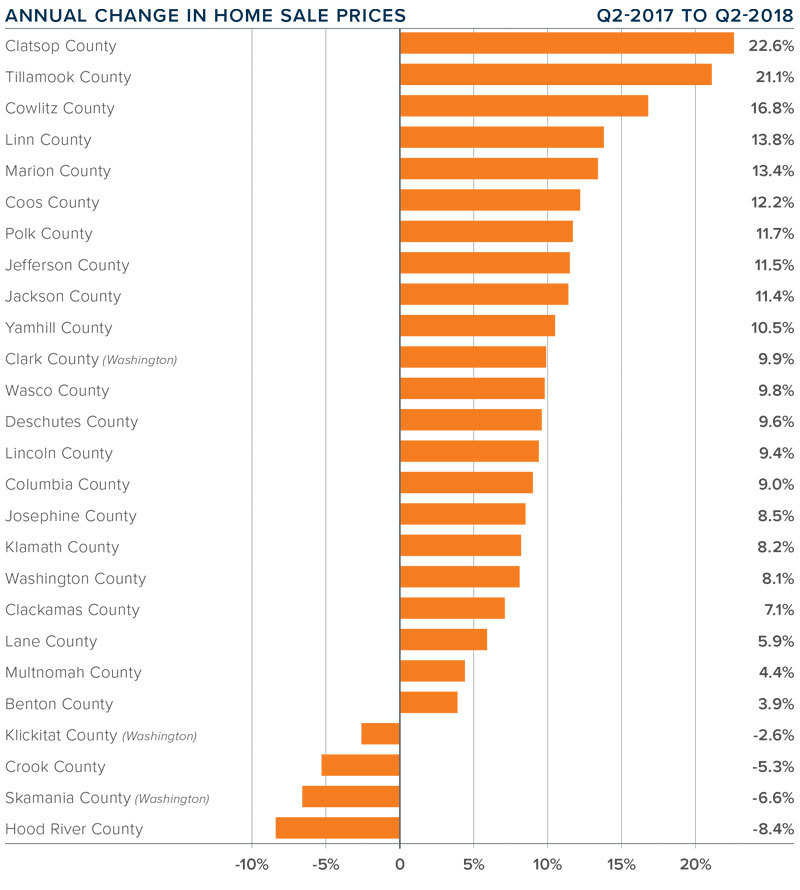
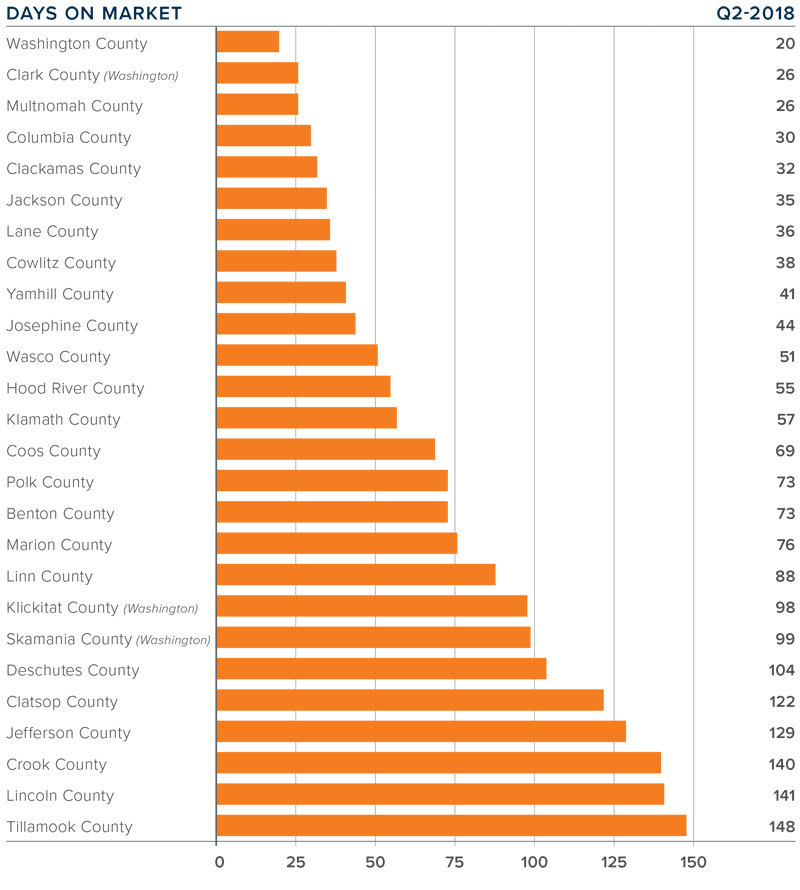
DAYS ON MARKET
CONCLUSIONS
 The speedometer reflects the state of the region’s housing market using housing inventory, price gains, home sales, interest rates, and larger economic factors.
Housing markets throughout Oregon and Southwest Washington continue to benefit greatly from the healthy regional economy. Home sales remain solid; however, we are seeing some slowdown in prices, which I consider to be positive as affordability issues could start to taper. That said, housing inventory is still well below balanced-market levels. Sellers remain in the driver’s seat, but I am hopeful that inventory levels will start to increase, which will be a relief to home buyers. Because of this, the needle remains the same as last quarter.
Matthew Gardner is the Chief Economist for Windermere Real Estate, specializing in residential market analysis, commercial/industrial market analysis, financial analysis, and land use and regional economics. He is the former Principal of Gardner Economics and has more than 30 years of professional experience both in the U.S. and U.K.

The following analysis of select Idaho real estate markets is provided by Windermere Real Estate Chief Economist Matthew Gardner. We hope that this information may assist you with making better-informed real estate decisions. For further information about the housing market in your area, please don’t hesitate to contact your Windermere agent.
ECONOMIC OVERVIEW
Job growth in Idaho tapered somewhat over the past few months but the state is still adding jobs at a fair pace. In total, the state has added 21,800 new jobs over the past 12 months, representing a solid growth rate of 3.1%.
In May, the state unemployment rate was 3.1%, down from 3.4% a year ago. The state is, essentially, at full employment but I still stand by my forecast that Idaho will have added around 20,000 new jobs by the end of 2018.
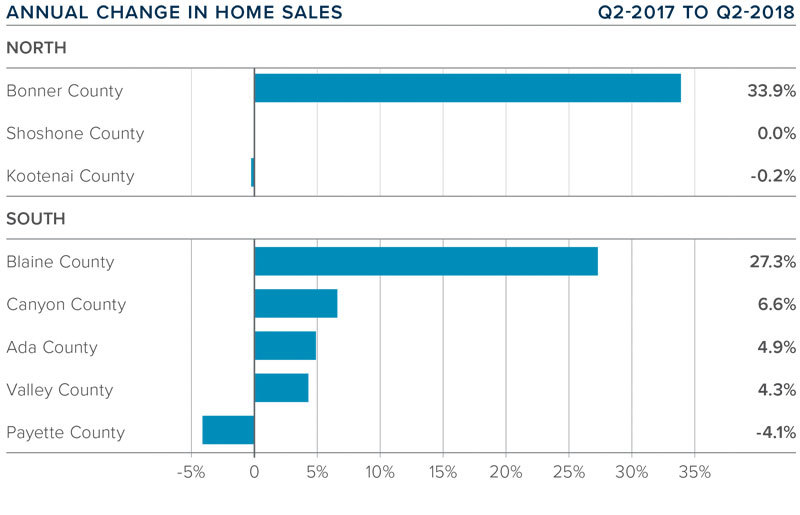
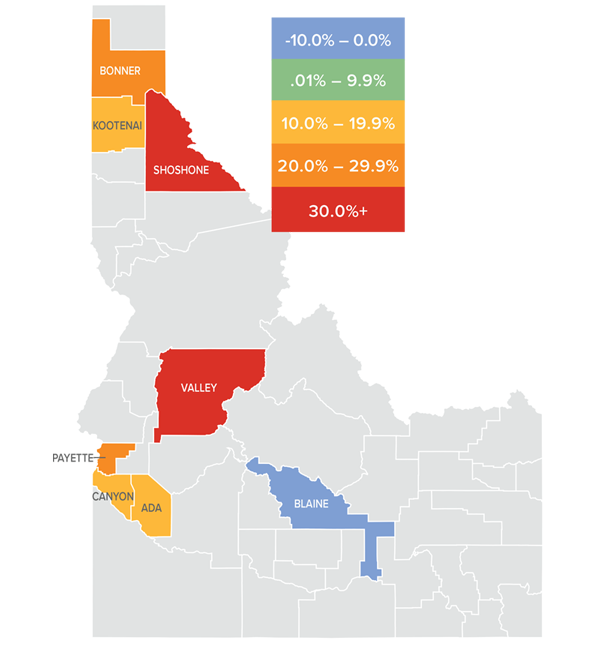
HOME SALES ACTIVITY
HOME PRICES
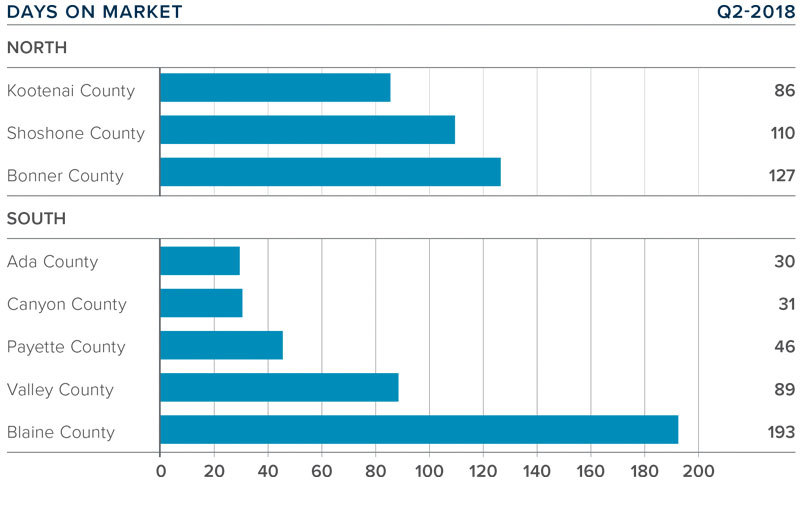
DAYS ON MARKET
CONCLUSIONS

The speedometer reflects the state of the region’s housing market using housing inventory, price gains, home sales, interest rates, and larger economic factors.
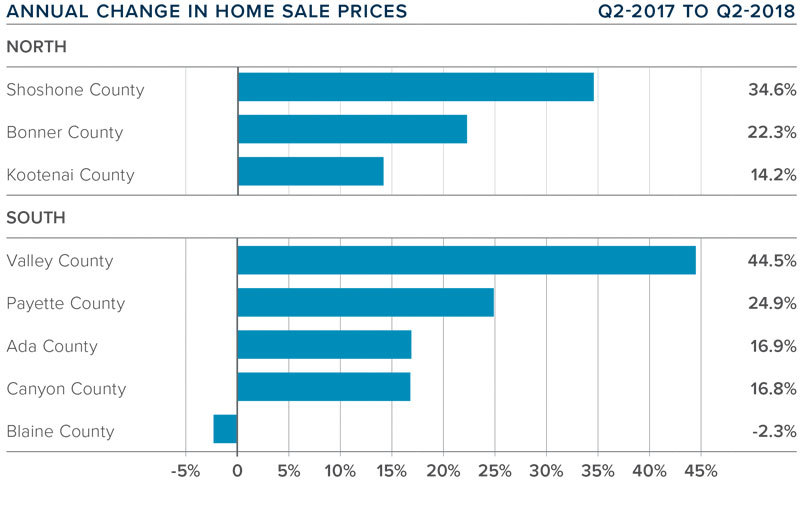
Confidence in housing has not diminished even in the face of modestly rising interest rates, causing the markets in this report to perform well overall. Home prices will continue to appreciate at above-average rates as long as inventory does not meet demand. As such, I have moved the needle just a little more in favor of home sellers.
Matthew Gardner is the Chief Economist for Windermere Real Estate, specializing in residential market analysis, commercial/industrial market analysis, financial analysis, and land use and regional economics. He is the former Principal of Gardner Economics and has more than 30 years of professional experience both in the U.S. and U.K.

The following analysis of the Central Washington real estate market is provided by Windermere Real Estate Chief Economist Matthew Gardner. We hope that this information may assist you with making better-informed real estate decisions. For further information about the housing market in your area, please don’t hesitate to contact your Windermere agent.
ECONOMIC OVERVIEW
The Washington State economy added 83,900 new jobs over the past 12 months, representing an annual growth rate of 2.5%. This is a slowdown from the last quarter, but employment growth remains well above the national rate of 1.6%. Employment gains continue to be robust in the private sector, which was up by 2.8%. The public sector (government) grew by a more modest 1.1%. Last quarter the state’s unemployment rate was 4.7%, down from 4.8% a year ago.
Washington State will continue adding jobs for the balance of the year and I anticipate total job growth for 2018 will be around 80,000, representing a total employment growth rate of 2.4%.
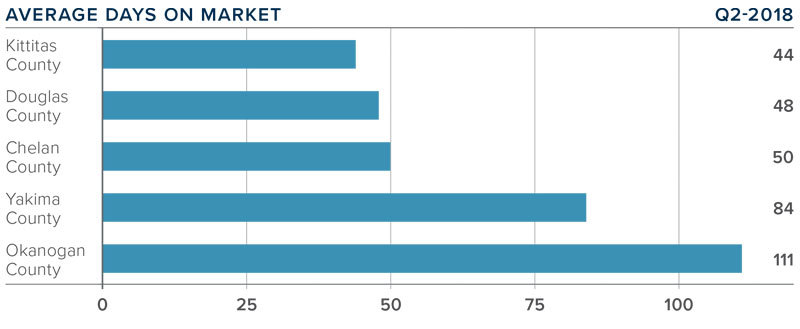
The counties within Central Washington have added 2,709 new jobs over the past 12 months, for a growth rate of 1.2%. The local unemployment rate for the area continued to fall, with a drop from 5.9% to 5.6%.
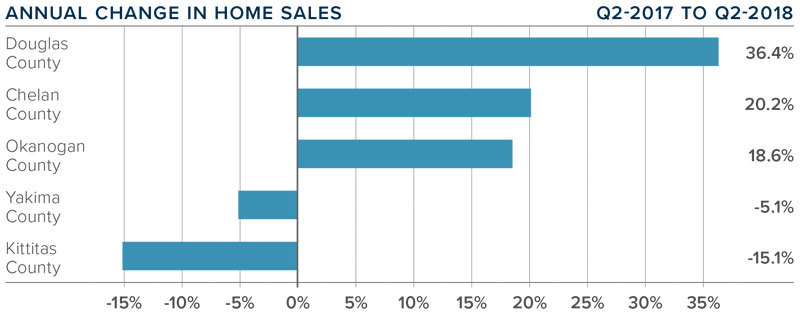
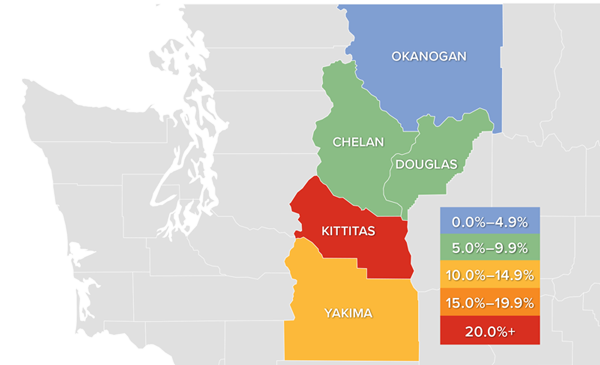
HOME SALES ACTIVITY
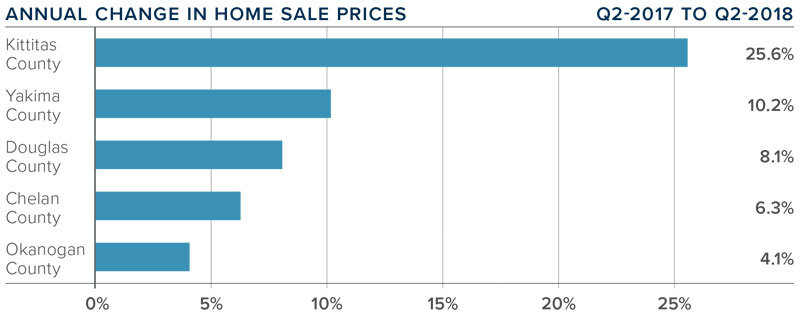
HOME PRICES
DAYS ON MARKET
CONCLUSIONS

This speedometer reflects the state of the region’s real estate market using housing inventory, price gains, home sales, interest rates, and larger economic factors.
For the second quarter of 2018, I have moved the needle a little farther in favor of sellers. Although it was good to see inventories increase, the Central Washington market remains tight thanks to low housing supply and high buyer demand.
Matthew Gardner is the Chief Economist for Windermere Real Estate, specializing in residential market analysis, commercial/industrial market analysis, financial analysis, and land use and regional economics. He is the former Principal of Gardner Economics and has more than 30 years of professional experience both in the U.S. and U.K.

When making an important decision like buying a new home, personal circumstances are often a driving force. Whether you are a first-time homebuyer, need more space for your growing family, downsizing to fit an empty nest, or looking for a retirement property, finding the right information, the right real estate agent, and the right properties that fit your needs are all important parts of that process. Based on recent studies by the National Association of REALTORS®on generational trends, we can identify the best resources to help you in any phase of your life.
Among all generations, the first step most buyers take when searching for a home is online. Younger generations tend to find the home they eventually purchase online, while older generations generally find the home they purchase through their real estate agent.
Across generations, home ownership still represents a significant step in achieving the American Dream. According to a study by LearnVest, an online financial resource, 77 percent of those surveyed believed that buying a home of their own was, “first and foremost in achieving the American Dream”.
How that dream manifests is different for those who have grown up in different eras.
Millennials:
1980-2000
Also known as Generation Y or the Echo Boomers because this generation almost equals the baby boomers in population. This age group is the second largest group of recent homebuyers, representing 28 percent according to the National Association of REALTORS. 79 percent of homebuyers in this age are purchasing their first home. According to the 2012 Trulia American Dream Study, 93 percent of renters in this generation plan on purchasing a home someday.
When considering a home purchase, Millennials (and some Generation X buyers) place a high value on convenience to work, affordability, and the quality of school district. This generation is the most likely to choose an urban center as the location of their first home. According to market research by Gfk Roper, this group is most interested in their home as a social hub, with a focus on entertainment and amenities.
When looking for a real estate agent, Millennials are most likely to looks to friends and family for a referral. They generally place a high value on an agent’s honesty and trustworthiness because they are often relying on their agent to walk them through the home purchase process for the first time.
Generation X:
1965-1979
As the largest group of recent homebuyers, the LearnVest findings suggest that 72 percent of Americans in this generation are already homeowners. They also represent the largest group of home sellers, with a substantial percentage of the group looking to upgrade their home to accommodate their growing families or increase investment. Experts in the real estate industry expect this group to lead in the recovered real estate market.
Generation X households are more likely to have a dual income, with both adult members in the household working. According to a study by GfK Roper, a market research company, this generation placed state-of-the-art kitchens at the top of their priorities, as well as large closets and amenities for organization, since many Gen Xers have children living in their homes. They are less concerned about formality in their home and have less interest in formal dining and living rooms.
Baby Boomers:
1946-1964
Interestingly enough, the NAR study finds that as the age of the homebuyer increases, the age of the home being purchased declines. Baby boomers and older buyers are looking for newer construction, with less need for renovations or large maintenance issues. This generation ranks state-of-the-art kitchens, whirlpool baths, walk-in closets, and hobby spaces high on their list of must-haves, according to GfK Roper.
The boomer generation is also looking to the future for both themselves and their aging parents, “fourteen percent of homebuyers over the age of 48 are looking to purchase senior-related homes, for themselves or others” according to the NAR study. Boomer parents are becoming accustomed to (or preparing for) an empty nest, so this group may be downsizing or looking for a home that specifically fits their needs.
Silent Generation:
1925-1945
This generation of buyers places a bigger emphasis on finding a home closer to friends, family, and health facilities. While this generation uses the Internet to find their home in the early stages of a home search, they work more directly with a trusted real estate agent to find the home that specifically fits their needs. A home purchase for members of this generation will likely not be a first-time experience so they are less willing to compromise on the price, size, or condition of a home.
This generation is generally more satisfied with the homebuying and selling process because they have been through it before and know what to expect. According to the Trulia American Dream study, this group is also most likely to have realistic assumptions about the cost of a home and mortgage.

The following analysis of select counties of the Utah real estate market is provided by Windermere Real Estate Chief Economist Matthew Gardner. We hope that this information may assist you with making better-informed real estate decisions. For further information about the housing market in your area, please don’t hesitate to contact your Windermere agent.
ECONOMIC OVERVIEW
According to the Labor Department, Utah added 49,800 non-agricultural jobs over the past 12 months, representing a substantial growth rate of 3.4%. For perspective, the U.S growth rate is running at about 1.6%. Monthly employment gains have averaged 4,520 new jobs per month so far in 2018. I am becoming increasingly confident that we will end the year having added 50,000 new jobs.
In February, the state unemployment rate was 3%, down from 3.3% a year ago.
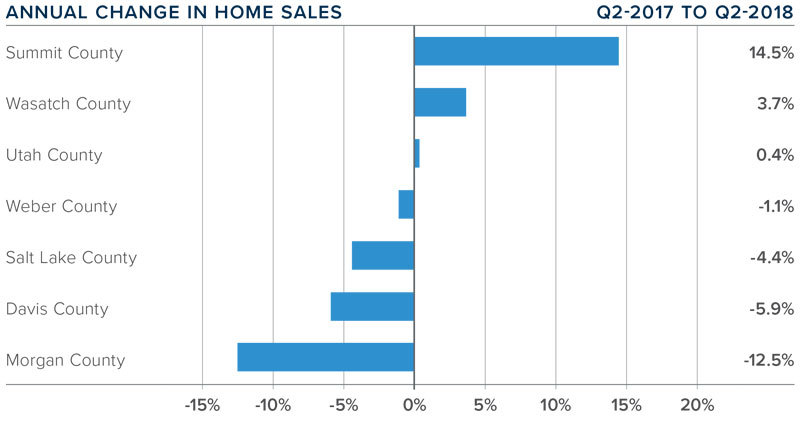
HOME SALES ACTIVITY
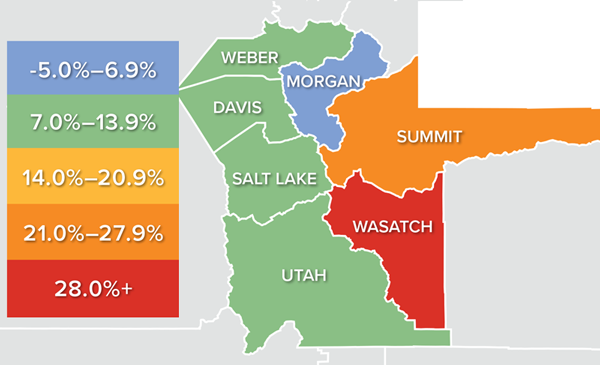
HOME PRICES
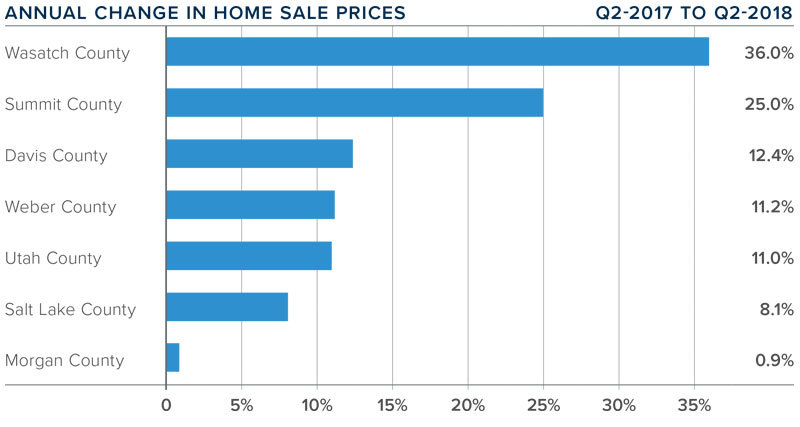
DAYS ON MARKET
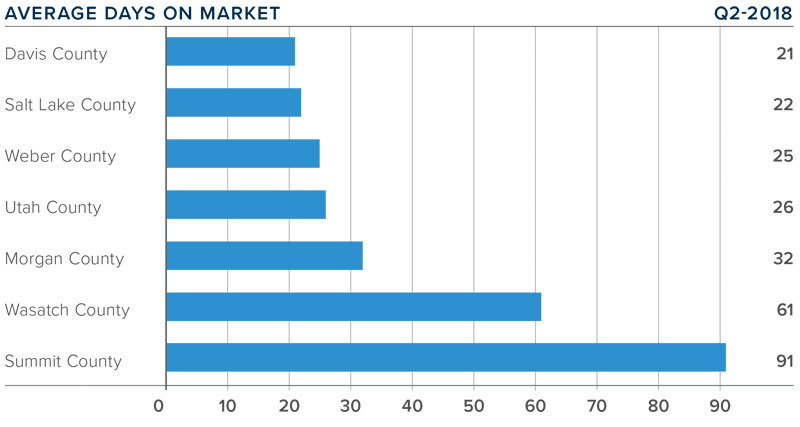
CONCLUSIONS
 This speedometer reflects the state of the region’s real estate market using housing inventory, price gains, home sales, interest rates, and larger economic factors. For the second quarter of 2018, I left the needle at the same position as first quarter. Listing activity — while still well below the level I would like to see — is showing some signs of improving, which will be a relief to would-be home buyers.
Matthew Gardner is the Chief Economist for Windermere Real Estate, specializing in residential market analysis, commercial/industrial market analysis, financial analysis, and land use and regional economics. He is the former Principal of Gardner Economics and has more than 30 years of professional experience both in the U.S. and U.K.


The following analysis of the Eastern Washington real estate market is provided by Windermere Real Estate Chief Economist Matthew Gardner. We hope that this information may assist you with making better-informed real estate decisions. For further information about the housing market in your area, please don’t hesitate to contact your Windermere agent.
ECONOMIC OVERVIEW
The Washington State economy added 83,900 new jobs over the past 12 months, representing an annual growth rate of 2.5%. This is a slowdown from last quarter, but employment growth remains well above the national rate of 1.6%. Employment gains continue to be robust in the private sector, which was up by 2.8%. The public sector (government) grew by a more modest 1.1%.
The Eastern Washington region added 7,077 new jobs over the past 12 months, representing an annual growth rate of 1.6%. The unemployment rate for the counties covered by this report was 5%, down marginally from 5.1% a year ago.
HOME SALES ACTIVITY
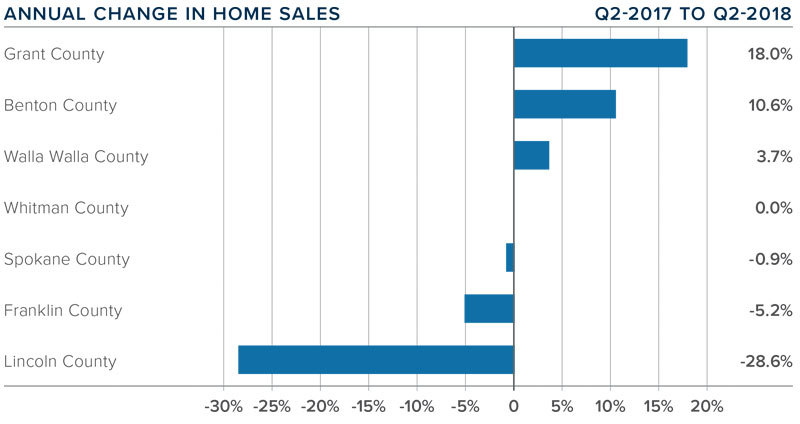
HOME PRICES
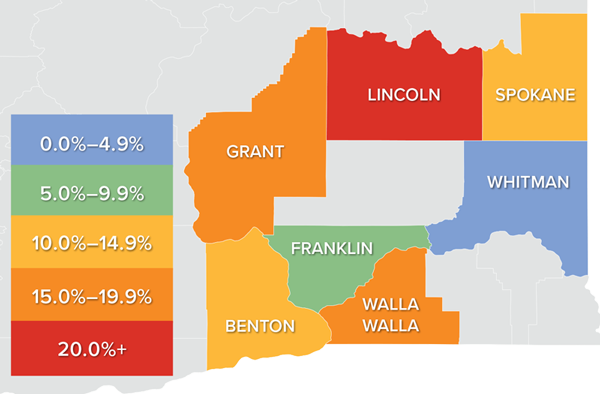
DAYS ON MARKET
CONCLUSIONS

This speedometer reflects the state of the regions real estate market using housing inventory, price gains, home sales, interest rates, and larger economic factors.
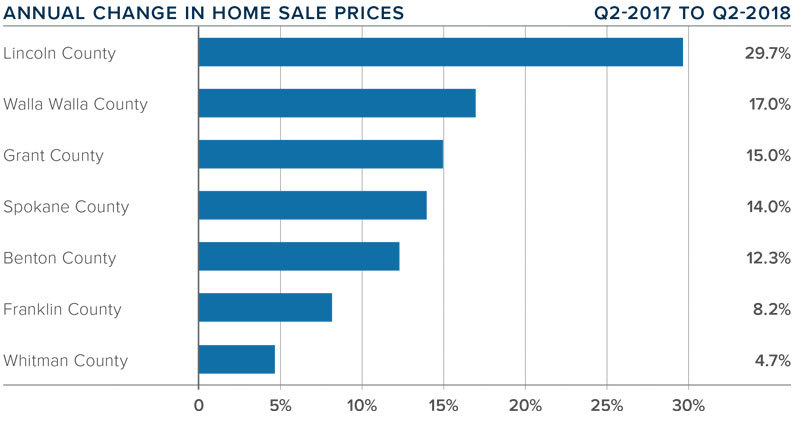
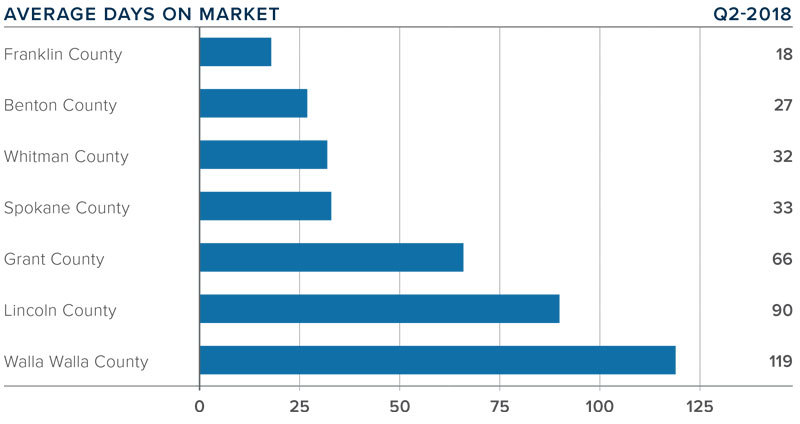
As mentioned previously, listing activity continues to rise in Franklin and Benton Counties, which is positive news for buyers in those areas. That said, the overall trend in Eastern Washington remains in favor of home sellers, so I moved the needle a little more in their direction.
Matthew Gardner is the Chief Economist for Windermere Real Estate, specializing in residential market analysis, commercial/industrial market analysis, financial analysis, and land use and regional economics. He is the former Principal of Gardner Economics and has more than 30 years of professional experience both in the U.S. and U.K.