Market News April 29, 2020

Idaho Real Estate Market Update


The following analysis of select counties of the Idaho real estate market is provided by Windermere Real Estate Chief Economist, Matthew Gardner. We hope that this information may assist you with making better-informed real estate decisions. For further information about the housing market in your area, please don’t hesitate to contact your Windermere agent. 


A MESSAGE FROM MATTHEW GARDNER

Needless to say, any discussion about the U.S. economy, state economy, or housing markets in the first quarter of this year is almost meaningless given events surrounding the COVID-19 virus.

Although you will see below data regarding housing activity in the region, many markets came close to halting transactions in March and many remain in some level of paralysis. As such, drawing conclusions from the data is almost a futile effort. I would say, though, it is my belief that the national and state housing markets were in good shape before the virus hit and will be in good shape again, once we come out on the other side. In a similar fashion, I anticipate the national and regional economies will start to thaw, and that many of the jobs lost will return with relative speed. Of course, all of these statements are wholly dependent on the country seeing a peak in new infections in the relatively near future. I stand by my contention that the housing market will survive the current economic crisis and it is likely we will resume a more normalized pattern of home sales in the second half of the year.


HOME SALES

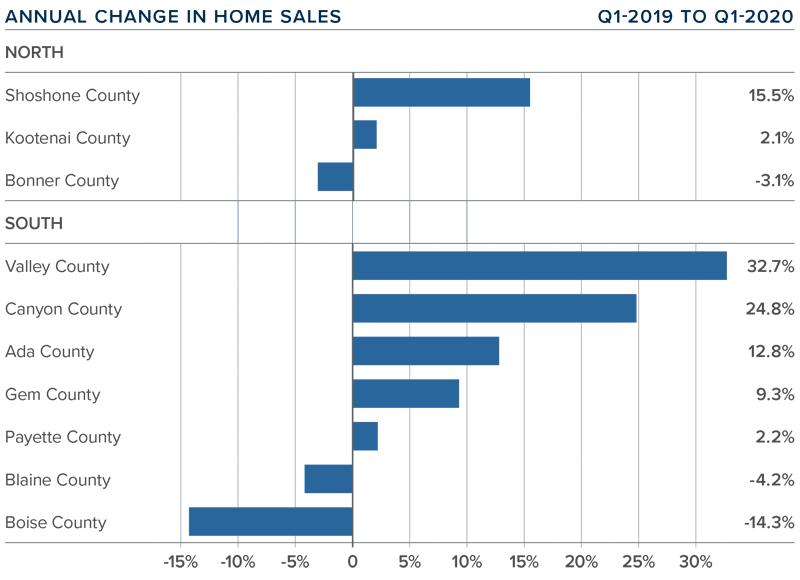
  • During the first quarter of 2020, 5,128 homes were sold, representing a solid increase of 12.6% compared to the first quarter of 2019 but down 9.9% compared to the fourth quarter of 2019.
  • In Northern Idaho, Shoshone County experienced a significant increase in sales — up 15.5% over the first quarter of 2019. There was a modest increase in Kootenai Country and a very slight contraction in Bonner County. In Southern Idaho, sales rose by double digits in Valley, Canyon, and Ada counties. Blaine and Boise counties showed a modest decline in sales.
  • Year-over-year sales growth was positive in two of three of the Northern Idaho counties, and sales rose in all but two Southern Idaho market areas over the same period a year ago.
  • Pending sales rose in the quarter, suggesting that closed sales in the second quarter will be positive regardless of COVID-19.


HOME PRICES

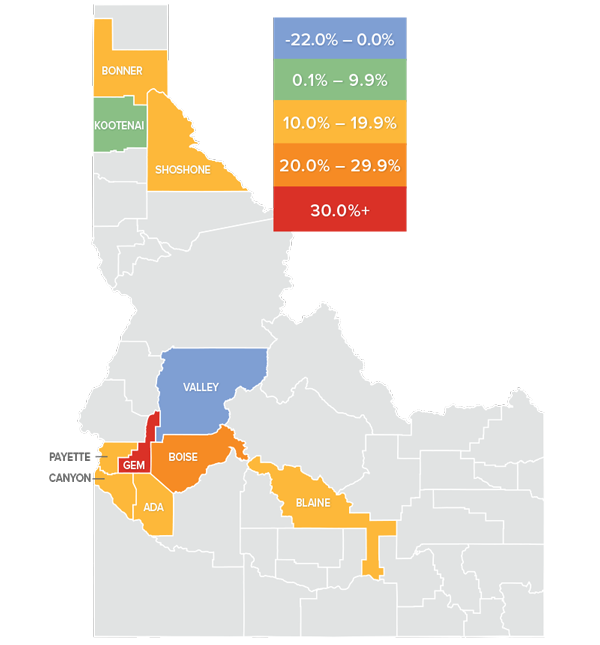
  • The average home price in the region rose 11.3% year-over-year to $382,601. Prices were 1.5% higher than in the fourth quarter of 2019.
  • In Northern Idaho, Bonner County led the market with the strongest annual price growth, but there were solid gains in all counties. In Southern Idaho, Gem County saw prices rise a very significant 37.5%, and there were double-digit increases in all counties other than Valley.
  • Prices rose in all Northern Idaho counties covered by this report compared to the first quarter of 2019, and rose in all but one Southern Idaho county.
  • Inventory continues to be an issue, which is driving up home prices. Listing activity was down 7.2% compared to the first quarter of 2019. Listing activity was also down 8.8% compared to the final quarter of 2019.


DAYS ON MARKET

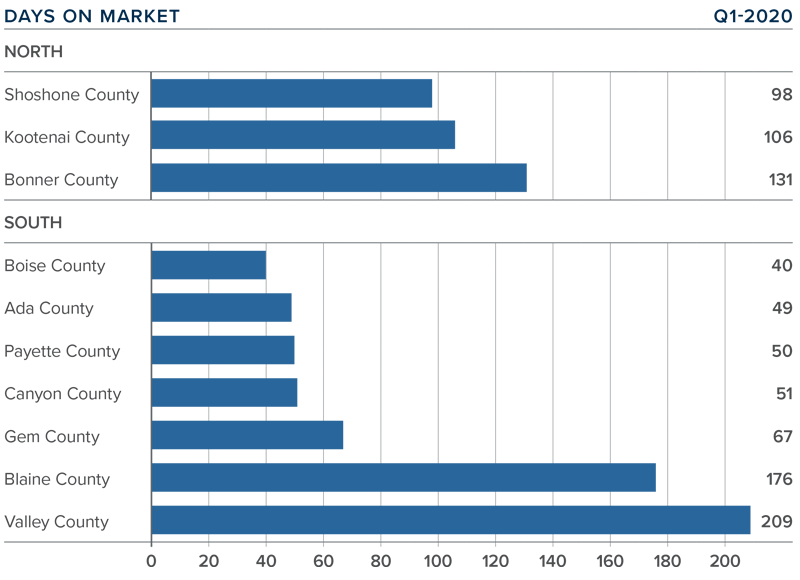
  • It took an average of 112 days to sell a home in Northern Idaho, and 92 days in the southern part of the state covered by this report.
  • In Northern Idaho, days on market dropped across the board. In Southern Idaho, market time dropped in Boise and Payette counties but rose in the other areas covered by this report.
  • The average number of days it took to sell a home in the region dropped 2 days compared to the first quarter of 2019 but was up 21 days compared to the final quarter of 2019.
  • Homes sold the fastest in Boise and Ada counties.


CONCLUSIONS

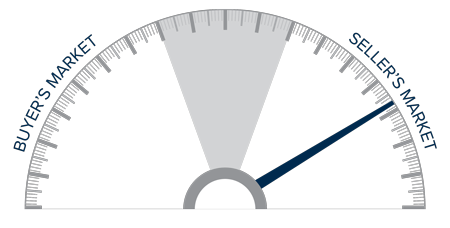
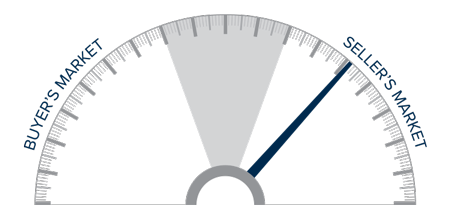
This speedometer reflects the state of the region’s real estate market using housing inventory, price gains, home sales, interest rates, and larger economic factors.

Given the current economic environment, I have decided to freeze the needle in place until we see
a restart in the economy. Once we have resumed “normal” economic activity, there will be a period of adjustment with regard to housing. Therefore, it is appropriate to wait until later in the year to offer my opinions about any quantitative impact the pandemic will have on the housing market.


ABOUT MATTHEW GARDNER

As Chief Economist for Windermere Real Estate, Matthew Gardner is responsible for analyzing and interpreting economic data and its impact on the real estate market on both a local and national level. Matthew has over 30 years of professional experience both in the U.S. and U.K.

In addition to his day-to-day responsibilities, Matthew sits on the Washington State Governors Council of Economic Advisors; chairs the Board of Trustees at the Washington Center for Real Estate Research at the University of Washington; and is an Advisory Board Member at the Runstad Center for Real Estate Studies at the University of Washington where he also lectures in real estate economics.

Market News April 28, 2020

Nevada Real Estate Market Update


The following analysis of the greater Las Vegas real estate market is provided by Windermere Real Estate Chief Economist Matthew Gardner. We hope that this information may assist you with making better-informed real estate decisions. For further information about the housing market in your area, please don’t hesitate to contact your Windermere agent.


A MESSAGE FROM MATTHEW GARDNER 

Needless to say, any discussion about the U.S. economy, state economy, or housing markets in the first quarter of this year is almost meaningless given events surrounding the COVID-19 virus.

Although you will see below data regarding housing activity in the region, many markets came close to halting transactions in March and many remain in some level of paralysis. As such, drawing conclusions from the data is almost a futile effort. I would say, though, it is my belief that the national and state housing markets were in good shape before the virus hit and will be in good shape again, once we come out on the other side. In a similar fashion, I anticipate the national and regional economies will start to thaw, and that many of the jobs lost will return with relative speed. Of course, all of these statements are wholly dependent on the country seeing a peak in new infections in the relatively near future. I stand by my contention that the housing market will survive the current economic crisis and it is likely we will resume a more normalized pattern of home sales in the second half of the year.


HOME SALES

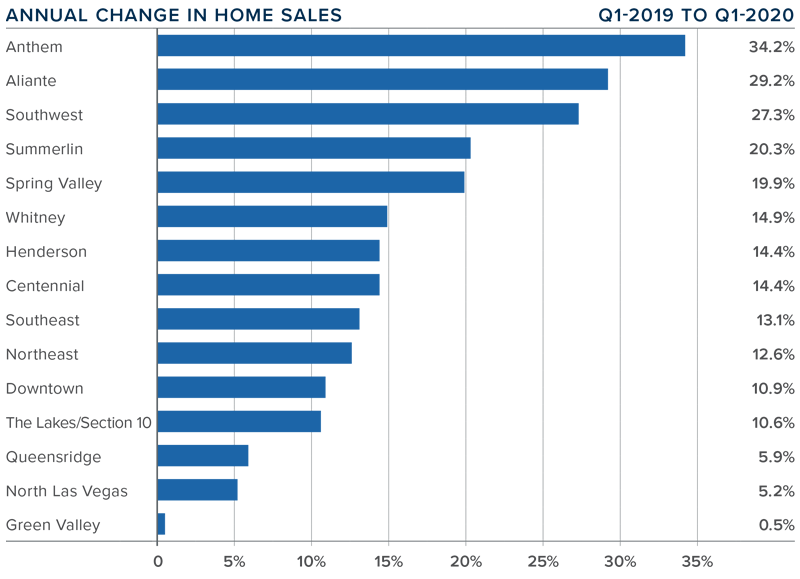
  • A total of 7,876 homes were sold in the first quarter of 2020, an increase of 15.8% over the same period a year ago, but 3.4% lower than in the final quarter of 2019.
  • Pending sales rose 1.1% year-over-year and, somewhat counterintuitively, were 8.4% higher than in the fourth quarter of 2019. Clearly the impacts of COVID-19 took longer to be felt in Nevada, but we are sure to see slowing activity in the second quarter.
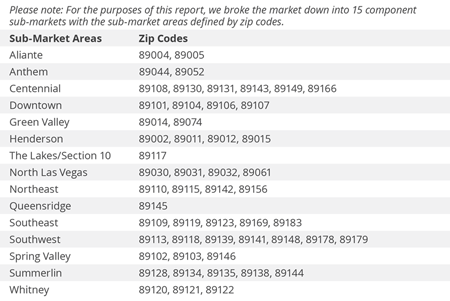
  • Sales rose in all the sub-market areas contained in this report, with significant increases in Anthem, Aliante, and Southwest Las Vegas.
  • The significant impacts of COVID-19 are being felt across the country, but given Las Vegas’ dependence on the leisure and hospitality sectors, it should be assumed that sales will drop until normal business operations resume.


HOME PRICES

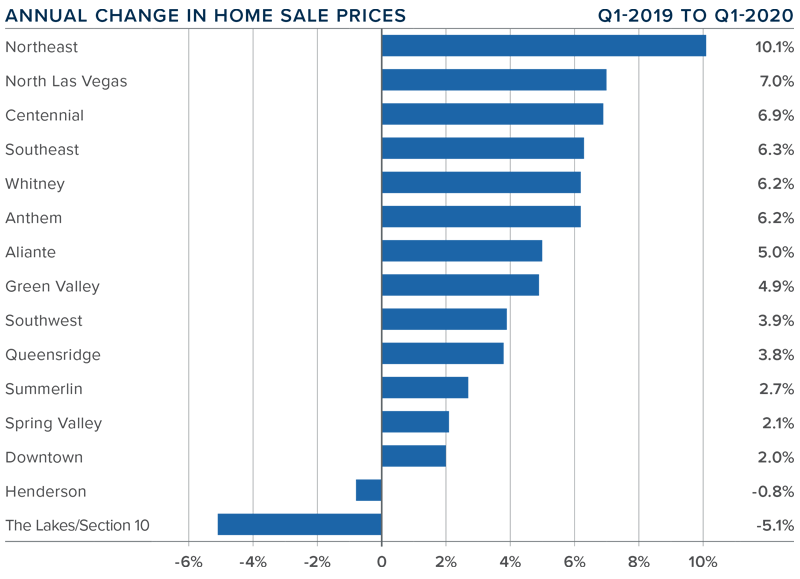
  • Home prices in the area rose 5.2% compared to the first quarter of 2019 to an average of $327,017. Prices were also up 0.4% compared to the final quarter of 2019.
  • Annual home price growth was impressive and continues to rise at rates well above most of the nation.
  • Prices rose in all but two sub-markets compared to the same quarter last year. The strongest price growth was in the Northeast Las Vegas sub-market, where prices were up 10.1%.
  • Even as conventional mortgage rates remain very attractive, many businesses in the Las Vegas market have temporarily shuttered and this is likely to cause price growth to slow or turn negative until the market returns to normal business operations.


DAYS ON MARKET

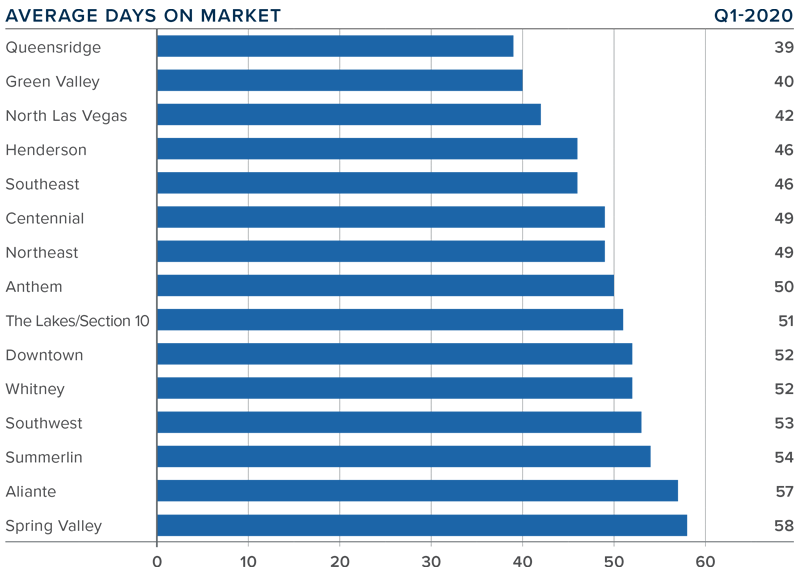
  • The average time it took to sell a home in the region rose three days compared to the first quarter of 2019.
  • Compared to a year ago, days-on-market rose in ten sub-markets, was static in one, and dropped in four.
  • Regionwide, it took an average of 49 days to sell a home in the first quarter of 2020 and 2 days longer to sell a home than during the final quarter of 2019.
  • The greatest drop in market time was in the Queensridge neighborhood, while the largest increase in market time was in the Downtown neighborhood.


CONCLUSIONS

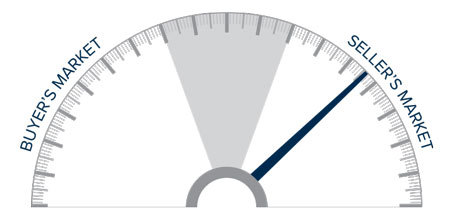
This speedometer reflects the state of the region’s real estate market using housing inventory, price gains, home sales, interest rates, and larger economic factors.

Given the current economic environment, I have decided to freeze the needle in place until we see a restart in the economy. Once we have resumed “normal” economic activity, there will be a period of adjustment with regard to housing. Therefore, it is appropriate to wait until later in the year to offer my opinions about any quantitative impact the pandemic will have on the housing market.


ABOUT MATTHEW GARDNER

As Chief Economist for Windermere Real Estate, Matthew Gardner is responsible for analyzing and interpreting economic data and its impact on the real estate market on both a local and national level. Matthew has over 30 years of professional experience both in the U.S. and U.K.

In addition to his day-to-day responsibilities, Matthew sits on the Washington State Governors Council of Economic Advisors; chairs the Board of Trustees at the Washington Center for Real Estate Research at the University of Washington; and is an Advisory Board Member at the Runstad Center for Real Estate Studies at the University of Washington where he also lectures in real estate economics.

Market News April 27, 2020

Matthew Gardner Weekly COVID-19 Housing & Economic Update: 4/27/2020

Market News April 27, 2020

Eastern Washington Real Estate Market Update


The following analysis of the Eastern Washington real estate market is provided by Windermere Real Estate Chief Economist Matthew Gardner. We hope that this information may assist you with making better-informed real estate decisions. For further information about the housing market in your area, please don’t hesitate to contact your Windermere agent.


A MESSAGE FROM MATTHEW GARDNER

Needless to say, any discussion about the U.S. economy, state economy, or housing markets in the first quarter of this year is almost meaningless given events surrounding the COVID-19 virus.

Although you will see below data regarding housing activity in the region, many markets came close to halting transactions in March and many remain in some level of paralysis. As such, drawing conclusions from the data is almost a futile effort. I would say, though, it is my belief that the national and state housing markets were in good shape before the virus hit and will be in good shape again, once we come out on the other side. In a similar fashion, I anticipate the national and regional economies will start to thaw, and that many of the jobs lost will return with relative speed. Of course, all of these statements are wholly dependent on the country seeing a peak in new infections in the relatively near future. I stand by my contention that the housing market will survive the current economic crisis and it is likely we will resume a more normalized pattern of home sales in the second half of the year.


HOME SALES

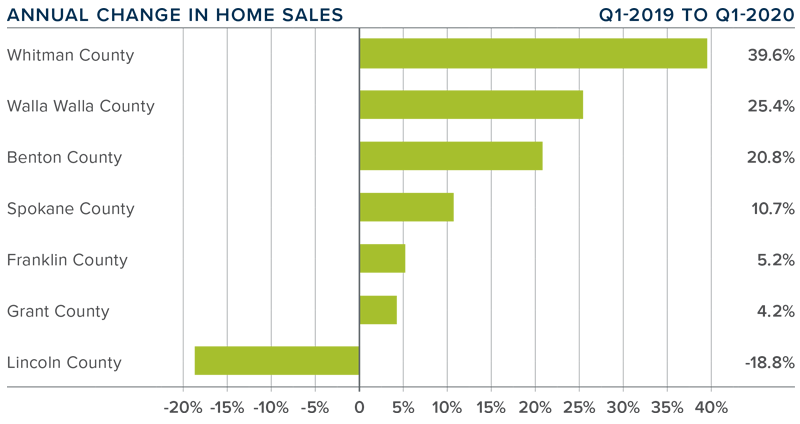
  • Home sales throughout Eastern Washington were up 13% compared to the same quarter in 2019, with a total of 2,389 closed sales.
  • During first quarter, pending home sales in the region were 18.8% higher than a year ago and 6.3% higher than in the fourth quarter of 2019. Despite these positive numbers, COVID-19 is likely to cause a drop in closed and pending transactions in the second quarter of this year.
  • Sales activity dropped in the small Lincoln County, but it was only three fewer sales compared to a year ago, so I’m not concerned.
  • The average number of homes for sale in the quarter was 26.8% lower than a year ago and 32.5% lower than the fourth quarter of 2019. I do not anticipate we will see any significant increases in listing activity until the second half of 2020 when, hopefully, we have returned to normal.


HOME PRICES

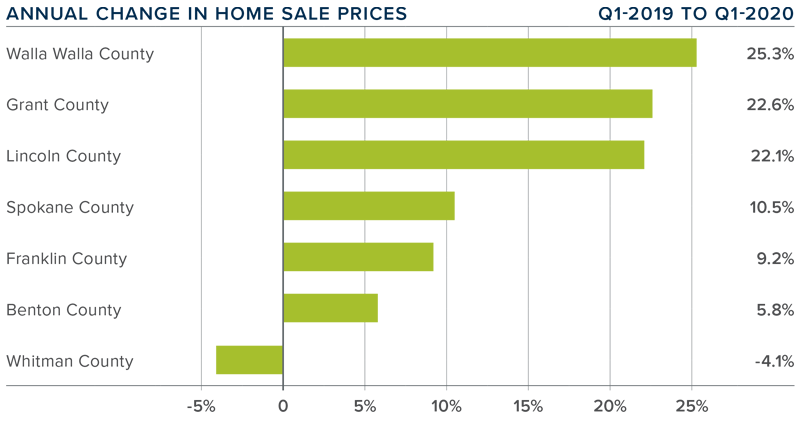
  • Year-over-year, the average home price in Eastern Washington rose a significant 10.9% to $297,590. Prices were also 0.2% higher than in the fourth quarter of 2019.
  • As mentioned previously, low inventory levels are pervasive and listing activity is unlikely to rise in the near future. Low inventory tends to put upward pressure on prices but that may not be the case if homebuyers remain sidelined until they see the economy in full recovery mode.
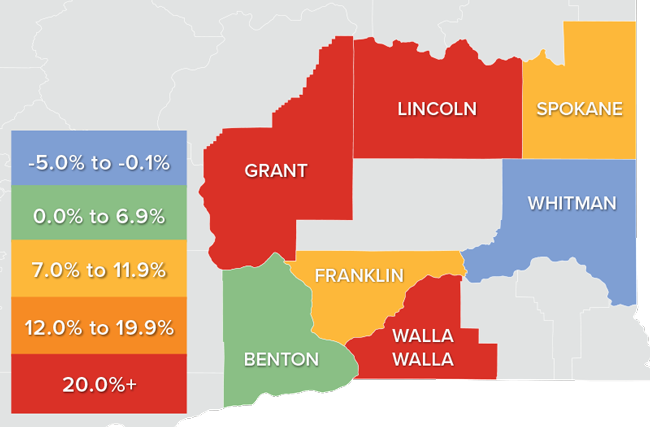
  • Prices rose everywhere but Whitman County, and all but two counties showed double-digit gains.
  • The takeaway is that average home-price growth in Eastern Washington has been well above the long-term average. This may change — temporarily — until buyers can fully assess the fallout from COVID-19.


DAYS ON MARKET

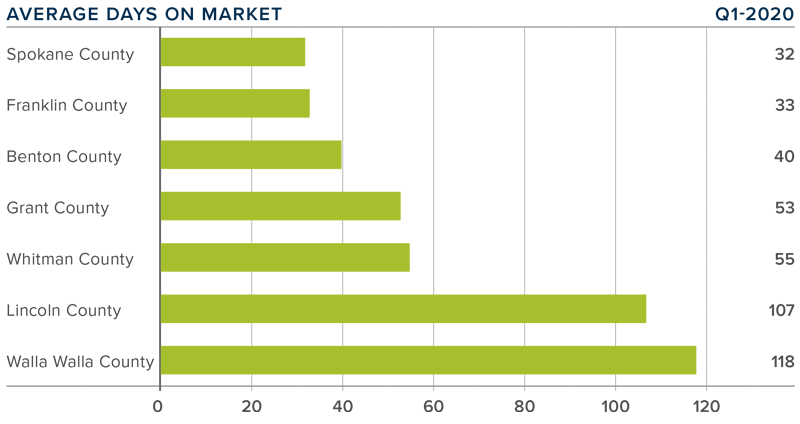
  • The average time it took to sell a home in Eastern Washington in the first quarter of 2020 was 62 days.
  • The regional market was split: it took longer to sell homes in Lincoln, Franklin, and Walla Walla counties, but days-on-market dropped in the balance of the region.
  • During the first quarter, it took five fewer days to sell a home in Eastern Washington than it did a year ago.
  • It took 14 days longer to sell a home in the first quarter than it did in the final quarter of 2019.


CONCLUSIONS

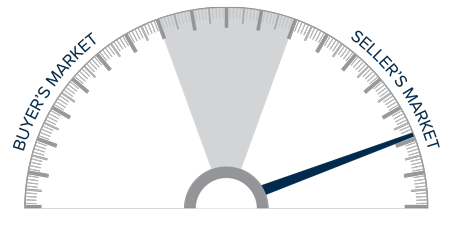
This speedometer reflects the state of the region’s real estate market using housing inventory, price gains, home sales, interest rates, and larger economic factors.

Given the current economic environment, I have decided to freeze the needle in place until we see
a restart in the economy. Once we have resumed “normal” economic activity, there will be a period of adjustment with regard to housing. Therefore, it is appropriate to wait until later in the year to offer my opinions about any quantitative impact the pandemic will have on the housing market.


ABOUT MATTHEW GARDNER

As Chief Economist for Windermere Real Estate, Matthew Gardner is responsible for analyzing and interpreting economic data and its impact on the real estate market on both a local and national level. Matthew has over 30 years of professional experience both in the U.S. and U.K. 

In addition to his day-to-day responsibilities, Matthew sits on the Washington State Governors Council of Economic Advisors; chairs the Board of Trustees at the Washington Center for Real Estate Research at the University of Washington; and is an Advisory Board Member at the Runstad Center for Real Estate Studies at the University of Washington where he also lectures in real estate economics.
Market News April 27, 2020

Central Washington Real Estate Market Update


The following analysis of the Central Washington real estate market is provided by Windermere Real Estate Chief Economist Matthew Gardner. We hope that this information may assist you with making better-informed real estate decisions. For further information about the housing market in your area, please don’t hesitate to contact your Windermere agent.


A MESSAGE FROM MATTHEW GARDNER

Needless to say, any discussion about the U.S. economy, state economy, or housing markets in the first quarter of this year is almost meaningless given events surrounding the COVID-19 virus.

Although you will see below data regarding housing activity in the region, many markets came close to halting transactions in March and many remain in some level of paralysis. As such, drawing conclusions from the data is almost a futile effort. I would say, though, it is my belief that the national and state housing markets were in good shape before the virus hit and will be in good shape again, once we come out on the other side. In a similar fashion, I anticipate the national and regional economies will start to thaw, and that many of the jobs lost will return with relative speed. Of course, all of these statements are wholly dependent on the country seeing a peak in new infections in the relatively near future. I stand by my contention that the housing market will survive the current economic crisis and it is likely we will resume a more normalized pattern of home sales in the second half of the year.


HOME SALES

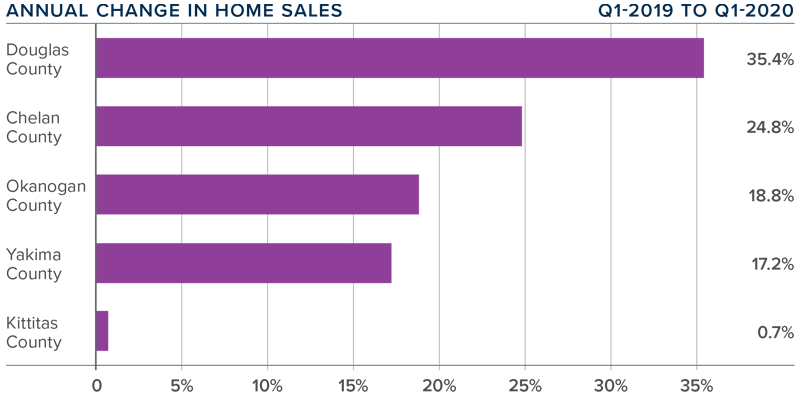
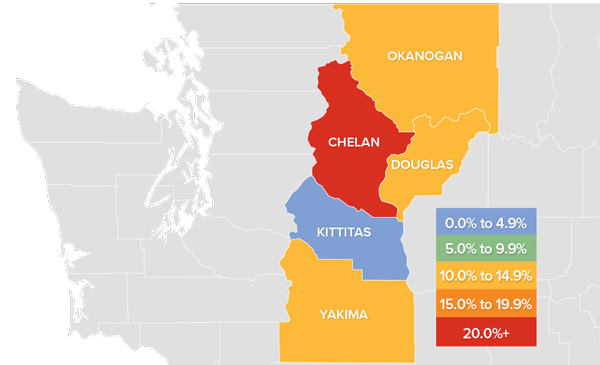
  • In the first quarter of 2020, home sales throughout Central Washington rose 18% year-over-year, with a total of 910 homes changing hands.
  • Sales rose in all counties covered by this report, with significant year-over-year gains seen in all but Kittitas County.
  • The number of pending home sales — an indicator of future closings — was up more than 4% compared to the fourth quarter of 2019, indicating that closings in the second quarter could be positive despite COVID-19.
  • Listing activity in the quarter was 6.5% lower than a year ago, and down more than 21% from the fourth quarter—not surprising given the current situation.


HOME PRICES

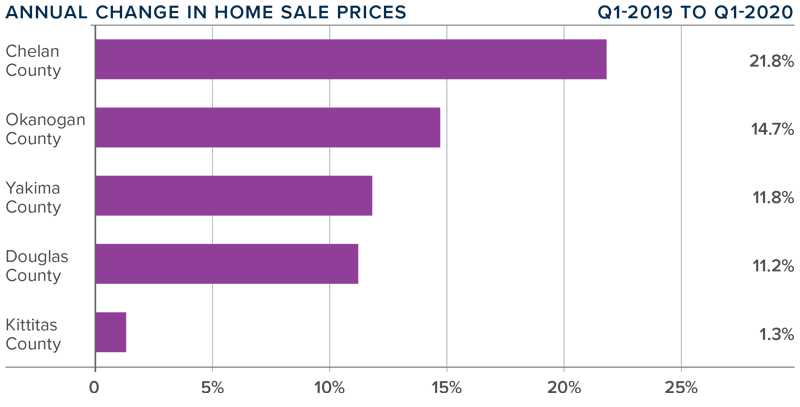
  • Year-over-year, the average home price in the region rose 10.8% to $344,552. Price growth continues to trend well above the long-term average, with limited inventory pushing prices higher.
  • Notably, sale prices were 2.3% lower than in the fourth quarter of 2019. I am not concerned by this at the present time and attribute it to COVID-19.
  • Prices rose in all counties contained in this report compared to the same quarter in 2019, with significant, double-digit growth everywhere other than Kittitas County.
  • The takeaway from this dataset is that significant year-over-year home-price growth continued in the quarter, but we are certain to see this drop temporarily until we resume “normal” activity.


DAYS ON MARKET

  • The average time it took to sell a home dropped 12 days compared to the first quarter of 2019.
  • The average time it took to sell a home in the region was 70 days, up 2 days compared to the final quarter of 2019.
  • Every county except Kittitas saw days-on-market drop from the same quarter in 2019. 
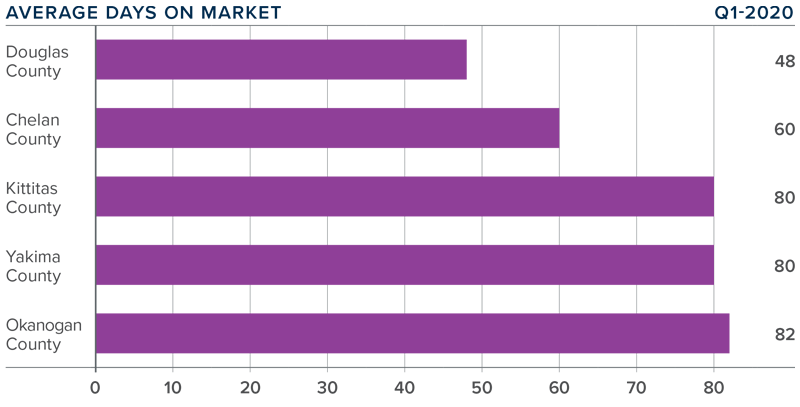
  • Homes sold fastest in Douglas County, where it took an average of 48 days to sell a home. The greatest drop in the time it took to sell a home was a tie between Okanogan and Douglas counties, where it took 26 fewer days than in the first quarter of 2019.


CONCLUSIONS

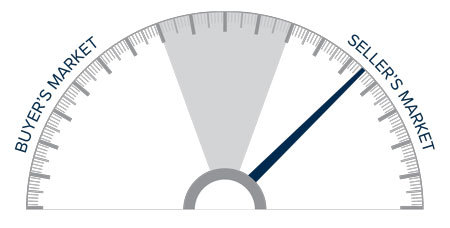
This speedometer reflects the state of the region’s real estate market using housing inventory, price gains, home sales, interest rates, and larger economic factors.

Given the current economic environment, I have decided to freeze the needle in place until we see a restart in the economy. Once we have resumed “normal” economic activity, there will be a period of adjustment with regard to housing. Therefore, it is appropriate to wait until later in the year to offer my opinions about any quantitative impact the pandemic will have on the housing market.


ABOUT MATTHEW GARDNER

As Chief Economist for Windermere Real Estate, Matthew Gardner is responsible for analyzing and interpreting economic data and its impact on the real estate market on both a local and national level. Matthew has over 30 years of professional experience both in the U.S. and U.K.

In addition to his day-to-day responsibilities, Matthew sits on the Washington State Governors Council of Economic Advisors; chairs the Board of Trustees at the Washington Center for Real Estate Research at the University of Washington; and is an Advisory Board Member at the Runstad Center for Real Estate Studies at the University of Washington where he also lectures in real estate economics.
Market News April 24, 2020

Colorado Real Estate Market Update


The following analysis of the Metro Denver & Northern Colorado real estate market is provided by Windermere Real Estate Chief Economist Matthew Gardner. We hope that this information may assist you with making better-informed real estate decisions. For further information about the housing market in your area, please don’t hesitate to contact me.


A MESSAGE FROM MATTHEW GARDNER

Needless to say, any discussion about the U.S. economy, state economy, or housing markets in the first quarter of this year is almost meaningless given events surrounding the COVID-19 virus.

Although you will see below data regarding housing activity in the region, many markets came close to halting transactions in March and many remain in some level of paralysis. As such, drawing conclusions from the data is almost a futile effort. I would say, though, it is my belief that the national and state housing markets were in good shape before the virus hit and will be in good shape again, once we come out on the other side. In a similar fashion, I anticipate the national and regional economies will start to thaw, and that many of the jobs lost will return with relative speed. Of course, all of these statements are wholly dependent on the country seeing a peak in new infections in the relatively near future. I stand by my contention that the housing market will survive the current economic crisis and it is likely we will resume a more normalized pattern of home sales in the second half of the year.


HOME SALES

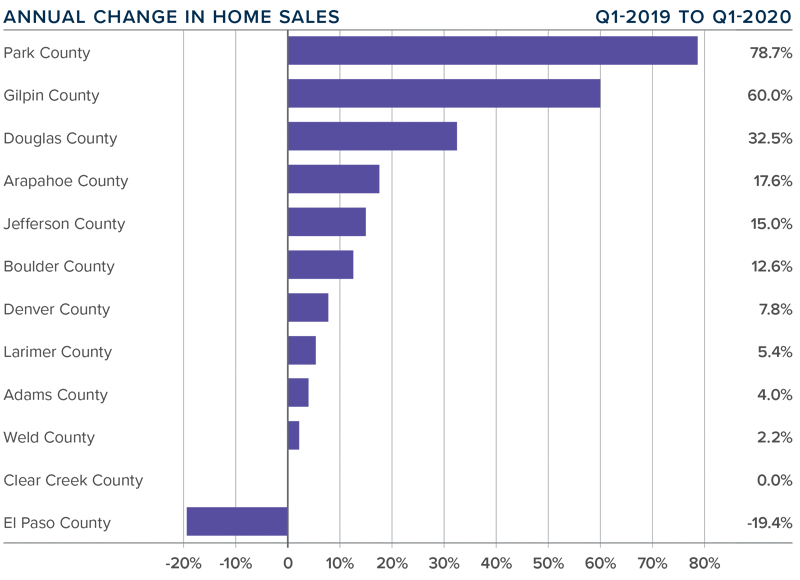
  • In the first quarter of 2020, 9,189 homes sold. This is an increase of 9.5% compared to the first quarter of 2019. ​
  • Ten counties contained in this report saw sales grow, one remained static, and one saw fewer transactions. Sales rose most in the small Park County area. There was a small drop in sales in El Paso County.
  • The average number of homes for sale in the quarter was down 12.9% from the same period in 2019.
  • Inventory levels have not improved and, given the fallout from COVID-19, it is hard to put a date on when we will see a resumption of normal activity in the housing market. Though sales are sure to return, we may well see a gradual increase in listings rather than a surge.


HOME PRICES

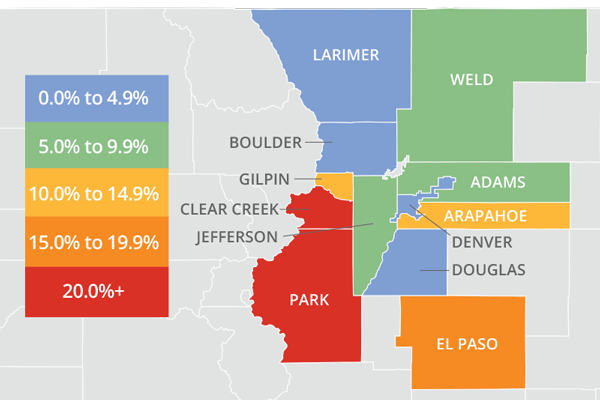
  • Home prices continue to trend higher, with the average home price in the region rising 6.7% year-over-year to $477,495.
  • Interest rates remain at very competitive levels and are certain to remain well below 4% for the balance of the year. This can allow prices to continue to rise but much will be dependent on the fallout of COVID-19.
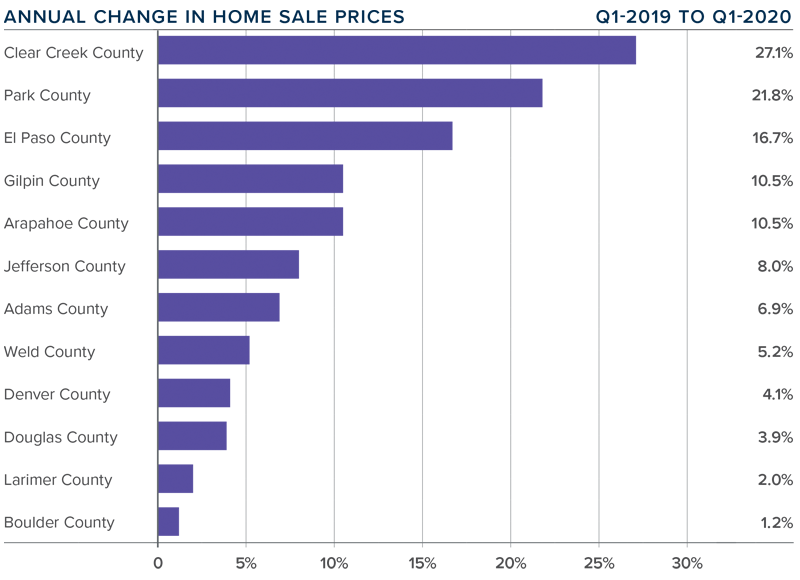
  • Appreciation was again strongest in Clear Creek County, where prices rose a remarkable 27.1%. This market is small though and subject to wild swings, so this jump is not surprising. We also saw strong growth in Park County, which rose 21.8%. Home prices rose by double digits in an additional three counties.
  • Affordability remains an issue in many Colorado markets, which could act as a modest headwind to ongoing price growth.


DAYS ON MARKET

  • The average number of days it took to sell a home in the markets contained in this report rose by only one day compared to the first quarter of 2019.
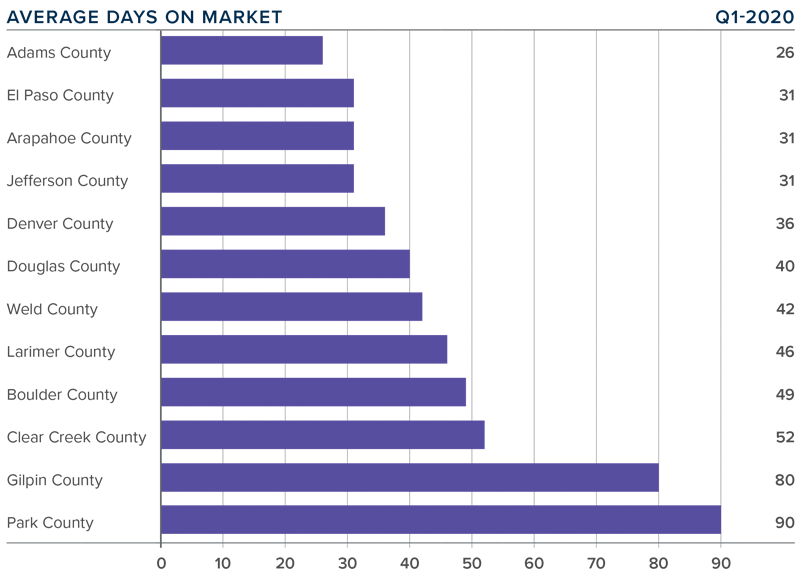
  • It took an average of 46 days to sell a home in the region.
  • The amount of time it took to sell a home dropped in six counties and rose in six counties compared to the first quarter of 2019.
  • The Colorado housing market was performing well before the onset of the pandemic and is likely to resume reasonable performance once we resume normal operations. That said, it will be interesting to see if home sellers or buyers are the first to reengage.


CONCLUSIONS

This speedometer reflects the state of the region’s real estate market using housing inventory, price gains, home sales, interest rates, and larger economic factors.

Given the current economic environment, I have decided to freeze the needle in place until we see
a restart in the economy. Once we have resumed “normal” economic activity, there will be a period of adjustment with regard to housing. Therefore, it is appropriate to wait until later in the year to offer my opinions about any quantitative impact the pandemic will have on the housing market.


ABOUT MATTHEW GARDNER

As Chief Economist for Windermere Real Estate, Matthew Gardner is responsible for analyzing and interpreting economic data and its impact on the real estate market on both a local and national level. Matthew has over 30 years of professional experience both in the U.S. and U.K.

In addition to his day-to-day responsibilities, Matthew sits on the Washington State Governors Council of Economic Advisors; chairs the Board of Trustees at the Washington Center for Real Estate Research at the University of Washington; and is an Advisory Board Member at the Runstad Center for Real Estate Studies at the University of Washington where he also lectures in real estate economics.
Market News April 24, 2020

Southern California Real Estate Market Update


The following analysis of the Southern California real estate market is provided by Windermere Real Estate Chief Economist Matthew Gardner. We hope that this information may assist you with making better-informed real estate decisions. For further information about the housing market in your area, please don’t hesitate to contact me. 


A MESSAGE FROM MATTHEW GARDNER

Needless to say, any discussion about the U.S. economy, state economy, or housing markets in the first quarter of this year is almost meaningless given events surrounding the COVID-19 virus.

Although you will see below data regarding housing activity in the region, many markets came close to halting transactions in March and many remain in some level of paralysis. As such, drawing conclusions from the data is almost a futile effort. I would say, though, it is my belief that the national and state housing markets were in good shape before the virus hit and will be in good shape again, once we come out on the other side. In a similar fashion, I anticipate the national and regional economies will start to thaw, and that many of the jobs lost will return with relative speed. Of course, all of these statements are wholly dependent on the country seeing a peak in new infections in the relatively near future. I stand by my contention that the housing market will survive the current economic crisis and it is likely we will resume a more normalized pattern of home sales in the second half of the year.


HOME SALES

  • 34,487 homes sold in the first quarter of 2020. This was an increase of 0.5% from the same period a year previous, but 21.5% lower than in the fourth quarter of 2019, which is very likely a function of COVID-19.
  • Pending home sales (an indicator of future closings) fell 5.8% compared to the final quarter of 2019, suggesting that total sales in the second quarter were already set to slow. The drop is sure to be larger given the fallout from COVID-19.
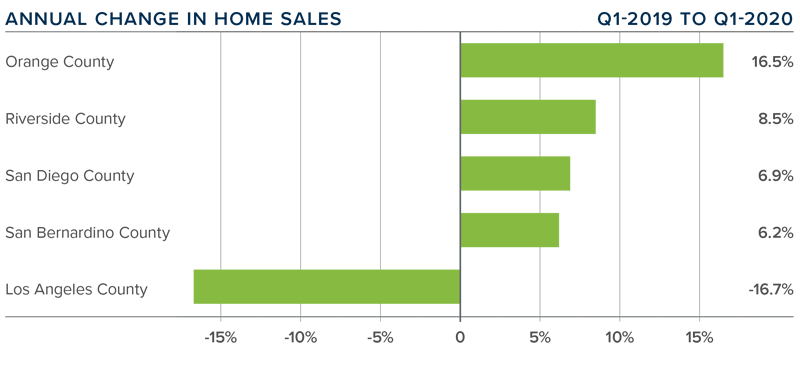
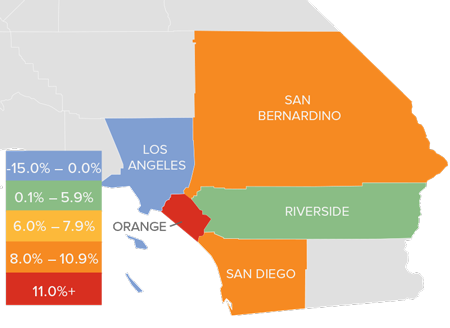
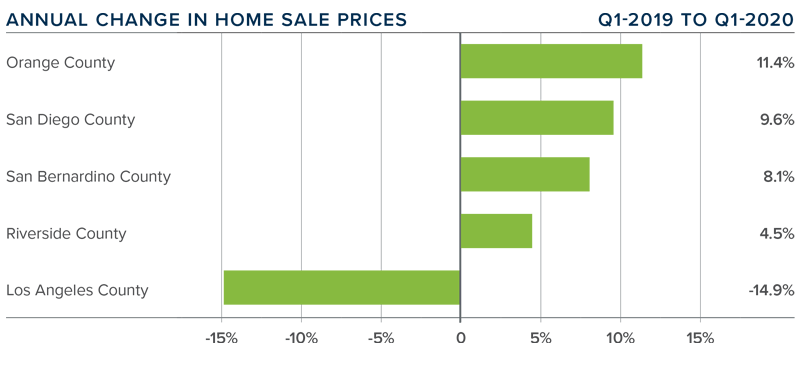
  • First quarter home sales rose in all counties contained in this report other than Los Angeles County. Notably, Orange County experienced a significant increase: more than 840 more units changed hands than in the first quarter of 2019.
  • There was an average of 25,608 active listings in the first quarter — down 32% from a year ago and 18.4% lower than in the final quarter of 2019.


HOME PRICES

  • Year-over-year, the average home sale price in the region was $674,764. This was 1.2% lower than a year ago and 8% lower than in the final quarter of 2019.
  • Affordability concerns persist in the region, which, when combined with the massive economic interruption from COVID-19, suggests that we are likely to see downward pressure on prices for the next one or two quarters.
  • Prices were higher in all counties contained in this report except Los Angeles County. Orange County saw significant price growth.
  • Conventional mortgage rates will remain at or close to historically low levels through 2020. Jumbo mortgage rates have risen significantly, which will have an impact on the more expensive Southern California counties.


DAYS ON MARKET

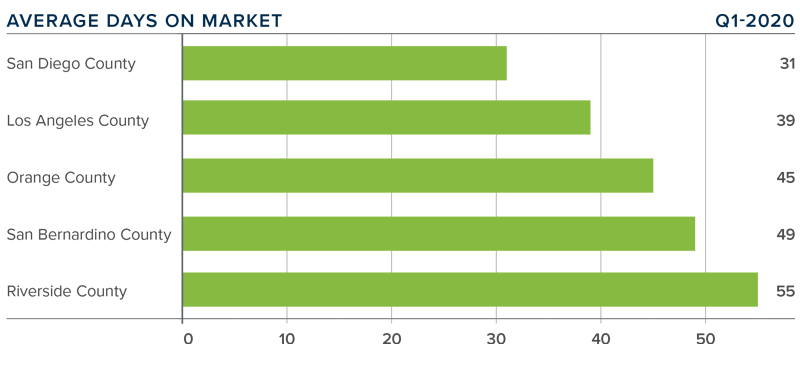
  • In the first quarter, the average time it took to sell a home in the region was 44 days, which is 9 fewer days than a year ago, and 1 day fewer than in the fourth quarter of 2019.
  • Homes in San Diego County continue to sell at a faster rate than other markets in the region. In the first quarter of 2020, it took an average of 31 days to sell a home there — 6 fewer days than it took a year ago.
  • All markets contained in this report saw the time it took to sell a house drop compared to the first quarter of 2019.
  • Although market time dropped compared to last year and last quarter, this is sure to change in the second quarter due to COVID-19.


CONCLUSIONS

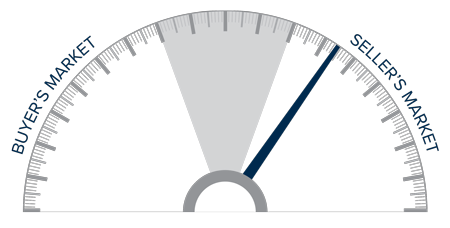
This speedometer reflects the state of the region’s real estate market using housing inventory, price gains, home sales, interest rates, and larger economic factors.

Given the current economic environment, I have decided to freeze the needle in place until we see a restart in the economy. Once we have resumed “normal” economic activity, there will be a period of adjustment with regard to housing. Therefore, it is appropriate to wait until later in the year to offer my opinions about any quantitative impact the pandemic will have on the housing market.


ABOUT MATTHEW GARDNER

As Chief Economist for Windermere Real Estate, Matthew Gardner is responsible for analyzing and interpreting economic data and its impact on the real estate market on both a local and national level. Matthew has over 30 years of professional experience both in the U.S. and U.K.

In addition to his day-to-day responsibilities, Matthew sits on the Washington State Governors Council of Economic Advisors; chairs the Board of Trustees at the Washington Center for Real Estate Research at the University of Washington; and is an Advisory Board Member at the Runstad Center for Real Estate Studies at the University of Washington where he also lectures in real estate economics.
Living April 22, 2020

Celebrating Earth Day at Home

Image Source: Canva


This year’s Earth Day will certainly look different than in years past. With no large gatherings, marches or events, most of us find ourselves celebrating from home. Fortunately, when it comes to reducing your footprint or assessing the eco-friendliness of your lifestyle, your living space is a great place to start. Here are some tips for celebrating Earth Day from home.


Outside the house:

The combination of spring weather and current shelter and stay-at-home orders have created a gardening renaissance. With April being gardening month and the amount of time we find ourselves spending at home these days, now is the perfect time to start (or get back to) your garden.


  • Kick up your composting efforts or build out a composting area in your garden.
  • Get started with a nature DIY project, like a garden shed or planter boxes.
  • Make your garden your own escape. This is more important now than ever, for your health and the health of your household.


Around the house:


  • Perform a plastic audit of your home.
    • Take count of the plastic items used in your kitchen and bathroom and rethink their necessity.
  • Get in the habit of turning lights off when you leave a room.
    • Little by little this can add up and is an easy green practice for Earth Day and beyond.
  • Turn off the faucet when you aren’t using it.
  • Unplug your appliances after using them.
    • They still use energy even when they aren’t turned on.
  • Turning off phones, tablets, and computers at night will save energy.
  • Use cold water to wash your laundry.
    • This sidesteps any of the energy your machine uses to heat water—which is a large percentage of their energy output.
  • Add plants. 
    • This has a myriad of benefits for both your health and your wallet.
    • Plants are known to reduce stress and regulate temperature, which saves on the energy required to heat and cool your house.


By doing these little things around the house you can maximize your Earth Day impact and get an idea of how you can incorporate them into your lifestyle as time goes on.


Educate:

Earth Day carries educational significance as well. Learning more about our planet and how we can do our part in its health moving forward is an important aspect of the holiday.


  • Though you may not be able to attend a lecture in person, there are a bevy of virtual options to participate in Earth Day learning and planetary education. Discuss with your family what actions you can take to make a difference in your household.
  • Add a nature documentary or series to your watchlist.
  • Travel from home with virtual tours of national parks and natural wonders.
  • Try some new cookbooks. For Earth Day-centric food ideas, look for cookbooks with plant-based recipes.


Homeowners everywhere have established an evolved relationship with their homes in recent weeks. Spending time thinking about the footprint of your household and how it allows you to make eco-friendly choices is a worthy investment for Earth Day and beyond.

Market News April 22, 2020

Oregon and Southwest Washington Real Estate Market Update


The following analysis of the Oregon and Southwest Washington real estate market is provided by Windermere Real Estate Chief Economist Matthew Gardner. We hope that this information may assist you with making better informed real estate decisions. For further information about the housing market in your area, please don’t hesitate to contact your Windermere agent. 


A MESSAGE FROM MATTHEW GARDNER

Needless to say, any discussion about the U.S. economy, state economy, or housing markets in the first quarter of this year is almost meaningless given events surrounding the COVID-19 virus.

Although you will see below data regarding housing activity in the region, many markets came close to halting transactions in March and many remain in some level of paralysis. As such, drawing conclusions from the data is almost a futile effort. I would say, though, it is my belief that the national and state housing markets were in good shape before the virus hit and will be in good shape again, once we come out on the other side. In a similar fashion, I anticipate the national and regional economies will start to thaw, and that many of the jobs lost will return with relative speed. Of course, all of these statements are wholly dependent on the country seeing a peak in new infections in the relatively near future. I stand by my contention that the housing market will survive the current economic crisis and it is likely we will resume a more normalized pattern of home sales in the second half of the year.


HOME SALES

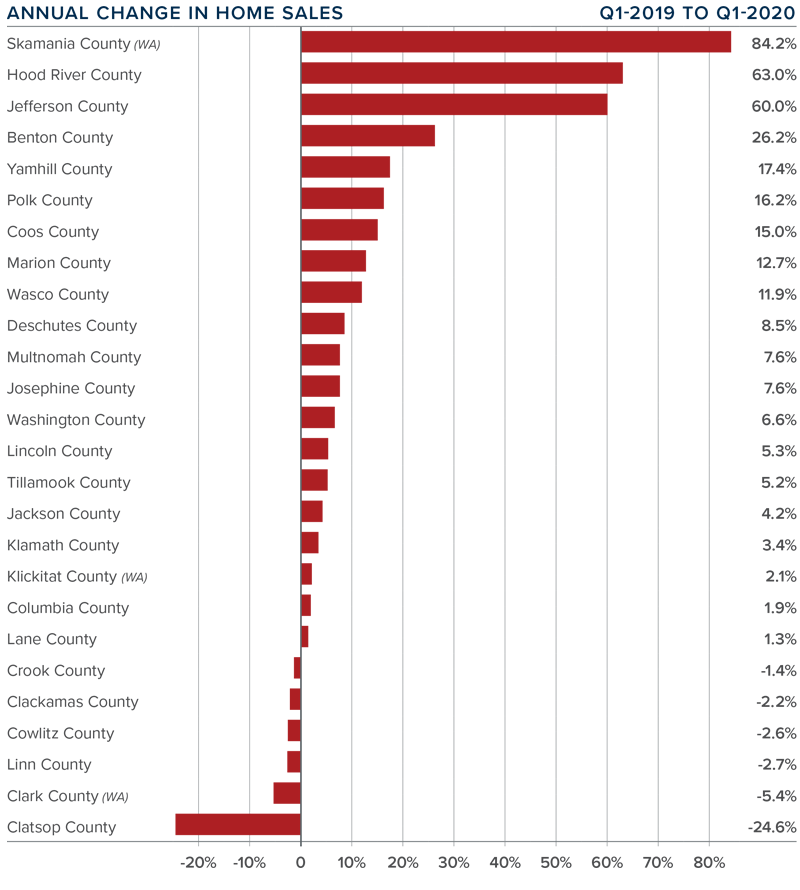
  • First quarter home sales rose 4.6% compared to the same period last year, with a total of 11,950 transactions occurring.
  • Sales rose fastest in Skamania County, which saw a massive 84% increase compared to the first quarter of 2019. However, it is a very small market and is subject to massive swings. There were also significant increases in Benton, Jefferson, and Hood River counties. Home sales fell most in Clatsop County but it, too, is a relatively small market.
  • Year-over-year sales rose in 20 counties and dropped in the other 6 counties contained in this report.
  • Sales in the first quarter dropped 21.4% compared to the fourth quarter of 2019, which can likely be attributed to fallout from COVID-19.


HOME PRICES

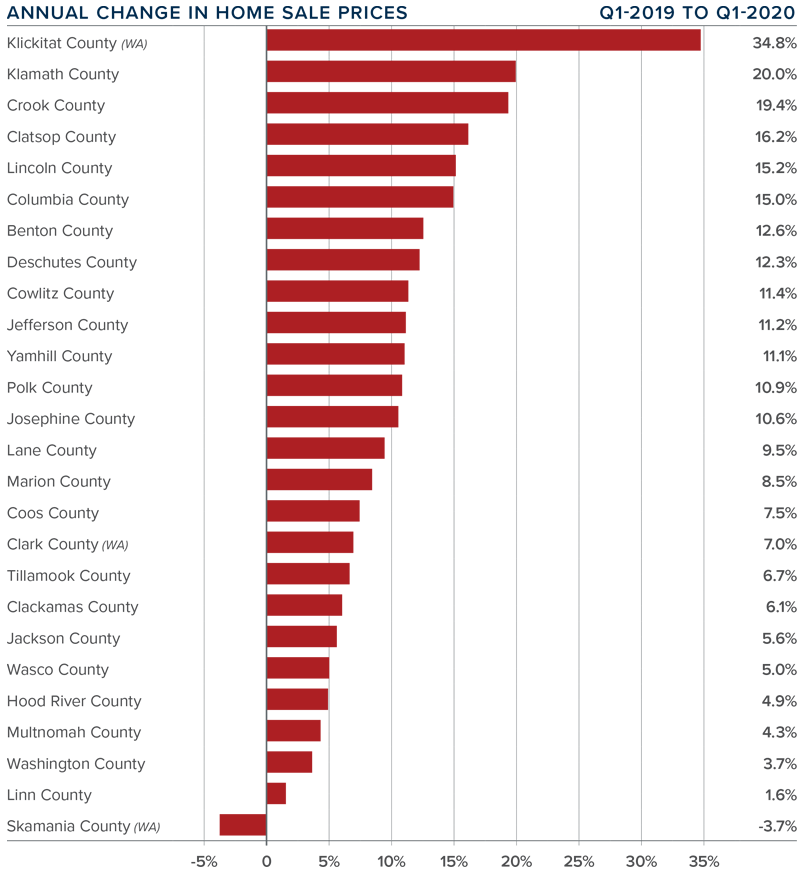
  • The average home price in the region rose 7.1% year-over-year to $399,754, but was 0.2% lower compared to the final quarter of 2019.
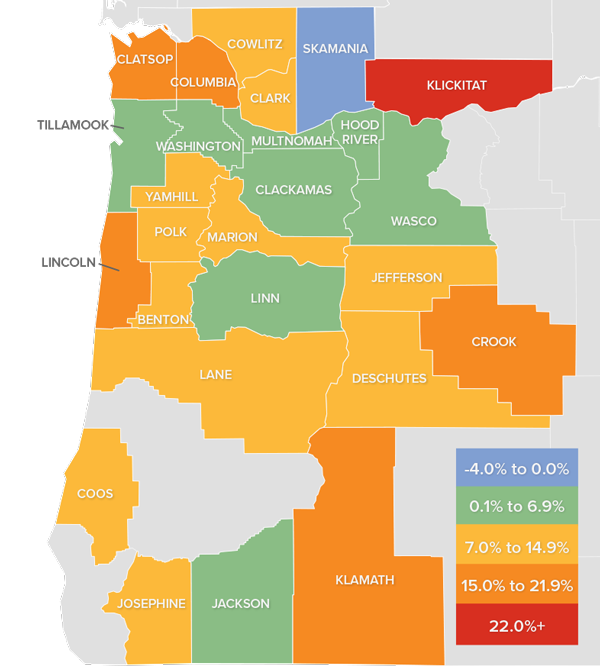
  • Klickitat County led the market with the strongest annual price growth. Homes there sold for 34.8% more than a year ago. Prices were lower in Skamania County, but this is a small market that can be prone to significant swings and I am not overly concerned at this time.
  • All but one of the counties contained in this report experienced price growth compared to the first quarter of 2019. Annual price growth has picked back up after having slowed somewhat in the middle of last year.
  • The takeaway from this section is that prices grew year-over-year, but I expect to see volatility for the next two quarters until the market completely recovers from COVID-19.


DAYS ON MARKET

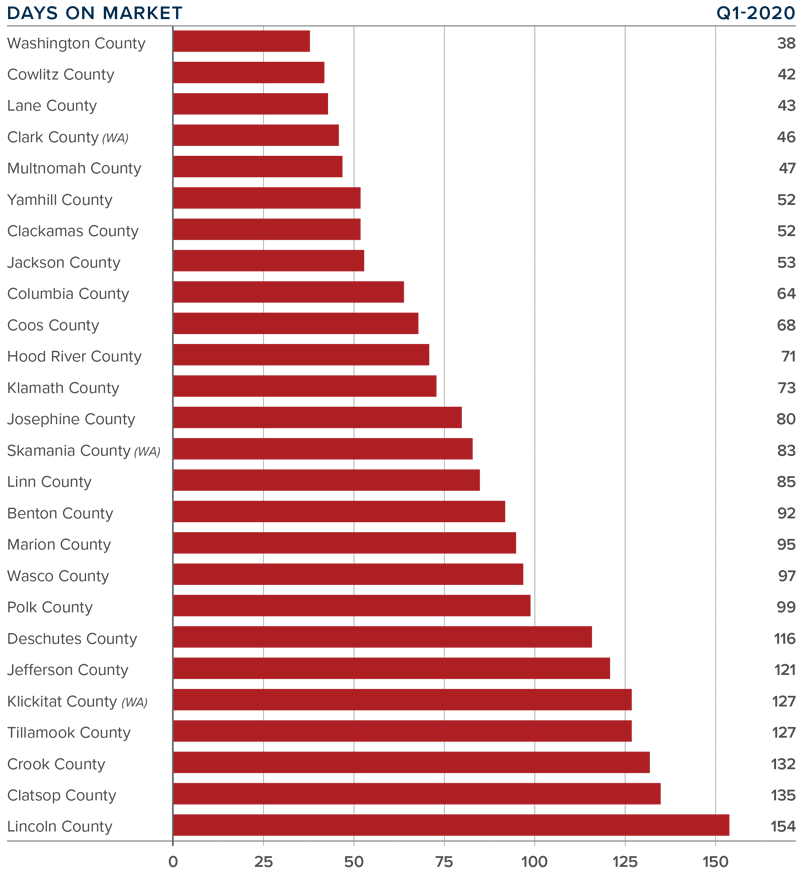
  • The average number of days it took to sell a home in the region dropped one day compared to the first quarter of 2019, but it took ten days longer to sell a home compared to the final quarter of 2019.
  • The average time it took to sell a home in the first quarter was 84 days.
  • Seventeen counties saw the length of time it took to sell a home drop compared to a year ago; nine counties saw market time rise.
  • Homes again sold fastest in Washington (38 days) and Cowlitz (42 days) counties.


CONCLUSIONS

This speedometer reflects the state of the region’s real estate market using housing inventory, price gains, home sales, interest rates, and larger economic factors.

Given the current economic environment, I have decided to freeze the needle in place until we see a restart in the economy. Once we have resumed “normal” economic activity, there will be a period of adjustment with regard to housing. Therefore, it is appropriate to wait until later in the year to offer my opinions about any quantitative impact the pandemic will have on the housing market.


ABOUT MATTHEW GARDNER

As Chief Economist for Windermere Real Estate, Matthew Gardner is responsible for analyzing and interpreting economic data and its impact on the real estate market on both a local and national level. Matthew has over 30 years of professional experience both in the U.S. and U.K.

In addition to his day-to-day responsibilities, Matthew sits on the Washington State Governors Council of Economic Advisors; chairs the Board of Trustees at the Washington Center for Real Estate Research at the University of Washington; and is an Advisory Board Member at the Runstad Center for Real Estate Studies at the University of Washington where he also lectures in real estate economics.

Market News April 20, 2020

Matthew Gardner Weekly COVID-19 Housing & Economic Update: 4/20/2020