Market News May 4, 2021

Q1 2021 Northern California Real Estate Market Update

The following analysis of the Northern California real estate market is provided by Windermere Real Estate Chief Economist Matthew Gardner. We hope that this information may assist you with making better-informed real estate decisions. For further information about the housing market in your area, please don’t hesitate to contact your Windermere Real Estate agent.


Regional Economic Overview

New COVID-19 cases remain elevated across most of California, which continues to temper job recovery. The region has recovered 258,000 of the jobs that were lost, but there is still a ways to go. Although the number of jobs returning has slowed, the region’s unemployment rate continues to tick lower and now stands at 6.1%, down from the pandemically induced peak of 14%. By county, the lowest jobless rate was in Santa Clara County (5.1%), and highest in Solano County, where 7.8% of the workforce remains unemployed. The bottom line is that an economic recovery is in place, but persistently high COVID-19 infection rates continue to act as a headwind.

northern california Home Sales

❱ In the first quarter of 2021, 10,876 homes sold, an increase of 30.4% over to the same period a year ago. Sales were 24.2% lower than in the fourth quarter of 2020.

❱ The quarterly decline in sales can mostly be attributed to very low levels of inventory. Listing activity was down 21.5% compared to the fourth quarter of 2020. This lack of homes for sale will continue to slow sales.

❱ Year-over-year, sales rose in all counties contained in this report, with double-digit growth in all areas other than Solano County.

❱ Pending home sales eked out a .2% increase compared to the previous quarter, which tells me that closings in the second quarter of 2021 may only show a little improvement.
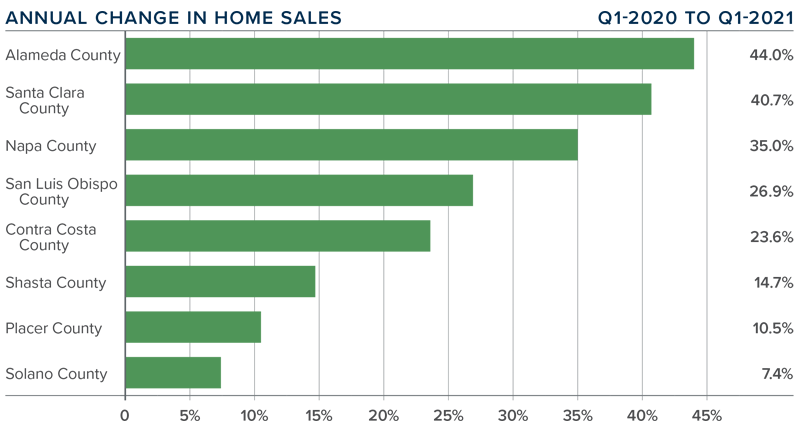
A bar graph showing the annual change in home sales for various Northern California counties.

northern california Home Prices

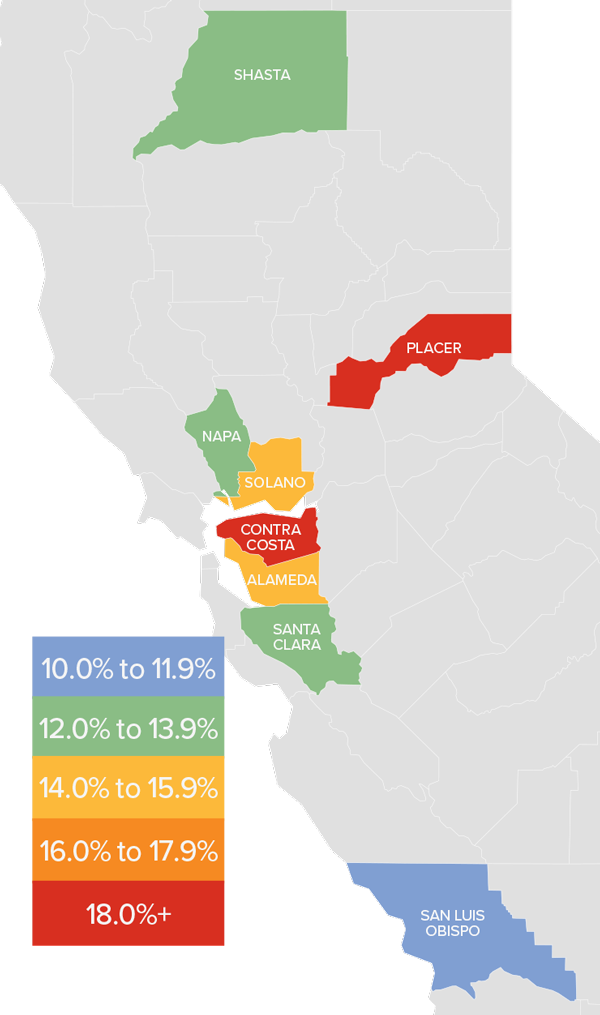
A map showing the real estate market percentage changes in various Northern California counties.

❱ The average home price in Northern California rose 19.9% year over year to $1.070 million.

❱ The most affordable counties relative to average sale prices were Shasta and Solano. The most expensive was Santa Clara. It was interesting that, irrespective of how expensive Santa Clara is, prices there still rose by more than 12%.

❱ Average prices rose in all the counties contained in this report. Even more impressive is that all markets saw prices rise more than 10%.

❱ Home-price growth is a function of supply and demand. Without enough supply, prices will keep appreciating at above-average rates. As mortgage rates continue to rise—albeit modestly—we may start to see a bit of a slowdown in price growth, which would be good news for home buyers.
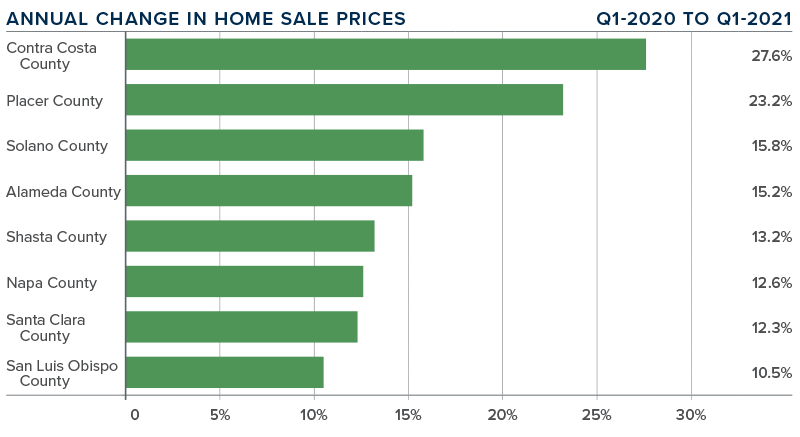
A bar graph showing the annual change in home sale prices for various Northern California counties.

Days on Market

❱ The average time it took to sell a home in the Northern Californian counties covered by this report dropped 13 days compared to the first quarter of 2020.

❱ The amount of time it took to sell a home dropped in every county other than Shasta, where it took eight more days to sell a home than it did a year ago.

❱ In the first quarter, it took an average of 40 days to sell a home, with homes selling fastest in Alameda County, and slowest in Shasta County.

❱ The greatest drop in market time was in San Luis Obispo County, where it took 31 fewer days to sell a home that in the first quarter of 2020.
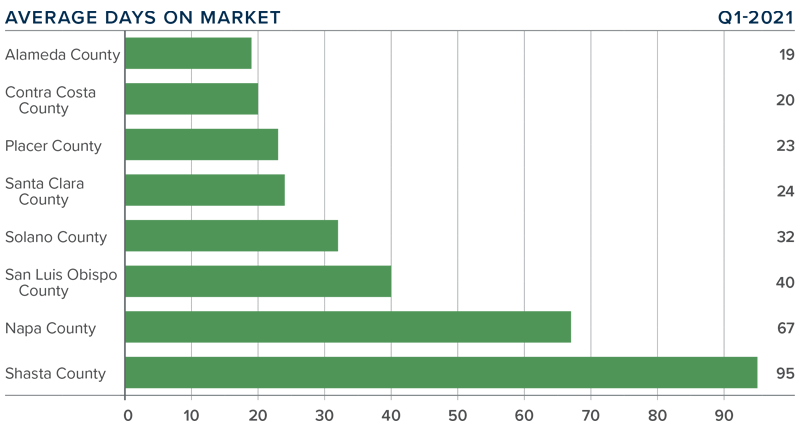
A bar graph showing the average days on market for homes in various Northern California counties.

Conclusions

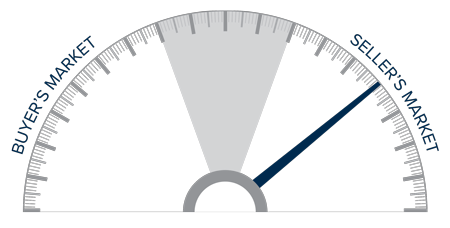
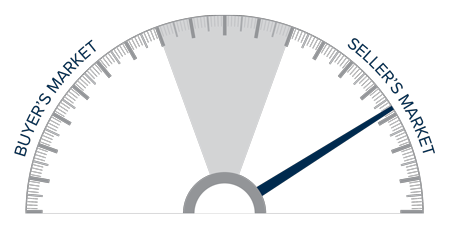
A speedometer graph indicating a seller's market in Northern California.

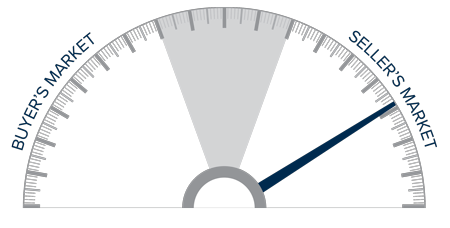
This speedometer reflects the state of the region’s real estate market using housing inventory, price gains, home sales, interest rates, and larger economic factors.

Even with a slowdown in the job recovery, there is clearly demand for housing, as demonstrated by reduced market time and rising home prices. The number of homes for sale remains well below where I would like to see it, but I still have hope that there will be some improvement heading into the summer— especially if COVID-19 infection rates start to drop as more people get vaccinated.

The current market continues to significantly favor sellers and, given the factors shown above, I have moved the needle a little more in their favor.


About Matthew Gardner

Matthew Gardner - Chief Economist for Windermere Real Estate

As Chief Economist for Windermere Real Estate, Matthew Gardner is responsible for analyzing and interpreting economic data and its impact on the real estate market on both a local and national level. Matthew has over 30 years of professional experience both in the U.S. and U.K.

In addition to his day-to-day responsibilities, Matthew sits on the Washington State Governors Council of Economic Advisors; chairs the Board of Trustees at the Washington Center for Real Estate Research at the University of Washington; and is an Advisory Board Member at the Runstad Center for Real Estate Studies at the University of Washington where he also lectures in real estate economics.

Market News May 3, 2021

Q1 2021 Utah Real Estate Market Update

The following analysis of select counties of the Utah real estate market is provided by Windermere Real Estate Chief Economist Matthew Gardner. We hope that this information may assist you with making better-informed real estate decisions. For further information about the housing market in your area, please don’t hesitate to contact your Windermere Real Estate agent.


Regional Economic Overview

Much like the rest of the nation, COVID-19 had a very significant impact on employment levels in Utah; the state shed 140,000 jobs in only two months. However, I am delighted to report that—as of the end of the first quarter—the region has not only recovered all of the jobs that were lost, but employment levels are now 11,300 jobs higher than the pre-pandemic peak in February 2020. With the recovery complete, at least for the time being, the unemployment rate continues to drop and is currently only 2.9%. At this level, Utah—along with Nebraska, South Dakota, and Vermont—now has the lowest jobless rates of any states in the Union.

utah Home Sales

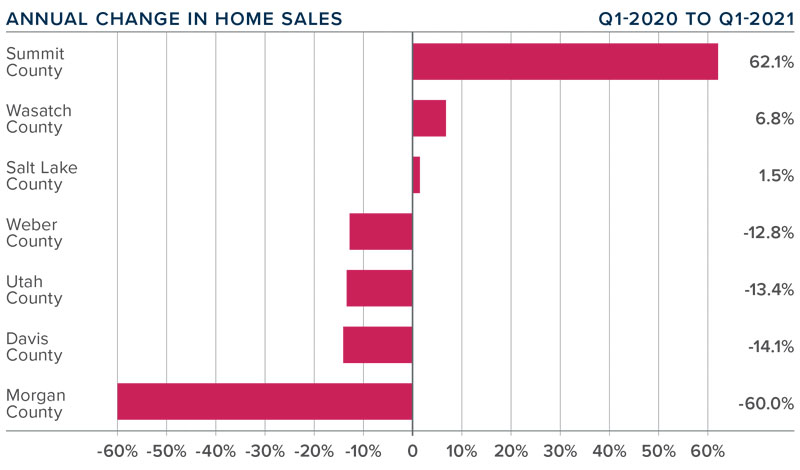
❱ In the opening quarter of 2021, 6,822 home sales occurred, representing a drop of 4.6% compared to the same period in 2020 and 33.4% lower than the fourth quarter of last year.

❱ Total sales activity rose in Summit, Wasatch, and Salt Lake counties, but fell across the balance of the market covered in this report.

❱ I am not concerned about the lower level of home sales as the cause is directly linked to a shortage of inventory. The average number of listings in the quarter was down 66.8% compared to a year ago and down 35.1% compared to the fourth quarter of 2020.

❱ With such low levels of inventory, it wasn’t surprising that pending sales were down 8.8% compared to the fourth quarter of 2020. This suggests that, unless we see a significant number of homes come online as the spring ends, closings in the second quarter may also be lower.

A bar graph showing the annual change in home sales for various counties in Utah.

utah Home Prices

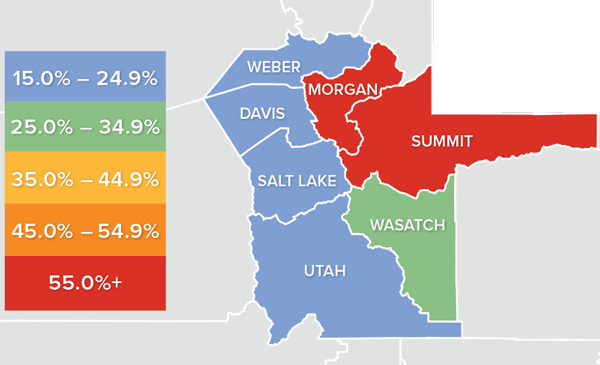
A map showing the real estate market percentage changes in various counties in Utah.

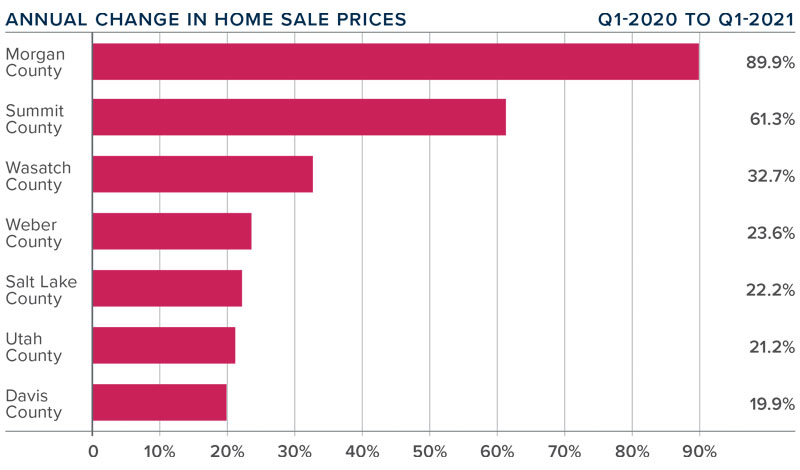
❱ With far more demand than supply, it wasn’t surprising that home prices continued to trend significantly higher. Year over year, the average home price in the region was up 32.6% to $536,024. Home prices were also 4.5% higher than in the fourth quarter of 2020.

❱ When compared to the fourth quarter of last year every county, other than Wasatch (+.7%), experienced very solid price growth.

❱ Price growth was influenced by very significant gains in Morgan and Summit counties, but double-digit increases were seen across the board.

❱ The economics of supply and demand are clearly impacting home values in the region. The question will be how long this pace of growth can continue. The market needs more supply; without it, affordability will continue to drop.

A bar graph showing the annual change in home sale prices for various counties in Utah.

Days on Market

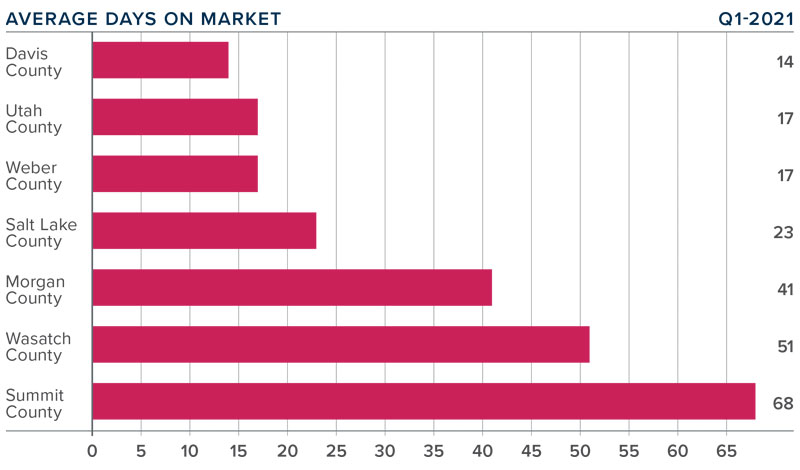
❱ The average number of days it took to sell a home in the counties covered by this report dropped 27 days compared to the first quarter of 2020.

❱ Homes sold fastest in Davis, Utah, and Weber counties. The longest time it took to sell a home was again in Summit County. Unsurprisingly, it took less time to sell a home in all markets than it did a year ago.

❱ During first quarter, it took an average of 33 days to sell a home in the region, down 1 day compared to the fourth quarter of last year.

❱ As suggested earlier in this report, the market is in a state of imbalance, with far more buyers than sellers. As frustrating for buyers as this is, I am afraid that I do not see it changing in the near-term.

A bar graph showing the average days on market for homes in various counties in Utah.

Conclusions

A speedometer graph indicating a seller's market in Utah.

This speedometer reflects the state of the region’s real estate market using housing inventory, price gains, home sales, interest rates, and larger economic factors.

An economy that has recovered from the COVID-19- induced decline, combined with historically low levels of inventory, have provided a “perfect storm” that continues to benefit sellers.

I was hoping that the spring would see more sellers put their homes on the market, but that has not yet happened. Concerns about listing before everyone is vaccinated, as well as sellers who are likely waiting until they find a home to buy, are keeping many of them sidelined. This has certainly benefitted those who did decide to sell, and it remains a market that heavily favors sellers. As such, I am moving the needle a little more in their favor.


About Matthew Gardner

Matthew Gardner - Chief Economist for Windermere Real Estate

As Chief Economist for Windermere Real Estate, Matthew Gardner is responsible for analyzing and interpreting economic data and its impact on the real estate market on both a local and national level. Matthew has over 30 years of professional experience both in the U.S. and U.K.

In addition to his day-to-day responsibilities, Matthew sits on the Washington State Governors Council of Economic Advisors; chairs the Board of Trustees at the Washington Center for Real Estate Research at the University of Washington; and is an Advisory Board Member at the Runstad Center for Real Estate Studies at the University of Washington where he also lectures in real estate economics.
Market News May 3, 2021

Q1 2021 Park City, Utah Real Estate Market Update

The following analysis of select neighborhoods in the Park City real estate market is provided by Windermere Real Estate Chief Economist Matthew Gardner. We hope that this information may assist you with making better-informed real estate decisions. For further information about the housing market in your area, please don’t hesitate to contact your Windermere Real Estate agent.


Regional Economic Overview

Much like the rest of the nation, COVID-19 had a very significant impact on employment levels in Utah; the state shed 140,000 jobs in only two months. However, I am delighted to report that—as of the end of the first quarter—the region has not only recovered all of the jobs that were lost, but employment levels are now 11,300 jobs higher than the pre-pandemic peak in February 2020.

With the recovery complete, at least for the time being, the unemployment rate continues to drop and is currently only 2.9%. At this level, Utah—along with Nebraska, South Dakota, and Vermont—now has the lowest jobless rates of any states in the Union.

park city, utah Home Sales

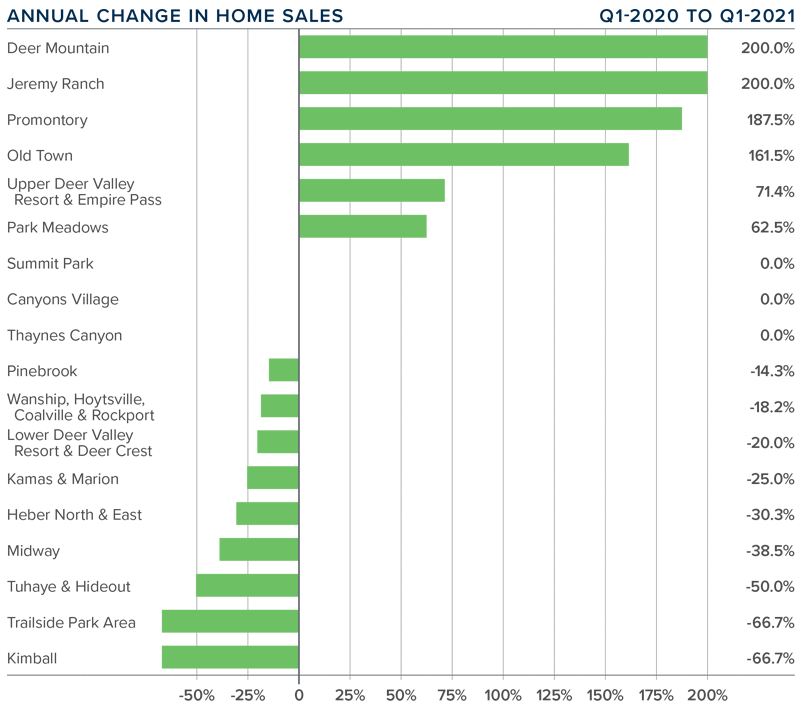
❱ Only 87 homes sold in Park City in the first quarter of 2021. This was 38.1% higher than in the first quarter of last year, but 82% lower than in the fourth quarter of 2020.

❱ Sales rose in six markets, remained static in three, and dropped in nine.

❱ Inventory levels remain well below the levels I would like to see, with the average number of homes for sale down 49.8% from a year ago and 77.5% compared to the prior quarter.

❱ Pending home sales were 96.3% higher than a year ago but were down 75.7% from the fourth quarter of 2020 as the lack of inventory continues to limit sales activity.

A bar graph showing the annual change in home sales in the Park City, Utah area.

park city, utah Home Prices

❱ The average home price in the Park City neighborhoods contained in this report jumped 70.4% year over year to $2.673 million. Sale prices were 73.2% higher than in the fourth quarter of 2020.

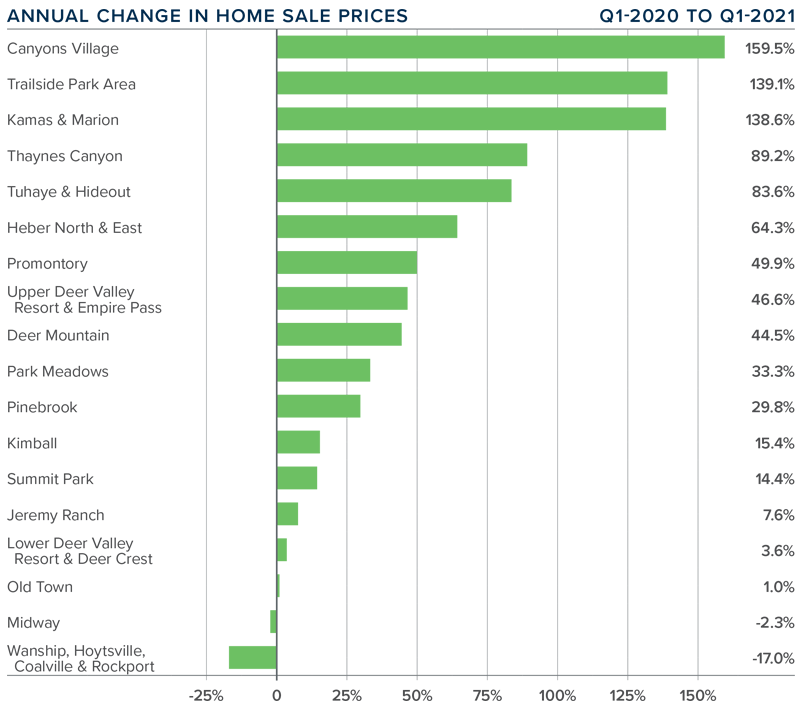
❱ The most affordable neighborhoods relative to average sale prices were in the Wanship/ Hoytsville/Coalville/Rockport and Kimball neighborhoods. The most expensive home sales occurred in Canyons Village, where the average sale price hit $13 million.

❱ Prices rose in all but two neighborhoods, with double-digit increases in 13 markets.

❱ Of note is that all but four neighborhoods saw sale prices in the quarter exceed $1 million.

A bar graph showing the annual change in home sale prices in the Park City, Utah area.

Days on Market

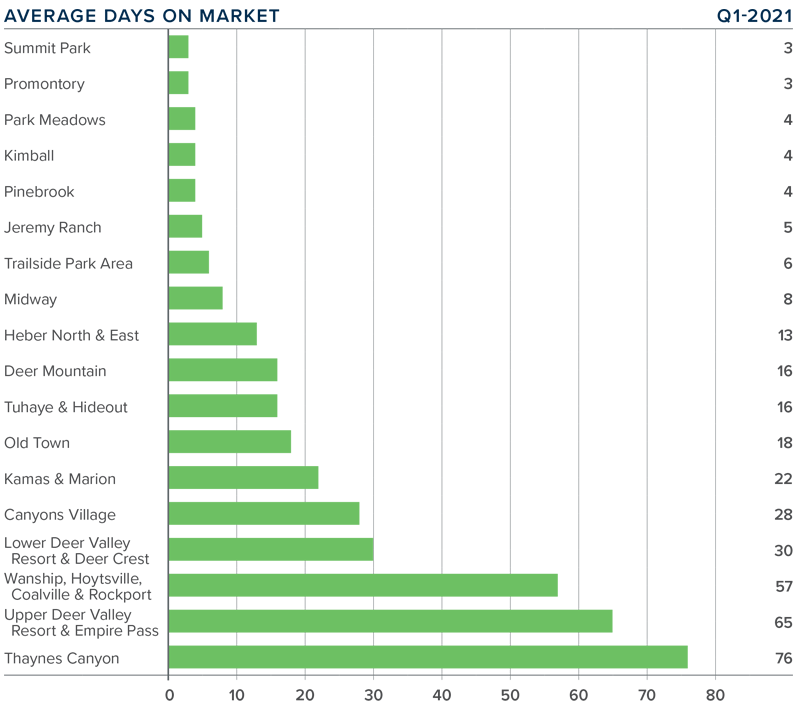
❱ The average time it took to sell a home in the Park City area dropped 100 days compared to the first quarter of 2020.

❱ The amount of time it took to sell a home dropped in all but four neighborhoods compared to the first quarter of last year.

❱ In the first quarter, it took an average of only 21 days to sell a home, with homes selling fastest in the Summit Park and Promontory areas, and slowest in the Thaynes Canyon neighborhood.

❱ The significant decline in market time can again be attributed in part to the local listing service instituting a rule that led new construction developments to add sales “en-masse.” This lowered market time dramatically.

A bar graph showing the average days on market for homes in the Park City, Utah area.

Conclusions

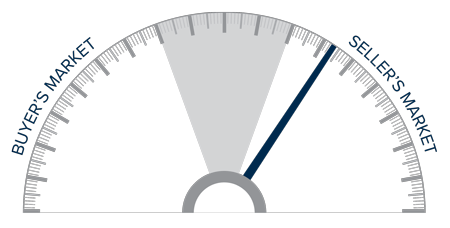
A speedometer graph indicating a seller's market in the Park City, Utah area.

This speedometer reflects the state of the region’s real estate market using housing inventory, price gains, home sales, interest rates, and larger economic factors.

Although mortgage rates have risen recently, they remain very competitive compared to historic averages, and buyers are taking advantage of this. I would like to see far more homes for sale, but do not anticipate that this will occur in the near term. The lack of housing inventory is not only frustrating buyers, but owners who are thinking about selling are unlikely to come to market unless they have found a home to buy. If there is nothing to buy, there is no compelling reason to sell! Given all these factors, sellers still have the upper hand. I am therefore moving the needle a little more in their favor.


About Matthew Gardner

Matthew Gardner - Chief Economist for Windermere Real Estate

As Chief Economist for Windermere Real Estate, Matthew Gardner is responsible for analyzing and interpreting economic data and its impact on the real estate market on both a local and national level. Matthew has over 30 years of professional experience both in the U.S. and U.K.

In addition to his day-to-day responsibilities, Matthew sits on the Washington State Governors Council of Economic Advisors; chairs the Board of Trustees at the Washington Center for Real Estate Research at the University of Washington; and is an Advisory Board Member at the Runstad Center for Real Estate Studies at the University of Washington where he also lectures in real estate economics.
Market News April 30, 2021

Q1 2021 Idaho Real Estate Market Update

The following analysis of select counties of the Idaho real estate market is provided by Windermere Real Estate Chief Economist Matthew Gardner. We hope that this information may assist you with making better-informed real estate decisions. For further information about the housing market in your area, please don’t hesitate to contact your Windermere Real Estate agent.


Regional Economic Overview

I am pleased to report that Idaho has not only recovered all the jobs that were lost following the onset of the pandemic, but total employment is now 10,400 jobs higher than the previous peak we saw in February of last year. Utah is the only other state in the U.S. that can make this claim. Having recovered all the jobs lost, and with new positions being added, the unemployment rate continues to trend lower and now stands at a very solid 3.2%—almost half the national rate of 6%. New COVID-19 cases did rise in the first quarter, but not to such an extent that is likely to negatively impact the economy. In all, Idaho is positioned very well to continue to grow.

idaho Home Sales

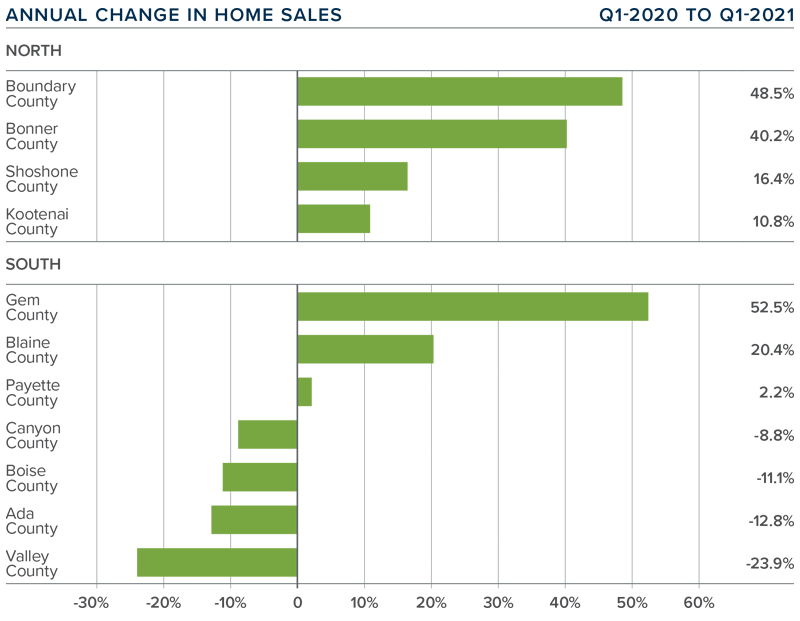
❱ In the first quarter of 2021, 4,949 homes sold, representing a drop of 4.5% year over year. Total home sales were down 32% from the final quarter of 2020.

❱ Interestingly, sales did rise in all the northern markets compared to the same time a year ago, with impressive increases across the board. However, sales were down 32% compared to the fourth quarter of 2020.

❱ Year-over-year sales growth was positive in three of the seven Southern Idaho counties, but the areas that saw growth are all relatively small.

❱ Pending sales rose 1.4% compared to the final quarter of last year, suggesting that the second quarter is likely to show improvement. The biggest issue, however, is the lack of homes for sale: inventory levels are 48.6% lower than a year ago, and 8.7% lower than in the fourth quarter.

A bar graph showing the annual change in home sales for various Idaho counties.

idaho Home Prices

A map showing the real estate market percentage changes in various Idaho counties.

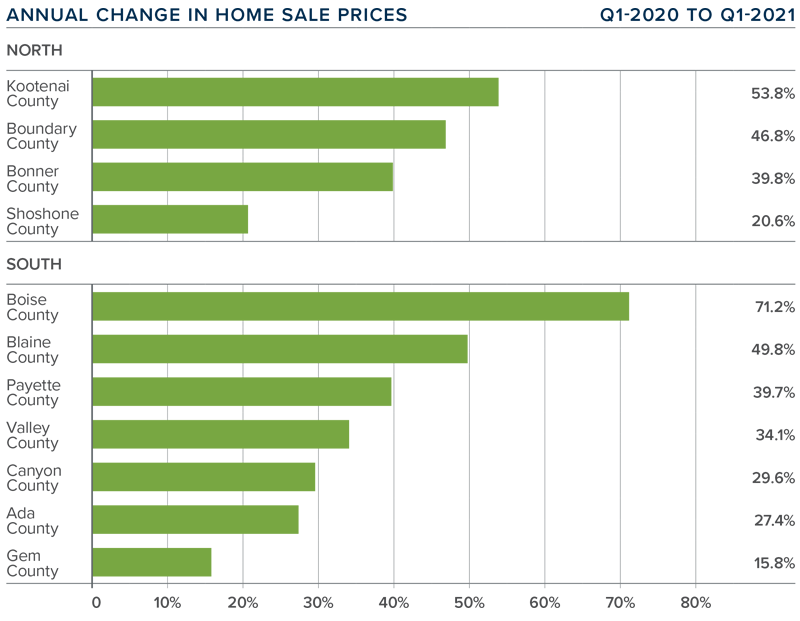
❱ The average home price in the region rose by a remarkable 35.4% year over year to $516,725. Sale prices were also up 4% compared to the prior quarter.

❱ Southern Idaho saw significant gains, with Boise County jumping more than 70%. That said, this is a very small area and subject to extreme swings. Prices in Southern Idaho were 10.7% higher than in the prior quarter.

❱ Prices rose in all Northern Idaho counties covered by this report, with significant gains across the board. Prices were 6.6% higher than in the final quarter of 2020.

❱ Buyers significantly outnumber sellers, which is causing prices to rise at a frenetic pace. I would like to see inventory rise to meet demand, but I doubt this will be the case in the near term.

A bar graph showing the annual change in home sale prices for various Idaho counties.

Days on Market

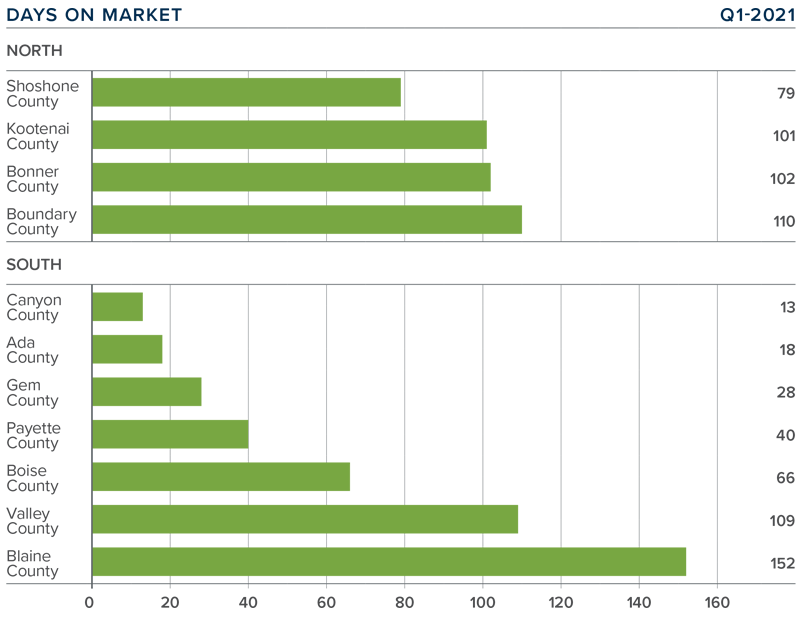
❱ It took an average of 98 days to sell a home in Northern Idaho and 61 days in the southern part of the state covered by this report.

❱ The average number of days it took to sell a home in the region rose nine days compared to the first quarter of last year.

❱ In Northern Idaho, days-on-market dropped in all counties other than Boundary, where market time rose by 2 days. In Southern Idaho, market time dropped in all counties other than Boise, where it took 26 more days to sell a home than in the first quarter of 2020.

❱ Homes sold the fastest in Canyon and Ada counties in the southern part of the state and in Shoshone County in the northern part of the state.

A bar graph showing the average days on market for homes in various counties in Idaho.

Conclusions

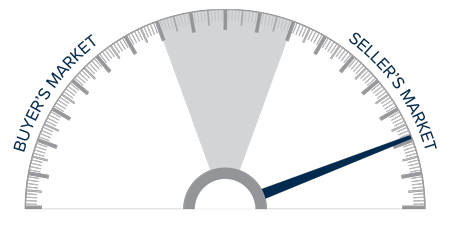
A speedometer graph indicating a seller's market in Idaho.

This speedometer reflects the state of the region’s real estate market using housing inventory, price gains, home sales, interest rates, and larger economic factors.

With employment levels now higher than before the pandemic, buyers are clearly comfortable and, perhaps motivated by modestly rising mortgage rates, they are out in force. Unfortunately, the choice of available homes is very limited, which continues to cause prices to rise at well-above-average rates. As such, sellers still have a significant advantage. Since I do not expect to see listings rise enough to meet this demand, I am moving the needle more in favor of sellers.


About Matthew Gardner

Matthew Gardner - Chief Economist for Windermere Real Estate

As Chief Economist for Windermere Real Estate, Matthew Gardner is responsible for analyzing and interpreting economic data and its impact on the real estate market on both a local and national level. Matthew has over 30 years of professional experience both in the U.S. and U.K.

In addition to his day-to-day responsibilities, Matthew sits on the Washington State Governors Council of Economic Advisors; chairs the Board of Trustees at the Washington Center for Real Estate Research at the University of Washington; and is an Advisory Board Member at the Runstad Center for Real Estate Studies at the University of Washington where he also lectures in real estate economics.
Market News April 30, 2021

Q1 2021 Montana Real Estate Market Update

The following analysis of select Montana real estate markets is provided by Windermere Real Estate Chief Economist Matthew Gardner. We hope that this information may assist you with making better-informed real estate decisions. For further information about the housing market in your area, please don’t hesitate to contact your Windermere Real Estate agent.


Regional Economic Overview

Montana’s job recovery following COVID-19 continues to impress, having returned more than 56,000 of the 63,300 jobs that were lost in the state. The recovery in employment was seen across all metro areas and I feel fairly confident that all of the jobs lost in Montana will have returned by the end of the year.

The February unemployment rate in Montana was 3.9%—well below the national rate of 6%. The Labor Department recently revised its unemployment estimates across the metro areas, and all of them saw rates increase from levels shown at the end of 2020. Even so, jobless rates in Montana were still well below the nation. Billings and Missoula were at 4.2% and Great Falls came in at 4.3%.

montana Home Sales

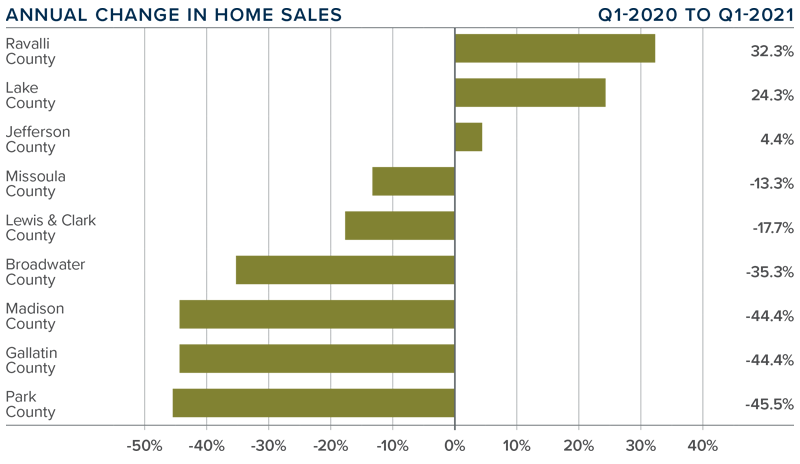
❱ In the first quarter, a total of 1,121 homes sold in the markets contained in this report, representing a drop of 31.8% compared to the same period in 2020. Sales were down 37.2% compared to the final quarter of 2020.

❱ With few choices for buyers, I was surprised to see sales higher in three counties. That said, they are all very small markets and the total growth in sales was only 22 units. In total, sales were down 522 units compared to a year ago.

❱ The decline in sales does not come as a surprise and can be almost totally attributed to the remarkably low level of homes for sale. The average number of listings in the first quarter was 36.5% lower than a year ago and 6.5% lower than in the fourth quarter of 2020.

❱ At some point, I expect to see sales start to rise again, which will likely occur when potential home sellers feel less concerned about COVID-19.

A bar graph showing the annual change in home sales for various Montana counties.

montana Home Prices

A map showing the real estate market percentage changes in various Montana counties.

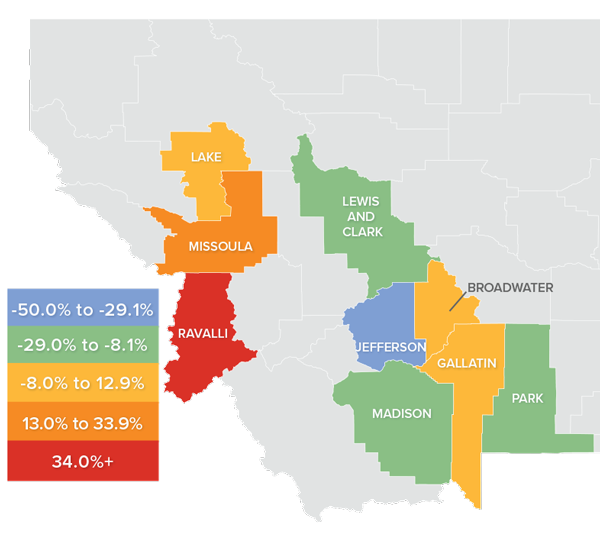
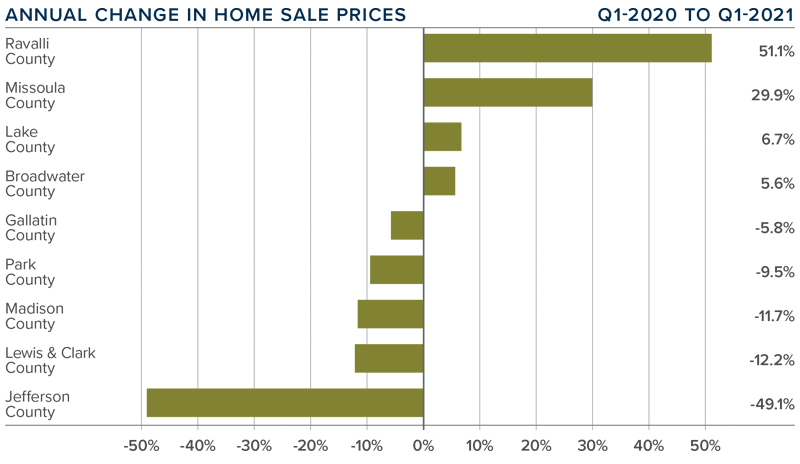
❱ Year-over-year, home prices fell 14% to an average of $531,193 and were 12% lower than in the fourth quarter of 2020.

❱ I am not concerned about the regional decline in prices, as it was directly due to a significant price drop in Jefferson County, which is a very small market that is subject to severe swings. Additionally, the expensive Madison County market also saw prices drop, which impacted regional growth.

❱ Average sale prices rose in Ravelli, Missoula, Lake, and Broadwater counties, but this was offset by a drop in prices across the balance of the region.

❱ I cannot guarantee that the decline in home prices will turn around in the second quarter. I think the market is trying to find balance after having experienced a significant period where price growth has far exceeded the long-term trend.

A bar graph showing the annual change in home sale prices for various counties in Montana.

Days on Market

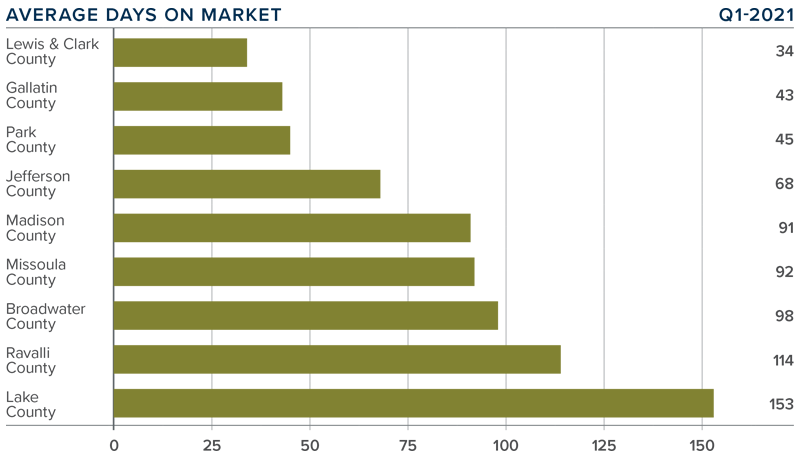
❱ The average number of days it took to sell a home dropped 28 days compared to the first quarter of 2020.

❱ Homes sold fastest in Lewis & Clark County, and slowest in Lake and Ravalli counties. All markets other than Lake (+37 days) saw market time drop compared to the first quarter of 2020.

❱ During the quarter, it took an average of 82 days to sell a home in the region.

❱ Market time rose one day compared to the fourth quarter of 2020.

A bar graph showing the average days on market for homes in various Montana counties.

Conclusions

A speedometer graph indicating a seller's market in Montana.

This speedometer reflects the state of the region’s real estate market using housing inventory, price gains, home sales, interest rates, and larger economic factors.

Montana’s economy is performing better than most of the nation, and I believe that the housing market is still on solid ground—despite some of the numbers in this report. I expect both price growth and home sales to pick back up, but this can only happen if there are more homes to choose from.

It is still a seller’s market in which well-positioned, well-priced homes continue to attract buyers. As such, I have moved the needle a little further in favor of sellers, irrespective of lower sale prices that much of the market saw in the first quarter.


About Matthew Gardner

Matthew Gardner - Chief Economist for Windermere Real Estate

As Chief Economist for Windermere Real Estate, Matthew Gardner is responsible for analyzing and interpreting economic data and its impact on the real estate market on both a local and national level. Matthew has over 30 years of professional experience both in the U.S. and U.K.

In addition to his day-to-day responsibilities, Matthew sits on the Washington State Governors Council of Economic Advisors; chairs the Board of Trustees at the Washington Center for Real Estate Research at the University of Washington; and is an Advisory Board Member at the Runstad Center for Real Estate Studies at the University of Washington where he also lectures in real estate economics.
Market News April 29, 2021

Q1 2021 Eastern Washington Real Estate Market Update

The following analysis of the Eastern Washington real estate market is provided by Windermere Real Estate Chief Economist Matthew Gardner. We hope that this information may assist you with making better-informed real estate decisions. For further information about the housing market in your area, please don’t hesitate to contact your Windermere Real Estate Agent.


Regional Economic Overview

Following the COVID-19-induced slowing of employment growth, Eastern Washington had a solid recovery in place. However, as infections increased between last November and this January, that recovery stalled. Employment in retail trade and transportation saw job levels drop. There was also a significant decline in Professional & Business Services in the Kennewick area. According to the most recent available data, employment experienced some improvement in February, but regional employment is still down more than 16,500 jobs from the pre-pandemic peak. With the labor market stalling, the unemployment rate ticked up from 6.8% in December to 6.9% in February, but I am hopeful this will turn around as the vaccine becomes more freely available.

eastern Washington Home Sales

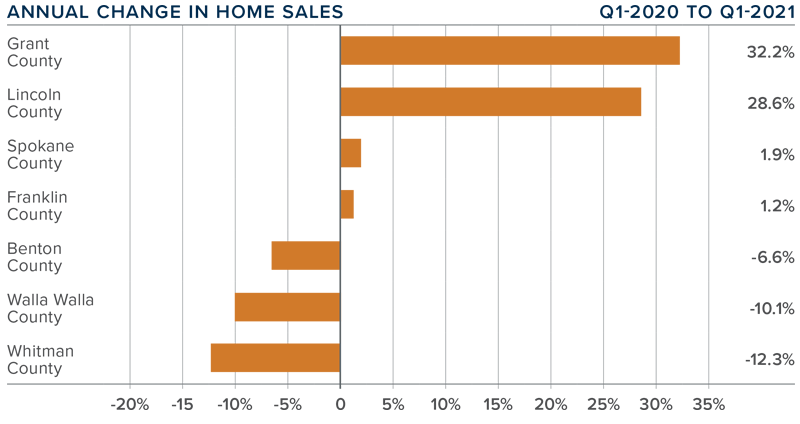
❱ Home sales throughout Eastern Washington rose 1.2% compared to the same quarter in 2020, with a total of 2,467 homes sold.

❱ Tepid sales growth can be partially attributed to the lack of homes on the market. In the first quarter there was an average of only 452 homes for sale. This is 58.9% lower than a year ago and 40.7% lower than in the fourth quarter of 2020.

❱ Sales activity rose in four counties and dropped in three. Of note was the significant growth in sales in Grant and Lincoln counties, but keep in mind that these are relatively small markets. The same can be said of the counties where sales dropped the most, so there’s no need to worry at the present time.

❱ Pending home sales were 5.5% higher than a year ago; however, they were 7.5% lower than in the fourth quarter. While the the lack of homes for sale is to blame for this drop, it does suggest that the pace of sales in the second quarter may not be positive.

A bar graph showing the annual change in home sales for various Eastern Washington counties.

eastern washington Home Prices

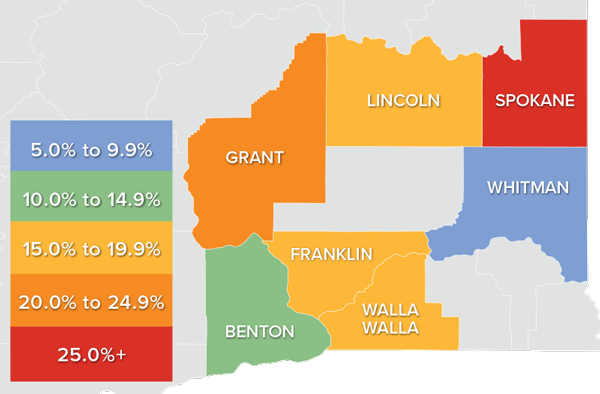
A map showing the real estate market percentage changes in various Eastern Washington counties.

❱ Year-over-year, the average home price in Eastern Washington rose a significant 20.8% to $359,474. Home prices were also 2.6% higher than in the fourth quarter of 2020.

❱ Demand remains in place, but supply remains well below the level I would like to see. With more buyers than sellers, it’s no surprise that prices increased at rates well above the long-term average.

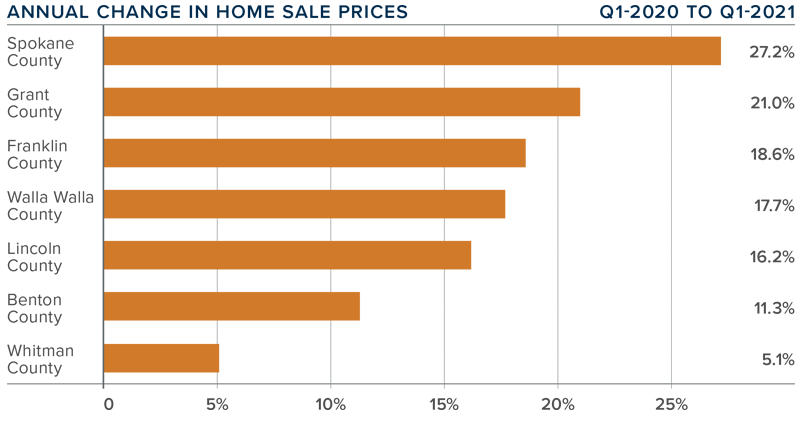
❱ Prices rose in every county, with double-digit increases in all but one market and very significant price growth in Spokane and Grant counties.

❱ With mortgage rates slowly increasing, one might expect the market to cool somewhat. But unless there is a significant increase in inventory, I would be surprised to see this happen in the foreseeable future.

A bar graph showing the annual change in home sale prices for various counties in Eastern Washington.

Days on Market

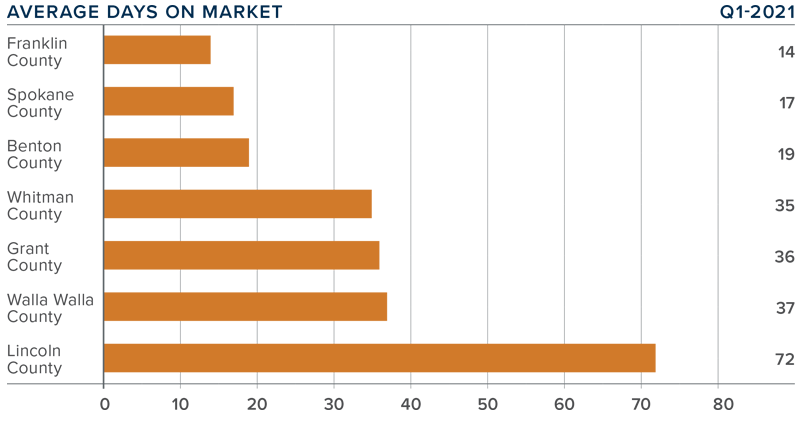
❱ The average time it took to sell a home in Eastern Washington in the first quarter of 2021 was 33 days.

❱ It took 24 fewer days to sell a home in Eastern Washington in the first quarter than it did a year ago.

❱ All markets saw days-on-market drop compared to the first quarter of 2020.

❱ It took the same number of days to sell a home in the first quarter as it did during the fourth quarter of last year.

A bar graph showing the average days on market for homes in various Eastern Washington counties.

Conclusions

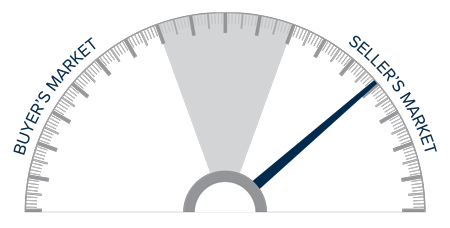
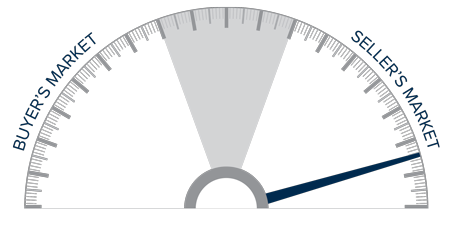
A speedometer graph indicating a seller's market in Eastern Washington.

This speedometer reflects the state of the region’s real estate market using housing inventory, price gains, home sales, interest rates, and larger economic factors.

Demand is very strong and, even in the face of rising mortgage rates, buyers are still out in force. With supply still lagging significantly, it staunchly remains a seller’s market. Furthermore, assuming that new COVID-19 infections start to trend lower, I believe even more buyers may enter the market. As such, I am moving the needle even further in favor of sellers.


About Matthew Gardner

Matthew Gardner - Chief Economist for Windermere Real Estate

As Chief Economist for Windermere Real Estate, Matthew Gardner is responsible for analyzing and interpreting economic data and its impact on the real estate market on both a local and national level. Matthew has over 30 years of professional experience both in the U.S. and U.K.

In addition to his day-to-day responsibilities, Matthew sits on the Washington State Governors Council of Economic Advisors; chairs the Board of Trustees at the Washington Center for Real Estate Research at the University of Washington; and is an Advisory Board Member at the Runstad Center for Real Estate Studies at the University of Washington where he also lectures in real estate economics.

Market News April 29, 2021

Q1 2021 Central Washington Real Estate Market Update

The following analysis of the Central Washington real estate market is provided by Windermere Real Estate Chief Economist Matthew Gardner. We hope that this information may assist you with making better-informed real estate decisions. For further information about the housing market in your area, please don’t hesitate to contact your Windermere Real Estate agent.


Regional Economic Overview

Through last fall, the Central Washington region was on its way to recovering the jobs that were lost due to COVID-19, but new infections have reversed that momentum. The hardest hit sectors were retail trade and transportation; all the markets contained in this report saw employment in these sectors drop. Due to the decline in employment, I wasn’t surprised to see the unemployment rate tick back up to 8.2% from the year-end level of 7.9%.

In aggregate, total employment was measured at 211,520, down from a pre-pandemic peak of 218,624. I hope that broader vaccine distribution will lead to a reopening of the local economy, which will give a much-needed boost to the area.

central washington Home Sales

❱ Sales in Central Washington were essentially static compared to the same period in 2020, with a total of 939 homes sold.

❱ Pending sales were 9.2% lower than in the fourth quarter of last year, suggesting that closings in the second quarter may also disappoint.

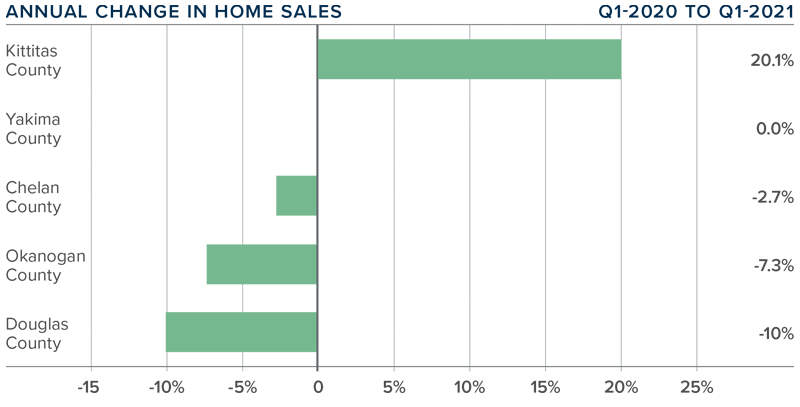
❱ Home sales rose in Kittitas County but were either static or fell in the rest of the region.

❱ Although the picture may appear somewhat bleak, I believe the primary issue has been a lack of inventory. However, the number of homes coming on the market has actually started to rise and I’m hopeful this will lead to improved sales as we move toward the summer.

A bar graph showing the annual change in home sales for various Central Washington counties.

central washington Home Prices

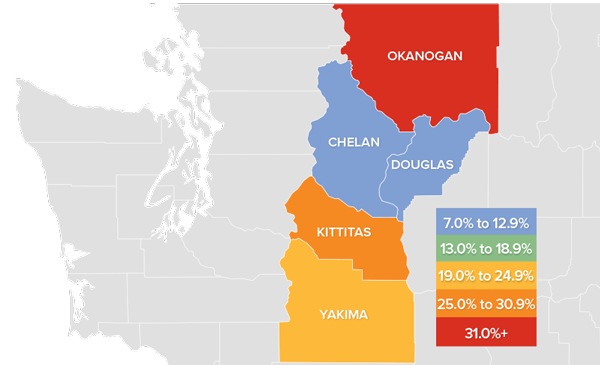
A map showing the real estate market percentage changes in various Central Washington counties.

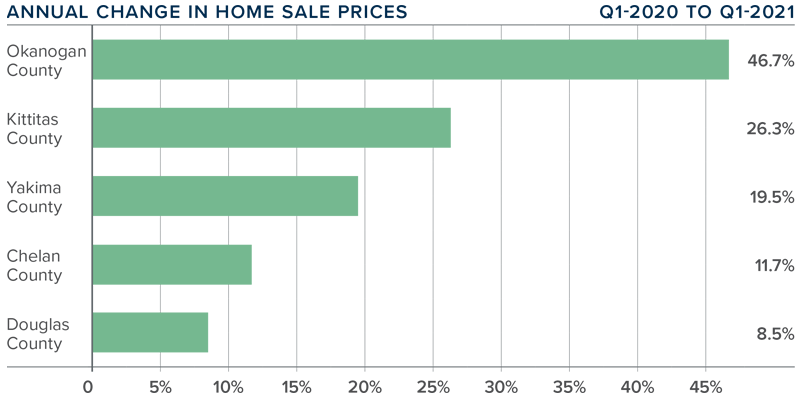
❱ Year-over-year, the average home price in Central Washington continues to trend higher, with prices up 20.8% to $414,084.

❱ With signs that there are more sellers coming to market, combined with modestly rising mortgage rates, I expect to see the rapid pace of price growth start to slow, which will be good news for home buyers.

❱ All counties covered by this report saw prices rise significantly, with double-digit increases in all but one market.

❱ The takeaway is that average home-price growth in Central Washington remains well above the long-term average, but there are signs prices may experience a modest slowdown as we move through the year.

A bar graph showing the annual change in home sale prices for various counties in Central Washington.

Days on Market

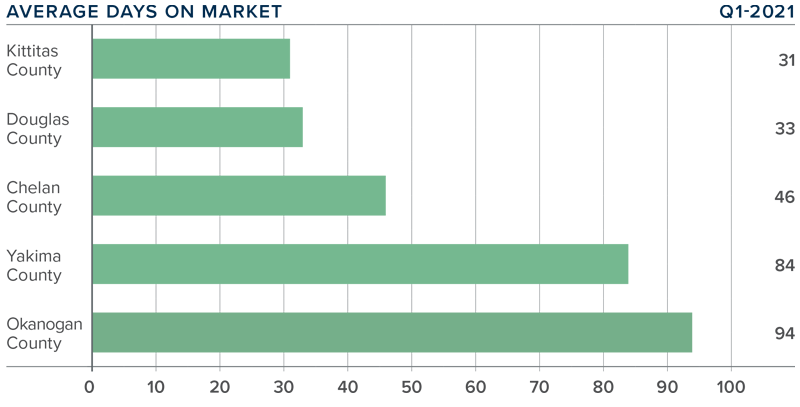
❱ The average time it took to sell a home in Central Washington in the final quarter of 2021 was 57 days.

❱ During the fourth quarter, it took 13 fewer days to sell a home in Central Washington than it did a year ago.

❱ Three counties saw the length of time it took to sell a home drop compared to a year ago, but Okanogan and Yakima saw market time rise 13 days and 1 day, respectively.

❱ It took nine more days to sell a home in the first quarter than it did in the fourth quarter of 2020.

A bar graph showing the average days on market for homes in various Central Washington counties.

Conclusions

A speedometer graph indicating a seller's market in Central Washington.

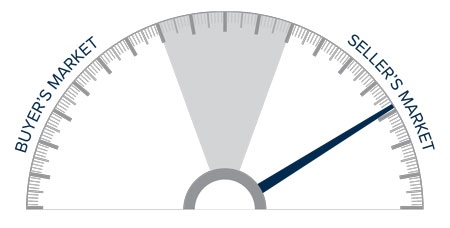
This speedometer reflects the state of the region’s real estate market using housing inventory, price gains, home sales, interest rates, and larger economic factors.

With signs of more listings coming online, the frenetic housing market may cool, but I do not see it contracting further. Though it remains a seller’s market, I have decided to leave the needle in the same position as it was at the end of 2020.


About Matthew Gardner

Matthew Gardner - Chief Economist for Windermere Real Estate

As Chief Economist for Windermere Real Estate, Matthew Gardner is responsible for analyzing and interpreting economic data and its impact on the real estate market on both a local and national level. Matthew has over 30 years of professional experience both in the U.S. and U.K.

In addition to his day-to-day responsibilities, Matthew sits on the Washington State Governors Council of Economic Advisors; chairs the Board of Trustees at the Washington Center for Real Estate Research at the University of Washington; and is an Advisory Board Member at the Runstad Center for Real Estate Studies at the University of Washington where he also lectures in real estate economics.
Living April 28, 2021

8 Tips for a More Energy Efficient Home

Whether they are motivated by rising energy costs or a desire to cultivate a more sustainable home, homeowners are constantly searching for ways they can go green, reduce their home’s energy waste, and save money in the process. Here are some simple methods for a more energy-efficient home.

8 Tips for a More Energy Efficient Home

1. Determine Your Energy Output

A natural first step in your energy-efficient journey is to get a gauge of how much energy your home is currently using and where it is being used. Analyze your recent bills to get a picture of your home’s energy consumption and the habits that are tied to that level of usage. From there, you can determine what kinds of cutbacks can be made to save energy. You might also consider hiring a professional energy auditor to fully inspect your home’s energy practices and identify where there’s room for improvement.

2. Laundry Room Best Practices

Adjusting your methods in the laundry room is an easy way to make an impact on your home’s energy output. When it’s sunny, air-dry your clothes to save energy. Most of the energy consumption generated by doing laundry comes from the heating of the water, so use cold water when possible. Wait until you have a full load before running the washer to maximize your laundry room’s efficiency.

3. Install Energy-Efficient Lighting

Replacing incandescent lights with newer, more energy-efficient options is a productive step towards reducing your home’s energy waste. A change of lightbulbs is a relatively cheap solution compared to more expensive energy-saving methods like replacing appliances. Because energy-efficient lightbulbs use less energy than standard bulbs, they commonly last much longer as well. 

4. Check Your Windows

Excessive air conditioning and heating are often the culprits behind wasteful energy practices. Weatherstripping and caulking your windows help to regulate the flow of air, keeping your home warmer in the colder months and cooler in the hotter months. Old, drafty windows let in air that can increase your home’s energy usage, regardless of the season. The upfront investment in purchasing new windows will pay off in the long run and will help to reduce energy waste.

5. Check Your HVAC Unit

A fine-tuned HVAC system is critical to making your home as energy efficient as it can be. Maintenance of your HVAC unit periodically to make sure it’s running in tip–top shape and to avoid replacements, which can be quite expensive. The cleaner your HVAC filters, the more efficiently they can run. The filters should be swapped out a maximum of every three months, more often if you use it year-round or if you have pets at home.

6. Insulate Your Home

A well-insulated home can deliver significant savings on heating and cooling costs. Walls and windows are common areas where air can escape, but so are pipes and ducts. Wrapping all these areas in insulation will pave the way for saving energy throughout the house.

7. Turn Down Your Thermostat

Turning down your thermostat is an effective method of reducing energy consumption. Even lowering it by one degree will lower your furnace’s energy output and can make a difference in your home’s overall energy efficiency. Remember to clean your furnace filter often. A clean filter will allow your home’s heating system to run more efficiently and cost-effectively.

8. Set Energy Efficiency Goals

Once you’ve begun to implement some of these strategies to make your home more energy-efficient, you’ll discover new ways to reduce your home’s energy waste while saving money. Set goals for your home’s overall energy output in a given month or set a target number you’d like to see on your next energy bill. Track your home’s progress in energy efficiency and the savings you’ve generated over time to see the difference you’ve made.

Market News April 28, 2021

Q1 2021 Southern California Real Estate Market Update

The following analysis of the Southern California real estate market is provided by Windermere Real Estate Chief Economist Matthew Gardner. We hope that this information may assist you with making better-informed real estate decisions. For further information about the housing market in your area, please don’t hesitate to contact your Windermere Real Estate agent.


Regional Economic Overview

The job recovery in Southern California can best be described as frenetic. Following the loss of more than 2 million jobs due to the pandemic, employers started rehiring last summer. That momentum was lost in the fall, but the latest data shows almost 400,000 jobs returned in February. As of penning this report, the region has recovered 1.3 million of the jobs that were lost, but that still leaves total employment down 700,000 from its pre-pandemic peak.

As jobs return, we see the unemployment rate gradually drop. The current rate is 10.9%. The latest data available showed the lowest jobless rates were in Orange County (6.8%) and San Diego County (7.2%). The highest rate was—unsurprisingly—in Los Angeles County, where it was 10.9%. In aggregate, the counties contained in this report have not seen a recent spike in new COVID-19 cases. As long as levels do not start to spike again, I expect to see more businesses reopen and demand for workers rise again.

southern california Home Sales

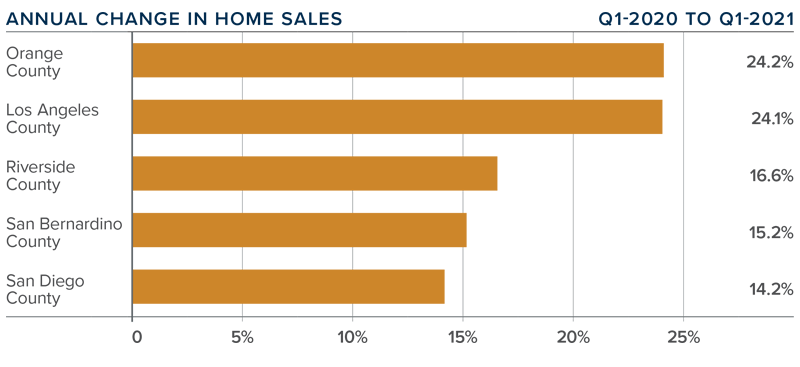
❱ The housing market remains remarkably robust, with 42,029 home sales in the first quarter of 2021, representing an increase of 20.1% year over year.

❱ Pending home sales, which are an indicator of future closings, were 5.0% higher than in the fourth quarter. This suggests that closings in the second quarter will be positive.

❱ The growth in sales was widespread, with all markets showing impressive double-digit gains. Of note is that Orange and Los Angeles counties saw sales rise by more than 20%.

❱ Listing activity was disappointing, with only 13,885 homes for sale in the first quarter of the year. This is 42.5% lower than a year ago and 27.7% lower than in the fourth quarter of 2020.

A bar graph showing the annual change in home sales for various Southern California counties.

southern california Home Prices

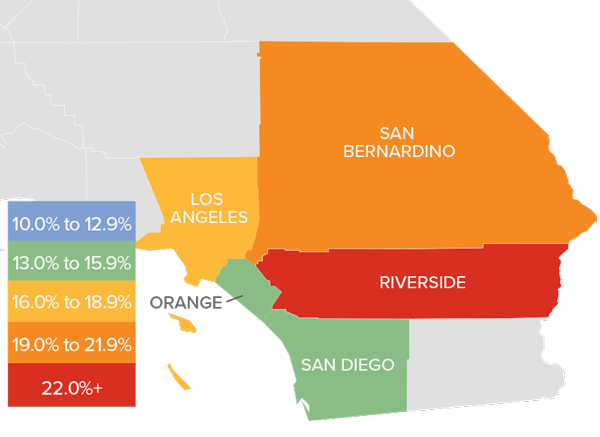
A map showing the real estate market percentage changes in various Southern California counties.

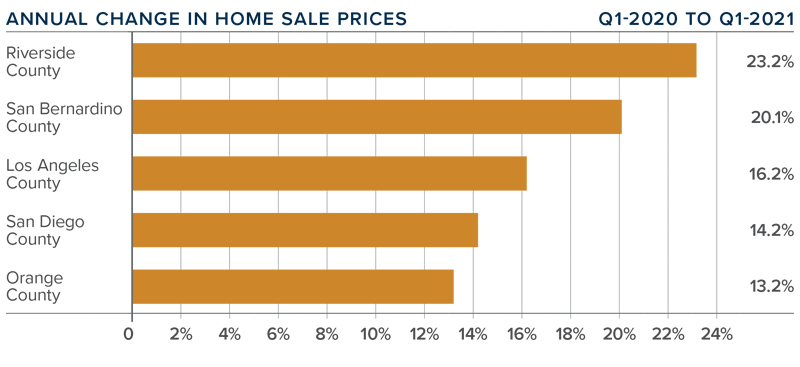
❱ The average sale price in the region was $870,038. This was 17.5% higher than a year ago and 4.6% higher than in the fourth quarter of 2020.

❱ Mortgage rates have started to rise, but this has not yet influenced the rapid pace of price appreciation. With prices rising faster than incomes, affordability concerns continue to grow.

❱ The region saw double-digit price growth across all counties contained in this report, with significant increases continuing in Riverside County as buyers move out of the L.A. area.

❱ Mortgage rates and high home prices relative to incomes are likely to lead to a slowing in price growth. That said, with a limited number of homes for sale and solid demand, prices in the Southern California market will, again, rise at rates that are above the long-term average in 2021.

A bar graph showing the annual change in home sale prices for various Southern California counties.

Days on Market

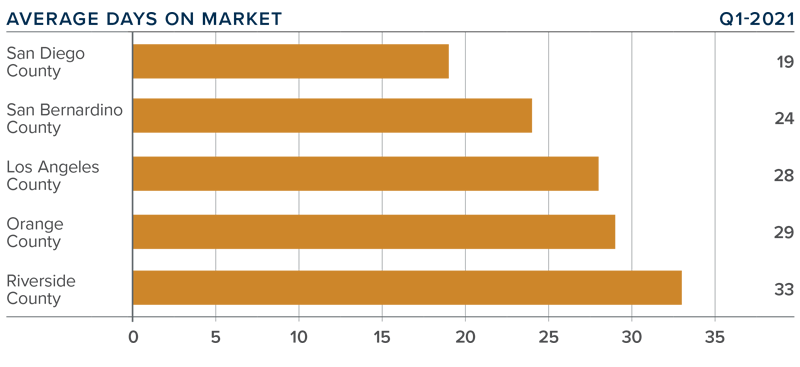
❱ In the first quarter of 2021, the average time it took to sell a home in the region was only 27 days. This is 18 fewer days than a year ago but matches the pace of the final quarter of 2020.

❱ All markets contained in this report saw the time it took to sell a house drop compared to the first quarter of 2020.

❱ Homes in San Diego County continue to sell at a faster rate than other markets in the region. In the first quarter, it took an average of only 19 days to sell a home in that market. This is 11 fewer days than it took a year ago.

❱ The drop in market time is a function of limited inventory levels in concert with significant demand.

A bar graph showing the average days on market for home in various Southern California counties.

Conclusions

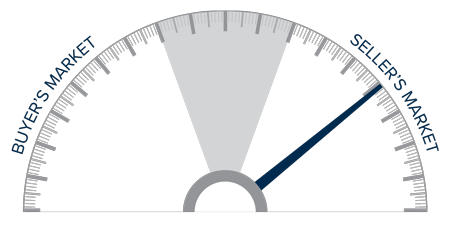
A speedometer graph indicating a seller's market in Southern California.

This speedometer reflects the state of the region’s real estate market using housing inventory, price gains, home sales, interest rates, and larger economic factors.

Home sales and prices remain impressive, and demand continues to be very strong. These conditions favor home sellers; therefore, they are still in control of the market. While I expect the number of listings to rise this year, as well as a modest increase in mortgage rates, the market will remain tight.

Even as we see financing costs rising, I have still chosen to move the needle a little more in favor of sellers, as demand is likely – at least for the time being – to continue to exceed supply.


About Matthew Gardner

Matthew Gardner - Chief Economist for Windermere Real Estate

As Chief Economist for Windermere Real Estate, Matthew Gardner is responsible for analyzing and interpreting economic data and its impact on the real estate market on both a local and national level. Matthew has over 30 years of professional experience both in the U.S. and U.K.

In addition to his day-to-day responsibilities, Matthew sits on the Washington State Governors Council of Economic Advisors; chairs the Board of Trustees at the Washington Center for Real Estate Research at the University of Washington; and is an Advisory Board Member at the Runstad Center for Real Estate Studies at the University of Washington where he also lectures in real estate economics.
Market News April 28, 2021

Q1 2021 Colorado Real Estate Market Update

The following analysis of the Metro Denver & Northern Colorado real estate market is provided by Windermere Real Estate Chief Economist Matthew Gardner. We hope that this information may assist you with making better-informed real estate decisions. For further information about the housing market in your area, please don’t hesitate to contact your Windermere Real Estate agent.
 

Regional Economic Overview

Following the decline in employment last winter, Colorado has started to add jobs back into its economy. The latest data shows that the state has now recovered more than 219,000 of the 376,000+ jobs that were lost due to COVID-19. This is certainly positive, but there is a long way to go to get back to pre-pandemic employment levels. Denver and Fort Collins continue to have the greatest improvement in employment, but all markets show job levels well below pre-pandemic levels. With total employment levels rising, the unemployment rate stands at 6.6%, down from the pandemic peak of 12.1%. Regionally, unemployment levels range from a low of 5.6% in Fort Collins and Boulder to a high of 6.7% in Greeley. COVID-19 infection rates have started to increase again, and this has the potential to negatively impact the job market. I am hopeful that the state will not be forced to pull back reopening, but this is certainly not assured.

colorado Home Sales

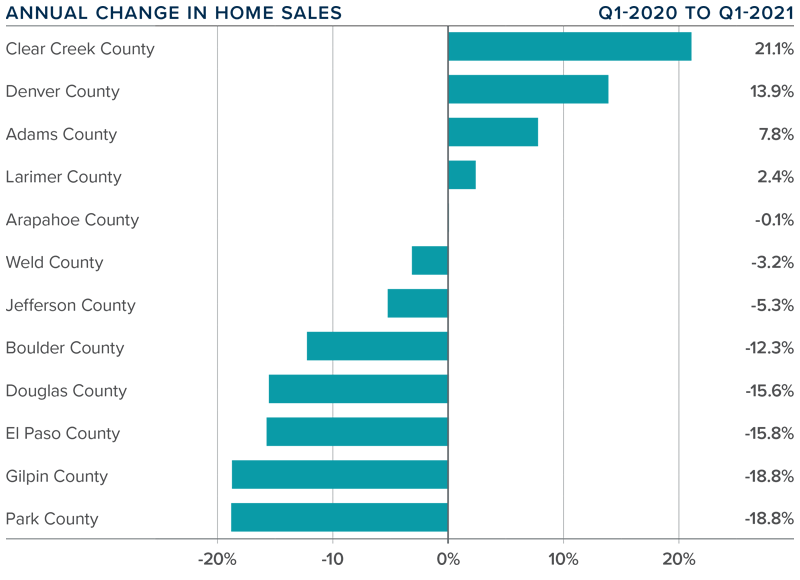
❱ 2021 started off on a bit of a sour note, with total sales down 1.2% compared to the same period in 2020. Sales were 29.2% lower than in the final quarter of 2020 as 8,645 homes sold.

❱ Sales were higher in four of the counties contained in this report, were essentially flat in one, and dropped in seven. It was pleasing to see significant sales growth in the large counties of Denver and Adams.

❱ Another positive was that pending sales, which are an indicator of future closings, were 4.8% higher than in the fourth quarter of 2020 and 5% higher than a year ago.

❱ The disappointing number of home sales overall can primarily be attributed to the woeful lack of inventory. Listings in the quarter were down more than 61% year over year and were 40.6% lower than in the fourth quarter of 2020.

A bar graph showing the annual change in home sales for various Colorado counties.

colorado Home Prices

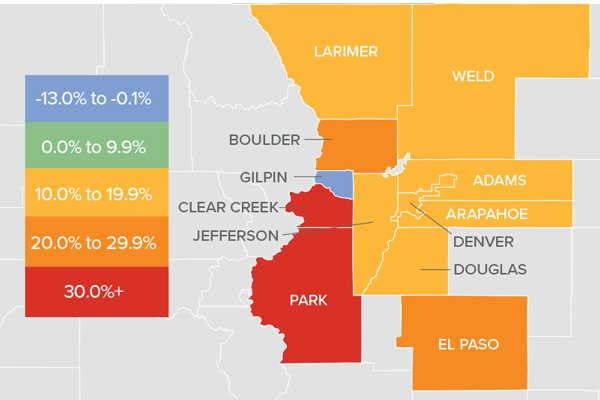
A map showing the real estate market percentage changes in various Colorado counties.

❱ Prices continue to appreciate at a very rapid pace, with the average sale price up 16.5% year over year, to an average of $556,100. Home prices were also 4.4% higher than in the fourth quarter of 2020.

❱ Buyers appear to be out in force, and this demand—in concert with very low levels of inventory—continues to heat the market.

❱ Prices rose over last year across all markets covered by this report, with the exception of the very small Gilpin County. All other counties saw sizeable gains and the trend of double-digit price growth continued unabated.

❱ Affordability levels are becoming a greater concern as prices rise at a far faster pace than wages. Even though mortgage rates have started to rise, they haven’t yet reached the level needed to take some of the heat out of the market.

A bar graph showing the annual change in home sale prices for various counties in Colorado.

Days on Market

❱ The average time it took to sell a home in the markets contained in this report dropped 20 days compared to the first quarter of 2020.

❱ The amount of time it took to sell a home dropped in every county contained in this report compared to the fourth quarter of 2020.

❱ It took an average of 25 days to sell a home in the region, down one day from the fourth quarter of 2020.

❱ The Colorado housing market remains very tight, as demonstrated by the fact that it took less than a month for homes to sell in all but two counties.

A bar graph showing the average days on market for homes in various counties in Colorado.

Conclusions

A speedometer graph indicating a seller's market in Colorado.

This speedometer reflects the state of the region’s real estate market using housing inventory, price gains, home sales, interest rates, and larger economic factors.

The relatively low level of home sales is not a surprise given how few choices there are for buyers. Sellers are certainly benefitting from strong demand, as demonstrated by the significant price growth. I maintain my belief that there will be an increase in inventory as we move through the year, but it is highly unlikely that we will see a balanced market in 2021.

Given these factors, I am moving the needle a little more in favor of sellers, as demand is likely to continue to exceed supply.


About Matthew Gardner

Matthew Gardner - Chief Economist for Windermere Real Estate

As Chief Economist for Windermere Real Estate, Matthew Gardner is responsible for analyzing and interpreting economic data and its impact on the real estate market on both a local and national level. Matthew has over 30 years of professional experience both in the U.S. and U.K.

In addition to his day-to-day responsibilities, Matthew sits on the Washington State Governors Council of Economic Advisors; chairs the Board of Trustees at the Washington Center for Real Estate Research at the University of Washington; and is an Advisory Board Member at the Runstad Center for Real Estate Studies at the University of Washington where he also lectures in real estate economics.