Market News November 3, 2020

Matthew Gardner COVID-19 Housing & Economic Update: 11/9/2020


On this week’s episode of “Monday with Matthew,” our Chief Economist, Matthew Gardner, analyzes the surprisingly strong U.S. Job Market Report from October. This video was recorded Friday, November 6th.


On the first Friday of the month, we economists get our hands on the latest US employment report and the October numbers are out and there’s a lot worth discussing, so let’s get to the figures.
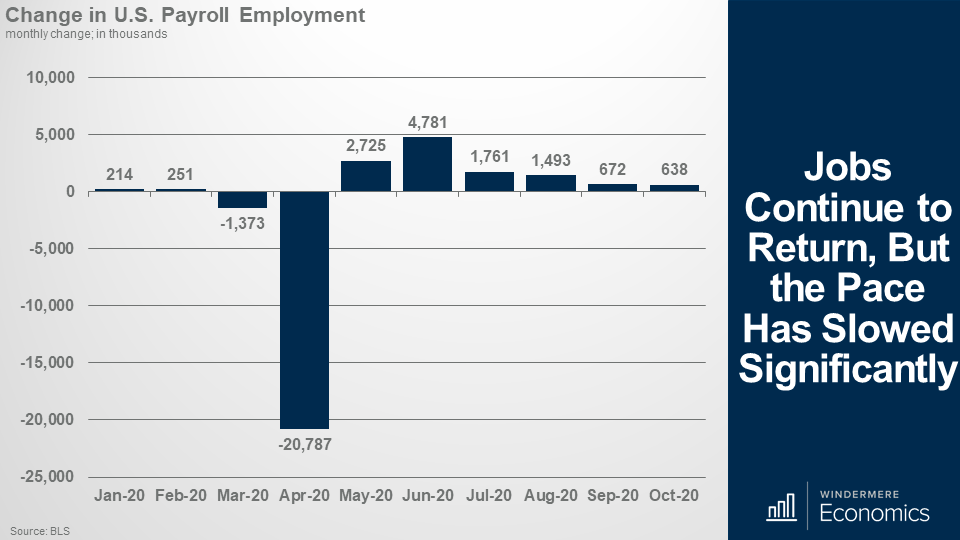
 

Bar graph showing the Change in U.S. Payroll Employment each month of 2020


The country added 638,000 jobs in October and, although some would say that it was a mediocre number, it was well above the consensus forecast which anticipated just 530,000 jobs and it also came in above my forecast for 600,000 jobs. You see, 638,000 was actually surprisingly strong. Why? Well, Coronavirus cases are on the increase again and it would be natural to assume that this would impact the number of jobs returning.
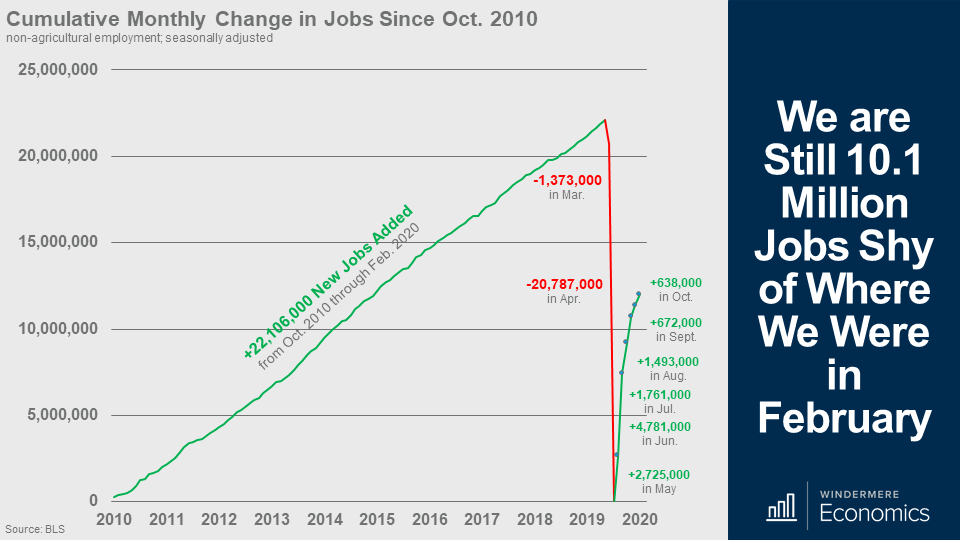
 

Line graph showing the cumulative monthly change in jobs since October 2010


But before we all get too carried away – let’s look at it in a slightly different way.

And as you can see here, the country added 22.1 million jobs between the fall of 2010 and February of this year. Now when the pandemic hit, we lost almost the same number, 22.2 million jobs went away but what was remarkable was that we lost almost 10 years of job gains in just 2 months.

And although jobs started to return in May, we are still down by 10.1 million from where we were in February of this year and you can also see that the pace of improvement has certainly slowed.
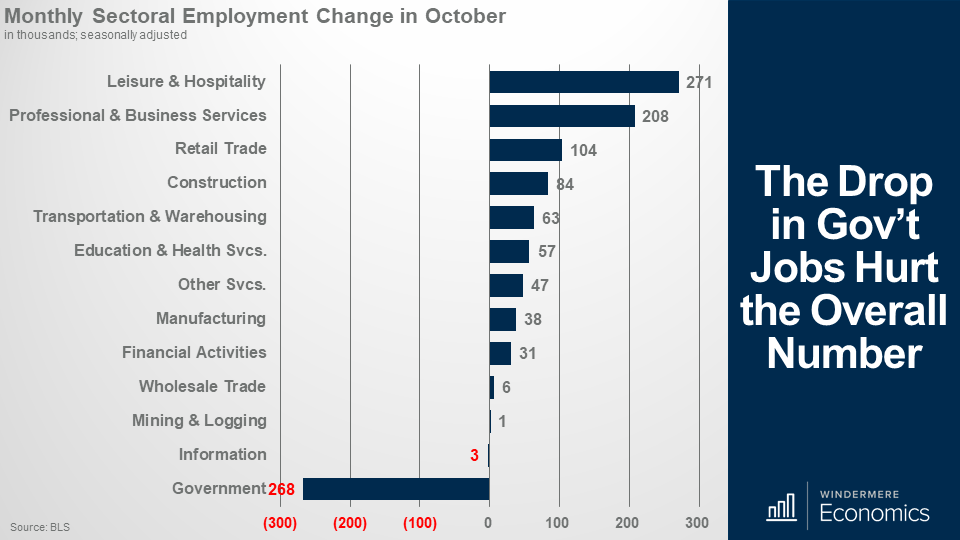
 

Bar graph showing the Monthly Employment Change in October per sector


Looking now at where jobs were added, the biggest gains came in what was the hardest-hit sector during the pandemic, leisure and hospitality, with 271,000 jobs returning, but hotels are still suffering as, of that total, bars and restaurants saw 192,000 jobs return, but the country only added 79,000 hotel jobs.

It’s also worth mentioning that the total gain would have been higher but look at government employment.  It dropped by 268,000 and was actually inflated because of the loss of 147,000 Census workers.

And you can also see that Professional and Business Services rose 208,000 and retail added 104,000, and that was mostly in electronics and appliance stores because we all appear to be on a buying spree right now, and 31,000 jobs were added in that sub-sector.

Construction also posted a healthy gain, up 84,000, while manufacturing rose by 83,000, even though the sector remains well below its pre-pandemic level.

I would also add that private companies added decent 906,000 workers, which was up by 14,000 from September so the contraction in government jobs certainly impacted the overall growth number.

So far, the numbers could have been worse, but there was some data that wasn’t as pleasing and it concerns furloughed and permanently laid off workers.
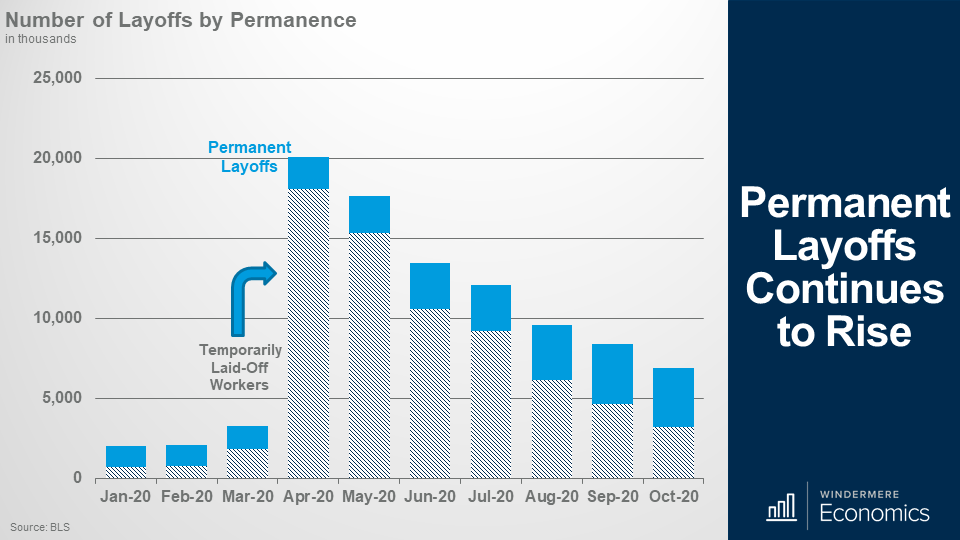
 

Bar graph showing the number of layoffs, shaded represents Temporary and blue represents Permanent


Now, you can see that the number of furloughed – or temporarily laid-off – workers is dropping but it still came in at 3.2 million – even if that is down from a peak of 18 million back in April.

But you will also see that the number of permanent layoffs continues to rise. That number is now at 3.7 million, it is down from 3.8 million seen in September, but the trend is still headed higher.

Now you see, this is very worrying, and gives me another reason to believe that a full recovery in jobs is still a long way away.
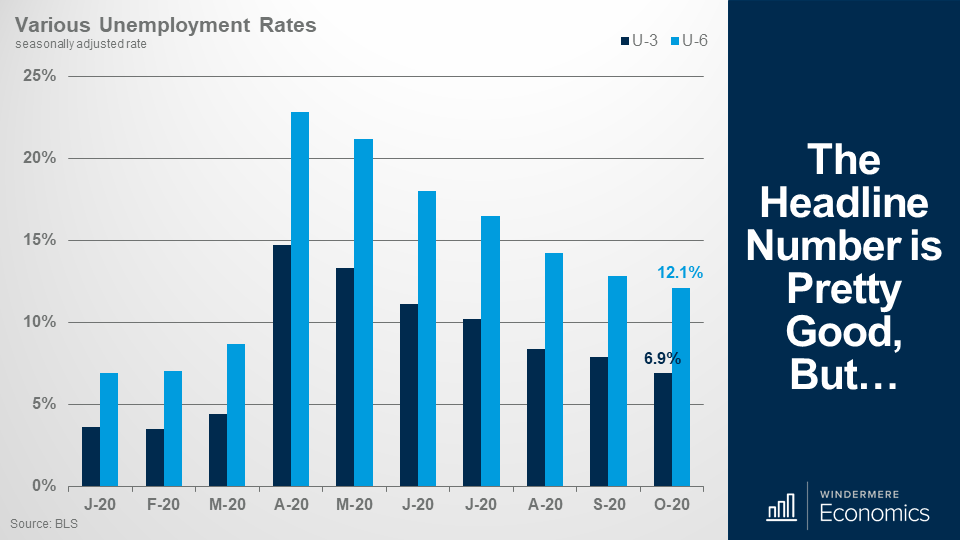
 

Bar chart showing the various unemployment rates between U-3 which is dark blue, and U-6 which is light blue


Of course, 1.4 million fewer furloughed workers allowed the unemployment rate to drop a lot – breaking back below 7% and a full percentage point lower than it was in September and I will also add that this too was well below the consensus forecasts which called for the rate to come in at 7.7%.

Additionally, the broader U-6 rate (which includes people out of work but who aren’t actively looking for a job) also pulled back from 12.8% to 12.1%.
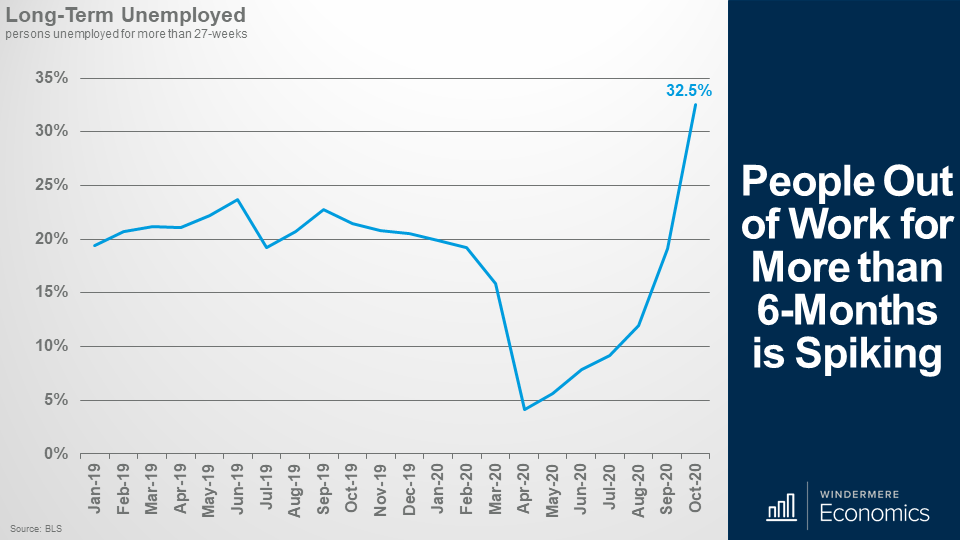
 

Line graph showing the number of people unemployed for more than 27 weeks


Of course, it was good to see the unemployment rate drop but, again, it wasn’t all good news, because the number of people out of work for more than six months surged by 1.2 million. Today, around a third of all unemployed persons have been out of work for at least six months and the October rate is also quickly approaching the peak seen during the aftermath of the Great Recession when about 45% of unemployed workers were out of work more than half a year.

And this is an important metric because workers who remain out of a job for this long enter a financially precarious period and the contested election reduces the chances of another stimulus package coming this year. But even if more fiscal stimulus is agreed on, it will likely be smaller than is needed.

As I mentioned earlier, even though private payrolls rose by a decent 906,000, the labor market recovery still has a long way to go.

The number of people working in America today is back at a level last seen in late 2015 and, at October’s pace, it would still take about another 16 months for employment to return to its pre-pandemic level.

I still expect that we will see a slow return to work, but the numbers are likely to remain muted until a vaccine or inoculation is not only freely available – but it has to be one that we feel comfortable taking as well.

The bottom line is that the report could have been worse, but it could also have been better too.

With that, as always, if you’ve got any questions about my comments today, I’d love to hear from you but in the meantime, take care out there, and I look forward to seeing you all again – in a couple of weeks.


Market News November 2, 2020

Park City Real Estate Market Update

The following analysis of select neighborhoods in the Park City real estate market is provided by Windermere Real Estate Chief Economist Matthew Gardner. We hope that this information may assist you with making better-informed real estate decisions. For further information about the housing market in your area, please don’t hesitate to contact your Windermere agent. 


ECONOMIC OVERVIEW
Though Utah is still feeling a significant economic hit, the jobs losses in March and April have certainly turned around. The pandemic caused the loss of more than 144,000 jobs in the state, but the most recent figures show that Utah has now recovered 95,900 of them. Although that still leaves a shortfall of 48,700 jobs, the numbers are promising.

The unemployment rate, which peaked at 10.4% in April, has dropped and now stands at a very respectable 4.1%.

If a headwind exists, it’s that new COVID-19 infection rates started to rise pretty aggressively again in September, and this has the potential to significantly slow Utah’s economic recovery.


HOME SALES

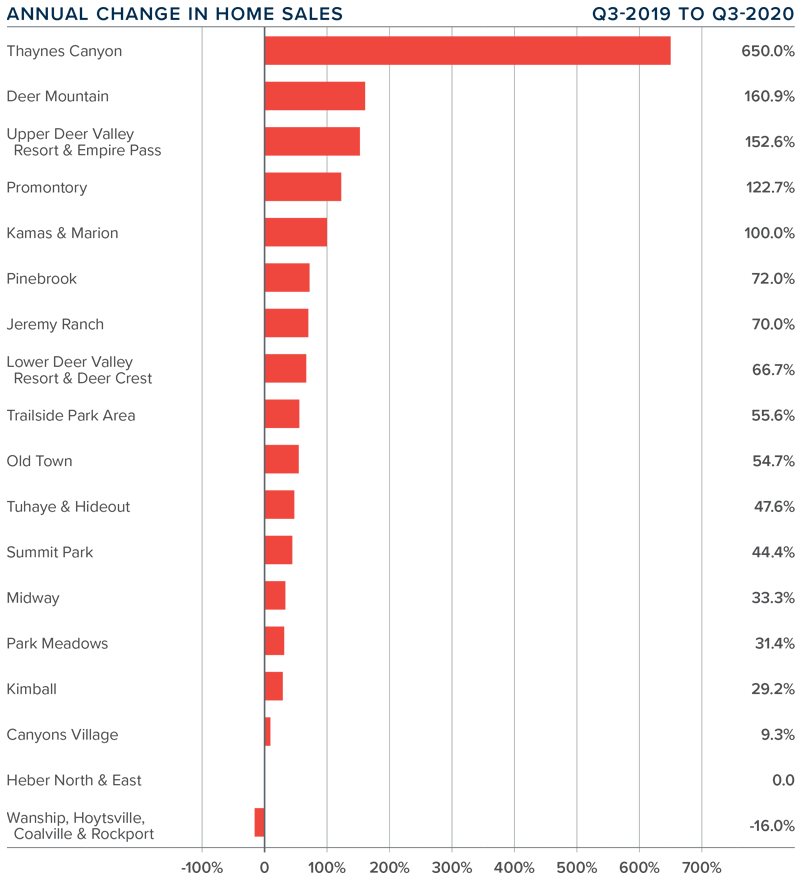
❱ In the third quarter of 2020, 349 homes sold in the Park City area, an increase of a very solid 46% compared to the third quarter of 2019. Sales were also up by a remarkable 166.4% compared to the second quarter of this year.

❱ Sales were down 16% in Wanship/Hoytsville/Coalville/Rockport, and static in Heber North & East from the quarter before. Sales rose in all other areas. Thaynes Canyon saw a remarkable 650% increase, though that equated to only 15 sales in the quarter.

❱ The growth in sales relative to the second quarter came as inventory levels dropped almost 10%. The growth in sales was a far cry from the significant decline we saw in the second quarter of the year. The market is clearly back!

❱ Pending home sales were 80.7% higher than a year ago, and up 228% compared to the second quarter of this year. Closings in the fourth quarter will be impressive.

Graph showing the change in percentage of home sales per neighborhood in Park City Utah from 3rd quarter 2019 to 3rd quarter 2020


HOME PRICES

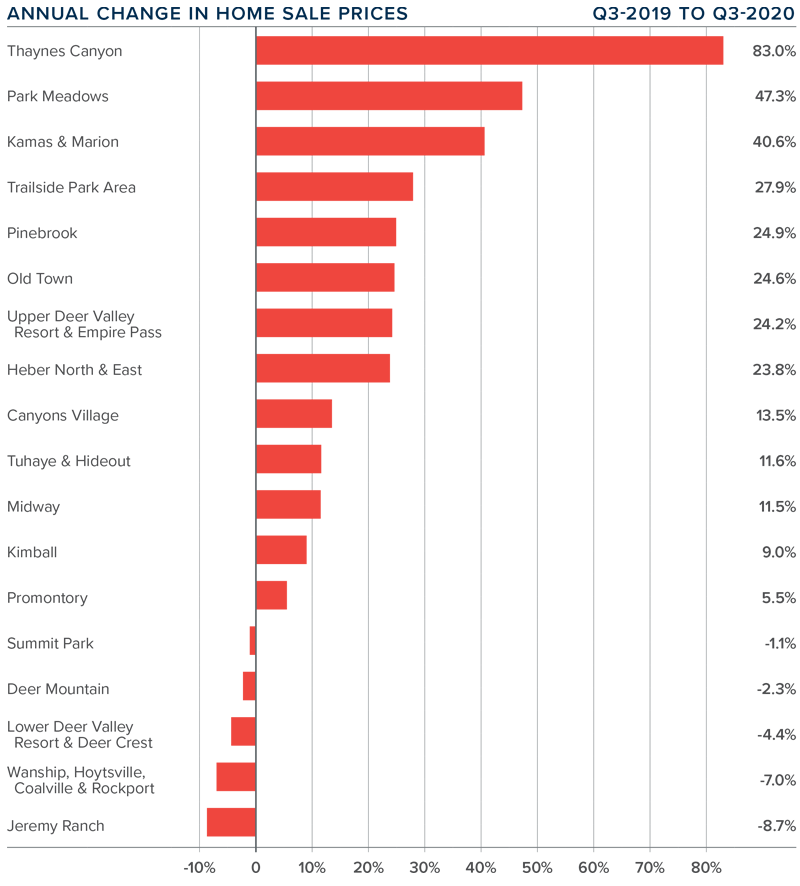
❱ The average home price in the Park City neighborhoods contained in this report rose 28.3% year over year to $1.469 million. Prices were 26.7% higher than in the second quarter of 2020.

❱ The most affordable neighborhoods in terms of average home prices were again in the Kimball, Heber North & East, and Wanship/Hoytsville/Coalville/Rockport neighborhoods. The most expensive areas were Thaynes Canyon and the Upper Deer Valley Resort, where average home prices exceeded $3 million.

❱ Even with aggregate prices up significantly, they did not increase in all neighborhoods. Prices dropped in five neighborhoods, but I am not particularly concerned, as small areas can experience wild swings in prices depending on the homes that sold. Annual prices dropped in seven markets, with the most significant decline in the Canyons Village area.

❱ The Park City market is relatively small but contains some very expensive real estate. I mentioned in last quarter’s Gardner Report that it would be interesting to see if COVID-19-related impacts were going to persist or not. It appears as if they haven’t.

Graph of Annual change in home sale prices per neighborhood in Park City for quarter 3 2020


DAYS ON MARKET

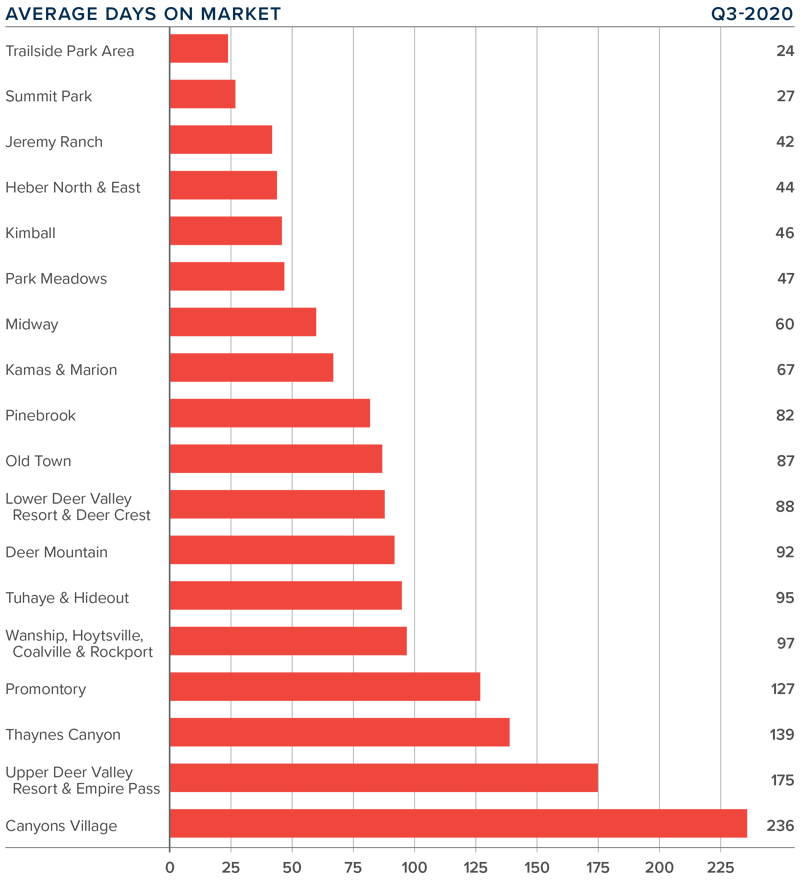
❱ The average time it took to sell a home in the Park City area dropped 25 days compared to the third quarter of 2019, and was down 13 days compared to the second quarter of this year.

❱ The amount of time it took to sell a home dropped in all but three neighborhoods relative to the third quarter of 2019: Wanship/Hoytsville/Coalville/Rockport, Deer Mountain, and Tuhaye/Hideout.

❱ In the third quarter, it took an average of 88 days to sell a home. Homes sold fastest in the Trailside Park and Summit Park areas and slowest in the Canyons Village neighborhood.

❱ The greatest drop in market time was in the Kamas & Marion neighborhood, where it took 94 fewer days to
sell a home than during the same period a year ago.

Graph showing average days on market for listings in the 3rd quarter 2020 in Park City Utah


CONCLUSIONS

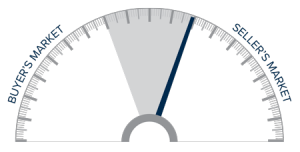
This speedometer reflects the state of the region’s real estate market using housing inventory, price gains, home sales, interest rates, and larger economic factors.

Buyers are trying to take advantage of historically low mortgage rates, and many are offering cash in order to put themselves in a more competitive position than other would-be buyers. Assuming the state gets new infection rates back under control, I believe sellers still have the upper hand.
I am therefore moving the needle a little more in their favor.


ABOUT MATTHEW GARDNER

Headshot of Matthew GardnerAs Chief Economist for Windermere Real Estate, Matthew Gardner is responsible for analyzing and interpreting economic data and its impact on the real estate market on both a local and national level. Matthew has over 30 years of professional experience both in the U.S. and U.K.

In addition to his day-to-day responsibilities, Matthew sits on the Washington State Governors Council of Economic Advisors; chairs the Board of Trustees at the Washington Center for Real Estate Research at the University of Washington; and is an Advisory Board Member at the Runstad Center for Real Estate Studies at the University of Washington where he also lectures in real estate economics.

Market News November 2, 2020

Utah Real Estate Market Update


The following analysis of select counties of the Utah real estate market is provided by Windermere Real Estate Chief Economist Matthew Gardner. We hope that this information may assist you with making better-informed real estate decisions. For further information about the housing market in your area, please don’t hesitate to contact your Windermere agent. 


ECONOMIC OVERVIEW

Though Utah is still feeling a significant economic hit, the jobs losses in March and April have certainly turned around. The pandemic caused the loss of more than 144,000 jobs in the state, but the most recent figures show that Utah has now recovered 95,900 of them. Although that still leaves a shortfall of 48,700 jobs, the numbers are promising. The unemployment rate, which peaked at 10.4% in April, has dropped and now stands at a very respectable 4.1%. If a headwind exists, it’s that new COVID-19 infection rates started to rise pretty aggressively again in September, and this has the potential to significantly slow Utah’s economic recovery.


HOME SALES

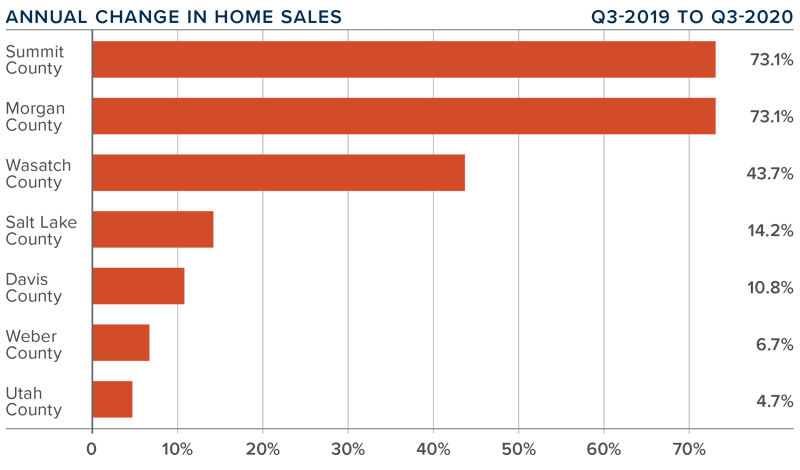
❱ In the third quarter of 2020, 11,623 homes sold, an increase of 11.3% compared to the same period in 2019. Sales were 24.7% higher than in the second quarter—on the back of a significant increase over the first quarter.
❱ Total sales activity rose in all counties covered by this report, with significant gains in the small counties of Summit and Morgan.
❱ In less positive news, the number of homes for sale in the quarter was 56.4% lower than during the same period a year ago and down 38.6% from the second quarter of this year.
❱ Pending sales in the third quarter were up 1.9% compared to the second quarter, suggesting that closings in the final quarter of 2020 will be positive. As I have stated in past reports, sales are only limited by the number of homes on the market.

Graph of Annual change in Home Sales for the 3rd Quarter 2020.


HOME PRICES

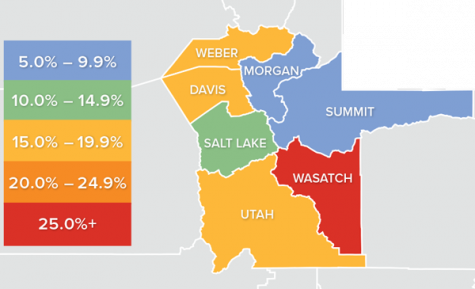
Map of counties in Utah❱ The average home price in the region continued to rise in the third quarter, with a year-over-year increase of an impressive 15% to $432,640. Home prices were also 5.9% higher than in the second quarter of 2020.
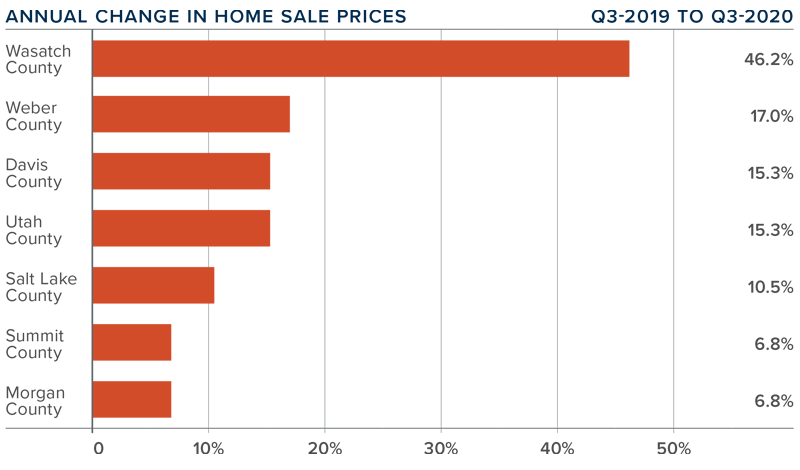
❱ Outside of Wasatch County, every county covered by this report saw solid price appreciation compared to the same period
a year ago.
❱ Price growth was strongest in Wasatch County, where prices rose a remarkable 46.2%. This is clearly an anomaly, and I expect to see price growth pull back in the fourth quarter.
❱ Home prices are appreciating at significant rates, demonstrating faith in the concept of home ownership, but also showing that buyers are taking advantage of historically low mortgage rates.


Graph showing Annual Changes in Home Sales in the third quarter 2020


DAYS ON MARKET

❱ The average number of days it took to sell a home in the counties covered by this report rose one day compared to the third quarter of 2019.
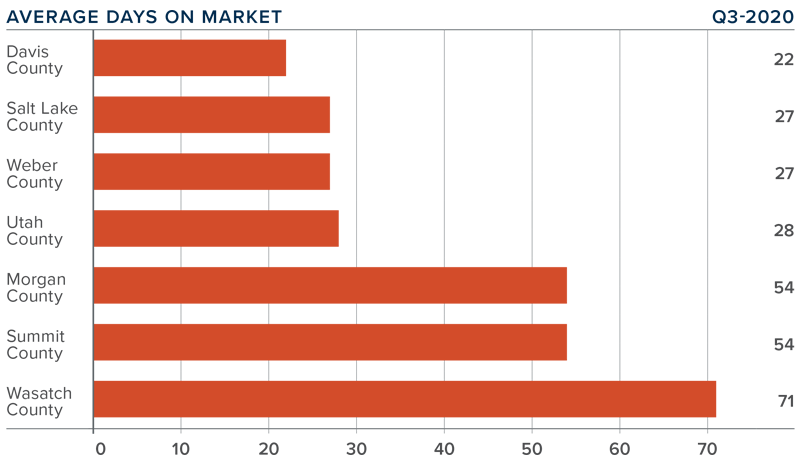
❱ Homes again sold fastest in Davis and Salt Lake counties. The longest time it took to sell a home was in Wasatch County. It took less time to sell a home in all counties other than Morgan, Wasatch, and Summit.
❱ During the third quarter, it took an average of 40 days to sell a home in the region, down 7 days from the second quarter of this year.
❱ Market time was essentially static compared to a year ago, but significantly lower than in the spring of 2020. This is likely due to the lack of inventory, making the housing market more competitive.


Graph showing Average Days on Market in each county in the third quarter 2020


CONCLUSIONS

Spedometer graphic with Buyers Market on the left and Sellers Market on the right. The needle is pointing toward seller's marketThis speedometer reflects the state of the region’s real estate market using housing inventory, price gains, home sales, interest rates, and larger economic factors.

We know we have demand in the region, and that limited supply is heating up the housing market as demonstrated by reduced market time and significant price appreciation.

Listing activity is unlikely to improve as we round out the year, and buyers keen on taking advantage of historically low mortgage rates will be competing for the limited number of available homes. As such, I am moving the needle a little more in favor of home sellers.


ABOUT MATTHEW GARDNER

Headshot of Matthew GardnerAs Chief Economist for Windermere Real Estate, Matthew Gardner is responsible for analyzing and interpreting economic data and its impact on the real estate market on both a local and national
level. Matthew has over 30 years of professional experience both in the U.S. and U.K.

In addition to his day-to-day responsibilities, Matthew sits on the Washington State Governors Council of Economic Advisors; chairs the Board of Trustees at the Washington Center for Real Estate Research at the University of Washington; and is an Advisory Board Member at the Runstad Center for Real Estate Studies at the University of Washington where he also lectures in real estate economics.

Market News October 30, 2020

Montana Real Estate Market Update


The following analysis of select Montana real estate markets is provided by Windermere Real Estate Chief Economist Matthew Gardner. We hope that this information may assist you with making better-informed real estate decisions. For further information about the housing market in your area, please don’t hesitate to contact your Windermere agent.


ECONOMIC OVERVIEW

Following a very significant decline in employment between March and April, Montana’s economy has now recovered 36,300 of the 63,500 lost jobs. The job recovery was evident throughout the state, but Missoula has been the quickest to rebound. Current numbers show that Missoula has recovered all but 400 of the 7,400 jobs that were lost. The unemployment rate in the state was 5.6% in August, down from the April peak of 11.9%.

Unemployment estimates across the various metropolitan service areas (MSAs) show Billing’s current rate is 4.9%, Great Falls’ is 5.3%, and Missoula’s is 5.4%. If a headwind exists that may slow the jobs recovery, it is that new COVID-19 infection rates started picking up significantly in September. Unless we see those numbers start to drop, or at least level off, a full employment recovery may be significantly delayed.


HOME SALES

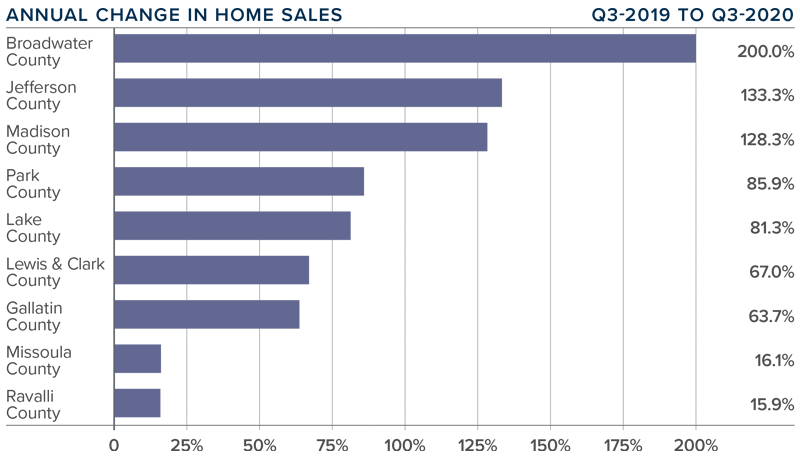
  • During the third quarter of 2020, 2,543 homes sold in the markets contained in this report. This is an increase of 46.6% over the same period in 2019 and 203% higher than the second quarter of this year.
  • Sales activity was positive across the board, with significant improvement in all counties. The largest annual increase was in very small Broadwater County, where sales were up 200%. However, that meant sales rose from two to six.
  • The number of homes for sale remains well below where I would like to see it. That said, although listing activity was 8.9% lower than a year ago, it was up 8.2% from the second quarter of this year.
  • I would like to see inventory levels higher, but I was still pleased to see some improvement compared to the second quarter.


HOME PRICES

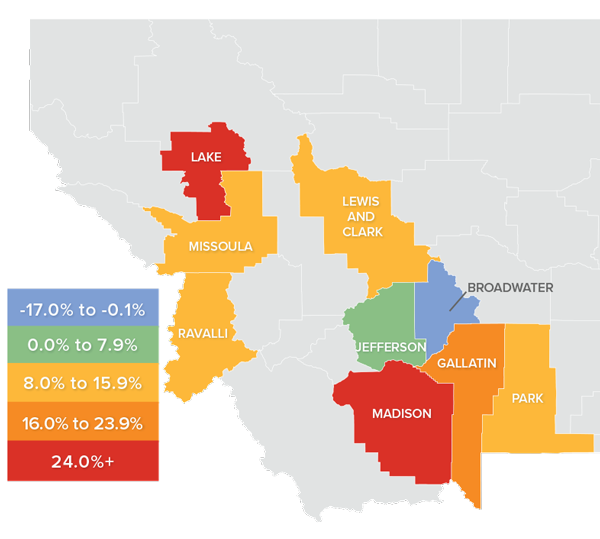
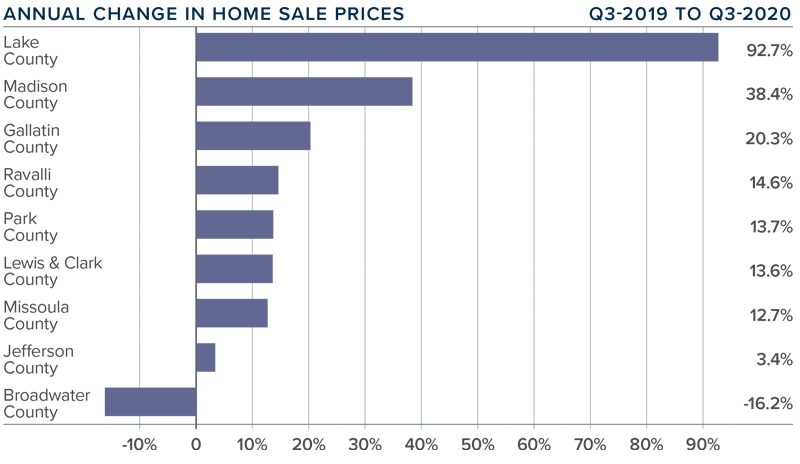
  • Year-over-year, home prices rose a significant 30.6% to an average of $499,013. Prices were also 40.4% higher than in the second quarter of this year. 
  • Average home prices rose everywhere but Broadwater County, though this was likely due to the fact that there were only a handful of sales in that market.
  • An improving economy, in concert with rapidly improving demand, gave the housing market the much-needed boost it needed following very poor second-quarter activity.
  • As I predicted in the second quarter Gardner Report, summer brought more inventory which not only led to more sales, but also a return of price growth.


DAYS ON MARKET

  • The average number of days it took to sell a home rose one day compared to the third quarter of 2019. 
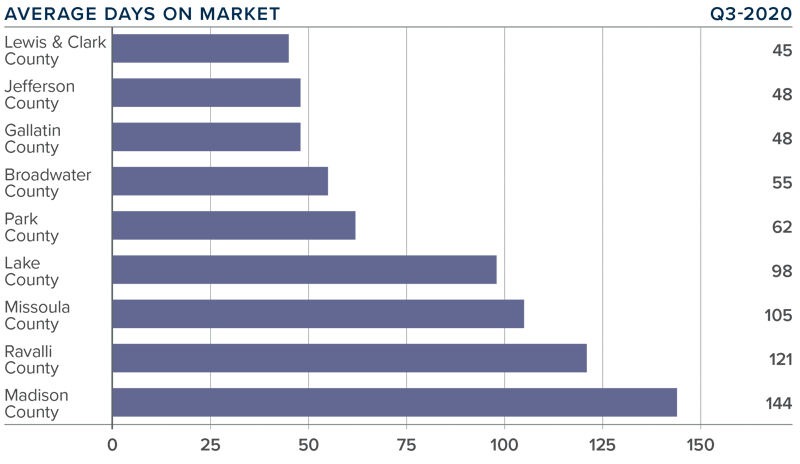
  • Homes sold fastest in Lewis and Clark County and slowest in Madison County. All counties other than Lake and Gallatin saw days on market rise, but the overall average dropped because Lake County saw the time on market drop from 160 days to 98.
  • During the quarter, it took an average of 81 days to sell a home in the region.
  • The headline here is that although days on market rose in many counties, it was likely due to the increased number of homes on the market that gave buyers more choice.


CONCLUSIONS

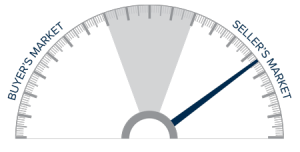
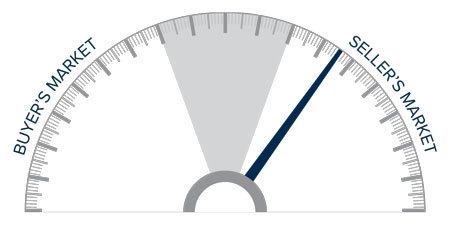
This speedometer reflects the state of the region’s real estate market using housing inventory, price gains, home sales, interest rates, and larger economic factors.

Pending sales rose even in the face of decreased supply. Price growth has bounced back significantly, signifying strong demand. This, combined with very favorable mortgage rates, suggests the market will continue to be buoyant.

The housing market has recovered, and it remains a seller’s market. As such, I have moved the needle a little further in their favor.


ABOUT MATTHEW GARDNER

As Chief Economist for Windermere Real Estate, Matthew Gardner is responsible for analyzing and interpreting economic data and its impact on the real estate market on both a local and national level. Matthew has over 30 years of professional experience both in the U.S. and U.K.

In addition to his day-to-day responsibilities, Matthew sits on the Washington State Governors Council of Economic Advisors; chairs the Board of Trustees at the Washington Center for Real Estate Research at the University of Washington; and is an Advisory Board Member at the Runstad Center for Real Estate Studies at the University of Washington where he also lectures in real estate economics.

Market News October 30, 2020

Idaho Real Estate Market Update


The following analysis of select counties of the Idaho real estate market is provided by Windermere Real Estate Chief Economist Matthew Gardner. We hope that this information may assist you with making better-informed real estate decisions. For further information about the housing market in your area, please don’t hesitate to contact your Windermere agent. 


ECONOMIC OVERVIEW

Idaho never ceases to amaze me! Along with the rest of the country, its economy was significantly impacted by COVID-19 and it shed 83,100 jobs between February and April. Since that time, the recovery has been palpable. Even though state payrolls contracted 10.8%, it has now recovered 69,500 of the jobs lost, leaving a relatively small shortfall of 13,600 jobs. With this recovery in employment, the unemployment rate, which peaked at 11.8% in April, has pulled back to 4.2%. Though this all sounds remarkably positive, Idaho has seen COVID-19 cases rise again, and this may slow the job recovery that appears to be in place.


HOME SALES

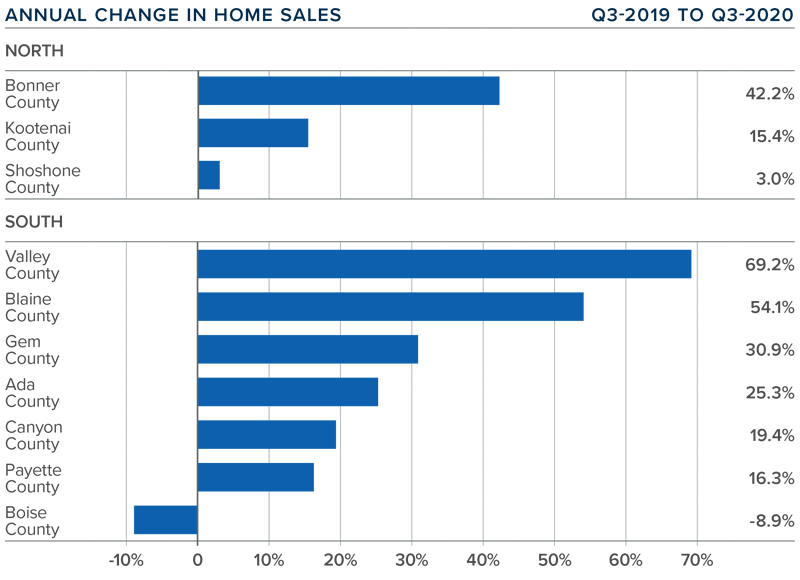
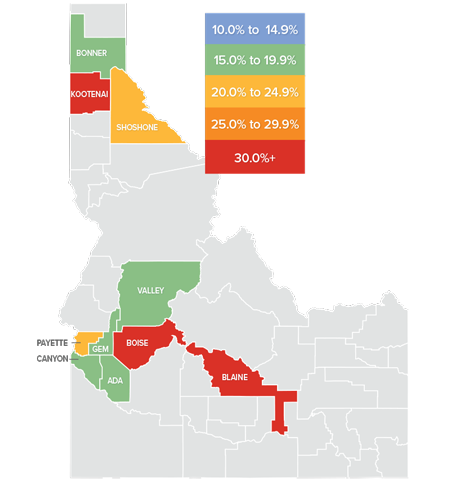
  • During the third quarter of 2020, 9,078 homes were sold, representing a very significant increase of 23.5% year-over-year. Sales were also 44.9% higher than in the second quarter of this year.
  • In the southern part of the state, sales rose in all but the very small Boise County. The 8.9% drop there represented only seven fewer transactions. Valley County saw significant growth.
  • Year-over-year sales growth was positive in all the Northern Idaho counties contained in this report, with significant growth in Bonner County.
  • Pending sales were positive relative to the second quarter, suggesting that closings in the final quarter of this year will also rise. Sales across the state are limited only by the lack of homes available to buy.


HOME PRICES

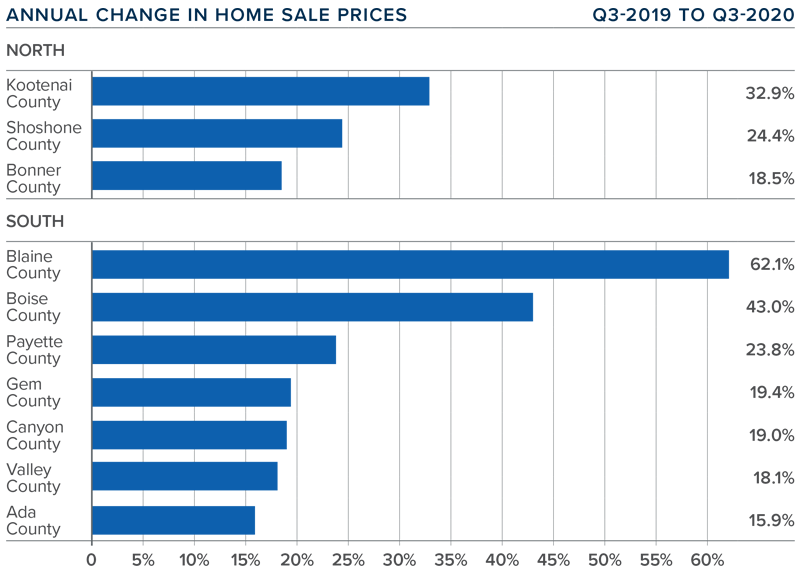
  • The average home price in the region rose a significant 24.8% year-over-year to $459,372. Home prices were 18.6% higher than in the second quarter of 2020.
  • In Northern Idaho, prices rose most significantly in Kootenai County, though all counties saw double-digit gains. Southern Idaho price growth was equally impressive, with Blaine County standing out.
  • Prices rose in all Northern Idaho counties covered by this report. All seven Southern Idaho counties also saw solid price growth.
  • Inventory levels remain an issue. The average number of homes for sale was 33% lower than a year ago and down 16.2% compared to the second quarter.


DAYS ON MARKET

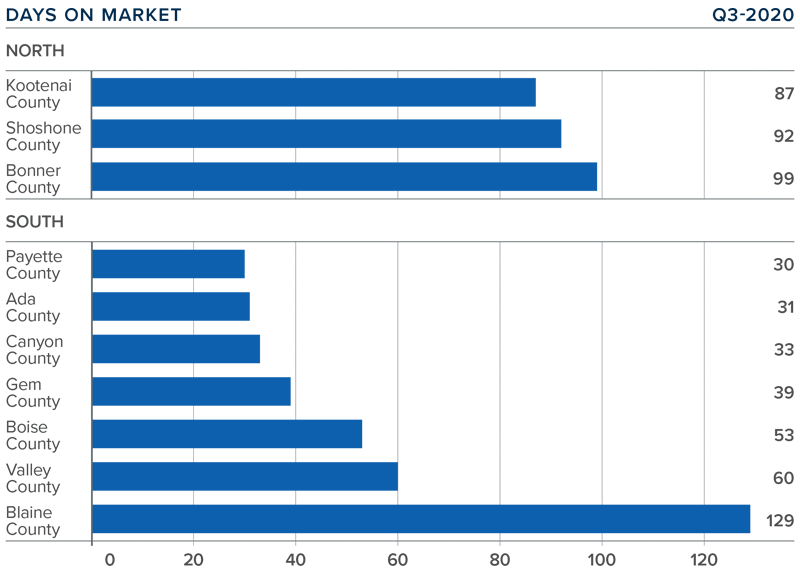
  • It took an average of 93 days to sell a home in Northern Idaho, and 54 days in the southern part of the state covered by this report.
  • The average number of days it took to sell a home in the region dropped one day compared to the third quarter of 2019. It took an average of eight fewer days to sell a home than in the second quarter of this year.
  • In Northern Idaho, days on market dropped in Bonner and Kootenai counties, but rose by one day in Shoshone County. In Southern Idaho, market time dropped in four counties, but rose, albeit modestly, in Valley, Gem, and Canyon counties.
  • In Southern Idaho, homes sold fastest in Payette and Ada counties. Sales were fastest in Kootenai County in the northern part of the state.


CONCLUSIONS

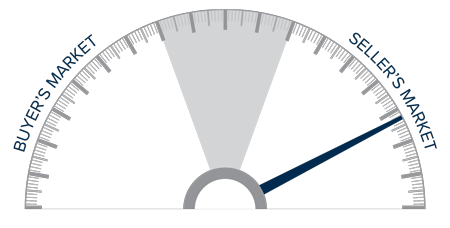
This speedometer reflects the state of the region’s real estate market using housing inventory, price gains, home sales, interest rates, and larger economic factors.

Demand for home ownership is significant, and, in my opinion, the number of sales is only limited by the number of homes for sale. The economy is recovering nicely, which, in concert with historically low mortgage rates, is getting a lot of buyers off the fence and searching for homes. With buyer demand far exceeding supply, I am moving the needle more in favor of sellers.


ABOUT MATTHEW GARDNER

As Chief Economist for Windermere Real Estate, Matthew Gardner is responsible for analyzing and interpreting economic data and its impact on the real estate market on both a local and national level. Matthew has over 30 years of professional experience both in the U.S. and U.K. 

In addition to his day-to-day responsibilities, Matthew sits on the Washington State Governors Council of Economic Advisors; chairs the Board of Trustees at the Washington Center for Real Estate Research at the University of Washington; and is an Advisory Board Member at the Runstad Center for Real Estate Studies at the University of Washington where he also lectures in real estate economics.

Market News October 29, 2020

Central Washington Real Estate Market Update


The following analysis of the Central Washington real estate market is provided by Windermere Real Estate Chief Economist Matthew Gardner. We hope that this information may assist you with making better-informed real estate decisions. For further information about the housing market in your area, please don’t hesitate to contact your Windermere agent.


ECONOMIC OVERVIEW

Washington State continues to recover from the massive COVID-19-induced decline in employment. Following the loss of 556,000 jobs between February and April, the state has now seen the return of 332,500 workers. That said, Washington employment is still down almost 225,000 jobs. Locally, the Central Washington market area lost just over 12,500 jobs, but I am happy to announce that all but 69 of those jobs have returned! The unemployment rate, which peaked at 14.9%, has now dropped to 9.5% but is still higher than the year-ago rate of 5.6%.

Given the job recovery this may appear counterintuitive, but we have seen a significant increase in the labor force and that is holding rates higher. The job recovery that started in May continues, but I am seeing a slowdown in the number of jobs returning. This is not a surprise as it matches the rest of the state as well as the country as a whole. I expect that the pace of jobs returning will increase, but that is not likely until a vaccine for COVID-19 is freely available.


HOME SALES

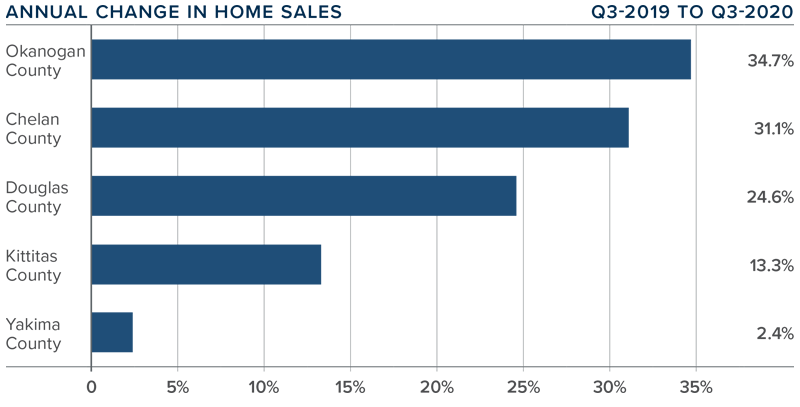
  • Home sales in Central Washington were up an impressive 16.5% compared to the same quarter in 2019, with a total of 1,709 transactions occurring. 
  • Pending home sales in the region were 23.9% higher than in the second quarter, suggesting that the market will see solid growth in the final quarter of 2020.
  • Sales activity rose in all counties contained in this report, with significant increases everywhere except Yakima County. Compared to the second quarter of this year, sales were higher by a remarkable 55%. 
  • The average number of homes for sale in the quarter was 40.6% lower than a year ago, and 10.2% lower than in the second quarter of 2020. Inventory levels remain well below historic averages.


HOME PRICES

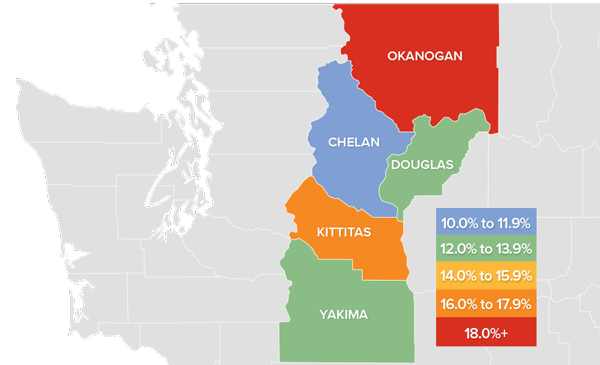
  • Year-over-year, the average home price in Central Washington rose a substantial 15.7% to $417,201. Prices were also 12% higher than in the second quarter of 2020.
  • Low inventory levels remain pervasive and demand is far exceeding supply, which is clearly driving prices higher. Given seasonality, I do not expect to see an increase in the number of homes for sale until 2021, and this is certain to frustrate would-be buyers.
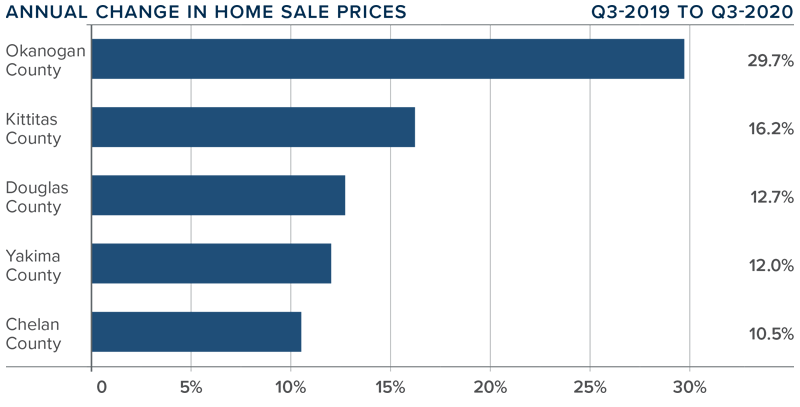
  • Every county covered by this report saw double-digit increases in home prices. Okanogan County saw very significant growth.
  • The takeaway is that average home-price growth in Central Washington remains well above the long-term average and is unlikely to slow down until there is a significant increase in inventory levels.


DAYS ON MARKET

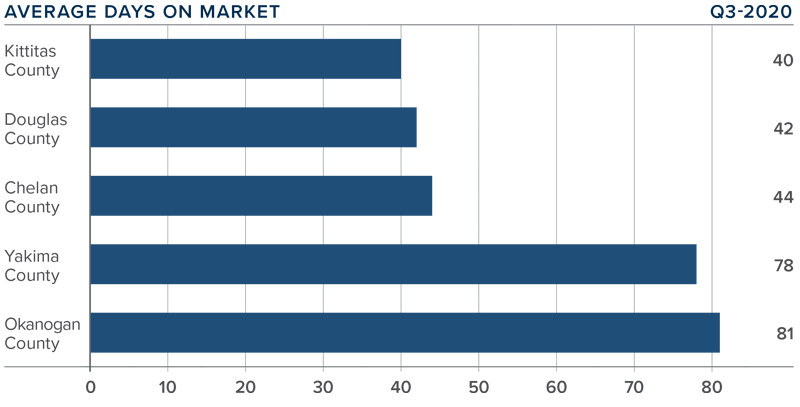
  • The average time it took to sell a home in Central Washington in the third quarter of 2020 was 57 days.
  • Okanogan, Douglas, and Kittitas counties saw the length of time it took to sell a home drop compared to a year ago. Market time rose modestly in Yakima and Chelan counties.
  • During the third quarter, it took two fewer days to sell a home in Central Washington than it did a year ago.
  • It took eight fewer days to sell a home in the third quarter of 2020 than it did in the second.


CONCLUSIONS

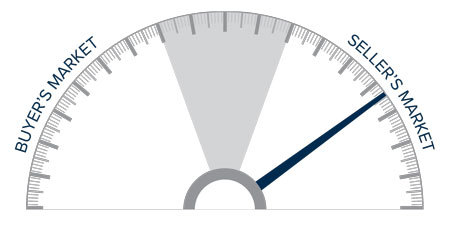
This speedometer reflects the state of the region’s real estate market using housing inventory, price gains, home sales, interest rates, and larger economic factors.
The job market continues to improve, listing activity is low, demand is high, and mortgage rates remain remarkably competitive. This is a perfect recipe for home sellers, so I am moving the needle more in their favor.


ABOUT MATTHEW GARDNER

As Chief Economist for Windermere Real Estate, Matthew Gardner is responsible for analyzing and interpreting economic data and its impact on the real estate market on both a local and national level. Matthew has over 30 years of professional experience both in the U.S. and U.K.

In addition to his day-to-day responsibilities, Matthew sits on the Washington State Governors Council of Economic Advisors; chairs the Board of Trustees at the Washington Center for Real Estate Research at the University of Washington; and is an Advisory Board Member at the Runstad Center for Real Estate Studies at the University of Washington where he also lectures in real estate economics.

Market News October 29, 2020

Eastern Washington Real Estate Market Update


The following analysis of the Eastern Washington real estate market is provided by Windermere Real Estate Chief Economist Matthew Gardner. We hope that this information may assist you with making better-informed real estate decisions. For further information about the housing market in your area, please don’t hesitate to contact your Windermere agent.


ECONOMIC OVERVIEW

Washington State continues to recover from the massive COVID-19-induced decline in employment. Following the loss of 556,000 jobs between February and April, the state has now seen the return of 332,500 workers. That said, Washington employment is still down almost 225,000 jobs. Locally, the Eastern Washington market area lost almost 47,000 jobs, but has seen 31,500 of them return.

The unemployment rate, which peaked at 14.7%, continues to decline and now stands at 8.7%. I would note, though, that it is still above the year-ago rate of 5%. The job recovery that started in May continues, but I am seeing a slowdown in the number of jobs returning. This is not a surprise as it matches the rest of the state as well as the country as a whole. I expect the pace of jobs returning will increase, but that is not likely until a vaccine for COVID-19 is freely available.


HOME SALES

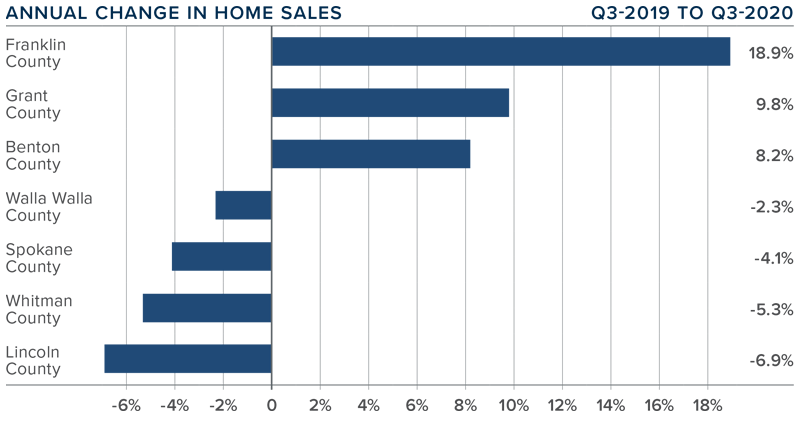
  • Home sales throughout Eastern Washington eked out a very modest 0.3% increase compared to the same quarter in 2019, with a total of 4,202 homes trading hands.
  • The average number of homes for sale in the quarter was a significant 51.5% lower than a year ago, which may explain some markets experiencing lower sales. Inventory levels remain well below historic averages.
  • Sales activity rose in three counties but dropped in four. However, the markets where sales activity contracted saw only modest drops.
  • Pending home sales were lower than a year ago, but they were 11.9% higher than in the second quarter of 2020, suggesting that closings in the fourth quarter will be positive.


HOME PRICES

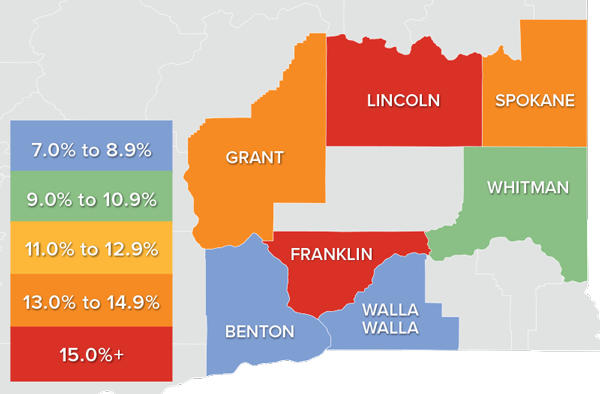
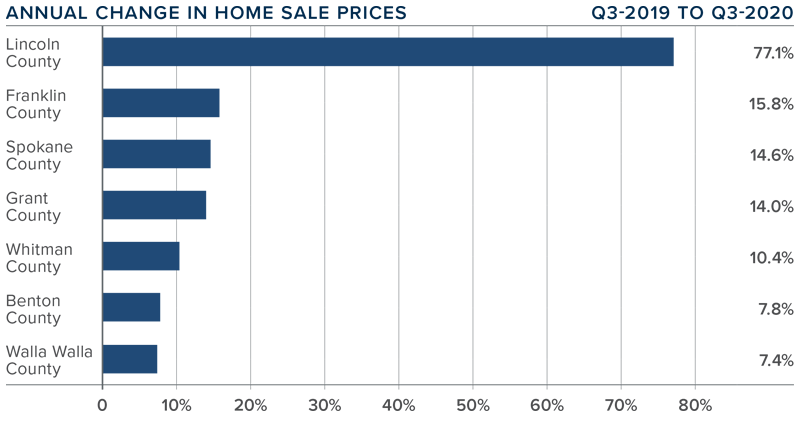
  • Year-over-year, the average home price in Eastern Washington rose 13% to $343,215. Sale prices were also 7.8% higher than in the second quarter of 2020.
  • The increase in sales proves demand is strong, and limited supply is making the market very competitive. This is pushing prices higher.
  • Prices rose in every county in Eastern Washington. Lincoln County saw a very significant increase, though this is not surprising because small markets can experience large swings in price. We also saw double-digit increases in an additional four counties.
  • The takeaway is that average home-price growth in Eastern Washington remains well above the long-term average due to inventory constraints combined with very favorable mortgage rates.


DAYS ON MARKET

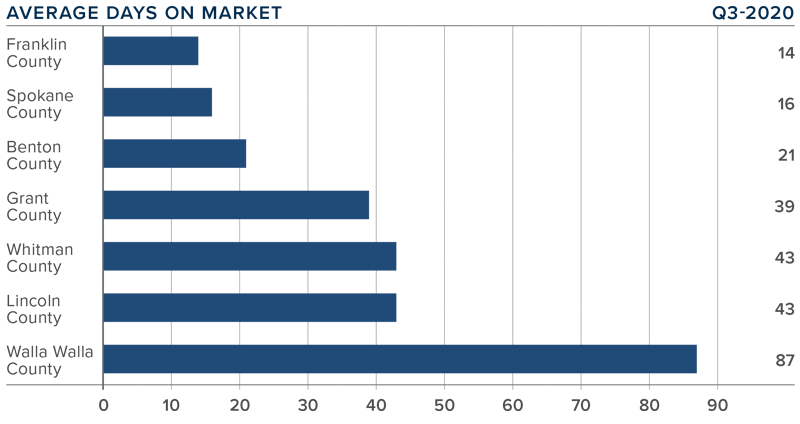
  • The average time it took to sell a home in Eastern Washington in the third quarter of 2020 was 38 days.
  • During the third quarter, it took nine fewer days to sell a home in Eastern Washington than it did a year ago.
  • All markets other than Whitman, where the length of time remained static, saw the length of time it took to sell a home drop compared to the third quarter of 2019.
  • It took four fewer days to sell a home in the third quarter than it did in the second quarter of 2020.


CONCLUSIONS

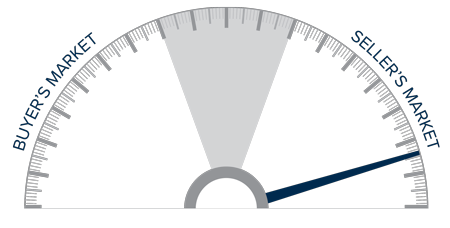
This speedometer reflects the state of the region’s real estate market using housing inventory, price gains, home sales, interest rates, and larger economic factors.
Demand is in place, with buyers competing for the limited number of homes that are available to purchase. The lack of inventory has heated the market and is pushing listing prices higher, which is translating into higher sale prices as well. I do not anticipate any significant drop in demand but, at some point, affordability will start to act as a headwind to price gains. That said, I am not seeing that yet and have, therefore, moved the needle further in favor of home sellers.


ABOUT MATTHEW GARDNER

As Chief Economist for Windermere Real Estate, Matthew Gardner is responsible for analyzing and interpreting economic data and its impact on the real estate market on both a local and national level. Matthew has over 30 years of professional experience both in the U.S. and U.K. 

In addition to his day-to-day responsibilities, Matthew sits on the Washington State Governors Council of Economic Advisors; chairs the Board of Trustees at the Washington Center for Real Estate Research at the University of Washington; and is an Advisory Board Member at the Runstad Center for Real Estate Studies at the University of Washington where he also lectures in real estate economics.

Market News October 28, 2020

Colorado Real Estate Market Update


The following analysis of the Metro Denver & Northern Colorado real estate market is provided by Windermere Real Estate Chief Economist Matthew Gardner. We hope that this information may assist you with making better-informed real estate decisions. For further information about the housing market in your area, please don’t hesitate to contact your Windermere agent. 


ECONOMIC OVERVIEW

What a difference a quarter makes! Following the massive job losses Colorado experienced starting in February—the state shed over 342,000 positions between February and April—the turnaround has been palpable. Through August, Colorado has recovered 178,000 of the jobs lost due to COVID-19, adding 107,500 jobs over the past three months, an increase of 4.2%. All regions saw a significant number of jobs returning. The most prominent was in the Denver metropolitan service area (MSA), where 78,800 jobs returned in the quarter.

Although employment in all markets is recovering, there is still a way to go to get back to pre-pandemic employment levels. The recovery in jobs has naturally led the unemployment rate to drop: the state is now at a respectable 6.7%, down from a peak of 12.2%. Regionally, all areas continue to see their unemployment rates contract. I would note that the Fort Collins and Boulder MSA unemployment rates are now below 6%. Cases of COVID-19 continue to rise, which is troubling, but rising rates have only slowed—not stopped—the economic recovery. Moreover, it has had no noticeable impact on the state’s housing market.


HOME SALES

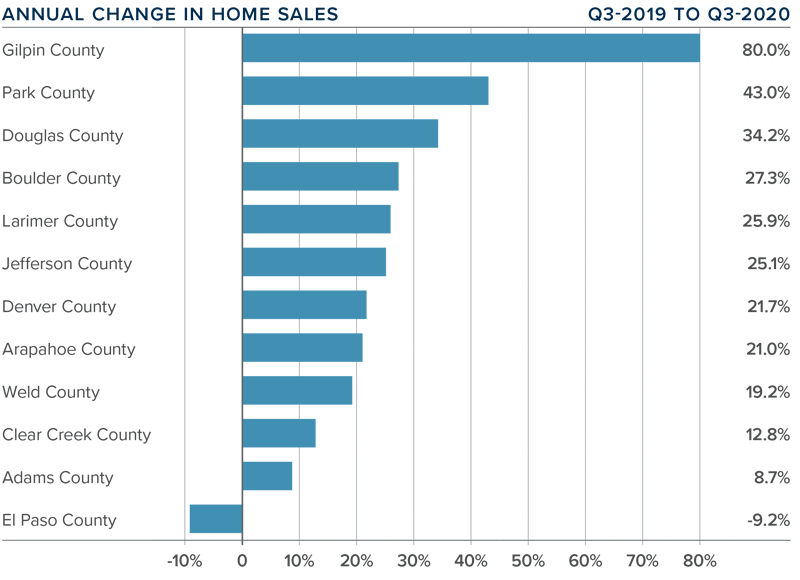
  • In the third quarter of 2020, 15,065 homes sold. This represents an increase of 20.4% over the third quarter of 2019, and a remarkable 52.7% increase over the second quarter of this year.
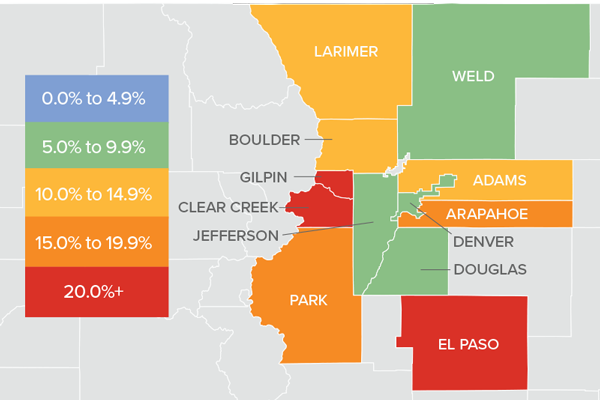
  • Home sales rose in all markets other than El Paso compared to the second quarter of 2019. I believe sales are only limited by the number of homes on the market.
  • Inventory levels remain remarkably low, with the average number of homes for sale down 44.5% from the same period in 2019. Listing activity was 17.8% lower than in the second quarter of 2020.
  • Even given the relative lack of inventory, pending sales rose 17.8% from the second quarter, suggesting that closings for the final quarter of the year will be positive.


HOME PRICES

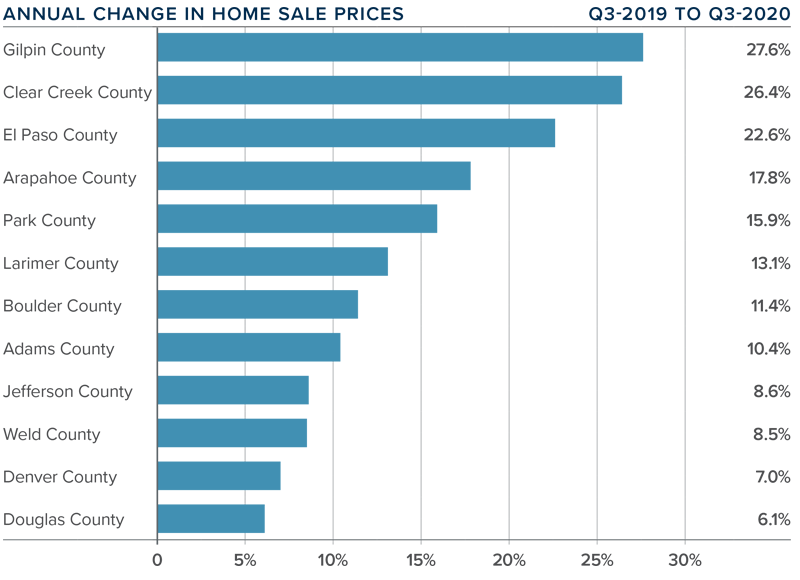
  • After taking a pause in the second quarter, home prices rose significantly in the third quarter, with prices up 11.9% year-over-year to an average of $523,193. Prices were up 7.4% compared to the second quarter of this year.
  • Interest rates have been dropping. Although I do not see there being room for them to drop much further, they are unlikely to rise significantly. This is allowing prices to rise at above-average rates.
  • Year-over-year, prices rose across all markets covered by this report. El Paso, Clear Creek, and Gilpin counties saw significant price appreciation. All but four counties saw double-digit price gains.
  • Affordability in many Colorado markets remains a concern, as prices are rising at a faster pace than mortgage rates have been dropping.


DAYS ON MARKET

  • The average number of days it took to sell a home in the markets contained in this report dropped one day compared to the third quarter of 2019.
  • The amount of time it took to sell a home dropped in nine counties, remained static in two, and rose in one compared to the third quarter of 2019.
  • It took an average of 29 days to sell a home in the region.
  • The Colorado housing market continues to demonstrate solid demand, and the short length of time it takes to sell a home suggests buyers are competing fiercely for available inventory.


CONCLUSIONS

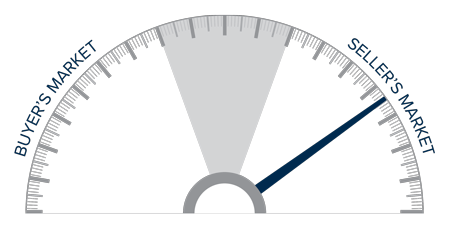
This speedometer reflects the state of the region’s real estate market using housing inventory, price gains, home sales, interest rates, and larger economic factors.
 
Demand for housing is significant, and sales activity is only limited by the lack of available homes to buy. Prices are rising on the back of very competitive mortgage rates and a job market in recovery. I suggested in my second quarter report that the area would experience a “brisk summer housing market” and my forecast was accurate. As such, I have moved the needle a little more in favor of home sellers.


ABOUT MATTHEW GARDNER

As Chief Economist for Windermere Real Estate, Matthew Gardner is responsible for analyzing and interpreting economic data and its impact on the real estate market on both a local and national level. Matthew has over 30 years of professional experience both in the U.S. and U.K.

In addition to his day-to-day responsibilities, Matthew sits on the Washington State Governors Council of Economic Advisors; chairs the Board of Trustees at the Washington Center for Real Estate Research at the University of Washington; and is an Advisory Board Member at the Runstad Center for Real Estate Studies at the University of Washington where he also lectures in real estate economics.

Market News October 28, 2020

Southern California Real Estate Market Update


The following analysis of the Southern California real estate market is provided by Windermere Real Estate Chief Economist Matthew Gardner. We hope that this information may assist you with making better-informed real estate decisions. For further information about the housing market in your area, please don’t hesitate to contact me.


ECONOMIC OVERVIEW

We are seeing some “green shoots” in the regional economy, but employment levels across the Southern Californian counties contained in this report are still well below where they were before COVID-19 hit. For perspective, the region shed more than two million jobs between March and May. That said, it appears as if we turned the corner in June, and the latest data available (August) shows the region has recovered more than 640,000 of the lost jobs.

Although some jobs are returning, the current level remains well below where it was in the spring. It is, therefore, unsurprising to see the unemployment rate remain elevated. In August, unemployment averaged 13.4% across the region. It was lowest in Orange and San Diego counties, at 9.9%. It was highest, at 16.6%, in Los Angeles County. I expect we will continue to see jobs return, but the rate will be tepid. A hard-struck economy, in concert with ongoing wildfires, will act as headwinds to a full economic recovery.


HOME SALES

  • There were 53,498 homes sold in the third quarter of 2020, representing a year-over-year increase of 8%. This number was up a remarkable 59.2% from the second quarter.
  • Pending home sales (an indicator of future closings) rose 39.8% from the second quarter, suggesting closings in the final quarter of 2020 will be positive.
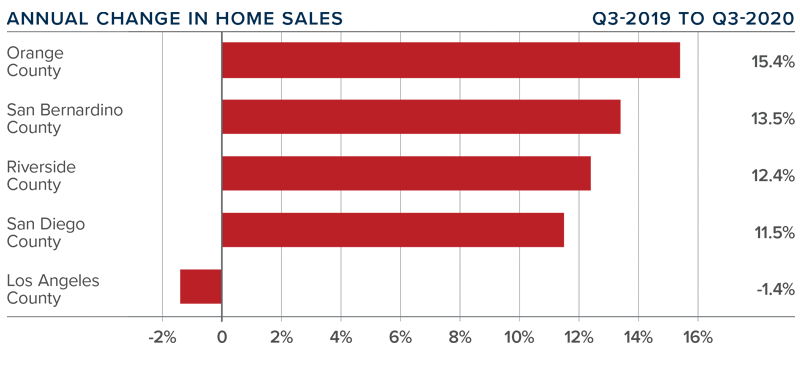
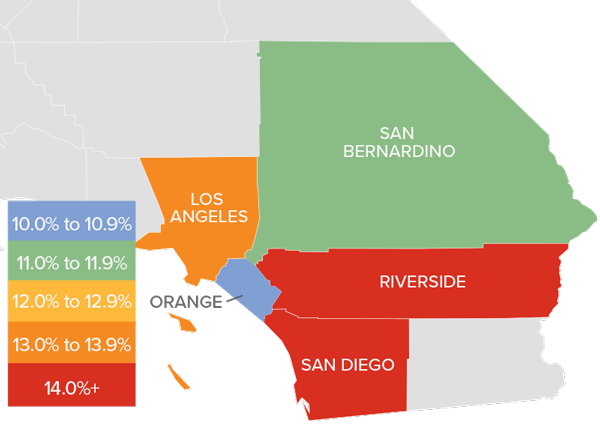
  • Third quarter sales rose in all but one county relative to a year ago. The exception was Los Angeles County, where sales dropped 1.4%. Outside of L.A., the growth in transactions was impressive across the board.
  • There was an average of only 23,225 homes for sale in the third quarter—down 40.4% from a year ago and 13.8% lower than in the second quarter of this year. Choice for buyers in the market remains very limited.


HOME PRICES

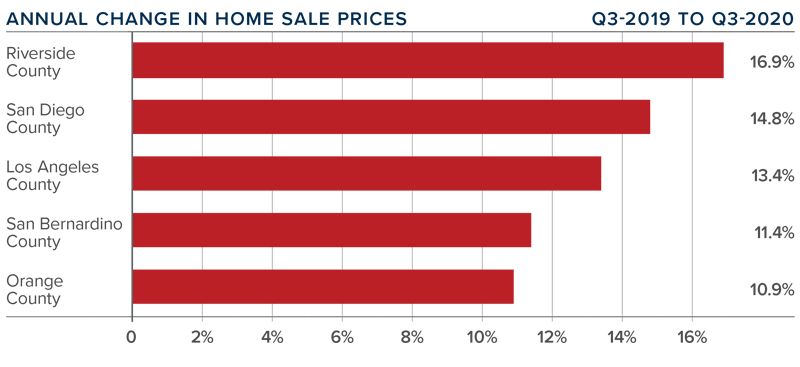
  • Year-over-year, the average sale price in the region was $812,553. This was 12.2% higher than a year ago and 11.8% higher than in the second quarter of 2020.
  • Very competitive mortgage rates are allowing prices to rise at well-above-average rates. Although this has been very good for would-be buyers, affordability concerns continue to increase given that prices are rising faster than mortgage rates have been dropping.
  • The region saw double-digit price growth across all counties contained in this report, with very significant increases in the relatively affordable Riverside County.
  • I predict mortgage rates will remain very low, and that will drive demand. Prices will continue to rise, especially as there is a significant lack of homes for sale—demand is clearly exceeding supply. At some point, price growth will slow, but it is unlikely to happen this year.


DAYS ON MARKET

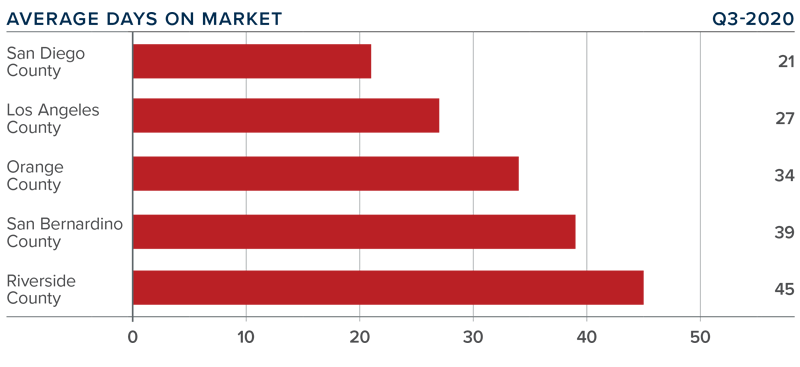
  • In the third quarter, the average time it took to sell a home in the region was 33 days, which is 9 fewer days than a year ago and 2 fewer days than in the second quarter of 2020.
  • Homes in San Diego County continue to sell at a faster rate than other markets in the region. In the third quarter it took an average of only 21 days to sell a home. This is 8 fewer days than it took a year ago.
  • All markets contained in this report saw the time it took to sell a house drop compared to the third quarter of 2019.
  • The drop in market time is a function of limited inventory levels and significant demand.


CONCLUSIONS

This speedometer reflects the state of the region’s real estate market using housing inventory, price gains, home sales, interest rates, and larger economic factors.

Buyer demand has reappeared—even in the face of an economy with significant levels of unemployment. Housing is clearly a bright spot in an otherwise moribund economy. Demand is likely to remain strong, but this could change if workers are allowed to continue working remotely indefinitely and decide to move to more affordable markets both inside and outside of the state.

Even given the possible headwinds mentioned here, I am moving the needle a little more in favor of sellers as solid demand is still in place.


ABOUT MATTHEW GARDNER

As Chief Economist for Windermere Real Estate, Matthew Gardner is responsible for analyzing and interpreting economic data and its impact on the real estate market on both a local and national level. Matthew has over 30 years of professional experience both in the U.S. and U.K.

In addition to his day-to-day responsibilities, Matthew sits on the Washington State Governors Council of Economic Advisors; chairs the Board of Trustees at the Washington Center for Real Estate Research at the University of Washington; and is an Advisory Board Member at the Runstad Center for Real Estate Studies at the University of Washington where he also lectures in real estate economics.

Market News October 27, 2020

Oregon and Southwest Washington Real Estate Market Update


The following analysis of the Oregon and Southwest Washington real estate market is provided by Windermere Real Estate Chief Economist Matthew Gardner. We hope that this information may assist you with making better-informed real estate decisions. For further information about the housing market in your area, please don’t hesitate to contact your Windermere agent.


ECONOMIC OVERVIEW

The region continues to recover from the very significant COVID-19-induced contraction in employment earlier in the year. Oregon lost a remarkable 252,800 jobs in April alone, but the contraction was remarkably short. Numbers started to improve in May, with more than 112,000 jobs returning. The Southwest Washington region saw a drop in total employment of almost 30,000 jobs, but that also turned around in May, with more than 14,500 jobs returning.

The massive drop in employment drove the unemployment rate. Oregon was up to 14.9% in April, but that rate has now dropped to 7.7%. The unemployment rate in Southwest Washington dropped from 14.6% to 9.4%. The recovery is palpable, though the pace has slowed. The kinds of jobs returning differ, with service industry jobs taking far longer to ramp up. I still expect to see further improvement as we move through the balance of the year, but the increase in jobs is likely to continue to be muted until a vaccine is freely available.


HOME SALES

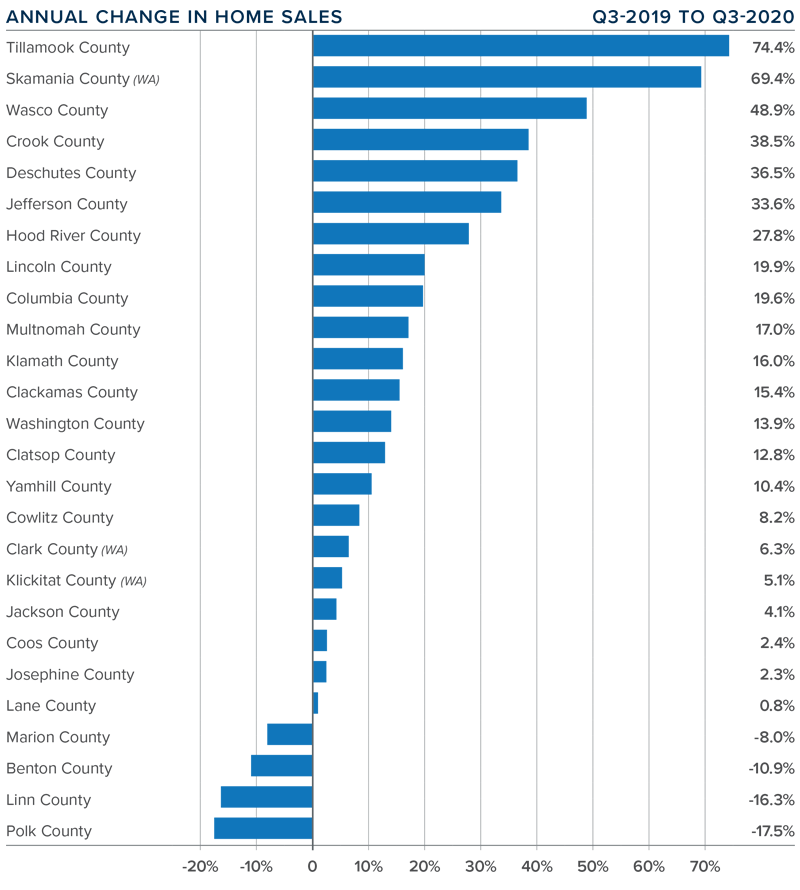
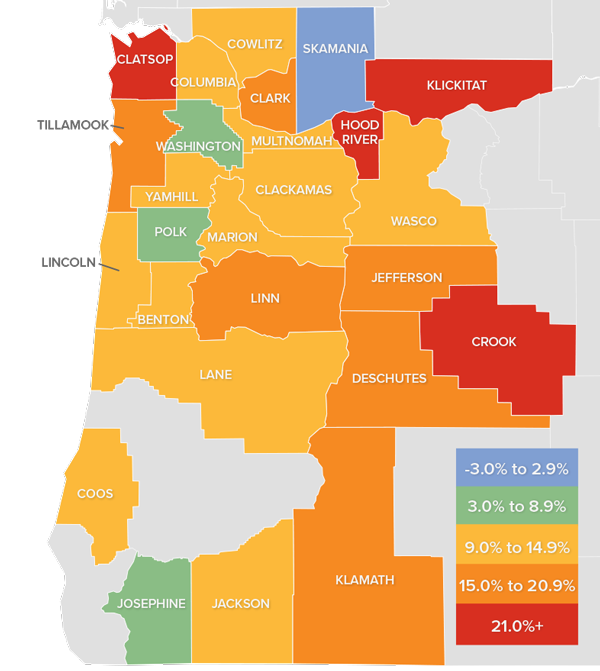
  • Third quarter home sales have recovered very rapidly, with total transactions up 11.1% compared to the same period a year ago. A total of 20,649 homes sold.
  • Unsurprisingly, sales rose in a vast majority of counties, but there were modest declines in sales in four counties. However, most of these are small markets that can be subject to significant swings.
  • Growth was 44% higher than in the second quarter of 2020.
  • Housing is clearly recovering faster than the economy as a whole, and pending sales suggest that the fourth quarter will be a good one. That said, the state is still suffering from a lack of supply, which will ultimately limit the number of home sales.


HOME PRICES

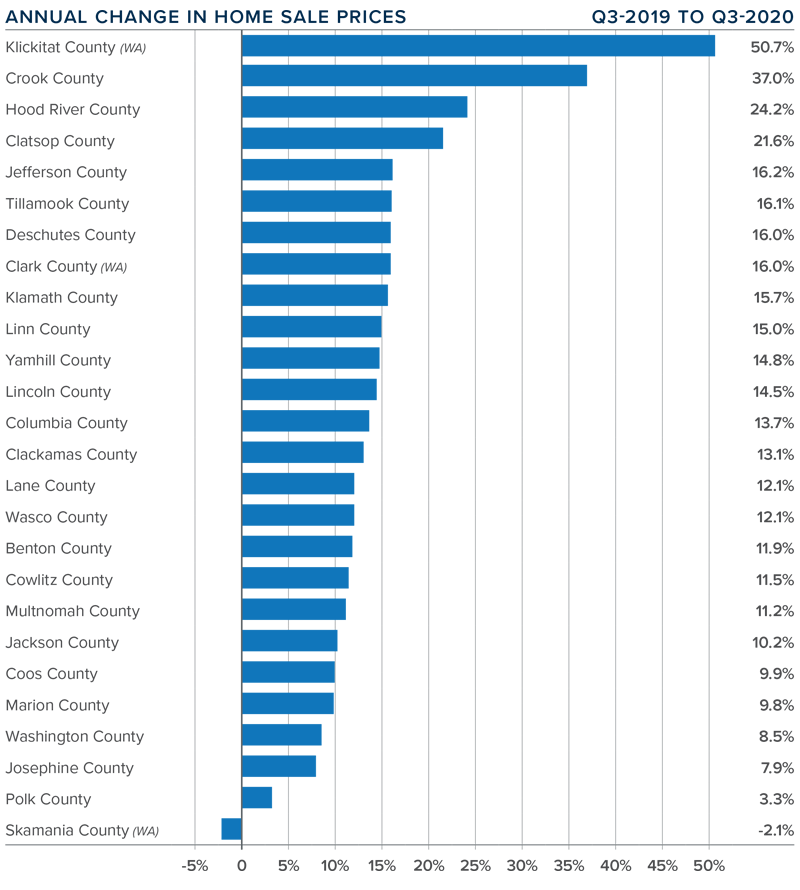
  • The average home price in the region rose a significant 14.1% year-over-year to $460,527. Prices were 9.4% higher compared to the second quarter of 2020.
  • Klickitat County led the market with the strongest annual price growth but, again, this is a very small market prone to significant swings. Prices were lower in Skamania County, but the decline was very modest.
  • All but one of the counties contained in this report experienced price growth compared to the third quarter of 2019. Annual price growth picked up significantly in the third quarter.
  • The takeaway here is that home prices are rising at a significant pace as buyers enjoy historically low mortgage rates. That said, prices are now rising faster than rates are falling and this suggests we will see a slowing down in the pace of home-price appreciation.


DAYS ON MARKET

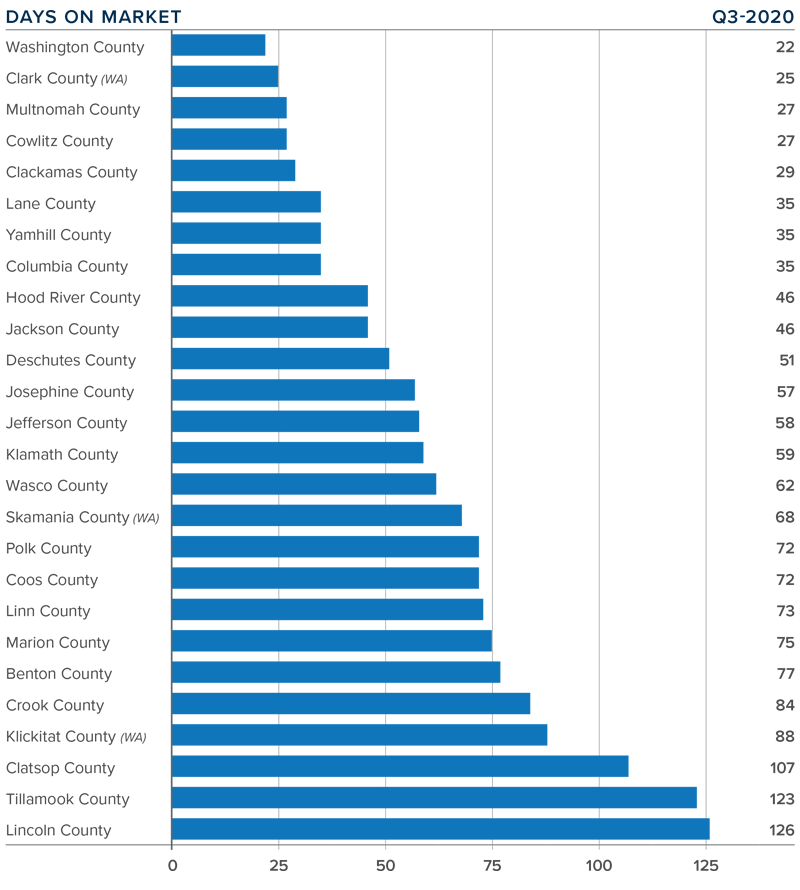
  • The average number of days it took to sell a home in the region actually rose two days compared to the third quarter of 2019, though it took five fewer days to sell a home than in the second quarter of 2020.
  • The average time it took to sell a home in the third quarter was 61 days.
  • Sixteen counties saw the length of time it took to sell a home drop compared to a year ago; ten counties saw market time rise.
  • Homes again sold the fastest in Washington County, where it only took 22 days to sell.


CONCLUSIONS

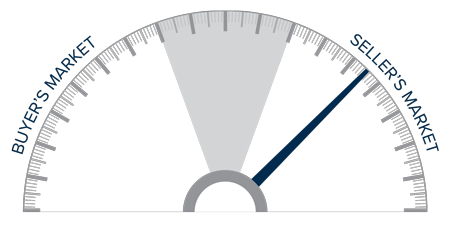
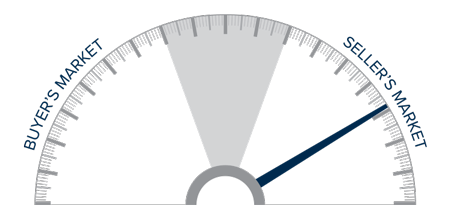
This speedometer reflects the state of the region’s real estate market using housing inventory, price gains, home sales, interest rates, and larger economic factors. 

Closed sales are up by a significant percentage, prices are increasing at very robust rates, and it is clear that demand is significantly exceeding supply. When combined with historically low interest rates, it’s clear the market has rebounded and now significantly favors home sellers.

Given these factors, I have moved the needle further in the favor of sellers.


ABOUT MATTHEW GARDNER

As Chief Economist for Windermere Real Estate, Matthew Gardner is responsible for analyzing and interpreting economic data and its impact on the real estate market on both a local and national level. Matthew has over 30 years of professional experience both in the U.S. and U.K.
In addition to his day-to-day responsibilities, Matthew sits on the Washington State Governors Council of Economic Advisors; chairs the Board of Trustees at the Washington Center for Real Estate Research at the University of Washington; and is an Advisory Board Member at the Runstad Center for Real Estate Studies at the University of Washington where he also lectures in real estate economics.