Facebook
 X
X
 Pinterest
 Copy Link
On this week’s episode of “Mondays with Matthew,” Windermere Real Estate Chief Economist, Matthew Gardner is updating his housing forecast for 2020 and analyzing the National Association of Realtors’ June Home Sales Report.
On this week’s episode of “Mondays with Matthew,” Windermere Real Estate Chief Economist, Matthew Gardner is updating his housing forecast for 2020 and analyzing the National Association of Realtors’ June Home Sales Report.

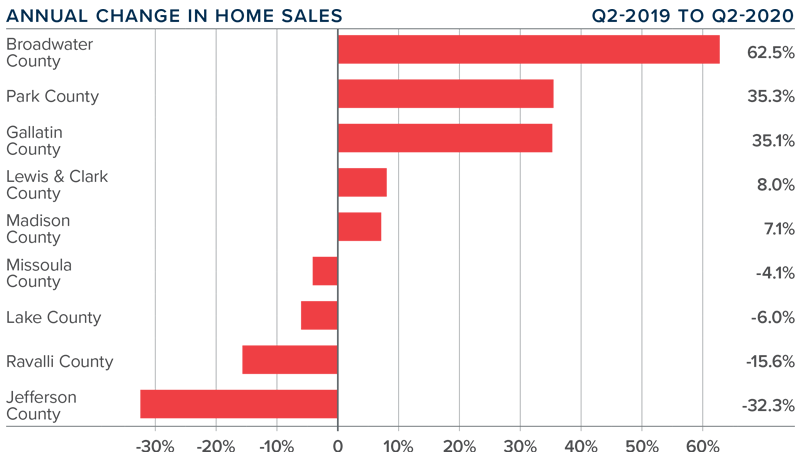
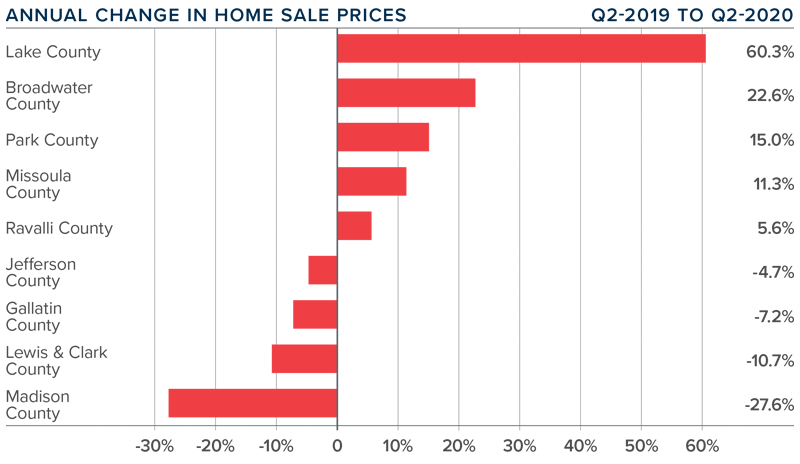
The following analysis of select Montana real estate markets is provided by Windermere Real Estate Chief Economist Matthew Gardner. We hope that this information may assist you with making better-informed real estate decisions. For further information about the housing market in your area, please don’t hesitate to contact your Windermere agent.
ECONOMIC OVERVIEW
Along with the rest of the nation, Montana saw a sharp drop in employment due to COVID-19 but it appears as if a recovery is in place (at least for now). In April, total employment declined 13% from March, with a loss of 63,500 jobs. However, this turned around remarkably quickly with the return of 17,000 jobs in May. Job losses were seen in almost equal measure across the three metropolitan areas within Montana. The unemployment rate in the state was 9% in May, down from the COVID-19 peak of 11.9% in April. Although it is far too early to say that we are out of the woods, new infection rates in the state appear to have peaked and, if the trend of lower infection rates continues, we should see more jobs return.
HOME SALES
HOME PRICES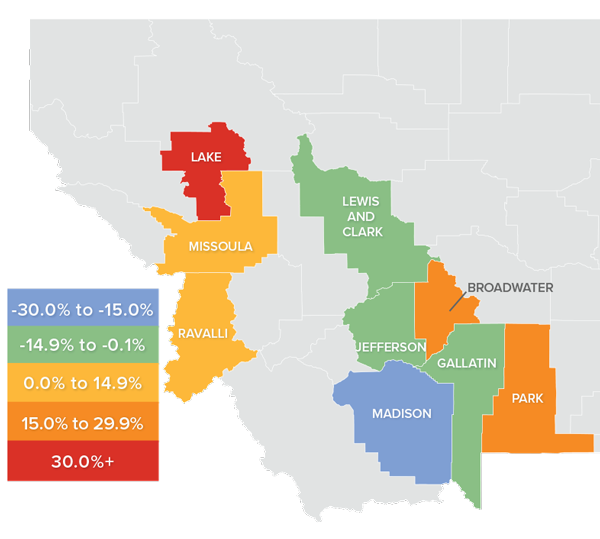
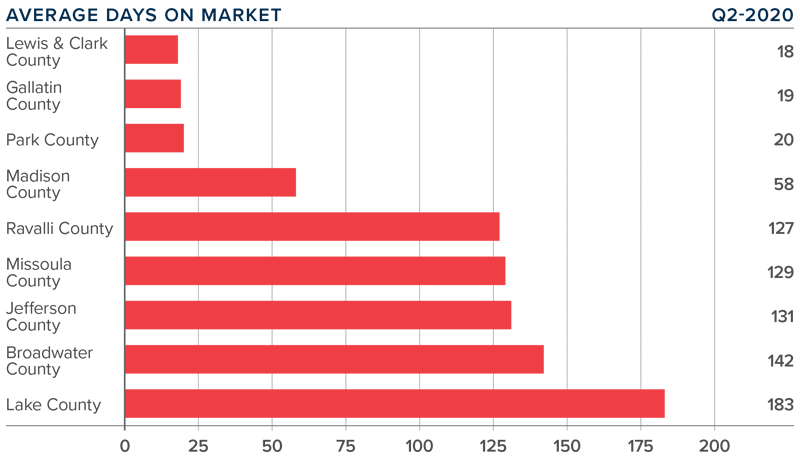
DAYS ON MARKET
CONCLUSIONS
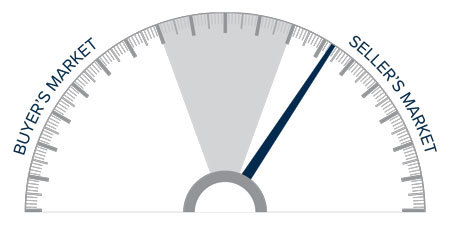 This speedometer reflects the state of the region’s real estate market using housing inventory, price gains, home sales, interest rates, and larger economic factors.
Pending sales increased significantly compared to both the first quarter of this year and a year ago, which suggests demand has reappeared. When combined with historically low interest rates, the market is set to rebound and will only be limited by the number of homes for sale.
The housing market has exhibited remarkable resilience, and housing demand is solid. It remains a seller’s market and I have moved the needle a little further even though we saw a slowdown in home price growth.
ABOUT MATTHEW GARDNER
 As Chief Economist for Windermere Real Estate, Matthew Gardner is responsible for analyzing and interpreting economic data and its impact on the real estate market on both a local and national level. Matthew has over 30 years of professional experience both in the U.S. and U.K.
In addition to his day-to-day responsibilities, Matthew sits on the Washington State Governors Council of Economic Advisors; chairs the Board of Trustees at the Washington Center for Real Estate Research at the University of Washington; and is an Advisory Board Member at the Runstad Center for Real Estate Studies at the University of Washington where he also lectures in real estate economics.

The following analysis of select counties of the Idaho real estate market is provided by Windermere Real Estate Chief Economist Matthew Gardner. We hope that this information may assist you with making better-informed real estate decisions. For further information about the housing market in your area, please don’t hesitate to contact your Windermere agent.
ECONOMIC OVERVIEW
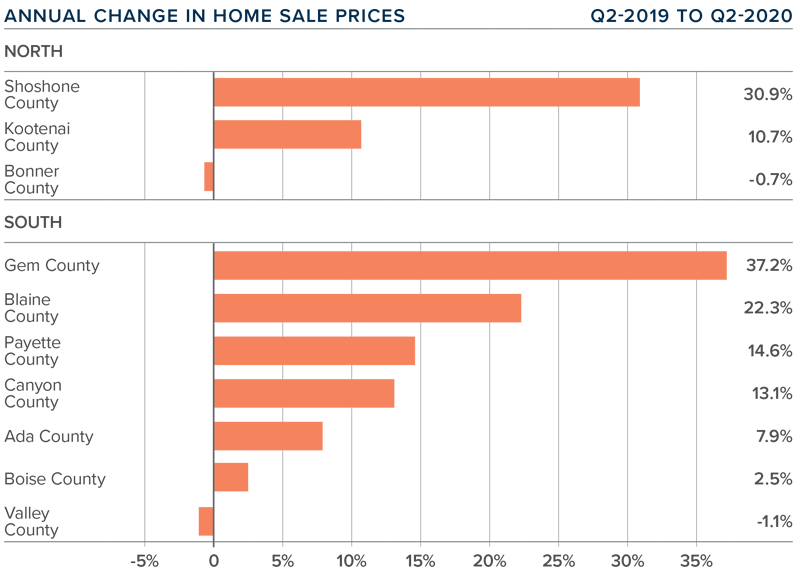
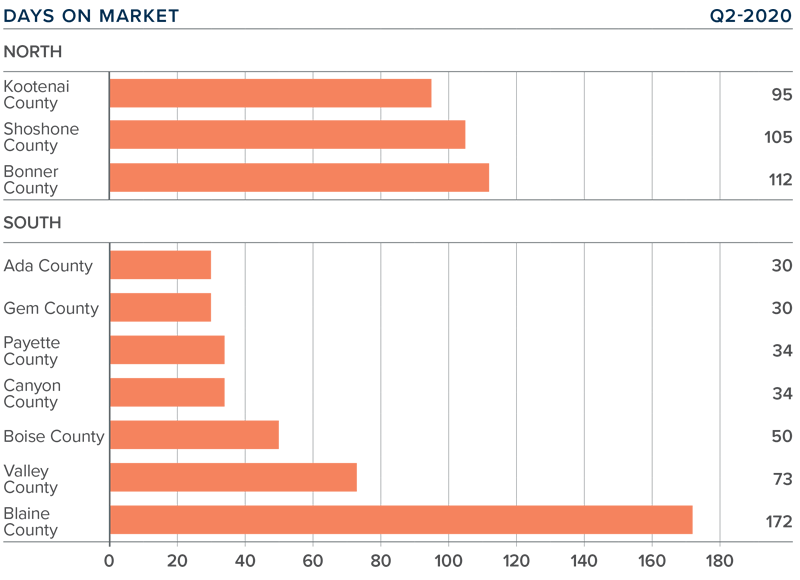
It appears as if the significant COVID-19-induced contraction in employment Idaho experienced earlier this year is behind us (at least for now). Statewide employment declined modestly in March, but April was the real shock, with the loss of more than 78,000 jobs in the month, a decline of 10.2%. However, the economy appears to have turned around remarkably quickly, with a solid increase of 24,300 jobs in May. Idaho did see COVID-19 cases rise significantly in June, but the latest data appears to suggest that the trend has started to reverse. If this continues, I am hopeful more of the jobs lost will return.
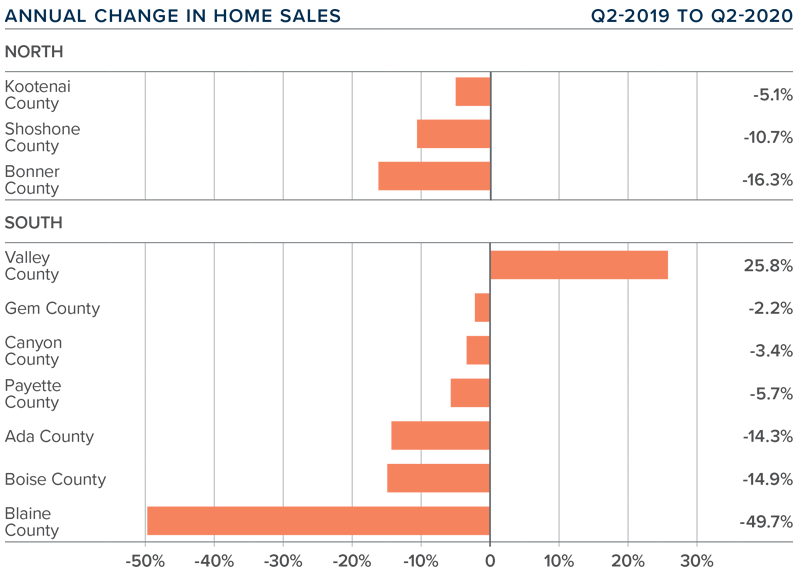
HOME SALES
HOME PRICES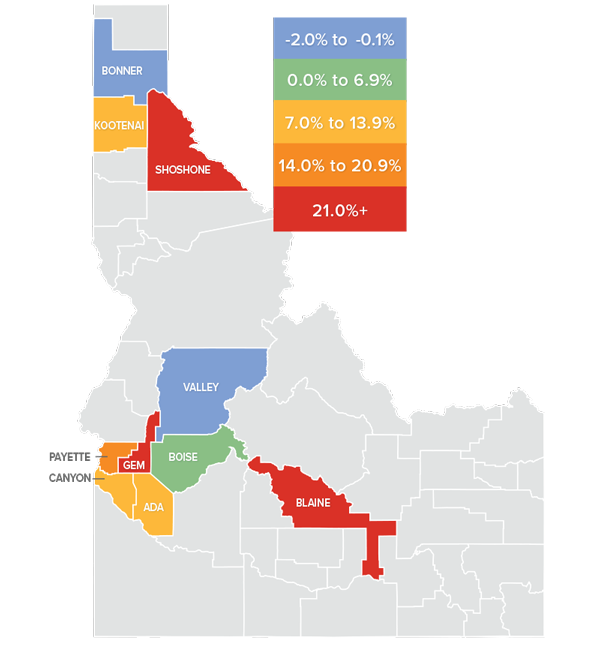
DAYS ON MARKET
CONCLUSIONS
 This speedometer reflects the state of the region’s real estate market using housing inventory, price gains, home sales, interest rates, and larger economic factors.
I was pleased to see listings, pending sales, closed sales, and home prices all rise from the first quarter of this year. Demand appears to be relatively solid, which suggests that it remains a seller’s market, especially when combined with historically low interest rates. I do not see this changing in the foreseeable future.
The overall housing market has exhibited remarkable resilience, and housing demand has rebounded faster than most would have expected. But given ongoing uncertainty about COVID-19, I am leaving the needle above in the same position as last quarter.
ABOUT MATTHEW GARDNER
As Chief Economist for Windermere Real Estate, Matthew Gardner is responsible for analyzing and interpreting economic data and its impact on the real estate market on both a local and national level. Matthew has over 30 years of professional experience both in the U.S. and U.K.
In addition to his day-to-day responsibilities, Matthew sits on the Washington State Governors Council of Economic Advisors; chairs the Board of Trustees at the Washington Center for Real Estate Research at the University of Washington; and is an Advisory Board Member at the Runstad Center for Real Estate Studies at the University of Washington where he also lectures in real estate economics.

The following analysis of the Central Washington real estate market is provided by Windermere Real Estate Chief Economist Matthew Gardner. We hope that this information may assist you with making better-informed real estate decisions. For further information about the housing market in your area, please don’t hesitate to contact your Windermere agent.
ECONOMIC OVERVIEW
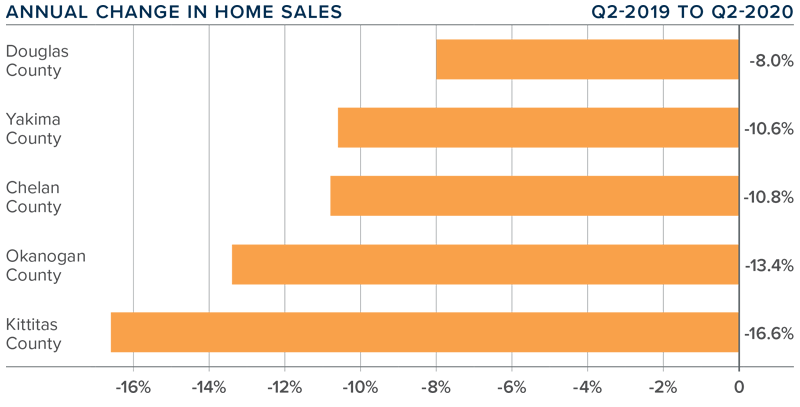
It appears as if the massive COVID-19-induced contraction in employment Washington State experienced—along with the rest of the nation—is behind us (at least for now). Employment across Washington State started to drop in March, but April was the real shock: total employment dropped almost 460,000 between March and April, a decline of 13%. However, this turned around remarkably quickly, with 52,500 jobs added in May. The Central Washington region lost over 12,500 jobs in March and April, but there has been some recovery with the return of 1,781 jobs in May. This was a reasonable start, but the unemployment rate in Central Washington was still high at 14.1% in May. Although it is certainly too early to say we are out of the woods, we seem to be headed in a positive direction and, assuming we respect the state’s mandates regarding social distancing and mask wearing, I remain hopeful that Washington will not have to re-enter any form of lockdown.
HOME SALES
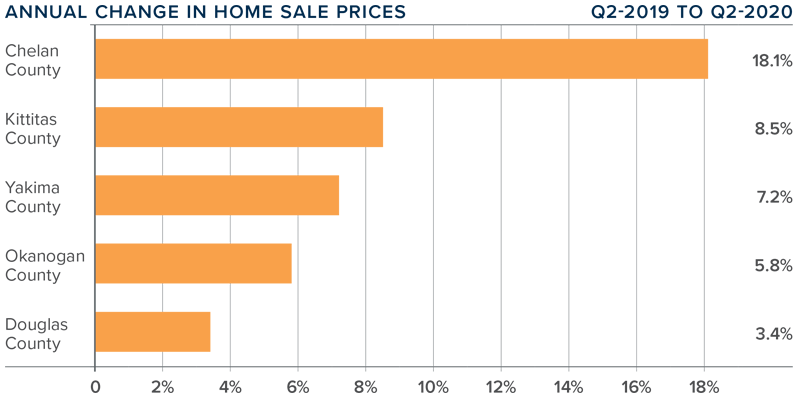
HOME PRICES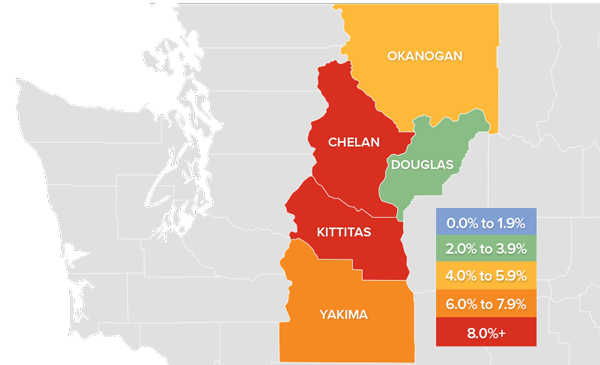
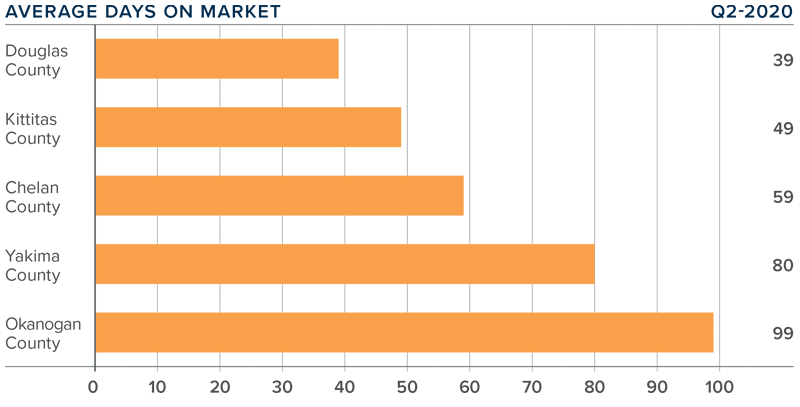
DAYS ON MARKET
CONCLUSIONS
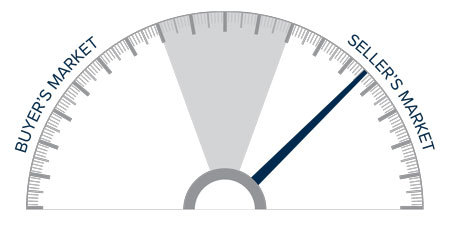 This speedometer reflects the state of the region’s real estate market using housing inventory, price gains, home sales, interest rates, and larger economic factors.
Given robust demand and historically low interest rates, it certainly remains a seller’s market, and I don’t expect this to change in the foreseeable future. The overall housing market has exhibited remarkable resilience, and housing demand has rebounded faster than most would have expected. I do not anticipate any drop in demand, but I am watching housing affordability. Prices cannot continue to rise at the pace the market is currently seeing without exacerbating affordability issues. The needle above remains unchanged from the first quarter due to ongoing uncertainty surrounding COVID-19.
ABOUT MATTHEW GARDNER
As Chief Economist for Windermere Real Estate, Matthew Gardner is responsible for analyzing and interpreting economic data and its impact on the real estate market on both a local and national level. Matthew has over 30 years of professional experience both in the U.S. and U.K.
In addition to his day-to-day responsibilities, Matthew sits on the Washington State Governors Council of Economic Advisors; chairs the Board of Trustees at the Washington Center for Real Estate Research at the University of Washington; and is an Advisory Board Member at the Runstad Center for Real Estate Studies at the University of Washington where he also lectures in real estate economics.

The following analysis of the Eastern Washington real estate market is provided by Windermere Real Estate Chief Economist Matthew Gardner. We hope that this information may assist you with making better-informed real estate decisions. For further information about the housing market in your area, please don’t hesitate to contact your Windermere agent.
ECONOMIC OVERVIEW
It appears as if the massive COVID-19-induced contraction in employment Washington State experienced—along with the rest of the nation—is behind us (at least for now). Employment across Washington State started to drop in March, but April was the real shock: total employment dropped almost 460,000 between March and April, a decline of 13%. However, this turned around remarkably quickly, with 52,500 jobs added in May. Worthy of note is that, in May alone, Eastern Washington recovered 5,200 of the 47,000 jobs that were lost in March and April. However, the unemployment rate in Eastern Washington was still a high 13.4% in May. Although it is certainly too early to say we are out of the woods, we seem to be headed in a positive direction and, assuming we respect the state’s mandates regarding social distancing and mask wearing, I remain hopeful that Washington will not have to re-enter any form of lockdown.
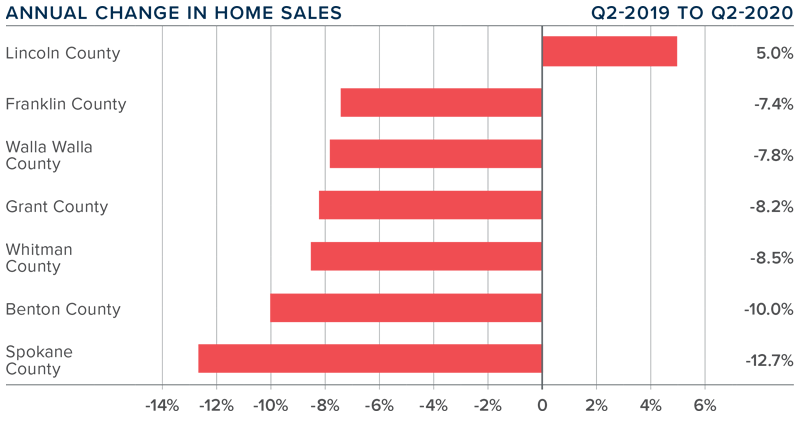
HOME SALES
HOME PRICES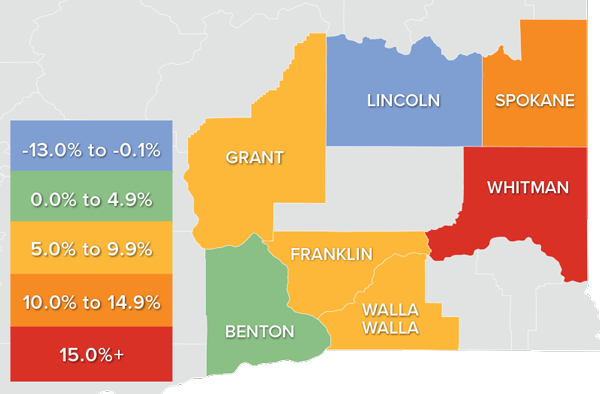
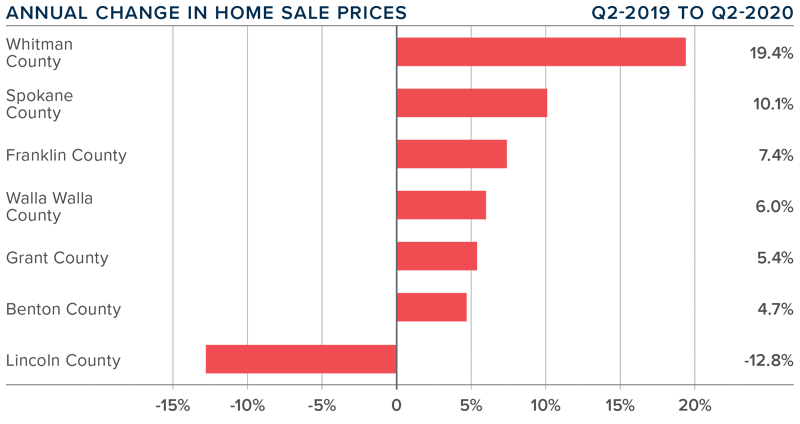
DAYS ON MARKET
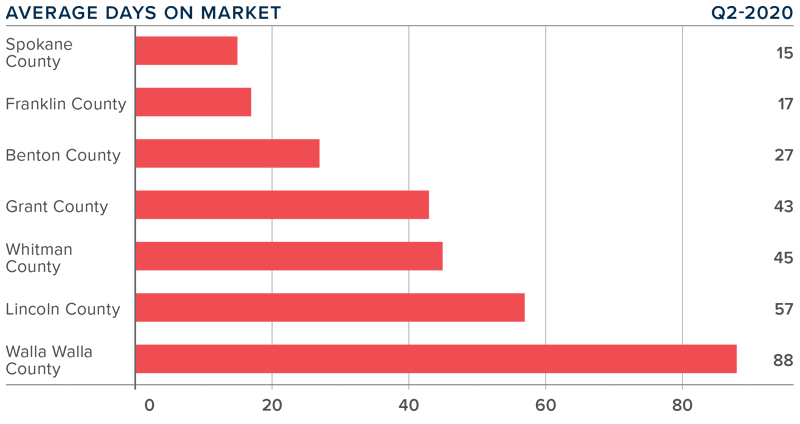
CONCLUSIONS
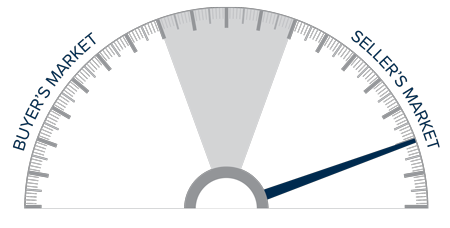 This speedometer reflects the state of the region’s real estate market using housing inventory, price gains, home sales, interest rates, and larger economic factors.
Given robust demand and historically low interest rates, it certainly remains a seller’s market, and I don’t expect this to change in the foreseeable future. The overall housing market has exhibited remarkable resilience, and housing demand has rebounded faster than most would have expected. I do not anticipate any drop in demand, but I am watching housing affordability. Prices cannot continue to rise at the pace the market is currently seeing without exacerbating affordability issues. The needle above remains unchanged from the first quarter due to ongoing uncertainty surrounding COVID-19.
ABOUT MATTHEW GARDNER
As Chief Economist for Windermere Real Estate, Matthew Gardner is responsible for analyzing and interpreting economic data and its impact on the real estate market on both a local and national level. Matthew has over 30 years of professional experience both in the U.S. and U.K.
In addition to his day-to-day responsibilities, Matthew sits on the Washington State Governors Council of Economic Advisors; chairs the Board of Trustees at the Washington Center for Real Estate Research at the University of Washington; and is an Advisory Board Member at the Runstad Center for Real Estate Studies at the University of Washington where he also lectures in real estate economics.

The following analysis of the Metro Denver & Northern Colorado real estate market is provided by Windermere Real Estate Chief Economist Matthew Gardner. We hope that this information may assist you with making better-informed real estate decisions. For further information about the housing market in your area, please don’t hesitate to contact your Windermere agent.
ECONOMIC OVERVIEW
COVID-19 had significant negative impacts on employment in Colorado. The pandemic caused the loss of over 342,000 jobs in March and April as unemployment rose to 12.2%. For comparison, peak unemployment following the Great Recession was 8.9%. However, it appears as if the massive contraction in employment is behind us (at least for now). Employment in Colorado rose in May by 68,800 jobs, a monthly increase of 2.8%, pushing the unemployment rate down to 10.2%. Regionally, the Denver metro area added 18,600 jobs in May and the Fort Collins metro area added 3,500 jobs. It is certainly too early to say that we are out of the woods, but we seem to be headed in a positive direction. Colorado’s COVID-19 infection rates started increasing again in June, which could slow down the economic recovery. However, I do not believe that it is likely to have any substantial impact on the housing market.
HOME SALES
HOME PRICES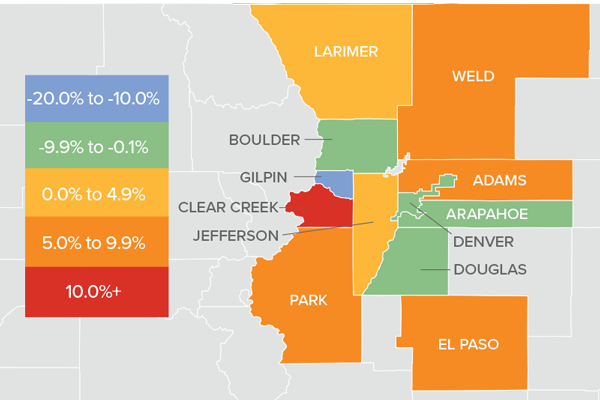
DAYS ON MARKET
CONCLUSIONS
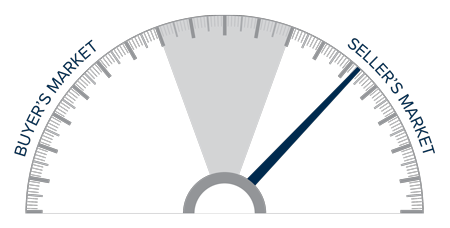 This speedometer reflects the state of the region’s real estate market using housing inventory, price gains, home sales, interest rates, and larger economic factors.
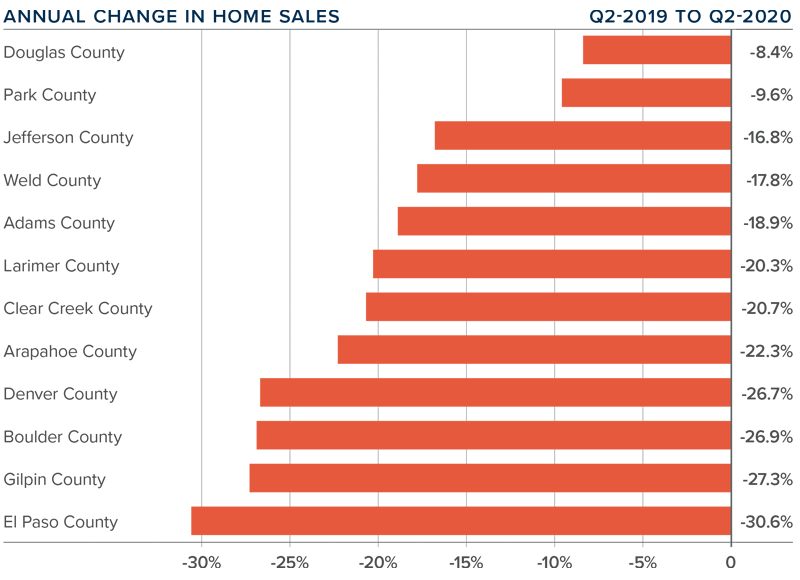
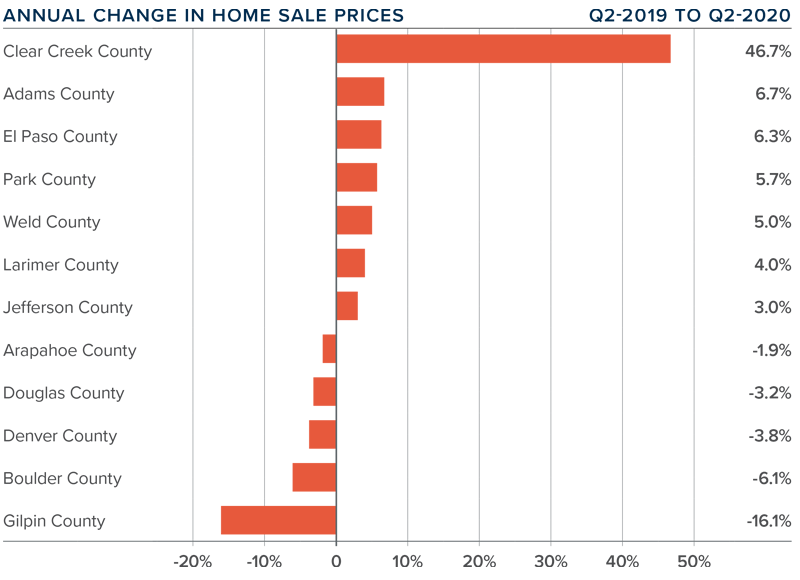
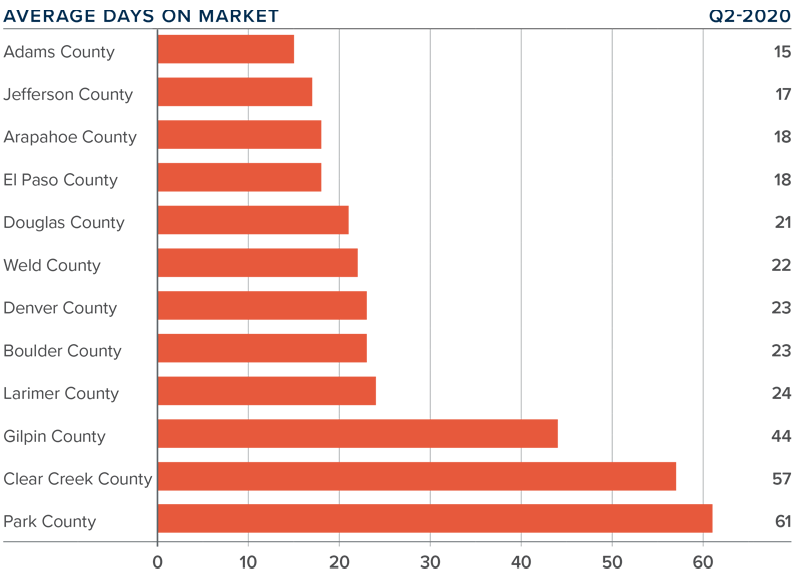
Demand appears to be returning, which—combined with historically low interest rates—should lead to a brisk summer housing market. Assuming that the state gets new infection rates under control, I do not see why the housing market wouldn’t perform well this summer. As such, I have moved the needle just a little more in favor of home sellers.
ABOUT MATTHEW GARDNER
As Chief Economist for Windermere Real Estate, Matthew Gardner is responsible for analyzing and interpreting economic data and its impact on the real estate market on both a local and national level. Matthew has over 30 years of professional experience both in the U.S. and U.K.
In addition to his day-to-day responsibilities, Matthew sits on the Washington State Governors Council of Economic Advisors; chairs the Board of Trustees at the Washington Center for Real Estate Research at the University of Washington; and is an Advisory Board Member at the Runstad Center for Real Estate Studies at the University of Washington where he also lectures in real estate economics.

The following analysis of the Southern California real estate market is provided by Windermere Real Estate Chief Economist Matthew Gardner. We hope that this information may assist you with making better-informed real estate decisions. For further information about the housing market in your area, please don’t hesitate to contact your Windermere agent.
ECONOMIC OVERVIEW
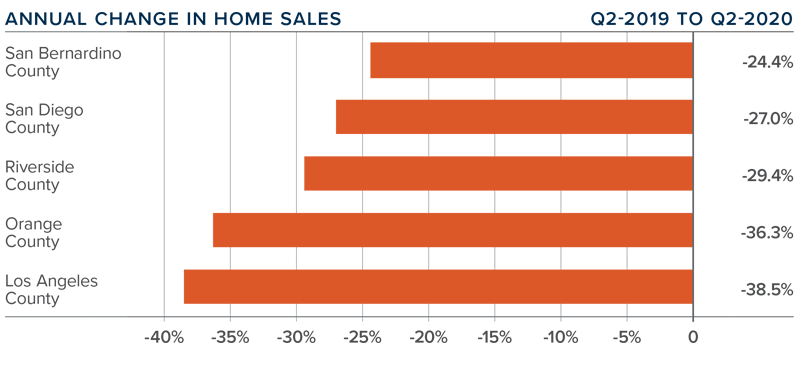
Employment levels across the Southern Californian counties contained in this report have been significantly impacted by the COVID-19-induced recession. Total employment in the region has dropped by a collective 1.99 million jobs between February and May of this year. With this massive contraction, it’s not surprising to see the unemployment rate rise from 4% in February to 17.6% in May. Unfortunately, as I write this, it appears as if infection rates in many California markets have increased significantly. As such, the likelihood of tangible increases in employment will be further delayed.
HOME SALES
HOME PRICES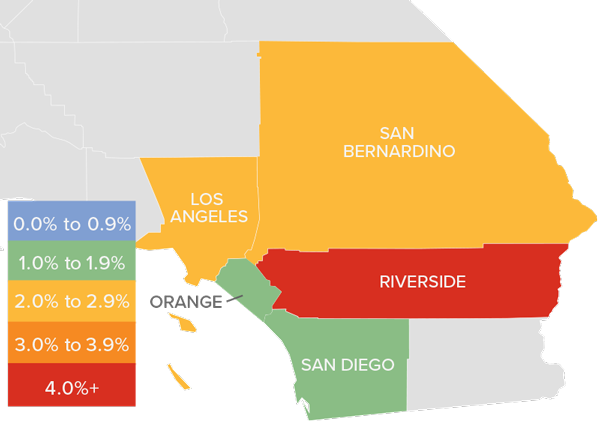
DAYS ON MARKET
CONCLUSIONS
 This speedometer reflects the state of the region’s real estate market using housing inventory, price gains, home sales, interest rates, and larger economic factors.
Although there is demand for homes, the renewed round of shutdowns could dampen that demand until infection rates level out and businesses reopen their doors.
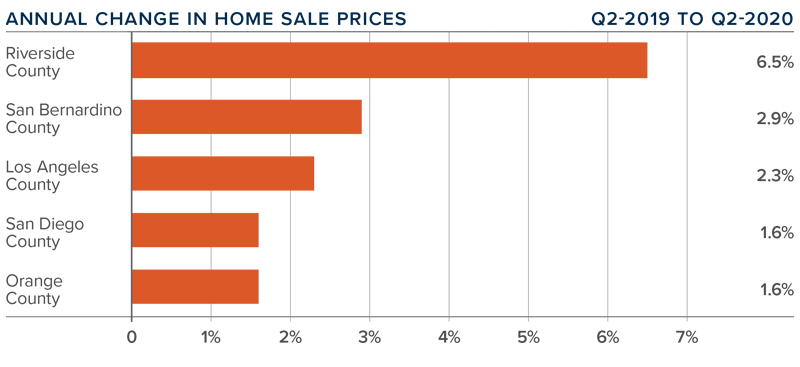
The overall housing market is resilient but will likely not see significant growth until the state gets a handle on COVID-19. For that reason, I am holding the needle in the same position it was in the first quarter. It is still a seller’s market, but uncertainty persists.
ABOUT MATTHEW GARDNER
As Chief Economist for Windermere Real Estate, Matthew Gardner is responsible for analyzing and interpreting economic data and its impact on the real estate market on both a local and national level. Matthew has over 30 years of professional experience both in the U.S. and U.K.
In addition to his day-to-day responsibilities, Matthew sits on the Washington State Governors Council of Economic Advisors; chairs the Board of Trustees at the Washington Center for Real Estate Research at the University of Washington; and is an Advisory Board Member at the Runstad Center for Real Estate Studies at the University of Washington where he also lectures in real estate economics.

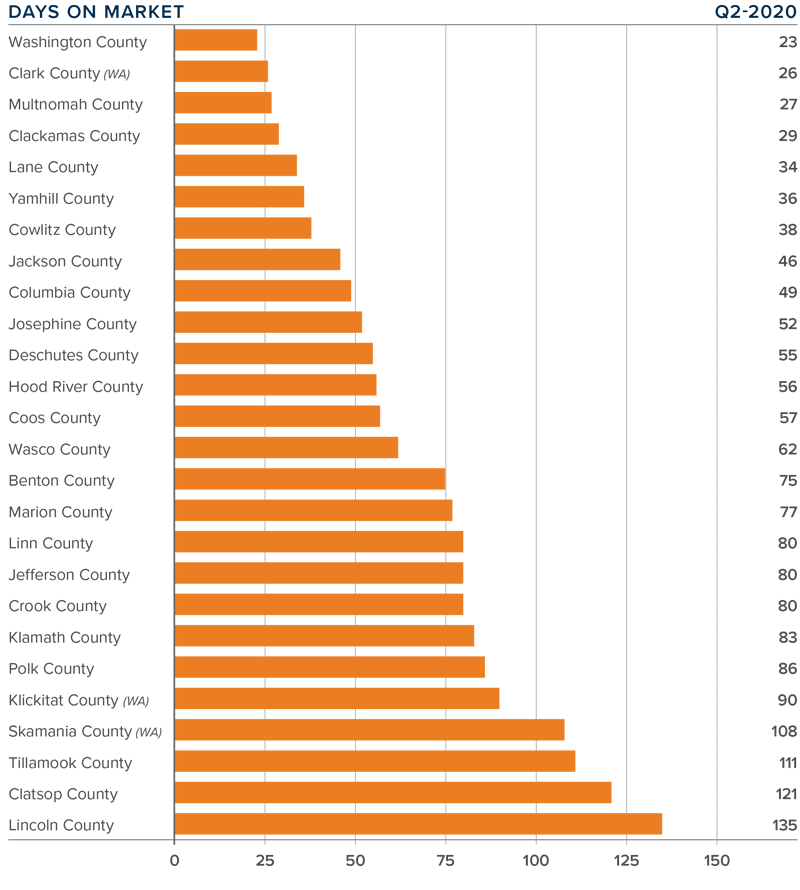
The following analysis of the Oregon and Southwest Washington real estate market is provided by Windermere Real Estate Chief Economist Matthew Gardner. We hope that this information may assist you with making better-informed real estate decisions. For further information about the housing market in your area, please don’t hesitate to contact your Windermere agent.
ECONOMIC OVERVIEW
The very significant COVID-19-induced contraction in employment Oregon experienced — along with the rest of the nation — looks as if it is behind us (at least for now).
Employment growth across the state turned negative in March, but April was the real shocker: total employment dropped by 252,800 jobs, a decline of 13%. However, this turned around remarkably quickly with 22,500 jobs added in May. The Southwest Washington region saw a drop in total employment of almost 30,000 jobs, but also turned around in May with 1,650 jobs returning. In May, the unemployment rate was 14.2% in Oregon and 14.4% in Southwest Washington.
As the rate of COVID-19 infections slow, we should see more jobs return.
HOME SALES
HOME PRICES
DAYS ON MARKET
CONCLUSIONS
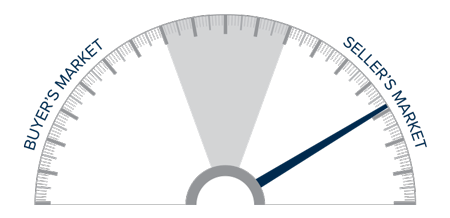
This speedometer reflects the state of the region’s real estate market using housing inventory, price gains, home sales, interest rates, and larger economic factors.
Given the current economic environment, I have decided to freeze the needle in place until we see a restart in the economy. Once we have resumed “normal” economic activity, there will be a period of adjustment with regard to housing. Therefore, it is appropriate to wait until later in the year to offer my opinions about any quantitative impact the pandemic will have on the housing market.
ABOUT MATTHEW GARDNER
As Chief Economist for Windermere Real Estate, Matthew Gardner is responsible for analyzing and interpreting economic data and its impact on the real estate market on both a local and national level. Matthew has over 30 years of professional experience both in the U.S. and U.K.
In addition to his day-to-day responsibilities, Matthew sits on the Washington State Governors Council of Economic Advisors; chairs the Board of Trustees at the Washington Center for Real Estate Research at the University of Washington; and is an Advisory Board Member at the Runstad Center for Real Estate Studies at the University of Washington where he also lectures in real estate economics.

The following analysis of the Western Washington real estate market is provided by Windermere Real Estate Chief Economist Matthew Gardner. We hope that this information may assist you with making better-informed real estate decisions. For further information about the housing market in your area, please don’t hesitate to contact your Windermere agent.
REGIONAL ECONOMIC OVERVIEW
It appears as if the massive COVID-19 induced contraction in employment that Washington State — along with the rest of the nation — experienced this spring is behind us (at least for now). Statewide employment started to drop in March, but April was the real shock: total employment dropped almost 460,000 between March and April, a decline of 13.1%. However, this turned around remarkably quickly, with a solid increase of 52,500 jobs in May. Worthy of note is that, in May alone, Western Washington recovered 43,500 of the 320,000 jobs that were lost in the region the prior month. Although it is certainly too early to categorically state that we are out of the woods, the direction is positive and, assuming we respect the state’s mandates regarding social distancing and mask wearing, I remain hopeful that Washington will not have to re-enter any form of lockdown.
HOME SALES

HOME PRICES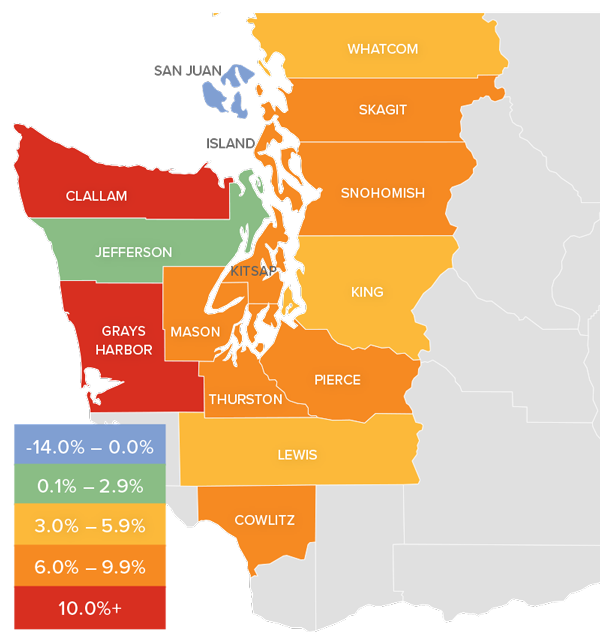
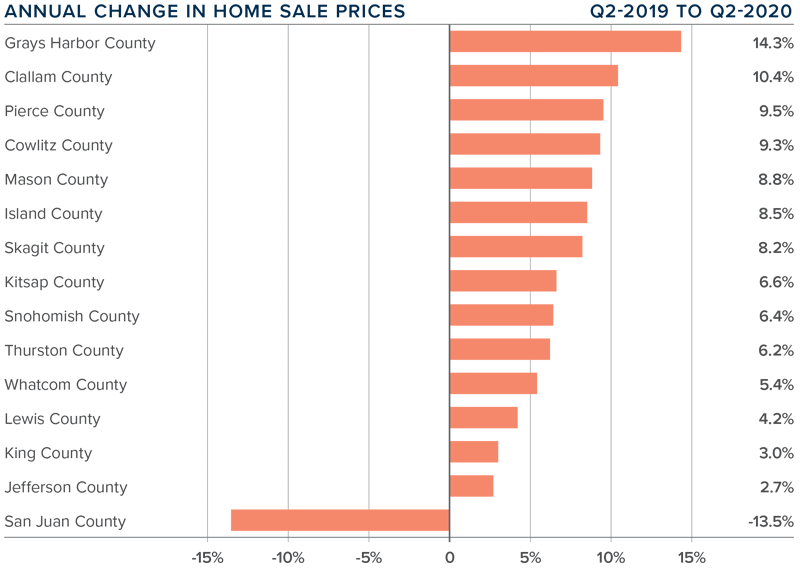
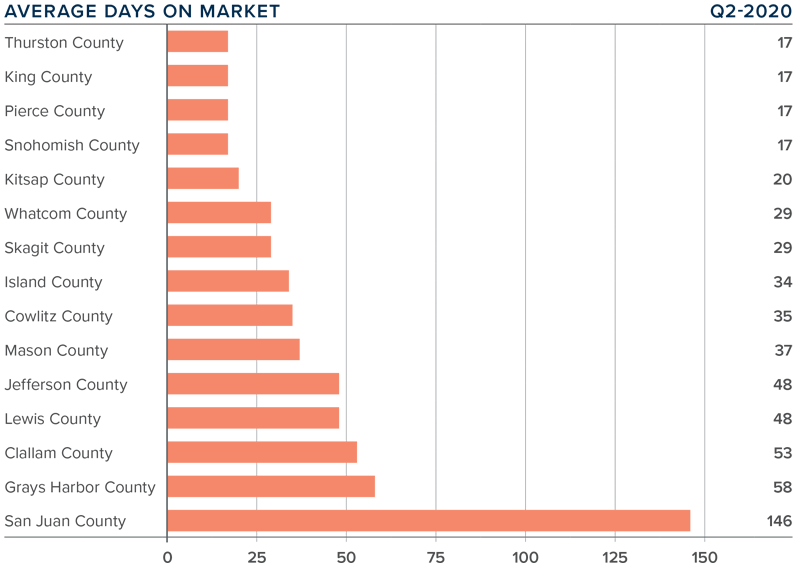
DAYS ON MARKET
CONCLUSIONS
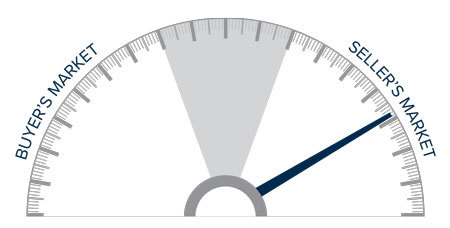 This speedometer reflects the state of the region’s real estate market using housing inventory, price gains, home sales, interest rates, and larger economic factors.
What a difference a quarter makes! Given that demand has reappeared remarkably quickly and interest rates remain historically low, it certainly remains a seller’s market and I don’t expect this to change in the foreseeable future.
The overall housing market has exhibited remarkable resilience and housing demand has rebounded faster than most would have expected. I anticipate demand to remain robust, but this will cause affordability issues to remain as long as the new construction housing market remains muted.
ABOUT MATTHEW GARDNER
As Chief Economist for Windermere Real Estate, Matthew Gardner is responsible for analyzing and interpreting economic data and its impact on the real estate market on both a local and national level. Matthew has over 30 years of professional experience both in the U.S. and U.K.
In addition to his day-to-day responsibilities, Matthew sits on the Washington State Governors Council of Economic Advisors; chairs the Board of Trustees at the Washington Center for Real Estate Research at the University of Washington; and is an Advisory Board Member at the Runstad Center for Real Estate Studies at the University of Washington where he also lectures in real estate economics.
On this week's episode of "Mondays with Matthew," Windermere Chief Economist, Matthew Gardner, dives into the most recent National Housing Survey results which tell us a lot about consumer confidence both pre- and post-COVID and whether or not they feel this is a good time to buy or sell a home. The results might surprise you.