Market News February 5, 2021

Q4 2020 Big Island of Hawaii Real Estate Market Update

The following analysis of the Big Island real estate market is provided by Windermere Real Estate Chief Economist Matthew Gardner. We hope that this information may assist you with making better-informed real estate decisions. For further information about the housing market in your area, please don’t hesitate to contact your Windermere agent.


Regional Economic Overview

The impact of COVID-19 on the Big Island’s economy remains significant. That said, jobs started to return after the spike in new infections in September. The latest available employment data (November) showed that the labor market has recovered 14,650 of the jobs that were shed and that employment is now only 6,850 jobs lower than in February of 2020. The unemployment rate on the Island continues to improve but still stands at 9.8%. For perspective, the rate in November of 2019 was only 3.3%. All of the islands continue to suffer from slow economic growth, but I remain hopeful that jobs will continue to return—assuming new infection rates do not go up again.

big island of hawaii Home Sales

❱ In the fourth quarter of 2020, 1,083 homes sold on the Big Island. This was an increase of 30.5% compared to the final quarter of 2019 and a significant 21.7% higher than in the third quarter of 2020.

❱ Sales were static in Kau but higher in all other markets. North Kona and North Hilo saw significant increases in sales. All but two markets saw sales rise by double digits.

❱ The growth in sales came even though inventory levels were 33.5% lower year-over-year. The average number of homes for sale in the quarter was also down 14.4% from the third quarter of 2020.

❱ Pending home sales fell .9% compared to the third quarter of 2020, but this can most easily be attributed to a lack of supply of homes to buy—not a lack of demand.
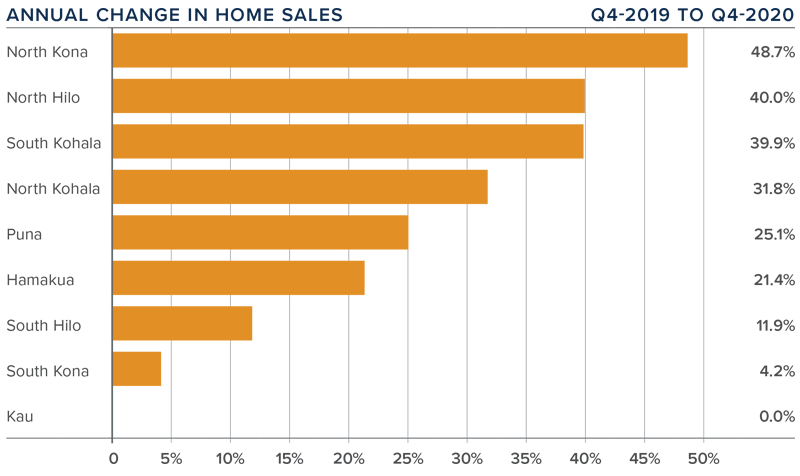
A bar graph showing the annual change in home sales for various areas on the Big Island, Hawaii.

big island of hawaii Home Prices

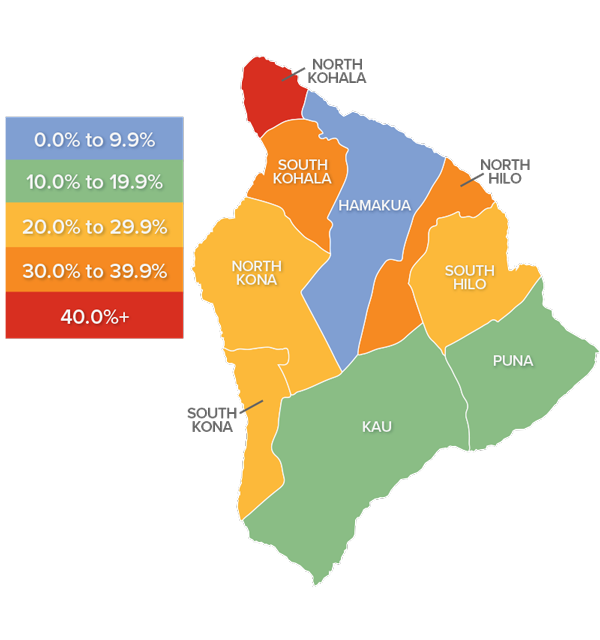
A map showing the real estate market percentage changes in various areas of the Big Island, Hawaii.

❱ The average home price on the Island rose an impressive 33.9% year-over-year to $775,902. Prices were also 23.2% higher than in the third quarter of 2020.

❱ Affordability continues to be an issue, but competitive mortgage rates and the desire for vacation homes kept demand from mainland buyers very robust.

❱ The substantial increase in average sale prices was driven by significant price growth in North and South Kohala, but all markets except Hamakua saw double-digit price growth compared to a year ago.

❱ Given the events of 2020, the housing market has recovered very admirably.
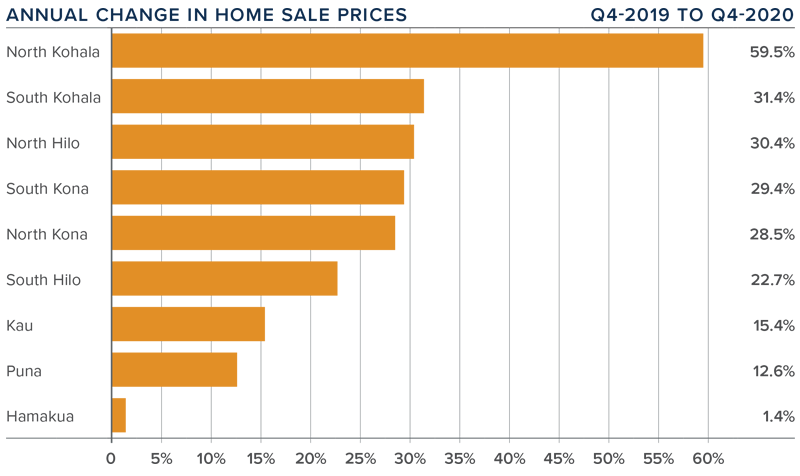
A bar graph showing the annual change in home sale prices for various areas on the Big Island, Hawaii.

Days on Market

❱ The average time it took to sell a home on the Big Island dropped one day compared to the final quarter of 2019.

❱ The amount of time it took to sell a home dropped in North & South Kohala, North Kona, Kau, and South Hilo, but rose in the other four markets.

❱ It took an average of 102 days to sell a home in the fourth quarter, with the fastest sales occurring in South Hilo and the slowest in North Hilo.

❱ It took four fewer days to sell a home in the fourth quarter of 2020 than in the third.
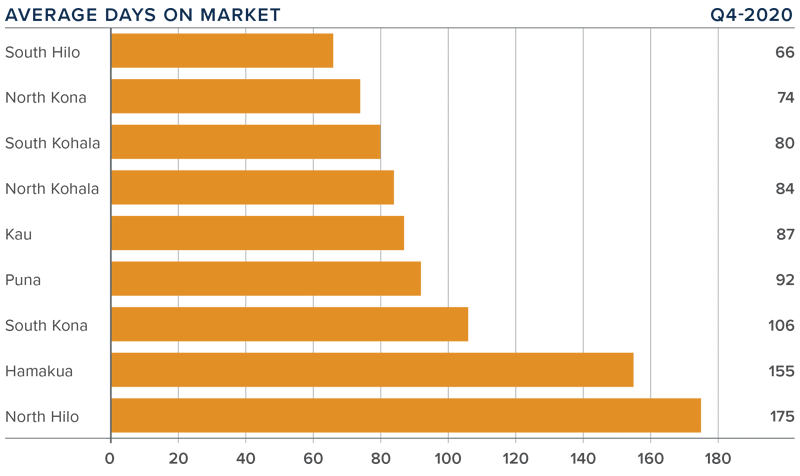
A bar graph showing the average days on market for homes in various areas of the Big Island, Hawaii.

Conclusions

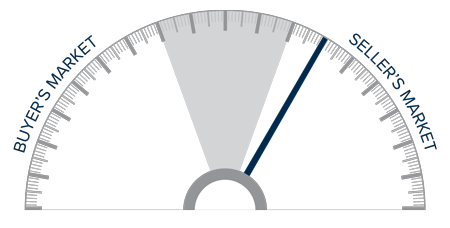
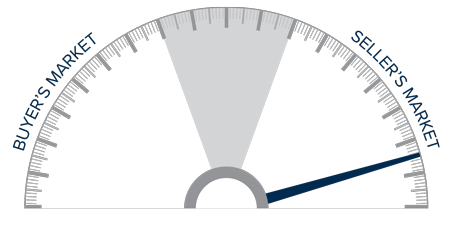
A speedometer graph indicating a seller's market on the Big Island, Hawaii.

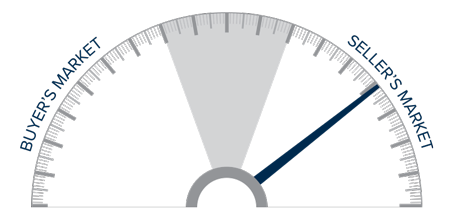
This speedometer reflects the state of the region’s real estate market using housing inventory, price gains, home sales, interest rates, and larger economic factors.

Even though the economy and job market are still suffering from the fallout of COVID-19, the housing market is recovering nicely.

Demand appears to be in place, but buyers who want to get into the market are still finding limited choices, which has allowed prices to continue to rise at very significant rates. Even though I anticipate mortgage rates will not drop much further, demand is likely to continue to be strong. Therefore, I am moving the needle back a bit more in favor of home sellers.


About Matthew Gardner

Matthew Gardner - Chief Economist for Windermere Real Estate

As Chief Economist for Windermere Real Estate, Matthew Gardner is responsible for analyzing and interpreting economic data and its impact on the real estate market on both a local and national level. Matthew has over 30 years of professional experience both in the U.S. and U.K.

In addition to his day-to-day responsibilities, Matthew sits on the Washington State Governors Council of Economic Advisors; chairs the Board of Trustees at the Washington Center for Real Estate Research at the University of Washington; and is an Advisory Board Member at the Runstad Center for Real Estate Studies at the University of Washington where he also lectures in real estate economics.

Market News February 4, 2021

Q4 2020 Nevada Real Estate Market Update

The following analysis of the greater Las Vegas real estate market is provided by Windermere Real Estate Chief Economist Matthew Gardner. We hope that this information may assist you with making better-informed real estate decisions. For further information about the housing market in your area, please don’t hesitate to contact your Windermere agent.


Regional Economic Overview

COVID-19 led to the loss of almost 247,000 jobs in the Las Vegas market—a very significant number. I am happy to report that more than 114,000 of them have now returned. The Leisure & Hospitality sector, unsurprisingly, was significantly impacted, but we are seeing continued improvement here: more than 75,000 of the 136,000 jobs that were lost have returned. With the job recovery continuing at a decent pace, the unemployment rate, which peaked at a remarkable 34% in April, continues to improve. The November rate was 11.5%. The market still has a way to go to get back to where it was pre-COVID, but the improvement is palpable. While the job recovery remains in place, COVID-19 infection rates are still elevated, even if they have pulled back from the new peak seen in December. I remain hopeful that new infection rates will continue to drop and, if I am correct, more jobs will be recovered. But I don’t expect to see a faster recovery until a vaccine becomes readily available.

nevada Home Sales

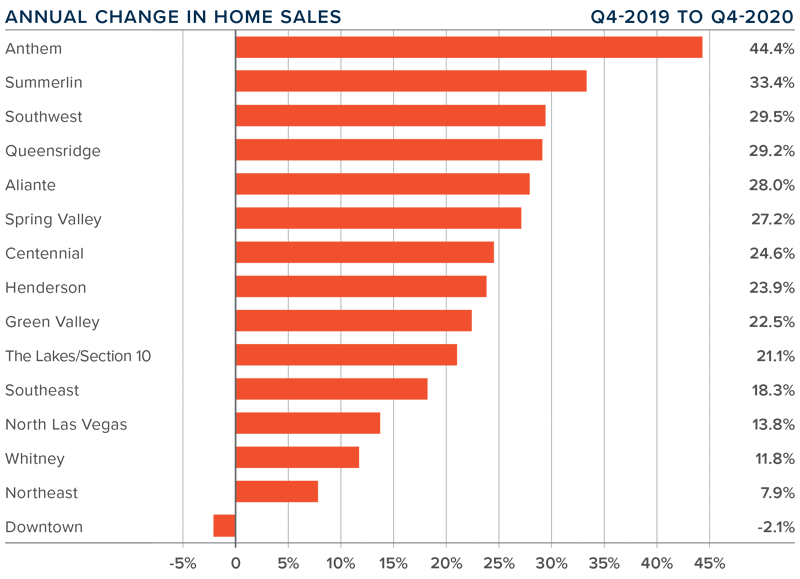
❱ A total of 10,008 homes sold in the fourth quarter of 2020, an increase of 22.7% compared to the same period a year ago, and 5.2% higher than in the third quarter of 2020.

❱ Pending sales dropped 8.7% from the third quarter, suggesting that closings in the first quarter of 2021 may be lower than I would like to see. That said, pending sales were 27.4% higher year-over-year.

❱ Sales rose in every market other than Downtown, which saw a very modest drop. The Anthem area once again had significant growth. It is also worth noting that all but two markets saw double-digit growth in sales.

❱ Listing activity was down 16.9% compared to the third quarter, and 34.2% lower than the fourth quarter of 2019. I still expect listings will remain relatively muted until a vaccine is readily available and the Las Vegas economy gets back to as close to normal as possible.

A bar graph showing the annual change in home sales for the greater Las Vegas area.

nevada Home Prices

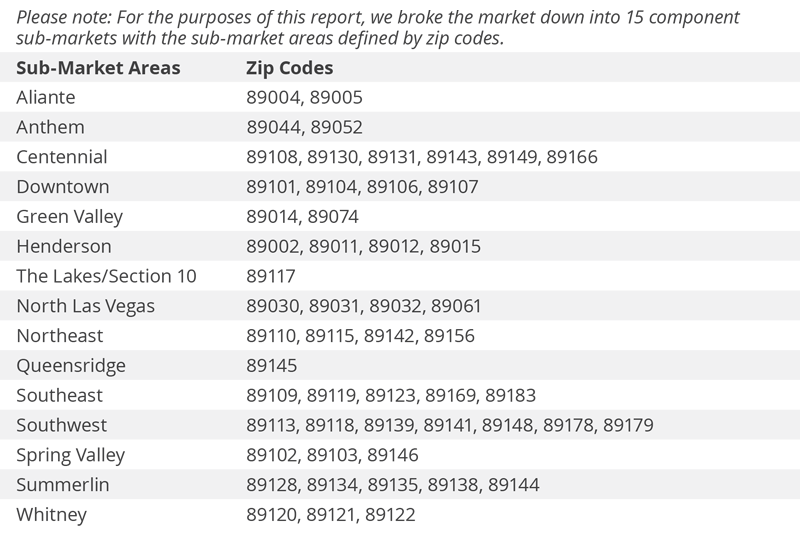
A chart showing the sub-market areas and their corresponding zip codes in the greater Las Vegas area.

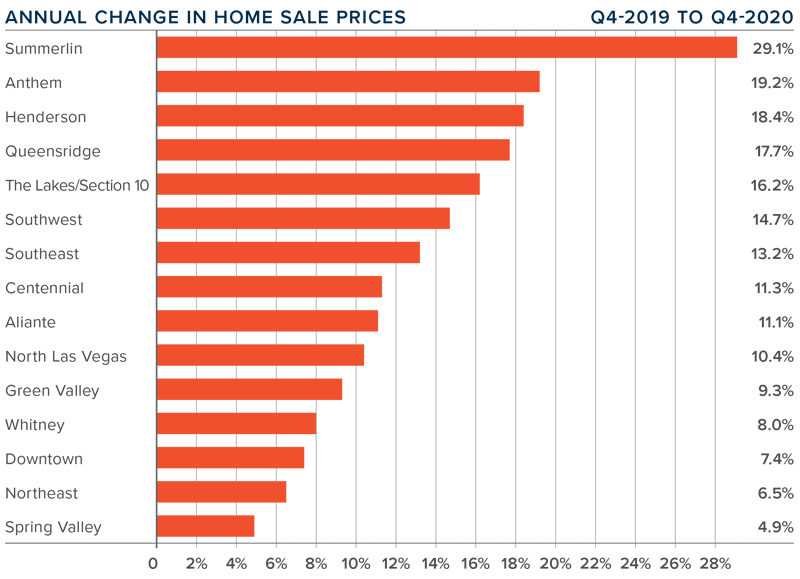
❱ With sales rising and inventory levels still very low, it was not surprising home prices continued to rise at well-above-average rates. The average sale price in the fourth quarter rose 17.6% year-over-year to $383,477. Prices were up 5.4% compared to the third quarter of 2020.

❱ Annual home-price growth continues at well-above-average levels, but as mortgage rates start to creep higher, I expect some modest slowing in the pace of growth. But not yet!

❱ Prices rose in every sub-market compared to the same quarter last year, with significant gains in Summerlin. An additional nine neighborhoods saw double-digit price growth.

❱ Buyer demand remains robust, which continues to benefit home sellers.

A bar graph showing the annual change in home sale prices for the greater Las Vegas area.

Days on Market

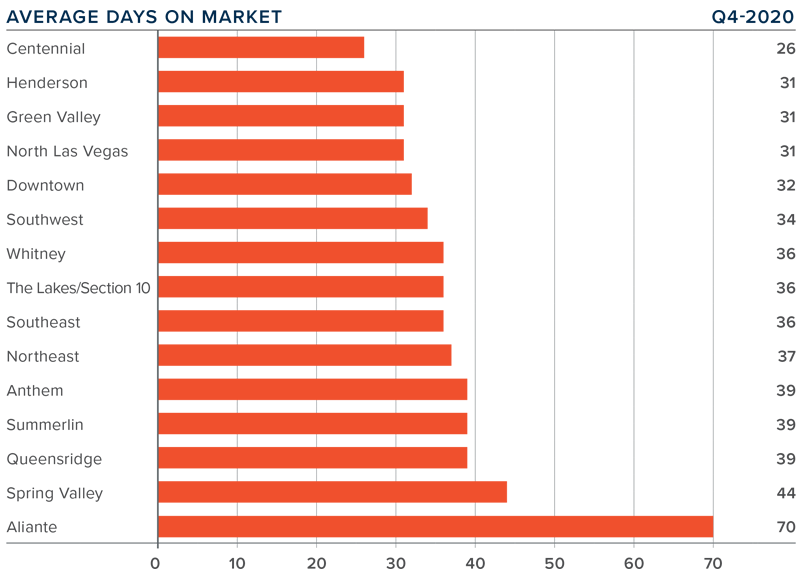
❱ The average time it took to sell a home in the region dropped nine days compared to the fourth quarter of 2019.

❱ Regionally, it took an average of 37 days to sell a home in the final quarter of 2020, which is 5 fewer days than in the third quarter.

❱ Days on market dropped or remained static in all the neighborhoods contained in this report compared to a year ago.

❱ The greatest decline in market time was again in The Lakes/Section 10, where the length of time it took to sell a home dropped 16 days.

A bar graph showing the average days on market for homes in the greater Las Vegas area.

Conclusions

A speedometer graph indicating a seller's market in the greater Las Vegas area.

This speedometer reflects the state of the region’s real estate market using housing inventory, price gains, home sales, interest rates, and larger economic factors.

The market continues to recover from the impact of COVID-19. Demand is in place and buyers remain very active. Even modestly rising mortgage rates likely won’t be a deterrent to home buyers. Although frustrated by the lack of homes for sale, they are still looking, which benefits home sellers. As such, I am moving the needle a little more in their favor.


About Matthew Gardner

Matthew Gardner - Chief Economist for Windermere Real Estate

As Chief Economist for Windermere Real Estate, Matthew Gardner is responsible for analyzing and interpreting economic data and its impact on the real estate market on both a local and national level. Matthew has over 30 years of professional experience both in the U.S. and U.K.

In addition to his day-to-day responsibilities, Matthew sits on the Washington State Governors Council of Economic Advisors; chairs the Board of Trustees at the Washington Center for Real Estate Research at the University of Washington; and is an Advisory Board Member at the Runstad Center for Real Estate Studies at the University of Washington where he also lectures in real estate economics.
Market News February 4, 2021

Q4 2020 Northern California Real Estate Market Update

The following analysis of the Northern California real estate market is provided by Windermere Real Estate Chief Economist Matthew Gardner. We hope that this information may assist you with making better-informed real estate decisions. For further information about the housing market in your area, please don’t hesitate to contact your Windermere agent.


Regional Economic Overview

New COVID-19 cases across California have been increasing, which has started to temper a job recovery that was performing rather admirably. That said, the Northern California region has recovered 265,000 of the 434,000 jobs that were lost. With jobs returning, the region’s unemployment rate continues to drop from a peak of 13.4% in April to 6.1% in November (the most recent data available). By county, the lowest jobless rate was in Santa Clara and Placer counties, where the rates were 5.1% and 5.2%, respectively. The highest rate was in Solano County where 7.5% of the workforce is still unemployed. The economic revival is still in place but rising COVID-19 infection rates are acting as a drag on the recovery.

northern california Home Sales

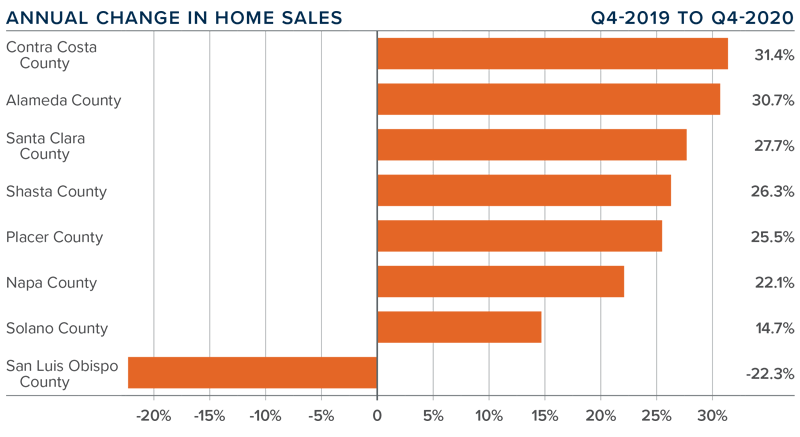
❱ In the final quarter of 2020, 14,341 homes sold, an increase of 26.3% compared to the same period a year ago. Sales were 3.1% lower than in the third quarter, which is not surprising as sales tend to slow in the winter months.

❱ Sales were positive year-over-year in all counties other than San Luis Obispo, with double-digit growth seen in all other markets.

❱ Listing activity was down 20.9% compared to the fourth quarter of 2019 and 17.5% lower than in the third quarter of 2020.

❱ Pending home sales pulled back 16.3% from the third quarter, which tells me that closings in the first quarter of 2021 may be relatively modest.

A bar graph showing the annual change in home sales for various Northern California counties.

northern california Home Prices

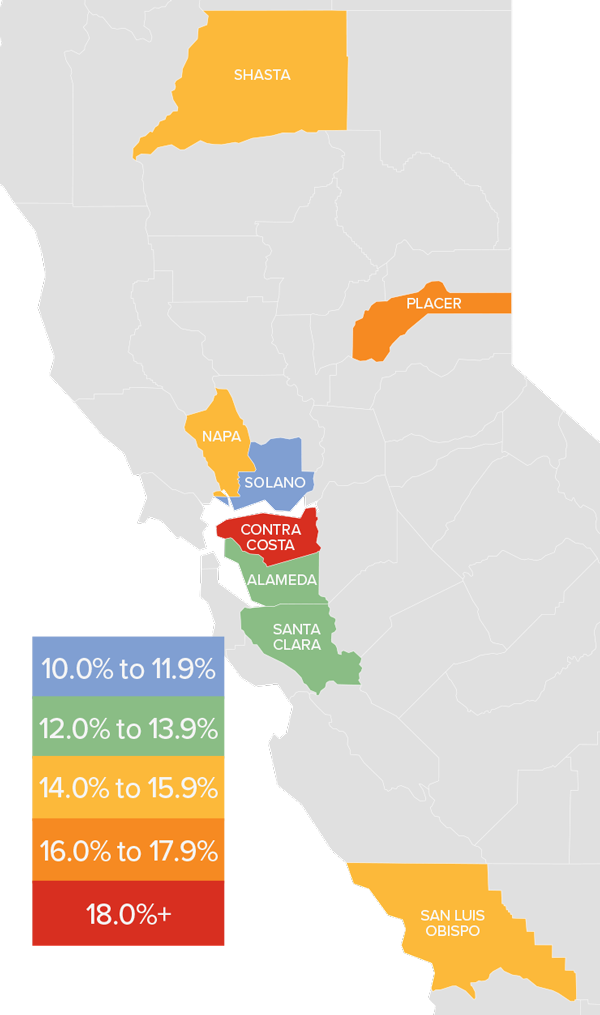
A map showing the real estate market percentage changes in various Northern California counties.

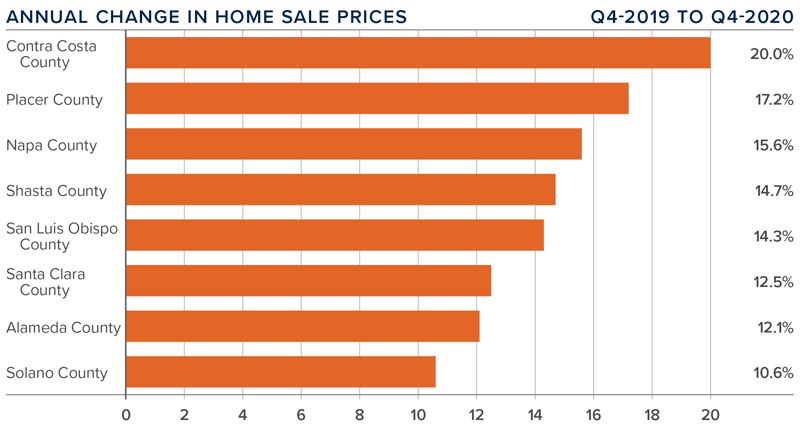
❱ The average home price in the Northern California counties contained in this report rose 14.8% year-over-year to $1.05 million.

❱ The most affordable counties—relative to average sale prices—were Shasta and Solano. Price growth in these markets was very solid, but there were significant price increases in the more expensive counties as well.

❱ Average prices rose in all of the counties contained in this report. Even more impressive is that all markets saw prices rise by more than 10%.

❱ Home-price growth is a function of supply and demand. Supply levels are well below demand. With more buyers than sellers, prices are still rising at significant rates.

A bar graph showing the annual change in home sale prices for various counties in Northern California.

Days on Market

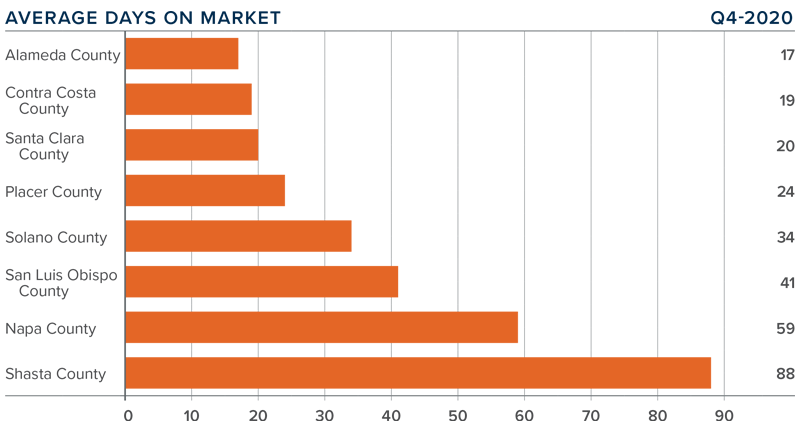
❱ The average time it took to sell a home in the Northern California counties covered by this report dropped 12 days compared to the final quarter of 2019.

❱ The amount of time it took to sell a home dropped in every county other than Shasta, where it increased 24 days year-over-year.

❱ In the fourth quarter, it took an average of 38 days to sell a home, with homes selling fastest in Alameda County and slowest in Shasta County.

❱ The greatest declines in market time were in Napa and Placer counties, where it took 24 fewer days to sell a home than in the fourth quarter of 2019.

A bar graph showing the average days on market for homes in various Northern California counties.

Conclusions

A speedometer graph indicating a seller's market in Northern California.

This speedometer reflects the state of the region’s real estate market using housing inventory, price gains, home sales, interest rates, and larger economic factors.

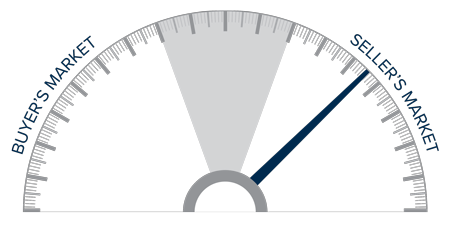
Jobs continue to return, and buyers are out in good numbers. Unfortunately, home supply is still well below normalized levels, but I expect to see more new listings— and sales—as households who are able to continue working from home move to less expensive markets.

With concerns regarding wildfires fading, economic activity improving, and very low levels of available housing, the market clearly still favors sellers. As such, I have moved the needle a little more in their favor.


About Matthew Gardner

Matthew Gardner - Chief Economist for Windermere Real Estate

As Chief Economist for Windermere Real Estate, Matthew Gardner is responsible for analyzing and interpreting economic data and its impact on the real estate market on both a local and national level. Matthew has over 30 years of professional experience both in the U.S. and U.K.

In addition to his day-to-day responsibilities, Matthew sits on the Washington State Governors Council of Economic Advisors; chairs the Board of Trustees at the Washington Center for Real Estate Research at the University of Washington; and is an Advisory Board Member at the Runstad Center for Real Estate Studies at the University of Washington where he also lectures in real estate economics.
Buying February 3, 2021

Buying with Remodeling in Mind

Everyone has their own definition of a dream home. For some, they know right when they see a home that it’s perfect as is. For others, it takes remodeling to achieve their vision. Whether you’re looking for something in need of a few upgrades or a total fixer-upper, buying with the intention of remodeling comes with added considerations.

Finding the Right Home to Remodel

When it comes to choosing the right home to remodel, you’ll want to look for a property that not only aligns with your renovation plans but has significant ROI potential. How much value a home stands to gain depends on a variety of factors, like the cost of the project and your local market conditions. Knowing this information will help paint a picture of a home’s potential ROI. By conducting detailed Comparable Market Analyses (CMAs), your Windermere agent can provide helpful info on how similar homes in the neighborhood have performed on the market. Though these factors don’t provide a concrete valuation, they will help you understand how much your home could be worth. 


Choose the Right Remodeling Projects

The right remodeling projects are the ones that align with your plans for living in the home. If you’re looking for an investment property, you’ll be targeting renovation projects that appeal to buyers, like a kitchen remodel, attic conversions, garage door replacement, and exterior projects that boost the home’s curb appeal. However, if you’re planning on putting down roots and staying for an extended period of time, you’ll want to focus on projects that maximize your enjoyment of the space. In either case, any structural issues require immediate attention and should be at the top of your list.


Know Your Remodeling Budget

Your remodeling budget will help you determine the scope of renovations you’re able to afford, and ultimately, which home is right for you. Knowing this information will help your agent identify which homes fall within your range. It will also guide your conversations with your lender when structuring your loan. For more information on home renovation loans, talk to your Windermere agent.


Break Down Your Remodeling Costs 

Although remodel cost estimates aren’t always final, they give you an idea of what you can expect to spend. No renovation comes without hurdles and complications, so leave some wiggle room in your budget for unforeseen costs. This will allow you to expect the unexpected and stay within your budget. A cost breakdown will also help to identify areas where you can save money by doing-it-yourself. Painting projects, landscaping, and small-scale demolition are common DIY projects that can add up to significant savings.


Find the Right Contractor

For the remodeling projects that require professional expertise, finding the right contractor is another pivotal step in making your dream home a reality. Start by reaching out to your circle of friends and family for referrals. If someone you know and trust had a positive experience with a contractor, that’s a great starting point. Continue your search by gathering information for multiple contractors in your area and request project bids and timelines from each one. This will allow you to compare pricing and make a more informed decision. 


Conduct Thorough Inspections Before Remodeling

Buying a home with the intention of remodeling means that a home inspection is likely to produce a longer list of items than a newly constructed home. Conducting a thorough home inspection is critical to formulating your plans for remodeling. Additionally, it will help identify which issues need immediate attention, enabling you to negotiate repairs and concessions, so long as the inspection is performed during your inspection contingency period.

Market News February 3, 2021

Q4 2020 Utah Real Estate Market Update

The following analysis of select counties of the Utah real estate market is provided by Windermere Real Estate Chief Economist Matthew Gardner. We hope that this information may assist you with making better-informed real estate decisions. For further information about the housing market in your area, please don’t hesitate to contact your Windermere agent.


Regional Economic Overview

The recovery in employment following the very significant job losses in Utah from COVID-19 continues to impress. Of the over 144,000 jobs that were lost in the state, all but 7,800 have returned. With the recovery clearly in place, the unemployment rate, which peaked at 10.4% in April, has dropped as jobs have been recovered and now stands at a very respectable 4.3%. In the third quarter Gardner Report, I mentioned I was a little concerned that rising COVID-19 infection rates might curtail the economic recovery, but the impact thus far has been minimal. I am pleased to see new infection rates starting to drop again and hope this trend will continue.

utah Home Sales

❱ In the final quarter of 2020, 10,237 homes changed hands, representing a solid increase of 14.4% compared to the same period in 2019—a great way to close out this unusual year.

❱ Total sales activity rose in all counties covered by this report other than Morgan. The small counties of Summit and Wasatch saw significant gains.

❱ The number of homes for sale in the quarter was 62.8% lower than during the same period a year ago, which likely frustrated buyers.

❱ Pending sales in the fourth quarter were down 26.3% compared to the third quarter. This is due to a lack of homes for sale and seasonality, so I am not concerned.

A bar graph showing the annual change in home sales for various counties in Utah.

utah Home Prices

A map showing the real estate market percentage changes in various Utah counties.

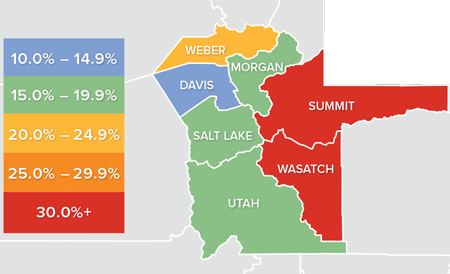
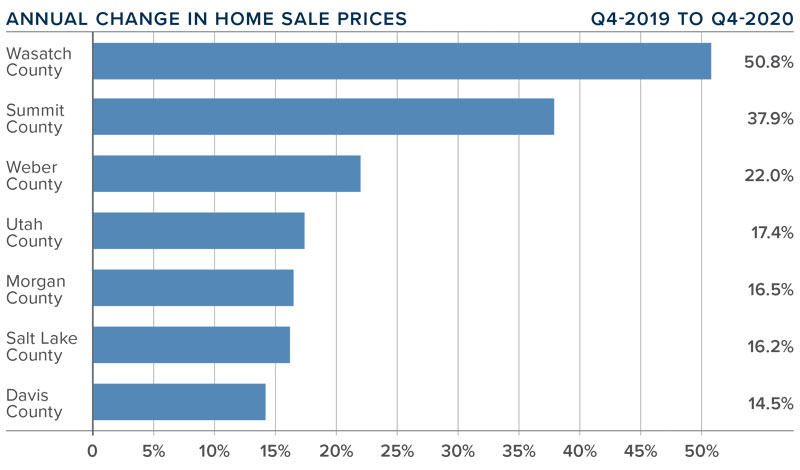
❱ The average home price in the region continued to rise in the fourth quarter, with a year-over-year increase of a very impressive 27.6% to $512,894. Home prices were also 18.5% higher than in the third quarter of 2020.

❱ Price growth was again influenced by very significant gains in Wasatch County, where average prices jumped from $681,000 to $1.027 million.

❱ Outside of Wasatch County, every county covered by this report saw double-digit price appreciation compared to the same period a year ago.

❱ Home prices are still rising at very significant rates as the economy recovers, supply limitations persist, and mortgage rates remain attractive.

A bar graph showing the annual change in home sale prices for various counties in Utah.

Days on Market

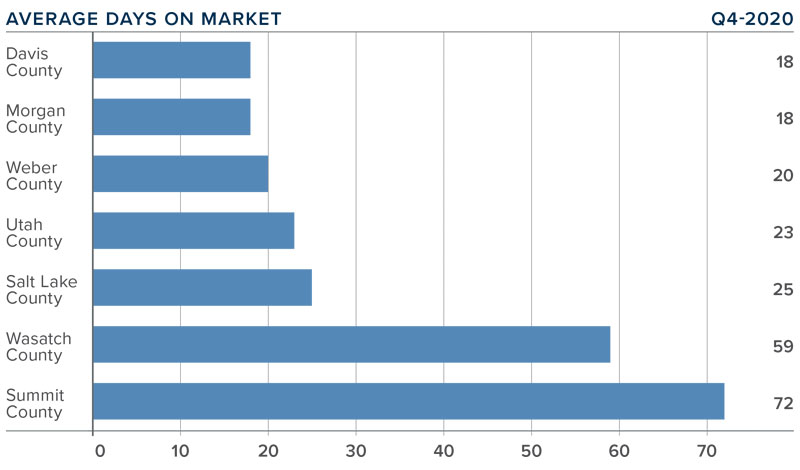
❱ The average number of days it took to sell a home in the counties covered by this report dropped 24 days compared to the final quarter of 2019.

❱ Homes sold fastest in Davis and Morgan counties. The longest time it took to sell a home was in Summit County. It took less time to sell a home in all markets than it did in the fourth quarter of 2019.

❱ During the fourth quarter, it took an average of 34 days to sell a home in the region, down 6 days compared to the third quarter of 2020.

❱ Market time declined due to growing demand and limited supply. I do not see it dropping by much more, as I hope listing inventory will rise in the spring. However, that is far from certain.

A bar graph showing the average days on market for homes in various Utah counties.

Conclusions

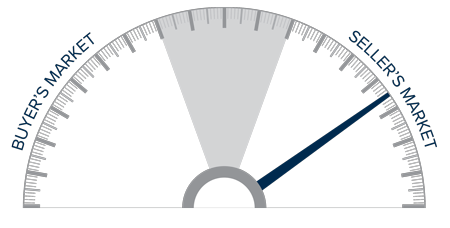
A speedometer graph indicating a seller's market in Utah.

This speedometer reflects the state of the region’s real estate market using housing inventory, price gains, home sales, interest rates, and larger economic factors.

The region’s housing market continues to perform very well, with substantial demand for the limited number of available homes. This has led to significant increases in home prices. Although this has been a boon for home sellers, affordability issues are increasing.

I believe we will see the number of listings increase in the spring of 2021, which, in concert with modestly rising mortgage rates, should take some of the heat off the market. For now, though, it remains a staunchly seller’s market. As such, I am moving the needle a little more in their favor.


About Matthew Gardner

Matthew Gardner - Chief Economist for Windermere Real Estate

As Chief Economist for Windermere Real Estate, Matthew Gardner is responsible for analyzing and interpreting economic data and its impact on the real estate market on both a local and national level. Matthew has over 30 years of professional experience both in the U.S. and U.K.

In addition to his day-to-day responsibilities, Matthew sits on the Washington State Governors Council of Economic Advisors; chairs the Board of Trustees at the Washington Center for Real Estate Research at the University of Washington; and is an Advisory Board Member at the Runstad Center for Real Estate Studies at the University of Washington where he also lectures in real estate economics.
Market News February 3, 2021

Q4 2020 Park City, Utah Real Estate Market Update

The following analysis of select neighborhoods in the Park City real estate market is provided by Windermere Real Estate Chief Economist Matthew Gardner. We hope that this information may assist you with making better-informed real estate decisions. For further information about the housing market in your area, please don’t hesitate to contact your Windermere agent.


Regional Economic Overview

The recovery in employment following the very significant job losses in Utah from COVID-19 continues to impress. Of the over 144,000 jobs that were lost in the state, all but 7,800 have returned. With the recovery clearly in place, the unemployment rate, which peaked at 10.4% in April, has dropped as jobs have been recovered and now stands at a very respectable 4.3%.

In the third quarter Gardner Report, I mentioned I was a little concerned that rising COVID-19 infection rates might curtail the economic recovery, but the impact thus far has been minimal. I am pleased to see new infection rates starting to drop again and hope this trend will continue.

park city, utah Home Sales

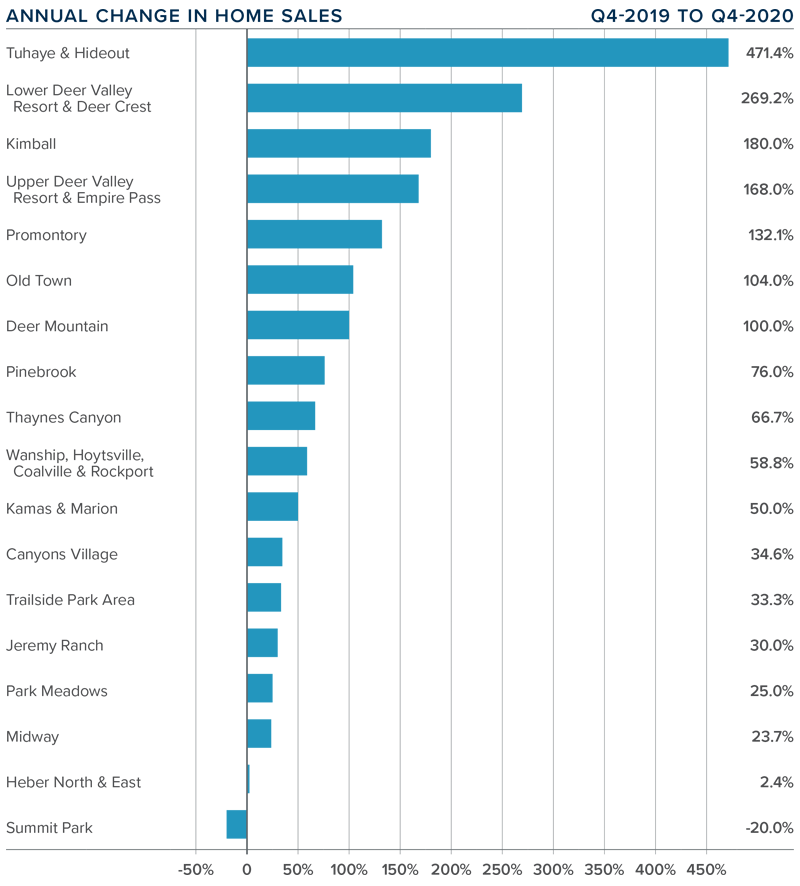
❱ There were 484 home sales in the final quarter of 2020, an increase of 81% compared to the fourth quarter of 2019, and up 38.7% compared to the third quarter of 2020.

❱ Sales rose in all markets other than Summit Park, where they dropped modestly. The Tuhaye/Hideout neighborhood saw a remarkable 471% increase in sales, but that meant that sales only rose from 7 to 40.

❱ The growth in sales was even more impressive given that there were almost 27% fewer listings than in the third quarter of the year.

❱ Pending home sales were 139% higher year over year but were 15.1% lower than in the third quarter. This is likely a function of inventory limitations and seasonality.

A bar graph showing the annual change in home sales for various areas of Park City, Utah.

park city, utah Home Prices

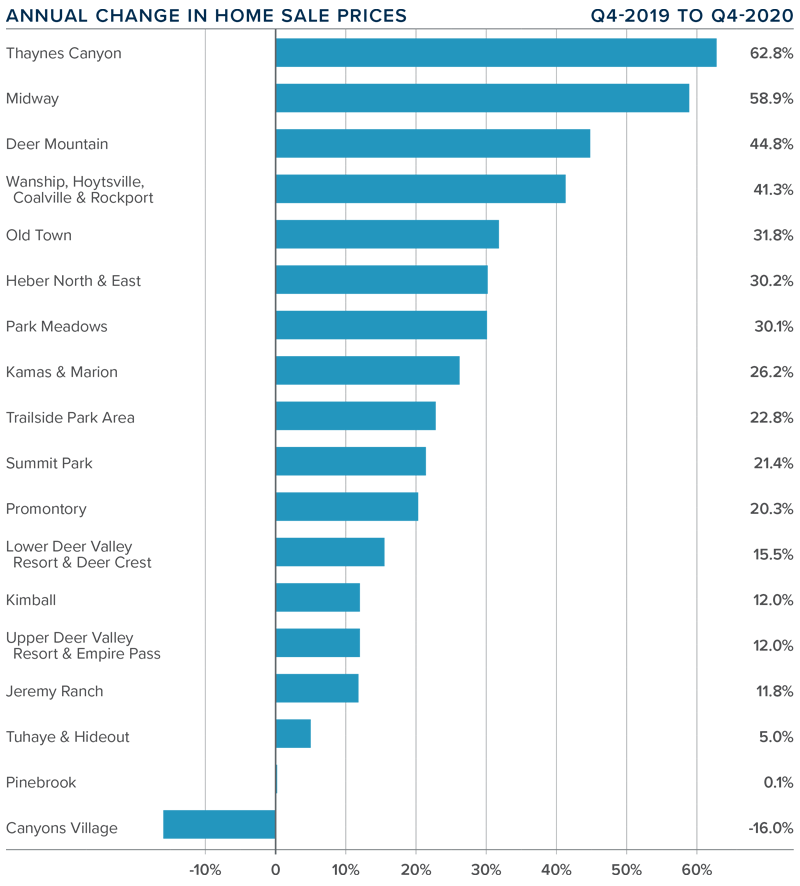
❱ The average home sale price in the Park City neighborhoods contained in this report rose 24.1% year-over-year to $1.543 million. Home prices were 5.1% higher than in the third quarter of 2020.

❱ The most affordable neighborhoods—relative to average sale prices—were in the Kimball, Wanship/Hoytsville/ Coalville/Rockport, and Midway neighborhoods. The most expensive areas were the Upper Deer Valley Resort & Empire Pass, where average sale prices exceeded $3 million.

❱ Prices rose in all but one neighborhood, with double-digit increases in all but three of the markets contained in this report.

❱ The Park City market is relatively small but is home to some very expensive real estate. It is clear that the pandemic has not impacted demand for homes in the area, as limited supply and significant demand continue to push prices higher.

A bar graph showing the annual change in home sale prices for various areas of Park City, Utah.

Days on Market

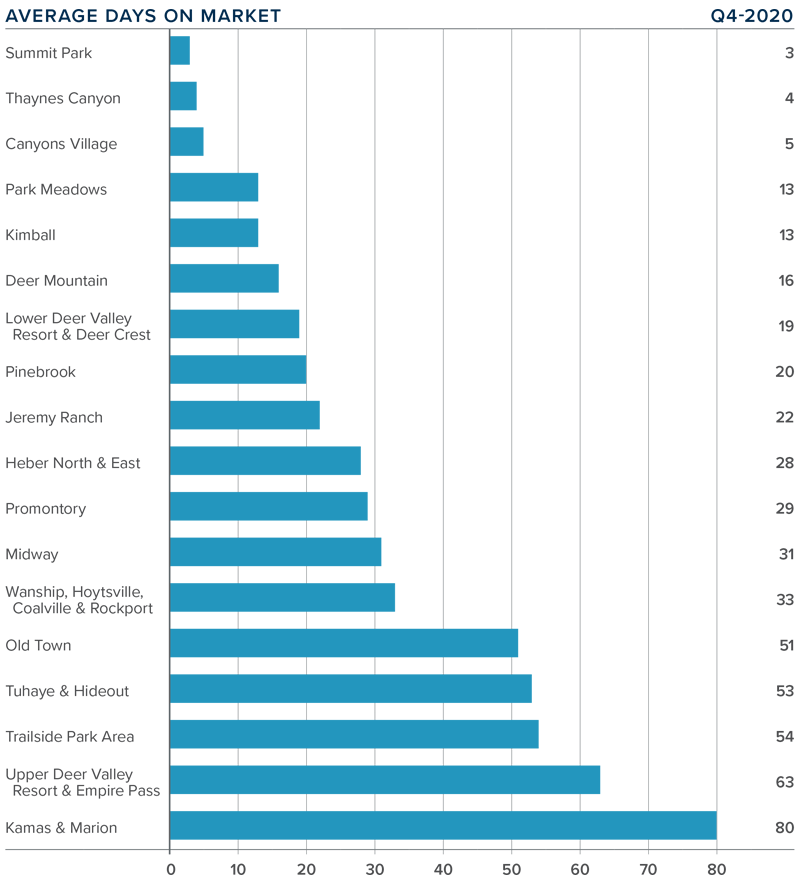
❱ The average time it took to sell a home in the Park City area dropped 30 days compared to the final quarter of 2019.

❱ The amount of time it took to sell a home dropped in all but four neighborhoods—Old Town, Kamas & Marion, Trailside Park, and Tuhaye/Hideout—relative to the fourth quarter of 2019.

❱ In the final quarter of 2020, it took an average of 31 days to sell a home. Homes sold fastest in the Summit Park, Thaynes Canyon, and Canyon Village areas, and slowest in the Kamas & Marion neighborhood.

❱ The significant drop in market time was primarily due to the local multiple listing service instituting a rule that led new construction developments to add sales “en-masse.” This lowered market time dramatically.

A bar graph showing the average days on market for homes in Park City, Utah.

Conclusions

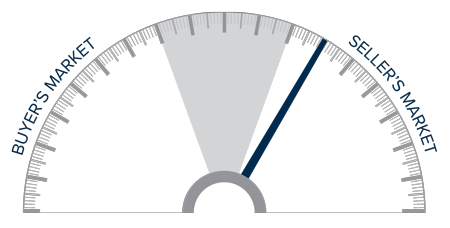
A speedometer graph indicating a seller's market in the Park City, Utah area.

This speedometer reflects the state of the region’s real estate market using housing inventory, price gains, home sales, interest rates, and larger economic factors.

Even as mortgage rates start to increase, I do not believe this will have much of a slowing effect on the Park City market. In fact, jumbo mortgage rates, which spiked significantly when COVID-19 hit but have since dropped, have encouraged buyers to resume taking advantage of relatively cheap money.

Given all these factors, sellers still have the upper hand, and I am therefore moving the needle a little more in their favor.


About Matthew Gardner

Matthew Gardner - Chief Economist for Windermere Real Estate

As Chief Economist for Windermere Real Estate, Matthew Gardner is responsible for analyzing and interpreting economic data and its impact on the real estate market on both a local and national level. Matthew has over 30 years of professional experience both in the U.S. and U.K.

In addition to his day-to-day responsibilities, Matthew sits on the Washington State Governors Council of Economic Advisors; chairs the Board of Trustees at the Washington Center for Real Estate Research at the University of Washington; and is an Advisory Board Member at the Runstad Center for Real Estate Studies at the University of Washington where he also lectures in real estate economics.
Market News February 2, 2021

Q4 2020 Montana Real Estate Market Update

The following analysis of select Montana real estate markets is provided by Windermere Real Estate Chief Economist Matthew Gardner. We hope that this information may assist you with making better-informed real estate decisions. For further information about the housing market in your area, please don’t hesitate to contact your Windermere agent.


Regional Economic Overview

Montana continues to see jobs return. As of November, the state had recovered 46,800 of the 63,500 jobs that were shed due to COVID-19. The job recovery was evident across the state, but current numbers show that Missoula’s employment levels are only down by 160 of the 7,400 jobs that were lost. The unemployment rate in the state was 4.9% in November, down from the April peak of 11.9%. Unemployment estimates across the various MSAs shows Billings’ current rate at 4%, Great Falls at 4.5%, and Missoula at 4.1%. New COVID-19 cases in Montana dropped as 2020 came to a close, which may be why the job recovery has been so robust.

montana Home Sales

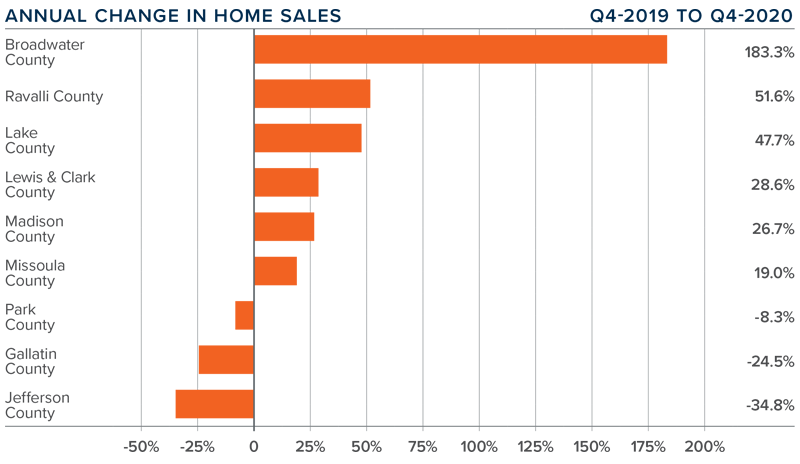
❱ During the final quarter of 2020, 1,783 homes sold in the markets contained in this report. This was 3.8% lower than during the same period in 2019 and 29.9% lower than in the third quarter of 2020.

❱ Sales activity rose in six counties but dropped in three. The largest annual increase was in very small Broadwater County, where sales were up by 183%, which was an increase from 12 to 34 home sales.

❱ The overall drop in sales can be attributed to the woefully low number of homes for sale. The average number of listings was 47.1% lower than a year ago and 57.4% lower than in the third quarter of 2020.

❱ I would like to see inventory levels higher, but I do not anticipate that will occur until later in the spring of 2021.

A bar graph showing the annual change in home sales for various counties in Montana.

montana Home Prices

A map showing the real estate market percentage changes in various Montana counties.

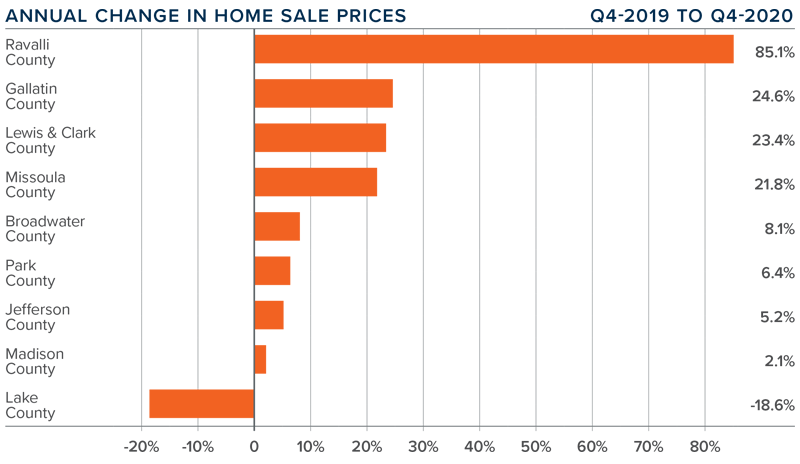
❱ Year-over-year, home prices rose 14.2% to an average of $603,845. Prices were also 21% higher than in the third quarter of the year.

❱ Average home prices rose everywhere but Lake County, though this was likely because there were very few sales in that market.

❱ An improving economy, in concert with rapidly growing demand for housing, has driven significant growth in sales prices.

❱ Inventory levels are still well below where they need to be, but I am hopeful we will see more listings come online this year. That, combined with modestly rising mortgage rates, should soften home price growth somewhat.

A bar graph showing the annual change in home sale prices for various counties in Montana.

Days on Market

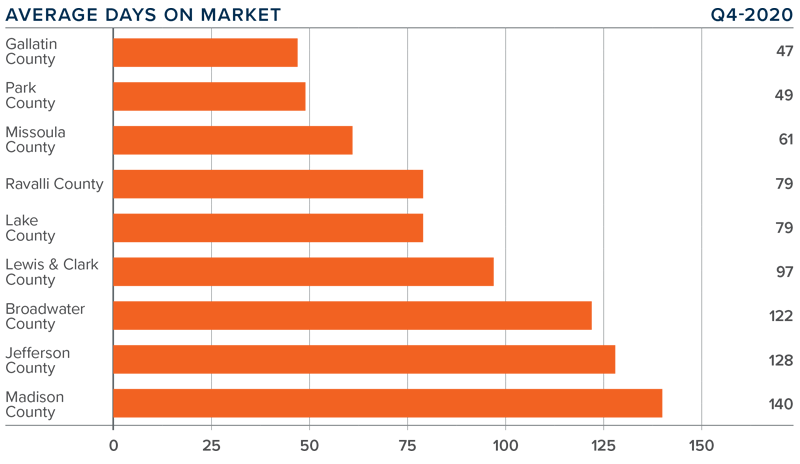
❱ The average number of days it took to sell a home dropped 28 days compared to the final quarter of 2019.

❱ Homes sold fastest in Gallatin and Park counties and slowest in Madison County. Even with the overall drop in market time, it took longer to sell a home in Lewis & Clark, Broadwater, and Jefferson counties than it did a year ago.

❱ During the quarter, it took an average of 89 days to sell a home in the region.

❱ Market time dropped eight days compared to the third quarter of 2020.

A bar graph showing the average days on market for homes in various Montana counties.

Conclusions

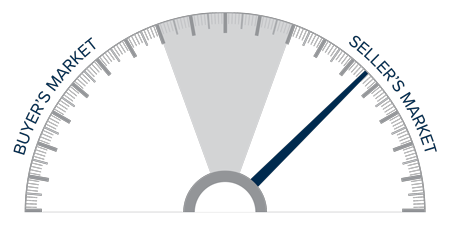
A speedometer graph indicating a seller's market in Montana.

This speedometer reflects the state of the region’s real estate market using housing inventory, price gains, home sales, interest rates, and larger economic factors.

The economy is recovering nicely, and the housing market is performing very well—if you are a home seller! Price growth is solid due to the lack of homes for sale. I am looking for inventory levels to rise in 2021, which, in concert with mortgage rates that seem to have bottomed out, should mean that price growth will taper somewhat.

It remains a seller’s market, and, given the factors described above, I have moved the needle a little further in their favor.


About Matthew Gardner

Matthew Gardner - Chief Economist for Windermere Real Estate.

As Chief Economist for Windermere Real Estate, Matthew Gardner is responsible for analyzing and interpreting economic data and its impact on the real estate market on both a local and national level. Matthew has over 30 years of professional experience both in the U.S. and U.K.

In addition to his day-to-day responsibilities, Matthew sits on the Washington State Governors Council of Economic Advisors; chairs the Board of Trustees at the Washington Center for Real Estate Research at the University of Washington; and is an Advisory Board Member at the Runstad Center for Real Estate Studies at the University of Washington where he also lectures in real estate economics.

Market News February 2, 2021

Q4 2020 Idaho Real Estate Market Update

The following analysis of select counties of the Idaho real estate market is provided by Windermere Real Estate Chief Economist Matthew Gardner. We hope that this information may assist you with making better-informed real estate decisions. For further information about the housing market in your area, please don’t hesitate to contact your Windermere agent.


Regional Economic Overview

Along with the rest of the country, the Idaho economy and its employment levels were significantly impacted by COVID-19. Though 83,100 jobs were lost, the recovery continues, with all but 3,400 of the jobs lost having returned. With this recovery in employment, the unemployment rate, which peaked at 11.8% in April, now stands at a respectable 4.8%. Although the direction is very positive, I am continuing to temper my enthusiasm because Idaho saw new COVID-19 cases rise in December. If this continues, the pace of the job recovery may slow.

idaho Home Sales

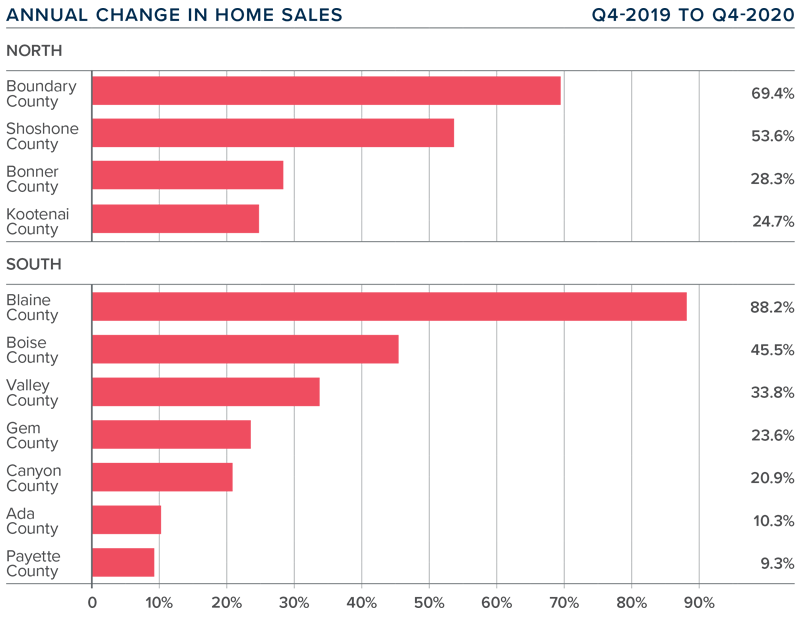
❱ During the final quarter of 2020, 7,282 homes were sold. This represents a very significant year-over-year increase of 19.4%.

❱ In the southern markets, sales also rose in all counties. Blaine County saw a remarkable increase: the number of transactions there was up 88%. Double-digit growth was seen in all counties other than Payette.

❱ Year-over-year sales growth was positive in all the Northern Idaho counties contained in this report. Boundary County saw significant growth. Overall, the region saw double-digit growth.

❱ Pending sales slowed compared to the third quarter, but I attribute this to seasonality. Listing activity was 50% lower than in the fourth quarter of 2019, which certainly frustrated would-be buyers.

A bar graph showing the annual change in home sales for various counties in Idaho.

idaho Home Prices

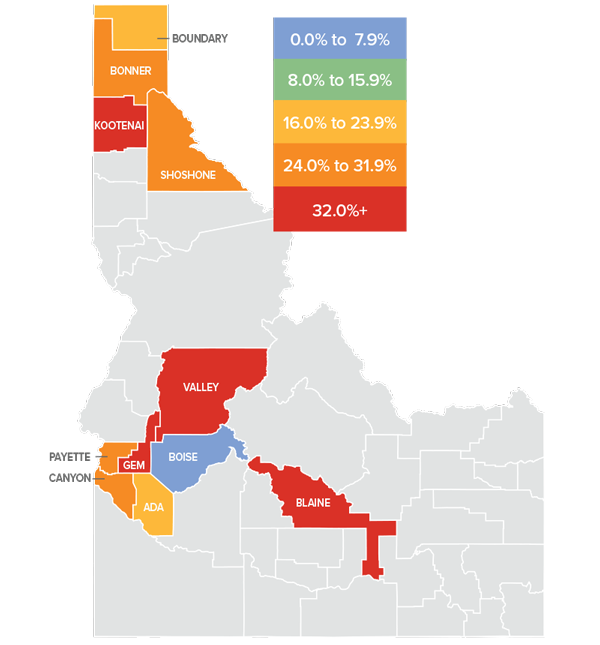
A map showing the real estate market percentage changes in various Idaho counties.

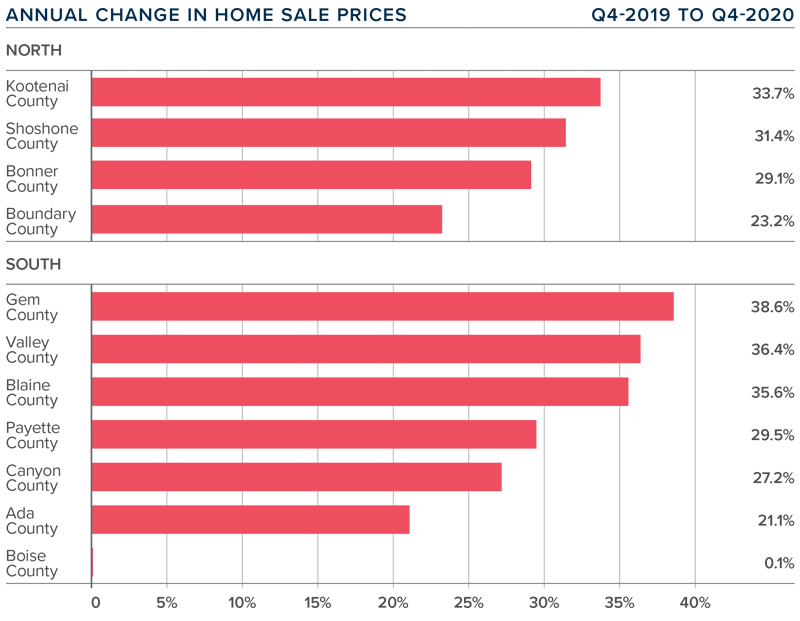
❱ The average home price in the region rose a very significant 29% year-over-year to $496,679.

❱ In Northern Idaho, prices rose significantly in Kootenai County, but all counties saw double-digit gains. Southern Idaho price growth was equally impressive, with Blaine County standing out with an average home sale price over $1.2 million.

❱ Prices rose in all Northern and Southern Idaho counties covered by this report.

❱ As mentioned above, inventory levels remain an issue. As much as I would like to say they will increase early in the spring, I am afraid that may not be the case.

A bar graph showing the annual change in home sale prices for various counties in Idaho.

Days on Market

❱ It took an average of 100 days to sell a home in Northern Idaho, and 45 days in the southern part of the state covered by this report.

❱ The average number of days it took to sell a home in the region dropped ten days compared to the fourth quarter of 2019.

❱ In Northern Idaho, days on market dropped in all counties other than Shoshone, where market time rose by 19 days. In Southern Idaho, market time dropped in all counties other than Blaine, where it took 25 more days to sell a home than in the final quarter of 2019.

❱ Homes sold fastest in Canyon and Ada counties in the southern part of the State. Sales were fastest in Boundary County in the northern part of the state.

A bar graph showing the average days on market for home in various Idaho counties.

Conclusions

A speedometer graph indicating a seller's market in Idaho.

This speedometer reflects the state of the region’s real estate market using housing inventory, price gains, home sales, interest rates, and larger economic factors.

Demand for housing remains strong, and sales are only being limited by the lack of homes on the market. The economy continues to improve, and buyers are still very active. The only thing missing are more homes to buy, which has led prices to rise very significantly. With buyer demand continuing to far exceed supply, I am moving the needle more in favor of sellers.


About Matthew Gardner

Matthew Gardner - Chief Economist for Windermere Real Estate.

As Chief Economist for Windermere Real Estate, Matthew Gardner is responsible for analyzing and interpreting economic data and its impact on the real estate market on both a local and national level. Matthew has over 30 years of professional experience both in the U.S. and U.K.

In addition to his day-to-day responsibilities, Matthew sits on the Washington State Governors Council of Economic Advisors; chairs the Board of Trustees at the Washington Center for Real Estate Research at the University of Washington; and is an Advisory Board Member at the Runstad Center for Real Estate Studies at the University of Washington where he also lectures in real estate economics.
More February 1, 2021

Black History Month

How Black History Month Began 

In 1915, American historian Carter G. Woodson and minister Jesse E. Moorland founded what is now the Association for the Study of African American Life and History® (ASALH) to recognize and celebrate the accomplishments of African Americans and to encourage studying the history of Black people. In 1926, the ASALH debuted what was then called “Negro History Week” to bring awareness to their mission. The event took place during the second week of February, coinciding with the birthdays of Abraham Lincoln (February 12) and Frederick Douglass (February 14). It continued to grow through the decades and in 1969, Black History Month was first proposed by the Black United Students at Kent State University. Years later, in 1976, President Gerald Ford decreed Black History Month be observed nationally. Since then, every President has recognized February as Black History Month (also known as African American History Month).

Black History Month 2021

Black History Month’s first official theme was “Civilization: A World Achievement” in 1928. Since then, the annual themes reflect changes of social movements’ impact on ideas of race, how the Black community’s aspirations have evolved over time, and how those of African descent living in the United States view themselves. The theme for 2021 is “The Black Family: Representation, Identity, and Diversity.” For more information on this year’s theme, past themes, and more on Black History Month, visit asahl.org.
In Real Estate

In the real estate industry, methods of redlining and steering have historically prevented members of the Black community from building wealth through home ownership. At Windermere, we are committed to doing our part to address discrimination, racism, and inequity within our company and the real estate industry. There are a number of initiatives in place throughout the industry to support diversity and inclusion, commit to fair housing, and make home ownership fairer and more equitable than it has been in the past. For more information and resources, visit the National Association of REALTORS® Fair Housing and Diversity, Equity, & Inclusion pages.

Market News February 1, 2021

Q4 2020 Eastern Washington Real Estate Market Update

The following analysis of the Eastern Washington real estate market is provided by Windermere Real Estate Chief Economist Matthew Gardner. We hope that this information may assist you with making better-informed real estate decisions. For further information about the housing market in your area, please don’t hesitate to contact your Windermere agent.


Regional Economic Overview

The Eastern Washington market lost more than 44,000 jobs as a result of COVID-19, but 27,500 of them have returned. The unemployment rate, which peaked at 14.7%, continues to decline and now stands at a fairly respectable 6.6%. In the third quarter Gardner Report, I suggested that the job recovery was likely to start to slow. This proved accurate, as jobs were lost in all counties contained in this report in November (the most recent month that data is available). That said, I maintain my position that the pace of jobs returning will increase, but not until a vaccine for COVID-19 is freely available.

eastern washington Home Sales

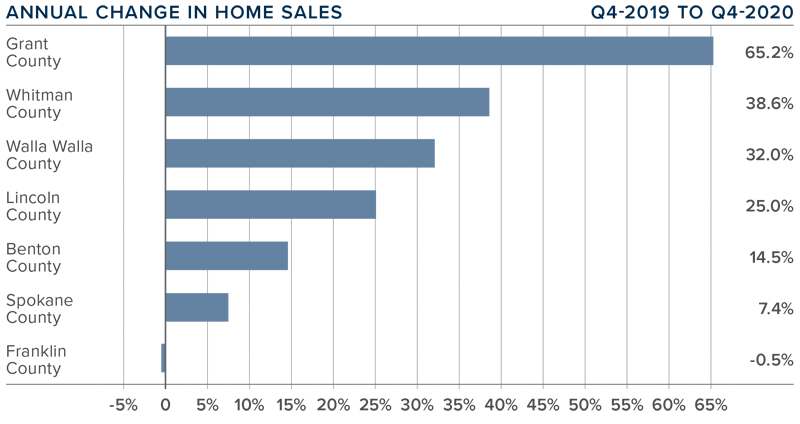
❱ Home sales throughout Eastern Washington rose by a significant 14% compared to the same quarter in 2019, with a total of 3,890 homes trading hands.

❱ The average number of homes for sale in the quarter remained well below normal levels (-52%) compared to a year ago.

❱ Sales activity rose in all counties but one, with significant increases in most markets. The one market where sales activity dropped was Franklin County, but the decrease was very minimal.

❱ Pending home sales dropped in the final quarter versus Q3, but this can be put down to seasonality. Overall, demand remains very robust.

A bar graph showing the annual change in home sales for various counties in Eastern Washington.

eastern washington Home Prices

A map showing the real estate market percentage changes in various Eastern Washington counties.

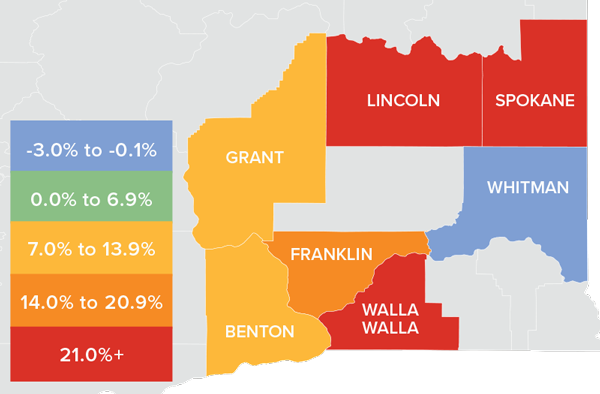
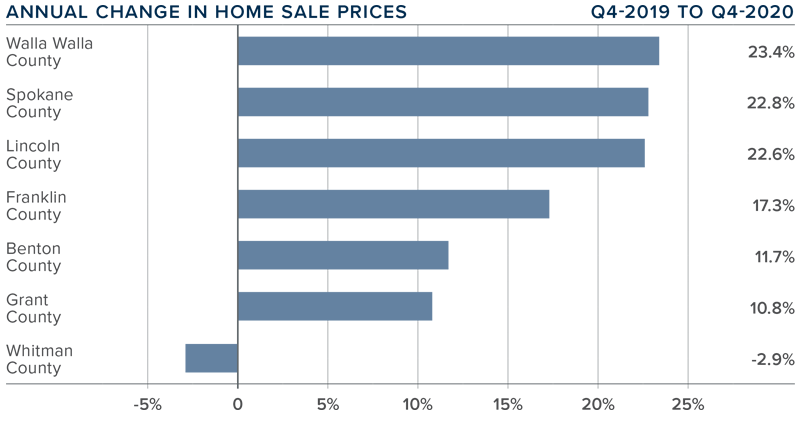
❱ Year-over-year, the average home price in Eastern Washington rose a significant 18.1% to $350,486. Home prices were also 2.1% higher than in the third quarter of 2020.

❱ Demand is clearly in place, as proven by the increase in sales. Limited supply is making the market very competitive, which, in turn, is pushing prices higher.

❱ Prices rose in every county other than Whitman, though I am not concerned about the declines in this market. Walla Walla, Spokane, and Lincoln counties saw very significant increases.

❱ The takeaway is that average home-price growth in Eastern Washington remains well above the long-term average due to inventory constraints and very favorable mortgage rates.

A bar graph showing the annual change in home sale prices for various counties in Eastern Washington.

Days on Market

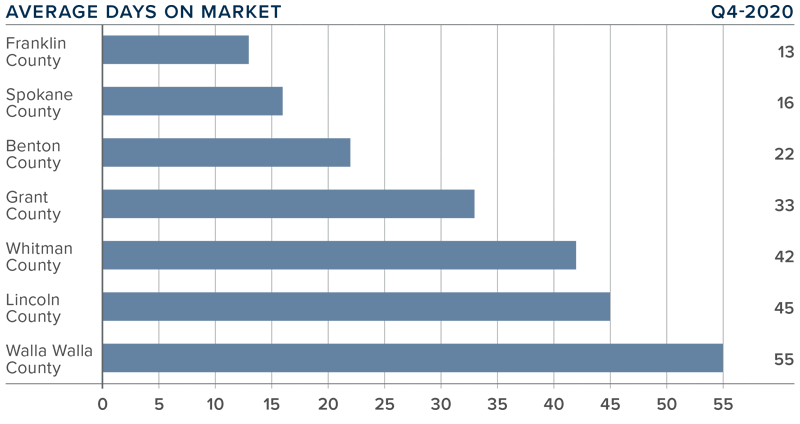
❱ The average time it took to sell a home in Eastern Washington in the final quarter of 2020 was 32 days.

❱ During the fourth quarter, it took eight fewer days to sell a home in Eastern Washington than it did a year ago.

❱ All markets, other than Walla Walla (where the length of time increased seven days), saw days-on-market drop compared to the fourth quarter of 2019.

❱ It took six fewer days to sell a home in the fourth quarter than it did during the previous quarter.

A bar graph showing the average days on market for homes in various Eastern Washington counties.

Conclusions

A speedometer graph indicating a seller's market in Eastern Washington.

This speedometer reflects the state of the region’s real estate market using housing inventory, price gains, home sales, interest rates, and larger economic factors.

Demand has clearly not been impacted by COVID-19, mortgage rates are still very favorable, and limited supply is causing the region’s housing market to remain incredibly active. Because of these conditions, I am moving the needle even further in favor of sellers.


About Matthew Gardner

Matthew Gardner - Chief Economist for Windermere Real Estate

As Chief Economist for Windermere Real Estate, Matthew Gardner is responsible for analyzing and interpreting economic data and its impact on the real estate market on both a local and national level. Matthew has over 30 years of professional experience both in the U.S. and U.K.

In addition to his day-to-day responsibilities, Matthew sits on the Washington State Governors Council of Economic Advisors; chairs the Board of Trustees at the Washington Center for Real Estate Research at the University of Washington; and is an Advisory Board Member at the Runstad Center for Real Estate Studies at the University of Washington where he also lectures in real estate economics.