Market News October 27, 2022

Q3 2022 Northwest Oregon and Southwest Washington Real Estate Market Update

The following analysis of select counties of the Northwest Oregon and Southwest Washington real estate market is provided by Windermere Real Estate Chief Economist Matthew Gardner. We hope that this information may assist you with making better-informed real estate decisions. For further information about the housing market in your area, please don’t hesitate to contact your Windermere Real Estate agent.


Regional Economic Overview

The Oregon counties contained in this report continue to add jobs, but employment levels are still down 56,300 jobs from the pre-pandemic peak. As I mentioned in the second quarter Gardner Report, this is mainly due to the Portland market: Multnomah County employment levels are still down by over 83,000 jobs. Despite this, the unemployment rate within the Oregon counties in this report came in at a very healthy 3.4%, which is down from the pandemic peak of 12.8%.

Southwest Washington saw a full recovery by the summer of 2021, but the job market in that region is considerably smaller. That said, more jobs continue to be added, with employment levels now 12,800 positions higher than the pre-pandemic peak. During the third quarter, the unemployment rate was 4.6%, which is down from 14.2% at the start of the pandemic.

Northwest Oregon and Southwest Washington Home Sales

In the third quarter of 2022, 12,549 homes sold, which is 26.4% lower than a year ago and 13.8% lower than in the second quarter of 2022.

Listing activity has risen across the region, but the current level is still well below the long-term average. Lower sales can be attributed to higher financing costs and lower affordability.

Year over year, sales rose in three counties but fell in the balance of the market. Compared to the second quarter of this year, sales rose in Benton, Clatsop, Cowlitz, and Klickitat counties.

The region is acting like most across the country. More homes are becoming available, but many would-be buyers are waiting for mortgage rates to stabilize or drop, which is impacting sales.
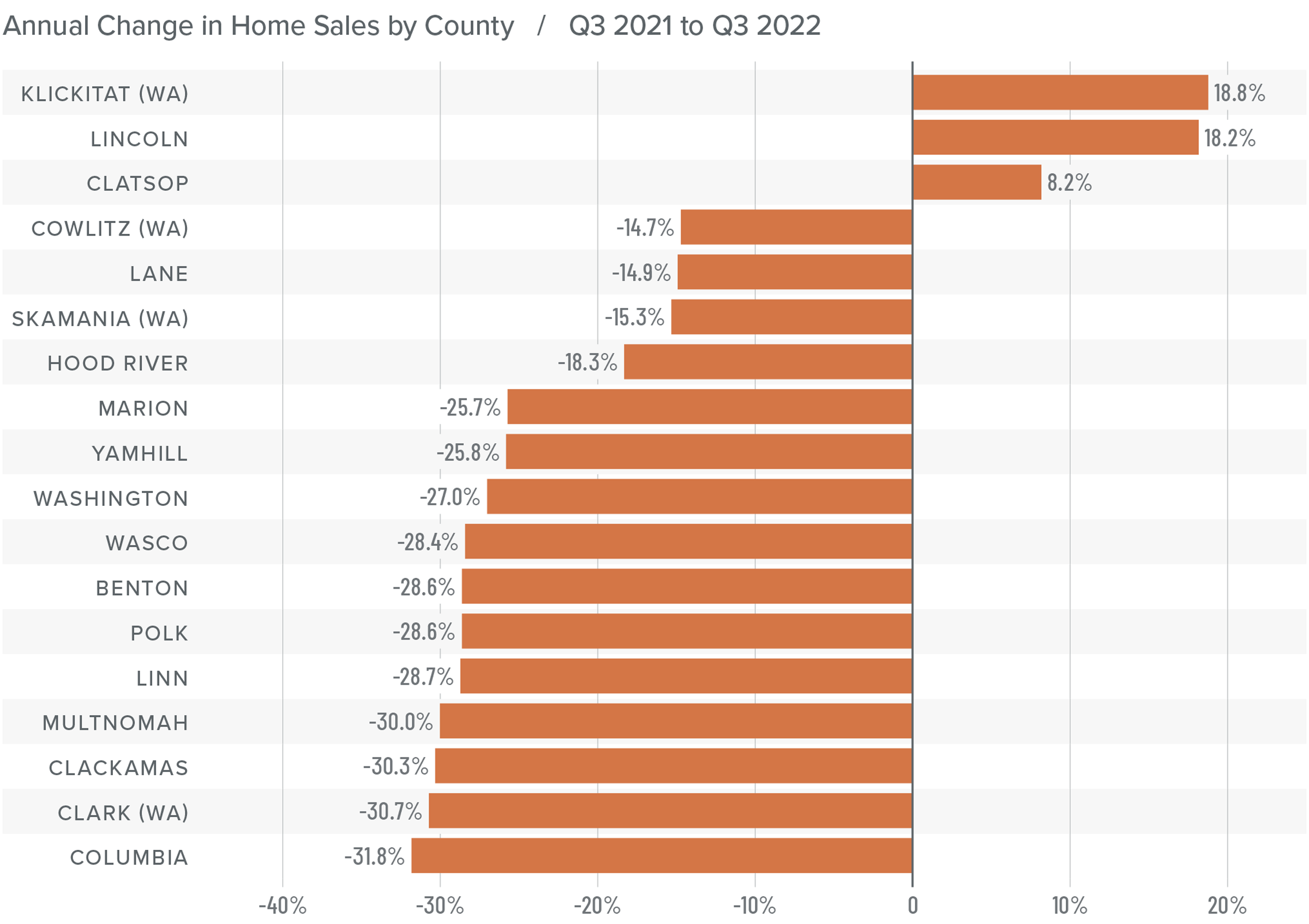
A bar graph showing the annual change in home sales for various counties in Northwest Oregon and Southwest Washington from Q3 2021 to Q3 2022. All counties have a negative percentage year-over-year change except for three: Klickitat at 18.8%, Lincoln at 18.2%, and Clatsop at 8.2%.. Here are the counties with a negative percentage change: Cowlitz at -14.7%, Lane at -14.9%, Skamania -15.3%, Hood River -18.3%, Marion -25.7%, Yamhill -25.8%, Washington -27%, Wasco -28.4%, Benton and Polk -28.6%, Linn -28.7%, Multnomah -30%, Clackamas -30.3%, Clark -30.7%, and Columbia -31.8%.

Northwest Oregon and Southwest Washington Home Prices

The average home sale price in the region rose 5% year over year to $566,595. Prices were 3.9% lower than in the second quarter of this year.

Relative to the second quarter of 2022, average prices rose in Benton, Clatsop, Lincoln, and Wasco counties. They remained static in Marion County but fell in the balance of the markets.

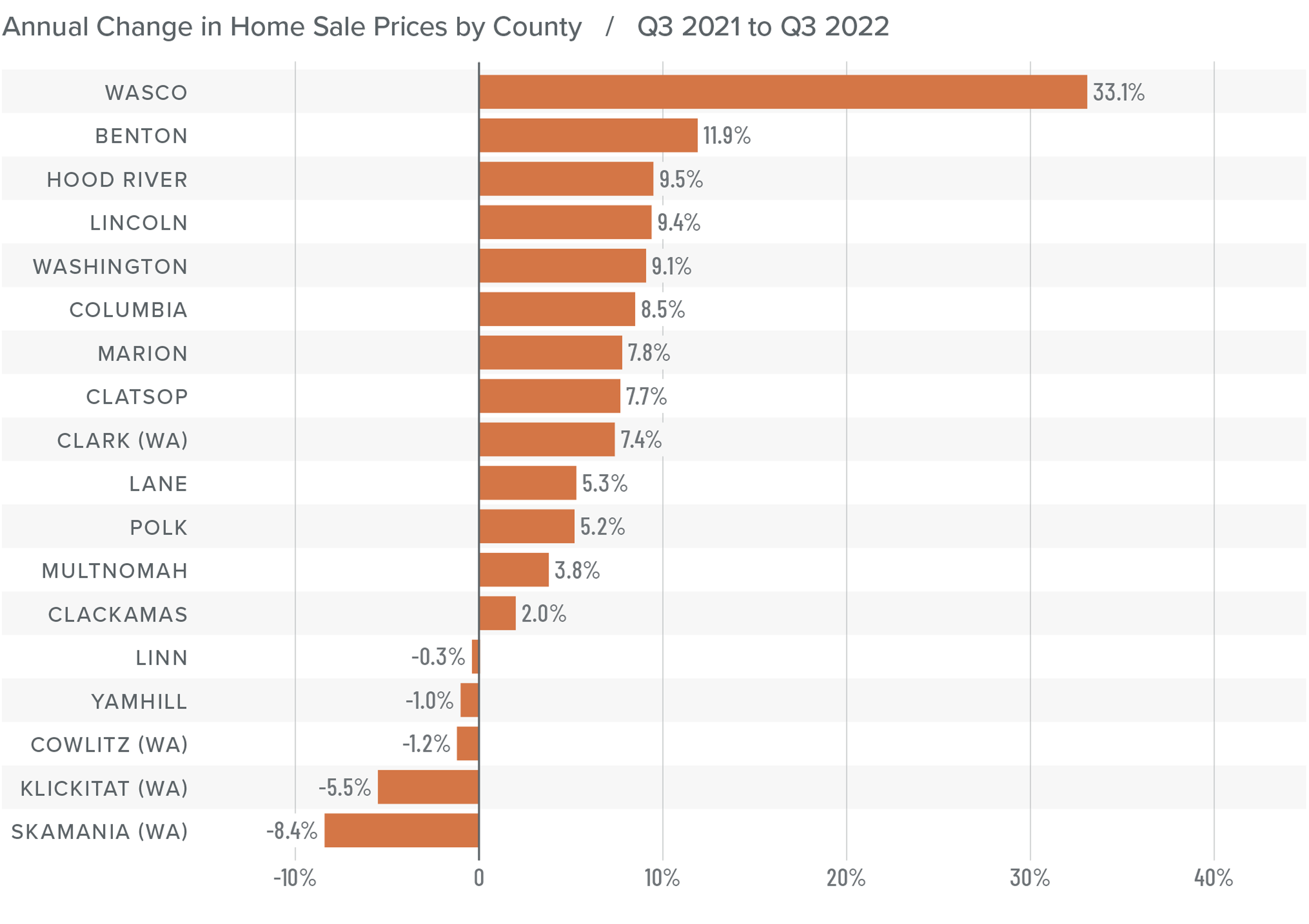
All but five counties saw average sale prices rise compared to a year ago, but the pace of growth is certainly slowing.

Clearly, rising mortgage rates have started to impact home prices. Median list prices are still rising in almost all markets compared to the second quarter, which suggests that sellers continue to be confident. That said, I expect to see either list prices start to soften or sellers take their homes off the market until they see conditions improving.
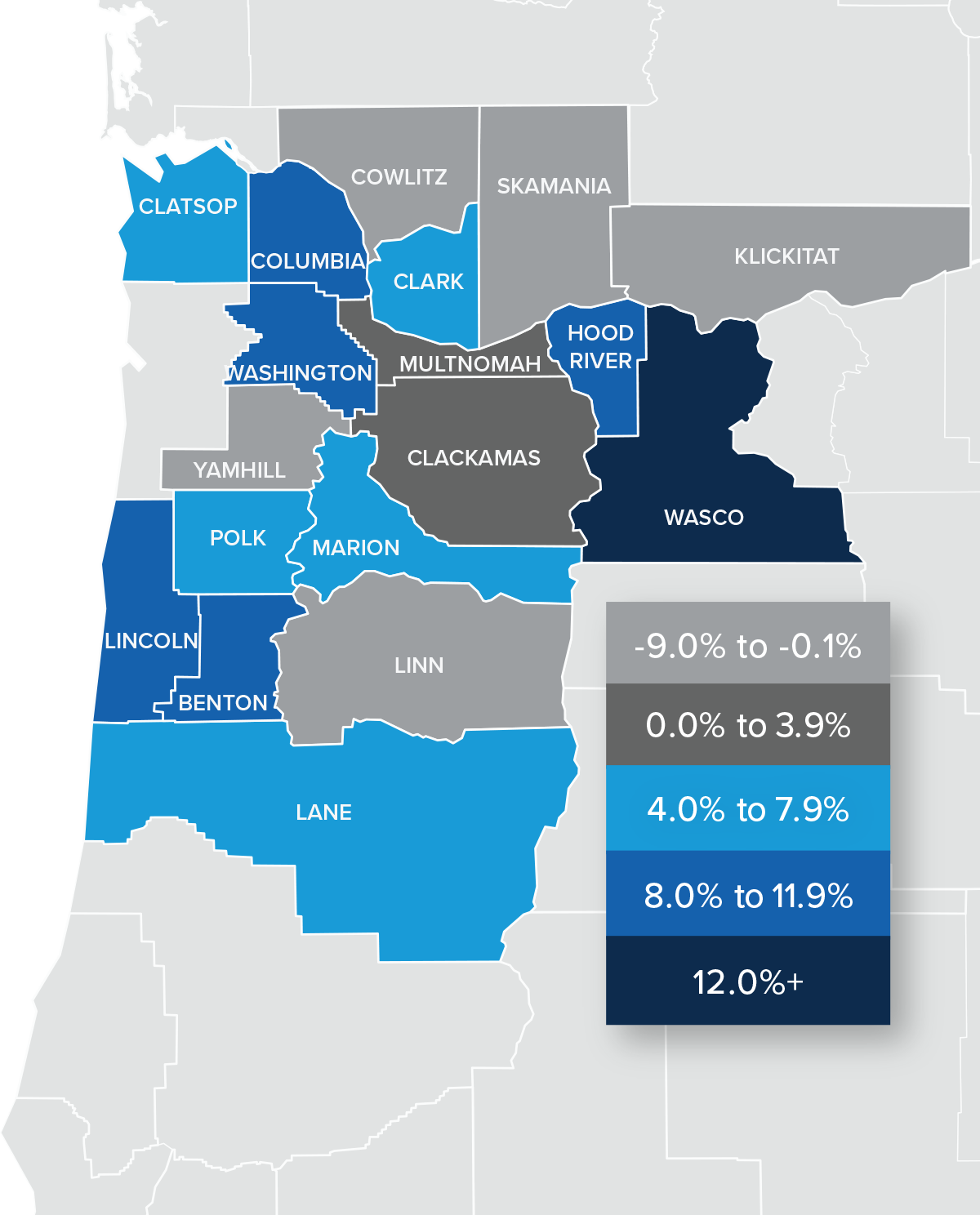
A map showing the real estate home prices percentage changes for various counties in Northwest Oregon and Southwest Washington. Different colors correspond to different tiers of percentage change. Wasco County is the only county with a percentage change in the 12%+ range. Lincoln, Benton, Columbia, Washington, and Hood River counties are in the 8% to 11.9% change range, Lane, Marion, Polk, Clark, and Clatsop are in the 4% to 7.9% change range, Multnomah and Clackamas counties are in the 0% to 3.9% change range, and Cowlitz, Skamania, Klickitat, Yamhill, and Linn counties are in the -9% to -0.1% change range.

A bar graph showing the annual change in home sale prices for various counties in Northwest Oregon and Southwest Washington from Q3 2021 to Q3 2022. Wasco county tops the list at 33.1%, followed by Benton at 11.9%, Hood River at 9.5%, Lincoln at 9.4%, Washington at 9.1%, Columbia at 8.5%, Marion at 7.8%, Clatsop at 7.7%, Clark at 7.4%, Lane at 5.3%, Polk at 5.2%, Multnomah at 3.8%, Clackamas at 2%, Linn at -0.3%, Yamhill at -1%, Cowlitz at -1.2%, Klickitat at -5.5%, and Skamania at -8.4%.

Mortgage Rates

This remains an uncertain period for mortgage rates. When the Federal Reserve slowed bond purchases in 2013, investors were accused of having a “taper tantrum,” and we are seeing a similar reaction today. The Fed appears to be content to watch the housing market go through a period of pain as they throw all their tools at reducing inflation.

As a result, mortgage rates are out of sync with treasury yields, which not only continues to push rates much higher, but also creates violent swings in both directions. My current forecast calls for rates to peak in the fourth quarter of this year before starting to slowly pull back. That said, they will remain in the 6% range until the end of 2023.
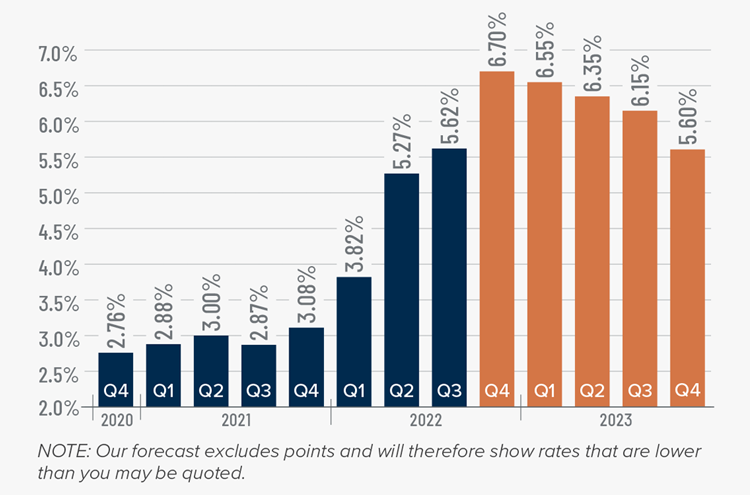
A bar graph showing the mortgage rates from 2020 to the present, as well as Matthew Gardner's forecasted mortgage rates through Q4 2023. After the 5.62% figure in Q3 2022, he forecasts mortgage rates continuing to climb to 6.7% in Q4 2022, 6.55% in Q1 2023, 6.35% in Q2 2023, 6.15% in Q3 2023, and 5.60% in Q4 2023.

Northwest Oregon and Southwest Washington Days on Market

The average number of days it took to sell a home in the region rose eight days compared to the same period a year ago. It took five more days for homes to sell compared to the second quarter of this year.

The average time it took to sell a home in the third quarter of 2022 was 38 days.

Lincoln County was the only market where the length of time it took for a home to sell fell compared to the same period a year ago. Compared to the second quarter of 2022, market time fell in Hood River, Linn, and Skamania counties.

Although days on market have risen, they are still well below the pre-pandemic level. As mentioned earlier, uncertainty surrounding the housing market (mainly due to mortgage rates) is making buyers significantly more cautious. I expect this to change as we move into the new year.
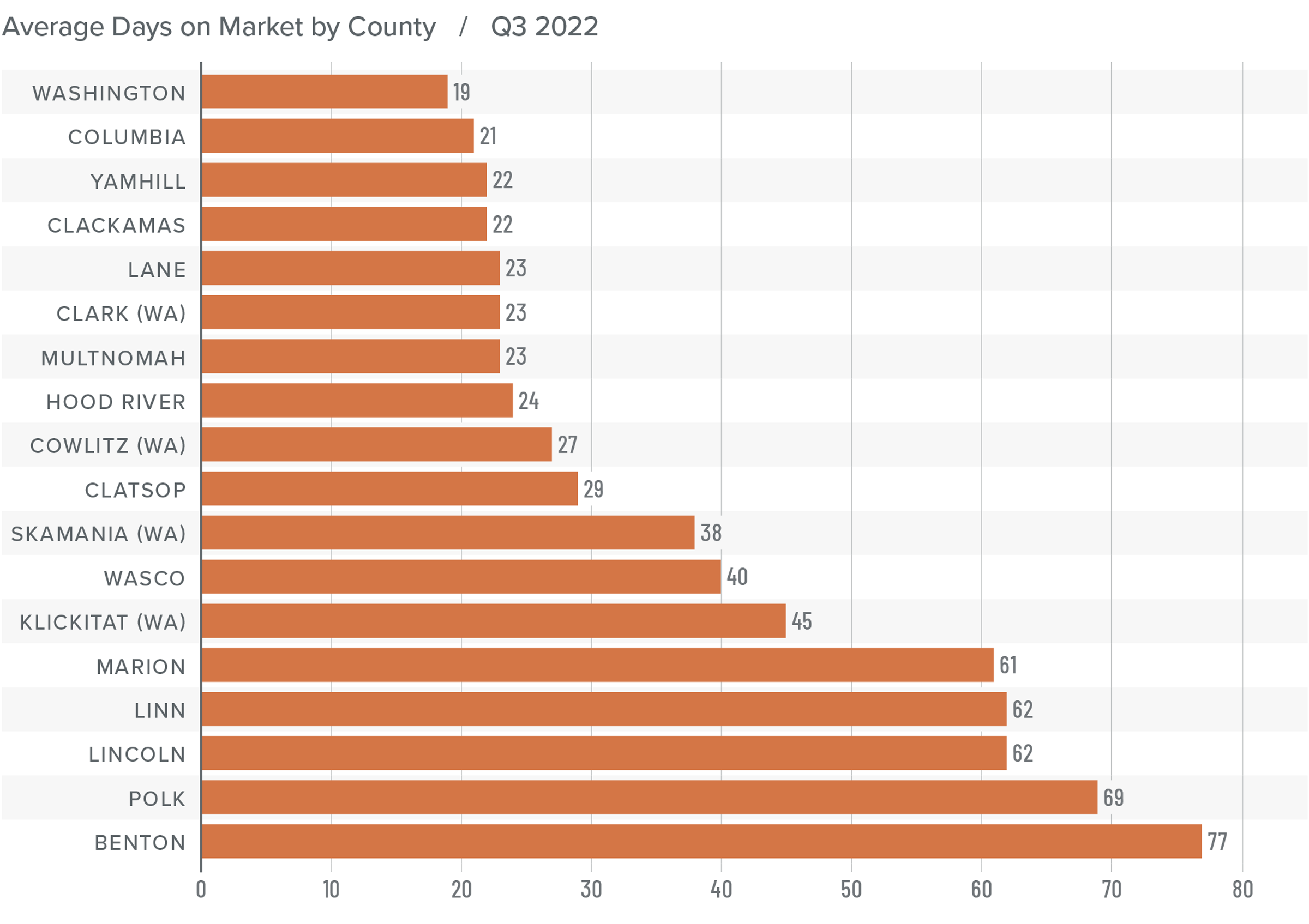
A bar graph showing the average days on market for homes in various counties in Northwest Oregon and Southwest Washington for Q3 2022. Washington County has the lowest DOM at 19, followed by Columbia at 21, Yamhill and Clackamas at 22, Lane, Clark, and Multnomah at 23, Hood River at 24, Cowlitz at 27, Clatsop at 29, Skamania at 38, Wasco at 40, Klickitat at 45, Marion at 61, Linn and Lincoln at 62, Polk at 69, and Benton at 77.

Conclusions

This speedometer reflects the state of the region’s real estate market using housing inventory, price gains, home sales, interest rates, and larger economic factors.

Although the labor market is slowly recovering, the specter of an economic slowdown in 2023 is starting to weigh on the market. The rapid pace of home-price growth in 2020 and 2021 was never going to last forever. The market is currently going through a period of reversion, which will slow it to a more sustainable pace. Although this may be painful to watch for some, it is necessary. Sellers have seen the value of their homes skyrocket over the past two years, so even if we experience a modest downturn in home prices, they are still in a very good situation. I would add that 58% of homeowners with a mortgage in Northwest Oregon/ Southwest Washington have more than 50% equity in their homes.
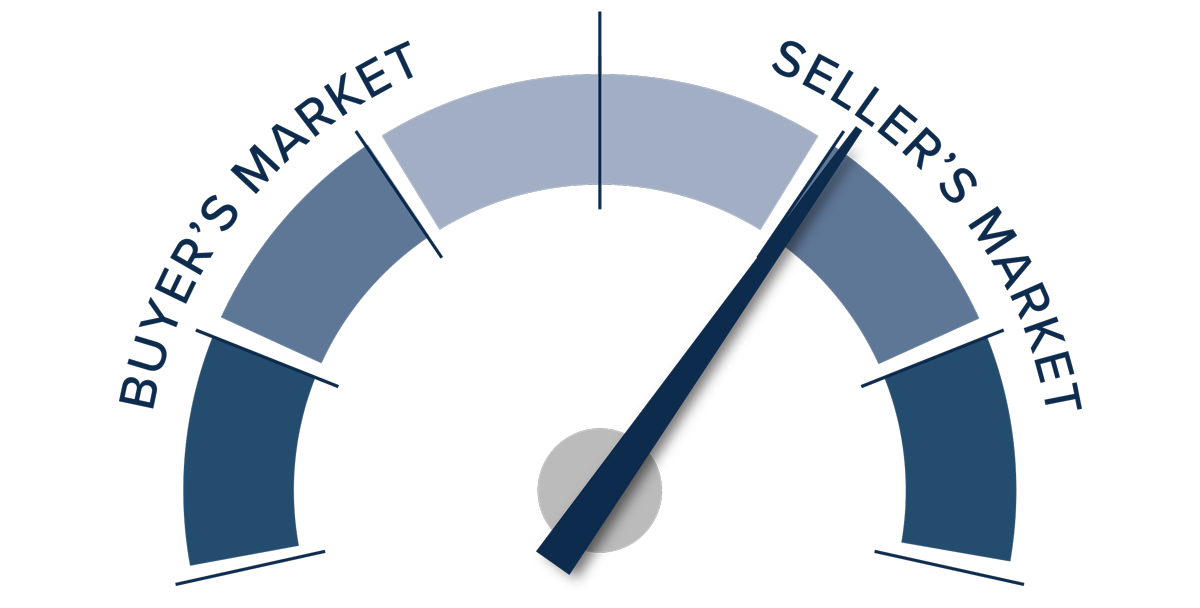
A speedometer graph indicating what is barely a seller's market in Northwest Oregon and Southwest Washington in Q3 2022.

All that considered, I am moving the needle more toward balance, but until buyers and sellers start to feel more confident in the local and national economy, the market is likely to continue experiencing uncertainty. This will lead to lower sales activity and put downward pressure on prices.

About Matthew Gardner

Matthew Gardner - Chief Economist for Windermere Real Estate

As Chief Economist for Windermere Real Estate, Matthew Gardner is responsible for analyzing and interpreting economic data and its impact on the real estate market on both a local and national level. Matthew has over 30 years of professional experience both in the U.S. and U.K.

In addition to his day-to-day responsibilities, Matthew sits on the Washington State Governors Council of Economic Advisors; chairs the Board of Trustees at the Washington Center for Real Estate Research at the University of Washington; and is an Advisory Board Member at the Runstad Center for Real Estate Studies at the University of Washington where he also lectures in real estate economics.

Market News October 26, 2022

Q3 2022 Western Washington Real Estate Market Update

The following analysis of select counties of the Western Washington real estate market is provided by Windermere Real Estate Chief Economist Matthew Gardner. We hope that this information may assist you with making better-informed real estate decisions. For further information about the housing market in your area, please don’t hesitate to contact your Windermere Real Estate agent.


Regional Economic Overview

The Western Washington labor market continues to expand. The addition of 110,000 jobs over the past 12 months represents an impressive increase of 4.9%. All but seven counties have recovered completely from their pandemic job losses. In total, the region has recovered all the jobs lost and has added an additional 30,000 new positions. The regional unemployment rate in August was 3.8%. This is .2% higher than at the end of the second quarter. That said, county data is not seasonally adjusted, which is likely the reason for the modest increase. The labor force has not expanded at its normal pace, which is starting to impact job growth. Although the likelihood of a recession starting at some point this winter has risen, I am not overly concerned at this point; however, I anticipate businesses may start to taper hiring if they feel demand for their goods and services is softening.

Western Washington Home Sales

In the third quarter, 19,455 homes traded hands, representing a drop of 29.2% from the same period a year ago. Sales were 15.4% lower than in the second quarter of this year.

Listing activity continues to increase, with the average number of homes for sale up 103% from a year ago and 61% higher than in the second quarter of 2022.

Year over year, sales fell across the board, but when compared to second quarter they were higher in Mason, Cowlitz, Jefferson, and Clallam counties.

Pending sales (demand) outpaced listings (supply) by a factor of 1:6. This ratio has been dropping for the past three quarters and indicates a market moving back toward balance. The only question is whether it will overshoot and turn into a buyer’s market.

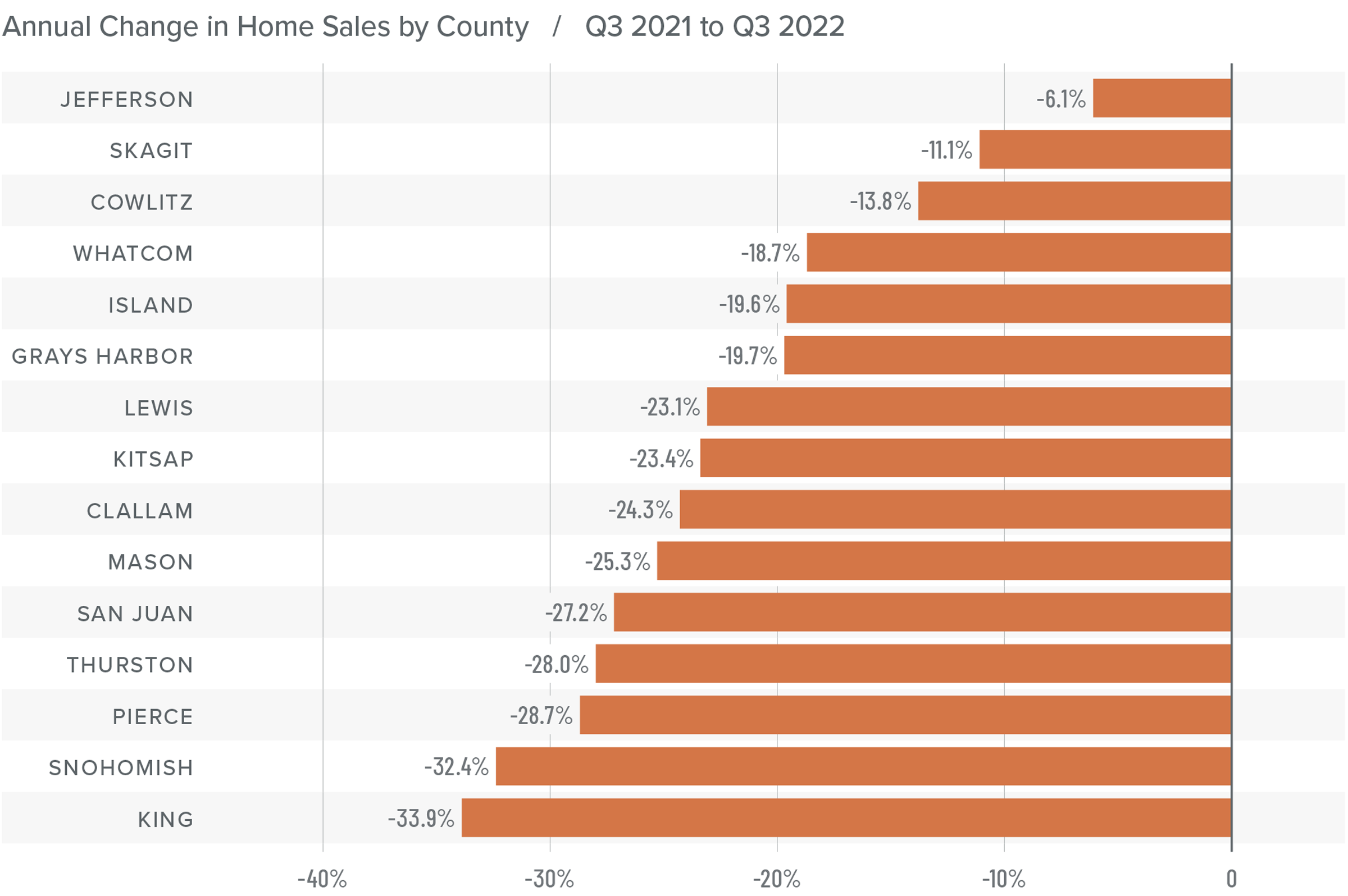
A bar graph showing the annual change in home sales for various counties in Western Washington from Q3 2021 to Q3 2022. All counties have a negative percentage year-over-year change. Here are the totals: Jefferson at -6.1%, Skagit at -11.1%, Cowlitz -13.8%, Whatcom -18.7%, Island -19.6%, Grays Harbor -19.7%, Lewis -23.1%, Kitsap -23.4%, Clallam -24.3%, Mason -25.3%, San Juan -27.2%, Thurston -28%, Pierce -28.7%, Snohomish -32.4%, and King -33.9%.

Western Washington Home Prices

Higher financing costs and more choice in the market continue to impact home prices. Although prices rose an average of 3.6% compared to a year ago, they were down 9.9% from the prior quarter. The current average sale price of a home in Western Washington is $748,569.

The change in list prices is a good leading indicator and we have seen a change in the market. All but two counties (Island and Jefferson) saw median list prices either static or lower than in the second quarter of 2022.

Prices rose in all but two counties, and several counties saw price growth well above their long-term averages.

With the number of homes for sale rising and list prices starting to pull back, it’s not surprising to see price growth falter. We are going through a reversion following the overstimulated market of 2020 and 2021. There will be some ugly numbers in terms of sales and prices as we move through this period of adjustment, but the pain will be temporary.

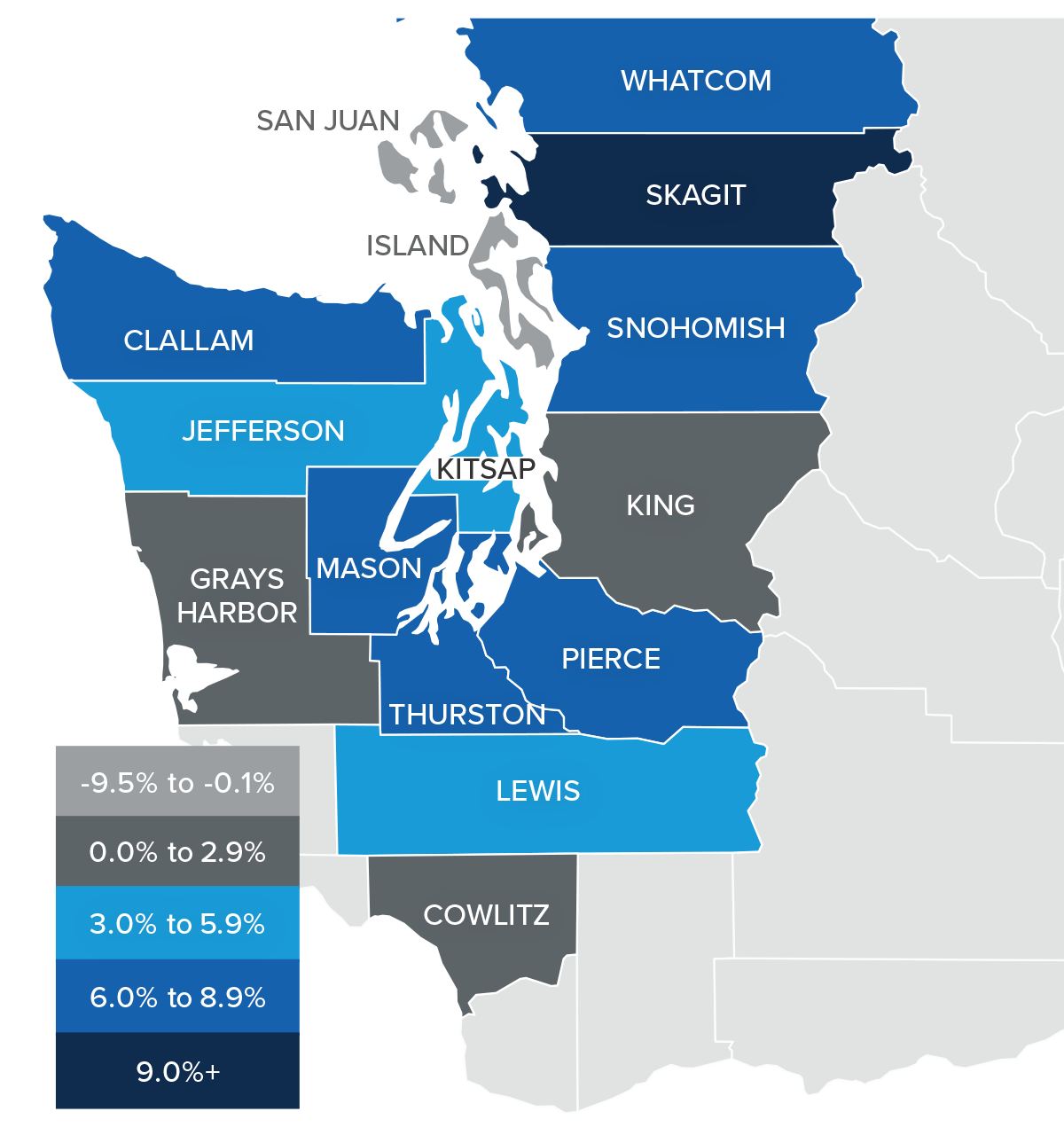
A map showing the real estate home prices percentage changes for various counties in Western Washington. Different colors correspond to different tiers of percentage change. Skagit County is the only county with a percentage change in the 9%+ range, Whatcom, Snohomish, Pierce, Thurston, Mason, and Clallam counties are in the 6% to 8.9% change range, Lewis, Kitsap, and Jefferson are in the 3% to 5.9% change range, Grays Harbor and King counties are in the 0% to 2.9% change range, and San Juan and Island counties are in the -9.5% to -0.1% change range.

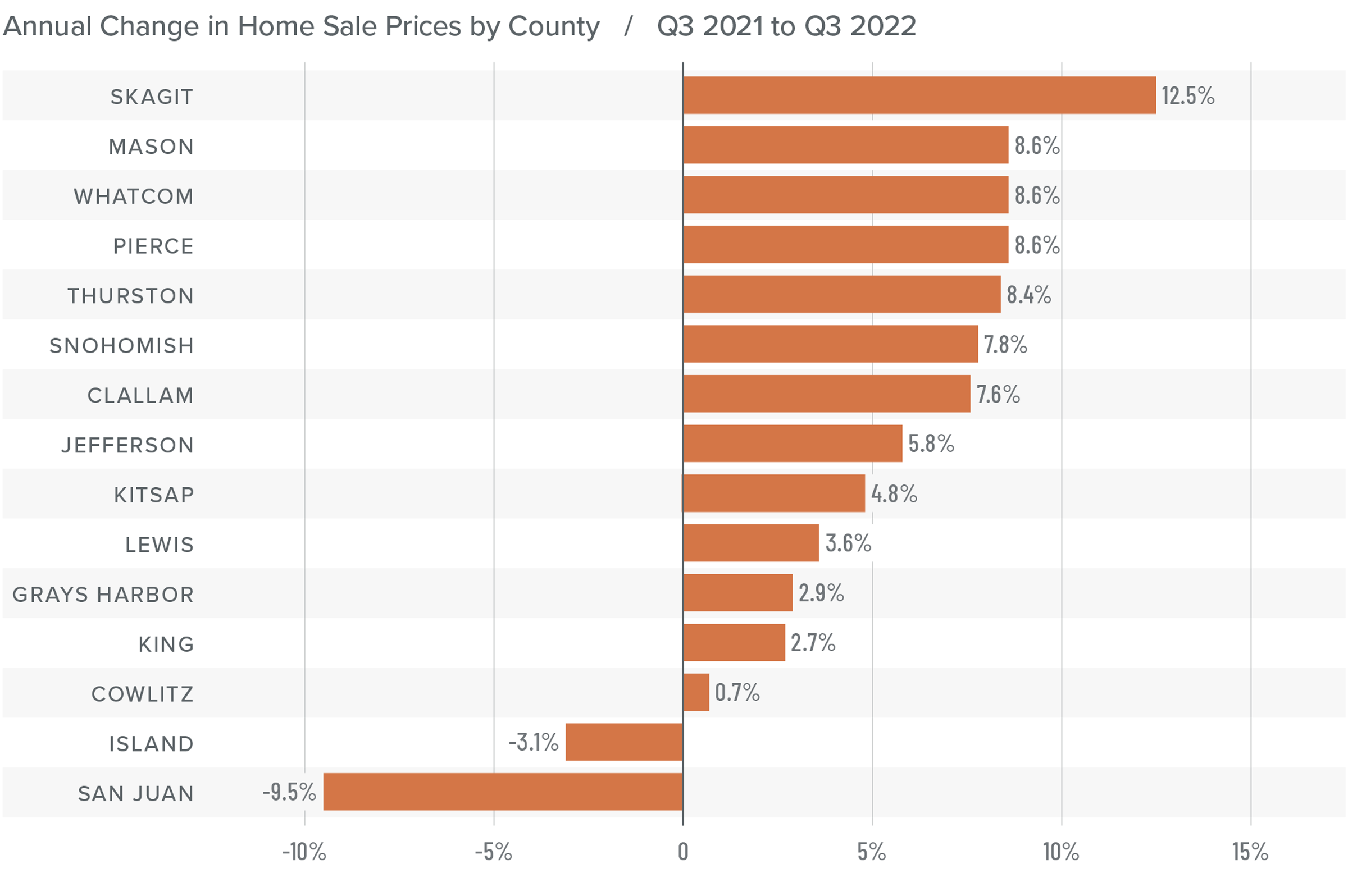
A bar graph showing the annual change in home sale prices for various counties in Western Washington from Q3 2021 to Q3 2022. Skagit county tops the list at 12.5%, followed by Mason, Whatcom, and Pierce counties at 8.6%, Thurston at 8.4%, Snohomish at 7.8%, Clallam at 7.6%, Jefferson at 5.8%, Kitsap at 4.8%, Lewis at 3.6%, Grays Harbor at 2.9%, King at 2.7%, Cowlitz at 0.7%, Island at -3.1%, and finally San Juan at -9.5%.

Mortgage Rates

This remains an uncertain period for mortgage rates. When the Federal Reserve slowed bond purchases in 2013, investors were accused of having a “taper tantrum,” and we are seeing a similar reaction today. The Fed appears to be content to watch the housing market go through a period of pain as they throw all their tools at reducing inflation.

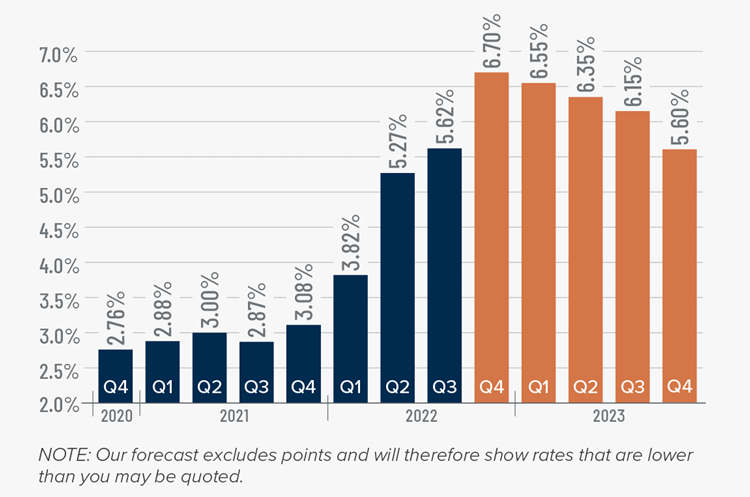
As a result, mortgage rates are out of sync with treasury yields, which not only continues to push rates much higher, but also creates violent swings in both directions. My current forecast calls for rates to peak in the fourth quarter of this year before starting to slowly pull back. That said, they will remain in the 6% range until the end of 2023.

A bar graph showing the mortgage rates from 2020 to the present, as well as Matthew Gardner's forecasted mortgage rates through Q4 2023. After the 5.62% figure in Q3 2022, he forecasts mortgage rates continuing to climb to 6.7% in Q4 2022, 6.55% in Q1 2023, 6.35% in Q2 2023, 6.15% in Q3 2023, and 5.60% in Q4 2023.

Western Washington Days on Market

It took an average of 24 days for a home to sell in the third quarter of the year. This was seven more days than in the same quarter of 2021, and eight days more than in the second quarter.

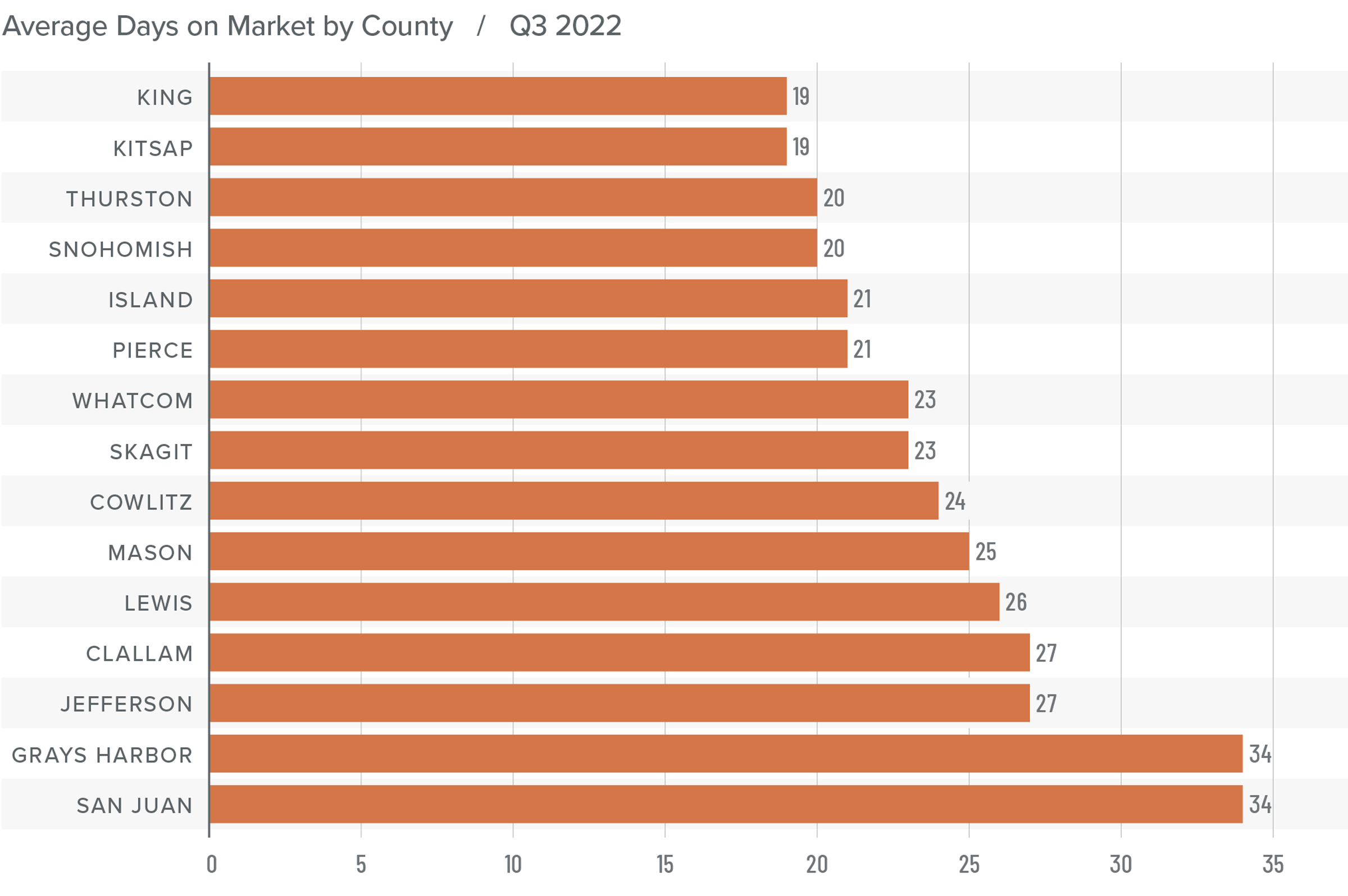
King and Kitsap counties were the tightest markets in Western Washington, with homes taking an average of 19 days to sell.

Only one county (San Juan) saw the average time on market drop from the same period a year ago. San Juan was also the only county to see market time drop between the second and third quarters of this year.

The greatest increase in market time compared to a year ago was in Grays Harbor, where it took an average of 13 more days for homes to sell. Compared to the second quarter of 2022, Thurston County saw average market time rise the most (from 9 to 20 days).

A bar graph showing the average days on market for homes in various counties in Western Washington for Q3 2022. King and Kitsap counties have the lowest DOM at 19, followed by Thurston and Snohomish at 20, Island and Pierce at 21, Whatcom and Skagit at 23, Cowlitz at 24, Mason at 25, Lewis at 26, Clallam and Jefferson at 27, and Grays Harbor and San Juan at 34.

Conclusions

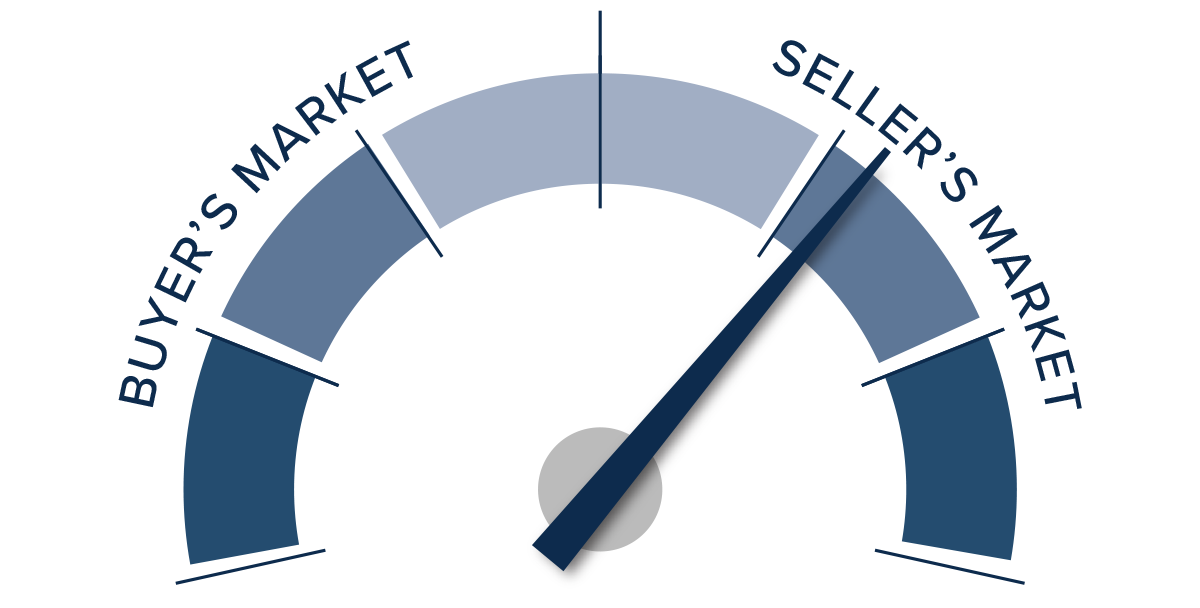
This speedometer reflects the state of the region’s real estate market using housing inventory, price gains, home sales, interest rates, and larger economic factors.

Listings are up, sales are down, and a shift toward buyers has started. After a decade of sellers dominating the market, it is far too early to say that the shift is enough to turn the market in favor of buyers, but the pendulum has started to swing in their direction. A belief that the housing market is on its way to collapsing will keep some buyers sidelined, while others may be waiting for mortgage rates to settle down. Whatever their reasons, I maintain that we will see a brief period where annual price growth will turn negative in several markets, but it is only because the market is normalizing. I certainly don’t see any systemic risk of home values falling like they did in the mid-to-late 2000s.

A speedometer graph indicating a slight seller's market in Western Washington for Q3 2022.

All things considered, I have moved the needle toward buyers, but it remains, for the time being, a seller’s market.

About Matthew Gardner

Matthew Gardner - Chief Economist for Windermere Real Estate

As Chief Economist for Windermere Real Estate, Matthew Gardner is responsible for analyzing and interpreting economic data and its impact on the real estate market on both a local and national level. Matthew has over 30 years of professional experience both in the U.S. and U.K.

In addition to his day-to-day responsibilities, Matthew sits on the Washington State Governors Council of Economic Advisors; chairs the Board of Trustees at the Washington Center for Real Estate Research at the University of Washington; and is an Advisory Board Member at the Runstad Center for Real Estate Studies at the University of Washington where he also lectures in real estate economics.
Living October 24, 2022

13 Appliance Tips & Hacks for Household Chores

Modern home appliances make our lives so much easier. They tackle dreaded household chores, saving us time and effort. There are lots of ways to use them, however, that you may not have thought of before. Here are 13 little-known tricks for getting more than your money’s worth from your appliances.

13 Appliance Tips & Hacks for Household Chores

1. Regularly Clean Toys

Regularly clean your children’s toys. Use your dishwasher to wash teething rings, small plastic toys, mouth guards, and even baseball caps. Place items on the top rack and run the dishwasher as usual with detergent (without any dirty dishes). Put smaller items in a small mesh laundry bag so that they don’t move around.

2. Clean Ceiling Fixtures

At least once or twice a year, remove and clean your glass ceiling fixtures and light covers in an empty dishwasher. Light fixtures can be a magnet for dust and cleaning them will help your lighting shine bright in all its glory. Run the dishwasher on the normal cycle.

3. Eliminate Wrinkles

To smooth out wrinkled clothes or linens left too long in the dryer, toss a damp, lint-free cloth in with them. Run the load on the lowest setting for 10 to 15 minutes. Newer dryers also feature a steam setting that removes wrinkles and refreshes clothing between wears.


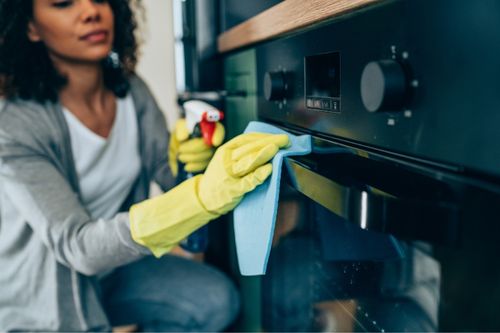
A woman wearing rubber gloves cleans and disinfects the handle of her oven range as she cleans the kitchen

Image Source: Getty Images – Image Credit: VioletaStoimenova


4. Reduce Germs in the Kitchen

Disinfect sponges and dishcloths. Kitchen sponges and dishcloths contain billions of germs. Clean and disinfect them daily by zapping them on high in the microwave for two minutes to kill germs. Disinfecting these items periodically as opposed to throwing them away can help you cut down on waste in the kitchen.

5. Clean Upholstery

Freshen up your curtains. Vacuum heavy drapes with the upholstery attachment. Use the dusting brush attachment for lighter drapes. Wash sheer curtains in the washing machine on the delicate cycle, then hang them up while they’re damp to prevent wrinkles.

6. Remove Wax from Fabric & Carpet

To get the most out of your flooring and fabrics around your home, they require cleaning. To get rid of wax on a tablecloth, place it in your freezer until the wax is hard. Then put a flat paper bag over the wax and another under the fabric. Iron the top bag with a medium-hot iron until all the wax transfers to the bag. To remove wax from a carpet or rug, place an ice pack on the spot until the wax hardens. Shatter the wax and vacuum up the chips.

7. Clean Baseboards

Along with fans, vents, and underneath furniture, baseboards are not as frequently cleaned as other more common home surfaces but cleaning them can make a big difference in how your home feels. Dusting baseboards can be a backbreaking chore. Use your vacuum cleaner and the dusting brush attachment to avoid having to bend down. Do the same to clean chair and table legs.


A man wearing rubber gloves mops his hardwood floor in his living room

Image Source: Getty Images – Image Credit: milan2099


8. Organize Your Refrigerator

Use the built-in features of your refrigerator to organize food by category. Designate certain shelves or areas for leftovers, preferably front and center, so you don’t forget they’re in there. Use special-purpose bins for their intended use: crispers for vegetables, deli trays for deli meats and cheeses, cold storage trays for meats. Newer models also feature convertible cooling zones to keep food fresh.

9. Dust Blinds

Extend the blinds fully and turn the slats to the closed position. Use the dusting brush attachment on your vacuum cleaner to clean the slats from top to bottom. Then open and re-close the slats in the opposite direction and repeat the process.

10. Clean Your Microwave & Range

The best time to clean your microwave is immediately after using it. Thanks to residual steam, all you have to do is wipe it out with a paper towel or damp sponge. To clean old messes, microwave two cups of water on high for five minutes. The steam will soften cooked-on spills, which you can wipe off with a paper towel or cloth. Your gas/electric range needs regular cleaning as well, especially if you use it frequently.


A father and his young son work together to clean the kitchen, spraying the countertops with an all-purpose cleaning solution

Image Source: Getty Images – Image Credit: PeopleImages


11. Exterminate Dust Mites

Dust mites live off human and animal dander and other household dust particles and can lower your home’s air quality. They thrive in sofas, carpets, and bedding. Use the upholstery attachment to vacuum your mattress and upholstered furniture regularly to minimize dust mites. Be sure to empty the canister in an outdoor trashcan.

12. Groom Your Pet

 After you’ve groomed your dog or cat, use the dusting brush attachment to clean up after. It’s an easy way to collect shedding fur, especially from carpeted areas or upholstery.

13. Remove Grime in Shower

Wash plastic shower curtain liners in the washing machine with hot water and detergent on the regular cycle. Throw in a small bath towel to help “scrub” mildew and soap scum off the liner. Then rehang the liner and let it air-dry. Regularly clean your bathtub and light candles to keep your bathroom smelling fresh.

For more information on home appliances, protecting your home from damage, and more, head to the Living section of our blog:

Windermere Blog – Living


­­­­­­Featured Image Source: Getty Images – Image Credit: LumiNola

Design October 21, 2022

The Footing Needs of Different Equestrian Disciplines

Horses are athletes, and athletes need proper support when they train. Owning an equestrian property comes with a long list of responsibilities and maintenance tasks, but at the end of the day, the property exists to serve its horses. The following information is a short guide to understanding which materials are typically used in different equestrian disciplines so you can ensure your horses have the support they need to train their best.

The Footing Needs of Different Equestrian Disciplines

Jumping

To maximize your horses’ training, it’s pivotal that they feel traction when taking off, landing, accelerating, and making turns. Jumping footing needs to be soft enough to cushion landings but solid enough to support horses during takeoff. Materials commonly found in jumping footing include rubber, fibers, and sand. These durable materials fit the mold for what is a physically intense equestrian discipline.

Dressage

Having the proper dressage footing will help to prevent injury amongst your horses and improve their performance. If your surface is too hard, it can create instability when your horses land, which will increase strain on their ligaments and joints over time. If it’s too soft, your horses will have to work too hard to spring up from the ground, overexerting their muscles. Aim for footing that’s the right combination of soft-but-not-too-soft and durable. Sand and felt or sand and silica are typically used for dressage arenas.

Barrel Racing

Like other disciplines, the perfect footing for barrel racing is a combination of traction and cushion. With fast acceleration and explosiveness at every turn, horses competing in barrel racing need proper support for optimum performance. Many equestrian property owners will use mixtures of sand, clay, wax coating, and synthetic fibers to coat their barrel racing arenas, often two to four inches deep. Compacted stone dust is also a common choice for a base, which allows for proper water drainage.

Boarding

If your facility is a boarding facility, you may have several different disciplines being practiced in the same arena. If this is the case, you’ll want to go with a footing that can handle the variability while limiting dust and providing ample support. Footing blends comprised of angular sand plus short and long fibers will typically do the trick. As always, check that your footing is compatible with your local climate.

For more information on preparing your equestrian property and for answers to all your questions, connect with an Equestrian Advisor:

Windermere Equestrian Advisors


­­­­­­Featured Image Source: Getty Images – Image Credit: YinYang

Selling October 19, 2022

Remodeling Projects to Avoid When Selling Your Home

It’s common for homeowners to feel compelled to remodel their homes before they sell. Renovating the spaces in your home can increase its value and help you compete with comparable listings in your area. However, some remodeling projects are more beneficial than others as you prepare to sell your home. Always talk to your agent to determine which projects are most appealing to buyers in your area.

Remodeling Projects to Avoid When Selling Your Home

When preparing to sell your home, you want to strike the right balance of upgrades. Making repairs and executing renovations will attract buyer interest, but you don’t want to dump so much cash into remodeling that you won’t be able to recoup those expenses when your home sells.

So, how do you know where to focus your efforts? Your agent is a vital resource in understanding your specific situation and will offer guidance on your remodeling efforts to sell your home for the best price. Here are a few projects sellers will want to keep off their to-do lists for the best return on investment.


A man and woman discuss a renovation project with their real estate agent as construction contractors work in the background

Image Source: Getty Images – Image Credit: skynesher


Minor Cosmetic Upgrades

Whether you’ve made small cosmetic upgrades throughout your home typically isn’t a make-or-break proposition for most buyers. Let’s say you’re questioning whether to invest in a new toilet, vanity, and shower for your primary bathroom before selling. Unless these appliances are damaged and you can repair them without spending too much, it’s okay to sell as is.

Major Upgrades with Long Timelines

For any remodeling project, your agent’s analysis will help you determine its risk/reward potential. This dynamic is heightened with major remodeling projects and home upgrades, due to their higher costs. Four of the six lowest ROI remodeling projects found in the Remodeling 2022 Cost vs. Value Report (www.costvsvalue.com)1 are upscale or major upgrades, all with roughly a 50% return on investment.

These projects come with hefty price tags and longer timelines than minor repairs and upgrades, which can complicate factors as you prepare to sell, especially if you have a deadline to get into your new home. They have the potential to temporarily displace you from the property, meaning you and your household may have to find somewhere else to stay until the project is complete.

  • The Bottom Line: To go through with a major home upgrade before you sell, its schedule must fit with your moving timeline. It should also align with buyer interest in your local market. If the project doesn’t meet these criteria, it should be avoided.

Building Code Violations

The rules dictating whether you can sell your home with building code violations vary region to region. It also depends on what the building code violation is and whether neglecting to update it is deemed a safety hazard. The buyer’s mortgage lender may also have stipulations saying that the loan may not be used to purchase a home with certain features that aren’t up to code, which could lead to them backing out of the deal.

If you’re selling an older home, you’re not obligated to update every feature that may be out of code to fit modern standards. These projects are often structural and require a significant investment. If the violation in question was built to code according to the regulations at the time, then a grandfather clause typically applies. However, you’ll need to disclose these features to the buyer.

Trendy Makeovers and Upgrades

Lastly, it’s best to avoid remodeling projects that target a specific trend in home design. Trends come and go. Timeless design is a hallmark of marketable homes because it appeals to the widest possible pool of buyers. Keep this in mind when staging your home as well. Creating an environment that’s universally appealing and depersonalized allows buyers to more easily imagine the home as their own.

Learn more about remodeling your home as you prepare to sell here:

Should I Remodel or Sell My Home As Is?


­­­­­­1: © 2022 Zonda Media, a Delaware Corporation. Complete data from the Remodeling 2022 Cost vs. Value Report can be downloaded free at www.costvsvalue.com.

Featured Image Source: Getty Images – Image Credit: eclipse_images

ArchitectureDesign October 17, 2022

What is Gothic Revival Architecture?

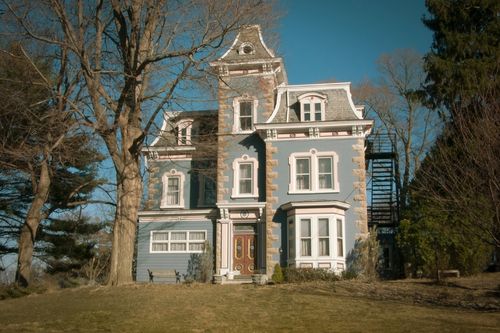
If you’ve ever seen a home like the one in the photo above, certain words like “romantic” or “medieval” may have come to mind. The architectural style shown here is Gothic Revival, a unique branch of design that grew popular in the mid-19th century. Though it fell out of fashion shortly thereafter, this signature architectural style has left a lasting impression on home design.

What is Gothic Revival Architecture?

The most defining characteristics of Gothic Revival architecture are its pointed arches, steeply pitched roofs, intricate wooden trim, and its preference for vertical elements. As opposed to the horizontal nature of the rambler home style, Gothic Revival architecture reaches skyward. Gothic Revival also borrows elements of castles, such as towers with parapets and/or spires.

The architectural style eventually took on other variants. Victorian Gothic borrowed from elements of the Victorian era, and the North American adaptation Carpenter Gothic used a Gothic influence as the basis for a new style of home design popularized in the late 19th century.


A light blue Gothic Revival home with brick trim on top of a hill on a sunny day. Corners of the home have exposed white-washed brick while the walls are light blue stucco. The windows have ornate white trim and has a double front door. The home has three sections, with the middle column the tallest, the right side is slightly protruding out and the left is tucked back behind the center tower, each has a roof with inverted gothic arches.

Image Source: Getty Images – Image Credit: glasslanguage


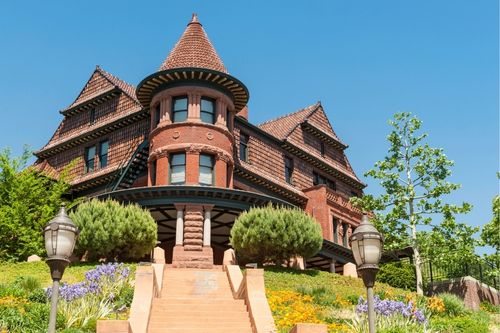
A low angle shot of a three-story brick Gothic Revival home on a corner lot with a colorful garden. The corner of the house has a round tower with a pointed roof, calling back to rounded tower castles, with a rounded wrap-around porch underneath.

Image Source: Getty Images – Image Credit: fotoVoyager


Although Gothic Revival most naturally translated to larger buildings such as churches, mansions, prisons, and schools, the Gothic Carpenter style maintained many of the key characteristics that define the unique style with slight twists to accommodate for residential home life.

Beyond the vertical visuals, steep roofs, and arched doorways, residential gothic architecture also incorporated elements like board and batten wood siding, roof gables, ornate crown molding, and slim porch columns. Gothic-style homes are easily identifiable and much rarer than ubiquitous home styles such as craftsman, cottage, and mid-century modern.

To learn more about the different architectural styles, visit our Architectural Styles page.


­­­­­­Featured Image Source: Getty Images – Image Credit: akaplummer

More October 14, 2022

Windermere-UW Aspire Internship Grows in Second Year

Written by: Samantha Enos – Vice President of Diversity, Equity, and Inclusion, Windermere Real Estate


Formed in partnership with the University of Washington College of Built Environments, Windermere’s Aspire internship program launched in July 2021. The internship offers financial support, mentoring, and skill-building through academic and professional office settings to students, with a focus on those from historically underrepresented or marginalized groups.

2021 Aspire Internship

The inaugural Aspire internship began on July 13, 2021, with a class of eight interns. Over the course of the eight-week program, the interns learned about the role homeownership plays in building thriving communities while working side by side with real estate professionals and academic leaders. All eight interns completed the program and received a $5,000 scholarship. The interns’ hard work paid off beyond the classroom as well. One group’s presentation contributed to the creation of the WIN Scholarship Program and one alumnus was hired at a Windermere office in Seattle.


The 2022 of Windermere-UW College of Built Environment Aspire interns in a conference at Windermere Real Estate headquarters. Three interns are giving a presentation while the rest watch from the conference table.

2022 Aspire Interns – Image Source: Windermere Services Company


The 2022 of Windermere-UW College of Built Environment Aspire interns in a conference at Windermere Real Estate headquarters. Four interns are giving a presentation while the rest watch from the conference table.

2022 Aspire Interns – Image Source: Windermere Services Company


2022 Aspire Internship

The success of the inaugural Aspire internship propelled the second iteration to new heights. In the summer of 2022, 18 University of Washington students participated in the program, more than doubling the number from the year before. The interns were hosted by eight Windermere offices and three ancillary partners (CW Title, Penrith Home Loans, and HomeSight) over an eight-week period. This year, students received a $3,000 stipend in lieu of the previous year’s $5,000 scholarship, thus allowing the University of Washington to support more students through the program.

Striving for improved housing solutions, the students conducted five unique presentations showcasing their knowledge gained through the program. Curriculum covered how international affordable housing models could be applied in the U.S., how NIMBYism (Not In My Backyard) stifles the ability to combat other housing solutions for missing middle housing, redlined areas, and homelessness, and how prefabricated housing could lower costs, increase population density, and create more housing units. The final presentation consisted of students creating an apartment rental guide for clients to represent the housing lifecycle.

We are thankful for the Windermere owners and executive team members who hosted the students, making this year’s Aspire program a success. We look forward to working with a new class of Aspire interns in 2023.


The 2022 of Windermere-UW College of Built Environment Aspire interns sit outside Windermere Real Estate headquarters in Seattle with Windermere Co-President Jill Jacobi Wood, Director of Professional Development Nick Maki, and Windermere Capitol Hill owner Pat Grimm.

2022 Aspire Interns, Jill Jacobi Wood, Nick Maki, & Pat Grimm – Image Source: Windermere Services Company


To learn more about our DEI Initiatives like the Aspire internship program, visit Windermere.com/dei.


Samantha Enos currently serves on the Seattle-King County REALTORS® Board of Directors, is a member of the National Association of REALTORS® Mentorship program and was recently appointed as the Chairperson of the Seattle-King County REALTORS® DEI committee. She also volunteers on the Juanita High School DEI committee.


­­­­­­Featured Image Credit: Windermere Services Company

Buying October 12, 2022

How to Save Money to Buy a House

It’s no secret that buying a home is a serious financial undertaking, but aspiring homeowners are often left wondering what the methods behind the process actually look like. One of the telltale signs that you’re ready to buy a home is having substantial savings to use toward the purchase. The following information goes under the hood of the buying process to explain how much you need to save and some useful methods of saving money.

Making a Down Payment on a Home

The down payment is a large payment made by the buyer upfront to help fund the purchase of a home. Although a down payment of 20 percent of the home’s purchase price will avoid the need to purchase private mortgage insurance (PMI), down payments of this size are not the norm. According to the National Association of REALTORS®, in 2021, the typical down payment was seven percent for first-time home buyers and 17 percent for repeat buyers (NAR)1.

So, how long does it take to save up for the down payment? The answer is unique to each buyer. It depends on your needs as a homeowner, whether you have a deadline, and what you’re able to afford. Your mortgage will factor into the equation, too. Different mortgage types have different down payment requirements, with certain loan products requiring as little as 3% down to qualify. Remember that in general, a higher down payment equates to a lower interest rate and lower monthly payments for your mortgage.

To get an idea of what’s affordable, use our free Home Monthly Payment Calculator by clicking the button below. With current rates based on national averages and customizable mortgage terms, you can experiment with different down payment amounts to get estimates of your monthly payment for any listing price.


Adult man calculating finances in his home office as he prepares to buy a house

Image Source: Getty Images – Image Credit: damircudic


How to Save Money to Buy a House

No matter where your savings stand, these strategies can help to beef up your savings account as you prepare to buy a home.

  • Reduce Debt: Carrying extra debt can weigh you down throughout the home buying process. And even if you make progress on your savings, you’ll be stuck in limbo if you’re not able to qualify for a mortgage. Consider refinancing existing loans and explore ways to reduce credit card debt to set yourself up for success. This will also put you in a better position when you enter the pre-approval process for your mortgage.
  • Rethink Your Budget: Are your streaming subscriptions piling up? Is now the best time for that five-star vacation you had planned? Saving up to buy a home doesn’t mean you need to abandon all your leisurely expenses, but it is worth it to look at them from a new perspective to find ways you can save. It’s also a good time to examine your bills and self-audit your current living expenses.
  • Increase Your Savings: Once you go through your expenditures with a fine-toothed comb, you may find there’s ample opportunity to increase your savings. Regularly contributing to a high-yield savings account will put you on the fast track to pile up your extra funds and ensure that you’re setting them aside.
  • Additional Streams of Income: If you’ve ever thought of using your unique skills to generate some extra dollars, now is the time to act. Whether it’s teaching music lessons, offering tutoring classes, selling your handmade goodies at the local farmer’s market, etc., the extra revenue from a side hustle can help you purchase a home.

Budget for Additional Home Purchase Costs

Once you’ve got your head wrapped around the down payment and formed your saving strategy, you can shift your financial preparations toward the remaining costs of buying a home. Here are a few to keep in mind:

  • Closing Costs: Closing costs for buyers typically range anywhere between 2% and 6% of the home loan amount but vary by transaction.
  • Homeowners Insurance: Lenders will usually require that your purchase a homeowners insurance policy, which covers your home, your belongings, injury or property damage to others, and living expenses if you are unable to live in your home temporarily because of an insured disaster.
  • Repairs and Remodeling: The home you end up buying may very well be in need of repair, and you may have certain remodeling projects in mind. These costs can stack up quickly, so be sure to carve out ample room in your home buying budget accordingly.
  • Homeowners Association (HOA) Fees: If the home you’re purchasing is governed by a Homeowners Association (HOA), you will be required to pay monthly HOA fees on top of your existing mortgage monthly payment.

For more information on preparing to buy a house, visit our Guide to Buying a Home:


­­­­­­1: National Association of REALTORS® (2021) Profile of Home Buyers and Sellers

Featured Image Source: Getty Images – Image Credit: tdub303

Living October 10, 2022

5 Pet-Friendly House Cleaning Tips

Pets make a house a home. But as much as you love your furry friends, they do add a few entries to your list of chores. Keeping your home clean requires a bit of extra work, and some methods of upkeep are more pet-friendly than others. The following tips will help you keep your house clean and your pets happy.

5 Pet-Friendly House Cleaning Tips

1. Safely Clean Up Accidents

When pet owners buy a home, they proceed knowing full well that pet accidents and messes are bound to happen. Cleaning up messes quickly is important for keeping your home clean, but it will also remove the scent, so your pets don’t come back to that same area with the same intentions. When shopping around, look for cleaning products that are safe for animals and don’t contain any toxic chemicals.

2. Deep Clean to Reduce Smells

Pets have a knack for leaving a scent behind. Every pet owner knows the feeling of going through their normal cleaning routine to extinguish the pet smell from their home, only for it to linger after they’re done. To really get your home smelling fresh again, you’ll need to target your pets’ favorite areas as well as the commonly missed cleaning spots throughout your home like underneath furniture, along the baseboards, etc. You’ll be surprised at how much dirt and fur you find in these places.


An orange cat watches her owner work on his computer as he sits on the living room couch

Image Source: Getty Images – Image Credit: Marco VDM


3. Clean Pet Toys Regularly

Your pets’ toys are magnets for dirt, fur, drool, and other unwanted substances. It’s a homeowner’s nightmare to imagine spending hours cleaning your home top to bottom, only for a muddy ball your pets have been chewing on to roll across the carpet. Cleaning toys regularly is also healthier for your pets as it helps to reduce the spread of germs. If your pets’ toys are dishwasher safe, pop them in the dishwasher every once in a while to get them squeaky clean.

4. Keep the Air Clean

Even after you’ve exhausted all your cleaning efforts on the surfaces throughout your home, pet fur and dander can still travel through the air. It’s important to clean the air in your home, especially if members of your household have allergies. Consider investing in an air purifier, which will filter air particles to remove dust and odors, giving everyone in your home—pets included—cleaner air to enjoy.

5. The Importance of Well-Groomed Pets

In the context of a clean, pet-friendly home, there’s one surface that’s more important than any—your pets themselves. Every pet owner has their routine; whether that’s regularly maintaining their cat’s litter box, wiping off the dog’s paws in the mudroom before letting them inside, regular baths and brushing, or keeping nails trimmed to avoid furniture and carpet damage, these are the boxes that must be checked to keep your home clean. For all your cleaning efforts, if your pets are still messy, then the spaces in your home will follow suit.

Read the following blog post for more information on maintaining a pet-friendly home as you look to sell:

Selling a Home with Pets


­­­­­­Featured Image Source: Getty Images – Image Credit: Prostock-Studio

More October 7, 2022

Windermere Foundation Gala Raises $1.6 Million

In what has already been a banner year for the Windermere Foundation, the inaugural Windermere Foundation Gala took things to new heights. Held on the evening of September 30 at the Sheraton Grand in downtown Seattle, Windermere agents, owners, and staff dressed to the nines for a night of live entertainment and fundraising for low-income and homeless families throughout the Western U.S. 

With 2022 being Windermere’s 50th anniversary, the company set its sights on reaching $50 million in total donations for the Windermere Foundation by the end of the year. At the end of 2021, the grand total stood at $46 million raised since the Foundation began in 1989, leaving a roughly $4 million gap to reach the $50 million goal. Through the spring and summer, we saw an outpouring of support as Windermere offices around the network stepped up their fundraising and giving efforts. By the end of July, total year-to-date donations surged past $2 million, pushing the grand total to nearly $48 million.

The Windermere Foundation Gala

Then came the night of the Gala, during which the Windermere Foundation would receive the Excellence Award from the 5th Avenue Theatre. Windermere founder John Jacobi and family accepted the award on behalf of Windermere and expressed their commitment to continue their legacy of giving both personally and through the Windermere Foundation. But the Gala was more than a celebration; it was a massive fundraiser, with proceeds from ticket sales, table purchases, donations, and auction bids going back to communities throughout the Windermere footprint.


Windermere Foundation Gala attendees bid on a pizza oven in the ballroom foyer of the Grand Sheraton hotel in Seattle, WA

Image Source: Panravee Fernando – panraveephotography.com


As the Gala attendees entered the foyer of the Sheraton Grand Ballroom, they bid on silent auction packages displayed throughout the room. Up for auction were locally curated experiences and goods alike, including multiple-night stays at luxury resorts, tickets to a Broadway production, and more. Next was the live auction. Bids went up for 11 special packages, including a skiing adventure at an upscale resort in Park City, a guided fly-fishing excursion in Montana, and others. As part of an exclusive Pearl Jam auction package, their guitarist Mike McCready was in attendance, adding his signature on stage to an electric guitar signed by the band members.


Pearl Jam guitarist Mike McCready signs an electric guitar on stage at the Windermere Foundation gala. The item would go up for auction as part of a Pearl Jam package.

Image Source: Panravee Fernando – panraveephotography.com


Finally, the Gala attendees participated in Raise the Paddle, where they contributed donations at different levels. Windermere founder John Jacobi kickstarted the giving with a $100,000 donation, and from there, auctioneer John Curley guided the audience through descending levels of support, calling out bidder number after bidder number in what was an outpouring of giving from the audience. The Windermere network more than doubled the $250,000 goal of Raise the Paddle, ultimately raising $520,250 in donations.


Windermere Foundation Gala attendees hold their bidder numbers in the air as they contribute to Raise the Paddle, collectively raising $520,250 in donations.

Image Source: Panravee Fernando – panraveephotography.com


In total, the Windermere Foundation Gala raised $1.6 million, catapulting Windermere towards its goal of reaching $50 million in total donations by the end of 2022.

To learn more about the Windermere Foundation, visit windermerefoundation.com. To help support programs in your community, click the donate button below.


content_Donate_button.jpg


­­­­­­Featured Image Source: Panravee Fernandopanraveephotography.com