Living May 19, 2021

7 Tips to Give Your Short-Term Rental a Competitive Advantage

As the usage of short-term rental services has increased over the years, so too has the competition between rental owners to make their properties stand out. There are a variety of marketing tactics you, as a rental owner, can employ to give your home an edge, but ultimately, making the property as appealing as possible is the best way to ensure your strategies are effective.

7 Tips to Give Your Short-Term Rental a Competitive Advantage

1. Boost Your Curb Appeal

Renters are scrolling through pages and pages of properties, looking for something that catches their eye at first glance. To make your property stand out, invest time and energy into the home’s curb appeal. Making these improvements doesn’t necessarily require breaking the bank, either. Simple projects like a fresh coat of exterior paint, refinishing the patio or deck, and creating a beautiful yard will go a long way towards helping your home stand out amongst the competition.

2. High-Quality Photography

Once you’ve spent time curating and beautifying your rental, it’s important to communicate its feel to potential renters. High-quality photos give renters the best impression of what it’s like to spend time in the home. Photograph every room in bright lighting to make the space as inviting as possible. Be sure to thoroughly clean every room before taking photos to have it looking as inviting as possible.

3. Improve Your Description

After potential guests explore your photos, they’ll read your property’s description. While it’s helpful to read descriptions of other listings in your area to get an idea of what tenants are looking for, it’s important to communicate the unique attributes of your home. Talk about what makes it special, emphasize the selling points, and reference what renters are seeing in the photos you’ve provided.

4. Repair or Replace Your Appliances

When guests are paying for a rental, they expect everything to be in fine working order. To make your property stand out, consider repairing or replacing your appliances. This makes for a more enjoyable stay and could potentially offer you a competitive advantage. All appliances have a certain life expectancy, so if you haven’t replaced your appliances in a while, it just may be time to do so.

5. Upgrade Your Bedroom and Bathroom

Renters are looking to relax, so any luxury you can provide them will do wonders for giving your property an edge amongst the competition. Two areas of the home where you can deliver on luxury are the bedroom and the bathroom. From the bedspread and pillows to the curtains and rugs, experiment with different textures in the bedroom to make it as comfortable as can be. A high-quality mattress is also a worthy investment to make your guests’ stay all the more memorable.

By making simple upgrades to your bathroom, you can give the guests the feeling of having their own personal spa. High-quality shower heads and a spacious, relaxing tub will help to deliver a luxurious atmosphere to your bathroom, as will meticulously cleaning the space and keeping your surfaces well organized.

6. Upgrade Your Kitchen

A welcoming kitchen is the key to making your rental feel like home. Kitchen makeovers often come at a high cost, but there are ways to transform your kitchen without breaking the bank. Start by upgrading your lighting, giving your walls a fresh coat of paint, and refinishing your cabinets. If your kitchen needs new appliances, remember to select them first before making any renovations to ensure their dimensions are correct.

7. Provide a Workspace

With more people working remotely than ever before, some renters will likely look at your property as a potential place to conduct their work. Accommodating these guests with a quality workspace can make your rental stand out. Consider making the workspace multifunctional using items like a folding desk. This gives remote workers the option to stow their home office setup at the end of the day while ensuring that the workspace won’t be a permanent fixture for guests on vacation.


Buying May 17, 2021

Moving Into a Vacation Home

For some homeowners, purchasing a second home – or a vacation property – provides a place where they can have a change of scenery and an escape from day-to-day living. Since the start of the pandemic, a number of homeowners have chosen to move into their vacation homes to do exactly that on a longer-term basis. However, certain aspects of buying and moving into a vacation home differ from a traditional home purchase, so it’s important to work with a buyer’s agent who understands the nuances of both.

Before You Buy

One of the first things to consider before buying a vacation property is whether you are financially ready to take on everything that comes with managing and maintaining another home. If you’re still in deep with your primary residence’s mortgage and are not cash-ready, it may not be the best time to purchase a second home.

Like any home purchase, there are pros and cons to owning a vacation home. Vacation properties are likely to retain their value depending on where they’re located. They also allow you to experience the never-ending vacation lifestyle. However, owning a vacation property can come with its own set of unique expenses. Not only will be you responsible for all the maintenance work that you might normally leave to a property management company, but if the vacation home is located on the water or a steep hillside, you can also expect higher homeowner’s insurance costs.

Moving In

Any moving process presents unforeseen challenges and moving into a vacation home is no different. Whereas previously the home provided accommodation for relaxing, moving in will require it to meet the demands of everyday living. It may be high time to make repairs or upgrades to the home, which could drive up your move-in costs.

Before moving in, assess the condition of all furnishings to get an idea of what needs replacing. Making the home your main residence will put added strain on your appliances, so what may have previously worked well for short-term stays won’t cut it for full-time living. Check your refrigerator, dishwasher, and washer and dryer to see if they need updating before moving in.

If you’ll be working remotely in your vacation home, think about your desired work conditions before putting together your home office. Having a designated workspace will help balance your home and work life.

MoreWindermere Foundation May 14, 2021

Windermere Foundation Approaches $500,000 Raised in 2021

In the early months of 2021, Windermere offices have continued to give back to their communities. Across Windermere’s 10-state footprint, over $417,000 has been raised this year alone, bringing the total raised by the Windermere Foundation to over $43.7 million since it began in 1989. Thirty-eight percent of this year’s funds were donated by agents from their commissions, while sixty-two percent was raised through fundraisers and additional donations made by owners, agents, and staff. These dollars go toward supporting low-income and homeless families in the communities where Windermere has offices, such as those described below.

Windermere Fort Collins

In late March, the Windermere Fort Collins office stepped up to make a significant impact in their local community by donating $10,000 to ChildSafe Colorado. The organization’s mission is to break the cycle and heal the trauma resulting from childhood abuse and neglect with specialized treatment, education, and community outreach. The Windermere office’s donation will help ChildSafe run its day-to-day operations. The organization is Northern Colorado’s only comprehensive outpatient treatment program for child and adult victims of childhood abuse, treating about 700-800 clients per year.

Windermere Lane County

The team at the Windermere Lane County office in Eugene, Oregon continues to be highly active in their community. So far this year their donations include $2,200 to Bags of Love, which provides necessities and comfort items to children who are in crisis due to neglect, abuse, poverty, or homelessness. Another $2,200 went to CASA of Lane County, which provides court-appointed special advocates to serve neglected and abused children aged 0-17. A $2,500 donation went to Kids First Center to further their impact in the community. Kids First is part of the first response team that supports the healing process when a child is a victim of abuse. Donations of $603 and $2,200 were made to Florence Food Share and Food for Lane County respectively, two organizations dedicated to reducing hunger locally. Lastly, the Windermere Lane County office made a $602 donation to the local Boys and Girls Club of Western Lane County. All in all, these donations totaled over $10,000.

Windermere is so proud of our owners, agents, and staff, and all they do to give back. We are grateful to everyone who has supported the Windermere Foundation – it is because of you that we are able to help our neighbors in need and make an impact in the communities where we serve. To help support programs in your community, click the donate button below.


To learn more about the Windermere Foundation, visit windermerefoundation.com.

Market News May 13, 2021

Matthew Gardner Op-Ed: Why fears of a housing bubble are wildly overblown

This op-ed by Matthew Gardner was a part of a series on Inman News featuring views from housing experts about the potential for a 2021 housing bubble.

On face value, I can certainly see why some are worried about how much home prices have been escalating — not just during the pandemic period, but since housing prices started recovering back in 2012.

Home price growth has been outpacing wage growth for a long time, with median prices up more than 113 percent since January 2012, while wages have only risen by a far more modest 30 percent.

Moreover, in 2020, prices increased by more than 9 percent and were up by a record-breaking 17.2 percent between March of 2020 and March 2021. As a result, mumblings of the imminent bursting of a new housing “bubble” are now being heard far and wide across the US.

I’d like to start off by addressing those who believe impending doom is on the horizon. I am afraid I have some bad news; it’s not going to happen.

While it’s easy to argue that such a rapid increase in home prices is sure to end badly — as it did in 2008 and 2009 — you would be wrong to conflate these two time periods. Today’s housing market is markedly different from the one we saw back in the 2000s.

Allow me to explain why.

For more than six years, we have suffered from a woeful lack of homes to buy in the U.S., while simultaneously adding almost 10 million new households. Obviously, not every new household translated into a new homeowner, but given demographic growth and the ongoing shortage of inventory, it was enough to tip the scale between supply and demand, resulting in rapidly rising home values.

So, why are there so few homes for sale?

This is probably one of the questions I get asked most. The first reason is that Americans aren’t moving as often as they used to, which limits supply. In the early 2000s, we used to move an average of every four years, but the number today is over eight years. If there is less turnover of homes, supply remains scarce, and prices rise.

The next thing we need to consider is the new construction market, which has the ability to equalize supply with demand when enough homes are being built. But in recent years, the number of newly built homes has tracked well below the levels needed to help create a balanced market.

Furthermore, the ongoing escalating cost of building materials has led to higher priced homes being built, which doesn’t fulfill the lower end of the market where there is the greatest demand.

So far, the scenarios described above are entirely opposite to those of the late 2000s, but there are several other reasons why we are in a very different place today compared to the pre-bubble days.

Much like the current market, demand for housing in the 2000s was very strong, but a major difference between the two markets is that much of the demand back then wasn’t actually real — and certainly not sustainable.

Renters were becoming homeowners in record numbers, and people were snapping up investment properties who, quite frankly, should never have been allowed to. Lending policies were so lax that qualifying for a home was far too easy, which ended up being the principal reason why we saw a housing bubble form and subsequently burst.

Without a doubt, the lack of credit quality is the most significant difference between today’s market and that of the 2000s but gone are the days of “low-doc” or “no-doc” loans that allowed buyers to essentially make up their income to qualify for a mortgage.

Instead, according to Ellie Mae, what we saw in 2020 was 70 percent of mortgage originations going to borrowers with proven FICO scores above 760, and the average credit score over the past five years was a very high 754.

Although sub-prime borrowing still exists — and there is a rational place for it — the share of borrowers with a credit score below 620 was just 2 percent last year. For comparison purposes, it was 13 percent in 2007.

It’s also worth pointing out that back in 2004, a full 35 percent of mortgages were ARMs, or so-called “teaser loans.” When the rate reverted on these loans, it forced many homeowners into foreclosure because they could no longer afford the monthly payment. Fast forward to today, the share of ARMs in March of 2021 was just 2.4 percent.

Finally, I like to look at mortgage credit availability, and the Mortgage Bankers Association has some very rich data on this. The MBA’s index, which is calculated using several factors related to borrower eligibility (credit score, loan type, loan-to-value ratio, etc.), acts as a very useful bellwether when it comes to the health of the housing market.

Although the index has been rising since last fall (suggesting more freely available credit), it is still 85 percent below where it was in 2006, suggesting that lenders remain cautious.

The bottom line is that credit quality and down payments are far higher today than they were in the pre-bubble days, and mortgage credit supply remains very tight relative to where it was before the collapse of the housing market.

So far, I am not seeing a correlation with the “bad old days” — are you?

It’s irrefutable that home prices have been increasing at well above average rates for several years now, and that is cause for concern, but not because of any impending bubble. Rather, what concerns me is the impact rising prices is having on housing affordability.

Current homeowners are in good shape and, according to the most recent Federal Reserve Financial Accounts of the U.S. report, are currently sitting on over $21 trillion in equity.

Furthermore, the latest data from Attom Data Solutions indicates that over 30 percent of homeowners had at least 50 percent equity in their homes at the end of last year. But this doesn’t help first-time buyers who are so critical to the long-term health of the housing market.

Keep in mind, there is a wave of first-time buyers coming; over the next two years, 9.6 million millennials will turn 30, and Gen Z is close on their heels. Given where prices are today, the question should be: Where will they be able to afford to buy?

This, in my opinion, is a far bigger issue than any mythical bubble bursting.

To find this and the other pieces in the series, click here.

Selling May 12, 2021

What is a Seller’s Market?

When the housing market favors sellers, a seller can expect ideal conditions for selling their home. However, that’s not to say that a seller’s market doesn’t come with its own unique set of challenges for parties on both sides of the transaction. That’s why it’s critical for buyers and sellers to work with an agent who not only understands their wants and needs but who can also help them navigate highly competitive market conditions.

What is a Seller’s Market?

A seller’s market occurs when demand exceeds supply. When inventory is limited, competition amongst buyers is fierce. Median sales prices increase, days on market decrease, and homes commonly receive multiple offers, often over their original asking price.

Selling in a Seller’s Market

Though demand is high in a seller’s market, staging and making any necessary repairs are still important steps to take before hitting the market. An agent can help a seller make important decisions about which repairs and updates help add value to the home.

When it comes to offers and negotiations in a seller’s market, sellers have the leverage. It’s common for homes to fetch more than their asking price with multiple offers on the table. Though prices are being driven up by demand, a seller may choose to list their home at or just below fair market value with the hopes of starting a bidding war. Because competition is so high, buyers may be willing to waive an inspection contingency to help make their offer stand out. Agents can help sellers decide whether they should conduct a pre-listing inspection, which sometimes helps the seller get more offers and command a higher price.

With multiple offers on the table, it may be tempting to simply choose the one with the highest figure; however, the best offer is also the one that removes risk and aligns with the seller’s goals. Whether that entails waived contingencies, a shorter closing window, or an all-cash offer, in a seller’s market, the seller has the power to choose. Sellers should fully review each offer with the help of their agent before proceeding.

Buying in a Seller’s Market

Buyers in a seller’s market must act fast. Due to the high level of competition, they must be prepared for a frustrating scenario where their offers may not win out. This emphasizes the importance of working with a buyer’s agent. In a seller’s market, it’s more likely that the buying process will include such factors as seller review dates and escalation clauses. A buyer’s agent will help navigate these challenges while working with their client to make their offer stand out. They will formulate a strategy, comparing their client’s wish list and budget against the limited number of homes available and proceeding accordingly. A buyer’s agent will also set the expectation that, due to the competitive nature of the market, finding the right home may take longer than expected.

In a seller’s market, the buyer is at a disadvantage when it comes to negotiations. The chance of getting a contingent offer is minimal and pushing for certain closing dates and specific repairs may do more harm than good to their offer. A cash offer has significant power in a seller’s market. If a buyer can make a cash-heavy or even all-cash offer, it is likely to stand out to the seller. It gives the buyer more buying power and greatly increases their chances of winning a bidding war.


Design May 10, 2021

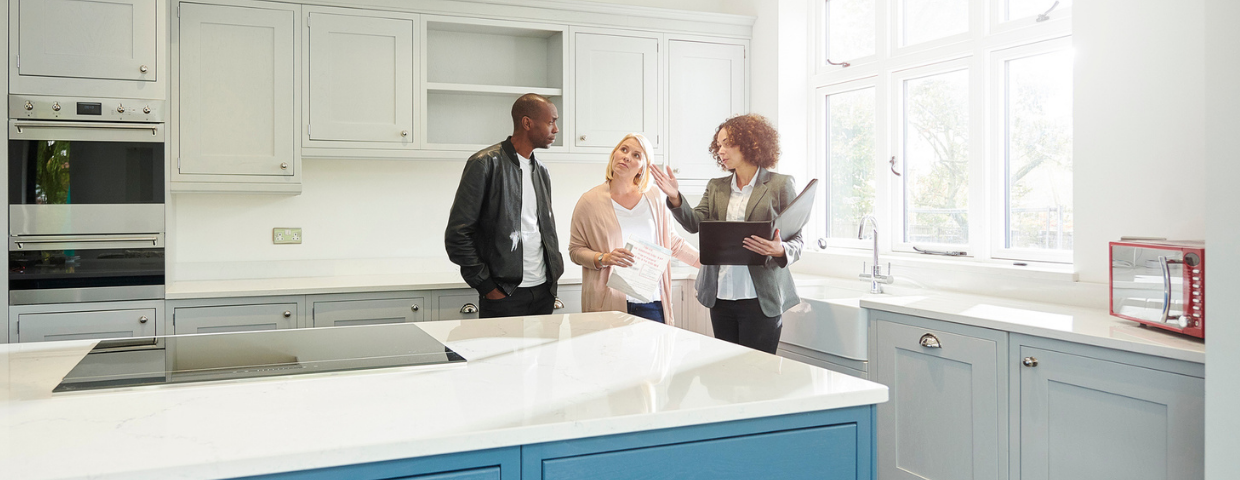
Renovating Your Short-Term Rental

Renovating your short-term rental property will not only keep it in peak condition but will also help it stand out to potential renters. Completing remodeling projects with the goal of increasing the return on your investment is a matter of identifying which renovations make sense for the home, putting together a plan, and taking steps to minimize the risk of the projects going over budget.

Start with Repairs

Because rental properties are by nature a source of income, it’s worth your while as the homeowner to reduce maintenance costs wherever possible. This can often mean spending money in the short term on repairs and replacements in order to save money down the road. Furthermore, by upgrading your appliances, fixing leaks, and updating any outdated features, you will provide the most accommodating environment for your renters. Making these improvements can also help set your rental apart from other properties, giving you a competitive advantage in the market. As you go about making repairs, don’t forget to check the working condition of all faucets, electrical outlets, and lights.

Renovating Your Rental

Understanding the scope of your renovations and the motivation behind them before you get started will help formulate your plan moving forward. Are you looking to upgrade the home to sell it in the future? Are you renovating to increase rent? Or are you simply looking to be more competitive in the local rental market? Knowing the answers to these questions won’t necessarily change your renovation plans, but it will provide guidance as you enter the remodeling phase. Consider talking to your Windermere agent about how different projects may affect the value of the property.

Even a small-scale renovation can make a big difference in the minds of renters. To create the best first impression from the get-go, consider boosting your home’s curb appeal. Projects like exterior painting, refinishing a deck, and power washing your siding and walkways will help provide an inviting outdoor setting for your renters.

When it comes to interior renovations, kitchens are a great place to start. Thankfully, kitchen makeovers can be simple. Identify the areas of your kitchen that need repair first, then expand your project list from there. Next, consider upgrading the bathroom. Begin by checking your pipes, drains, and p-traps for any signs of wear and tear. Simple things like painting the vanity and updating the bathroom hardware can also make a big impact.

Last but not least, if you decide to hire a professional to renovate your rental property, be sure to gather multiple bids and compare prices before making your final decision.

Learn more about the pros and cons of investing in vacation rentals here: Vacation Home or Income-Producing Investment. You can also read about vacation home renovations by season here: Renovating Your Vacation Home.

Living May 5, 2021

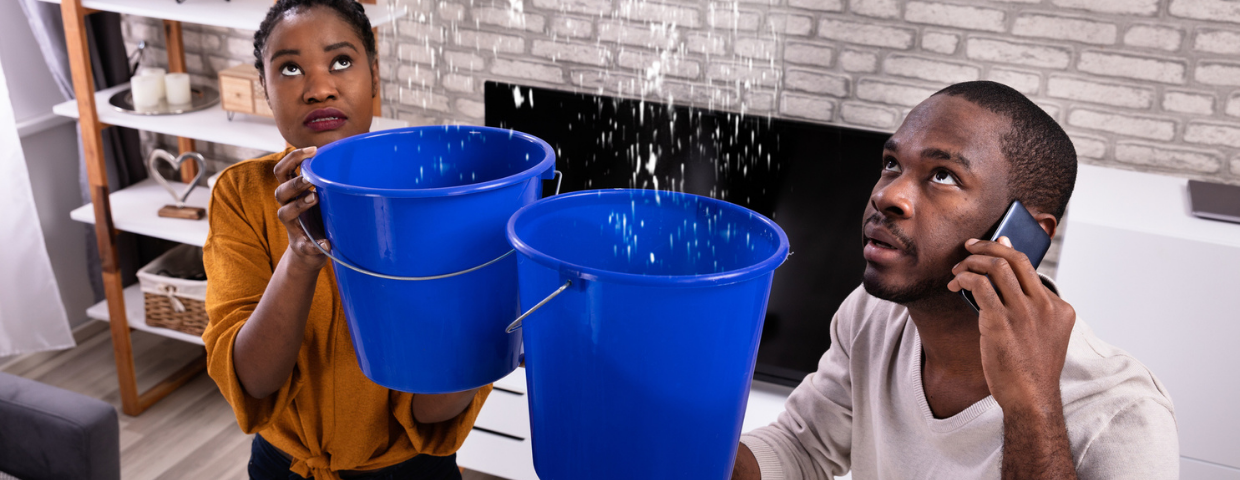
How to Handle Water Damage In Your Home

Even if you’ve done all you can to prevent water damage in your home, there’s still a possibility it could occur. During a water damage emergency, it’s important to have a plan in place and be proactive to make sure things don’t go from bad to worse.

How to Handle Water Damage In Your Home

If your home is in danger of flooding, evacuate the area until it is safe to return. In all other situations, as soon as you notice any water damage, it’s time to act quickly to prevent further damage. Water reaching an electrical source spells danger, so be sure to switch off your circuit breakers to cut the electricity. If your circuit breakers are in the same room as the source of the water damage, it’s best to stay away and call an electrician. Unplug devices from outlets as well to avoid getting shocked. In all situations, wear rubber boots, gloves, and protective gear.

After the electricity has been turned off, the next step is to find the source of the water damage. In the case of a burst pipe or a leaking hot water tank, cut the water supply by switching their shut-off valves. If the water damage has occurred in a small, contained area, you may be able to handle the repair independently. But if the water damage has spread to a large area, it will require a professional.

Moving furniture, household items, and possessions not only helps to protect them, but will also clear the area for when professionals arrive, allowing them to get right to work. If the water continues to flow while the technician is on their way, try to prevent further damage by slowing its spread using buckets, towels, and mops. These items don’t have the salvaging power of a professional’s tools, but anything you can do before they arrive could help to prevent further damage.

Water Damage – Insurance

Contacting your insurance company as soon as possible will help to navigate the situation. Find out what steps they may require you to take in the event of a flooding emergency. It’s helpful to get a claims adjuster to your home quickly to assess the situation and provide estimates on the potential cost of making repairs. Water damage can easily feel overwhelming and chaotic, but it’s important to photograph the incident. Take photos of the source of the damage, where it spread, and the damage it caused—both to the home and any personal items of value. Documenting the incident will inform your claim with your insurance company.

Whether the damage is covered by your insurance depends on the source of the problem and how your policy is arranged. If the damage was a result of an underlying condition that worsened over time, your claim may be denied. If this happens, ask for a detailed explanation to understand the gaps in your policy. This emphasizes the importance of regular home maintenance on the systems that control the water in your home. Even if you run into a costly repair, it’s better to be aware of deficiencies and fix them than to wait and be faced with a full-fledged emergency later on. Take time to review your policy as is and understand what you as the homeowner are ultimately responsible for in the event of an emergency.

For more information on how to get ahead of potential home emergencies, read our guides on preparing for wildfires and winter storms.

Market News May 5, 2021

Q1 2021 Big Island of Hawaii Real Estate Market Update

The following analysis of the Big Island real estate market is provided by Windermere Real Estate Chief Economist Matthew Gardner. We hope that this information may assist you with making better-informed real estate decisions. For further information about the housing market in your area, please don’t hesitate to contact your Windermere Real Estate agent.


Regional Economic Overview

The Big Island saw a significant number of jobs return in the fall of 2020, but the momentum did not continue through the new year. In the first quarter, only 900 jobs returned—compared to the 7,500 jobs that returned in the fourth quarter. Clearly the economy remains in a fragile position and the area is anxiously waiting for tourists to return in greater numbers. The growth in the final quarter of 2020 was a result of relaxed travel restrictions, but rising infection rates on the mainland have led to more restrictions, which has likely impacted the number of jobs returning. Although the pace of job recovery has stalled, it’s worth noting that the island has recovered 12,650 of the 21,850 jobs that were lost due to the pandemic. The island’s unemployment rate remains elevated. It was 8.4% in March, down from 9.2% at the end of 2020. The state unemployment rate was 9% in March, down from 10.3% in December. All of the islands continue to suffer from slow economic growth due to the pandemic, but I remain hopeful that jobs will return, and the pace of recovery will pick up speed in the second half of the year.

big island of hawaii Home Sales

❱ In the first quarter of 2021, 1,110 homes sold on the Big Island, an increase of 35.5% compared to the first quarter of 2020, and 2.5% higher than in the final quarter of last year.

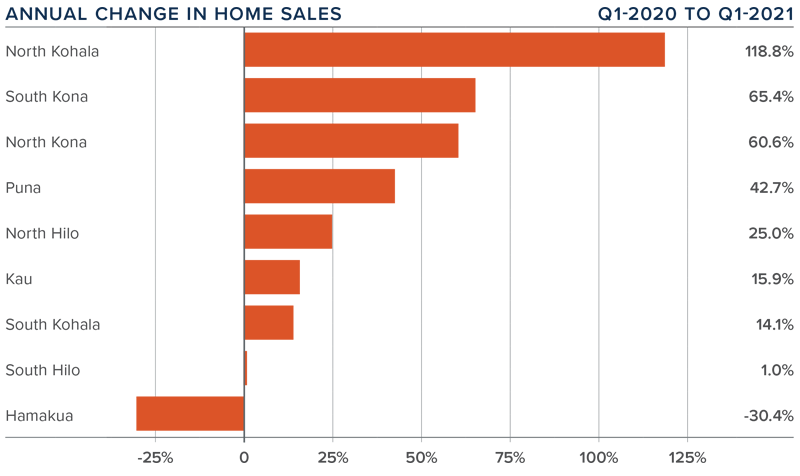
❱ Sales were higher in all markets other than Hamakua, where they dropped more than 30%. Sales in North Kohala more than doubled and several other areas saw significant increases in sales activity.

❱ The growth in sales came even with inventory levels 53.3% lower than a year ago and down 31.7% compared to last quarter.

❱ Pending home sales rose 15.9% compared to the final quarter of 2020, suggesting that closings in the second quarter will show further growth.

A bar graph showing the annual change in home sales for various counties on the Big Island in Hawaii.

big island of hawaii Home Prices

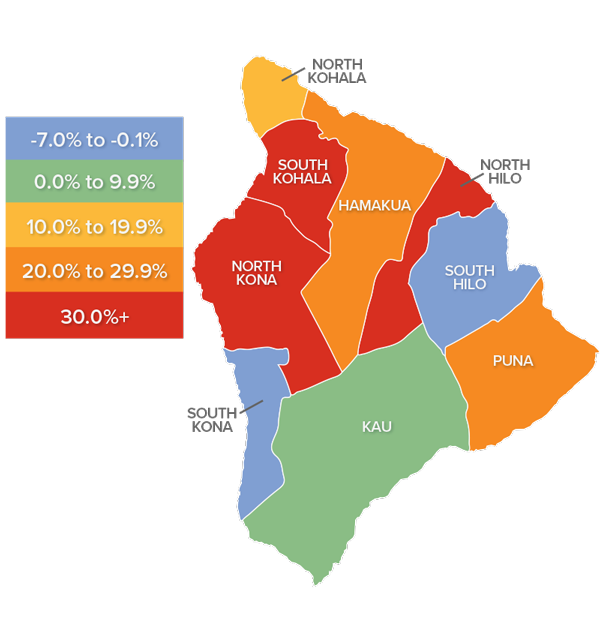
A map showing the real estate market percentage changes in various counties on the Big Island in Hawaii.

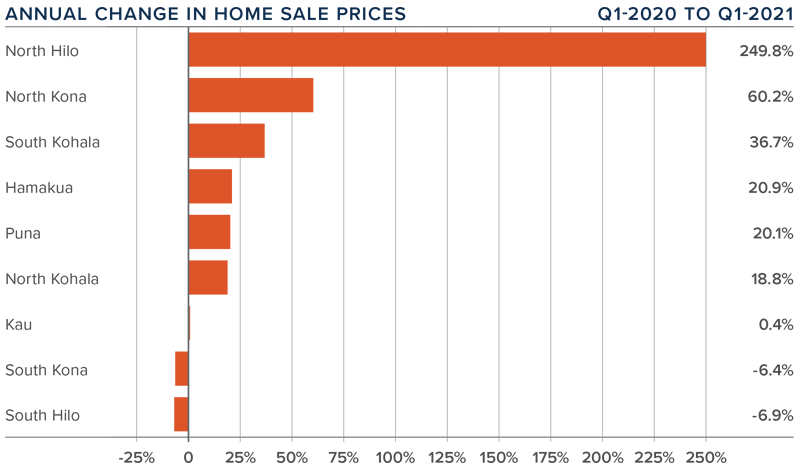
❱ The average home price on the island rose by a very impressive 41.7% year over year to $878,267. Prices were also 13.2% higher compared to the fourth quarter of 2020.

❱ Sale prices were lower in two markets compared to a year ago, but I do not see this as a trend that will continue.

❱ The substantial increase in prices was driven by significant price growth in North Hilo, where the average sale price rose from $248,000 to $866,000. Six additional markets saw prices increase by double-digits.

❱ After the events of 2020, the housing market—if not the job market—continues to recover admirably.

A bar graph showing the annual change in home sale prices for various counties on the Big Island in Hawaii.

Days on Market

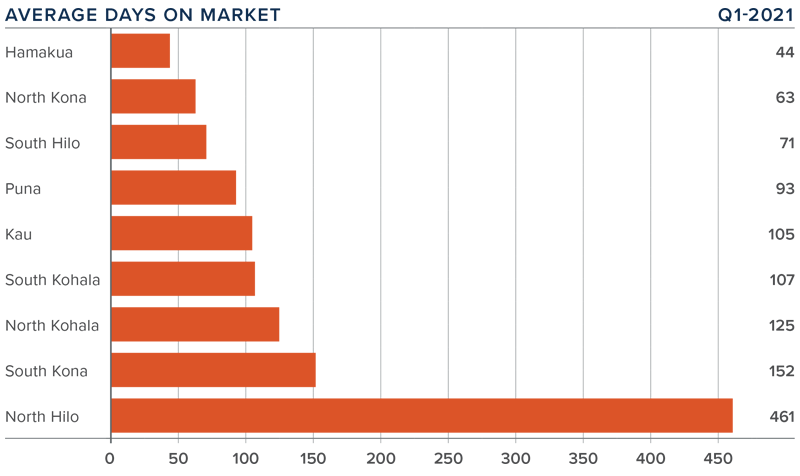
❱ The average time it took to sell a home on the Big Island rose 26 days compared to the first quarter of 2020.

❱ The amount of time it took to sell a home dropped in North Kohala, North Kona, Puna, South Hilo, Hamakua, and Kau, but rose in the other three markets.

❱ In the quarter, it took an average of 136 days to sell a home, with the fastest sales occurring in Hamakua and the slowest in North Hilo.

❱ It took 34 more days to sell a home in the first quarter of 2021 than in the prior quarter.

A bar graph showing the average days on market for homes in various counties on the Big Island in Hawaii.

Conclusions

A speedometer graph indicating a seller's market on the Big Island in Hawaii.

This speedometer reflects the state of the region’s real estate market using housing inventory, price gains, home sales, interest rates, and larger economic factors.

The Big Island housing market is unusual given rising sales and prices but longer days on market. As vaccines are more broadly distributed on the mainland—and in other countries that favor Hawaii real estate—I expect we will see more demand, which, in concert with persistently low levels of inventory, will favor home sellers.

The fundamentals of the market are solid, and even though mortgage rates have ticked higher, sellers continue to have the upper hand. Given these factors, I am moving the needle more in their favor.


About Matthew Gardner

Matthew Gardner - Chief Economist for Windermere Real Estate

As Chief Economist for Windermere Real Estate, Matthew Gardner is responsible for analyzing and interpreting economic data and its impact on the real estate market on both a local and national level. Matthew has over 30 years of professional experience both in the U.S. and U.K.

In addition to his day-to-day responsibilities, Matthew sits on the Washington State Governors Council of Economic Advisors; chairs the Board of Trustees at the Washington Center for Real Estate Research at the University of Washington; and is an Advisory Board Member at the Runstad Center for Real Estate Studies at the University of Washington where he also lectures in real estate economics.

Market News May 5, 2021

Q1 2021 Maui, Hawaii Real Estate Market Update

The following analysis of select Maui real estate markets is provided by Windermere Real Estate Chief Economist Matthew Gardner. We hope that this information may assist you with making better-informed real estate decisions. For further information about the housing market in your area, please don’t hesitate to contact your Windermere agent.


Regional Economic Overview

Maui saw a significant number of jobs return in the fall of 2020, but the momentum did not continue through the new year. In the first quarter, the island saw the return of only 1,200 jobs—compared to the more than 11,000 jobs that returned in the fourth quarter of 2020. Clearly the economy remains in a fragile position and the area is anxiously waiting for tourists to return in greater numbers. The growth in the final quarter of 2020 was a result of relaxed travel restrictions, but rising infection rates on the mainland have led to more restrictions, which has likely impacted the number of jobs returning.

Although the pace of job recovery has stalled, it’s worth noting that Maui has recovered 13,650 of the 28,850 jobs that were lost due to the pandemic. Maui’s unemployment rate was 12.5% in March, down from 13.8% at the end of 2020. The state unemployment rate was 9% in March, down from 10.3% in December. All of the islands continue to suffer from slow economic growth due to the pandemic, but I remain hopeful that jobs will return, and the pace of recovery will pick up speed in the second half of the year.

Maui, Hawaii Home Sales

❱ In the first quarter, 684 homes sold, which was an increase of 25.3% compared to a year ago and 11.2% higher than in the final quarter of 2020.

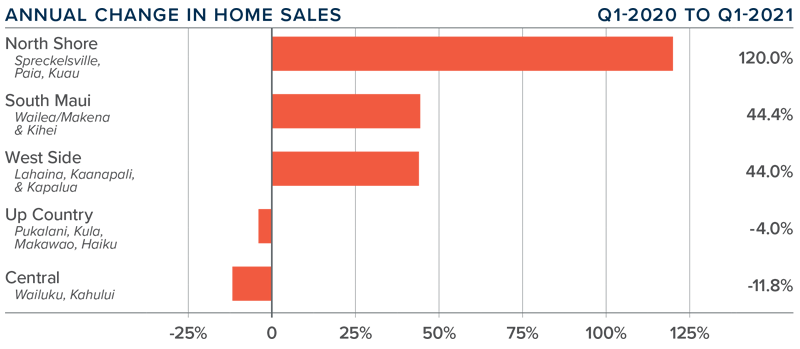
❱ Home sales were not equally spread across the island, with sales rising in three areas and declining in two. The very small North Shore market saw the largest percentage increase in sales, but South Maui saw the largest increase in absolute terms, with 99 more transactions in the quarter than a year ago.

❱ Listing activity remains limited. The average number of homes for sale was down 29% compared to the same quarter in 2020 and 34% lower than in the fourth quarter of last year.

❱ Pending home sales jumped 52% compared to the prior quarter, suggesting that closings in the second quarter will likely show further improvement.

A bar graph showing the annual change in home sales for various counties on Maui in Hawaii.

maui, hawaii Home Prices

A map showing the real estate market percentage changes in various counties on Maui in Hawaii.

❱ Listing activity remains limited. The average number of homes for sale was down 29% compared to the same quarter in 2020 and 34% lower than in the fourth quarter of last year.

❱ Pending home sales jumped 52% compared to the prior quarter, suggesting that closings in the second quarter will likely show further improvement.

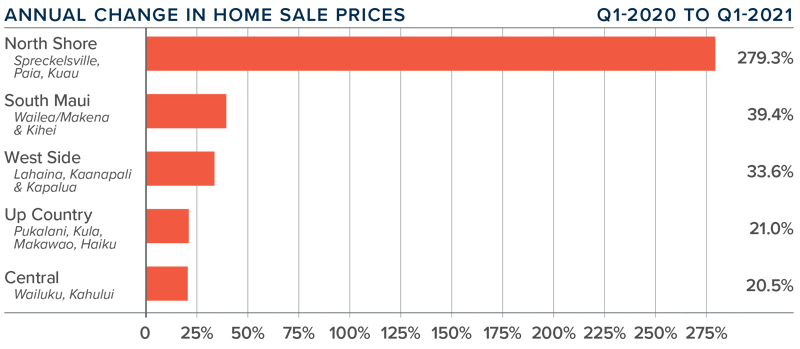
❱ Home prices in all markets saw very significant increases, which is likely due to the limited number of homes for sale and demand exceeding supply. The jump in the area’s average price was partly driven by the North Shore market which saw prices rising from $723,000 to $2.7M.

❱ Price growth will continue as we move through 2021, but the frenetic pace is likely to taper somewhat.

A bar graph showing the annual change in home sale prices for various counties on Maui in Hawaii.

Days on Market

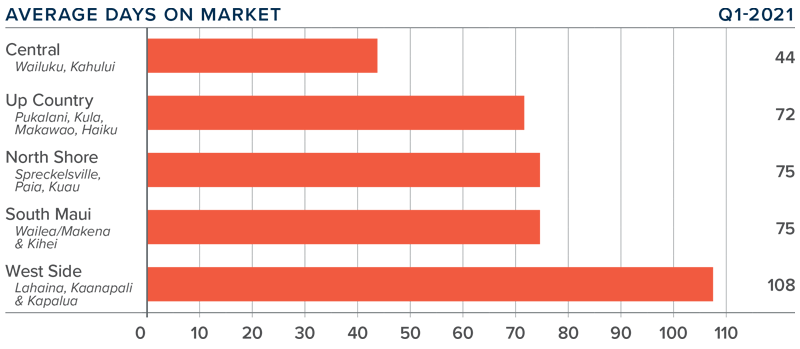
❱ The average number of days it took to sell a home on Maui rose 18 days compared to the first quarter of 2020.

❱ The length of time it took to sell a home rose in all markets on the island.

❱ In the quarter, it took an average of 75 days to sell a home, with sales occurring the fastest in the Central area and slowest on the Westside.

❱ Market time also rose four days compared to the fourth quarter of 2020, giving further credence to my position that affordability issues are still outweighing the limited number of homes for sale.

A bar graph showing the average days on market for homes in various counties on Maui in Hawaii.

Conclusions

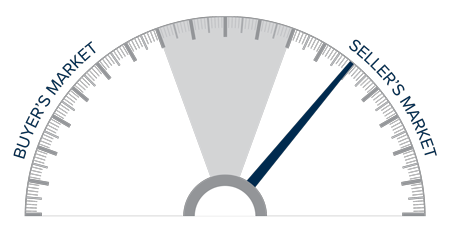
A speedometer graph indicating a seller's market on Maui in Hawaii.

This speedometer reflects the state of the region’s real estate market using housing inventory, price gains, home sales, interest rates, and larger economic factors.

As noted in this report, prices have been rising significantly and demand is exceeding supply. That said, market time has risen, which would suggest that it may not be as much of a seller’s market as one might think. I believe that affordability, combined with persistently high COVID-19 infection rates on the mainland, may be keeping mainland buyers away. If I am correct, we should see more buyers as the vaccine is more broadly distributed, which will stimulate the market again.

As such, the market still favors sellers, and I am moving the needle a little more in their favor.


About Matthew Gardner

Matthew Gardner - Chief Economist for Windermere Real Estate

As Chief Economist for Windermere Real Estate, Matthew Gardner is responsible for analyzing and interpreting economic data and its impact on the real estate market on both a local and national level. Matthew has over 30 years of professional experience both in the U.S. and U.K.

In addition to his day-to-day responsibilities, Matthew sits on the Washington State Governors Council of Economic Advisors; chairs the Board of Trustees at the Washington Center for Real Estate Research at the University of Washington; and is an Advisory Board Member at the Runstad Center for Real Estate Studies at the University of Washington where he also lectures in real estate economics.

Market News May 4, 2021

Q1 2021 Nevada Real Estate Market Update

The following analysis of the greater Las Vegas real estate market is provided by Windermere Real Estate Chief Economist Matthew Gardner. We hope that this information may assist you with making better-informed real estate decisions. For further information about the housing market in your area, please don’t hesitate to contact your Windermere Real Estate agent.


Regional Economic Overview

Needless to say, the Las Vegas job market was hit hard by COVID-19. Fortunately, the recovery continues, with more than 142,000 jobs returning. That said, total employment is still 138,000 below the pre-pandemic peak of 1.054 million jobs. With jobs returning, it is natural to see the unemployment rate improve. It has now fallen below 10%, standing at 9.3% in February. There is still a long way to go before the area gets back to full employment, but things are heading in the right direction. New COVID-19 infection rates were fairly stable in the first quarter but increased in April. That said, they are significantly lower than last winter. Moreover, the rapid increase in vaccinations is likely to lead to more travel, and that can significantly impact the Las Vegas job market. I hope this trend continues.

nevada Home Sales

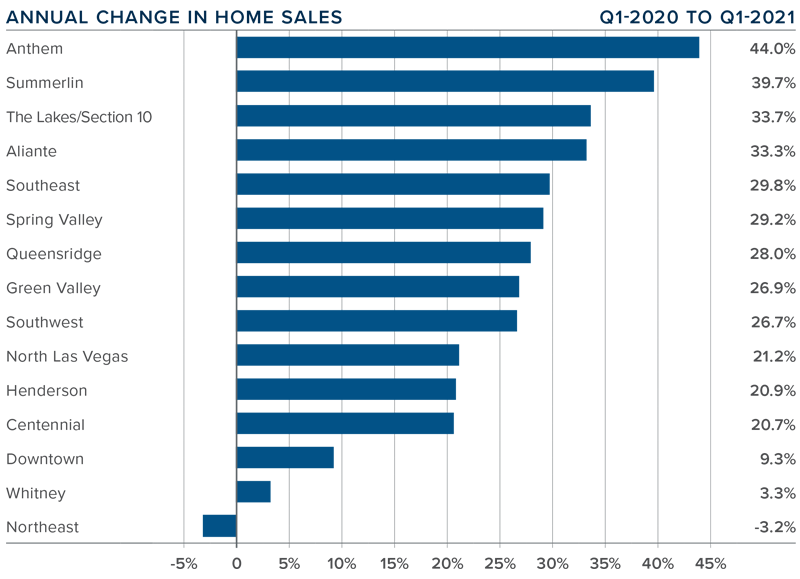
❱ A total of 9,709 homes sold in the first quarter of 2021, an increase of 23.3% compared to the same period a year ago but down 3% from the fourth quarter of 2020.

❱ Pending sales, which are an indicator of future closings, rose 16.8% compared to the fourth quarter of last year, suggesting that closings in the second quarter of 2021 will likely be positive. Pending sales were also 40.2% higher than they were a year ago.

❱ Sales rose in every market other than Northeast Las Vegas, which had a very modest drop. The Anthem area saw significant growth in sales, but it is worth noting that all but two markets saw double-digit growth in sales.

❱ Listing activity is still very low, with the average number of homes for sale down 52.2% compared to a year ago and 43.9% lower than in the fourth quarter of 2020.

A bar graph showing the annual change in home sales for the Greater Las Vegas, Nevada area.

nevada Home Prices

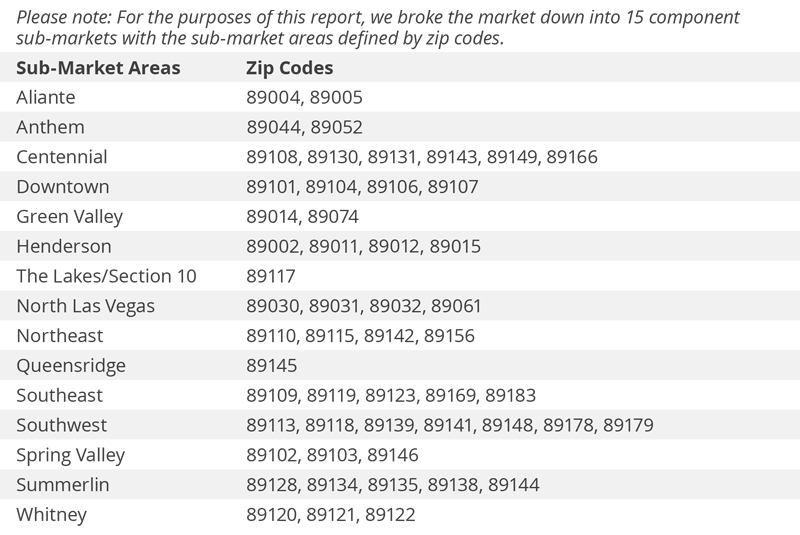
A chart showing the sub-market areas and their corresponding zip codes in the Greater Las Vegas, Nevada area.

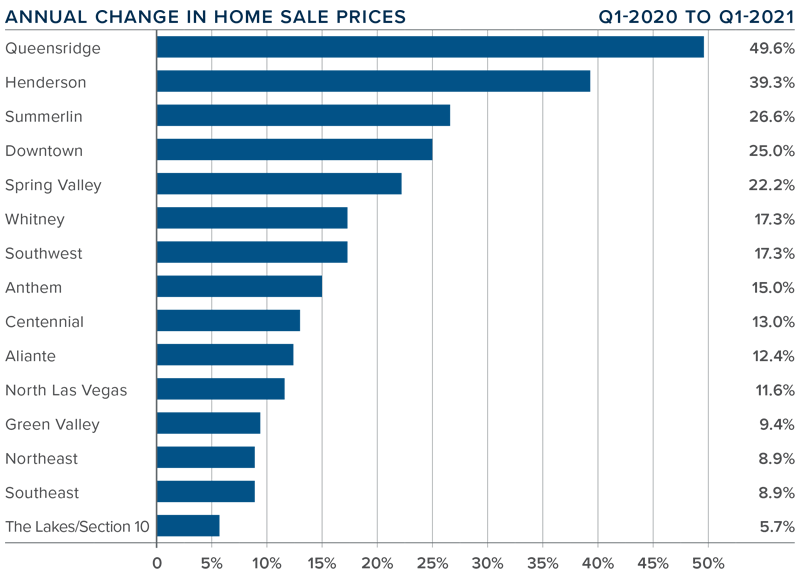
❱ With sales rising and so few homes for sale, it’s not surprising that home prices continue to rise. The average sale price in the first quarter rose 21.1% year over year to $396,020. Prices were also up by 3.3% compared to the final quarter of 2020.

❱ Despite rising mortgage rates, price growth continues at well above average levels. It’s unclear at the moment when this might change.

❱ Prices rose in every sub-market compared to the same quarter last year. All but four neighborhoods experienced double-digit gains.

❱ The takeaway is that demand still exceeds supply, and this is causing prices to continue to rise rapidly.

A bar graph showing the annual change in home sale prices in the Greater Las Vegas, Nevada area.

Days on Market

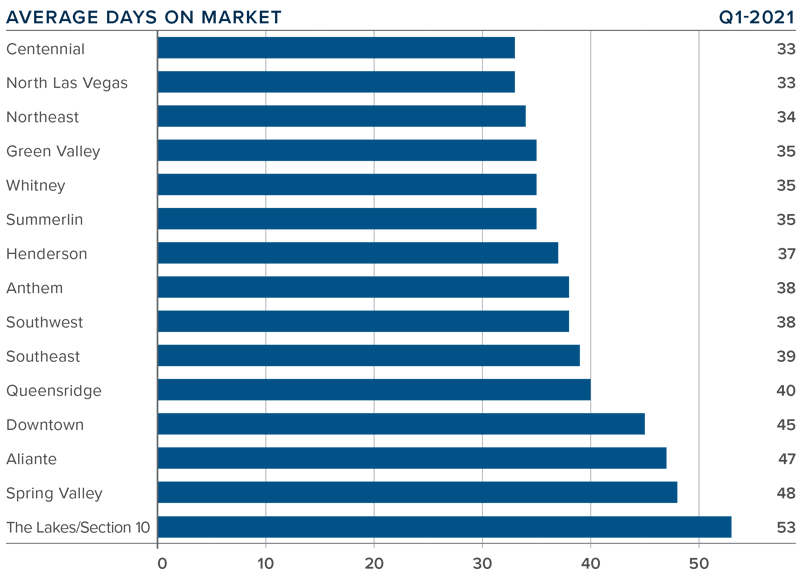
❱ The average time it took to sell a home in the region dropped ten days compared to the first quarter of 2020.

❱ It took an average of 39 days to sell a home in the first quarter of 2021, which was two more days than in the prior quarter.

❱ Days on market dropped in all but two neighborhoods contained in this report compared to a year ago. The exceptions were Queens Ridge (+1 day) and The Lakes/Section 10 (+3 days).

❱ The greatest drop in market time was in the Summerlin market, where the length of time it took to sell a home dropped 18 days compared to a year ago.

A bar graph showing the average days on market for homes in the Greater Las Vegas, Nevada area.

Conclusions

A speedometer graph indicating a seller's market in the Greater Las Vegas, Nevada area.

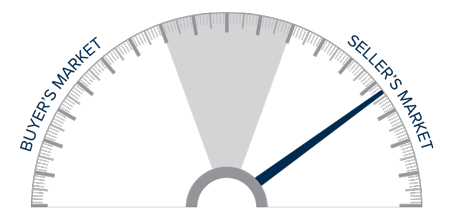
This speedometer reflects the state of the region’s real estate market using housing inventory, price gains, home sales, interest rates, and larger economic factors.

The Las Vegas economy continues to improve from the impact of COVID-19, and demand for housing remains very strong. Even in the face of rising mortgage rates and limited options of homes for sale, buyers remain engaged. Naturally, these conditions favor home sellers, so I am moving the needle a little more in their favor.


About Matthew Gardner

Matthew Gardner - Chief Economist for Windermere Real Estate

As Chief Economist for Windermere Real Estate, Matthew Gardner is responsible for analyzing and interpreting economic data and its impact on the real estate market on both a local and national level. Matthew has over 30 years of professional experience both in the U.S. and U.K.

In addition to his day-to-day responsibilities, Matthew sits on the Washington State Governors Council of Economic Advisors; chairs the Board of Trustees at the Washington Center for Real Estate Research at the University of Washington; and is an Advisory Board Member at the Runstad Center for Real Estate Studies at the University of Washington where he also lectures in real estate economics.