BuyingSelling November 30, 2022

Real Estate Terminology: Contingent, Pending, Under Contract, and More

Different real estate transactions have different conditions based on the status of the listing. The following information is meant to clarify some common real estate terms that describe a home for sale and its position in the closing process.

For sellers, understanding this terminology will inform your conversations with your agent when it comes time to sell. And for buyers, it helps to be familiar with these terms when searching for your next home and how they factor into making an offer.

What is the difference between pending and under contract?

Pending: When a home is listed as “pending” it means the seller has accepted the buyer’s offer and the sale will most likely be finalized after a successful final inspection and the buyer securing financing. For sellers, reaching the pending stage means the finish line is within reach, but your home is still not officially off the market.

Buyers who notice homes listed as pending should know that an agreement between the seller and another buyer has already been reached and that they are headed for closing. However, even though the chances are unlikely, it is still possible that the buyer backs out and the deal falls through.

Under Contract: A home that’s listed as “under contract” is not as far along in the selling process as a home that’s pending. It means the seller has accepted a buyer’s offer, but there are certain contingencies that must be met before the deal goes final.

Buyers who see a home listed as “under contract” may still reach out to the seller’s listing agent to make a backup offer, unless the contract that’s already in place contains a clause preventing it.


In a modern office, a man and woman shake hands with their real estate agent as they go over the terms of a real estate contract.

Image Source: Getty Images – Image Credit: xavierarnau


What does contingent mean in real estate?

Contingencies dictate what must happen in a real estate transaction for the contract to become legally binding, giving the buyer or seller the right to back out of the contract if their conditions aren’t met. A property listed as “contingent” means that the seller has accepted an offer, but the deal still hinges on the buyer satisfying certain contingencies to continue. And once those contingencies have been met, the sale can go through as planned.

There are a variety of contingencies that protect buyers and sellers against the bumps in the road along their journey of buying or selling a home. A home sale contingency, for example, allows a buyer to tie their offer on a new home to the successful sale of their existing one. This contingency is beneficial to those who are buying and selling a home at the same time. It’s important for buyers to work with their agent to determine the strongest offer considering the market conditions in the area.

What is closing in real estate?

Closing refers to the homestretch of a real estate agreement between a buyer and seller, leading to the transfer of ownership. Both parties agree on a closing date and see the deal through to its completion. During closing, the buyer will deposit their earnest money in an escrow account, a home inspection is performed, the buyer secures financing to purchase the home, and both parties pay their respective closing costs. For more information on what to do while your home is on the market, visit our Home Selling Guide:


­­­­­­Featured Image Source: Getty Images – Image Credit: Morsa Images

Design November 28, 2022

A-Frame Style Architecture

Some architectural styles go hand in hand with certain environments. A-Frame architecture is a popular design of lodge-style homes, cabins, and other dwellings in wooded or mountainous areas. Its steeply angled roofline is its most defining characteristic, giving the homes designed in this style a truly unique aesthetic.

A-Frame Style Architecture

Any home designed with an A-Frame architectural style stands out amongst its neighbors. The roof structure that starts near the foundation and rises together to a point at the roof’s apex, creating a capital “A” shape, is a unique take on what is usually a more horizontal line elsewhere in residential home design. The vertical nature of an A-Frame roof allows snow to easily slide off rather than accumulate and cause damage. This is just one reason why these homes are so popular as cabins, lodges, and mountain homes in snowy climates.


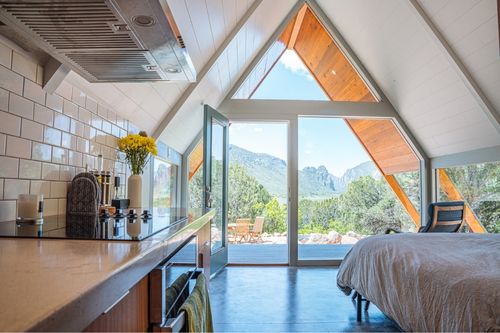
The inside of an A-Frame loft. The roof structure is wide at floor level, rising to a joined point at the top. A triangular window is constructed in the A-Frame shape, on the bottom portion of the window, a glass door is open to an open deck. In the foreground, there is a kitchen counter on the left and a comfortable bed on the right.

Image Source: Getty Images – Image Credit: Jeremy Poland


A-Frame designs are often used in vacation homes. Their unique structures compliment forested and mountainous landscapes, making them a perfect choice for homeowners looking to purchase or build vacation homes in natural surroundings. Usually two- or three-story buildings, A-Frames typically utilize the top floor as a loft. The roof lines make a triangular shape, perfect for large windows that let in lots of natural light and capture panoramic views. Relatively simple to design, A-Frame homes often have smaller living spaces due to the decreasing square footage from bottom to top.


Three people enjoying a vacation on the porch of an A-Frame cabin on a cold day. Behind them, the cabin is stained black, with open French doors leading to the back porch.

Image Source: Getty Images – Image Credit: skynesher


A-Frame homes have become so popular that prefabricated design kits are now widely available. Building an A-Frame from scratch and purchasing a ready-made kit both have their respective advantages. The kits are generally faster to build, cut down on wasted materials, and give you the opportunity to build your own cabin home. Building from scratch gives you more control over the elements of design and allows you to make modifications as desired before the home is finished. Between the two options, what’s more affordable depends on the size of the home, whether additional preparatory work is needed on the property before building, contracting costs, and more.

To learn more about A-Frame homes, cottages, colonial style, and other home designs, head to our Architectural Styles page:

Windermere – Architectural Styles


­­­­­­Featured Image Source: tyerivercabinco.com – Image Credit: Kyle Smith

Buying November 21, 2022

Homeownership Terms to Know: Rent-Back Agreement, Joint Tenancy & More

From the outside, buying a home may seem like a zero-sum game: the seller relinquishes ownership of a property to the buyer in exchange for money and the buyer becomes the property’s new outright owner. However, there’s more nuance to homeownership than meets the eye. The following homeownership agreements provide alternatives to a traditional home purchase. These options may be right for you when searching for your next home.

Homeownership Terms to Know

Rent-Back Agreement

A rent-back agreement (also known as a sale lease-back) is tailor-made for homeowners who are buying a home while selling their current one. Buying a home and selling a home are both significant undertakings in their own right, but when combined, everything is heightened. For all your planning, successfully executing both transactions is predicated on a variety of factors, including the local market conditions in both places.

A rent-back agreement is a clause in the sales contract that allows the seller to rent their old home from the buyer for an agreed-upon period of time before the buyer moves in. The agreement will include the length of the rental period and the seller’s rental costs, while spelling out the responsibilities of each party during the transition.

These agreements are mutually beneficial to buyers and sellers. Not only do sellers buy themselves time to find their new home, they collect proceeds from the sale of their current one, which can be used to help fund their new home purchase when the time comes. The money collected from sellers’ rent payments is an obvious bonus for buyers. And in a competitive market, making an offer that gives the seller flexibility in their moving timeline may help it stand out amongst the competition.


A real estate agent tours a home with two buyers. They have a brief meeting in the living room where the agent shows them paperwork for the home purchase.

Image Source: Getty Images – Image Credit: FG Trade


Joint Tenancy

When two or more people purchase a property together, Joint Tenancy with Right of Survivorship (JTWROS) requires that all co-buyers hold an equal interest in the property and that they all come into ownership through the same title at the same time. If one co-owner dies, ownership passes to the other co-owner—this is known as Right of Survivorship.

This form of co-buying a home presents an opportunity to prospective home buyers who may not yet have the means to purchase a home on their own by combining their buying power with that of their co-buyer. However, entering a real estate transaction with a co-buyer means that you’re financially tied together, which opens the door for added risk.

Tenancy In Common

When co-buyers hold a title as tenants in common, shares of the property can be divided equally or unequally. But even with a disparity in ownership percentage, no one owner may claim sole ownership of the property. When a tenant in common passes away, their ownership is bequeathed to their designated heir.

Tenancy In Severalty

Unlike Joint Tenancy and Tenancy in Common, Tenancy in Severalty represents an agreement in which one individual, corporation, or entity owns the property and does not share ownership with anyone. 

To learn more about the homeownership options available to you, and for help searching for your next home, connect with a local, experienced Windermere agent:


­­­­­­Featured Image Source: Getty Images – Image Credit: ArLawKa AungTun

BuyingSelling November 18, 2022

The Importance of Working with an Experienced Equestrian Real Estate Agent

Equestrian properties are not your typical residential homes. The land serves a purpose beyond addressing the homeowner’s needs, and everything on the premises revolves around making sure the horses are at their best. And horses are not your average domestic pets. Tending to them is a full-time job that consists of constant hard work. When it comes to buying and selling these properties, it’s important to work with an agent who understands these facets of equestrian life and everything they entail.

The Importance of Working with an Experienced Equestrian Real Estate Agent

Real estate agents who either grew up around horses or have many years’ worth of experience working with equestrian buyers and sellers are uniquely qualified to understand your needs as a buyer or seller of an equestrian property.

A particular region’s climate, for example, will present unique challenges for equestrian buyers looking to build out their property to accommodate their specific riding discipline. Only an experienced equestrian agent can provide the proper guidance on property additions and maintenance, as well as how those recommendations align with local zoning regulations. For those looking to sell their equestrian property, it’s imperative that they work with a listing agent who understands the property and how to market it to the right buyers.

Equestrian advisors also understand the emotions that come with equestrian property ownership. Taking care of horses is a significant undertaking, financially and emotionally. Buyers and sellers may set logic to the side and make decisions based on emotions, rightfully so, given how heavily invested they are in the wellbeing of their animals. Equestrian advisors know how to interpret the emotions behind these decisions and guide their clients toward logical solutions throughout the buying/selling process.


A mare and her colt graze in a pasture on an equestrian property.

Image Source: Getty Images – Image Credit: narawon


Helpful Questions to Ask an Equestrian Real Estate Agent

Finding the right agent to sell your equestrian property or finding the right buyer’s agent takes time, but you can set yourself up for success by knowing which questions to ask. The following list of questions will help you identify a candidate with equestrian experience.

  • Did you ride / were you around horses growing up?
  • Do you have experience working on an equestrian property?
  • Do you currently own horses?
  • What are your real estate certifications and designations?
  • Could you share testimonials from past clients?

For assistance planning an equestrian property sale or purchase, or for answers to your questions, connect with an experienced Equestrian Advisor:

Windermere Equestrian Advisors


­­­­­­Featured Image Source: Getty Images – Image Credit: volgariver

Living November 16, 2022

The Benefits of Adding a Catio to Your Home

Cat owners are often faced with many considerations as they fill their homes with toys and cat trees to appease the kings and queens of the household. One such consideration is how to best use the space. Adding a catio to your home will help keep your cat entertained and safe and can be easily customized to fit the needs of any living space.

The Benefits of Adding a Catio to Your Home

A catio can offer a wide range of benefits for you and your cat, including daily enrichment opportunities. Catios provide easy access to the outdoors where they can stimulate their senses. By providing this connection to the outside world, cats can independently spend their days as they please with a wide variety of options to choose from.

Catios also keep your feline friends safe from the dangers that lurk outside. While they’re able to enjoy the outdoors, the enclosed space keeps them nearby while keeping predators out. This prevents accidents with cars on a busy street and run-ins with potentially harmful animals found in residential areas such as raccoons, and in certain areas, coyotes. It also keeps out other cats, preventing exposure to diseases and accidental pregnancies.


A Tonkinese cat about to jump onto a tree outside in the safety of a cat proofed garden catio with flowers in the background.

Image Source: Getty Images – Image Credit: ahloch


In addition to the benefits catios provide for your furry friend, you will also improve the livability of your home by reducing the damage to your furniture and rugs or carpet. When your cats can enjoy that space, they are less likely to exert their pent-up energy on your carpeted and upholstered pieces.

For those cats who act on their hunting instincts, a catio is also a great way to keep local wildlife out of your home. From their perch in their enclosure, they will get to smell and watch birds, mice, and rabbits, but they won’t have the opportunity to hunt them. Saving these lives helps your neighborhood’s ecosystem and saves you from having to clean up the mess afterwards.

Providing a litter box outside can also improve your indoor air quality by reducing smells, chemicals, and bacteria associated with cat litter. Of course, it’s not wise to replace an indoor litter box with an outdoor one, but by adding another one that’s nearby, your cat will use the indoor box less.

What Can You Do with a Catio?

The simple answer: anything you want. Catios are customizable for your space and your cat’s interests. Answering these two questions will help you start the process of designing or choosing a design to build.

  1. How much space can you offer to the enclosure?
  2. How will the cat(s) enter the enclosure from the house?

You may also want to consider what kind of exposure to the elements you’re comfortable with, whether it’s open air or if you need a little more protection from the elements with a solid exterior. While in some areas wire fencing might be all that’s needed, regions with harsher climates may require a more robust setup, such as insulated windows.

Catio Options

If you have a smaller space, you may consider a catio attached to a window, which won’t take up any additional square footage. Much like a garden box, you can attach a small shelf-like enclosure just outside your window and stretch it as far out as desired. The entry point can be the window, making it easy to open and close.


A shot from indoors looking outdoors of a gray cat sitting in a catio lined with wire on a window ledge.

Image Source: Shutterstock – Image Credit: SvetMedvedeva


A brown mink cat lounging in their catio enclosure enjoying the sun from a perch above.

Image Source: Getty Images – Image Credit: ahloch


If you have a yard, you can give your cat a tunnel. A simple addition to the home, attach an elongated box that juts out into the yard for your cat to explore and get a 360-degree view of the elements. You can attach this to an existing cat door or add a cat door on an exterior wall.

For those with a larger space, or if you already have a patio set up, you can build out a catio like an extension on your home. Attach the large enclosure to the exterior and use either a window or cat door for entry. Use the structure to offer a multitude of options on the outermost walls, like shelves, ramps, and hammocks. Customize it with your cat’s favorite things, like scratching posts and pet-safe plants. You can even add a chair for yourself in there if you want!

For more ideas on caring for your pets, home maintenance, and more, visit the Living category of our blog: 

Windermere Blog – Living 


Featured Image Source: Getty Images – Image Credit: Moyo Studio

Market News November 14, 2022

Matthew Gardner’s Top 10 Predictions for 2023


This video shows Windermere Chief Economist Matthew Gardner’s Top 10 Predictions for 2023. Each month, he analyzes the most up-to-date U.S. housing data to keep you well-informed about what’s going on in the real estate market.


Matthew Gardner’s Top 10 Predictions for 2023

1. There Is No Housing Bubble

Mortgage rates rose steeply in 2022 which, when coupled with the massive run-up in home prices, has some suggesting that we are recreating the housing bubble of 2007. But that could not be further from the truth.

Over the past couple of years, home prices got ahead of themselves due to a perfect storm of massive pandemic-induced demand and historically low mortgage rates. While I expect year-over-year price declines in 2023, I don’t believe there will be a systemic drop in home values. Furthermore, as financing costs start to pull back in 2023, I expect that will allow prices to resume their long-term average pace of growth.

2. Mortgage Rates Will Drop

Mortgage rates started to skyrocket at the start of 2022 as the Federal Reserve announced their intent to address inflation. While the Fed doesn’t control mortgage rates, they can influence them, which we saw with the 30-year rate rising from 3.2% in early 2022 to over 7% by October.

Their efforts so far have yet to significantly reduce inflation, but they have increased the likelihood of a recession in 2023. Therefore, early in the year I expect the Fed to start pulling back from their aggressive policy stance, and this will allow rates to begin slowly stabilizing. Rates will remain above 6% until the fall of 2023 when they should dip into the high 5% range. While this is higher than we have become used to, it’s still more than 2% lower than the historic average.

3. Don’t Expect Inventory to Grow Significantly

Although inventory levels rose in 2022, they are still well below their long-term average. In 2023 I don’t expect a significant increase in the number of homes for sale, as many homeowners do not want to lose their low mortgage rate. In fact, I estimate that 25-30 million homeowners have mortgage rates around 3% or lower. Of course, homes will be listed for sale for the usual reasons of career changes, death, and divorce, but the 2023 market will not have the normal turnover in housing that we have seen in recent years.

4. No Buyer’s Market But a More Balanced One

With supply levels expected to remain well below normal, it’s unlikely that we will see a buyer’s market in 2023. A buyer’s market is usually defined as having more than six months of available inventory, and the last time we reached that level was in 2012 when we were recovering from the housing bubble. To get to six months of inventory, we would have to reach two million listings, which hasn’t happened since 2015. In addition, monthly sales would have to drop below 325,000, a number we haven’t seen in over a decade. While a buyer’s market in 2023 is unlikely, I do expect a return to a far more balanced one.

5. Sellers Will Have to Become More Realistic

We all know that home sellers have had the upper hand for several years, but those days are behind us. That said, while the market has slowed, there are still buyers out there. The difference now is that higher mortgage rates and lower affordability are limiting how much buyers can pay for a home. Because of this, I expect listing prices to pull back further in the coming year, which will make accurate pricing more important than ever when selling a home.

6. Workers Return to Work (Sort of)

The pandemic’s impact on where many people could work was profound, as it allowed buyers to look further away from their workplaces and into more affordable markets. Many businesses are still determining their long-term work-from-home policies, but in the coming year I expect there will be more clarity for workers. This could be the catalyst for those who have been waiting to buy until they know how often they’re expected to work at the office.

7. New Construction Activity Is Unlikely to Increase

Permits for new home construction are down by over 17% year over year, as are new home starts. I predict that builders will pull back further in 2023, with new starts coming in at a level we haven’t seen since before the pandemic.

Builders will start seeing some easing in the supply chain issues that hit them hard over the past two years, but development costs will still be high. Trying to balance homebuilding costs with what a consumer can pay (given higher mortgage rates) will likely lead builders to slow activity. This will actually support the resale market, as fewer new homes will increase the demand for existing homes.

8. Not All Markets Are Created Equal

Markets where home price growth rose the fastest in recent years are expected to experience a disproportionate swing to the downside. For example, markets in areas that had an influx of remote workers, who flocked to cheaper housing during the pandemic, will likely see prices fall by a greater percentage than other parts of the country. That said, even those markets will start to see prices stabilize by the end of 2023 and resume a more reasonable pace of price growth.

9. Affordability Will Continue to Be a Major Issue

In most markets, home prices will not increase in 2023, but any price drop will not be enough to make housing more affordable. And with mortgage rates remaining higher than they’ve been in over a decade, affordability will continue to be a problem in the coming year, which is a concerning outlook for first-time buyers.

Over the past two years, many renters have had aspirations of buying but the timing wasn’t quite right for them. With both prices and mortgage rates spiraling upward in 2022, it’s likely that many renters are now in a situation where the dream of homeownership has gone. That’s not to say they will never be able to buy a home, just that they may have to wait a lot longer than they had hoped.

10. Government Needs to Take Housing More Seriously

Over the past two years, the market has risen to such an extent that it has priced out millions of potential home buyers. With a wave of demand coming from Millennials and Gen Z, the pace of housing production must increase significantly, but many markets simply don’t have enough land to build on. This is why I expect more cities, counties, and states to start adjusting their land use policies to free up more land for housing.

But it’s not just land supply that can help. Elected officials can assist housing developers by utilizing Tax Increment Financing tools, whereby the government reimburses a private developer as incremental taxes are generated from housing development. There are many tools like this at the government’s disposal to help boost housing supply, and I sincerely hope that they start to take this critical issue more seriously.


About Matthew Gardner

As Chief Economist for Windermere Real Estate, Matthew Gardner is responsible for analyzing and interpreting economic data and its impact on the real estate market on both a local and national level. Matthew has over 30 years of professional experience both in the U.S. and U.K.

In addition to his day-to-day responsibilities, Matthew sits on the Washington State Governors Council of Economic Advisors; chairs the Board of Trustees at the Washington Center for Real Estate Research at the University of Washington; and is an Advisory Board Member at the Runstad Center for Real Estate Studies at the University of Washington where he also lectures in real estate economics.

Design November 9, 2022

Art Deco Interior Design

There are countless interior design styles to inspire your home décor efforts, but some stand out above the rest. Art Deco is one such style. Though its roots trace back to a specific period, its long-lasting relevance has given it the unique ability to feel vintage, modern, and timeless all at once. Whatever home décor goals you have in mind, going behind the curtain on the history and concepts of Art Deco will help inspire your efforts.

Art Deco Interior Design

Art Deco is a decorative take on modernist style from the early twentieth century. One look at interiors designed in typical Art Deco style immediately brings the elegance of the 1920s and 1930s to mind. Art Deco, like the Mid-Century Modern movement that followed it, went beyond just interior design; it encompassed fashion, architecture, the auto industry, and more. Driven by an appreciation for the modern machines of the time, Art Deco emphasized sophistication in a nontraditional sense.


A living room with art deco decorations including a chandelier, a regal tufted green couch, gold decorations, and a dark wooden piano and coffee table.

Image Source: Getty Images – Image Credit: Nikada


Art Deco in Your Home

Art Deco can help to transform your home’s interior, but you don’t have to aim for a level of opulence Jay Gatsby would approve of to reap its rewards. The concepts found in modern adaptations of Art Deco can fit any budget, and the materials used to execute it are widely available.

Art Deco Concepts

Geometry is a cornerstone of Art Deco décor. You’ll often see spaces decorated in this style using geometric shapes like chevrons and sunbursts in parquet wood flooring and tilework. Rounded corners and smooth walls are principal architectural features. Mirrors are also central to an Art Deco aesthetic, helping to create symmetry without taking away from the rest of the room. Framed mirrors and mirror walls alike are popular features.

In the style of modern and minimalist decoration, Art Deco showcases a preference for uncluttered spaces with minimal furniture, letting the decorative elements shine. Optimal furniture pieces often come with mirrored and/or veneer façades, heavy lacquer, rounded edges, and circular designs. Go for bold colors when decorating, working from a neutral base. Silver and gold feel right at home in an Art Deco environment, as do alternative neutrals such as cream and beige.


Lilac color dining room in trendy art deco style with modern furniture, served table and chairs.

Image Source: Getty Images – Image Credit: Peter_visual


Art Deco Materials

Common materials include veneer, stainless steel, and chrome. Frames for a gallery wall and tableside lamps are great uses for gold and steel, which are two signature Art Deco materials. Making smaller ornate décor choices such as intricately framed mirrors and accent lighting fixtures will help to create a regal atmosphere while staying within your budget. 

Visit our Design Styles page to learn more about common interior design styles and how you can incorporate them into your home:

Windermere – Interior Design Styles


­­­­­­Featured Image Source: Getty Images – Image Credit: imaginima

Buying November 7, 2022

House vs. Townhouse vs. Condo

Deciding between a house, townhouse, and condominium can be a difficult process. Understanding how the characteristics of each housing type aligns with your life goals and finances will help you work with your agent to identify which housing type is right for you.

How do you define a house?

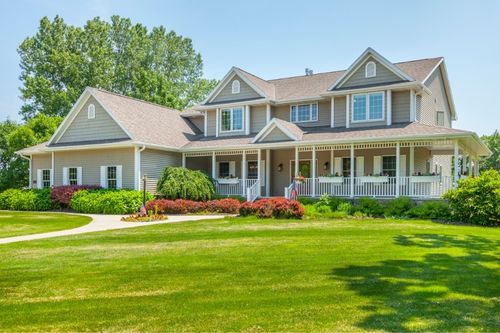
Of the three housing options, detached single-family houses offer the most freedom and privacy, but they’re also typically more expensive than a condo or townhouse. They provide the opportunity to personalize your home and make renovations as desired, barring local zoning laws. Houses don’t share walls like townhouses and condos, and typically offer private outdoor spaces. Situated on their own lots, owning a house puts the responsibility of maintaining and improving the structure and accompanying land in the homeowner’s hands.


A single-family two-story house with a large front yard, a covered wraparound porch, and an attached garage/bonus space. There are several windows lining the first and second floors and a white fence lines the porch.

Example of a single-family detached house. Image Source: Getty Images – Image Credit: JamesBrey


What’s the difference between a townhouse and a condo?

Owners of townhouses can personalize and renovate their homes (within reason) since they bear the responsibility of the home’s exterior, outdoor areas, and yard. Having said that, changes to the home’s exterior and/or additions are not permitted. Here’s the tradeoff with condominiums: although you typically have less control over things like renovations and exterior spaces, they usually require less maintenance.

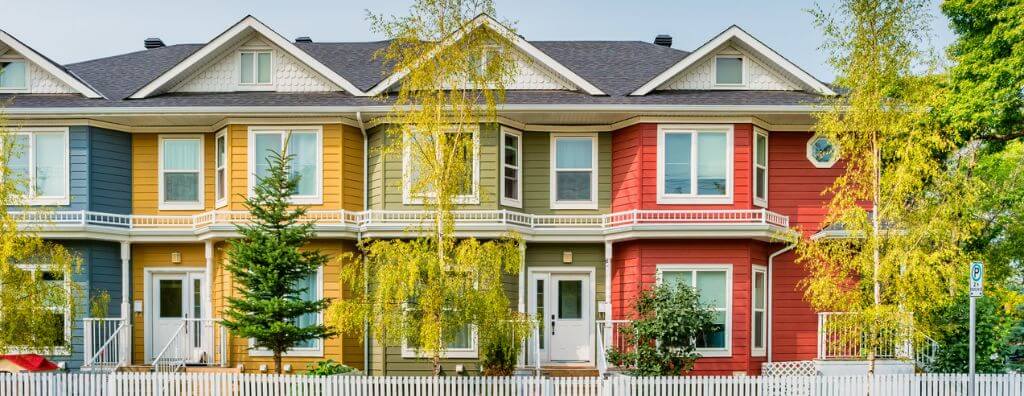
Townhouse: A townhouse building is a narrow, multileveled structure, usually with a small parcel of property in front of or behind the home. Whereas row houses share a common façade along a street, townhouses may be grouped throughout a development and may not share a consistent roofline with the other units. Somewhere between a house and a condominium, townhouses may offer the best of both worlds for some homeowners.

Like a house, townhouse owners are responsible for exterior (roof and siding) maintenance and repair. Most townhouses tend to have a small footprint and modern upgrades, and may have lower Homeowners Association (HOA) fees than condominiums due to a lesser focus on shared amenities.

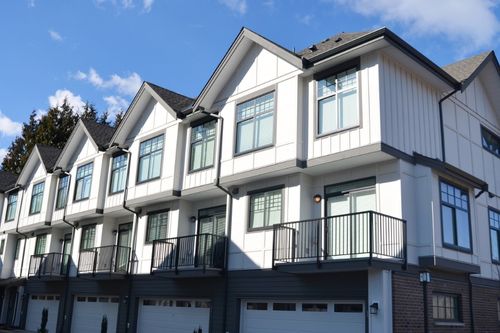
Condominium: Condominiums are divided, individually owned units of a larger, unified structure. Due to their smaller size and lack of land ownership, condominiums can often be less expensive than a townhouse or a house. However, HOA fees on top of a monthly mortgage payment can increase the cost of condominium living, depending on the amenities offered in a building. A unique characteristic of condominiums is that the exterior of the units is considered a common area, with ownership shared amongst the building’s residents.

Unlike townhouses, as a condominium owner, you’re only responsible for the inside of your unit. Residents live in close proximity and typically share amenities like gym and pool access, laundry, and other facilities.


A row of white two-story townhouses with underneath garages on a sunny day. Each townhouse has a small balcony with metal fencing on the floor above the garage and multiple windows on each floor.

Example of townhouses. Image Source: Getty Images – Image Credit: AnthonyRosenberg


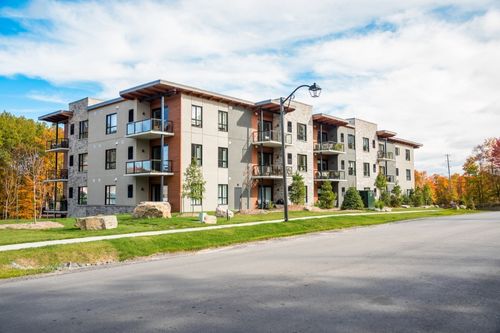
A three-story condominium housing development with gray siding and wood accents. Each condo unit has a small balcony with glass panes extending from the corners of the building. The units share a grassy yard surrounding the building.

Example of a condominium complex. Image Source: Getty Images – Image Credit: AlbertPego


Regardless of what your specific transaction looks like, saving for homeownership costs requires planning. Knowing your budget will help you work closely with your agent to find the right home. To get an idea of what’s affordable, use our free Home Monthly Payment Calculator by clicking the button below. With current rates based on national averages and customizable mortgage terms, you can get estimates of your monthly payment for any listing price.


How does your home align with your life?

House: For homeowners looking at their property as an investment in their financial future, houses are a strong choice. Houses allow homeowners to plan long-term with the knowledge that their home will build equity over time. If you are planning on putting down roots and starting a family, houses provide the best opportunity to grow into your future and are better suited for significant life changes.

Townhouse: Townhouses present a great steppingstone in the homeownership spectrum. Often located in residential neighborhoods, they are a fitting choice for those looking to graduate from rented dwellings. They’re also a great option for those wanting to downsize from a single-family home. With a townhouse, you’ll share the walls with your neighbors on either side, but not above and below. Townhouses fit into the category of “missing middle” housing types because they are considered dense housing, but fit nicely in neighborhoods with detached single-family houses.

Condominium: Condominiums appeal to homeowners looking for a low-maintenance residence, with access to shared amenities amongst a community. Condos are usually found in denser areas closer to downtown centers, shopping, and entertainment. Typically found in metropolitan environments, they are a great housing option for buyers looking to be located close to city centers and cut down on commute times to downtown areas.

After all the research, do what feels right. Whether it’s a house, townhouse, or a condo, work with your agent to find the best option for you and your future. To begin the decision process, connect with an experienced, local Windermere agent today:


­­­­­­Featured Image Source: Getty Images – Image Credit: benedek

Market News November 3, 2022

Q3 2022 Northern California Real Estate Market Update

The following analysis of select counties of the Northern California real estate market is provided by Windermere Real Estate Chief Economist Matthew Gardner. We hope that this information may assist you with making better-informed real estate decisions. For further information about the housing market in your area, please don’t hesitate to contact your Windermere Real Estate agent.


Regional Economic Overview

Over the past year, the Northern California markets covered by this report added 159,000 jobs. Given these solid job gains, it was no surprise that the unemployment rate fell from 5.6% to 2.9%. By county, the lowest jobless rate was in Santa Clara County (2.3%) and the highest rate was in Shasta County at 4.3%. The labor force continues to expand, which is a positive signal of the relative strength of the economy in Northern California. The region is only 17,000 jobs short of its pre-pandemic peak employment.

Northern California Home Sales

In the third quarter of this year, 11,454 homes sold, which is down 32.5% from a year ago and down 19.5% from the second quarter.

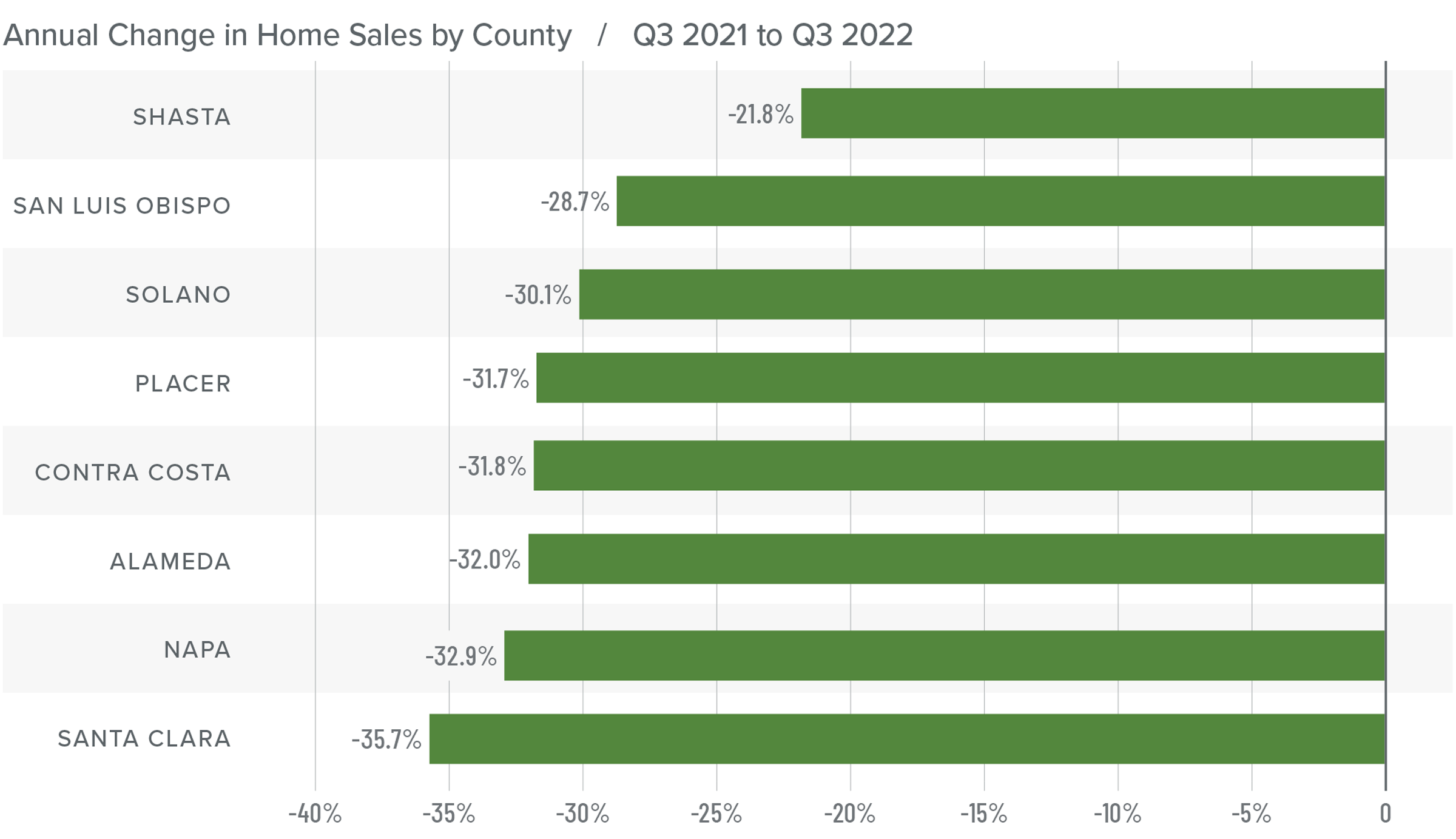
Year over year, sales fell across the board. Though the largest drop was in Santa Clara County, there were significant declines throughout the region.

The number of homes for sale continues to grow, with total average listings in the quarter up 29.2% from a year ago. There were 25.5% more homes for sale than in the second quarter.

Pending home sales fell 16.6% from the second quarter, suggesting that the market softened during the late summer months.

A bar graph showing the annual change in home sales for various counties in Northern California from Q3 2021 to Q3 2022. All counties have a negative percentage year-over-year change. Shasta County tops the list at -21.8%, followed by San Luis Obispo at -28.7%, Solano -30.1%, Placer -31.7%, Contra Costa -31.8%, Alameda -32%, Napa -32.9%, and Santa Clara at -35.7%.

Northern California Home Prices

The significant increase in mortgage rates has started to impact home prices. The average home sale price dropped .5% from a year ago and 12.6% from the second quarter of 2022.

Median listing prices rose 1.6% from the second quarter, but the increase was not widespread. Although asking prices jumped 18.8% in San Luis Obispo County and rose modestly in Napa and Shasta counties, this was offset by lower asking prices in the balance of the markets.

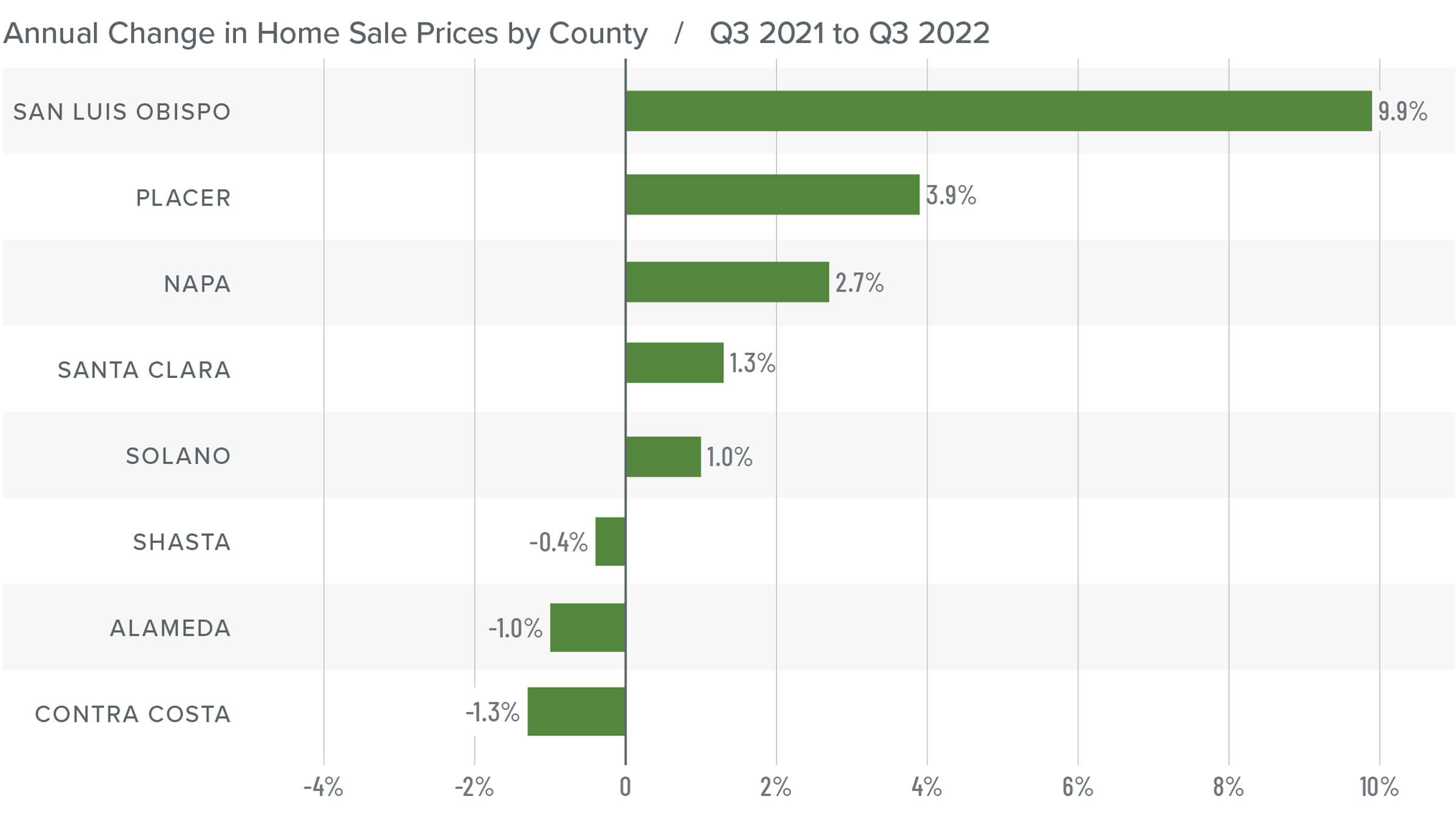
Prices rose in five of the counties contained in this report, while they fell in three. Compared to the second quarter of 2022, prices fell across the board, with double-digit drops in Alameda, Contra Costa, and Napa counties.

Financing costs are negatively impacting home prices, which I anticipate will continue through the balance of the year and into 2023.

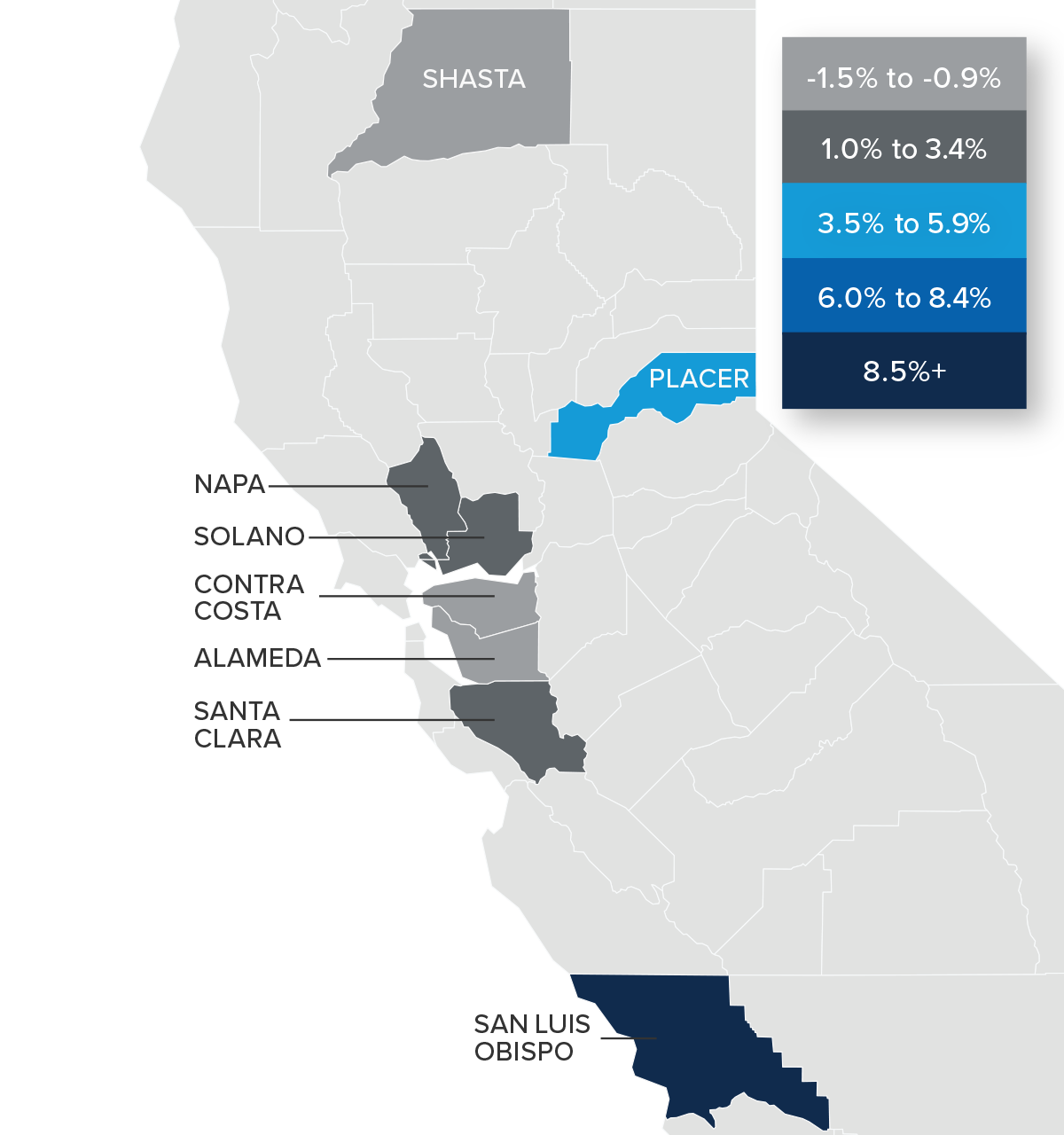
A map showing the real estate home prices percentage changes for various counties in Northern California. Different colors correspond to different tiers of percentage change. Shasta, Contra Costa, and Alameda County are in the -1.5% to -0.9% range. Napa, Solano, and Santa Clara County have a percentage change in the 1% to 3.4% range, Placer is in the 3.5% to 5.9% range, and San Luis Obispo is in the 8.5%+ range.

A bar graph showing the annual change in home sale prices for various counties in Northern California from Q3 2021 to Q3 2022. San Luis Obispo County tops the list at 9.9%, followed by Placer at 3.9%, Napa at 2.7%, Santa Clara at 1.3%, Solano at 1%, Shasta at -0.4%, Alameda at -1%, and Contra Costa at -1.3%.

Mortgage Rates

This remains an uncertain period for mortgage rates. When the Federal Reserve slowed bond purchases in 2013, investors were accused of having a “taper tantrum,” and we are seeing a similar reaction today. The Fed appears to be content to watch the housing market go through a period of pain as they throw all their tools at reducing inflation.

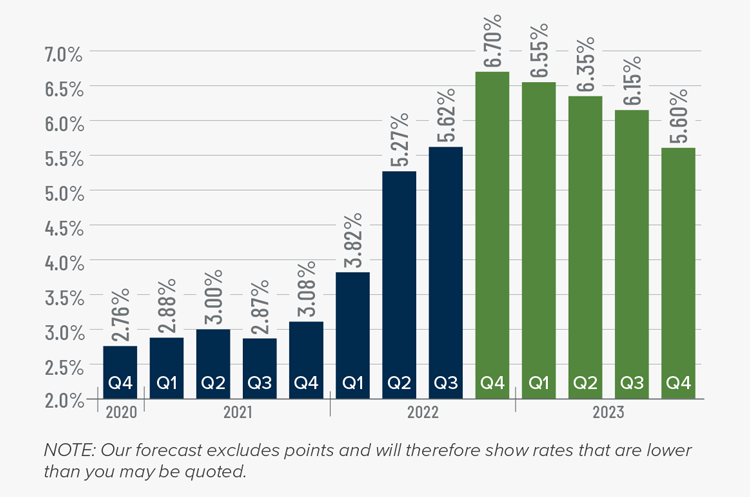
As a result, mortgage rates are out of sync with treasury yields, which not only continues to push rates much higher, but also creates violent swings in both directions. My current forecast calls for rates to peak in the fourth quarter of this year before starting to slowly pull back. That said, they will remain in the 6% range until the end of 2023.

A bar graph showing the mortgage rates from 2020 to the present, as well as Matthew Gardner's forecasted mortgage rates through Q4 2023. After the 5.62% figure in Q3 2022, he forecasts mortgage rates continuing to climb to 6.7% in Q4 2022, 6.55% in Q1 2023, 6.35% in Q2 2023, 6.15% in Q3 2023, and 5.60% in Q4 2023.

Northern California Days on Market

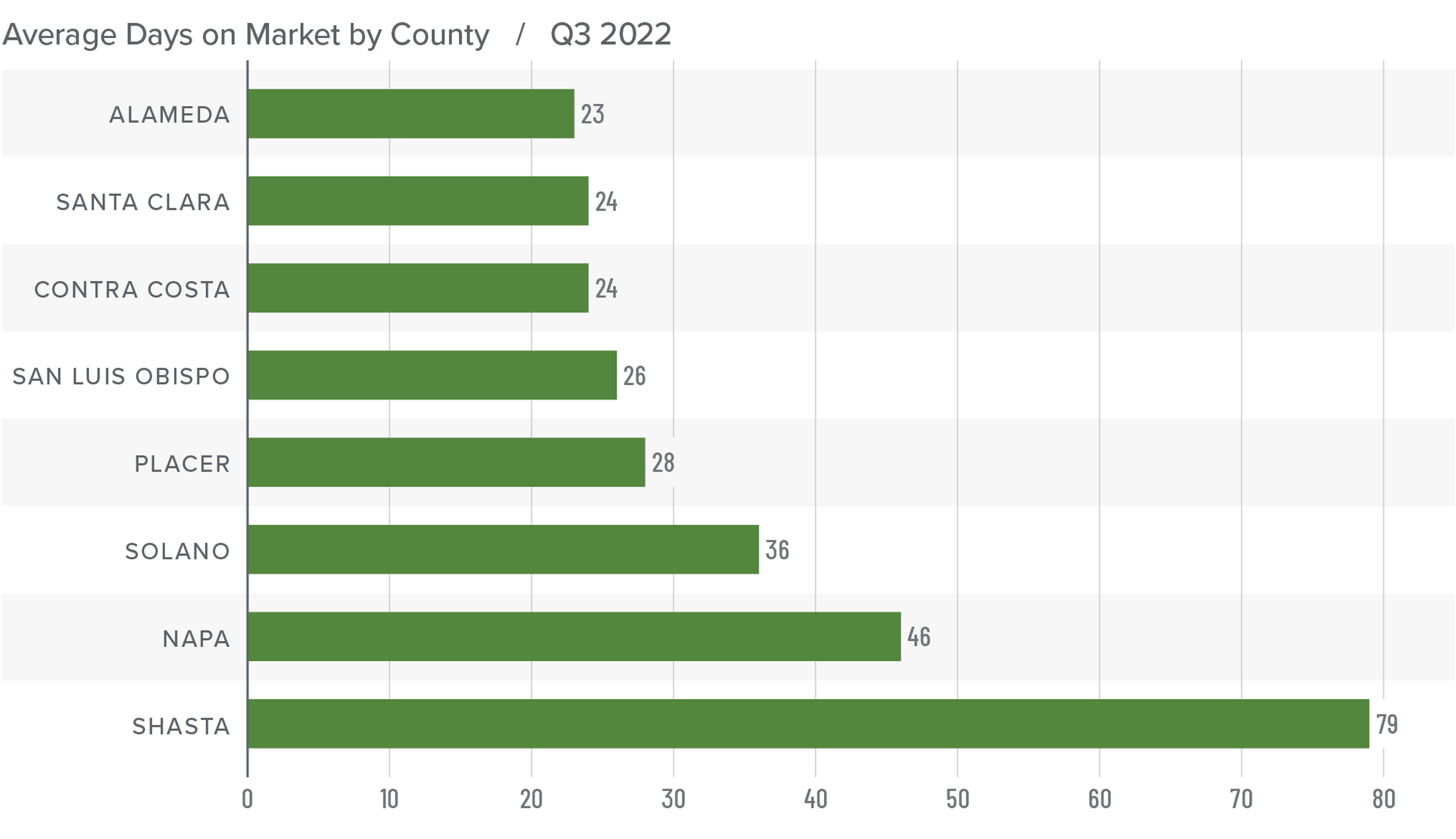
The average time it took to sell a home in the Northern California counties in this report was seven days higher than it was in the third quarter of 2021.

The length of time it took to sell a home fell in Napa County but rose across the rest of the region. Compared to the second quarter of 2022, market time rose across all counties except Placer, where it fell four days.

During the third quarter, it took an average of 35 days to sell a home, which was 9 more days than in the second quarter of this year.

The combination of more choice and very cautious buyers has led market time to increase.

A bar graph showing the average days on market for homes in various counties in Northern California for Q3 2022. Alameda County has the lowest DOM at 23, followed by Santa Clara and Contra Costa at 24, San Luis Obispo at 26, Placer at 28, Solano at 36, Napa at 46, and Shasta at 79.

Conclusions

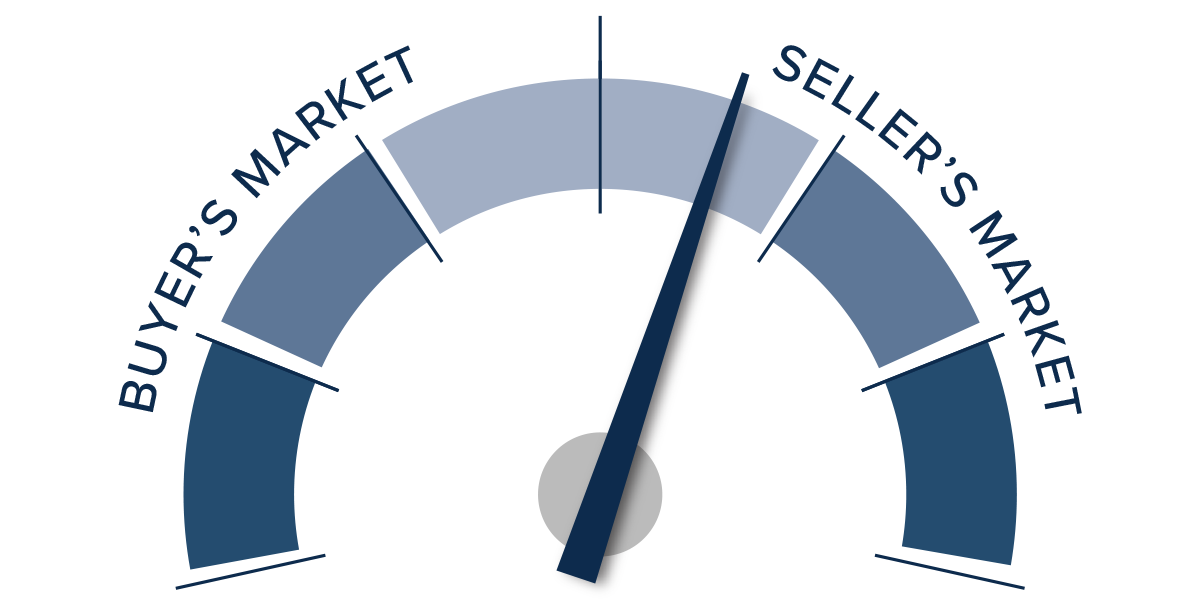
This speedometer reflects the state of the region’s real estate market using housing inventory, price gains, home sales, interest rates, and larger economic factors.

Far higher financing costs in concert with very low affordability levels are now impacting the region’s housing market. Although there may be some pain as the market continues to revert to a normal pace of price growth and sales activity, I am not overly concerned about the long-term outlook. Home values are correcting, but the adjustment will not be severe, and certainly nothing like the plummet we saw following the bursting of the housing bubble.

A speedometer graph indicating a balanced market, slightly headed toward a seller's market in Northern California in Q3 2022.

I think there are more buyers than most people might expect who are waiting for prices to correct and, more importantly, for mortgage rates to stabilize. While the market is firmly in a period of transition, it still is not a traditional buyer’s market. That said, it’s also not one that gives sellers all the control. As such, I am moving the needle more in favor of buyers, but not so far as to suggest that the tide has completely turned.

About Matthew Gardner

Matthew Gardner - Chief Economist for Windermere Real Estate

As Chief Economist for Windermere Real Estate, Matthew Gardner is responsible for analyzing and interpreting economic data and its impact on the real estate market on both a local and national level. Matthew has over 30 years of professional experience both in the U.S. and U.K.

In addition to his day-to-day responsibilities, Matthew sits on the Washington State Governors Council of Economic Advisors; chairs the Board of Trustees at the Washington Center for Real Estate Research at the University of Washington; and is an Advisory Board Member at the Runstad Center for Real Estate Studies at the University of Washington where he also lectures in real estate economics.

Living November 2, 2022

Simple Garage Makeover Ideas

For some homeowners, the garage is the focal point of their home. For others, it is simply a storage space or a place to park their vehicle. Regardless of how you use your garage, these simple garage makeover ideas can help keep you organized, boost your curb appeal, and increase your home’s value.

Simple Garage Makeover Ideas

Garage Exterior

The garage door is a natural starting point for your garage makeover. A garage door replacement is a surefire way to increase the value of your home and is a common tactic for drumming up buyer interest when preparing to hit the market. But even if you don’t have the budget for a full-scale replacement, a DIY garage door makeover can still make a big difference.

Repaint Garage Exterior

Begin by prepping your garage door for a fresh coat of paint. Clean and scrub the surface with warm soapy water. Scrape off any loose paint with a putty knife or wire brush. If scraping manually is too taxing for you, use a wire wheel brush tool. Rinse and clean the door, letting it dry completely before you begin painting.

Once you’ve covered your driveway with a tarp or plastic sheeting to protect it from paint spills, you’re ready to begin painting. Choose a complimentary color for your trim to tie together your home’s exterior color scheme. Check out different styles of garage door hardware options that match the style of your home, choose your layout, and install the pieces.


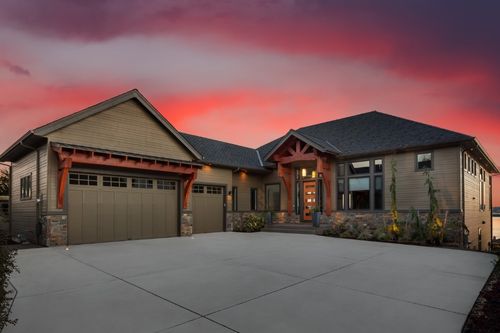
A luxury lodge-style home at sunset with timber wood framing and stone columns. The garage is attached to the home. The exterior is painted a mix of forest green and brown with deep red trim and an orange door.

Image Source: Getty Images – Image Credit: hikesterson


Garage Interior

As you turn your attention to your garage’s interior, consider refinishing the floor first. By starting with the floor, you won’t have to continually shuffle your garage items around as you continue your makeover. If you’re considering converting your garage into a home gym, factor that in as you work on the flooring.

Start by fixing any cracks or holes with a basic patch kit. Once the surface is flat, sweep and mop from end to end. If you are removing a previous layer of paint, use a buffer to jar the old paint loose before repainting. Finishing your garage floor off with epoxy will help protect it from stains and damage. Apply two coats of epoxy twenty-four hours apart, followed by a sealing topcoat.

Organize Your Garage

In just a few steps, you can turn your garage from a cluttered oversized closet into an organized storage space. Start by taking inventory of the items in your garage. Do you have lots of tools? Is the space filled with sports equipment? Grouping like items together will keep your storage orderly. Next, decide where you would like to store your items. Overhead storage racks, rollers, and ceiling storage can significantly cut down on clutter, but these storage options are best reserved for infrequently accessed or seasonal items like holiday decorations and camping gear.

Keep frequently used items within reach. Magnetic wall panels are a great resource for your everyday tools and gardening equipment. Install shelving and drawers near your workbench to keep smaller hand tools, screws, and nails tidy and organized and add labels so you can keep track of them. If space is limited, consider a wall-mounted foldable workbench.


A hardboard hanging panel in a garage full of common hand tools like screwdrivers, measuring tape, scissors, duct tape, vice grips, etc.

Image Source: Getty Images – Image Credit: Bluberries


Add Finishing Touches

Now it’s time to put the final touches on your garage makeover. Though installation may require the help of a professional, adding electrical outlets will pay dividends for the functionality of your garage. Installing bike hooks on the ceiling will help to save floor space and may provide just the clearance you need to park a vehicle inside. Lastly, consider upgrading your lighting. Newly installed lights will add value to your garage and make it safer.

For more simple design projects that can give your home a makeover, read the following:

5 Design Projects to Improve Your Backyard


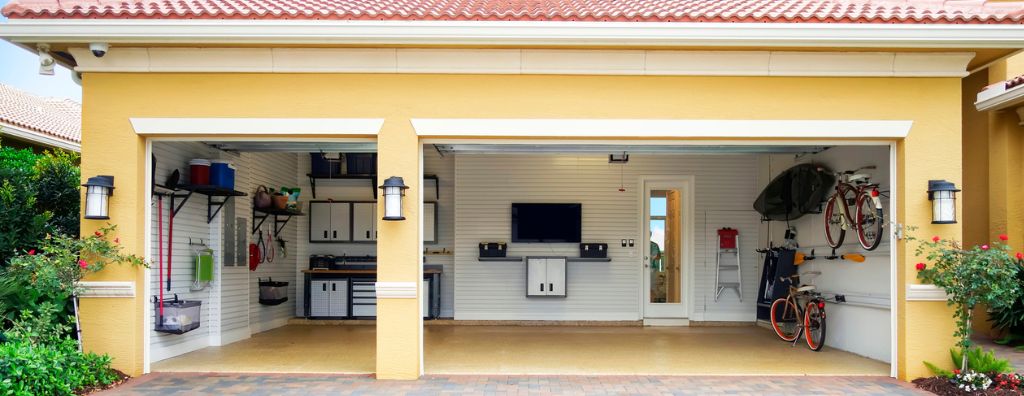
­­­­­­Featured Image Source: Getty Images – Image Credit: JodiJacobson