Facebook
 X
X
 Pinterest
 Copy Link

Every home is made up of dozens of moving parts, and none of them last forever. From appliances and flooring to roofing and siding, every component has a general life expectancy. Knowing how long these items typically last can help homeowners plan for repairs, budget for future updates, and make informed decisions when buying or selling a home.
We’re all familiar with the cliché: They just don’t build things like they used to. And while this may be true when it comes to brick siding or slate roofing, lifespans of other household components have increased in recent years. The following guide outlines the average life expectancy of common household components, based on data from the National Association of Home Builders (NAHB) along with industry estimates.
Appliances:
Among all household components, appliances tend to have the shortest lifespan because they experience daily wear and tear. Advances in technology have improved efficiency, but modern appliances also include more electronic parts, which can lead to repairs or replacement sooner than older models. Proper maintenance can help extend the life of most appliances, but these averages provide a general guideline for planning ahead.
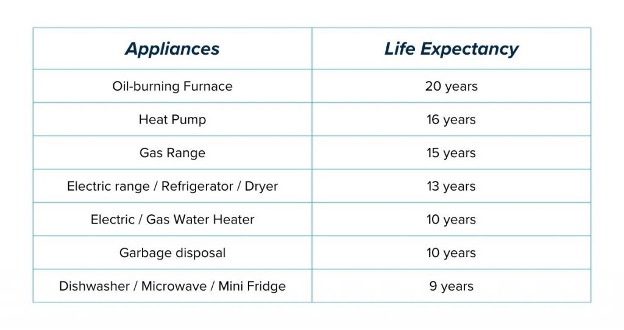
Signs It May Be Time to Replace an Appliance
Even if an appliance hasn’t reached the end of its expected lifespan, certain warning signs may mean replacement is the better option. Frequent repairs, rising energy bills, inconsistent performance, or unusual noises can all indicate that a system is wearing out.
Kitchen & Bath:
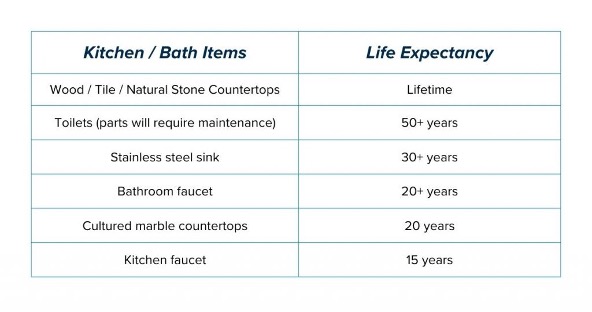
Kitchens and bathrooms see constant use, so fixtures and finishes in these spaces often wear out faster than other parts of the home. When choosing your countertops, sinks, and faucets, it helps to consider both style and durability. Some natural materials can last a lifetime, while others may need updating after a couple of decades depending on use and maintenance.
Flooring:
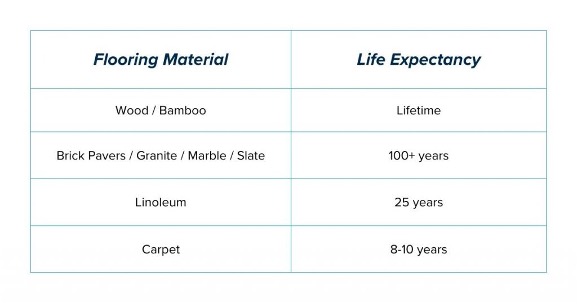
Flooring plays a major role in both the look and function of a home, but different materials have very different lifespans. High-traffic areas will naturally wear faster, while proper care and refinishing can extend the life of many surfaces. If you’re looking for longevity, wood floors are the way to go. Certain rooms in your home will be better suited for carpeting, but you can expect they’ll need replacing within a decade.
Siding & Roofing:
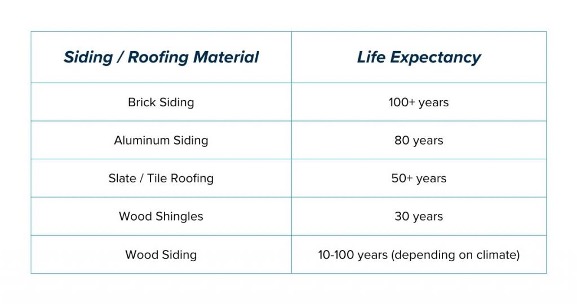
When choosing roofing and siding for your home, climate and maintenance level factor into the life expectancy of the material. However, brick siding and slate roofing are known to be dependable for decades.
Are extended warranties warranted?
Extended warranties, also known as service contracts or service agreements, are sold for all types of household items from appliances to electronics. They cover service calls and repairs for a specified time beyond the manufacturer’s standard warranty.
You will have to consider whether the cost is worth it to you. For some, it brings a much-needed peace of mind when making such a large purchase. Also consider if the cost outweighs the value of the item. In some cases, it may be less expensive to replace a broken appliance than to pay for insurance or a warranty.
Staying informed about the lifespan of your home’s appliances and systems can make homeownership more manageable and help you plan ahead with confidence. If you’re thinking about buying, selling, or making updates to your home, a Windermere agent can help you understand which improvements matter most in today’s market.