Buying January 25, 2023

How to Reduce Your Interest Rate: Mortgage Buydowns

This blog post contains contributions from Penrith Home Loans.


When mortgage rates are up, prospective buyers can often feel like they’re at a disadvantage as they go about securing a home loan. Fortunately, there are ways to lower your interest rate to make your monthly mortgage payments more affordable.

What are mortgage buydowns?

A mortgage rate buydown is a form of financing that allows you to secure a lower interest rate on your mortgage by paying more money upfront in the form of discount points, also known as mortgage points, at closing. Each discount point is equal to one percent of your total loan amount. Especially attractive in times of high mortgage rates, buydowns are offered by sellers, builders, or lenders depending on the transaction. There are two main types of mortgage interest rate buydowns: permanent and temporary.

Permanent Mortgage Buydowns

With a permanent interest rate buydown, typically the borrower, seller, or builder will contribute to the cost of buying down the rate permanently. In this situation, the borrower qualifies at the bought-down rate for the life of the loan.

Temporary Mortgage Buydowns

A temporary interest rate buydown provides cash flow for the borrower during the temporary period, but they still qualify at the higher note rate. Typically, the seller or builder will contribute to the cost of buying the rate down temporarily.


Use our Home Monthly Payment Calculator to experiment with different down payments, principal amounts, interest rates, taxes, and more for any listing price.

 

How do temporary mortgage buydowns work?

Temporary mortgage interest rate buydowns have their own unique structure. Below are three common types:

  • 1-0 Buydown Mortgage: The borrower gets a 1% discounted interest rate for the first year.
  • 2-1 Buydown Mortgage: The borrower gets a discounted interest rate for the first two years of the loan. The first year, the interest rate is 2% lower, decreasing to 1% lower the second year.
  • 3-2-1 Buydown Mortgage: The borrower gets a 3% discounted rate the first year, dropping to 2% in the second year and 1% in the third year.

Although they share certain characteristics with adjustable-rate mortgages (ARMs), temporary mortgage buydowns are slightly different. ARMs initially have a fixed interest rate period. Once the adjustable-rate period kicks in, both the interest rate and monthly payments are subject to change. With buydowns, the buyer’s interest rate doesn’t change; either the seller or lender covers part of the interest payments as outlined by the buydown’s structure.

 

A man and woman homeowner couple discuss the terms of a mortgage buydown program with their mortgage broker in a modern office setting.

Image Source: Getty Images – Image Credit: kate_sept2004


Should I permanently buy down my mortgage?

Though buying down your mortgage interest rate permanently can make the payments more affordable, if you are contributing to this cost, make sure you can withstand the heavier financial load before proceeding. It also depends on how long you plan to live in the home. For example, if you plan to move shortly after buying, the short-term savings on your mortgage may not yet break even on your upfront costs by the time you’re ready to purchase again.

Pros of Mortgage Buydowns

  • Savings on monthly mortgage payments
  • A lower rate means you could qualify for a higher loan
  • Discount points = prepaid mortgage interest, which is often tax-deductible

Cons of Mortgage Buydowns

  • Higher upfront costs of buying a home
  • If payments increase, higher risk of foreclosure
  • Less cash available for remodeling, home improvements, etc.

 

A home office desk is filled with materials for a full day’s work; a full coffee cup, a smartphone, paperwork, and a laptop with a mortgage loan application form on the screen.

Image Source: Getty Images – Image Credit: cnythzl


How much can I save with a mortgage buydown?

Here’s an example of the savings you could see with a 3-2-1 temporary mortgage buydown. Let’s say you qualify for a 30-year mortgage with a $400,000 loan amount at an interest rate of 7%. With a 3-2-1 buydown, you’d pay a 4% interest rate the first year, 5% the second year, and 6% the third year. From year four on, you’d pay 7%.


Purchase Price Down Payment Loan Amount Interest Rate APR Loan Term
$500,000 $100,000 $400,000 7% 7.125% 30 years


3-2-1 Temporary Mortgage Interest Rate Buydown


Year 1 Year 2 Year 3 Years 4-30
Interest Rate 4% 5% 6% 7%
Number of Payments 12 12 12 336
Monthly P&I Payment $1,909.66 $2,147.29 $2,398.20 $2,661.21
Total PITI Payment $1,909.66 $2,147.29 $2,398.20 $2,661.21
Monthly Reduction $751.55 $513.92 $263.01

  • Calculations provided by Penrith Home Loans
  • Temporary buydown cost as % of purchase price 3.67%


With this structure, you’d save $9,018.60 the first year, $6,167.04 the second, and $3,156.12 the third, for a total three-year savings of $18,341.76.

Thinking about buying a home? Connect with a local, experienced Windermere agent to begin your home buying journey:



­­­­­­Featured Image Source: Getty Images – Image Credit: kate_sept2004

Market News January 23, 2023

2023 Real Estate Forecast: Why This Market Won’t Be Like 2008

This video is the latest in our Monday with Matthew series with Windermere Chief Economist Matthew Gardner. Each month, he analyzes the most up-to-date U.S. housing data to keep you well-informed about what’s going on in the real estate market.


Hello there, I’m Windermere’s Real Estate’s Chief Economist Matthew Gardner and welcome to the first episode of “Monday with Matthew” for 2023. As has become tradition, this first episode of the year will be dedicated to my real estate forecast for the U.S. housing market, so let’s get straight to it.

2023 Real Estate Forecast

Existing Home Sales & Forecast

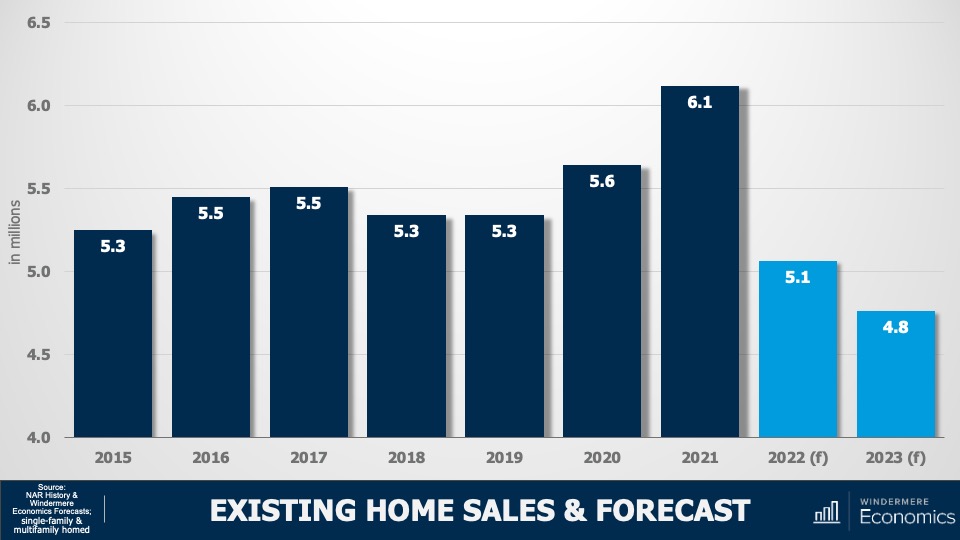
From Matthew Gardner's 2023 real estate forecast, a bar graph showing the existing home sales for the years 2015 through 2021, plus forecasts for 2022 and 2023. The y-axis is in millions and the x-axis contains the years. The numbers are as follows (in millions): 5.3 in 2015, 5.5 in 2016 and 2017, 5.3 in 2018 and 2019, 5.6 in 2020, 6.1 in 2021, 5.1 (forecasted) in 2022, and 4.8 (forecasted) in 2023.

Image Source: Matthew Gardner


U.S. home sales trended lower through all of 2022 and, although I believe that sales will still have held above five million, this certainly won’t be the case in 2023. Affordability and higher financing costs will continue to act as headwinds when it comes to sales, but I think that the bigger issue will be that listing activity will not rise significantly as we move through the year.

As I have been saying for several months now, I don’t see why many households who don’t have to move will move and lose the historically low interest rate that they currently benefit from. That said, sales will still occur this year but at just 4.8 million, sales will be lower than we have seen since 2014.

Annual Change in Median Sale Prices

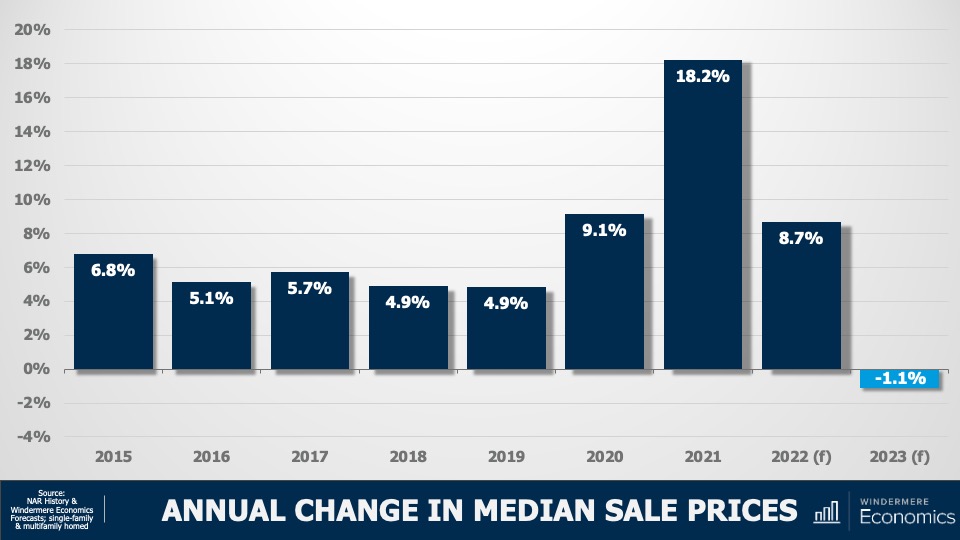
From Matthew Gardner's 2023 real estate forecast, a bar graph showing the annual change in median sale prices for homes in the U.S. real estate market. The years 2015 through 2023 are on the x-axis and percentages -4% through 20% run the length of the y-axis. The numbers are as follows: 6.8% in 2015, 5.1% in 2016, 5.7% in 2017, 4.9% in 2018 and 2019, 9.1% in 2020, 18.2% in 2021, 8.7% (forecasted) in 2022, and -1.1% (forecasted) in 2023.

Image Source: Matthew Gardner


Much has been said about the future of home prices, with some forecasters even suggesting that housing prices will collapse in a similar fashion to that seen following the bursting of the housing bubble back in 2008. Now, although price growth through the pandemic period was clearly excessive, fundamentally speaking, the two periods cannot be considered to be similar at all.

It’s my opinion that sale prices in 2023 will be very modestly lower than last year and I certainly don’t expect to see a collapse in home values.

But not all markets are created equal. The pandemic created what has become known as “Zoom-Towns.” These were cheap markets that affluent buyers flocked to because of their newly found ability to work from home and this led sale prices there to soar. It’s these locations that will likely see prices fall more significantly. Ultimately, expect to see prices fall through the first half of this year before starting to recover in the second half.

New Home Starts & Forecast (Single Family)

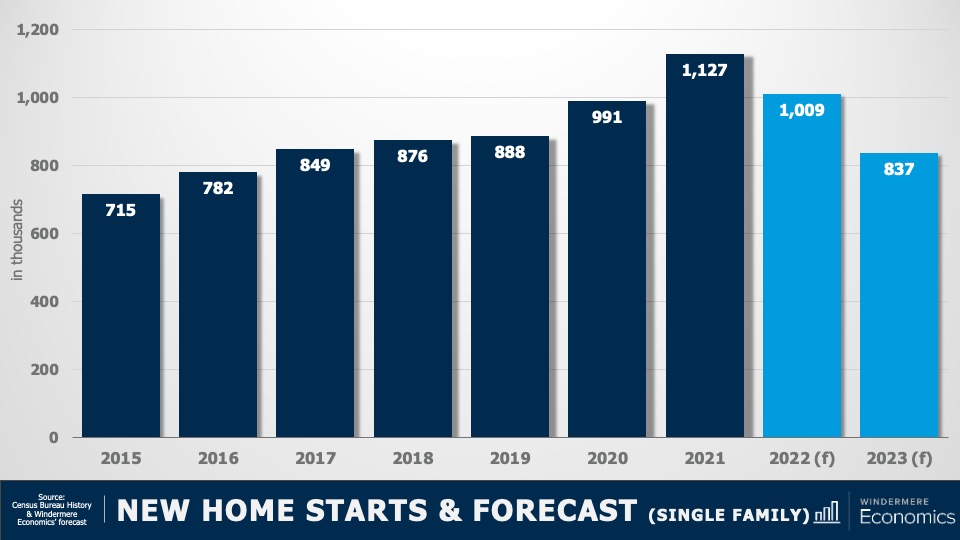
From Matthew Gardner's 2023 real estate forecast, a bar graph of the single-family new home starts. The y-axis shows numbers in thousands from 0 to 1,200 and the x-axis shows the years 2015 through 2023. The numbers are as follows: 715 in 2015, 782 in 2016, 849 in 2017, 876 in 2018, 888 in 2019, 991 in 2020, 1,127 in 2021, 1,009 (forecasted) in 2022, and 837 (forecasted) in 2023.

Image Source: Matthew Gardner


Looking now at the new construction market, housing starts fell last year as construction costs remained high and mortgage rates rose which lowered demand.  And I’m afraid that I do not see 2023 as being one where builders will deliver more inventory, with starts pulling back to a level the country hasn’t seen since 2016. That said, I am expecting a recovery in 2024 when new home starts will break back above the 1,000,000 level.

New Home Sales Forecast

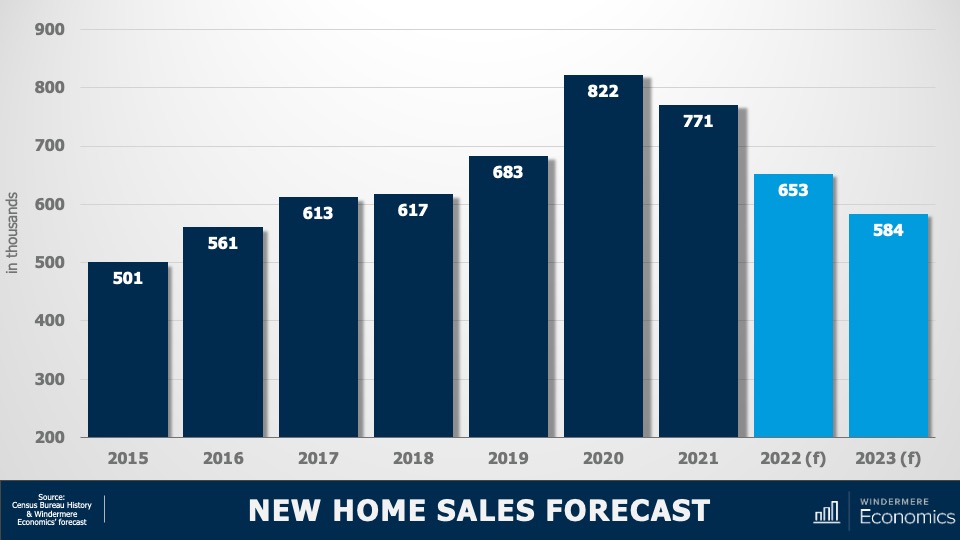
From Matthew Gardner's 2023 real estate forecast, a bar graph showing the new home sales numbers from the U.S. housing market. The y-axis shows (in thousands) the numbers 200 to 900 and the x-axis shows the years 2015 through 2023. The number of new home sales are as follows (in thousands): 501 in 2015, 561 in 2016, 613 in 2017, 617 in 2018, 683 in 2019, 822 in 2020, 771 in 2021, 653 (forecasted) in 2022, and 584 (forecasted) in 2023.

Image Source: Matthew Gardner


New home sales in 2023 will fall further coming in below 600,000 but there is some light at the end of the tunnel with sales picking up fairly significantly again in 2024. We all understand that the country has a significant undersupply of ownership housing, but the costs associated with building new homes is still making it remarkably hard for builders even though they understand that demand will be significant for at least the next decade and a half given current demographics.

But the problem they will continue to face is that demand will primarily come from entry level buyers and, simply put, the cost to build a home precludes many developers from being able to meet this demand.

Average 30-Year Mortgage Rate & Forecast

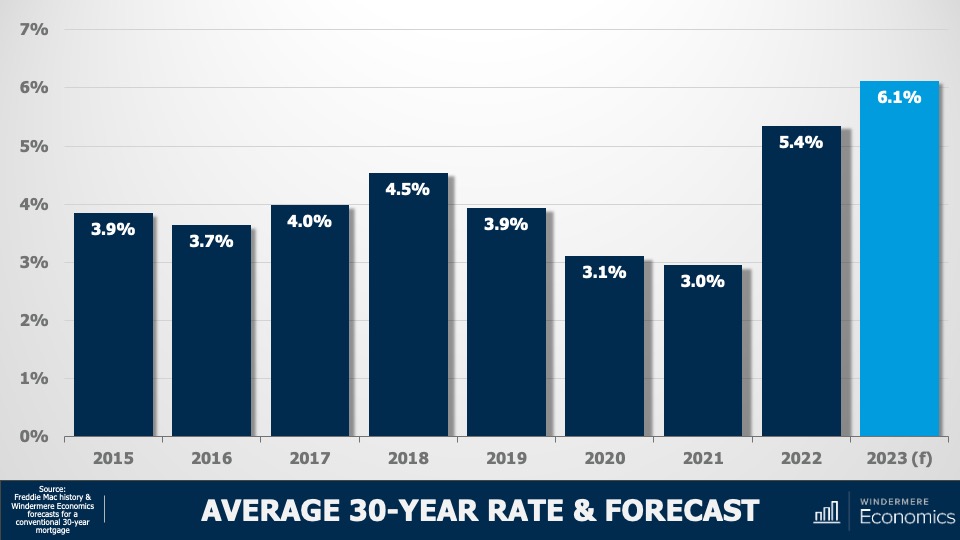
A bar graph showing the average 30-year mortgage rate for the years 2015 through 2023. The y-axis shows percentages ranging from 0% to 7% and the years are displayed on the x-axis. The numbers are as follows: 3.9% in 2015, 3.7% in 2016, 4% in 2017, 4.5% in 2018, 3.9% in 2019, 3.1% in 2020, 3% in 2021, 5.4% in 2022, and 6.1% (forecasted) in 2023. This is the mortgage rate component of Matthew Gardner's 2023 real estate forecast.

Image Source: Matthew Gardner


And finally, my forecast for mortgage rates in 2023. Although this might not look good at all, as they say, “the devil is in the details.” Rates skyrocketed last year as the Fed stopped buying treasuries and mortgage-backed securities and, although they are off the highs we saw toward the end of last year, they are still significantly higher today than the market has become used to seeing.

As you can see here, I’m anticipating the average 30-year conventional rate to average 6.1% in 2023, but my forecast is actually a bit better than this shows.

Average 30-Year Mortgage Rate Forecast 2023

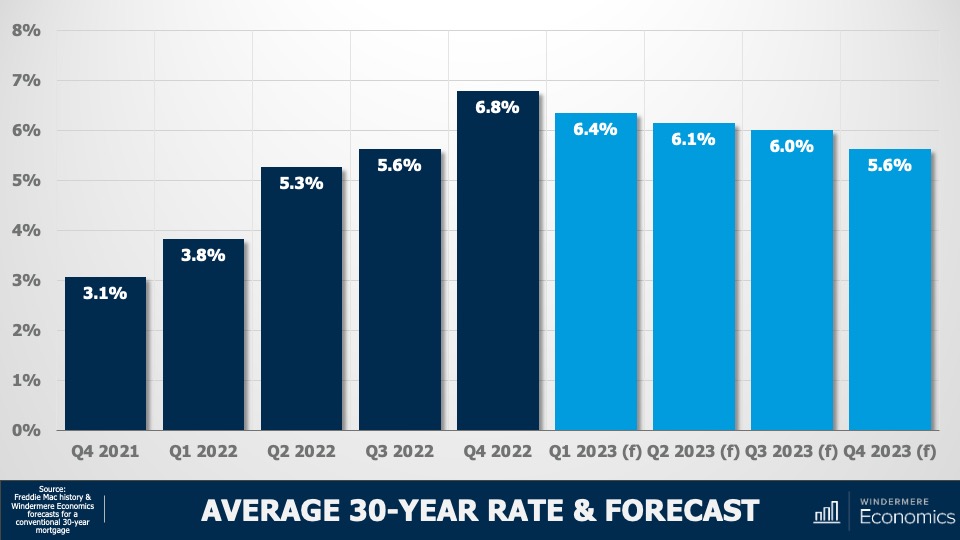
A bar graph showing the average 30-year mortgage rate in recent quarters, plus a forecast of the mortgage rate for each quarter in 2023. The y-axis displays percentages ranging from 0% to 7% and the x-axis displays the quarters from Q4 2021 to Q4 2023. The numbers are as follows: 3.1% in Q4 2021, 3.8% in Q1 2022, 5.3% in Q2 2022, 5.6% in Q3 2022, 6.8% in Q4 2022, 6.4% (forecasted) in Q1 2023, 6.1% (forecasted) in Q2 2023, 6% (forecasted) in Q3 2023, and 5.6% (forecasted) in Q4 2023. This is the mortgage rate component to Matthew Gardner's 2023 real estate forecast.

Image Source: Matthew Gardner


You see, my quarterly forecast suggests that rates have actually already peaked, and that they will trend lower as we move through this year and break below 6% by the fourth quarter. I would add that if anything my forecast may be a little pessimistic, and rates may end 2023 a little lower than I am showing here.

But that will depend on the Fed, and how long they will continue raising rates, and how long it will take before they start to lower them if the US enters a recession this year, which many forecasters including myself believe will be the case.

So, there you have it, my 2023 U.S. housing forecast. I will leave you with this one last thought. 2023 will be a transition year when the housing market will come off the “high” we saw during the pandemic and borrowing costs were artificially low.

I don’t see any reason for buyers or sellers to panic though. By the end of 2023, most markets will have corrected themselves and I believe we will see prices and demand start to pick up again toward the end of this year, but at a far more normalized pace.

As always, I look forward to your comments on my forecasts and I’ll see you all again next month. Take care now.


About Matthew Gardner

As Chief Economist for Windermere Real Estate, Matthew Gardner is responsible for analyzing and interpreting economic data and its impact on the real estate market on both a local and national level. Matthew has over 30 years of professional experience both in the U.S. and U.K.

In addition to his day-to-day responsibilities, Matthew sits on the Washington State Governors Council of Economic Advisors; chairs the Board of Trustees at the Washington Center for Real Estate Research at the University of Washington; and is an Advisory Board Member at the Runstad Center for Real Estate Studies at the University of Washington where he also lectures in real estate economics.

More January 20, 2023

Windermere Offices Give Back Throughout Final Months of 2022

Windermere offices throughout the Western U.S. stepped up for their neighbors in need during the final months of 2022, organizing fundraisers and clothing drives left and right. Windermere offices use the monies that they raise for the Windermere Foundation to help fund non-profit organizations that support low-income and homeless families in their communities.

The Windermere Foundation raised nearly $1 million in November and December to finish the company’s 50th anniversary year with an outpouring of giving. Here are a few examples of the great work done by Windermere offices across the network in late 2022.

Windermere Foundation: End of 2022

Windermere Walla Walla

Many people are in need of warm clothes during winter, and organizations like the Walla Walla YWCA help provide them with the resources they need. Windermere Walla Walla directed their donation efforts this winter to the local YWCA branch, giving $3,600 to help improve the lives of the women and children in their programs. They also collected coats and seasonal supplies to help ensure that these families have their basic needs met this winter. (Pictured above)

Windermere Trails End Real Estate

The folks at Windermere Trails End in Shady Cove, Oregon also jumped at the chance to support local schools by donating nearly $800 worth of winter clothing to Shady Cove Elementary and Middle School. The office used their Foundation funds to purchase leggings, sweatpants, and boxes of new athletic shoes to ensure that students in need would have proper winter gear and warm, supportive shoes.


A stack of new kids-sized running shoes donated by Windermere Trails End Real Estate to the students at Shady Cove Elementary and Middle School in Shady Cove, Oregon. Image Credit: Amanda Richardson

Shoes donated by Windermere Trails End to the students at Shady Cove Elementary and Middle School – Image Credit: Amanda Richardson


Windermere Real Estate PSK and Lake Tapps

The holiday season is a time of giving, and the Windermere Real Estate PSK and Windermere Lake Tapps offices have been shining examples of that giving spirit for quite some time. 15 years ago, after having conversations with local school counselors about how homeless students were going without proper winter gear, they met with school administrators to see how the local Windermere offices could help. The owners, agents, and staff forged a relationship with the local Fred Meyer and their annual Christmas drive for underserved elementary students in the Sumner-Bonney Lake and Kent school districts was born.

After Windermere staff, agents, and owners gather donations from local businesses, the neighborhood Fred Meyer opens an hour early on a designated day so volunteers staffing the drive can shop freely, selecting supplies like coats, hats, and gloves for children in need. This year, the offices collected $14,800 in donations, serving roughly 500 students.

Ken Freed, agent at Windermere Real Estate PSK had this to say about the clothing drive:

“I think of this every Christmas morning. Over 500 kids have something to open on Christmas day. All the families, all the teaches and their spouses, all our agents can feel they did something worthwhile and appreciated. Handwritten thank-you notes from the students and heart felt hugs and handshakes from the teachers make it even better.”

Windermere Federal Way West Campus and South Sound

The Windermere network went above and beyond in 2022, and the Windermere Federal Way West Campus and Windermere Real Estate South Sound offices in Federal Way, WA embodied that extra effort this past holiday season. These offices made several significant donations to local organizations throughout November and December, making a positive impact in their community. Here are a few notable examples:

  • Raised roughly $3,500 in donations to provide food and gifts to families in need at Lake Grove Elementary School. The donations supported 109 children and 40 families in total.
  • Donated $2,500 to Federal Way Community Caregiving Network to provide rental assistance to a family at risk of homelessness.
  • Because the Federal Way Senior Center is located in unincorporated county territory, the facility does not receive assistance from the neighboring towns it borders. The Federal Way offices donated $5,000 to the senior center for operating expenses to help it stay open and delivered food donations to its residents.
  • Windermere South Sound donated $2,500 to Fusion Federal Way and Beautiful Soles, two local organizations dedicated to providing shelter and emergency services to children and families in need.


Dozens of bags fill the hallway of Lake Grove Elementary school. They are filled with food and gifts to students in need, donated by the agents and staff at the Windermere West Campus and South Sound offices in Federal Way, Washington.

Food and gifts donated to the Lake Grove Elementary Students by West Campus and South Sound offices – Image Credit: Laurel Butler


To learn more about the Windermere Foundation, visit windermerefoundation.com. To help support programs in your community, click the donate button below.

content_Donate_button.jpg


­­­­­­Featured Image – Left to right: Jenalynn Mahoney, Dana Yarwood, Mindy Stonebraker, Esmeralda Guevara – Image Source: Victoria Harris

Design January 18, 2023

What is a Rambler House? 5 Features of Ranch-Style Architecture

The distinct rambler architectural style is known by several names: rambler, ranch house, California ranch, and more. Whatever you call it, it has played an important role in the evolution of the American home. From its spacious interior to its welcoming layout, these homes are tailor-made for a comfortable home life.

History of the Rambler House

It wasn’t until the 1950s and 1960s that the rambler became a staple of domestic American life as the suburban boom reached new heights. The intention behind the architecture was simple: design the perfect post-war American home. The term “rambler” was a reference to the way the single-story design sprawled—or rambled—across the landscape. This home design mirrored the landscape of the American West and allowed for expansive views of surrounding land on a level plain.

Over time, the rambler style began to take on elements of modern design and eventually evolved into split-level homes, creating variants such as “raised ranch style,” “suburban ranch style,” and “storybook rambler.” To this day, these homes are found in great numbers across the country.


Image Source: Getty Images – Image Credit: pbk-pg


5 Features of Ranch-Style Rambler Homes

1. Low-Pitched Roof and Eaves

Similar to the Craftsman style home, it’s common for ranch-style homes to have low-pitched roofs and overhanging eaves. These architectural features help to give ranch-style homes their distinct sprawling look.

2. Open Floorplan

Ramblers are known for their open interiors that allow for easy movement throughout the home’s horizontal spaces. The spacious layout is often anchored by a central area which creates a feeling a continuity between rooms, a concept that was influenced by modern architecture.

3. One-Story Buildings

Though their wide layouts make for large footprints, the majority of rambler homes are one-story structures. The terms “rambler” and “ranch house” are used interchangeably. However, raised ranch houses and split-level ranch houses will often have a basement, whereas the classic rambler home is a one-story building with a ground-level entry.

4. Attached Garage

This was one of the first architectural styles to incorporate an attached garage into the home design. This evolution in home design perfectly suited the needs of the modern American family in the 1950s and 1960s.

5. Connection to the Outdoors

In another nod to modernist homes, ramblers often prioritized outdoor spaces for entertaining and gathering. This connection to the outdoors is reinforced by large windows and easy access to back patios to create a connection between nature and the home itself.


For more information on different home designs, check out our Architectural Styles page.


­­­­­­Featured Image Source: Getty Images – Image Credit: JohnnyGreig

More January 16, 2023

Windermere Partners with Local Organizations to #TackleHomelessness

Founded in 1989, the Windermere Foundation funds non-profit organizations that provide support and resources to low-income and homeless children and families in the communities where Windermere operates. To date, the Windermere Foundation has raised over $50 million in total donations.

For seven seasons, Windermere partnered with a Seattle-based professional sports team to #TackleHomelessness by donating $100 for every home game defensive tackle, benefitting non-profit organizations YouthCare and Mary’s Place. The campaign raised over $230,000 to help end youth homelessness and provide services for homeless families in the area. Prior to the pandemic, Windermere offices also organized annual “We’ve Got You Covered” winter clothing drives in conjunction with our #TackleHomelessness campaign, providing tens of thousands of clothing items for homeless youth and families in need.

To learn more about the Windermere Foundation, visit windermerefoundation.com. To help support programs in your community, donate below.

content_Donate_button.jpg


­­­­­­Featured Image Source: Windermere Real Estate

Buying January 16, 2023

8 Costs of Renting a Home

If you’re not quite ready to buy a house, it may be better to rent for the time being. Though renting can be the more affordable option, being a tenant in someone else’s home still comes with its own unique set of costs. Here are eight common costs you should be aware of before signing a lease.

8 Costs of Renting

1. Renting Application Fee

One of the first costs you’ll run into is the application fee. Landlords want to make sure you’re a good candidate for signing onto their lease, so they’ll go through a process to verify the information listed on your application including your employment, financial history, credit score, past tenancy, etc. The application fee covers the clerical work required to verify this info.

2. Security Deposit

Similar to making a down payment on a house, a security deposit is a large upfront expense that solidifies your application. Security deposits vary based on the terms of the agreement. They can be a flat fee but are more often equal to one month’s rent, and sometimes more. Fortunately, they are usually refundable when you move out, as long as you have taken good care of the property and have adhered to the terms of your lease. You must account for the security deposit when renting, since you’re essentially paying double a normal month’s rent to move in.

3. Pet Deposit and Pet Fee

Finding a place that allows pets will be your first challenge as a renter. Some landlords forbid pets altogether, while others typically require that you pay a pet deposit and/or an additional monthly pet fee on top of your rent. These fees vary based on the number, type, and size of your pet(s). Keep in mind that renting with pets will most likely cost you extra.

4. Rent

The renting equivalent of a monthly mortgage payment, your rent will be the largest slice in your pie chart of monthly renting expenses. The general rule of thumb is that your rent should not exceed 30% of your monthly income. If it’s higher, you’ll have less money to cover other important living expenses. And if your rent increases—which is beyond your control—things can get unaffordable in a hurry.


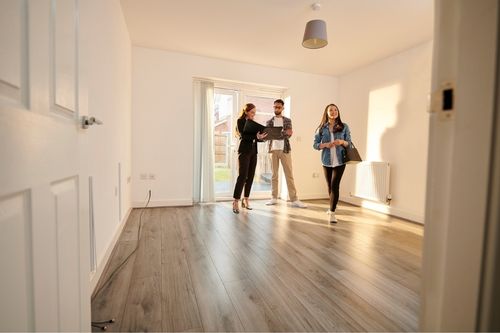
A man and a woman walk through a house for rent with the landlord. The landlord shows paperwork while they explore the living room. It is a new construction home with white walls and hardwood flooring.

Image Source: Getty Images – Image Credit: sturti


5. Parking

Your parking arrangement will vary depending on your living situation. If you live in a condo or apartment building, you may be able to pay an additional fee in exchange for your own parking spot on-site. For those who live in densely populated areas or places where the endeavor of trying to find available parking is a daily nightmare, the value of having your own parking space often outweighs the extra cost.

6. Homeowners Association (HOA) Dues

Landlords will typically include Homeowners Association (HOA) fees in your rent if applicable. HOA fees go toward maintaining the community’s properties and help pay for shared amenities. If you plan to live in an HOA community as a renter, the dues you’re paying will help to ensure the property stays well maintained.

7. Utilities

Utilities are another significant chunk of your recurring expenses as a renter. Your utilities costs will vary depending on how much energy you use at home. For example, your heating costs will likely be higher during the winter. If your bills are too high, audit your energy consumption to find more affordable ways of using it. 7 Tips for Sustainable Living at Home

8. Renters Insurance

Not only is obtaining renters insurance vital to protecting yourself as a renter, but it’s also usually required by landlords and property management companies. Renters insurance protects you against unexpected events that may occur at home. Fortunately for you, renters insurance policies are very affordable, usually around $15 to $20 a month.

Learn more about the pros and cons of renting vs. buying a house:

Renting vs. Buying: Which is Better for You?


­­­­­­Featured Image Source: Getty Images – Image Credit: StefaNikolic

Design January 11, 2023

Pantone 2023 Color of the Year: How to Use Viva Magenta in Your Home

Another year, another statement from the Pantone Color Institute, the leading authority on all things color design. The global color expert recently announced their Color of the Year for 2023: Viva Magenta. A beautiful hue of the red family, it is vibrant and soothing at the same time. Just like last year’s selection, Very Peri, it captures common feelings shared by modern homeowners while presenting a bounty of creative design solutions. Learn a bit more about this special color and how you can incorporate it into your home.


A hand holds up a paint swatch of a magenta color palette containing Pantone’s Color of the Year 2023: Viva Magenta.

Image Source: Getty Images – Image Credit: YakubovAlim


Pantone Color of the Year 2023: Viva Magenta

Viva Magenta is a bright, crimson red that balances warm and cool energy. Pantone describes the color dynamically, calling it “fierce” and “rich.” They say it differs from last year’s selection in that Viva Magenta answers our “collective need for strength.” So, what does this mean for you as a homeowner? Viva Magenta is a color of unity. It has the power to embrace and make your guests feel welcomed while maintaining a modern aesthetic. Colors in the red family are known to make a home feel comfortable, especially in the dining room. It has often been said that reds can stimulate appetite.


A section living room of a living room with an art deco-style side table and a rounded fabric chair. The wall, chair, and table are all magenta. On the wall, there’s a graphic showing Pantone’s Color of the Year 2023 Viva Magenta and its Pantone color code: 18-1750.

Image Source: Shutterstock – Image Credit: Ume Illustration


How to Use Viva Magenta in Your Home

This year’s interior design trends are showing a preference for colorful decorating. Viva Magenta fits this mold perfectly. It is a bold and vivacious choice for interior paint. Need a splash of energy in the living room? Looking to give your dining room a makeover? Viva Magenta may be the perfect solution.

In terms of complementary colors, Pantone specifically calls out pale grays, blues, and pastels. This shade of magenta can be a stunning accent color for homeowners that prefer a more neutral backdrop while incorporating elements of contemporary home design.  The typical accent pieces come to mind: pillows, blankets, and throw rugs. However, Viva Magenta is also perfectly suited for accent items in the kitchen—think glassware, candle holders, hand towels, etc. For those who are ready to dive into the deep end of the magenta pool, consider a velvet couch. Its boldness also goes well with interior design styles that are characterized by flair, such as Art Deco interior design.


A section of a living room with a comfortable rounded couch and a coffee table. The pillow and walls are magenta, reflecting Pantone’s Color of the Year 2023: Viva Magenta.

Image Source: Shutterstock – Image Credit: Viktoria Lytvyn


Viva Magenta is sure to lead the eye throughout your home. Its magnetic energy may be the missing ingredient to your interior design plans for 2023. For more information on color design tips, read our blog post on Colorful Modern Design Trends for Your Home.


­­­­­­Featured Image Source: Shutterstock – Image Credit: sommthink

Living January 9, 2023

7 Tips for Sustainable Living at Home

There’s always room for improvement in a household’s quest to go green. From how you use your appliances to the way you consume and dispose of food, every lifestyle choice you make at home presents an opportunity to be more eco-friendly. Adopting more sustainable practices has obvious environmental benefits and helps to improve quality of life, but it can also increase your home value and in some cases may generate extra cash.

7 Tips for Sustainable Living at Home

1. Create a Sustainable Kitchen

The kitchen is responsible for a decent portion of your home’s energy output. Choosing energy-efficient appliances can help to improve your household’s sustainability by using less energy. Reusable materials go a long way in the kitchen as well. Even seemingly small changes like switching from single use to reusable grocery bags and eliminating paper towels can make an impact. Using natural cleaning products will keep your kitchen cleaner longer while improving your home’s air quality, and being mindful about water usage can save on utility bills.

2. Plant an Herb Garden

To further improve your home’s sustainability, consider planting an herb garden. This helps to cut down on repeatedly buying spices and seasonings at the grocery store while cultivating a natural ambience in your home. (And they’re fun to cook with, too!) Do indoor plants need sunlight? Of course, so be sure to position your indoor garden in an area where your plants have direct access. Once you’ve picked out a spot, decide which herbs you’d like to grow. Some of the most common herbs are easy to grow and will pair well with whatever’s on the menu—basil, thyme, cilantro, parsley, oregano, etc.

3. Tips for a More Energy Efficient Home

The first step in becoming more energy efficient at home is understanding your energy output. Once you understand your household’s habits, you can identify which cutbacks will help you chart a more sustainable path forward. Energy-efficient lightbulbs can help you save on utility bills. Because they use less energy that standard lightbulbs, they typically last longer as well. Make sure your home is properly insulated and your windows’ caulking and weatherstripping is in good condition. Air leaks and poor insulation waste energy and will cause spikes in your utility bills.


A woman practices sustainable habits by washing a plate in her kitchen sink. The sponge is full of soap and the water is off while she scrubs the plate.

Image Source: Getty Images – Image Credit: Nattakorn Maneerat


4. Reduce Waste at Home

Every household produces some sort of waste, but it’s how that waste is treated that makes all the difference for the environment. Clean your recycling to make it easier to process and do your best to only buy what you plan to eat. Start a compost bin for extra food scraps or consider other agricultural solutions for disposing of it. Consider buying items like shampoo, conditioner, moisturizers, and the like in bulk to cut down on packaging waste. Reusable glass containers or jars will help you portion out meals and provide a useful way to store bulk items like rice and beans.

5. Use Solar Energy

Yes, making the switch to solar energy comes with significant upfront costs. But an investment in solar is not just an investment in the health of the planet, it can increase your home value as well. The energy savings you’ll generate in the long-term will depend on your household’s level of consumption and the power generated by your solar panels. And if you’re generating more power than you’re consuming, you may be able to sell the surplus energy back to the grid. For more information on solar-based incentives and tax breaks by state, visit DSIRE (Database of State Incentives for Renewables & Efficiency®).


A worker installs a solar panel on the rooftop of a sustainable home as the sun sets behind him.

Image Source: Getty Images – Image Credit: ArtistGNDphotography


6. Sustainable Gardening Best Practices

Even for the green thumbs, there’s opportunity to go greener at home. A garden is only as healthy as its soil. Mulching is vital to soil health and helps to reduce weed growth. Animal manure also has the power to enrich garden soil, both as a fertilizer and conditioner. Organic weed killers made with natural ingredients will maintain your garden’s health while keeping unwanted weeds at bay. Apply this same organic mindset to dealing with slugs as well. Certain types of slug bait may possess certain chemicals that do more harm than good, especially if you have farm animals on your property like chickens or goats.

7. Sustainable Laundry Room Tips

Before you begin your next cycle in the laundry room, consider some methods of reducing energy. Because the heating of water is responsible for a majority of the energy generated by doing laundry, using cold water can help you save on energy costs. Cold water is also gentler on clothing. Clean the dryer vent and filter regularly to keep it unclogged and running efficiently. Consider hang-drying when possible, and in warmer months, air dry your clothes to save a dryer cycle.

For more information on sustainable living, helpful advice on home upgrades, plus tips on DIY home projects and more, visit the Living section of our blog.

Windermere Blog – Living


­­­­­­Featured Image Source: Getty Images – Image Credit: monkeybusinessimages

Selling January 4, 2023

Staying Safe When Selling Your Home

Staying organized while selling your home can feel impossible, especially if you’re buying a new home at the same time. There’s also the pressure to keep your home clean and tidy for showings to prospective buyers. In all the chaos, taking the proper safety precautions can fall by the wayside, but it is something that should be prioritized. Keep these safety tips in mind as you work with your agent to sell your home.

We’ve assembled a comprehensive checklist of the common tasks required to get your home ready to sell. It is available as an interactive web page and downloadable PDF here:

How to Prepare for an Open House

Open houses are a major driver of buyer interest. Preparing for an open house is a matter of boosting curb appeal, cleaning, and staging to get your home in tip-top shape. It’s vital that you and your agent take certain safety precautions, given that you likely won’t be on sight when the open houses occur. Buyers often feel uneasy in the presence of the seller when touring a home. It also makes it more difficult for them to visualize the space as their own. Accordingly, it’s best to let your agent handle the open house. Here is a helpful list of how to prepare.

Staying Safe When Selling Your Home

  • Go through your medicine cabinets and remove all prescription medications.
  • Remove or lock up precious belongings and personal information. You will want to store your jewelry, family heirlooms, and personal/financial information in a secure location to keep them from getting misplaced or stolen.
  • It is best to remove all family photos during the staging process so potential buyers can see themselves living in the home; it’s also a good way to protect your privacy.
  • Check that your windows and doors are secure before and after showings. If an intruder is looking to get back into your home following a showing or an open house, they will look for weak locks or unlocked windows and doors.
  • Consider extra security measures such as an alarm system or other monitoring tools like home security cameras.


A real estate agent performs a walkthrough of a new home for a prospective buyer. The agent leads the buyer through the open kitchen/dining room area. The home has dark hardwood floors and geometric wallpaper along the kitchen island.

Image Source: Getty Images – Image Credit: ferrantraite


Talk to your agent about the following safety precautions:

  • Perform a thorough walk-through with your agent to make sure you have identified everything that needs to be removed or secured (medications, belongings, photos, etc.)
  • Go over your agent’s screening process so you are both on the same page about how to qualify buyers before showings.
  • Lockboxes to secure your keys for showings should be up to date. Electronic lockboxes track who has accessed your home.
  • Go through your home’s entrances and exits and share important household information so your agent can advise you on how to secure your property while it’s on the market.

To connect with a local, experienced Windermere Real Estate agent, get started by clicking the button below:


­­­­­­Featured Image Source: Getty Images – Image Credit: xavierarnau

Living December 14, 2022

Home Security and Safety for the Holidays

The holidays bring joy and peace, but they can also bring package thieves, fire hazards, and the inevitable injury from trying to get the last decoration on top of the tree. From tried-and-true security methods to basic safety best practices, taking the appropriate precautionary measures will help keep your home and your loved ones safe this holiday season.

Home Security During the Holidays

Upgrade Your Locks

A poorly installed deadbolt can make it easy for an intruder to break in. Start by making sure that your door frames are in good condition and then look into getting a higher quality deadbolt. You’ll find everything from classic models with keys to digital options that require passcodes or a fingerprint.

It’s also a good idea to check all the locks on your windows. Older window locks can be easy to jimmy open with a little wiggling. For ground floor windows, you may want to consider installing double locks for added security.

Exterior and Interior Home Lighting

Having your exterior lights on timers or motion sensors is a good way to deter nighttime lurkers. Add sensor lights at your home’s key entry points including the front door, back door, and/or basement. If you have an unused side yard, consider lighting that area as well. Keeping your home well-lit makes unwanted visitors weary of being seen.

Traveling during the holidays is common. If you plan to be gone from your home for an extended period, consider using timed lighting options in your home to make it appear someone is around. You can select timers for bedrooms or living areas. Also, you can program a radio or smart home sound system to turn on and off.

Alarm Systems

You have many alarms to choose from, varying from motion detection kits you can install DIY to full-service home security systems.  If you choose to do-it-yourself, you’ll want to prioritize installing motion detectors on doors and windows—especially those that can be easily accessed on the ground floor. In most cases, these kits also offer a 24-hour call service for an extra fee.

Full-service security systems can include everything from an alarm system and panic buttons to an integration with your smoke detectors/fire prevention system. These services are expensive up front but usually have a reasonable monthly rate. And keep in mind: having a home security system installed can also reduce your insurance rates.

Security Cameras

Security cameras are widely available for home installation; install them in high-visibility areas to deter burglars. You can either install DIY or purchase a professional system, many of which come with support services. Nowadays, it’s common for these products to sync with your smartphone, making it easy to monitor your home while you’re away.

Build Your Community

Online community pages, Facebook groups, and programs like Neighborhood Watch can help you build close-knit relationships with your neighbors and help a community feel safe at home knowing its members are all looking out for each other.


An open concept living and dining room area in a mid-century modern house is decorated with string lights, a star, and candles for the holidays, creating a warm and cozy ambience. The table is set for a family dinner.

Image Source: Getty Images – Image Credit: svetikd


Home Safety During the Holidays

Candle Safety Tips

Candles create the perfect ambience at home during the holidays but having more open flames in the house means you’ll want to take a few additional precautions. Test your smoke detectors and replace their batteries. Make sure you have a functioning fire extinguisher nearby, preferably in the living room or kitchen where you can access it at a moment’s notice. For more ways to prepare in case of a fire, read How to Prepare for a Fire at Home.

Lights Safety Best Practices

Before you string up your holiday lights, check all cords and outlets for signs of damage and make replacements as needed. Turn your lights off when leaving the house and before you go to bed—it’s safer and more energy efficient. You can either meter your light usage manually or with a smart home lighting device.

Safe Storage Tactics

It seems that a holiday season rarely passes without a decorating-related injury. Broken ornaments can be hazardous, especially if you have young children. Prevent accidents by securely storing your holiday decorations in easily accessible areas. Investing in high-quality containers will also extend the shelf-life of your décor.

Ladder Safety

Your holiday decorating will inevitably lead you to the hard-to-reach nooks and crannies of your home, both indoors and outdoors. Ladder safety is paramount, especially if your local winters come with freezing temperatures and icy conditions. If that old rickety ladder in the garage is on its last leg, consider investing in a newer model. When decorating trim, ceilings, and the roof, it’s best to have another person stabilizing the ladder below you.

To learn more about home safety and security best practices, smart home technology, and more, read our Home Safety and Security blog post.


­­­­­­Featured Image Source: Getty Images – Image Credit: AsiaVision