Market News May 10, 2017

Colorado Real Estate Market Update


ECONOMIC OVERVIEW

Annual employment in Colorado grew by a respectable 2.3% in February, which equated to about 64,000 new jobs over the past 12 months. Within the metropolitan market areas included in this report, employment has been mixed, with Denver, Fort Collins, and Colorado Springs reporting above-average growth. However, Greeley and Grand Junction saw a modest decline in employment.

In February, the unemployment rate in Colorado was 2.9%, down from 3.3% a year ago. The lowest reported unemployment rates were in Fort Collins and Boulder, at just 2.6%. The highest rate was in Grand Junction, but it was still a respectable 4.7%.


HOME SALES

  • There were 11,640 home sales during  the first quarter of 2017, an annual increase of 2.2%.
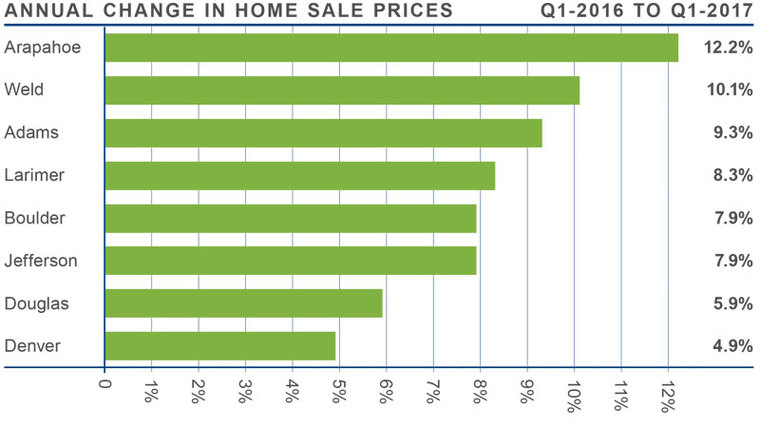
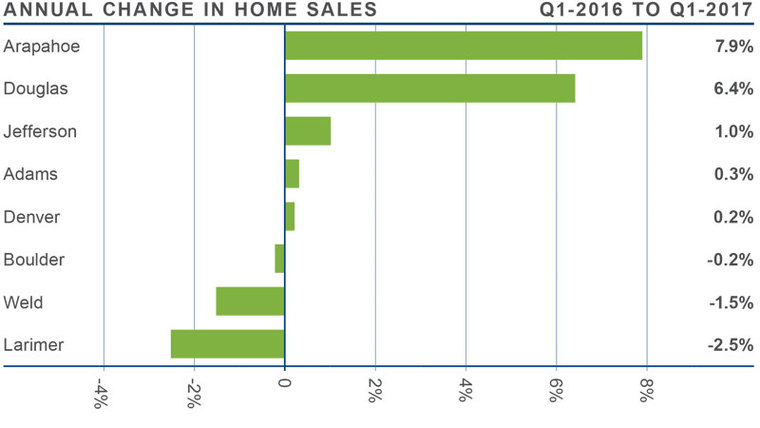
  • Arapahoe County saw sales grow at the fastest rate over the past 12 months, with a 7.9% increase. There were also impressive increases in Douglas County. There were very modest sales declines in the relatively small Larimer and Weld Counties.
  • Listing activity remains well below historic averages, with the total number of homes for sale in the first quarter 10.7% below that seen a year ago.
  • Home sales are generally higher than seen a year ago, but inventory levels are well below where they need to be to satisfy would-be buyers.
 

HOME PRICES

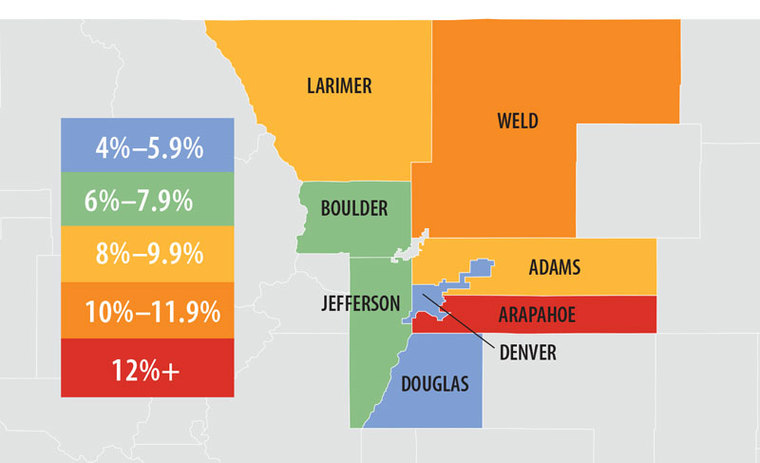
  • With demand remaining strong, home prices continue to escalate. In the first quarter of this year, average prices rose by 8% when compared to a year ago. Average home prices across the region broke the $400,000 barrier at $402,273.
  • Home prices remain well above historic highs and continue to trend upward. While there are very modest slowdowns in price growth—possibly a function of rising interest rates—they should continue to appreciate at above-average rates throughout 2017.
  • Appreciation was strongest in Arapahoe and Weld Counties, where prices rose by 12.2% and 10.1% respectively.
  • The housing market remains strong and this will continue until we see a substantial increase in the number of homes for sale, which is unlikely in the near-term.
 

DAYS ON MARKET

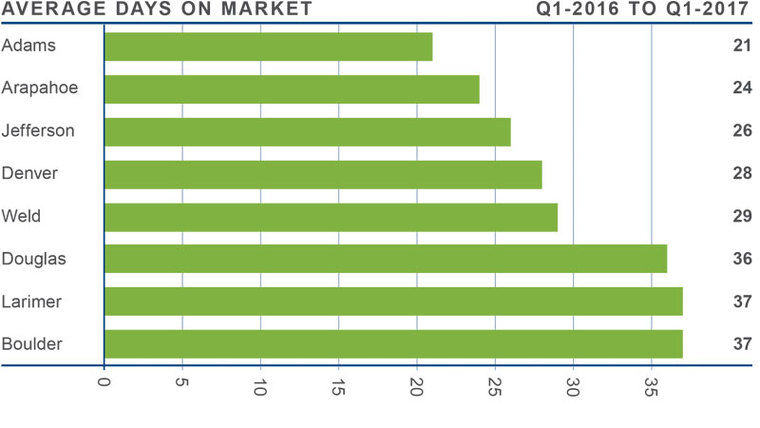
  • The average number of days it took to sell a home dropped by one day when compared to the first quarter of 2016.
  • Homes in a majority of the counties took less than a month to sell.
  • During the first quarter, it took an average of 30 days to sell a home. This is down by one day compared to the same time last year.
  • Demand remains very strong across the region, which is evident by the remarkably short amount time that it takes to sell a home.
 

CONCLUSIONS
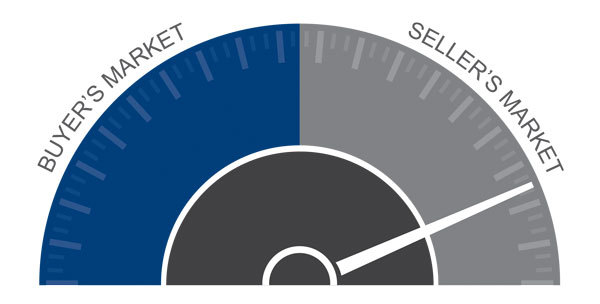
This speedometer reflects the state of the region’s housing market using housing inventory, price gains, home sales, interest rates, and larger economic factors. In the first quarter of 2017, the needle remains well into seller’s territory. The recent increases in mortgage rates have not had any dampening effect on either demand or home prices, and I expect this will remain unchanged through the end of the year.



Matthew Gardner is the Chief Economist for Windermere Real Estate, specializing in residential market analysis, commercial/industrial market analysis, financial analysis, and land use and regional economics. He is the former Principal of Gardner Economics, and has over 25 years of professional experience both in the U.S. and U.K.

Market News May 9, 2017

Nevada Real Estate Market Update


ECONOMIC OVERVIEW

Employment in the Las Vegas area continues to improve, reporting a 3.2% increase compared to first quarter of last year, while the unemployment rate remained essentially the same. As of February, 966,300 people were employed in the Las Vegas market, up by 29,900 from February 2016. Another good sign is that the labor force continues to expand, suggesting that there is more confidence in the area’s economy. I believe we will continue to see the job market improve as we move through the year


HOME SALES

  • A total of 8,623 homes sold in the first quarter, which was an increase of 11.9% over the same period a year ago. Sales were 14.2% lower than last quarter, but I believe that’s due to seasonality.
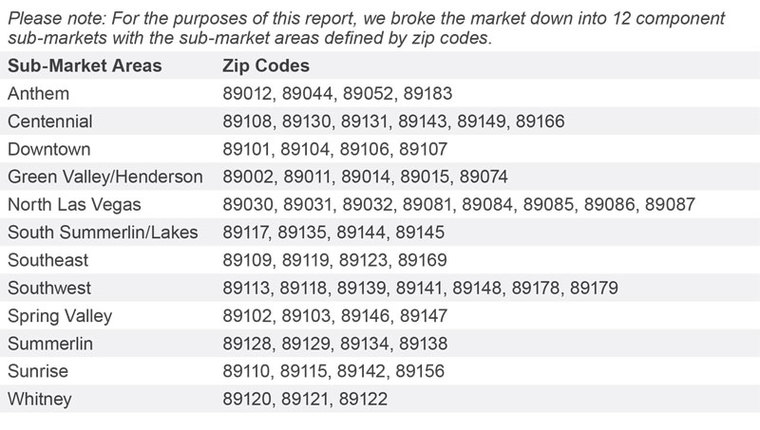
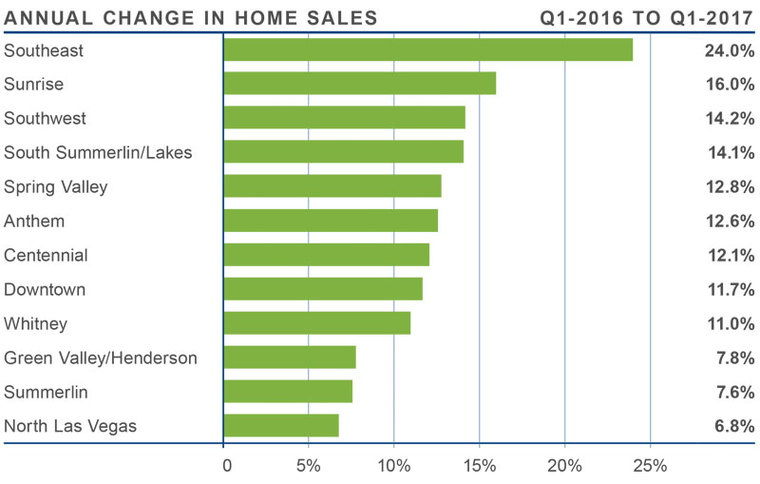
  • Home sales were somewhat less robust in the North Las Vegas, Summerlin, and Green Valley/Henderson sub-markets, but this is likely due to low inventory and is not a cause for concern.
  • There were sizable increases in home sales in a majority of the sub-markets reviewed within this report, but sales grew the fastest in the Southeast Las Vegas sub-market, which saw a 24% increase when compared to a year ago.
  • Inventory levels remain very low, with 28% fewer homes for sale than the same period in 2016. We may see a spring “bump” in listings; however, the market is going to remain very tight for the foreseeable future.


HOME PRICES

  • Over the past year, home prices in the region rose by 7.8% to $245,121. When compared to the fourth quarter of 2016, prices are up by 2.3%.
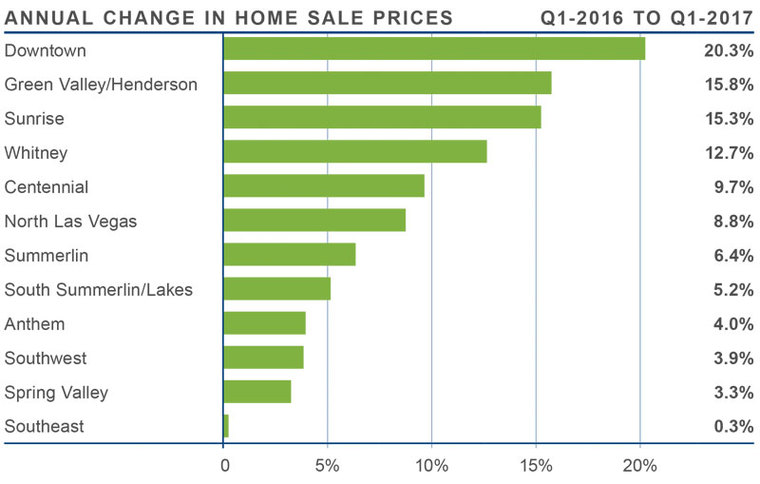
  • The relatively affordable downtown sub-market saw the strongest annual growth, with home prices rising by 20.3% to $158,300. Double-digit gains were also seen in the Green Valley/Henderson, Sunrise, and Whitney neighborhoods.
  • Prices rose in all sub-markets when compared to the first quarter of 2016, with several continuing to rise at rates that are well above their long-term averages.
  • The only market that did not see prices rise significantly over the past year was in the Southeast Las Vegas market.


DAYS ON MARKET

  • The average time it took to sell a home in the region dropped by 16 days when compared to the first quarter of 2016.
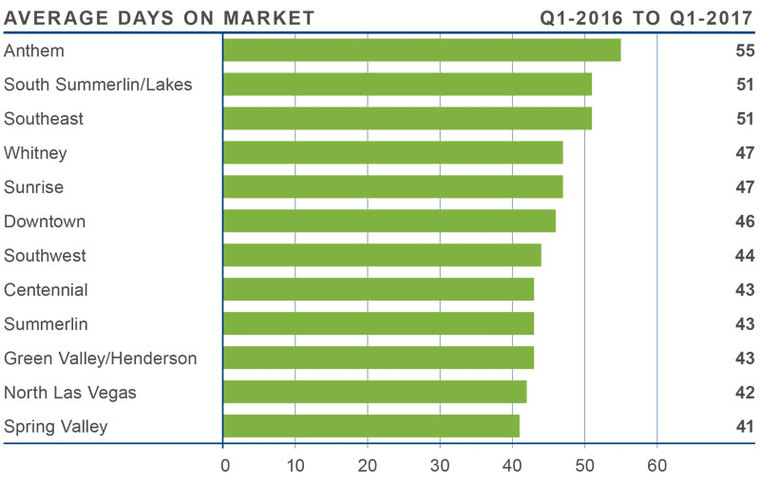
  • It took an average of 47 days to sell a home in the first quarter of this year, which is two days higher than seen last quarter.
  • The length of time it takes to sell a home dropped in all the Las Vegas sub-markets compared to a year ago.
  • The greatest drop in days-on-market was in the Green Valley/Henderson and Southwest sub-markets, which both dropped by 22 days when compared to the same quarter in 2016.


CONCLUSIONS

The speedometer reflects the state of the region’s housing market using housing inventory, price gains, home sales, interest rates, and larger economic factors. Employment growth in Clark County has picked up again, and this bodes well for the housing market in this region. Due to the low number of homes for sale, home prices continue to increase despite rising mortgage rates. Given these factors, I have moved the speedometer more towards the seller’s side. Inventory levels are still very low and competition for well-located—and well-priced—homes remains high.


Matthew Gardner is the Chief Economist for Windermere Real Estate, specializing in residential market analysis, commercial/industrial market analysis, financial analysis, and land use and regional economics. He is the former Principal of Gardner Economics, and has over 25 years of professional experience both in the U.S. and U.K.
Market News May 8, 2017

Eastern Washington Real Estate Market Update


ECONOMIC OVERVIEW

I’m happy to report that Washington State continues to add jobs at a steady rate. While the rate of growth is tapering, this is because many markets are getting close to “full employment”, during which time growth naturally slows. That said, I believe that the state will add around 70,000 jobs in 2017. Eastern Washington continues to see employment growth, albeit modest in some markets, as well as a decline in unemployment. It is still my expectation that we will continue to see the regional economy improving as we move through the balance of the year. 


HOME SALES

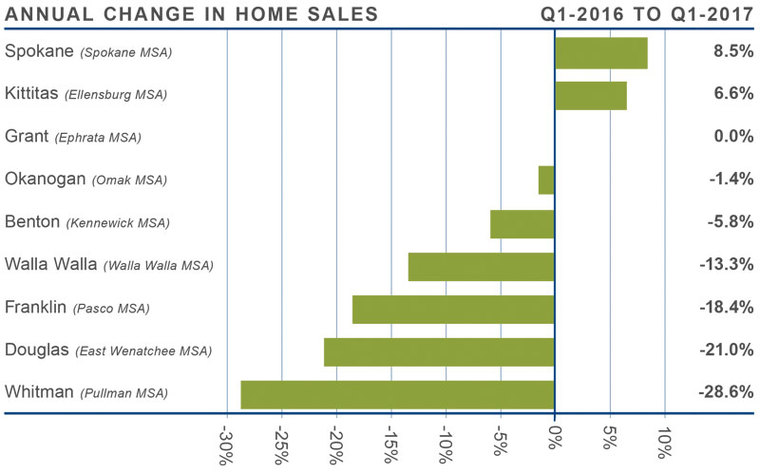
  • Home sales throughout Eastern Washington fell very modestly in the  first quarter when compared to the same period in 2016. In total, there were 2,383 home sales in the first quarter of this year—a drop of 0.3%.
  • Sales rose at the fastest rate in Spokane County, which had an 8.5% increase over the first quarter of 2016. There were also reasonable increases in Kittitas County.
  • A majority of counties in the region saw home sales fall relative to the first quarter of
  • 2016, but two counties did experience an increase. The number of pending home sales, which are an indicator of future closings, was down across the board. We are likely to see slower sales until later this spring at the earliest.
  • As I suggested in my last report, sales are a product of supply and Eastern Washington is sadly lacking in the number of homes that are on the market. Listing activity is down by 28% from the first quarter of 2016 and the decline in sales is a natural result of this.


HOME PRICES

  • Year-over-year, average prices in the region rose by 8.3% to $228,955. Although home prices did fall compared to last quarter, this rate of growth remains well above average.
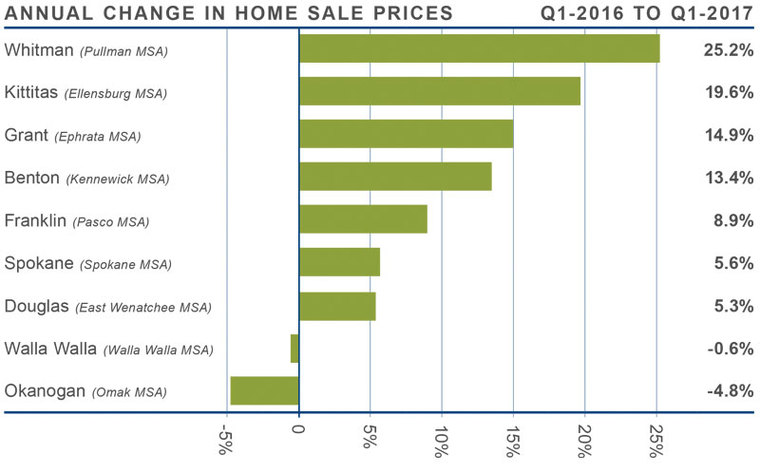
  • Whitman County had the greatest price growth, with homes selling for 25.2%  above that seen a year ago.
  • All but one of the counties in this report saw prices rise when compared to the first quarter of 2016, with four counties exhibiting price growth over 10%.
  • The key takeaway here is that home price growth continues at above-average rates because of very limited supply.


DAYS ON MARKET

  • The average number of days it took to sell a home dropped by 17 days when compared to the first quarter of 2016.
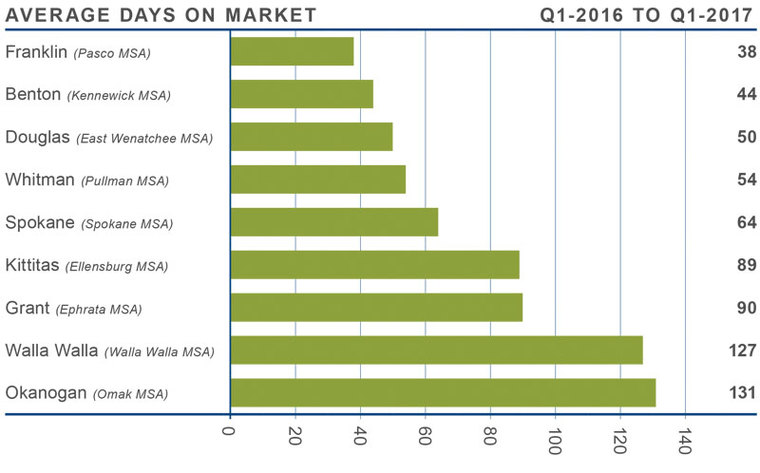
  • The average time it took to sell a home in the region was 76 days.
  • Okanogan County was the only area where the average days on market rose (from 130 to 131 days).
  • Counties where homes sold the fastest were Franklin and Benton—the same two counties that saw the fastest pace of sales last quarter.


CONCLUSIONS

This speedometer reflects the state of the region’s housing market using housing inventory, price gains, home sales, interest rates, and larger economic factors. For the first quarter of 2017, I moved the needle a little more in favor of sellers. The rapid increase in mortgage rates during the fourth quarter of 2016 has slowed and buyers are clearly out in force. Home prices continue to increase as the number of homes for sale drops. The market remains staunchly in favor of sellers, and this is unlikely to change in the near- to mid-term.


Matthew Gardner is the Chief Economist for Windermere Real Estate, specializing in residential market analysis, commercial/industrial market analysis, financial analysis, and land use and regional economics. He is the former Principal of Gardner Economics, and has over 25 years of professional experience both in the U.S. and U.K.
Market News May 3, 2017

Southern California Real Estate Market Update


ECONOMIC OVERVIEW

The markets covered by this report, which include Los Angeles, San Diego, San Bernardino, Orange, and Riverside Counties, added 115,900 new jobs between February 2016 and February 2017, and the unemployment rate dropped from 5.2% to 4.6%. This represents fewer new jobs than were seen in our last report, but as we continue to move toward “full employment”, a slowing in employment growth is to be expected.


HOME SALES

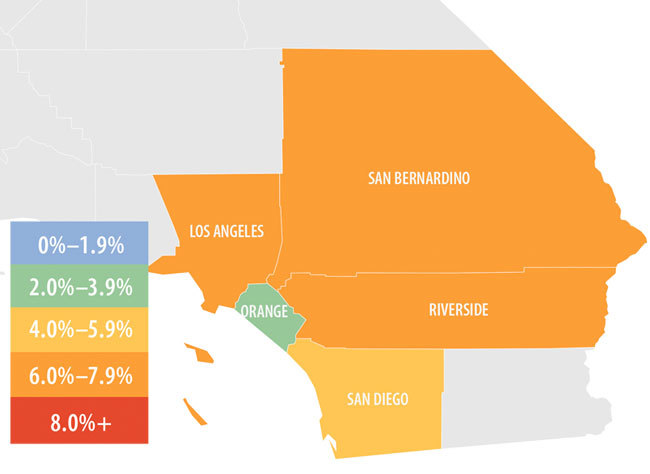
  • There were a total of 40,561 home sales in first quarter of this year. This was 5.1% higher than the same period in 2016, but 12% lower than the fourth quarter of last year. This can be attributed to the continued low level of homes for sale throughout the region.
  • The average number of homes for sale remains well below that seen a year ago (-15.2%), reversing the more modest decline in listings that we saw in the last quarter of 2016.
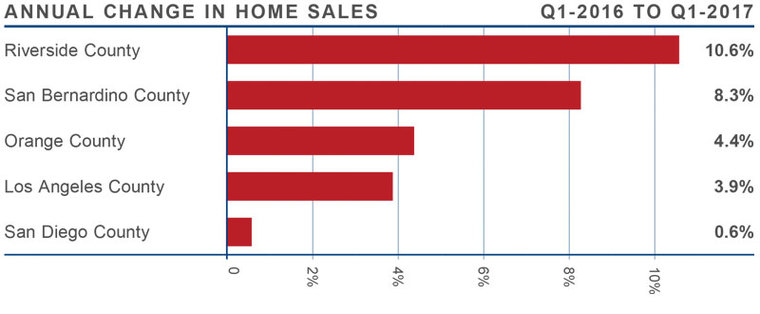
  • Home sales were up across the board, with Riverside County continuing to hold the lead with a substantial 10.6% increase relative to the same period in 2016. Healthy sales were also seen in San Bernardino County. San Diego County experienced some slowing in home sales, but that’s likely due to the fact that the number of homes for sale is down 20% compared to a year ago.
  • With just 31,000 active listings in the first quarter, sellers are firmly in the driver’s seat. I remain hopeful that inventory levels will rise as we move through the spring; however, the Southern Californian markets are likely to see a housing supply shortage through the balance of the year.


HOME PRICES

  • Average prices in the region rose by 5.3% compared to first quarter of 2016, and are 2.6% higher than fourth quarter of 2016.
  • Home values in San Diego, Los Angeles and Orange Counties rose to levels that are getting close to their pre-recession peaks. It is possible that home prices —in concert with rising mortgage rates—are likely to slow at some point, but not quite yet.
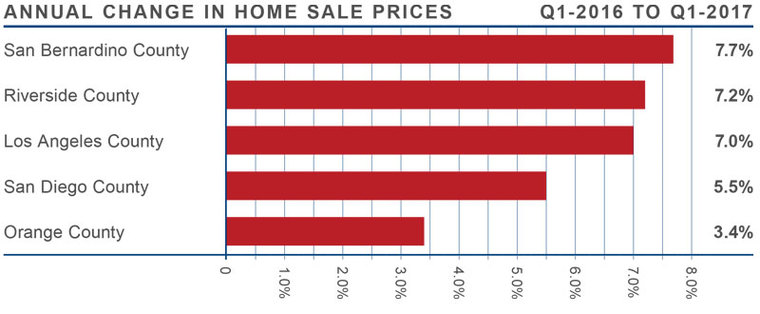
  • San Bernardino County saw the greatest annual appreciation in home values (+7.7%). This was followed by Riverside County, where the average price rose 7.2% year-over-year.
  • Pending home sales continue to trend higher, but are slowing due to tight inventory levels. Demand remains strong and sales prices will likely continue their upward trajectory as buyers outnumber sellers.


DAYS ON MARKET

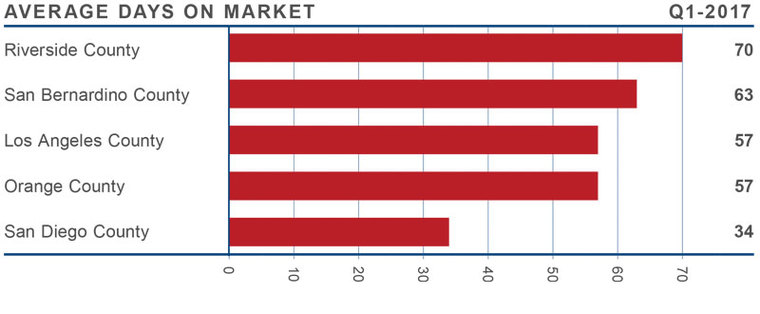
  • The average time it took to sell a home in the region was 56 days. This is a drop of 11 days when compared to the first quarter of 2016, but two days longer than in the fourth quarter of 2016.
  • The biggest drop in the number of days it took to sell a home was in San Bernardino and Orange Counties, where it took 14 fewer days to sell a home compared to a year ago.
  • Homes in San Diego County continue to sell at a faster rate than the other markets in the region. In the first quarter, it took an average of 34 days to sell a home, which is four days less than a year ago.
  • All five counties saw a drop in the amount of time it took to sell a home between the first quarter of 2016 and the first quarter of 2017.


CONCLUSIONS

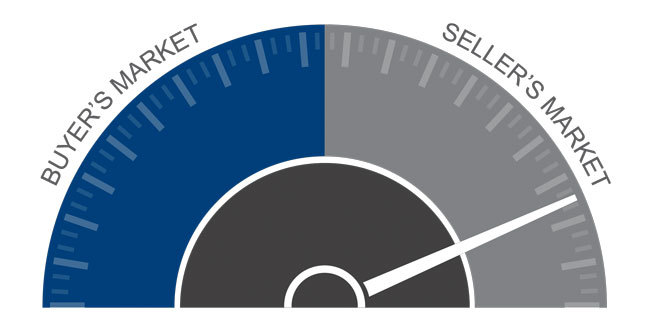
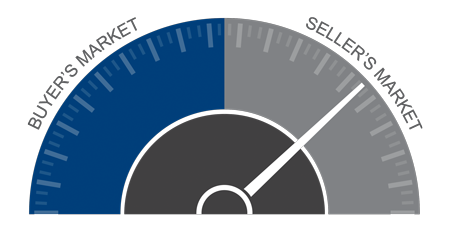
The speedometer reflects the state of the region’s housing market using housing inventory, price gains, home sales, interest rates, and larger economic factors.

The Southern California economy continues to add jobs, which in turn is increasing the already-high demand for housing. Rising mortgage rates have had a modest effect on slowing home price growth, but they are getting close to record territory in several of the region’s markets.

I was hopeful that we would see a bit of a spring “bump” in listings, but that has not been the case. As such, the market continues to strongly favor sellers, so I have moved the needle a little more in their direction.


Matthew Gardner is the Chief Economist for Windermere Real Estate, specializing in residential market analysis, commercial/industrial market analysis, financial analysis, and land use and regional economics. He is the former Principal of Gardner Economics, and has over 25 years of professional experience both in the U.S. and U.K.
 

More May 2, 2017

Windermere Welcomes China to 31st Windermere Cup This Saturday

For the past 31 years, Windermere Real Estate and the University of Washington have joined together to host the annual Windermere Cup rowing regatta, which brings the world’s best crews to Seattle to compete against the nationally acclaimed UW men’s and women’s teams. Held annually on the first Saturday in May, the Windermere Cup is both an international sporting event and opening day party, followed by the world’s largest boat parade.


This year’s event will see the Huskies take on the Shanghai men's and women's High-Performance Rowing teams from China on Saturday, May 6. This matchup will mark the third time that a team from China has travelled to Seattle to compete in the Windermere Cup. Their first appearance came 27 years ago when the People’s Republic of China took home the Windermere Cup ahead of Navy, Washington, and Cambridge. Twelve years later the Chinese men’s rowing team returned for the 2002 Windermere Cup.


In addition to the crew races, the family-friendly Windermere Cup event also includes food vendors, booths to purchase UW and Windermere Cup apparel and commemorative gear, as well as a bouncy house for the kids.


Windermere Cup App:

The crew races start at 10am and end around noon. Following the final Windermere Cup race is the Seattle Yacht Club’s Opening Day Boat Parade. Download the Windermere Cup App to access schedule and team information, and for live race results: https://event.crowdcompass.com/windermerecup17


Windermere Cut Cinco de Mayo Party:

A new addition to this year’s event is the Windermere Cut Cinco de Mayo party down along the north shore of the Montlake Cut. Twenty dollars gets you into the beer/margarita garden where you can listen to Spike and the Impalers while munching on food from one of three Mexican food trucks. For more information and to buy tickets go to Brown Paper Tickets.


Windermere Cup Book:

This book is about the athletes, colorful characters, and brilliant people the Windermere Cup rowing regatta has featured every first Saturday in May since 1987. Through interviews, original documents and pages upon pages of breathtaking photographs, author Gregg Bell captures this event’s more than 30 remarkable years, its spirit and its soul.


The Windermere Cup is a touchstone for our company, our family of offices and agents, and the University of Washington. Not only is this an international sporting event, it’s a celebration of camaraderie, teamwork, and community – and truly great tradition that we are honored to be a part of.


For more information please visit windermerecup.com and follow us at Facebook.com/WindermereCup and @WindermereCup on Twitter.


Market News May 1, 2017

Western Washington Real Estate Market Update


ECONOMIC OVERVIEW

I’m happy to report that Washington State continues to add jobs at a steady rate. While the rate of growth is tapering, this is because many markets are getting close to “full employment”, during which time growth naturally slows. That said, I believe that the state will add around 70,000 jobs in 2017. Washington State, as well as the markets that make up Western Washington, continues to see unemployment fall and I anticipate that we will see this rate drop further as we move through the year. In all, the economy continues to perform at or above average levels and 2017 will be another growth year.


HOME SALES

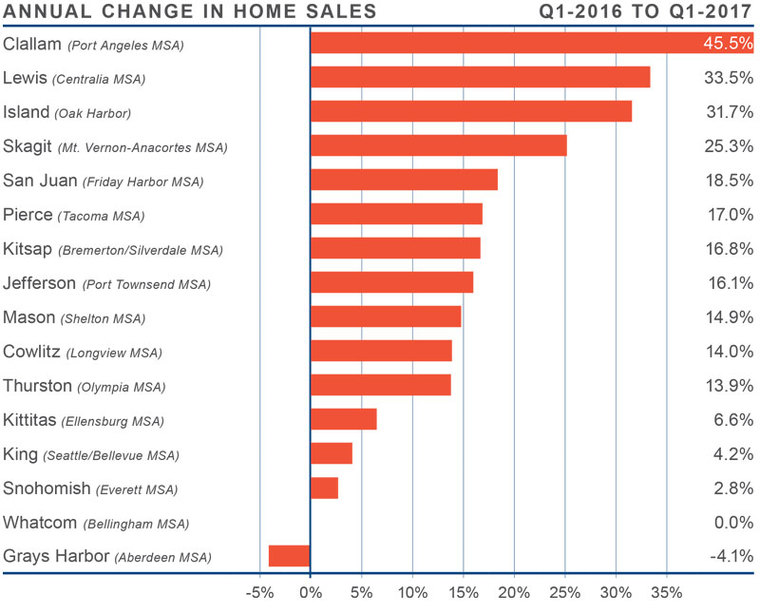
  • There were 15,652 home sales during the first quarter of 2017. This is an increase of 9.5% from the same period in 2016, but 20.7% below the total number of sales in the final quarter of 2016.
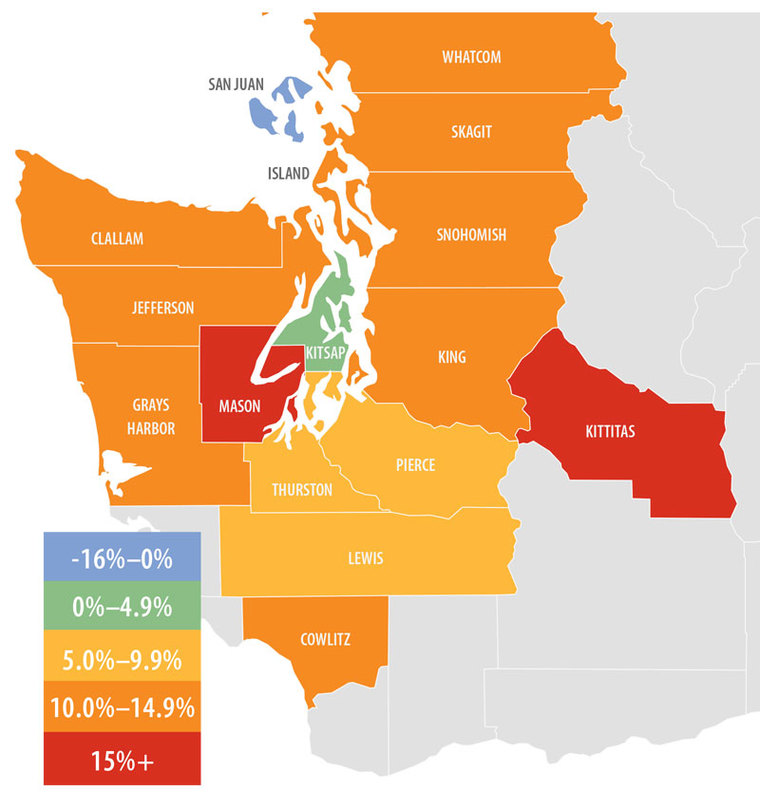
  • With an increase of 45.5%, sales in Clallam County grew at the fastest rate over the past 12 months. There were double-digit gains seen in an additional 10 counties, suggesting that demand remains very robust. The only modest decline in sales was seen in Grays Harbor County.
  • The number of homes for sale showed no improvement at all, with an average of just 6,893 homes for sale in the quarter, a decline of 33% from the previous quarter and 25% from the first quarter of 2016. Pending sales rose by 2% relative to the same quarter a year ago.
  • The key takeaway from this data is that 2017 will offer little relief to would-be home buyers as the housing supply remains severely constrained.


HOME PRICES

  • With demand continuing to exceed supply, home prices continued to rise at above-average rates. Year-over-year, average prices rose by 9.5% but were 1.1% lower than in the final quarter of 2016. The region’s average sales price is now $409,351.
  • Price growth in Western Washington is unlikely to taper dramatically in 2017 and many counties will continue to see prices appreciate well above their long-term averages.
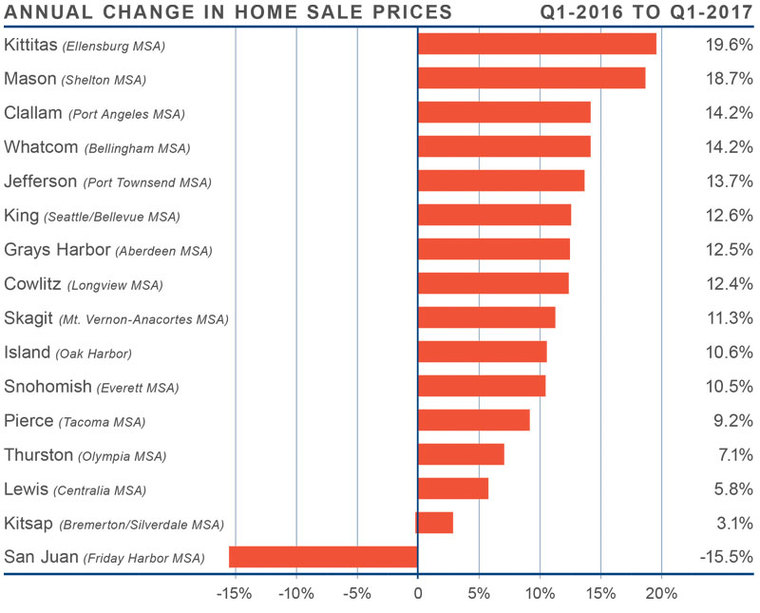
  • When compared to the same period a year ago, price growth was most pronounced in Kittitas County, which rose by 19.6%. Double-digit price growth was seen in an additional 10 counties. The only market where the average price fell was in the ever-volatile San Juan County.
  • It is clear that rising interest rates have not taken much of a sheen off the market.


DAYS ON MARKET

  • The average number of days it took to sell a home in the first quarter dropped by 16 days when compared to the first quarter of 2016.
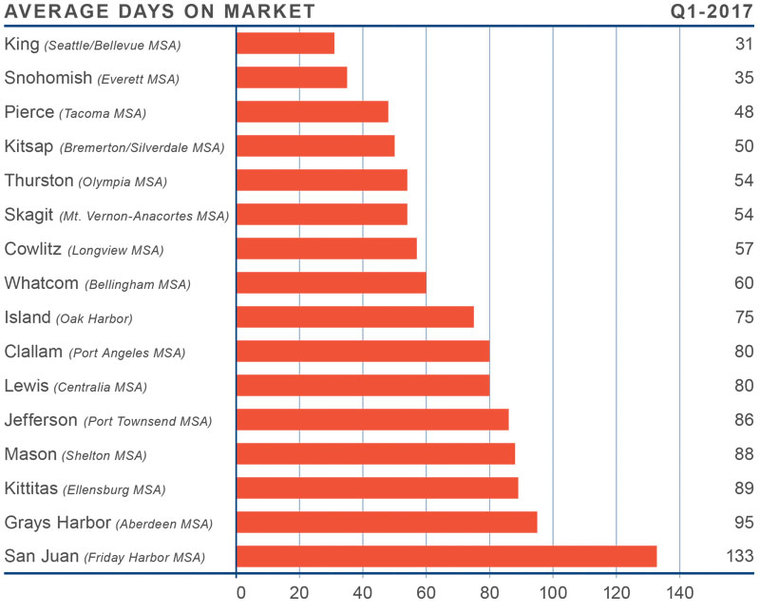
  • King County remained the tightest market, with the average time to sell a home at just 31 days. Island County was the only area where it took longer to sell a home than seen a year ago; however, the increase was just one day.
  • In the first quarter of the year, it took an average of 70 days to sell a home. This is down from the 86 days it took in the first quarter of 2016, but up from the 64 days it took in the final quarter of last year.
  • Given woefully low levels of inventory in all Western Washington markets, I do not expect to see the length of time that it takes to sell a home rising in 2017. In fact, it is likely that it will continue to drop.


CONCLUSIONS

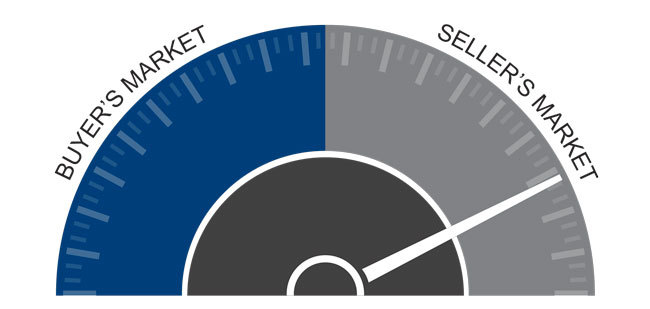
This speedometer reflects the state of the region’s housing market using housing inventory, price gains, home sales, interest rates, and larger economic factors. For the first quarter of 2017, I moved the needle a little more in favor of sellers. The rapid increase in mortgage rates during the fourth quarter of 2016 has slowed and buyers are clearly out in force.


Matthew Gardner is the Chief Economist for Windermere Real Estate, specializing in residential market analysis, commercial/industrial market analysis, financial analysis, and land use and regional economics. He is the former Principal of Gardner Economics, and has over 25 years of professional experience both in the U.S. and U.K.

 
More April 27, 2017

Over half-a-million dollars has been disbursed to non-profits so far this year!

Thanks to the generosity of Windermere agents and the community, the Windermere Foundation collected over $325,000 in donations during the first quarter of 2017. This is an increase of 17 percent compared to this time last year! Individual contributions and fundraisers accounted for 55 percent of the donations, while 45 percent came from donations through Windermere agent commissions. So far, we have raised a total of $33,431,017 in donations since 1989.

Each Windermere office has its own Windermere Foundation fund account that they use to make donations to organizations in their communities. Year to date, a total of $545,354 has been disbursed to non-profit organizations dedicated to providing services to low-income and homeless families throughout the Western U.S.

One organization that has been the recipient of Windermere Foundation funds is the Colorado Coalition for the Homeless. The Colorado Coalition for the Homeless operates a range of integrated programs to support children and families. These include family support services, pediatric services, eye and dental care, child, adolescent, and family therapy, and child care.

A recent donation from the Windermere Real Estate office in Centennial, Colorado is helping to fund the Coalition’s Family Support Services Program. The program provides services including emergency shelter information and referrals, housing information and referrals, referrals to other agencies, programming designed specifically to meet needs of children ages birth to 6 years, access to medical and mental health services, and diapers and baby supplies.

Generous donations to the Windermere Foundation over the years have enabled Windermere offices to continue to support local non-profits. If you’d like to help support programs in your community, please click on the Donate button.

To learn more about the Windermere Foundation, visit http://www.windermere.com/foundation.


More April 26, 2017

The 4 Phases of Remodeling: Happily Ever After

This fairy-tale phase of a home remodel is the tail end of any major project. The Honeymoon has come and gone. The Midproject Crisis has thankfully passed. The Renewal of Vows has given you the strength you need to continue on, and now we’re finally, and gratefully, just about out of phases. It’s time to wrap up this series on the ups and downs of remodeling by detailing the final few steps that are taken to complete a home remodel. What I call the Happily Ever After phase.


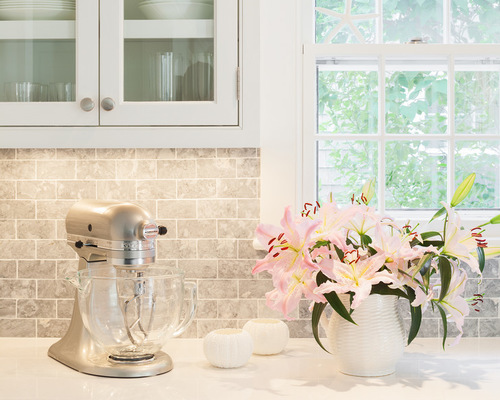
Ever After 1: Sophie Metz Design, original photo on Houzz


Whether you have experienced it, known someone who has gone through it or have only read about it, you’re probably familiar with what it’s like to be in love. Emotions run the gamut of excitement, happiness, giddiness and contentedness (as well as a wide range of others). The person in love is likely to be gushing about her beau or his sweetheart to anyone who will listen. It’s a time when even the most cynical of people looks at the world through rose-tinted glasses.

Moving back into a house after remodeling can be a bit like being in love. Are you not excited to use all your new appliances or plumbing fixtures? (Hello, new bathtub!) Is there not a smidge of giddiness as you think about coming home to your pristine new bathroom, kitchen or living room? Don’t deny it — you’re probably even babbling to the barista at Starbucks about your new space.

During this Happily Ever After stage, finally, the work is done! At last, there are no more nail guns and saws and vacuums making noise in your house. After months of destruction and disarray, it’s time to move back in and enjoy your home, sweet home, for the rest of your days (or at least until you sell it or remodel again). And though most of this phase is just you at last having the chance to enjoy the fruit of your general contractor’s labor, there are a few odds and ends that your contractor will be taking care of to make sure your Happily Ever After really lasts forever.


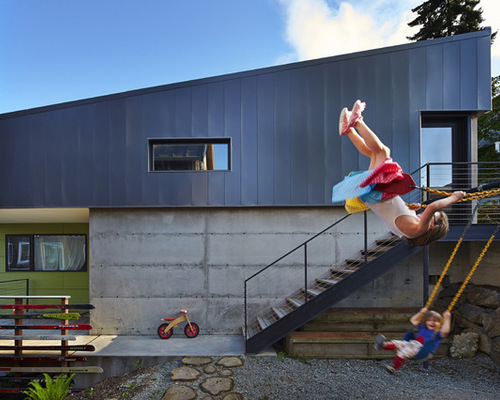
Ever After 2: chadbourne + doss architects, original photo on Houzz


  • Cleaning. This probably will happen before you move back into your home (or at least it should). Since day one of demolition, dust and debris have been thrown into the air and, much to your contractor’s chagrin, have crept into other places in the house that weren’t touched in the remodel. Now’s the time to do an all-inclusive clean. No, the cleaners won’t do your laundry for you, but they’ll do just about everything else, from polishing the floors to dusting the ceiling fans. The end-of-project clean is like a cleansing spa day for your home.
  • Final walk-through. The last walk-through ensures that you are completely satisfied with everything — and I mean everything — in your home. This is where you will have the chance to sit down and bring up all the odds and ends that you feel need to be addressed. This can be anything from “this faucet isn’t on straight” to “there’s a scratch on the new fridge” to “my shower isn’t draining correctly.”

    Contractors may vary on when they hold a final walk-through, but in my experience, it’s scheduled after the homeowners move back in and have a chance to use the new space. Your contractor should’ve caught just about everything during his or her own informal walk-throughs throughout the remodel, but sometimes there are items that just don’t come to the surface until a house is lived in.


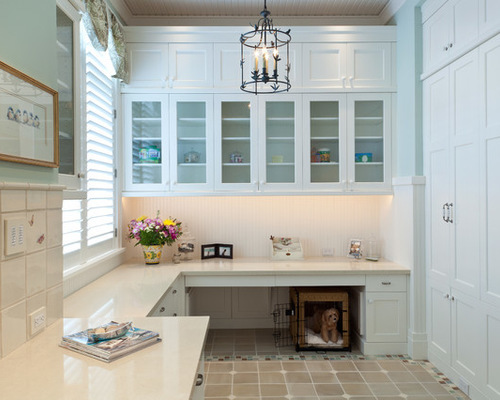
Ever After 3: Collins & DuPont Design Group, original photo on Houzz


  • Warranty begins. Most builders and remodelers have a warranty for their projects. The length and amount of coverage can vary, of course, but what remains constant is the promise to stand behind their work for any unforeseen circumstances that arise and need addressing. (Side note: If you’re looking at contractors right now, ask them about their warranty. This can be very telling of how they conduct their business. The more that contractors are willing to warrant their work — or the longer the warranty — the more effort they will put into getting the job done right the first time.)

    For some contractors, the warranty formally begins after the final walk-through is hosted and the last payment is received. After that, some will stand behind any light fixtures that fizzle, appliances that break, tiles that come loose — you name it. In an ideal world, everything would work right the first time, and it would work right forever. In our world, however, there are bad manufacturing batches and recalls and oversights that may need to be taken care of. Fear not. If you have selected the right remodeler, these issues will be handled.


Related: How Builders Deal With Problems Beyond the Warranty


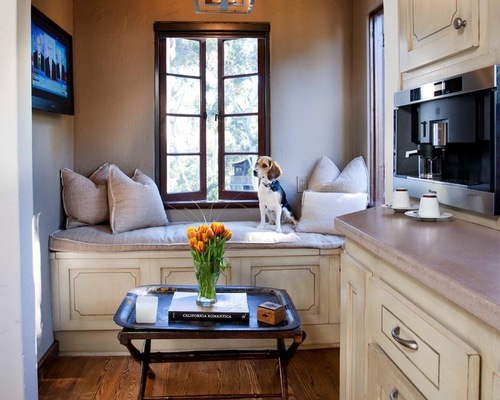
Ever After 4: Mark Hickman Homes, original photo on Houzz


What else is involved in the Happily Ever After? Absolutely nothing. Take a deep breath in, let it out, look around your new place and smile, knowing that it’s all yours, to have and to hold from this day forward, for better, for worse, for richer, for poorer, in sickness and in health, to love and to cherish till death do you part. You get the picture.

By Hannah Kasper, Houzz

More April 19, 2017

The 4 Phases of Remodeling: The Renewal of Vows

Passing the midway point of a remodel can be an exciting time. After weeks (or months, but hopefully not years) of being in a state of disarray, things finally start to feel as if they’re coming together.

You’ve experienced the fast-paced bliss of the Honeymoon. You’ve trudged through the slowdown that comes with the Midproject Crisis. And now? Now you’re ready to gaze lovingly into your contractor’s eyes again.


Vows 1: Priority 1 Project Management, original photo on Houzz


Everything you’d hoped and dreamed about when you first envisioned your project is coming true, and you’re feeling ready to say “I do” all over again. It’s time for the remodeling phase I like to refer to as the Renewal of Vows.

You probably won’t hear your contractor refer to this phase as such (but how fun would that be?). Just as the Midproject Crisis is more commonly referred to as the mechanical rough-in stage, this phase has other, more industry-standard names. You will probably hear words like “finish out,” “trim out,” “mechanical trims” or “finishes.”

And, as you can probably guess, this phase is about finishing and beautifying the work that was started in the first couple of months. There’s a lot that may (or may not) be involved in the finish stage of your job, depending on your scope of work, but here’s a list of the most common steps that happen during this phase.


Vows 2: Traci Connell Interiors, original photo on Houzz


  • Sheetrock. Holes made during rough-in will be patched, new Sheetrock will be put up at any new walls or ceilings, and texture will be applied to make your walls look like walls again.
  • Trim carpentry. There are a few different types of trim that may be installed at this phase: baseboard (which runs along the joint where the bottom of a wall meets the floor), door and window casing (which is installed around the perimeters of doors and windows) and crown molding (which is run along the joint where the top of a wall meets the ceiling). Trim is purely optional — some more contemporary designs forgo it entirely — but it is meant to create a finished, unified look.


Vows 3: TOTAL CONCEPTS, original photo on Houzz


  • Cabinetry. The installation of cabinetry is usually around the time when I see a little glimmer come back into a homeowner’s eyes. This is when the kitchen starts looking more like a kitchen, but it’s also when you can visualize how your other storage pieces, such as built-ins and bathroom cabinets, will change the function of your home.

    Related: Shop for Kitchen Cabinets
     

  • Electrical and plumbing trim. This is the other big “wow” that comes with the finish-out phase. A master bathroom can start to look completed when tile and cabinetry is installed, but throw in a freestanding tub and a shower full of rain heads, handheld fixtures and a steam unit, and suddenly you’re not looking at a mostly done, unidentifiable space — you’re looking at your master bathroom.


The same goes for electrical items like decorative light fixtures or appliances. Seeing new stainless steel (or whatever your preferred finish is) appliances being brought into and installed in your kitchen make most people go starry-eyed and drool a little. No judgment here — I’ve done the same.


Vows 4: DKOR Interiors Inc. – Interior Designers Miami, FL, original photo on Houzz


  • HVAC trim. I mentioned in the last installment that most HVAC work is done during the rough-in stage, so what is left? Essentially, all that needs to be done is the installation of vent covers and thermostats and maybe a little tweaking of the air-conditioning system. Nothing too exciting, but it should be noted nonetheless.
  • Miscellaneous. Like I said, there is a lot that can be going on during the trim-out stage. Flooring — such as carpet, wood, tile or laminate — will be installed. (Flooring installers are known for insisting that they be the absolute last people to work on a house.)


Tile will go up in showers and as backsplashes. Countertops will go in. Priming and painting of walls, ceilings, trim and cabinetry will be completed. A little landscaping may even be done.


Vows 5: Viyet Luxury Consignment, original photo on Houzz


There are a million moving parts during the mechanical finishes phase. And I admit, as a homeowner and general contractor, this is exciting to see.

Just like during the Honeymoon, a lot of visibly quantifiable work is being completed. Only this time, instead of things being torn up and thrown out, they’re being brought in and installed. The puzzle pieces are finally fitting together, and you are starting to see the big picture. (Dreamy sigh.)

I’ve harped repeatedly about how communication is key, and this still rings true during the Renewal of Vows stage. But patience is also important.

As you see new things being carried in and installed, it can be so tempting to begin moving back into your new space or using your new kitchen. But your contractor may still need some time and space to work.

There are last-minute items that will ultimately guarantee your satisfaction that need to be taken care of before you and your family can begin enjoying your new remodel. So hang in there, and your patience will be rewarded.


Vows 6: Jay Jeffers, original photo on Houzz


You may be thinking: There can’t be anything left, can there? That’s it, right? Everything is installed, the house looks like a house again, time to move in and get settled. Not so fast. You’re almost there. Find out what final bits and pieces are involved in the end phase of a remodel, what I like to call the Happily Ever After stage.

By Hannah Kasper, Houzz


Living April 14, 2017

Home Decorating Trends Expected To Last Through 2018


Home décor and design trends are an ever-changing landscape by nature. Consumers grow weary of seeing the same colors and styles, and who doesn’t love to freshen up their home with a few new throw pillows? Some trends can be fleeting and you might feel resistant to jumping into them if you’re afraid that this year’s color of the year is next year’s Harvest Gold.

According to Leatrice Eiseman, executive director of the Pantone Color Institute, there are several trends in home decorating right now that are so popular, she doesn’t see them going away any time soon.


Geometric Patterns

Geometrics are seemingly everywhere right now; from backsplash tile, throw pillows, and bedding to wallpaper – the biggest commitment of them all.


Typography

The popularity of this trend is not exactly new and it doesn’t appear to be losing any steam. Whimsical pillows and framed art with sweet messages seem to be the new text message of the home, inviting guests and proclaiming love for our friends, families and home town. In a world where Instagram and Pinterest appear to have taken over our lives – it’s no wonder we are so fond of these visual and tactile messages of inspiration, love, and comedy.


Wood treatments

The presence of technology, especially a year from now, will have us craving natural elements like wood more than ever. Expect to see wood in unexpected places like ceilings and as accent walls. But this won’t be your Grandparent’s wood-paneled basement from the 50’s. Think one accent wall of rustic, reclaimed wood with natural aging, or elegant box-beamed ceilings.


Fringe

Already very popular in fashion, fringe edging in small doses adds texture, softness and evokes a home-spun feeling that is endearing and blends well with other trends right now, like wooden accent bowls and handmade ceramics. Expect to see it used in more areas like blankets and curtains, as well.


Metallics

Metallic accent furniture continues to become so popular, it has been referred to being “the new neutral”. Along with larger pieces like coffee tables and dining room tables, iridescent fabrics and wall art are also becoming more readily available to add a little sparkle to a room. Don’t think that this means you’ll need gold-plated columns erected into your home. Vintage finds from thrift shops and DIY projects like painting old furniture are also a fun way to bring this trend home.


Intense colors

Anyone who is active on Pinterest knows that dark wall colors in vivid tones are wildly popular right now. In stark contrast to the bright and lively Greenery, chosen as color of the year by Pantone, the Benjamin Moore Paint Company chose their color of the year to be Shadow 2117-30. They describe it as “Allusive and enigmatic — a master of ambiance.”

Clearly a bold statement like this isn’t for everyone but an accent wall in a room that is not too small or dark already could be an amazing feature. Paired with metallic and lots of white furnishings and the effect is dramatic and glamorous.

This blog originally appeared on Windermere Spaces and Places.