Facebook
 X
X
 Pinterest
 Copy Link
Windermere Real Estate Chief Economist Matthew Gardner explains how restrictive growth policies are affecting housing affordability in many cities.

Windermere Real Estate Chief Economist Matthew Gardner explains how restrictive growth policies are affecting housing affordability in many cities.

 It’s that time of year again! As families prepare to send their kids back to school, Windermere agents have been out in their communities raising money to support programs that provide school supplies and scholarships to students in need.
These are a just a few examples of how Windermere agents are making a difference.
 Education First Scholarship Program
Seattle, WA: For the second year in a row, agents with the Windermere Wall Street Group offices have pooled their local Windermere Foundation funds to sponsor college scholarships for low-income youth who strive to improve their lives. Through a partnership with Education First, students receive tuition assistance along with access to college coaching services to stay on track.
The Windermere Wall Street, Magnolia, and Queen Anne offices used their funds to sponsor Yosef Yirdaw, who plans to study computer science at Eastern Washington University. Originally an orphan from Ethiopia, he shined in high school with both academics and cross country.
The Windermere office in West Seattle sponsored Brandon Olivera, a Chief Sealth High School graduate heading to the University of Washington, who is setting an example for his younger brothers to follow. During high school, Brandon spent many hours working in his father’s restaurant while making sure to help his siblings with their homework.
Both scholars will be the first in their families to attend college. The Windermere Wall Street Group offices have generously donated a total of $12,000 to Education First’s scholarship program since 2016.
Equipped 4 Success School Supply Drive
 Alameda, CA: Through the Windermere Foundation, Windermere Bay Area Properties offices donated $1,000 to the Alameda Education Foundation (AEF) to purchase new backpacks and supplies for their Equipped 4 Success School Supply Drive. Contributions to the drive provide homeless, formerly homeless, and low-income students with the materials they need to be ready to learn on the first day of school.
The mission of the Alameda Education Foundation is to engage the community, raise funds, and coordinate programs to support and enhance the quality of K-12 public education in Alameda.
Make The “Change” For Lewis County



Centralia, WA: On August 21, the Windermere Centralia office teamed up with KELA/KMNT Radio to host the Make The “Change” For Lewis County fundraising event. A school bus was parked next to the Windermere office to collect school supplies, checks, cash or change, and KELA/KMNT Radio was on site broadcasting live from the event. Over $2,000 worth of school supplies were collected for Lewis County schoolkids in need.
High Point Healthy Families Celebration


Seattle, WA: Approximately 830 community members attended this annual event on August 15 hosted by Neighborhood House, whose mission is to partner with diverse individuals and families to build community and achieve their goals for health, education, and self-sufficiency. With the help of a $3,000 donation from the Windermere Foundation, Neighborhood House was able to purchase enough school supplies to stuff 500 backpacks and serve 100 more school-aged youth than last year. Seattle Mayor Jenny Durkan was also on hand at the event to help distribute backpacks.
 Thanks to the generous donations and support of Windermere owners, agents, staff, and the public, the Windermere Foundation has been able to raise over $36 million since 1989 to support local non-profit organizations that provide services to low-income and homeless families in our communities. If you’d like to help support programs in your community, please click on the Donate button.
To learn more about the Windermere Foundation, please visit WindermereFoundation.com.
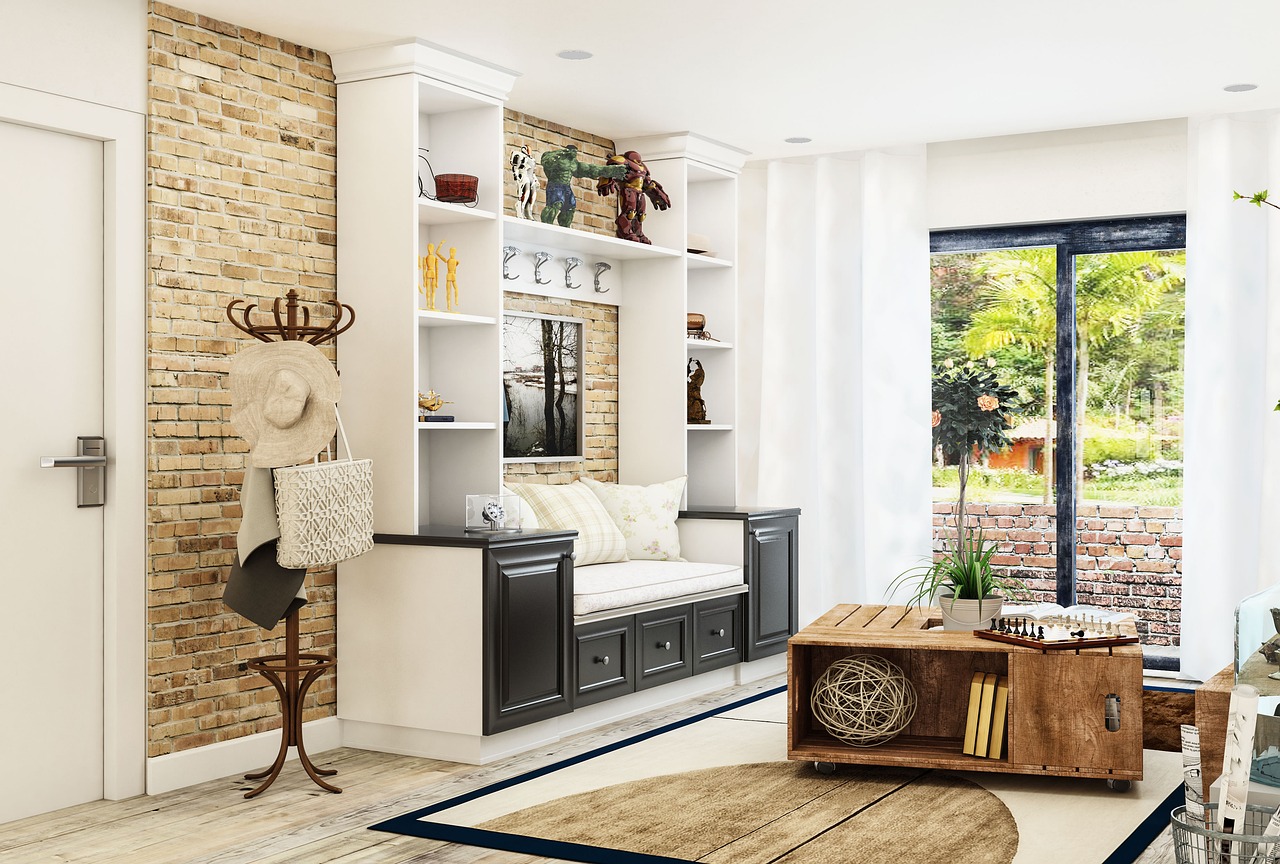
It's sometimes said that the limitations of a house are what help make it a home. For many, however, it is a point of pride to accept only the finest in their new residence. How can you find the balance between cultivating a lived-in home with personality and quirks versus a house with cutting-edge amenities that improve quality of life? To get to the bottom of that, we gathered a list six keys to consider when selecting and developing the home of your dreams:
The neighborhood
Surprisingly, one of the biggest factors in choosing a new home isn’t the property itself, but rather the surrounding neighborhood. While new homes occasionally spring up in established communities, most are built in new developments. The settings are quite different, each with their own unique benefits.
Older neighborhoods often feature tree-lined streets; larger property lots; a wide array of architectural styles; easy walking access to mass transportation, restaurants and local shops; and more established relationships among neighbors.
New developments are better known for wider streets and quiet cul-de-sacs; controlled development; fewer aboveground utilities; more parks; and often newer public facilities (schools, libraries, pools, etc.). There are typically more children in newer communities, as well.
Consider your daily work commute, too. While not always true, older neighborhoods tend to be closer to major employment centers, mass transportation and multiple car routes (neighborhood arterials, highways and freeways).
Design and layout
If you like Victorian, Craftsman or Cape Cod style homes, it used to be that you would have to buy an older home from the appropriate era. But with new-home builders now offering modern takes on those classic designs, that’s no longer the case. There are even modern log homes available.
Have you given much thought to your floor plans? If you have your heart set on a family room, an entertainment kitchen, a home office and walk-in closets, you’ll likely want to buy a newer home—or plan to do some heavy remodeling of an older home. Unless they’ve already been remodeled, most older homes feature more basic layouts.
If you have a specific home-décor style in mind, you’ll want to take that into consideration, as well. Professional designers say it’s best if the style and era of your furnishings match the style and era of your house. But if you are willing to adapt, then the options are wide open.
Materials and craftsmanship
Homes built before material and labor costs spiked in the late 1950s have a reputation for higher-grade lumber and old-world craftsmanship (hardwood floors, old-growth timber supports, ornate siding, artistic molding, etc.).
However, newer homes have the benefit of modern materials and more advanced building codes (copper or polyurethane plumbing, better insulation, double-pane windows, modern electrical wiring, earthquake/ windstorm supports, etc.).
Current condition
The condition of a home for sale is always a top consideration for any buyer. However, age is a factor here, as well. For example, if the exterior of a newer home needs repainting, it’s a relatively easy task to determine the cost. But if it’s a home built before the 1970s, you have to also consider the fact that the underlying paint is most likely lead0based, and that the wood siding may have rot or other structural issues that need to be addressed before it can be recoated.
On the flip side, the mechanicals in older homes (lights, heating systems, sump pump, etc.) tend to be better built and last longer.
Outdoor space
One of the great things about older homes is that they usually come with mature trees and bushes already in place. Buyers of new homes may have to wait years for ornamental trees, fruit trees, roses, ferns, cacti and other long-term vegetation to fill in a yard, create shade, provide privacy, and develop into an inviting outdoor space. However, maybe you’re one of the many homeowners who prefer the wide-open, low-maintenance benefits of a lightly planted yard.
Car considerations
Like it or not, most of us are extremely dependent on our cars for daily transportation. And here again, you’ll find a big difference between newer and older homes. Newer homes almost always feature ample off-street parking: usually a two-car garage and a wide driveway. An older home, depending on just how old it is, may not offer a garage—and if it does, there’s often only enough space for one car. For people who don’t feel comfortable leaving their car on the street, this alone can be a determining factor.
Finalizing your decision
While the differences between older and newer homes are striking, there’s certainly no right or wrong answer. It is a matter of personal taste, and what is available in your desired area. To quickly determine which direction your taste trends, use the information above to make a list of your most desired features, then categorize those according to the type of house in which they’re most likely to be found. The results can often be telling.
Much of the Western United States is grappling with the same issue this summer – the specter of smoke and fire from some of the largest forest fires in recent memory. For individuals, even the decreased air quality can be a threat, while the destruction that the fires themselves can wreak is devastating. Homeowners living near impacted areas are often left with an impossible choice – pack up what they can and evacuate or remain in a dangerous location and hope for the best. Thankfully, homes needn’t be defenseless against the heat. To help fortify your home against damage stemming from fires, we brought together advice from a few experts.
Opt for Flame-Resistant Walls and Roofing
No Space is Too Small to Protect
Fortify Your Windows

When dissatisfaction with your current home strikes, it can be exciting to launch into a plan for a new addition. A new living room, bedroom, or more can add value to your home while improving your quality of life.
On the other hand, even a modest addition can turn into a major construction project, with architects and contractors to manage, construction workers traipsing through your home, hammers pounding, and sawdust everywhere. And although new additions can be a very good investment, the cost-per-square-foot is typically more than building a new home, and much more than buying a larger existing home.
Define your needs
To determine if an addition makes sense for your particular situation, start by defining exactly what it is you want and need. By focusing on core needs, you won’t get carried away with a wish list that can push the project out of reach financially.
If it’s a matter of needing more space, be specific. For example, instead of just jotting down “more kitchen space,” figure out just how much more space is going to make the difference, e.g., “150 square feet of floor space and six additional feet of counter space.”
If the addition will be for aging parents, consult with their doctors or an age-in-place expert to define exactly what they’ll require for living conditions, both now and over the next five to ten years.
Types of additions
Bump-out addition—“Bumping out” one or more walls to make a first-floor room slightly larger is something most homeowners think about at one time or another. However, when you consider the work required, and the limited amount of space created, it often figures to be one of your most expensive approaches.
First-floor addition—Adding a whole new room (or rooms) to the first floor of your home is one of the most common ways to add a family room, apartment or sunroom. But this approach can also take away yard space.
Dormer addition—For homes with steep rooflines, adding an upper floor dormer may be all that’s needed to transform an awkward space with limited headroom. The cost is affordable and, when done well, a dormer can also improve the curb-appeal of your house.
Second-story addition—For homes without an upper floor, adding a second story can double the size of the house without reducing surrounding yard space.
Garage addition—Building above the garage is ideal for a space that requires more privacy, such as a rentable apartment, a teen’s bedroom, guest bedroom, guest quarters, or a family bonus room.
Permits required
You’ll need a building permit to construct an addition—which will require professional blueprints. Your local building department will not only want to make sure that the addition adheres to the latest building codes, but also ensure it isn’t too tall for the neighborhood or positioned too close to the property line. Some building departments will also want to ask your neighbors for their input before giving you the go-ahead.
Requirements for a legal apartment
While the idea of having a renter that provides an additional stream of revenue may be enticing, the realities of building and renting a legal add-on apartment can be sobering. Among the things you’ll need to consider:
In addition, renters have special rights while landlords have added responsibilities. You’ll need to learn those rights and responsibilities and be prepared to adhere to them.
Average costs
The cost to construct an addition depends on a wide variety of factors, such as the quality of materials used, the laborers doing the work, the type of addition and its size, the age of your house and its current condition. For ballpark purposes, however, you can figure on spending about $200 per square foot if your home is located in a more expensive real estate area or about $100 per foot in a lower-priced market.
You might be wondering how much of that money your efforts might return if you were to sell the home a couple years later? The answer to that question depends on the aforementioned details, but the average “recoup” rate for a family room addition is typically more than 80 percent.
The bottom line
While you should certainly research the existing-home marketplace before hiring an architect to map out the plans, building an addition onto your current home can be a great way to expand your living quarters, customize your home, and remain in the same neighborhood.

Windermere Real Estate Chief Economist Matthew Gardner explains the ways zoning rules and regulatory costs can limit housing affordability.
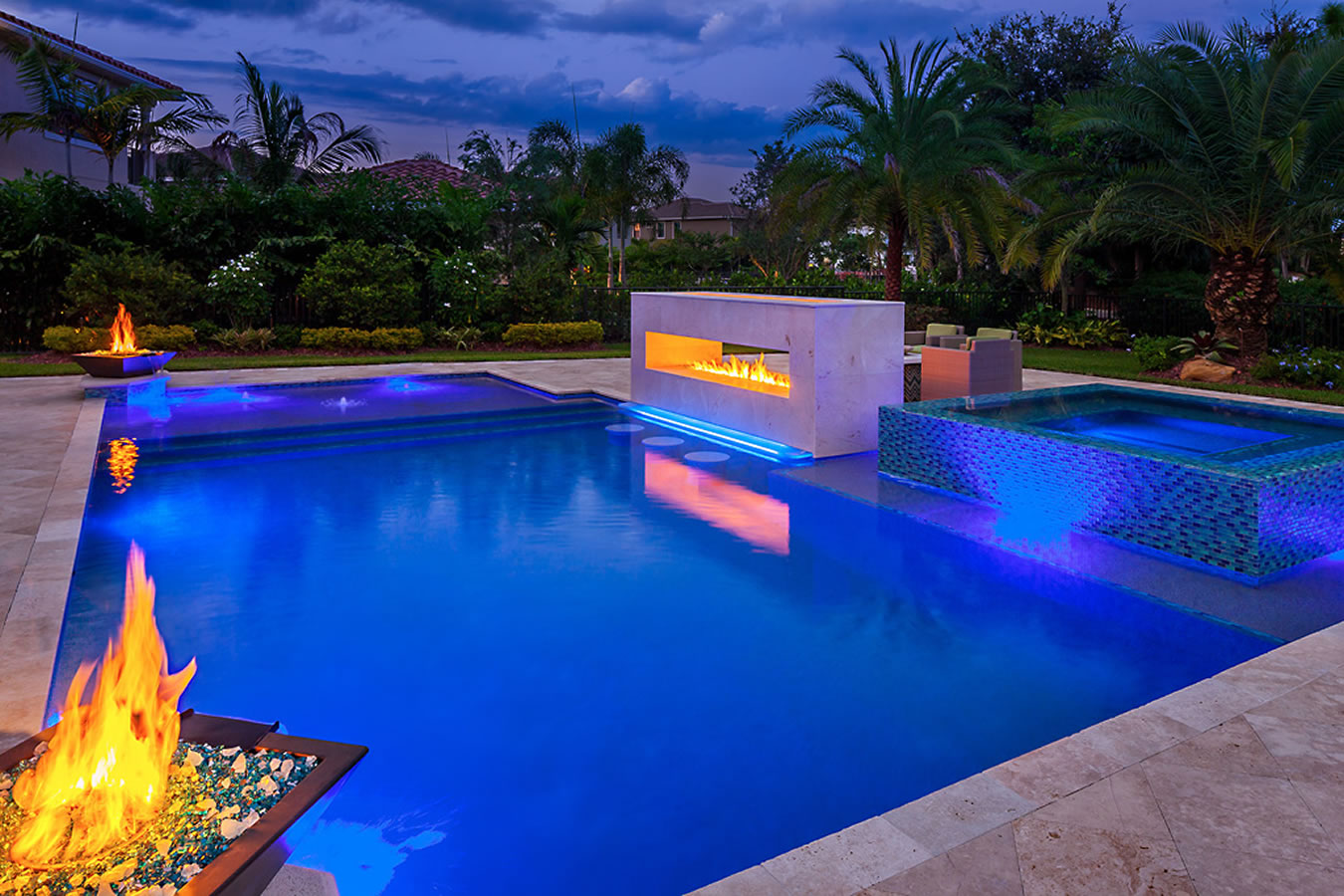
When it comes to luxury home design, if you can imagine it, it can be done. In-home spas, luxe bowling alleys, and glass wine rooms are just a few examples we’re seeing out there. The same idea extends outdoors to swimming pools, which are a must for most luxury homes. But we aren’t talking about just any old backyard pool; they’re usually more masterpiece than mainstream. We consulted a few designers to get some insights into what’s trending in the world of luxury pools and here’s what we found.
Fire Features
Photo credit to AAA Custom Pools Inc.
Custom Art Accoutrement

Photo credit to Van Kirk & Sons Pools and Spas.
Nature-Infused Design
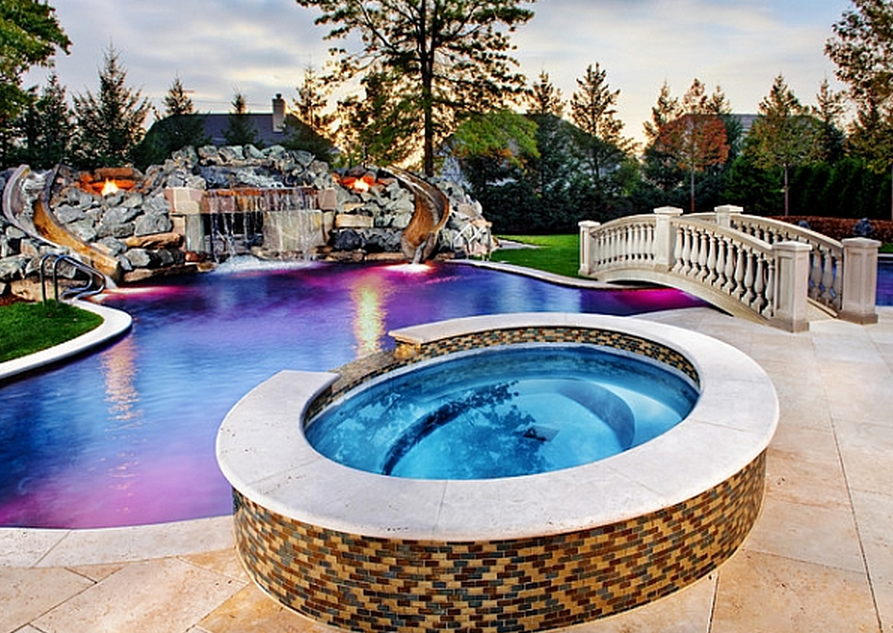
Photo credit to HomesOfTheRich.Net.
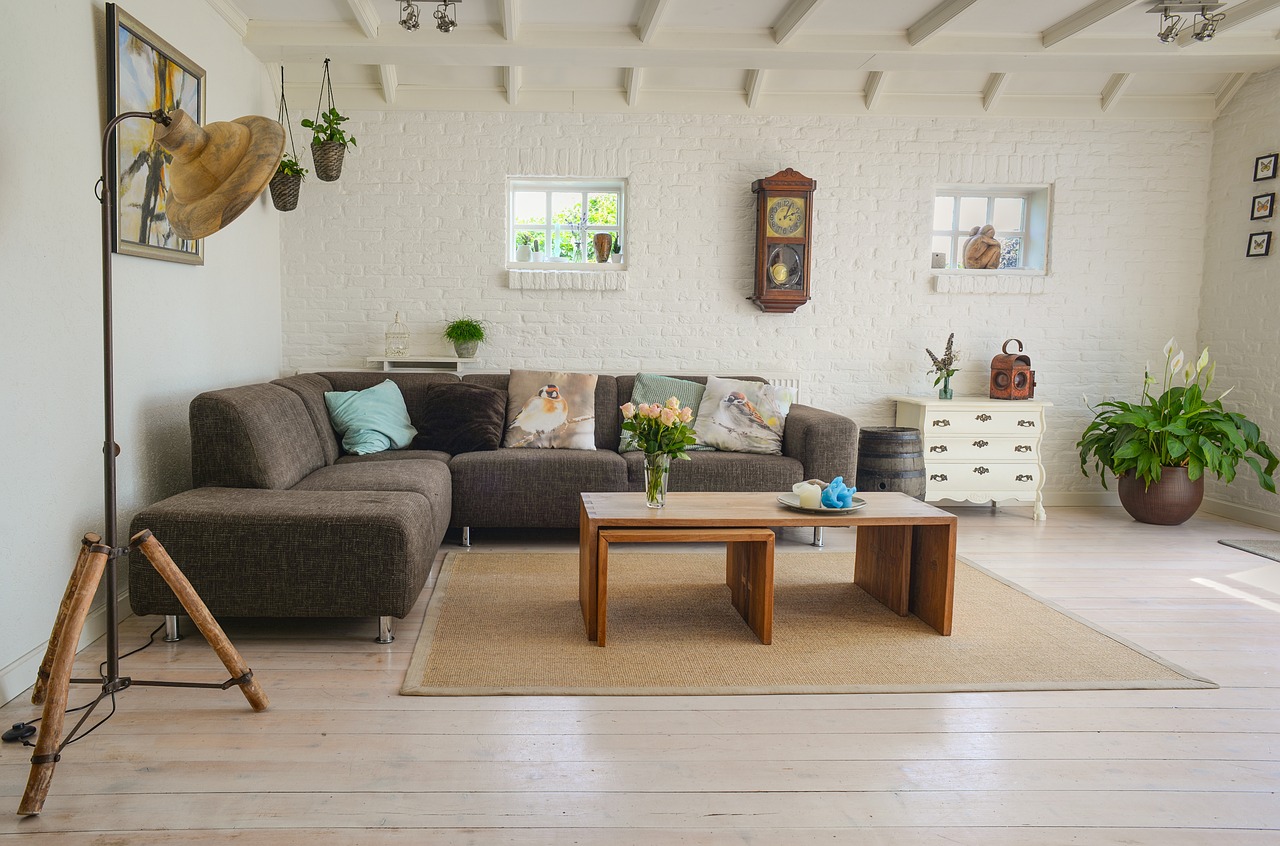
The yearning to move lives in the spirit of many homeowners, but that desire for something new is often at odds with what feels feasible. That sense of newness needn't come from a dramatic uprooting, however. The great part about having a home of your own is you can make improvements and give your home a chance to evolve over time. You just need to help your home live up to its potential! We picked seven of our favorite improvements to help you make the most of your home.


The following analysis of the Montana real estate market is provided by Windermere Real Estate Chief Economist Matthew Gardner. We hope that this information may assist you with making better-informed real estate decisions. For further information about the housing market in your area, please don’t hesitate to contact your Windermere agent.
ECONOMIC OVERVIEW
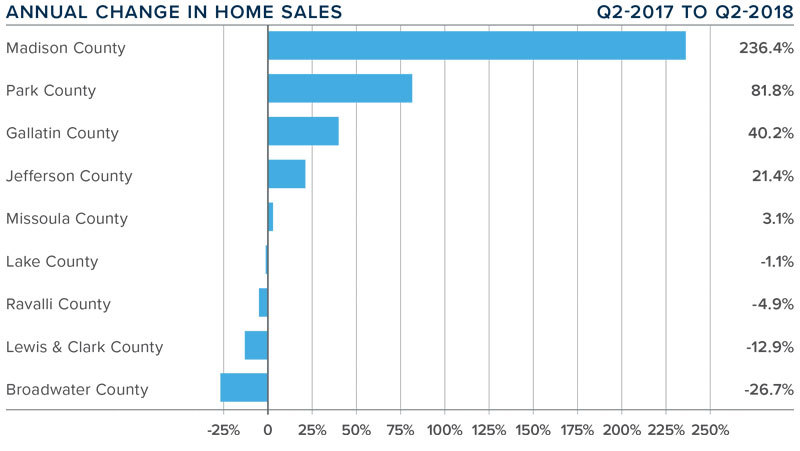
According to the Labor Department, Montana added 2,900 non-agricultural jobs over the past 12 months, representing an annual growth rate of 0.6%. For perspective, the U.S growth rate is running at about 1.6%. Although the state has experienced significant increases in employment since the last recession, the pace of growth has slowed significantly, which is mainly due to a lack of workers, rather than a lack of demand for new employees. Although the annual growth rate was somewhat tepid, I believe Montana’s non-farm employment will increase by 2% by the end of 2018.
In June, the state unemployment rate was a healthy 3.8%, down from 4.0% a year ago.
HOME SALES ACTIVITY
HOME PRICES
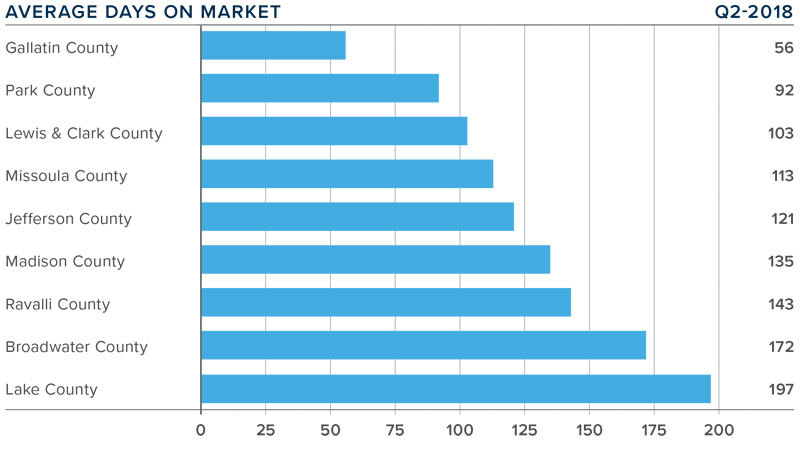
DAYS ON MARKET
CONCLUSIONS
 The speedometer reflects the state of the region’s housing market using housing inventory, price gains, home sales, interest rates, and larger economic factors.
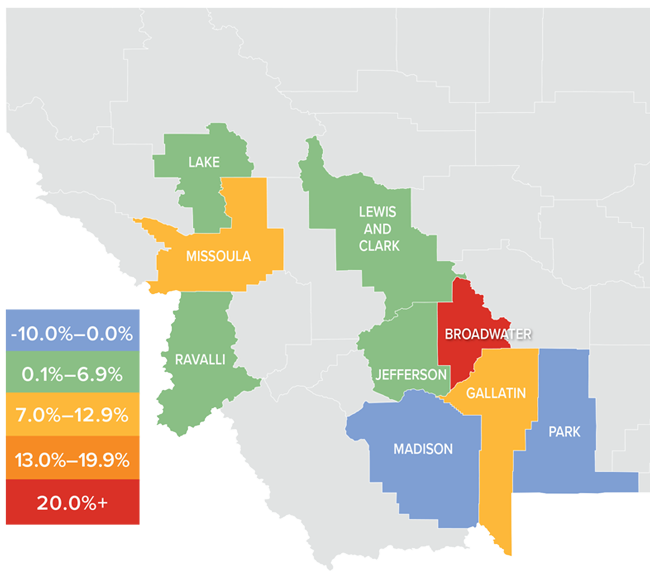
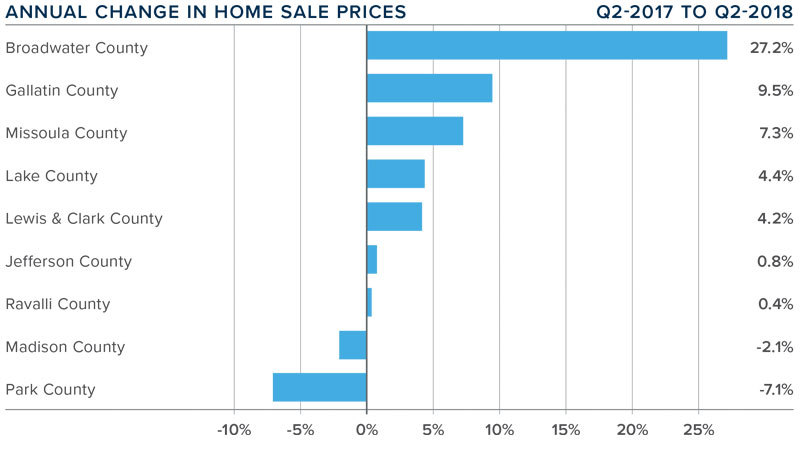
For the second quarter of 2018, I have placed the needle well into sellers’ territory despite the growth in inventory, which will be a relief to home buyers. Well-priced and well-positioned homes are selling quickly and regional price growth is well above the long-term average as demand still exceeds supply. Housing affordability is still a concern in some markets, and this is something that I will be watching as we move through the balance of 2018.

Matthew Gardner is the Chief Economist for Windermere Real Estate, specializing in residential market analysis, commercial/industrial market analysis, financial analysis, and land use and regional economics. He is the former Principal of Gardner Economics and has more than 30 years of professional experience both in the U.S. and U.K.

The following analysis of the Oregon and Southwest Washington real estate market is provided by Windermere Real Estate Chief Economist Matthew Gardner. We hope that this information may assist you with making better-informed real estate decisions. For further information about the housing market in your area, please don’t hesitate to contact your Windermere agent.
ECONOMIC OVERVIEW
The State of Oregon has added 30,400 new jobs over the past 12 months, representing a reasonable annual growth rate of 1.6%. It is clear, however, that job growth in Oregon has started to taper, with the annual rate dropping below 2% in the early spring of this year. This is no great cause for concern as the state has essentially reached full employment, which tends to slow employment growth.
The Southwest Washington market area added 5,580 new jobs over the past 12 months, representing an annual growth rate of 2.7%.
Oregon’s unemployment rate was 4.0% in June, marginally below the 4.1% rate seen a year ago. In Southwest Washington, the unemployment rate was measured at 5.3%, marginally lower than the year-ago rate of 5.4%.
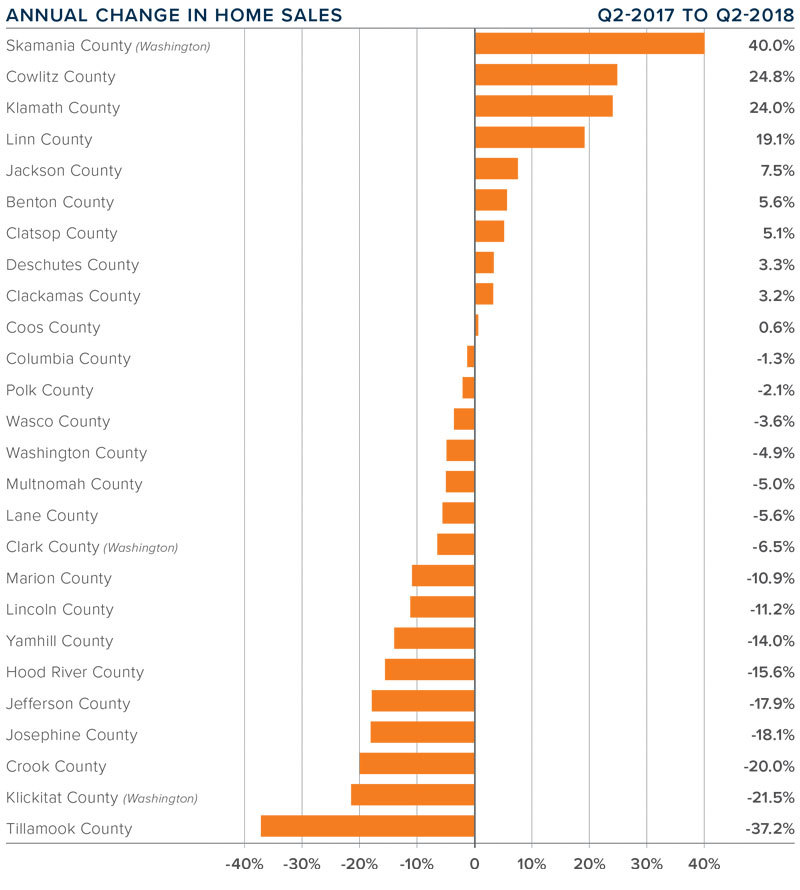
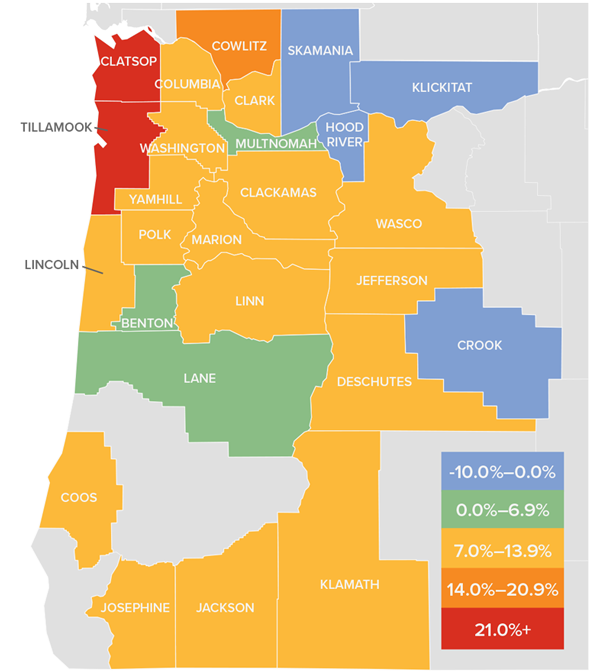
HOME SALES ACTIVITY
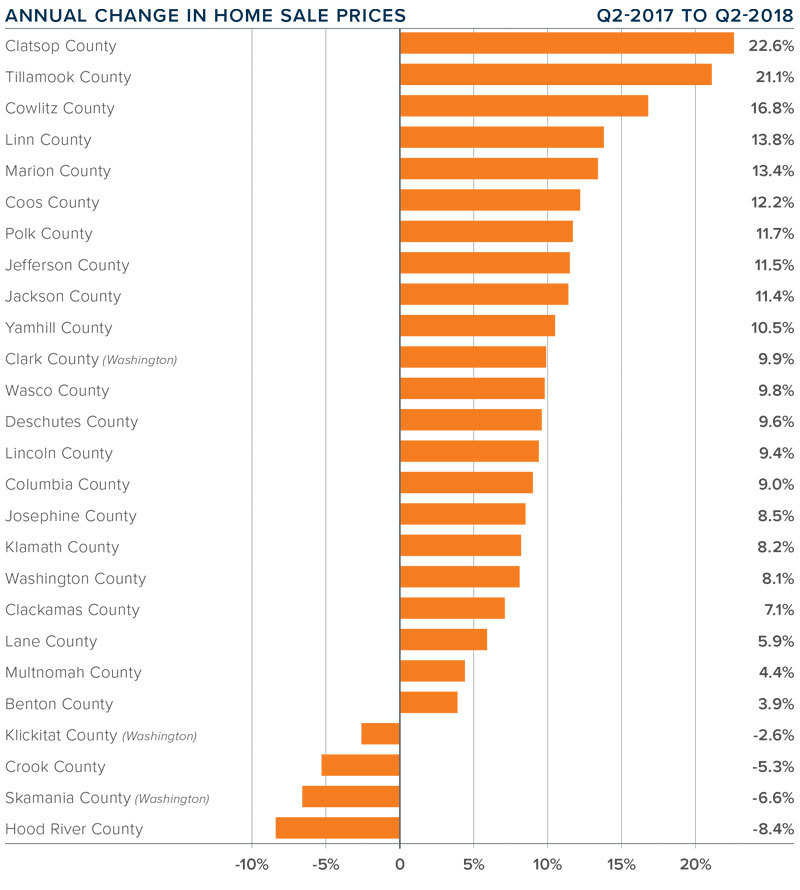
HOME PRICES
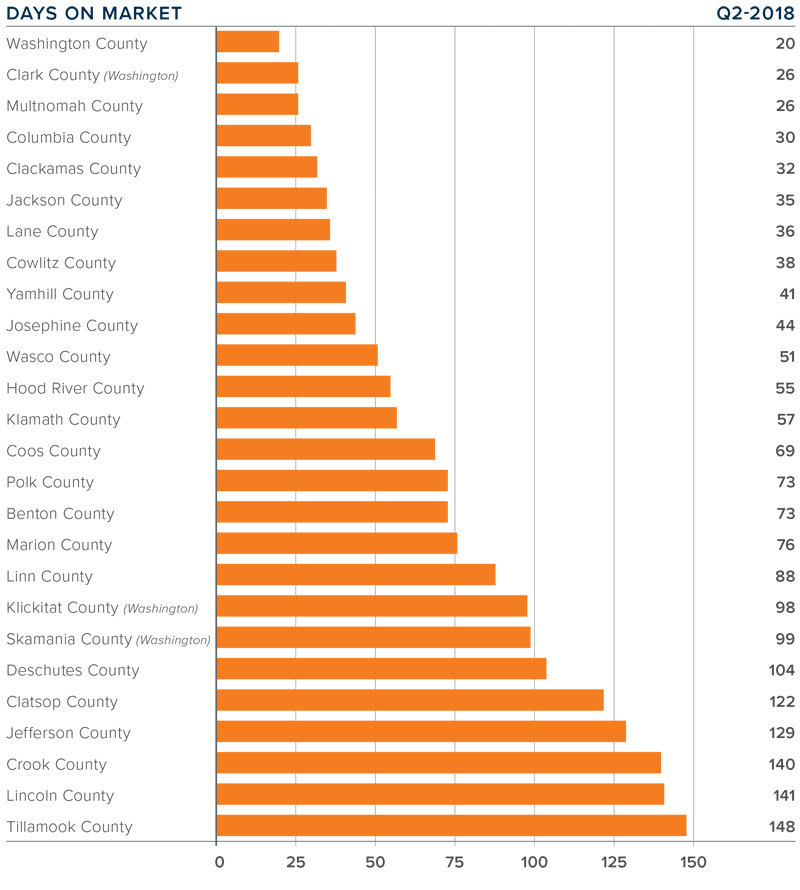
DAYS ON MARKET
CONCLUSIONS
 The speedometer reflects the state of the region’s housing market using housing inventory, price gains, home sales, interest rates, and larger economic factors.
Housing markets throughout Oregon and Southwest Washington continue to benefit greatly from the healthy regional economy. Home sales remain solid; however, we are seeing some slowdown in prices, which I consider to be positive as affordability issues could start to taper. That said, housing inventory is still well below balanced-market levels. Sellers remain in the driver’s seat, but I am hopeful that inventory levels will start to increase, which will be a relief to home buyers. Because of this, the needle remains the same as last quarter.
Matthew Gardner is the Chief Economist for Windermere Real Estate, specializing in residential market analysis, commercial/industrial market analysis, financial analysis, and land use and regional economics. He is the former Principal of Gardner Economics and has more than 30 years of professional experience both in the U.S. and U.K.