Design March 12, 2018

A Home Addition: What to Consider Before Starting to Build


Adding on to your current home may be your best bet if you’re short on space, but you don’t want to move or can’t find another house in the area with all the qualities you’re seeking. It’s also an attractive option if the house you have is lacking just one significant element (a family room, another bedroom, a larger kitchen, a separate apartment, etc.).

On the other hand, even a modest addition can turn into a major construction project, with architects and contractors to manage, construction workers traipsing through your home, hammers pounding, and sawdust everywhere. And although new additions can be a very good investment, the cost per-square-foot is typically more than building a new home, and much more than buying a larger existing home.


Define your needs

To determine if an addition makes sense for your particular situation, start by defining exactly what it is you want and need. By focusing on core needs, you won’t get carried away with a wish list that can push the project out of reach financially.

If it’s a matter of needing more space, be specific. For example, instead of just jotting down “more kitchen space,” figure out just how much more space is going to make the difference, e.g., “150 square feet of floor space and six additional feet of counter space.”

If the addition will be for aging parents, consult with their doctors or an age-in-place expert to define exactly what they’ll require for living conditions, both now and over the next five to ten years.


Types of additions

Bump-out addition—“Bumping out” one of more walls to make a first floor room slightly larger is something most homeowners think about at one time or another. However, when you consider the work required, and the limited amount of space created, it often figures to be one of your most expensive approaches.

First floor addition—Adding a whole new room (or rooms) to the first floor of your home is one of the most common ways to add a family room, apartment or sunroom. But this approach can also take away yard space.

Dormer addition—For homes with steep rooflines, adding an upper floor dormer may be all that’s needed to transform an awkward space with limited headroom. The cost is affordable and, when done well, a dormer can also improve the curb-appeal of your house.

Second-story addition—For homes without an upper floor, adding a second story can double the size of the house without reducing surrounding yard space.

Garage addition—Building above the garage is ideal for a space that requires more privacy, such as a rentable apartment, a teen’s bedroom, guest bedroom, guest quarters, or a family bonus room.


Permits required

You’ll need a building permit to construct an addition—which will require professional blueprints. Your local building department will not only want to make sure that the addition adheres to the latest building codes, but also ensure it isn’t too tall for the neighborhood or positioned too close to the property line. Some building departments will also want to ask your neighbors for their input before giving you the go-ahead.


Requirements for a legal apartment

While the idea of having a renter that provides an additional stream of revenue may be enticing, the realities of building and renting a legal add-on apartment can be sobering. Among the things you’ll need to consider:

  • Special permitting—Some communities don’t like the idea of “mother-in-law” units and therefore have regulations against it, or zone-approval requirements.
  • Separate utilities—In many cities, you can’t charge a tenant for heat, electricity, and water unless utilities are separated from the rest of the house (and separately controlled by the tenant).
  • ADU Requirements—When building an “accessory dwelling unit” (the formal name for a second dwelling located on a property where a primary residence already exists), building codes often contain special requirements regarding emergency exists, windows, ceiling height, off-street parking spaces, the location of main entrances, the number of bedrooms, and more.

In addition, renters have special rights while landlords have added responsibilities. You’ll need to learn those rights and responsibilities and be prepared to adhere to them.


Average costs

The cost to construct an addition depends on a wide variety of factors, such as the quality of materials used, the laborers doing the work, the type of addition and its size, the age of your house and its current condition. For ballpark purposes, however, you can figure on spending about $200 per square food if your home is located in a more expensive real estate area, or about $100 per food in a lower-priced market.

You might be wondering how much of that money might the project return if you were to sell the home a couple years later? The answer to that question depends on the aforementioned details; but the average “recoup” rate for a family-room addition is typically more than 80 percent.


The bottom line

While you should certainly research the existing-home marketplace before hiring an architect to map out the plans, building an addition onto your current home can be a great way to expand your living quarters, customize your home, and remain in the same neighborhood.

 

Buying March 7, 2018

Myths and Truths About Millennial Home Buyers


In recent years there has been a lot written about millennials and their impact on the housing market. Because of this, there are also a lot of misconceptions about what this generation wants from a home. To start, it’s important to know that there are more than 71 millennials, which are defined as those aged 22-37. They also represent 34 percent of all home buyers which makes them tremendously important to the real estate market. We were curious if what we’ve read about millennial home buying habits is true and here’s what we found.


Simple, Functional, Minimal Maintenance


Millennials do not appear to be drawn to fixer uppers in the same way as prior generations. They want something that is “move-in” ready with minimal maintenance. They also value simplicity and function over extravagance which means they’re drawn to spaces that serve dual purposes and furniture that doubles as storage. The old adage “less is more” takes on new meaning for millennial buyers.


Location


Similar to older generations, millennials place a great deal of importance on location. The convenience to their job, friends, family, entertainment, and shopping is a must. But the rumor out there that they only want to live in city dwellings is a myth. Millennials are getting older and starting to have families, so like prior generations, many of them are moving away from the hustle and bustle of the city and into nearby neighborhoods with good schools and family-friendly amenities.


Digitally Engaged


Millennials have grown up surrounded by technology, so smart home technology is a high priority for these buyers. And they’re willing to pay more for it: a survey conducted by Wakefield Research states that millennials are willing to pay a 20 percent premium for smart home technology, such as voice assisted devices, smart phone-controlled security systems, electronic door locks, and doorbell cameras.


Experience over Luxuries


One of the main things we’ve learned about millennials is that they are not prone to conformity. They’re a practical bunch who places a very high priority on experiences and quality of life. Studies show that millennials would rather have discretionary income to pay for things like healthy food, gym memberships, and international travel than blowing their budget on an expensive home. In other words, they’re happy with a modest space so they have money left to spend on their quality of life.

In the end, millennial buyers aren’t that different from prior generations. They’re clearly a pragmatic group that sees their home more as a functional space than a symbol of their success. Technology definitely plays a far greater role for them than their baby boomer parents, but ultimately they still want a home in a nice neighborhood with good schools and access to friends, family, and nearby amenities.

Living March 5, 2018

Gardening Trends For 2018

Outdoor living during the spring and summer months is extremely popular. Months of cold, wet winters are followed by glorious spring colors and warm summer days of vivid blue skies. In this post, we thought that now would be the best time to share some pretty garden trends for 2018.


Wabi-Sabi

Leisure time should be just that: relaxing and rejuvenating. So why labor relentlessly to create and maintain a perfect landscape? Wabi-sabi is the Japanese art of accepting transience and imperfect beauty. Relax and appreciate nature as it is, with humble imperfections, weeds and all. Recognize (and tell others) that dandelions and clover in untreated lawns are not blights. They are status symbols for ecological horticulture. Consider natural grasses and groundcovers as low-maintenance substitutes for sod. Opt for perennials instead of annuals, let flowers go to seed and give nature license to evolve on her own.


Reclaiming Small Outside Spaces

For many of us these days, space is at a premium and with house prices continually on the rise, more and more people are living in apartment blocks or tiny lots. Garden designers are determined to make even the smallest of spaces useful and attractive, and manufacturers have taken notice. Look for a better choice in planters that slot onto balcony rails. New models will have coverings for protecting plants from cold temperatures so that you can even grow seeds and vegetables on your balcony alongside your flowers.

Self-watering wall planter systems have been improved for 2018 and the hanging macramé plant holder is having a bit of a revival. Add a small patio heater and you have an outside space you can enjoy all year round with minimal effort.


Purple Passion

Pantone’s Ultra Violet is the color of the year. Maybe that’s why you find purple flowers in this year’s plant varieties and garden design. It’s easy to incorporate this color in the garden as there are many flowers and shrubs with this beautiful color. However, there are also several edible purple plants that you can grow. Purple vegetables are not only interesting and pretty, their unique color denotes anthocyanins which are very beneficial to your health.


Re-Wilding

This is a style that keeps popping up time and again. However, 2018 has taken the re-wilding trend up another notch. It is still all about working with nature, growing wildflowers and supporting our pollinating insects. Re-wilding means adjusting plant selections to better support local wildlife and growing both seed-producing and berry-bearing plants. However, now it is also about using ‘green’ gardening products, natural solutions to bug and slug killers instead of chemicals and insecticides and using peat-free products.


Alfresco Living

Outdoor entertaining and kitchen areas are tipped to be a key trend for Spring/Summer 2018. We are not talking about a little nook corner just off the kitchen. Alfresco dining spaces are being pushed out into the garden itself and made into a major feature. These dedicated outdoor dining areas are surrounded by in-ground and container plants for that lush feeling. Special flooring, comfy furniture, and mood lighting turn it into a little haven. Complete the trend with a sunken fire pit, barbecue or pizza oven and you might never want to leave.


Lighting The Way

Adding lighting to your garden is not a new thing. However, in this age of renewable energy, garden lighting companies are turning away from the more traditional lighting solutions we have seen in the past. The advances in solar energy capture mean that we can light up our gardens in a variety of fun, affordable and better ways. No more changing batteries or wiring up the garden with electricity.

The wide range of lighting methods allows you to create whatever ambiance you want. Simple stand-alone lights can mark pathways, either discreetly embedded into the path edges or standing loud and proud along the side. Multi-colored fairy lights can be tangled among the overhead branches of a tree creating dazzling shapes and textures. Solar Mason jars can be hung from above or used as table lighting. Festoon lights can create an ambient glow around any outdoor space creating romantic nooks. 

Market News March 2, 2018

Windermere and Zillow Economists Come Together To Discuss Housing


Earlier this week, nearly 200 Windermere brokers came together at Windermere’s monthly luxury breakfast at Overlake Golf Club in Medina, WA. The featured speakers were Windermere Chief Economist, Matthew Gardner, and Zillow Senior Economist, Skylar Olsen. Matthew interviewed Skylar on a number of topics related to the housing market and economy, including interest rates, inventory levels, Millennials, and where they predict Amazon will open their second headquarters (they both are betting on Austin, TX).


The two economists discussed the overall health of the housing market. Both predict sales to soften a little this year, but still remain strong overall. When asked about interest rates, Skylar stated that she believes they will land just below 5 percent by the end of 2018 and rise to around 6 percent by early 2019. They noted that luxury home prices have slowed a little in certain cities, with the exception of places like Seattle and San Francisco, where the economies and job growth are very strong.


On the opposite end of the spectrum, Matthew and Skylar addressed first time buyers – and more specifically – Millennial home buyers. Both say this generation will play an increasingly important role in the health of the housing market, but their biggest obstacle is saving enough money for a down payment. Skylar stated that more than 25 percent of first time buyers end up borrowing from the “bank of Mom and Dad” in order to be able to afford a home. With rapidly rising prices in many cities across the US, both agree that there probably isn’t much relief in sight in the near term for these buyers.


It was an honor to have two such well-respected economists on hand to provide their insights into the housing market. For more information about Matthew Gardner, and to read his analysis of regional markets throughout the Western. U.S., please visit: https://www.windermere.com/economics.

More February 28, 2018

Read Across America Day: Assisting Our Communities with Literacy Programs

“Step with care and great tact, and remember that life’s a great balancing act.”  – Dr. Seuss


What is Read Across America Day

Read Across America Day was created by the National Education Association (NEA) and is held annually to promote reading for children and young adults. This day was created on March 2, 1998, and coincides with the popular American children’s book writer Dr. Seuss’s birthday. Schools and education systems across the country create events and activities on this day to bring people together and participate in reading books. This day is tremendously important to educators, parents, and children across the nation as the NEA represents about 3 million teachers, faculty and administrators that are provide activities and resources.


How do schools celebrate the day?

The NEA launched Read Across America last year by having a reading extravaganza with over 400 public school students. This kick off was in Washington D.C. where special guests The Cat in the Hat, Thing One and Thing Two, and The Great Zucchini entertained and read to the public-school students who attended.  In hundreds of other schools across the U.S., teachers read students their favorite Dr. Seuss books. Some also dressed up as the Cat in the Hat and prepared green eggs and ham.


How is Windermere Involved?

Last year, the Windermere Foundation was proud to assist many community and school programs that provide resources for students in need. One example is Olympic Hills Elementary School in North Seattle which was able to purchase 130 new books for their library from a grant that came from the Windermere Foundation.


You can help support local schools and programs like the one described above by clicking the Donate button and selecting the Windermere Real Estate office near you. These donations go a long way towards helping non-profit organizations in your community.


*Photo courtesy of neaToday

Living February 26, 2018

February Home Maintenance Checklist

It’s February – winter’s not over yet, but spring is right around the corner. If you have cabin fever from being inside, cleaning and freshening up your house can help you get through this last month of winter and be ready to get outside when spring arrives.

Once you check these items off your to-do list, you’ll be able to relax by the fire with a good book and enjoy the last few weeks of winter.

  • Mop entryway floors. Clean your floors regularly to prevent damage from road salt and melting snow. Place a basket of old towels near the door to wipe up water and salt as soon as it is tracked inside.
  • Rotate or flip your mattress. Extend the life and comfort of your mattress by flipping or rotating it. At the same time, vacuum box springs and the mattress to eliminate allergy causing dust- mites.
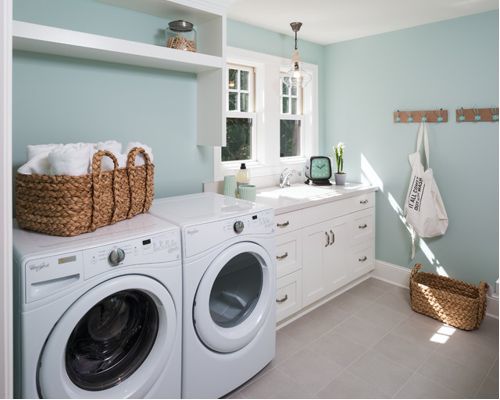
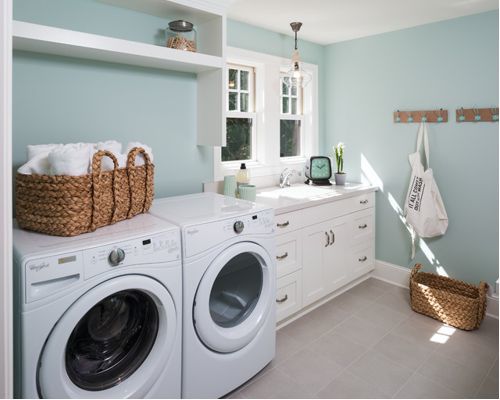
  • Organize your laundry room. Scrape dried-on laundry detergent from the ridges in your washer. Throw away laundry products you never use and replace damaged sorting bins.
  • Clean out your spice cabinet. Throw away expired spices and other seasonings, which may not only lose their taste, but could harbor mold and bacteria.
  • Sanitize hand-held devices. Prevent germs that cause the spread of colds and the flu by disinfecting your phone, remote controls, tablets, as well as your door and cabinet knobs.
  • Dust blinds, ceiling fans and fixtures. Wipe down or use a feather duster to remove the dirt that builds up on blinds, ceiling fans, light fixtures other small electronics.
  • Add color to your table. Treat yourself to some fresh flowers to add cheer to your kitchen table while waiting for spring blooms to make their first appearance.
  • Plan your summer vacation. Reserve your vacation home now to get the best selection of available properties. Start your planning today at Long & Foster’s Vacation Rentals website.
Selling February 22, 2018

Selling your home: A step-by-step approach


Whether you’re starting a family, moving for your job, getting ready to retire or embarking on a new chapter in your life, when your home no longer suits your current situation, it’s time to think about selling it. Although this can be a bit complicated, with the help of your agent, you can minimize the hassles, get the best possible price, and shorten the distance between “For Sale” and “Sold”.

Price it right

If you want to get the best possible price for your home and minimize the time it stays on market, you need to price it correctly from the beginning. Your agent can give you a clear picture of your particular market and can provide you with a comparative market analysis (CMA). A CMA contains detailed information on comparable homes in your area, including square footage, date built, number of bedrooms, lot size and more. It lists pending sales and houses sold in your area in the past six months, along with their actual sale prices.

By comparing your home to similar homes in your neighborhood and reviewing their list prices and actual selling prices, your agent can help you arrive at a fact-based assessment of your home’s market price.

Prepping your house for sale

You want to make a positive first impression when you list your home for sale. Here are some tips on how to enhance your home’s best features:

Work on your curb appeal

Get rid of moss on your roof. Power wash your front walk, porch, deck and patio. Mow the lawn, trim the hedges, weed the flowerbeds and add spots of color with container plants. Clean all the windows inside and out and repair them if they don’t open and close easily.

Refresh, repair and repaint

This goes for interiors and exteriors. If you see peeling paint, add a fresh coat. If your living room is bright lime green, consider painting it a more neutral shade. Make necessary repairs. You don’t want to turn off a buyer with a dripping faucet, a broken doorbell, a clogged downspout or a cracked windowpane.

Deep-clean, from floor to ceiling

Clean rugs, drapes and blinds and steam-clean carpeting. Get rid of any stains or odors. Make sure kitchen appliances, cupboards and counters are spotless and that bathrooms shine.

Declutter and depersonalize

Clean, light-filled, expansive rooms sell houses. So be sure to downsize clutter everywhere in your home, including cupboards, closets and counters. You might also consider storing some furniture or personal items to make rooms look more spacious. Take advantage of views and natural light by keeping drapes and blinds open.

Make an impact on the market

If you want to sell your home, you need to go where the buyers are, and today they’re on the Internet. According to the National Association of REALTORS®, in 2012 90 percent of homebuyers used the Internet as an information source, and for 41 percent of homebuyers it was the first step in the home-buying process.

By working with your agent, you can list your home on Windermere.com and other relevant websites. He or she will put together a listing with attractive photos, an appealing description and all the information a potential buyer needs. Your agent will also market your house, which may include advertising, direct mail and open houses.

Show your house

After you’ve taken care of all the repairs and cleaning tasks outlined above, your home is ready for its close-up: an open house. It’s actually best for you and your family to leave when potential buyers are present so they can ask your agent questions. But before you go, you might want to:

·         Take your pets with you

·         Open the shades and turn on the lights

·         Light a fire in the gas fireplace

·         Bake cookies

·         Keep money, valuables and prescription drugs out of sight

Be flexible in negotiating

If you get offers below your asking price, there are a number of strategies you can try in your counteroffer. You could ask for full price and throw in major appliances that were not originally included in the asking price, offer to pay some of the buyer’s fees, or pay for the inspection. You could also counter with a lower price and not include the appliances. If you receive multiple offers, you can simply make a full-price counter.

Your agent can suggest other strategies as well and help you negotiate the final price.

If your house doesn’t sell or you’ve received only lowball offers, ask your agent to find out what these prospective buyers are saying about your house. It might reveal something you can consider changing to make your house more appealing in the future.

Breeze through your inspection

When a buyer makes an offer on your home, it’s usually contingent on a professional inspection. A standard inspection includes heating and cooling, interior plumbing and electrical systems; the roof, attic and visible insulation; walls, ceilings, floors, windows and doors; and the foundation, basement and visible structure. The inspector will be looking for cracks in cement walls, water stains and wood rot.

You can always opt for having an inspection done prior to putting your house on the market, so you can address any potential problems in advance. Your agent can give you several recommendations for qualified inspectors in your area.

Close with confidence

Whether this is your first time or your tenth, your agent can help guide you though the complex process of selling a home. Moreover, he or she can answer any questions you may have about legal documents, settlement costs and the status of your sale.

Your agent’s expertise, resources and extensive network also work for you when you’re buying your next house. Even if you’re moving out of the area, your agent can refer you to a professional agent in your new community.


Living February 16, 2018

5 Creative Ways to Dress Up a Ceiling

A crisp white ceiling is a classic look, but it’s not the only option for making a room look polished. Here are a few other design considerations to bring some personality to your ceiling.

The sky is the limit when it comes to the amount of creativity and beautiful layering you can put into creating a decorative statement on the ceiling. But before we discuss the many stylish or unusual treatments to consider, let’s start with a classic finish you’ve probably seen before.


Ceiling 1: Toronto Interior Design Group | Yanic Simard, original photo on Houzz


Exposed Concrete

In my own design projects, I find many clients are excited to remove a popcorn ceiling treatment, and this is usually my preference as well. The results can be subtle, yet striking.

In some cases, the results can be dramatic. Removing a popcorn ceiling, and the entire drywall layer above, can often reveal architectural finishes, such as a cool concrete surface.

An exposed concrete ceiling gives a room a bit of industrial, architectural flair, adding drama and texture in a modern way. Of course, not every home has a concrete ceiling to reveal, so it’s important to speak with your designer or contractor before making any plans.

It’s also important to note that stripping a ceiling back to the concrete will leave no space for recessed ceiling lights. For this reason I usually include an area of dropped ceiling to allow potlights, define a gathering space or focal point and visually break up the look a bit.


Ceiling 2: Victoria Gerts, original photo on Houzz


Flat Drywall

From my experience, the most popular contemporary ceiling style is the simple flat drywall ceiling. If a room includes other sound-absorbing materials like rugs, curtains or a fabric headboard, you can skip the acoustic ceiling treatment without worrying about echoes.

As I mentioned before, it is not always easy to achieve a perfectly crisp drywall ceiling, but skilled tradespeople can install either a new drywall ceiling or scrape the texture paint from an existing ceiling to reveal a much more sleek, modern surface.

Trimming a ceiling with crown molding painted to match the ceiling hue is a great alternative way to hide subtle imperfections in the slope of the ceiling and achieve a bright, airy, classic look.


Ceiling 3: Jade N Timmerman Interiors, original photo on Houzz


Paint

A drywall ceiling doesn’t only come in one shade, so while we’re discussing this finish, let’s touch on some differing paint choices.

White. A white or just-off-white ceiling is popular because it’s a great way to make any room feel open and airy and let light bounce from any windows or light fixtures back into the room.

For a contemporary or modern home, plain white can work great, but for a more traditional home or a space with definite warm tones (like this room with a lot of welcoming beige), choose a subtle off-white that complements the tone of the walls.

For a fun, trendy take, cheat the ceiling line a bit by starting the ceiling paint 12 to 24 inches down the wall (or only painting the walls up to that point, whichever way you think of it). The result is a breezy modern effect without using any bold hues or new materials.

Gray. Using a darker hue on the ceiling than on the walls visually brings the ceiling down, which can make a room feel more intimate.

Using a neutral gray shade (or one with a hint of cool blue) achieves this effect without drawing too much attention, so the room still feels serene and sophisticated.

This makes gray a great choice for bedrooms, dens and nurseries, bringing a peaceful, cozy atmosphere.

Accent colors. For a room with a unique personality, adding an accent color to the ceiling infuses a lot of drama in an unexpected spot.

I won’t lie: As a DIY task, painting the ceiling is not nearly as easy as painting a wall, and even for professionals it usually requires the room be fully emptied first. So, it’s best to be absolutely sure that you love a hue before applying it to the “fifth wall.” The upside is that the ceiling is often a relatively small surface area, meaning that splash of color is a more controlled dose than painting the walls.

While a painted ceiling is immediately noticeable in a room with stark white walls, when a room has a lot of interesting and eclectic finishes on other surfaces, a rich hue can actually blend in better than a white ceiling. It’s a daring look for sure, but for those who love a lot of personality in their home, a colorful ceiling can be a very livable choice.

For the best of both worlds, a navy, deep teal or royal blue shade will feel dramatic but still appear neutral enough to not overwhelm you.

Matching ceilings and walls. Painting the ceiling to match the walls may sound overwhelming, but sometimes it can actually be the more subtle choice. When the ceiling and the walls (or even just a few walls) are the same hue, the lack of contrast makes the ceiling less of a dramatic feature and more of a singular background color. Of course, this applies best to softer hues like gentle pink, watery blue or heritage butter yellow.


Ceiling 4: Toronto Interior Design Group | Yanic Simard, original photo on Houzz


I personally match the ceiling to the walls quite often when using light neutral shades. While it may appear white on your screen, the walls, ceiling and molding in this project are all Benjamin Moore’s Classic Gray, a subtle, warm gray shade. In an older home, using an all-over hue is a great way to deemphasize imperfections such as sloped ceilings that don’t meet walls in a perfectly straight line.

Two-tone paint. Using a dark or dramatic paint color on the ceiling doesn’t have to be an all-or-nothing decision. Like the opposite of an area rug, painting just part of a ceiling can help define a particular zone. Lining up the edge or edges with another element in the room will help it make visual sense.


Paint Finishes

Semigloss. The higher the degree of gloss in a paint, the more visual depth it will have and the lighter the perceived color will be. So, when choosing a darker shade especially, selecting a semigloss or more subtle satin finish can make a color seem less aggressive and more multidimensional and help keep the paint from absorbing all of the light in the room.

Matte. Matte and eggshell finishes represent the less-glossy end of the spectrum, and thus reflect less light. This will make a color seem more pure and vivid, and a bit darker. For those who don’t want to shy away from a rich statement, a matte finish gives a crisp contemporary look.

Gloss. Ultra-high-gloss paint is not easy to apply to a ceiling because it has a slower drying time and thus lots of opportunity to drip or become uneven. But it’s not impossible for expert professionals, and the results can be stunning, especially when paired with sparkling ceiling fixtures and beautiful natural light.

Alternately, a “stretched ceiling” uses a layer of high-tech material suspended just below the true ceiling to create a gloss effect (or other finishes) that paint alone cannot achieve.


Ceiling 5: Legacy Custom Homes Inc, original photo on Houzz


Paneling

Wood planks are most often seen on the floor, but they look just as beautiful above.

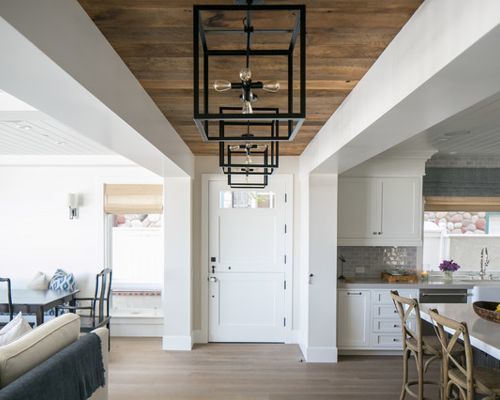
While wood-paneled ceilings are often associated with cottages and farmhouses, they can work with a variety of styles of home. Panelling works well for transitional homes, especially in controlled doses like the small strip seen here, bringing texture and richness to the ceiling that a solid color can’t match.

Generally, thinner strips of wood, and species with more knots, will appear more cottage-inspired, while wider planks or sheets, often with a less-grainy finish, will carry a more modern appearance.

Both types work well in kitchens with airy white or off-white cabinetry, taking a classic “white kitchen” and giving it added warmth and a natural appeal.


Ceiling 6: Buchanan Construction, original photo on Houzz


Pressed Tin

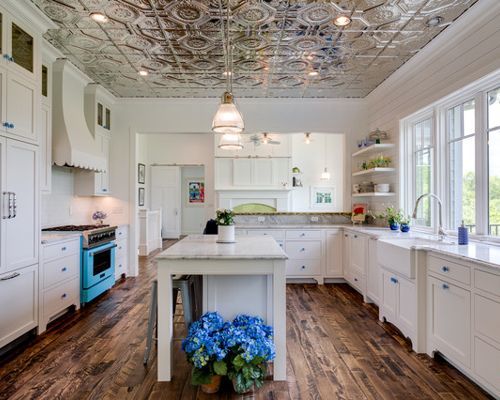
While these panels are not necessarily made from tin, the pressed-tin look endures as a charming option for traditional kitchens, or contemporary or transitional kitchens that want to add some classic flair.

These panels can be visually quite dominant with their glam or antiqued finishes and busy patterning, so they work well in rooms with otherwise simple palettes, or as a small accent over an island or seating group.

To keep the look fresh and bright, try using classic tin panels with stainless steel appliances, so the primary metal tone repeats and the room feels cohesive.


Living February 13, 2018

8 Laundry Room Updates to Fit Any Budget

Hoping to transform your tired laundry room into a sparkling clean, efficiently working space, but without the major costs of a full remodel? By not changing the layout or adding square feet, you can bring costs down while still making meaningful changes to your space. Use this guide to help you decide what to prioritize and what to put on the back burner, and give your laundry room an update that works with your space — whether your budget is $100 or $10,000.


Laundry 1: Sharon Barrett Interiors, original photo on Houzz


If your budget is about $100: Clean, declutter and upgrade laundry baskets that have seen better days. It’s worth spending a little more for hampers that can stand up to heavy use.

Also think about which features would be most helpful to have, such as hampers on wheels, triple-sorter bins or stackable baskets that can tuck out of the way when you’re not using them.


Laundry 2: David Charlez Designs, original photo on Houzz


If your budget is about $300: Clean up, get hampers and then give the walls a fresh coat of paint. A cheerful color can make your laundry room feel brand-new without breaking the budget — especially if you’re willing to DIY.


If your budget is about $500: Get hampers, fresh paint and then a soft new rug. You’ll appreciate the dose of color as much as the softness underfoot. If moisture is a concern (for example, if your laundry room is in the basement), you may want to choose a sturdy indoor-outdoor rug.


Laundry 3: ACQUIRE, original photo on Houzz


If your budget is about $700: Get hampers, fresh paint and a new rug, and then swap out the lighting.

Ample lighting is important when you’re trying to check laundry for stains and read labels, so pay attention to the recommended wattage of any light fixture you are considering — anything less than 75 watts may not shed enough light (especially if it’s the sole light source in the room).


Laundry 4: CVI Design – Carly Visser, original photo on Houzz


If your budget is about $1,200: Tackle all the above, and then treat your space to some bonus storage and extras, like an ironing station, a drying rack or open shelves. If your laundry room is small, look for space-saving designs like folding drying racks, retractable clotheslines and wall-mounted ironing boards.


If your budget is about $3,500: What’s next? New appliances! A new washer and dryer can work more efficiently than older models, operate more quietly and get your clothes cleaner.

If you’re going from top-loading to front-loading machines, consider adding a countertop above to hold supplies and act as a surface for folding. Not in the market for a new set? Give your old machines a thorough cleaning to keep them running well (and smelling fresh).


Laundry 5: colorTHEORY Boston, original photo on Houzz


If your budget is about $5,000: If you have more room in the budget, think about replacing the laundry room sink and faucet. If you’re hoping to avoid additional installation costs, choose a new model that is the same size as the old one. If you don’t already have a sink in the laundry room, adding one will require more extensive help from a plumber, and costs will be significantly more.


Related: Get a Sturdy Utility Sink for the Laundry Room


Laundry 6: Dina Bandman Interiors, original photo on Houzz


If your budget is about $10,000: So you have the hampers, paint, rug, lighting, storage, appliances and sink. If you still have room in the budget, think about tackling a bigger project like installing a new tile floor or a pet-washing station. Your furry friend may not thank you but sure will look cute sitting in that tub.


Market News February 12, 2018

Central Washington Real Estate Market Update

ECONOMIC OVERVIEW

The Washington State economy added 104,600 new jobs over the past 12 months. This impressive growth rate of 3.1% is well above the national rate of 1.4%. Interestingly, the slowdown we experienced through most of the second half of the year reversed in the fall, and we actually saw stronger employment growth.

The counties contained in this report added 4,310 new jobs over the past 12 months, representing a respectable employment growth of 2.8%. It should be noted that the rate of growth continues to slow, but this is to be expected as the area tracks toward full employment. The local unemployment rate for the area continues to fall with a drop from 8.4% at the end of 2016 to 7.3% in December 2017.


HOME SALES ACTIVITY

  •  Home sales throughout Central Washington were a mixed bag in the fourth quarter. Two counties showed growth in sales, one remained static, and two had declines. In total, there were 1,293 home sales in fourth quarter—a drop of 2.3% from the same period in 2016.
  • Sales rose most in Kittitas County, which had a reasonable 6% increase over the fourth quarter of 2016. Okanogan County also saw sales rise at a reasonable pace.
  • The number of pending home sales—an indicator of future closings—was down in all counties other than Kittitas and Douglas, suggesting that first quarter closings will also be mixed.
  • The supply of homes for sale remains an issue. Inventory was down 8% compared to the fourth quarter of 2016. The market continues to suffer from inventory constraints, which will push home prices higher and slow sales velocities.


HOME PRICES

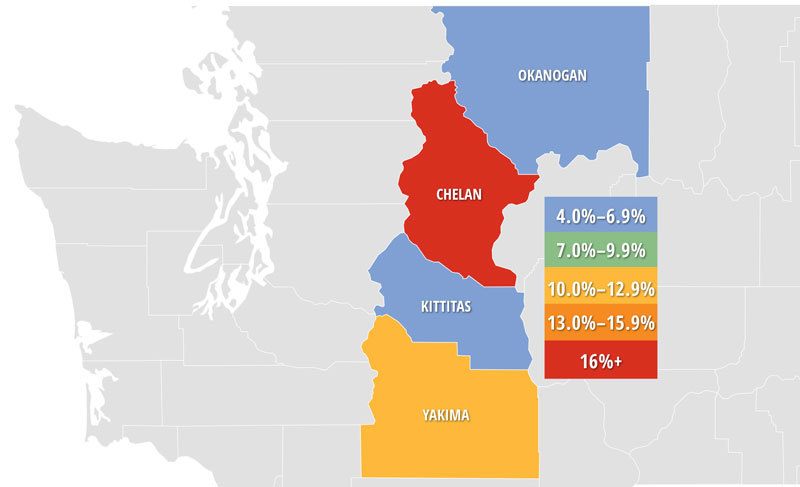
  • Year-over-year, the average home price in the region rose 4.8% to $292,691. Price growth has started to trend down but remains well above the long-term average as demand continues to exceed supply.


  • Okanogan and Douglas Counties saw relatively modest price contractions, but that was offset by the other three counties that had solid price increases.
  • Three of the five counties in this report saw prices rise compared to the fourth quarter of 2016. Chelan County led the way with an increase of 7.7%.
  • The takeaway here is that home-price growth, although slowing, continues at above-average rates due to very limited supply. I expect that the rate of appreciation will continue to taper as we move through 2018.


DAYS ON MARKET

  • The average number of days it took to sell a home dropped eight days compared to the fourth quarter of 2016.
  • The average time it took to sell a home in the region was 83 days—up 10 days compared to the third quarter, but we can attribute this increase to seasonal factors.
  • All the markets contained in this report saw days-on-market drop from the same quarter in 2016.
  • Homes sold the fastest in Douglas County, where it took an average of 49 days to sell a home. The greatest drop in the time it took to sell a home was in Chelan County, where it took 18 fewer days than in the fourth quarter of last year.


CONCLUSIONS

This speedometer reflects the state of the region’s housing market using housing inventory, price gains, home sales, interest rates, and larger economic factors. For the final quarter of 2017, I held the needle at the same position as third quarter. Prices are still trending higher, but the pace of increase has started to taper. In a similar fashion to most of the state, demand for housing in Central Washington continues to exceed supply and, although price growth has slowed somewhat, it still remains a seller’s market. I fully expect the Central Washington market to continue performing well in 2018.





Matthew Gardner is the Chief Economist for Windermere Real Estate, specializing in residential market analysis, commercial/industrial market analysis, financial analysis, and land use and regional economics. He is the former Principal of Gardner Economics, and has over 25 years of professional experience both in the U.S. and U.K.