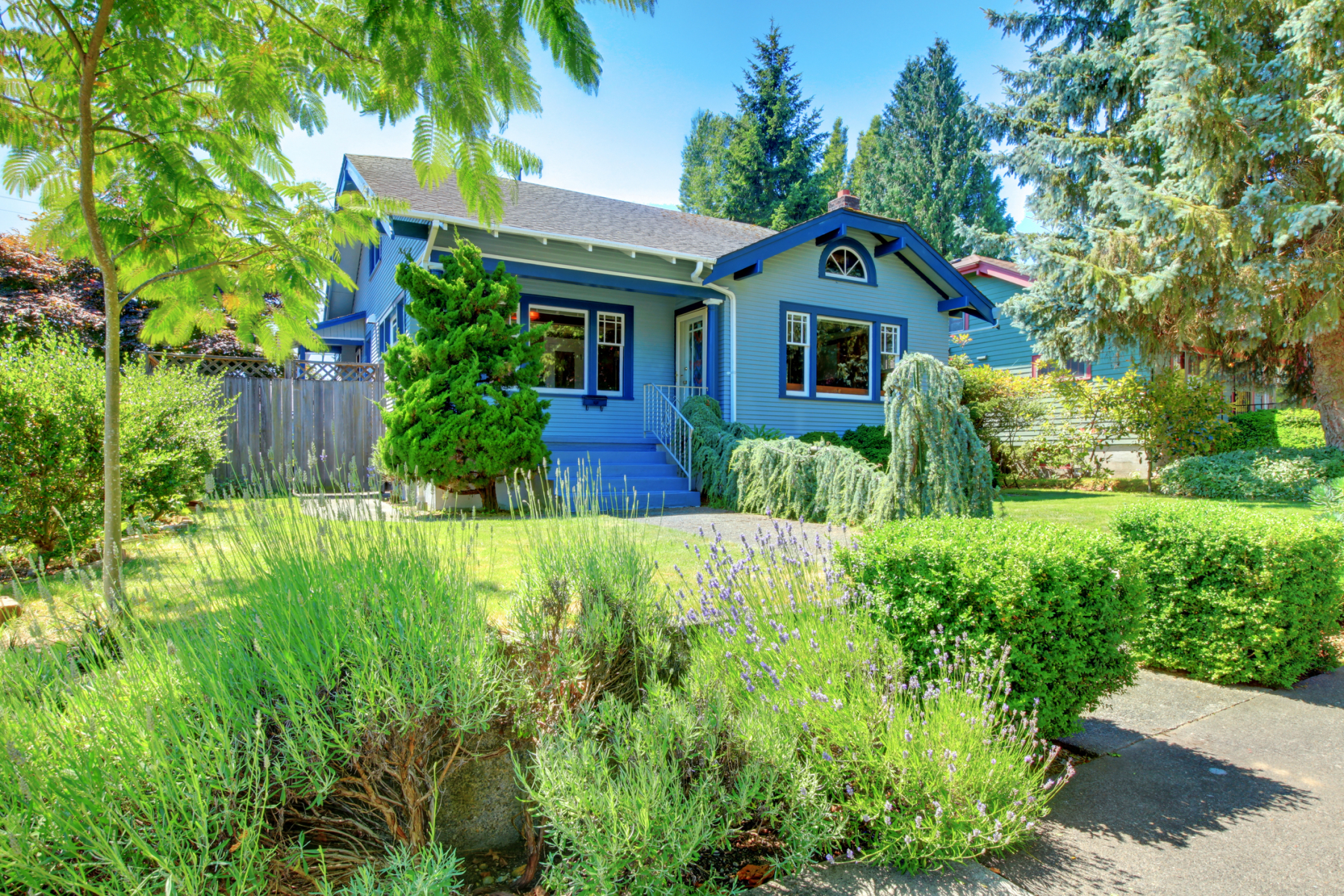
More than thirty five percent of the 75.5 million Millennials in the United States still live at home, with their parents. So what is keeping them from making the move to a home of their own? According to Windermere’s Chief Economist, Matthew Gardner, it’s a unique combination of personal and financial factors.
It’s Complicated: What’s Stopping Millennials from Entering the Housing Market?
Perspectives: 2017 Forecast
Well, it’s December; the time of year when we look to our crystal ball and offer our housing market predictions for the coming year. And by crystal ball we mean Windermere’s Chief Economist, Matthew Gardner, who has been travelling up and down the West Coast giving his annual forecast to a variety of real estate and financial organizations. Last month’s surprising election results have created some unknowns, but based on what we do know today, here are some thoughts on the current market and what you can expect to see in 2017.
HOUSING SUPPLY: In 2016 the laws of supply and demand were turned upside down in a majority of markets along the West Coast. Home sales and prices rose while listings remained anemic. In the coming year, there should be a modest increase in the number of homes for sale in most major West Coast markets, which should relieve some of the pressure.
FIRST-TIME BUYERS: We’re calling 2017 the year of the return of the first-time buyer. These buyers are crucial to achieving a more balanced housing market. While rising home prices and competition will act as a headwind to some first timers, the aforementioned modest uptick in housing inventory should help alleviate some of those challenges.
INTEREST RATES: Although interest rates remain remarkably low, they will likely rise as we move through 2017. Matthew Gardner tells us that he expects the 30-year fixed rate to increase to about 4.5 percent by year’s end. Yes, this is well above where interest rates are currently, but it’s still very low.
HOUSING AFFORDABILITY: This remains one of the biggest concerns for many West Coast cities. Some markets continue to see home prices escalating well above income growth. This is unsustainable over the long term, so we’re happy to report that the rate of home price appreciation will soften in some areas. This doesn’t mean prices will drop, but rather, the rate of growth will begin to slow.
Last but not least, we continue to hear concerns about an impending housing bubble. We sincerely believe these fears to be unfounded. While we expect price growth to slow in certain areas, anyone waiting for the floor to fall on housing prices is in for a long wait. Everything we’re seeing points towards a modest shift towards a more balanced market in the year ahead.
How to Step Up Your Entry Design With a New Welcome Mat
Right before the guests ring the doorbell or give the front door an old-fashioned knock, they step on your welcome mat. This mat serves two purposes: catching debris and adding style. Here are some ideas for how to give this entry detail a refresh before the hustle and bustle of the holiday season begin.
Welcome Mat 1: Caela McKeever, original photo on Houzz
Say Hello
A lettered mat can help you say exactly what you want to say when someone comes to your door. Obviously nothing says hello more than the word “hello.”
The simple greeting might also draw visitors’ eyes to the ground and remind them to take off their shoes before they step inside.
Coordinate Colors
If you have a colorful front door, use that as doormat inspiration. If your door lacks color, maybe it’s time to paint it.
Door paint: Scarlet Ribbons, Dulux

Welcome Mat 2: Zack | de Vito Architecture + Construction, original photo on Houzz
The whole mat doesn’t need to match the door. This striped mat draws on other colors found on the home’s exterior.

Welcome Mat 3: Rustic Porch, original photo on Houzz
Think Outside the Rectangle
Many front doors feature rectangular doormats, but other options exist. The semicircle mat in the photo works nicely with the rustic rockers, porch swing and shutters.

Welcome Mat 4: Garrison Hullinger Interior Design Inc., original photo on Houzz
Roll Out a Rug
A big, bold rug in front of the door adds color and life to this home’s entry, designed by Garrison Hullinger.
A large porch rug can also make the space feel like another room of the house. If you add a few chairs, people can stop, relax and enjoy the outdoors. Plus, more rug means more chances for it to pick up any water or dirt from the shoes of incoming guests.

Welcome Mat 5: Seattle Staged to Sell and Design LLC, original photo on Houzz
Play With Patterns
An intricate design gives guests a reason to notice this front door mat. A mat’s design can also pull together all the elements of a porch, such as the front door, mailbox, planted blooms and exterior paint.
“I chose the mat because it is fun, colorful, and it accentuated the colors of the house and the plants,” says Shirin Sarikhani, the owner of Staged to Sell and Design in Seattle.
Keep It Natural
If the entry is already bursting with details, such as eye-catching hardware and light fixtures, a neutral mat will help keep the attention on them. Natural doesn’t have to mean boring.

Welcome Mat 6: Grandin Road, original photo on Houzz
Personalize the Space
This contemporary monogrammed mat is hard to miss. “Don’t be afraid to choose a doormat with personality, says Kate Beebe of Grandin Road. “Work some wit and whimsy into your entrance, and choose something that will put a smile on your guests’ faces.”
She also recommends picking a mat that covers at least three-quarters of the entrance’s width and allows the door to open easily.
Change With the Seasons
While you are changing the front porch decor, swap a plain doormat for a festive option.
After the holidays, clean off your seasonal doormat and store it until the following year.
Match Materials
Doormats come in many materials, including ones that mimic entryway hardware. A rubber mat offers the wrought iron look without the weight and expense of the real material.
The punched-out spaces in a rubber mat also catch a lot of little pebbles, which can then be easily swept away with a broom.
Make It Feel Like Home
Doormat options are pretty much endless, so it shouldn’t be hard to find one that works for you.
By Brenna Malmberg, Houzz
Spreading Holiday Cheer this Season

Our Windermere offices really love the holiday season. It’s a time when they can get together to collect food, host holiday events, and raise money to help those in need in their communities. From putting together Thanksgiving meals, to hosting food drives and auctions, our agents really get into the spirit of giving. Here are just a few of the events taking place throughout our network during the holiday season.
Jump Into the Holidays Bazaar
On November 19, the Windermere Kelso/Longview office hosted its first holiday bazaar to benefit the Windermere Foundation, to provide support to local non-profits in the community that serve low-income and homeless families. More than 20 vendors participated in the bazaar, offering items to purchase for holiday giving. Over $1,300 was raised at this event.
Thanksgiving Meals for Dorothy House
For the past 15 years, brokers from the Windermere Bellingham-Bakerview, Bellingham-Fairhaven, Birch Bay-Blaine, and Lynden offices have gotten together to provide the ingredients to put together full Thanksgiving meals for Dorothy House, a local safe housing community for domestic violence victims. This year they assembled 24 meals for Dorothy House, which has 22 apartments for women and children.
Woodinville Winterfest
For over 10 years, the Windermere Woodinville office has hosted a holiday event at its office featuring photos with Santa and refreshments. This year, their annual event was a part of the November 27 Woodinville Winterfest and included a Woodinville Wine Country wine and beer garden, and local bites. Cash and toy donations were collected for The Forgotten Children’s Fund.
An Evening with The Great Gatsby
This past month, the Windermere Stellar offices in Vancouver, Washington hosted their fourth annual live and silent auction to benefit the Children’s Justice Center. Nearly $200,000 was raised at this event. Through the Windermere Foundation, over $481,300 has been donated to the CJC over the past four years, which has helped them expand their family outreach and support program.
Windermere Wreath Fundraiser
The Windermere Ellensburg office is holding its second annual wreath fundraiser. Fresh 24-inch wreaths handmade by Snowshoe Evergreen can be purchased from the Windermere office from November 28 until supplies last. All proceeds benefit the Windermere Foundation, to assist local non-profits that provide services to children in need in the Ellensburg area.
16th Windermere for Kids Event
Since 1998, brokers from the Windermere Bellevue, Bellevue South, Bellevue West, Issaquah, Redmond, and Yarrow Bay offices get together to hold a “Windermere for Kids” event in lieu of a company Holiday party. With help from local non-profit organizations, 100 children in need between the ages of 7 and 12 are selected to participate. Each child receives a $225 gift card to Target and is partnered with a broker who helps the child select gifts for members of their family. And a gift for each child is purchased as well. The gifts are then taken to wrapping stations that are manned by Windermere brokers. While the children wait for their gifts to be wrapped, there are photos with Santa, crafts, food and beverages to keep them busy. Almost $250,000.00 has been donated throughout the years.
Free Santa Photos & Dickens Carolers
The Windermere Northlake office hosted its annual holiday event on December 3, featuring free photos with Santa and Dickens Carolers. Food donations are collected each year to benefit Hopelink, a non-profit social service agency that provides services to families in need in North and East King County, WA.
Windermere Stellar Lloyd Tower Silent Auction
The Windermere Portland – Lloyd Tower office is hosting a silent auction benefiting the Windermere Foundation on December 8. This night market will be full of gifts to bid on, including wine bundles, dinner parties, sporting events, gift certificates, and more.
8th Annual Spaghetti Feed/Auction
Hosted by the Windermere Snohomish office on December 10, this fun community event features live music while Windermere brokers cook and serve the meals. Tickets are $10 for a full dinner with dessert. Proceeds benefit the Snohomish Food Bank.
Mercer Island Youth and Family Services Holiday Program
The Windermere Mercer Island office will host its 19th annual event for Mercer Island Youth and Family Services on December 12. The office gathers wished-for gifts and delivers them to MIYFS, which serves hundreds of local families.
3rd Annual Food Drive for Contra Costa & Solano Counties
From October 1 through December 15, agents from the Windermere Walnut Creek-Diablo Realty and Windermere El Sobrante offices are collecting food for the Food Bank of Contra Costa & Solano Counties. Nearly 100 agents will collect food donations during this drive. The food bank serves 188,000 people each month and distributes over 50,000 pounds of food every day. Last year, these offices collected nearly 1,000 pounds of food. They hope to surpass this number this season.
Windermere Professional Partners Holiday Food Drive
Each year, the Windermere Professional Partners offices in North Tacoma, Central Tacoma, University Place, and Gig Harbor hold an annual food drive to support a local food bank. All four office locations serve as donation drop-off sites, and agents also distribute paper bags throughout the community for the public to fill and bring in donations. This year the drive will support FISH Food Bank in Gig Harbor, as well as Families Unlimited Network in University Place.
5th Annual Gingerbread House Contest
The Windermere Wailea office is hosting its 5th Annual Gingerbread House Contest to benefit the Windermere Foundation. Drop by their office in the Shops at Wailea to view all the gingerbread houses created by the office’s agents and their families, and cast a vote for your favorite one. Voting ends on December 20. Ballots submitted will be entered into a raffle drawing for a $100 gift certificate. For every live/in-person vote cast in the office, a dollar will be donated to the Windermere Foundation.
Thank you to everyone that supports the Windermere Foundation. Through these events, drives, as well as a variety of other fundraisers held by our offices throughout the year, the Windermere Foundation is able to continue to support non-profit organizations that provide services to low-income and homeless families throughout the Western U.S.
If you’d like to help, please consider donating to the Windermere Foundation. To learn more about the Windermere Foundation, visit http://www.windermere.com/foundation.
Holiday Décor Trend: White-on-White Luxe
From a stunning mantel display to an elegant table setting, you can capture the magic of the holiday season in festive touches that are certain to make your home even more merry and memorable. The white-on-white design trend is definitely at the top of most luxury designers’ lists these days, and this extends to Christmas décor, as well. For some stylish inspiration, take a cue from these beautiful holiday decorating ideas.

This year it’s all about seasonal glamour, metallic flourishes meet elegant finishes for a luxury look to perfectly complement Christmas time at home.

Metallic decor is very popular for decor today because it’s stylish and gives a refined and elegant touch to any space. Silver and gold are the most used shades but copper has become a leader recently because of its soft and warm shade.

White and gold décor can be bland without a deeper anchor color. Black accents lay low while bringing out the brightness of the white and metallic accents.

A huge part of the white on white decorating trend this year is the flocked Christmas tree.

If you are feeling devoid of color, adding a small amount of red to a flocked tree makes a huge impact.

A light touch of pastel blue gives a softer impact while evoking the feeling of Christmas at Tiffanys.

With all this white on white minimalism, you might start to feel a little snow blind – or simply bored. Another trend on the horizon is blue and green, inspired by the favored Peacock décor from the Victorian era.

The vivid colors are stunning on a white tree and blends very well with metallic accents in the home.

So what do the experts advise for decorating a tree? Here are a few tips to help guide you:
When in doubt, go for more lights. Nothing beats a well-lit tree.
Take a break and step away from the tree. It never hurts to revisit an hour later. You can often make just the right tweaks when you come back and look at something with a new set of eyes.
Don't take decorating your tree too seriously. It is a tradition and is meant to evoke memories. Showcase your personality with your favorite ornaments and have fun with it.
Do what you love. You can be as creative as you want with your Christmas tree, so decorate it with whatever you’re into; shells, birds, or anything else. Just because you’re trimming a tree doesn’t mean you have to incorporate traditional standards.
5 Midcentury Modern Homes That Make the Most of Their Small Design
Midcentury modern homes were small out of necessity. Money was in short supply after World War II, so architects and builders had to keep houses compact yet functional to stay within homeowners’ budgets. At the same time, lifestyles were changing. Smart architects took on a new approach and designed homes with an open feel, which differed greatly from the boxy designs of the previous era.
Related: Why You Should Embrace Your Midcentury Modern Kitchen

Midcentury Modern 1: Flavin Architects, original photo on Houzz
I’ve been enamored with midcentury modern homes since my childhood in California, where I was privileged to spend time in the intimate houses designed by Frank Lloyd Wright apprentice Mark Mills. Mills was the on-site architect for Wright’s famous Walker House, or Cabin on the Rocks, in Carmel, California, pictured. It was during this time that Mills learned an important lesson from Wright: Reject a larger house in favor of a modest home with flowing spaces and no excess.
The following ideas show how midcentury modern homes beautifully make the most of their space in ways that can easily be incorporated in homes today.

Midcentury Modern 2: Wheeler Kearns Architects, original photo on Houzz
1. Open floor plan.
Above all else, the open floor plan is the defining characteristic of midcentury modern homes. Closed-off rooms gave way to flowing spaces that strung one room to the next to form fluid kitchen, living and dining areas.
In a small home, the key to making the open floor plan work is to understand which rooms need privacy, and when. Of course, bedrooms and bathrooms need separation from the main areas of the home, but it’s also good to consider other areas that need privacy: for example, a study where a parent can work without interruption while the kids play nearby.
In this lake house by Wheeler Kearns Architects, the common areas are located in a centralized area, while the more private areas are off to the side or tucked away on another level.
Midcentury Modern 3: Balodemas Architects, original photo on Houzz
2. Expanded sightlines.
The tendency of midcentury modern homes to have open floor plans speaks to the elegant details often seen within these houses. Without trying to be too sparse, midcentury designers included functional details in their homes that were as uncomplicated as they were beautiful. Finding the balance between sophistication and openness was in the hands of the architect.
Take, for example, the stairs in midcentury modern homes. In this remodel of a midcentury home by Balodemas Architects, they preserved much of the original stair and design. The riser, or the vertical part that connects the stair treads, was simply left out for a lighter appearance. The stair was no longer in a hall but fully opened up and integrated into a room. Walls were often dispensed with entirely. Instead, partial-height screens inspired by Japanese shoji were used to subtly separate spaces.

Midcentury Modern 4: Steinbomer, Bramwell & Vrazel Architects, original photo on Houzz
3. An instance to avoid “open.”
While photographs of midcentury modern homes often feature great walls of glass, what’s often not shown, perhaps because they are not as photogenic, are the equally generous opaque walls.
These walls are key to the home’s aesthetic success. They provide a protective backing to the composition, since the opaque side of the home often faces the road, as with this house by Steinbomer, Bramwell & Vrazel Architects. Although the back of the house is open, with lots of glass and a sense of ease between inside and out, the street-facing side would never give that away. An opaque wall creates a boundary to the outside world while extending the perceived size of the home. Walls of glass are expensive, so opaque walls are also an economical design move.

Midcentury Modern 5: Flavin Architects, original photo on Houzz
4. Everything in its place.
Thoughtful storage is a another key aspect of what makes a small midcentury home completely livable. Most midcentury modern homes, particularly those on the West Coast, had no basements or attics, so storage closets needed to be located among the main living spaces. In part, the answer was to do more with less by having well-designed storage throughout and daily items close at hand, as in this kitchen. This has to be married to an ethic of keeping only what you need and having periodic yard sales.

Midcentury Modern 6: Koch Architects, Inc. Joanee Koch, original photo on Houzz
5. Display with a purpose.
In a small home with innovative but limited storage, it’s important to have display areas for the pieces that don’t need to be tucked away in drawers or closets. This was done beautifully in midcentury modern homes by integrating display areas as a means of aiding with the potential conundrum of scarce storage.
This restoration by Koch Architects shows this exact notion at work. Every other step in the stair has an integrated bookshelf. This would make a perfect rotating library with a range of titles easily seen while ascending the stair.
By Colin Flavin, Houzz
What to Expect in Housing Affordability
What keeps Windermere’s Chief Economist, Matthew Gardner, up at night? Housing affordability. As the U.S. Population moves towards both coasts and the Southwest, putting upward pressure on land prices and the value of homes, we will see a greater cost of living, which could directly impact the work force and economies in those areas. Gardner weighs in on how West Coast cities can improve housing affordability through policy and infrastructure changes.
Helping Fight Holiday Hunger in Our Communities
The holiday season is a time in which Windermere offices across our network come together to help those in need in their communities. Here are just a few of the events that our offices are involved in this month to help fight hunger.
The Windermere office in El Sobrante, CA is hosting an in-house Holiday Food Drive this season. They held their kick-off event on October 1 and will continue to collect food donations through the month of December. They are accepting nominations from the local community to help select families to receive the donations. Monetary donations are also being collected and will be used to buy food items before delivering to the recipient families at Thanksgiving and Christmas. Any extra food items will be donated to the Richmond Rescue Mission.
The Windermere Real Estate Professionals office in Boise, ID participated in their third annual “Pick a Pumpkin Feed a Family” event that took place October 12 through November 1. Pumpkins purchased for the office “pumpkin patch” were given to those who donated food during the event. Donations benefitted The Idaho Foodbank, the largest distributor of free food assistance in Idaho.
The Windermere office in Kingston, WA is holding its annual holiday food drive for local families in need. Donations are being accepted at the office now through November 21. Donations can be dropped off Monday through Friday from 9am to 5pm, and weekends from 10am to 4pm.
The Windermere Stellar offices in Portland (Portland-NW Johnson, Lake Oswego, Portland-Lloyd Tower NE, Portland Heights, Portland-Raleigh Hills, West Linn, and Portland-Moreland), are holding a food drive from November 7-28 to benefit Take Action, INC. Take Action INC provides backpacks full of food to low-income children in the Portland metropolitan area schools each weekend during the school year. They pack and distribute backpacks of food to low-income children so that they don’t have to go hungry over the weekend. Last year, they served 620 low-income families. On November 29, Take Action, INC will receive the food items collected during the drive, along with a $2,000 donation from Windermere Stellar and the Windermere Foundation.
The Windermere office on Vashon Island, WA is coordinating a food drive on November 20. The Basket Brigade, an annual event that they have sponsored since 2000, provides Thanksgiving meals to families in need. The Sunday before Thanksgiving, agents from the office stand in front of a local grocery store to collect food (or cash) donations for these meals. The Vashon Thriftway and Vashon IGA help provide the turkeys and pies, but the rest of the meal items are donated to the office by members of the community. Agents fill and decorate the baskets, which are then delivered by Saint Vincent de Paul volunteers to the families in time for them to cook Thanksgiving dinner.
The Windermere Sequim-East and Windermere Sequim-Sunland offices are holding a food drive now through November 30 to benefit the Sequim Food Bank. Non-perishable food items can be dropped off at 842 E Washington St or 137 Fairway Drive. Proteins like canned meats, dried beans, and peanut butter are always needed. The food bank serves individuals and families living within the Sequim School District.
Thanks to events like these food drives, as well as a variety of other fundraisers held by our offices throughout the year, the Windermere Foundation is able to continue to support non-profit organizations that provide services to low-income and homeless families throughout the Western U.S.
If you’d like to help, please consider donating to the Windermere Foundation. To learn more about the Windermere Foundation, visit http://www.windermere.com/foundation.
The Trump effect. How will it impact the US economy and housing?

The American people have spoken and they have elected Donald J. Trump as the 45th president of the United States. Change was clearly demanded, and change is what we will have.
The election was a shock for many, especially on the West Coast where we have not been overly affected by the long-term loss in US manufacturing or stagnant wage growth of the past decade. But the votes are in and a new era is ahead of us. So, what does this mean for the housing market?
First and foremost I would say that we should all take a deep breath. In a similar fashion to the UK’s “Brexit”, there will be a “whiplash” effect, as was seen in overnight trading across the globe. However, at least in the US, equity markets have calmed as they start to take a closer look at what a Trump presidency will mean.
On a macro level, I would start by stating that political rhetoric and hyperbole do not necessarily translate into policy. That is the most important message that I want to get across. I consider it highly unlikely that many of the statements regarding trade protectionism will actually go into effect. It will be very important for President Trump to tone down his platform on renegotiating trade agreements and imposing tariffs on China. I also deem it highly unlikely that a 1,000-mile wall will actually get built.
It is crucial that some of the more inflammatory statements that President-Elect Trump has made be toned down or markets will react negatively. However, what is of greater concern to me is that neither candidate really approached questions regarding housing with any granularity. There was little-to-no-discussion regarding housing finance reform, so I will be watching this topic very closely over the coming months.
As far as the housing market is concerned, it is really too early to make any definitive comment. That said, Trump ran on a platform of deregulation and this could actually bode well for real estate. It might allow banks the freedom to lend more, which in turn, could further energize the market as more buyers may qualify for home loans.
Concerns over rising interest rates may also be overstated. As history tells us, during times of uncertainty we tend to put more money into bonds. If this holds true, then we may see a longer-than-expected period of below-average rates. Today’s uptick in bond yields is likely just temporary.
Proposed infrastructure spending could boost employment and wages, which again, would be a positive for housing markets. Furthermore, easing land use regulations has the potential to begin addressing the problem of housing affordability across many of our nation’s housing markets – specifically on the West Coast.
Economies do not like uncertainty. In the near-term we may see a temporary lull in the US economy, as well as the housing market, as we analyze what a Trump presidency really means. But at the present time, I do not see any substantive cause for panic in the housing sector.
We are a resilient nation, and as long as we continue to have checks-and balances, I have confidence that we will endure any period of uncertainty and come out stronger.
Matthew Gardner is the Chief Economist for Windermere Real Estate, specializing in residential market analysis, commercial/industrial market analysis, financial analysis, and land use and regional economics. He is the former Principal of Gardner Economics, and has over 25 years of professional experience both in the U.S. and U.K.

Oregon and South West Washington Real Estate Market Update
ECONOMIC OVERVIEW
The labor market in Oregon/Southwest Washington continues to remain robust. During third quarter, the region added 13,800 new jobs, up from the 9,500 jobs that were created in the same period in 2015. Year-over-year, the region has grown at an impressive rate of 3.5%—well above the U.S. rate of 1.7%—and has one of the fastest rates of job creation in the nation. In September the unemployment rate was 5.5%, which is modestly below a year ago when it was 5.7%. I’m not surprised to see the unemployment rate trended lower given the growth in both the labor force as well as the participation rate (the number of people in the economy who are either employed or who are actively looking for work).
HOME SALES ACTIVITY
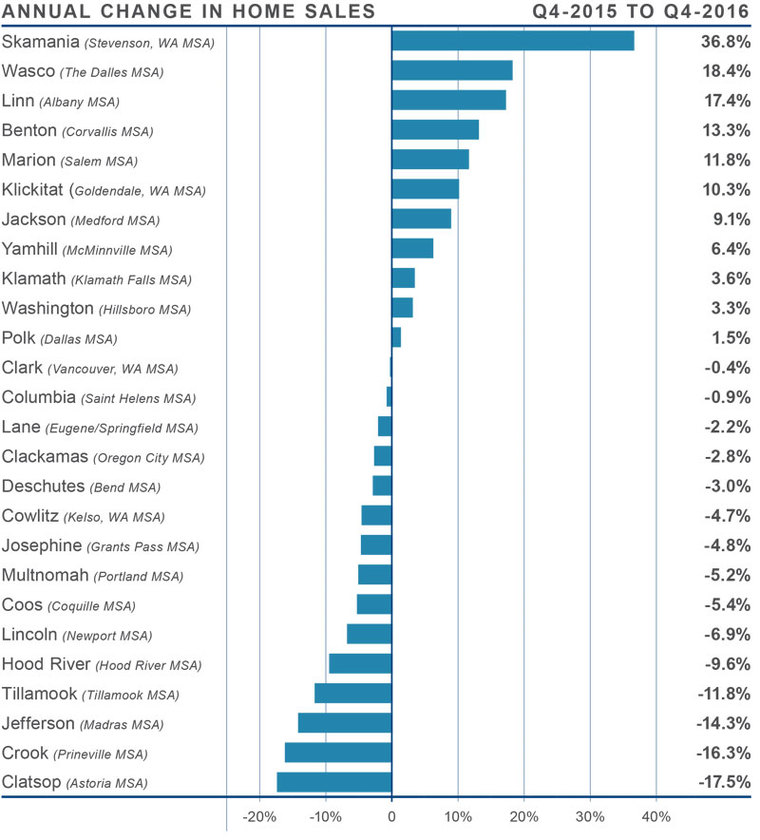
- Continuing the trend seen in the second quarter, home sales are down by 7% compared the same quarter in 2016. In total, there were 18,100 home sales.
- Sales rose at the fastest rate in Klamath County, which saw a 26.7% increase over the second quarter of 2015. There were also noticeable increases in transactions seen in Coos, Linn and Wasco Counties. The greatest decline was seen in Yamhill, Josephine, and Jefferson Counties.
- While there were eight counties where sales rose, 18 counties actually saw fewer sales than last year.
- Housing inventory continues to have a negative impact on sales, but it appears that sellers’ expectations of home prices may also be playing a role in slowing sales.

HOME PRICES
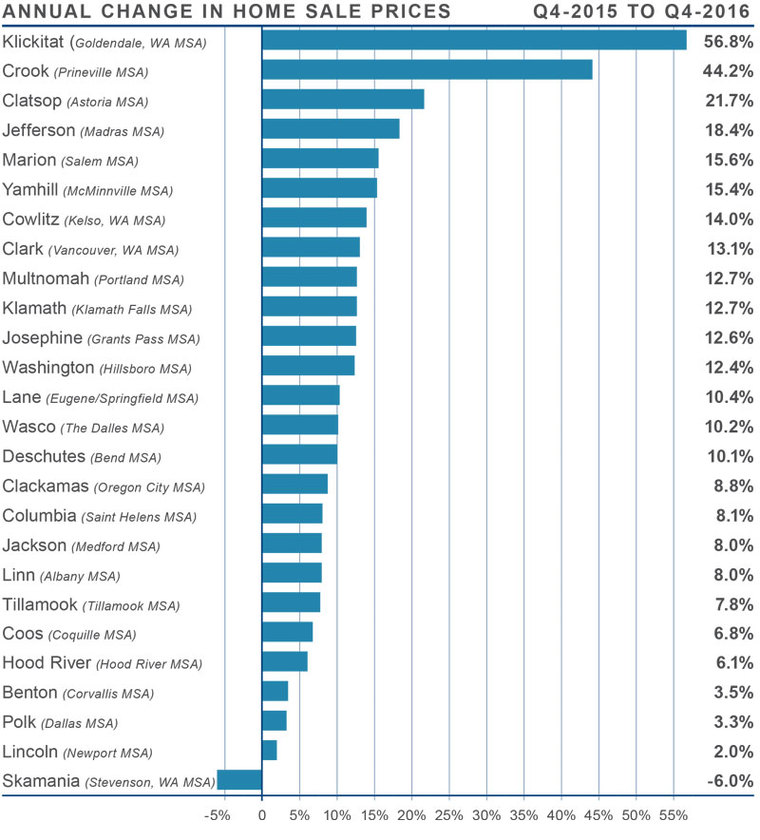
Average home prices over the past year rose by 8.1% to $335,000. This is down from 10.5% seen in the second quarter of the year. This may be an indicator that home price growth is beginning to revert toward historic averages.- When compared to the third quarter of 2015, Hood River took over as the market with the greatest price growth, with homes selling for 29% above that seen a year ago.
- All but one county saw an annual increase in prices, with some counties seeing significant increases in average sale prices. That said, the number of areas where home price appreciation rose by double-digit percentages dropped from 18 to 11.
- The key takeaway here is that home price appreciation is starting to slow but remains well above the historic average.

DAYS ON MARKET
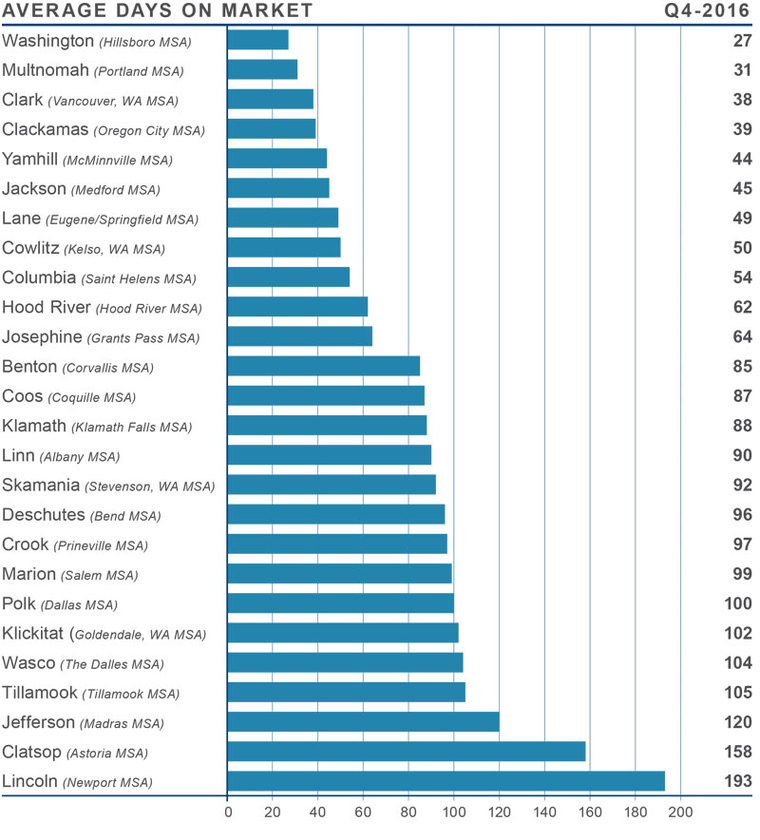
- The average days it took to sell a home dropped by 14 when compared to the third quarter of 2015, and is 5 days less than last quarter.
- The average time it took to sell a home in the region was 83 days.
- Wasco County was the only area where the average time it takes to sell a home rose (from 88 to 97 days).
- Homes sold fastest in Washington and Multnomah Counties, where it took 21 and 22 days respectively on average for homes to sell.

CONCLUSIONS
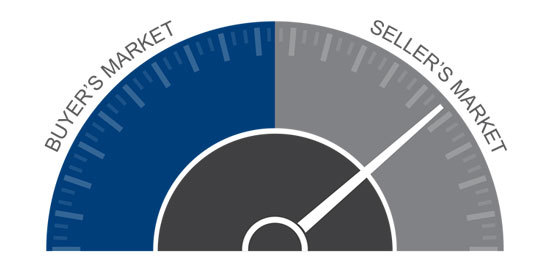
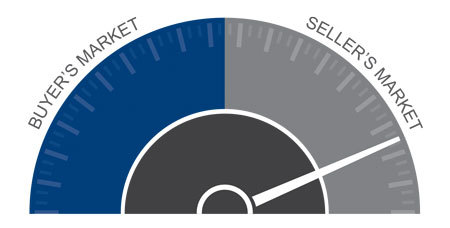
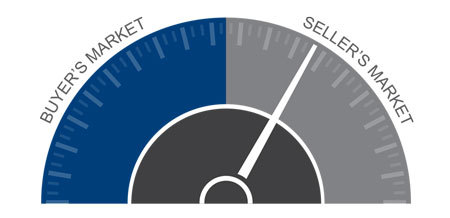
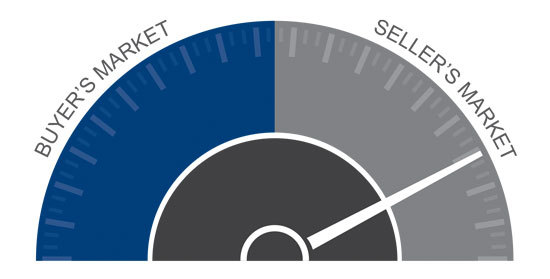
The speedometer reflects the state of the region’s housing market using housing inventory, price gains, sales velocities, interest rates, and larger economics factors. Economic growth continues to trend well above the nation, and this region is one of the fastest growing in the country. The housing market continues to benefit greatly from this economic vitality. That said, the modest decline in home sales and prices is worthy of note. This suggests that peak price growth is now behind us and that we will start to see a slowing in the upward trend of home values. This actually is not a bad thing because tapering home prices will ultimately lead to a rise in the number of home sales, which still remain below historic averages. As such, I have moved the needle a little toward buyers, however, it certainly remains a seller’s market.
Matthew Gardner is the Chief Economist for Windermere Real Estate, specializing in residential market analysis, commercial/industrial market analysis, financial analysis, and land use and regional economics. He is the former Principal of Gardner Economics, and has over 25 years of professional experience both in the U.S. and U.K.
Average home prices over the past year rose by 8.1% to $335,000. This is down from 10.5% seen in the second quarter of the year. This may be an indicator that home price growth is beginning to revert toward historic averages.