More February 10, 2017

Luxury Design, Furnishings and Décor Trends

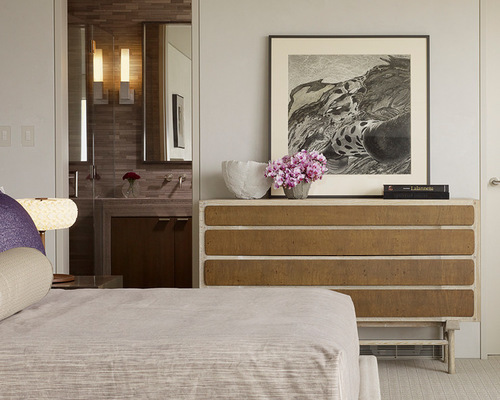
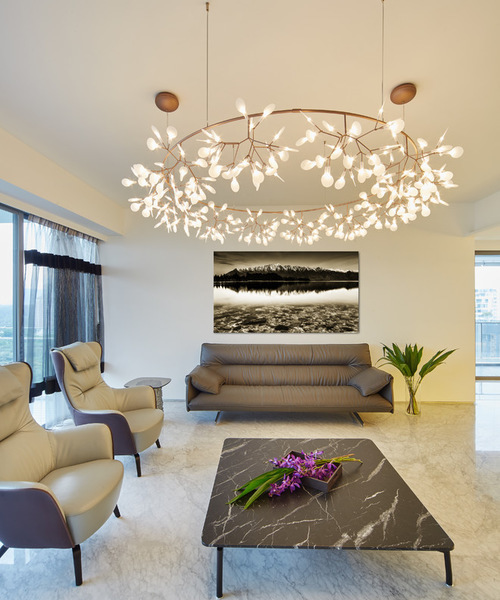
There is an appreciation of luxury that is quiet, understated, and personal that is gaining momentum in 2017. People want their homes to feel luxurious but also welcoming, warm, and most importantly, authentic. This means creating spaces that feel highly personal with a piece of original art, beautiful accessory, unique lighting or custom furnishing.

Finding pieces that are truly special requires more than visiting local retailers and galleries, so we have assembled a list of distinctive artisan brands that produce one-of-a-kind pieces, from glittering lighting to parchment wall panels and luxury textiles.


Based in London and Vienna, KAIA creates refined lighting pieces that combine function and beauty in equal measure. All of the brand’s items are designed exclusively by craftsman Peter Straka and expertly made in KAIA’s Vienna workshop. Their main focus is that the light fixture should always be artful – even when it is not illuminated.


Master of luxurious custom-made finishes for furniture and surfaces, Simon Orrell is London’s go-to craftsman for yachts and interiors. From a workshop in London’s Chelsea Design Quarter,  has worked closely with artisans from around the world to create unique furniture and accessories that draw upon historic techniques and materials like shagreen, parchment and shells like mother of pearl. Luxury surfaces have become his specialty, transforming everyday objects into museum-quality pieces.


Known for their Lusive© Décor label that provides large scale custom lighting for luxury hotels and casinos, Thomas Cooper Studio is now featuring limited edition collections designed for the home. Manufactured in Los Angeles, using original materials and artisanal processes to create inspired designs, the end result is high function meets high art.


Modern design and home furnishings are certainly dominating the interior design scene at the moment but not all homes are suited for the current darling of design. Ave Home, a specialty furniture company based in New Orleans, revives classic design by creating historical reproductions with superb attention to detail. Their collections offer a variety of timeless styles, including French Louis XV, Swedish Gustavian, Hollywood Regency, and the aforementioned Mid Century Modern.


Since 1952, Pindler has been perfecting the art of fabric design and development. Some of their signature lines include ornate looks like the Heart Castle Collection to more contemporary looks like the Mirage Collection. Whatever your style – their fabrics are unbeatable in style and quality.


After 35 years as an interior designer, Coryne Lovick launched her namesake collection in 2013 with a selection of timeless pieces devised to work in many types of spaces. Like her interiors, the Coryne Lovick Collection is sophisticated, inviting, and is known for exquisite detail and luxe materials.


Studio Jackson is a full-service interior design firm based in Los Angeles. In addition to the firm’s thriving consultancy, they are now offering a collection of furniture designed by founder and Principal Designer, Ryan Gordon Jackson. RJ creates designs for a discerning contemporary-minded customer and each piece is handmade by highly trained artisans in their workshop. The collection speaks to Jackson’s design mantra that “Luxury and contemporary design are not mutually exclusive.”


Studio Roeper is a California artisan studio dedicated to the creation of custom handmade and finely crafted luxury furniture for private residences, boutique hotels, art collectors and interior designers around the world. All of the slabs and lumber are locally sourced, milled and seasoned in-house at their own sawmill. Their commitment to mixing art with function extends into play with their own handmade skateboards!

Market News February 9, 2017

Oregon and South West Washington Real Estate Market Update


ECONOMIC OVERVIEW

Oregon added almost 60,000 new jobs in 2016, up from the 55,600 jobs that were created in 2015. Year-over-year, the state increased employment by 3.3%, down slightly from the third quarter’s 3.5% increase, but impressive nevertheless.

In December, the state unemployment rate was 4.6%, well below the 5.5% rate seen at the end of 2015. Given this substantial growth in jobs, we will certainly see incomes continue to trend higher, which will act as its own economic boost at the regional level.


HOME SALE ACTIVITY

  • Home sales continue to slow, with sales up by a marginal 0.1% in the quarter relative to the same period in 2015. In total, there were 15,140 home sales.
  • Sales rose at the fastest rate in Skamania County, which saw an annual increase 36.8%. There were also noticeable sales increases in Wasco and Linn Counties. The greatest declines in sales were seen in Clatsop, Crook/Jefferson, and Tillamook Counties.
  • While year-over-year sales rose in 11 counties, 15 counties saw transactions decline.
  • Both supply constraints and unrealistic price expectations from some sellers are pushing sales activity lower.


HOME PRICES

  • Average prices in the region rose by 10.9% year-over-year to $332,996. This is up from the annual increase of 8.1% seen in the third quarter of the year.
  • Klickitat County saw the greatest annual price growth, with homes selling for 57% higher than a year ago, but this is mostly a function of a market that has very few home sales.
  • All but one county saw prices rise when compared to the fourth quarter of 2015, with several counties continuing to exhibit significant increases in average sale prices.
  • Home prices remain well above historic averages and are likely to remain that way through 2017.


DAYS ON MARKET

  • The average number of days it took to sell a home in the region dropped by 13 days when compared to the fourth quarter of 2015, and is two days less than the third quarter of this year.
  • The average time it took to sell a home during the fourth quarter was 81 days.
  • Jackson, Jefferson, and Wasco Counties were the only areas where the average time it took to sell a home rose, but I see no cause for concern at this point.
  • Homes sold the fastest in Washington and Multnomah Counties, where it took an average of 27 and 31 days respectively for homes to sell.


CONCLUSIONS

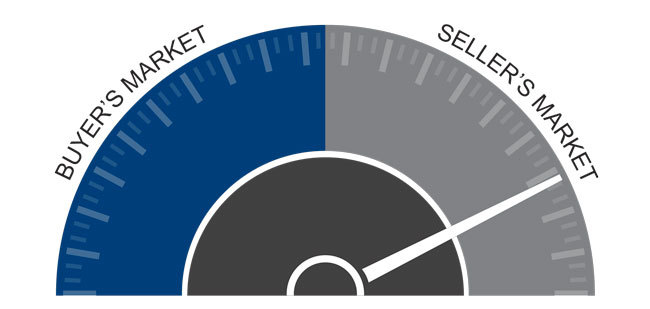
The speedometer reflects the state of the region’s housing market using housing inventory, price gains, sales velocities, interest rates, and larger economic factors. Economic growth in Oregon continues to trend well above the nation and it is one of the fastest-growing states in the country. The region’s housing market is benefitting greatly from this economic vitality.

Sales activity continues to slow, but this has not adversely affected home prices. The market still clearly favors sellers and, even with recent increases in mortgage rates, this is likely to be the case through 2017. As such, I have left the needle at the same spot as third quarter.


Matthew Gardner is the Chief Economist for Windermere Real Estate, specializing in residential market analysis, commercial/industrial market analysis, financial analysis, and land use and regional economics. He is the former Principal of Gardner Economics, and has over 25 years of professional experience both in the U.S. and U.K.


 

Market News February 6, 2017

Colorado Real Estate Market Update


ECONOMIC OVERVIEW

Annual employment growth in Colorado was measured at a respectable 2.2% in November and will likely finish the year having created around 55,000 new jobs. Within the metropolitan market areas included in this report, we are seeing employment growth at or above the state level and I anticipate that this will continue to be the case in 2017.

Unemployment rates continue to drop, and with rates now below three percent, all of Colorado’s metro areas are at full employment. Because of this robust level of growth—in concert with very low unemployment levels—I anticipate that we will see some fairly substantial income growth as companies look to recruit new talent and keep existing employees happy.


HOME SALE ACTIVITY

  • There were 14,614 home sales during the fourth quarter of 2016—up by a marginal 0.7% from the same period in 2015.
  • Jefferson County saw sales grow at the fastest rate over the past 12 months, with a 5.9% increase. Sales activity fell in three counties, but this was a function of short supply rather than slowing demand.
  • Listing activity continues to remain well below historic averages, with the total number of homes for sale in the fourth quarter 12.8% below that seen a year ago.
  • The key takeaway from this data is that 2017 is shaping up to be one which will still substantially favor home sellers. I do anticipate that we will see some improvement in listing activity, but it is almost a certainty that demand will exceed supply for another year.


HOME PRICES

  • Demand continued to exceed supply in the final three months of 2016 and this caused home prices to continue to rise. In the fourth quarter, average prices rose by 9% when compared to the fourth quarter of 2015. The average sales price across the region is now $393,969.
  • In many parts of the region, prices are well above historic highs and continue to trend upward. With double-digit price increases over the past year, the market remains very hot.
  • Annual price growth was strongest in Larimer and Jefferson Counties, where prices rose by 11.8% and 10.9% respectively.
  • While we will likely see some modest softening in home price growth in 2017, we can still expect a very strong market.


DAYS ON MARKET

  • The average number of days it took to sell a home dropped by one day when compared to the fourth quarter of 2015.
  • Homes in a majority of the counties took less than a month to sell.
  • In the final quarter of the year, it took an average of just 27 days to sell a home. This is down from the 28 days it took in the fourth quarter of 2015.
  • The Northern Colorado housing market is still firing on all cylinders. The only missing piece is listings, which remain well below the historic average.


CONCLUSIONS

This speedometer reflects the state of the region’s housing market using housing inventory, price gains, sales velocities, interest rates, and larger economic factors.

For the fourth quarter of 2016, the needle remains firmly in the seller’s territory. It will be interesting to see if the recent increase in mortgage rates has any effect at all on the housing market. I believe that it will; however, I expect that it will likely cause a slowdown in home price growth rather than any collapse in home prices.


Matthew Gardner is the Chief Economist for Windermere Real Estate, specializing in residential market analysis, commercial/industrial market analysis, financial analysis, and land use and regional economics. He is the former Principal of Gardner Economics, and has over 25 years of professional experience both in the U.S. and U.K.
 

Market News February 2, 2017

Nevada Real Estate Market Update


ECONOMIC OVERVIEW

Employment in the Las Vegas market slowed modestly towards the end of 2016 after having performed very well for the past couple of years. November data showed that 943,100 people were employed in Clark County; this is up by 19,000 from November of 2015, representing a growth rate of 2.1%. In a further sign of an improving labor market, the local unemployment rate has dropped from 6.4% to 5.1% over the past 12 months


HOME SALES ACTIVITY

  • There were a total of 8,857 home sales in the fourth quarter, which was an increase of a substantial 14.8% over the same period a year ago. Sales were 12.5% lower than seen during the third quarter, but that is due to seasonality.
  • Sales activity was less robust in the Spring Valley, South Summerlin/Lakes, and Green Valley/Henderson sub-markets, but even in these areas sales rose.
  • Sales grew at the fastest rate in the North Las Vegas sub-market, which saw a 24.9% increase when compared to a year ago. There were sizable increases in sales in almost all of the sub-markets reviewed within this report.
  • Inventory levels remain woefully low, with 17.5% fewer listings than seen a year ago. That said, listing activity did rise in the Southwest, South Summerlin/Lakes, and Southeast sub-markets, which may indicate that listings will continue to increase in 2017, but I wouldn’t guarantee it.


HOME PRICES

  • Average prices in the region rose by 3.9% year-over-year to $237,487. This is a modest drop of 1.6% compared to the third quarter.
  • The relatively affordable Sunrise sub-market saw the strongest annual growth, with home prices rising by 11.9% to $153,667. We also saw notable gains in the Spring Valley neighborhood, where sale prices were up by 9.7% to $200,700.
  • Prices rose in all but two sub-markets compared to the fourth quarter of 2015, with several remaining above the region-wide average.
  • There were modest price declines in two sub-markets. The Whitney market saw a 7% drop to $163,000, and the South Summerlin/Lakes market saw prices drop by 1.1% to $339,000.


DAYS ON MARKET

  • The average time it took to sell a home in the region dropped by 15 days when compared to the fourth quarter of 2015.
  • It took an average of 45 days to sell a home in the fourth quarter, which is seven days lower than the third quarter.
  • All component sub-markets saw the length of time it took to sell a home drop when compared to a year ago.
  • The greatest drop in days-on-market was in the Downtown sub-market, which dropped by a substantial 27 days to an average of 41 days.


CONCLUSIONS

The speedometer reflects the state of the region’s housing market using housing inventory, price gains, sales velocities, interest rates, and larger economic factors. Employment growth in Clark County is slowing, but that appears to have had little effect on the housing market. Inventory levels are still lower than I would like to see in a balanced market, and because of this, home prices continue to trend upward.

Due to slower price growth and rising interest rates, I have moved the speedometer a little toward the buyer’s side. That said, sellers are still in the driver’s seat.


Matthew Gardner is the Chief Economist for Windermere Real Estate, specializing in residential market analysis, commercial/industrial market analysis, financial analysis, and land use and regional economics. He is the former Principal of Gardner Economics, and has over 25 years of professional experience both in the U.S. and U.K.
 

Market News January 31, 2017

Eastern Washington Real Estate Market Update


ECONOMIC OVERVIEW

Washington State finished the year on a high, with jobs continuing to be added across the region. Additionally, we are seeing decent growth in the area’s smaller cities and towns, which to date have not benefitted from the same robust growth as the larger metropolitan markets. Unemployment rates throughout the Eastern Washington region continue to drop and several markets are getting close to full employment. In the coming year, I anticipate that we will see income growth starting to rise as companies look to recruit new talent and keep existing employees happy.


HOME SALES ACTIVITY

  • Sales activity in the Eastern Washington market areas saw a 13.4% increase compared to the same period in 2015. In total, there were 3,630 home sales in the fourth quarter of this year.
  • Sales rose at the fastest rate in Walla Walla County, which had a 30.4% increase over Q4 2015. There were also noticeable increases in Kittitas and Okanogan Counties.
  • A majority of counties in the region saw home sales improve relative to the fourth quarter of 2015, but two counties did experience declines. The largest drop in sales was seen in Whitman County.
  • Sales are a product of supply and, unfortunately, the number of homes for sale in Eastern Washington is well below historic averages—and trending lower. Unless we see more listings come on the market, this will likely have a negative impact on sales growth in 2017.


HOME PRICES

  • Average prices in the region rose by 10.2% year-over-year to $230,102. Double-digit price growth is unsustainable, but I expect to see prices slow somewhat as interest rates rise.
  • Kittitas County saw the greatest price growth, with homes selling for 21.6% above that seen a year ago.
  • All of the counties in this report saw prices rise when compared to the fourth quarter of 2015, with all but two increasing by more than 10%.
  • The key takeaway here is that the market still clearly favors sellers over buyers.


DAYS ON MARKET

  • The average number of days it took to sell a home in the region dropped by 16 days when compared to the fourth quarter of 2015.
  • The average time it took to sell a home in the region was 69 days.
  • Douglas County was the only area where the average days on market rose (from 42 to 57 days).
  • Counties where homes sold the fastest were Franklin and Benton, where it took just over a month to sell homes.


CONCLUSIONS

The speedometer reflects the state of the region’s housing market using housing inventory, price gains, sales velocities, interest rates, and larger economic factors. Economic growth in Washington State continues to trend well above the nation and it is one of the fastest-growing regions in the country. Housing markets throughout the state have benefited greatly from this economic vitality. Home prices continue to increase while the number of homes for sale remains stagnant. The average number of active listings in the fourth quarter was 21% lower than the same period a year ago, and pending sales were 7% higher. As such, the market remains staunchly in favor of sellers, even with interest rates that jumped in December.


Matthew Gardner is the Chief Economist for Windermere Real Estate, specializing in residential market analysis, commercial/industrial market analysis, financial analysis, and land use and regional economics. He is the former Principal of Gardner Economics, and has over 25 years of professional experience both in the U.S. and U.K.
Market News January 30, 2017

Southern California Real Estate Market Update


ECONOMIC OVERVIEW

The markets covered by this report, which include Los Angeles, San Diego, San Bernardino, Orange, and Riverside Counties, added 279,600 new jobs between November 2015 and November 2016. With this shift toward “full employment”, the area’s unemployment rate dropped from 5.5% to 4.7%.


HOME SALES ACTIVITY

  • There were a total of 46,075 home sales in the fourth quarter of 2016. This was 7.9% higher than the same period in 2015, but 12.3% lower than the third quarter of 2016. This can be attributed to a seasonal drop as we wound the year down.
  • The average number of homes for sale remains well below that seen a year ago (-6.8%), but the drop in listings is not as substantial as we have seen in the past.
  • Home sales were up across the board with substantially higher home sales in Riverside, Orange, and San Bernardino Counties. Reasonable growth was also seen in San Diego and Los Angeles Counties.
  • Even with a relatively slim difference in the number of homes for sale compared to a year ago, we are still in need of inventory. We should see a minor increase in listings in 2017, but it is unlikely that the market will return to being balanced in the foreseeable future.HOME PRICES
  • When compared to the fourth quarter of 2015, average prices in the region rose by 5.9% and are 2.6% higher than the third quarter of 2016.
  • When comparing the third and fourth quarters, all markets saw average prices rise, including San Diego County, where the average price rose by 5.4% to $634,300.
  • San Diego County saw the greatest annual appreciation in home values (+7.8%). This was followed by Los Angeles County, where the average price rose 6.0% year-over-year.
  • Pending sales were also higher across the board which, when combined with lower listings, means the market is clearly out of balance.


HOME PRICES

  • When compared to the fourth quarter of 2015, average prices in the region rose by 5.9% and are 2.6% higher than the third quarter of 2016.
  • When comparing the third and fourth quarters, all markets saw average prices rise, including San Diego County, where the average price rose by 5.4% to $634,300.
  • San Diego County saw the greatest annual appreciation in home values (+7.8%). This was followed by Los Angeles County, where the average price rose 6.0% year-over-year.
  • Pending sales were also higher across the board which, when combined with lower listings, means the market is clearly out of balance.


DAYS ON MARKET

  • The average time it took to sell a home in the region was 54 days. This is a drop of 10 days when compared to the fourth quarter of 2015, and one day below the time it took in the third quarter of 2016.
  • The biggest decline in days on market was seen in Riverside and Orange Counties, where it took 14 fewer days to sell a home compared to a year ago.
  • Homes in San Diego County continue to sell at a faster rate than the other markets in the region. In the fourth quarter, it took an average of 34 days to sell a home, which is five days less than seen a year ago.
  • All five counties saw a drop in the amount of time it took to sell a home between the fourth quarter of 2015 and the fourth quarter of 2016.


CONCLUSIONS

The speedometer reflects the state of the region’s housing market using housing inventory, price gains, sales velocities, interest rates and larger economic factors. The Southern California economy continues to add jobs, which in turn increases demand for housing. The region remains a seller’s market; however, it will be interesting to see what effect the recent rise in interest rates will have on the growth of home prices, especially in the more expensive Orange County and Los Angeles County areas. Given further anticipated increases in interest rates, I have moved the speedometer a little more in favor of buyers, but it still remains a seller’s market.


Matthew Gardner is the Chief Economist for Windermere Real Estate, specializing in residential market analysis, commercial/industrial market analysis, financial analysis, and land use and regional economics. He is the former Principal of Gardner Economics, and has over 25 years of professional experience both in the U.S. and U.K.
 

Living January 27, 2017

12 Tips for Making Your Bedroom Cozier


At the end of a long day, your bedroom should be a sanctuary of comfort that welcomes you in. But, as a room that guests rarely see and in which homeowners spend most of their time with their eyes closed, its upkeep frequently gets pushed to the bottom of the to-do list. Thankfully, there are some little design tricks that can make a big difference. Turn your bedroom into a restful retreat when you up its coziness factor with a few of these easy ideas.

  1. Layer textures. Sheepskin rugs, a down comforter, plush pillows and knit blankets can add a softness to the room that will make you want to sink right in. Lift these textures upward, with a canopy, tufted headboard, billowy curtains and hanging textiles (like a weaving) so even the walls and ceiling feel snuggly.
  2. Pick the right paint. Dark, saturated colors make a room feel like it’s embracing you, which is ideal for setting a sleepy environment. But if you’re nervous to commit to a dark color on the wall, choose a pale dusty blue, sage green or another light natural color for a soothing tone (just steer clear of energetic hues). Have you ever wanted to sleep on a cloud? Go with all-white paint and decor which makes even a basic bedroom feel soft and spa-like.
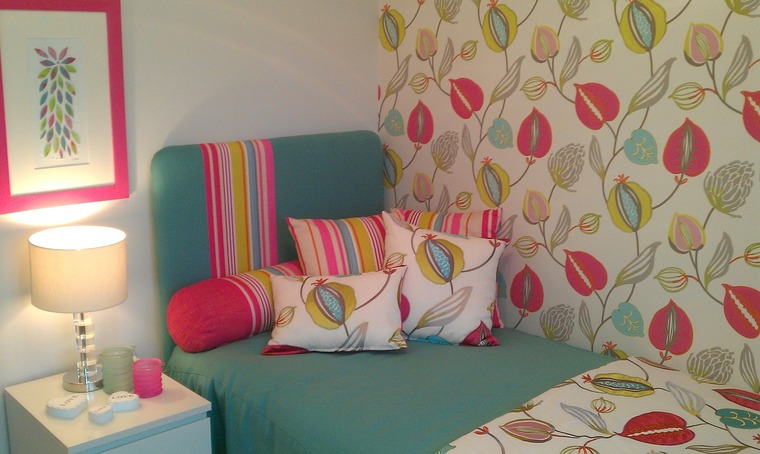
  3. Personalize it with reminders of the places and things that make you feel at home. Do you have a fondness for flowers? Bring floral patterns in on your textiles. Do you dream of vacation at the lake? Frame a photo of your favorite spot! Photos or paintings of uncluttered natural landscapes—like a sunset reflecting on water or a hammock under the shade of an oak—can rekindle memories of relaxation and are perfect for creating a sense of calm.
  4. Add mood lighting. Soften the light to mimic dusk for an intimate mood with dimmer switches, lamps, lanterns or even string lights. Just make sure you can reach the switch from bed, so you don’t have to disturb your peace to get up and turn it off when you’re ready to roll over and fall asleep.
  5. Skip metallic finishes. Choose warm natural decor options like wood and fabric instead of cold, manufactured metallics. This goes for everything from your bedroom furniture to window treatments. Faux wood blinds, especially when paired with floating curtains, fit with a cozy aesthetic and let you filter out harsh sunlight and maintain privacy for a truly sheltered slumber.
  6. Bring on the books! Stacks of good reads invite you to snuggle in and get lost in another world. A true retreat is a room with plenty of books that begs you to stay.
  7. Fix up—or fake—a fireplace. If your bed sits hearthside, embrace this romantic accent with styled logs and a decorated mantle. If you don’t have such a luxury, create a faux fireplace to add comfort and warmth through your décor: Arrange oversized candles and lanterns safely within a homemade hearth to bring in that cozy fireside feeling without changing the structure of your home.
  8. Keep the room uncluttered. When you want to settle in, a mess distracts you from finding comfort, so minimize the amount of stuff that makes it to your bedroom. Watch your nightstand, which often becomes a catch-all, by making a point to rehome any wandering wares now, and put things away as soon as they enter the room in the future. If you’re apt to let laundry pile up, keep it behind the closed doors of your closet so it doesn’t crowd your peace.
  9. Create a sense of timelessness. Tuck clocks and electronics away so they’re nearby if you need them, but their wires and harsh silhouettes aren’t reminding you of life outside your sanctuary. The hush that falls in a room devoid of gadgets will allow you to easily disengage from the stresses of reality.
  10. Rethink your bedding. Add a pillow-top pad to your mattress so it feels like your bed is hugging you when you climb in. Or, bring in a contoured body pillow which actually can hug you! Linen sheets feel luxe compared to cotton and are a simple swap to boost your bower. Many people also swear by skipping the top sheet while dressing their beds, which allows them to burrow directly into a fluffy comforter.
  11. Appeal to your sense of smell. Aromatherapy can have a huge impact on your perception of a space, so find some soothing essential oils or a sweet candle to blanket the room with an ambiance you adore. As soon as you open the door, you’ll be eager to plunge into your little oasis.
  12. Nestle into nooks. A window seat, a reading nook or an upholstered seating area are all inviting spaces that can draw you in from the doorway. The more intimate alcoves you can create, the cozier your bedroom will feel!

Flooded with soft lighting, plush textures and other comfy touches, your bedroom environment will envelope you at day’s end. And, perhaps even better than the idea of your bedroom refresh itself, is knowing that none of these tips take longer than a weekend to complete! So, slide into your slippers as you settle on which cozy updates you’ll select for your new favorite room of the house.


Katie Laird is the Director of Social Marketing for Blinds.com and a frequent public speaker on Social Media Marketing, Social Customer Care and profitable company culture. An active blogger and early social technology adopter, you can find her online as ‘happykatie’ sharing home décor, yoga, parenting and vegetarian cooking tips.  If you're interested in faux wood blinds like those described by Katie, please go to the Blinds.com website.

Market News January 25, 2017

Western Washington Real Estate Market Update


ECONOMIC OVERVIEW

Washington State finished the year on a high with jobs continuing to be added across the market. Additionally, we are seeing decent growth in the area’s smaller markets, which have not benefitted from the same robust growth as the larger metropolitan markets.

Unemployment rates throughout the region continue to drop and the levels in the central Puget Sound region suggest that we are at full employment. In the coming year, I anticipate that we will see substantial income growth as companies look to recruit new talent and keep existing employees happy.


HOME SALES ACTIVITY

  • There were 19,745 home sales during the fourth quarter of 2016—up by a very impressive 13.4% from the same period in 2015, but 18.7% below the total number of sales seen in the third quarter of the year. (This is a function of seasonality and no cause for concern.)
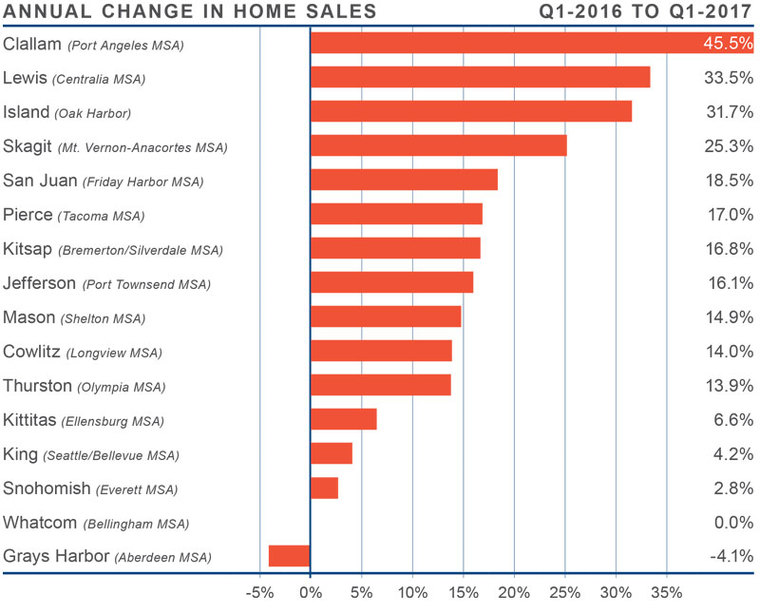
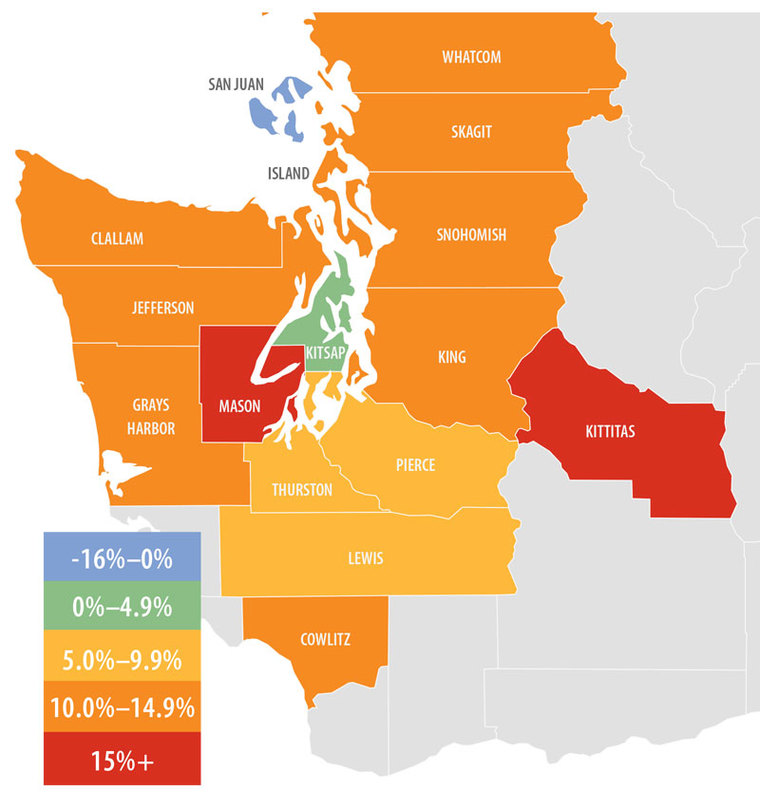
  • Sales in Clallam County grew at the fastest rate over the past 12 months, with home sales up by 47%. There were also impressive sales increases in Grays Harbor and Thurston Counties. Jefferson County had a fairly modest decrease in sales.
  • The number of available listings continues to remain well below historic averages. The total number of homes for sale in the fourth quarter was down by 13.7% compared to the same period a year ago.
  • The key takeaway from this data is that 2017 will continue to be a seller’s market. We should see some improvement in listing activity, but it is highly likely that demand will exceed supply for another year.


HOME PRICES

  • Demand continued to exceed supply in the final three months of 2016 and this caused home prices to continue to rise. In the fourth quarter, average prices rose by 7.1% but were 0.4% higher than the third quarter of the year. The region’s average sales price is now $414,110.
  • In most parts of the region, home prices are well above historic highs and continue to trend upward.
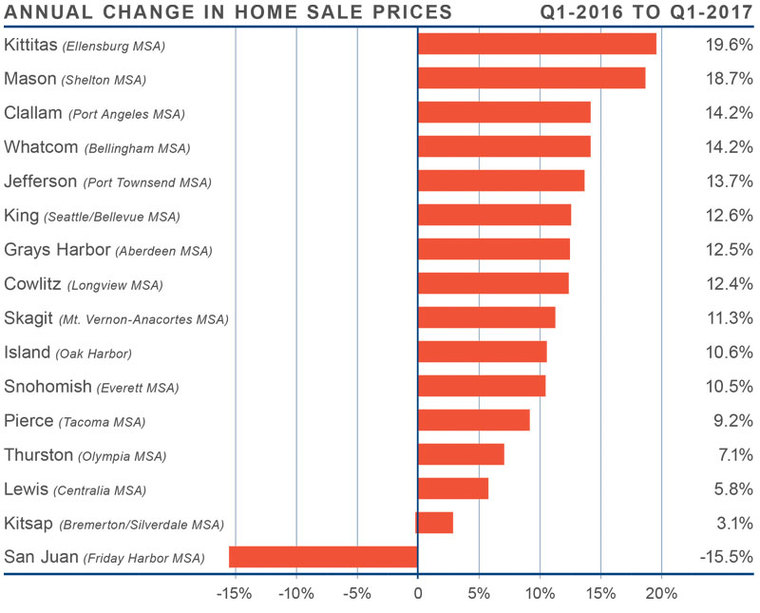
  • When compared to the fourth quarter of 2015, price growth was most pronounced in Kittitas County. In total, there were eight counties where annual price growth exceeded 10%. We saw a drop in sales prices in the notoriously volatile San Juan County.
  • The aggressive home price growth that we’ve experienced in recent years should start to taper in 2017, but prices will continue to increase at rates that are higher than historic averages.


DAYS ON MARKET

  • The average number of days it took to sell a home in the fourth quarter dropped by 15 days when compared to the fourth quarter of 2015.
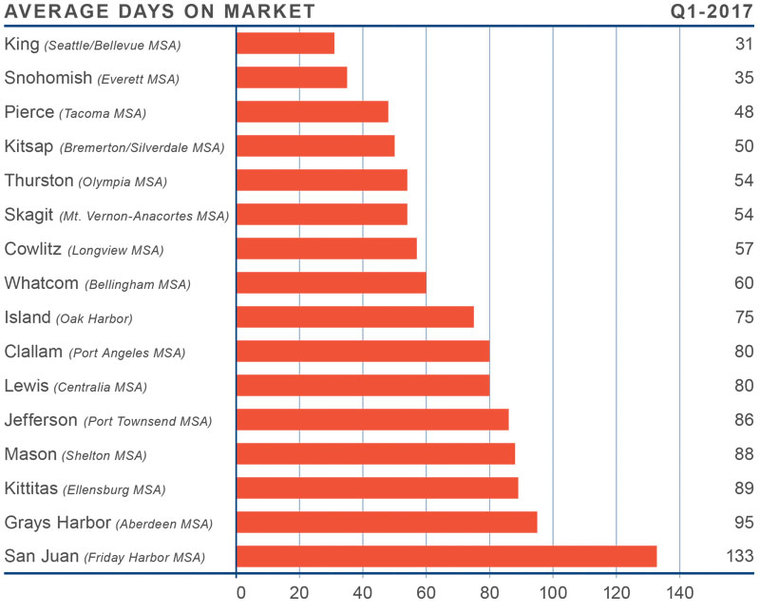
  • King County was the only area where it took less than a month to sell a home, but all markets saw decent improvement in the time it took to sell a home when compared to a year ago.
  • In the final quarter of the year, it took an average of 64 days to sell a home. This is down from the 78 days it took in the third quarter of 2015, but up from the 52 days it took in the third quarter of 2016. (This is due to seasonality and not a cause for concern.)
  • We may experience a modest increase in the time it takes to sell a home in 2017, but only if there is a rapid increase in listings, which is certainly not a given.


CONCLUSIONS

This speedometer reflects the state of the region’s housing market using housing inventory, price gains, sales velocities, interest rates, and larger economic factors. For the fourth quarter of 2016, I actually moved the needle a little more in favor of buyers, but this is purely a function of the increase in interest rates that was seen after the election. Higher borrowing costs mean that buyers can afford less, which could ultimately put some modest downward pressure on home prices in 2017. That said, the region will still strongly favor sellers in the coming year.


Matthew Gardner is the Chief Economist for Windermere Real Estate, specializing in residential market analysis, commercial/industrial market analysis, financial analysis, and land use and regional economics. He is the former Principal of Gardner Economics, and has over 25 years of professional experience both in the U.S. and U.K.
Living January 23, 2017

6 Dramatic Bathroom Makeovers You Won’t Believe

Maybe it’s that 1980s soaking tub with the giant surround, or maybe you’re prepping for resale, or perhaps an overhead flood is to blame. Maybe it’s just time for a change. Whatever the motivation behind them, bathroom renovations are one of the projects homeowners put the most effort and investment into. Here are 6 of the most dramatic before-and-after bathroom stories from Houzz, from budget-friendly to luxe.

 

Related: Mini Bathroom Makeovers You Can Complete in a Weekend


Bath Makeovers 1: Before Photo, original photo on Houzz


1. The Bathroom That Helped Sell a House in One Day


BEFORE: In this Massachusetts bungalow, over 100 years old, the 1960s bathroom renovation wasn’t offering much help to real estate agents.

Bath Makeovers 2: Copper Dot Interiors, original photo on Houzz


AFTER: Interior designer Karen Goodman had resale in mind, as she was redoing the house to flip. But it was important to her to preserve and restore the original 1902 feel. She found a claw-foot tub at the Habitat for Humanity ReStore and painted it green, added a wall-hung sink and used subway tile befitting the home’s turn-of-the-century aesthetic. A unique shower curtain adds color and personality, while the classic fixtures have widespread appeal.


Great tip: Goodman shared her philosophy about painting the original wood with Houzz contributor Annie Thornton. “If it’s painted, it’s getting painted. If it’s wood, it’s staying wood,” she said. “It wasn’t my place to decide what should be wood and what shouldn’t be in a place I don’t plan to call home.”


Shower curtain: Danica Studio; tub paint: Moss Green Rust-Oleum spray paint; claw-foot tub: Habitat for Humanity ReStore


Bath Makeovers 3: Before Photo, original photo on Houzz


2. Dilapidated 1970s Bathroom Gets Inspiration From a Dilapidated Mansion


BEFORE: The state of the bathroom in this 1912 Colonial-style home in New Jersey was sending the whole family up to the third floor to use the facilities because they couldn’t stand the cracked tiles, 12-inch-high tub, awkward layout and dated colors in the main bath. While walking through a once-grand old house during an estate sale and seeing its fabulous colors and tile patterns, homeowner Jody Suden had a clear vision for the bathroom makeover in her own home.


Bath Makeovers 4: Tracey Stephens Interior Design Inc, original photo on Houzz


AFTER: Interior designer Tracey Stephens worked closely with Suden to help her achieve her vision, using classic fixtures and completing lots of complicated tile drawings to get the details just right. The tiles are based on historical patterns and colors and were handmade in Arkansas by American Restoration Tile.


The overall style suits the home’s age and style, mixing mint green, white and black with vintage apothecary style.


Great tip: Even if you have a strong idea of what you want your room to look like, hiring a designer is key — you just have to find one who gets it. Suden told me she couldn’t have done it without Stephens, who told me she considered herself the “midwife” helping Suden achieve her vision.


Bath Makeovers 5: Before Photo, original photo on Houzz


3. The Bathroom Where 2 Doctors Take Deep Soaks After Long Days


BEFORE: This Cincinnati bathroom was dark, dated and awkwardly laid out. Because of a lack of smart storage, the countertop had become a magnet for clutter.


Bath Makeovers 6: Ryan Duebber Architect, LLC, original photo on Houzz


AFTER: Architect Ryan Duebber stole about 16 inches in length for the bathroom from the master bedroom, then moved the toilet to the back of the room. This allowed space for a spacious shower and a Japanese soaking tub.


The sapele wood at the back of the room draws the eye and makes the room look deeper, while a new skylight, lots of reflective white, clear glass, a floating vanity and a strategic lighting scheme bathe the room in light. (For example, check out the glow on the floor provided by the LED tape lights underneath the vanity.) In addition, there’s a place to store everything so the counters can stay clean, maintaining the minimalist look the homeowners love.


Great tip: Having a specific place for everything you use in the bathroom will keep the clutter at bay. Give it a lot of thought early on in the design process. Where will your hairdryer go? Which products do you use every day in front of the mirror? Are you a toothbrush-out or a toothbrush-put-away kind of person?


Bath Makeovers 7: Before Photo, original photo on Houzz


4. Saving the Best for Last


BEFORE: These San Francisco parents worked on the spaces the whole family could enjoy before tackling their awkward master bathroom.


Bath Makeovers 8: Hulburd Design, original photo on Houzz


AFTER: Taking over an unused terrace space gave architect Holly Hulburd plenty of room to work in a new bathtub, a generous separate shower stall and a long vanity complete with dressing table. The room is a study in lines and scale, from the way the tub surround extends into a shower bench to the careful use of different sizes of rectangular tiles.


Great tip: When using strong lines, lining things up is important. In order to have the tiles meet the ceiling and floor without any cuts, Hulburd dropped the ceiling a little to make the geometry work.


Bath Makeovers 9: Before Photo, original photo on Houzz


5. The Bathroom That Makes the Most of Burgundy Floor Tiles


BEFORE: For the 2012 D.C. Design house, Christopher Patrick decided to embrace the existing tile and plumbing configuration in order to stick to a budget.


Bath Makeovers 10: Christopher Patrick Interiors, original photo on Houzz


AFTER: He chose a neoclassic wallpaper that complemented the burgundy tones in the floor, and added a more modern vanity to blend old and new.


Setting the sink and mirror asymmetrically on the right side of the vanity left ample room on the counter.


Great tip: Don’t get stuck in a bathroom design rut. Patrick had an “antibathroom” attitude, styling the room more like a living room or den and adding open shelves instead of a typical medicine cabinet.


Bath Makeovers 11: Before Photo, original photo on Houzz


6. Adding Laundry Makes Way for a Guest Room in a Toronto Pied-à-Terre


BEFORE: The converted loft in this 1905 eyeglass factory offered a decent-sized laundry room that didn’t get much use, but it didn’t have an extra bedroom. By integrating the laundry into the bathroom, there’s now room for guest bunks in the former utility room.


Bath Makeovers 12: Affecting Spaces, original photo on Houzz


AFTER: This shows the opposite wall from the one in the “before” photo; to see the complete makeover, click over to the story. Architect and designer Gillian Lazanik removed a linen closet and planned a layout that made the most of the space. This included room for a stackable washer-dryer and a new walk-in shower stall with a clear glass divider that opens up the room.


By Becky Harris, Houzz


Living January 20, 2017

Tiny Houses – A Big Trend

If you are even a casual fan of TV channels like HGTV, you’re sure to have noticed our nation’s current real estate obsession: Tiny Houses. Tiny House living can offer more financial freedom, more mobility, a lower environmental footprint, and an emphasis on experience over stuff. People who have adopted this lifestyle typically want to live a simpler, more pared-down life, and the rest of us want to watch them do it.

These homes have come a long way in the past five years. Designs for them have gone from extremely simple structures that are more affordable than the average new car, to extensive thought and design – including “Smart” Tiny Homes that can live “off the grid” using solar power and water recycling.

To the contemporary Tiny House purist, the structure is very small and simple. This usually means less than 300 square feet and a loft for the bed.

The “Tiny Living” model (shown below) is offered by Tiny Home Builders. They offer everything from pre-built homes and basic shells to tiny house plans.


Keeping the home on wheels allows everything from moving whenever the mood strikes you, to overcoming issues with building codes that require permanent structures to have a larger square footage.


Interiors are designed to be simple, providing basic needs and amenities without a lot of flourish or detail.


Sleeping lofts are the norm, so if you have an issue with climbing stairs or ladders then a larger model with a main floor sleeping option is definitely a better choice.

A great example of how far they have come with regards to space and amenities is the Farallon model by the Tumbleweed Tinyhouse Company.


They offer two sizes with a useable space option of 218 square feet or 246 square feet and the roof is just begging to have solar panels installed.


Not only does this model provide what looks like a decent amount of counter space, it also has a main floor bed and bath, unlike many other tiny homes that only provide a sleeping loft.


The cost for this kind of tiny living starts at $62,950 – $72,950.


Many people who adopt the tiny house lifestyle say that communities are the key to a happy and successful living environment. Another trick to living large in small spaces is to have great public places to go to – preferably by foot or bike. Creating a micro-friendly community requires careful planning, walkability, and dedicated public spaces, but for those who achieve this trifecta of tiny living, the rewards can be anything but tiny.

This blog originally appeared on Windermere Spaces and Places.