Facebook
 X
X
 Pinterest
 Copy Link
Some homes are memorable long after the credits roll. Maybe it’s the purple door of Monica’s apartment in Friends, the waterfront setting of the Sleepless in Seattle houseboat, or the grand estates and pastel interiors of Bridgerton. Over time, homes on television and film have done more than provide a backdrop for our favorite characters. They’ve shaped how we think about architecture, interior design, and what makes a house feel like home.
While recreating a television set room for room may not be practical or necessary, the design principles behind these recognizable spaces can provide plenty of inspiration. From layered coastal interiors to industrial lofts and historic architecture, here’s a closer look at some of the homes that have made an impact on popular culture and how to bring elements of their style into your own.
Pacific Northwest Homes at Center Stage
For shows and movies set in the Pacific Northwest, the surrounding landscape often becomes part of the home itself. Water views, natural materials, cozy interiors, and an emphasis on the outdoors are all hallmarks of the region’s distinctive approach to home design.
Sleepless in Seattle
Few movie homes are as closely associated with Seattle as the floating home featured in Sleepless in Seattle. Perched on Lake Union, the house offers a distinctively Pacific Northwest take on waterfront living, where the surrounding environment is just as important as the interior. The home combines the casual character of a houseboat with warm, Northwest-inspired interiors and mid-century influences. Rather than feeling overly themed, the look relies on natural materials, wood tones, comfortable furnishings, and windows that keep the water and surrounding landscape in view.
To recreate the look, start with warm wood, simple furniture, natural textures, and a landscape-inspired palette. Instead of filling the room with decorative objects, allow windows, views, plants, and organic materials to do some of the work. Elements of Northwest Contemporary design can help create the same connection between indoors and out, even if your home is nowhere near the water.
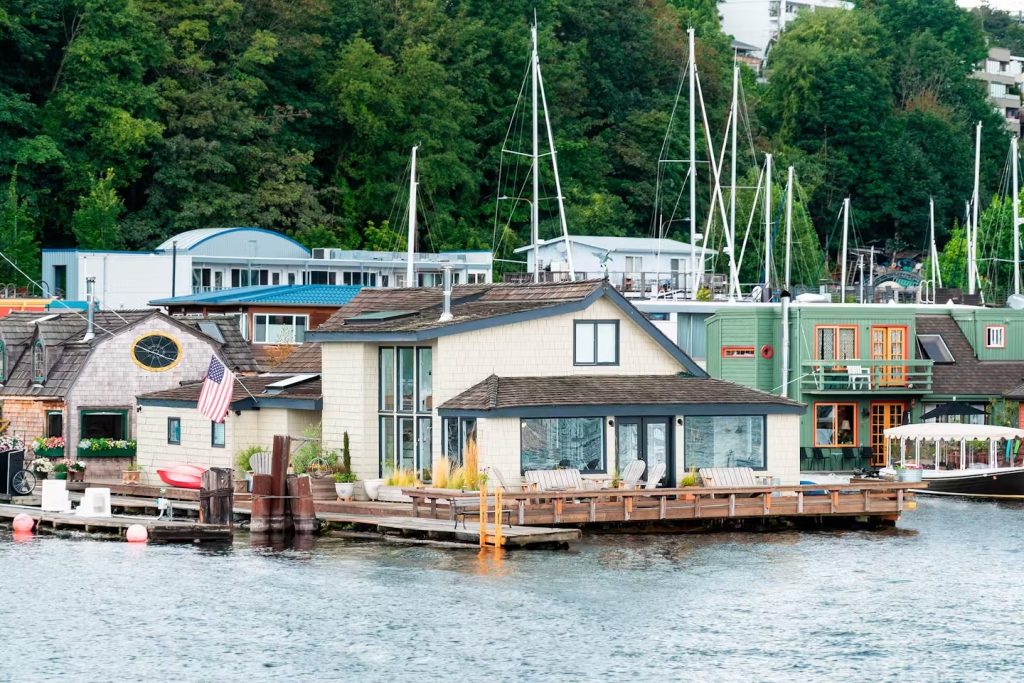
Sleepless in Seattle // Source: Dwell
Grey’s Anatomy
Meredith Grey’s house offers another familiar take on Seattle living. The fictional home is an American Craftsman, an architectural style known for its welcoming front porch, low-pitched roof, handcrafted details, built-ins, and extensive use of natural materials. Inside, however, the home feels much less formal. It’s eclectic, lived-in appearance reflects years of roommates, friends, family, and change. That contrast is part of what makes the house memorable: strong architectural character provides the foundation, while personal belongings and comfortable furniture keep it from feeling overly designed.
When trying to create this feel in your home, let original architectural details shine. Woodwork, built-in shelving, fireplaces, and warm flooring can create a strong base, while mismatched furniture, books, art, textiles, and collected pieces make the space feel personal.
Frasier
Dr. Frasier Crane’s Seattle apartment took a very different approach to Pacific Northwest living. Set high above the city, the apartment combined an upscale 1990s aesthetic with contemporary, postmodern, and eclectic influences, a look sometimes affectionately described as “Frasurbane.” Rather than following a single design style, the apartment mixed sculptural furniture, warm woods, modern art, statement pieces, and objects from different periods. The result felt polished but collected, proving that an elevated interior doesn’t necessarily need to match.
The apartment also offers a lesson in mixing styles without making a room feel disjointed. Focus on balance rather than uniformity. Pair a modern sofa with a vintage side table, incorporate original art, and choose a few distinctive pieces that give the room personality. A restrained color palette can help connect furniture and décor from different eras.
Coastal Homes That Made Us Want to Live by the Water
Television and film have given us countless versions of the dream coastal home, from weathered New England retreats to polished California estates. While the locations may differ, the most memorable examples tend to share an easy relationship with their surroundings.
The Summer I Turned Pretty & We Were Liars
Both The Summer I Turned Pretty and We Were Liars lean into the nostalgia of summers spent along the New England coast. The Cousins Beach House in The Summer I Turned Pretty evokes classic Cape Cod and New England coastal architecture paired with traditional Americana-inspired interiors. Comfortable upholstery, woven textures, weathered finishes, soft colors, and collected décor help create a home that feels refined without becoming precious.
We Were Liars offers a grander interpretation of East Coast coastal living, with New England and Shingle-style architectural influences that recall generations of summers by the water. Here, coastal style feels less like a decorating theme and more like a reflection of place, history, and family.
For a similarly relaxed approach to coastal living, look to the landscape rather than obvious nautical motifs. Keep the foundation light and relaxed with soft whites, blues, natural wood, linen, wicker, and woven textures. Use subtle coastal references through artwork, materials, and color.
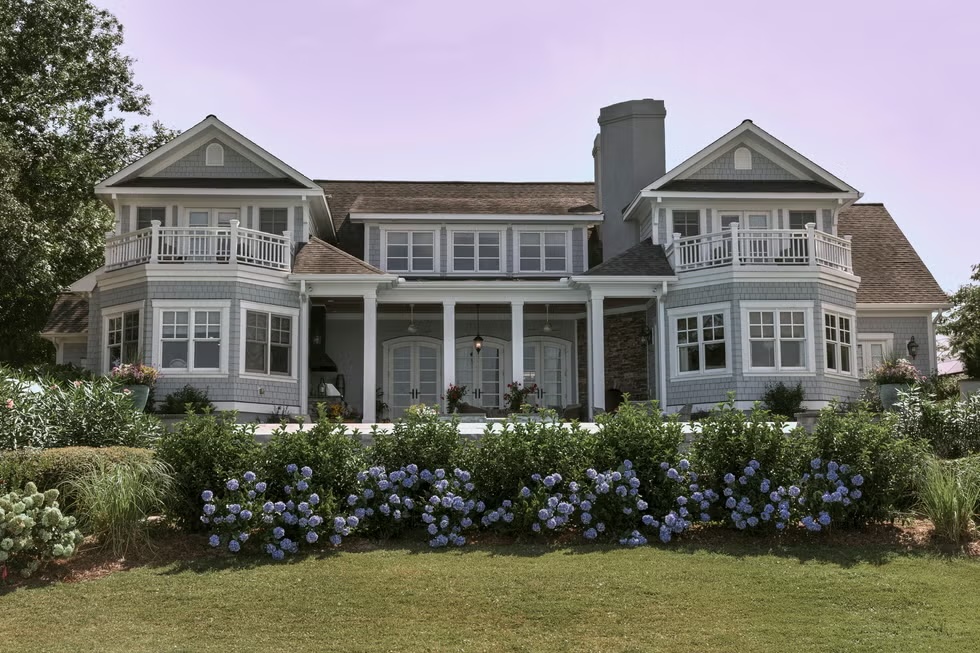
The Summer I Turned Pretty // Source: HouseBeautiful.com
Big Little Lies
On the opposite coast, Big Little Lies presents a more polished version of waterfront living. Its Monterey setting is filled with dramatic views and homes that range in style, but the series helped popularize a sophisticated California coastal, beach house aesthetic built around natural light, neutral colors, comfortable luxury, and indoor-outdoor living.
The same understated approach can bring a sense of California coastal living to homes far beyond the Monterey shoreline. Use large-scale windows and minimal window treatments where privacy allows, then layer the room with natural textures and relaxed upholstery. Pair a neutral foundation with muted blues, greens, and organic materials for a subtle connection to the surrounding landscape.
The Truman Show
The picture-perfect town of Seahaven in The Truman Show is one of film’s most recognizable interpretations of idyllic coastal suburbia. Much of the movie was filmed in Seaside, Florida, a community closely associated with New Urbanism—a planning movement designed around walkability, community spaces, traditional neighborhood patterns, and human-scale architecture. Its colorful homes, porches, picket fences, and coastal vernacular have also led to frequent comparisons with planned communities such as Seabrook, Washington.
Inside, Truman’s world intentionally blends mid-century influences with an idealized version of late-20th-century suburban design. The result is nostalgic, familiar, and almost catalog-perfect.
At home, that nostalgic quality can be captured through classic Americana with a light coastal influence. Traditional furniture silhouettes, cheerful color, checks and stripes, simple wood pieces, and vintage-inspired accessories can create a similarly familiar atmosphere. For a more modern interpretation, keep the references subtle and combine them with contemporary pieces.
The Apartments That Proved Personality Matters
Some of television’s most influential interiors aren’t sprawling houses at all. Apartments from Friends, New Girl, Gossip Girl, and Emily in Paris show just how much character can fit within a smaller footprint.
Friends
Monica’s apartment became one of the defining television interiors of the 1990s. Its eclectic style mixes vintage furniture, saturated color, mismatched dining chairs, art, textiles, and decorative objects in a way that feels more collected than coordinated. That approach feels particularly relevant today as homeowners move away from overly matched interiors in favor of rooms that reflect personality and history. Monica’s apartment reminds us that not everything has to match to feel cohesive. Start with one or two colors that give the room identity, then add vintage or secondhand pieces, framed art, books, textiles, and furniture from different eras. The goal isn’t perfection; it’s creating a room that looks like it evolved over time.
New Girl
The loft in New Girl takes eclectic living in an industrial direction. Exposed brick, oversized windows, high ceilings, visible pipes, metal details, and an open layout create the classic bones of a converted urban loft.
Even without a loft’s architectural bones, a few industrial elements can create a similar effect. Introduce black metal, unfinished or reclaimed wood, leather, concrete-inspired finishes, and simple lighting. Balance harder materials with rugs, upholstery, plants, and warm textiles so the room still feels inviting.
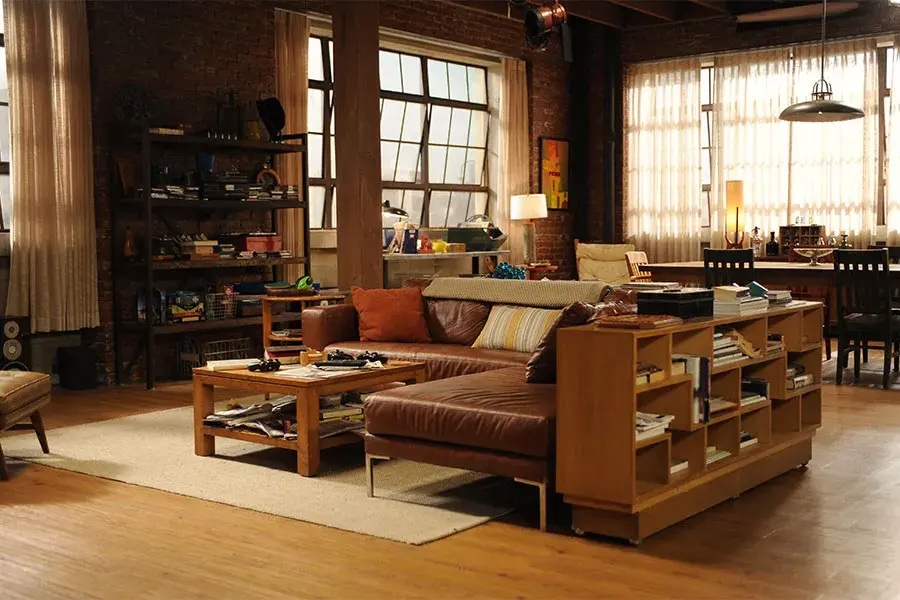
New Girl // Source: Architectural Digest
Gossip Girl
At the other end of the spectrum are the polished Manhattan interiors of Gossip Girl. High-end contemporary design mixes with mid-century modern furniture, statement art, luxurious materials, and touches of glamour. A more approachable version of the Gossip Girl aesthetic starts with choosing a few impactful pieces. Sculptural lighting, oversized art, velvet, glass, metallic finishes, and clean-lined furniture can elevate a without overwhelming it. For a subtler interpretation, incorporate one glamorous material into an otherwise streamlined room.
Emily in Paris
Emily’s Paris apartment brings another layer to eclectic apartment living, drawing on Parisian architecture and French décor while incorporating bohemian and contemporary touches. Architectural details, vintage-inspired furnishings, art, and layered accessories help create a space that feels casual and collected. The Parisian-inspired look is less about following a formula and more about thoughtfully mixing old and new. An antique-inspired mirror, curved furniture, vintage artwork, warm lighting, and decorative molding can bring French influence into a room without requiring a complete redesign.
Historic Homes That Keep Inspiring Modern Design
Historic architecture has played a starring role on screens for decades. From the familiar San Francisco façade of Full House to the elaborate estates of Bridgerton, these homes remind us why craftsmanship and architectural detail continue to influence modern design.
Full House
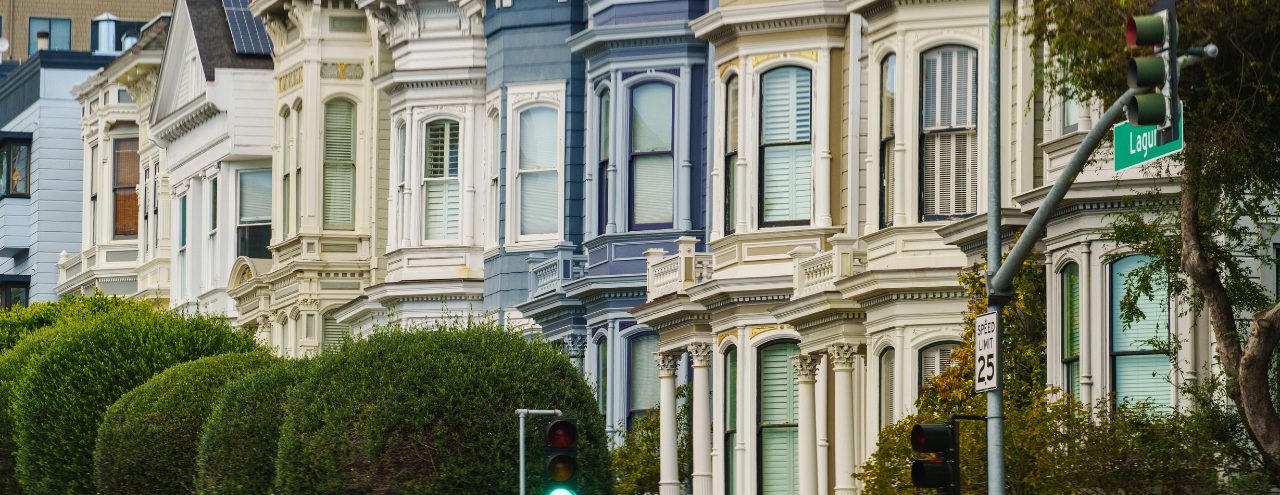
The Tanner family home is closely associated with San Francisco’s colorful Victorian architecture. Its exterior is Italianate Victorian, a style known for its tall windows, decorative trim, pronounced cornices, and an elegant vertical profile. Victorian design is also often associated with ornamentation, but homeowners today can borrow from the style without recreating a nineteenth-century parlor. Instead, highlight craftsmanship through molding, millwork, decorative lighting, patterned textiles, and richer colors. Combining these elements with cleaner modern furniture can keep the room feeling current.
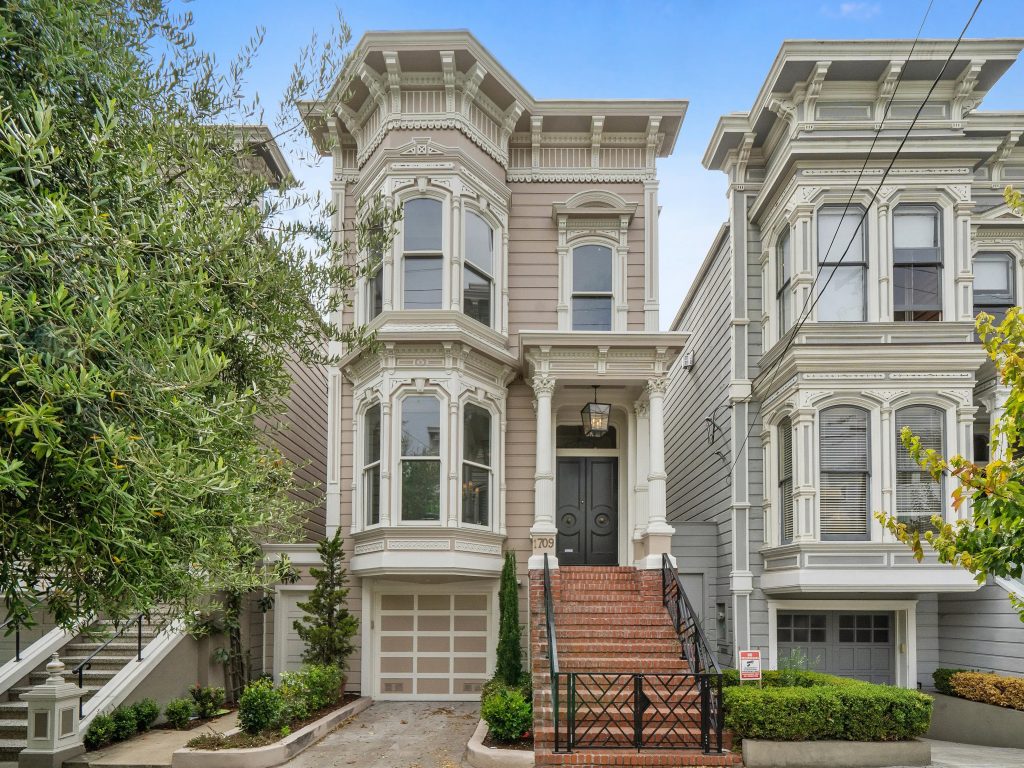
Full House // Source: Architectural Digest
Gilmore Girls
The homes of Stars Hollow offer a softer interpretation of traditional New England style. Lorelai Gilmore’s home draws from Victorian, Colonial Revival, and cottage influences, while its interior is warm, casual, and eclectic. Emily and Richard Gilmore’s home presents the other side of the spectrum, with more formal, traditional rooms, antique-inspired furnishings, and a sense of symmetry and permanence. Together, they demonstrate how dramatically decorating can change the personality of traditional architecture.
Both homes offer inspiration, whether you lean toward cozy and collected or polished and traditional. For Lorelai’s relaxed approach, layer comfortable furniture, books, lamps, textiles, and personal objects. For Emily’s more formal aesthetic, introduce symmetry, traditional furniture, polished wood, classic patterns, and carefully selected antiques.
American Horror Story
The homes of American Horror Story show the dramatic potential of historic architecture. The Rosenheim Mansion, known to viewers as the Murder House, incorporates Tudor and Collegiate Gothic influences alongside Arts and Crafts detailing. The Buckner Mansion featured in Coven offers a very different experience, pairing Greek Revival architecture with elaborate Victorian and Rococo Revival-inspired interiors. Fortunately, it takes only a few well-chosen details to bring some of that historic drama into a modern home. Dark wood, traditional millwork, antique-inspired furniture, dramatic lighting, patterned wallpaper, and vintage art can add historic character. Choose one or two elements rather than filling every surface; a carved wood console or statement wallpaper can create atmosphere without turning the room into a period set.
Home Alone
Few movie houses evoke traditional Americana home design quite like the McCallister house. Its Georgian and Colonial Revival architecture creates a stately, symmetrical exterior, while interiors lean into a nostalgic version of traditional Americana decorating. Rich wood, patterned textiles, classic furniture, warm lighting, and layers of red and green help make the house feel especially memorable.
For a contemporary take on the McCallister home’s familiar warmth, start with the traditional details that give the rooms their sense of permanence. Symmetry, matching lamps, substantial wood furniture, traditional rugs, plaid or patterned textiles, and warm colors can create a similar feeling. Keep the palette slightly more restrained to bring the style into the present.
Bridgerton & Downton Abbey
Few recent series have sparked as much renewed interest in historic interiors as Bridgerton and Downton Abbey. While their settings span different periods and design approaches, both showcase the enduring appeal of ornate architecture, traditional craftsmanship, and rooms layered with history.
Bridgerton offers a romantic interpretation of Regency-era England, drawing from Georgian and Regency architecture through decorative molding, elaborate lighting, floral motifs, antique-inspired furnishings, and soft pastel palettes. The show’s popularity has helped fuel interest in “Regencycore,” a modern decorating trend that borrows the elegance and ornamentation of the era without requiring complete historical accuracy.
Meanwhile, Downtown Abbey embraces the grandeur of the English country house. Its stately interiors feature dark woods, traditional furniture, patterned textiles, ornate fireplaces, substantial drapery, antique pieces, and carefully layered rooms that feel collected over generations. The result is a richer, more traditional approach that continues to influence today’s renewed interest in English country style.
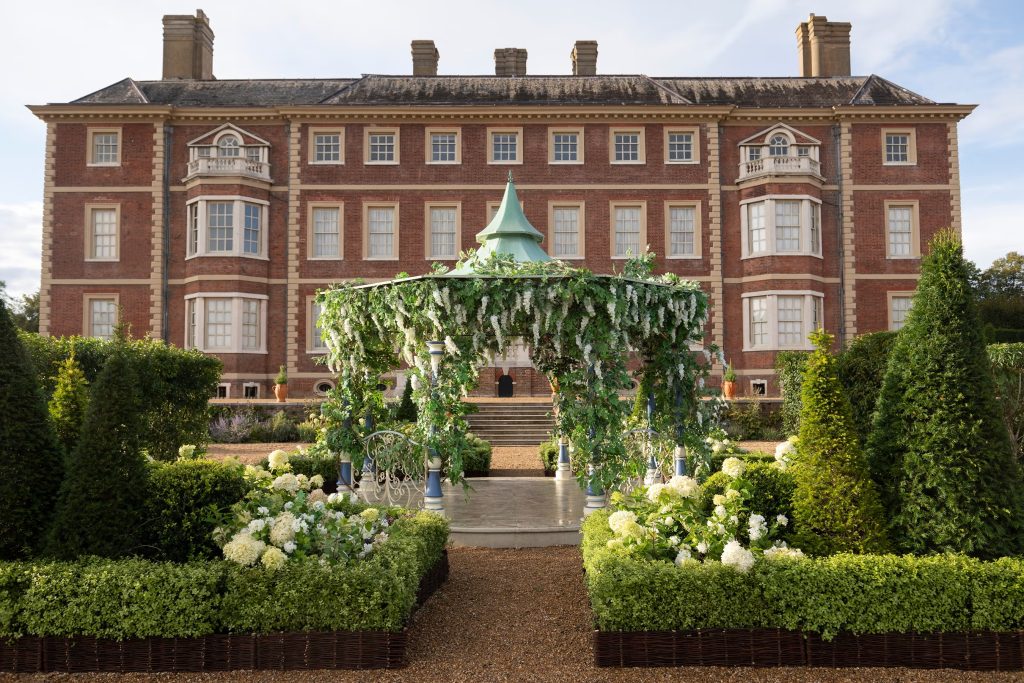
Bridgerton // Source: ELLE Décor
Rather than trying to reproduce a favorite screen home exactly, consider what draws you to it most. It might be the colors, architectural details, sense of history, connection to nature, or simply the feeling the space creates. Borrowing those elements and adapting them to your own home can bring the same sense of character and personality to your space while still making it distinctly yours. After all, the most memorable homes are often the ones that feel personal, lived-in, and thoughtfully designed over time.