Design January 5, 2022

How to Use Pantone’s Color of the Year 2022 in Your Home

Pantone has spoken. Last month, the newsworthy color institute announced their choice for Color of the Year 2022: Very Peri. Pantone says Very Peri is a color “whose courageous presence encourages personal inventiveness and creativity.” So, what is Very Peri? And how can you be inventive and creative when using it in your home? We’ve got you covered.

Pantone Color of the Year 2022: Very Peri

 

A swatch card showing Pantone’s color of the year 2022: Very Peri, which is a periwinkle blue with a violet-red undertone.

Image Source: Pantone.com


Very Peri is a periwinkle blue with violet-red undertones. This combination of cool colors with elements of warm hues creates an interesting combination. Pantone describes the mood that Very Peri creates as representative of the times we’re living in. They cite the merging of the physical and digital world, recent widespread isolation, and expanding popularity of the metaverse as inspiration for choosing the color. Pantone’s 2022 selection also marks the first time they’ve created an original color in the history of the Color of the Year educational program.

How to Use Very Peri in Your Home

Paint with Very Peri

Due to its calming yet dynamic nature, Very Peri makes for the perfect wall color. Repaint your living room or kitchen wall to give your home a healthy dose of a brand-new color or use it on accent walls in smaller spaces such as your bedroom, bathroom, or home office.

 

Six small paint cans of periwinkle blue paint.

Image Source: Getty Images – Image Credit: Manuta


Decorate with Very Peri

Very Peri’s exuberance translates well into both small and large surface areas. Even by using it as a detailing color, its eye-popping charm can give meaning to the spaces it inhabits. Carpets, throw pillows, blankets, and flower vases are all perfect examples of how you can sprinkle in this color throughout your home. It also suits larger furniture pieces well, such as a couch, chair, or bedding. It’s a color you’ll want to sink into and wrap yourself up in. A new Very Peri bedspread may be just the breath of fresh air you need in your bedroom for the new year.

 

The corner of a living room with a comfortable chair, periwinkle blue wall color, and the mantel of a fireplace.

Image Credit: Pinterest – Image Credit: thenordroom.com

Combine Very Peri with Nature

Add an organic touch by pairing Very Peri with a vase of lavender, succulents, or other houseplants to complement its nature-friendly hue. Although there are hints of red embedded in the Very Peri concoction, you can rest assured that this color won’t clash with your indoor garden. Any combinations of purples, blues, greens, and whites will make for a beautiful display.

For more information on how you can incorporate the latest designs into your home, decorating tips, and DIY know-how, head to the Design page on our blog:


Windermere Blog – Design

Buying January 3, 2022

7 Signs You’re Ready to Buy a Home

Making the leap from renter to homeowner doesn’t happen overnight; it requires steady planning to put yourself in a good position to buy your first home. Prospective first-time home buyers can often feel like they’re waiting for a sign to indicate they’re ready to start making offers, when really, it’s a combination of factors. Here are seven signs that you’re ready to buy a home.

7 Signs You’re Ready to Buy a Home

1. You Know Which Homes You Can Afford

To know whether you’re ready to buy, you need to identify your price range. If you’re unhappy with your pre-approval, or need more money for your desired location, there are ways you can increase your buying power. Once you know which homes you can afford, you can work with your agent to find the right home and prepare an offer.

To get an idea of what you can afford, use our free Home Monthly Payment Calculator by clicking the button below. With current rates based on national averages and customizable mortgage terms, you can experiment with different values to get an estimate of your monthly payment for any listing price. By using the Home Monthly Payment Calculator, you can make a well-informed estimation of whether it’s the right time to buy.

2. You Understand Your Local Market Conditions

The dynamics of the market in which you’re buying will play a role in determining whether you’re ready to buy. The local market conditions will dictate what kinds of offers you can expect to compete against, what tactics other buyers may employ, and whether the buyer or seller will have the leverage during negotiations. Therefore, it’s important to understand the difference between a buyer’s market and a seller’s market so you and your agent can strategize accordingly.

3. You’re Comfortable with the Responsibilities of Being a Homeowner

Having a mortgage instead of paying rent isn’t the only difference between owning a home and renting. You’ll be responsible for maintaining the property, making repairs, and completing remodeling projects. That doesn’t always mean you can’t predict a future need. The best way to prepare for unexpected projects on any home is to get a home inspection before you buy so that you know every inch of the property and can start to save for larger expenses that might come down the road.

4. You Have Funds Available for Home Buying Costs

The costs of buying a home are more than just your down payment and monthly mortgage. Before you move into your new home, you’ll have to pay closing costs, moving expenses, and appraisal and inspection fees, to name a few. Property taxes can sometimes be part of the mortgage and depending on the time of year may need to be paid before you move in. Once you’re settled, homeowners insurance will enter the fold. If you can afford these costs, it’s a sign that you are ready to buy.

5. You’re Making Progress on Your Debt

Having zero debt is not a realistic expectation for every first-time home buyer. But, if you have a plan in place for paying off your outstanding debt and can show evidence of the progress you’re making, it will strengthen your buying credibility. Lenders will factor this into their assessment of your financial health during the pre-approval process.

6. You Have a Strategy for the Down Payment

It is true that lenders view a twenty percent down payment as favorable and won’t require you to purchase private mortgage insurance (PMI), but it’s not game over if you can’t make a lump sum payment of that size. With a lower-than-twenty percent down payment, you may incur higher interest and fees over the life of the loan, which could put a greater strain on your finances long-term than waiting until you can pay more principal down. Whichever route you choose, make sure you have a solid plan in place to repay your loan.

7. Your Life Aligns with Buying a Home

Buying a home means you’ll be putting down roots, so it’s important that you and your household are ready to establish yourselves in one area before you buy. There’s financial logic behind this line of thinking, as well; in general, the longer you stay in one home, the more equity you’ll build. Career and income stability also play a role in determining whether you’re ready to buy. Landing a job with long-term prospects may be just the thing you need to green-light your decision to buy your first home.

To learn more about buying your first home, connect with an experienced Windermere Real Estate agent today by clicking on the button below.

Living December 15, 2021

Tips for Home: Extend the Life of Your Mattress

All furniture has a shelf life, and your mattress is no different. Whether you sleep on a spring or memory foam mattress, the more proactive you can be about maintaining it, the better your chances of experiencing healthy, regular sleep. With a few simple tasks you can extend the life of your mattress and wake up every day feeling refreshed. 

Extend the Life of Your Mattress

1. Clean Your Mattress Regularly

A clean mattress is the key to healthy sleep. Clean your mattress regularly according to the manufacturer’s instructions. Certain home cleaning supplies such as baking soda and essential oils can help to cleanse your mattress’s fabric, but they may be harmful to certain foam types. Vacuum before you clean to rid your mattress of dust and dirt using the attachment designed for cleaning upholstery. If your pets like to snuggle up in bed, you can count on their hair and fur getting trapped in your linens, so you may want to consider vacuuming more frequently to make sure everyone can sleep soundly.

2. Rotate Every Six Months

After laying in the same spot night after night, your mattress will begin to form to your body. Rotating your mattress every three-to-six months will give it a chance to refresh its structure and provide additional support. By simply flipping the foot end of the bed around to where you lay your head, it will feel like you’ve bought a brand-new mattress.


An olive-green bedspread in a chic bedroom.

Image Source: Shutterstock – Image Credit: New Africa


3. Use a Mattress Protector

Mattress protectors help to keep your bed as clean as possible by limiting damage caused by spills while keeping dust mites, sweat, dander, and pet hair/fur off your mattress. Made from organic cotton, organic mattress protectors are typically hypoallergenic and waterproof. They are helpful sleep aids for people with sensitivities to allergens and chemicals.

4. Support Your Mattress

Not properly supporting your mattress is a recipe for unhealthy sleep and a short lifespan for your bed. Check the manufacturer’s instructions to see if your mattress is meant to be coupled with a box spring, and if not, what kind of underneath support is required, given your mattress’s type and weight. Insufficient support can not only damage your bed but can also lead to physical complications such as soreness and back pain.

5. Handle Your Mattress with Care When Moving

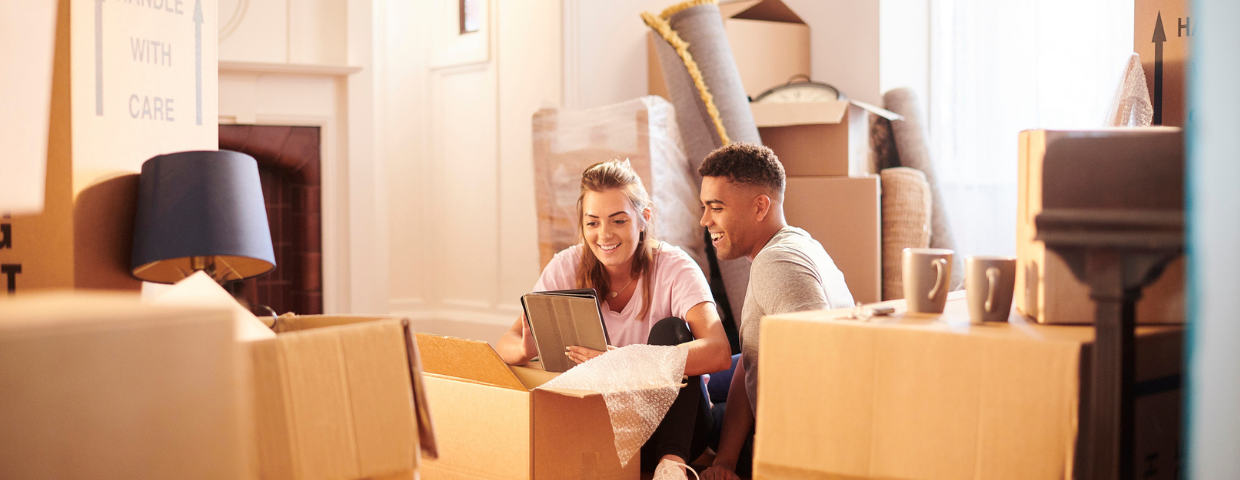
During the moving process, the bed is often the center of attention. Large and clumsy, mattresses can be frustrating to maneuver from your bedroom to a moving vehicle. Fabric can easily be torn when navigating around corners, up and down stairs, through hallways, and sometimes even out of windows. Always work with a partner when moving your mattress or let the professionals handle it if you’re hiring a moving company. If you’re too hasty about getting it moved, you can easily damage it to the point where you’ll need to make a replacement.


For more information on the shelf life of various household items and home appliances, read our blog post on The Life Expectancy of Your Home.

Buying December 13, 2021

Must-Haves and Nice-To-Haves Lists

Finding your dream home may not be easy, but there are things you can do to make it easier, like creating a “Must-Haves” list and a “Nice-To-Haves” list. These lists allow serious homebuyers to save time, energy, and ultimately, money as they prepare to buy a home.

A Must-Have List is exactly what it sounds like, a checklist of the details that are non-negotiable for your new home. It’s essential to sit down and think about the things you need in order to feel comfortable there for the next 7-13 years.

Your “Nice-To-Haves” list is a checklist of details that you’d like to have, but you can live without. This list is great for those things that you’ve always dreamed of but may be out of reach for reasons such as your budget or location. This list may include things like fireplaces or gas appliances, a pool, or other non-essential items.

Your “Must-Haves” list focuses your search and helps your agent narrow down which homes are worth your time. Your “Nice-to-Haves” list will help you determine what you’re willing to sacrifice, which will ultimately solidify your must-haves.

These lists can also help manage your expectations regarding price. Take your lists to your real estate agent, along with your pre-approval from a lender, and you’ll be able to work together to determine what is a reasonable ask within your budget and your desired location.

Creating Your “Must-Haves” List

The first step is to think about the essentials. If things like location and number of bedrooms and bathrooms are a priority, then you’ll want to include them in your must-haves. Consider where you live now and use that as a starting point; what do you love and what are you missing? You may need more storage space, or an extra room to work remote, or a larger backyard for the newest member of the family.

Here are some questions to ask yourself as you build your “Must-Haves” list:

  • Where do you want to live? (Be as specific as you can.)
  • What do you have now that you can’t live without?
  • What are you missing now that you may need for the next several years?

If you’re struggling to determine what it is you need to have, you can start working on your “Nice-To-Haves” list. This can also help you determine what is essential. For example, it may be nice to have five bedrooms when in reality, a three-bedroom house with a flex space that works for an office or guest room would do the trick.

Creating your “Nice-To-Haves” List

While you’re working on your “Nice-To-Haves” list, you’ll be thinking about the parts of a home that would be great to have but aren’t as important for you. You might also want to take into consideration what is reasonable in your area and if it’s a common amenity.

Here are some questions to ask yourself as you build your “Nice-To-Haves” list:

  • What home upgrades are you willing to make?
  • What is something you’d like to do in your house more often?
  • What do you have in your current home that you love, but don’t need?

Searching for Your Next Home

These lists will help guide you and your real estate agent as you search for your next home. During this process you might realize some aspects aren’t as important to you as you thought, and vice versa. Keep your agent in the loop as you update your lists so they can continue to search for the perfect home for you.

Looking for a real estate agent who can help guide you through the home buying process? Connect with an Agent:

Selling December 8, 2021

You’ve Decided to Sell Your Home—Now What?

Deciding to sell your home is one of the biggest steps you can make in your journey as a homeowner. You’ve likely gone through every scenario in your head and are eager to make sure that the next step for yourself and your loved ones is the right one. The shift from homeowner to seller can feel like a roller coaster, but with the right preparation, it will go smoothly. Here are a few ways to make this transitional period a little easier.

Rely on Your Support System

It’s common to experience waves of emotion when selling your home. Leaning on your support system—your Windermere agent included—can provide some stability.

Selling a home is an exciting endeavor to be shared with the people around you. Reach out to your friends and family to share the great news and start the conversation about how, where, and when they can help you. Whether it’s helping you pack, getting you out of the house during open houses, lending a hand on moving day, helping you get settled into your new home, or simply offering words of encouragement, involving your community will help make it all feel a little less overwhelming for both you and them. If you’re looking for a place to stay while you sell your home, someone in your network may have the perfect solution.

Ask Questions

There is no such thing as a stupid question, especially when selling your home. Whether you’ve sold your home before or this is your first time, each transaction in unique. Your Windermere Real Estate agent will be equipped to address your every question, so don’t be afraid to pause the conversation to ask a clarifying question if something doesn’t make sense.

For information on every aspect of what it takes to sell your home, visit the Selling page on the Windermere blog.

Create a Timeline of Selling Your Home

From prep work to closing, there are many steps to selling your home. It may be helpful to create a timeline or schedule of events, so you know both what you’ve accomplished and what’s coming next. Here’s an example of what it could look like:

  • Prepare to Sell
    • Move out & clean
    • Stage the home
    • Marketing Photos
    • List the house
    • Open House Weekend
  • Accepting the Offer
    • Review Offers
    • Accept an offer
    • Negotiate with buyer
    • Buyer’s Inspection
  • Moving
    • Pack up
    • Move
    • Update all addresses and bills


Expect the Unexpected When Selling Your Home

There’s a fair amount of unpredictability in a transaction as intricate as selling a home, so it’s best to be prepared. A pre-listing inspection will let you know of any major issues with your property that might impact the price of your home and the eventual negotiations your agent will pursue with the buyer’s agent. This lets you make necessary repairs before you go on market, providing you with one last chance to increase your return on investment.

Keep your home secure with a few precautions while you sell. While your house is on the market, you’ll have a lot of foot traffic during open houses and private tours. You can protect your home by adding cameras in and around your home, hiding valuables in a safe, and talking to your agent about taking the appropriate safety precautions.

For more on what you can expect when selling your home, read our blog post on the 10 Costs Associated with Selling Your Home.

Design December 6, 2021

How to Create a Gallery Wall at Home

You don’t have to be an accomplished art collector, historian, or aficionado to curate and hang a well-crafted, visually appealing gallery at home. Hanging a gallery wall will give your collection of photos, drawings, and other works of art a place to be displayed. It can also give life to bland stretches of empty wall space, helping to tie together the spaces in your home. So, before you touch nail to drywall, keep the following information in mind to hang the perfect gallery wall for your home.

How to Create a Gallery Wall at Home

The first step to hanging a gallery wall at home is to assemble your artwork. Once you’ve gathered the artwork you intend to hang, take measurements of each piece to determine their framing dimensions. You’ll have an easier time finding frames for the pieces in your art collection with common dimensions—such as 5” x 7” or 8” x 10.” For artwork with uncommon dimensions, you can either shop around for custom framing or simply buy a larger frame with the appropriate matting to fit the artwork. Applying a mat can also give your pieces an elevated, professional look. Once you’ve taken your measurements, it’s time to shop for supplies.

Gather your gallery wall essentials first: a hammer, nails, hooks, and picture hangers. If you have a large piece of artwork in your collection, be sure to find a hanging apparatus certified to hold its weight. You may find it helpful to use paper and tape to “sketch” your desired layout on the wall before you start hanging, and while you’re hanging, use a level or framing square to determine when your artwork is level. During installation, start in the center of your wall space and work towards the edges. It may also be helpful to hang larger works first and work your way down in size. This way, if you need to make adjustments, you can easily adjust your smaller artworks around a focal point.

Gallery Walls Throughout Your Home

Living Room Gallery Wall


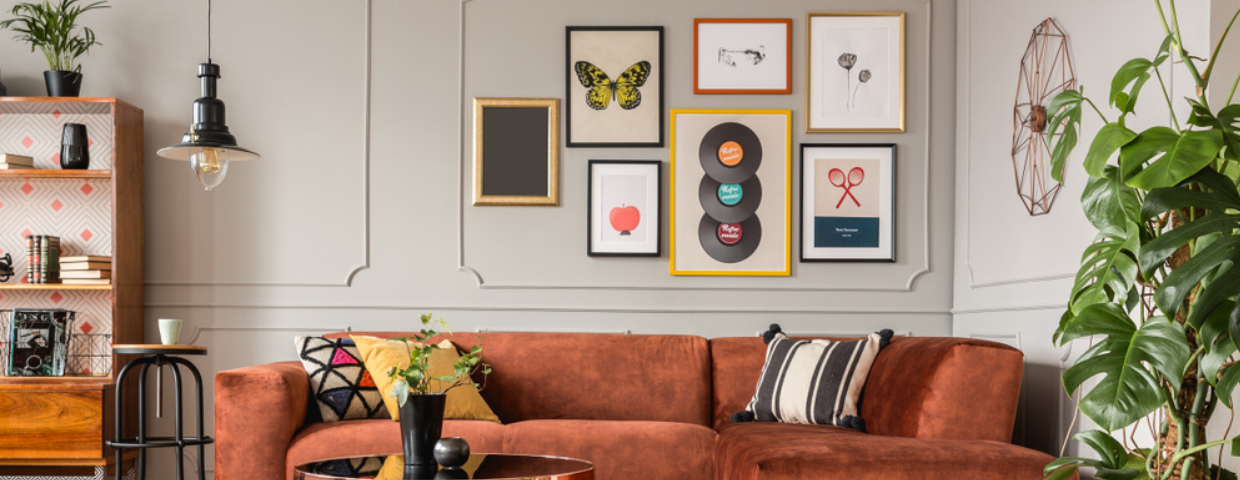
A living room with a gallery wall behind a couch.

Image Source: Shutterstock – Image Credit: Photographee.eu


A living room gallery wall may be just the remedy for that large, blank space behind your couch. Because living room walls tend to be one of the larger surface areas in a home, it is a fitting place for large pieces of art and intricate collages of frames. Consider how the proportions of your gallery wall can create balance in your living room.

Home Office Gallery Wall


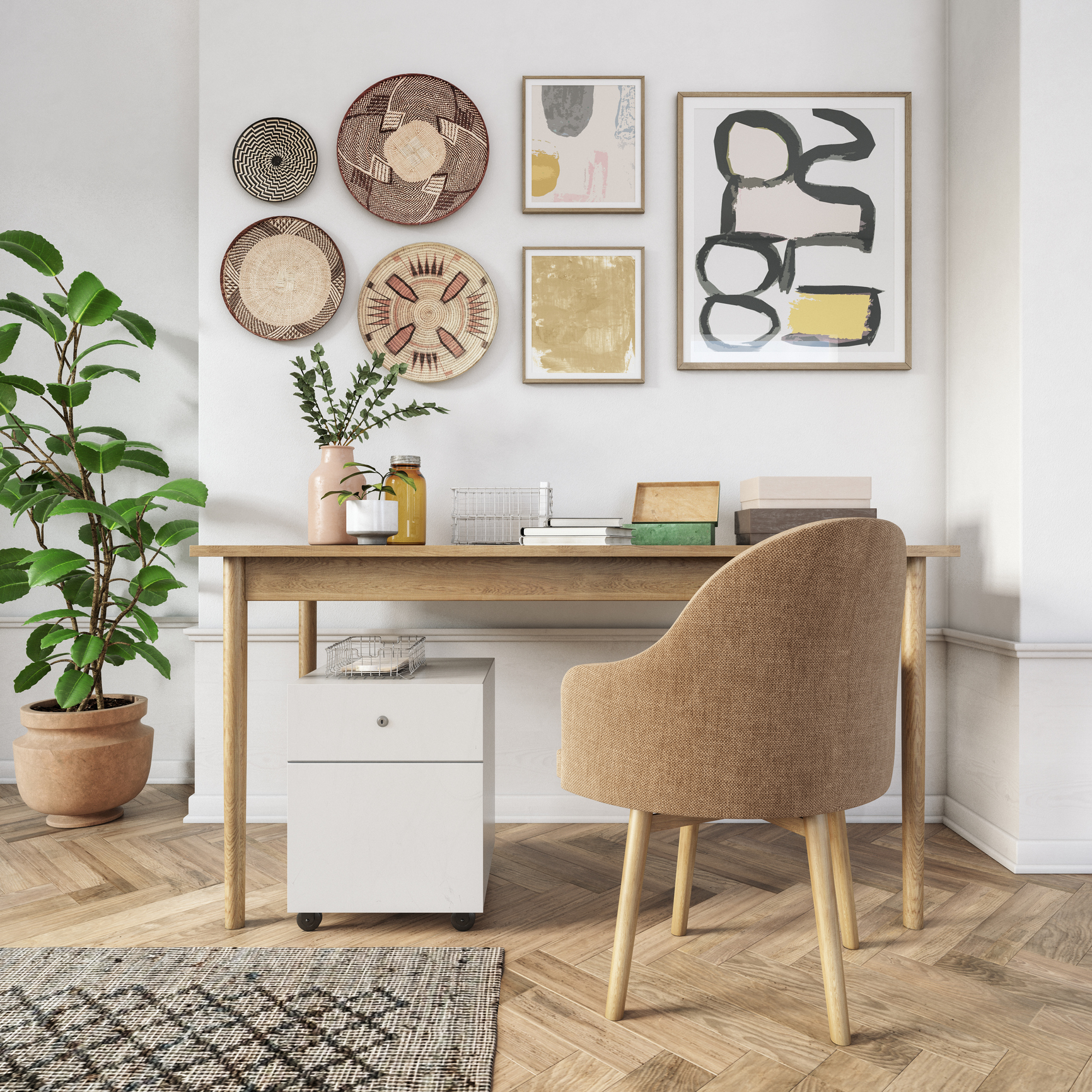
A home office with a gallery wall above the desk.

Image Source: Getty Images – Image Credit: CreativaStudio


With the recent increase in remote work, home offices are more important now than ever before. Keeping your home office fresh and lively is the key to staying productive and inspired while working from home, and a gallery wall can help to do exactly that. Experiment with different combinations of artwork, photos of friends and family, and other cherished collectibles. 

Bedroom Gallery Wall


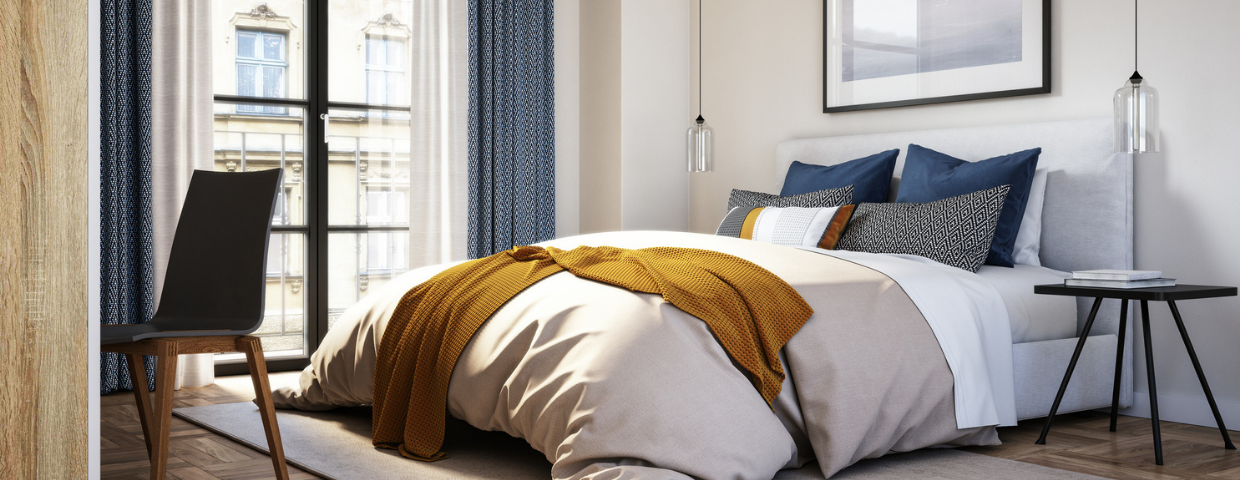
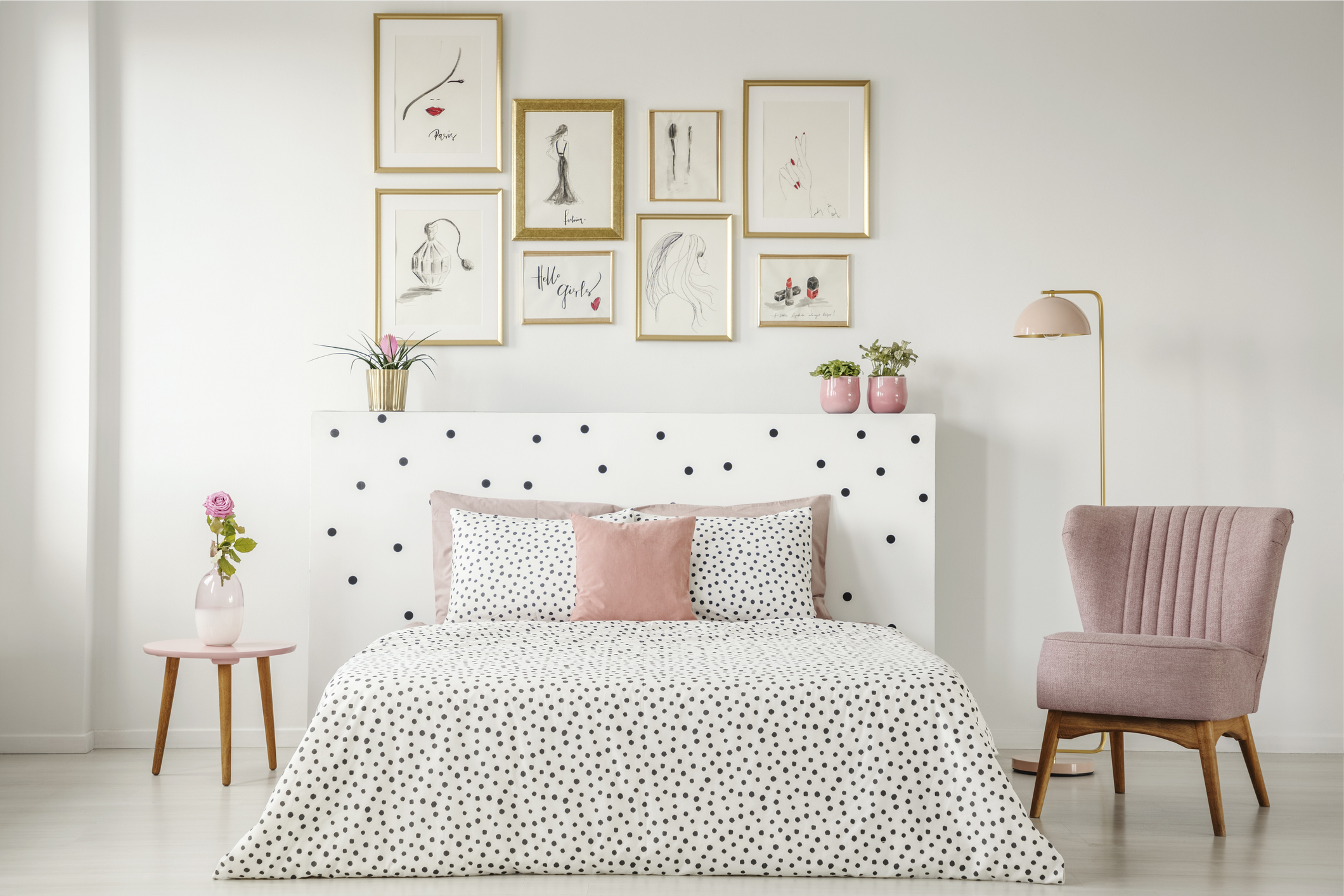
A bedroom with a gallery wall above the headboard of the bed.

Image Source: Getty Images – Image Credit: KatarzynaBialasiewicz


Hanging a gallery wall on the space above your headboard or on an adjacent wall is a quick and easy way to upgrade your bedroom. Fill the space with inspiring paintings, memorable photos, motivational quotes, or whatever artwork best compliments the color and décor throughout the room.

These are just a few of the ways you can incorporate a gallery wall into your home. Hanging a gallery wall in a children’s playroom can be a fun way to highlight their artwork. Curating a cascading gallery along a staircase between floors will create a flow between the levels in your home. The options are endless. For more information on curating the spaces in your home, read about How to Upgrade Your Dining Room.

BuyingLivingSelling December 1, 2021

Make Your Move

Moving is stressful, whether it is across town or cross-country.  Once you have closed on your house, the reality of packing, moving, and setting up a new home can become overwhelming. While no list can make a move “stress-free,” planning ahead and staying organized can help make your move a little smoother. Here is our list of tips:

Getting Started

Once you know your prospective move date set up a quick timeline to make sure you can get all the important tasks done and ready in time for your move.

Consider how much stuff you have by doing a home inventory. This can help you decide whether you need to hire movers to help you or if you will be managing your move on your own. Many moving companies supply inventory lists to help you assess the size of truck you will need.  You can use your list as double duty for insurance purposes later.

As soon as you decide how you will be moving, make your reservations. In general, moving companies and truck rental services are over-booked at the beginning and very end of the month.  If you are planning on hiring a moving company, contact a few in your area for a price quote. To find companies ask your real estate agent, family, or friends, and consult online reviews.  It is also a good idea to request a quote and compare companies.

Preparing for Your Move

  • Moving is a great opportunity to get rid of clutter, junk, or outdated items. Set aside some time to sort through your closets, storage spaces, files, drawers, and more.  Go through cluttered areas and organize items by “keepers”, “give-aways” and “garbage”. You will have less to pack and an opportunity to update after you move. Contact a local nonprofit organization for your donations; some will arrange to pick up larger donations like furniture. If you have items of value, eBay or craigslist are good options.
  • Changing your address is one of the more tedious tasks in the moving process. You will need to change your address with the United States Post Office. You can find the online form here: Movers Guide.

You will also need to change your address with each account you have. Here is a list to get your started:

  • Employers
  • Bank(s)
  • Utilities (Electric, Water/Sewage, Oil/Gas)
  • Cable/ Telephone
  • Cell phone service
  • Credit Cards
  • Magazine subscriptions
  • Insurance companies (auto, home/renters, health, dental, vision, etc.)
  • Pharmacy
  • Other personal services

Let the Packing Begin

Before you start packing, it may help to visualize where everything you have will go. Perhaps furniture will fit better in a different room? Consider the floor plan of your new home and figure out what will go where. This will aid in packing and labeling as you box everything up.

Use a tool like floorplanner.com to plan where furniture and items will go.

When it comes to packing you have some options. You can work with a service that provides reusable boxes for moving or you can reuse or purchase cardboard boxes.  Make sure you have enough boxes, packing tape, dark markers, and packing paper.

Pack rooms according to your floor plan. Label boxes with contents and room. This will make it easier to unpack your home, knowing where everything is going.

Real Simple magazine has some great tips on packing for your move.

If you have to disassemble any of your furniture, make sure you keep all the parts and directions together. Make sure you set aside your necessities for the day you move. Being tired and unable to take a shower or make your bed can be hard at the end of a long moving day. Here are some ideas of what you may like to pack in your “day-of-move” boxes:

  • Clean linens for the beds, pillows and blankets
  • Clean towels
  • Shower curtain, liner and hooks
  • Toiletries, hand soap, tooth brush, etc.
  • Disposable utensils, cups, napkins, etc
  • Rolls of toilet paper
  • Snacks and water
  • Change of clothes
  • Tools for reassembling furniture, installing hardware, and hanging photos

Making Your Move

  • Come up with a game plan with your family, so everyone has a role and a part to play
  • Once the house is empty, do a once over on your old place to make sure it is clean for the next owners/occupants. Here is a useful checklist for cleaning.

Warming Your New Home

Once you have settled into your new home, warm it up by inviting friends and family over to celebrate. Here is a great infographic about housewarming traditions and symbolism. Announce your move to far-away friends and family through moving announcements to make sure you stay on the holiday card mailing list.

To connect with an experienced Windermere Real Estate agent today, get started here:


More November 29, 2021

National Homeless Youth Awareness Month

The Windermere Foundation was founded in 1989 to support low-income and homeless families in the communities where Windermere has a presence. In honor of National Homeless Youth Awareness Month, we’ve compiled the following list of organizations that support and aid the young homeless population in our country.

Each year, an estimated 4.2 million youth and young adults experience homelessness in the United States, of which 700,000 are unaccompanied minors (ncsl.org). The most common causes of youth homelessness include a lack of affordable housing, economic hardship, substance abuse of a family member, parental neglect, objection to sexual orientation or gender identity and mental health disorders.

Unaccompanied homeless youth are at a higher risk of anxiety disorders, depression, post-traumatic stress, and suicide due to increased exposure to violence while living on their own. Learn more about the causes and consequences of youth homelessness online at ncsl.org (National Conference of State Legislators).


Here are some ways you can support homeless youth in your community:


Organizations who have been supported by the Windermere Foundation: 

The Windermere Foundation supports, among others, the following organizations dedicated to helping homeless youth and families in their communities. To support these organizations, donate to the Windermere Foundation through your local Windermere office.


To find out more about the Windermere Foundation or to make a donation, please visit, windermerefoundation.com. To donate, click the button below.


content_Donate_button.jpg

Selling November 22, 2021

7 Mistakes to Avoid When Selling a Home

Mistakes in the selling process can throw your plans off course, causing costly delays. But by knowing what mistakes to avoid ahead of time, you can save yourself the headache and the expense. Steer clear of these common mistakes as you work alongside your agent towards a successful sale.

7 Mistakes to Avoid When Selling a Home

1. Skipping Repairs

Neglecting to make repairs to your home before you sell not only makes it less appealing to buyers, but it can also open you up to additional costs that result from the buyer’s inspection. If you fail to disclose any repairs that need to be made, it could halt the closing process or cause the deal to fall through. Consider conducting a pre-listing inspection to make sure everything is out in the open before you sell.

2. Not Working with an Agent

Listing agents help sellers accurately price their home, coordinate showings and open houses, and negotiate with buyers’ agents to get the best deal for their client. Choosing not to work with an agent can open you up to several risks. Selling a home is an intricate, complicated process that needs the guiding hand of a professional, so it’s no wonder that a vast majority of sellers choose to work with an agent.

3. Incorrectly Pricing Your Home

The key to selling your home quickly is to find the right buyers. To find the right buyers, your home must be correctly priced. Agents use a Comparative Market Analysis (CMA)—a thorough, data-backed examination of your home and how it compares to other listings in your area—to accurately price your home. Without an agent’s CMA, it’s easy for your home to be listed at the wrong price, leading to the following consequences.

    • Overpricing Your Home: Overpricing your home will attract the wrong buyers because you will force your home into competition with other listings that are fundamentally superior or have more to offer. When comparing other homes to yours, buyers will focus on the discrepancies and the features your home lacks. Overpricing will often cause homes to sit on the market for extended periods of time and become less appealing to buyers.
    • Underpricing Your Home: Under competitive market conditions, intentionally underpricing a home is a common strategy to attract buyer attention with the goal of starting a bidding war to drive the price of the home up. However, several things must go correctly for this to happen. In all other cases, underpricing your home reflects a lack of knowledge about where its market value fits into the fabric of current local market conditions and can leave you, the seller, unsatisfied with the price your home ultimately fetches.

4. Letting Your Emotions Take Over

Selling your home is an act of learning how to let it go. Once you know you’re ready to sell, you’ll need to be able to look at it with an objective eye. This will allow you to approach conversations with your agent from a neutral standpoint and work towards what is best for the sale of the home. If you’re too emotionally attached, you may find that you have trouble agreeing with your agent when it comes to negotiations. Overall, emotions can cloud your judgement and make the successful completion of the transaction more complex. If you’re struggling with tabling your emotions, talk to your agent for guidance.

5. Not Prioritizing Photography

One of the hard truths for selling a home is that first impressions matter. The vast majority of buyers are searching online and taking virtual tours of homes they’re interested in. As such, it’s worth the time and money to hire a high-quality photographer. The right photography can make all the difference in the minds of buyers. An aesthetically pleasing home will attract more eyes, and any edge you can give your home over competing listings may be just the ticket to getting it sold.

6. Selling Before You’re Ready

It may be tempting to want to get your house on the market quickly to take advantage of local market conditions, but if the time isn’t right for you, rushing into the market could cause more trouble than it’s worth. Knowing when to sell your home is a mixture of being financially prepared, finding the right agent, and understanding how your home fits into the current local market landscape.

7. Refusing to Negotiate

Approaching buyers’ offers with a cold shoulder can lead to missed opportunities. Before the offers start to come in, it’s important to work closely with your agent to understand your expectations and which terms and contingencies you’re willing to negotiate. That way, you can quickly identify the right offer when it comes along. If you’re unwilling to negotiate, it can drive buyers away and leave potential deals on the table.


Before you sell, get to know what costs you can expect to encounter during the process: 10 Costs Associated with Selling Your Home

Design November 17, 2021

How to Upgrade Your Dining Room

The dining room is a place of gathering, comfort, and community. Creating the right mood in the space is a matter of choices in décor and design. For example, a traditional dining room creates a heartwarming tone whereas a modern one feels minimalist and light. Homeowners can often feel puzzled when trying to upgrade their dining room, since it typically isn’t as simple as buying new appliances or green-lighting a remodeling project. Here are some simple ideas to help you upgrade your dining room and achieve the atmosphere you’re looking for.

How to Upgrade Your Dining Room

Lighting

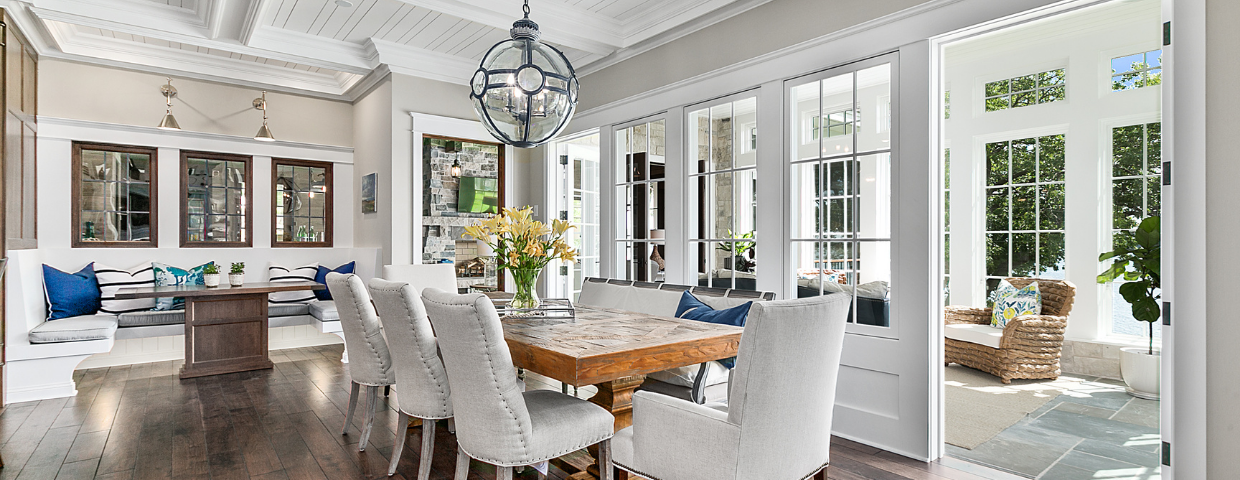
A light fixture is often the centerpiece of a dining room. Your choice in lighting can greatly reinforce the dining room theme you’re going for, so look for fixtures that reinforce the other elements of the space. A chandelier will add a formal touch to the room, while more modern fixtures like pendant and warehouse lights can deliver a sense of chic sophistication. If you plan to hang a chandelier, keep in mind that the bottom of the fixture should hang roughly three feet above the dining room table. If you have vaulted ceilings, it should hang even higher.

Flooring

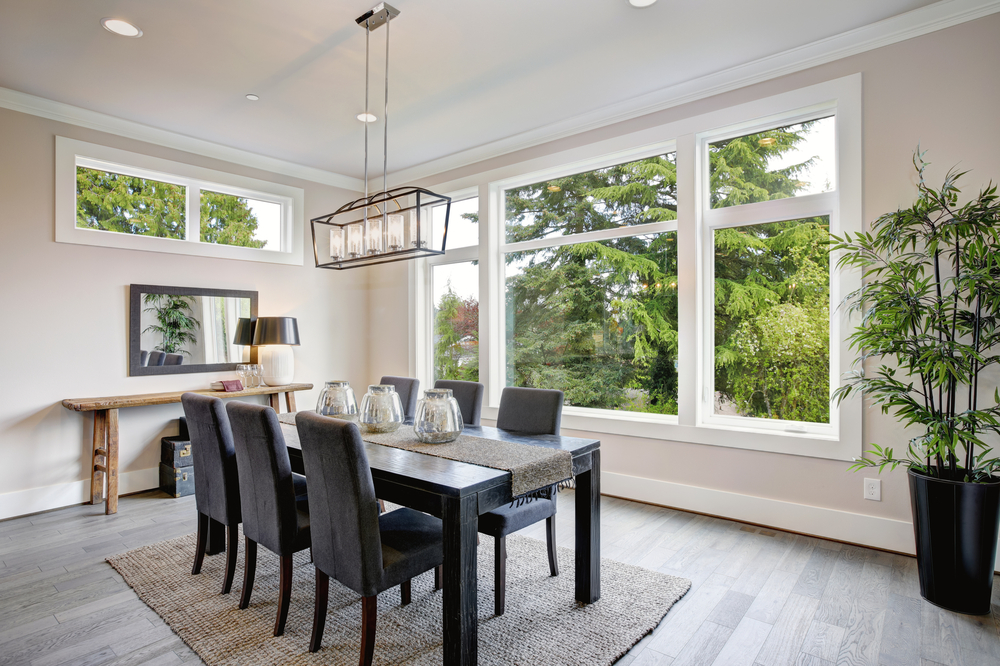
A full dining room upgrade happens from the ground up. If your flooring is outdated or showing signs of wear and tear, it’s the perfect time to add a flooring upgrade to your project list. Choosing the right flooring is a matter of identifying what material will work best in the space, assessing your budget, and forming a plan for installation. Materials like vinyl, ceramic tile, and hardwood are popular options, not only for their durability, but also because they’re easy to clean. Other niche options like cork or concrete can help create a specific ambience but may not be as widely available. Once you’ve decided on your material, talk to local contractors to compare installation quotes. There are pros and cons to installing flooring on your own or hiring a professional; know what they are before making a final decision.


A dining room with hardwood floors, black chairs, and a black table.

Image Source: Shutterstock – Image Credit: Artazum


Table & Chairs

When it comes down to it, the essential function of your dining room is to provide a setting for enjoying a meal. Together with your main lighting fixture, your table and chairs help to form the focal point of the room. Size is a critical component of your dining room table. There’s a Goldilocks dynamic with dining room tables. The larger the table, the more room everyone has, but the more space it takes up. Make sure to take exact measurements before shopping around so you know exactly what size you’re looking for.

Your chairs will reinforce the look and feel of your table. Consider balancing wood grains and matching colors. For example, if your dining room table is designed with intricate wood grain, look at chair sets with simple colors and designs to bring balance to the room. When it comes to the height of the seats, arms, and back, choose dimensions that suit the dining experience you’re looking to create. Generally, high-backed, narrower chairs create a more formal atmosphere than their rounded, modern counterparts. Either way, choose the combination that looks best to you and feels most comfortable.


Image Source: Shutterstock – Image Credit: JR-stock


Color & Décor

A fresh coat of paint can take a dining room from stale to lively in a hurry. If you’re thinking about painting your dining room, think about how the color scheme would complement and/or contrast with the colors elsewhere in your home. A contrasting color will help differentiate the space, while a complimenting color will help to tie things together. New color in the dining room doesn’t have to come exclusively from painting a wall. Colored furniture pieces, decorative throw pillows, placemats, and table décor can help liven the space as well. Curtains and drapes can add a splash of color while softening the room, and when paired together with a decorative rug, can make your colors pop at different eye levels.


For more information on how to upgrade the space in your home, read our Guide to Upgrading Your Bedroom.