If you are looking around your home and thinking to yourself that it’s time to de-clutter, the summer months provide an ideal time to hold a garage sale. But if that sounds like too big of an undertaking, there are other options available to you thanks to popular resale sites like eBay and Craigslist. And if even that sounds like too much effort, you might also consider donating lightly used items to charity or sending them off to the dump. Here are some questions to help you decide which method is best for you.
How much stuff do you have? Are you liquidating your space of large furniture items, a large quantity or quality items, or do you have a small pile of electronics?
If you have yards worth of stuff to get rid of, you definitely want to consider a garage sale. Getting rid of multiple items on Craig’s list can be time consuming, and shipping items sold on eBay can be expensive and eat into your profits. On the other hand, if your items are easily shippable or you have a small enough quantity to take quality photos and post online, then you can save time by using eBay or Craig’s list – and potentially make more money too.
What type of stuff am I getting rid of? Is it worth anything?
If you have large furniture or unique/valuable pieces it may be worth the time to take some quality photos and try to sell these items on Craigslist first. Generally Craigslist works as “first come, first serve” so be prepared to respond to inquiries quickly. If you have small items that have some value, you may want to consider eBay. You reach a much larger audience through eBay which can result in a greater financial return.
How much time do I have?
Garage/yard sales are by far the most time intensive of your options. If you choose to hold a garage sale, you will likely need to dedicate at least three days for prep, clean-up, and the sale itself. All items should be cleaned up, priced, and neatly displayed for sale. Signage should be prominently placed around your neighborhood. You can also place an ad in your local classifieds or on Craigslist to attract a larger crowd.
Will your home/community accommodate a Garage Sale?
Garage and yard sales are generally held at a single-family residence. If you live in an apartment or condo, you may want to consider alternatives due to limited public space. You may also want to consider your community traffic. If you live on a quiet street, you may not get enough customers to generate sales.
Can you enhance a sale by joining with neighbors, friends and family?
Some communities hold an annual neighborhood garage sale, encouraging all neighbors to participate on the same day. This increases your ability to market the event and attract a larger audience.
Want more information on hosting a garage sale? Go here.
May 14th would have been Ralph Jenkins’ 98th birthday.
He passed away about a week ago. He’d had good health most of his life and, even as his health was declining in the last few months, he had all of his usual wit and charm about him.
In the first week of January 1973, I walked into the Windermere office I’d just purchased from Nyle Headly. Working at Windermere then were Connie Farr, Jay Scott, Joe Taylor, Jane Langlie, Bobette Cosby, Vince Haugerud (later to be Manager of Windermere Real Estate offices) and Ralph Jenkins. Vince and Ralph invited me to go to lunch that day, and thus began a tradition of Monday lunches with Vince and Ralph until 2007 when Vince passed, and then continuing with Ralph until just a few weeks ago! Wow! They say that Monday is the lousiest day of the week and I would, from experience, say that it sure as heck is—as the phones would start ringing with buyer/seller/agent issues first thing in the morning. About 12:30 or 1:00 I would go to lunch with Ralph and Vince and explain my tales of woe.
Talk about taking lemons and making lemonade. With a twinkle in his eyes Ralph would give me advice on how to remedy the various situations with humor and grace. I would go back to work re-energized and ready to face the demons for the rest of the week. For those of you who were lucky enough to have known Ralph, he seemed to find humor in just about everything. I don’t know how he did it, but I think many of us wished we had that great attribute.
Also over our Monday lunches, prior to a Husky football game, Ralph and I would bet on the outcome. We’d negotiate all week as to who was favored and who got the points. Somehow he’d usually bamboozle me, and over the course of some 45 years Ralph won 65% of those bets. A damn monkey could have done better than I.
A little bit of history here: Ralph grew up in the Bryant area, attended Roosevelt High School and was the oldest living Alum of Roosevelt’s Golden Grads. He graduated from the University of Washington in Forestry. He entered WWII in 1943 and was stationed in England as a fighter pilot. He quickly became Squadron Commander of over 450 men, flying 129 missions. He won many honors during the war years, including The Silver Star Legion of Merit (three times), Distinguished Flying Cross (twice), Air Medal (24 times), Soldier’s Medal, and the French Croix de Guerre, and was recently recognized (with one other airman) as being the last surviving members of their squadron— thus they were awarded a bottle of brandy which had been set aside for such an occasion at the end of the war. In 1968 Ralph retired from the Air Force after 32 years of service and returned to Seattle with his wife, Wisteria (Tiero), and their five children, and joined Windermere Real Estate.
He retired from Windermere a dozen or so years ago, but was seen in the office from time to time conferring with the “Coeds” as he referred to them. He attended almost all Windermere functions, dressed to the nines, spreading good cheer. He was a friend to literally hundreds of agents and staff. He was father confessor, real estate expert, mentor, teacher and most importantly a very, very good friend. He helped to foster the culture of relationships so meaningful to our business.
There was a sweetness and courtliness to Ralph that all of us, And I Mean All, loved! He wasn’t perfect—in fact he had a side to him that, to say the least, was unusual for a man who’d been successful in his military and business careers and had attained financial stability. The quirk was this: he was penurious. Having grown up in the Depression he could squeeze a dollar out of a nickel, as he was fond of saying. For example, from time to time he would purchase not second but third-hand cars from various government agencies. He would drive them ‘til they dropped and then move on to the next. He once had an old beater with a muffler that was shot— you could hear the car coming from a mile away. But rather than go to Schuck’s for a new one that in those days would cost about 15 bucks, he soaked two cedar planks in water overnight and wired them on the muffler. It still sounded like a bleating goat coming but to Ralph the problem was solved.
In the very early years of Windermere, Ralph decided we should have a “readjustment” hour starting around 5 o’clock every day, sometimes earlier. Several of us, depending on who were around, would gather and discuss everything from business issues to world problems. The venue shifted from time to time, but it was always called “Café Ralph” and he served as the Steward. God it was fun, and I believe we even had some good ideas coming out of those sessions.
In Ralph’s later years he became quite the local WWII celebrity, regaling reporters about his flying days in his plane, The Tallahassee Lassie. Ralph was very active in Paul Allen’s Flying Heritage Collection Museum in Everett, where his plane is housed—on display and sometimes to this day still flown.
A little over a year ago the UW Foster School of Business asked me to speak at their annual event for local business people, students and faculty. I asked Ralph to attend in that my topic was the value of relationships in business. I think Ralph is one of those folks who are referred to in Tom Brokaw’s book The GreatestGeneration. He was my mentor, teaching me the value of relationships and helping me to establish the culture of Windermere with his wit, charm and intelligence.
There are some thoughts I’ve written down that, I believe, are apropos to Ralph. One being from Oliver Wendell Holmes: “Each of us must be involved in the affairs of our times otherwise facing the peril of not to have lived”. Boy, Ralph was certainly involved throughout his life in the affairs of the times! Another sentiment that could be expressed regarding Ralph: “The tragedy in inherently good, brave, true friends is that they have to leave us one day. I think they are probably okay while we are not.” I think of myself and probably some of you as not okay just yet.
Roz and I visited the American Cemetery on a bluff in Normandy overlooking Omaha Beach some years ago. There is an inscription on the wall of a chapel there—“Think not only upon the sorrow of their passing. Remember the glory of their spirit.” Ralph also visited that cemetery several years ago and recalled his memories of the invasion with me. For both of us, it was an extremely moving place and a very emotional experience.
When I last visited Ralph, I not only told him that I loved him, but that he was my Hero. He winked at me, gave me the “thumbs up” sign and I think said “Yeah!”
Like many of you, our family has a high school student graduating soon who is both eager and excited to embark upon life’s next phase. It wasn’t all that long ago that for graduates, like ours, community service was something they did to pad their college applications, but now this important exercise is a requirement at most high schools. That’s because a common belief is that community service links together the academic, social, and emotional elements of learning while giving kids the chance for personal growth through helping others. And hopefully those same kids will grow into adults who will continue to be engaged, positive citizens in their community.
This is a philosophy that we believe in wholeheartedly at Windermere. That’s why every year our offices close their doors for one day to help make a positive difference in their communities. It all started in 1984 with a handful of agents who came together to help out a local elementary school that needed some TLC. Thirty-three years and more than one million hours of community service later, we’ve continued this tradition through neighborhood-enhancing projects in the areas where our Windermere teams live, work, and play.
We agree that community service shouldn’t end with a cap and gown. Over the years, our team has proven this time and time again by embodying the notion that service to others is not something you do, it is who you are.
On Friday June 9, Windermere offices throughout the Western U.S. will close their doors for our company-wide Community Service Day. You can follow their projects on our Facebook page: www.Facebook.com/WindermereRealEstate.
You’ve approved your landscape architect’s final site plan for your landscape design, and now it’s time to get the project built. You can pay the landscape architect to select a contractor for you, or you can hire one on your own. Like other building professionals, landscape contractors have different skillsets and levels of experience. A landscape contractor does not need an award-winning portfolio of work in order to do a great job. The work of the contractor comes down to getting the job done on budget and on time while providing good, reliable service and quality installation work.
There are different ways to hire a landscape contractor to build your project. If you have worked with a landscape architect on a design plan, you can further engage him or her to steward the hiring of a contractor for building the project. Or, you can do the work of finding, screening and hiring a landscape contractor on your own. Whatever your path is for hiring landscape contractors, there are things you should know about their qualifications and how they work with designers. Use this article as a guide to hiring a landscape contractor so that you find the best one for your project.
How to Find a Landscape Contractor for Your Project
As mentioned, there are two main ways to find a contractor: work with the landscape architect to select one or research and hire one on your own.
You have the option to pay the landscape architect who designed your property to do construction administration. That’s a technical term in the landscape industry for managing the administrative tasks of getting the installation under way. The landscape architect is then responsible for getting estimates or bids for the work and recommending the best company to you. The architect does not have to send the project out for pricing to several companies. Instead, the landscape architect will probably have a working relationship with a local contractor and will recommend that company to you.
Once you sign an agreement with the contractor, the landscape architect and builder will work together to ensure that the work will be built according to how it was designed.
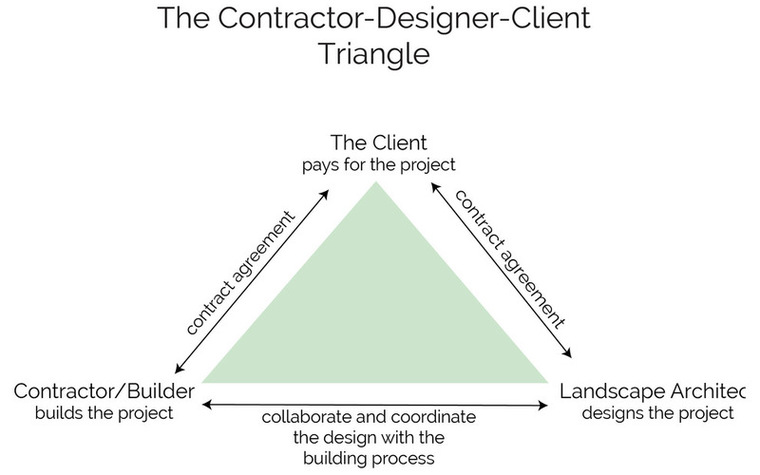
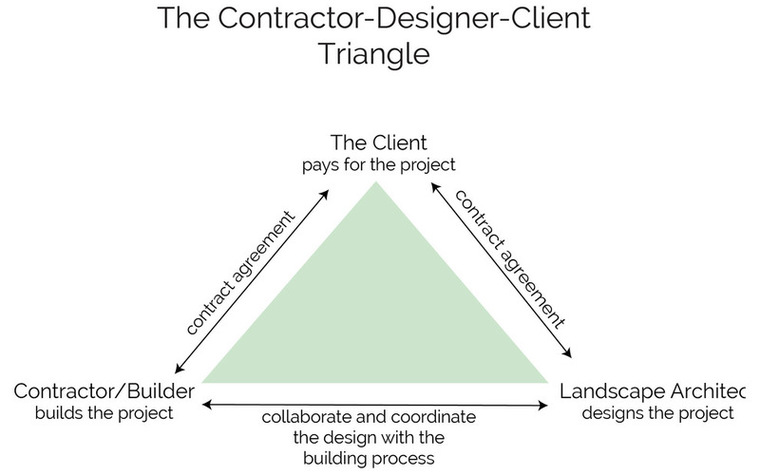
This method sets up a relationship like a triangle, in which you, as the client, have a contract agreement with the landscape architect for design and construction administration and a separate agreement with the contractor for installation. The tricky part is that there is no contract directly between the architect and the contractor, and the architect does not act as the contractor’s supervisor or boss. However, it is in the best interest of the contractor to build the project according to how it was designed, because the design has already been approved by the client. Ideally, the contractor’s agreement with the client will state that the project is to be built according to the landscape drawings and specifications, as prepared by the landscape architect.
The second option is to hire a contractor on your own. This eliminates the triangle relationship and will work well if you are savvy with building processes or if your project is very straightforward. If you are looking to have simple work completed, by all means hire the contractor on your own without involving an architect. If you do have detailed design drawings from the landscape architect, you can use them to get estimates, because you paid for the design services and you are free to use the plans to get the project built. This use of plans is often stated in the design services contract. The disadvantage of hiring the contractor on your own is that you won’t have the design help of a landscape architect when issues arise. For example, the contractor may not be able to find a particular type of stone and will have to substitute a different type. Without the landscape architect to provide design feedback, you’d have to make the decision alone. This might be fine for people who are knowledgeable about materials and construction lingo, but overwhelming for someone without much experience in design and construction.
A related option is to work with a landscape design-build firm that combines the design services with the installation. I will be covering this topic in a future ideabook.
Regardless of which route you choose, it’s good to know what to expect from the contractor so that you feel confident signing a contract agreement.
If you are hiring the contractor on your own, you need to know where to look and how to review the company’s credentials.
Where to look. There are several ways to find your contractor. Doing a broad Internet search might not yield the best results, so it’s better to focus your search and find a local company. Here are a few good resources:
○Search Houzz for landscape contractors in your area.
○Ask your friends and neighbors for referrals.
○Check with your local chamber of commerce.
○Ask your local nursery or garden store for a referral.
Review credentials. You want to hire a contractor who is knowledgeable, easy to work with and reliable. At the end of the day, your primary concern is hiring someone who will build the project on time and on schedule using quality materials and best practices. Here is a checklist of items to request that will inform you of the contractor’s credentials:
○Licenses. Landscape contractors have licenses regulated by the state. Furthermore, your town may have additional requirements for a contractor performing work. Contractors will list their license number on Houzz and on their website. You can search on your state’s regulated professions website using this number to check that a license is in good standing.
○Insurance. A landscape contractor should have general liability insurance and worker’s compensation insurance. Ask to see the certificate of insurance.
○Client references. Call a few former clients and see if they were pleased with the services. It may be a red flag if a contractor has a hard time providing references. Some specific questions to ask of references include: Was the contractor reliable? Was the project completed on schedule? Are you pleased with the quality of the work?
○Photos showing quality of work. Landscape contractors install plantings, paving, grading systems, decks, site walls, sod, seed, fences and water features. They have to be generalists, because they work with a variety of materials. They hire subcontractors to do specialty work around pools and other water features, irrigation, metalwork and any other work that’s outside their area of expertise. Ask for some detailed photos of projects they have built to demonstrate quality building techniques.
○Experience with similarly sized work. Contractors work on a large array of project types, but most focus their work in terms of scale. This is important because their crew will bring a level of expertise that’s appropriate for the workflow and staging of your project.
Landscape Contractor 4: SavATree, original photo on Houzz
Ask about sustainable practices. The contractor will be disrupting the site and installing new materials, which will impact the environment. Make that impact less damaging by using the most sustainable materials and methods possible. Some contractors have been using sustainable practices for a long time, while others are just catching on to the concept. Let the landscape contractor know if sustainability is important to you by discussing it early.
You can gauge how well versed a contractor is in sustainable practices by asking some questions:
○What organic and sustainable practices do you use? If the contractor hesitates to answer, try asking more specific questions, like the ones below.
○Where will the materials be sourced from? It is best to use local stone and wood for your project to decrease the carbon footprint. Sourcing local materials can also save you money, because you won’t have to pay for materials to be shipped long distances.
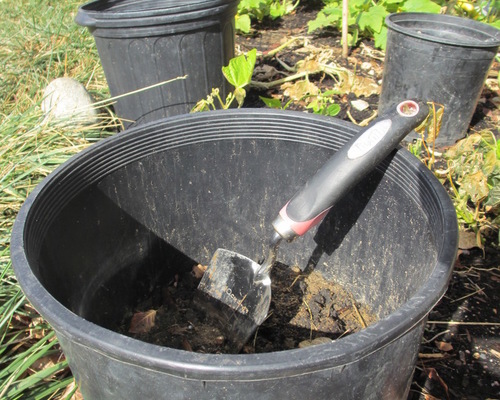
○Do you recycle plant containers or return them to the nursery? Most wholesale nurseries take back plastic plant containers and clean them for reuse. This might seem like a small thing, but those little containers can add up to a lot of plastic in projects with large planted areas. The contractor is responsible for hauling away materials once the job is done, so make sure they will be recycled or brought back to a nursery for reuse.
○Do you use a mulch that’s free of chemicals and additives? Chemicals and dyes are used to make mulch in different colors, and they’re unnecessary additives. Go chemical free. The chemical-free mulches are usually less expensive anyway if they are from a local source.
○Do you use power tools or hand tools? A lot can be accomplished with hand tools, and some compact sites will even require the use of hand tools over power tools and motorized utility vehicles. Most contractors use a combination of both types. If your project is small, there won’t be a big need for big power machinery.
Know who will supervise your project. It’s helpful to know who the key players are in building your project, so that you’ll know who you will be speaking with as the work progresses. Larger companies, with several crews and supervisors, often have multiple project managers, and your project will be assigned to one supervisor and crew team. Small companies (with one or two supervisors) often have one main company manager, who is also an owner-founder of the company. You should know who the point people will be for your project, so you’ll know who to talk to as issues arise.
The site supervisor is the person responsible for leading the work crews each day. The supervisor is the person in charge, whom you will be communicating with onsite during the building process. If you have hired a landscape architect for construction administration, the landscape architect will check in with the site supervisor to keep track of progress and let you know if any issues arise.
Review the subcontractors. As a generalist, the landscape contractor relies on specialty artisans and workers to do custom work or build components with special materials and techniques. Along with knowing who will supervise the work, you will want to know who is responsible for specialty and artisan work, so that you can make sure those people are qualified. Ask for detailed information about the subcontractor’s qualifications, using similar questions to those you asked the landscape contractor.
The contractor hires subcontractors directly and typically has a roster of skilled people for special work. Common subcontracted work includes irrigation (some states require a specific irrigation license), pool installation, pond installation, specialty work (with materials like stone, wood, metal and concrete) and artisan work with sculpture, mosaics or ornate custom fabrications.
How much it will cost. There are two ways to get a cost from a contractor: an estimate or a bid. The differences between the two are explained in detail here.
When hiring a landscape contractor, you may want to use the bid, or fixed-price, method if you have a specific price that you do not want to exceed. However, the estimate is easier to compare among companies, because you’ll get detailed line item costs for the project. The landscape architect’s site plan for the project helps the contractor provide a more precise estimate.
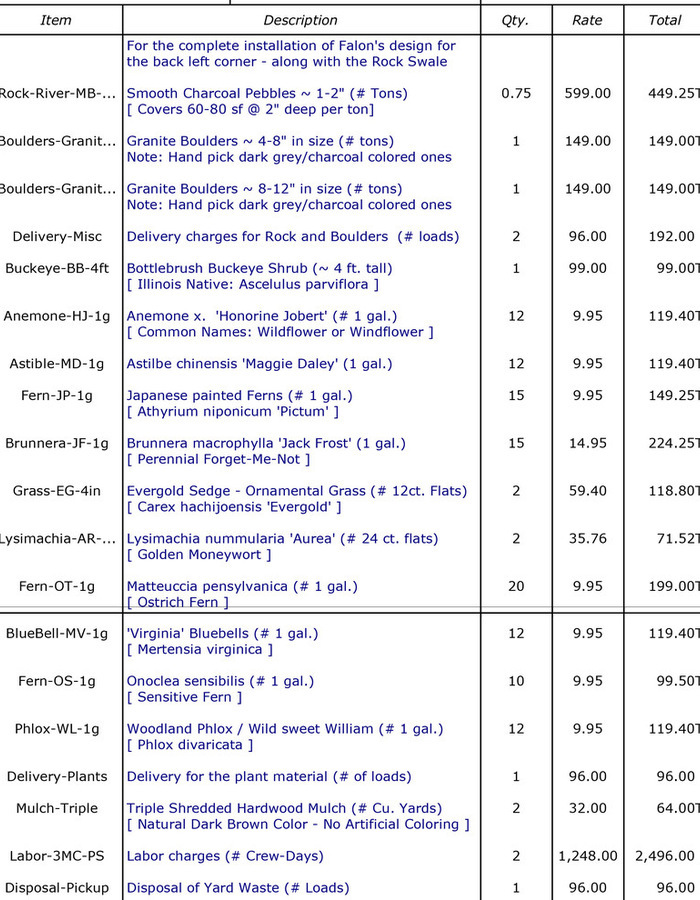
Pictured here is a section of an estimate for a small swale garden installation from a landscape contractor. Landscape construction estimates include the materials, labor, delivery fees, waste disposal fees, project management fees (typically included in the labor cost) and anything else required to build the project. The cost of plants and materials is lower than what you would pay for plants at a retail store, because contractors purchase from wholesale distributors. A contractor will provide a detailed estimate with line items, like the one here. Compare estimates from several companies to make your selection.
It’s ultimately your choice as the client to pick the company you prefer. This means that you can override the landscape architect’s suggestion if there is another company you want to hire. The implication of suggesting someone else is that the architect and contractor will need to meet early in the project to build trust and a working relationship prior to the start of construction.
Base your decision on the best combination of qualifications, experience and cost to do the work. The cheapest estimate might not be the best choice, nor might the company with the most experience. It’s also helpful to meet potential contractors in person. The contractor will want to walk your property — or at least drive by — before providing an estimate anyhow, so use the opportunity to meet and get a feel for how professional and reliable he or she is. If you are vetting contractors on your own, request that they visit the site and have a short meeting with you so that you can talk in person. The background check can be done online and by speaking with the company over the phone.
Once you’ve made your selection, you will need to sign a contract that outlines the scope of work, warranty on plants and schedule for project completion.
The shortage of homes for sale has been a major concern for buyers and real estate agents over the last few years. Windermere Chief Economist, Matthew Gardner, explains the impact these shortages are having on the housing market.
More than 80 percent of Americans say they want an outdoor living space where they can relax and entertain. And it’s no wonder why. Outdoor spaces extend your livable space, add visual interest, and increase not only your quality of life, but also the overall value of your home. (In some cases, the increase in your home's value can cover most or all of the cost to create the new space.) Here are some options to consider:
DECK
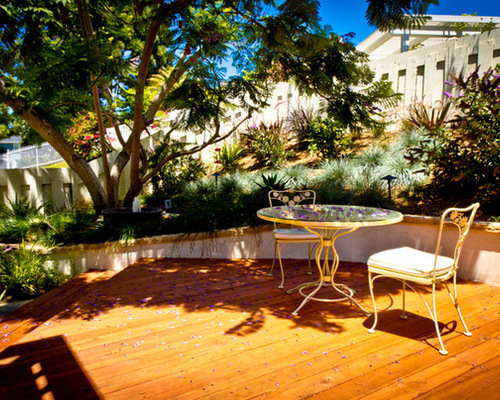
Decks are still the most popular outdoor living spaces, not only because they work so well for entertaining and relaxing, but also because they have the highest return on investment (see the Tips column for data).
Surprisingly, wood decks (made of cedar or pine) are actually the better financial investment, because building with Trex or other popular composite products costs considerably more, yet doesn’t increase the home’s value by as much.
Expanding and reconfiguring your current deck is another option that’s popular today. The contractor will typically remove the old face boards, extend the underlying structure, and then put down the new decking. This is also an opportunity to add built-in furniture, privacy screens, even plumbing and electricity.
PATIO
Running a close second to decks – in both popularity and investment return – are patios. With a patio, you can relax and entertain at ground level, which can afford more privacy in urban areas, and allows you to be more engaged with the surrounding plants and landscaping.
Typically made of brick, concrete, or stone, a patio also comes with far fewer maintenance and repair issues than a deck. Plus, patios are generally easier and less disruptive to construct – which is why they’re often about 30 percent less expensive to have professionally built.
GAZEBO
For those who want even more privacy, as well as shelter from the sun and protection from mosquitoes and other pests, there’s the gazebo. Available with walls or as an open-air design, with screening or not, these modestly sized, affordable backyard structures can be built from scratch or purchased as a kit (for assembly by a do-it-yourselfer or a professional).
Popular in the Midwest for decades, gazebos have made their way west as homeowners here have discovered how nice and easy they are for creating a shaded spot for reading, relaxing, and backyard gatherings.
OUTDOOR KITCHEN
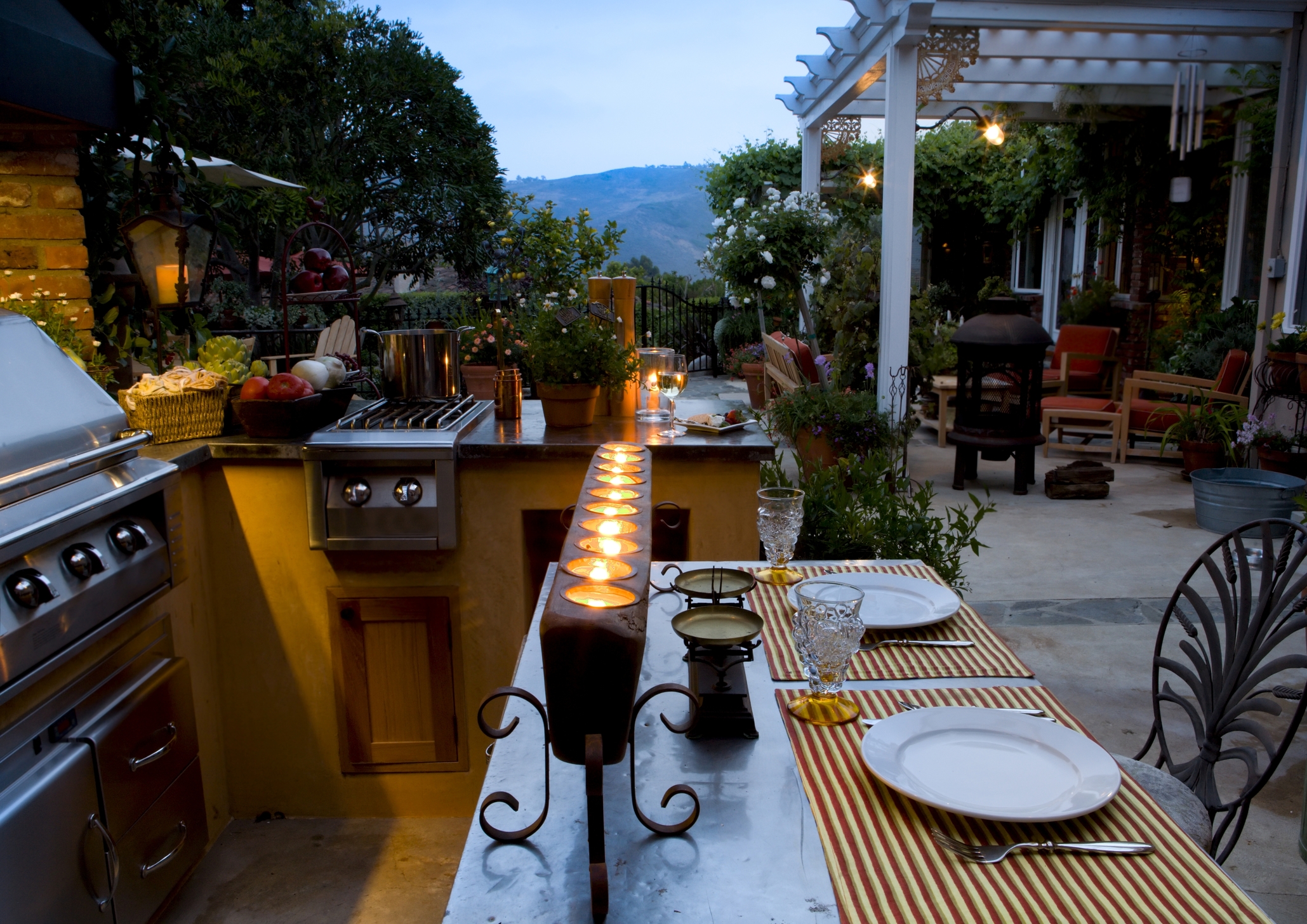
People tend to gather naturally in the kitchen. And when the kitchen is outdoors, it creates an ideal opportunity to mix, mingle and interact in the open air. Other reasons why cooking outdoors makes so much sense: less kitchen cleanup, the house stays cooler during the summer, and grilled food just tastes better.
Some may think an outdoor kitchen is only for cooks who host large parties, but homeowners who go this route say they’re more of an extension of the home, and great for daily use.
Designs for outdoor kitchens range from the simple (a grill, limited counter and cabinet space, and maybe a prep sink) to truly independent entities with a refrigerator, an elaborate grill, warming oven, freestanding island with storage space, rolling cart stations, and even a dishwasher. Depending on how elaborate your design, you may be able to list it as a second kitchen when selling your house.
SIX PLANNING SUGGESTIONS
Before meeting with contractors, gather photos of designs and ideas that you like; this will make it much easier to communicate your ideas.
Make sure the materials you plan to use, as well as the overall size of the structure, will be harmonious with your home’s current look and feel.
Give serious consideration to a roof – which will likely add significantly to the cost, but will also provide much-needed shade on hot days and protection from rain and inclement weather. In fact, to ensure things are structurally sound and architecturally appealing, start with the design for the roof first, then set your sights on the roof supports and structure below.
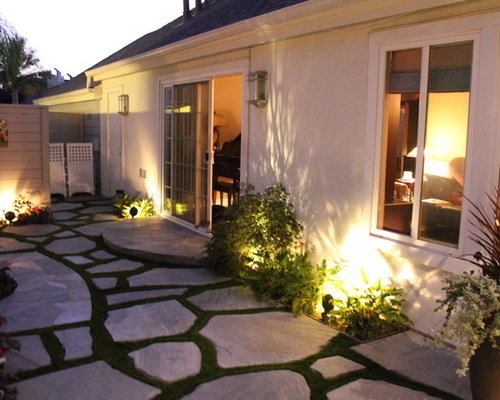
Incorporate lighting into your design, which will extend its usability into the evening and throughout the seasons.
Consider convenience, comfort, and longevity when choosing materials. For example, a floor made of dirt or stepping stones may last forever, but one made of wood or concrete is much easier to clean and arrange furniture upon.
If you’re eager to live a healthier lifestyle and reconnect with family and friends, as most people are today, it’s time to consider an outdoor living space.
Will the Trump administration have an impact on the U.S. housing market? Windermere Chief Economist, Matthew Gardner, weighs in on how mortgage rates, inflation, and the possible repeal of Dodd-Frank could impact housing in the foreseeable future.
Windermere Real Estate Chief Economist, Matthew Gardner, was interviewed by real estate industry news leader, Inman News, on what impact recent White House turmoil could have on the U.S. housing market. This is what he had to say:
Windermere Chief Economist Matthew Gardner says that housing will be isolated from yesterday’s events, at least for now. “Financial markets hate one thing more than anything else, and that is uncertainty,” Gardner told Inman. “Yesterday’s sell-off was a clear response to the appointment of a special counsel and markets were clearly on edge.
“As far as housing goes, the downside will likely be muted, at least for the time being. Yesterday’s news headlines cast further doubt on the new administration’s ability to rapidly enact the legislation that prompted investors to make big bets on higher stocks and interest rates.
“Unsurprisingly, investors pushed stocks and interest rates lower following the news. This triggered mortgage rates to drop significantly, as part of the broad-based sell-off in equities. At least for the time being, I do not see any long-term housing related issues following the political turmoil that currently embroils Washington.”
There are parts of every job, no matter what field you’re in, that are just less fun than others. Building professionals pride themselves on doing anything and everything to make clients happy. But that doesn’t always mean the builder is jumping up and down with excitement at every stage of a project.
When it comes to remodeling and home building, contractors will do just about anything to make you happy. They’ll meet with you on short notice. They’ll come up with creative solutions to your unique requests. They’ll even clean your toilets if you ask (although maybe not for free).
Contractors may have a brave face on at all times, but I’ll let you in on a little secret: There are some things they just don’t like to hear. Such as …
1. “I reselected my plumbing fixtures.” Most good contractors will harp on how important it is to get all your selections made as soon as possible. Some won’t even start a project until everything is selected. It’s a great practice, and it helps to keep your project going as smoothly as possible.
So if you come to your builder in the middle of the project and say, “Hey, by the way, I chose all new plumbing fixtures for the master bathroom,” they might get a little nervous. Depending on what stage of work they’re in and what you reselected, this could be no big deal. Or it could mean doing a lot of extra work to prepare for the new fixtures. Even worse, there may be a lead time associated with your new selections. This could cause an unplanned stop in work, which nobody (homeowners, subcontractors, builders, neighbors) likes.
2. “Can we hang this chandelier up there?” (Points to 20-foot-tall ceiling.) Why, yes! Yes, we can. I’ll just be sitting in the corner biting my nails as I watch my electricians stand on massive ladders that I (the person with the fear of heights) would never set foot on, all while they hold and hang a massively heavy and most likely expensive chandelier. But, yeah, we can definitely do that. No problem.
There’s really no way to avoid challenges like this. But it helps to give your builder a heads up on out-of-the-ordinary needs you may have. That way, he or she can take extra precautions, such as setting up scaffolding, and warn you of any additional costs that your request could involve.
3. “Can you meet at 5 p.m. this Friday?” Admittedly, I don’t think anyone likes to hear this. Contractors may work long hours and be available pretty much whenever you need them to be, but that doesn’t mean that they don’t want to go home a little early (or at least leave on time) on Friday to relax.
A great way to ensure you’ll have your contractor’s undivided attention is to set up recurring meetings. Find a time that works for both of you and save it in your calendars. That way, no one has to worry about last-minute, pre-weekend meetings.
4. “Let’s make all of the walls smooth!” I think smooth walls are beautiful. They’re crisp and clean and are a must in my book. I’ll say this much, though: They aren’t always easy. It’s one thing to hire a high-quality drywall contractor who is a pro at smooth finishes. It’s another thing entirely to have all involved parties be happy with the final product.
It’s kind of like If You Give a Moose a Muffin. It starts with one thing that needs to be fixed (“That corner isn’t perfectly square”) and seemingly overnight turns into a mile-long punch list detailing everything from millimeter-wide blemishes to areas of texture that look weird in a certain light. Like I said, I adore smooth walls, but getting them to a level of smoothness that everyone can agree on can be a bit of a task.
If you can find it within yourself to hold off on the nitpicking until your builder at least has the paint primer up (this is the stage when it’s easiest to see any remaining imperfections), you’ll save yourself and your builder a headache.
5. “Could you help me move [insert expensive item here]?” Grand pianos, $50,000 paintings, one-of-a-kind sculptures — you name it, I’m afraid of moving it. Asking remodelers to help you move something valuable to you (whether monetarily or emotionally) is asking them to take on a lot of liability.
While it may make sense to ask them for a little help — after all, they have plenty of crews, and they’re already at your house — it’s not worth the risk for any party involved. Your best bet is rephrasing the question to “Do you know anyone I could hire to help me move [insert expensive item here]?”
As I was speaking to my co-workers for their take on things contractors “hate” to do, it became apparent to me that, for the most part, there isn’t too much that we won’t do to make our customers happy. On top of that, there aren’t a huge number of things that make us shudder. (Notable exception: When someone used the toilet at a house where the water wasn’t on — yuck.)
There might be materials or tasks contractors try to avoid if they can, and some might even steer their customers away from certain things to make everyone’s life a little easier. (Our in-house designer avoids marble in kitchens at all costs because of its susceptibility to stains.) But in the end, we’re in the customer service game for a reason. We love to make people happy, and we’ll do whatever we can to facilitate that.
For many children, the free meals that they receive in the school cafeteria may be the only food that they get for the entire day. And that’s just on the weekdays. On the weekends, children often go hungry because their families cannot afford to cover basic household expenses, including groceries. And when the school year ends, they lose the security of those two meals, making summer the hungriest season of the year for children in our communities.
Through the Windermere Foundation, many Windermere offices throughout our network support programs that provide weekend and summer meal programs. These programs help girls and boys at risk of hunger get access to nutritious meals outside of school.
Here are just a few of the programs that our agents and offices support…
California
For the past two years, the Windermere Redding office has supported an afterschool/summer program at Eagles Soar Youth Activity Center (ESYAC) with a monthly donation of $54 that they can use to purchase food, clothes, and other necessities. The program serves “housed” homeless kids—kids who live in transient housing such as motel rooms and trailer parks. It is a 100 percent volunteer organization that is funded by donations from the community. Program volunteers pick the kids up after school twice a week and they also have a summer events program. They feed and tutor the kids, provide them with clothes if needed, and send them home with food for the weekend. Over 90 percent of the kids they help are on the honor roll.
Montana
For the past two years, the Windermere Missoula office has supported the Missoula Food Bank’s Kids Empower Pack program. The Kids Empower Pack is a nutrition program helping kids stay nourished when school is not in session. School officials identify children living with chronic hunger and enroll them in the program. And every Friday, they are sent home with a backpack full of nutrition for the weekend. In 2016, the Missoula office donated $1,200, with half of the proceeds from their annual standup paddle board race being donated to the program. The program will be one of the beneficiaries again for this year’s event. Last school year, Kids Empower Pack was helping 528 local kids every weekend. In 2017, Kids Empower Pack will feed 750 kids every weekend.
Oregon
The Windermere Gearhart and Cannon Beach offices support Warrenton-Hammond Healthy Kids, Inc., donating $500 to them in 2016 and $3,500 over the past six years. WHHKids currently serves Warrenton Grade School's 771 students and Warrenton High School’s 261 students with food weekend backpacks, clothing, and hygiene items. The student population that receives free and reduced lunches is 55 percent. This is down from a high of 64 percent for the past few years. They also serve the district's homeless population.
In 2016, the Windermere Portland-Raleigh Hills office donated $2,000 to Take Action INC. Take Action INC is an all-volunteer backpack program, non-profit organization, whose mission is to find resources to feed hungry kids, educate the public of the severity of childhood hunger in our midst, and encourage local communities to adopt schools of their own. One hundred percent of the grant is used to purchase food at a generous five percent discount from their Beaverton Grocery Outlet store partner to help 36 low-income families and feed 45 food-insecure kids at Hayhurst Elementary School.
Washington
Over the past three years, the Windermere Seattle-Wedgwood office has supported the Hunger Intervention Program with approximately $9,000 in Windermere Foundation grants. The program provides nutritious weekend food for students eligible for free or reduced price lunch when school lunches aren’t available, in addition to providing meals during the summer. The program currently serves students at Olympic Hills, John Rogers, BrierCrest, and ViewLands Elementary schools, as well as Kellogg Middle School and Nathan Hale High School.
Sometimes individual agents recognize a need in their communities and create their own programs, like Anne Jones, an agent at the Windermere Tacoma-Professional Partners office. After speaking with representatives from various schools, it was determined that food insecurity was a significant issue. So last fall, Anne created the Snacks for Schools program to support Tacoma area schools. The ultimate goal of the program is to not only provide food, but to also foster connections between community members and schools throughout the city. The program’s first delivery took place in March 2017 at First Creek Middle School, where they were able to provide a snack for all 750 students. In April, they stocked the pantry at Blix Elementary. So far, snacks have been provided for 2,400 students. With the help of other agents and community partners, the program hopes to reach 13 more schools during the month of May.
Thanks to the efforts of our Windermere offices and agents, we are tackling issues of food insecurity in our communities and helping our nonprofit partners provide nutritious meals for children in need. If you’d like to help support programs in your community, please click on the Donate button.

 Facebook
 X
X
 Pinterest
 Copy Link


 A little bit of history here: Ralph grew up in the Bryant area, attended Roosevelt High School and was the oldest living Alum of Roosevelt’s Golden Grads. He graduated from the University of Washington in Forestry. He entered WWII in 1943 and was stationed in England as a fighter pilot. He quickly became Squadron Commander of over 450 men, flying 129 missions. He won many honors during the war years, including The Silver Star Legion of Merit (three times), Distinguished Flying Cross (twice), Air Medal (24 times), Soldier’s Medal, and the French Croix de Guerre, and was recently recognized (with one other airman) as being the last surviving members of their squadron— thus they were awarded a bottle of brandy which had been set aside for such an occasion at the end of the war. In 1968 Ralph retired from the Air Force after 32 years of service and returned to Seattle with his wife, Wisteria (Tiero), and their five children, and joined Windermere Real Estate.