Facebook
 X
X
 Pinterest
 Copy Link
Windermere Cup Returns for its 40th Year

For four decades, the Windermere Cup has brought together world-class rowing, Seattle tradition, and community celebration on the shores of the Montlake Cut. This year’s 40th annual Windermere Cup weekend carried that legacy forward in memorable fashion, with exciting international competition, a sold-out Party on the Cut, and the return of the Media Cup—all leading into one of Seattle’s most beloved spring traditions.
What began in 1987 as a partnership between Windermere Real Estate, the University of Washington, and the Seattle Yacht Club has grown into one of the premier rowing events in the world and a defining part of Opening Day of Boating in Seattle. The original vision was to showcase the excellence of UW Rowing and the Montlake Cut by bringing the world’s best competition to Seattle. That first year featured crews from the Soviet Union in one of the few athletic competitions held between the Soviet Union and the United States in more than two decades.
40 years later, the Windermere Cup continues to honor that vision, bringing together elite athletes, passionate fans, longtime community partners, and generations of Seattle tradition.
Media Cup Returns for Its 13th Year
Windermere Cup week officially kicked off on Tuesday, April 28th, with the 13th annual Media Cup, where four of Seattle’s television stations took to the water to compete for bragging rights and to support nonprofits of their choice that are making a difference in our community.
This year, KOMO 4 returned with redemption in mind, taking first place and earning a $2,000 donation for the USO Northwest. KIRO 7 placed second and donated $1,500 to The Salvation Army Northwest Division, while KING 5 secured third place and donated $1,000 to Northwest Harvest. FOX 13 rounded out the field and donated $500 to Fred Hutchinson Cancer Center after taking home first place in last year’s race.
Continuing another meaningful Media Cup tradition, the Windermere Foundation also presented a $5,000 donation to the George Pocock Rowing Foundation, an organization dedicated to helping young people access and experience the life-changing sport of rowing.
A Sold-Out Night at Party on the Cut
On Friday evening, the community gathered once again for the 8th annual Party on the Cut. The sold-out event has become a staple of Windermere Cup weekend, bringing together rowing fans, community members, and supporters of the Windermere Foundation for an unforgettable night on the shores of the Cut.
Guests enjoyed live music from Nite Wave, Seattle’s premier ‘80s new wave tribute band, along with Hysteria, the ultimate Def Leppard tribute band, along with local food trucks, drinks, and the return of the Twilight Sprints, where the women’s crews from Great Britain Rowing, Rowing Canada Avion, and the University of Washington gave spectators a preview of Saturday’s competition.
From the music to the food trucks, volunteers, vendors, and community partners who helped bring the evening to life, Party on the Cut once again delivered a memorable kickoff to Windemere Cup weekend. Support from partners like Gentle Giants Moving Company, the official moving partner of Windermere Cup, and Sentry Computing, the official bar partner for Party on the Cut, helped make the celebration possible.
As always, proceeds from Party on the Cut benefited the Windermere Foundation and its ongoing mission to support low-income and homeless families throughout the Western U.S.

Celebrating 40 Years of Partnership
Saturday morning brought thousands of spectators back to the Montlake Cut as Seattle’s Opening Day of Boating Season once again paired with one of the city’s most iconic sporting traditions.
The Windermere Cup would not exist without the longstanding partnership between Windermere, the University of Washington, and the Seattle Yacht Club. For more than 100 years, the Seattle Yacht Club has organized Seattle’s Opening Day celebration, while UW Rowing has built one of the most respected rowing programs in the world. Together, those partnerships have transformed the Montlake Cut into an internationally recognized racing venue and one of the most unique settings in the sport.
Adding to the celebration was the appearance of the historic Malibu boat, which served as the lead boat in the Opening Day Boat Parade as it celebrated its 100th anniversary. The Malibu has long been connected to both Seattle Yacht Club history and the legacy of Windermere founder John Jacobi, making its presence this year an especially meaningful tribute to the people, partnerships, and traditions that have shaped Windermere Cup over the past 40 years.

International Competition Returns to Seattle
This year’s featured Windermere Cup races welcomed elite crews from Great Britain, Canada, Northeastern University, and the University of Washington.
The women’s Windermere Cup race featured a strong international field, with the GB Rowing Team women’s crew taking first place, followed by UW Women’s Purple in second, Rowing Canada Aviron in third, and UW Women’s Gold in fourth.
The men’s race delivered one of the most exciting finishes in recent Windermere Cup history. Racing against the current Olympic gold medal-winning GB Rowing Team men’s crew, the University of Washington Rowing men secured a dramatic photo-finish victory in front of the home crowd. Northeastern rounded out the field in third place.
Official race results and final standings are available here.
Forty years after its founding, the Windermere Cup continues to represent far more than a rowing race. It remains a celebration of Seattle’s community spirit, international competition, waterfront traditions, and the partnerships that have made the event possible for generations.
Here’s to 40 years on the Cut, and to many more ahead!

Spring Cleaning Checklist for a Cleaner, Healthier Home

When it comes to wellness, your health and the health of your home go hand in hand. Here are some tips to guide you through your spring cleaning this year.
Northwest Contemporary Architecture: A Guide to Pacific Northwest Style
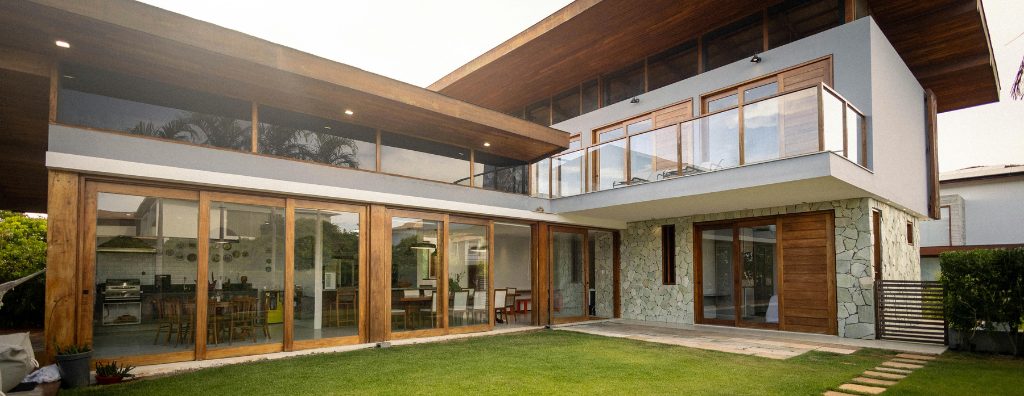
In the Pacific Northwest, architecture is as much about the environment as it is about the home itself. With long stretches of gray skies, evergreen landscapes, and a strong connection to the outdoors, homes in the region are designed to feel both grounded and expansive.
Northwest Contemporary architecture, sometimes called Pacific Northwest style or Northwest Modern, reflects that balance. It’s a design approach shaped by climate, landscape, and a lifestyle that values comfort, simplicity, and a seamless connection to nature. Influenced heavily by the region’s natural surroundings, this style prioritizes livability, light, and a design that feels in tune with its environment.
Designed for the Pacific Northwest way of living
The Pacific Northwest is known for its natural beauty, but much of the area is also known for its long, rainy seasons. Because of this, homes are designed to enhance the experience of being indoors without losing that connection to the outside, while also being well-suited to handle the region’s climate, including frequent rain and moisture.
Northwest Contemporary homes often feel open and airy, with open floor plans that let light flow freely throughout the space. Large windows are a defining feature, bringing in natural light even on overcast days and framing views of trees, water, and surrounding landscapes. Rather than separating indoors from outdoors, these homes are designed to blur the line between the two. This approach creates spaces that feel calm, comfortable, and connected to their surroundings year-round.
A focus on natural materials and simplicity
At the core of Northwest Contemporary design is a commitment to natural materials and understated finishes. Wood, stone, and glass are used not just for aesthetics, but to reflect the textures and tones of the surrounding environment.
You’ll often see an emphasis on regionally sourced materials alongside wood beams, stone fireplaces, and clean-lined cabinetry that highlight craftsmanship without feeling overly ornate. The overall look leans minimalist, but not cold. Instead, it feels warm, intentional, and grounded.
There is also a growing focus on sustainability within this style, with many homes incorporating energy-efficient design, durable materials, and thoughtful siting to work with the landscape rather than against it.
This simplicity allows the home itself to complement the landscape rather than compete with it, resulting in a timeless aesthetic that doesn’t rely on trends.
Influences that shape the style
Northwest Contemporary architecture is influenced by a mix of design movements, most notably modern architecture and the international design principles popularized by architects like Frank Lloyd Wright. His emphasis on harmony between structure and environment is clearly reflected in homes throughout the region.
There are also strong ties to Japanese design, particularly in the use of clean lines, natural materials, and a focus on balance and tranquility. In many homes, you’ll also find elements inspired by Indigenous art and culture, adding depth and regional identity to the overall design. Together, these influences create a style that feels both modern and deeply rooted in place.
A style that continues to evolve
Like the region itself, Northwest Contemporary architecture is not defined by strict rules. It continues to evolve with new materials, technologies, and interpretations of modern living.
Some homes lean more modern, with sharper lines and more minimalist finishes, while others incorporate elements of related styles, such as Pacific Lodge or Japanese Modern. No matter the variation, the foundation remains the same: a connection to nature, thoughtful use of materials, and spaces designed for how people truly live.
If you’re drawn to Northwest Contemporary design or are considering buying or selling a home, a Windermere agent can help you better understand the architectural styles that define your local market.

Numbers to Know 3/23/26: Why Mortgage Rates Are Rising Again

This is the latest in a series of videos with Windermere Principal Economist Jeff Tucker, where he delivers the key economic numbers to follow to keep you well-informed about what’s going on in the real estate market.
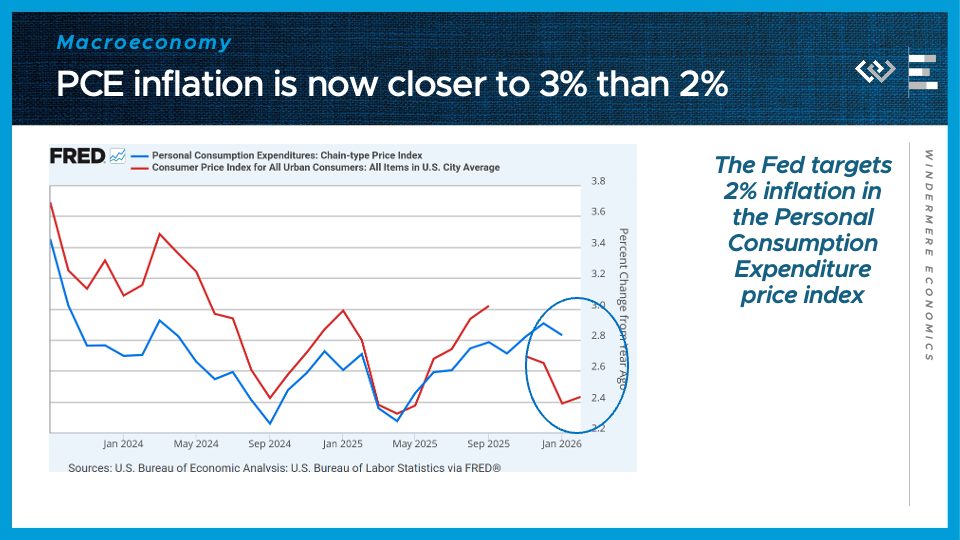
The first news this week is that the Federal Reserve did not cut interest rates at their meeting on March 18. Moreover, at the press conference following their meeting, Jerome Powell said they would not resume cutting interest rates this year until they saw some progress on inflation coming down further. For some insight into WHY that happened, our first number to know this week is 3%: that is where the Fed’s preferred inflation index has been heading in recent months. The Personal Consumption Expenditures price index normally runs a little cooler than the more well-known CPI inflation rate, and so the recent data showing the PCE inflation rate climbing toward 3% is giving the Fed even more of a reason to stop cutting rates than the benign CPI data this winter might have suggested.
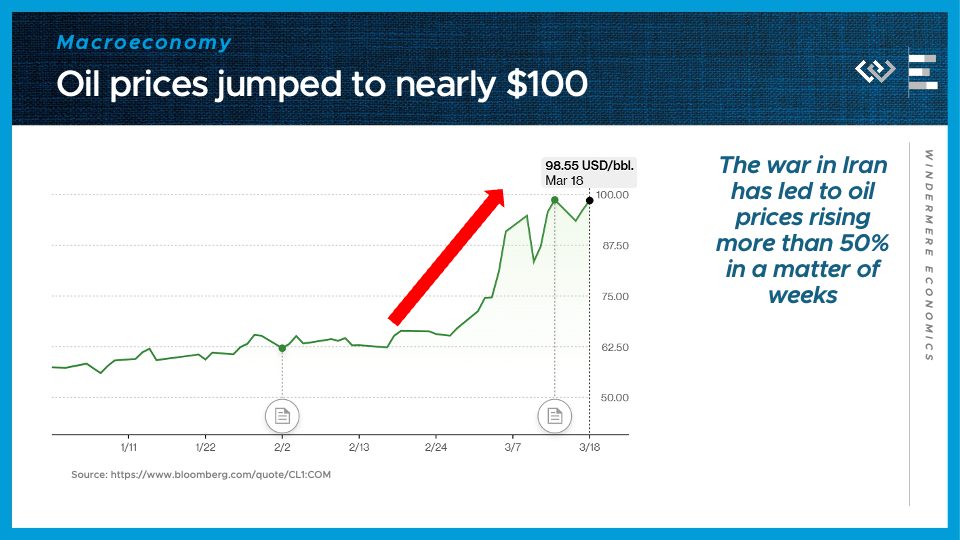
Our second number to know: about $100. That is the ballpark for what a barrel of oil is now costing on major world benchmarks, up more than 50% from prices under $60 just a few short months ago. The culprit, of course, is the war on Iran and the resulting cutoff of most oil normally shipped from the Persian Gulf. This is a volatile, unpredictable situation where the news may change at any time, but for now, the impact is clear: higher costs for almost everything in the economy, as the higher cost of energy ripples out through the economy. That is a major source of concern about inflation this year, which Jerome Powell cited ON TOP OF lingering tariff inflation, as a reason to wait and see before cutting rates any further.
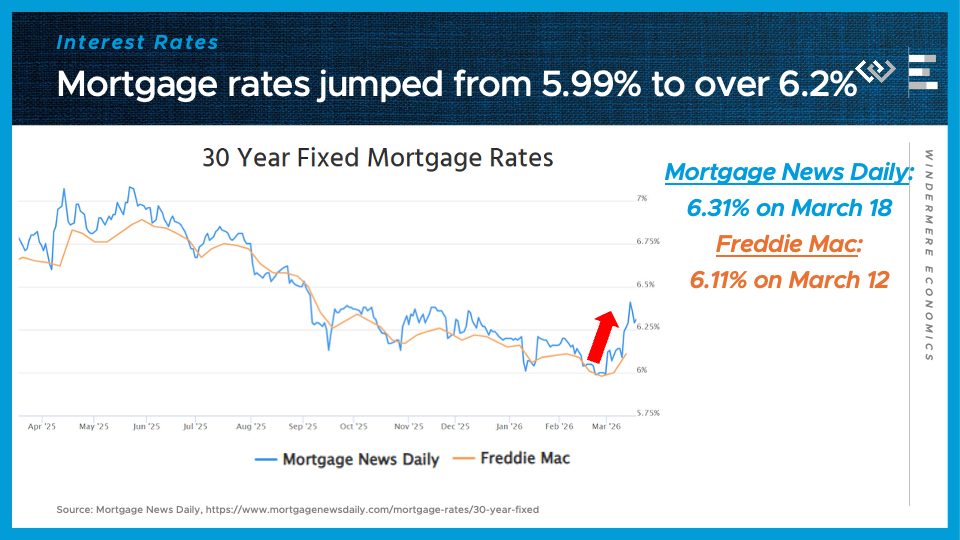
So our third number to know: mortgage rates back closer to 6 and a quarter percent, or higher. At the end of February we hit a major milestone: 30-year mortgage rates dipped below 6% for the first time in 41 months. But all the bad news I just shared about persistent inflation, especially driven by the new oil crisis, has sent mortgage rates soaring back up by a quarter point or more. That will throw a damper on home buying demand this spring, on top of the negative effects from higher gas prices and lower consumer confidence.
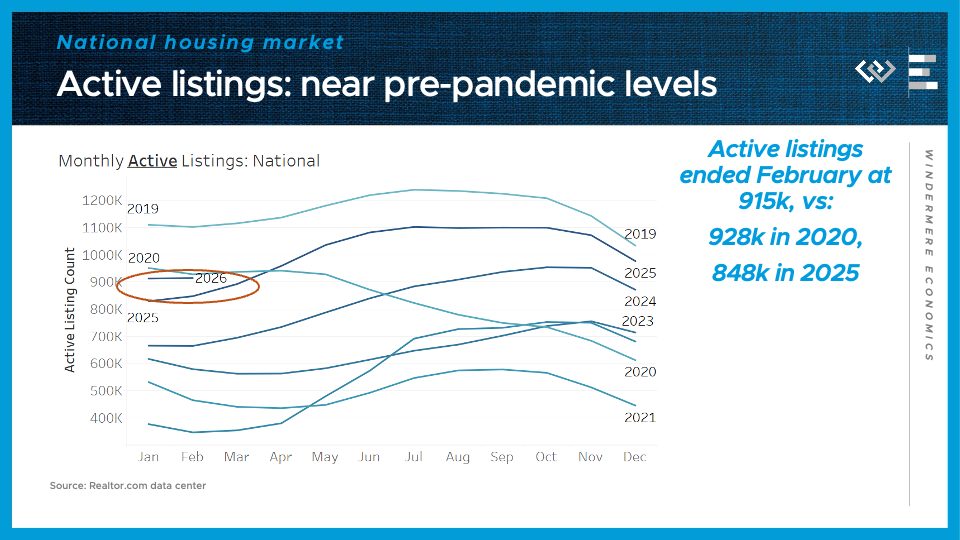
Speaking of the housing market, we saw 928 thousand active listings at the end of February, barely below where inventory stood at this time 6 years ago on the eve of the pandemic, and about 8% more than last year.
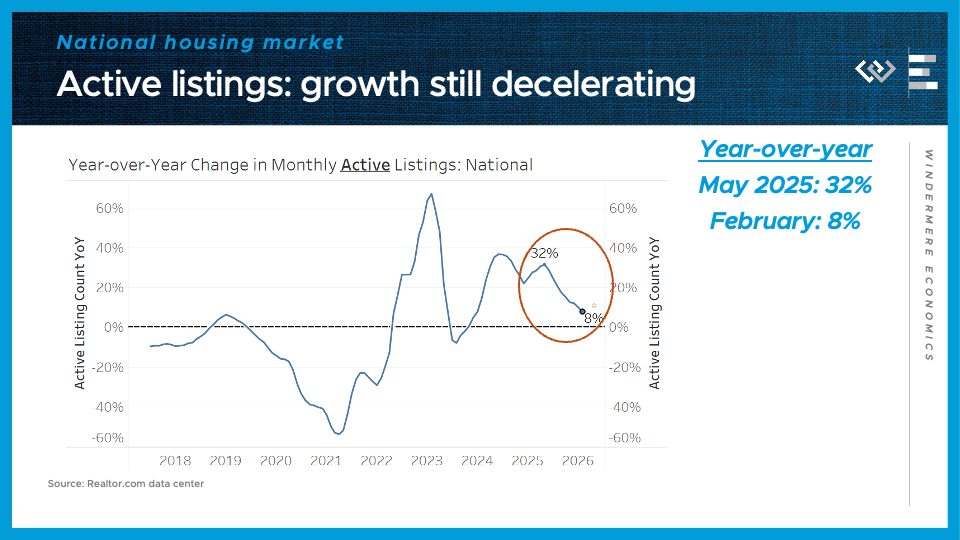
That marks yet another month where inventory is up year-over-year, but at a decelerating rate, ever since last May. Putting it all together, that means buyers will have more options in this spring buying season than in any recent year, but they should not expect a glut. The spring selling season always sees fierce competition for competitively-priced listings in desirable locations, so buyers should be prepared to move decisively if they see their dream homes, while sellers should do whatever they can to make their homes stand out amid the tide of other listings.
How Long do Appliances and Household Fixtures Last?

Nothing in life lasts forever – and the same can be said for your home. From the roof to the furnace, every component of your home has a life span, so it’s a good idea to know approximately how many years of service you can expect from them. This information can help when buying or selling your home, budgeting for improvements, and deciding between repairing or replacing when problems arise.
The Power of a 30-Second First Impression: Why Reels Are the New Curb Appeal

In real estate, we all know how important first impressions are. For decades, curb appeal has been the gold standard for catching a buyer’s attention—but today, those first impressions are happening online, often in under 30 seconds. As more buyers scroll listings on their phones or stumble across homes on social media, video has become one of the most powerful tools in a listing agent’s toolkit.
Enter: Reels.
Reels have completely redefined how we make an impact online. With a single scroll-stopping clip, you can showcase the flow of a home, highlight its best features, and spark an emotional connection long before a showing is ever scheduled. Where we used to say, “Make them fall in love in the driveway,” now we’re saying, “Make them fall in love on their For You Page.”
Why Reels Matter in Real Estate
Short-form video is dominating the digital space, and real estate is no exception. According to recent reports, Instagram Reels receive 22% more engagement and twice the visibility of any other content type. That means more views, more saves, more shares, and more potential buyers seeing your listing.
Even more compelling? Most users decide whether to keep watching in the first 3 seconds. In a market where timing matters and attention is limited, that makes every second count.
With Reels, you’re not just marketing a home—you’re creating an experience, expanding your reach, and showing up exactly where today’s buyers are: on mobile, on social, and online.
The Language of Social Media, Decoded
If you’re new to the social media space, all the jargon can feel overwhelming. Here’s a quick guide to the terms that matter most:
-
Impressions: How many times your content was shown, even if the same person views it multiple times
-
Reach: The total number of unique people who saw your content
-
Interactions: The real engagement, including likes, comments, shares, and saves
-
Engagement rate: A measure of how much people are interacting with your posts
-
Social reading: The process of learning from performance to see what’s working, what’s not, and how to pivot
Understanding these numbers helps you make informed choices about what to post and when—turning social into a strategic tool, not just a to-do list.
How a Reel Can Boost a Listing
Reels help your listing show up where buyers already are: scrolling, saving, and planning their next move. Photos can showcase a home’s style, but video brings it to life. A reel allows buyers to experience the home’s layout, lighting, and feel—something static images can’t always convey. Think of reels as a guided tour that lives right on their screen.
When your reel helps someone imagine themselves living there, you create something powerful: connection. And that leads to more views, more clicks, more showings, and ultimately, more offers.
Tips for Creating Scroll-Stopping Reels
You don’t need to be a content creator to make an impact. Here’s a checklist for effective real estate reels:
-
Keep it short—ideally under 30 seconds
-
Use trending or high-quality audio (voiceovers or music)
-
Open with movement or your most impressive feature
-
Use on-screen text to highlight what viewers are seeing
-
End with a CTA (“Message me for a private tour”)
Pro tip: Reels with trending audio, natural lighting, and a clear opening shot perform best. Start strong and guide the viewer through the story of the home.
Reels = Results
We’ve already seen how reels are helping agents across the industry expand their reach. One well-timed reel can:
-
Double the impressions of a standard photo post
-
Attract new buyers who weren’t actively looking but got inspired
-
Drive traffic from Instagram and Facebook directly to a listing
The best part? Reels often reach people who don’t even follow your account—giving your listing even more visibility.
Social Is the New Curb Appeal
Today’s buyers are online. They’re discovering homes through hashtags, algorithms, and short-form video. That’s why investing in reels isn’t just smart—it’s strategic. Whether you’re showcasing a cozy condo, a luxury estate, or a hidden gem with a killer view, reels help you tell the story of the home in a way that resonates.
Ready to make your home stand out? Connect with a Windermere agent who understands how to market your home in today’s digital world.
Small Town Revival: Why Everyone’s Moving Back to Main Street
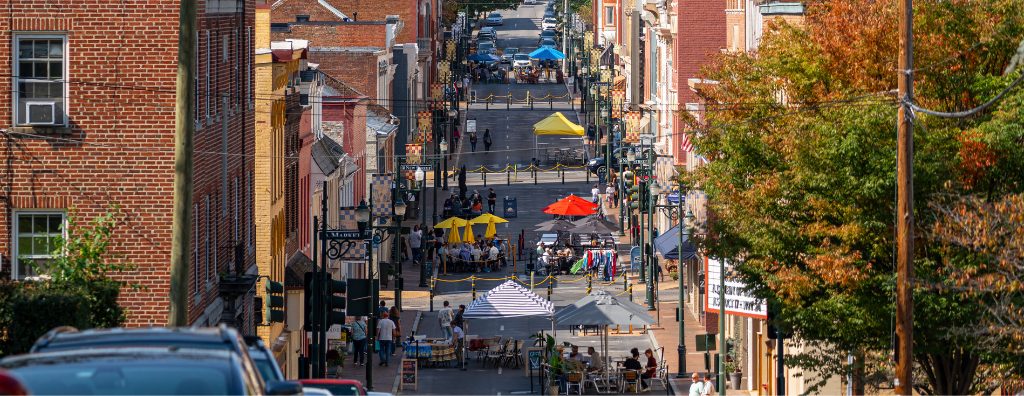
After decades of city living being the goal, a fresh trend is emerging. More and more people—especially young adults—are reimagining what “home” looks like, and that picture is starting to look a lot like small-town life. From coast to coast, smaller communities are seeing new life as individuals and families seek more space, deeper connections, and a quieter pace. This blog explores why so many are making the move and what it could mean for your next chapter.
A Big Shift Toward Smaller Places
It’s not just nostalgia or affordability driving people back to Main Street. Small towns offer a sense of balance that can be hard to find in big cities. Less time commuting means more time doing what you love. Smaller crowds make room for bigger conversations. And without the constant rush of city life, people are rediscovering how good it feels to slow down and stay awhile.
What’s Driving the Move?
Affordability and the Dream of Homeownership
Big city rent and home prices continue to climb, pricing out many first-time buyers. In smaller towns, buyers are finding more space, greater value, and a better chance of affording their first home. Whether it’s trading a one-bedroom apartment for a three-bedroom house or simply paying less for everyday essentials, the savings are adding up.
Remote work and Flexibility
With more jobs going remote (and staying that way), people are no longer tied to a specific metro area. This new freedom has allowed many to choose where they want to live based on lifestyle rather than commute.
Lifestyle and Access to Nature
Small towns often come with quieter streets, shorter commutes, and greater access to outdoor recreation. From scenic trails to lakefronts and beaches, natural amenities are high on the priority list for today’s buyers.
Community and Connection
In a time when many people feel disconnected, small towns offer something invaluable: a strong sense of community. You’re more likely to know your neighbors, shop at local businesses, and feel rooted in something bigger than yourself. For some, these towns also offer more chances to get involved, including local politics or town-wide initiatives that are often more accessible and welcoming to newcomers.
Entrepreneurship and New Opportunity
According to recent IRS data, small towns have seen a faster rise in new business formation than large cities post-2020. With less competition, lower startup costs, and supportive communities, many entrepreneurs are finding that perfect launchpad in small-town markets.
Education and Family Life
Families are also being drawn to the more personal, community-based education options often found in small towns. Smaller class sizes and greater access to teachers can make a big difference for growing kids. With lower crime rates and more outdoor space, many parents feel they can offer their children a safer and more well-rounded upbringing.
The Other Side: What to Consider
While small-town life has its perks, it’s not without trade-offs. Here are a few things to consider before packing your bags:
- Limited medical services: Access to specialists and immediate care may be limited.
- Fewer job options: While remote work helps, certain industries may have fewer local opportunities.
- Diversity and culture: Small towns may have less cultural diversity and fewer entertainment options.
- Transportation: Public transportation is often sparse or nonexistent. Owning a car or other means of transportation may be necessary.
How Places Like Seabrook, WA Are Leading the Way
One standout example of this new wave of small-town living is Seabrook, Washington. Perched on the Washington coast, Seabrook was designed to blend timeless charm with walkability, coastal views, and a strong sense of place.
Founded in 2004, Seabrook has grown to include 600 homes, over 20 parks, 24 shops and restaurants, a grocery store, pools, trails, and more. It was designed to offer an urban-meets-coastal lifestyle, and today, it’s a thriving year-round community with schools, medical clinics, and a regenerative farm that supports local restaurants and residents.
Whether it’s a full-time move or a weekend escape, places like Seabrook are proving that small towns can offer everything people are looking for: modern convenience, community, and a deep sense of belonging.
Is Small-Town Living Right for You?
If you’ve been dreaming of a slower pace, a bigger yard, or just more breathing room, you’re not alone. Ask yourself:
- Do you work remotely or have a flexible schedule?
- Are you craving more nature and outdoor recreation?
- Would you trade a bustling nightlife for stronger community ties?
- Is homeownership feeling out of reach in your current city?
If you answered yes to most of these, a move to a small town might be worth exploring.
Whether you’re relocating, downsizing, or just rethinking what you want from your next move, small towns have never looked more appealing. Connect with a Windermere agent to learn more about growing communities, small-town living, and finding places that feel like home.
Top Home Design Trends to Know in 2026
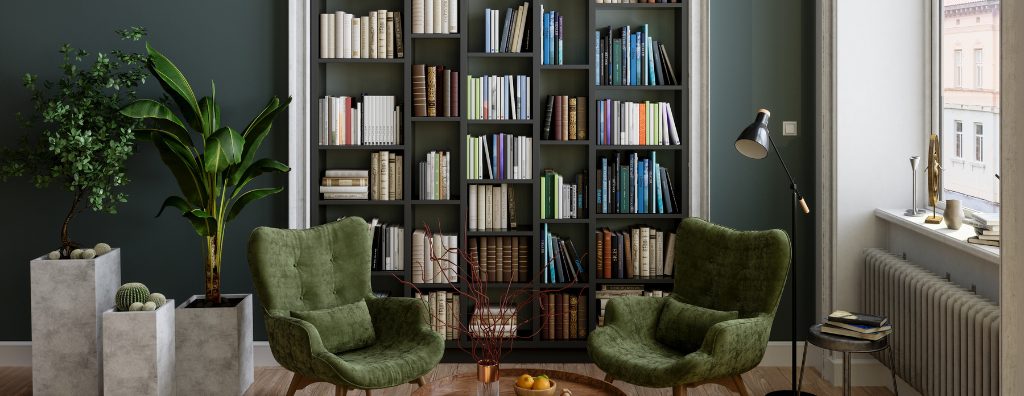
Design trends have always reflected more than style. They reflect how people want to live. And as we move into 2026, home design continues to shift away from one-size-fits-all aesthetics and toward spaces that feel intentional, expressive, and more personal.
After several years shaped by minimalism, fast trends, and highly curated interiors, homeowners are now prioritizing warmth, character, and longevity, creating environments that support everyday life. That shift is reflected across design forecasts, color reports, and industry insights, where a few defining themes continue to show up. These are the top interior design trends shaping homes in 2026 and how they translate into real, livable spaces.
Lived-In, Layered Interiors
In recent years, many interiors have leaned towards polished, photo-ready spaces that always look perfect. In 2026, that approach continues to soften, and perfection takes a back seat to personality.
Layered, collected interiors are leading the way. Spaces that look as though they have come together over time feel warmer and more inviting. Mixing vintage with new pieces, displaying meaningful objects, and creating soft structure through books, art, textiles, and ceramics adds depth and story. A worn wood table, a reupholstered vintage chair, or a gallery wall that grows naturally gives a home character that can’t be replaced overnight.
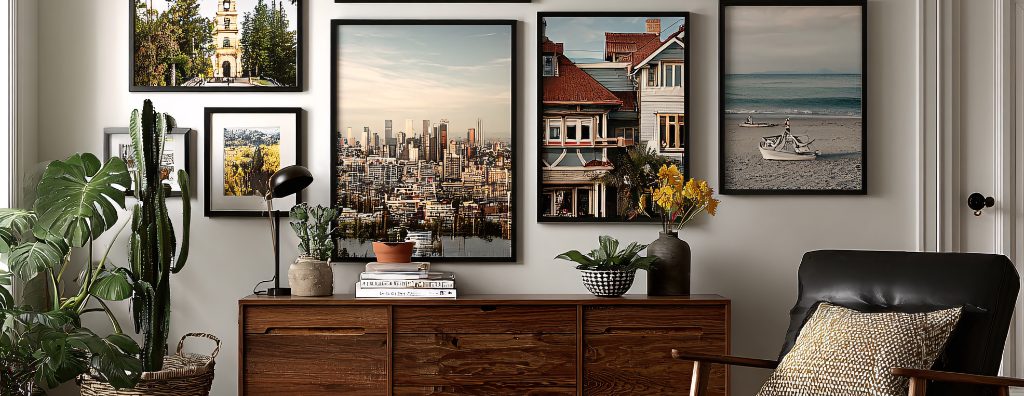
Rich, Grounding Color Palettes
Color continues to shape how a home feels, and 2026 paint color trends lean into depth with a calming edge. Think nature-inspire tones like smoky blues, warm browns, muted reds, and softened neutrals that ground a room without feeling heavy.
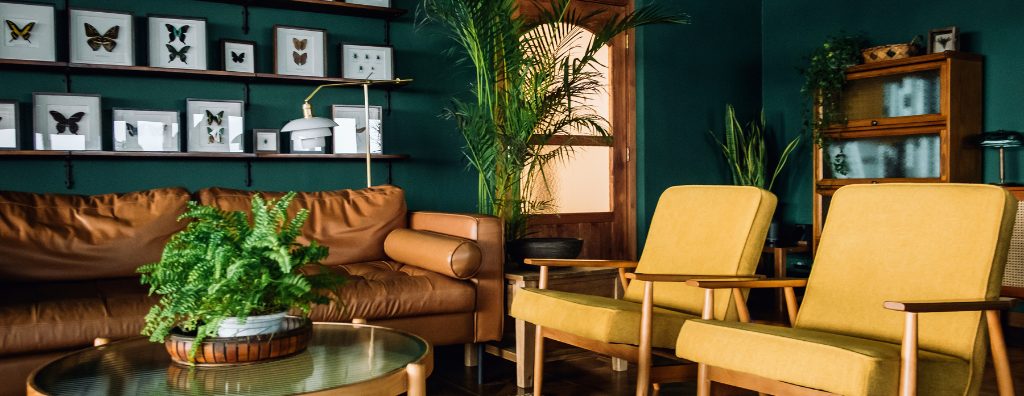
Behr’s 2026 Color of the Year, Hidden Gem, fits beautifully into this direction. It’s a smoky green-blue that feels rich yet refined, perfect for homeowners who want a space that’s serene yet still has presence. Similar color stories are appearing across other forecasts too, from patina-inspired blues, greens, and browns to warm khakis and layered whites.
Color Drenching and Moody Rooms
If you’re seeing more immersive, saturated rooms online, that’s no accident. Color drenching, which uses a single hue across walls, trims, and sometimes ceilings, continues to rise as one of the standout interior design trends in 2026. When done thoughtfully, it creates a cocoon-like effect that feels polished, intimate, and cohesive.
This is also part of a broader shift toward moodier spaces. Deeper greens, tobacco-inspired browns, warm blacks, and earth reds are showing up in dining rooms, powder baths, offices, and libraries. The key is balance—pairing saturated color with warm wood, soft lighting, and texture to keep the room inviting.
Warm Woods and Character Grain
Wood is making a confident return in 2026, but not in a shiny, match-everything way. Interiors now favor deeper stains, visible grain, and pieces with real character. Reclaimed materials, vintage finds, and finishes that show variation all add warmth and depth.
This shows up in kitchens, furniture, and architectural details like beams, built-ins, and trim. If you’re bringing wood into your home, Minwax’s 2026 Stain Color of the Year, Special Walnut, fits the mood: a warm, versatile brown that enhances natural grain and works across styles from modern to traditional.
Paired with stone, linen, and even metal, wood brings warmth and timelessness—two qualities today’s buyers tend to notice immediately when they walk into a home.
Texture as the New Luxury
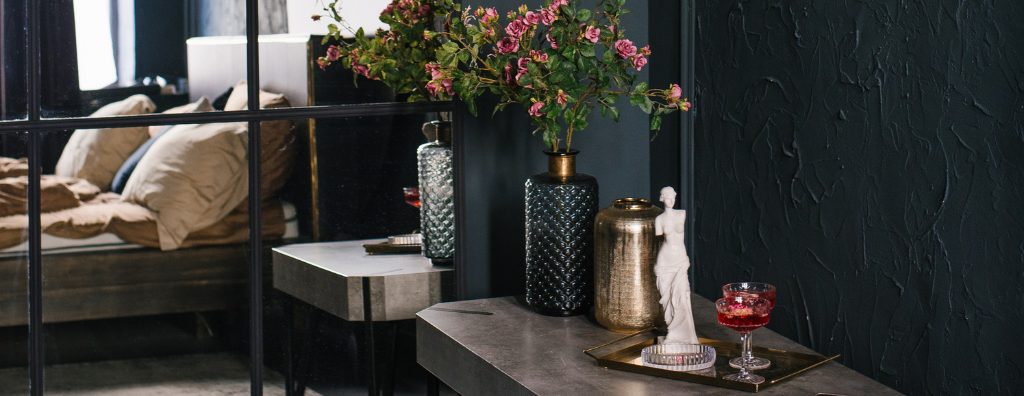
Another defining shift in home décor trends for 2026 is the return of texture, especially tactile, handcrafted, and visually soft elements. Textile wall hangings, tapestries, layered rugs, and subtle decorative trims like fringe and tassels are making an easy way to add depth without clutter. You don’t need to go maximal to make it work. A fabric panel hung like art, a woven wall piece, or even vintage textiles repurposed as décor can make a space feel warmer and more grounded. In a world that often feels overly digital, texture brings a human, lived-in quality that’s hard to fake.
Function Forward Design
Function continues to shape design decisions in 2026. Modular furniture, flexible layouts, and thoughtful storage solutions are becoming more prevalent as homes are expected to support multiple roles. Benches with hidden storage, ottomans that double as work surfaces, and adaptable seating arrangements allow spaces to shift easily between hosting, working, and relaxing.
Sustainability as the Standard
Sustainability is no longer a niche consideration. In 2026, it’s an expectation. It shows up in material choices, sourcing, and the lifespan of the pieces we bring into our homes. Homeowners are paying close attention to upgrades that support energy efficiency and long-term livability.
At the same time, thrifting and buying secondhand continue to grow across age groups, driven by both environmental awareness and the search for higher-quality materials. Vintage and antique furniture often offers better craftsmanship and longevity than mass-produced alternatives, while adding instant character to a space.
Whether you’re updating a room or thinking about your next move, these trends offer a thoughtful lens for creating a home that feels both current and enduring.
Connect with a Windermere agent today to talk about your next move and how to design a home that fits the way you live.
What Is Foursquare Architecture? A Guide to Prairie Box Homes
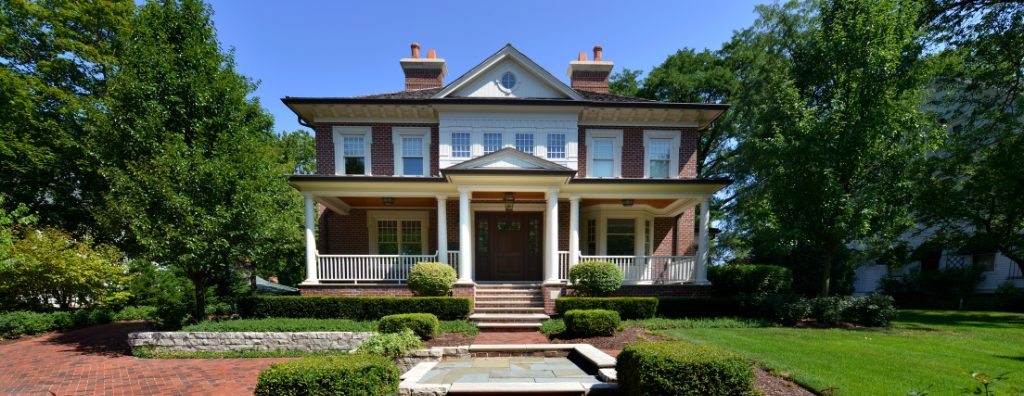
If you’ve ever walked through an older neighborhood and felt drawn to a home that looks balanced, practical, and quietly confident, you were likely looking at an American Foursquare. Sometimes called a Prairie Box or Prairie Cube, this architectural style is one of the most straightforward designs in the American architectural tradition, and one of the most enduring.
Popular from the late 1890s through the 1920s, the Foursquare emerged during a time when ornate Victorian homes dominated the landscape. In contrast, these homes favored simplicity, efficiency, and sold craftsmanship. Influenced by the Prairie and Arts and Crafts movements, the Foursquare prioritized thoughtful design over decoration, making it both practical and approachable.
A Shape That Works
True to its name, the Foursquare is defined by its box-style construction. The home’s nearly square footprint creates a symmetrical form, with rooms occupying each quadrant. Most Foursquares are two to two-and-a-half stories tall, with the half story tucked into a spacious attic. This efficient layout was intentionally designed to make the most of smaller lot sizes while still providing generous living space.
Rooflines, Porches, and Presence
A low-pitched hipped roof is one of the most recognizable features of a Foursquare home. The roof slopes evenly on all four sides, often forming a pyramid shape, and is frequently paired with a central dormer window that brings light and air into the attic level.
Many Foursquares also feature a covered front porch—sometimes spanning the full width of the home—supported by simple columns. These porches extend the living space outdoors and give a home a welcoming, grounded presence on the street.
Materials and Details
Building materials for Foursquare homes vary by region, with brick and wood being the most common. While the exterior design remains restrained, later models often incorporate Arts and Crafts details, especially inside the home. Built-in shelves, benches, bookcases, and window seats add warmth and function without excess ornamentation.
Inside the Foursquare
The interior layout reflects the same efficiency seen on the exterior. Traditionally, the main floor contains shared living spaces such as the living room, dining room, kitchen, and entryway, while bedrooms are located on the second floor. Hallways are minimal, and because each room typically sits at a corner of the home, natural light enters from multiple directions, a detail that homeowners still appreciate today.
Why Foursquare Homes Still Matter
More than a century later, American Foursquare homes remain highly desirable for their smart layouts, timeless proportions, and understated character. They’re homes designed to work well, on their lots, in their neighborhoods, and in everyday life. That kind of thoughtful simplicity never goes out of style.
The Top Questions Every Buyer Should Ask Their Real Estate Agent

Buying a home is a major milestone, and it comes with a lot of decisions, details, and moving parts. While online searches and market headlines can offer helpful context, there’s no substitute for having a knowledgeable real estate professional by your side.
The right agent does more than show homes. They help you understand the market, weigh opportunities, and make informed choices at every stage of the process. Asking thoughtful questions early on can set the tone for a smoother, more confident homebuying experience.
Here are some of the most important questions every buyer should ask their real estate agent, and why they matter.
Ask Them About Themselves
Choosing a real estate agent is about more than credentials and experience; it’s also about fit. Before deciding who to work with, take time to get to know your agent as a person.
Ask them about their background, how they work, and what drew them to real estate. Having an agent with a similar communication style, lifestyle, or understanding of your priorities makes the process feel more comfortable and collaborative. At the end of the day, this is someone you’ll be working closely with during one of the most important life decisions, so feeling aligned and understood matters.
What Services Do You Provide Me as My Agent?
Real estate agents offer a wide range of services, and not all approaches look the same. That’s why it’s essential to understand exactly how an agent will support you throughout the buying process.
Ask what services they provide from start to finish–such as market research, property tours, negotiation, inspection, and coordination through closing. You may also want to ask what tools or resources they use, and how involved they are at each stage.
In addition, it’s helpful to ask whether your agent can recommend trusted service providers—such as lenders, inspectors, contractors, or other professionals who can assist with financing, repairs, and other tasks that come up before closing. Having access to a reliable network can help streamline the process and reduce stress.
What’s Happening in the Market Right Now?
Real estate markets are constantly evolving, and what’s happening nationally doesn’t always reflect what’s happening locally. Ask your agent:
- How is the market performing in the areas I’m considering?
- Are homes selling quickly, or are buyers taking more time to decide?
- What trends should I be aware of at my price point?
- What strategies are working well for buyers right now?
A strong agent will provide local insight and context, helping you understand not just the numbers, but what they mean for you as a buyer.
How Should I Prepare Financially Before I Start Making Offers?
Being financially prepared goes well beyond getting pre-approved. While your lender will guide you through financing specifics, your real estate agent plays a key role in helping you understand how those details shape your overall buying strategy.
Your agent should help you think through what sellers are typically looking for in an offer, how loan terms, contingencies, and timelines can influence negotiations, and how to plan for additional costs before, during, and after the purchase.
What Should I Prioritize and Where Can I Be Flexible?
Most buyers begin their search with a list of wants and needs, but flexibility can often open the door to better opportunities.
A knowledgeable agent can help you identify which features are essential and which are optional, understand how factors like location, layout, and condition affect a home’s value, and balance your lifestyle preferences with long-term considerations. An experienced agent brings perspective, helping you see the bigger picture while keeping your goals front and center throughout the process.
What’s Your Approach to Pricing and Making an Offer?
Every offer should be strategic and tailored to the situation. Your agent should be able to clearly explain how they evaluate pricing and market value, what factors influence offer terms beyond price, and how inspections, contingencies, and timing play a role in negotiations.
Having this conversation early helps ensure you’re aligned and confident when it’s time to move forward, with a clear understanding of how your agent will advocate for you in a competitive and nuanced market.
How Will We Communicate Throughout the Process?
Clear communication is essential during a home purchase. Be sure to ask:
- How often can I expect updates?
- What’s the best way to reach you with questions?
- How do you handle time-sensitive situations?
You should also ask what will be included in your written buyer agreement so you can have a clear understanding of roles and responsibilities. The right agent will set expectations early and make sure you feel informed and supported at every stage, from start to finish.
What Should I Know About a Home Before Making a Decision?
Once you’ve found a home you’re excited about, your agent’s guidance becomes even more important. They should help you understand:
- How the home compares to similar properties.
- What to expect during inspections.
- Any potential considerations that could impact your decision.
This step isn’t about creating doubt; it’s about ensuring clarity, confidence, and peace of mind.
If you’re considering buying a home, start with a conversation. Asking the right questions and working with an experienced real estate agent can help you navigate the homebuying process with confidence.
Connect with an agent today.