Hi. I’m Jeff Tucker, principal economist at Windermere Real Estate, and this is a Local Look at the April 2026 data from the Northwest MLS.
We are now in the heart of the spring selling season, and it is shaping up to be a little quieter than last year’s spring.
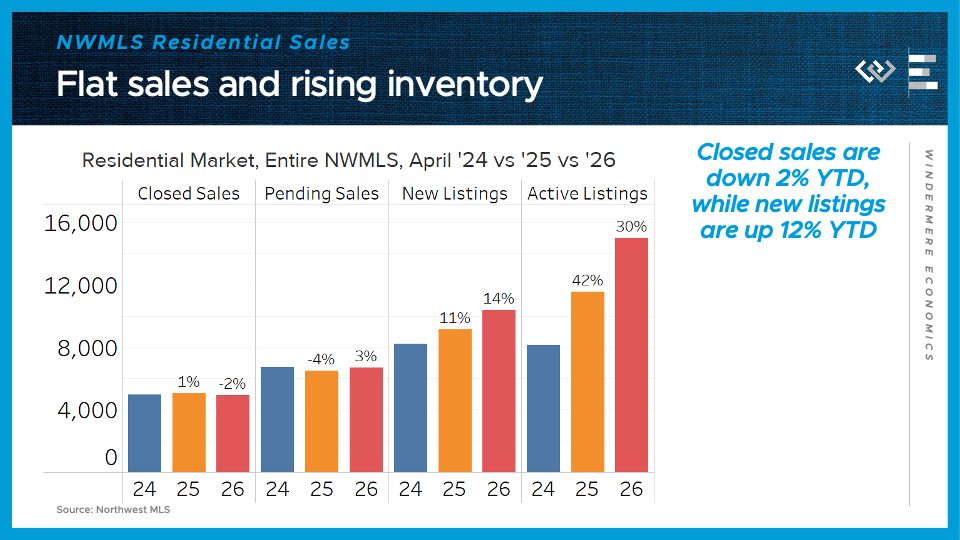
Across the Northwest MLS, there were 2% fewer closed sales in April 2026 than in April of last year. Pending home sales, by contrast, climbed by 3% from last year.
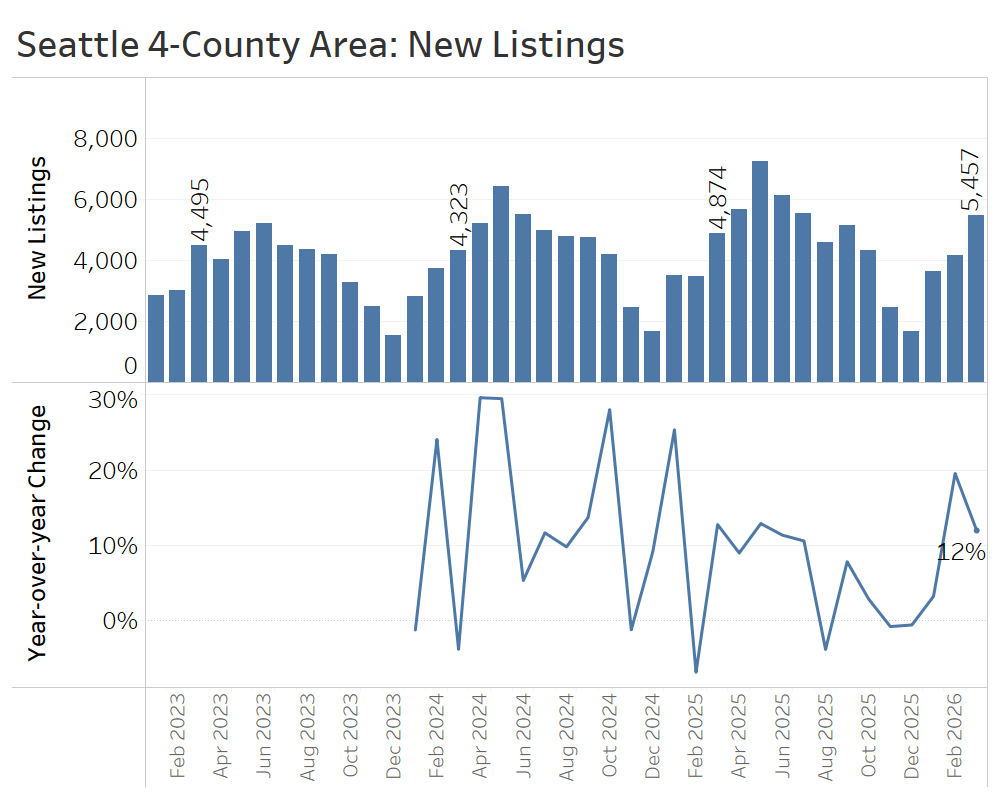
On the supply side, the flow of new listings was up an impressive 14% from last April’s pace, or 12% cumulatively, year-to-date. Finally, the month ended with just over 15,000 active listings around the MLS, or 30% more than last April. That continues the local trend of rising inventory, reflecting more sellers than buyers coming to the market this year.
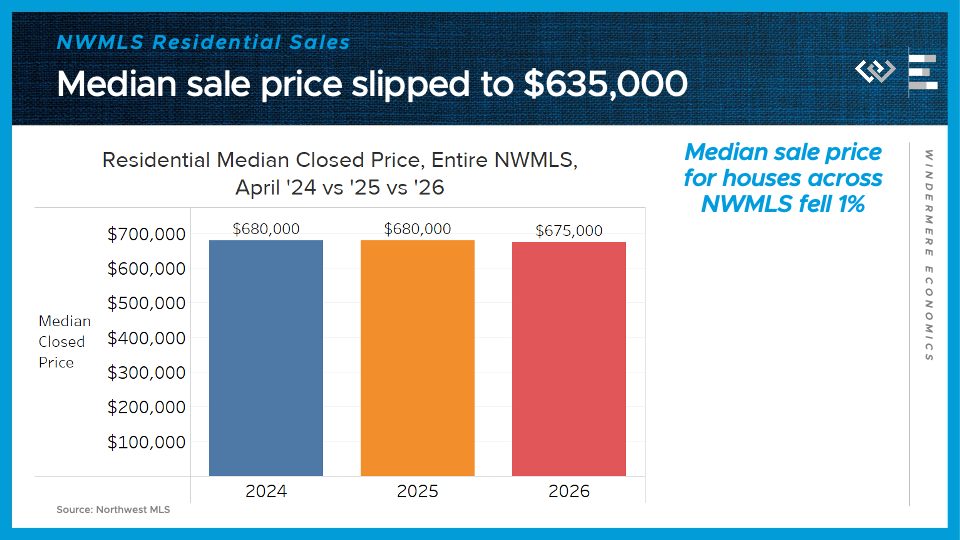
The median sale price ticked down from last April, by just $5,000, or less than 1%.
Now for a closer look at the four counties encompassing the greater Seattle area.
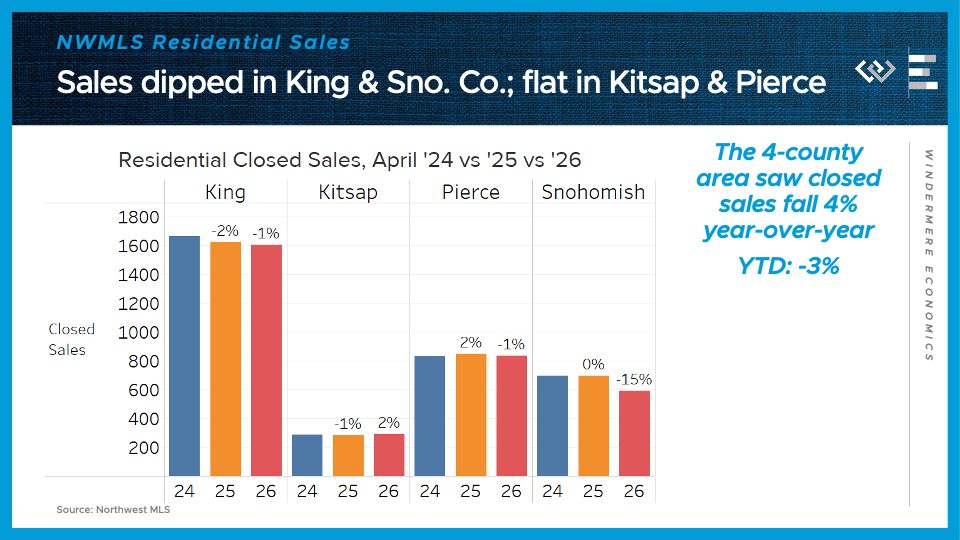
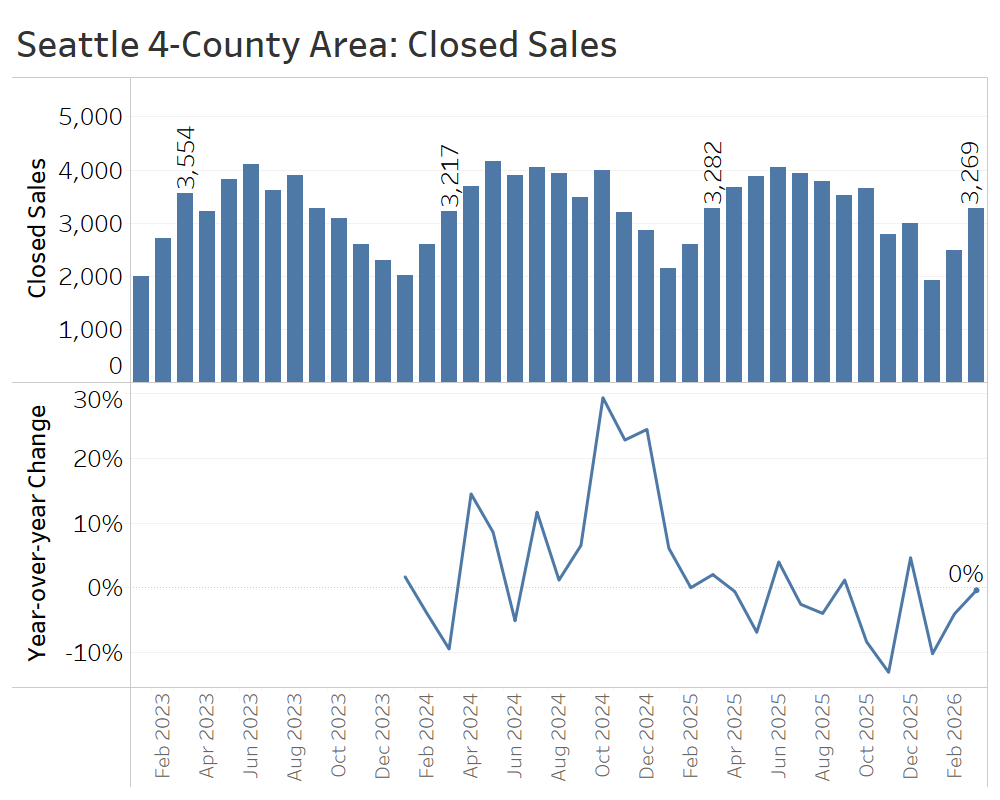
Closed sales declined by 4%, or 130 homes, from last April around the region. Snohomish County alone saw closed sales drop by 104 homes, or 15%, while King, Pierce and Kitsap Counties saw sales within a couple percentage points of last April’s totals.
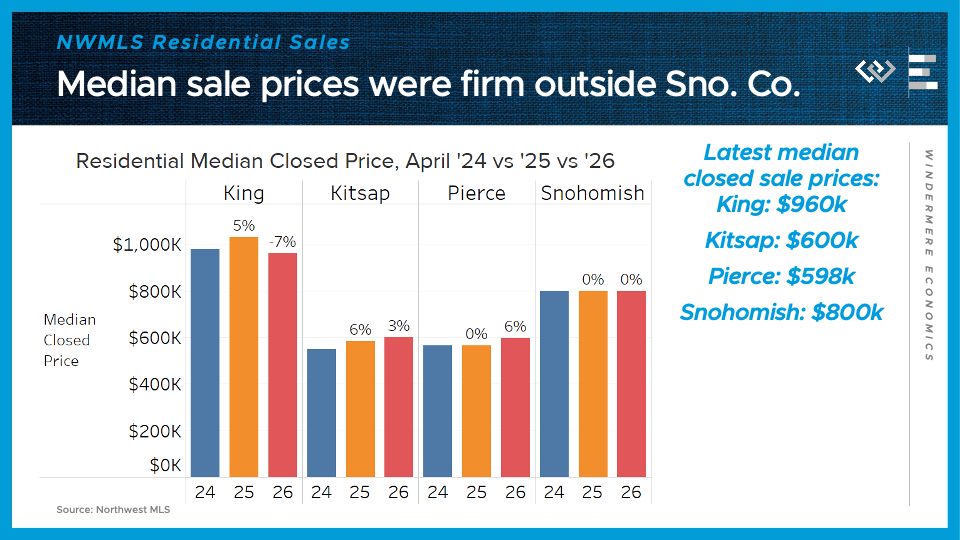
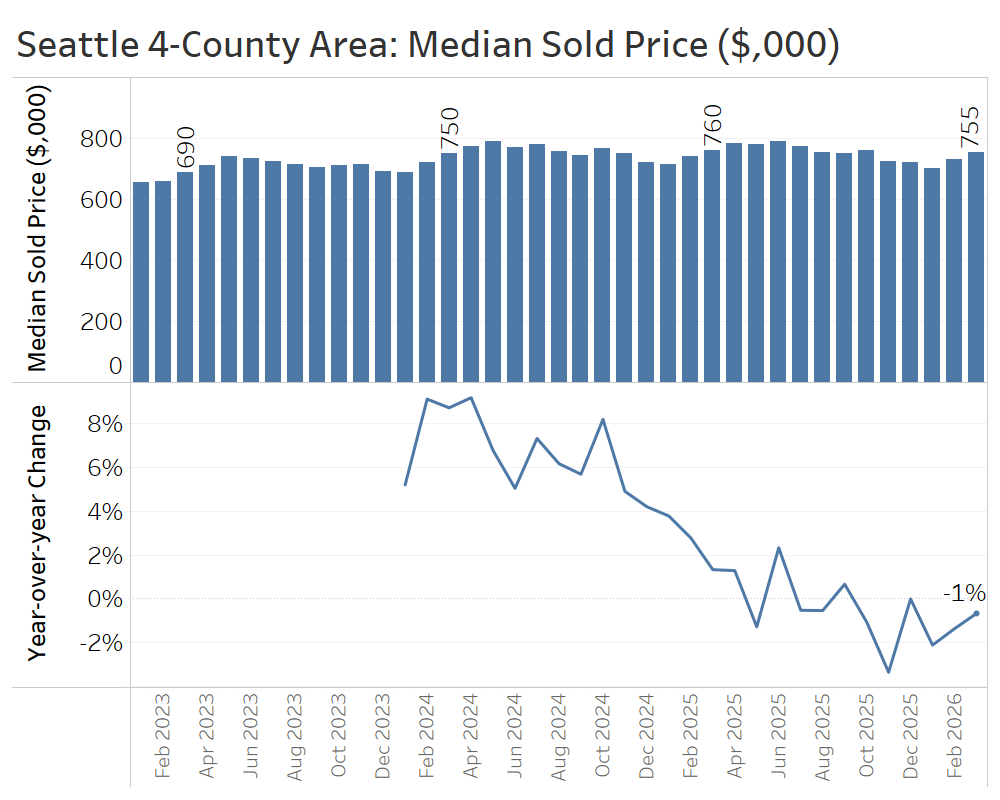
Median sale prices, though, dipped the most here in King County, where they fell 7% short of last April’s $1,030,000 mark. Prices were flat in Snohomish, near $800,000; and up modestly to about $600,000 in both Pierce and Kitsap Counties.
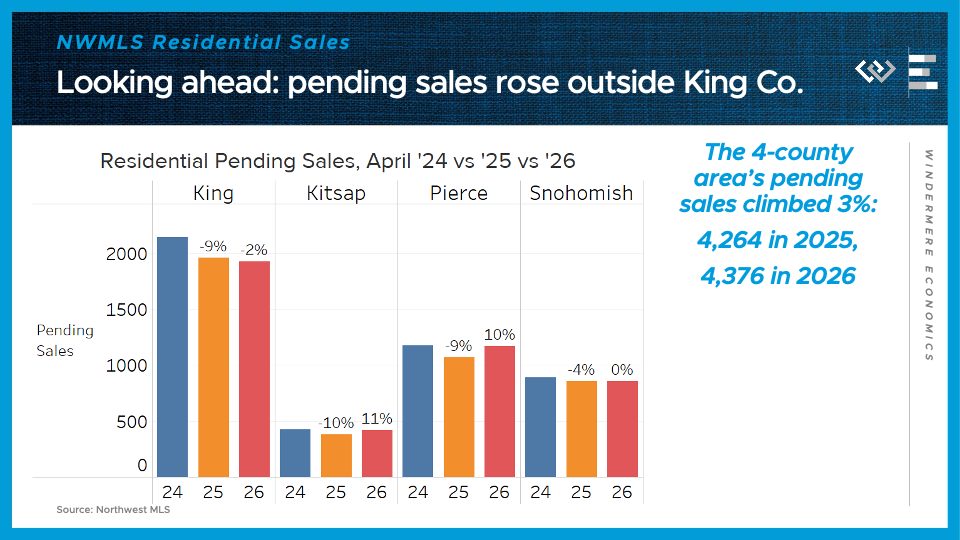
Looking ahead, pending sales actually climbed 3% across the region in April, led by strong growth in Pierce and Kitsap Counties, while only King County saw a modest dip in pending home sales.
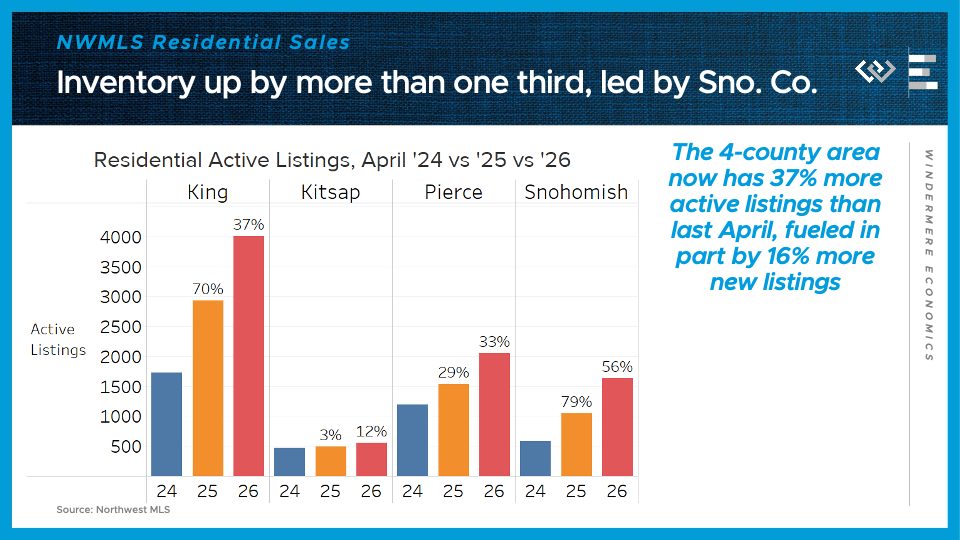
On the supply side, the 4-county greater Seattle area ended the month with 37% more active listings than last April, led by 56% growth in Snohomish County and 37% growth in King County.
Spring remains the best time of year to sell a house, but this spring also looks like an unusually good time to buy a house, thanks to unusually many listings, which are taking a little longer to sell on average, and in some areas selling for a little less than similar houses last year. Well-presented, appropriately-priced homes are still seeing a lot of competition, but plenty of other homes are lingering a little longer on the market, selling at or below list price. It seems that the negative effects of the war in Iran are discouraging some buyers, who may be taking a “wait-and-see” approach, which leaves the market a little more balanced for the many buyers who are still forging ahead this spring. If economic and geopolitical news improves, there’s still plenty of time to see a busy second half of the spring selling season.
Many of us spend a significant amount of time at home, and as spring arrives with longer days and fresh air, it’s often the moment when small things start to stand out. A little dust here, some clutter there—it all adds up. Spring cleaning is an opportunity to reset your space in a way that supports both your home and your overall well-being.
Whether you’re preparing to list your home, settling into a new one, or simply refreshing your space, a thoughtful approach to cleaning can make a noticeable difference. Here are some tips to guide you through your spring cleaning this year.
First clean, then disinfect
General cleaning removes dirt and buildup, while disinfecting targets bacteria and germs. Both play an important role in maintaining a healthy home, especially in high-use areas.
Focus on high-touch surfaces like doorknobs, countertops, light switches, and faucets. Devices like phones, laptops, and tablets should also be included, as they’re among the most frequently handled items in your home.
When possible, opt for cleaners with plant or mineral-based ingredients. Many homeowners today are choosing low-toxicity options that are effective without introducing harsh chemicals into their living space.
Work top to bottom
Working from ceiling to floor helps prevent re-cleaning the same areas and keeps dust moving in one direction.
Ceiling and upper surfaces
Spring is peak allergy season, so dusting is especially important. Pay attention to ceiling fans, vents, light fixtures, and corners where cobwebs collect. Curtains, blinds, and even the tops of cabinets often go overlooked but can hold a surprising amount of dust.
Walls and windows
A quick wipe-down of walls—especially in kitchens and high-traffic areas—can instantly freshen a space. Clean windows inside and out to maximize natural light. It’s one of the simplest ways to make your home feel brighter and more open.
Floors
Different flooring materials require different care. Vacuum or sweep first, then follow with the appropriate method, whether that’s mopping sealed wood floors or dry mopping laminate and vinyl. Taking the extra step to use the right technique will help preserve your flooring over time.
Don’t forget your appliances
Appliances are some of the hardest-working features in your home, but they’re often overlooked during routine cleaning.
Refrigerator and freezer
Toss expired items, wipe down shelves, and vacuum coils if accessible
Dishwasher
Run an empty cycle with a cleaning solution to remove buildup and odors
Oven and microwave
Deep clean interiors to eliminate grease and food residue
Washer and dryer
Clean the washing machine drum and thoroughly clear the dryer vent and lint trap.
Keeping appliances clean not only improves performance but can also extend their lifespan.
Declutter with intention
Decluttering can feel overwhelming but breaking it into smaller steps makes it more manageable. Approach your home room by room and set realistic goals for each space. As you go, sort items into clear categories like keep, donate, and store, which helps streamline decision-making and keeps things moving. Group donation items together so they can be dropped off in one trip, rather than lingering in your space. For anything you plan to store, consider accessibility: items you use more frequently, like tools or seasonal essentials, should be easy to reach.
If you have pets, spring cleaning comes with a few extra considerations, but the effort goes a long way in keeping both your home and your pet happy and healthy.
Start by washing pet bedding, blankets, and soft toys to remove built-up hair and odors. Take time to vacuum furniture and hard-to-reach areas where pet hair tends to collect, and wipe down baseboards, doors, and walls at pet height, where marks can easily go unnoticed. It’s also a good opportunity to deep clean litter boxes, crates, and feeding areas to keep everything as fresh and sanitary as possible.
Regular cleaning like this helps reduce allergens, odors, and everyday wear, keeping your home feeling clean and comfortable for both you and your guests.
Go for multipurpose solutions
Minimalism and multifunctional design continue to shape how people live in their homes, and even small adjustments can make your space feel more efficient and easier to maintain. Look for ways to incorporate furniture and layouts that serve more than one purpose, whether it’s a storage bed or ottoman that helps reduce clutter, a flexible dining area that can double as a workspace, or built-in shelving that maximizes both form and function.
A well-organized home is easier to clean, easier to live in, and often more appealing to future buyers.
Make it a habit, not a one-time task
Spring cleaning doesn’t have to happen all at once. Spacing tasks over a few days or even a few weeks can make the process more manageable and sustainable. And once you’ve done the deep clean, maintaining it becomes much easier.
Whether you’re refreshing for yourself or preparing for your next move, small improvements make a lasting impact. If you’re thinking about buying or selling this season, connect with a Windermere agent to make the most of your home.
In the Pacific Northwest, architecture is as much about the environment as it is about the home itself. With long stretches of gray skies, evergreen landscapes, and a strong connection to the outdoors, homes in the region are designed to feel both grounded and expansive.
Northwest Contemporary architecture, sometimes called Pacific Northwest style or Northwest Modern, reflects that balance. It’s a design approach shaped by climate, landscape, and a lifestyle that values comfort, simplicity, and a seamless connection to nature. Influenced heavily by the region’s natural surroundings, this style prioritizes livability, light, and a design that feels in tune with its environment.
Designed for the Pacific Northwest way of living
The Pacific Northwest is known for its natural beauty, but much of the area is also known for its long, rainy seasons. Because of this, homes are designed to enhance the experience of being indoors without losing that connection to the outside, while also being well-suited to handle the region’s climate, including frequent rain and moisture.
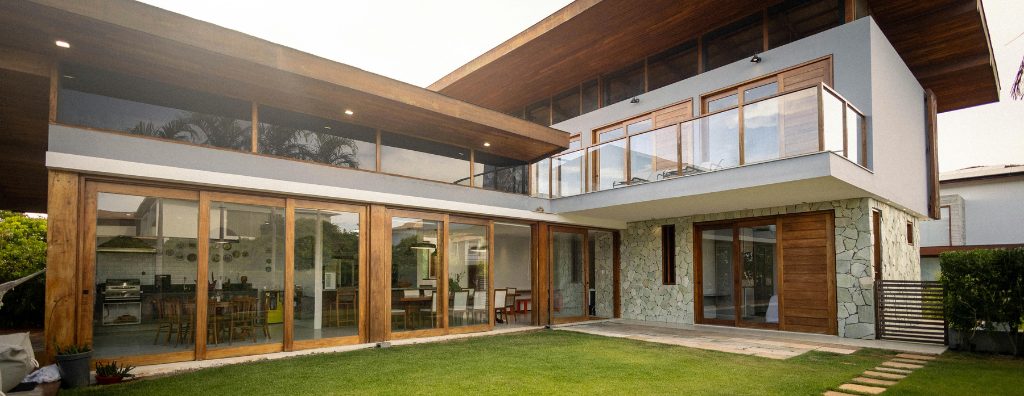
Northwest Contemporary homes often feel open and airy, with open floor plans that let light flow freely throughout the space. Large windows are a defining feature, bringing in natural light even on overcast days and framing views of trees, water, and surrounding landscapes. Rather than separating indoors from outdoors, these homes are designed to blur the line between the two. This approach creates spaces that feel calm, comfortable, and connected to their surroundings year-round.
A focus on natural materials and simplicity
At the core of Northwest Contemporary design is a commitment to natural materials and understated finishes. Wood, stone, and glass are used not just for aesthetics, but to reflect the textures and tones of the surrounding environment.
You’ll often see an emphasis on regionally sourced materials alongside wood beams, stone fireplaces, and clean-lined cabinetry that highlight craftsmanship without feeling overly ornate. The overall look leans minimalist, but not cold. Instead, it feels warm, intentional, and grounded.
There is also a growing focus on sustainability within this style, with many homes incorporating energy-efficient design, durable materials, and thoughtful siting to work with the landscape rather than against it.
This simplicity allows the home itself to complement the landscape rather than compete with it, resulting in a timeless aesthetic that doesn’t rely on trends.
Influences that shape the style
Northwest Contemporary architecture is influenced by a mix of design movements, most notably modern architecture and the international design principles popularized by architects like Frank Lloyd Wright. His emphasis on harmony between structure and environment is clearly reflected in homes throughout the region.
There are also strong ties to Japanese design, particularly in the use of clean lines, natural materials, and a focus on balance and tranquility. In many homes, you’ll also find elements inspired by Indigenous art and culture, adding depth and regional identity to the overall design. Together, these influences create a style that feels both modern and deeply rooted in place.
A style that continues to evolve
Like the region itself, Northwest Contemporary architecture is not defined by strict rules. It continues to evolve with new materials, technologies, and interpretations of modern living.
Some homes lean more modern, with sharper lines and more minimalist finishes, while others incorporate elements of related styles, such as Pacific Lodge or Japanese Modern. No matter the variation, the foundation remains the same: a connection to nature, thoughtful use of materials, and spaces designed for how people truly live.
If you’re drawn to Northwest Contemporary design or are considering buying or selling a home, a Windermere agent can help you better understand the architectural styles that define your local market.
This is a recurring series of blog posts taking a closer look at the U.S. economy and several major regional markets in Windermere’s nine-state footprint. Updates will be released on a quarterly basis.
Economic Overview
At the end of February, the spring housing market appeared poised for a rebound. Mortgage rates dipped below 6% for the first time in over three years, driven by a combination of narrowing mortgage-Treasury spreads, falling Treasury yields, reduced interest rate volatility, and the FHFA’s announcement that Fannie Mae and Freddie Mac would buy substantial amounts of mortgage-backed securities.
Then the market was thrown for a loop by the sudden onset of the war in Iran. The effects on the economy, interest rates, and the housing market are only just coming into focus, but so far, the signals are negative. Mortgage rates jumped by as much as half a point in the six weeks after the war began, and March saw the highest one-month increase in the gasoline consumer price index in decades.
As the energy shock ripples through the global economy, it is likely to slow economic growth while pushing prices higher. The magnitude of those effects will depend on how quickly the Strait of Hormuz reopens to tanker traffic, as well as how long it takes to restart oil production and other industrial activity across the Gulf states.
Against that backdrop, local housing market data for the first quarter of 2026 largely reflect conditions before the impacts of the war began to take hold. By the second quarter, we should have a clearer picture of those effects.
The following is a detailed overview of housing trends across six regional markets within Windermere’s footprint during the first quarter of 2026. They include:
Greater Seattle Area (King, Snohomish, Pierce, and Kitsap Counties)
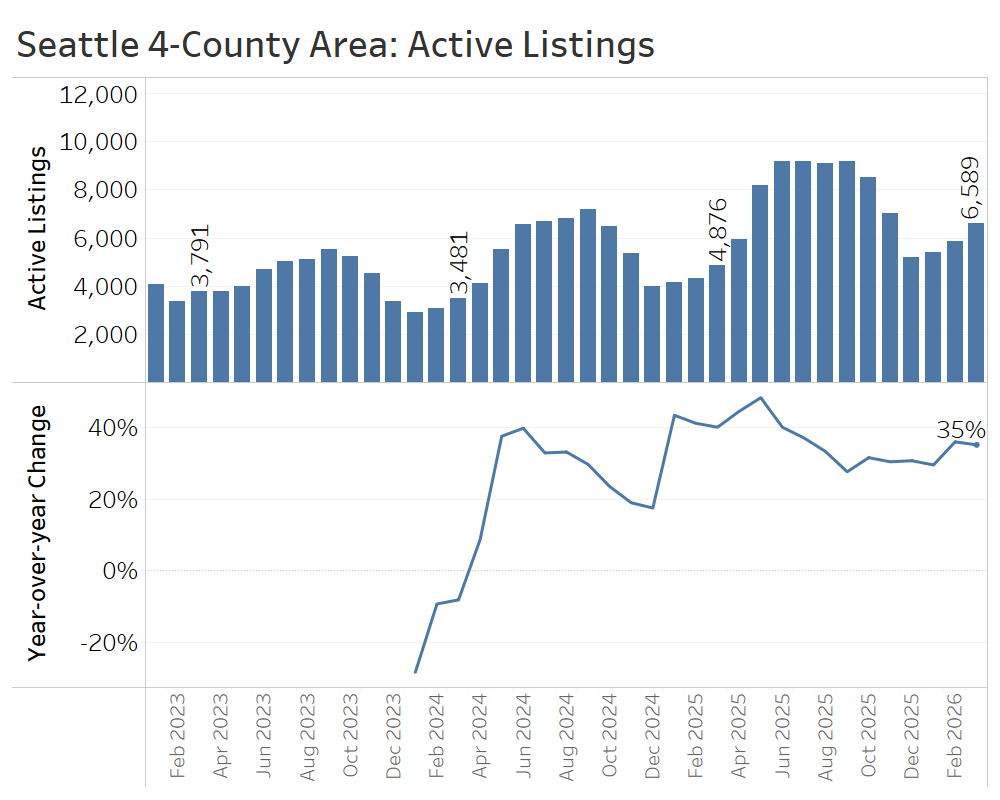
While the spring selling season is typically the strongest time of year for sellers, conditions this year in the greater Seattle area look closer to a balanced market, as abundant listings are meeting only modest demand. Active listings at the end of March were 35% higher than the same time in 2025, a substantial increase and an acceleration from the pace of growth observed in late 2025.
Some of that growth in active listings stemmed from the growth of new listings. More than 13,000 homes hit the market in the first quarter, or about 12% more than in the first quarter of 2025. The flow of new listings may have been particularly strong this spring with the return of patient sellers who held off, or de-listed, late last year.
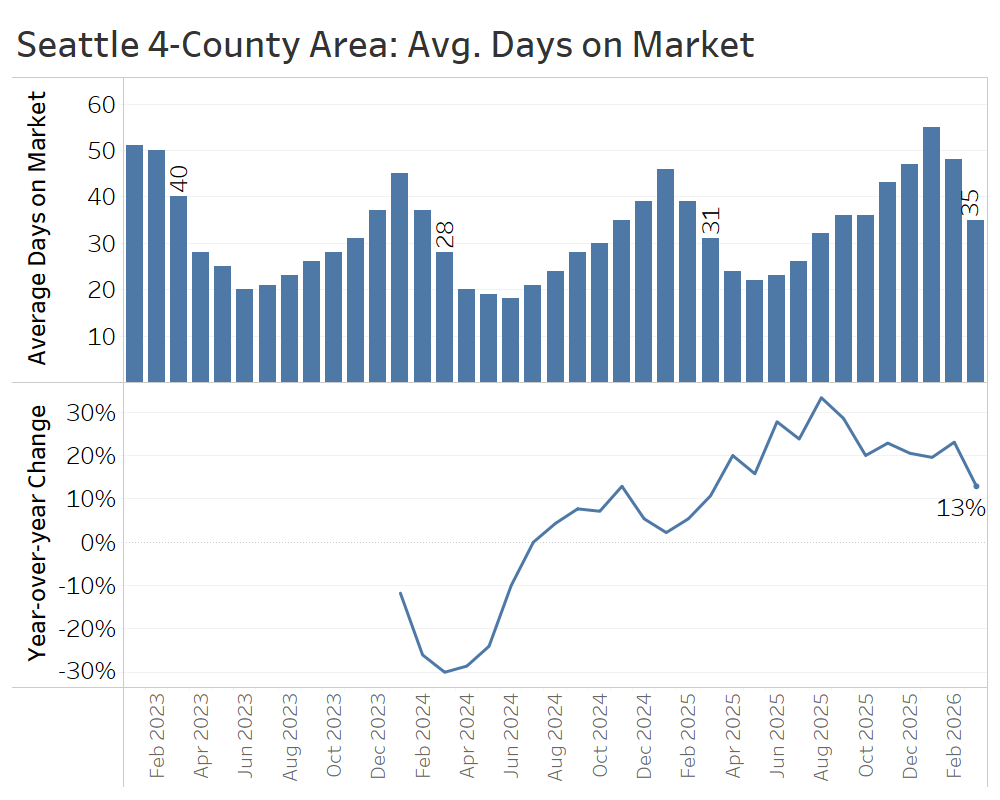
The usual seasonal acceleration in time-on-market took hold this spring, but the median home still took 35 days to sell in March, up from 31 days a year earlier.
Closed sales in March fell just short of their level one year ago, and for the quarter as a whole, 4% fewer closed sales were recorded than throughout the first quarter of 2025. This is a clear indication of softer demand this year.
Cooler demand this quarter showed up in prices, too. Median home sale prices hovered 1%-2% below year-ago levels throughout the first quarter.
The first quarter of 2026 brought a seasonal bump in demand, as usual, but it was smaller and more selective than the increase observed in the first quarter of last year. In this environment, sellers need to put their best foot forward and enter the market with realistic expectations, given the competition from other homes.
Greater Portland Area (Multnomah, Washington, Clackamas, and Clark Counties)
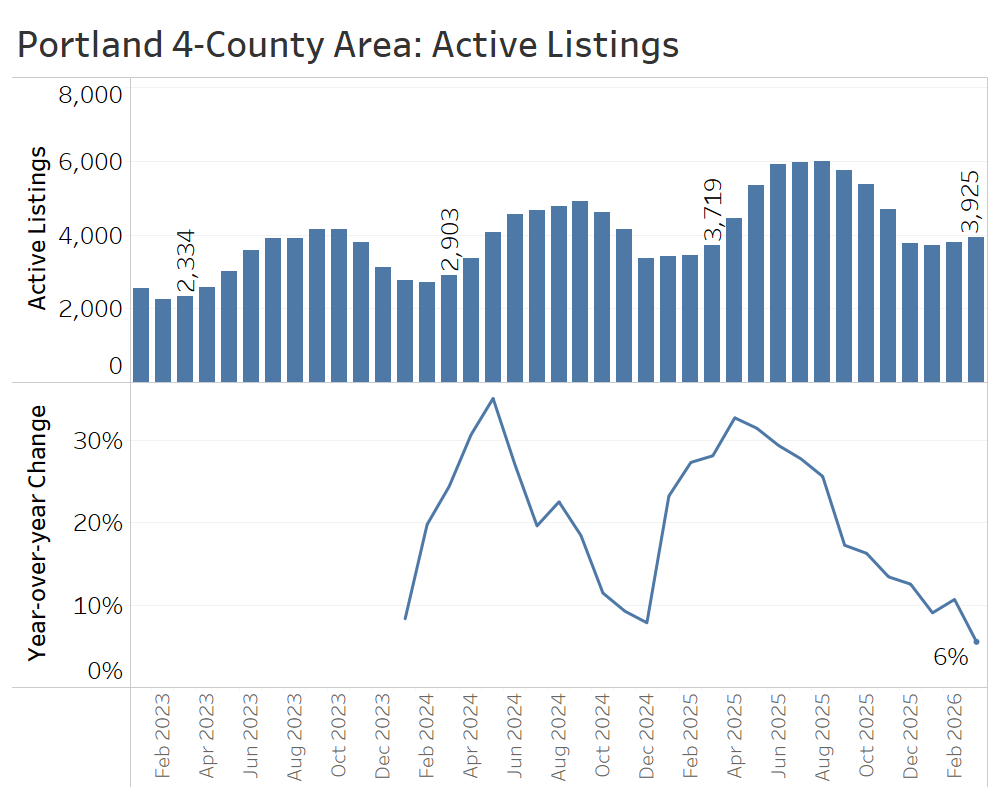
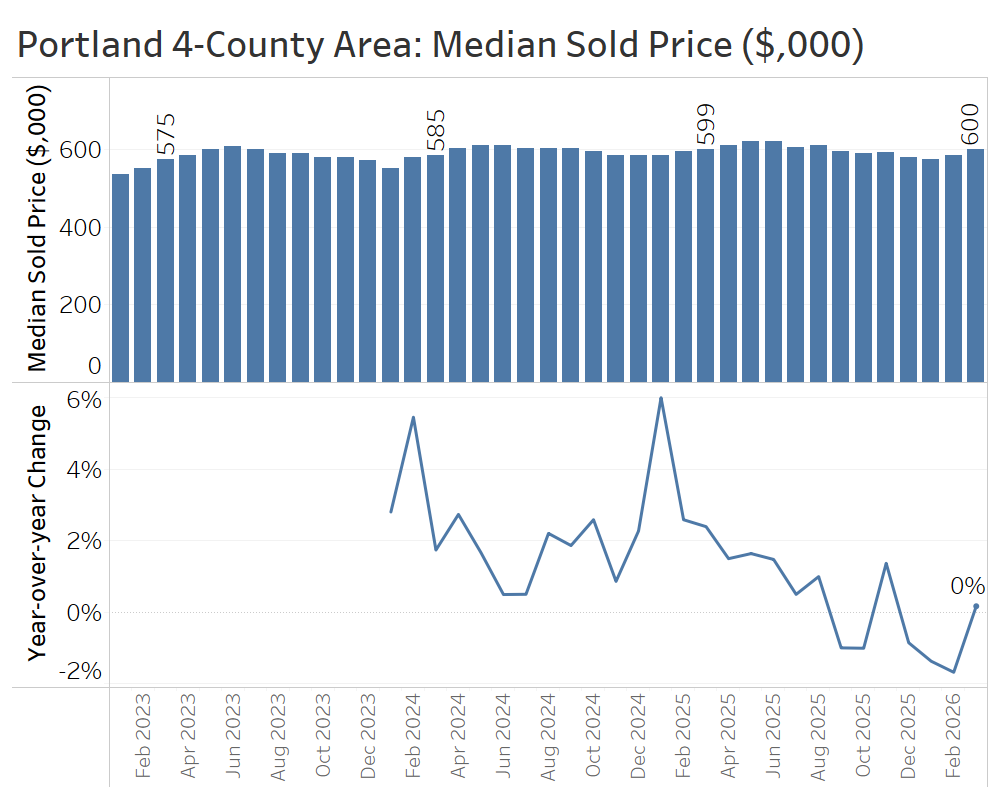
The greater Portland Area edged toward a balanced—or even a buyer’s— market in the first quarter of 2026, as inventory growth slowed to near zero, leaving active listings up only slightly from last year at this time, and sales rebounded modestly.
There were 3,925 active listings at the end of the quarter, which was 6% higher than one year earlier. That continues a trend of decelerating inventory growth since May of 2025.
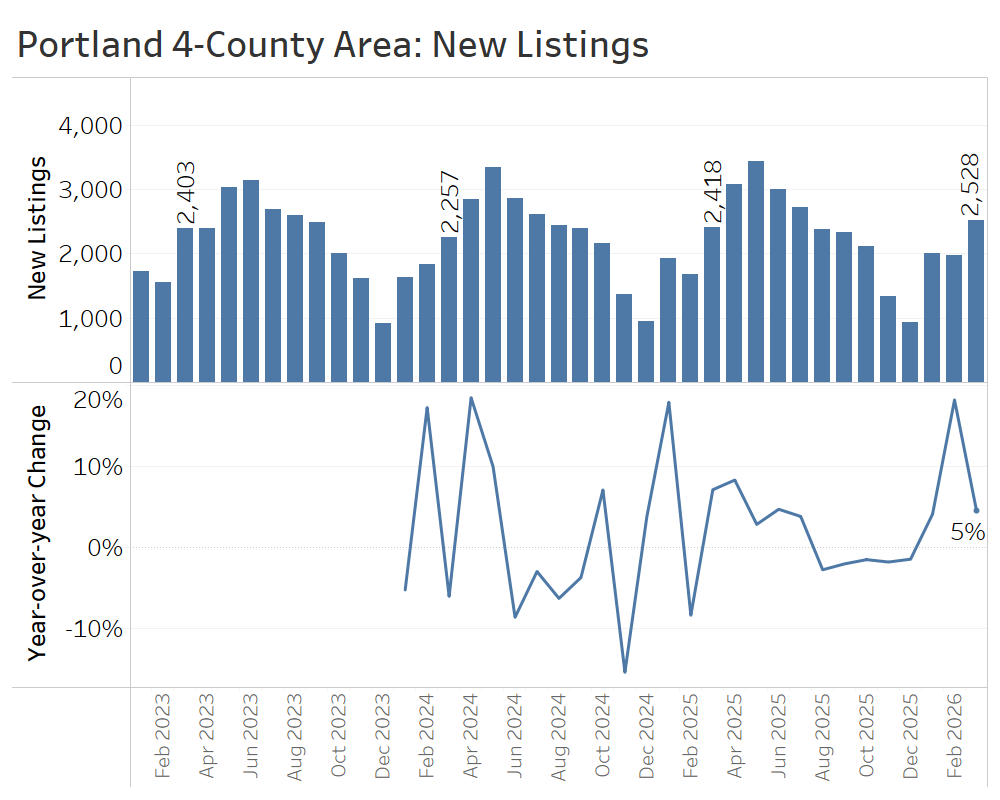
New listings in the first quarter jumped for the first time in several months, with a total of 8% more new listings in the quarter than in the first quarter of 2025.
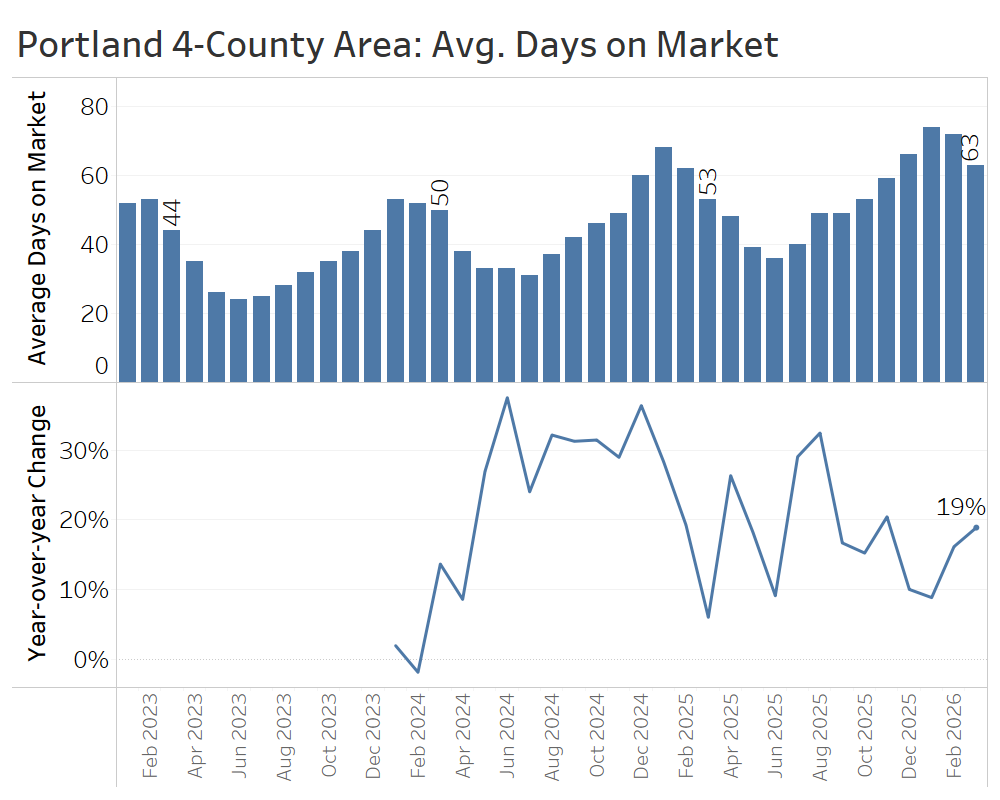
The average home sold after 63 days on the market—about 10 days longer than in March 2025. Nonetheless, that represents an acceleration from the seasonal trough for selling speed in January, when time on market topped out at 74 days.
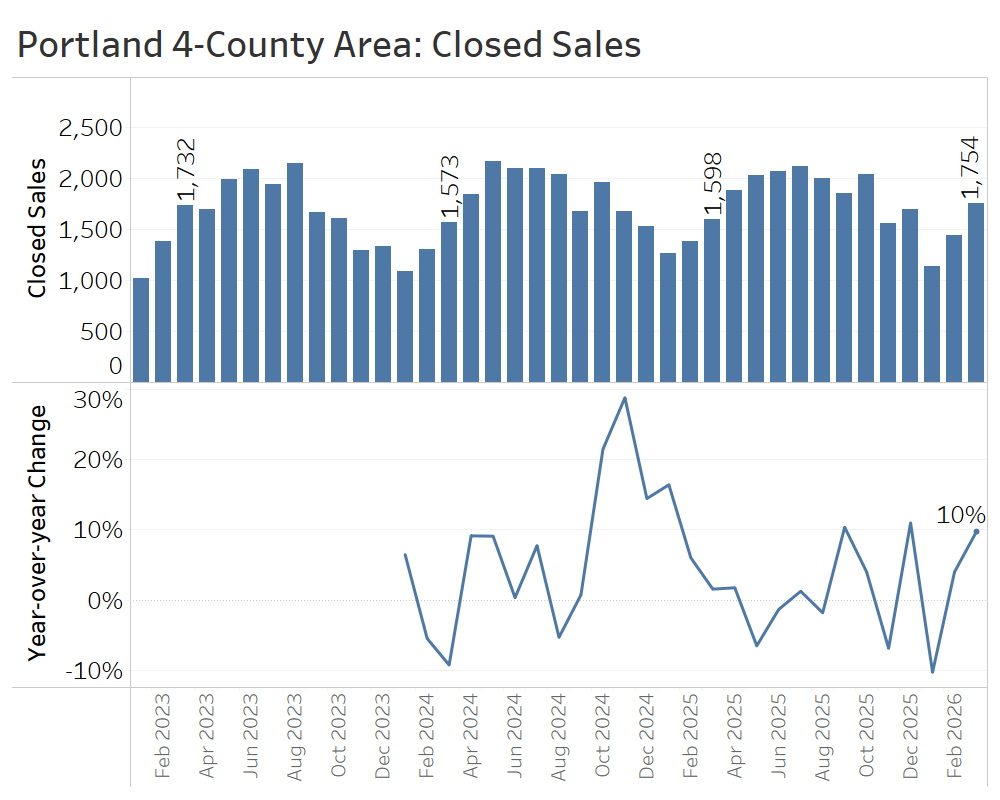
Closed sales of single-family homes jumped 10% year over year in March, offsetting a decline in January and bringing total first-quarter sales to 2% above the same period in 2025.
Median home sale prices in the Portland area were flat year over year at $600,000 in March, following slight declines of 1%-2% in January and February. While demand may be starting to pick back up, it is not yet translating into price appreciation given the high inventory levels.
Portland’s first-quarter market looked balanced this year, with flat pricing, modest sales growth, and renewed activity from sellers jumping into the market.
Greater Sacramento Area (Sacramento, Yolo, El Dorado, and Placer Counties)
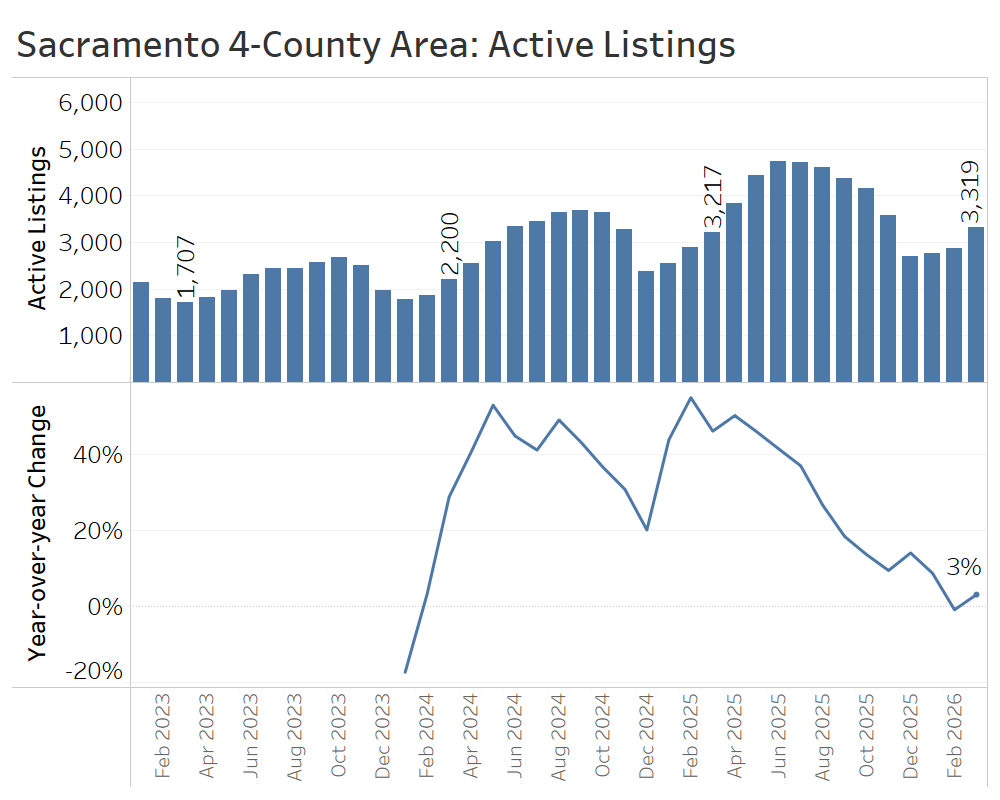
The greater Sacramento area appears to be at a possible inflection point after swinging in buyers’ favor in 2025.
At the end of March, there were about 3,300 active listings—an increase of just 3% compared to March 2025—continuing a trend of decelerating inventory growth over the past year.
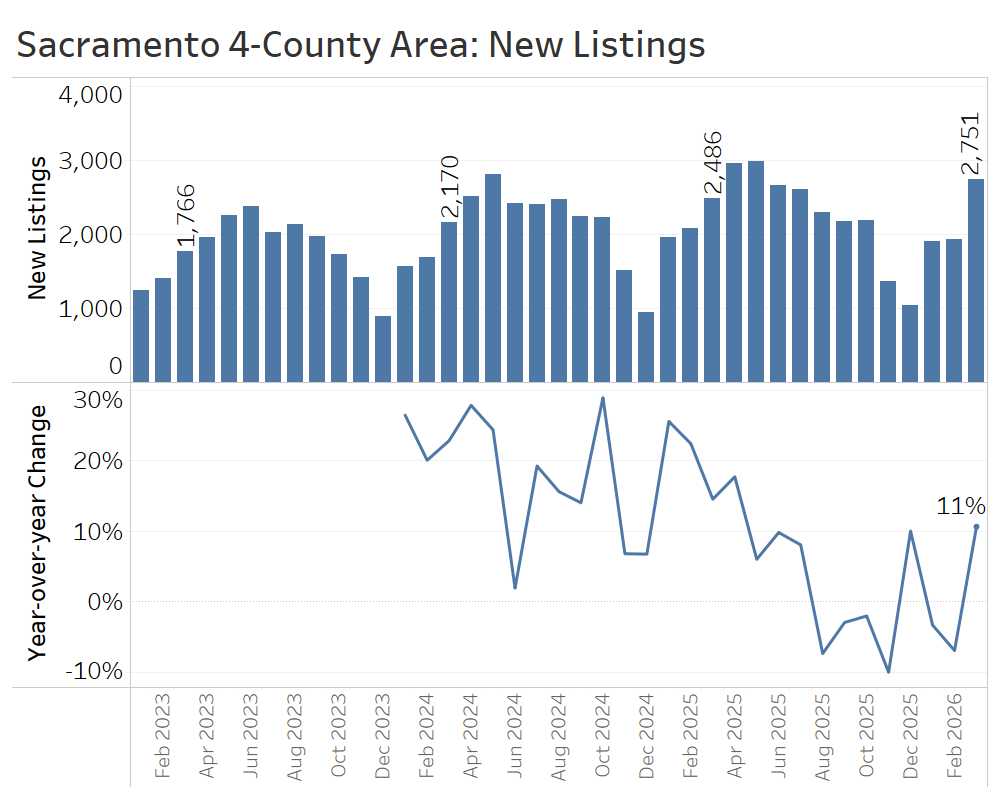
On a monthly basis, the new listings data has been volatile, with small declines in January and February followed by an 11% year-over-year jump in March. Overall, the quarter saw just 1% more new listings than that of the prior year.
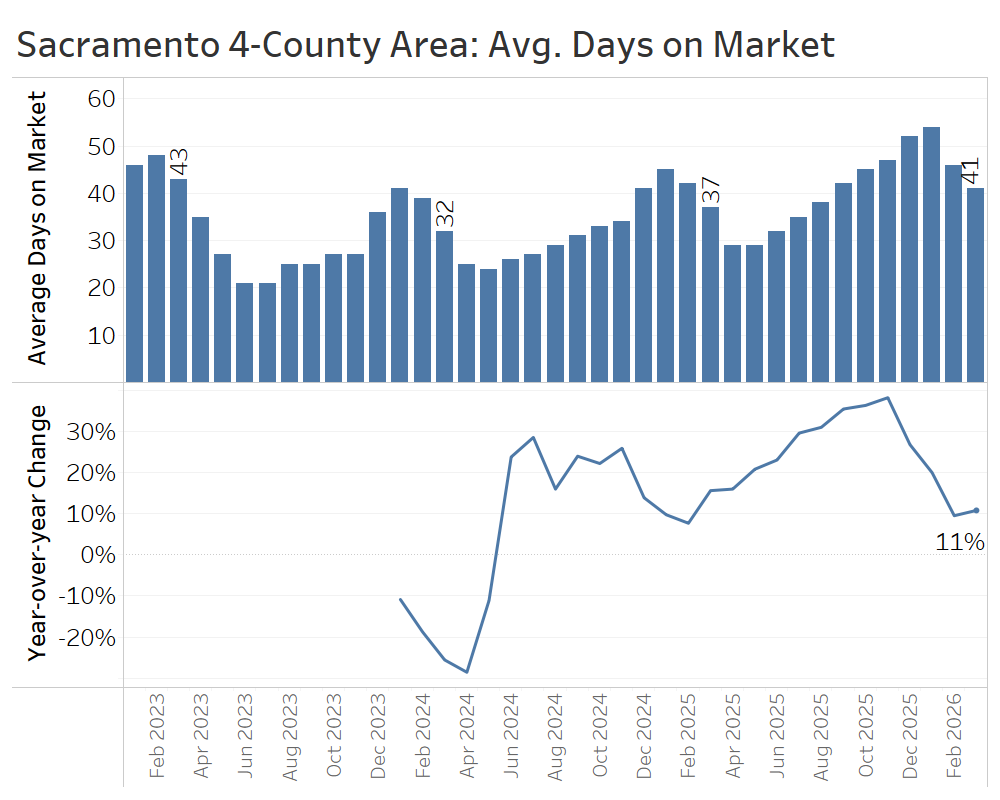
Average days on market rose by about four days compared to March 2025, reaching 41 days. That is a much more modest increase than the larger gains in days on market seen in late 2025.
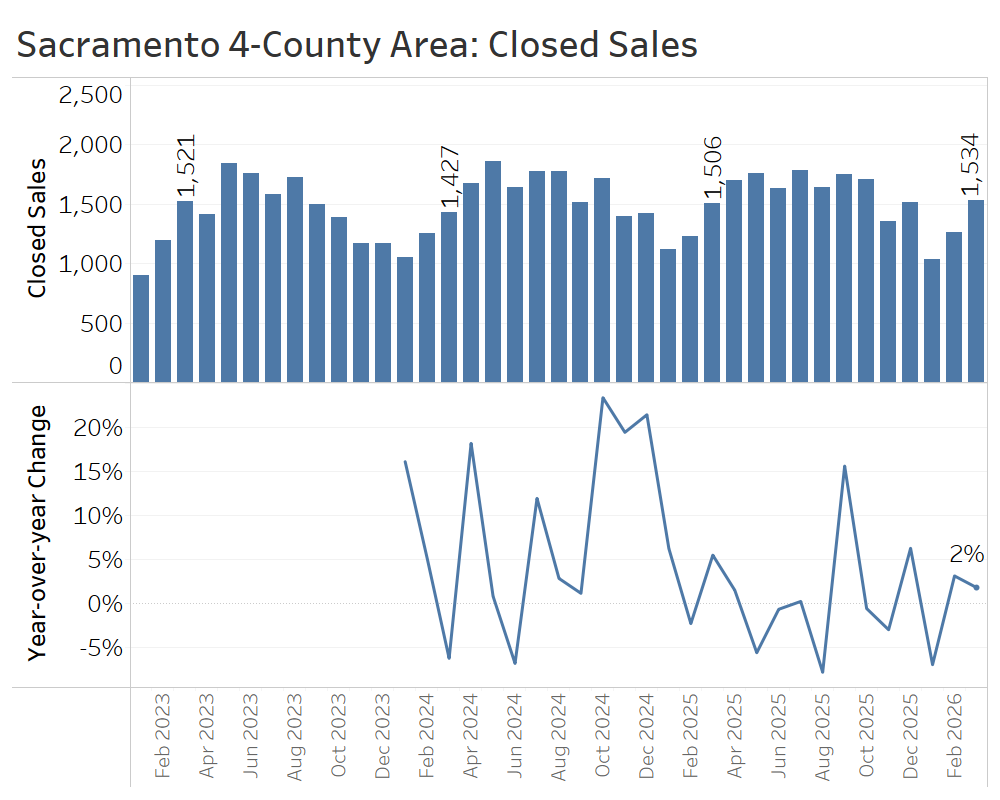
Much like in the fourth quarter, total closed sales for the first quarter were almost identical to the prior year: about 3,840 so far this year compared to roughly 3,850 in the first quarter of 2025.
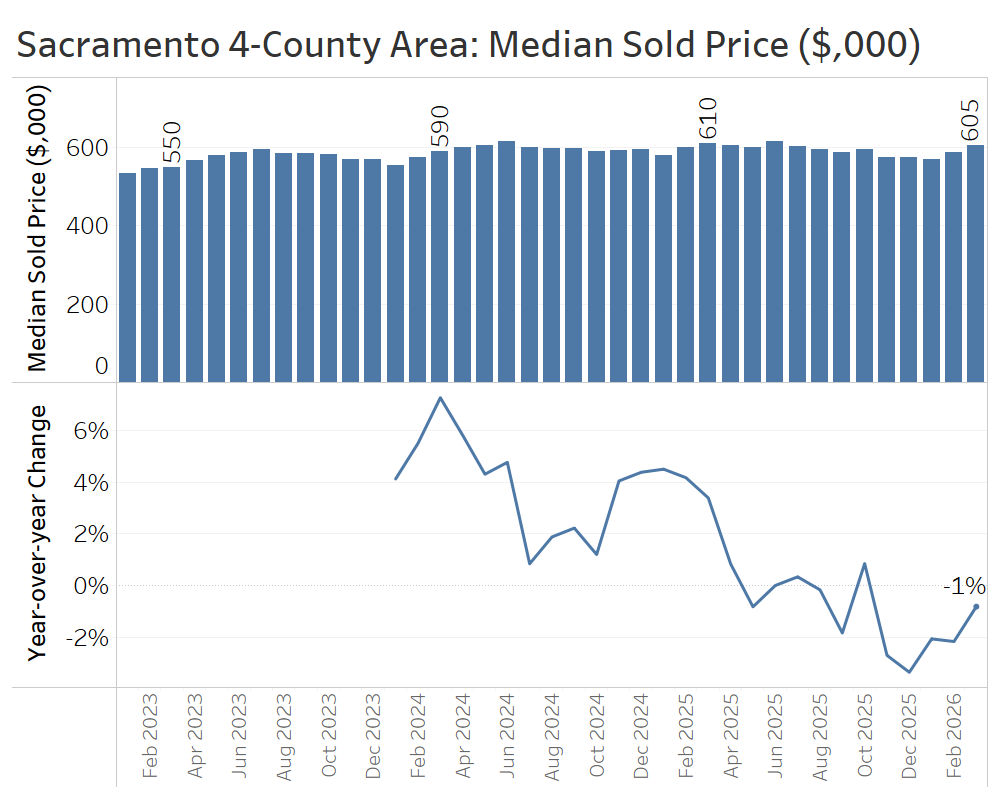
The median sale price of $605,000 in March was higher than the seasonal winter lows, but still 1% below the March 2025 median.
Overall, last year’s inventory growth around the Sacramento region led to a cooldown in pricing over the winter and into spring. Looking ahead, more modest inventory gains suggest that the pendulum won’t swing much further in favor of buyers.
Northwest Washington (Skagit, Whatcom, San Juan, and Island Counties)
The market conditions in the four northernmost counties of Western Washington are still shifting toward buyers.
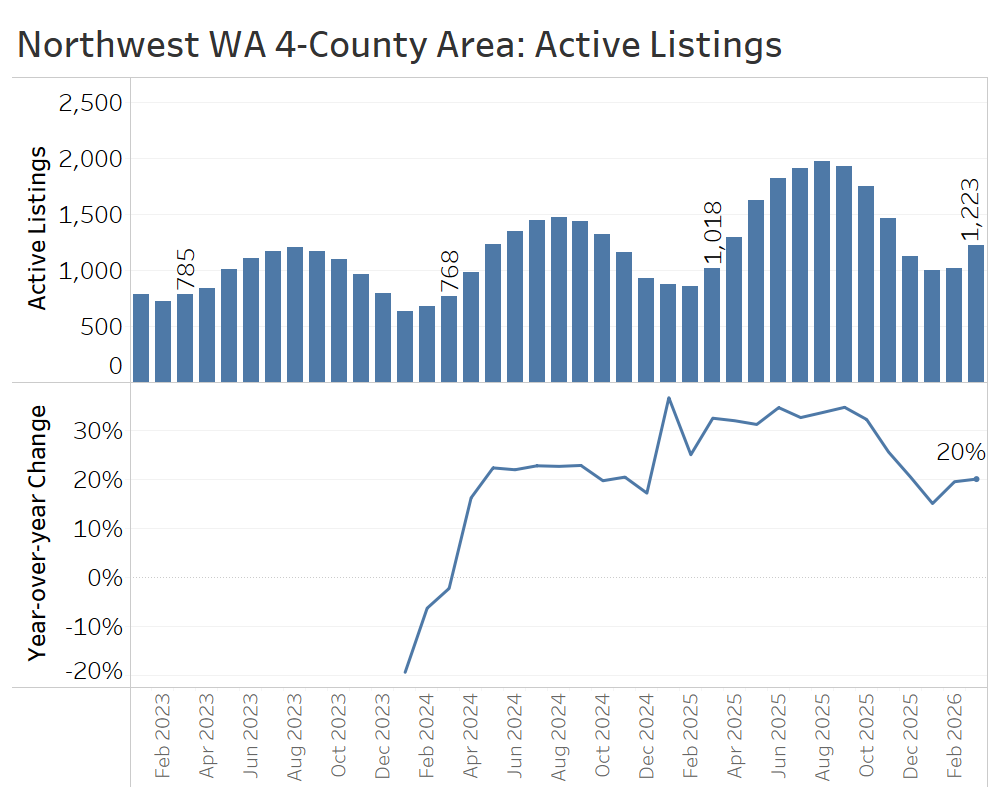
At the end of March, there were 1,223 active listings, up 20% from a year earlier. While that is slower than last summer’s inventory growth of 30% or more, it’s also no longer clearly decelerating.
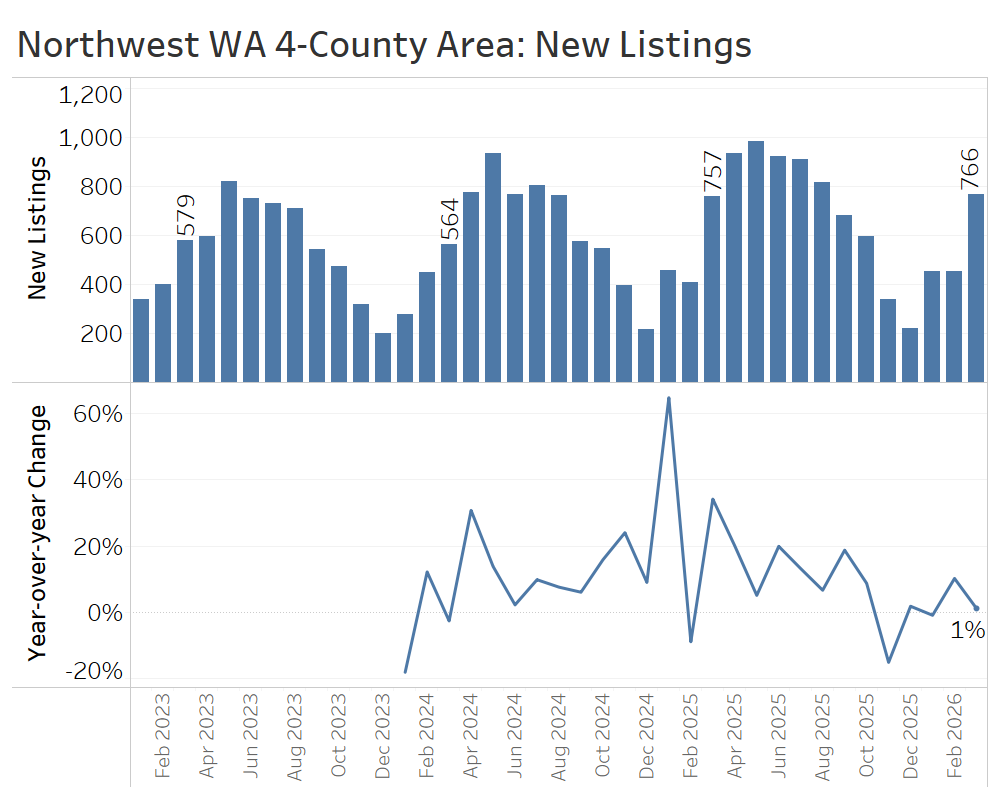
The flow of new listings slightly exceeded the first quarter of 2025, with a total of 1,669 new listings in the quarter, up 3% from last year’s 1,622. That is far from a flood of listings and likely reflects some discretionary sellers waiting until spring to list.
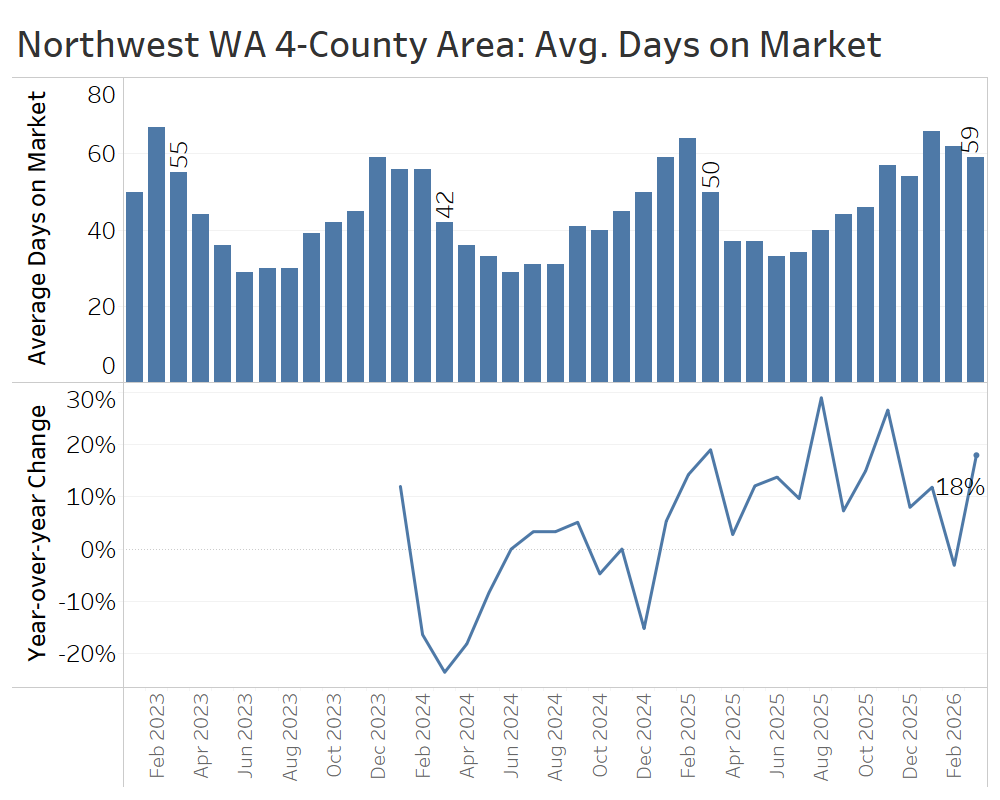
Days on market continued to climb compared to a year earlier, with homes in March taking nine days longer to sell than in March 2025.
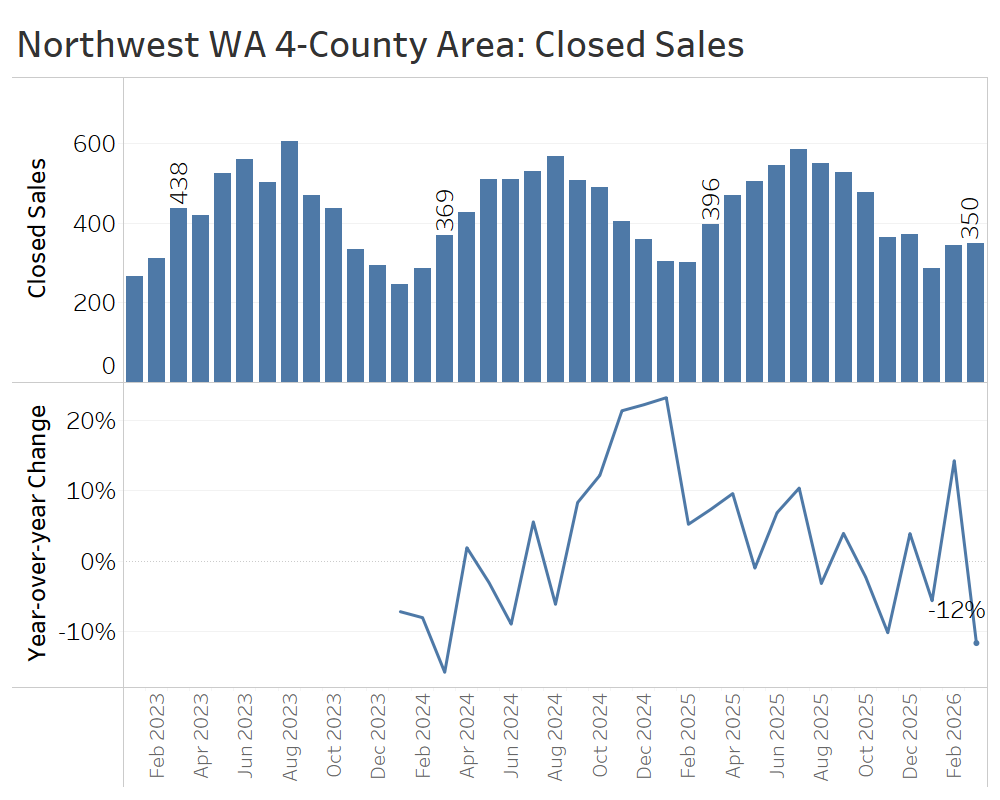
Closed home sales in the first quarter generally trailed first-quarter 2025 levels, except for a bump in February. In total, the 981 closed sales for the quarter fell 2% short of the 1,001 homes sold in the first quarter of 2025, but as the quietest quarter of the year, that statistic is prone to random variation.
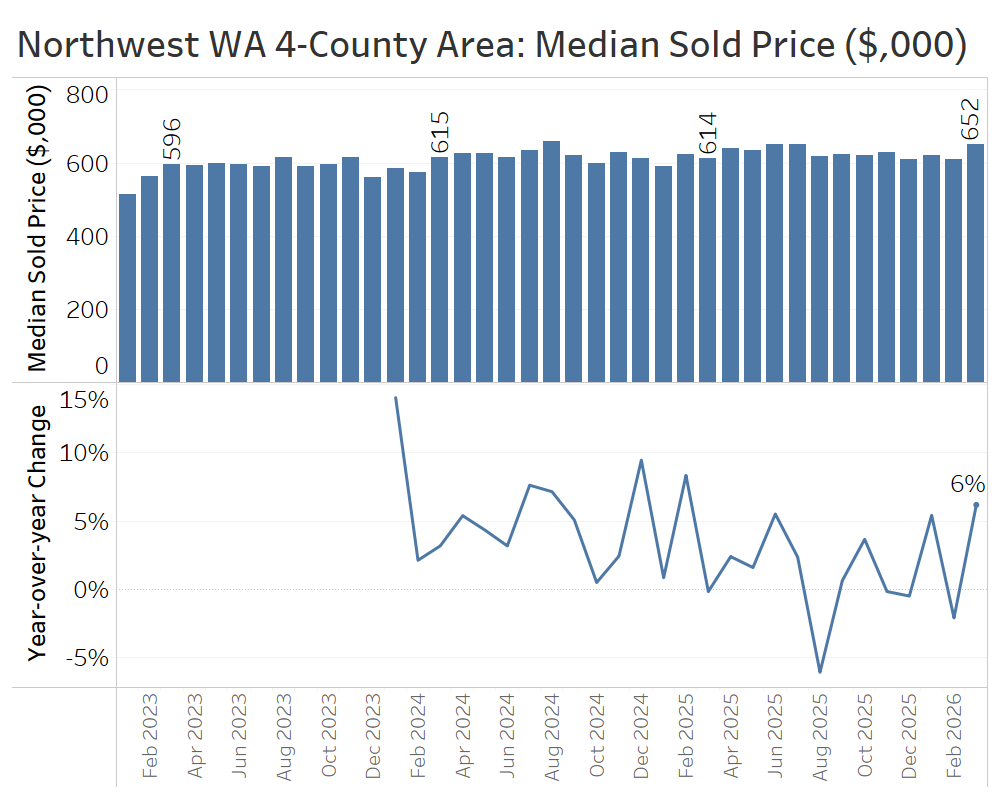
Median sale prices actually ticked up in January and March, reaching a recent high of $652,000 in March. That likely doesn’t reflect true price appreciation, given the lack of growth in sales volume, but rather reflects a shift in the composition of sales toward higher-end segments.
Overall, the first-quarter data has shown that the Northwest Washington housing market is off to a sluggish start this year.
Spokane, WA and Coeur d’Alene, ID Area (Spokane and Kootenai Counties)
The greater Spokane-Coeur d’Alene region, spanning the Washington-Idaho border, is experiencing many of the same market trends seen in Western Washington, including higher inventory, softer buyer demand, and flattening home prices.
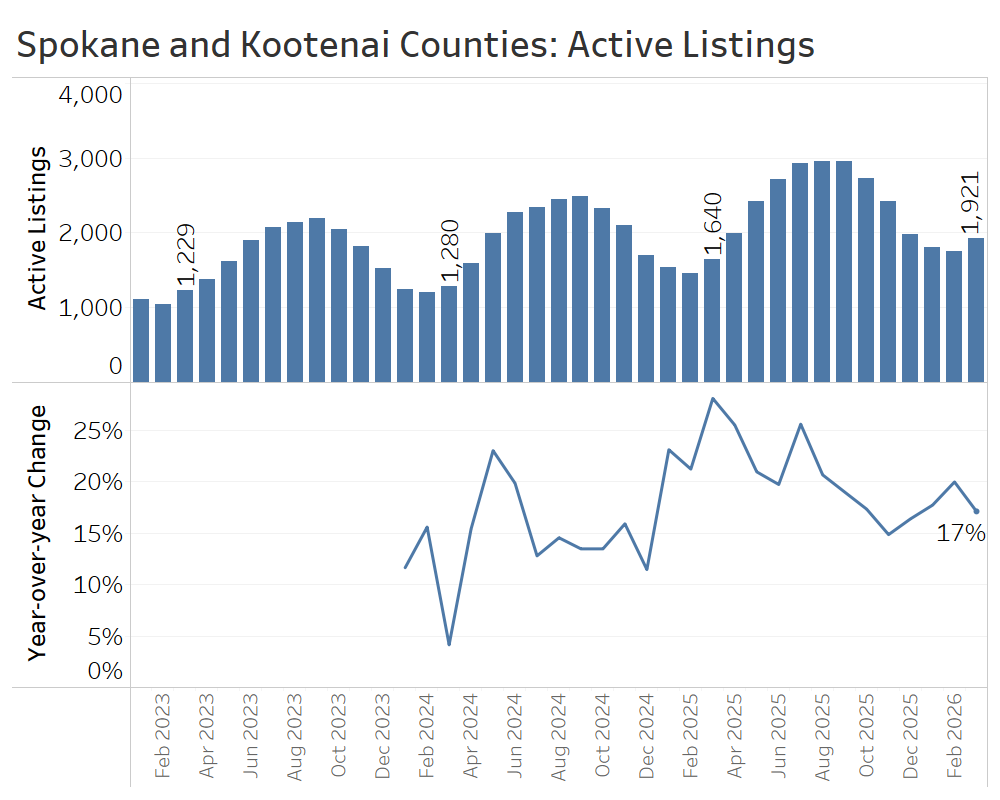
At the end of March, there were 1,921 active listings, up 17% from March 2025.
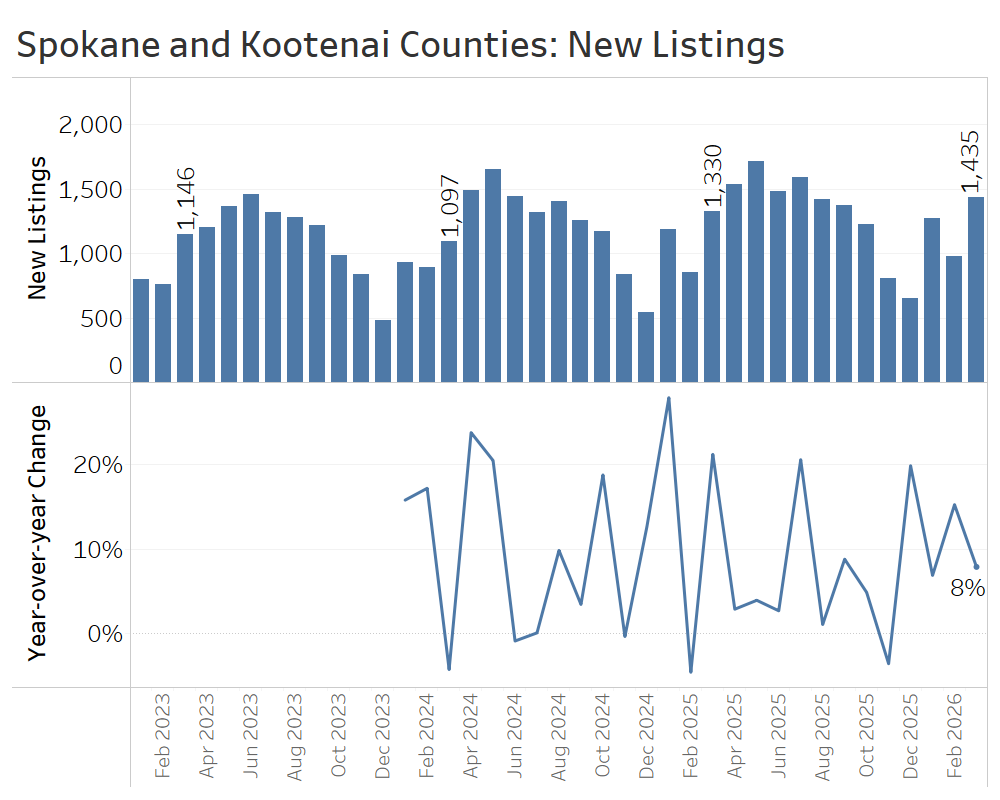
The greater Spokane area has seen strong growth in new listings since December. During the first quarter, there were 3,688 new listings, up 9% from the first quarter of 2025.
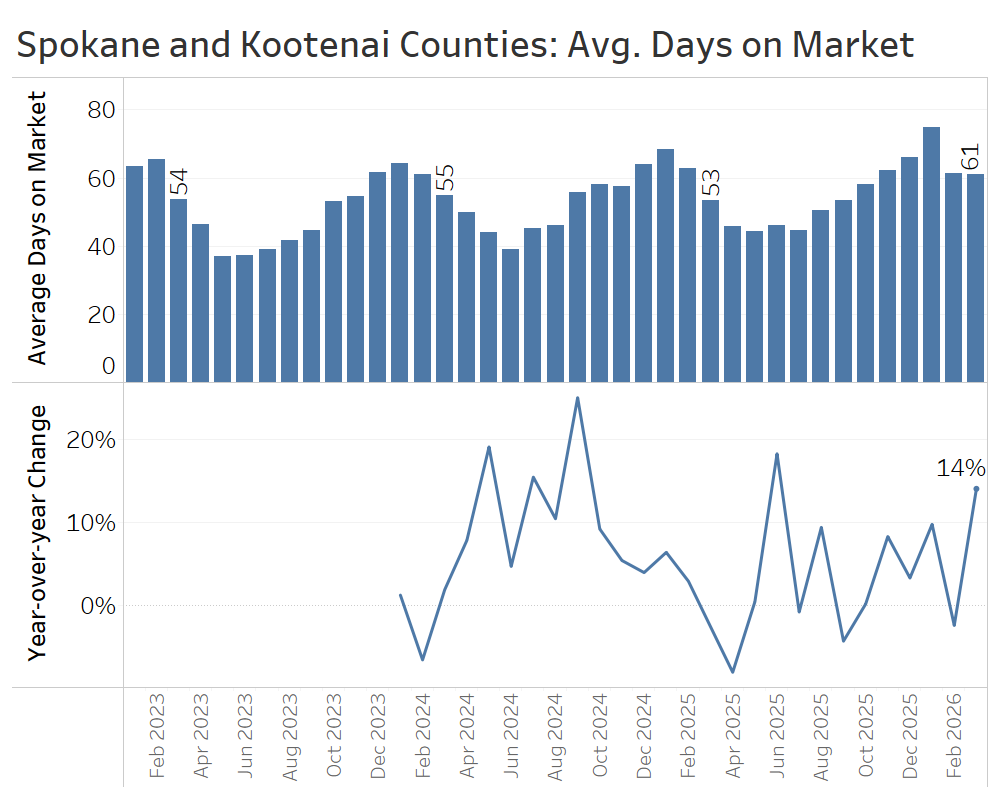
Days on market fell from its seasonal winter high to 61 days in March, though that is still 8 days slower than in March of 2025. That average also masks a wide gap across the state border, between 94 average days on market in Kootenai County compared to roughly half that—46 days—in Spokane County.
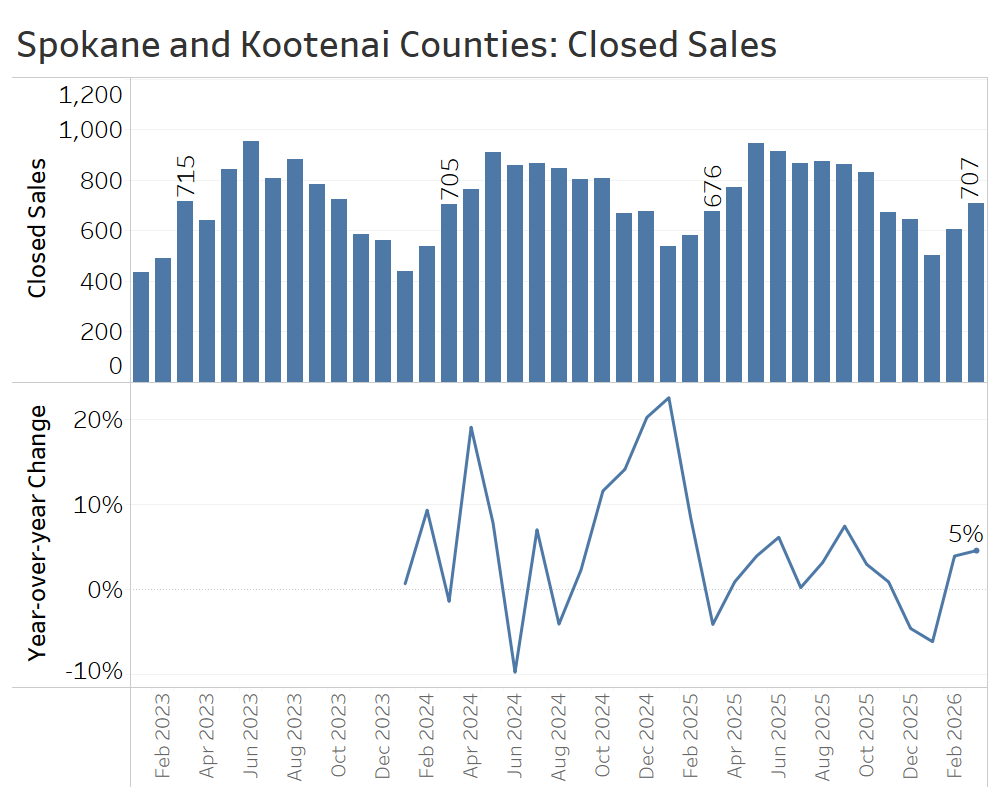
Closed sales were up 5% in March, helping to offset a weak January so that first-quarter closed sales totaled 1,817, about 1% more than first quarter of 2025.
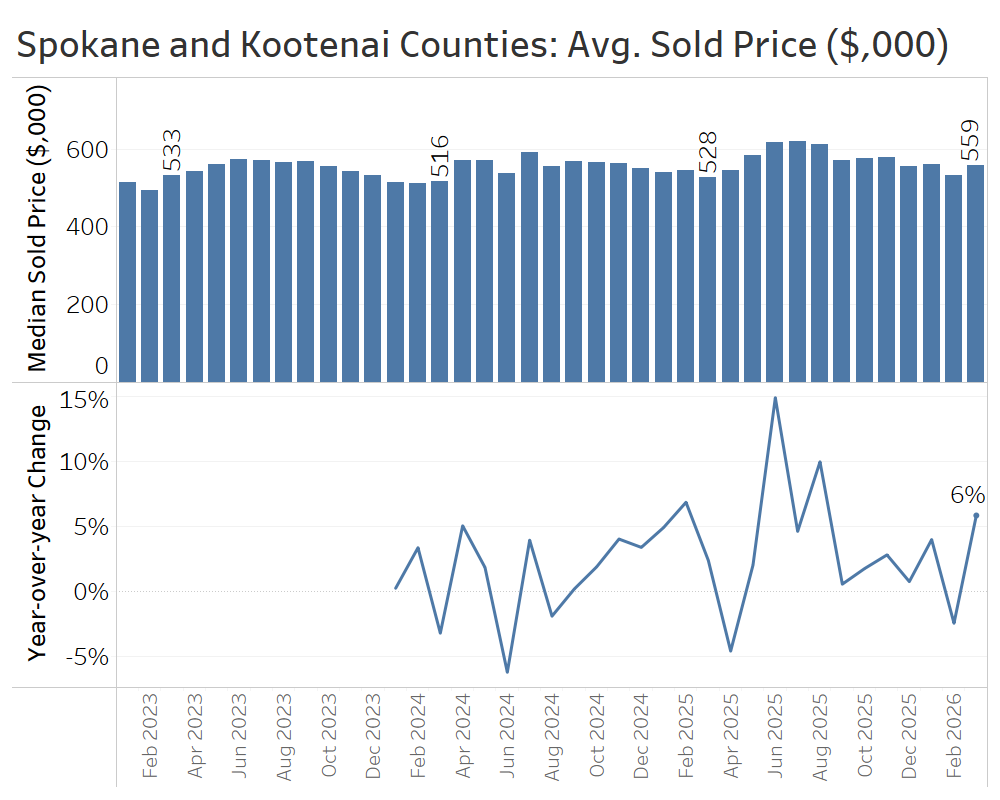
Compared with March 2025, the average sale price in March rose about 6%, from $528,000 to $559,000. For the quarter as a whole, prices increased 2%, rising from $537,000 in the first quarter of 2025 to $550,000 in the first quarter of this year.
Altogether, the greater Spokane-Coeur d’Alene area has looked like a balanced market so far this spring, with modest year-over-year gains in both sales (1%) and average sale prices (2%).
Salt Lake County, Utah
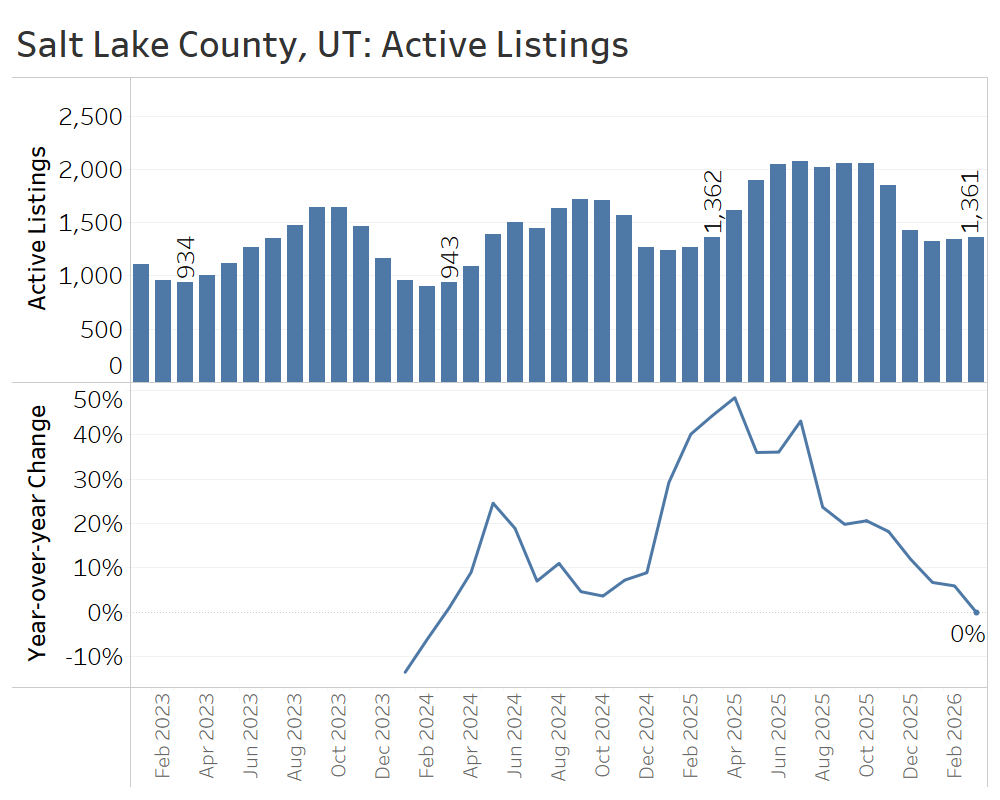
In the first quarter of 2026, the Salt Lake County market saw strong sales activity and the clearing of an inventory overhang. That continues a broader shift in Utah’s largest market, from conditions favoring buyers in early 2025 to a more balanced market—and in some segments, even a seller’s market—by spring 2026.
Active listings at the end of March stood at 1,361 homes, virtually identical to a year earlier. That completes a round trip from rapid inventory buildup last spring to slowing year-over-year growth last fall, suggesting that supply and demand have returned to a more balanced state in the Salt Lake market.
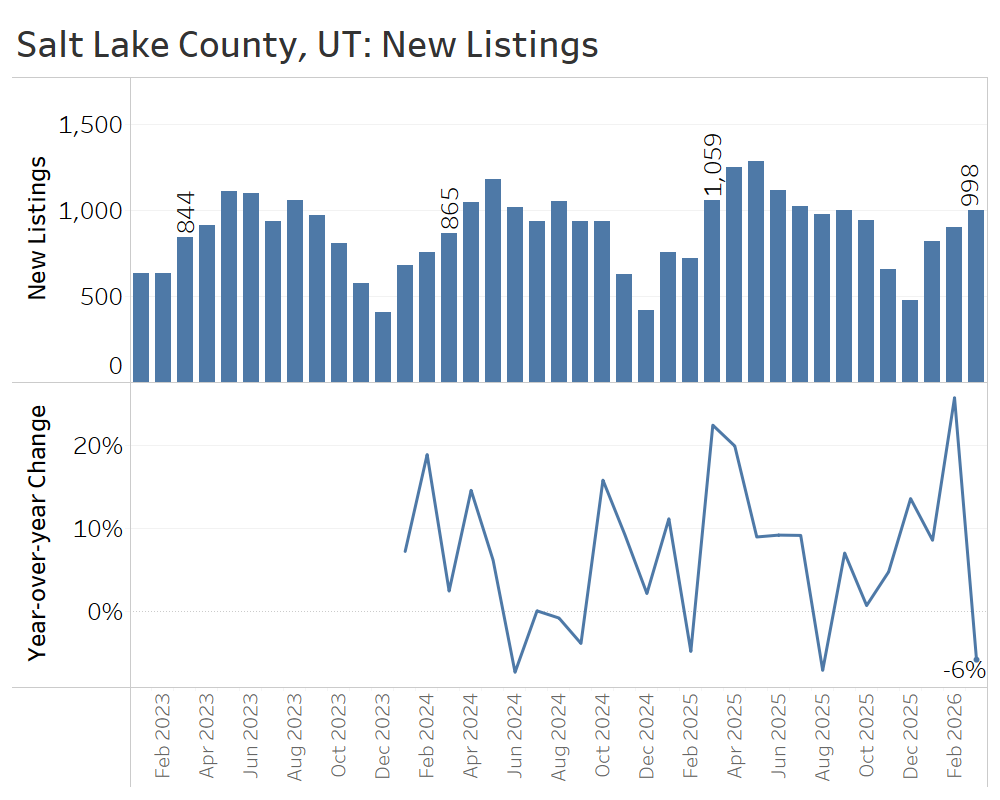
New listings dipped 6% year over year in March, but strong growth in January and February meant the flow of new listings still rose 7% in the first quarter compared to the year prior.
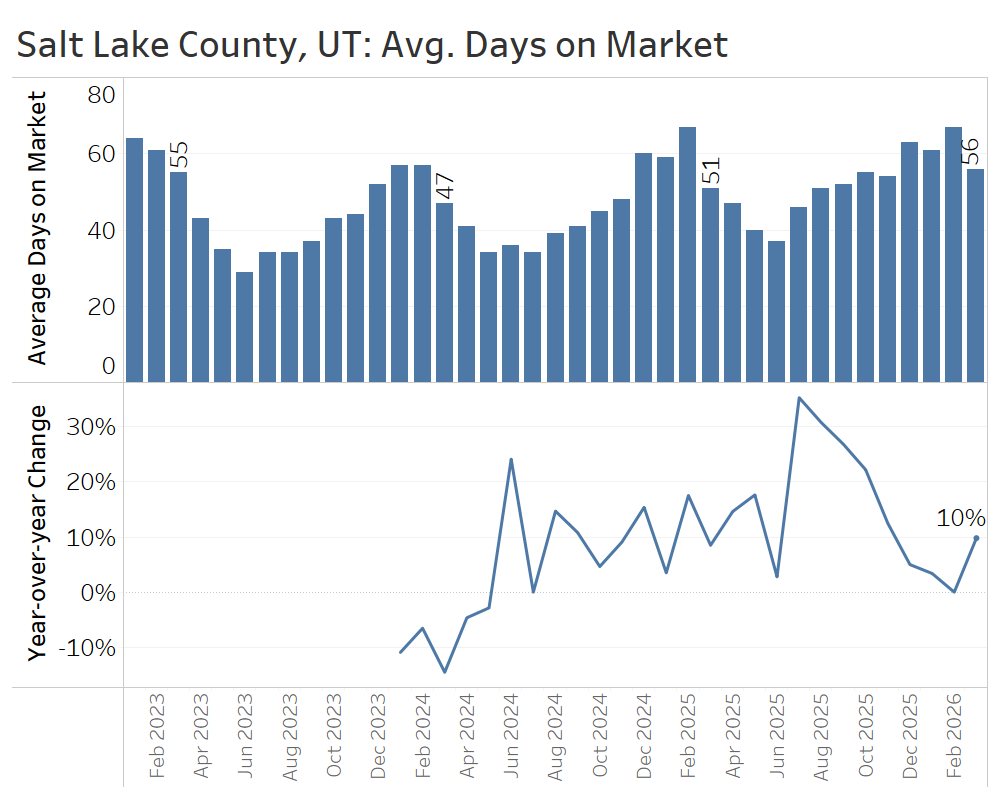
The average number of days it took to sell a home in Salt Lake County ended the first quarter at 56 days, up from 51 days a year earlier. This reflects the typical seasonal pattern of declining days on market in spring, but the year-over-year increase suggests the market has not yet shifted into a decisive seller’s market.
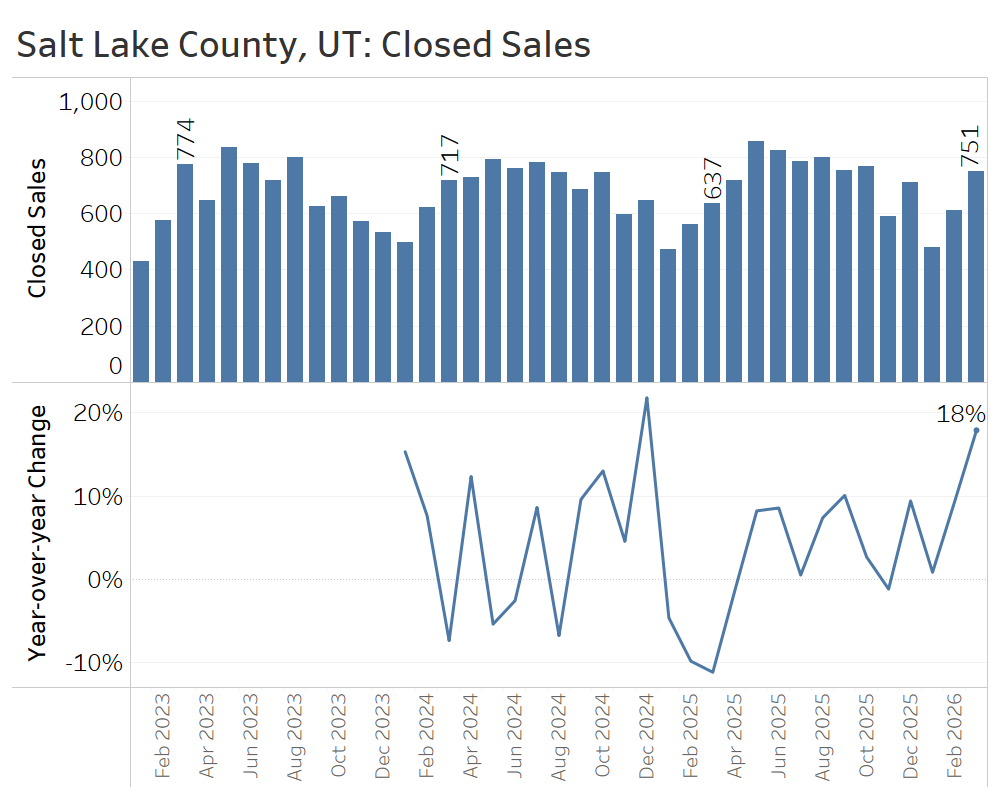
Closed home sales in March 2026 rose 18% compared to March 2025, capping a strong first quarter with about 10% more closed sales in total than in the weak first quarter of 2025.
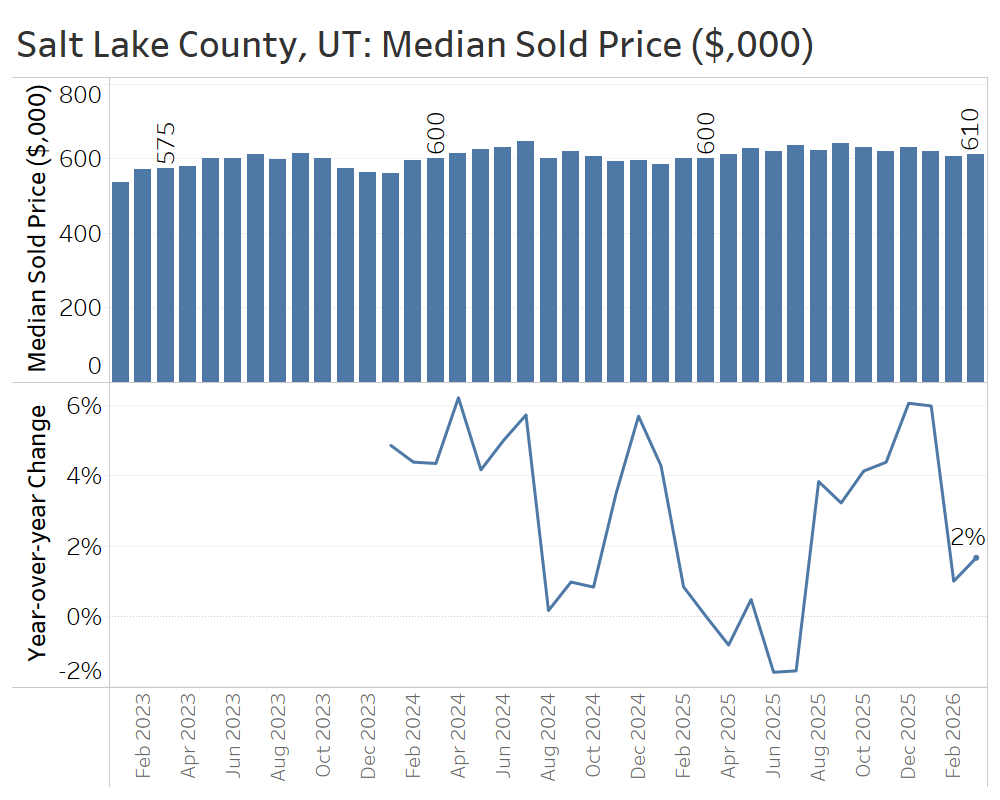
In March, the median sale price in Salt Lake County rose 2% year over year—from $600,000 to $610,000. That marked the eighth straight month of price gains but reflected a slowdown in the pace of price gains from late 2025.
Salt Lake County’s strong start to the spring selling season was driven by growth in unit sales, not big price gains, suggesting a broad-based growth in activity as buyers return while having plenty of inventory to choose from. The lack of inventory growth year over year suggests Salt Lake County has completed its transition from a buyer’s market early in 2025 to more balanced conditions today.
Conclusion:
The housing market is cyclical, with predictable seasonal swings in demand alongside less predictable longer-term shifts. At the end of the first quarter of 2026, many of the markets highlighted here are in a somewhat unusual balance, where the seasonally strongest period of demand—the spring selling season—is meeting a broader market cooldown marked by higher inventory, longer time on market, and slower price appreciation.
That combination makes for a more difficult market to navigate than usual. Buyers may feel whiplash, moving from being outbid by a dozen offers on one home to getting a below-list offer accepted on another down the street that just needs a fresh coat of paint. Sellers, meanwhile, may decide to list their home at an aggressive price after hearing about nearby homes selling far above list price, only to wonder why they’re not receiving any offers.
In a market like this, it pays to work with a skilled real estate professional who can cut through the noise of local data to determine a home’s fair price, while also understanding the nuances of which homes are selling quickly and which are selling at a discount in this unusual spring selling season.
Sources: TrendGraphix analysis of NWMLS, RMLS, Spokane MLS, Coeur d’Alene MLS, MetroList MLS, and Wasatch Front MLS data.
Preparing your home for the market can feel stressful, especially when you start noticing every small imperfection. The good news is that not every issue needs to be addressed before listing. A few thoughtful updates can go a long way toward helping your home show well, attract buyers, and maximize your sale price.
In this blog, we’ll walk through the repairs that matter most and the ones you can confidently leave as-is.
What to fix before selling
Start with the basics buyers notice first
When buyers walk into a home, first impressions are everything. Even small, visible issues can signal to buyers that the home hasn’t been well-maintained, even if that’s not the case.
Start with simple, high-impact updates that immediately improve how your home feels. Touch up scuffed or chipped paint, repair any holes or dents in the walls, and fix details like squeaky doors or loose handles. Pay attention to the flooring as well; noticeable water damage, worn carpets, or damaged floorboards are often among the first things buyers pick up on. Replacing burnt-out lightbulbs and ensuring all switches are working properly can also make a subtle but meaningful difference.
These updates are relatively low-cost but go a long way toward making your home feel clean, cared for, and move-in ready.
Address obvious maintenance issues
Buyers naturally look closely at anything that could turn into a bigger problem later. Addressing small maintenance concerns ahead of time can help prevent hesitation or negotiation during the inspection.
Focus on resolving anything that feels like deferred maintenance. This includes fixing leaky faucets or running toilets, addressing dripping pipes, tightening loose railings or steps, and handling minor roof or gutter concerns. If your HVAC system is due for servicing, taking care of it now can also provide added reassurance. Similarly, if there are visible cracks in the foundation or any known structural concerns, it’s worth addressing them before listing. These issues can raise red flags for buyers and often surface during inspection, so addressing them early can help avoid delays or renegotiation.
Focus on kitchens and bathrooms
Kitchen and bathrooms tend to carry the most weight for buyers, but that doesn’t mean you need a full renovation to make an impact. Small, thoughtful updates can go a long way. Re-caulking sinks, tubs, and backsplashes can instantly freshen up a space, while replacing worn or outdated hardware offers a quick, modern update. A deep clean, especially grout, tile, and surfaces, can make these areas feel significantly more polished. If lighting feels dated, a simple fixture swap can also help elevate the overall look.
It’s also worth addressing any cabinetry that shows signs of wear. Water damage, peeling finishes, or loose hinges can stand out to buyers and suggest deeper issues, even if they’re minor. Tightening hinges, repairing damage, or refinishing where needed can help these spaces feel more solid and well-maintained. The goal is not to make these spaces brand-new, but to ensure they feel fresh, functional, and well cared for.
Boost curb appeal
Before buyers ever step inside, they’re already forming an impression. The exterior of your home sets the tone for everything that follows.
A few targeted updates can make a noticeable difference. Tidy up landscaping, trim overgrown areas, and clear debris to create a clean, intentional look. Power washing walkways, siding, or decks can instantly refresh the exterior, while repainting the front door or repairing fencing adds a finishing touch. Making sure the garage door operates smoothly is another detail that can quietly enhance a buyer’s first impression.
A well-maintained exterior shows buyers that the home has been cared for, creating confidence before buyers even walk through the door.
What not to fix before selling
It can be tempting to try to perfect everything, but not all upgrades will give you a return on your investment. In some cases, doing less is actually the smarter move. You can typically skip:
Full kitchen or bathroom remodels
Replacing perfectly functional appliances
Fixing minor cosmetic quirks that don’t stand out
Highly personalized upgrades that may not appeal to every buyer
Many buyers are happy to make cosmetic changes themselves once they move in. Over-improving your home can lead to unnecessary costs without increasing your sale price.
When preparing your home for sale, focus on repairs that improve condition, functionality, and first impressions. You don’t need perfection. You need a home that feels well cared for and ready for its next owner.
If you’re unsure where to start, a Windermere agent can help prioritize the updates that will have the biggest impact in your specific market. The right guidance can save you time, money, and stress while setting you up for a successful sale.
This is the latest in a series of videos with Windermere Principal Economist Jeff Tucker, where he delivers the key economic numbers to follow to keep you well-informed about what’s going on in the real estate market.
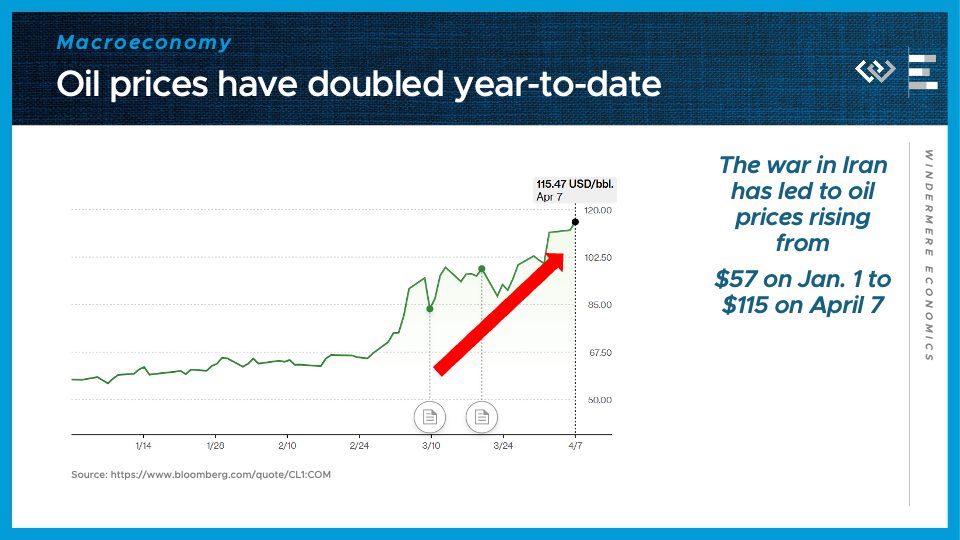
The first number to know this month: $115. That was the level that price of a barrel of oil reached on April 7, and it happens to be exactly double the price of oil at the start of 2026. The war in Iran has dragged on into its second month now, and it’s continuing to cause an energy crisis that’s rippling out through the global economy. An energy shock like this raises the costs of making and transporting almost everything, so the longer this goes on, the more inflationary pain it will inflict this year.
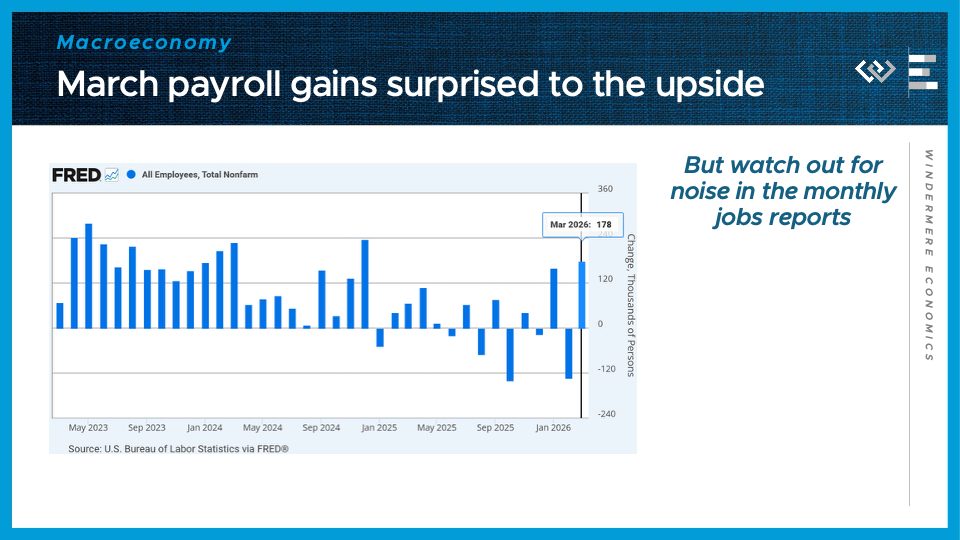
The second number to know this month 178,000. That was the number of jobs added in the economy in March, which would make it the single best month for job gains since late 2024, if it survives the usual rounds of revisions. If we look at the trend of the last 15 months, though, it’s pointing both toward a slowdown in job gains, and a increasing month-to-month volatility, as we’ve now swung between job gains and job losses for 11 months in a row. One upshot of this strong jobs report is that it provides further cover for the Federal Reserve to keep interest rate cuts on hold for now – if the labor market isn’t looking too distressed, they don’t need to be rushing to the rescue.
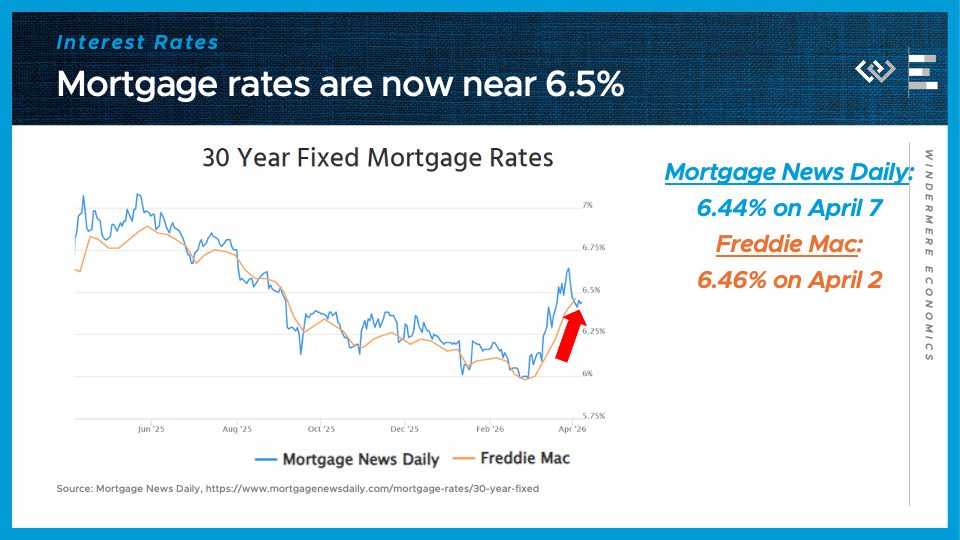
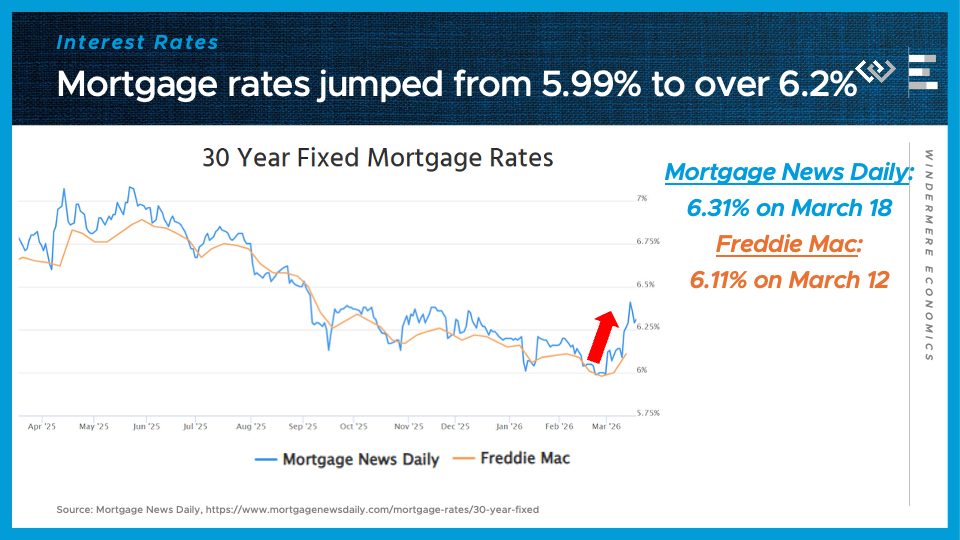
The third number to know this month: 6 and a half percent. That’s the ballpark of where 30-year mortgage rates are now bouncing around, after jumping almost half a point from multi-year lows they reached just back in late February. The combination of higher inflation and tighter monetary policy triggered by the war in Iran has set interest rates back up to where they were last summer, and frankly into the range of where they stood last spring. This is undermining homebuyer demand in what should be the busy spring buying season, leading instead to more balanced conditions in the housing market.
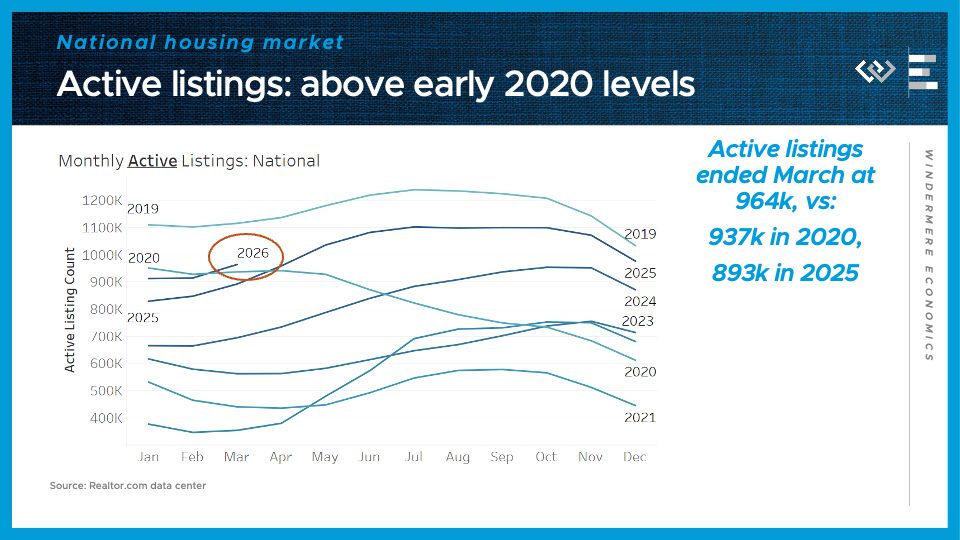
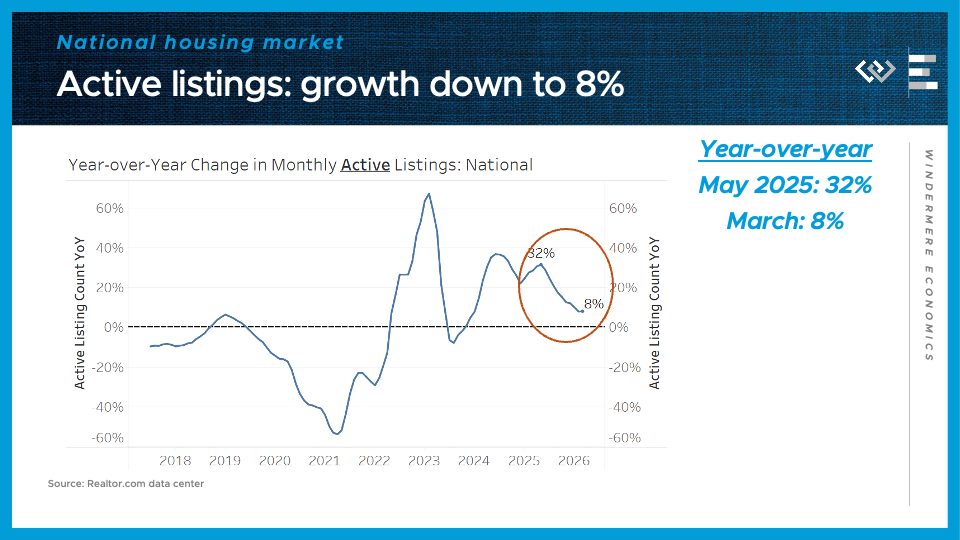
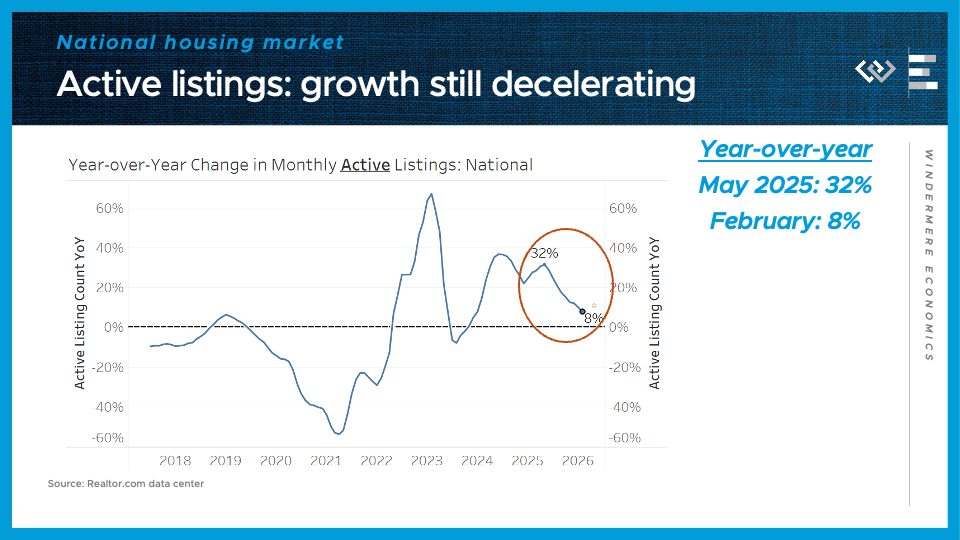
Finally, turning to the housing market, we saw 964 thousand active listings at the end of March—somewhat more than at this time in 2020, and about 8% more than last year.
That 8% year-over-year gain basically matches what I reported in February, bringing an end to a trend of decelerating inventory growth since last May. It’s a little early to call this a turning point, but it may be an indication that inventory gains are picking back up. If that continues, buyers could really see a plethora of options on the market this summer. In the meantime, sellers should be aware that buyers are comparison-shopping, so it still pays to put your best foot forward, listing with an agent you trust, even in the busy spring selling season right now.
This is the latest in a series of videos with Windermere Principal Economist Jeff Tucker, where he delivers the key economic numbers to follow to keep you well-informed about what’s going on in the real estate market.
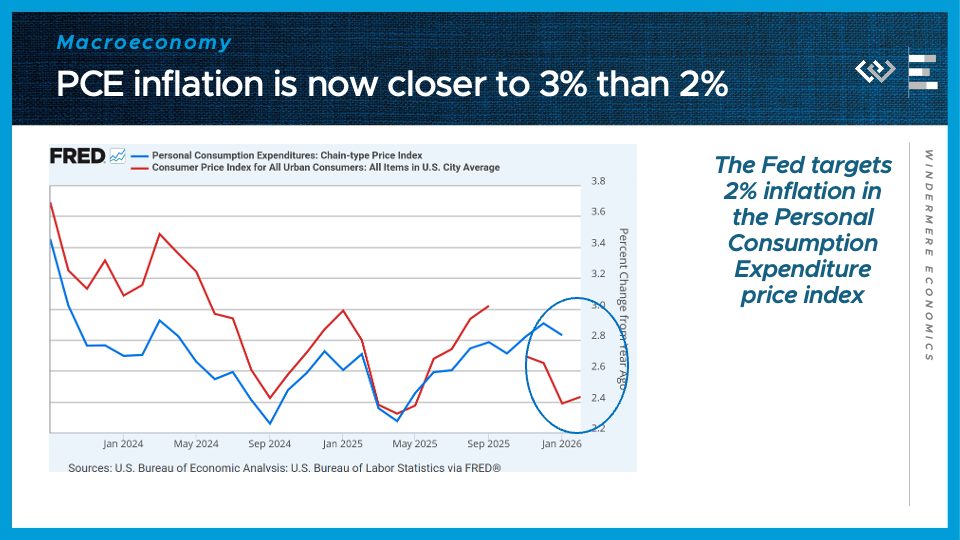
The first news this week is that the Federal Reserve did not cut interest rates at their meeting on March 18. Moreover, at the press conference following their meeting, Jerome Powell said they would not resume cutting interest rates this year until they saw some progress on inflation coming down further. For some insight into WHY that happened, our first number to know this week is 3%: that is where the Fed’s preferred inflation index has been heading in recent months. The Personal Consumption Expenditures price index normally runs a little cooler than the more well-known CPI inflation rate, and so the recent data showing the PCE inflation rate climbing toward 3% is giving the Fed even more of a reason to stop cutting rates than the benign CPI data this winter might have suggested.
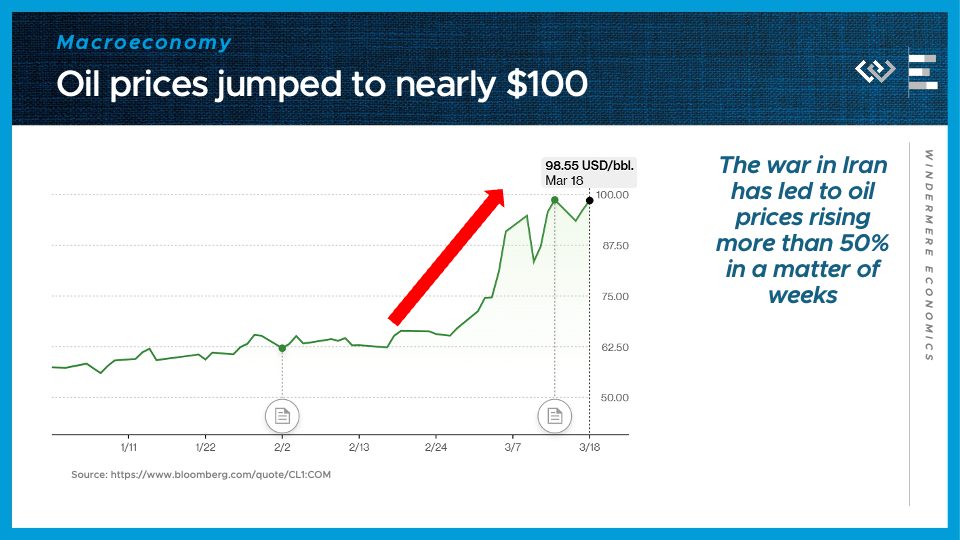
Our second number to know: about $100. That is the ballpark for what a barrel of oil is now costing on major world benchmarks, up more than 50% from prices under $60 just a few short months ago. The culprit, of course, is the war on Iran and the resulting cutoff of most oil normally shipped from the Persian Gulf. This is a volatile, unpredictable situation where the news may change at any time, but for now, the impact is clear: higher costs for almost everything in the economy, as the higher cost of energy ripples out through the economy. That is a major source of concern about inflation this year, which Jerome Powell cited ON TOP OF lingering tariff inflation, as a reason to wait and see before cutting rates any further.
So our third number to know: mortgage rates back closer to 6 and a quarter percent, or higher. At the end of February we hit a major milestone: 30-year mortgage rates dipped below 6% for the first time in 41 months. But all the bad news I just shared about persistent inflation, especially driven by the new oil crisis, has sent mortgage rates soaring back up by a quarter point or more. That will throw a damper on home buying demand this spring, on top of the negative effects from higher gas prices and lower consumer confidence.
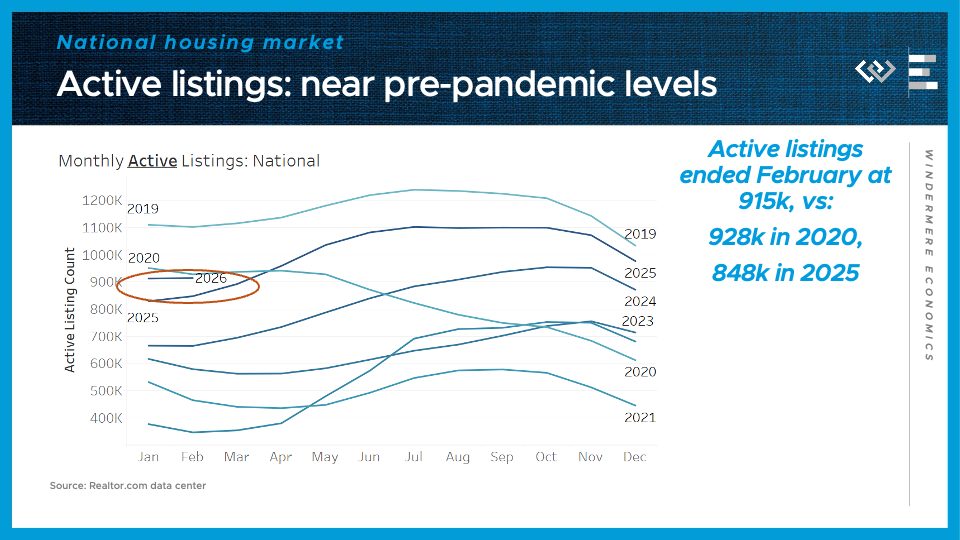
Speaking of the housing market, we saw 928 thousand active listings at the end of February, barely below where inventory stood at this time 6 years ago on the eve of the pandemic, and about 8% more than last year.
That marks yet another month where inventory is up year-over-year, but at a decelerating rate, ever since last May. Putting it all together, that means buyers will have more options in this spring buying season than in any recent year, but they should not expect a glut. The spring selling season always sees fierce competition for competitively-priced listings in desirable locations, so buyers should be prepared to move decisively if they see their dream homes, while sellers should do whatever they can to make their homes stand out amid the tide of other listings.
When Washington State Governor Bob Ferguson signed Senate Bill 6091 into law today, banning the marketing of residential properties to exclusive groups of buyers or brokers, he sent a clear message: transparency matters.
This bill didn’t emerge from political theory or academic debate. It arose from a real tension in the real estate industry: whether openness and equal access to listing information remain core principles, or whether the market fragments into private networks that benefit only a select few.
For decades, residential real estate has functioned as one of the most open marketplaces in America—and the world. Unlike many countries that fiercely guard listing data and property information, buyers and sellers in the U.S. have largely operated in a system where inventory and information are broadly shared. That openness isn’t accidental; it’s the foundation of consumer trust and fair market value.
In recent years, certain large national brokerages have pushed to expand private listing networks, which are exclusive, invitation-only platforms that limit who can view or access homes for sale. These practices reduce exposure, restrict competition, and ultimately work against the very people the real estate industry is meant to serve.
Consumers have been clear: they expect transparency. Buyers want confidence they’re seeing the full range of homes available, and sellers want assurance their property is reaching the widest possible audience. When transparency erodes, so does trust in the system.
Washington State’s action was measured, purposeful, and bipartisan. Lawmakers on both sides recognized that the housing market functions best when information is broadly shared and access is equal. SB 6091 protects consumers without restricting legitimate off-market sales, allows homeowners to limit access to their property, and provides exemptions to safeguard occupants’ safety or health.
Few companies stand to lose more from this law than Windermere. With the largest market share in Washington, private listing networks could have worked to our advantage. We supported the legislation anyway, because protecting transparency matters more to us than protecting market position or company profits.
Washington’s leadership should not be seen as an exception. It should be a blueprint. By reaffirming the importance of an open marketplace, the state protected a system that has long served consumers well.
Other states should take note: Washington didn’t reinvent real estate; it safeguarded one of its most important principles. And in doing so, it demonstrated that progress isn’t always about building something new. Sometimes it’s about protecting what already works.
OB Jacobi represents the second generation of leadership at Windermere Real Estate, founded by his father, John Jacobi, in Seattle in 1972, and now the largest regional real estate company in the Western United States, with more than 6,000 agents and 300 offices across nine states and Mexico.
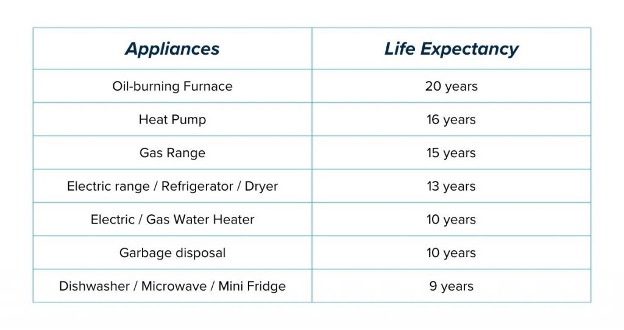
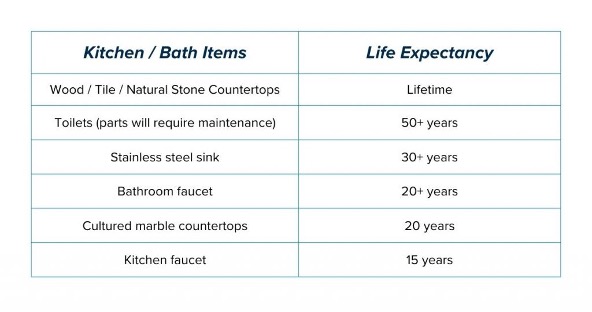
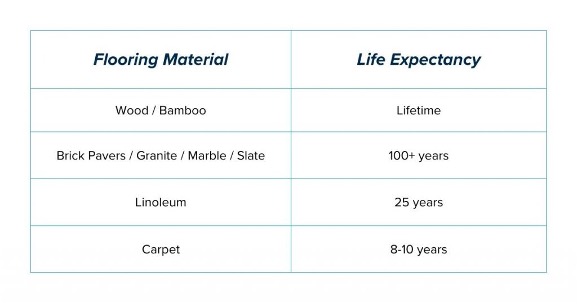
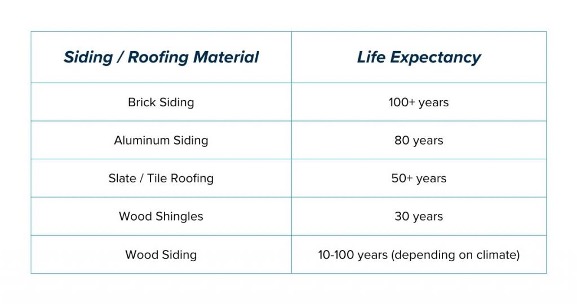
Every home is made up of dozens of moving parts, and none of them last forever. From appliances and flooring to roofing and siding, every component has a general life expectancy. Knowing how long these items typically last can help homeowners plan for repairs, budget for future updates, and make informed decisions when buying or selling a home.
We’re all familiar with the cliché: They just don’t build things like they used to. And while this may be true when it comes to brick siding or slate roofing, lifespans of other household components have increased in recent years. The following guide outlines the average life expectancy of common household components, based on data from the National Association of Home Builders (NAHB) along with industry estimates.
Appliances:
Among all household components, appliances tend to have the shortest lifespan because they experience daily wear and tear. Advances in technology have improved efficiency, but modern appliances also include more electronic parts, which can lead to repairs or replacement sooner than older models. Proper maintenance can help extend the life of most appliances, but these averages provide a general guideline for planning ahead.
Signs It May Be Time to Replace an Appliance
Even if an appliance hasn’t reached the end of its expected lifespan, certain warning signs may mean replacement is the better option. Frequent repairs, rising energy bills, inconsistent performance, or unusual noises can all indicate that a system is wearing out.
Kitchen & Bath:
Kitchens and bathrooms see constant use, so fixtures and finishes in these spaces often wear out faster than other parts of the home. When choosing your countertops, sinks, and faucets, it helps to consider both style and durability. Some natural materials can last a lifetime, while others may need updating after a couple of decades depending on use and maintenance.
Flooring:
Flooring plays a major role in both the look and function of a home, but different materials have very different lifespans. High-traffic areas will naturally wear faster, while proper care and refinishing can extend the life of many surfaces. If you’re looking for longevity, wood floors are the way to go. Certain rooms in your home will be better suited for carpeting, but you can expect they’ll need replacing within a decade.
Siding & Roofing:
When choosing roofing and siding for your home, climate and maintenance level factor into the life expectancy of the material. However, brick siding and slate roofing are known to be dependable for decades.
Are extended warranties warranted?
Extended warranties, also known as service contracts or service agreements, are sold for all types of household items from appliances to electronics. They cover service calls and repairs for a specified time beyond the manufacturer’s standard warranty.
You will have to consider whether the cost is worth it to you. For some, it brings a much-needed peace of mind when making such a large purchase. Also consider if the cost outweighs the value of the item. In some cases, it may be less expensive to replace a broken appliance than to pay for insurance or a warranty.
Staying informed about the lifespan of your home’s appliances and systems can make homeownership more manageable and help you plan ahead with confidence. If you’re thinking about buying, selling, or making updates to your home, a Windermere agent can help you understand which improvements matter most in today’s market.
Hi. I’m Jeff Tucker, principal economist at Windermere Real Estate, and this is a Local Look at the February 2026 data from the Northwest MLS.
We are now on the cusp of the busy spring selling season, and the data so far in 2026 point to a market that’s relatively balanced for buyers … for this time of year.
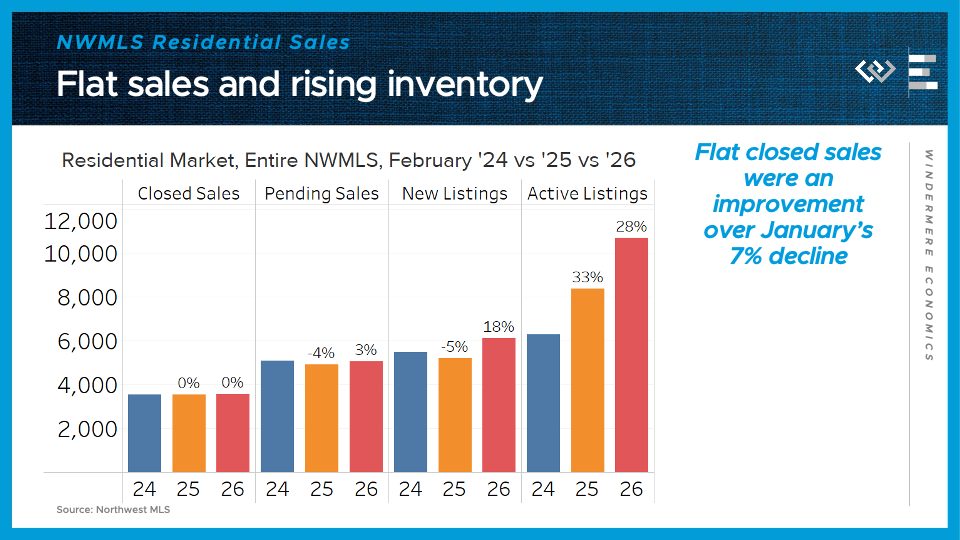
Across the Northwest MLS, there were almost exactly the same number of closed home sales as in February 2025, or the prior February for that matter. And pending home sales ticked up by 3%.
On the supply side, the flow of new listings was up a whopping 18% from last February’s pace. Finally, the month ended with 28% more active listings than last February. That’s a major uptick in inventory, and even the pace of that growth has now accelerated.
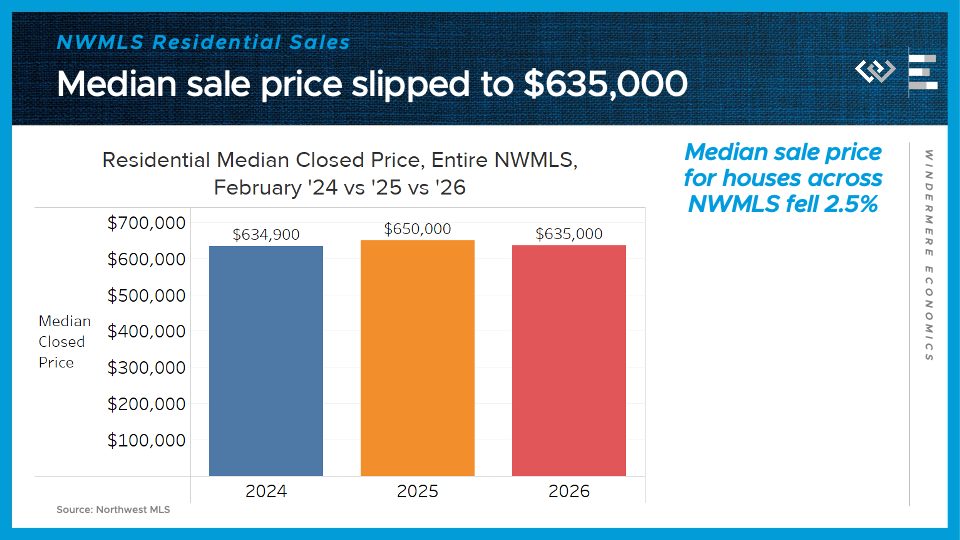
More negotiating leverage for buyers translated into lower home prices in February: down 2 and a half percent from last year, or basically back to 2024’s level.
Now for a closer look at the four counties encompassing the greater Seattle area.
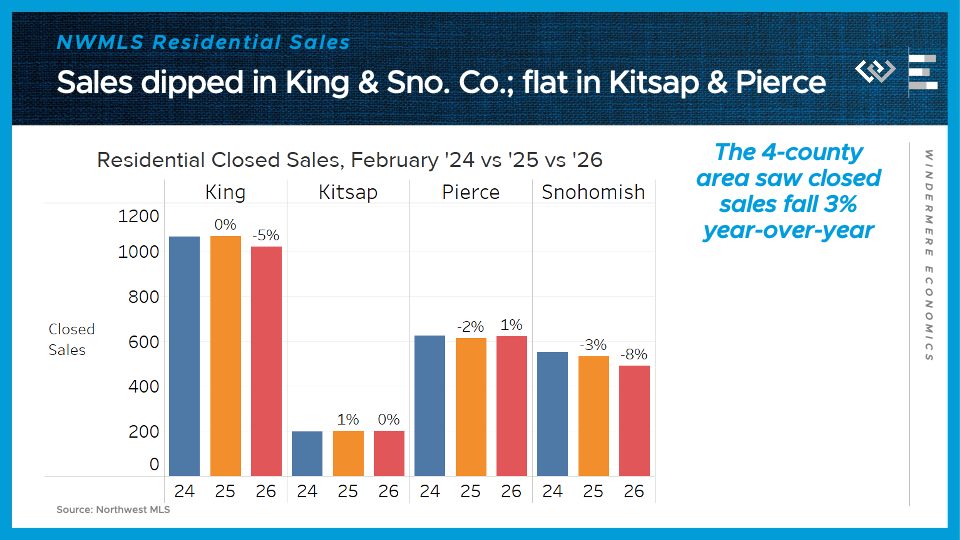
Closed sales dropped by 3% from last February around the region, which looked like a modest dip compared to January’s 9% decline. Once again Snohomish County had the biggest decline, followed by King County, while Kitsap and Pierce Counties’ sales volumes have held steady.
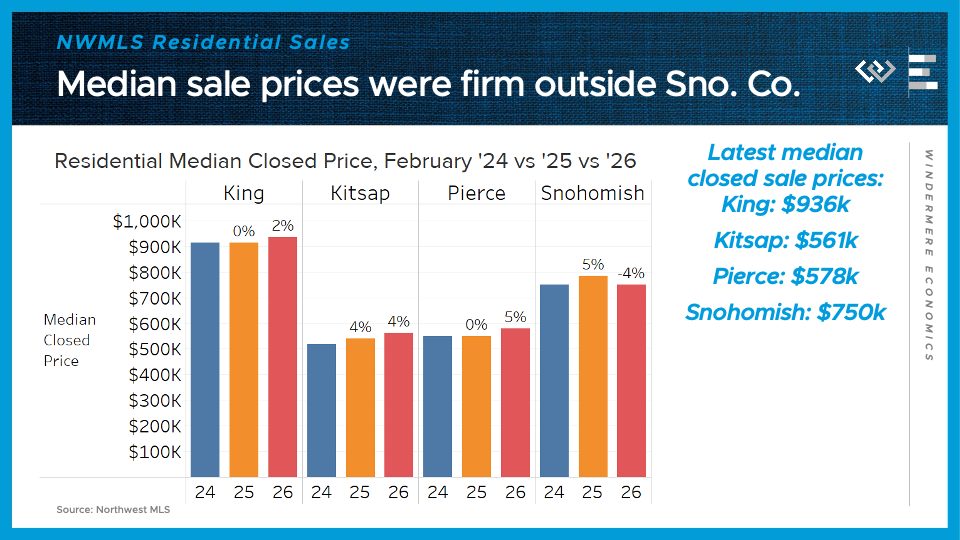
Median sale prices were mostly firm around the region, combing 2% in King, 4% in Kitsap, and 5% in Pierce County. Snohomish County, though, saw prices step back down to 2024 levels.
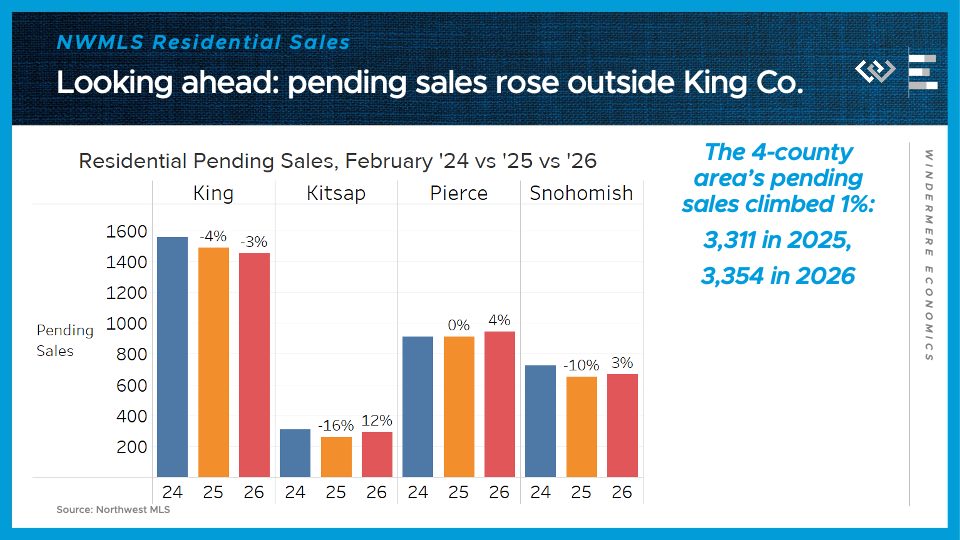
Looking ahead, pending sales climbed 1% across the region in February, buoyed by a big bounce back in Kitsap, and modest growth in Pierce and Snohomish Counties. Only King County saw a modest dip in pending home sales.
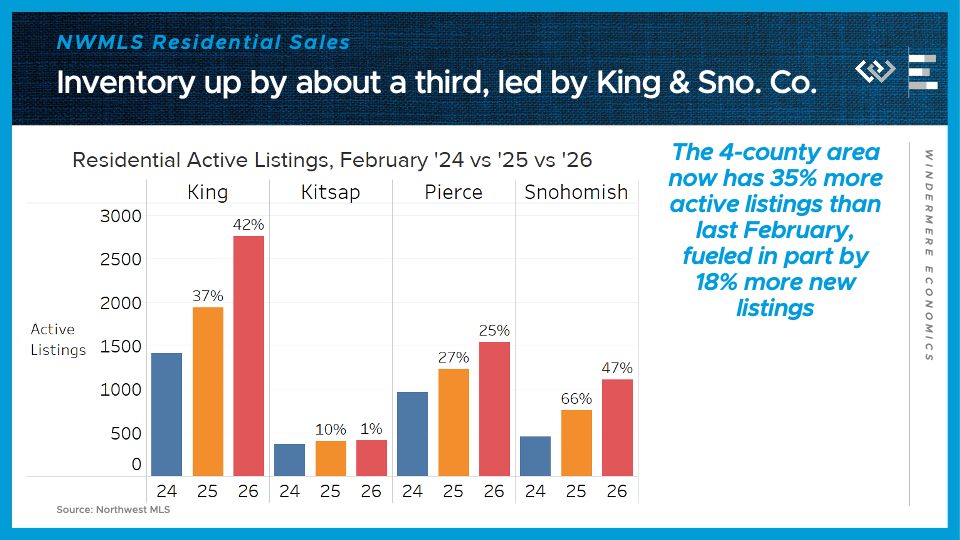
On the supply side, the 4-county greater Seattle area ended the month with 35% more active listings than last February, led by 47% growth in Snohomish County and 42% growth in King County. I think in those two core, higher-cost counties, buyers will see an unusually favorable spring buying season, thanks in part to a boost in listings from homeowners who de-listed last year and are now returning to the market.
Looking ahead to March and April, I think the big question is whether buyers feel emboldened by higher inventory and lower mortgage rates, or spooked by geopolitical turmoil and rising gas prices. As it stands, they will have more homes on the market to choose from than any spring in recent memory.

 Facebook
 X
X
 Pinterest
 Copy Link