More October 15, 2024

Housing & Economic Update: Numbers to Know 10/14/24

This is the latest in a series of videos with Windermere Principal Economist Jeff Tucker where he delivers the key economic numbers to follow to keep you well-informed about what’s going on in the real estate market.


Hi. I’m Jeff Tucker, the principal economist at Windermere Real Estate, and these are the numbers to know right now.

2.4%

That’s the annual CPI inflation rate in September, meaning how much the Consumer Price Index climbed from one year ago. This was a step down from 2.5% in August, but it didn’t drop as much as the consensus forecast, which was expecting 2.3%.

Inflation ticked down by less than expected in September​, Source: Bureau of Labor Statistics, via FRED​

Another data point here in red is the implied annual rate of inflation based on the monthly change: 2.2%. You can see that’s been more volatile, including some overheating back in Q1, but in general it’s been cool enough to bring annual inflation down.

Inflation has had a long, rocky path downward since it peaked at 9.1% in summer 2022. This is another step in the right direction, but still a little concerning that it’s not dropping faster.

Combined with the strong September jobs report I discussed last week, that means the Fed might be having second thoughts about how quickly they need to cut the Federal Funds Rate, especially after they started it off with a bang by cutting half a point in September.

Now there’s even some discussion of the Fed pausing on rate cuts at their next meeting in November.

In the meantime, the combination of renewed labor market strength and a slower cooldown in inflation, is enough to push up long-term yields, like mortgage rates, which brings me to the other number to know right now:

6.64%

That’s where the 30-year mortgage rate stood on Friday October 11th, according to Mortgage News Daily. It’s up about half a point from where it stood one month ago, although it’s still down about 1 full point from where it was at this time last year.

Mortgage rates have rebounded upward​Source: Mortgage News Daily​

Looking ahead, for mortgage rates to resume falling, we probably need either some reassuring data showing inflation cooling down, or, would need to see more signs of labor market deterioration. Or both!

Interest rates went up so much because the economy was running hot, arguably overheating, for a couple of years, so now markets need to see more convincing evidence of a cooldown to get us out of that high-rate environment.

LivingMore October 10, 2024

Public Experiment on Guessing Home Market Values

Most people understand there are many factors contributing to the “sold price” of a house, but how accurate is the general public in guessing the price of a recently sold home? We decided to find out.

Before we get into the details of the experiment, let’s cut the general public some slack. Pricing a home is one of the most difficult jobs for real estate agents and home sellers. Many factors contribute to the eventual sale price, including:
Windermere Cup Experiment on Guessing Home Market Values

  • Local market trends
  • Local market trends
  • Interest rates
  • Housing supply
  • Neighborhood demand
  • Buyer’s Markets
  • Sellers Markets
  • Balanced Markets
  • Age and conditions
  • Home improvements
  • Curb appeal
  • Zoning laws

Public Home Price Guessing Experiment

Every year, Windermere hosts the Windermere Cup, a rowing championship held in Seattle, at the University of Washington. Thousands of people attend the event, and many stop by the information booth.

This year, we installed a challenge at the information booth. The concept was very simple: guess the price of a recently sold home, and then spin the prize wheel.

Windermere Cup Public Experiment on Guessing Home Market Values

Methodology

We provided four pictures of the home and many key data points to help participants with their guess.

Home displays included the address, neighborhood, square footage, # of beds, # of baths, year built, and other key factors like HOA fees, if it had a view, recent renovations, acreage, A/C, patios, decks, and more.

Participants were able to choose from eight different homes, of their choice, to guess the final price of the home. The price wasn’t revealed until the guess was recorded.

The Results

Out of the 182 participants, the average guess was 100.89% over the sold price. That’s double the actual home price. Only six people were able to come within $50,000 of the sold price. On the best-guessed house, people guessed an average of 31.77% over, but on the most difficult house, people guessed an average of 255.9% over the price.

Example home in Queen Anne: Actual Price: $825k
Average guess: $1,250,275 (51% over)

Windermere Cup Experiment on Guessing Home Market Values

Given a different market, the results could have easily swung the other way, with people underestimating the value.

If you’d like to play a game like this yourself, we welcome you to try our home worth calculator to see how close you can get to guessing the current value of your own home.

Design September 17, 2024

Kitchen Remodel Must Haves

Many kitchen remodels are prompted by a desire for more storage, but there are plenty of reasons to want an upgrade. Whether your complaint is crowded counters, out-of-date appliances, or spending too much time cleaning up after a meal, there are ways to add functionality without sacrificing your aesthetic when you renovate your kitchen.

Storage

If you’re tired of finding expired food at the back of your lower cabinets or needing a step stool to reach items in the upper ones, roll-out cabinets and pantry shelves are a necessity. A roll-out garbage cabinet will keep trash and recycling cans out of sight (and smell). Be sure to use heavy-duty, reinforced hinges that can bear the weight of two, full cans.

Toasters, coffee makers, blenders, and air fryers can easily overcrowd kitchen counters. Appliance garages that hide away commonly used kitchen appliances now come in just about every configuration you can think of. If you love baking, you probably love your stand-up mixer even more. But moving it around can be a pain. Fortunately, installing a mixer riser into a lower cabinet is relatively simple and will put your favorite appliance right where you need it, only when you need it.

Cooking

Though some passionate cooks still swear by their gas ranges, induction cooktops have become all the rage for several good reasons. In addition to being easier to clean than gas stoves, induction cooktops are more efficient because all the heat they produce goes directly to your cookware rather than into the atmosphere of your home. And with inductor stoves, you never have to worry about dangerous fumes or open flames.

You don’t have to be an avid entertainer or the one who hosts Thanksgiving every year to reap the benefits from a double oven. Even cooking dinner for one or two people can be a challenge when you need to roast or bake things for different times or at different temperatures. A double oven fixes that, and it can improve efficiency if you prepare a dish using only the smaller oven since it takes less energy to heat up a smaller space. For extra user-friendliness, install the oven at counter height so you don’t have to bend over to pull out heavy dishes

Speaking of heavy… if your sink and cooktop are a bit distant from each other, a pot filler installed on the wall behind your stove could be a game changer. Say goodbye to heaving large pots of sloshing water across the kitchen!

For as long as microwaves have been around, people have wondered how to get them off their counters or make them appear more attractive. These days, microwave drawers are the new must-have kitchen upgrade. Instead of a door that swings open, the microwave is the entire drawer that slides out, and it can go in your kitchen island or along any cabinet wall.

Cleaning

Kitchen floors are notoriously difficult to keep clean. Between meal prep, quick snacks in front of the fridge, and near-constant traffic, crumbs and dust pile up quickly. If your home already has a central vacuum system, putting a vacuum slot in the kitchen makes clean ups a breeze. Simply sweep scraps into the slot—no more bending over with the dustpan. If you don’t have a central vacuum system, there are vacuum slot inserts on the market that use a traditional replaceable bag to collect what you sweep up.

If you’ve ever watched a mixologist or bartender shake up your cocktail and then place the shaker on top of a device that shoots up warm water to clean it, you’ve seen a glass rinser in action. Installing one in your own sink adds a touch of sophistication to your kitchen and makes cleaning glasses easier and more efficient, especially for those glasses that can’t go in the dishwasher or don’t fit on the top shelf.

It seems that a modern kitchen renovation isn’t complete until you’ve installed a large, single basin sink. There’s good reason for their increased popularity: more room to soak large dishes, easier to clean, etc. To really boost the usability of a single basin sink, consider adding hardware that makes it an efficient workstation. Drying racks, cutting boards, and colanders are readily available, easy to install, and will make your extra-large sink extra handy.

ArchitectureDesign September 9, 2024

Elements of Modern Farmhouse Architecture

Traditional Farmhouse architecture represents the history and the industriousness of rustic living. Clean lines, natural materials, and a focus on communal spaces are staples of farmhouse living that were ripe for a modern update. Modern Farmhouse architecture reflects elements of the traditional, but with 21st Century touches that make it especially attractive for today’s homeowners.

Rustic Wood

Because many farmhouses were just that—homes built for and by those who worked on the farm—they often used the materials that could be found nearby. The wood from trees native to the area would be used for both the interior and exterior. Since the people building the homes were mostly concerned with the functionality of the living space and speed at which they could put it together, they didn’t spend time sanding the wood to perfection or painting it, creating a rustic look and feel many modern homeowners desire. Exposed beams and reclaimed wood accents are signatures of Modern Farmhouses.

Clean lines

The simplicity borne from the need to build homes quickly and efficiently lent itself to the clean lines and minimalist spaces we see in both Traditional and Modern Farmhouses. From shiplap paneling to the often-symmetrical shapes of the home itself as well as its interior rooms, you won’t find arched doorways or curved walls in Farmhouses. Look for straight lines, gabled roofs, and large, square windows to identify a Modern Farmhouse.

Covered porches

At the end of a day of hard work on the farm, who wouldn’t want to sit on the porch, sipping something cool and enjoying the view of your property? Contemporary homeowners may define work differently than those who originally called Farmhouses home, but the appeal of spending lazy summer evenings is timeless. A large, covered porch is a telltale sign of Modern Farmhouses.

Muted color palette

Again due to the need to use nearby materials and keep things simple, Modern Farmhouses tend to use palettes that range from white to natural wood colors. Contemporary residents often break up the monochromatic tones with black industrial touches on items including light fixtures, bath and kitchen faucets, and accessories such as doorknobs and drawer pulls.

If the idea of a Modern Farmhouse style appeals to you, look for these elements as you search for homes or make plans to build your own.

Selling August 5, 2024

The Pitfalls of Overpricing Your Home

When a homeowner prepares to put their house up for sale, two things are usually top of mind: how long will it take to sell and how much can we get for it. During a seller’s market, when stories of bidding wars and cash offers abound, it’s can be tempting to put as high a price tag on your home as possible. But even when the market favors sellers, overpricing your home can jeopardize your efforts to sell quickly and get top dollar.

Missing Your Market

The vast majority of homebuyers start their search online, and the first criteria they often enter is the price range. If your home is above the high point of their range, buyers in your target market will never even see your listing—it simply won’t show up in their searches. In addition, it’s human nature to go after the top item in a collection. Buyers want the most house they can get within their budget. This means you want to be the best house compared to those in your price range, rather than among the bottom compared to those in a more expensive bracket.

Key takeaway: You want to shine against your competition, not pale by comparison

Playing the Numbers

Selling a home is a numbers game: the more potential buyers, the greater chance of an offer. Overpriced homes get fewer showings, both in person and online. Your agent will tell you that showings are critical to capturing the interest of buyers, but if the home is overpriced, they will have difficulty attracting attention to your home. This can slow the entire home selling process, leaving both you and your agent feeling frustrated.

Key takeaway: More showings = more offers.

Going Stale

It’s also human nature to be drawn to what’s new, the bright, shiny object, as the saying goes. New listings attract the most attention—that’s when buyer interest is highest. The longer your home is on the market, the less appealing it becomes. And at a certain point, you may be forced to lower the price. Many buyers and their agents will assume the reason the house has been on the market so long, and why you had to lower the price, is because there is something wrong with it. Once the price drops begin, they can continue, which creates the risk of selling your home for less than what it is worth.
In addition, the longer your home is on the market, the more expenses you incur. Mortgage payments, utilities costs, and seller’s fees will continue to pile up, making it harder to recover from these costs when your home does eventually sell.

Key takeaway: Be the bright, shiny object.

Losing at the Last Minute

Let’s say you do find a buyer at the overpriced cost. During closing, the lender will order an appraisal of your home. If the appraiser finds that the market value of the home is less than the selling price, they could deny financing. If that happens and you are forced to put the house back on the market, buyers’ agents will be able to see that it’s a relisting, could assume something is wrong with the house and share those concerns with their client.

Key takeaway: Be realistic about value.


To get an estimate of the value of your home, try Windermere’s free Home Worth Calculator at the link below: 

What is my home worth? 

To connect with an experienced Windermere agent today, click the button below: 

Living July 29, 2024

Beat the Heat Without AC

There’s no doubt about it: summers are getting hotter. While many of us who live in the western United States have been able to do without central AC in years past, rising temps make it more difficult to beat the heat. If installing central air is beyond your budget, try these tips to keep cool. The best part: some of them are free!

Get Low

Heat rises, so the lower you can get, the cooler you will be. Basements are often the coolest part of the house because they are low and often darker due to a lack of windows. Spend the hottest part of the day in your basement or on the lowest floor of your home. If your home has a hard time cooling off at night, consider moving your bedroom to the first floor or basement for the dog days of summer.

Go Dark

It seems a shame to block out summer sun when many of us crave that extra daylight the rest of the year. But when outside temperatures soar, that’s exactly what you should do. Use blackout shades or curtains and keep them closed during daylight hours. If you live in a region where temperatures cool down overnight, open windows as soon temps are comfortable outside and then close them again when it warms up. If you need to do chores around the house, overnight or early morning are the best times of day to do laundry or run the dishwasher, since those appliances give off heat while in use.

Stay Hydrated

Of course, sipping on a cold drink is a great way to cool down quickly, but staying hydrated is important for other reasons. In extreme heat, dehydration can happen very quickly, and it often leads to headaches and dizziness. If you’re tired of plain water or want to avoid juice and soda, snacking on cucumbers, watermelon, pineapple, citrus fruits, and cold soups like gazpacho is a great way to keep cool and hydrated—and because you don’t have to cook them, you won’t heat up your house using the stove or oven.

Take a Cold Shower

This one seems obvious, but the effects really can last for hours. For a quicker fix, try running your wrists under cool running water, or get a rag or towel wet and wrap it around your neck or place it behind your knees.

Be Creative

A fan is nice, but when it’s just blowing around hot air, it’s not doing much to cool you down. Instead, turn your fan into a swamp cooler. Hang a wet cloth over the rotors (but not the motor), place a bowl of ice cubes in front of it, or place frozen water bottles directly behind it to cool the air that is coming through the fan. And though it’s tempting to have the fan pointing directly at you, strategically placing it so that it’s circulating air will help cool down the whole room.

Invest a Little

If you’ve used all the tricks above without success and you’re willing to spend a little money, you have options that don’t involve installing central air. Mini splits have drastically increased in popularity in the past several years thanks to their efficiency and cost effectiveness. As opposed to cooling the whole house, they give you the ability to cool only the rooms you use most. Window unit or portable air conditioners can provide similar singular-room cooling for a lot less than central air. These are also good choices for homes that don’t have the ducting required for AC.

Of course, installing central air, or even mini splits, can increase the value of your home. To find out how much, get in touch with your Windermere agent.

Living July 22, 2024

The Life Expectancy of Your Home

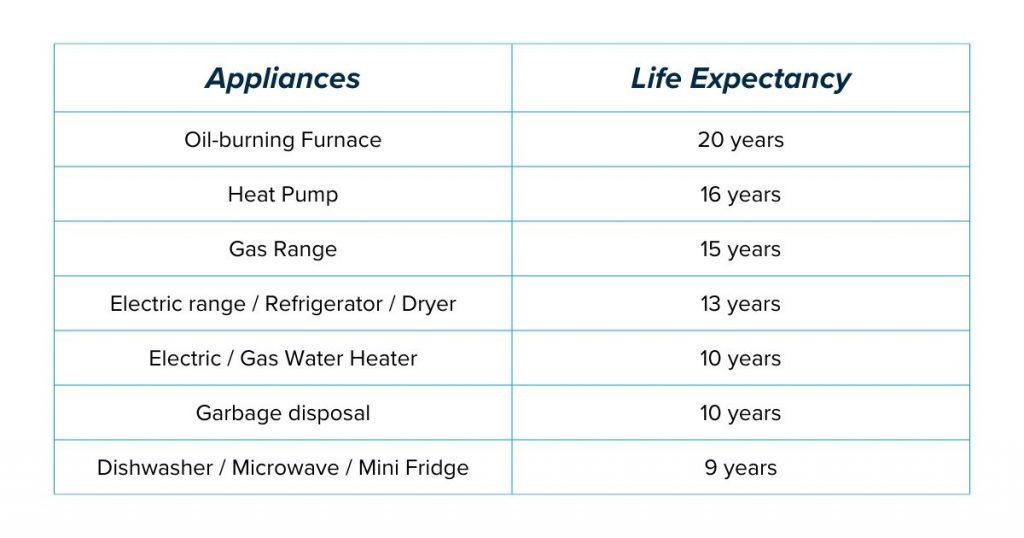
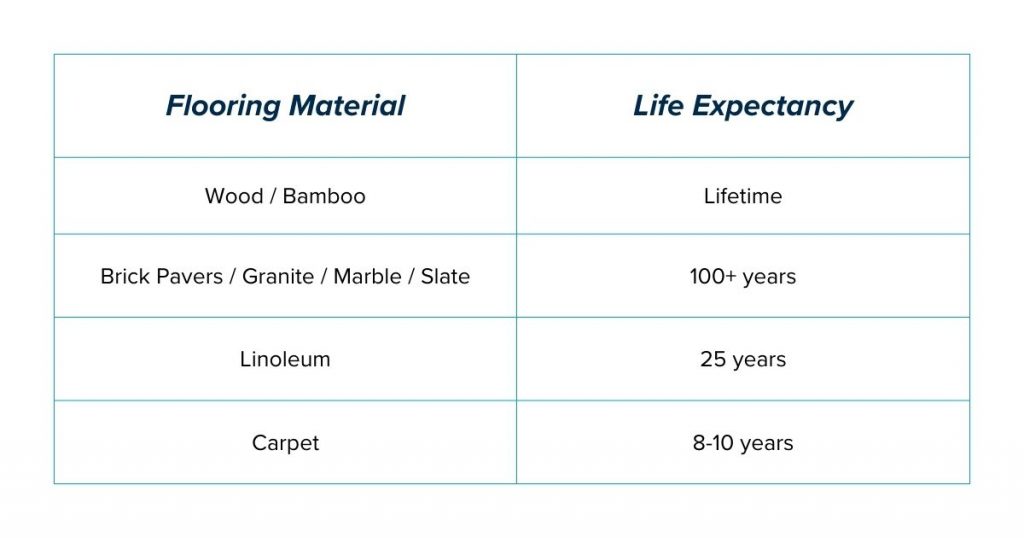
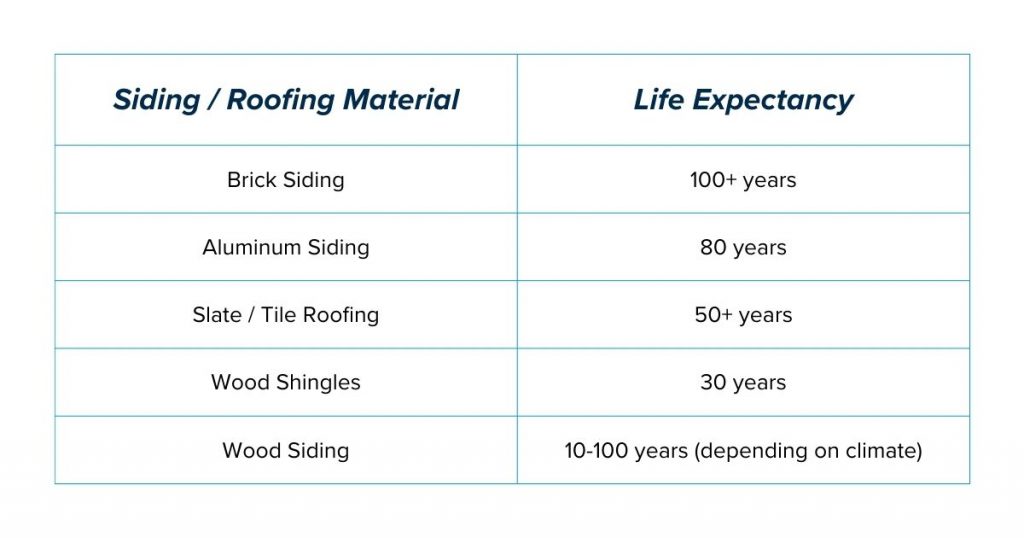
Every component of your home has a lifespan. Common questions asked by homeowners include when to replace the flooring or how long to expect their siding to last. This information can help when budgeting for improvements or deciding between repairing and replacing when the time comes. We’re all familiar with the cliché: They just don’t build things like they used to. And while this may be true when it comes to brick siding or slate roofing, lifespans of other household components have increased in recent years. Here are the life expectancies of the most common household items (courtesy of NAHB):

Appliances:

Among major appliances, gas ranges have a longer life expectancy than things like dishwashers and microwaves.
Chart describing the life expectancy on the most common household appliances.

Kitchen & Bath:

When choosing your countertops, factor in the life expectancies of different materials.

Flooring:

If you’re looking for longevity, wood floors are the way to go. Certain rooms in your home will be better suited for carpeting, but you can expect they’ll need replacing within a decade.

Siding & Roofing:

When choosing roofing and siding for your home, climate and maintenance level factor into the life expectancy of the material. However, brick siding and slate roofing are known to be dependable for decades.

Are extended warranties warranted?

Extended warranties, also known as service contracts or service agreements, are sold for all types of household items from appliances to electronics. They cover service calls and repairs for a specified time beyond the manufacturer’s standard warranty.

You will have to consider whether the cost is worth it to you. For some, it brings a much-needed peace of mind when making such a large purchase. Also consider if the cost outweighs the value of the item. In some cases it may be less expensive to replace a broken appliance than to pay for insurance or a warranty.

DesignLiving July 15, 2024

Pet Friendly Home Decor Ideas

For many of us, pets are important members of our household, which means our homes should be as comfortable for them as they are to everyone else who lives there. When choosing how to decorate your home, whether you’re moving into a new one or welcoming a new furry or feathered friend into the one you already live in, thinking ahead about their needs can not only create a happy space for everyone but also help with the inevitable pet-related accidents and other possible issues down the road.

Cuddly-friendly Furniture

While some pet owners refuse to let animals on couches or chairs, others love to cuddle with their furry friends on or near their laps. If you fall in with the first group, create a soft space on the floor for Fido or Fluffy to lie on when the family is relaxing. Dog and cat beds come in just about every material, color, and style you can imagine, so finding one that fits in with your aesthetic should be relatively simple.

If you’re in the second group, select furniture that can withstand the wear and tear of claws, accidents, and frequent vacuuming. Leather (or faux leather) surfaces are best for homes with animals that shed. If you prefer the feel of fabric instead, choose a couch or loveseat made from stain-resistant materials or use a washable slipcover.

Throw blankets are not only cozy, but they are also great for creating a barrier between pets and furniture, and they’re a lot easier to clean than an entire couch.

Safe Plants

Incorporating live plants and greenery is a great way to add a touch of nature to your home’s interior, but not all plants are safe for pets. While fake plants are an option, they don’t provide the extra benefit of helping to clean the air you breathe while indoors.

Rattlesnake plants, spider plants, orchids, many kinds of fern, and small palms are all beautiful additions that aren’t toxic if your pup or kitten takes a nibble. There are also many types of succulents that are pet-safe, and the spiny ones will deter a pet that’s looking for a snack or—in the case of some cats—a litter box.

Flooring

When it comes to pets, accidents are usually inevitable. As well behaved and trained as they may be, pets get sick, old, and stressed. Though messes are bound to happen, lingering stains don’t have to. Hardwood, tile, and vinyl floors make it easy to wipe up anything your pet leaves behind, as well as spills they may cause. Washable rugs come in dozens of attractive styles and are great at protecting floors, especially if you add a pet-proof pad underneath. Put plastic or vinyl mats under pet feeding areas to protect floors from spills and to prevent bits of food from spreading throughout the house.

Colors

The best way to camouflage pet hair in between sweeping and vacuuming is to select furniture, carpets, and décor items that match your pet’s coat. If you’ve got a brindle pup, calico kitty, or multi-colored animal friend, patterns will be your best bet. Florals, plaids, stripes, paisleys, and other patterns also help hide stains when those inevitable spills and accidents happen.

Hidden Essentials

Our animal buddies are sweet, cute, and cuddly, but not everything about having a pet is attractive. Litter boxes, feeding stations, and sleeping crates take up a lot of room and can be eyesores. Fortunately, furniture makers have taken notice and created pieces that are both aesthetically pleasing and functional.

For indoor kitties, litter boxes are necessary, but constantly seeing and smelling them isn’t. Get the box out of sight with a stylish litter box side table. Dogs can nap in style with a crate that doubles as an end table or nightstand. Feeding stations with storage make dinner time easy and keep unsightly bags of food hidden away.

Your love of animals doesn’t have to get in the way of living in style. These tips should help you find the right balance between the two.

Buying July 8, 2024

So You Bought an Investment Property, Now What?

Congratulations on your new investment property! Now comes the exciting part: Turning your property into a revenue-generating machine. While it’s not exactly easy, your goals are within reach if you take steps to organize, plan, and build a solid foundation. Here are some ways to help maximize your property’s potential in the short and long term while avoiding future headaches.

Ensure your property is up to code

At a minimum, your new investment property should be safe and livable. This isn’t just the right thing to do, it will also shield you from liability and help attract better tenants. Start by repairing the necessities using your home inspection report as your guide. Prioritize issues that could lead to bigger problems down the road, such as a leaky roof or holes in the closet that could lead to infestations. Ensure that all appliances are in top working condition, including the furnace or other heating system, and that the plumbing and electrical are up to code.

Also make sure the property complies with all local and state laws regarding the presence of mold, lead paint, asbestos, and other potentially hazardous substances.

Choose a property management team

While you can manage the property yourself, hiring a good property management team will reduce stress and likely save money over time. Property managers handle tasks such as rent collection, maintenance, tenant screening, and marketing your property. They also oversee complaints, so you don’t have to deal with upset or difficult tenants.

To find a reliable property management team, start by asking for recommendations from friends, family, or other real estate investors. Also check reviews on specialized property review sites. When interviewing potential managers, ensure they have experience with properties like yours and assess their responsiveness and communication skills, as you need a manager who keeps you informed and addresses issues promptly.

If the management fee is too steep and you decide to go it alone, curate a list of reliable plumbers, electricians, appliance repair companies, and handymen to handle maintenance requests. Also thoroughly screen tenants to ensure they’re reliable and will take good care of your property.

Enhance the property appeal

Before you rent the property, consider cost-effective renovations to enhance its appeal and rental value without breaking the bank. For the kitchen, consider refacing or repainting cabinets, upgrading to energy-efficient appliances, and installing modern faucets and light fixtures. Bathroom options include updating faucets, showerheads, and flooring. Other improvements that may attract higher-paying tenants include refinishing the floors, upgrading to energy-efficient doors and windows, and hiring a gardener to improve the landscaping.

Consider different rental strategies

Regular maintenance is crucial to maintain the property’s value and prevent costly repairs. Coordinate with your tenants to schedule periodic maintenance checks, and create a list of maintenance tasks to address when tenants are on vacation or between renters.

Property owners have traditionally concentrated on long-term rentals. However, the rise of short-term rental platforms like Airbnb and VRBO have shifted the landscape for some. Long-term rentals are idea for owners seeking a stable income, as turnover is typically low and monthly revenue is predictable. On the other hand, short-term rentals can command higher nightly rates, but they usually involve more expensive and time-consuming management and upkeep. Plus, reservations can be unpredictable, particularly in areas with seasonal fluctuations.

Set competitive rental rates

Property management teams generally recommend an optimal rent based on a comprehensive market analysis, helping you achieve the highest return on your investment. If you’re managing the property yourself, you can perform your own analysis by researching comparable properties (“comps”) on websites like Craigslist or Trulia. Consider factors such as your property’s location compared to the comps, and whether your property includes coveted features like air conditioning, a washer/dryer, or ample outdoor space. Proximity to good schools and local amenities such as restaurants are also valued by renters.

Keep in mind that for your investment to be profitable, your rental income must cover expenses such as mortgage payments, taxes, management fees, insurance, and ongoing maintenance costs. Make sure to periodically review and adjust the rates to remain competitive and maximize your income.

Market your property effectively

As with rental rates, your property management team typically lists and markets the property, so you’re off the hook here. However, if you’re managing solo, you need to think like a product marketer, using tools like high-quality photos, virtual tours, and compelling descriptions to make your property stand out. First impressions matter, so lead with a well-lit, inviting photo. Bright images convey a clean, move-in-ready home, while dark photos can scare tenants away by making the property appear dirty and uninviting. Consider hiring a professional photographer to ensure the lighting and framing are perfect in every room.

Review other listings to gather inspiration for your own. Highlight unique selling points over standard features, especially if the latter are evident in the photos. Think about what would attract you as a renter. Is it simply a garage with two storage cabinets? Or is it a spacious garage with a shop-ready layout, including two 220V circuits, two sturdy workbenches, and built-in storage?

Master the legal and financial details

Owning an investment property comes with legal rights and responsibilities for both you and your tenants. It’s crucial to familiarize yourself with local rental laws, zoning regulations, and tenant rights to prevent legal liabilities and handle any issues that may arise effectively. Additionally, obtaining landlord insurance is essential to protect against potential property damage and liability.

And remember, owning an investment property lets you take advantage of tax deductions for mortgage interest, property taxes, repairs, and depreciation. Keep detailed records of all income and expenses to ensure you maximize these deductions and continue to earn a profit.

Buying July 1, 2024

How to Increase Your Buying Power

One of the best ways prospective home buyers can empower themselves when purchasing a home is to improve their buying power. The numbers may seem daunting but identifying ways to strengthen your financial standing will help you each step of the way.

When visualizing your dream home, it’s common for buyers to focus on the physical characteristics. But to mortgage lenders, a home is a numbers game. The following categories related to your buying power demonstrate how lenders identify your financial standing and determine your eligibility for a home purchase. Improvements in these areas will increase your buying power, propelling the strength of your offer when you’re ready to put it on the table.

How to Increase Your Buying Power

Increase Savings For Your Down Payment

As the saying goes, cash is king. The down payment—often 20% of the home’s sale price—can sometimes be the deciding factor between competing offers for a particular home.

Try stashing away a little of each paycheck to build up your savings over time. Set a savings goal, commit a dedicated amount to each pay period, and watch the savings build as time goes on. If you prefer to keep your money separate, open a new account to which you can dedicate the added savings. Another way to save for your down payment is to generate additional income. If you have interest or experience in an area outside of your current job, explore opportunities for part-time work and dedicate the income earned to your down payment savings.

There are numerous benefits to offering a serious down payment. Putting 20% or more down can help your offer stand out, it may allow you to negotiate a lower interest rate on your mortgage and could remove the need for private mortgage insurance (PMI).

Improve Your Credit Score

Plain and simple—a better credit score leads to better interest rate on your mortgage. Your payment history, amounts owed, length of credit history, credit mix, and new credit all factor into your credit score. Although improving it will not happen overnight, a higher credit score will pay dividends in the long run.

To improve your credit score, focus on paying down your credit cards, especially those with high interest. Refrain from opening new lines of credit that aren’t necessary and stay away from large purchases leading up to the time when you are preparing to make an offer. Keep in mind that student loans factor into your financial picture. Paying them off consistently will improve your financial standing in the eyes of lenders.

Stabilize Your Debt to Increase Buying Power

When assessing what you can afford, banks will examine your debt-to-income ratio. Lenders want to know that you’ll be able to pay your mortgage on top of your remaining debt.

They do this by looking at your housing ratio, or front-end ratio, to determine what portion of your income will go to paying your mortgage. Your front-end ratio is calculated by taking your monthly mortgage payment and dividing by your monthly gross income. The higher the ratio, the higher risk of default.

Next, your back-end ratio, or debt-to-income ratio, is used to determine how much of your monthly income goes toward paying your debts. Your back-end ratio is calculated by taking your monthly debt expense (the principal, interest, taxes, and insurance of your mortgage payments, credit card payments, student loans, and any other loan payments), and dividing it by your gross monthly income.

Similar to your credit score, paying off credit cards, and making steady, consistent progress on your loans will help to decrease your debt and improve your debt-to-income ratios, which will increase your buying power.

Although these aspects of your finances don’t cover everything that goes into the purchase of a home, they do play a significant role in how lenders assess your financial standing and thereby eligibility for approval. Increasing your buying power takes time and strategy. Plan accordingly so that when you find your dream home, you’re in the best position possible to buy it.

To connect with an experienced Windermere agent, get started here: