Facebook
 X
X
 Pinterest
 Copy Link

ECONOMIC OVERVIEW
Idaho added 14,700 new jobs in 2017, representing a growth rate of 2.1%. Although this is still a reasonable figure—and well above the total U.S. rate— this rate continues a cooling off we’ve seen over the past few quarters, which is to be expected as the state has essentially reached full employment.
In December, the state unemployment rate was 2.9%. With the labor force continuing to expand, it is clear there are still jobs out there to be filled. I continue to anticipate that Idaho will outperform the U.S. in growth through 2018.
HOME SALES ACTIVITY
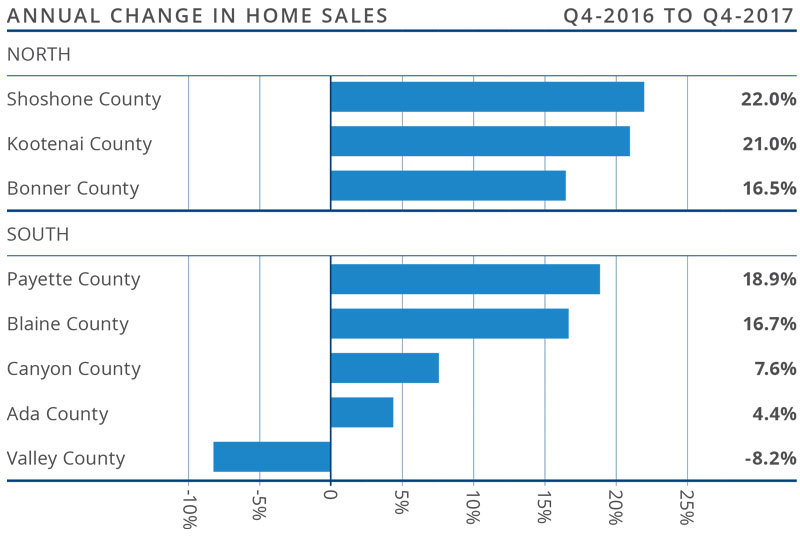
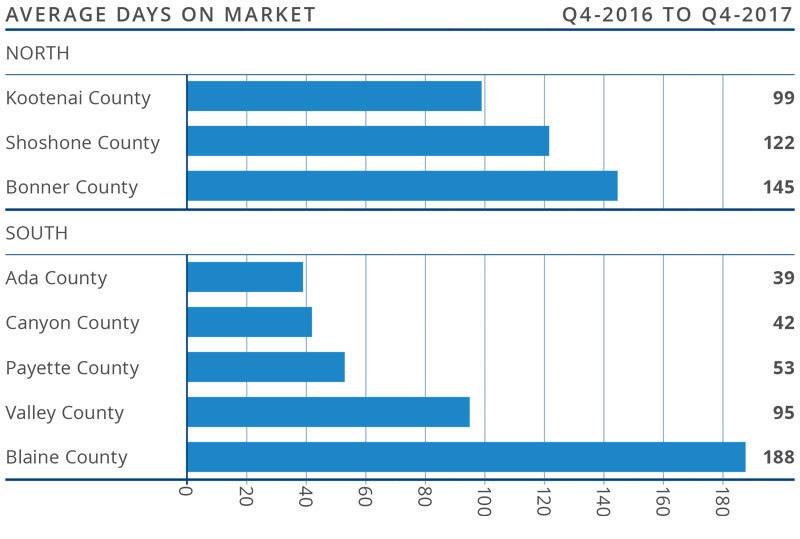
- Fourth quarter home sales rose by 9.1% compared to the same period last year, with a total of 5,787 homes changing hands.
- Sales rose the fastest in Shoshone County, which had a 22% increase over the fourth quarter of 2016. There were also noticeable increases in Kootenai, Payette, Blaine, and Bonner Counties.
- Year-over-year sales dropped in Valley County, but given that this is a remarkably small market, I am not concerned.
- The number of available homes for sale rose over the fourth quarter of 2016, which is an encouraging sign.
HOME PRICES
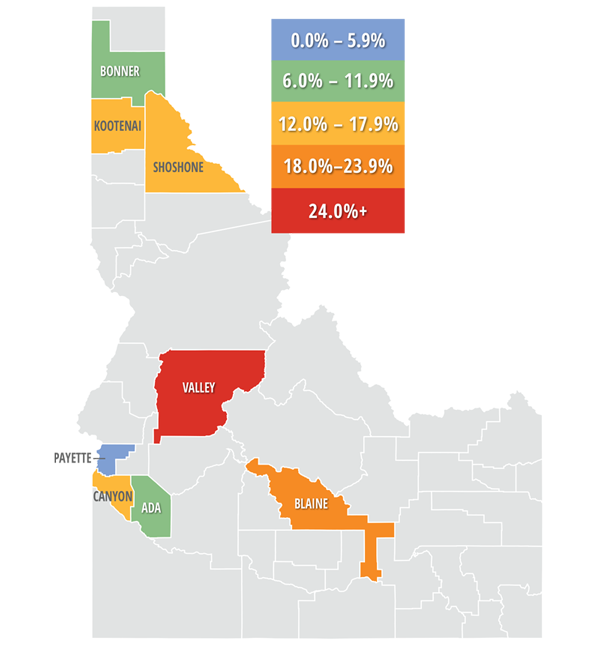
- The average home price in the region rose 14% year-over-year to $306,938.
- Valley County led the market with the strongest annual price growth. Homes there sold for 34% more than a year ago.
- All counties in this report saw home prices increase compared to the fourth quarter of 2016. All but one county saw double-digit gains.
- Home prices are still trending well above the long-term average as demand continues to exceed supply. Although we did see some growth in listings, it remains a seller’s market.
DAYS ON MARKET
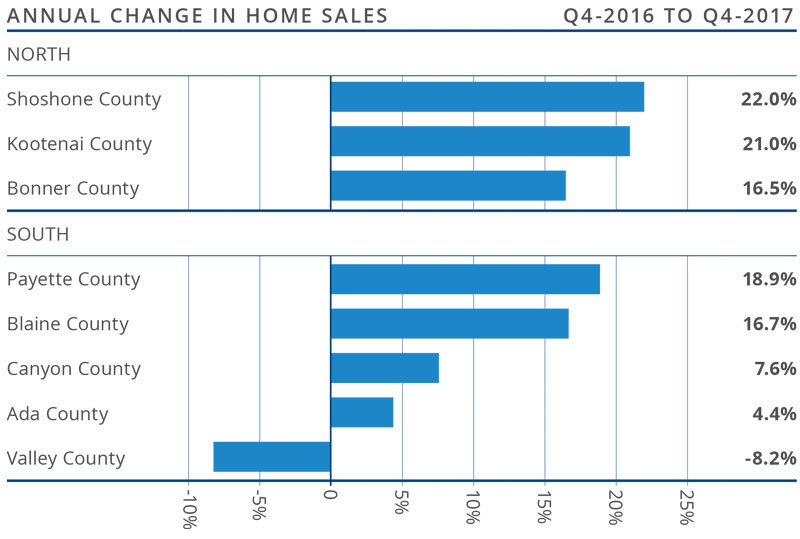
- The average number of days it took to sell a home in the region dropped 20 days compared to the prior year.
- It took an average of 122 days to sell a home in Northern Idaho and 83 days in the southern part of the state.
- Homes in all three Northern Idaho counties took less time to sell than they did in the same quarter of 2016, and all but one of the southern counties in this report saw sales take less time to close that in the fourth quarter of 2016.
- Homes sold the fastest in Ada and Canyon counties, where it took an average of 39 and 42 days, respectively.
CONCLUSIONS
 The speedometer reflects the state of the region’s housing market using housing inventory, price gains, home sales, interest rates, and larger economic factors. Consumer confidence in the housing market seems to have returned, causing the markets in this report to perform well overall, and for home prices to continue trending upward. As mentioned in my last report, the market remains out of balance, with more buyers than sellers. Even with the modest increase in listings seen in the quarter, the market still heavily favors sellers. Unless we see a major increase in the number of homes for sale in early spring, the market will continue to see above-average home price growth.

Matthew Gardner is the Chief Economist for Windermere Real Estate, specializing in residential market analysis, commercial/industrial market analysis, financial analysis, and land use and regional economics. He is the former Principal of Gardner Economics, and has more than 30 years of professional experience both in the U.S. and U.K.

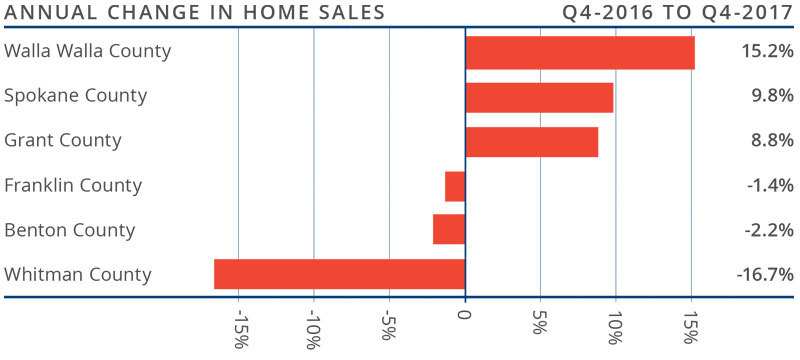
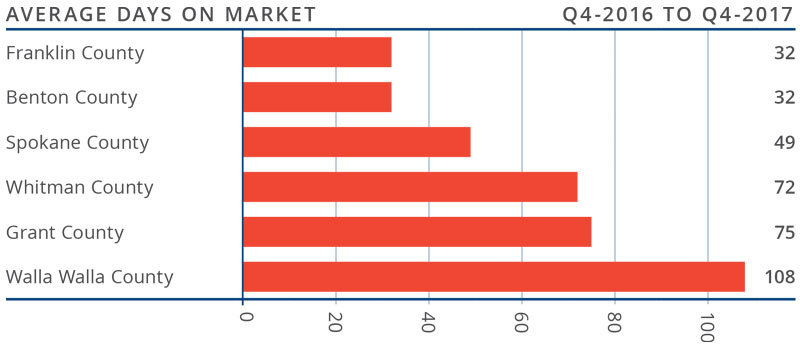
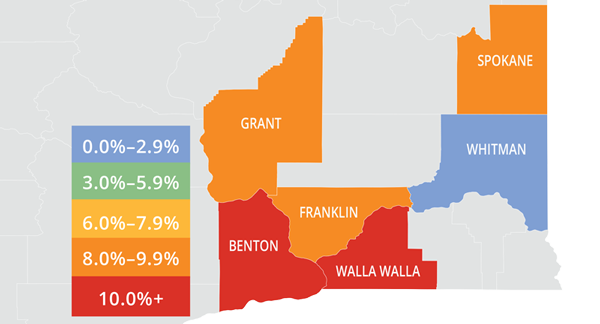 Year-over-year, the average home price in the region rose 9.5% to $241,667. Price growth has been moderating across the region, but several counties continue to see well-above-average appreciation.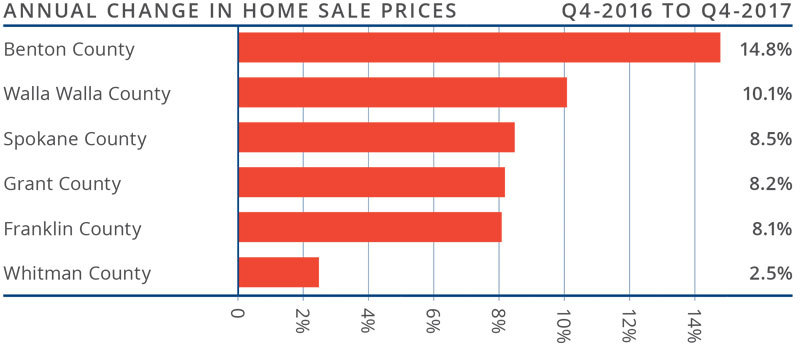
 This speedometer reflects the state of the region’s housing market using housing inventory, price gains, home sales, interest rates, and larger economic factors. Given the drop in listings, rising pending and closed sales, and climbing home prices, I have nudged the needle just a little more in favor of sellers. We are all hoping for a jump in new listings in the first quarter, which would help would-be buyers. For now, however, the market clearly favors sellers.
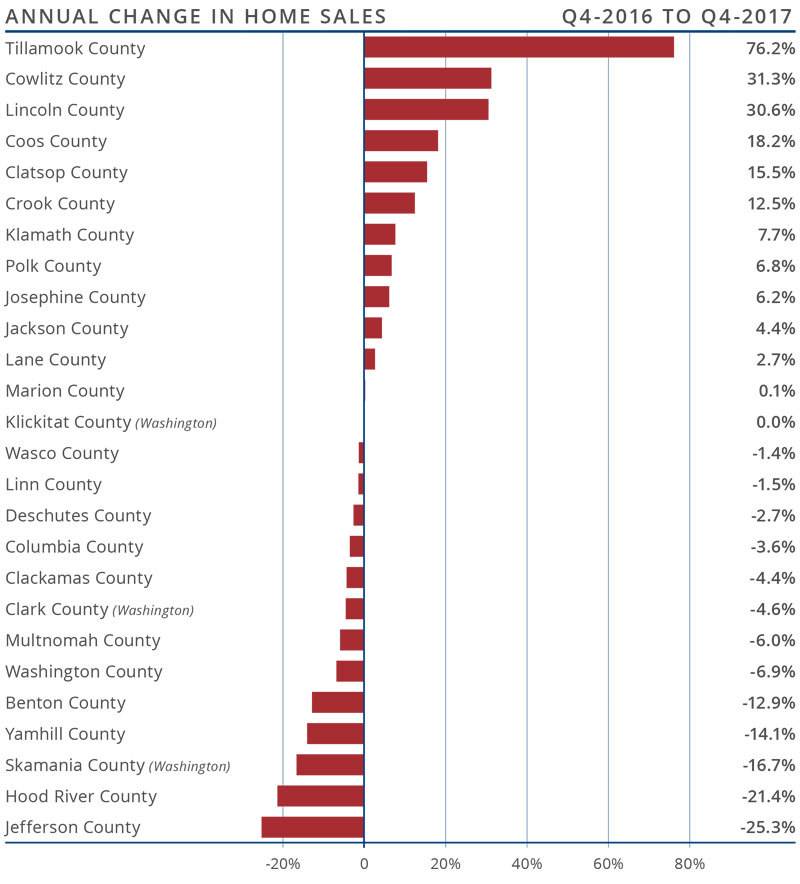
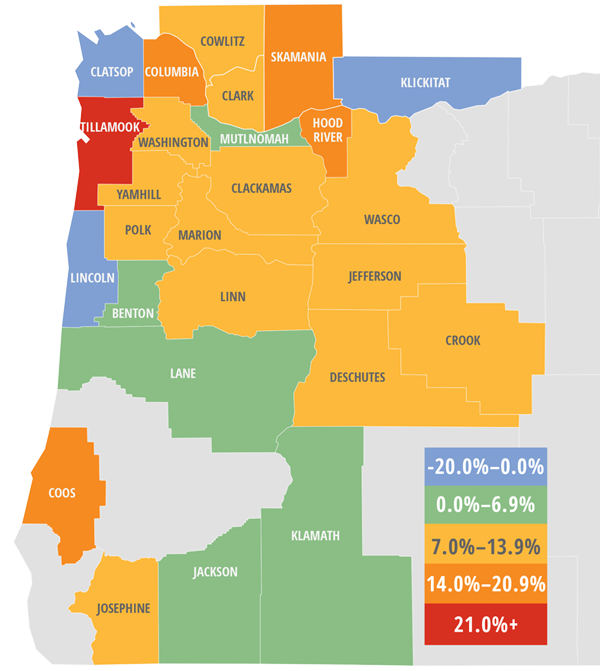
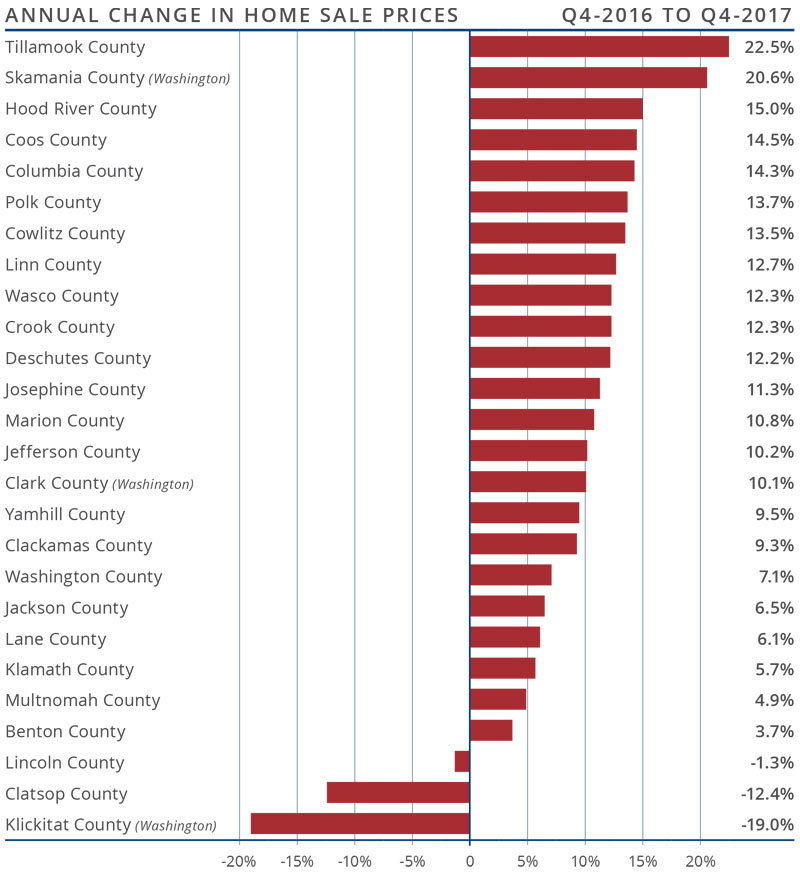
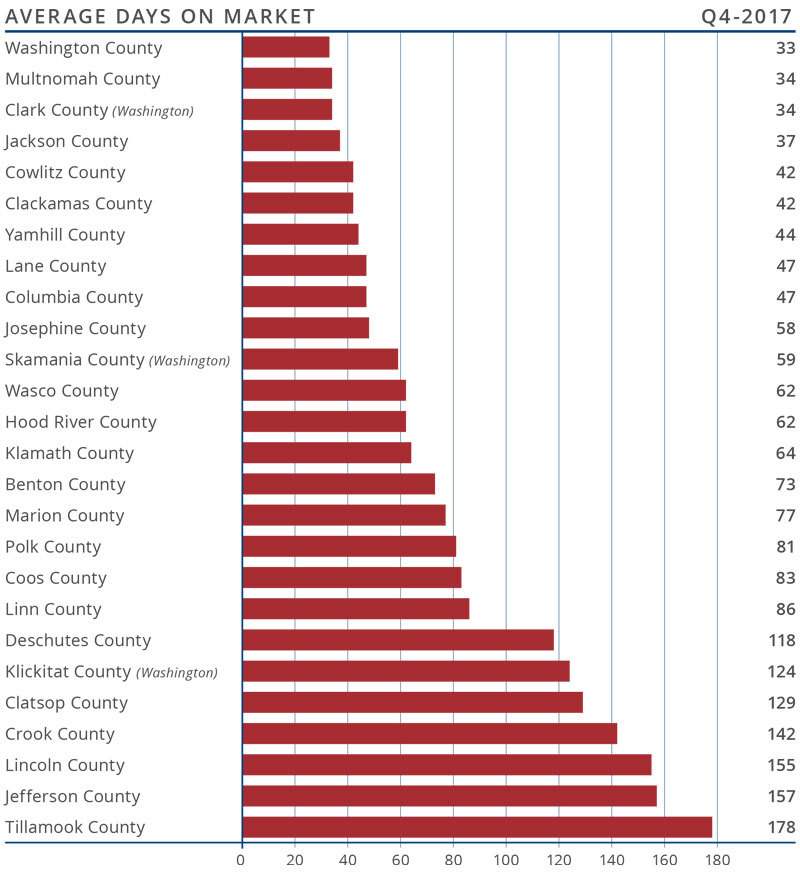
 The speedometer reflects the state of the region’s housing market using housing inventory, price gains, home sales, interest rates, and larger economic factors. Housing markets throughout Oregon continue to benefit greatly from the healthy regional economy.
 Given the considerable competition for the few homes for sale in the fourth quarter, prices continue to rise at fairly rapid rates. Prices in the region were up 11.6% yearover-year to an average of $342,507.
 This speedometer reflects the state of the region’s housing market using housing inventory, price gains, home sales, interest rates, and larger economic factors. For the fourth quarter of 2017, I left the needle at the same point as third quarter. Supply issues persist and this continues to create competition for well-priced and well-located homes. The increase we’re seeing in the amount of time it takes to sell a home may suggest that the market is either getting weary of all the competition or buyers are delaying their purchase until there are more homes to choose from.

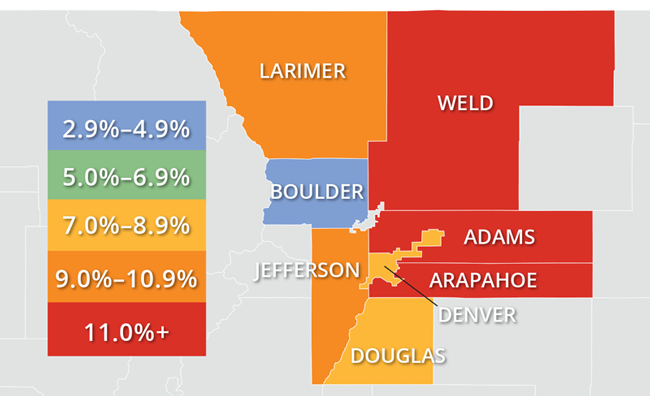 With continued competition for the limited number of available homes, prices continued their upward trend. Average prices were up 9.8% year-over-year to a regional average of $431,403, which was slightly higher than the third quarter of 2017.

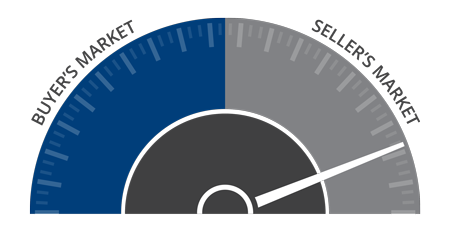 This speedometer reflects the state of the region’s housing market using housing inventory, price gains, home sales, interest rates, and larger economic factors.


 There were 45,342 home sales in the final quarter of 2017. This was 2.4% lower than the same period in 2016.


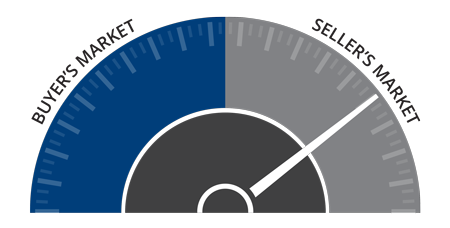 The speedometer reflects the state of the region’s housing market using housing inventory, price gains, home sales, interest rates, and larger economic factors.
 Employment in the Las Vegas metropolitan area continues to moderate but, with a year-over-year employment growth rate of 2.7%, the region is still performing well above the national average of 1.4%. Over the past 12 months, the area has added 25,500 new jobs. This has led to a respectable unemployment rate of 5.3%. This is the same rate as a year ago, but that should not be any cause for concern, as we have seen a fairly large increase in the labor force, which can slow the drop in the unemployment rate.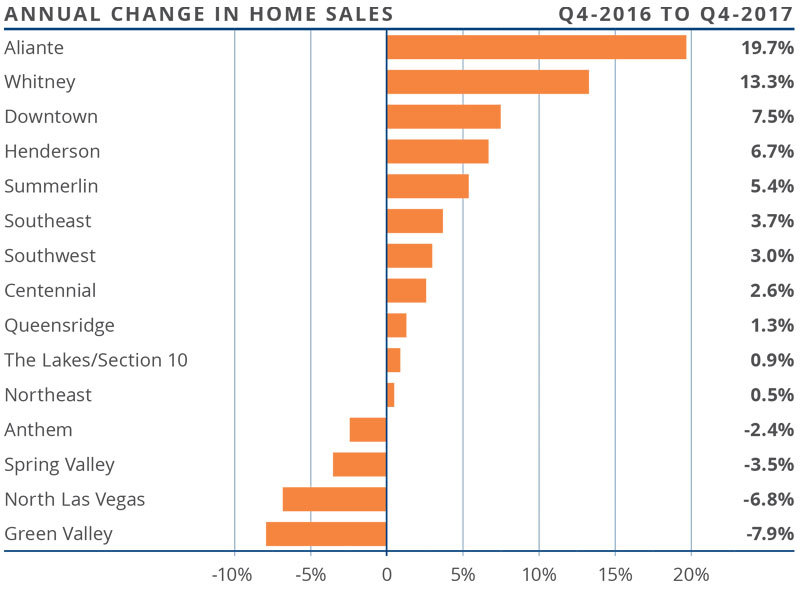
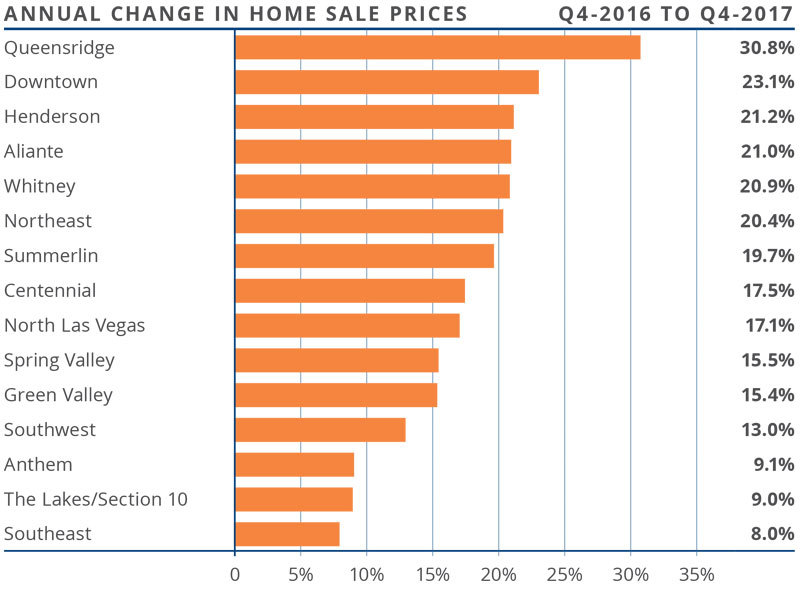
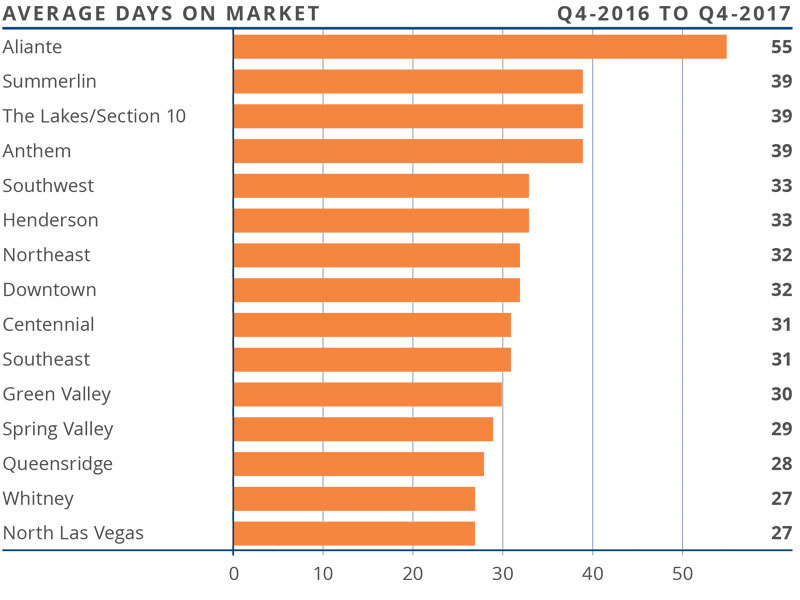
 The speedometer reflects the state of the region’s housing market using housinginventory, price gains, home sales, interest rates, and larger economic factors. Employment growth in Clark County, although slowing modestly, is still very positive. This, when combined with low inventory levels and competitive mortgage rates, will push home prices higher. Given these factors, I have moved the speedometer a little further in favor of sellers.
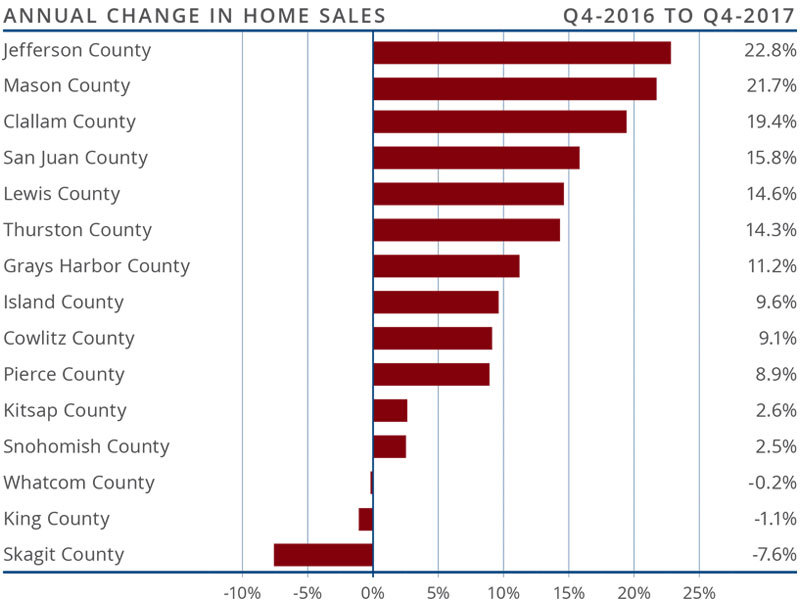
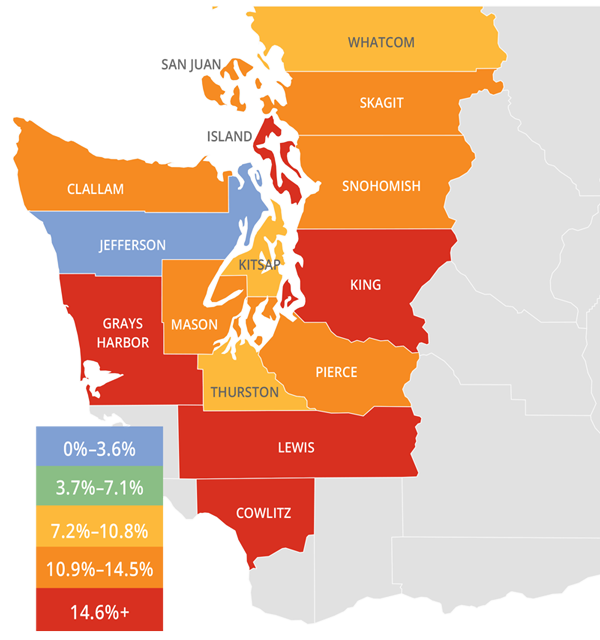 Because of low inventory in the fall of 2017, price growth was well above long-term averages across Western Washington. Year-over-year, average prices rose 12% to $466,726.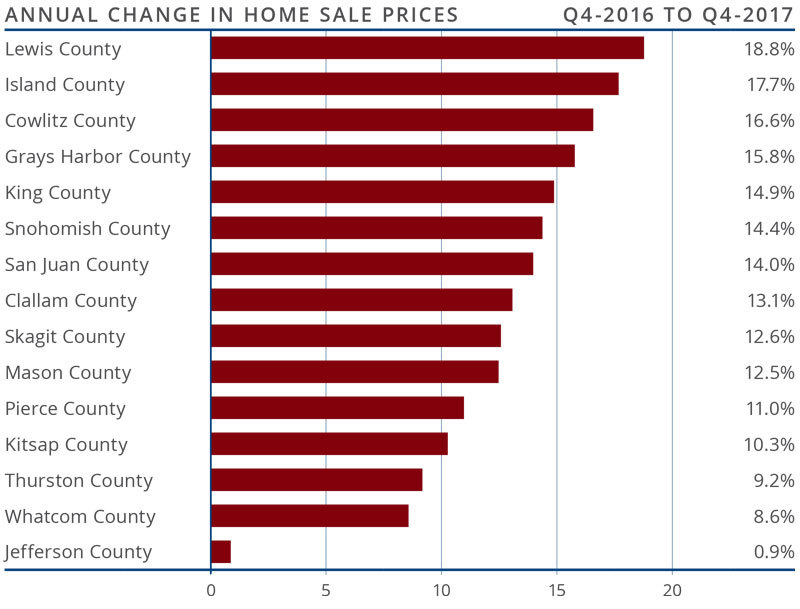
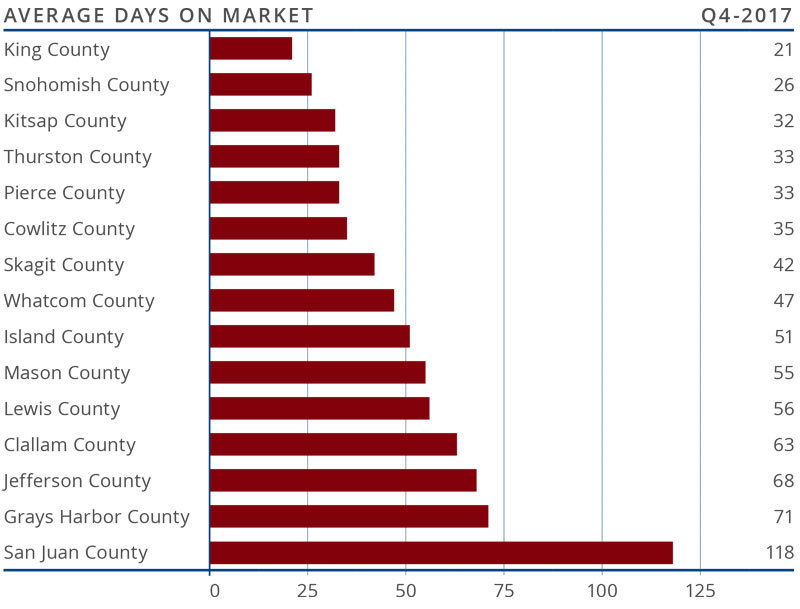
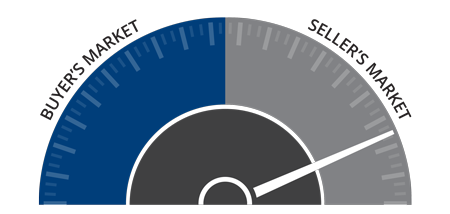 This speedometer reflects the state of the region’s housing market using housing inventory, price gains, home sales, interest rates, and larger economic factors. For the fourth quarter of 2017, I have left the needle at the same point as third quarter. Price growth remains robust even as sales activity slowed. 2018 is setting itself up to be another very good year for housing.