More December 19, 2018

Creating Caring Connections With Mary Ann Vandergriff


When people in the West Seattle community are in need, they’ve learned they can turn to Windermere broker Mary Ann Vandergriff. After a company backed out of providing turkeys for 40 elementary school families the Tuesday before Thanksgiving, the school’s family support worker called Vandergriff in a panic. Just a few phone calls later, the big-hearted broker had rounded up 40 vouchers for 20-pound turkeys.


“I have all this stuff in my head… things that come to me,” she says. “I love a challenge; give me a complicated puzzle.”


Volunteering was a big part of Vandergriff ’s childhood, so it was only natural that she got involved with the Windermere Foundation soon after joining the company in the early 1990s. As a single mom of two, Vandergriff was especially drawn to the mission of the Windermere Foundation, which collects a portion of the proceeds from homes bought or sold through Windermere to donate to projects that benefit low-income and homeless families. “Giving kids a chance, that’s the most important thing to me,” she says.


As the Windermere Foundation representative for the West Seattle office, Vandergriff has worked with countless organizations over the years. Early on, she jumped into spearheading fundraising for Project Cool, a program from the King County Coalition on Homelessness that provides students with backpacks stuffed with school supplies.


More recently, her office has supported the West Seattle Helpline, which provides emergency assistance to neighbors in need. Last year the team spent a service day setting up Clothesline, West Seattle Helpline’s free clothing store. “We completely put that store together, from laying carpet to organizing clothes to organizing the hangers that were donated,” Vandergriff says. “When you have 40 of us brokers in a day, you can move mountains.”


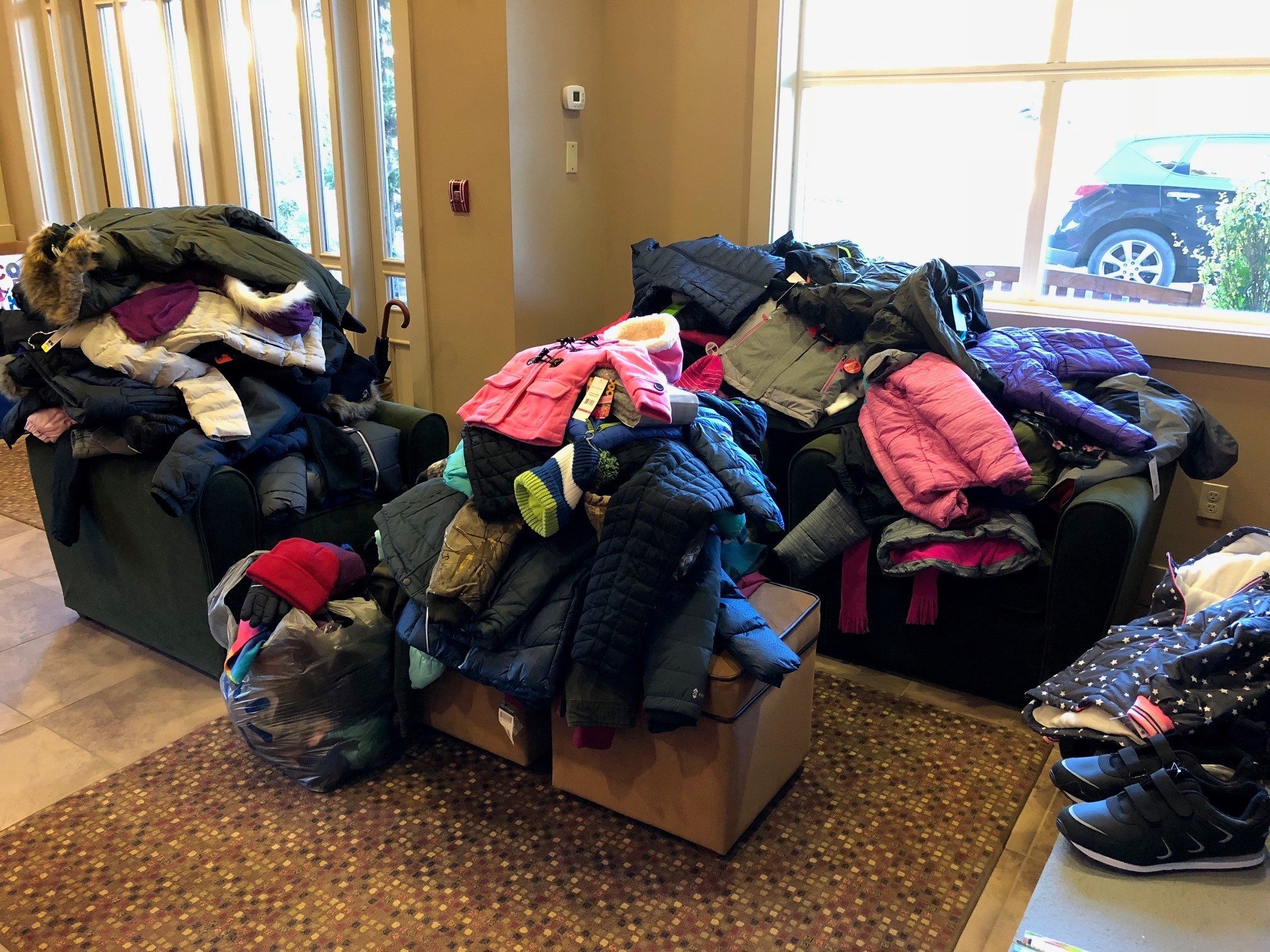
Although it creates more administrative work, the West Seattle office spreads its giving budget—about $25,000—throughout the year so that they always have some seed money on hand to fulfill a need when asked. They’ve helped mothers with breast cancer pay their bills while going through treatment, outfitted children in new winter coats, purchased appliances for a food bank, provided computers for a school, and made sure families had enough to eat during holiday breaks.


The list of organizations they’ve helped only grows over the years, and Vandergriff wouldn’t have it any other way.


“You help one person at a time,” she says. “It may not be big, it may be small, but even changing the life of one or two children makes a difference.”


By Haley Shapley – Originally published in Windermere Living


Since 1989, the Windermere Foundation has donated more than $36 million to provide shelter, food, children’s programs, emergency assistance, and other services for our communities. Learn more at Windermere.com/Foundation.

Market News December 18, 2018

2019 Economic and Housing Forecast

What a year it has been for both the U.S. economy and the national housing market. After several years of above-average economic and home price growth, 2018 marked the start of a slowdown in the residential real estate market. As the year comes to a close, it’s time for me to dust off my crystal ball to see what we can expect in 2019.

The U.S. Economy

Despite the turbulence that the ongoing trade wars with China are causing, I still expect the U.S. economy to have one more year of relatively solid growth before we likely enter a recession in 2020. Yes, it’s the dreaded “R” word, but before you panic, there are some things to bear in mind.

Firstly, any cyclical downturn will not be driven by housing.  Although it is almost impossible to predict exactly what will be the “straw that breaks the camel’s back”, I believe it will likely be caused by one of the following three things: an ongoing trade war, the Federal Reserve raising interest rates too quickly, or excessive corporate debt levels. That said, we still have another year of solid growth ahead of us, so I think it’s more important to focus on 2019 for now.

The U.S. Housing Market

Existing Home Sales

This paper is being written well before the year-end numbers come out, but I expect 2018 home sales will be about 3.5% lower than the prior year. Sales started to slow last spring as we breached affordability limits and more homes came on the market.  In 2019, I anticipate that home sales will rebound modestly and rise by 1.9% to a little over 5.4 million units.

Existing Home Prices

We will likely end 2018 with a median home price of about $260,000 – up 5.4% from 2017.  In 2019 I expect prices to continue rising, but at a slower rate as we move toward a more balanced housing market. I’m forecasting the median home price to increase by 4.4% as rising mortgage rates continue to act as a headwind to home price growth.

New Home Sales

In a somewhat similar manner to existing home sales, new home sales started to slow in the spring of 2018, but the overall trend has been positive since 2011. I expect that to continue in 2019 with sales increasing by 6.9% to 695,000 units – the highest level seen since 2007.

That being said, the level of new construction remains well below the long-term average. Builders continue to struggle with land, labor, and material costs, and this is an issue that is not likely to be solved in 2019. Furthermore, these constraints are forcing developers to primarily build higher-priced homes, which does little to meet the substantial demand by first-time buyers. 

Mortgage Rates

In last year’s forecast, I suggested that 5% interest rates would be a 2019 story, not a 2018 story. This prediction has proven accurate with the average 30-year conforming rates measured at 4.87% in November, and highly unlikely to breach the 5% barrier before the end of the year.

In 2019, I expect interest rates to continue trending higher, but we may see periods of modest contraction or levelling.  We will likely end the year with the 30-year fixed rate at around 5.7%, which means that 6% interest rates are more apt to be a 2020 story.

I also believe that non-conforming (or jumbo) rates will remain remarkably competitive. Banks appear to be comfortable with the risk and ultimately, the return, that this product offers, so expect jumbo loan yields to track conforming loans quite closely.

Conclusions

There are still voices out there that seem to suggest the housing market is headed for calamity and that another housing bubble is forming, or in some cases, is already deflating.  In all the data that I review, I just don’t see this happening. Credit quality for new mortgage holders remains very high and the median down payment (as a percentage of home price) is at its highest level since 2004.

That is not to say that there aren’t several markets around the country that are overpriced, but just because a market is overvalued, does not mean that a bubble is in place. It simply means that forward price growth in these markets will be lower to allow income levels to rise sufficiently.

Finally, if there is a big story for 2019, I believe it will be the ongoing resurgence of first-time buyers. While these buyers face challenges regarding student debt and the ability to save for a down payment, they are definitely on the comeback and likely to purchase more homes next year than any other buyer demographic. 

Originally published on Inman News.

More December 17, 2018

Bringing Warmth And Good Cheer For The Holidays

The winter holiday season is one of our favorites! It is also a busy time of the year for Windermere offices, as many are working with local non-profits to support families who need a little extra help during the holidays. From running clothing drives to hosting free photo events with Santa, our agents and offices are out in their communities helping those in need have a warm and merry holiday. Below are just a few examples of how Windermere is giving back this season.


Colorado

The Windermere Metro Denver office participated in the Mr. Hugs gift drive hosted by Providence Network. In addition to collecting and donating gifts to the drive, agents also helped with wrapping everything. Providence Network provides transitional housing to people recovering from addiction, homelessness and abuse. This event served around 200 people and provided an opportunity for the residents to do some Christmas shopping for each other from the gifts that were donated.


Oregon and SW Washington

Offices throughout Oregon and SW Washington recently held their annual Share the Warmth Annual Coat & Blanket Drive, collecting new or gently used coats blankets. Launched in 2002 in the Portland area, this annual event has grown significantly to include 40 Windermere offices throughout Oregon and Southwest Washington. Offices select the non-profit organization(s) in their communities to receive the donated items they’ve collected and to distribute them to those in need.


Southern Oregon

Windermere offices in Southern Oregon participated in the Newswatch 12 Coats for Kids drive. Eight Windermere offices (Ashland, Eagle Point, Grants Pass, Jacksonville, Klamath Falls, Medford, Rogue River, Shady Cove) teamed up with TV station KDRV to collect coats for local school children.


Seattle, Washington

The Windermere Sand Point office is hosting a giving tree for the holidays. The tree was decorated with 33 ornaments, each listing a gift to be purchased for families in need from a local elementary school. As the wishes are fulfilled, the gifts are wrapped and put under the tree to be delivered for Christmas.

On December 1, the office also hosted its fourth annual photos with Santa event and fundraiser for the Windermere Foundation. Home-baked treats were served while children colored and waited to have a photo taken with Santa. Elves were on hand to help the children deliver their wish lists and to make sure a grand time was had by all.


Whidbey Island, Washington

In November, the Windermere Real Estate/South Whidbey offices in Freeland and Langley participated in a three-week Coats for Kids Drive benefitting Readiness To Learn. They collected coats, gloves/mittens, hats, scarves, warm pullovers, and socks for 75+ children. In addition to this, the offices also collected cold-weather gear for six homeless middle and high school students in their community.


Windermere would like to thank our offices and those in our communities that donate to the Windermere Foundation. Your generosity makes it possible for us to continue to support organizations that provide services to low-income and homeless families throughout the Western U.S.

If you’d like to help support programs in your community, please consider donating to the Windermere Foundation. Just click on the Donate button and select the Windermere office near you.

To learn more about the Windermere Foundation, visit WindermereFoundation.com.


Living December 12, 2018

Guaranteed to Please: Holiday Gift Ideas for the Home

Every holiday gift list has at least one person who is tough to shop for. Wavering between a risky guess at clothing that might not fit and just throwing in the towel and buying a gift card can be frustrating. But there’s one thing you can be sure of: everyone on your list probably loves to have their home looking stylish. If you’re hoping to score a big win with the pickiest of people of on your list, here are some of our favorite holiday gift ideas for the home. 


Inviting Lanterns

24 Unique Beautiful DIY Garden Lanterns - 18. RECYCLED WOOD SCRAPS HOLDING DELICATE CANDLES

Photo Credit: The White Company via Pinterest

Candles are a time-honored “safe” gift that usually deliver a positive response and are useful in any home. Take that one step further by gifting a stylish lantern to hold those candles. This gift is typically small, simple, and cost-effective, meaning that it’s pretty much the perfect gift idea for even the trickiest of people. 


International Inspiration

World Traveler's Cork Globe

Photo Credit: Uncommon Goods

Maps and globes instill a home with a sense of adventure, and never have there been more décor options for those struck with a bit of wanderlust. One option is an interactive scratch-off map that allows tracking of travel. If wall space is limited, consider a cork globe with push pins that can be used to mark travel destinations. 


Sweet Displays

Round Glass & Wood Dessert Stand - Threshold, Brown

Photo Credit: Target via Pinterest

Everyone has a guilty sugary pleasure of some sort, so why not encourage those desserts to be showcased with pride? A dessert display isn’t necessarily something you’d buy for yourself, but it’s a gift that is almost guaranteed to please. Glass is classic, but marble or wood-based displays can blend easily into just about any kitchen design while adding a little extra touch of style. 


Keep It Simple, Keep It Smart 

Image result for google home mini

Photo Credit: CNet.com

If all else fails, you can be assured that everyone on your list this holiday season loves music, podcasts, audiobooks, or some other audio form of media. Thanks to the increasing prevalence and affordability of smart speakers, giving a versatile, high-tech gift has never been easier. For under $30 you can now choose between several options, including the Amazon Echo Dot and Google Home Mini. 

Living December 10, 2018

Making Your Home Smarter With Smart Appliances

Products that let you control every aspect of your home remotely are growing at a rapid rate. Smartphone-connected devices and appliances are increasingly common and deliver a stylish, effective design. You can pick and choose your favorite gadgets to assemble an affordable, intelligent abode on your own terms, or opt for an entire smart home system that does all the work for you.

While home automation is becoming more prevalent, naturally there are more and more products becoming available as “smart devices”. Here are a few types of devices we found that found the mark for function and style:

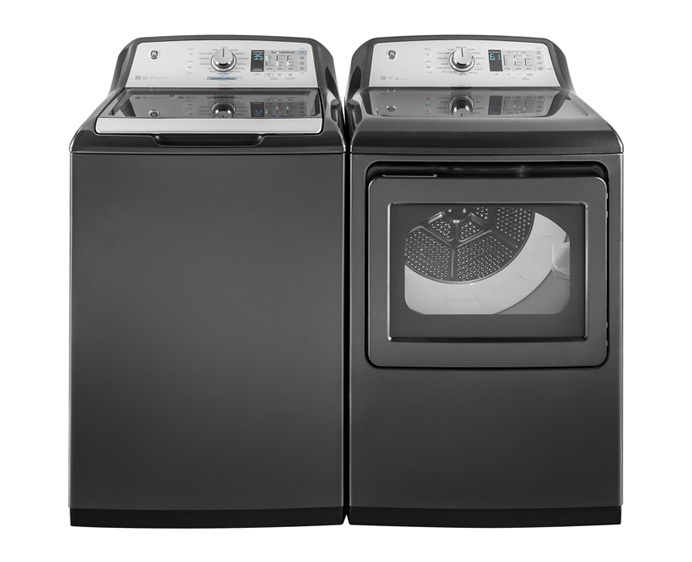
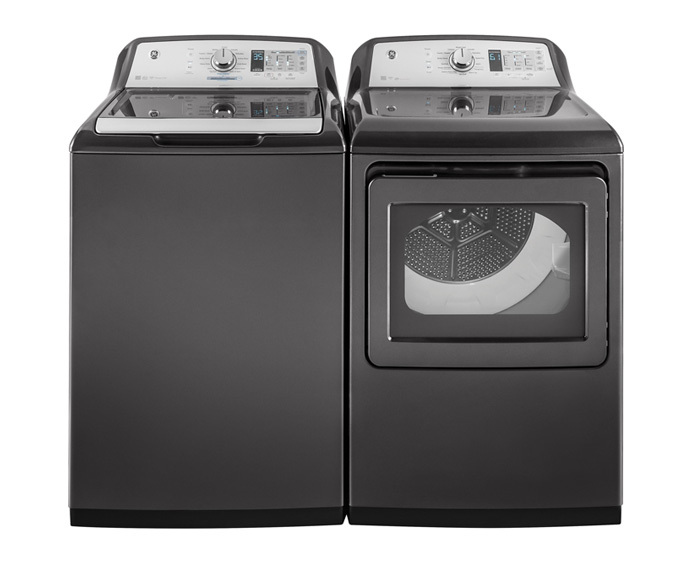
GE WiFi CONNECT WASHER AND DRYER

Photo Credit: GE Appliances

Check washer progress with an app that lets you monitor cycles and settings, extend drying times, monitor levels of Smart Dispense tanks, download custom specialty cycles and receive alerts when clothes haven't been removed.


LOGITECH HARMONY ELITE, UNIVERSAL REMOTE CONTROL

Photo Credit: Logitech 

More than just a TV remote – the Logitech Harmony Elite offers all-in-one control of up to 15 home devices including your TV, satellite or cable box, Apple TV, Roku, TiVo, Blu-ray player, game consoles, plus connected lights, locks, thermostats, sensors and more. There’s even a free app that turns your smartphone into an additional remote.


FRIGIDAIRE SMART WINDOW AIR CONDITIONER

Photo Credit: Frigidaire

A wifi connected air conditioner that you control through an app on your smartphone allows you to turn the unit on or off, change temperature, control modes and adapt fan speeds – especially handy if you want your home cooled off before you get home!


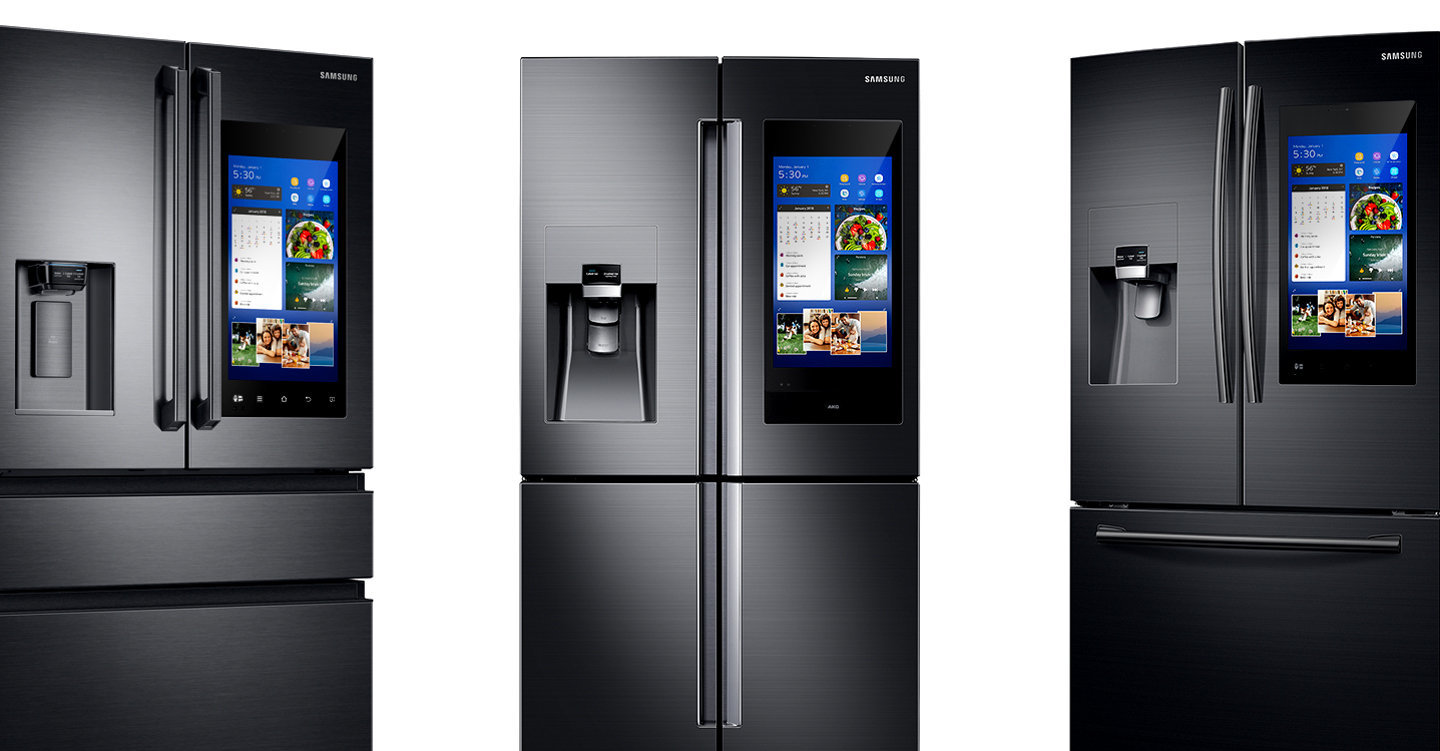
SAMSUNG FAMILY HUB REFRIGERATOR

Photo Credit: Samsung

A few years ago, having a French door refrigerator with cameras, wifi, and a gigantic touchscreen would have been the stuff of dreams. Today it is a reality. This high-end fridge will let you peek inside it while grocery shopping, search for recipes on the 21.5-inch display, mirror your smart TV so you can keep watching your movie while you grab a drink, share calendars, photos and best of all – it even keeps your food cold.

Living December 5, 2018

Four Holiday Decor Trends We’re Excited About This Winter

The holiday season is here and for many of us, that means it’s time to deck the halls. If you’re looking for some inspiration and a place to start, here are some ideas that are certain to get everyone in the spirit. 


A Tree of a Different Color

Photo Credit: Left – Lushome, Center – HGTV, Right – Christmas365

For many, there’s nothing more quintessential during the holidays than a Christmas tree decked out in ornaments. But acquiring a tree can be challenging and expensive. Moreover, housing a tree consumes time and space. That’s why we love the idea of an alternative tree. There are plenty of options you can buy online or create yourself using things you probably already have around the house. And if you miss the smell of a real tree, try a scented candle or essential oils. 


The Season of Lights

Photo Credit: Amara

There’s something perpetually charming about twinkling lights. Whether you’re wrapping them around your front porch or adorning your fireplace mantle, extra lights deliver a warm glow during the holiday season. Getting creative and adding light to otherwise unexpected places, including bookcases, around headboards, or even in glassware, is a great way to keep everything looking merry and bright. 


Act Natural

Photo Credit: Better Homes & Gardens

Not all holiday climates are built alike. If you’re expecting a white Christmas, you’re probably used to pine trees and winter brush, but for those of you located in regions where the mercury doesn’t drop, sprinkling in natural elements can transform your home into a wintery oasis. Holly and pine needles add a traditional touch, or consider a wreath of olive branches with some sleigh bells interspersed.


Bring it All Home at Dinner

Photo Credit: Amara

When decorating for the holidays, don’t forget the table! A sprig of holly adds a festive touch to your place settings. And instead of the traditional centerpiece, try placing candles in glass vases or mason jars to give your tablescape that added touch of holiday pizzazz.

More December 3, 2018

A Lifetime of Making a Difference – Joan Tate Allen


Tis the season when we look back upon the year and give thanks for all that we have and count our blessings. At Windermere, we are thankful for all who generously donate to the Windermere Foundation, and we are grateful to have franchise owners and agents who go above and beyond to make a difference in the communities where they live and work. This year, Joan Tate Allen, co-owner and vice-president of Windermere Realty Trust, was recognized with the “Windermere Foundation Lifetime Achievement Award” at the company’s annual Owners Retreat. Joan is a visionary and one of those individuals who puts her whole being behind her commitment to helping others.


After joining Windermere in 1991, Joan became involved with the Windermere Foundation during its early years. She found inspiration in the unprecedented idea of all agents donating a small portion of each commission check because it provided an opportunity for regular people to make a big difference with a modest amount of money. The entire basis for the Windermere Foundation was built on the premise that these funds would accumulate over a period of time, as the agents pooled their resources.


Joan and her husband Brian eventually became the owners of several Windermere offices in Portland, Oregon — bringing on a change that would lead to Joan setting new standards for community service. In a short amount of time, she was able to spearhead entire fundraising events and challenge her agents to raise even more than their commission check donations. She created a friendly year-long contest called “Rise to the Challenge,” in which her offices compete to raise the most money for the Windermere Foundation. The total amount raised in 2017 as a result of those efforts was over $203,000.


Joan’s infectious enthusiasm has led to her company’s agents initiating their own fundraising events, such as a golf tournament organized by just one agent which has raised more than $40,000 each year.


Joan’s philanthropic work, however, does not end with the Windermere Foundation. She was highly involved with the founding of New Avenues for Youth and Bridge Meadows, and also serves on the Providence Portland Medical Center board.


Joan is constantly finding ways to engage her network to help the community through events such as organizing a day of serving meals, promoting clothing drives with Windermere agents, or giving underprivileged youth the opportunity to spend a few weeks learning to row in the summer. It is this type of leadership that has had meaningful impact and is why we honored Joan with the Windermere Foundation Lifetime Achievement Award.


We are grateful to have owners like Joan who inspire others to help those in need and are thankful for all who continue to support the Windermere Foundation.


If you’d like to help support programs and services that help those in need in your community, please consider making a donation to the Windermere Foundation through a Windermere office near you. Just click on the Donate button.


To learn more about the Windermere Foundation, visit https://www.windermere.com/foundation.

More November 30, 2018

Windermere Hosts Chinese Delegation of Journalists


Last week, Windermere Real Estate was honored to host a delegation of top reporters from China as part of the East-West Center’s 2018 US Study Tour for Chinese Journalists. Nine journalists, hailing from Beijing, Chengdu, Chongqing, Hong Kong, and Shanghai, visited Washington D.C., Des Moines, Iowa, and Seattle, Washington over 10 days to study the China-U.S. relationship in trade, security, media, and culture.

Their visit to Seattle connected them with Windermere and our Chief Economist, Matthew Gardner, to lean on his expertise about Seattle’s economy and real estate market. Mr. Gardner discussed the economic influence of Seattle-based companies Amazon and Boeing, as well as other internationally impactful companies like Facebook and Google, both of which have a sizable presence in Seattle. He also discussed the factors that caused the real estate boom of the past half-decade and what we can expect from the housing market in 2019.

Mr. Gardner shared data on the rising percentage of Chinese and East Asian-born individuals making up the population of the greater Seattle area, the factors that have contributed to that number’s rise in recent years, and the impact on our real estate market. Citing the differences between real estate norms and financial realities in much of China compared to Seattle, Mr. Gardner enjoyed a productive dialogue with the visiting delegation of journalists. 

Windermere was honored to host the East-West Center’s 2018 US Study Tour for Chinese Journalists and to have the opportunity to discuss the role of Chinese foreign nationals in Seattle’s economy and housing market. As much as we shared, we also enjoyed learning more about China’s housing market and the evolving relationship between our two countries. 

Living November 28, 2018

Bringing Your Plants Inside for Winter

Winters in many parts of the Western U.S. can easily see temperatures that dip down below freezing. For many gardening homeowners, this can be troublesome when precious plants are concerned. Covering your plants with sheets may not be enough to save a plant from succumbing to freezing temperatures. Check out these ways to bring your plants inside for winter:


Take Inventory of Plants

Unless you have planted exotic plants that are definitely not going to survive cold temperatures, there are probably more than a few plants within your yard that should be okay. Healthy native plants are used to the climate of your area and should be able to withstand the winter temperatures without any issue. Those plants that are better suited for a higher growing zone will need to be cared for in order to best survive the season. Consider every plant within your yard and access their health, maturity, and location in order to choose which plants to bring indoors.


Indoor Placement

Exotic plants love the sun and should be placed near southern facing windows that aren’t drafty or cold. Create a spot within your home that is far from drafts or cold breezes from open doors. Spread plastic sheeting to protect flooring and create a little greenhouse group of plants that will still receive plenty of sunlight. Refrain from placing plants too close together in order to allow for equal access to sunlight and air flow.


Container Issues

Many potted plants can easily be moved indoors without having to transplant them. Easily place potted plants in a group to ride out the winter season. In-ground plants within your landscape will need to be transplanted to a container in order to bring them indoors. Make sure that you consider the size of the plant and use a container that is big enough around for the root ball of the plant. Using a container that is much too large for a plant is better than one that is too small and could damage the plant’s root system.


Keep the Fan On

Many indoor plants enjoy being near a window but will also need adequate air circulation to prevent soggy soil conditions. It is a good idea to keep the ceiling fan on in the room, at a low speed, in order to keep the air moving within the room. Don’t place plants too close to heating vents in order to keep them from becoming too hot and overheated. Plants that produce browning leaves will need to be moved to a room with a humidifier in order to keep them in good condition as well.


Keep Pets Away

Many indoor plants can become curious items for an indoor pet. Make sure to keep pets away from plants in order to keep both safe. Some tropical plants are toxic for animals and some pets can prove damaging to plants. Create a barrier between plants and animals so that both are kept safe during the winter season.


Water & Dust

Keeping your plants watered indoors may look different than what it receives in an outdoor environment. Make sure to consider the plant before watering in order to keep it in soil that it prefers. Many winter climates will not see a lot of added water so choosing to water your indoor plants at a minimum will help mimic those conditions that it would receive outside.

Also, check the plants for accumulating dust that can easily be found after a few weeks indoors. Dust off plants on a regular basis in order to keep them healthy and able to absorb important nutrients. Use a wet cloth to gently wipe down leaves in order to keep dust free from indoor plants.

There are many things to consider when choosing to bring plants indoors for winter. Make sure to choose plants carefully and monitor their progress as the winter season wears on. Consider all of these tips for bringing your plants inside for winter in order to keep them from freezing outdoors.


Kelly Holland is a gardening and landscape design writer who loves experimenting in her kitchen. Her quirky nature loves a bright color palette so naturally, her coveted garden is covered in a rainbow of fruits, vegetable, and flowers. 

Living November 26, 2018

The Do’s and Don’ts of Hiring a Contractor

Constructing or remodeling a home is a complex, expensive endeavor. Ideally, everything goes as planned, and when the dust clears, the homeowner can settle in and enjoy the new home — and never think about the building process again.

But what happens when, nine months after the owner moves in, the floor develops a crack, the dishwasher begins to leak or the shower water won’t run hot? Or when these things happen three years later? It’s time to refer to an all-important piece of the contract: the warranty.

What Is a Warranty?

The purpose of a warranty is to protect both the homeowner and the builder — homeowners from shoddy work with no recourse; builders from being liable for projects for the rest of their lives.

A warranty may be included in a contract, or it may not be since it’s not required. There is no standard length of time for one. Rather, a warranty is a negotiable portion of the overall agreement (contract) between a homeowner and a contractor.

The laws that relate to warranties are somewhat vague and vary by state, so the advantage of having one as part of the contract is that everything can be clearly spelled out. However, by agreeing to a particular warranty without understanding its finer points, owners may inadvertently limit the protections they would have otherwise had under the law.

“A warranty describes the problems and remedies for which the builder will be responsible after completion of the project, as well as the duration of the warranty and the mechanism for addressing disputes,” says David Jaffe, vice president of legal advocacy at the National Association of Home Builders.

At least in the ideal case.


The Law Governing Warranties

Before homeowners agree to a particular warranty as part of their contract, it’s important to understand what protections they already have under the law. In the U.S., we have a legal concept of an implied warranty — which is a warranty that does not have to be spelled out in the contract but is simply understood to exist thanks to the law. There are two important implied warranties when it comes to home construction.

The first is the implied warranty of good workmanship, which is the reasonable expectation that a home will be built in a workmanlike manner. The second is the implied warranty of habitability, which is the reasonable expectation that the home will be safe to inhabit.

The implied warranties, however, have limits in the form of statutes of limitation and statutes of repose, which essentially are time clocks that determine for how long a homeowner may sue a contractor.

Statutes of limitation in each state dictate how long an owner can invoke various types of legal claims — for example, a breach of contract claim.

Statutes of repose apply specifically to construction projects and set the time for which builders and designers are liable for their product. These also vary by state. In California, the statute of repose is four years for most defects, but 10 years for latent defects (those that aren’t observable right away, such as a faulty foundation). In Georgia, the statute of repose is eight years for all claims related to the design or construction of the building.

Finally, most states also have a right to repair law, which means that before homeowners can sue a contractor, they need to notify the contractor of the problem and give him or her a chance to come to see it and repair it.

To find out what the laws are in your state, simply do an online search for “statute of repose” and “right to repair” in your state.


The One-Year Warranty

The key thing to understand about warranties is that many builders offer their own warranty in lieu of the implied warranty. Additionally, many contracts specify that homeowners are giving up their rights to the implied warranty by agreeing to the builder’s express warranty. Also, builders will “often try to shorten statutes of limitation and statutes of repose. Some states allow you to do that. Others don’t,” says Anthony Lehman, an Atlanta attorney who advises homeowners.

Though there is no industry-wide standard, many residential contractors have adopted a one-year warranty for their contracts. The practice likely trickled down from commercial construction, where a callback warranty is typical. A callback warranty means that within one year, a building owner has the right to call back the contractor and expect him or her to repair work, Lehman says.

The downside for homeowners who agree to a one-year warranty is that they likely trade away their right to the implied warranty, and they may also agree to limit the time they have to discover a defect and sue. Obviously, this is a plus for builders because it limits their risk.

But there is no real reason a homeowner has to accept a one-year warranty simply because that’s the builder’s first offer. “It’s a negotiated point, and people can negotiate warranties that are broader — and they often do,” says Robert C. Procter, outside general counsel for the Wisconsin Builders Association. “If you don’t ask for more, you won’t get more.”


Pros and Cons of a Builder’s Warranty

Though a one-year warranty may seem like a poor deal for a homeowner, a contract with details spelled out does provide an upside: some degree of clarity in the process. Ideally, a warranty includes not only the time period that the warranty covers, but also the standards by which various materials will be evaluated, and the steps to follow when a problem arises.

In a minority of states, the legislature has codified what a warranty is and how long it lasts for a variety of materials, Jaffe says. They are California, Connecticut, Indiana, Louisiana, Maine, Maryland, Minnesota, Mississippi, New Jersey, New York, Pennsylvania, Texas, and Virginia. If you live in one of these states, you can refer to the state-set standards.

If you do not, one option is to refer to the NAHB’s publication Residential Construction Performance Guidelines. “It’s broken down by categories within the home: foundations, exterior, interior, roofing, plumbing,” Jaffe says. “If there’s an issue that comes up, you look in this publication, and it tells you what the observation is — what’s the problem.” The guide then spells out what the corrective measure — if any — should be.

If you decide to use this guide as the standards by which problems will be judged, be sure you read it first and are comfortable with its terms. Sometimes having the terms spelled out is simpler than relying on the implied warranty because the implied warranty is so vague.

“The implied warranty doesn’t have a fixed time; it’s a reasonable period of time,” says Jaffe, of the NAHB. “If you’re a homeowner, and you call your builder up in year five and say, ‘There’s a crack here, and I think you should come out and fix it because it’s a defect,’ well, at that point, it may or may not be related to something that the builder did or didn’t do. Is it a defect? Who is going to make that determination? What is the fix? Who is responsible for it?”

Relying on the implied warranty means that these sorts of questions would need to be resolved in court if the parties aren’t willing to, or can’t, come to an agreement on their own. Open for debate is whether an item is a warranty item, and for how long it’s covered. Having these issues determined in court can be an expensive, time-consuming headache for everyone involved.

Still, some attorneys say owners might be better off with the implied warranty than giving up their rights for a limited one provided by the builder. “You build a house, and you expect it to be there for a long time. The buildings in Europe have been there a long time. The pyramids have been there a long time. The question is how long is it reasonable for you to expect it to last,” says Susan Linden McGreevy, an attorney in Kansas City, Kansas, who specializes in commercial real estate work. “If it has to get before a jury, the contractor has lost already. What I mean is, the jury will always find in favor of a homeowner — unless they’re a real flake.”


Going Beyond Warranties

Despite all this talk of legalities, there is an important caveat: Many good builders will continue to be helpful even after their express warranty has passed. Anne Higuera, co-owner of Ventana Construction in Seattle, provides a one-year warranty to her clients. Nonetheless, Ventana has made repairs and fixes even years after the one-year warranty expired. Higuera says the company does so because the builders want good relationships with their customers, and because they feel as though it’s the right thing to do. “Warranty issues come up very rarely if you do things well in the first place,” Higuera says. “Just finding a contractor who does the right thing on the front end helps you avoid issues with warranty.”


More Ways to Protect Yourself

So what should homeowners do if a builder is offering only a one-year warranty? One option is to negotiate for a longer period of time. “You might want to say, ‘I’ll take a one-year warranty for everything except latent defects,’” McGreevey says. (Reminder: Those are the kind that take a long time to discover, such as foundation problems.)

Another option owners have is to ask builders about insurance products. Many builders offer products with an extended warranty — as long as 10 years — that is backed by insurance companies. These are typically paid for by the builder, with the cost passed on to the homeowner.

Third, homeowners would be wise to consult an attorney to make sure that they’re not giving up rights unknowingly. Given that owners are spending thousands to hundreds of thousands of dollars on construction, paying for five to 10 hours of an attorney’s time (at $300 per hour, $1,500 to $3,000) to ensure that the contract is sound is probably a good investment. “Would you buy a car for $50,000 and not read any of the financing information?” says Lehman, the Atlanta attorney. “And then people do that for a home construction project.”

Finally, the most important thing is for both contractors and owners to screen each other carefully. “Ninety-eight percent of the homeowner-builder relationships, when there’s a disagreement, most parties reach a reasonable conclusion, even if they’re not 100 percent happy,” says Procter, the Wisconsin attorney. “The contracts matter more when someone is not being reasonable.”


By Erin Carlyle, Houzz.com