Market News January 27, 2021

Q4 2020 Western Washington Real Estate Market Update

The following analysis of the Western Washington real estate market is provided by Windermere Real Estate Chief Economist Matthew Gardner. We hope that this information may assist you with making better-informed real estate decisions. For further information about the housing market in your area, please don’t hesitate to contact your Windermere agent.


Regional Economic Overview

After the COVID-19-induced declines, employment levels in Western Washington continue to rebuild. Interestingly, the state re-benchmarked employment numbers, which showed that the region lost fewer jobs than originally reported. That said, regional employment is still 133,000 jobs lower than during the 2020 peak in February. The return of jobs will continue, but much depends on new COVID-19 infection rates and when the Governor can reopen sections of the economy that are still shut down. Unemployment levels also continue to improve. At the end of the quarter, the unemployment rate was a very respectable 5.5%, down from the peak rate of 16.6% in April. The rate varies across Western Washington, with a low of 4.3% in King County and a high of 9.6% in Grays Harbor County. My current forecast calls for employment levels to continue to improve as we move through the spring. More robust growth won’t happen until a vaccine becomes widely distributed, which is unlikely to happen before the summer.

western washington Home Sales

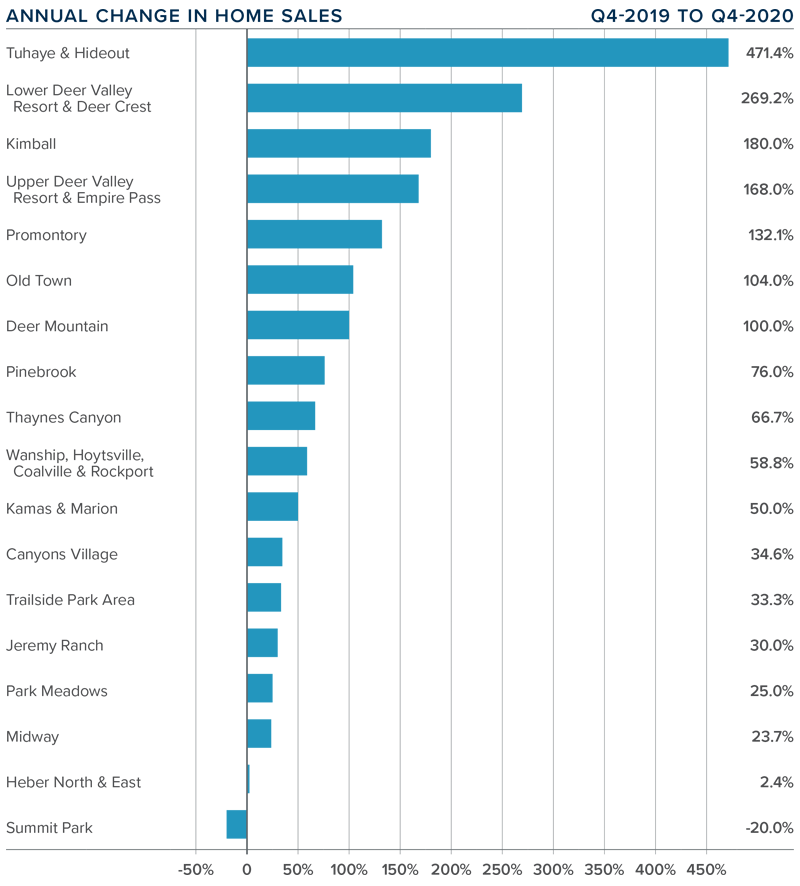
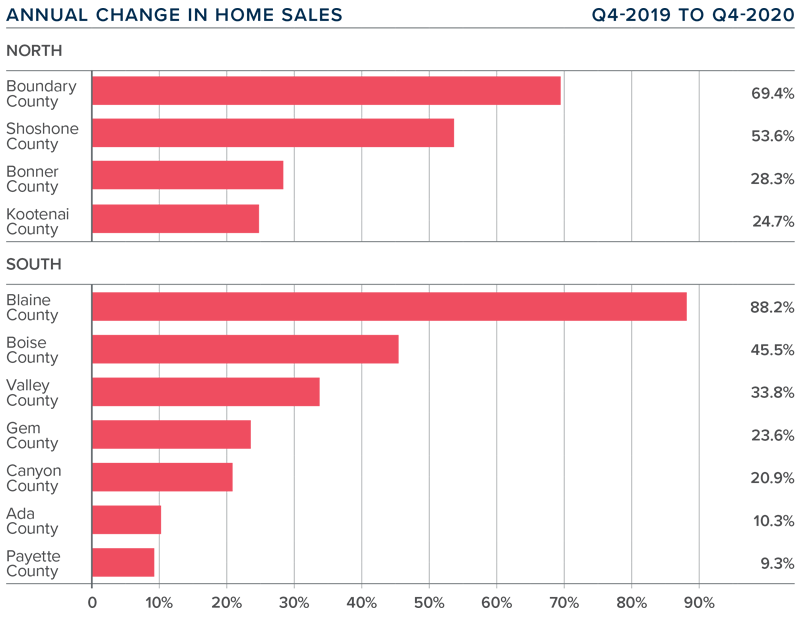
❱ Sales continued to impress, with 23,357 transactions in the quarter. This was an increase of 26.6% from the same period in 2019, but 8.3% lower than in the third quarter of last year, likely due to seasonality.

❱ Listing activity remained very low, even given seasonality. Total available inventory was 37.3% lower than a year ago and 31.2% lower than in the third quarter of 2020.

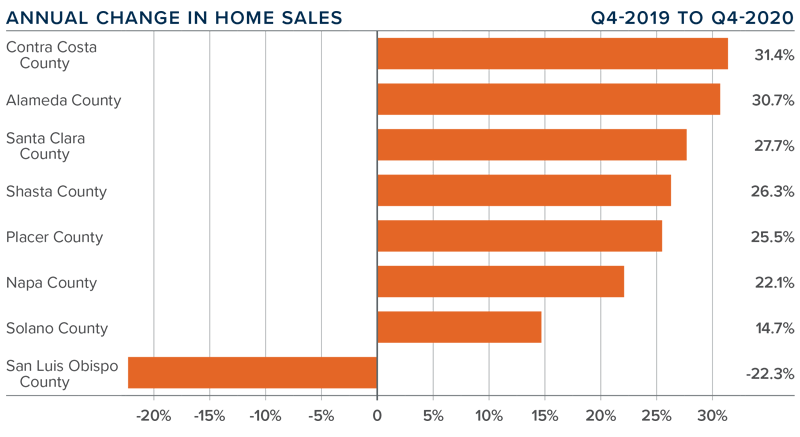
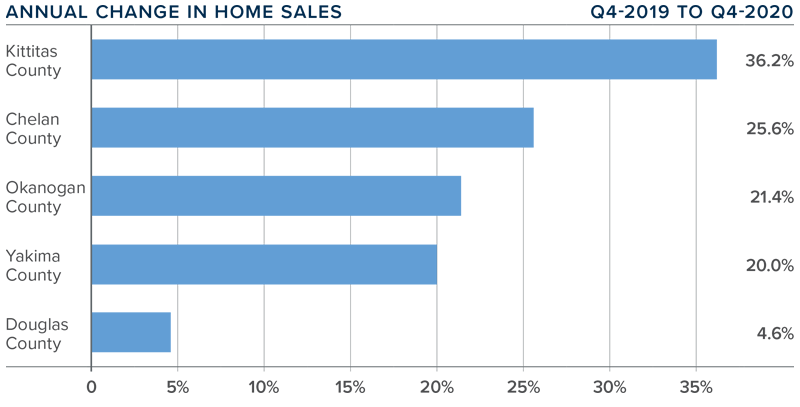
❱ Sales rose in all counties, with San Juan County seeing the greatest increase. This makes me wonder if buyers are actively looking in more remote markets given ongoing COVID-19 related concerns.

❱ Pending sales—a good gauge of future closings—were 25% higher than a year ago but down 31% compared to the third quarter of 2020. This is unsurprising, given limited inventory and seasonal factors.

A bar graph showing the annual change in home sales for various counties in Western Washington.

western washington Home Prices

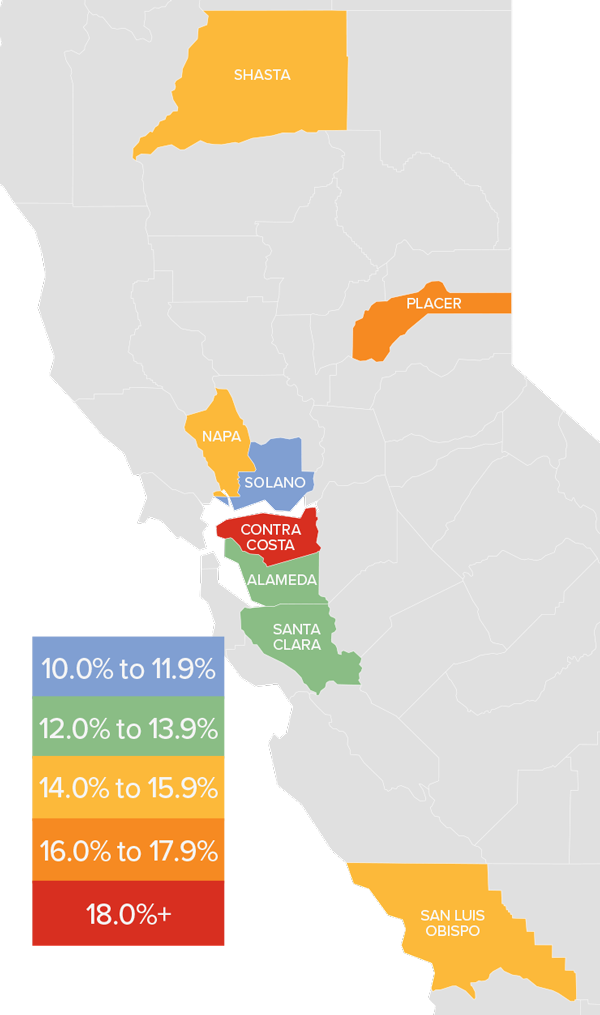
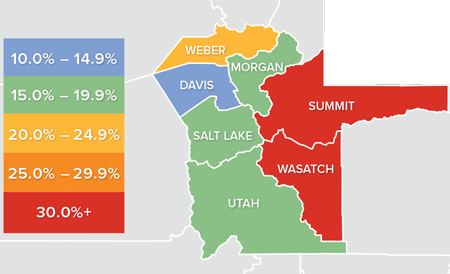
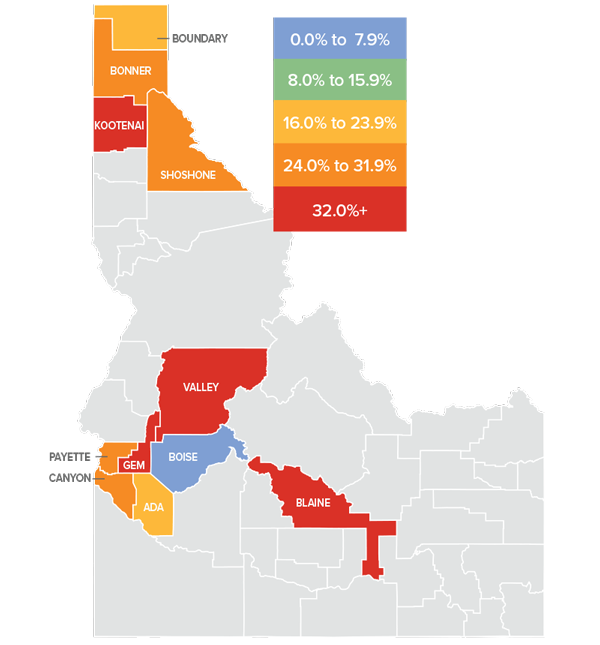
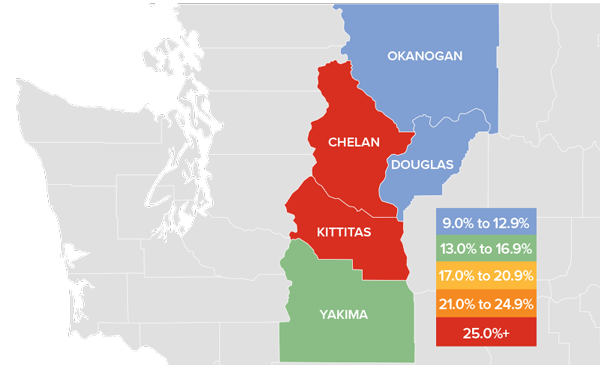
A map showing the real estate market percentage changes in various counties in Western Washington.

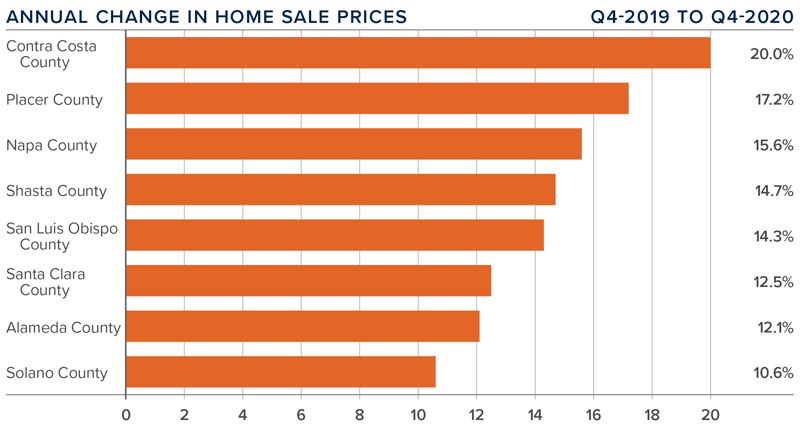
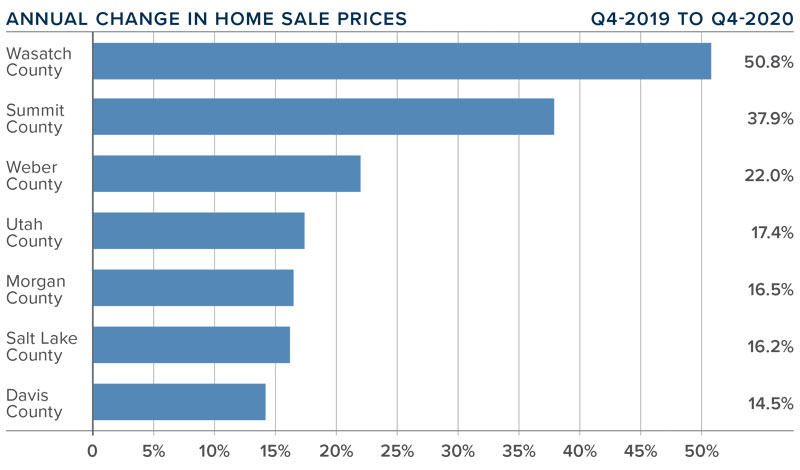
❱ Home price growth in Western Washington continued the trend of above-average appreciation. Prices were up 17.4% compared to a year ago, with an average sale price of $617,475.

❱ Year-over year price growth was strongest in Lewis and Grays Harbor counties. Home prices declined in San Juan County which is notoriously volatile because of its small size.

❱ It is interesting to note that home prices were only 1% higher than third quarter of 2020. Even as mortgage rates continued to drop during the quarter, price growth slowed, and we may well be hitting an affordability ceiling in some markets.

❱ Mortgage rates will stay competitive as we move through 2021, but I expect to see price growth moderate as we run into affordability issues, especially in the more expensive counties.

A bar graph showing the annual change in home sale prices for various counties in Western Washington.

Days on Market

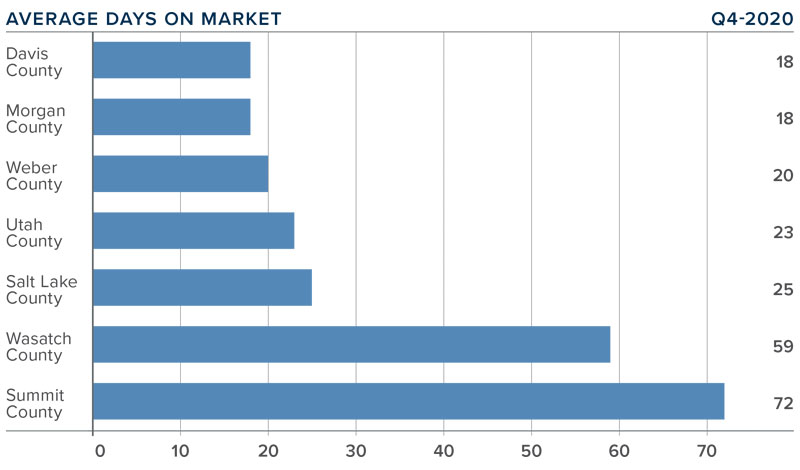
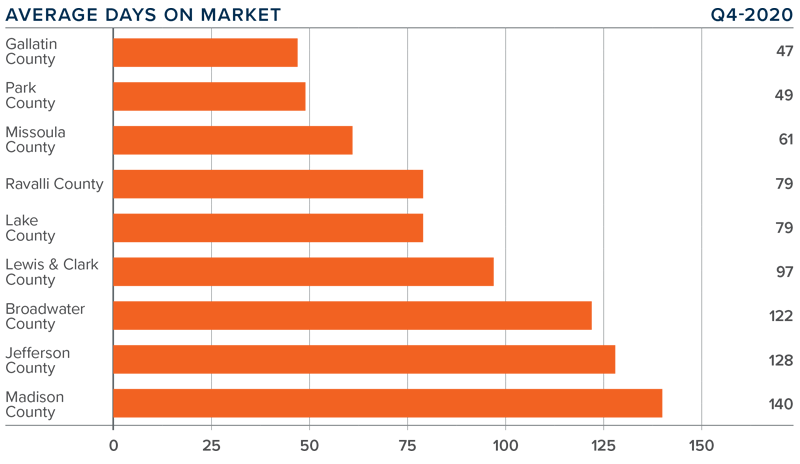
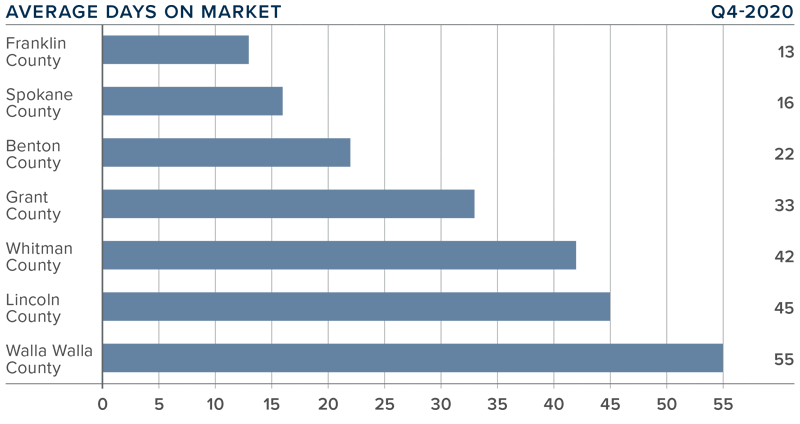
❱ 2020 ended with a flourish as the average number of days it took to sell a home in the final quarter dropped by a very significant 16 days compared to a year ago.

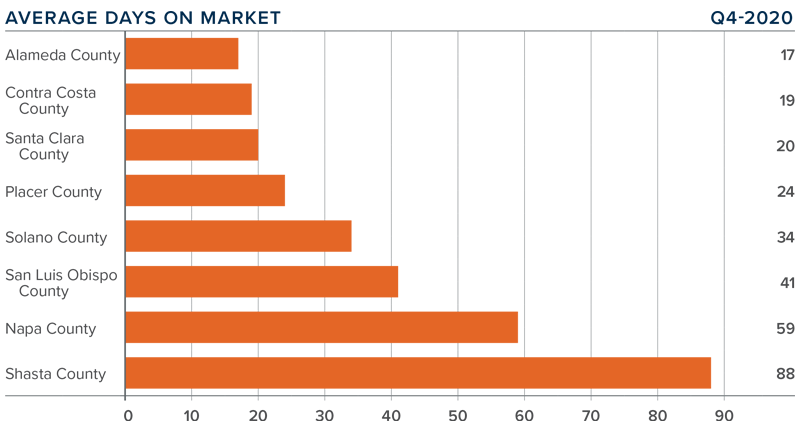
❱ Snohomish County was again the tightest market in Western Washington, with homes taking an average of only 15 days to sell. The only county that saw the length of time it took to sell a home rise compared to the same period a year ago was small Jefferson County, but it was only an increase of four days.

❱ Across the region, it took an average of 31 days to sell a home in the quarter. It is also worth noting that, even as we entered the winter months, it took an average of five fewer days to sell a home than in the third quarter of last year.

❱ The takeaway here is that demand clearly remains strong, and competition for the few homes available to buy continues to push days on market lower.

A bar graph showing the average days on market for homes in various Western Washington counties.

Conclusions

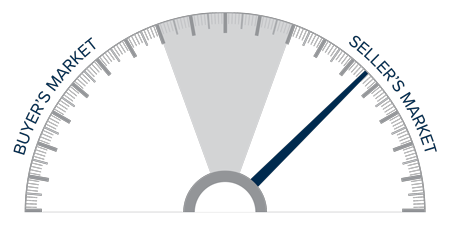
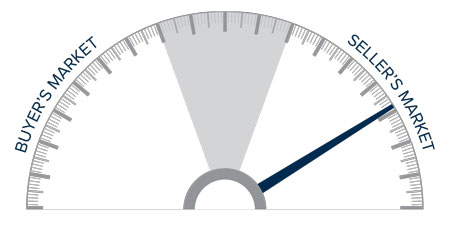
A speedometer graph indicating a seller's market in Western Washington.

This speedometer reflects the state of the region’s real estate market using housing inventory, price gains, home sales, interest rates, and larger economic factors.

Demand has clearly not been impacted by COVID-19, mortgage rates are still very favorable, and limited supply is causing the region’s housing market to remain incredibly active. Because of these conditions, I am moving the needle even further in favor of sellers.

2021 is likely to lead more homeowners to choose to move if they can work from home, which will continue to drive sales growth and should also lead to more inventory. That said, affordability concerns in markets close to Western Washington’s job centers, in combination with modestly rising mortgage rates, should slow the rapid home price appreciation we have seen for several years. I, for one, think that is a good thing.
 

About Matthew Gardner

Matthew Gardner, Chief Economist for Windermere Real Estate

As Chief Economist for Windermere Real Estate, Matthew Gardner is responsible for analyzing and interpreting economic data and its impact on the real estate market on both a local and national level. Matthew has over 30 years of professional experience both in the U.S. and U.K.

In addition to his day-to-day responsibilities, Matthew sits on the Washington State Governors Council of Economic Advisors; chairs the Board of Trustees at the Washington Center for Real Estate Research at the University of Washington; and is an Advisory Board Member at the Runstad Center for Real Estate Studies at the University of Washington where he also lectures in real estate economics.

Market News January 25, 2021

Matthew Gardner COVID-19 Housing & Economic Update: 01/25/2021


Hello there and welcome to the first Mondays with Matthew for 2021. It’s great to be back and I hope that you all had a fantastic holiday season and are getting into the new year groove.

Well, there’s a lot of data releases to talk about today so let’s get to it. First up is the latest National Association of Homebuilders report on builder confidence.


A line graph showing the National Association of Home Builders' housing market index for the past two years.


The index slipped to 83 from 86 but, for context, any reading above 50 means more builders view market conditions as favorable than poor.

Now, as you can see, following a very impressive recovery following the start of the pandemic, U.S. homebuilder confidence has trended lower for the past 2-months but, to tell you the truth, I really wasn’t surprised to see this.

Why wasn’t I surprised?

Well, its actually rather simple. Surging COVID-19 infections in concert with increasing material costs offset record low mortgage rates.

Builders are still grappling with supply-side constraints related to not just material costs, but a lack of affordable lots on which to build, and labor shortages that are all putting upward pressure on new home prices.

It’s very frustrating for builders these days as they see very significant demand for housing – driven by cheaper mortgages as well as an exodus from city centers to the suburbs and other low-density areas as companies allow employees to work from home because of the pandemic.

Oh! Talking of work-from-home, I did see a number put out by the Census Bureau in their Household Pulse Survey that suggested that about 38% of the labor force is now working at least part-time from home. That’s a massive number.


A line graph from the National Association of Home Builders showing the component trends in the U.S. Housing Market over the past two years.


Anyway, all of the component parts of the survey trended lower with the measure of sales expectations in the next six months falling two points to 83, the gauge of current sales conditions also dropping two points to 90, and the prospective buyers index falling by five points to 68.

I am not worried by this as, even at these levels, builders are still pretty bullish about the market, and I say this because of the next dataset I’m going to talk about – the housing permit and starts report.


A line graph showing the number of single-family home builder permits over the past two years.


Even if builders were suffering from worries regarding costs. Oh! I should add that their biggest issue as far as material costs are concerned are that lumber prices have risen by 52% versus a year ago!  Anyway, this increase in cost, as well as the other issues that we have just talked about didn’t translate into slowing activity when it came to permits and starts which both surged in December.

This chart shows the number of single-family permits issued across the country and the figure rose by 7.8% between November and December to an annual rate of 1.226 million units. That’s 30.4% higher than seen a year ago. And the fastest rate seen since 2007.


A line graph showing the number of single-family home starts over the past two years.


And looking now at housing starts, well they impressed too with a 12% month over month gain to an annual rate of 1.338 million units – and that’s 27.8% higher than a year ago.

I would also note that single-family starts have increased for eight straight months now. And – given the data that we have just looked at – it’s not surprising to see a very significant jump in the number of homes under construction.


A line graph showing the number of single family homes under construction over the past two years.


Now, in case you are a little confused by terminology, I should let you know that housing starts don’t actually relate to the number of homes being built. Starts refer to lots where a foundation has been poured, but it doesn’t mean that vertical construction has commenced.  For that we need to look at the under-construction data shown here.

And the number is pleasing.  In fact, the current level of ground-up construction is at its highest level since 2007.

The bottom line is that I expect to see the number of starts and homes under construction continue to rise, and new supply of homes is likely to take some of the upward price pressures off the resale market.

In fact, my current forecast is for new home sales to rise this year to about 988,000 units.

And talking of the resale market, I know that you have all been waiting for the December existing home sales numbers and they were released last Friday.


A line graph showing the inventory of home for sale in the U.S. over the past two years.


Before we get to the good stuff, I want to start with inventory – or lack of it!

Without seasonal adjustment, the number of homes for sale in December stood at just 1.07 million homes – and that’s down 23% year over year.

For perspective, that is the lowest number of homes on record and, at the current sales place, that represents a 1.9-month supply and that’s the lowest number seen since the National Association of Realtors began tracking this metric back in 1982.

So – we know that there is nothing to buy, but what’s happening to sales?

Look at this! Pandemic-driven demand for housing sent total 2020 home sales to the highest level since 2006.


A line graph showing the number of existing home sales in the U.S. over the past two years.


Closed sales of existing homes in December increased just 0.7% from November to a seasonally adjusted annualized rate of 6.76 million units and sales were 22% higher than seen in December of 2019.

As unexpected as a global pandemic was, so too was the reaction of homebuyers. After plummeting in March and April, sales suddenly began to climb.

Total year-end sales volume ended at 5.64 million units, and that was a number far higher than I – or anyone – was predicting before the pandemic started.

COVID-19 drove buyers desire for larger, suburban homes with dedicated spaces not just for working but for schooling as well.

And I will tell you that, in my opinion, sales could have been even higher if there were just more homes to buy! I wouldn’t have been surprised, again, if we had no inventory constraints – to have seen over 7 million sales occurring last year and that would have matched the all-time high seen in 2005.

But of course, there is a price to pay when you have so much demand, and so little supply.

That’s right.  Prices go up!


A bar graph showing the median sale price of existing homes in the U.S. over the past two years.


Low supply and very strong demand continued to heat home prices with the median price of an existing home sold in December coming in at $309,800, that’s a 12.9% increase when compared with December 2019 and the highest December median price on record. I would also add that this price is only marginally below the all-time high that was seen last October.

The surge in prices really has been quite remarkable, but I am not too surprised.  Yes, demand has risen significantly, and supply has not, but much of the growth was driven by mortgage rates that have dropped precipitously since the pandemic started and are over a full percentage point lower now than they were a year ago.

I would add that part of the reason we say such a sharp increase in price is that home sales were actually very strong at the high end of the market, where there are more homes for sale.

Sales of homes in the US priced below $100,000 were down 15% annually in December, while sales of homes priced between $500,000 and $750,000 were up 65% year over year, and sales of million-dollar-plus homes were up by a whopping 94% from a year ago.

A lot of the growth in the luxury market can also be attributed to mortgage rates with jumbo rates – that spiked with the pandemic – dropping significantly and this has led sales higher.

Breaking out the single-family market from condos, sales leapt in the early summer but leveled off in the fall because of – you guessed it – a lack of homes for sale and not a lack of demand.


A line graph showing single family home sales and a bar graph showing median price of single-family home sales in the U.S. over the past two years.


In 2020, sales of single-family homes rose by 6.3% – a massive number that’s even more impressive given the fact that sales only rose by 0.5% in 2019.

And prices were, naturally on the rise too – increasing by 9.2% last year, and that’s the fastest rate we have seen since 2013, and that was when we were starting to recover from the housing bubble that burst causing home prices to collapse value buyers jumped in causing prices to rise significantly.

Looking now at condos, we see a somewhat similar picture with the annual rate of sales coming in at over 700,000 units but, interestingly, 2020 total condo sales were actually 0.3% lower than we saw in 2019.


A line graph showing condo and co-op sales in the U.S. and a bar graph showing their median sales price.


What is happening here is a drop in demand for urban multifamily units with buyers able to work remotely. And this is also reflected by lower price growth than we saw in the single-family market.

As we move forward, I am still positive about the multifamily arena, but we are already seeing softening in demand and price in some market across the nation and here I am directly referring to San Francisco here in the West, and New York and Boston back East.

In as much as we will continuing to see short-term demand and price issues in many urban markets, it doesn’t mean that the overall condo market is going to collapse.

In fact, I think that once we get back to “normal” we may well see demand increase again and, if we see prices start to drop, I expect demand to rise even further as buyers who had previously been priced out of many of these large cities see that they can now afford to buy.


So, there you have it. My take on the January housing related data releases.

As always, if you have any questions or comments about the topics I have discussed today, feel free to reach out – I am only an e-mail away!

In the meantime, thank you for watching, stay safe out there, and I look forward to visiting with you again, next month.

Bye now.

More January 15, 2021

Windermere Offices Continue to Support Communities Through COVID-19 Pandemic

Windermere offices have continued to support their communities throughout the COVID-19 pandemic, raising money for the Windermere Foundation, which has provided over $43 million in funding to support low-income and homeless families throughout the Western U.S. since 1989. Here are some highlights from the past holiday season.

Windermere Whatcom Donates 84 Thanksgiving Boxes

For over 20 years, Windermere Whatcom has donated Thanksgiving boxes to local school districts and organizations. These boxes contain all the fixings for a Thanksgiving feast, from sparkling cider and pumpkin pie to turkey roaster pans and a recipe book. The meals benefit families in need of a warm Thanksgiving meal. Agents at Whatcom’s five offices select the recipient organizations, then agents and staff are assigned items to fulfill depending on the number of meals needed. Keeping COVID-19 guidelines in mind, agents worked in small groups/shifts to pack the boxes of food and supplies on the day of delivery. In total, 84 Thanksgiving meals were donated on November 23 and 24, 2020.


Two men unpack a box of food donations for a Thanksgiving meal.

Picture L to R: Alex Stredicke & Ken Gustafson


Windermere Abode Supports Tacoma Rescue Mission

Every Friday since March of 2020, Windermere Abode in Tacoma, WA has helped the Tacoma Rescue Mission serve sandwiches and snacks. After speaking with Windermere agent Melo Hogan, Broker/Co-Owner of Windermere Abode Anne Jones learned that throughout the COVID-19 pandemic, the organization had been losing volunteers and needed to provide to-go meals for the community members they support. “The coolest thing about this program is we’ve invited our community to participate,” said Jones. “That’s how we’ve kept it going and literally have delivered thousands of sandwiches. We’ve had a few Fridays with two fully-loaded SUVs.”


A woman unpacks food donations from the back of a vehicle.

Pictured: Melo Hogan


Windermere Greenwood Donates $4,418 to WA-BLOC

In the summer of 2020, the agents and staff at Windermere Greenwood were looking for ways to support grassroots, Black-led organizations in underserved communities and youth. When they came across WA-BLOC (Building Leaders of Change), they jumped at the chance to support the organization. WA-BLOC works with students in South Seattle, igniting transformation and building leaders of change through revolutionary education and social justice leadership development. Understanding that the pandemic would impact students’ learning ability, the Greenwood office wanted to contribute to help make distanced learning more equitable. Totaling $4,418, their donations went towards purchasing laptops, wi-fi hotspots, school supplies, tutors, school lunches, and more.


A flyer showing Windermere Greenwood's $4,418 total raised for WA-BLOC.

Windermere Greenwood’s total amount raised in support of local organization WA-BLOC


Windermere Eastlake Gifts $5,000 to St. Francis House

Agents and staff at Windermere Eastlake in Seattle came together this holiday season to support low income and homeless families in their community through St. Francis House, an organization dedicated to serving the homeless population of King County. Eastlake donated $5,000 to the organization to distribute holiday gift packages to families including a new blanket, a new game, and a grocery gift card. Each child received a pair of socks, a new toy, and a book. So far, 375 families have received their gift.


A selection of toys distributed by St. Francis House through Windermere Eastlake’s donation

A selection of toys distributed by St. Francis House through Windermere Eastlake’s donation


To find out more about the Windermere Foundation or to make a donation, please visit the Foundation’s website here: Windermere Foundation

More January 13, 2021

Windermere Acquires Sacramento’s Largest Independent Real Estate Company

The heads of Windermere Real Estate Geoff Wood, Jill Jacobi Wood, and OB Jacobi have announced that Windermere has acquired the largest independent real estate company in Sacramento, CA, Lyon Real Estate. Founded in 1946 by William L. Lyon, Lyon Real Estate has over 800 agents in 17 offices throughout the greater Sacramento area and generated $2.86 billion in sales last year. It is ranked 111 out of the top 500 independent brokerages in the US according to Real Trends.

“Windermere has been looking for the right opportunity to grow our network in Northern California and approached Lyon because of their strong, reputable brand and the commonalities between our two companies,” said Windermere co-president, OB Jacobi. “They’re a second-generation, family-owned organization. They’re agent-centric and customer-focused. And they care deeply about giving back to their community. We couldn’t think of a better fit for Windermere,” he added.

Jacobi shared that under the terms of the acquisition, Lyon Real Estate will continue to operate under their name and brand, and will maintain the current leadership team, including president and chief operating officer Pat Shea.

“This is the blending of two accomplished companies which will each maintain its own identity for the time being, and when the time is right, the Lyon brand will further immerse itself into our organization,” said Jacobi, adding, “Because of the strength of the Lyon brand, we want to be very thoughtful about this process.”

Shea said that over the years Lyon has been contacted by a number of suitors seeking a strategic growth opportunity, but the right fit didn’t come along until they were approached by Windermere, whose company leadership Shea has gotten to know over the past 10 years as fellow members of Leading Real Estate Companies of the World. “We picked Windermere because it is well suited to maintain Lyon’s legacy and grow it in the future,” said Shea, adding, “This also fits in with the Lyon family’s succession plan whose first priority was to leave the company they built and had run over the past 75 years in the best possible hands for the long term.”

Jacobi said that while Lyon is still operating under its existing brand, it is now a part of the greater Windermere network and will benefit from Windermere’s enhanced marketing resources, professional development, relocation and referral services, and in-house chief economist, Matthew Gardner.

Design January 13, 2021

Renovating Your Vacation Home

Owning a vacation home comes with the reward of having your own slice of paradise, but it can also present some unique challenges if you need to make renovations. It’s important to understand how you will use your second home before diving into any renovation projects. This will help keep you organized and on track throughout the renovation process as you transform your space into a true vacation retreat.


Take Your Time

Before you start in on any renovations, take time to think about how you will use your second home. For example, if you plan on eventually retiring to your vacation home, you can prioritize projects that increase the quality of your time spent there over the years.

If your vacation home is intended to be a place for large family gatherings, you’ll want to consider bedroom and bathroom accommodations accordingly. Vacation homes often have greater flexibility when it comes to sleeping arrangements, just be sure to understand the code limitations of your property before proceeding.

If you are looking to sell in the future, you will likely prioritize renovations that help increase the home’s resale value. Keep in mind that the some renovation projects in a primary residence may not have the same effect on the value of a vacation home. Your best bet is to talk to your Windermere agent about how different renovation projects may affect the value of your property.


Renovating By Season

Is your vacation home primarily a summer getaway or a winter retreat? The seasonality of your stay will help to prioritize your projects as well, regardless of your local climate.

Winter – Early Spring

  • The early months of the new year are actually a great time to start additions to your home. Winter conditions are typically better for digging foundation and pouring concrete. Winter is also the perfect time to get started on any indoor painting projects you have in mind.

Spring – Early Summer

  • Always the busy season for builders and contractors, the spring-to-early-summer months are perfect for outdoor projects like patios and decks, knowing they’ll be completed just in time for summer. Depending on your local climate, you may want to start a deck or patio earlier in the year, giving the wood ample time to stabilize and avoid early damage from too much sun exposure.

Summer – Fall

  • A fresh coat of paint gives your home new life. Depending on the paint you’re using, temperatures need to remain above 40-50 degrees while your painting project is taking place. Accordingly, the summer—and depending on where you live, early fall—months are a safe bet for making your exterior paint project a success. 

Fall – Winter

  • If you’re looking to get new appliances in your vacation home, look to the fall and early winter months for holiday deals. If your vacation home is the rendezvous for family holiday gatherings, you’ll want to make sure any large-scale renovations are finished before the holidays come around.
Design January 11, 2021

Incorporate Pantone’s Color of 2021 Into Your Home

For the second time ever, Pantone’s Color of the Year is actually two colors: Ultimate Gray and Illuminating Yellow. Ultimate Gray is emblematic of natural elements that stand the test of time, while Illuminating Yellow is a cheerful sunshine yellow, symbolizing energy and clarity.

Here are some ways you can harness this color harmony in your home.


Brighten Your Bedroom

Image Source: Pinterest – Roomdsign.com

With a foundation of Ultimate Gray, Illuminating yellow will brighten your bedroom, livening up the space and radiating positivity. Mix and match different furniture and accent wall combinations to get the right balance of sunny yellow and solid gray.


Refresh Your Home Office

Home offices have become more important than ever. As working from home continues in 2021, your remote workspace is the perfect location to add in Pantone’s Color of the Year. We all could use some added stimulation to keep our workdays going smoothly and productively. Use Illuminating to add some colorful accents or to paint your wall, balance it out with some Ultimate Gray, and let the positivity fill your home office.

A modern home office with a yellow wall.

Image Source: Pinterest – Ideias Diferentes


Accents In Your Living Room

Image Source; Pinterest – todacharmosa.com

Pantone’s Illuminating is a perfect accent color for your home. Incorporate this energetic sunshine yellow in your living room in the form of decorative throw pillows, blankets, and accent décor pieces like vases and curtains. Ultimate Gray is a perfect color for large furniture items and will help to balance out the tone of your living room. It provides a neutral backdrop, which gives you the freedom to decorate brightly.

Make A Statement With Your Front Door

Your front entrance plays a significant role in the first impressions of your home. What better way to use Pantone’s striking yellow than a front door makeover? Illuminating yellow presents an opportunity to bring a little sunshine to your family and guests every time they approach. Ultimate Gray as both a wall color and an accent color will help to solidify your new, strikingly optimistic front door. Accent pieces like house numbers, your mailbox, and plant pots will help create harmony between the two colors.

A yellow front door against a gray wall.

Image Source: Pinterest – pursuitdecor.com


Read more about this year’s color trends and how you can incorporate them into your home here: 2021 Paint Color Trends

Living January 6, 2021

Technology in Your Home

Every year there are more products that come out to automate your home. There are many reasons to add technology and to automate your home including safety, security, efficiency and convenience. Here are some reasons and products that are must have for your home.


For Safety

There are many products that will help keep your family and home safe and prevent disaster.

  • Water sensors – Water damage is a common issue within homes. There are many types of water sensors that will detect water from a burst pipe, a broken supply line or clogged toilet.  Water sensors will alert you if your home gets a leak so that you can act quickly to prevent any more damage.
  • Indoor room sensor – An indoor room sensor is like a smoke detector with many more functions. Most indoor room sensors can detect indoor air quality, temperature, and humidity to help you monitor your home.  You will receive alerts, and many are also voice activated.


For Security

Add these products to keep a close eye on your home and belongings while you’re away, or while you’re home

  • Security cameras – Now with home automation you will be able to keep a close eye on the inside and outside of your home. You can get security cameras that include audio recording, motion detection and allow you to view footage remotely using an app.
  • Door & window sensors – there are many types of door sensors that will fit your budget. Most are small and sleek so they are undetectable, when their magnetic field is broken by opening a door or window you will receive a notification of the exact window or door that was disturbed.
  • Smart lock – These are great not just for security but also for convenience. With smart locks you can lock and unlock your door from anywhere.


For Convenience

Take control of your home with automation and smart tech that is simple and convenient.

  • Smart blinds – smart blinds allow you to lower the blinds without ever getting up. There are few different options for smart blinds to control with a remote, your eye phone or connect them to your Alexa to make them voice activated.
  • Smart fridge – Smart fridge options can include a lot of different features depending on what you are looking for. Smart fridges can include touchscreen interface that connect to the internet, internal cameras, cooling options and a connection to your phone so that you can control it remotely.
  • Smart vacuums – smart vacuums are a great self-cleaning tool that you can activate while you are out of your home. These vacuums will clean your floors without any physical labor and can be controlled remotely.


For Efficiency

Smart technology can help make your home run more efficiently & save you money.

  • Smart Home lighting – with smart home lighting you can control lights in your home remotely. Set a schedule or turn off and on and dim to save energy powering your lighting.
  • Smart fan – With a smart fan you can control the speed and how long your fan is running. This allows you to turn on the fan at optimal times while also shutting it off when the energy it uses is no longer benefiting you.
  • Temperature control – For controlling temperatures within your home look for a smart thermostat. Features for smart thermostats include Wi-Fi capabilities, scheduling when your heating and cooling systems start and stop.  Most include energy reports so you can adjust how you use the system.
Buying January 4, 2021

Ways to Save Money by Going Green

Contrary to popular belief, going green does not have to be hard or cost money, in fact it can even save you money.  There are many small things that you and your family can do within your home to save money while reducing landfill waste and the use of natural resources. Discover a few ways to go green and save some money by choosing a green home.


Compost Bin

Composting is free and can provide you with rich soil to garden with. You will never have to buy soil and can easily grow plants and vegetables.  To create your own bin, get a large trashcan with a locking lid, then drill about 25 holes all around the bin and attach the bin to small platform (allows it to drain).  Once you start putting approved items in the bin go outside and roll it around in the grass every few days.


Energy Efficient Light Bulbs

You can save approximately $75 dollars a year by replacing your traditional incandescent with energy efficient light bulbs.  On average energy efficient light bulbs typically use way less energy and can last much longer, not needing to be replaced as much.


Laundry

There are quite a few options to save money and energy when it comes to laundry.  Here are a few: wait till you have a full load of laundry to wash, line dry your clothes, wash your clothes in cold water and when it comes time to get a new washer and dryer, buy an energy efficient one.


Weather-Strip & Caulk

One of the main ways we use a lot of energy, especially in hot and cold climates, is through air-conditioning and heating. One way to reduce the use of heating and air-conditioning is to properly weather strip and caulk all windows and doors keeping your home cool and warm when needed.


Reuse and Reduce

Use items more than once when you can to avoid throwing them out; this might mean buying quantity over quality. Another way is to join The Freecycle Network or Buy Nothing group on Facebook. In these groups, you can swap used goods with neighbors for free while keeping more waste out of landfills.


DIY Cleaning

Start making your own cleaning products.  Not only can you customize, make them eco-friendlier but you will also save money buying products.  On average, most DIY cleaners cost less than a $1 to make per bottle compared to $5-$15 per store bought bottle.


Unplug & Turn Off

Put all your major electronics on a power strip and shut off when they are not in use.  Even if your electronics are shut off, they still will continue to draw electricity thought out the day.  Another tip is to make sure you unplug your cellphone when completely charged and always power everything down while not in use to save on battery life.


Toilet

There is an extremely easy way to make your toilet a low flow toilet.  Simply add a brick, wrapped in a waterproof bag or take a plastic water bottle and fill it with sand putting it into your tank.  This will reduce the amount of water with every flush. Once you are ready for a new toilet purchase a low-flush toilet.


Shower

Change up your shower head with an energy-efficient shower head that will use half the amount of water.  These shower heads are low flow but will significantly cut your water bill down.  Another option is to install a tap aerator which will also cut down water usage without changing the water pressure.

Living December 21, 2020

Your Winter Home Maintenance Checklist

Winter is a magical season to spend at home. We all want to be able to enjoy the shorter days and longer nights from the comfort of our homes while we watch the season change.

To truly enjoy this winter at home with peace of mind, you’ll want to complete a home maintenance checklist to prevent unexpected costs, ensure your family’s safety and warmth, and keep your home in the best shape for the winter season ahead.

1. Weatherproof Windows & Doors

One of the best preparatory measures you can take to keep the cold from infiltrating your home is to weatherproof your windows and doors. Any leaks or cracks could lead to a chilly household and increased heating costs. Either weatherstripping or caulking will do the trick for minor leakage issues, but for any severe problems you may want to consider a replacement.

2. Protect Your Pipes from Freezing

Burst pipes can be disastrous regardless of the season, but winter temperatures pose a greater risk than any other time of the year. Be sure to wrap interior pipes to provide them some insulation against the change in temperature. You’ll want to bring all hoses inside but remember to turn off your exterior water source before you do.

3. Prepare for a Winter Storm

Being fully prepared for the winter ahead includes completing both preventative home maintenance and disaster preparedness tasks. Keep a supply of flashlights and batteries handy in case a power outage should occur. If you have a fireplace, stock up on firewood so you’ll have plenty of fuel for your heat source. It’s best for your family to put together an emergency kit and evacuation plan so you’re prepared for any local weather emergencies.

4. Chimney Sweep and Fireplace Maintenance

We become more reliant on fireplaces, wood burning stoves, and chimneys to heat our homes during the winter. Accordingly, it’s crucial to prepare for the uptick in their usage. Clear out your air vents before your daily fires begin. When your fireplace is not in use, be sure to close the damper to save energy. Clogged chimneys can lead to house fires and carbon monoxide poisoning. Investing in a chimney sweep can save you money in the long run, while avoiding health scares.

5. Clean Out Your Gutters

After all the leaves, pinecones, pine needles, and other autumnal debris have fallen, it’s best to clean out your gutters in preparation for winter. By keeping your gutters clean you’ll avoid gutter damage from melted snow draining improperly. Make sure your downspouts are pointing away from your home’s foundation to prevent basement leaks and flooding.

6. Heating System Maintenance

Keeping up on your heating system’s efficiency is an integral part of winter home maintenance. If you use a furnace, be sure to clean out your air filters and ducts, making replacements as needed. Covering your HVAC system can help to prevent damage from any debris or moisture getting in. To protect against heat loss, seal your ducts with mastic tape or foil tape.

7. Reverse Your Ceiling Fans

If you have ceilings fans in your home, there is a handy trick you can use to improve your home’s heating efficiency. By reversing the direction of your ceiling fan—running the blades in a clockwise direction—you’ll create a slight updraft, forcing warm air near the ceiling downward.

8. Bring Your Plants Inside  

The winter season usually spells trouble for your potted plants. However, there are methods to keep them alive indoors through the winter months. You’ll want to provide continual air circulation, so keep a fan blowing in the direction of the plants. It’s best to mirror the conditions the plants will face outdoors, so you can afford to keep watering to a minimum. Since it is a harsher season, keep a close eye on your plants as the winter progresses.

After your checklist is completely crossed off, you’ll be able to kick back, relax, and enjoy your winter at home in comfort knowing your home is primed and ready for the winter season ahead.

More December 18, 2020

#AskAnAgent Wrap-Up

On our “#AskAnAgent” Instagram Live series, radio personality and Windermere client Carla Marie goes live with our agents, answering viewer questions about how to buy and sell a home.

After our first three episodes with Jessica James, Ashley Abolafia, and Gervon Simon, Carla Marie sat down with the following agents to round out the #AskAnAgent conversations for 2020.


Episode 4: Jen BowmanWatch it here

The second half of our #AskAnAgent series began with an informative conversation between Carla Marie and Jen Bowman, a Windermere agent based in Lynnwood, Washington. Drawing on her experience working with mostly sellers in recent years, Bowman discussed what it’s like to work with sellers while inventory is low. On the topic of bidding wars, Jen stressed the importance of timing for sellers when they hit the market, so they know they have exposed their home to the greatest number of interested buyers. Wrapping up, Jen touched on the recent trend of buyers moving to rural areas from her perspective in Snohomish County.


Episode 5: Genevieve StollWatch it here

New Jersey natives Carla Marie and Windermere agent Genevieve Stoll continued the #AskAnAgent conversations with an instructive discussion, examining the real estate process from multiple angles. For Stoll, one of the first thing she tells her buyers looking to strengthen their offers is to speak with a reputable lender right away to get the pre-approval process started. The conversation shifted to how buyers’ needs are shifting during the pandemic and the resurgence of vacation home purchases.


Episode 6: Derrik ShockmanWatch it here

For the final #AskAnAgent episode of 2020, Carla Marie chatted with Derrik Shockman, a former business owner and agent with Windermere Abode in Tacoma, Washington. For Shockman, being an entrepreneur and real estate agent are similar in that both require staying calm through the ups and downs of the market. Derrik also shared his expert knowledge on the similarities and differences between single-family houses, townhouses, and condos, and the different needs they satisfy for buyers.


Follow our Instagram page (@windermere) for updates on future episodes and follow Carla Marie (@thecarlamarie) to watch all the #AskAnAgent episodes from this year.