Living April 14, 2021

10 Tips for Sustainable Gardening

Spring is calling and the flowers are in bloom. It’s the time of the year that many homeowners start spending more time in the garden. Having a healthy garden is one of the best ways to create a sustainable home and reduce your household’s carbon footprint. Here are some eco-friendly tips that will help to make your garden even more sustainable.

10 Tips for Sustainable Gardening

1. Compost Your Waste

Composting, which puts your natural waste to good use, is the cornerstone of any sustainable garden. All grass clippings, dead leaves, plants, flowers, and the like are rich in nutrients. By composting, you provide your garden with a natural fertilizer, free of contaminants. Not only will this provide nourishment, but it will also help to produce healthier and tastier food.

2. Mulching

If having a sustainable garden is your goal, it’s important to treat your soil with care. Mulching enriches the soil and ensures it’s as healthy as can be. Mulch conserves the moisture in your soil, ensuring it won’t dry out. It also reduces weed growth and naturally moderates the temperature of the soil. Mulching can cover either bare soil or freshly planted food and flowers.

3. Garden Design

It’s natural to want to accentuate the beauty of your garden when designing it, but the sustainable gardener will prioritize giving plants what they need. Take into consideration which plants need direct access to sunlight, which need the most space in the garden, and any special requirements a plant may need to inhabit optimal growing conditions.

4. Use Natural Weed Killers

One of the pillars of organic gardening is to reduce the use of chemicals whenever and wherever possible. Homemade recipes involving vinegar and corn gluten meal are effective substitutes for harmful, chemical-based weed killers. Whichever method you choose, it’s important to weed by hand often.

5. Use Water Efficiently

Substantial watering is critical to keeping your garden healthy, but overwatering is a common practice and leads to an unsustainable garden. Research the amount of water your plants and flowers need to make sure you aren’t overwatering. If you live in a rainy climate, rain barrels are a useful tool as their function is to catch and conserve the water from your downspouts.

6. Animal Manure

For a more sustainable garden and even healthier soil, consider adding animal manure. Chicken, sheep, and cow manure are all popular choices. Rich in nutrients, it can be used both as a fertilizer and as a soil conditioner. Make sure the manure you purchase is free of pathogens and ask about the recommended window of time from application to harvest before you begin using it.

7. Go Local

Planting natively is a fast ticket to sustainable gardening. Native plants are innately acclimated to local climate conditions, making them easier to grow and maintain. Native plants often require less water to grow due to their familiarity with the soil and rainfall in your region, which cuts down on your garden’s total water intake.

8. Collect Dried Seeds

Believe it or not, you can save your seeds and sow them next year. Wait until the seed is fully ripe before you collect it. It’s important to gather seeds when the weather is dry and to store them in a dry place. To produce healthy plants in the future, the seed must be completely dry. 

9. Control Garden Slugs

Slugs are known to wreak havoc on gardens, eating through leaves and fruit, leaving a trail of destruction. There are many ways of controlling slugs in your gardens, but some may do more harm than good. If you choose to use slug bait, go organic. Many slug baits contain chemicals that are highly toxic to other animals.

10. Replace Your Gas Mower

How else can you reduce your garden’s carbon footprint? Replace your gas mower with a more sustainable alternative. Electric mowers and push mowers are functional and more eco-friendly replacements. For added sustainability, consider replacing your other gas-powered equipment, such as trimmers and leaf blowers.

Buying April 12, 2021

Buying with Gardening in Mind

Every home buyer has a list of must-have amenities that they’re just not willing to compromise on. For some, it could be an open floor plan or maybe a certain number of bedrooms. For others, that priority is a place to garden.

A garden provides a place where one can nurture the earth, feel connected to other living things, and have a positive impact on the environment. If you’re a home buyer who requires space to garden, here are a few things to consider.

The Hardiness Zone

When searching for a home, location is always high on the list of priorities, and for gardeners, it’s no different. If having a garden is important to you, the first thing you should do is check the hardiness zone to determine what you can realistically grow at any home you are considering buying.

Hardiness Zones are used by gardeners and growers around the United States to determine which plants will grow best in their region. The USDA uses the average annual minimum water temperature in the area to establish the zones, making it a great place to start when looking for your next garden.

Hardiness Zones don’t change by street like neighborhoods do but knowing where you are in the zones map can be a helpful guide to what to expect, especially if you’re moving to a completely new region.

Outdoor Space

Your Windermere agent will be able to use a combination of property metrics, photos, and land surveys to help narrow down your search to homes with adequate outdoor space for a garden.

Ask your agent about lot size versus the home size to make sure there is enough land to build and sustain a garden. Prior to visiting homes in person, check the exterior photos to get an idea of the area.

Local Wildlife

Local wildlife organizations have resources about the animals that might appear in your backyard. Knowing this will not only help you protect your veggies, herbs, and other plantings, but also aid in creating a wildlife-friendly sanctuary. The National Wildlife Foundation offers suggestions on how to do this and offers tips on how to attract songbirds and butterflies to your garden.

Infrastructure Requirements

Depending on the size of your garden, you may need to set up appropriate infrastructure for easier care, like a sprinkler system, raised beds, or outbuildings. If the land is uneven, consider installing raised beds that will help flatten the growing surface for your veggies and fickle flowers. A greenhouse can help you control humidity and light levels but be sure to consider the construction costs alongside your home loan amount.

Selling April 7, 2021

7 Costly Mistakes in the Selling Process

Sellers dream of a flawlessly executed home sale where everything goes smoothly, and they end up with a satisfied buyer. To achieve this ideal end goal, it’s important to be aware of the mistakes along the way that could potentially derail the sale. Mistakes in the selling process come in all sizes, but some can be more costly than others.

7 Costly Mistakes in the Selling Process

1. Incorrect Pricing

Simply put, sellers want to get the most value for their home. Inaccurately priced homes create complications in the selling process and can be costly. Overpriced homes are unable to compete with other homes in a more expensive bracket, reducing its appeal to buyers. The longer a home stays on the market, the more likely the seller will have to lower the price, and this could result in a final asking price that is well below what the home is worth. Underpricing can be used as a strategy to generate added interest among buyers and thereby drive up the home’s market value, but it requires that a bidding war take place among buyers.

2. Underestimating Selling Costs

There are many costs associated with selling a home that can easily pile up if not planned for. Commission fees take up a significant portion of selling costs, typically between five to six percent of the sale price. Sellers must budget for home inspections, making repairs, and staging the home to get it market-ready. During closing, sellers need to prepare for various costs including sales tax, attorney fees, and any fees related to the transfer of the title, and more. Not accounting for any of these costs can come as an unpleasant surprise.

3. Selling When Underwater

It may be tempting to think of selling a home solely as a revenue-generating event. However, if a seller still owes more on their mortgage than what their home is worth, or if the property has gone down in value, they still may not make enough money on the sale to pay off the mortgage. Any homeowner who finds themselves underwater on their mortgage should consider building more equity before they sell.

4. Selling FSBO

Selling a home “For Sale By Owner” (FSBO) presents sellers with the opportunity to save on commission fees but is a complex and risky process that can easily lead to serious costs. Not only does selling FSBO mean that the seller will incur all costs an agent would have taken on to market the home, but they are accepting added liability as well. If any mistake occurs during the offer process, negotiations, or closing, the seller finds themselves without the representation of an experienced professional. This leaves a great opportunity for costly mistakes that could potentially jeopardize the sale.

5. Failing to Disclose Repairs

If a seller fails to disclose any outstanding repairs and issues inherent in the home, they will likely come to light during the buyer’s inspection and can create a very costly situation for the seller. These losses can be avoided by being transparent about what repairs are needed ahead of time. Sellers can also opt to conduct a pre-listing inspection, which can be especially helpful in competitive markets. Disclosure rules vary by state.

6. Neglecting to Stage Your Home

Home staging is a critical element for getting the most value for a home and selling it quickly. By neglecting to stage, sellers are opening the door for lowered offers and reduced sale prices. The staging process is also the perfect time for sellers to inspect their home for any minor or cosmetic repairs that can be addressed quickly.

7. Not Choosing the Best Offer

Naturally, the highest offer received on a home may seem like the most enticing. But just because an offer may be higher than another doesn’t mean it’s the best one. It’s critical for sellers to communicate with their agent about the full terms of the offer to understand its contingencies, how it affects their bottom line, and how those components align with their needs and preferences.


For more information on selling your home and how to avoid costly mistakes, an experienced Windermere agent is ready to help. Click below to get started.

Design April 5, 2021

7 Ideas for Creating a Beautiful Yard

Spring is in the air and homeowners everywhere are preparing for a season of tending to their yards. Whether you’re looking to tackle a complete makeover, boost your home’s curb appeal, or simply make a few DIY upgrades, these ideas will help you make the most of your home’s landscaping.

7 Ideas for Creating a Beautiful Yard

1. Remodel Your Patio

The best patios are durable and long-lasting. If your patio requires repair, a remodel can play a significant role in creating the beautiful backyard you envision. Think about how your patio will be used before choosing materials. For example, if you plan on using it as a dining area, an uneven material like cobblestone may not be the best choice. Design your new patio pattern, including gaps between pavers for loose materials, before getting started.

2. Upgrade Your Deck

Decks can often be the focal point of a backyard. A few upgrades can easily transform the look and feel of the space. If you are building a new deck, take your local climate into account when deciding on materials. To upgrade your existing deck, create a seating area using chairs or a bench and decorate the area with plants to make it feel more welcoming. Pergolas and patio umbrellas will help to keep the area shady and cool while adding some color to the space. If you are rebuilding, consider building in seating during construction.

3. Start a Vegetable Garden

Gardens don’t just pop up in your backyard overnight, they take time to grow. Start by building your garden beds, aligning them north to south for maximum sunlight. Choose an area of your backyard where your veggies will have direct access to sunlight, without being blocked by shade from trees and shrubs. Research your local climate to determine which vegetables you should grow and what kind of yield you can expect. To protect your garden from weeds, insert a barrier in the bottom of the beds.

4. Edge Your Walkways

Nothing catches the eye in the garden like clean, crisp edging. Edging comes in a variety of materials, from plastic to more durable options like aluminum or steel. Before you install the edging, use a lawn edger or spade to make the cuts and shape the pattern. Tap the edging it into the ground with a mallet to solidify it into the ground and to protect it from animals.

5. Add Landscape Lighting

A beautiful backyard deserves to be enjoyed around the clock. Landscaping lighting can extend those days spent in the yard well into the nighttime. There is an array of landscaping lighting options to choose from, including spotlights, floodlights, in-ground lighting, outdoor post lights, and more. Choose the one that best highlights the features of your yard.

6. Install a Fire Pit

Fire pits help to tie a backyard together. The style of your fire pit should match other features in your backyard to bring cohesiveness to the space. Traditional fire pits are usually accompanied by circular seating, while more modern options like fire troughs provide a centerpiece to take in surrounding views. Wood fire pits provide a classic, crackling environment, gas pits burn cleaner than wood and come with an on-off switch, while gel-powered fire pits create a smaller frame and are typically used for accent lighting. 

7. Add Garden Containers

Garden containers of all shapes and sizes can be very useful in the yard, especially for homeowners with limited garden space. By adding pots, wooden boxes, or bowls to your yard, you’ll provide a flexible home for a variety of plant life. Just make sure each container has proper drainage holes. If not, you’ll need to make the holes yourself, or you can opt for self-watering pots.

Design March 31, 2021

Upgrading Your Work From Home Space

We don’t need to tell you that COVID-19 drastically changed the way we live and work. An estimated 58% of Americans are now working remotely, and it has had an impact on how we use the space in our homes. Home offices, once a luxury, are now in high demand as working from home became the new normal over the past year. That being said, is your home office operating at its highest potential? Let’s look at some ways to upgrade your home office and turn it into the workspace of your dreams.

The New Normal

It’s been almost a year since millions of employees started working remotely, so we are all familiar with the concept of a home office and working from home. While some have space to spare, not everyone has a dedicated room in their home or apartment to turn into an office. Whether you have a setup that would make Google HQ jealous or you’re currently borrowing your teenager’s closet to conduct Zoom meetings, it is important to prioritize the functionality of your space. Take advantage of every inch you have to give yourself a comfortable working environment.

With functionality top of mind, here are some crucial things to consider when revamping or creating your home office.

Create a Dedicated Space

It can be difficult living and working within the same couple hundred square feet. For the sake of maintaining some semblance of work-life balance, create a space dedicated to work and only work. Set all of your work equipment in a singular area and keep it there. Use dividers, doors, or your desk to mark off the area you’ve made.

Those who have been working from home for years have said that creating a designated workspace is one of the best things you can do for your mental health and overall wellbeing. A separation of work and home communicates to your brain that one area of your home is a place to work, and the other is a place to live – which can reduce work-related anxiety.

Make Your Windows Count

Setting up your desk under or near a window can do wonders for your creativity and productivity. If you can avoid it, don’t position your desk toward a wall. If you don’t have windows available, be sure to turn your desk outward, toward your room. This position will give your eyes the ability to bounce around the room instead of staring at a blank wall, which can be just as draining as it is boring.

Even if your desk is set up near a window, remember to head outside every so often. It’s all too easy to sit at your computer for hours at a time without standing up and enjoying some sunshine. Give yourself set breaks to soak in some vitamin D, whether you take your lunch outside or simply sneak some fresh air between meetings.

Some WFH Must-Haves

Enough of the basics. Here are some must-haves that will brighten your office space and make you excited to “go to work”.
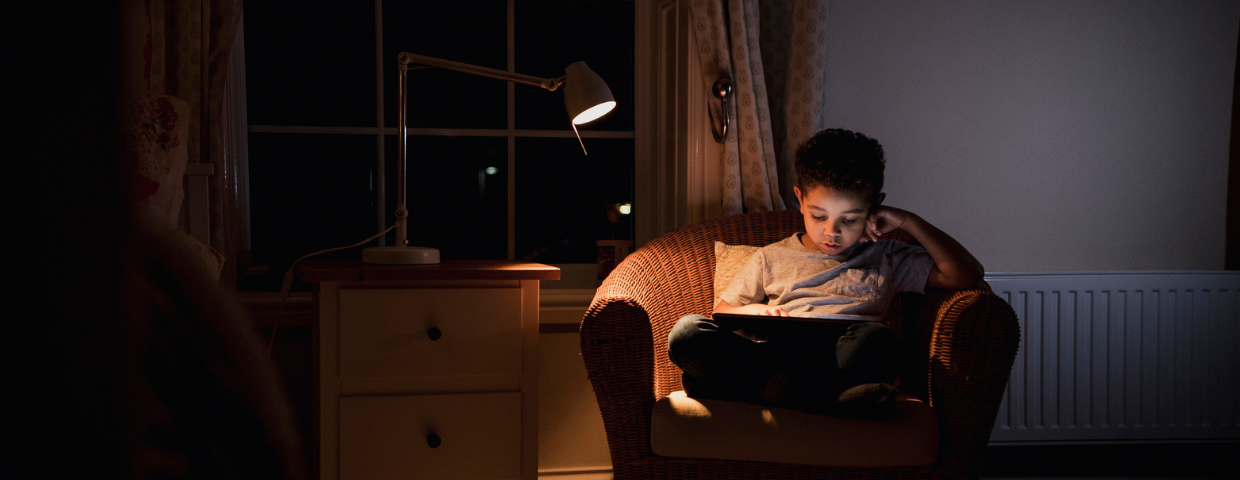
  • A therapy light can have a positive impact on your mood and energy by simulating natural light. Set one up on your desk to increase alertness and improve your sleep.
  • Save your back with an ergonomic chair made for longer periods of sitting. This will help reduce back pain and improve your posture.
  • Standing desks are another back-saver that will save you from sitting for eight hours a day. Seen to increase activity and overall health, standing desks can change how you work for the better.
  • A full-size keyboard provides all the keys necessary to get the job done, including a number pad and function keys. Tenkeyless keyboards (keyboards without a number pad) are gaining popularity, but full-size keyboards remain on top due to their ease of use and practicality.
  • Mini humidifiers are an effective way to combat dry air, giving you happy lungs, sinuses, and skin. Put one on your desk to increase the humidity in your space.
  • Working on screens all day exposes you to blue light, which can negatively impact your sleep and overall mood. Get a pair of blue light glasses to combat these rays.

With many of us still working from home for the foreseeable future, it’s more important than ever that your workspace serves your unique needs. Make your area work for you to improve your productivity and personal wellbeing. At the end of the day, we’re all human, and we work best when we’re feeling our best.


Disclaimer: This is a guest post written by the real estate experts at The CE Shop. The CE Shop is the leading provider of online real estate education with convenient courses available in all 50 states and D.C. To find out more about The CE Shop and the resources they provide, visit www.TheCEShop.com.

Market News March 29, 2021

3/29/2021 Housing and Economic Update from Matthew Gardner

This video is the latest in our Monday with Matthew series with Windermere Chief Economist Matthew Gardner. Each month, he analyzes the most up-to-date U.S. housing data to keep you well-informed about what’s going on in the real estate market. 


Hello there. I am Windermere Real Estates Chief Economist, Matthew Gardner, and welcome to the March episode of Mondays with Matthew.

Well, we have lots to talk about this month so let’s get straight to it and, first off, let’s take a look at the February existing home sales numbers.


Two line charts are stacked on top of each other, the top shows the inventory of homes for sale in the US comparing the month of January for the last 21 years. There' a large peak from 2006 to 2011, whild January 2021 is a record low. The bottom line chart shows the U.S. Existing Home Sales in millions from October 2018 to February 2021, showing a dip with the lowest point in May 2020, but an increase that is higher than the normal of before May 2020.

Listings and Sales. Source: NAR with Windermere Economics Seasonal Adjustments


As you can see in the top chart, the number of homes for sale was measured at just over 1 million units.  This is a woefully low number and one that we haven’t seen since NAR started to gather data on listing inventory.

And the bottom chart shows home sales and they fell by 6.6% month-over-month in February to a seasonally adjusted annual rate of 6.22 million units but they were still 9.1% higher than a year ago.

Why the drop? Well, I am putting the blame squarely on the shoulders of home sellers who – quite frankly – simply aren’t selling!


Line chart showing the Media Sale Price of U.S. Existing Homes showing January 2021 at a peak of $313,000, the same as the last peak in October 2021 which was record breaking at the time.

Home Prices are at an All-Time High


And looking at sale prices, they ticked higher in February to a median of $313,000, and that matches the all-time high seen last October and is 15.8% higher than we saw a year ago. This is the fastest annual pace of price growth seen since August of 2005, but I have to add that the number is a little deceiving as it was skewed higher by significant growth at the upper end of the market with sales above $750,000 accounting for close to 10% of all sales in February and sales above $1M up by a whopping 81% when compared to a year ago.

The numbers also showed that homes took an average of just 20 days to turn pending, another record, and 74% of homes sold in less than one month.

Individual investors or second-home buyers purchased 17% of all homes sold in February, and that’s up from 15% in January and matches the share seen a year ago

Now, as we move through the year, there are a couple of things worth noting.

We all know that the market is tight, but I still expect total sales this year to come in at around 6.3 million units – this is lower than my forecast from the start of the year but would still represent an 11.6% increase over 2020.


Heat map of the United States of America showing the Equity Rich Homeowner rates in the 4th quarter 2020. The colors represent households with more than 50% equity in the state, with red showing 17.1%, salmon shows 32.5% and green represents 47.8% of the population.

Owner Equity.


Although these are not numbers from NAR, I did want to share with you some different data that does relate directly to the increase in sale prices that we have just discussed.

With the significant upswing in sale prices that we have seen over the past 8 or so years, over 30% of all homeowners in America currently have more than 50% equity in their homes and this is a massive figure.

But across the country, there are significant variances as you can see here.

The largest share of homeowners who are equity rich live in Vermont and California but many west coast markets are not far behind with significant owner equity seen in WA, OR, ID, UT, & CO.

These really are very impressive numbers.


Two lines on the same graph show the weekly rate for Mortgage Rates of Variation Durations. The top line, a navy blue, shows the 30 year fixed, and light blue line below is the 15 year fixed mortgage. Each line follows a similar pattern peaking in March 2020, with a slow dip until January 2021, which the most recent date hitting 3.17% for 30-year fixed rated, and 15 year fixed rates hitting 2.45%.

A Jump In Bond Yields Has Led to Rates to Spike


It’s time to take a look at mortgage rates as a lot has been going on in that space too since we last talked.

This chart shows the average weekly rate for 15 and 30-year conforming mortgages and, as you can see, rates started to jump in early February and I find it very unlikely that they will drop back down at any time soon.

I am sorry, folks, but the days of 30-year rates starting with a 2 handle well they are now firmly in the rearview mirror.

So what has caused this spike?

Well, it’s very simple. COVID-19 case counts are dropping; the distribution of a vaccine is going remarkably well. As I speak, over 130 million doses have been given and over 46.4 million people are now fully vaccinated against COVID-19.

But there is a fear that that – with the country starting to reopen – we will see a significant boost in economic activity which, in concert with the latest round of stimulus payments, has generated rumblings from some economists who are now looking to see inflation to take off.

And as much as its great news that we are seeing a better than expected rollout of the vaccine, which will lead to faster economic growth in the second half of the year, the potential for inflation to rise is now elevated and this has caused a move out of bonds – specifically 10-year treasuries,  which means that the interest rate for these bonds has to rise and the interest rate on 10-year paper directly impacts mortgage rates – specifically the rate on the ever-popular 30-year mortgage.

But before everyone starts getting panicked about this, look at it this way.


Shadow line graph showing the weekly average 30-year fixed mortgage rate trends. The graph shows a peak in January 2019, a fall off until the summer 2019, then another increase in the winter 2020, and a steady decrease since then until January 2021 where there's a sharp increase again.

But Let’s Keep Some Perspective!


Even at 3.17%, rates remain remarkably low. Yes, the current rate was last seen in June of 2020, but it is still well below the long-term average.

But, that said, and given the upward move in Treasury yields, I have had to rerun my forecast models for mortgage rates, and here is where I see rates trending this year.


Bar graph of the average 30-year fixed rate mortgage rate history and Matthew Gardner's forecast. The Navy blue bars from Quarter 1 2018 to quarter 4 2020 show an increase, peaking in q4 2018, and decreasing until the low in q4 2020 at 2.7%. Matthew's forecast for the next 4 quarters in light blue predicts 2.99% in q1 2021, 3.2% in q2 2021, 3.48% in q3 2021, and 3.63% in q4 2021.

Although rising, rates will remain very reasonable


I expect that we will see rates rise to an average of 3.6% by the 4th quarter of 2021 and, looking farther out, we will likely break back above 4% in early to mid-2022.

Now, I could actually be a little optimistic if – and it’s a big if – 10-year bond yields rise faster than I am forecasting but, for now, I don’t see that happening unless, of course, inflation really does take off but, again, I don’t see that.

That said, I am looking for a spike in inflation in the next few months as we feel more comfortable going out again and we start to spend our money in a more normal manner, but I believe that inflation will level off and not get out of control. However, if it does, then more bond buyers will head further out along the yield curve and buy longer duration treasuries to counter inflation, which will mean that the interest rates on 10-year treasuries will have to rise to attract buyers and this, of course, will lead mortgage rates higher.


Bar graph showing the forecasts for conventional 30-year fixed mortgage rates in 2021 from other sources with Windermere Economic's forecast in the upper end at 3.53%. Mortgage Banker's Association forecasts 3.6%, Wells Fargo predict 3.46% and Freddie Mac is the lowest with 2.8%.

And my colleagues agree!


And just in case you don’t believe me, here is my forecast for the average rate in 2021 rates alongside some of my fellow economists, and, as you can see, other than Freddie Mac, we are in a fairly tight range.

I would add that the NAR and Freddie forecasts are a month or so old, so I would not be surprised to see them revise their forecast upward at some point.


Two line graphs side by side showing Housing Permits and Starts. On the left, the line graph show the single-family building permits in the thousands, with a v-shaped recovery with a low below 700 in April 2020 and a peak in February 2021, with a small dip for the current number at 1,143. On the right, the single-family home starts char shows a similar pattern, with the current number at 1,040 after a spike in the fall 2020 above 1,300.

Housing Permits & Starts


Moving on to the new home market – both permits and starts pulled back in February with starts down by 8.5% on the month and single-family permits down by 10%.

So, what was going on? Well, despite strength in buyer traffic and lack of existing inventory, builders are slowing some production of single-family homes as lumber and other material costs continue to rise.

And shortages of lumber and other building materials, including appliances, are also putting future construction at risk.

While single-family starts for the first two months of the year are 6.4% higher than the first two months of 2020, there has been a 36% year-over-year increase in single-family homes permitted but not yet started as some projects have been put on pause because of the cost and availability of materials to build homes.


Double line graph showing data about the current prices and costs of building a houe. The blue line represents the random lengths framing lumber composite price and the red line show the CME futures price. These two lines follow a similar pattern with a peak in September 2020 to a dip in November 2020, and back on the rise again, reaching a peak in March 2021.

Current prices have added $24,000 to the cost of building a home in the U.S.


And to give you some perspective about the direction of lumber prices, they have skyrocketed more than 180% since last spring and this price spike has caused the price of an average new single-family home to increase by more than $24,000 since April of last year.

This chart provides an overview of the U.S. framing lumber pricing market and it’s not pretty.

But you can also see that the futures price has been dropping which may mean that we are getting closer to the end of the massive increases in lumber prices that builders have been facing.  Time will tell.


Line chart showing the single-family ne home sales from December 2018 to February 2021. There is a low point in April 2020 which steadily increased quickly plateauing just under 1,000 in July 2020 until it varies in December ad through the winter.

U.S. Single-Family New Home Sales in thousands, seasonally adjusted annual rate.


And on the sales side of the equation, after a slight rebound in December and January, the slowing of the pace of new home sales continued in February as a combination of affordability challenges, more costly materials, and storm effects which, in concert with each other led purchases of new homes to drop by 18% to a seasonally adjusted annual rate of 775,000 units.

But I would add that the February sales rate was 8% higher than we saw a year ago, and there is still demand which is being supported by still relatively low-interest rates, but more from solid demand in lower-density markets like the suburbs and exurbs.

Inventory levels did rise slightly with 312,000 new homes for sale, but that was 4.6% lower than a year ago.

The median sales price came in at $349,400, up 5.3% from a year ago.

And finally, I recently read a fascinating analysis that the NAHB put out which in essence, suggested that the recent rise in mortgage interest rates over the past two months has priced more than 1.3 million households out of the market for a median-priced new home.

In fact, the study found that just a $1,000 increase in the U.S. median new home price would push 153,967 households out of the market.


Pyramid bar char shows the U.S. households in millions by the highest price home they can afford based on income in 2021. The lowest house price, between 0 and 100k has 21.1 million households who can afford that, while only 3 million households can afford a home that's more than $1.55 million. The largest dips between groups are between 500-600k and 600-700k going from 8.1 million to 5.5 million households. Another big jump comes from 700-850k homes at 5.3 million households being able to afford that to 850k-1.05 million at 3.7 million households being able to afford that.

If the Pace of Home Price Growth Continues, Many Households Will Start to Be Priced Out


So, looking at it this way, the NAHB created the affordability pyramid you see here which shows that as the price of a new home increases, the number of households in each tier that are able to afford it decreases. All very logical.

About 21.1 million households are estimated to have the income needed to buy homes priced below $100,000 and they are shown on the bottom step of the pyramid.

And of the remaining 101.8 million households who can afford a home priced at $100,000, 19 million can only afford to pay a top price of somewhere between $100,000 and $175,000 and they are shown on the next step and, naturally, this trend continues up the pyramid of house prices with each step representing a maximum affordable price range and the number of households who qualify.

Although it’s certainly possible to find households at the high end of the market, there are a lot more households at the low end where affordability is a very major concern – 71.1 million households in America could not afford to buy a median-priced new home. That’s almost 58% of all households in the country.

The bottom line is that increased development costs can, and likely will, price these households out of the market for a new home, and with the cost of existing homes also rising rapidly, for more and more households, reaching the American dream of homeownership is getting harder and harder.

I am sorry – I really didn’t mean to end on a low note – but the facts are the facts. We need more housing supply and we need home price growth to slow. Of course, price growth will slow if my mortgage rate forecasts are accurate but it might already be too late of many who would like to buy a home.

So, there you have it. My take on the January housing-related data releases.

As always, if you have any questions or comments about the numbers we have looked at today, feel free to reach out. I would love to hear from you.

In the meantime, thank you for watching, stay safe out there, and I look forward to visiting with you again, next month.

Bye now.

Living March 26, 2021

5 Tips For Maintaining Your Property

Owning an equestrian property can be an amazing asset, but it also requires a lot of hard work. With some attention and care, you can keep your property well-maintained and functioning smoothly. Here are some tips to help you maintain your equestrian property to the highest standard.

5 Tips For Maintaining Your Property

1. Investing in the Right Materials & Equipment

One of the smartest things you can do with your equestrian property from the beginning is to invest in high-quality materials and equipment. You don’t want to make maintaining your land any more difficult than it needs to be, which is why you should acquire tools that make the job easier, while giving your land the quality care it needs. This also means investing in high-quality materials for your horses and their quarters. Flooring, fencing, and bedding are all important to maintaining your horse’s health. These investments will extend the longevity of your indoor and outdoor structures, creating an environment where your animals can live comfortably.

Items to consider:

  • Tractors, bailing and mowing equipment
  • Stall floor mats
  • Paddock and turnout panels and gates
  • Arena sand
  • Horse grooming supplies such as a wash station, vacuum, sheers and brushes
  • Hay feeders and automatic/heated waterers

2. Fix the Small Things

With equestrian properties it’s best to fix a problem, no matter how big or small, as soon as it presents itself. Addressing any issue quickly will go a long way in keeping your stable in peak condition and your horses happy, healthy, and safe. A broken fence or leaning post can easily be pushed down, allowing a horse to roam without supervision or boundaries. Something as small as an exposed nail could lead to an injury of your animals or others.

3. Create a Cleaning Schedule

When you own a large plot of land the responsibilities add up. The more acreage, the greater the chance for a mess. It’s important to make sure your barns and stalls are regularly cleaned for the health and safety of your horses. Keeping those areas moisture-free is also critical for quality horse barn maintenance. A dirty horse stall often attracts unwanted insects, and an unkempt stall could bring disease and bacteria into your barn. Horses may experience thrush and other respiratory issues if their sensitive lungs breathe in ammonia from urine-soaked bedding.

4. Maintain Good Ventilation

Horses need access to fresh air. It’s important to maintain good ventilation in their stalls, keeping open passages for your horses so the air can cycle through the space. Consistent air flow will also help regulate and maintain temperatures as they change throughout the season. Without good ventilation, your horses are at risk for highly contagious illnesses like pneumonia.

5. Don’t Be Afraid to Ask for Help

Maintaining your equestrian property is not easy! There is absolutely nothing wrong with looking to outside help to make sure every task gets completed. Even something as simple as a gardener or another employee that would assist you with more specific needs like caring for horses. You can often look to youth or others in the community who would enjoy trading horseback riding with simple chores and caretaking duties. Bringing in some help makes it that much easier to stay on top of your tasks and allow you to enjoy your property at the same time.

Buying March 24, 2021

Working with a Buyer’s Agent

What is a Buyer’s Agent?

A typical real estate transaction involves a buyer’s agent representing the buyer and a listing agent representing the seller. A buyer’s agent helps the buyer identify potential homes to pursue, advises them on negotiations, and helps navigate any hurdles during the buying process. Once they are under contract, the buyer’s agent will work to close the sale, monitoring all the key dates and deadlines along the way. Once the transaction is complete, buyer’s agents split the commission of the sale with the listing agent.

Advantages of Working with a Buyer’s Agent

Find the Right Home

A buyer’s agent not only possess expert knowledge of local market conditions, but they also have access to tools that will help their clients see the widest array of available homes, and eventually, find the right home. By exploring the Multiple Listing Service (MLS), they can access the vastest network of available listings, and receive up-to-date alerts on open houses. They are usually the first to know when a home hits the market and are sometimes aware of homes that are scheduled to list in the near term.  Buyer’s agents can advise their clients on how a home’s outstanding repairs and improvements could affect their decision to purchase, whether the home is in need of an inspection, and discuss the necessity of a home warranty.

To get an idea of which homes you can afford, use our free Home Monthly Payment Calculator by clicking the button below. With current rates based on national averages and customizable mortgage terms, you can experiment with different values to get an estimate of your monthly payment for any listing price. By using the Home Monthly Payment Calculator, you’ll be better informed when working with your agent to find the right home.

Save Time

Buying a home takes time, but a buyer’s agent will help streamline the buying process. This includes paying close attention to their client’s budget and preferences in order to focus their home search to only those listings that match their needs. Buyers can then decide which homes they would like to view in-person and their agent will contact the corresponding listing agent to set up showings. Buyer’s agents are founts of knowledge, able to provide or track down information a buyer may not be able to readily access on their own. Additionally, they are connected to a network of professionals and can produce references for mortgage brokers, real estate attorneys, inspectors, and more as needed.

Making an Offer

Once you’re ready to make an offer on a home, the importance of working with a buyer’s agent kicks into high gear. There are many different elements that impact an offer’s success, and this is where a good buyer’s agent’s specialty lies. Through their expertise, they can help their clients craft a more competitive offer and negotiate as needed. Sometimes the most competitive offers are not just about the price. Offers can win when a buyer’s agent has researched the seller’s needs and pulled together an offer that speaks to those needs. Any advantage buyers can gain to make their offer stand out will strengthen their case. This is especially important in competitive markets when multiple competing offers are on the table.

Throughout the process of making an offer on a home, a buyer’s agent is there to answer any questions that may arise and pore over the details so that nothing goes unnoticed. This is critical since sellers will likely toss aside any offers that come in with missing documents, errors in the contract, and other inconsistencies. When buying a home, buyers often fear that they will miss something during the buying process, that they are going to pay too much, that there will be something wrong with the house after they buy it, or that they’ll lose the home to another buyer. Buyer’s agents help to alleviate these stresses and make sure the buying process runs smoothly.


When determining which agent to work with, it’s important to ask questions to gain an understanding of their expertise, see their personality, and get a gauge of how well they understand what you’re looking for in a home. If you would like some help connecting with an agent, you can get started here:

Selling March 22, 2021

The Risks of FSBO

Selling a home is a complex process that requires patience, knowledge of the market, and a deep understanding of the financial processes. And that’s just the beginning. Accordingly, many homeowners trust in a professional to sell their home by working with a real estate agent. Despite the expertise an agent brings to the table, some homeowners choose to go it alone, bearing the responsibility of a successful home sale on their own shoulders. If you’re thinking about selling “For Sale by Owner”, or FSBO, know that there are certain risks and obstacles that can easily cause your home selling journey to veer off course.

The Risks of FSBO 

Real estate agents are professionals who possess a vast knowledge of both the industry at large and local market conditions acquired through years of training, certifications, and working with clients. For FSBO sellers, the complexities of the home selling process can easily illuminate a lack of experience and leave them feeling unsure of how to continue, or worse, situations may arise where proceeding incorrectly could jeopardize the transaction. This lack of expertise could lead to incorrectly pricing your home, which will attract the wrong buyers. An accurately priced home requires market knowledge and an objective approach to the home’s value, which can be tough for homeowners. The more time an overpriced home spends on the market, the more likely the price will have to be lowered. A home with a lowered price that has been on the market for some time is less appealing to buyers than an accurately priced new listing. An underpriced home could leave significant money on the table for the seller.

A common motivating factor for wanting to sell FSBO is that, in the case of a successful sale, the seller avoids paying commission to an agent. However, what that commission ultimately pays for is a vast skill set that is specifically trained to get you the most money for your home. Agents not only have access to all kinds of information on local market conditions, trends in the real estate market, and data on comparable homes in your area, they are also connected to a network of potential buyers and have the marketing know-how for appealing to them and any others in your market. To attempt to approach this same level of visibility while selling FSBO means incurring additional expenses like ad placement, signage, hiring a photographer, and more.

Selling a home takes up a great deal of time. FSBO sellers can expect to stage the home, host showings and tours, answer phone calls from buyers, interview home inspectors, and coordinate open houses, all while gathering data on the local market—and that’s all before any negotiations or paperwork. When an offer comes through, FSBO sellers must dive into the extensive documentation required for the mortgage, title transfer, and any other legalese involved in the transaction. It’s like having another job that you may simply not have time for, whereas a real estate agent’s job is to dedicate their time, energy, and experience to the successful sale of your home.


All these factors make selling FSBO a risky proposition. Mistakes in the selling process can lead to both financial and legal implications, but part of a real estate agent’s expertise is knowing how and when these dangers can arise and navigating them properly. If you’re looking to sell your home, we’re happy to connect you with an agent here:

Design March 17, 2021

Timeless Home Design

When decorating and designing, homeowners often strive for a home that may incorporate vintage and modern elements but remains timeless at its core. Fortunately, certain design principles and elements have stood the test the time and can help you curate the home you desire. Here is your guide to understanding how you can design a home that looks and feels timeless.

Principles of Timeless Home Design

Balance

When designing a space in your home, balance is a key concept to delivering a timeless ambiance. Achieved through a proportionate arrangement of objects and colors, balance will help create a logical pattern in your home that pleases the eye. Experiment with symmetry in your home to build balance. This doesn’t mean that there needs to be two of every object, rather in every space you should utilize the objects and color schemes present to create symmetry.

Focal Point

Imagine a living room without a couch or mantle, or a dining room without a dining table. These images are confusing because we simply don’t know where to focus our attention. A core principle of timeless design is that space should have a focal point to give order to the room. Focal points don’t always have to be derived from a built-in feature of the home, you can create one with furniture, artwork, or some other form of eye-catching décor.

Scale and Proportion

Scale and proportion are two fundamental concepts of interior design and are key to creating a timeless décor. Simply put, proportion refers to the relationship of items and colors, while scale refers to their relationship with the room. For example, if a room in your home has high ceilings, this allows for taller furniture and artwork, while the most spacious rooms in your house are the best home for large décor pieces and furnishings. Proper usage of scale and proportion also means leaving some space between items to let the room breathe, so to speak.

Colors and Patterns

For a timeless look and feel, choose more classic color and pattern schemes. Basketweave is a traditional pattern that helps to create symmetry. Stripes are always in style and can help to reinforce clean lines. Stick to neutral paint colors on your walls as they give you the flexibility to add décor without overwhelming the room. Combinations of off-whites, beiges, grays, and earthy tones will deliver that timeless feel you’re looking for.

Natural Elements

There’s nothing more timeless than nature. Materials like wood, stone, and marble have been a cornerstone of design since antiquity. Whether you utilize these materials in your home as furniture, accent pieces, or focal points, they will help create a trend-free, organic environment in any room.