Market NewsMore October 16, 2025

Housing Market Cools Alongside Economy in Third Quarter

This is the first in a recurring series of blog posts taking a closer look at the U.S. economy and several major regional markets in Windermere’s nine-state footprint. Updates will be released on a quarterly basis.

Economic Overview

After a slow spring, the U.S. housing market cooled further this summer, with price gains leveling off and sales holding steady. Existing home sales have hovered around an annualized pace of 4 million through August—nearly identical to last year’s unusually low 4.06 million. Mortgage rates dropped in the third quarter, falling from an average of 6.82% in May and June to 6.35% in September. The combination of rising inventory, softer pricing, and lower mortgage rates is making this fall a good time to buy a home.

Source: Freddie Mac via FRED. 

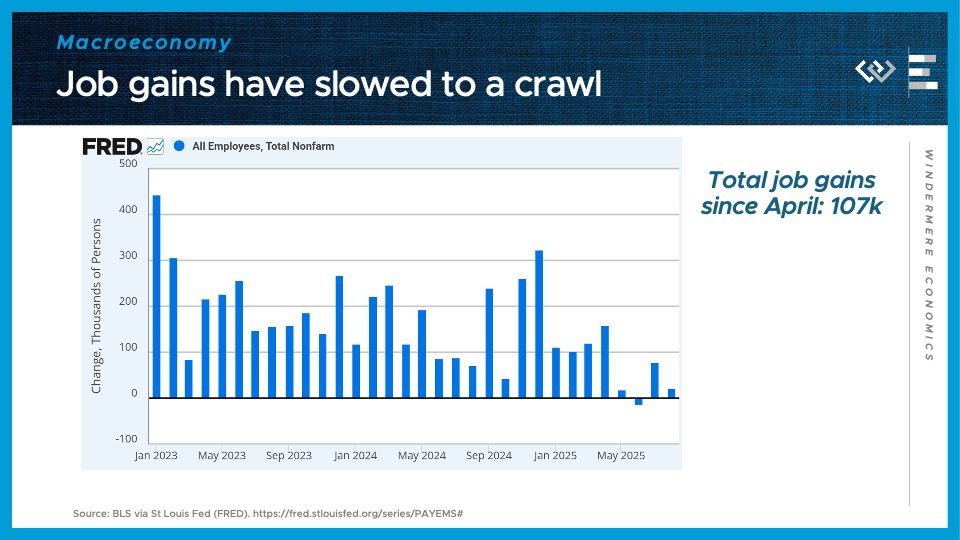
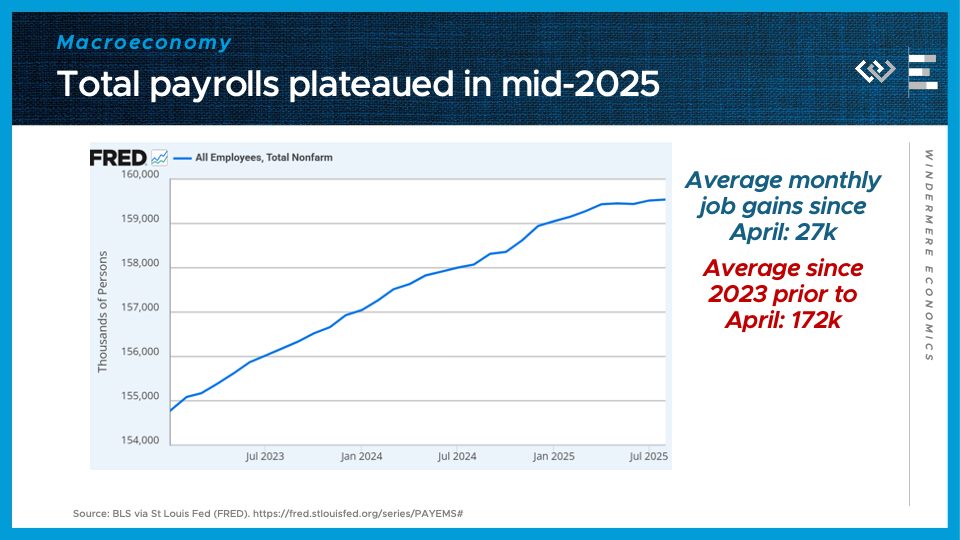
A key driver behind falling mortgage rates is the cooling U.S. economy, following a sharp slowdown in job growth over the summer. After revisions, nonfarm payrolls show little to no growth from April through August, and the next jobs reports are on hold due to the government shutdown. While slower growth poses challenges, it often brings the silver lining of lower interest rates—and this cycle appears to be following that pattern. 

The following is a detailed overview of recent housing trends across six regional markets within Windermere’s footprint during the third quarter of 2025. They include Greater Seattle Area, Greater Portland Area, Greater Sacramento Area, Northwest Washington State, Spokane County, and Salt Lake County.

Greater Seattle Area (King, Snohomish, Pierce, and Kitsap Counties) 

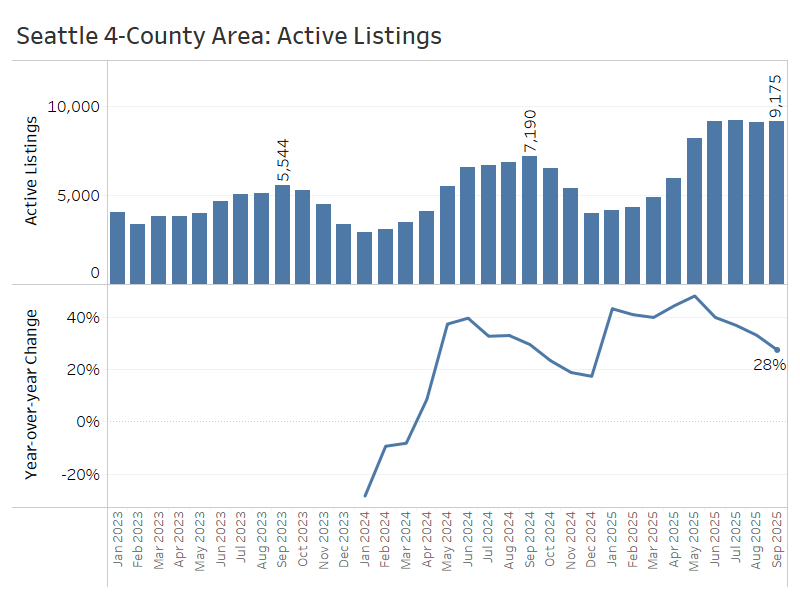
High inventory in the greater Seattle area has swung the balance of negotiating power in buyers’ favor across the region this year. As of the end of September, buyers could choose from nearly 9,200 active listings—8% more than the same time in 2024. Still, inventory growth has slowed throughout Q3, from a peak of 48% year-over-year growth back in May. Slower inventory growth means we are not headed for a glut of listings, which is good news for sellers. 
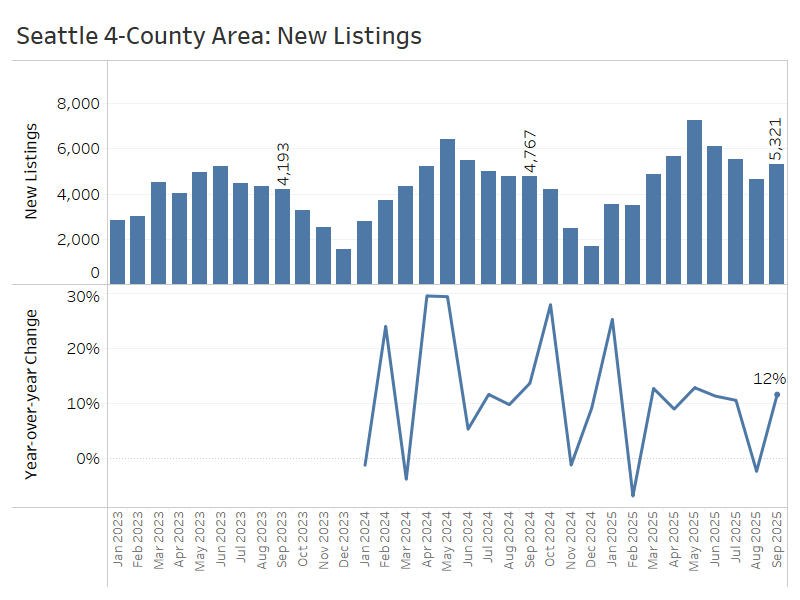
Inventory growth reflects several consecutive months of rising new listings outpacing closed sales, which gradually replenishes the supply of homes for sale. In September, the greater Seattle area had just over 5,300 new listingsabout 12% more than last September. The entirety of Q3 reported 15,500 new listings, a 7% increase from Q3 2024. 
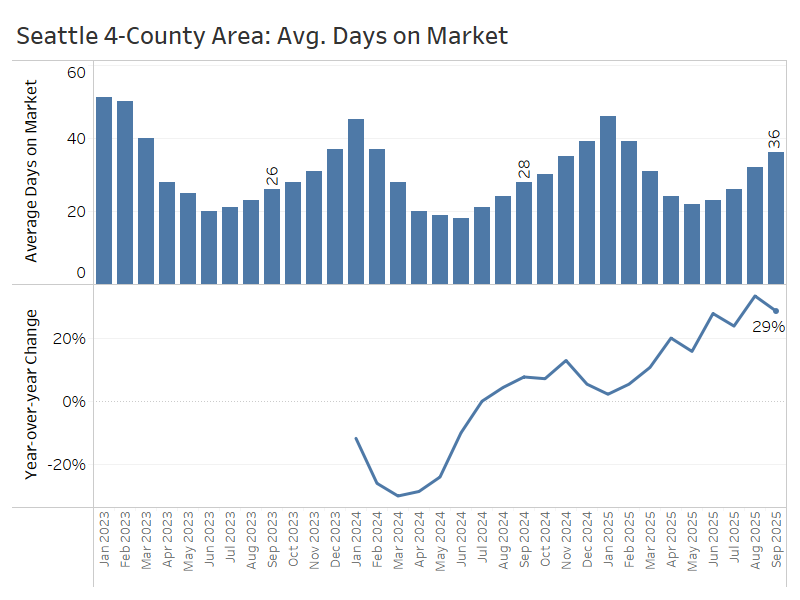
Not only do buyers have more options compared to a year ago, but they are also seeing listings linger on the market longer : an average of 36 days on market in September, up from 28 days last year. Days on market were substantially longer than last year’s levels in each month of Q3. 
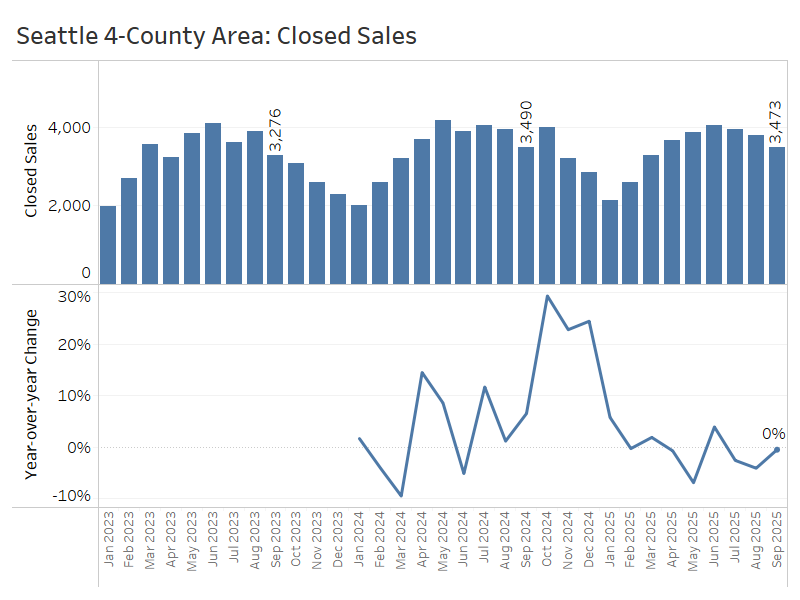
Unfortunately, the growth of inventory and new listings has not done much to generate home sales. Closed sales in September totaled just under 3,500virtually unchanged from the same period last year—following year-over-year declines of 3% in July and 4% in August. 
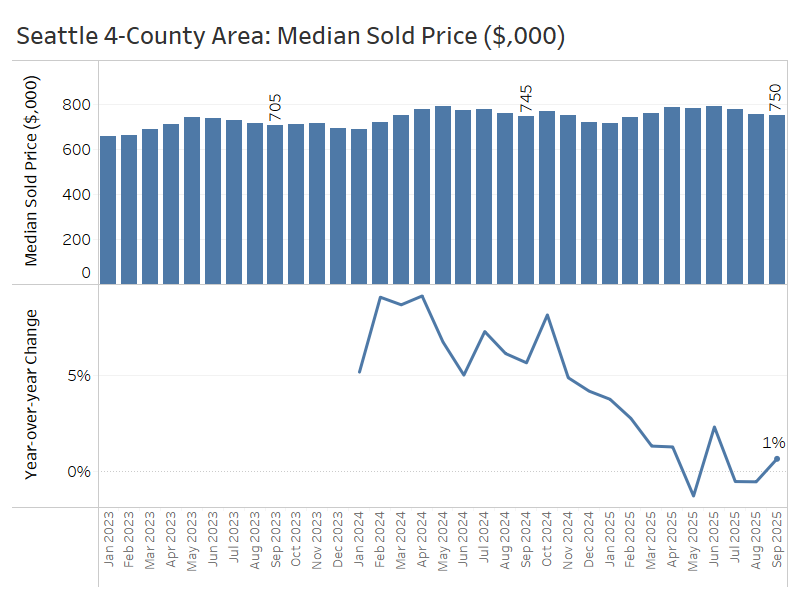
Home prices remain flat alongside sales. September’s median price of $750,000 was up less than 1% from a year ago, after slight declines in July and August. High mortgage rates and affordability challenges are capping price growth, while rising inventory will likely put downward pressure on prices going forward. The wildcard is seller behavior—whether they’ll cut prices to sell or hold firm and wait. 
The greater Seattle region is still grappling with elevated inventory, but it has clearly passed an inflection point: inventory growth decelerated over the third quarter, preventing conditions from swinging much further in buyers’ favor. As it stands, they’ll still have ample options and negotiating leverage this fall and winter. 

Greater Portland Area (Multnomah, Washington, Clackamas, and Clark Counties) 

Broadly speaking, the greater Portland area housing market has entered the same holding pattern as many other Western U.S. cities: flat sales and prices; rising inventory and days on market; more negotiating power and options for buyers. 

Active listings in the Portland area now stand close to 5,800, or about 17% more than this time last year. But the pace of inventory growth has decreased sharply since hitting 33% in April. 
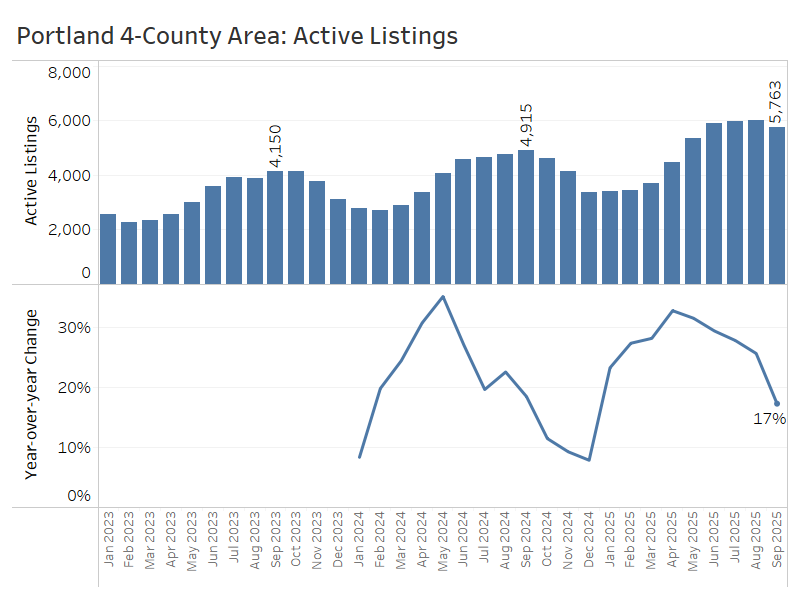
The slowdown in inventory growth can partly be attributed to a lower flow of new listings. The fourcounty Portland area saw year-over-year declines in new listings in both August and September, as some homeowners balked at listing in a slower market. 
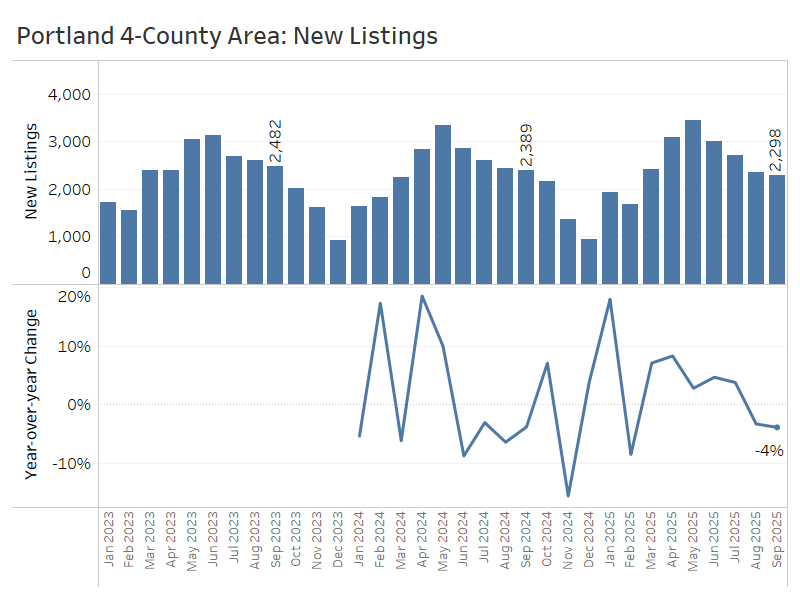
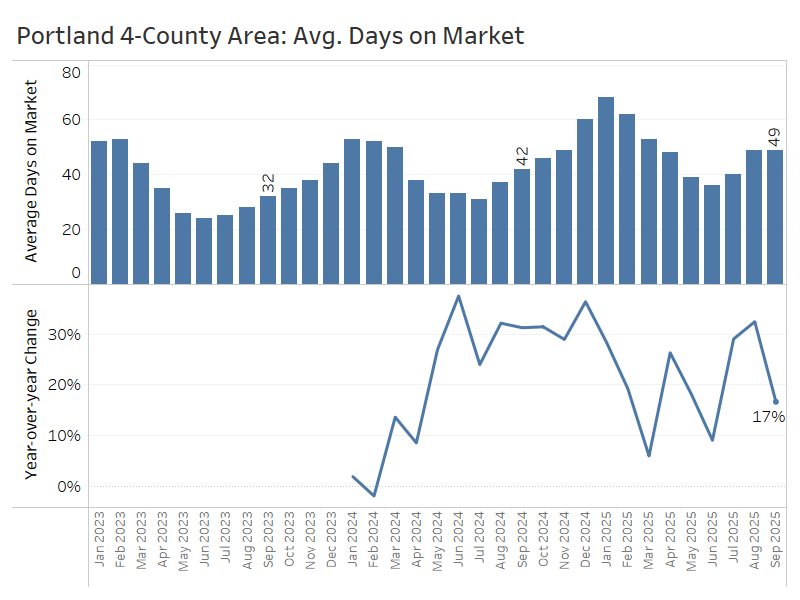
The average home sold after 49 days on the market—about a week longer than last September. This slower pace helps explain the higher inventory levels observed this year. 
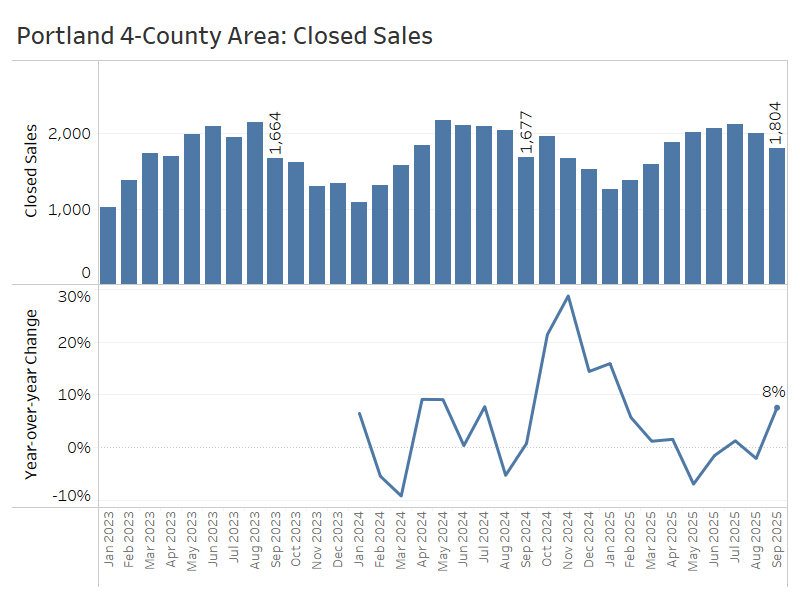
Closed sales of single-family homes climbed 8% year over year in September, following relatively flat activity in July and August. Sales volume momentum dropped sharply in May of this year, after impressive growth in late 2024. 
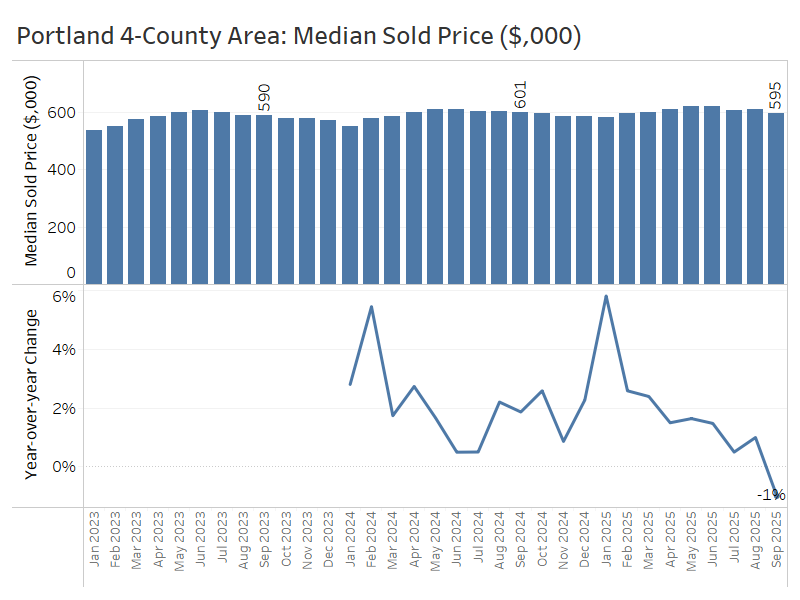
Alongside rebounding sales activity in September, the median home price edged slightly below year-ago levels—slipping from just over $600,000 to about $595,000. This trend of flat or modestly negative price growth is giving household incomes some time to catch up with the higher mortgage costs we’ve seen this year. 
All in all, the greater Portland area seems to be working through the early stages of a market cooldown. The buildup of inventory is beginning to put downward pressure on home prices, which appears to be discouraging some would-be sellers while also creating opportunities for buyers.  

Greater Sacramento Area (Sacramento, Yolo, El Dorado, and Placer Counties) 

The greater Sacramento area has followed a similar trajectory to Portland, with market conditions gradually shifting in favor of buyers. Inventory has climbed, prices have cooled, and sales activity has remained relatively flat. That said, the pace of inventory growth has recently slowed, and home sales perked up in September, hinting at a possible shift in momentum. 

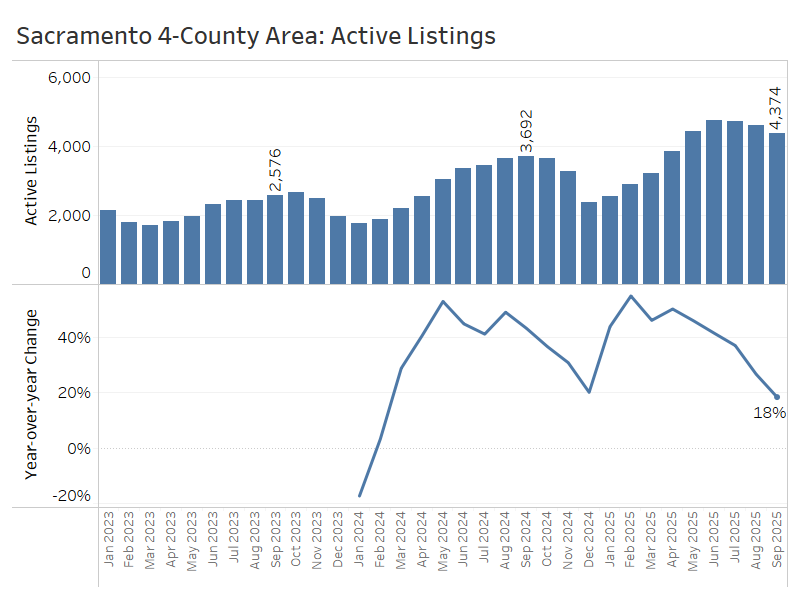
At the end of September, there were nearly 4,400 active listings—an increase of 18% compared to the same time last year. However, the pace of inventory growth has slowed considerably since earlier in the year when year-over-year gains peaked at 55% in February. 
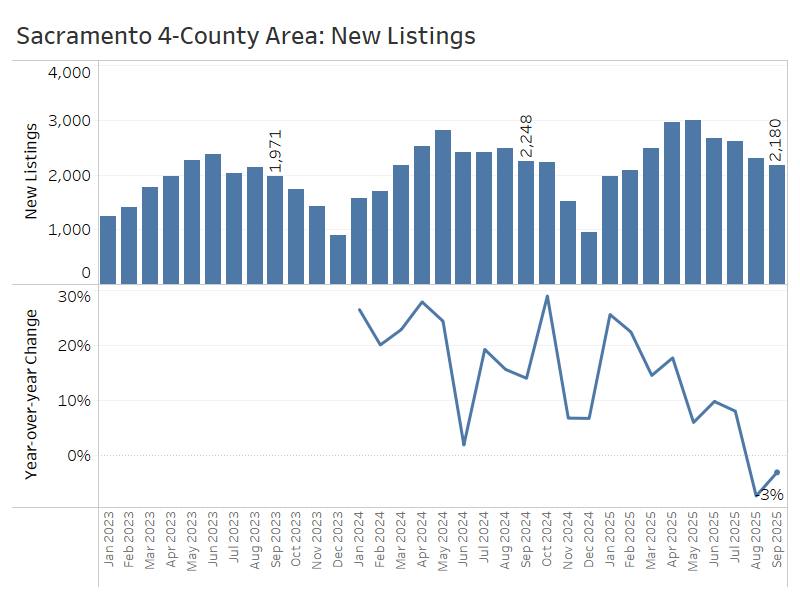
The flow of new listings has fallen below its year-ago pace for two months running now, with about 3% fewer new listings in September than last year. 
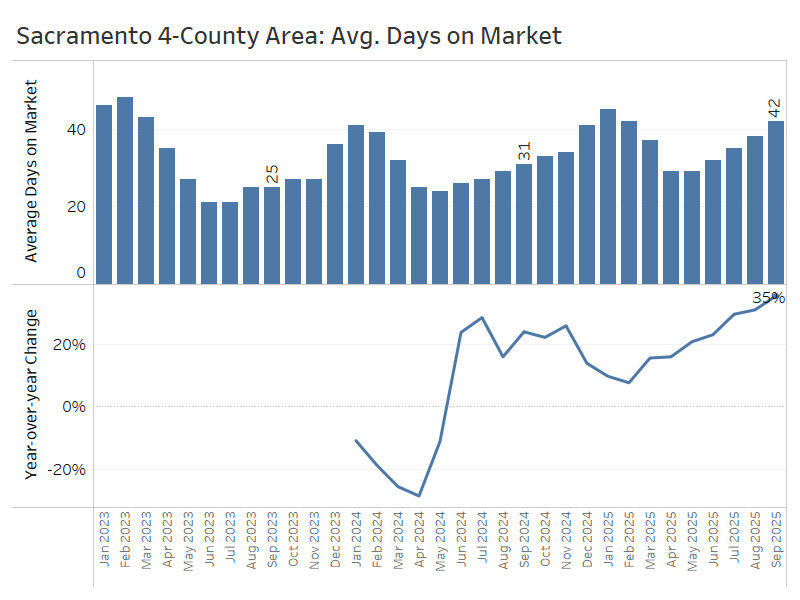
Average days on market rose by about 11 days compared to last year, reaching 42 days in September—a noticeable shift in how long homes are taking to sell. 
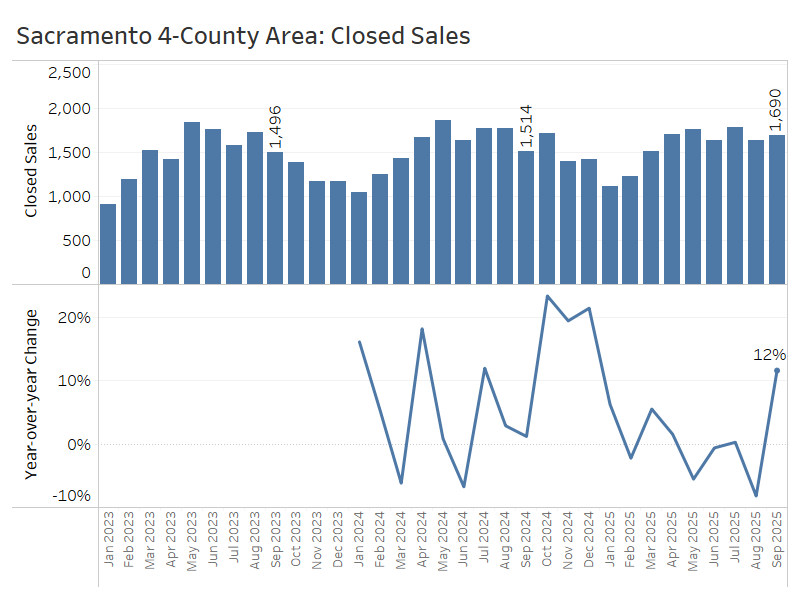
After a period of solid sales growth in Q4 of 2024, the Sacramento region returned to low or negative growth through much of 2025. However, September saw a 12% year-over-year increase in sales, which might reflect a rebound from a weak August or a boost in buyers attracted to lower mortgage rates in the third quarter. 
Median sale prices dipped 1%, from about $598,000 last September to $590,000 this year, after staying steady at almost exactly year-ago levels in July and August. 
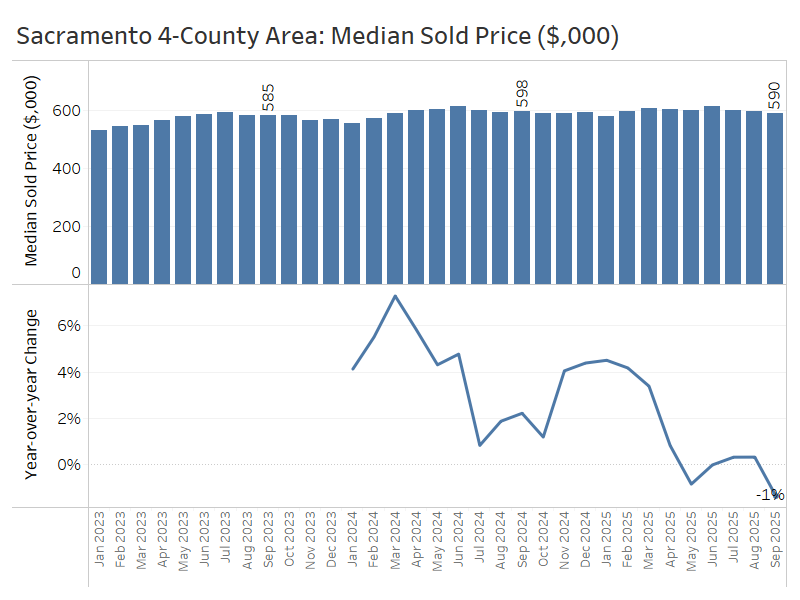
Third-quarter trends in the greater Sacramento area point to a market where rising inventory is finally putting modest downward pressure on prices, even as falling mortgage rates begin to draw some buyers back. That combination could result in an upturn in sales alongside flat price growth. 

Northwest Washington – Skagit, Whatcom, San Juan, and Island Counties 

North of the greater Seattle area, the market conditions in the four northernmost counties of the Puget Sound region are experiencing a major shift in buyers’ favor.  

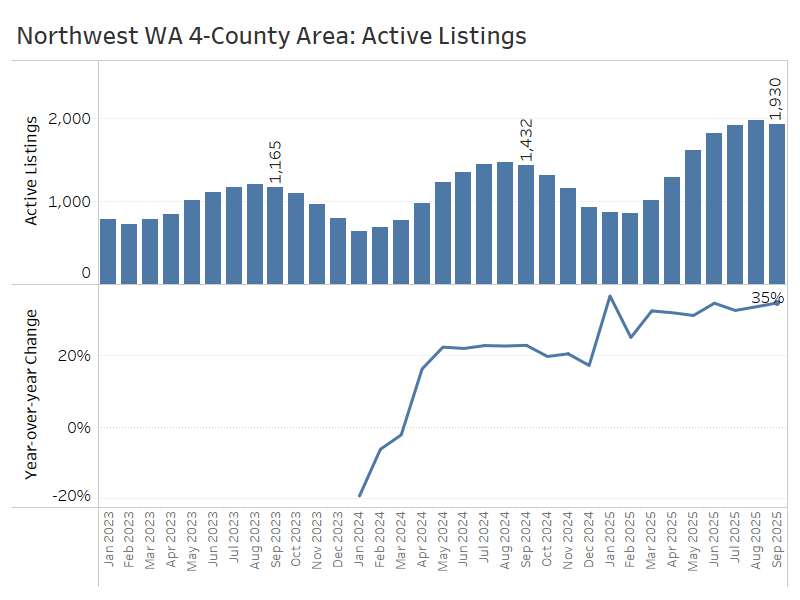
At the end of September, there were 1,900 active listings, up 35% from a year ago. There’s no evidence of a slowdown in inventory growth here, like that of the Seattle area this quarter. 
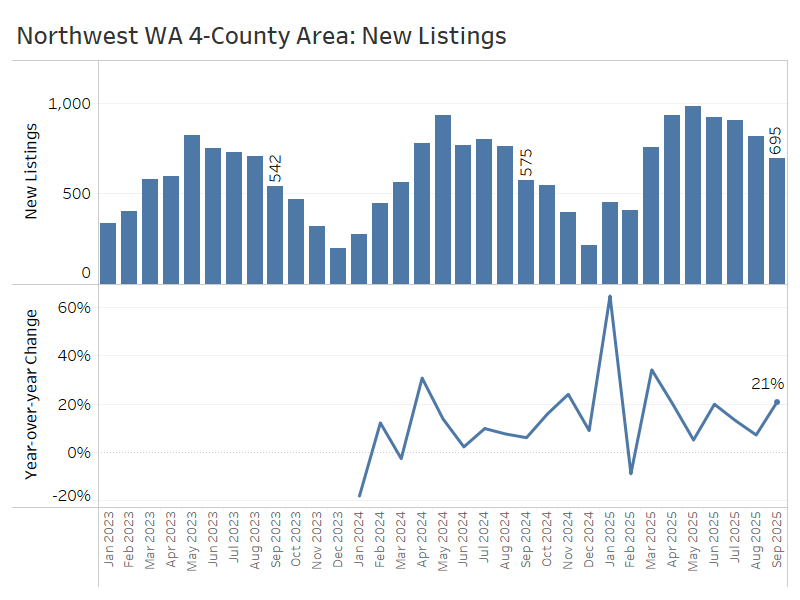
The flow of new listings has experienced healthy growth throughout most of 2025, resulting in a 21% increase compared to September of last year. 
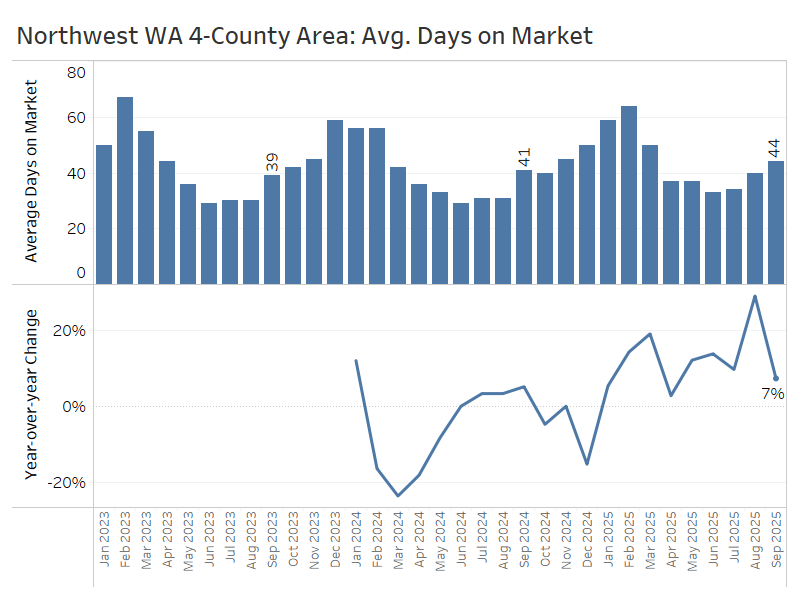
Time on market has climbed modestly but steadily all year, now up to 44 days on average in September, up from 41 days last year. 
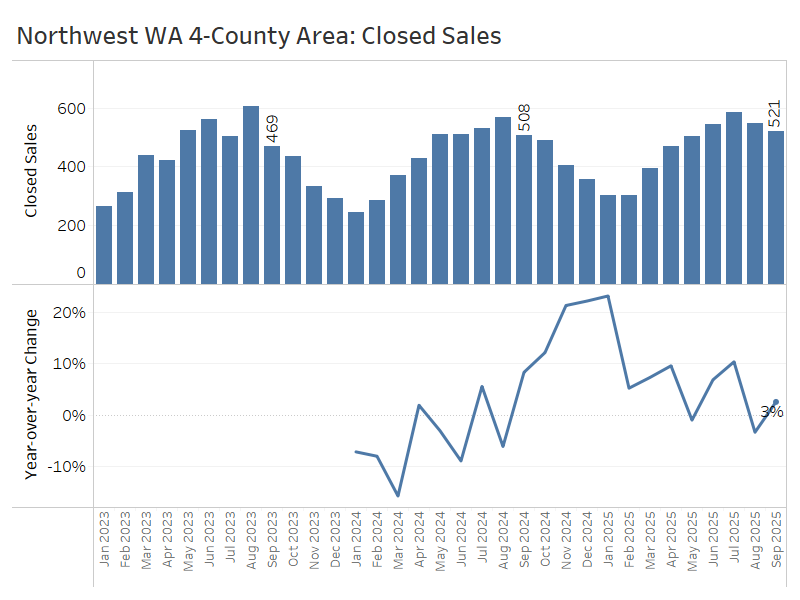
Closed sales were up 3% year over year in September, after a 3% dip in August and 10% growth in July. 
Compared to the same time last year, median home prices rose 2% in July, dipped 6% in August, and then increased 1% in September to $625,000.  
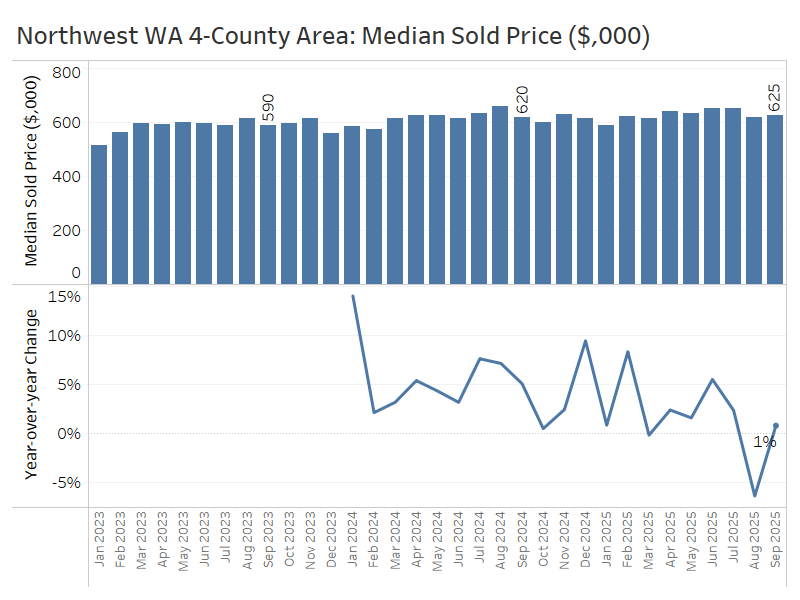
Looking ahead, prices will likely cool as buyers take advantage of increased inventory and gain more negotiating power.  

Spokane County, Washington 

Spokane County, which anchors Eastern Washington, is experiencing many of the same market trends as Western Washington: higher inventory, softer buyer demand, and flat home prices. 

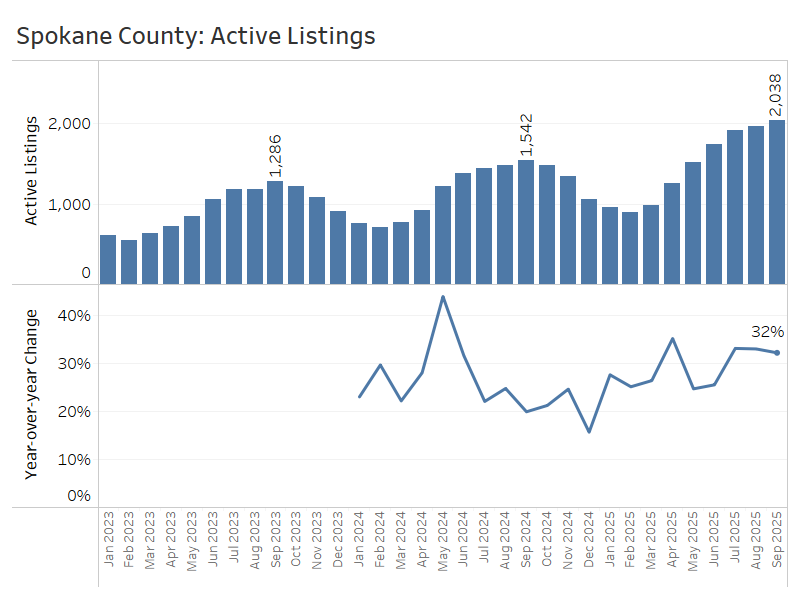
At the end of September, there were just over 2,000 active listings, up 32% from a year ago and significantly higher than two years ago, when there were fewer than 1,300 listings. The pace of inventory growth has only slightly slowed from the 33% year-over-year increases we saw in July and August. 
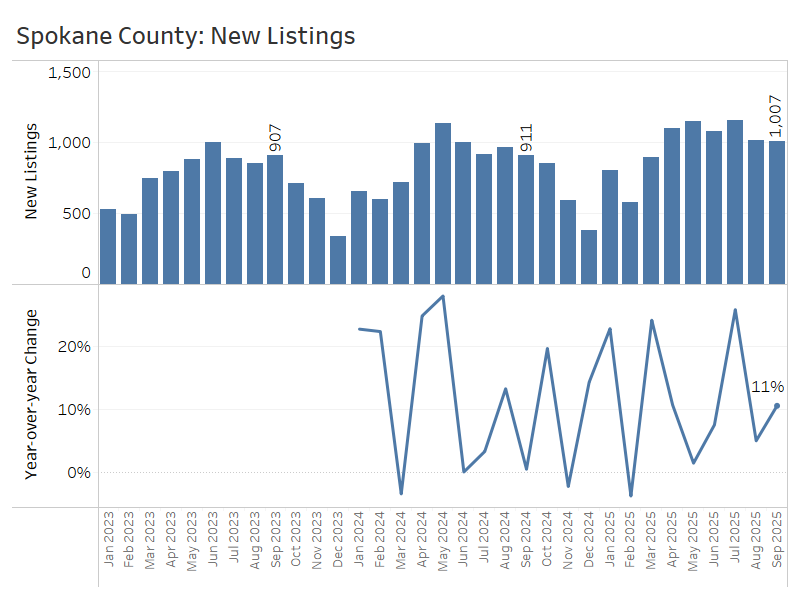
New listings climbed 11% from last September, after increasing 26% in July and 5% in August. 
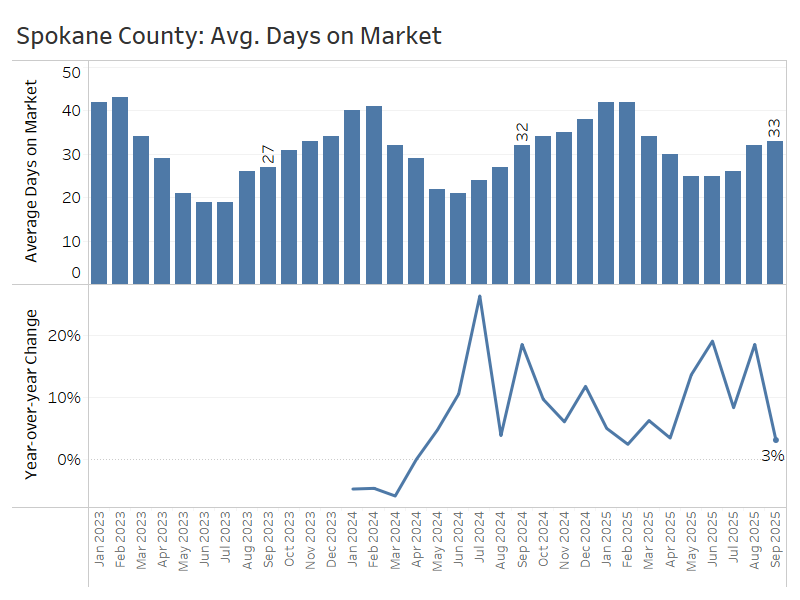
Unlike some of the other markets in this report, Spokane has seen only modest increases in the number of days it takes to sell a home, averaging 33 days this September, up from 32 during the same time last year. 
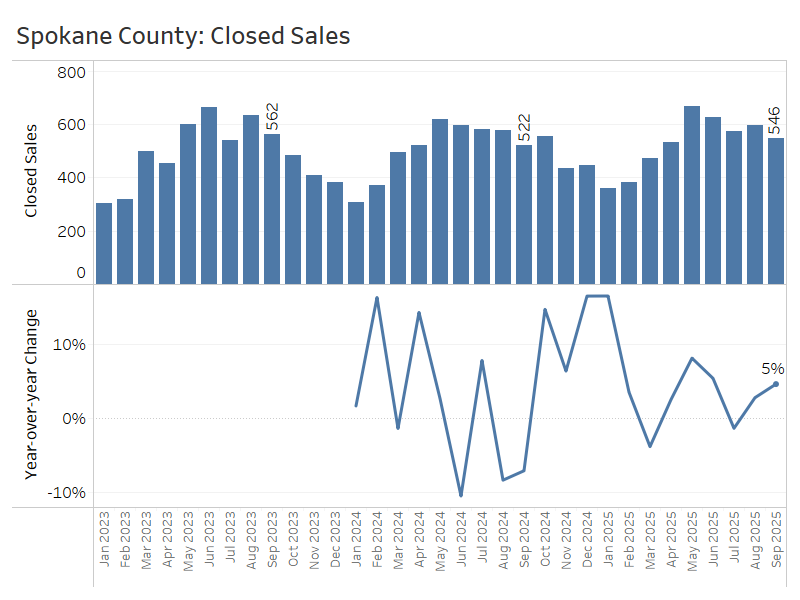
Closed sales in September were up 5% year over year, following a 3% increase in August and relatively flat sales in July. 
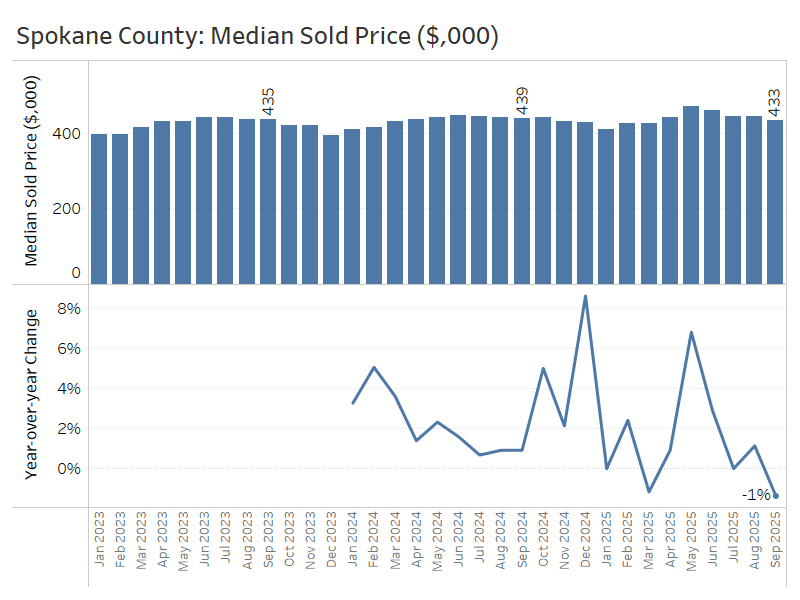
Compared to last year, median sale prices in September dipped by about 1%, from $439,000 to $433,000. Prices were relatively flat year over year in July and August. 
Altogether, the more balanced market conditions in Spokane this summer began to yield more sales activity alongside flat to slightly lower prices a healthy combination for the market right now. 

Salt Lake County, Utah 

Earlier this year, Salt Lake County experienced an even sharper swing in buyers’ favor than the other markets in this report: higher inventory growth leading to modest price declines. Increasing sales growth in the third quarter shows that buyers have begun to take advantage of these conditions. 

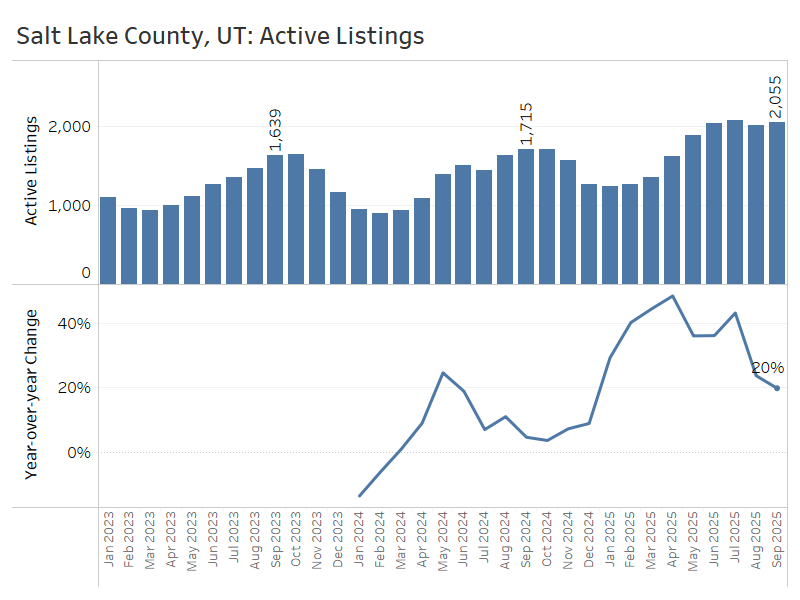
Active listings at the end of September stood at over 2,000 homes, up 20% from a year ago—a major slowdown from 43% inventory growth in July. 
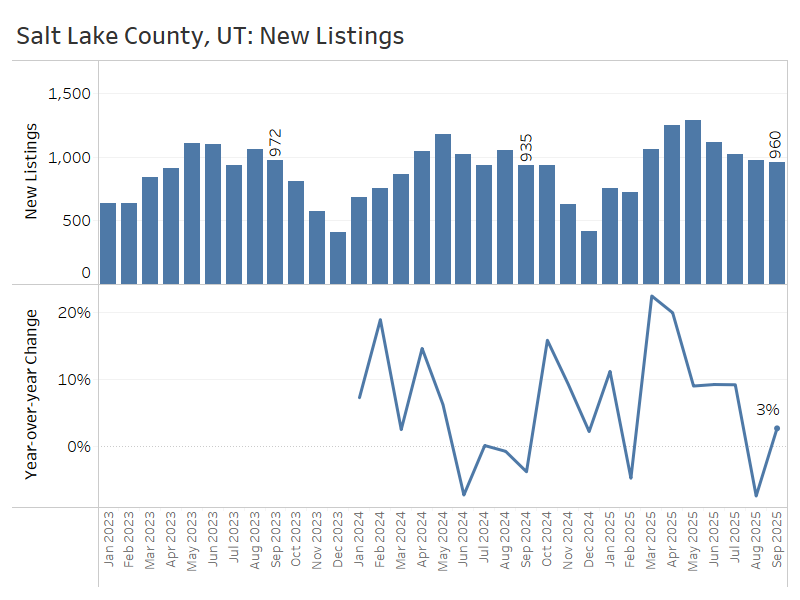
Salt Lake County saw substantial year-over-year growth in new listings earlier this spring, exceeding 20% in March and April, but only 3% growth in September. Selling enthusiasm seems to have faded this summer after the buildup of inventory in late spring. 
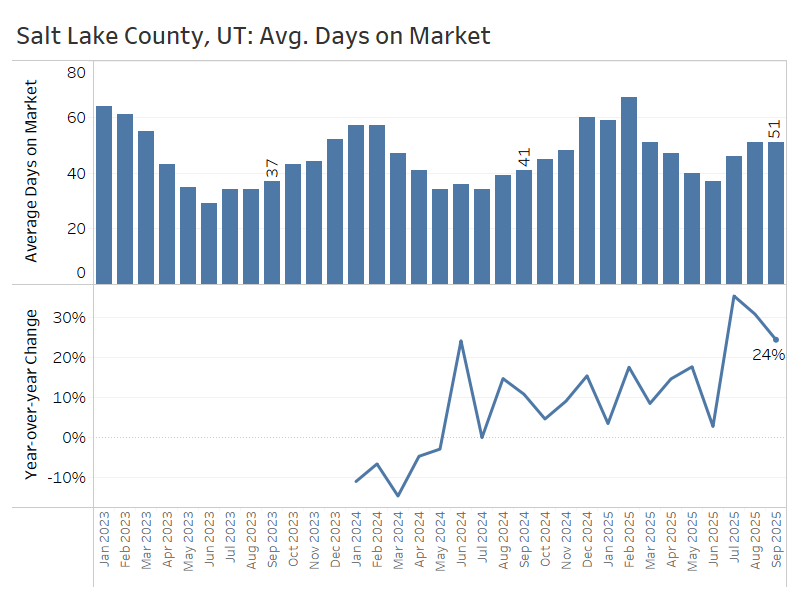
The average number of days it took to sell a home in Salt Lake County was up substantially throughout the third quarter, ending at 51 days in September compared to 41 days the previous year. 
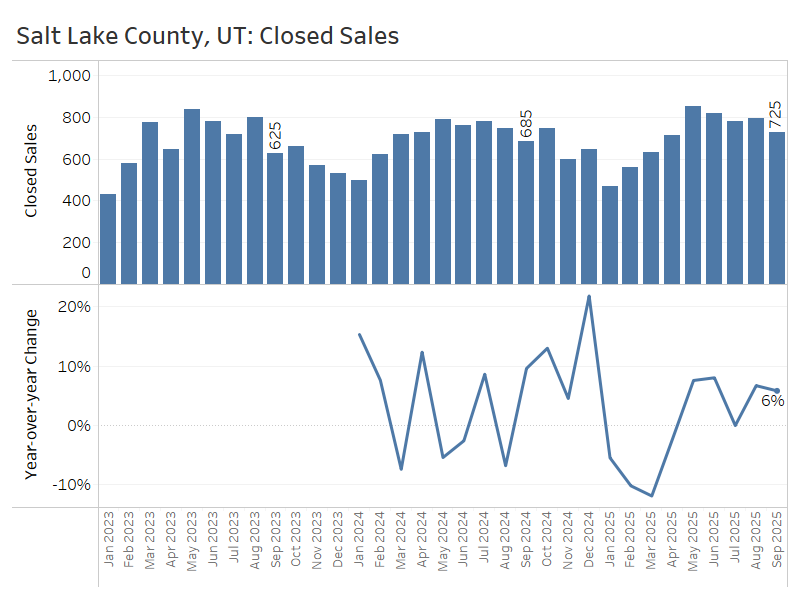
Closed sales climbed 6% from a year ago in September, after a 7% increase in August. This is a promising early sign that buyers are responding to improved inventory and mortgage rate conditions. 
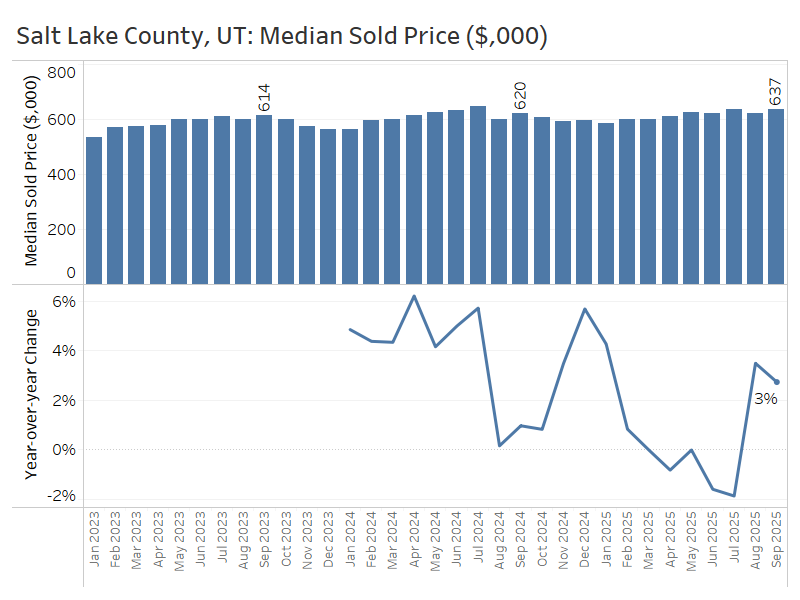
In September, the median sale price rose 3% year over year—from $620,000 to $637,000. This uptick, along with August’s gain, broke a streak of modest price declines seen earlier in the summer. 
All in all, Salt Lake County has begun to show a bit more balance after swinging in buyers’ favor earlier this year: inventory gains slowed down, and rebounding demand showed up in both rising sale counts and prices. 

Conclusion: 

All of the markets covered in this report have shifted into balanced or buyer-friendly territory, so it’s a good time to plan accordingly. 

A consistent theme across the regions is the rise in inventory, paired with flat home sales and relatively flat prices compared to a year ago. This environment offers prospective buyers several advantages: more homes to choose from, greater leverage to negotiate, and less pressure to rush into a decision or compete in bidding wars.  

For sellers, it’s important to be aware that the market has changed. Unlike the last several years, buyers now have more options, and home prices have leveled off. Success in today’s market depends on setting a realistic list price and presenting the home in its best possible light. With the right strategy, many homes are still selling quickly—and even above asking price—in every market highlighted in this report. 

Sources: TrendGraphix analysis of NWMLS, RMLS, Spokane MLS, MetroList MLS, and Wasatch Front MLS data. 

As Principal Economist for Windermere Real Estate, Jeff Tucker is responsible for analyzing and interpreting economic data and its impact on the real estate market on both a local and national level. Jeff has over 10 years of experience as an economist at companies such as Zillow, Amazon, and AirDNA.


Selling October 1, 2025

Strategic Investments to Increase Home Value and Market Appeal

When it’s time to sell your home, one of the biggest questions is how to make it as appealing as possible to today’s buyers. While market conditions, location, and timing all play a role, the updates you choose before listing can make a meaningful difference in both your selling price and how quickly your home goes under contract. The key is knowing where to invest your time and money. Not every project pays off, but some smart upgrades can give your home a competitive edge, help it stand out in online listings, and create the kind of first impression that gets buyers excited.

Here are some of the most impactful ways to invest in your home before putting it on the market.

Fresh Paint and a Neutral Palette

Few improvements have a more substantial return on investment than paint. A fresh coat instantly refreshes a space, making it feel clean, updated, and well-maintained. Neutral tones for interiors, such as soft grays, light beige, and crisp whites, appeal to the broadest audience and allows buyers to envision their own style in the home. It’s crucial not to overlook trim, doors, and even ceilings, as these small details help create a polished, move-in-ready feel. And if your front door could use a pop of personality, consider a bold, welcoming color that complements the rest of the exterior.

Curb Appeal That Counts

Buyers often form an impression before they even step inside. Landscaping, exterior lighting, and simple maintenance go a long way toward making your home inviting. Think trimmed hedges, fresh mulch, pressure-washed walkways, and a tidy lawn. It’s also smart to ensure outdoor areas are safe, from repairing uneven paths to addressing any obvious hazards.

Adding planters with seasonal flowers, updating house numbers, or swapping out an old mailbox can elevate your home’s appearance without requiring a significant investment. For buyers scrolling through listings, that curbside charm can be a deciding factor that gets them to schedule a showing.

Kitchen and Bathroom Touch-Ups

Kitchens and bathrooms continue to be high priorities for buyers, but you don’t need to take on a full remodel to make an impact. Small upgrades like replacing outdated cabinet hardware, installing new light fixtures, or swapping in modern faucets can transform the look of these spaces.

In the kitchen, consider updating your backsplash with a clean, timeless tile or refreshing worn countertops with a durable surface. In bathrooms, regrouting tile, caulking any cracks, replacing mirrors, or updating vanities are simple ways to modernize without overspending.

Flooring Matters

Floors are often one of the first things buyers notice when touring a home. If your carpets are worn or stained, professional cleaning or even replacement can make a big difference. Hardwood floors are especially appealing and refinishing them is often more cost-effective than replacing them.

For areas where replacement makes the most sense, consider durable and stylish options like engineered wood or luxury vinyl plank. Consistent flooring throughout the main living areas can also help a home feel more spacious and cohesive.

Energy-Efficient Features

Today’s buyers are increasingly focused on efficiency and sustainability. Investments like LED lighting, programmable thermostats, and updated appliances not only lower utility bills but also signal to buyers that the home is modern and thoughtfully maintained.

If your budget allows, new windows or improved insulation can add value while appealing to environmentally conscious buyers. Highlighting these upgrades in your listing helps showcase both comfort and cost savings.

Decluttering and Staging

Sometimes the most impactful upgrade isn’t about new finishes, it’s about presentation. Decluttering each room, minimizing personal items, and rearranging furniture to optimize space can dramatically change how buyers perceive your home. And the best part? It’s completely free.

Professional staging takes this one step further, creating a warm and welcoming atmosphere that helps buyers envision living in the space. Even small touches, like fresh flowers, cozy throws, and well-placed artwork, can make your home feel more stylish, comfortable, and truly move-in ready.

Making Smart Choices

The goal of any pre-sale investment is to spend strategically, choosing projects that increase appeal without overextending your budget.

At Windermere, our agents are experts at helping sellers decide which upgrades matter most. From recommending paint colors to connecting you with trusted contractors, we’re here to make sure you get the best return on your investment. Through our Windermere Ready program, we can even front the cost of improvements like painting, landscaping, cleaning, and staging so your home shines its brightest when it hits the market. With concierge-level service and no payments due until closing, it’s a simple way to maximize your home’s value and sell faster.

Connect with an experienced Windermere agent today to learn more about how we can help you prepare your home for the market with confidence:

Market News September 18, 2025

Numbers to Know 9/18/25: Why the Fed Cut Rates & What It Means for Housing

This is the latest in a series of videos with Windermere Principal Economist Jeff Tucker, where he delivers the key economic numbers to follow to keep you well-informed about what’s going on in the real estate market.

The Fed has finally started cutting. The two big questions are: Why? And now what?

I’ll start with the why: the labor market has started showing signs of distress. The August jobs report delivered more bad news, continuing a streak of weak job growth since April.

The overall growth of nonfarm payrolls – the number of employed workers in the country – clearly passed a turning point this spring, as growth as slowed to a crawl.

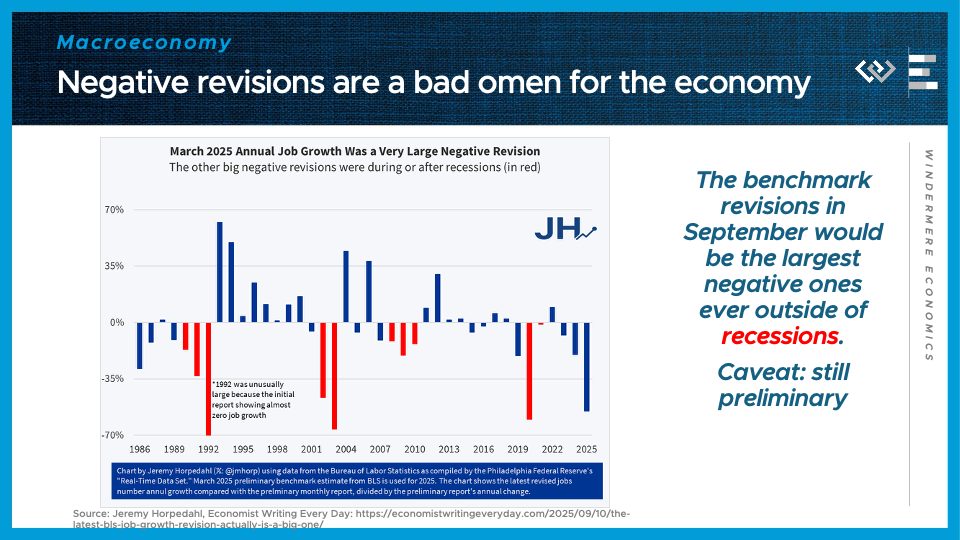
Moreover, the Quarterly Census of Employment and Wages just revised away more than HALF of the job growth previously estimated to have happened in the year ending March 2025, wiping out over 900,000 jobs originally thought to have been added in those 12 months.

Historically, as this chart by Jeremy Horpedahl highlights, big negative benchmark revisions, like the preliminary one released this month, have occurred during recessions. And big negative monthly revisions, like last month’s have been more common just before recessions.

That doesn’t mean a recession is around the corner, but it helps explain why the Fed is changing their posture to try to stop a recession before it gets going.

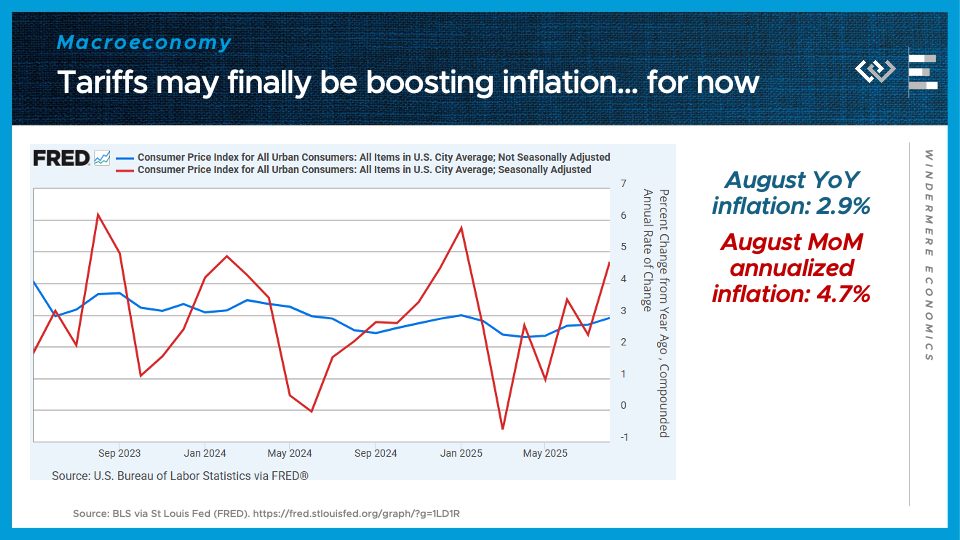
One challenge they’re facing, though, is that they have paused their fight against inflation before it was quite finished: annual inflation stopped falling this spring, and has now re-accelerated to nearly 3%; the more volatile monthly inflation rate is running at 4.7% annualized. Part of the reason the Fed is now willing to cut may be that they view some of this inflation as a transitory, one-time bump from tariffs, that they are willing to look through; but I think the biggest reason is just that the warning sirens in the labor market became too loud to ignore.

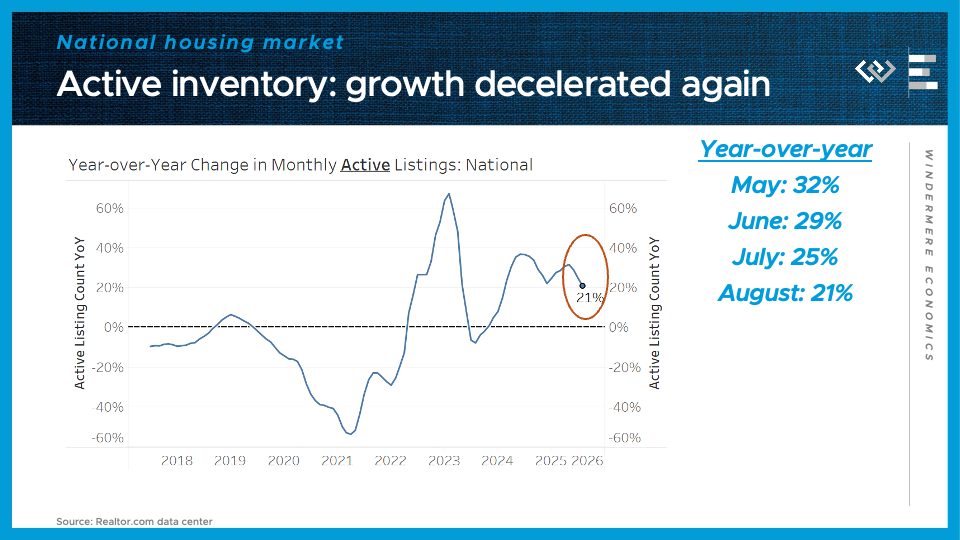
Turning to the housing market: the balance of power has swung in buyers’ favor this year, thanks to higher inventory, but it’s now clear that inventory growth passed an inflection point: for the third month in a row, the pace of growth of inventory has come down again. Now it’s down to just 21% growth from August of last year.

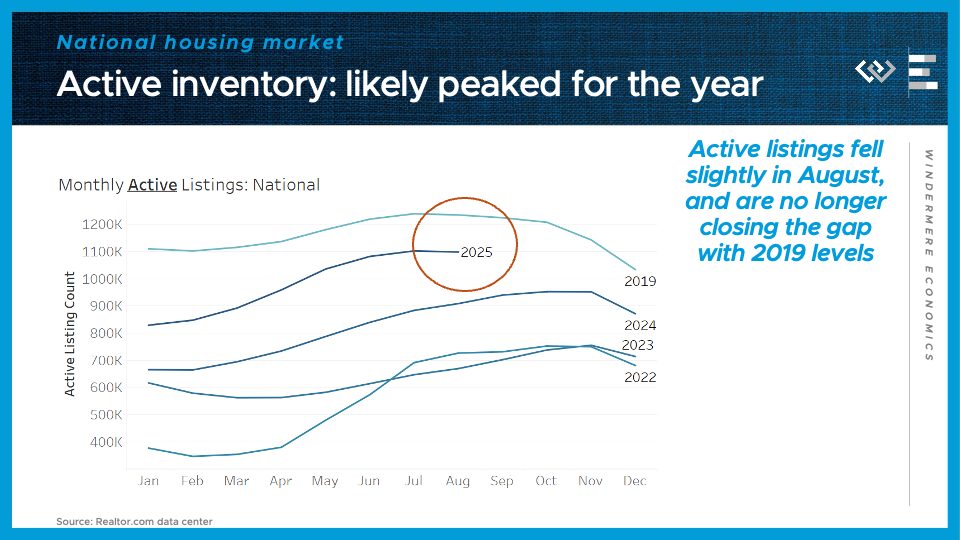
At the end of August, there were just under 1.1 million active listings on the market – down slightly from July, while each of the last 3 years saw inventory grow in August. This means buyers are still favored in many markets, but they can’t count on that pendulum to keep swinging further in their favor.

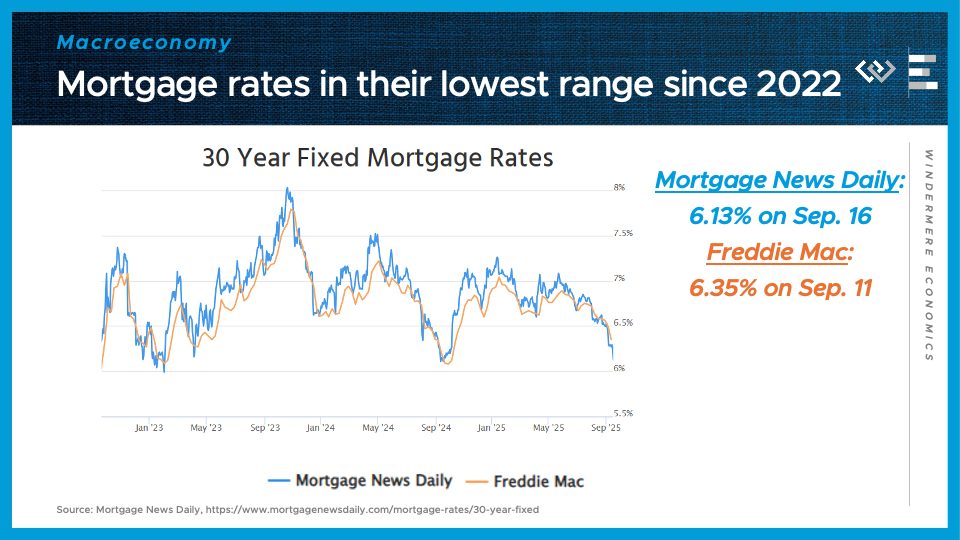
Especially because of the huge news for everyone in the housing market: mortgage rates have fallen to the neighborhood of 6 and an 8th percent, roughly their lowest level since 2022. Investors were anticipating this rate cut by the Fed, and if anything, the fact that the Fed was willing to press ahead with cutting rates, in spite of firmer inflation data, demonstrates their commitment to focus on helping the labor market with easier monetary policy, while setting aside inflation fighting to another day. Maybe more than anything, that change of posture by the Fed is helping to bring mortgage rates low enough that well-qualified borrowers are starting to see a 5-handle without paying any points. There’s no guarantee that the low rates will last – just look at what happened last October, so I’d advise everyone to strike while the iron’s hot. If rates do fall further this winter, well, you can always refi then.

Buying September 15, 2025

Why AI Can’t Replace Your Real Estate Agent

Technology is transforming nearly every industry, and real estate is no exception. New tools and innovations are reshaping the way we search for, buy, and sell homes. Among these advances, artificial intelligence (AI) has quickly become one of the most talked-about technologies, being used for everything from writing and research to customer service. Naturally, this raises the question of whether it could ever replace jobs that rely on human connection and expertise, like real estate.

In the sections ahead, we’ll break down what AI can and can’t do in real estate, and how agents can use it to their advantage rather than view it as competition.

What is AI?

Artificial intelligence (AI) is technology that allows machines to simulate human intelligence. In recent years, AI has grown at lightning speed and has become part of daily life, often in ways people don’t even notice. Generative AI tools like ChatGPT, Copilot, Gemini, etc., are the ones most people hear about because they can answer questions, draft text, or create images. At the same time, other forms of AI are working quietly behind the scenes on websites, apps, and services we use daily, from recommendation engines to fraud detection.

Together, these tools are changing how we interact with technology, making it faster and more efficient. But when it comes to buying or selling a home, no algorithm can replace the insight, guidance, and personal care of a trusted real estate agent.

How AI is Shaping Real Estate

AI is already influencing how buyers and sellers approach the market. From predictive pricing tools and market analysis platforms to more intelligent home search engines, AI can process large amounts of data and provide insights more quickly than any individual could manage on their own. For agents, it can automate repetitive tasks like drafting emails or creating basic listing descriptions, while chatbots help answer simple client questions around the clock. Some platforms even use AI to match buyers with properties based on preferences or past behaviors. These tools save time and make processes more productive, but they’re only part of the real estate experience.

Why Real Estate Needs a Human Touch

Buying or selling a home is never just about the transaction—it’s often one of the biggest financial and emotional decisions of a person’s life. And while AI may provide quick data or market insights, it can’t sit down with an individual and understand their specific needs, calm their nerves during a stressful moment, or celebrate when the keys are finally handed over.

A real estate agent listens, adapts, and advocates for their clients in ways that no algorithm can replicate, bringing empathy, intuition, and lived experience into the equation rather than just facts and figures. They know the neighborhoods, the schools, and the subtle details that make a house a home. They can recognize when a client needs reassurance, when to negotiate a little harder, and when to suggest a creative solution to keep a deal moving forward. These instincts and skill sets are built on years of human connection, which is what makes the difference between simply completing a deal and guiding someone through a life-changing experience or helping them reach their real estate goals.

The Future: Agents + AI, Not Agents vs. AI

Rather than replacing real estate agents, AI has the potential to make their work even more impactful. Tools like virtual tours, AI-powered staging, and digital imaging can help buyers visualize a property in new ways, while automation can create marketing materials, streamline scheduling, and analyze market trends at an increased speed. These efficiencies free up time and energy for agents to focus on what matters most: listening to clients, building trust, and guiding them through one of life’s most significant decisions.

When used thoughtfully, AI shouldn’t be viewed as a competition, but as a business companion. By blending cutting-edge technology with the irreplaceable human touch, real estate agents can continue to grow their business, deliver better service, and strengthen the personal relationships that remain at the heart of every successful transaction.

At Windermere, our agents use every tool available, but it’s their expertise and personal care that truly set them apart. Connect with an experienced Windermere agent today:

Market News September 8, 2025

Local Look Western Washington Housing Update 9/8/25

Hi. I’m Jeff Tucker, principal economist at Windermere Real Estate, and this is a Local Look at the August 2025 data from the Northwest MLS.

This summer, the local market has decisively swung in buyers’ favor, as home sellers around Washington have had to contend with both softening demand, and more abundant competing listings. That’s good news for home buyers, but we are seeing fewer of them than we saw last year.

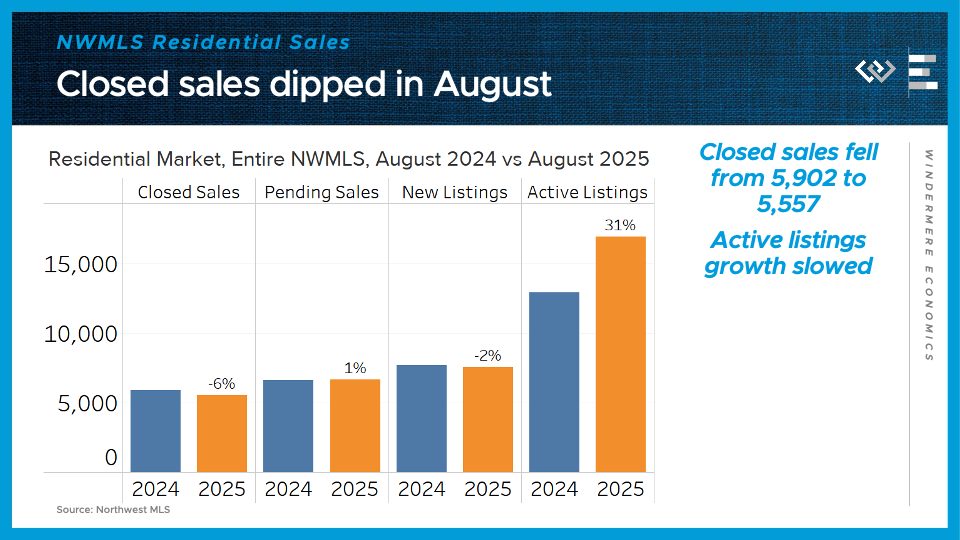
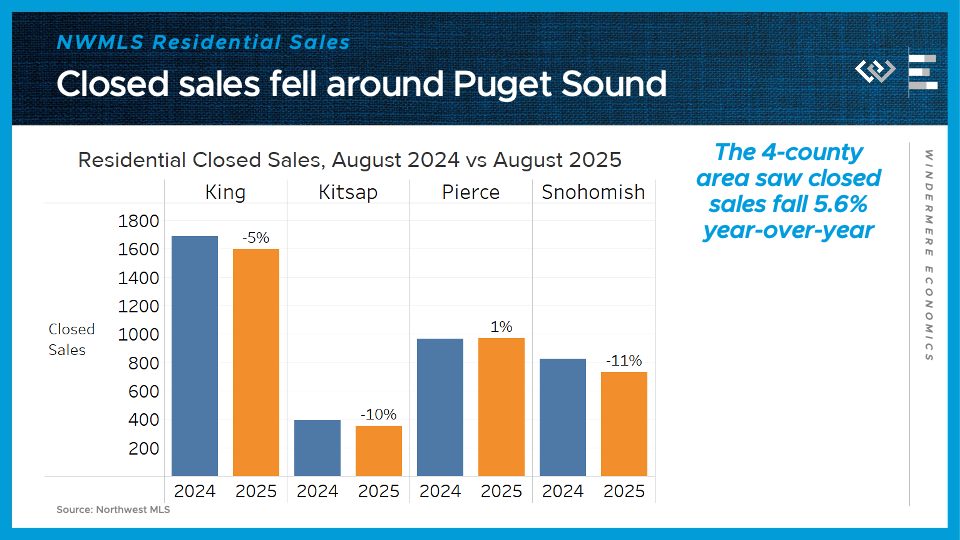
In August, closed sales of residential homes came in 6% below last year’s August total, across the Northwest MLS. Pending sales, which give some signal about next month’s sales, were roughly flat – up just 1% form last year.

On the supply side, we’ve passed an inflection point, where sellers are starting to back away from the market. There were 2% fewer new listings than last August – the first year-over-year decline in new listings since February. The month ended with 31% more active listings than last August, marking a slowdown from the inventory growth of about 36% the last two months. This pullback in supply should put a floor under any potential price decreases that the market shift could bring.

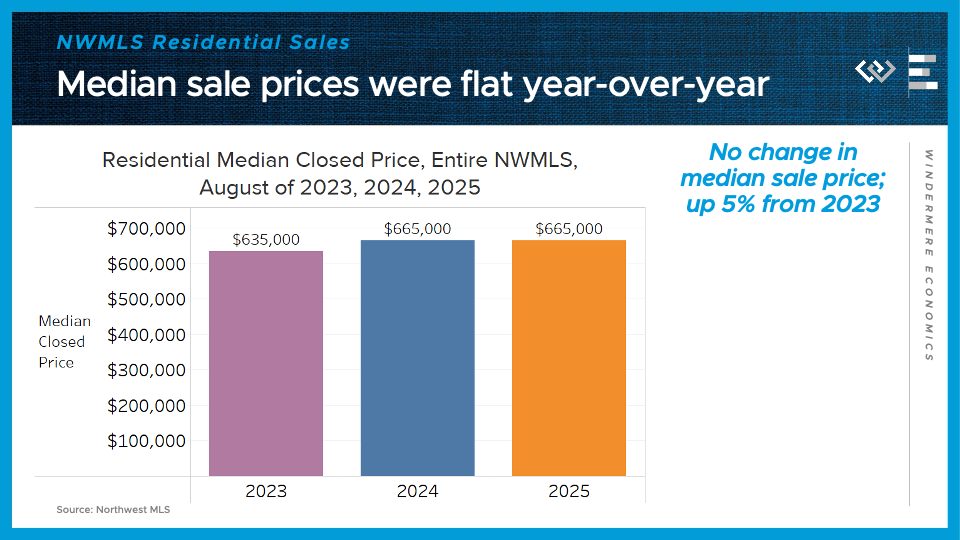
Speaking of which: the steadiest number across the Northwest MLS has been median sale price, which was exactly the same as last August: $665,000. That’s two months in a row of flat annual price changes, but it remains about 5% higher than in 2023.

Now I’ll take a closer look at the four counties encompassing the greater Seattle area.

Closed sales dipped by almost 6% from last year. Only Pierce County saw a gain, albeit tiny, from last August.

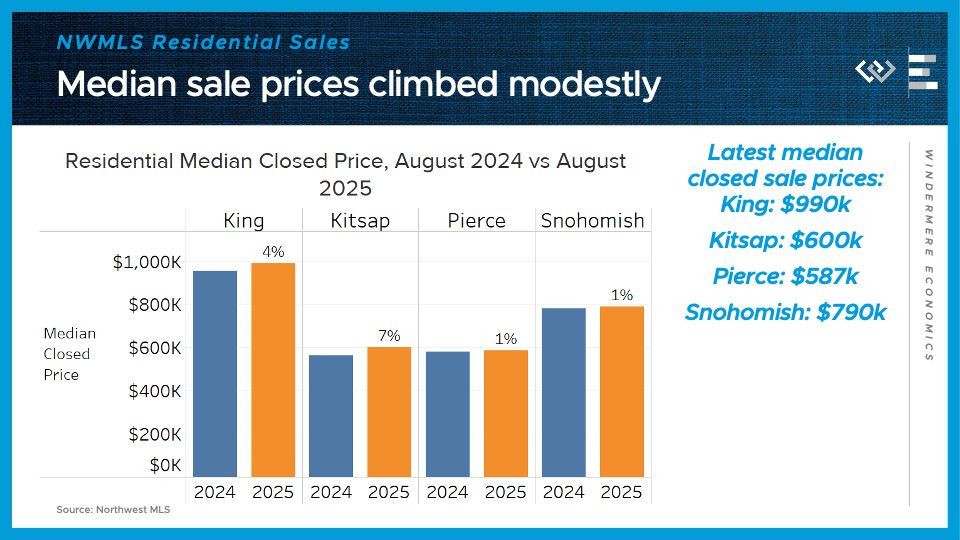
Median sale prices actually crept upward from last year in all 4 counties: 4% higher in King; 7% higher in Kitsap, 1% higher in Pierce, and 1% higher in Snohomish County.

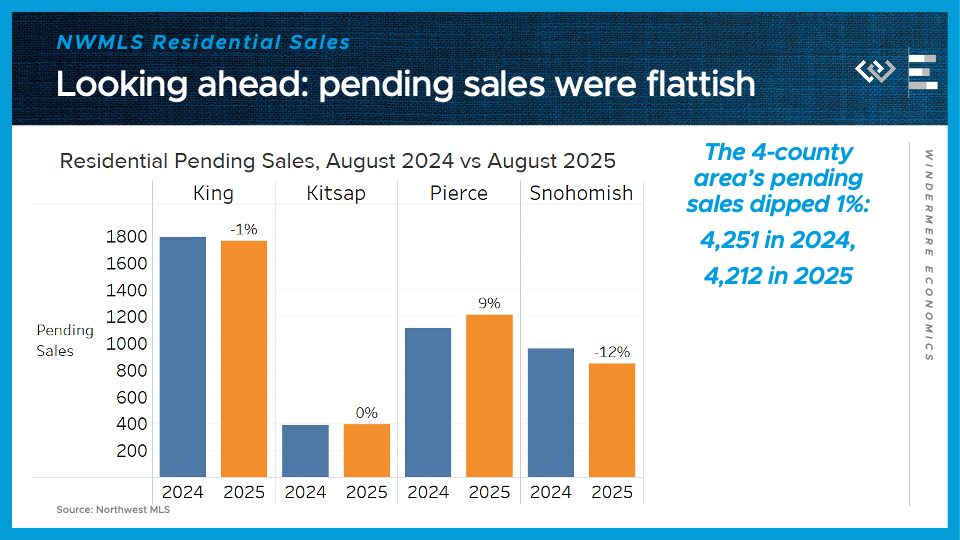
Looking ahead, pending sales dipped 1% across the region, although Pierce County was again the standout for sales, with 9% more pending sales than last year.

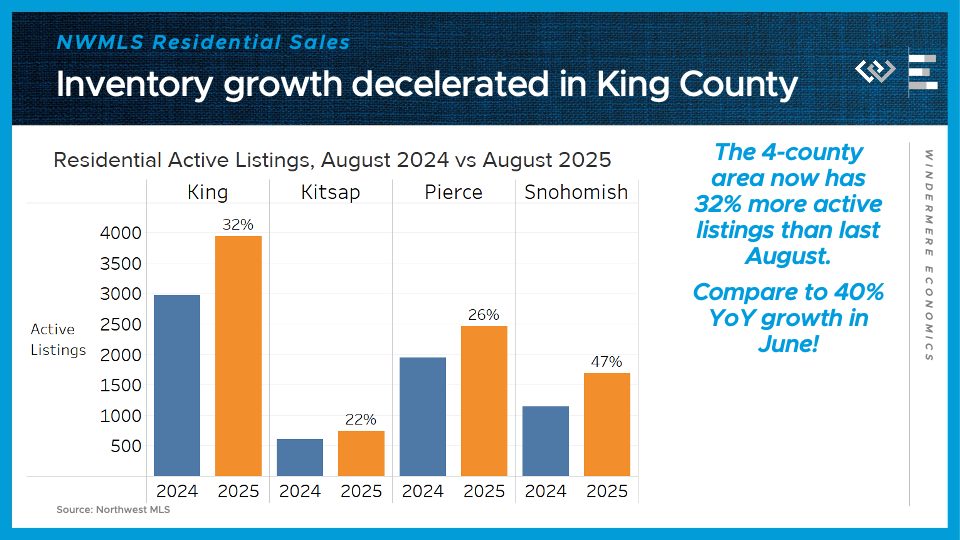
On the supply side, the 4-county greater Seattle area had 32% more active listings than at the end of August 2024. That continues the moderation of inventory growth we’ve seen since May, when this metric peaked at 45% year-over-year growth. King County especially has rebalanced, down from 50% growth to just 32% active listings growth.

Looking ahead, the key question is whether buyers begin to come off the sidelines in response to these more favorable conditions: they’ve got lots of inventory to choose from, listings that have lingered on the market, and mortgage rates that have dipped from about 7% to closer to 6.5% this summer. For people in a position to buy, this fall is looking like a sweet spot.

More August 27, 2025

What The Ballooning National Debt Means For Housing

For Americans already struggling with the highest mortgage rates in a generation, new legislation out of Washington promises little relief. The “One Big Beautiful Bill Act” (OBBBA) will add trillions to the national debt over the next decades, further cementing an era of expensive borrowing.

The basic laws of supply and demand suggest this surge in government debt issuance will push interest rates even higher for everyone, straining the already-frozen housing market and increasing costs for all types of credit.

The one silver lining, though, is that the sooner lenders accept our “higher for longer” new world of interest rates, the sooner they can stop worrying so much about prepayment risk, which may shrink the spread they charge above 10-year Treasury yields. Below, we’ll explore how national debt impacts real estate.

As Uncle Sam borrows ever more, everyone’s interest rates will rise

The One Big Beautiful Bill Act, enacted this summer, puts the pedal to the metal for debt accumulation over the next decade in the U.S. The Committee for a Responsible Federal Budget estimates that it will add a cumulative $5.5 trillion to the debt by 2034, under the realistic assumption that its provisions written to expire will instead be extended, as has become normal in federal budgeting.

Even taking the expirations at face value, though, the bill raises deficits by a cumulative $4.1 trillion, an extraordinary choice in the midst of an economic expansion and coming on the heels of the worst bout of inflation in decades.

The issuance of trillions of dollars of additional debt in the next several years is expected to drive up interest rates. The Budget Lab at Yale has estimated that the bill will raise 10-year Treasury yields by about half a point in the next several years and by more than 1.4 points in the very long run.

This is driven in part by their modeling assumption that the Federal Reserve will succeed at keeping inflation close to 2 percent, which will require higher interest rates in the long run. They also expect a higher term premium on long-term debt, like 10-year Treasuries.

Altogether, this paints a picture of government borrowing crowding out private borrowing — as the Treasury issues more debt to finance its deficits, yields must rise to compensate investors. Other debt in the economy, such as mortgages, must yield more as well, in order to compete with Treasury bonds for lenders.

High interest rates have already frozen the housing market

While the U.S. economy continues to grow, the U.S. housing market has been stuck in neutral for over three years. Ever since mortgage interest rates rebounded from all-time lows below 3 percent for 30-year loans in 2020 and 2021, to generational highs above 7 percent in 2023, existing-home sales have been stuck in the neighborhood of 4 million annual sales.

It’s no surprise that fewer homes are changing hands than during the 2021 low-interest-rate boom, but 4 million is much fewer than even prevailed during the 2010s. In fact, 2024’s total of 4.06 million existing-home sales was the lowest total since the 1990s. The housing market is caught in a perfect storm, keeping homeowners frozen in place, thanks to the one-two punch of high price-to-income ratios and high mortgage rates.

While the OBBBA includes some sweeteners for certain homeowners, like the expansion of the state and local tax deduction cap to $40,000, the main long-term effect it promises for housing is just higher interest rates.

One near-term trend likely to help mortgage borrowers: a thinner spread

Bigger deficits, bigger debt, higher interest rates — the long-term fiscal outlook is getting darker. But there’s one silver lining that has begun to shine around the edge of these gathering clouds. The mortgage-Treasuries spread has begun to narrow again, resuming its progress back down toward pre-pandemic levels. The spread, here, refers to how much higher 30-year mortgage rates are averaging than 10-year Treasury yields.

In the 21st century, up to the pandemic, mortgage rates rarely exceeded 10-year Treasury yields by more than 2 percentage points, except during the global financial crisis. When mortgage rates soared back up in 2022, part of their climb was due to the widening spread. The two major reasons for widening spreads are a greater prepayment or refi risk on mortgages and interest rate volatility.

The latter has gradually faded this summer after spiking amidst tariff uncertainty in April. But the prepayment risk component is the bigger factor. For lenders and the investors who buy mortgage-backed securities, mortgages issued at high interest rates are uniquely risky because borrowers are expected to refinance them once mortgage rates fall back down.

The lack of a prepayment penalty for borrowers makes U.S. mortgages uniquely favorable to homebuyers here. If rates rise, they win by virtue of having locked in a lower rate; if rates fall, they can always refinance. Investors and lenders, by the same token, view refinancing as a unique downside to holding mortgages. They want a reliable coupon stream from mortgage holders’ monthly payments.

Seeing their loans wiped out by refinancing, replaced by cash in a new lower-interest-rate world, is a risk for which they must be compensated to make the loan in the first place.

That extra compensation for prepayment risk helped explain why mortgage rates soared even more than 10-year Treasury yields in 2022 and 2023. Now, though, as the reality sets in that we are living in a world where interest rates are “higher for longer,” lenders have gradually brought mortgage rates down relative to Treasuries, from about a 2.9-point spread in 2023 to 2.4 in recent months, or about one-third of the way back to normal.

The sooner investors conclude that refinancing prepayment risks aren’t so high, the sooner the spread can come down. The potential bankshot silver lining of the OBBBA? By putting a nail in the coffin of hopes for low interest rates, it may help further shrink the spread, so that higher 10-year Treasury yields don’t have to mean higher mortgage rates one-for-one.

Ultimately, the nation’s fiscal path points toward a new normal of higher borrowing costs for all. The “One Big Beautiful Bill Act” serves as an accelerant, solidifying a “higher for longer” interest rate environment that will impact everything from car loans to corporate debt. For the beleaguered housing market, this presents a bittersweet trade-off.

The bad news is that the foundational interest rate, the 10-year Treasury yield, is set to climb. The paradoxical good news is that by killing the hope of a return to ultra-low rates, the OBBBA may continue to shrink the risk premium lenders charge on mortgages. This narrowing spread won’t turn 7 percent mortgages back into 3 percent loans, but it might help us work our way back down closer to 6 percent.

Jeff Tucker is the Principal Economist at Windermere Real Estate in Seattle, WA. This blog was originally published on Inman News on 8/26/25.

More August 25, 2025

How to Bring Coastal Charm into Your Home No Matter Where You Are

Coastal interior design captures the calm elegance of life by the water. It’s bright, breezy, and effortlessly connected to nature, drawing inspiration from the textures and warmth of the shore, the shifting blues of the sea, and the weathered charm of driftwood and dune grass. This style invites the outdoors in, creating spaces that feel open, welcoming, and dreamy, no matter how far you are from the coastline.

Defining Features of Coastal Interior Design

Natural Materials

Coastal design embraces organic textures that feel relaxed and lasting, mirroring the landscape along the shoreline. Wicker and rattan furniture bring a light, casual elegance, while woven jute or sisal rugs add earthy texture underfoot. Weathered or reclaimed wood, whether used in furniture, ceiling beams, or accent walls, offers a sun-worn character that feels authentic to seaside living. Glass elements, including vases, oversized mirrors, and light fixtures, reflect light and mimic the clarity of water, while stone or pebble accents can subtly reference the beach and coastline. Even fabrics play a role, typically with cotton, linen, and other breathable, natural fibers, keeping the look feeling fluid and inviting.

A Coastal Color Palette

The colors of the coast bring this style to life. Crisp whites and soft creams create a fresh, open backdrop, while sandy beiges and sun-bleached wood tones add warmth and a lived-in ease. Layered into this foundation are sea-inspired blues in every shade, from the pale, airy blue of a summer sky to the rich, grounding depth of navy. Small pops of teal, aqua, seafoam green, and even coral can bring a burst of energy, infusing the space with the vibrant, refreshing spirit of life by the water.

Light, Airy Spaces

Abundant natural light is central to coastal interiors. Large windows, double-glass French doors, and open layouts blur the lines between inside and out. Sheer linen drapes catch the breeze, while white or pale walls reflect light to make rooms feel even more expansive. One of the advantages of using natural materials in coastal design is that they age gracefully, gaining character over time while preserving the fresh, airy feel that helps define this style.

Subtle Nautical Touches

Coastal design often incorporates gentle, well-chosen nods to the sea. Rope accents woven into mirrors or light fixtures, bowls of collected shells, or artwork featuring surfboards, sailboats, and marine life can all bring a hint of nautical charm. Avoid an overly beachy look by balancing nautical accents with clean lines and neutral tones. These elements should evoke the feeling of the coast rather than recreate it literally, keeping the space elegant, storied, and timeless.

Built-In Charm

Architectural details like white-washed built-in shelving, wood-clad ceilings, or wall paneling give coastal homes a sense of craftsmanship and permanence. These features provide the perfect stage for displaying curated coastal finds like sea glass, ceramics, or woven baskets.

Bringing the Look into Your Home

You don’t need an ocean view to enjoy the beauty of coastal design. Start with a light, neutral foundation and layer in soft blues, sandy tones, and natural textures. Choose furniture that feels comfortable and unfussy, and incorporate elements that remind you of the shore, whether that’s a woven jute rug in the bedroom, a driftwood coffee table, or a few well-placed nautical pieces.

Candles or diffusers with fresh, sea-inspired scents can enhance the atmosphere, creating the sensory experience of a salty ocean breeze. And if you’re looking for real-life inspiration, a visit to Seabrook, WA, can spark ideas with its homes and community spaces being a masterclass in blending classic coastal styles with modern living.

For more design inspiration, tips, and trends, visit the design section of our blog.

These Seabrook listings showcase how coastal style blends comfort, light, and seaside charm.

Market News August 21, 2025

Numbers to Know 8/21/25: Inventory Up, Prices Down, and Rates Easing

This is the latest in a series of videos with Windermere Principal Economist Jeff Tucker, where he delivers the key economic numbers to follow to keep you well-informed about what’s going on in the real estate market.

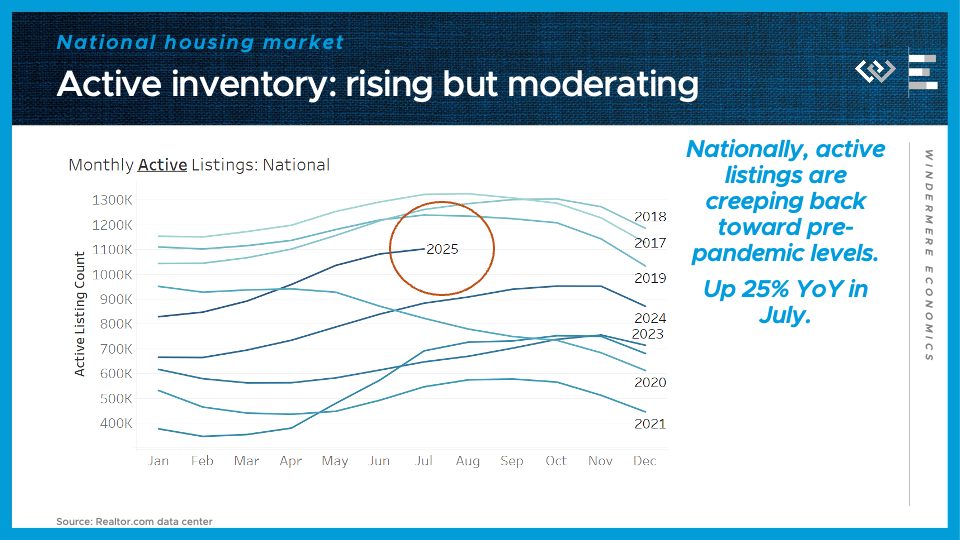
I’ll start this month by checking in on our most important barometer of the housing market: inventory. Active listings continued to grow in July, but at least nationally, they are still below somewhat below pre-pandemic levels for this time of year.

At the end of July, there were just over 1.1 million active listings on the market – below the 1.23 million on the market in July 2019, but up from 884,000 at this time last year.

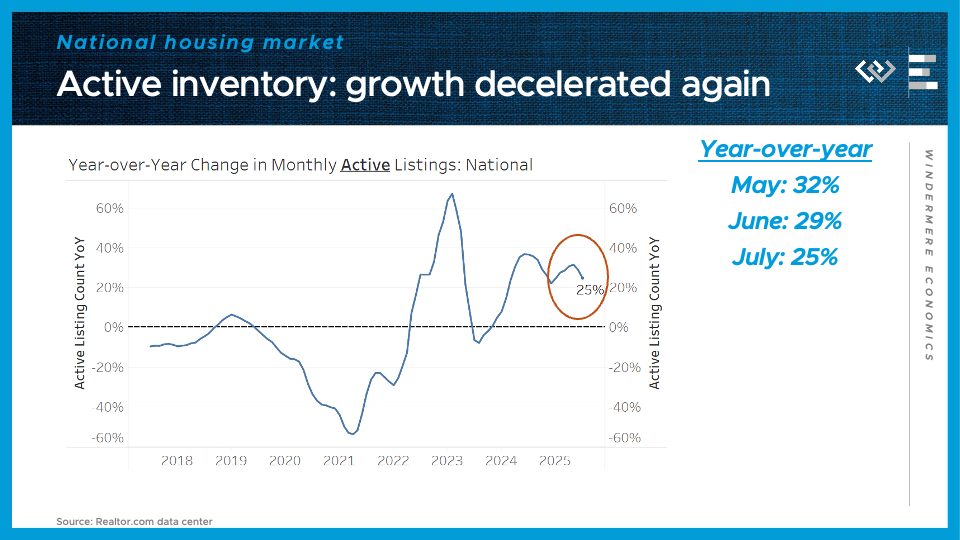
That makes for 25% year-over-year growth, which marks another month of deceleration from a peak of 32% annual growth in May. This continues to make this spring look like an inflection point, where inventory is still growing but at an ever-slower pace.

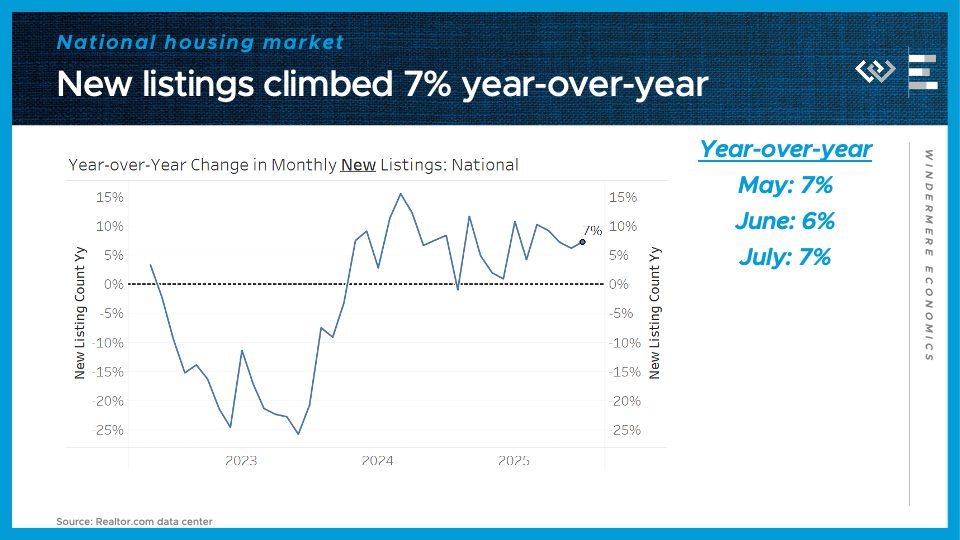
Maybe surprisingly, we didn’t see any deceleration in the flow of new listings in July – it was up 7% year-over-year, or slightly more than June’s 6%. So if inventory growth is slowing, like we just saw, it points to another rising trend this year: de-listings, or expired listings, where sellers are not getting an acceptable offer and just choosing to walk away.

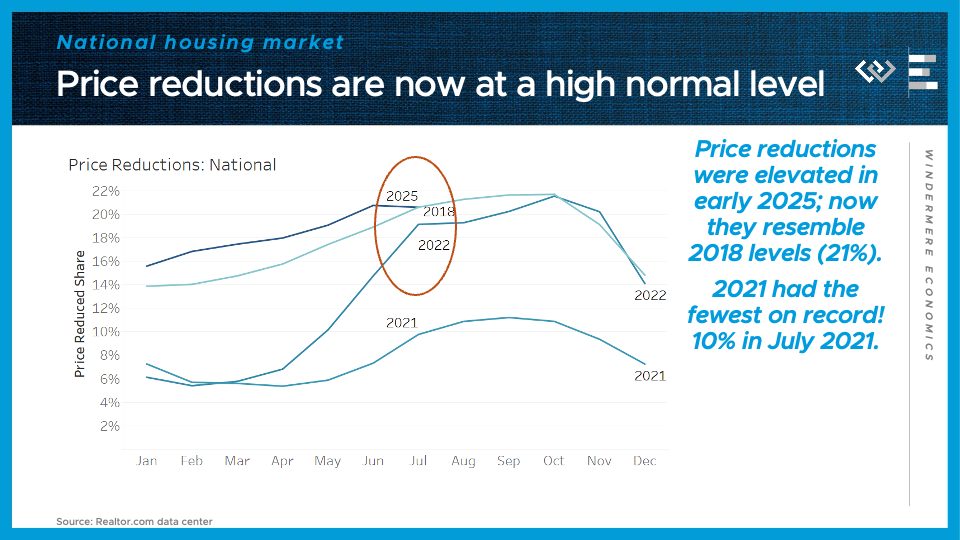
Another sign of sellers being unwilling to bend any further: price reductions. This is the share of active listings where the seller has reduced their asking price. It’s been elevated all year long, but it abruptly stopped rising in July, which is seasonally unusual — so now it’s actually at the exact same share we saw at this time in 2018, 21%, and not far from the share in July 2022.

All in all, the housing market has clearly swung in buyers’ favor, but these signs of an inflection point suggest the momentum in that direction is slowing down.

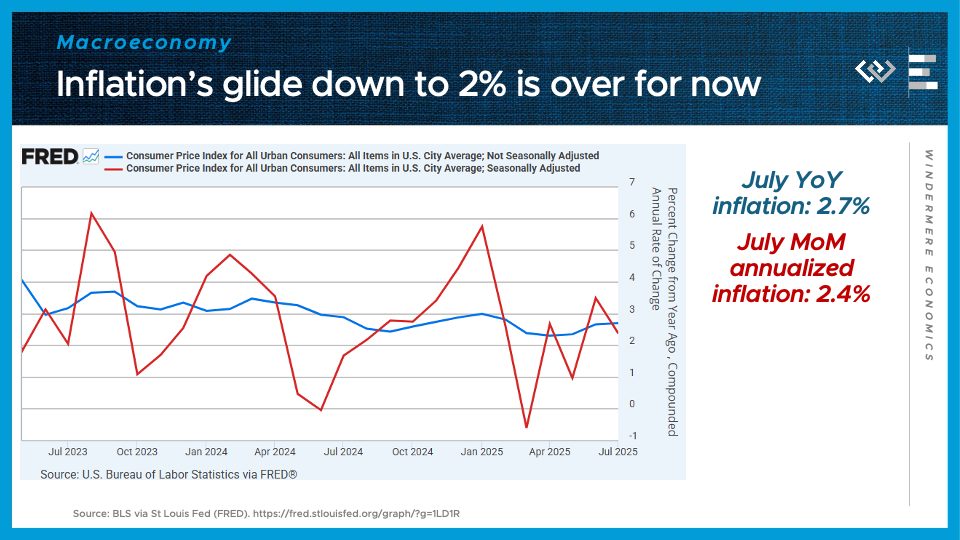
Turning to the macroeconomy, we have a couple of worrying signals of at least a mild form of macroeconomists’ least favorite condition: stagflation. Starting with the “flation” part, we see that inflation is stubbornly stuck closer to 3% than the Fed’s 2% target.

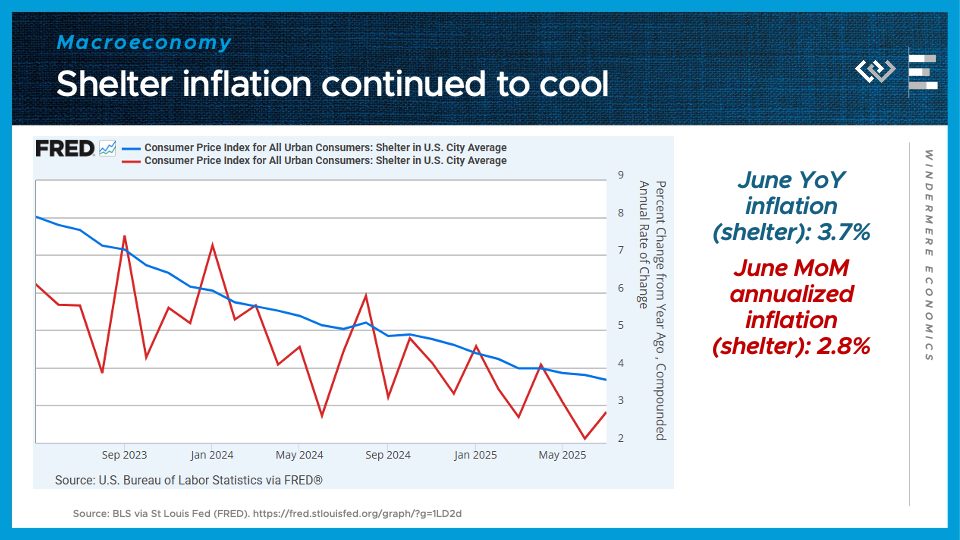
Shelter inflation has kept cooling in a kind of zigzag pattern, finally approaching 2%.

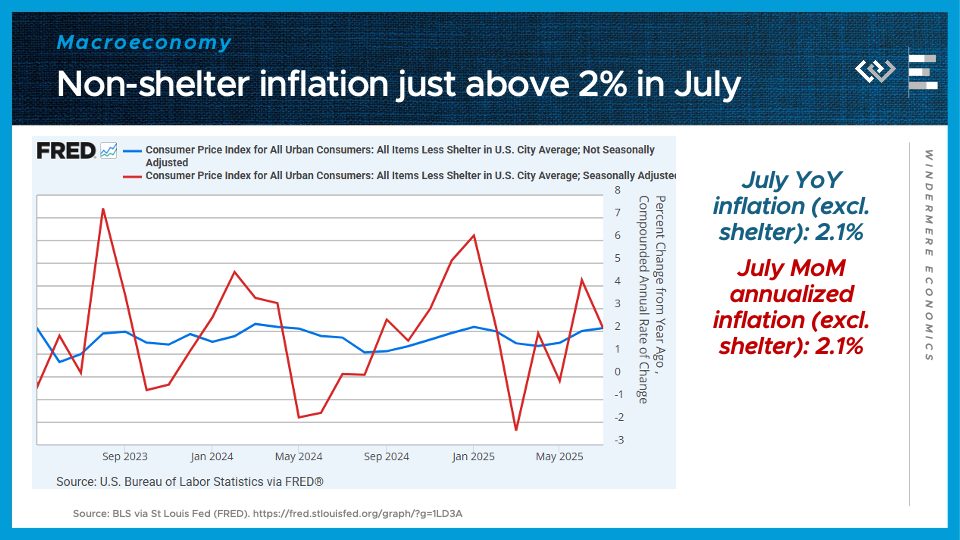
But the rest of the CPI basket, everything BUT shelter, is once again growing at – just barely – faster than 2% annualized.

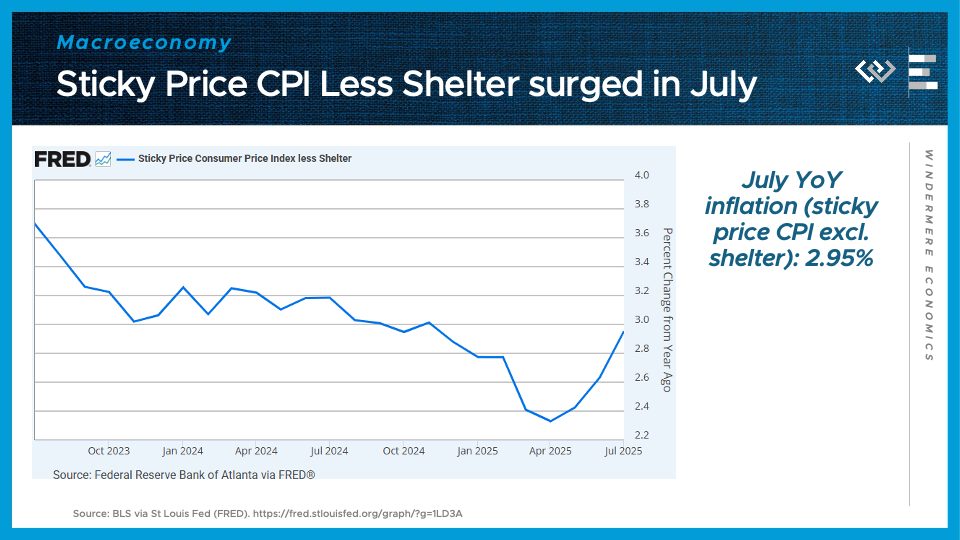
And an especially predictive part of the price index, called the sticky price index less shelter, accelerated sharply to almost 3% annual growth.

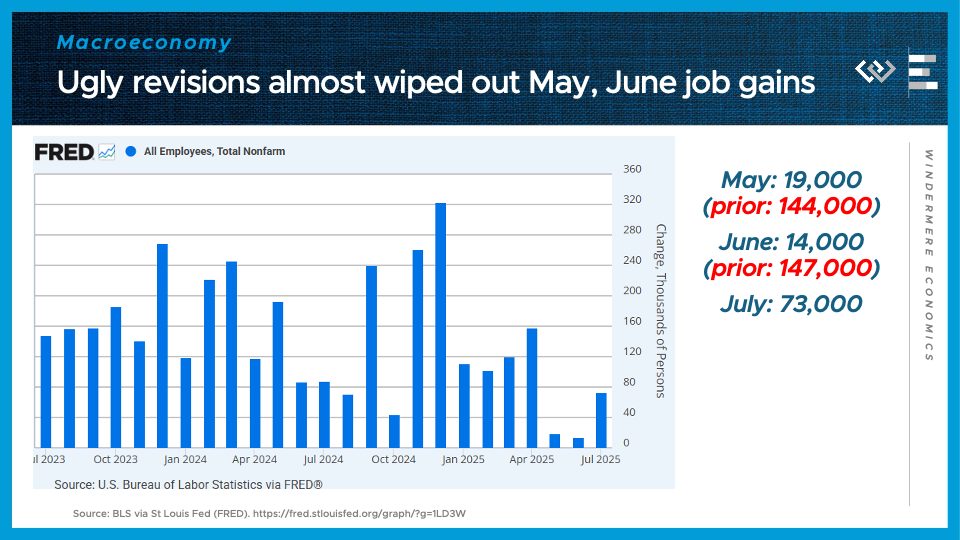
Turning to the stagnation side of things, the jobs report for July, released on August 1st, came in way below expectations. The most concerning part is that job gains for May and June were revised down radically, almost wiping out the healthy job gains the BLS reported just last month. Month-to-month revisions are a normal part of how the Bureau of Labor Statistics reports payroll gains and losses, and a pattern of sharply negative revisions often heralds the beginning of a recession.

Stagflation presents the Fed with a dilemma: the very weak jobs report would give them reason to cut interest rates, but resurgent inflation might give them pause. Markets are betting on at least one interest rate cut, starting in September, but after that it’s anybody’s guess where the data will guide their next decisions.

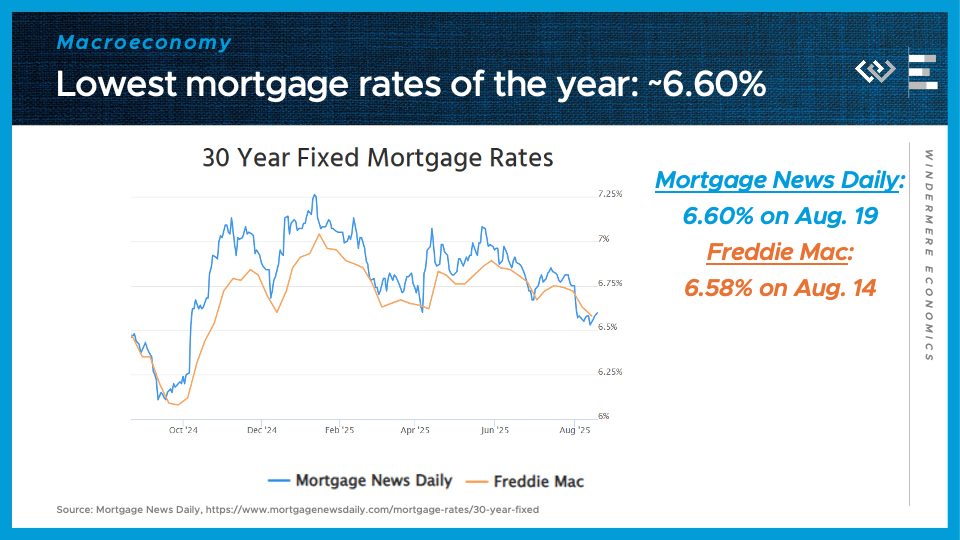
For the housing market, though, what’s most important is mortgage rates, and those have already fallen in the wake of the weak jobs report. Rates swooned, down to just over 6.5%, and while they’ve recovered slightly, this range of around 6.6% is still the best we’ve seen in 2025, so I’ll count that as progress. Buyers seem to be set up for another favorable early autumn housing market – more inventory, plenty of price reductions, and at least some mortgage rate relief.

Selling August 18, 2025

Sustainable Upgrades That Help Your Home Sell for More

Selling a home begins with understanding how much it’s worth. After an initial assessment, you may want to make some updates to increase the value of your property. There are several ways to do that, including boosting your curb appeal or making renovations with significant ROI potential. As you research potential projects, keep in mind that making your home more sustainable can boost its value to potential buyers. In today’s market, many buyers are looking for eco-conscious features that offer long-term savings, lower utility bills, and improved health and comfort at home. Making the right green upgrades can help your home stand out. Talk with your agent to identify which of these five upgrades makes sense for your home before it hits the market.

Five Green Upgrades that Increase Your Home Value

1. Energy-Efficient Appliances

It’s no secret that appliances use a significant amount of energy, which means there is plenty of opportunity to cut back on their output. Installing energy-efficient appliances can do wonders for creating a more eco-friendly home, while appealing to buyers who value sustainability. And as many cities move toward energy codes that limit or eliminate the use of natural gas, energy-efficient electric appliances are becoming an important part of future-proofing your home. When shopping around, look for appliances with high-efficiency or Energy Star certifications. They may cost more to purchase, but their ability to generate long-term savings is a concrete selling point.

2. Tankless Water Heater

As the shift toward eco-friendly appliances has picked up steam, so too has the preference for tankless water heaters. Whereas standard storage tank water heaters keep a reservoir of hot water at the ready, tankless water heaters heat your home’s water supply on demand. It’s similar to a new car that shuts off its engine when sitting idle, as opposed to an older car whose engine is running all the time. Tankless water heaters don’t come without their share of costs. An upfront investment will be required for purchase and installation, but it will deliver immediate savings on energy bills.

3. Solar Panels

There are many benefits to going solar, but for sellers, the positive effect solar energy has on home values is chief among them. A solar-capable home is a surefire way to drum up buyer interest. By taking care of the upfront installation costs, you allow the buyer to focus on the benefits of solar energy, i.e., the long-term energy savings, the reduced utility bills, and the reduction in the property’s carbon footprint. Depending on your location, you may also be eligible for local or federal tax credits, utility rebates, or other incentives that can offset these installation costs. Work closely with your real estate agent to understand how solar energy has affected home prices in your area to get an idea of the project’s ROI potential.

Team of workers maintenance and install in solar power plant on the roof.

4. Water Filtration

Installing a home water filtration system is one of the best ways to cut down on your home’s waste while increasing its value. These filtration systems appeal to buyers for a variety of reasons. Of course, there are an array of health benefits to having filtered water running through the entire house. Buyers can be assured that the water is safe to drink, they will be bathing and showering in clean water, and there is a reduced risk of plumbing issues due to contaminated water. Beyond the personal health benefits, it can also cut down on bottled water costs and the amount of landfill waste produced within the home. Some whole-home water filtration systems also come with smart sensors that track usage, detect leaks, and monitor filter lifespan, adding a layer of convenience and long-term savings for homeowners.

5. Energy-Efficient Windows

Alternatives to traditional windows have become more popular in recent years. Energy-efficient windows are better insulated, which helps to regulate temperatures inside the home and protects against harmful ultraviolet rays. Their ability to help regulate your home’s heating and cooling leads to energy savings and reduced carbon emissions. Energy-saving windows can be highly valuable to potential buyers, especially if you live in a climate with extreme temperatures.

In addition to temperature regulation, many buyers also appreciate how modern energy-efficient windows help with soundproofing—a big plus in urban or suburban neighborhoods.

Bonus Upgrades to Consider

If you’re looking to go a step further, here are a few more eco-friendly upgrades that may increase your home’s value and appeal:

  • Smart thermostats automatically adjust heating and cooling based on your schedule, saving energy and offering buyers convenience.
  • Upgrading to high-efficiency insulation in walls, attics, or crawl spaces can significantly reduce energy costs.
  • With electronic vehicles becoming more common, having a dedicated outlet or charging setup at home is a huge plus for future-minded buyers.

For more tips on the selling process, visit the selling section of our blog.

Blog – Selling

Looking to boost your home’s market value with smart, sustainable upgrades? A Windermere agent can help you decide which projects will give you the best return in your neighborhood.

Click the button below to connect with an experienced Windermere Real Estate agent.


BuyingSelling August 11, 2025

What You Should Know About the Multiple Listing Service (MLS)?

In the process of buying or selling a home, you’ll frequently come across the term “MLS.” The Multiple Listing Service (MLS) is a group of regional databases of homes for sale accessible only to real estate agents and brokers. Their ability to access the MLS makes it easier for buyers to find the right home and for sellers to market their listings.

What is the Multiple Listing Service (MLS)?

The purpose of an MLS is to facilitate real estate transactions by connecting real estate agents and making it easy for them to share information about active listings and sold home data. For buyers and sellers, your agent’s access to the MLS means you’ll be connected to the largest network of homes and listing information on the market.

There are over 500 independent MLSs across the United States, with each MLS showing the homes for sale in a particular geographic region. Listing agents add their clients’ listings to the database—providing photos and detailed information about the property—so buyer’s agents can show them to their clients. The MLS allows for customizable searches, which agents use to easily identify the homes that match their clients’ criteria. The vast amount of historical data available on the MLS is what your agent will use to conduct their Comparative Market Analysis (CMA) to competitively price your home. The listing data in the MLS is fed to real estate brokerage websites, such as Windermere.com, so that buyers can search for homes on their own as well.

Benefits of the Multiple Listing Service (MLS)

Selling a home is a numbers game. The more potential buyers you can reach, the more likely you are to find the right buyer in a timely manner. After your agent conducts their CMA to determine the value of your home, they’ll upload the listing to the MLS. Here, they can add additional information beyond what you would find in a typical listing description, such as showing times, contact information, and more. The MLS provides maximum visibility for sellers by connecting them to buyer’s agents who are actively searching for listings. In today’s market, many MLS platforms offer mobile-friendly tools and agent apps, making it even easier to track showing requests, market updates, and search results on the go. Some even use AI to help agents identify pricing trends or recommend homes that match specific client needs.

The MLS has also helped to make the industry more equitable. Many MLSs enforce policies that promote fair and equitable access to listing data. This includes rules that require agents to submit a listing to the MLS within 24 hours of public marketing, along with principles from the Fair Display Guidelines, which aim to ensure that property listings are represented transparently and are easily accessible. Small real estate brokerages have access to the same MLS info as large companies, putting everyone on a level playing field.

For buyers, the MLS means greater transparency. Agents can set up auto-alerts based on your criteria and ensure you’re seeing listings as soon as they go live. Because the MLS is updated in real-time by licensed agents, it’s often more reliable than national search portals when it comes to availability and details.

What is an MLS number?

An MLS number is a unique code for each home listed on the market. It makes it easier for agents to communicate regarding a specific property. This number also helps agents quickly pull up detailed reports, schedule showings, and share links directly with their clients. If you ever have a question about a home you’ve seen, providing the MLS number ensures your agent can locate it fast.

To learn more about the MLS, or for answers to your buying and selling questions, connect with a local, experienced Windermere agent today: