More November 19, 2010

Upcoming office events for charity and Foundation fundraising

The holidays are a busy time of year for most charities supporting low-income and homeless families. If you are looking to find some good ways to give back, join our Windermere offices by adopting a family in need, attending one of these great fundraisers, or dropping off food or warm coats and blankets at a participating office.

Join the Windermere, Cronin & Caplan Group in Portland November 18th through 20th for food, libations and holiday shopping. The Windermere offices will be hosting ten local artists and a percentage of all sales will go to the Windermere Foundation.

Thursday November 18th 12:00 pm – 7:00 pm

Friday November 19th 10:00 am – 7:00 pm

Saturday November 20th 10:00 am – 4:00 pm

733 NW 20th Ave Portland, OR 97209

Corner of NW 20th Ave/Johnson

For Info Call 503-220-1144

Bring your old appliances, electronics, computers and cell phones to the Windermere Bellevue South office on Sunday November 21st for this free recycling event.  All the proceeds from the recycled materials will go to benefit local homeless shelters and food banks. For more information go here: http://www.facebook.com/event.php?eid=103568669711065.

Windermere Coeur D’Alene is collecting donations of turkeys and other Thanksgiving fixings this week for the Community Action Partnership food bank through next week.

The Windermere Seattle-Queen Anne office is collecting non-perishable food items for Northwest Harvest through November 22nd.

Windermere North will be volunteering at Christmas House on December 16th for the fourth year in a row. Christmas house is a great organization that provides gifts for low-income parents to select for their children for free.  If you are interested in participating with the Windermere team contact Claudette Meyer at 425-776-1119.

Windermere North will also be adopting families for the holidays. This Windermere Team has a longstanding relationship with Deaconess Children’s Services, serving Snohomish families. This year the office adopted 21 individuals comprising 7 families. Agents will all be shopping for individuals on their list. The office will also provide food certificates for all families.

If you are in the Oregon or Sothern Washington go here to find one of the thirty-six Windermere offices collecting coats and blankets for various charitable organizations. Offices will be collecting warm items for low-income and homeless families through December 17th.

If you have any questions regarding your local Windermere office contact friend@windermere.com

Selling November 16, 2010

Considering becoming a landlord? How to evaluate whether to rent or sell your property

Over the last few years, we have seen an increase in homeowners choosing to become landlords rather than placing their homes on the market.  In deciding whether or not becoming a Landlord is right for you, there are a number of factors to consider, but primarily they fall into the following three categories:  Financial Analysis, Risk and Goals.

The financial analysis is probably the easiest of the three to assess.  You will need to assess if you can afford to rent your house. If you consider the likely rental rate, vacancy rate, maintenance, advertising and management costs, you can arrive at a budget.  It is important both to be reasonably correct in your assumptions and to have enough reserves to cover cash-flow needs if you’re wrong.  The vacancy rate will be determined by the price at which you market the property.  Price too high and you’re either vacant or accepting applicants that, for some reason, couldn’t compete for more competitively priced homes.  Price too low and you don’t achieve the revenue you should.  If you want to try for the higher end of an expected range, understand that the cost may be a vacant month.  It is difficult to make up for a vacant month.

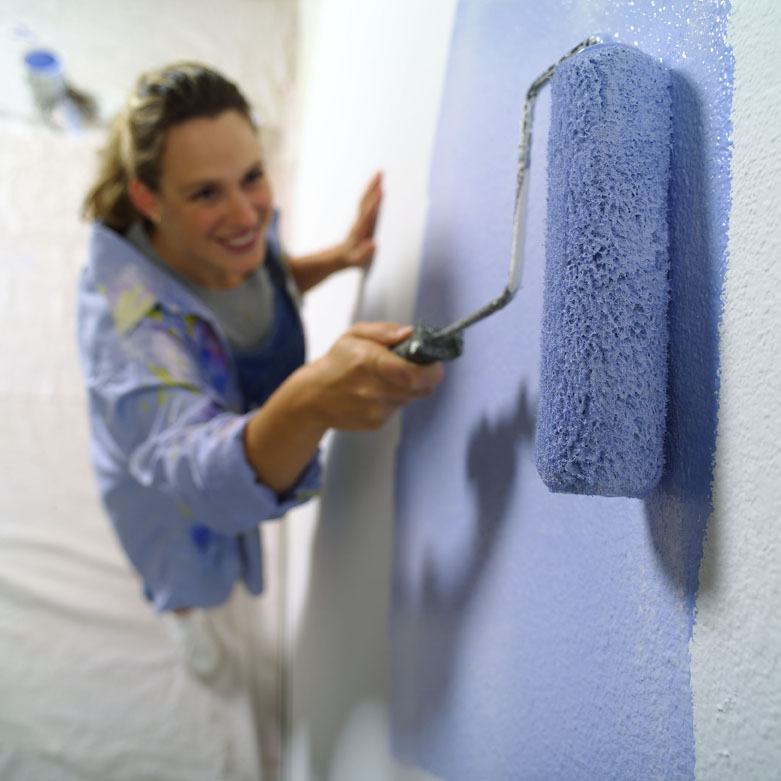
Consider the other costs renting out your property could accrue. If you have a landscaped or large yard, you will likely need to hire a yard crew to manage the grounds. Other costs could increase when you rent your home, such as homeowner’s insurance and taxes on your property. Also, depending on tenant turn-over, you may need to paint and deal with maintenance issues more regularly. Renting your home is a decision you need to make with all the financial information in front of you.  You can find more information about the hidden costs of renting here.

If your analysis points to some negative cash-flow, that doesn’t necessarily mean that renting is the wrong option.  That answer needs to be weighed against the pros and cons of alternatives (i.e., selling at the price that would actually sell), and some economic guesswork about what the future holds in terms of appreciation, inflation, etc. to arrive at an expectation of how long the cash drain would exist.

Risk is a bit harder to assess.  Broadly though, it’s crucial to understand that if you decide to lease out a home, you are going into business, and every business venture has risks.  The more you know, the better you can mitigate those risks.  One of the most obvious ways of mitigating the risk is to hire a management company.  By hiring professionals, you decrease your risk and time spent managing the property (and tenants) yourself.  However, this increases the cost.  So, as you reduce your risk of litigation, you increase your risk of negative cash-flow, and vice versa… it’s a balancing act, and the risk cannot be eliminated; just managed and minimized.

In considering Goals, what do you hope to achieve by renting your property? Are you planning on moving back into your home after a period of time? Will your property investment be a part of your long-term financial planning? Are you relocating or just hoping to wait to sell? These are all great reasons to consider renting your home.

Keep in mind that renting your family home can be emotional.  Many homeowners LOVE the unique feel of their homes.  It is where their children were raised, and they care more about preserving that feel than maximizing revenue.  That’s OK, but it needs to be acknowledged and considered when establishing a correct price and preparing a cash flow analysis.  Some owners are so attached to their homes that it may be better for them to “tear off the band-aid quickly” and sell.  The alternative of slowly watching over the years as the property becomes an investment instead of a home to them may prove to be more painful than any financial benefit can offset.

In the process of considering your financial situation, the risks associated with becoming a landlord, and the goals you hope to achieve with the rental of your property, – ask yourself these questions.  Before reaching a conclusion, it’s also a good idea to familiarize yourself with the landlord-tenant-law specific to your state (and in some cases, separate relevant ordinances in the city and/or county that your property lies within) and to do some market research (i.e. tour other available similar rentals to see if your financial assumptions are in line with the reality of the competition across the street).  If you are overwhelmed by this process, or will be living out of the region, seek counsel with a property management professional.  Gaining experience the hard way can be costly.

J. Michael Wilson is the dedicated broker at Windermere Property Management Seattle, and has 17 years of experience managing properties in the Seattle region.

More November 12, 2010

Divorce, Custody, and Employee Mobility

Divorce, child custody and relocation are all difficult topics however, knowing the facts will help you make the decisions that are right for you and your family. Below you will find an excerpt from an article recently published in Mobility Magazine by Windermere’s own Peggy Scott, GRI, CRP, GMS. She is the relocation director and designated broker for Windermere Relocation and Referral Services, Seattle, WA. You can read the article in its entirety here: http://bit.ly/9PrKxL


“As society becomes increasingly mobile, so does the frequency with which global mobility professionals encounter relocation cases involving child custody. Scott defines custody, discusses its effects on mobility, and offers a case study demonstrating how divorce affects the relocation process.”


While the divorce rate varies greatly in each country of the world, affecting the lives of men and women, those with children be affected the greatest. No family law generates more concern, strife, and emotional turmoil than child custody and visitation matters. Every court around the nation will advocate for the best interest of the children involved in divorce.

Developing an amicable parenting plan or agreement for the interests of the children is the best solution to establishing custody of a child. The best interest of the child is served by a parenting arrangement that best maintains a child’s emotional growth, health and stability, and physical care. According to Washington state law, the best interest of the child ordinarily is served when the existing pattern of interaction between a parent and child is altered only to the extent necessitated by the changed relationship of the parents.

If the parents cannot reach an agreement concerning the custody and parenting plan for the child, then the court may establish either sole or mutual decision-making authority as well as residential provisions. The parenting plan or agreement needs to support, in detail, the child’s best interest in the areas of school, physical care, traveling expenses, individual parental authority, and residence options and rules. All divorce cases involving child custody, whither uncontested or contested, must include a parenting plan or custody order (either by agreement or ordered after trial) that is adopted by the courts.

To read the rest go here: http://bit.ly/9PrKxL

BuyingLivingSelling November 2, 2010

The Reality of Home Improvement: HGTV installment

On any given weekend in my house, at least a couple of hours will be spent watching the designers, craftspeople and entertainers on HGTV or its spunky sister station, the DIY Network.  The premise of these home-centered television networks is that somewhere, sandwiched between long commercial breaks for paint, faucets, flooring warehouses and something called “Slab Jacking”, you’ll find programming about real people making real decisions about their homes. Sometimes those decisions are about buying a home, while other times they may be about selling or remodeling a home.  In all of the situations, experts are brought in to help and a camera crew just happens to tag along, so the rest of us can enjoy the unfolding drama from the comfort of our couches.

Home improvement programming has been around for a long time and is generally considered reality TV, but a lot of the real life is lost between cuts. Here’s a quick guide of some of the more popular programs.

House HuntersThe formula is simple but always entertaining.  Each episode begins with someone unhappy with their living situation, so they call an agent and look at 3 properties.   After weighing the options, a home is chosen.  Of course, this show is over-simplified and leaves out the long weekends the buyer spends in their agent’s car driving from listing to listing.  What you do get is a sense of home values and styles in different regions, the humor of buyers’ reactions to homes, and the excitement new home owners feel as they take the keys to their dream home. You rarely get the type of tension home shopping can bring. The big climax of the show is when an offer is made: the narrator might say something like, “Though their offer was rejected the first time around, the other buyer ultimately backed out and they ended up getting the house for X amount.” But I don’t think they usually talk about it at all. For that kind of tension, you need to check out Property Virgins. The best part of the half hour happens in the last 30 seconds when you see how the new owner redecorates the home in their own style.

Property Virgins– Similar premise to House Hunters, except these first-time homebuyers walk through the basics. The best part about the show is the excitement (and sometimes clumsiness) of the virgin house-hunters. The worst part of this show is when would be homebuyers have unrealistic expectations for their first home.

House Hunters International – Comparable to House Hunters but everyone has accents and the kitchens are shockingly small.

Designed to Sell – Did you know that your spare bedroom filled with Grandpa’s taxidermy and the vintage 1950’s kitchen can be a turn-off to potential buyers? Valuable lessons like these are a just a few of the gems I’ve picked up on Designed to Sell.  Each episode features a home which has been racking up days on the market but no one is interested in buying.  That’s where the army of carpenters and designers step in. When they’re done, the house that looked like Grandma’s musty basement now looks like the lobby of a hip hotel, and they only spent a few hundred dollars.  I love this program for the inspiration but find it short on reality.  The listed prices of these improvements don’t seem realistic, and I often wonder if the costs include the lifetime of carpentry skills, design training, garage filled with power tools and time required to do the job. If you are looking for design ideas and hope for a home that isn’t attracting buyers, you’ll find some great ideas here, but take the true cost of those improvements with a grain of salt.

Real Estate Intervention – Being a real estate agent takes a lot of diplomacy, and this is never more important than that moment they suggest a market-friendly price to a home seller. On Real Estate Intervention, that diplomacy generally fails, sellers are unrealistic, and a stern man with a menacing mustache steps in for an intervention.  He dishes out tough love to the seller and paints a clear picture of market reality.  In a half hour he is able to change minds and make the seller feel good about the decision they made.

This Old HouseThis PBS staple wrote the book on home improvement programming.  With TOH you’ll trade commercials for pledge drives, but you’ll also get a more cerebral home improvement viewing experience.  TOH does take patience, as it takes a full season to complete a home improvement project instead of 30 minutes on other programs.  If you are looking for the same quality instruction in a more digestible format, you can check out the spin off, Ask This Old House.

Be warned that the home improvement bug often bites soon after watching any of these programs.  After a long HGTV bender, I find myself wandering through the paint sample aisle and making trips to home improvement stores that aren’t on my way home from the office.  Sometimes life does imitate art and the voice in the back of my head keeps saying, “They make it look so easy.”

What about you? Do you find home-improvement shows useful or do you think they set unrealistic expectations? What are your favorite home-improvement resources?

by Justin Waskow

Market News October 29, 2010

GDP Growth – The Good and the Bad

I was just looking at figures released this morning relative to how our economic output is doing.  Gross Domestic Product is a figure that is very important as it shows how we, as a nation, are growing economically by looking at the value of all the goods and services that we generate inside the U.S.  It also has a correlation to our own standard of living.

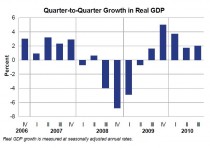
Today's number showed that the economy expanded in the third quarter by 2.0 percent. The pace improved slightly from the second quarter (+1.7% annualized), but it remained below the first quarter (+3.7%).

Hesitant or not, it’s a relief that national output did increase. The major concern for Washington and the Federal Reserve now is that such a stodgy pace will postpone the much-sought-after improvement in labor markets. There is little need for a meaningful hiring push at this time.

In as much as our growth rate can be suggested as being anemic at best, there were positives within the data contained in the report.  Consumer spending, which accounts for 70% of U.S. GDP, surged ahead 2.6% in the latest quarter, its fastest rate of increase since before the recession began in December 2007.

One conclusion to draw from all these numbers is “keep the faith.” U.S. year over year GDP in 2010’s third quarter was +3.1%. In Canada, industry-based GDP in August was +4.1% versus the year before. These numbers aren’t as bad as some commentators would have us believe.

With such sluggish growth, I am fully expecting that the Federal Reserve will announce another round of quantitative easing (QE2 as it is being referred to).  This is important to the real estate market as it will surely mean that interest rates for mortgages will, for the time being, stay low.

QE essentially means that the Federal Reserve will be turning the presses back on and printing more cash.  In actuality, they don't physically print the money but spend it as if they had!  (This is known in economic circles as creating money “ex-nihilo” or “out of nothing”).

They then proceed to buy up Treasury securities which push down interest rates that include mortgages.  Expect to see rates start to decline in the next few weeks and retest the all time lows that were seen a short while ago.

Ultimately, however, I believe that interest rates have to head higher.  If rates stay at current levels, we are sure to see very high inflation down the road.

by Matthew Gardner

More October 28, 2010

Many hands make light work: building the Garden of Hope

Amazing things happen when seven Windermere offices come together to accomplish a large project. On June 18th, 2010 Spokane offices: Valley, Liberty Lake, City Group, Manito, Palouse, North-Spokane and Cornerstone all came together to create an outdoor space for the Ronald McDonald House Charities of Spokane.  More than 200 agents and additional volunteers worked together to revitalize the outdoor empty lot adjacent to the Ronald McDonald house, building the “Garden of Hope” for residence to enjoy.

The outdoor renovation was done in less than eight hours, though the project itself took many months of planning by committee. Community members and local vendors donated more than $100,000 to this project, Washington State University Students developed the landscape plan and local businesses donated the sprinkler system and earth-moving equipment and services. The garden will be a place for families to relax and regenerate at the end of a long day, but it also will serve as a reminder of how the community comes together- even in tough financial times to improve the lives of families in need.

The Ronald McDonald House Charities of Spokane provides housing for families with children in the nearby hospital. Donations ensure the facility is there to provide a home-away-from-home for all families- no family is turned away based on ability to pay. The house itself has 21 rooms for residents, cooking facilities and now a great outdoor space for kids to play, families to reflect and shared spaces for gathering. Ronald McDonald House Charities was founded in 1974 and the Spokane Children’s Family Center opened in 1987.

A special thank you to all the volunteers and community partners!

In 2010 the Windermere Foundation sponsored a video contest, asking for video submissions showcasing the amazing organizations Windermere Foundation and Offices have the privilege to work with. We received 24 video submissions and selected five ‘winning’ videos in late September 2010. The Offices who submitted these videos have received a $2,000 donation to benefit their Foundation charity of choice. All the videos are too good to keep to ourselves, so over the next two months we will be sharing the videos created by Windermere Offices and highlight the great organizations they chose to work with.

More October 27, 2010

Foundation newsletter: quarterly report

Greetings from the Windermere Foundation,

Thanks to you and the wonderful support the Windermere Foundation has received so far this year, we disbursed over $836,000 to qualifying social service organizations dedicated to serving low-income and homeless families throughout the West.

Our amazing agents, staff and owners, along with public supporters, continue to contribute generously to the Foundation. Gifts to the Foundation through the 3rd quarter of 2010 are up 23% compared to this time last year!

Here are a few of the great programs that received Foundation support:

Oak Harbor, WA

Dear Oak Harbor Associates,

The Whidbey Island-Oak Harbor office received this letter from Opportunity Council, an organization they’ve supported for many years.

“It has been an unprecedented year for our service center. We have seen more p eople come through our doors than ever, especially those seeking help for the first time. What many families considered ‘normal’ no longer exists and they find themselves in crisis. We appreciate your consistent consideration and support of families in our community.

…Seven families (including 11 children) have received shelter and intensive supportive services. Five of those have moved into transitional or permanent housing.

We are grateful for your assistance.”

-Opportunity Council, Service Center Director

Salem, OR

The Windermere Salem, OR office held their annual backpack program and provided 80 backpacks filled with school supplies for kids at three local elementary schools.

Spokane, WA

The Spokane, WA offices held their annual Shoes, Socks and Underwear program which took place at their local Big 5. The program provided shoes for 82 kids, socks for 98 kids and underwear for kids in two programs. School supplies were also donated.  “When the kids were done shopping they got donuts and juice. The grins were in abundance and the kids all left happy!”

Napa, CA

The Napa office has given a generous gift to the Cope Family Center, an organization dedicated to empowering families to create happy, healthy lives for their children through child abuse prevention, parent education and self-sufficiency services.

Notable mentions

The 7th Annual Windermere Legends Memorial Golf Tournament in honor of Don Deasy, Terry Haberbush, Vince Haugerud, and Wally Starkey raised over $23,000 for the Leadership 1000 Scholarship Fund.

Congratulations to the first annual video contest participants

Twenty-four offices/groups participated in the first Foundation video contest. The five winning offices have received $2,000 each to give to the Foundation charity of their choice. If you missed the announcement for the winners and all our great participants head over to the blog to see the winners and the videos.

As always, thank you for your continuing support of the Windermere Foundation. Many low-income families are receiving basic necessities because of your commitment to helping others.

Best,

Christine Wood

Want to read more news about the Foundation?

Become a fan on Facebook to learn and share your stories about all the amazing things the Foundation is doing throughout the year.

Become a fan on Facebook

More October 25, 2010

The First Decade


The other day I was searching for my daughter’s cell phone number – which I haven’t memorized because I simply speed-dial it – and I realized it’s been years since I memorized anyone’s phone number. And this was just after I’d booked a flight online and selected my seat, and downloaded some new music into my iPod.

It occurred to me that these are just three examples of the tremendous changes that have happened just since the new millennium began. At the beginning of this decade, iTunes, YouTube and Facebook did not exist. Today, their combined daily views and downloads are in the billions.

An article in Newsweek a few months ago highlighted how much things have changed in a decade. The numbers are staggering and surprising.


  • Ten years ago, a total of 400,000 text messages were sent per day; today 4.5 billion are zinging through cyberspace every day.
  • In 2000, 12 billion emails were sent each day; today 247 billion are sent daily (many of which were in my spam filter this morning).
  • Ten years ago, about 208 billion letters were mailed through the postal system each day; today the number of letters mailed daily is less than 176 billion.

This decade has been tumultuous, to say the least. Beyond the tremendous technology-driven advances, we are still struggling with this economy. Unemployment rates are too high. Banks are still struggling. And it is heartbreaking that people have lost their homes.

Even though there is a lot of uncertainty, I remain optimistic. I am realistic enough to know that this recovery will take awhile. But recover we will.

One thing that hasn’t changed in the past decade is the resiliency of real estate over time. When you look at median single-family home prices ten years ago versus this year, you’ll see that home values have increased since 2000. This is encouraging, especially when you consider that the stock market today is the same place it was 10 years ago. For most people, their home is worth more today than when they bought it. It might be worth less than it was two or three years ago, but real estate has never been about day trading. It’s a long-term investment. And if the last 10 years, or 100 years, are any indication, we can count on growth in home values.

And that’s a good thing.


July Median Home Prices*
2000


2010


National
$151,100
$182,600


*Source:  NWMLS

What are some of the most memorable changes for you in the past decade?

More October 21, 2010

Bringing comfort to families in need: Tacoma Professional Partners volunteer at Multicare Tree House

Windermere Tacoma- Professional Partners spent May 20th serving the families and volunteers at the Tacoma Multicare Tree house. Volunteers prepared a fully stocked Taco bar for families. There was so much food the Windermere team visited the nearby hospitals, Tacoma General’s Neonatal Intensive Care Unit (NICU) and the Mary Bridge’s Pediatric Intensive Care Unit (PICU) and invited families waiting to join residents for dinner at the Tree House facility. Volunteers spent the day chatting with families and providing additional support to the volunteers and residents.

Windermere Professional Partners has a long-standing history with Multicare Tree House, they are dedicated fundraisers, provide volunteer services and have sponsored a room in Wally Starkey’s memory (a former owner). The funds dedicated to Tree House through the Windermere Foundation go to support access for low income families.

Multicare Tree house provides housing for families while their children are receiving medical care at Tacoma General’s Neonatal Intensive Care Unit or Mary Bridge’s Pediatric Intensive Care Unit. The organization provides family housing, sleep rooms, bathrooms, a place to eat, phone, internet and TVs as well as a laundry facility. The work volunteers do at tree house helps families find comfort in some of their hardest hours.

In 2010 the Windermere Foundation sponsored a video contest, asking for video submissions showcasing the amazing organizations Windermere Foundation and Offices have the privilege to work with. We received 24 video submissions and selected five ‘winning’ videos in late September 2010. The Offices who submitted these videos have received a $2,000 donation to benefit their Foundation charity of choice. All the videos are too good to keep to ourselves, so over the next two months we will be sharing the videos created by Windermere Offices and highlight the great organizations they chose to work with.

Living October 21, 2010

Weatherizing your home: protecting your investment through the harsh winter months

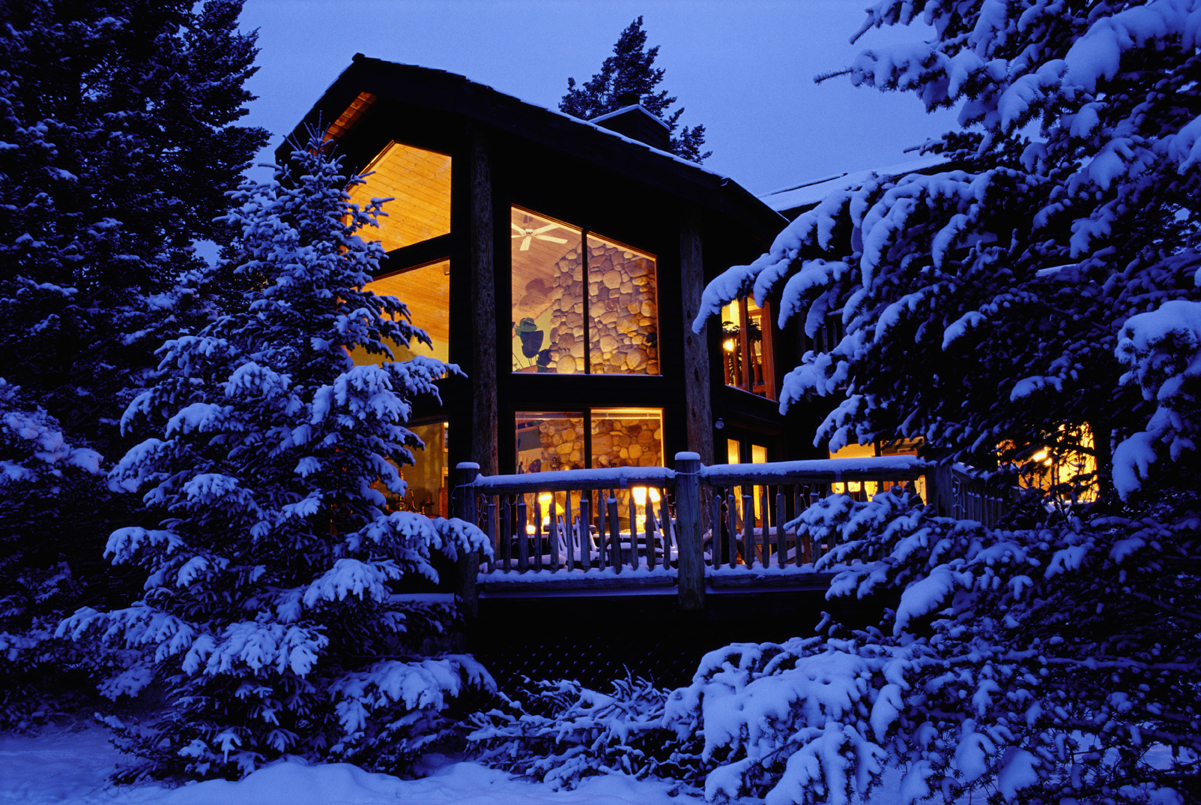
It seems the winter is settling in early through much of the West Coast this year, with October frost and early winter warnings. Last week The Seattle Times reported, "This year will bring the most intense La Niña conditions since 1955 … Meteorologists say more rain, colder temperatures and bigger snowstorms are likely.” Whether the meteorologists are right this year or not, now is the time to do some home repair so you can enjoy the winter inside your warm house.

Weatherizing your home should be more than just packing in your patio furniture, checking your furnace and cleaning out your rain gutters, though these make a big difference in preparing your home and avoiding December disasters. Weatherizing your home–especially in light of harsh warnings–will protect your investment from preventable damage, save money on energy costs and, most importantly, keep your home safe and warm for you and your loved ones throughout the winter season. Here is a useful checklist to manage your weatherization project.

Getting started: Check your toolbox to make sure you have all the materials you need for home maintenance in one place. This NY Times article provides a good list of the tools you’ll really need to maintain your home. After your toolbox is put together, you can confidently begin the maintenance on your home.

Insulation: According to the Sustainable Energy Info Fact Sheet “Insulating a home can save 45-55% of heating and cooling energy”. For the best results, your home should be properly insulated from the ceilings to the basement. However, if insulating your complete home is not in your budget, the U.S. Department of Energy states, “one of the most cost-effective ways to make your home more comfortable year-round is to add insulation to your attic.” By starting in your attic and progressively adding insulation to other areas of your home over time, you will avoid spending a large sum of money up-front.


Cracks & Leaks: Do a run-through of your entire house for cracks and leaks, from your roof to your baseboards. Winter weather is unpredictable. Whether your area gets rain, wind or snow, cracks in your house can lead to cold drafts or leaks that cause water damage. Do-it-Yourself.com reports, “The average house, even when well-insulated, contains cracks and gaps between building materials that add up to a hole about 14 inches square. All year long, a leaky house not only wastes energy, but can lead to water damage and provide a path for insects”.  Depending on your house type, most cracks can be easily filled with supplies from your local hardware store in a do-it-yourself fashion. Use caulk to seal any cracks in the permanent building materials.


Windows & Doors: Another common place for heat leakage is in your windows and exterior doorways. Make sure seals are tight and no leaks exist. If you have storm windows, make sure you put them on before the cold season begins. This 5 minute video, How to Caulk Windows & Doors, demonstrates how to find leaks, pick the correct tools to use, and fill in the leaks. Don’t underestimate the difference some weather strips and a door sweep can provide in preventing drafts and keeping the heat in.

Rain Gutters: Clean your rain gutters of any debris. Buildup will cause gutters to freeze with ice, crack and then leak. Once you have removed the residue from the drains, test them by running hose water to make sure cracks and leaks have not already formed.


Pipes: Pipes are a number one risk in winter climates. A burst pipe can become a winter disaster in a matter of seconds. Remember to turn off your exterior water source and take in your hose. Internally, wrapping your pipes is a recommended precaution to take. This article from Insights, Natural Hazard Mitigation advises, “Vulnerable pipes that are accessible should be fitted with insulated sleeves or wrappings, the more insulation the better”.

Heating System: What is one thing gas fireplaces, wood burning stoves, and central air heating systems all have in common? They all need to be cleaned and maintained. Check and clean your indoor heating system thoroughly. This is important to avoid dangers such as house fires. If you use an old fashioned wood stove, make sure there is no leaks and that all soot build up or nests are removed. If a furnace is what you have remember to change the filters as recommended or clean out your reusable filters.

Fireplace & Wood burning stoves: Make sure to have chimneys and air vents cleaned early in the season if you are planning on warming your home with a wood-burning source. When your fireplace is not in use make sure to close the damper, some resources estimate an open damper can increase energy consumption as much as 30%.

Outside: As we mentioned before make sure you bring your patio furniture inside (or cover) for the winter- but don’t forget other, smaller items such as your tools, including a hose and small planting pot. These items can be damaged or broken in extreme cold. Clear out any piles around the side of your house, checking for cracks as you go so to avoid providing shelter for unwelcomed guests over the cold season.

If your property has large trees check for loose branches and call someone to trim back any items that may fall in your yard, on your roof or even damage a window.


Emergency Kit: Make sure your emergency kit is up-to-date with provisions, batteries, fresh water, food for animals, entertainment for kids, etc- especially if you live in an area prone to power outages.

When it comes to protecting our investments and our families’ safety “an ounce of prevention is worth a pound of cure” is a good philosophy. Your winter preparedness plan will fit your property, schedule and needs. What are some tips you have for preparing for winter? What are some of your favorite activities to do at home over the winter while weathering out a storm?

By Brittany Lockwood

You may know Brittany as the helpful voice behind the Marketing Solutions Help Desk. She grew up in Cheney, Washington so she knows a thing or two about harsh winters.