Facebook
 X
X
 Pinterest
 Copy Link
Real Estate Contingencies: What They Are and Why They Matter

Imagine a home-buying scenario where you make an offer, the seller immediately accepts, and everything goes smoothly until you’re handed the keys. It’s possible, but more often, buying a home involves negotiation, counteroffers, and a back-and-forth dialogue between buyer and seller to reach a deal. And in some cases, the deal can fall through.
That’s where contingencies come in.
Contingencies are built-in protections within a real estate contract. They help both buyers and sellers navigate the natural ups and downs of the home-buying process by setting clear conditions that must be met for the sale to go through. For buyers, they also provide important safeguards, along with strategic tools to shape and strengthen their offer. Whether you’re a first-time home buyer or you’ve bought before, you should be aware of common real estate contingencies and the role they play in making an offer on a home.
Making a Contingent Offer on a Home
Once you and the seller agree on the price of a home, both parties have certain responsibilities before closing. Buyers are responsible for securing financing, scheduling a home inspection, and getting the property appraised. Sellers are responsible for prioritizing the offer on the table and opening their doors to the home inspector when the time comes. The agreed-upon contingencies included in the contract define what happens if something doesn’t go as planned.
Contingencies present a spectrum of options to home buyers, allowing them to walk away from a real estate transaction with their earnest money intact or renegotiate the contract. And while including contingencies offers protection and negotiation leverage, removing them can be an effective strategic move too, especially in a competitive market.
In a seller’s market, competition amongst buyers is high, and they often face multiple-offer situations. It’s not uncommon to see escalation clauses, bidding wars, and all-cash offers as buyers try to stand out and strengthen their position. To sweeten their offers in such market conditions, buyers will typically waive their contingencies. However, while waiving contingencies can make for a more attractive offer, it also presents increased risk due to lack of protection. That’s why it’s necessary to understand each contingency and carefully consider what makes the most sense for your situation.
Common Real Estate Contingencies
Home Inspection Contingency
After you’ve made an offer, a professional home inspector will thoroughly examine the property before the deal is finalized. If issues are uncovered, this contingency allows you and your agent to request repairs, present the seller with a new offer that accounts for the home’s lessened condition, or cancel the contract entirely.
Financing Contingency
Also known as a “mortgage contingency,” a financing contingency gives the buyer a specified period of time to secure adequate financing to purchase the home. Even if you are pre-approved for your mortgage, you may not be able to obtain the right loan for the home. If you are unable to finance the purchase, this contingency allows you to back out of the contract and recover your earnest money, and the seller can re-list the home.
Appraisal Contingency
An appraisal contingency states that the home must appraise for, at minimum, the sales price. In other words, it is to make sure the home is worth the agreed-upon price. It allows you to walk away from the deal if the property’s appraised value is lower than the sales price and typically guarantees that your earnest money will be returned.
Home Sale Contingency
If you’re buying a new home while selling your current one, you may want to include a home sale contingency in your offer. This contingency specifies the date by which you’ll need to sell your current home in order to move forward with your offer. If you don’t sell your home by the specified date, the contract is terminated. Home sale contingencies are financially appealing in that they allow buyers to use the proceeds from their home sale to fund their new home purchase. However, these contingencies force sellers to wait until the buyer’s current home sells, which means they likely won’t accept such offers in competitive markets.
Title Contingency
Before the sale of a home goes final, a search will be performed to ensure that any liens or judgments made against the property have been resolved. A title contingency allows you to raise any issues you may have with the title status of the property and stipulates that the seller must clear these issues up before the transfer of title can be completed. If an unpaid lien or unpaid taxes turn up in the home’s title search, this contingency also allows you to back out of the deal and look for another home.
To learn more about preparing a winning offer, connect with a local, experienced Windermere Real Estate agent.

When is the Best Time to Buy a House?

There’s a factor of the home buying process that can often be the catalyst for everything that follows. That factor is timing. Much of the dialogue—rightfully so—around buying a home is focused on the “what.” However, it’s often the case that the “when” is just as important.
So, when is the best time to buy a house? The answer is simple: the best time to buy is the right time for you. Fortunately, knowing when the time is right isn’t some sixth sense; it’s much more concrete. It’s a matter of understanding local market conditions, your financial situation, the status of mortgage rates, and how those factors fit in with your lifestyle changes and your motive for moving.
When is the Best Time to Buy a House?
With so much subjectivity in the decision-making process, it can be helpful to look at cold, hard facts to determine whether it’s the right time to buy. Although every real estate transaction is different, your local market conditions will give you a good sense of how to approach the housing market. There are two basic categories: a buyer’s market and a seller’s market. In short, the characteristics of a buyer’s market—high inventory, fewer buyers, lower competition—favors buyers, and the characteristics of a seller’s market—low inventory, many buyers, high competition—favors sellers. You may be in a position where you’re able to wait for favorable buying conditions, or you may be thrust into a highly competitive market due to external factors pushing the agenda of your move, such as a career change or starting a family. Regardless of the market conditions you face as a buyer, work with a buyer’s agent is critical to efficiently navigate your local housing market and prepare a winning offer when the time comes.
Which homes can you afford?
Your financial situation also looms large when deciding whether it’s the right time to buy a house. Before you start looking for homes, assess your buying power. Having greater buying power will show the seller that you’re fully capable of purchasing the home and may vault your offer over others.
To get an idea of what you can afford, use our free Home Monthly Payment Calculator by clicking the button below. With current rates based on national averages and customizable mortgage terms, you can experiment with different values to get an estimate of your monthly payment for any listing price. Using the Home Monthly Payment Calculator, you can make a well-informed estimation of whether it’s the right time to buy.

The Home Buying Process
Moving often goes hand in hand with lifestyle changes. As you’re preparing to buy a house, you may be juggling an employment change, the birth of a child, or any combination of other life-altering events. Buying a home takes time, and although an agent will streamline the buying process, it will inevitably impact your day-to-day schedule. Here’s a quick glance at the steps in the home-buying process.
- Find the right agent
- Get pre-approved for a mortgage
- Search for homes
- Attend open houses and showings
- Make an offer and negotiate
- Put down earnest money
- Appraisal/Inspection
- Closing process
- Move into your new home
For helpful resources on the home buying process from start to finish, visit our website:
Buyer Basics – Your Guide to Buying a Home
Seasonality
You’ve undoubtedly heard the age-old real estate maxims about buying in different seasons and how to use the calendar to your advantage to score a good deal on your next home. There’s an element of truth to these sayings, but the best way to grasp the effects of seasonality in your area is to work with an experienced local real estate agent. Their expertise and access to data and tools will be your ultimate resource in tailoring your buying strategy to your local housing market. Connect with an experienced Windermere agent to begin your home-buying journey:
The Biggest Home Buying and Selling Mistakes (and How to Avoid Them)

There’s nothing more exciting, rewarding, and fulfilling than buying a home. However, it’s a complex transaction, and there are a number of steps along the path that can confuse, betwixt, and befuddle even the most seasoned buyers and sellers.
How can you avoid those potential pitfalls and common mistakes? Look to your real estate professional for advice and keep these guidelines in mind:
Finding Your New Home in Four Steps

Whether you’re a first-time homebuyer or you currently own and are looking for a new home, the ideas below will help you better navigate that all-important first step: Finding a property that you like (and can afford).
What to Do After Moving Into a New Home

Nothing beats the feeling of buying a new home. You’ve worked hard with your agent to find the right home for you, you’ve worked with the seller to finalize the deal, and you’ve signed all the paperwork to transfer ownership. Congratulations! Everything has led to securing your new home, so now that you’re officially moving, what do you do next? Here’s a quick guide to the move-in process to help you get settled into your new home.
Moving Day
The day you move, you’ll be juggling all kinds of timelines at once. You’re coordinating with movers, arranging for trucks to be picked up and dropped off, and making sure that nothing gets damaged in the process. The best thing you can do on this chaotic but exciting day is to be available. Being on hand at your new home to answer the mover’s questions will help speed up the process.
It helps to have a checklist of your important items to make sure nothing has gotten lost during the moving process. Check these items off one by one as the movers bring them in. Next, you’ll want to confirm that the utilities have been turned on and are ready for use. Check all lights, smoke detectors, appliances, CO2 alarms, your home security system, fire extinguishers, etc. Finally, install new locks and make sure your keys work properly.

Image Source: Getty Images – Image Credit: skynesher
What to Do After Moving In
- Clean and Unpack: Before you start emptying your boxes, it’s a good idea to wipe down the surfaces to keep your items from getting dirty. A full deep cleaning of your home may not be in the cards just yet since there’s still plenty of moving to be done, which inevitably brings more dust and dirt in the house.
- Childproof and Pet-Safe Home: If you’ve got little ones and/or pets, this is the time to set up their accommodations. Learn more about how to properly childproof your home so your kids can feel like it’s home sweet home from day one. When preparing to house your pets, keep in mind that some cleaning methods are more pet-friendly than others.
- Setup and Organize: Now it’s time to get everything in its right place. Organize room by room, storing items in logical places where you won’t forget them as soon as they’re stowed away. The first rooms you’ll want to tackle are the bedrooms, bathrooms, and kitchen. These are the rooms you’ll need the most during the first few days in your new home, so having them put together will better position you to tackle the rest of the house. Getting your closets, bathroom cabinets, and kitchen drawers organized from the start will make for a more enjoyable moving process.
- Update Your Information: You’ll also want to update your address everywhere it’s applicable as soon as possible, consider setting up mail forwarding to ensure you don’t miss any important mail in the meantime.
For more information on the moving process, visit our comprehensive Moving Checklist, available as a interactive webpage and downloadable PDF here:
Featured Image Source: Getty Images – Image Credit: FreshSplash
What Is a Pre-Listing Inspection?

A lot of information comes at you during the house hunting process. As you search for a home, you’ll likely come across the term “pre-listing inspection” here and there. It can be confusing, especially if you’re buying a home for the first time. So, what is this special report and why is it only found in certain listings? Let’s take a deep dive on the pre-listing inspection, how it factors into making an offer on a home and unravel why some sellers choose to conduct it.
What is a pre-listing inspection?
A seller’s pre-listing inspection is a report issued by the seller before listing their home for sale. A professional home inspector thoroughly examines the home, checking everything from the roof, foundation, and plumbing to its heating, cooling, and electrical systems to identify any repairs that need to be made or any larger issues that need addressing. During the more developed stages of a real estate transaction, you’ll have a professional home inspector perform an inspection to make sure you’re buying the home as advertised. With a pre-listing inspection, the seller is pre-empting this process.
Pre-Listing Inspection Benefits
There are three main reasons why sellers conduct a pre-listing inspection: transparency, repairs, and pricing. It also helps to streamline the buying/selling process, especially in highly competitive markets. In these market conditions, it’s also more common for buyers to waive the inspection to sweeten their offer and get a leg up on the competition. Talk to your agent for more information.
- By providing buyers with a clear picture of the home’s condition upfront, sellers are putting their cards on the table. This transparency helps to build trust with buyers interested in their home.
- It’s also a way for sellers to identify outstanding repairs and make them before their home goes on the market. The seller can proceed through the selling process with a clear mind knowing they’ve already addressed the issues they found early on. Then, when it’s time for the buyer’s inspection, you can compare the results to make sure you have a full understanding of the home’s condition.
- The findings of a pre-listing inspection also help to solidify the asking price the seller eventually sets; they either reaffirm its condition or show the areas where it’s lacking or needs attention. After you make an offer, the bank will order an appraisal of the property to make sure you’re paying a fair price.
For you, walking into the buying process with a pre-listing inspection in hand means you have intimate knowledge of the home’s condition right from the beginning, which will inform your strategy for making an offer. If the seller invested heavily in repairs, they may be less likely to budge on price. If there are several outstanding issues, that may be a negotiation opportunity for you and your agent.

Image Source: Getty Images – Image Credit: sturti
Who pays for home inspection?
The seller pays for the pre-listing inspection. You’ll want to conduct your own to see whether there are any discrepancies between the two. Even professional inspectors can miss something, so it’s worth it to double check their work. This inspection is just one of the costs of the home buying process, but it can save you from the significant costs of undetected repairs down the road. Besides, even in the short amount of time between the pre-listing inspection and when you make your offer, it’s entirely possible that something regarding the home’s condition changed. Getting your own inspection is crucial to gaining a crystal-clear understanding of the home before purchase.
So, should you trust a seller’s pre-listing inspection? Yes, but approach with caution. It shouldn’t necessarily be the final authority on the home’s condition, but it is mutually beneficial for both parties and allows you to make a better-informed decision on whether you want to move forward with your offer. Talk to your agent for guidance on how to navigate the home inspection process. For more information, visit our comprehensive guide to buying a home:

Featured Image Source: Getty Images – Image Credit: sturti
Buying a New Construction Home
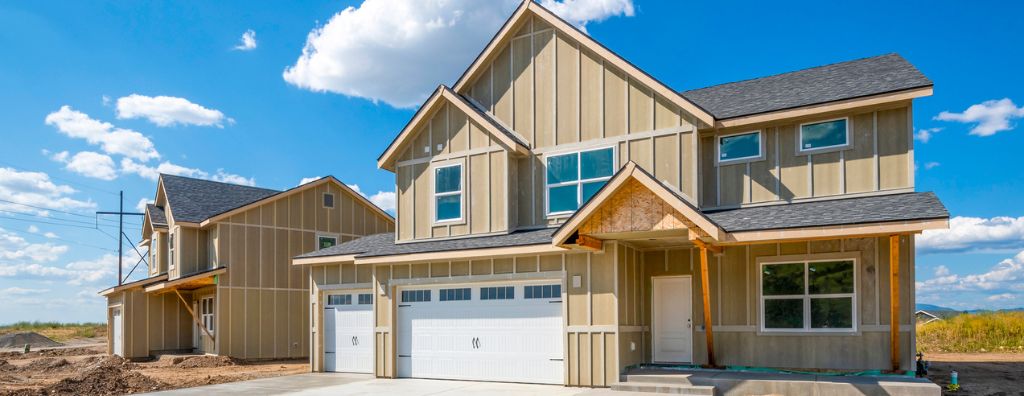
You’ve got several options to choose from when buying your next home. With existing homes, it’s in sellers’ best interest to spruce up their properties, so they’ll usually complete some kind of upgrades, curb appeal projects, and remodeling before hitting the market. A new construction home, however, has no previous owner; it comes brand new. Learning about the new construction buying process will help you understand how it differs from other types of housing, such as existing single-family homes, townhouses, condominiums, etc.
What is a new construction home?
New construction homes are kick-started from two primary sources: the homeowners themselves and developers. When a homeowner is having a home custom built, they work with contractors to build it to their desired specifications on a lot they’ve purchased. This tailored approach comes at a price; building a custom home generally costs more than purchasing a new build from a developer.
When going the developer route, buyers have options to choose from, namely tract homes and spec homes.
Tract homes make up new neighborhoods on land bought by the builder. They bear a strong resemblance to each other but may offer customizable floor plan and design options to tailor the home to the buyer’s liking.
Spec homes are finished, move-in-ready new builds. Though they offer little to no customization, they may be the right option for you if you’re looking to move right away.
There are four component parts of building a new construction home: land, labor, materials, and regulation. Builders combine those costs to determine what price they need to sell the home to make a profit, accounting for local real estate market trends. However, if the market is driving up those costs, builders are less likely to continue building. As a buyer, keeping tabs on the housing market will help you understand the landscape of available new construction homes.
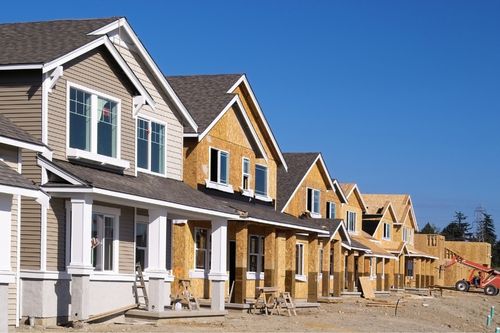
Image Source: Getty Images – Image Credit: jhorrocks
Pros of a New Construction Home
- New materials, appliances, and fixtures
- Customization without having to remodel
- Less maintenance than an older home
Cons of a New Construction Home
- Custom home costs can be high
- Move-in date dictated by builder’s timeline
- Market conditions can drive up prices/halt production
Buying a New Construction Home
The financial preparations you’d take for purchasing an existing home apply to buying a new construction home. You’ll get pre-approved for a mortgage early on and form a saving strategy for how to make a down payment.
There’s less room for negotiation in new construction home transactions, so you and your agent should thoroughly discuss what kind of offer you’re able to make. Your agent is your greatest asset during this part of the process; lean on them to understand how to make an offer. You’ll also want to know whether a home warranty comes with the purchase of the new construction home and its cost structure.
Even though these homes are brand new, it’s still worth it to get a home inspection to discover any outstanding repairs that need to be made and begin a dialogue with the builder about fixing them before you move in.
Going into the buying process, it helps to know which new construction homes you’re able to afford. This allows you and your agent to work together to find the best candidate properties. To get an idea of what’s affordable, use our free Home Monthly Payment Calculator by clicking the button below. With current rates based on national averages and customizable mortgage terms, you can experiment with different down payment amounts to get estimates of your monthly payment for any listing price.
Featured Image Source: Getty Images – Image Credit: Kirk Fisher
Homeownership Terms to Know: Pre-Approval, Pre-Qualification & More

Throughout the home buying process, you’ll encounter several checkpoints. At every stop, you’ll get closer to the ultimate goal of purchasing your next home. Each one satisfies unique criteria required to become a homeowner, and each one has its own terminology. Before you begin your home buying journey, it’s helpful to know about pre-approval, pre-qualification, and proof of funds, and the role they play in a real estate transaction.
Pre-Qualification and Pre-Approval
What is pre-qualification?
Pre-qualification and pre-approval go hand in hand, but one precedes the other. Pre-qualification is a very early step in the home buying process leading to pre-approval. After sharing your financial information with your bank or lender, they’ll give you an estimate of the loan amount you can expect to qualify for. During this time, you’ll learn about the different home loans available to you to help you decide which is best. Pre-qualification usually only takes a few business days.
What is pre-approval?
A sibling to pre-qualification, pre-approval takes things a step further. Once you submit a mortgage application, you’ll provide your lender with the required information to perform a financial background check to assess your creditworthiness. You’ll get a pre-approval letter showing the lender’s offer of a specific loan amount, so you’ll know how much you can borrow. You’ll also get a better understanding of what interest rate you can expect to pay on your loan. Mortgage pre-approvals are typically valid for 60 to 90 days.
More information on the benefits of pre-approval and when to get pre-approved:
Once you’ve gone through the pre-approval process, it’s helpful to know which homes you can afford. Use our free Home Monthly Payment Calculator by clicking the button below. With current rates based on national averages and customizable mortgage terms, you can experiment with different values to get an estimate of your monthly payment for any listing price.

Image Source: Getty Images – Image Credit: Thitiphat Khuankaew
What is a proof of funds letter?
Simply put, in real estate, a proof of funds letter is a document that proves to the seller that you have enough money available to purchase the home. Proof of funds letters may vary depending on the terms of the transaction. For example, if you’re making an all-cash offer, your letter will prove that you have enough liquid cash to complete the deal.
For more information on the home buying process, read our blog post on searching for a home:
How to Search for a Home: Buying Guide
Featured Image Source: Getty Images – Image Credit: mixetto
How to Search for a Home

The right home is out there, you just have to find it. This may seem like an oversimplification of the home search process, especially for first-time home buyers who haven’t been through it before. But once you’ve figured out your budget and discussed your needs with your real estate agent, you’ll be off and running. Here is a quick guide to help you get started on your home buying journey.
How to Search for a Home
Which houses can I afford?
Before you go perusing pages and pages of listings online, you’ll want to know your budget. Remember that while a home’s listing price is the main character in the list of home buying expenses, it’s not the only cost you’ll encounter. Knowing the full spectrum of the costs associated with buying a home will help you paint a clear picture of what you can afford. Once you’re familiar with these costs, you can strategize ways to save money to buy a house and plan to make a down payment.
To get an idea of what’s affordable, use our free Home Monthly Payment Calculator by clicking the button below. With current rates based on national averages and customizable mortgage terms, you can experiment with different down payment amounts to get estimates of your monthly payment for any listing price.
Mortgage Pre-Approval
Another way you can supercharge your home search efforts is to get pre-approved for a mortgage. Pre-approval has several benefits for prospective home buyers. It helps you understand the different types of home loans available to you and what interest rate you can expect when the time comes to lock in your mortgage. It also streamlines the home buying process once you’ve found the property you’d like to pursue.

Image Source: Getty Images – Image Credit: Georgijevic
How do I find the right home?
Understanding your needs as a homeowner will help you narrow your selection pool. Before you start your home search, make a list of must-have and nice-to-have home features. This will inform your discussions with your real estate agent. Once they know what you consider a dealbreaker, they can pinpoint the right candidate homes.
So, where can you find available homes? Yes, driving around your neighborhood looking for “For Sale” signs is one way to go about it, but a vast majority of home shopping occurs online. Real estate websites like Windermere.com have advanced home search tools that allow you to filter by location, price, number of bedrooms and bathrooms, etc., plus helpful features like virtual tours, professional photography, maps, and more. Use our online search tool to get started:

What are the different house styles?
Familiarizing yourself with the different architectural styles will help to inform your home search. Understanding the differences between a Craftsman home and a Cottage home can make a big difference when you’re house hunting. Each style has its own unique characteristics, perspective on space, and flair. Knowing what kind of architecture and home design you’re drawn to will also help your agent conduct more efficient home searches.
Working with a Real Estate Agent
Your real estate agent will be your greatest resource during your home search. They have access to the Multiple Listing Service (MLS), the largest network of homes on the market. Your agent will use the MLS to create customized searches for available listings and can easily connect with sellers’ agents to coordinate next steps.
For answers to your home buying questions, connect with an experienced, local Windermere agent today:
Featured Image Source: Getty Images – Image Credit: mapo
Real Estate Terminology: Contingent, Pending, Under Contract, and More

Different real estate transactions have different conditions based on the status of the listing. The following information is meant to clarify some common real estate terms that describe a home for sale and its position in the closing process.
For sellers, understanding this terminology will inform your conversations with your agent when it comes time to sell. And for buyers, it helps to be familiar with these terms when searching for your next home and how they factor into making an offer.
What is the difference between pending and under contract?
Pending: When a home is listed as “pending” it means the seller has accepted the buyer’s offer and the sale will most likely be finalized after a successful final inspection and the buyer securing financing. For sellers, reaching the pending stage means the finish line is within reach, but your home is still not officially off the market.
Buyers who notice homes listed as pending should know that an agreement between the seller and another buyer has already been reached and that they are headed for closing. However, even though the chances are unlikely, it is still possible that the buyer backs out and the deal falls through.
Under Contract: A home that’s listed as “under contract” is not as far along in the selling process as a home that’s pending. It means the seller has accepted a buyer’s offer, but there are certain contingencies that must be met before the deal goes final.
Buyers who see a home listed as “under contract” may still reach out to the seller’s listing agent to make a backup offer, unless the contract that’s already in place contains a clause preventing it.

Image Source: Getty Images – Image Credit: xavierarnau
What does contingent mean in real estate?
- Selling – Common Real Estate Contingencies
- Buying – Making a Contingent Offer: Common Real Estate Contingencies
Contingencies dictate what must happen in a real estate transaction for the contract to become legally binding, giving the buyer or seller the right to back out of the contract if their conditions aren’t met. A property listed as “contingent” means that the seller has accepted an offer, but the deal still hinges on the buyer satisfying certain contingencies to continue. And once those contingencies have been met, the sale can go through as planned.
There are a variety of contingencies that protect buyers and sellers against the bumps in the road along their journey of buying or selling a home. A home sale contingency, for example, allows a buyer to tie their offer on a new home to the successful sale of their existing one. This contingency is beneficial to those who are buying and selling a home at the same time. It’s important for buyers to work with their agent to determine the strongest offer considering the market conditions in the area.
What is closing in real estate?
Closing refers to the homestretch of a real estate agreement between a buyer and seller, leading to the transfer of ownership. Both parties agree on a closing date and see the deal through to its completion. During closing, the buyer will deposit their earnest money in an escrow account, a home inspection is performed, the buyer secures financing to purchase the home, and both parties pay their respective closing costs. For more information on what to do while your home is on the market, visit our Home Selling Guide:

Featured Image Source: Getty Images – Image Credit: Morsa Images