Selling October 3, 2018

How Reliable Are Home Valuation Tools?

What’s your home worth?

It seems like a simple question, but finding that answer is more complicated than it might seem. Sites like Zillow, Redfin, Eppraisal, and others have built-in home valuation tools that make it seem easy, but how accurate are they? And which one do you believe if you get three different answers? Online valuation tools have become a key part of the home buying and selling process, but they’ve been proven to be highly unreliable in certain instances. One thing that is for certain is that these valuation tools have reinforced that real estate agents are as vital to the process of pricing a home as they ever were – and maybe even more so now.

There are limitations to every online valuation tool. Most are readily acknowledged by their providers, such as Zillow’s “Zestimate”, which clearly states that it offers a median error rate of 4.5%, with varying accuracy across the country. That may not sound like a lot, but keep in mind that amounts to a difference of about $31,500 for a $700,000 home. For Redfin and Trulia, there are similar ranges in results. When you dig deeper into these valuation tools, it’s no small wonder that there are discrepancies, as they rely on a range of different sources for information, some more reliable than others.

Redfin’s tool pulls information directly from multiple listing services (MLSs) all over the country. Others negotiate limited data sharing deals with those same services, but also rely on public records, as well as homeowners’ records. This can lead to gaps in coverage. These tools can serve as helpful pieces of the puzzle when buying or selling a home, but the acknowledged error rate is a reminder of the dangers of relying too heavily on them.

Home valuation tools can be a useful starting point in the real estate process, but nothing compares to the level of detail and knowledge a professional real estate agent offers when pricing a home. An algorithm can’t possibly know about a home’s unique characteristics or those of the surrounding neighborhood. They also can’t answer your questions about what improvements you can make to get top dollar or how buyer behaviors are shaping the market. All of this – and more – can only be delivered by a trusted professional whose number one priority is getting you the best price in a time frame that meets your needs.

If you’re curious what your home might be worth, Windermere offers a tool that provides a series of evaluations about your property and the surrounding market. And once you’re ready, we’re happy to connect you with a Windermere agent who can clarify this information and perform a Comparative Market Analysis to get an even more accurate estimate of what your home could sell for in today’s market.

Design October 1, 2018

Choosing the Right Backsplash for Your Kitchen

Every chef’s kitchen should have a style that matches the delicious food that comes out of it. But even if you’re doing little more than making mac and cheese out of a box, your kitchen still can be a place of color and creativity. Kitchen backsplashes are nothing new, but they’ve seen a recent surge in popularity. We’re fortunate to see homes every day with creative takes on this tiling trend, so we decided to showcase some popular backsplash designs to serve as inspiration.


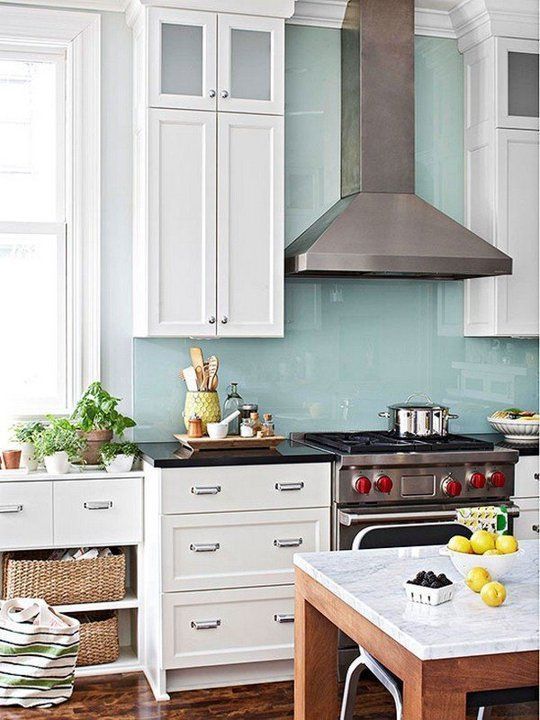
Glass Tile

Image Rights – Better Homes & Gardens

  • When designing a kitchen, function and flair should work hand in hand. The appeal of glass tiling is that it’s easy to clean.
  • Backing up the functionality is affordability. While glass tiling runs more expensive than ceramic, the cost is typically below stainless steel, and even some stones.
  • Glass tiling is perfect for those with an artistic flair. Whether it’s simply a splash of color, a full mosaic, or even an intricate design, glass tile lets your inner artist shine.
  • While the initial cost may be greater, glass tiling can more easily be found in pre-set sheets, making DIY installation far easier than many other types of tiles.


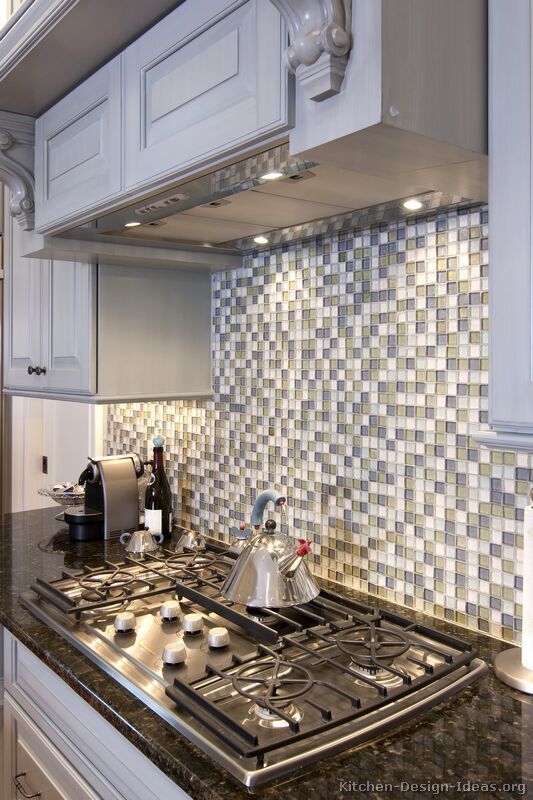
Ceramic Tile

Image Rights – Kitchen-Design-Ideas.org

  • If you need a backsplash that can hold up to consistent use, ceramic tile is a great fit.
  • The most cost-effective tile to professionally install, ceramic tiling offers a glazed shine with a variety of color options.
  • Creating a clear, simple, ceramic backsplash is a great way to add a colorful flair to your kitchen.
  • Between the cost-effectiveness and its low-maintenance nature, ceramic is unsurprisingly the most common type of kitchen tiling.


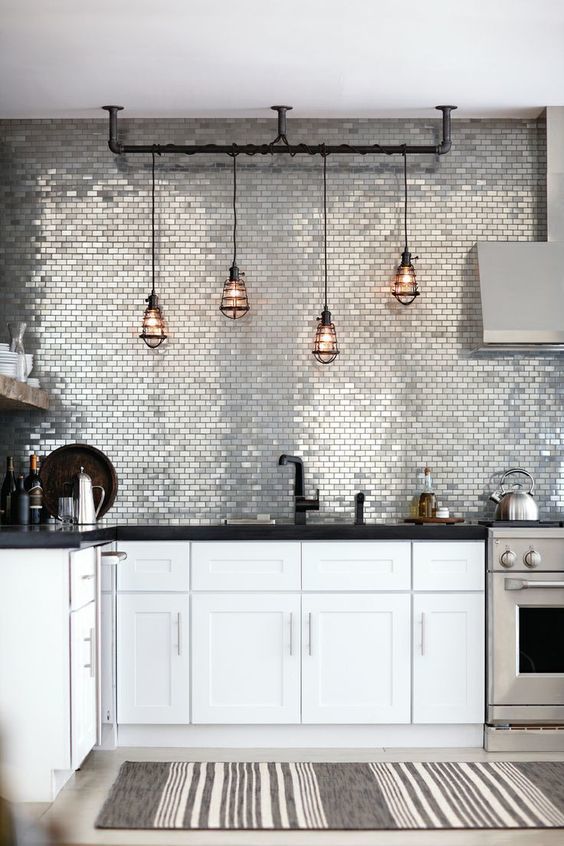
Metallic Tile 

Image Rights – Architecture Art Designs

  • Stainless steel is one of the more popular backsplash options for those interested in a metallic finish, but we’re also seeing more aluminum, copper, and bronze tiles.
  • The range in metal type obviously impacts the cost, but most metal tiles are much more expensive than their ceramic counterparts – at least $10 per square foot more.
  • For that extra cost, however, you’ll receive a sturdy backsplash with a modern sheen that is easy to clean.
  • With stainless steel in particular, consistent maintenance is necessary to avoid a dulling of the backsplash’s shine.


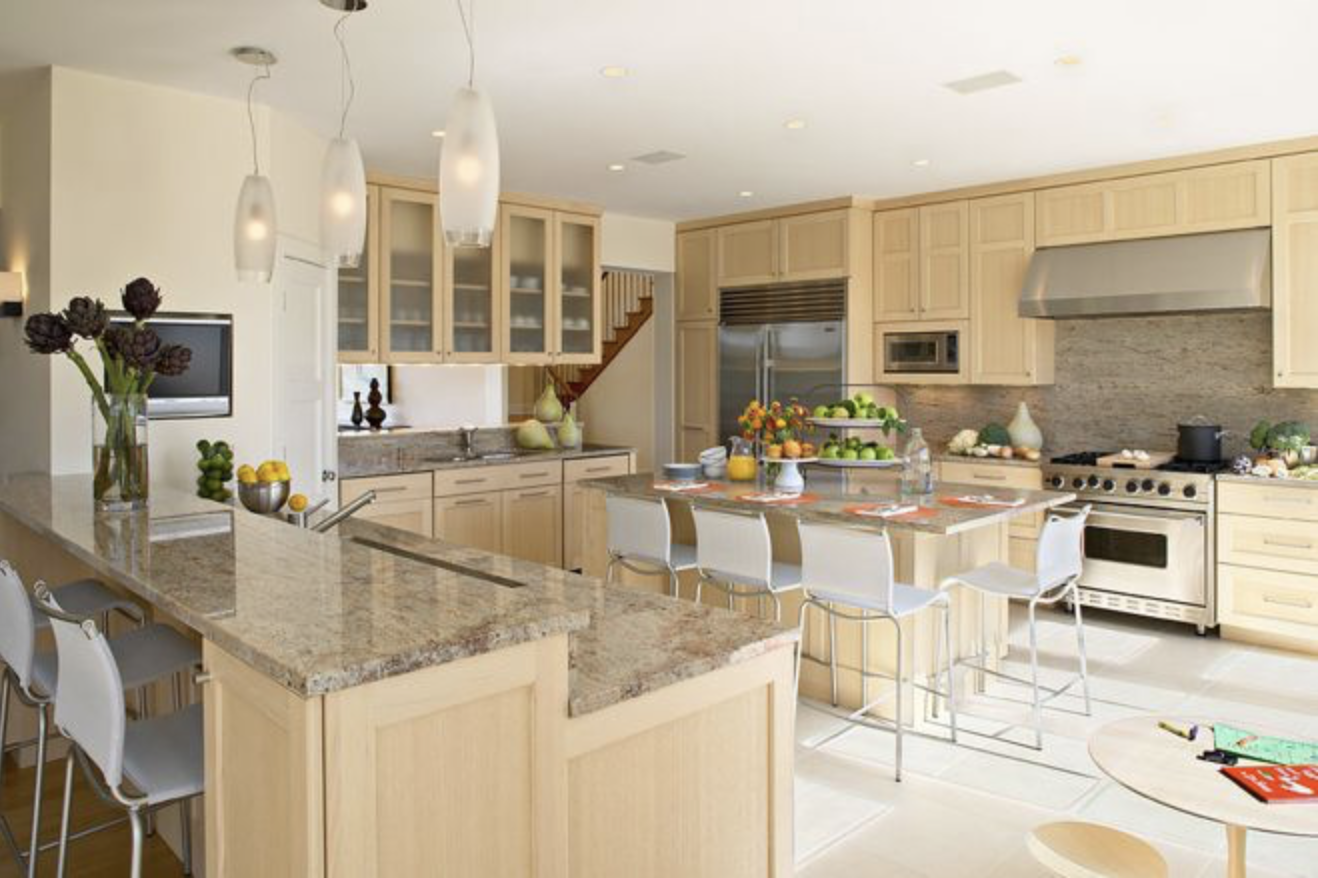
Stone Slab

Image Rights – Houzz.com

  • Sturdy? Check. Waterproof? Check. Classy? Check. From soapstone to marble to granite to good old-fashioned brick, there is no more low-maintenance backsplash base than stone.
  • For the pleasure of acquiring a stone backsplash, you’ll typically pay more than most other materials. Between installation and material cost, the up-front payment can approach $1,000 for less than 30 square feet of wall space.
  • With a wide range of stone to choose from, a number of color options are available at varying costs.
  • If that upfront payment is manageable, the results will blend both aesthetics and function, and stone’s resiliency makes any follow-up costs minimal.

For an expert DIY challenge, there are many other ways to create a satisfying backsplash that fits your fancy, including vinyl wallpaper, wood, and even beadboard. What’s your dream backsplash style?

Selling September 26, 2018

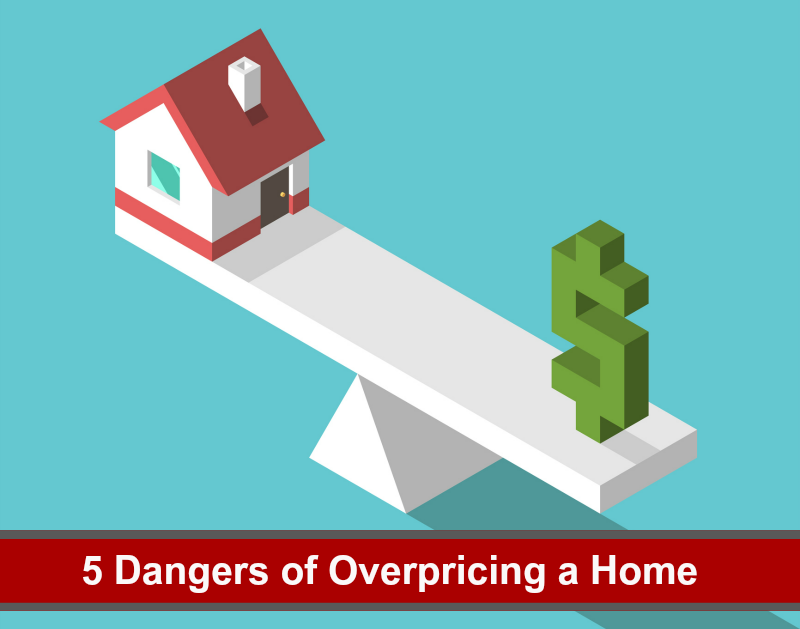
5 Dangers of Overpricing a Home

It is still a great time to be a seller, but in much of the Western U.S., the local real estate market has begun to soften. With significant increases in inventory, buyers now have more choices and less sense of urgency. If you are thinking about selling your home, pricing it correctly the first time is critical. Here’s why:

  1. If you overprice your home, it won’t show up in some search results.

    Buyers search for homes using the parameters they desire. Price range is one of the most critical. If you set an unrealistic price of $850,000 for your home, all the buyers searching for homes up to $825,000 will fail to see your property in their search results.

  2. An overpriced home attracts the wrong buyer.

    An overpriced home will not compare favorably with the realistically-valued homes in a buyer’s price bracket. If your home is missing the amenities, square footage or other features of homes within the price range you’ve placed it in it won’t sell.

  3. Overpriced homes linger on the market and risk becoming “stale”.

    The interest in a home is always highest when the listing first hits the market. When an overpriced home goes unsold for a long period of time buyers often wonder what is wrong with the property. When a buyer moves on from a listing they rarely come back, even if you drop the price.

  4. You run the risk of getting less for your home than if you priced it correctly the first time.

    A Zillow study showed that homes that linger on the market tend to sell for significantly less than their listing price. When a home sits on the market for an extended period of time, buyers feel they have lots of room to negotiate.

  5. The longer your home remains on the market, the more expenses you incur.

    Every month your home goes unsold you put out money for mortgage payments, utilities and other home expenses that you will never recover.

Setting a realistic price for your home from the start is critical. If you’re thinking of selling, our highly trained experts at Windermere Real Estate can provide you with a comprehensive pricing analysis based on current market conditions.

Market News September 24, 2018

Are We Heading Towards A Bubble?

The US housing market has been going gangbusters in recent years. Record-setting sales, record-setting home prices, and a market that has largely favored sellers, while forcing fierce competition among buyers. All of this has led some to worry that we are heading towards another housing bubble. So, are we? On Tuesday, September 25, at 11 AM PST, Windermere Real Estate is hosting a Facebook Live event where our Chief Economist, Matthew Gardner, will discuss this and the latest Case-Shiller housing report. Whether you’re a buyer, seller, homeowner, or just a real estate junky, tune in to see what Matthew has to say; he’ll also be taking questions from the audience. This is the first in a series of Facebook Live events with Matthew, which will take place on the last Tuesday of each month. 

You can learn more and offer suggestions for future discussions by following the link to the event here.

More September 21, 2018

Fall Perspectives 2018: Our Pledge To You

Change is afoot. We suppose it always is, but doesn’t it all seem to come at us so much faster in today’s world? We see change all around us. Just consider, for a moment, how much technology has changed our lives thanks to innovators like Uber, Google, and Apple, to name a few. Technology has also changed the way we do real estate. 

The real estate world is a complex environment that most of us only travel once every 10 years. This infrequency, coupled with the ever-changing laws and emotional toll, makes it very hard for most of us to navigate. That’s why we rely on a professional. Even those of us who live and breathe real estate every day use a Windermere agent to conduct our personal transactions.

Thanks to technology, certain aspects of the real estate process that were once difficult are now very easy, like searching for a home. Within minutes of a property being listed, it’s fed to websites all over the world for potential buyers to see. Information about neighborhoods, schools, and home values are also readily available online to help buyers make smart decisions. 

There’s no doubt that real estate will continue to benefit from technology, but we’re concerned about the companies that are beginning to look at consumers less as people and more as data that can be generated and shared for monetary gain. 

At Windermere, our agents don’t treat their clients like data points being fed into an algorithm; they know them on a personal level. They help buyers make one of the biggest financial and emotional decisions of their lives. They help sellers understand the nuances of the market so they can get top dollar for their home. They are experts in neighborhoods, market trends, contracts, and negotiations. They treat their clients with respect and compassion. And they care deeply about their local community. 

As the saying goes, the more things change, the more they stay the same. Real estate is the perfect example of that. Technology will continue to change and improve how people buy and sell homes, but our pledge to you is that it will never replace what has always mattered most to us: relationships. 


– OB JACOBI, JILL JACOBI WOOD, AND GEOFF WOOD

Selling September 19, 2018

How to Acquire the Right Appraisal for Your Home

Appraisals are designed to protect buyers, sellers, and lending institutions. They provide a reliable, independent valuation of a tract of land and the structure on it, whether it’s a house or a skyscraper. Below, you will find information about the appraisal process, what goes into them, their benefits and some tips on how to help make an appraisal go smoothly and efficiently.


Appraised value vs. market value

The appraised value of a property is what the bank thinks it’s worth, and that amount is determined by a professional, third-party appraiser. The appraiser’s valuation is based on a combination of comparative market sales and inspection of the property.

Market value, on the other hand, is what a buyer is willing to pay for a home or what homes of comparable value are selling for. A home’s appraised value and its market value are typically not the same. In fact, sometimes the appraised value is very different. An appraisal provides you with an invaluable reality check.

If you are in the process of setting the price of your home, you can gain some peace-of-mind by consulting an independent appraiser. Show him comparative values for your neighborhood, relevant documents, and give him a tour of your home, just as you would show it to a prospective buyer.


What information goes into an appraisal?

Professional appraisers consult a range of information sources, including multiple listing services, county tax assessor records, county courthouse records, and appraisal data records, in addition to talking to local real estate professionals. 

They also conduct an inspection. Typically an appraiser’s inspection focuses on:

  • The condition of the property and home, inside and out
  • The home’s layout and features
  • Home updates
  • Overall quality of construction
  • Estimate of the home’s square footage (the gross living area “GLA”; garages and unfinished basements are estimated separately)
  • Permanent fixtures (for example, in-ground pools, as opposed to above-ground pools)

After considering all such information, the appraiser arrives at three different dollar amounts – one for the value of the land, one for the value of the structure, and one for their combined value. In many cases, the land will be worth more than the structure.

One thing to bear in mind is that an appraisal is not a substitute for a home inspection. An appraiser does a cursory assessment of a house and property. For a more detailed inspection, consult with a home inspector and/or a specialist in the area of concern.


Who pays and how long does it take?

The buyer usually pays for the appraisal unless they have negotiated otherwise. Depending on the lender, the appraisal may be paid in advance or incorporated into the application fee; some are due on delivery and some are billed at closing. Typical costs range from $275-$600, but this can vary from region to region.

An inspection usually takes anywhere from 15 minutes to several hours, depending on the size and complexity of your property. In addition, the appraiser spends time pulling up county records for the values of the houses around you. A full report comes to your loan officer, a real estate agent or lender within about a week.

If you are the seller, you won’t get a copy of an appraisal ordered by a buyer. Under the Equal Credit Opportunity Act, however, the buyer has the right to get a copy of the appraisal, but they must request it. Typically the requested appraisal is provided at closing.


What if the appraisal is too low?

If your appraisal comes in too low it can be a problem. Usually, the seller’s and the buyer’s real estate agents respond by looking for recent and pending sales of comparable homes. Sometimes this can influence the appraisal. If the final appraisal is well below what you have agreed to pay, you can renegotiate the contract or cancel it. 

Where do you find a qualified appraiser?

Your bank or lending institution will find and hire an appraiser; Federal regulatory guidelines do not allow borrowers to order and provide an appraisal to a bank for lending purposes. If you want an appraisal for your own personal reasons and not to secure a mortgage or buy a homeowner’s insurance policy, you can do the hiring yourself. You can contact your lending institution and they can recommend qualified appraisers and you can choose one yourself or you can call your local Windermere Real Estate agent and they can make a recommendation for you. Once you have the name of some appraisers you can verify their status on the Federal Appraisal Subcommittee website.


Tips for hassle-free appraisals:

  • What can you do to make the appraisal process as smooth and efficient as possible? Make sure you provide your appraiser with the information he or she needs to get the job done. Get out your important documents and start checking off a list that includes the following:
  • A brief explanation of why you’re getting an appraisal
  • The date you’d like your appraisal to be completed
  • A copy of your deed, survey, purchase agreement, or other papers that pertain to the property
  • If you have a mortgage, your lender, the year you got your mortgage, the amount, the type of mortgage (FHA, VA, etc.), your interest rate, and any additional financing you have
  • A copy of your current real estate tax bill, statement of special assessments, balance owing and on what (for example, sewer, water)
  • Tell your appraiser if your property is listed for sale and if so, your asking price and listing agency
  • Any personal property that is included
  • If you’re selling an income-producing property, a breakdown of income and expenses for the last year or two and a copy of leases
  • A copy of the original house plans and specifications
  • A list of recent improvements and their costs
  • Any other information you feel may be relevant

By doing your homework, compiling the information your appraiser needs, and providing it at the beginning of the process, you can minimize unnecessary phone calls and delays and get the information you need quickly and satisfactorily!

Design September 17, 2018

Transforming Your House from a Summer Home to a Winter Hideaway

None of us want to admit it, but Winter is Coming. The new season of Game of Thrones might not be until 2019, but your home will need preparation before then. As the days shorten, you can mitigate many mid-winter headaches with some preemptive prep. Proper weatherizing can help protect your investment from preventable damage, save money on energy costs, and, most importantly, keep your home safe and warm for you and your loved ones throughout the winter season. Here is a useful checklist to manage your weatherization project. Setting aside some time on a couple Sundays should be more than enough to knock this out:


Getting started: Check your toolbox to make sure you have all the materials you need for home maintenance in one place. This NY Times article provides a good list of the tools you’ll really need to maintain your home. After your toolbox is put together, you can confidently begin the maintenance on your home.


Insulation: Insulating a home can reduce your energy bill by up to 50%. For the best results, your home should be properly insulated from the ceilings to the basement. By starting in your attic and progressively adding insulation to other areas of your home over time, you will avoid spending a large sum of money up-front.


Cracks & Leaks: Do a run-through of your entire house for cracks and leaks, from your roof to your baseboards. Winter weather is unpredictable. Whether your area gets rain, wind or snow, cracks in your house can lead to cold drafts or leaks that cause water damage. Depending on your house type, most cracks can be easily filled with supplies from your local hardware store in a do-it-yourself fashion. Use caulk to seal any cracks in the permanent building materials.


Windows & Doors: Another common place for heat leakage is in your windows and exterior doorways. Make sure seals are tight and no leaks exist. If you have storm windows, make sure you put them on before the cold season begins. Don’t underestimate the difference some weatherstrips and a door sweep can provide in preventing drafts and keeping the heat in.


Rain Gutters: Clean your rain gutters of any debris. In colder climates, buildup will cause gutters to freeze with ice, crack and then leak. Once you have removed the residue from the drains, test them by running hose water to make sure cracks and leaks have not already formed. Even in warmer locales, the buildup can put undue stress on your roof and home.


Pipes: Pipes are a number one risk in winter climates. A burst pipe can become a winter disaster in a matter of seconds. Remember to turn off your exterior water source and take in your hose. Internally, wrapping your pipes is a recommended precaution to take.


Heating System: What's one thing gas fireplaces, wood burning stoves, and central air heating systems all have in common? They all need to be cleaned and maintained. Annual checks of are vital in avoiding dangers such as house fires. If you use an old-fashioned wood stove, make sure there are no leaks and that all soot build up or nests are removed. If a furnace is what you have, remember to change the filters as recommended or clean out your reusable filters.


Fireplace & Wood burning stoves: Make sure to have chimneys and air vents cleaned early in the season if you are planning on warming your home with a wood-burning source. When your fireplace is not in use make sure to close the damper, some resources estimate an open damper can increase energy consumption by as much as 30%.


Outside: As we mentioned before, make sure you bring your patio furniture inside (or cover) for the winter- but don’t forget other, smaller items such as your tools, including a hose and small planting pot. Clear out any piles around the side of your house, checking for cracks as you go so to avoid providing shelter for unwelcome guests over the cold season. If your property has large trees check for loose branches and call someone to trim back any items that may fall in your yard, on your roof or even damage a window.


Emergency Kit: Lastly, make sure your emergency kit is up-to-date with provisions, batteries, fresh water, food for animals, entertainment for kids, etc- especially if you live in an area prone to power outages.

Market News September 13, 2018

Challenges Builders Face With New Construction

Market News September 12, 2018

5 Reasons Rising Interest Rates Won’t Wreck the Housing Market

Interest rates have been trending higher since the fall of 2017, and I fully expect they will continue in that direction – albeit relatively slowly – as we move through the balance of the year and into 2019. So what does this mean for the US housing market?

It might come as a surprise to learn that I really don’t think rising interest rates will have a major impact on the housing market. Here is my reasoning: 

1. First Time Home Buyers 

As interest rates rise, I expect more buyers to get off the fence and into the market; specifically, first time buyers who, according to Freddie Mac, made up nearly half of new mortgages in the first quarter of this year. First-time buyers are critical to the overall health of the housing market because of the subsequent chain reaction of sales that result so this is actually a positive outcome of rising rates.

2. Easing Credit Standards

Rising interest rates may actually push some lenders to modestly ease credit standards. I know this statement will cause some people to think that easing credit will immediately send us back to the days of sub-prime lending and housing bubbles, but I don’t see this happening. Even a very modest easing of credit will allow for more than one million new home buyers to qualify for a mortgage.

3. Low Unemployment 

We stand today in a country with very low unemployment (currently 4.0% and likely to get close to 3.5% by year’s end). Low unemployment rates encourage employers to raise wages to keep existing talent, as well as to recruit new talent. Wage growth can, to a degree, offset increasing interest rates because, as wages rise, buyers can afford higher mortgage payments.

4. Supply

There is a clear relationship between housing supply, home prices, and interest rates. We’re already seeing a shift in inventory levels with more homes coming on the market, and I fully expect this trend to continue for the foreseeable future. This increase in supply is, in part, a result of homeowners looking to cash in on their home’s appreciation before interest rates rise too far. This, on its own, will help ease the growth of home prices and offset rising interest rates. Furthermore, if we start to see more new construction activity at the lower end of the market, this too will help.   

5. National versus Local

Up until this point, I’ve looked at how rising interest rates might impact the housing market on a national level, but as we all know, real estate is local, and different markets react to shifts in different ways. For example, rising interest rates will be felt more in expensive housing markets, such as San Francisco, New York, Los Angeles, and Orange County, but I expect to see less impact in areas like Cleveland, Philadelphia, Pittsburg, and Detroit, where buyers spend a lower percentage of their incomes on housing. The exception to this would be if interest rates continue to rise for a prolonged period; in that case, we might see demand start to taper off, especially in the less expensive housing markets where buyers are more price sensitive. 

For more than seven years, home buyers and real estate professionals alike have grown very accustomed to historically low interest rates. We always knew the time would come when they would begin to rise again, but that doesn’t mean the outlook for housing is doom and gloom. On the contrary, I believe rising interest rates will help bring us closer to a more balanced real estate market, something that is sorely needed in many markets across the country. 

Living September 10, 2018

Making a Rental Feel Like Home

Stylizing your own home can be a daunting but rewarding challenge. When you own your living space, it's easy to feel a sense of ownership over every piece of your design. But for renters, the challenge is a bit different. Despite limitations, it's no less important to one's well-being for a residence to convey a sense of ownership and self. To make a rental unit feel a bit more like home, we took down a few ways to imbue your abode with your own spirit, without leaving a permanent mark in the space or your wallet. 

Storage – Let’s be honest, rentals often lack sufficient storage place, and since custom cabinetry isn’t usually an option for renters, investing in some added storage is key. Add some simple shelves, bookshelves, baskets, or under the bed storage.

Blinds – Vertical blinds may be the ultimate decorating sin. No one likes feeling as if they’re living in a motel room. We suggest you either take them down or hide them under curtains. Just don’t throw them out or you may not get your security deposit back!

Accessorize – Pillows, throws, candles, books, light fixtures… the only way to get a truly genuine space. This is by far the easiest and a MUST.

Wall Art – Those pesky holes might keep you from hanging art or photos on your walls, but when it comes down to it, they’ll only take a few minutes to patch up when it comes time to move out. This doesn’t mean you have to hang an entire art gallery, but hanging one statement piece and placing the rest of the photos on a mantel or shelf should do the trick.

Rugs – Last but not least, rugs: the peanut butter to your rental jelly. If there are scratched hardwood floors or stained carpets, you can cover those up easily with a throw rug. Not only that, a rug is a great investment piece that will add your personal flavor to any space. And they absorb noise and make a room feel comfy.