Facebook
 X
X
 Pinterest
 Copy Link
DIY Home Projects

Image Source: Shutterstock
In recent months, homes have taken on additional roles as offices, schools, and places of entertainment as staying at home has become the norm. With the extra time spent inside and the additional wear and tear on your home, this is a perfect time for those Do-It-Yourself projects you’ve been wanting to get done.
Before getting out the power tools, take time to consider the projects you have in mind. If you’re questioning how the renovations will affect resale value, consult an expert, like your Windermere agent. Assess your budget to see if certain projects should be prioritized over others, or if you have the financial capacity for only one or two projects at this time.
Here are a few ideas:
Landscaping and garden projects: the steppingstones of your home’s DIY outdoor makeover.
- A great first step is to start with your front yard—it’s the first thing people see when approaching your home and upgrades to it will improve the curb appeal.
- Start with the hardscaping projects—driveways, decks, fencing, walkways—before installing plants.
- When it comes time to plant, add organic material to your soil such as peat moss, mushroom compost, or leaf mold for added health.
- Add in different shapes and textures of plants to give your landscaping a varied, vibrant look.
Repainting a room: follow these steps to give any room a fresh look and feel.
- The repainting process begins by moving all furniture out of the room. If you want to pile everything in the center and work around it, be sure to lay your drop cloths on the floor before doing so and cover your furniture to prevent damage.
- Repair any damage to the walls and fill in cracks with putty. This is a good time to remove all electrical outlets and switch covers to get the walls completely flat.
- Choose the appropriate brush or paint roller depending on the size of the surface area.
- Once the walls are painted, remove your painter’s tape and paint the trim.
Flooring projects: how to repair or add flooring that will have you walking through your house comfortably.
- Wood floor damage: To remove surface scratches from wood floors, use steel wool or fine grit sandpaper and finish with a top coat of polyurethane. For deep scratches, use wood filler that closely matches your flooring in color, and apply a wood finish layer on top.
- Vinyl floor damage: If your vinyl flooring has ripped up, apply a vinyl flooring adhesive and lay the ripped piece into place. For sections that are completely torn off, use a utility knife to cut a new piece of flooring and apply adhesive when matching the piece back into the floor.
- New tile flooring: Before you start tiling, wash the floor with a commercial detergent to remove dirt and stains. If you are laying new tile over old tile, make sure the original layer is secure. Begin by laying out the pattern before making your tile cuts. Then you are ready to apply the mastic or mortar, and finally lay the tiles. Let the tile sit for at least a day before grouting the joints.
With so many people staying at home, DIY projects are at an all-time high. Doing projects like these yourself may not be easy, but it gives a greater sense of ownership, and can often save you money by not outsourcing the work. For additional help on these projects and to find new ones, check out YouTube’s vast DIY resources.
Matthew Gardner Weekly COVID-19 Housing & Economic Update: 6/22/2020

In this week’s episode of “Mondays with Matthew,” Windermere Chief Economist, Matthew Gardner, dives into the high-frequency data sets that he uses to help determine where the US economy is at with emerging from the impacts of COVID-19. Hint: there’s progress, but we aren’t out of the woods yet.
Organizing Your Home
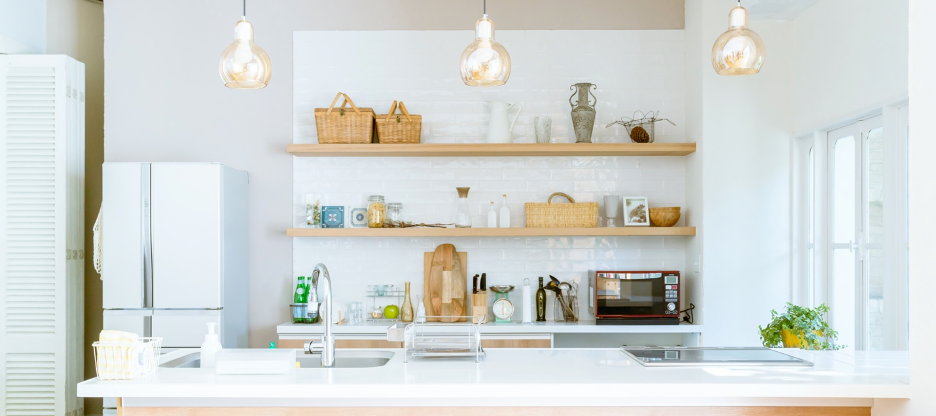
Image Source: Shutterstock
When organizing your home, knowing where to start can often be the most difficult part. Breaking the process down room-by-room and keeping the following tips in mind will help you get started and keep your home organized in the long run.
Kitchen
Given how much time is spent in the kitchen, it can get disorganized easily. Kitchen countertops are also one of the most frequently touched and used surfaces in a home. Taking items off the counters and storing them on shelving above or below is an effective first step. Open shelves are a great fixture for easy access while preparing and cooking meals. Store the items you use the most here and stow away large tools that you don’t use as often.
A lazy Susan is a must-have for kitchen organization, bringing the back of the cabinet to your fingertips. A great home for kitchen items that are heavy, clumsy or messy, they are highly accessible. Cleaning out a lazy Susan is much simpler than cleaning out cabinets, which frees up shelf space for those items that usually sit out on your kitchen counter.
Living room
A good first step for your living room is to take inventory. See what items can be disposed and what might belong elsewhere in the house. Take time to think about the flow of the room and how you envision foot traffic will interact with the space.
Multifunctionality goes a long way in the living room. Coffee tables, side tables, and ottomans that are designed with more than one purpose in mind will help to declutter. Look for pieces with underneath storage, drawers, or magazine holders.
Bathroom
For both aesthetics and functional storage, open shelving will help take your bathroom to the next level. It provides plenty of room to stow bathroom supplies, towels, toiletries, and brings a more welcoming feel to the space.
This is a great time to go through your bathroom products. Discarding old, expired, and unused items will free up additional space and give the room a cleaner feel. Once you’ve cleaned everything out, take this time to reorganize your medicine cabinet with your newly reduced bathroom inventory.
Bedroom
Keeping your bedroom organized is a matter of maximizing space and minimizing clutter. If you have limited closet space, try placing a garment rack in a corner or against a wall, or store out-of-season clothing items elsewhere. The underside of your bed is useful for storage. Try functional organizers such as bins and roll-out shelving. Using your dresser as a nightstand or your bookshelf as a décor piece will add flair and cut down on clutter as well.
Making the most of the hanging space in your closet is a sure-fire way of keeping it decluttered. Position the most-used items at eye level and stow lesser-used clothes and accessories higher up. Not only does this give priority to your closet which helps you stay organized over time, but it can save you time when getting ready.
Garage
A common tactic for creating storage space in your garage is to go vertical. This will help free up space for your stuff while maintaining the space reserved for your vehicles. The garage is also a good home for large or bulky items that you don’t use every day.
Going room-by-room will help you piece together the look and feel of the organized home you want to achieve. Be comfortable with clearing out a space in order to put it back together the way you have in mind. Sometimes rooms have to get messier before they get organized.
Matthew Gardner Weekly COVID-19 Housing & Economic Update: 6/15/2020
On this week’s episode of “Mondays with Matthew,” Windermere Chief Economist Matthew Gardner provides an update on the forbearance program and what type of effect we can expect it to have on the US housing market.
A Guide to Mortgage Assistance During COVID-19

Image Source: Shutterstock
For some homeowners who have been financially impacted by the COVID-19 pandemic, there is a high level of concern about paying their mortgage. Fortunately, there are options to aid struggling homeowners from governments, financial institutions, and loan providers. The following information is intended to provide clarity on which financial relief options are available to you during this time.
What are my mortgage relief options?
Newly placed into law, the Coronavirus Aid, Relief and Economic Security (CARES) Act, provides two protections for homeowners with federally backed mortgages:
- Your lender or loan servicer may not foreclose on you for 60 days following March 18, 2020. The CARES Act prohibits lenders and/or servicers from beginning a non-judicial foreclosure, or finalizing a foreclosure sale, against you within this time period. While 60 days has passed since this was put into place, it is still important to be aware of in the event that any of these actions were taken against you.
- You have a right to request a forbearance for up to 180 days if you experience financial hardship due to the COVID-19 pandemic. You can also apply for a 180-day extension beyond the forbearance period. This does not require submitting additional documentation beyond your claim, nor will you incur additional fees, penalties or interest beyond what has already been scheduled.
Forbearance is…
- With forbearance, mortgage servicers and lenders allow you to pause or reduce your mortgage payments for a period of time while you get back on your feet financially.
- Different types of loans beget different forbearance options, understanding the differences and which options apply to your loan is key to navigating the forbearance landscape.
- Once your income is back to a normal level, contact your loan servicer and resume your payments.
Forbearance is not…
- Forbearance is not a means to forgive or erase your payments. Any missed or reduced payments still require payment in the future.
Which relief options do I qualify for?
The first step in discovering your mortgage assistance qualifications is to contact your mortgage provider. If you are unsure of how to get in touch with them, look at your mortgage statement for contact information or see what contact options are available online.
After you have successfully made contact, find out if your mortgage is federally backed. To be eligible for assistance under the CARES act, your mortgage must either be backed federally, or by one of the entities in the list below. These links show the agencies’ current advise and related loan information:
- U.S. Department of Housing and Urban Development (HUD)
- U.S. Department of Agriculture (USDA)
- Federal Housing Administration (FHA)
- U.S. Department of Veteran Affairs (VA)
- Fannie Mae – Loan Lookup
- Freddie Mac – Loan Lookup
For non-federally backed loans, contact your lender or servicer to learn more about their forbearance repayment options.
Today’s financial landscape can be stressful for homeowners, especially those that are struggling to keep up financially. Fortunately, these entities, institutions, and servicers have provided options to help lessen the burden. Knowing which options apply to you and your household will help you navigate through hardship as your finances recover.
Matthew Gardner Weekly COVID-19 Housing & Economic Update: 6/8/2020
Twelve weeks into the COVID-19 pandemic and we are certainly seeing the impact it has had on the housing market. Today’s episode of “Mondays with Matthew” covers home prices now, and what to expect for the rest of 2020.
Matthew Gardner Weekly COVID-19 Housing & Economic Update: 6/1/2020
This week on "Mondays with Matthew": Now that things have settled down somewhat following the initial impact of COVID-19, Matthew dives into the topic of mortgage rates. Will they go below 3%? Matthew discusses this and the factors that have formed his updated 2020 and 2021 mortgage rate forecast.
Saving in the Laundry Room
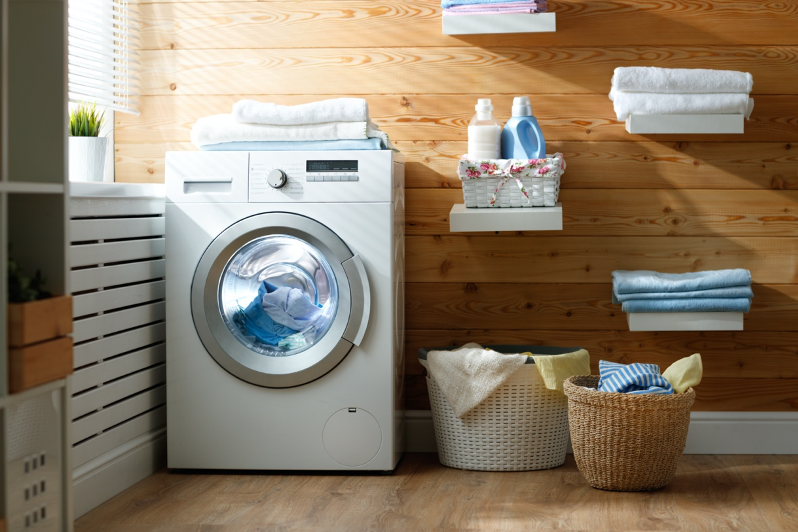
Image Source: Shutterstock
When it comes to household expenses, staying at home has brought about savings in some areas, while increasing expenses in others. The laundry room has likely seen an uptick in usage, with its associated costs following suit. Save your energy and money by keeping these tips in mind as we continue to adapt to being home more often.
Master your machine settings
Review the owner’s manuals for your washer and dryer. There may very well be energy-saving settings you’re not using. For example, your washer’s “high-speed” or “extended wash” cycles will remove more moisture, which can help reduce drying time. A dryer’s “cool down cycle” allows clothes to finish drying using only residual heat.
Think twice before washing
Once you’re aware of the costs associated with washing and drying, and the natural resources this consumes, you may decide you don’t need to launder certain clothes as often – which can also extend the life of these garments. Some clothing, like jeans, sweatshirts, and sweatpants, can be worn a few times without a cleaning. Washing these items only when necessary will help you cut down. Another tip – keep another laundry basket in your room for those lightly worn clothes that you could wear again, so they keep separate from your clean clothes.
Use hot water only when necessary
Using warm water instead of hot can significantly cut down your washer’s energy expense. Using cold water puts less pressure on electricity grids, saving your household even more money and energy. Cold water washes are less likely to shrink or fade your clothing as well. To ensure your clothes still get clean, try using a cold-water detergent.
Right-size your loads
For both washing and drying, taking into consideration the size of your load can factor greatly into your savings. No matter the size of the load you wash, it costs the same amount to run a cycle. So instead of doing two small loads, wait until you have one large load. When drying, keep in mind that an overly full dryer will take longer to dry the clothes. A dryer with too few items inside costs more to operate.
Clean the dryer vent and filter
When the lint filter in your dryer gets clogged, airflow is reduced, and the dryer can’t operate effectively. Make a point to clean the filter after every use. If you use dryer sheets, scrub the filter every month to remove any film buildup. The venting that attaches to the back of your dryer also needs to be kept clean and clear.
Air dry
When the weather is sunny and warm, consider putting your clothes out to hang-dry. Doing so will keep your drying expenses to a minimum. It can also be a better drying method for clothing with delicate tailoring.
With staying at home being the new status quo, taking a look at the ways our homes use energy and incur expenses is more relevant than ever. These small changes in the laundry room are just some of the minor adjustments you can make in your household during these unique times.
Questions to Ask During Your Virtual Home Tour

Image Source: Canva
Thanks to COVID-19, the new reality is that many open houses and home tours are being conducted virtually. For prospective home buyers, this new territory brings an added element to prepare for in the home buying process. Some of the questions that should be asked in a virtual home tour parallel those of in-person tours, but others are unique to today’s virtual world.
Could you zoom in?
- Sometimes it can be difficult to get a true glimpse at what you want to see in a room. Asking the agent to zoom in on specific features is commonplace in virtual home tours, and they understand this is part of the viewer experience. Don’t hesitate to ask multiple times. Getting a better look at everything you want to see will help you feel like you’ve gotten the most out of your virtual tour.
How many square feet are in this room?
- Virtual tours can slightly distort space, making it tough to gauge the size. The room-to-room square footage is information the agent is sure to have handy. Since you can’t be there in person, it will help you piece together the virtual visuals with the sense of physical space that we’re all accustomed to feeling in the places we live.
What color is that?
- In the smartphone era, and computer era at large, we have come to understand that digital representations of color are not always true to the eye. Ask the agent to confirm specific colors so you can plan accordingly. Have a color swatch on hand or look the colors up online as you go through the tour.
When were the appliances last updated?
- The importance of this question rings true in past, present, and future. Knowing the state of the home’s appliances, and the likelihood and timing of when they will need replacement, is vital information for both assessing the move-in readiness of the home and understanding what costs might lie ahead.
Has the seller provided an inspection?
- This is another example of a critical question, whether your home tour is virtual or physical. If the seller has already done an inspection, ask the agent to lead you to any areas of concern based on the inspector’s findings. If there is anything that has not yet been addressed by the seller, have your agent ask what their plan is for making the necessary repairs/updates.
When is the offer review date?
- Understanding the seller’s timeline for reviewing and accepting offers will help guide your decision-making process and allow you to strategize based on the timeline.
Whether your home tour is physical or virtual, getting the information you need to make an informed decision remains paramount. Although there is no substitute for physically being in the home you are looking to buy, keeping these questions in mind will position you well as you progress through the home buying journey.