More June 25, 2021

National Homeownership Month – Part Two

In recognition of National Homeownership Month, we’re featuring unique home buyer stories from across our network. Earlier this month, we shared three stories of first-time home buyers and how they worked with their agents to find the perfect home. Here is part two:

Jordan Cain

After years of helping clients find their dream homes, Windermere agent Jordan Cain of Windermere Abode and his girlfriend Sami decided it was time to find theirs. And their hearts were set on Tacoma, Washington. Even though Jordan had a deep understanding of the local market conditions, it was important to him to let Sami learn about the home buying process at her own pace.

Looking for a home in the summer of 2021 meant Jordan and Sami were up against some serious competition, including bidding wars and cash buyers. Jordan knew the process could get emotional. As an agent, he has helped calm many clients so they can make educated and calculated decisions. This time around, he leaned on his fellow agents for moral support when he found himself in those same emotional moments.

After putting several offers in, they eventually found the perfect home. For Jordan and Sami, becoming homeowners will allow them to continue to grow in their lives together. For Jordan and his family, owning his first home is deeply significant. Here’s what he had to say: “As the youngest child in my family, I’m the last one of my siblings to purchase a home. I’m even more proud of the fact that four Black siblings, and our mother, have all pushed past systemic racism to pursue one of the pillars of the American dream—owning property.”

Danica and Nick – Windermere Agent Ashley Abolafia

It’s been Danica and Nick’s dream to own a home before turning thirty. And this year, they made that dream a reality!

In a competitive market, it’s common for buyers to put in multiple offers and face rejection again and again. Fortunately for Danica and Nick, luck was on their side. With low interest rates and a lack of inventory, their local market in Lake Stevens, Washington was just beginning to heat up when they started the process with their agent, Ashley Abolafia of Team Abolafia. Throughout their home buying journey, they saw Ashley and her team as a guiding light, who they leaned on for her wealth of knowledge.

When they found their dream home, Danica and Nick jumped at the opportunity to make an offer. And to their surprise, it was accepted without having to enter a bidding war! Reflecting on their time with Ashley, and the entire home buying process, Danica and Nick say that owning a home means they can achieve anything they set their minds to.

Lauren – Windermere Agent Jana Ross

Being a first-time home buyer, Lauren had no idea what to expect as she prepared to hit the market in Tacoma, Washington. She had a million questions for her Windermere agent Jana Ross, who answered every single one with a level of care and knowledge that put Lauren at ease.

It didn’t take long for the process to pick up steam. Just two days after meeting her agent, Lauren was looking at houses and picking out things she liked and noticing things she didn’t. Jana took notes and found a home for Lauren she thought was perfect. Sure enough, Lauren fell in love, and they put in an offer.

Most of the process from there was routine, but it wasn’t without its bumps. After Lauren took possession of the home, the seller retained access by keeping a key in a contractor box, which they used to access  a garage full of items they left behind after the closing was finalized. Though these complications tested Lauren’s patience, Jana was there the whole time to help keep her levelheaded until move in day. Jana gave Lauren the encouragement she needed and allowed her to keep a sense of humor along the way.

Now that she’s settled into her new home, Lauren is grateful for the stability it provides and appreciative of the support she received from Jana throughout her home buying journey.


To begin your own home buying journey, connect with an experienced Windermere Real Estate agent today:


Buying June 21, 2021

The Importance of Homeowners Insurance

In addition to providing shelter and comfort, our home is often our single greatest asset, and it’s important that we protect that precious investment. Most homeowners realize the importance of homeowners insurance in safeguarding the value of a home. However, what they may not know is that about two-thirds of all homeowners are under-insured.

What a Standard Homeowners Policy Covers

A standard homeowners insurance policy typically covers your home, your belongings, injury or property damage to others, and living expenses if you are unable to live in your home temporarily because of an insured disaster.

The policy likely pays to repair or rebuild your home if it is damaged or destroyed by disasters, such as wildfires, a winter storm, or lightning. Your belongings, such as furniture and clothing, are also insured against these types of disasters, as well as theft.

Some risks, such as flooding or acts of war, are routinely excluded from homeowner policies. Special coverage is needed to protect against these incidents. Your insurance company can let you know if your area is flood or earthquake prone. The cost of coverage depends on your home’s location and corresponding risk.

Other coverage in a standard homeowners policy typically helps cover the legal costs for injury or property damage caused to other people. For example, if someone is injured on your property and decides to sue, the insurance would cover the cost of defending you in court and any damages you may have to pay. Policies also provide medical coverage in the event someone other than your family is injured in your home. If your home is seriously damaged and needs to be rebuilt, a standard policy will usually cover hotel bills, restaurant meals and other living expenses incurred while you are temporarily relocated.

Keep in mind that homeowners insurance policies provide coverage for the owner(s) living in the home. If you plan on renting out your home, you’ll need to purchase landlord insurance in addition to your homeowners policy.

How Much Insurance Do You Need?

Homeowners should review their policy each year to make sure they have sufficient coverage for their home. The three questions to ask yourself are:

  • Do I have enough insurance to protect my assets?
  • Do I have enough insurance to rebuild my home?
  • Do I have enough insurance to replace all my possessions?

Here’s some more information that will help you determine how much insurance is enough to meet your needs and ensure that your home is sufficiently protected.

Protect Your Assets

Make sure you have enough liability insurance to protect your assets in case of a lawsuit due to injury or property damage. Most homeowners insurance policies provide a minimum of $100,000 worth of liability coverage. With the increasingly higher costs of litigation and monetary compensation, many homeowners now purchase $300,000 or more in liability protection. If that sounds like a lot, consider that even a dog bite claim can easily be tens of thousands of dollars. Talk with your insurance agent about the best coverage for your situation.

Rebuild Your Home

You need enough insurance to finance the cost of rebuilding your home at current construction costs, which vary by area. Don’t confuse the amount of coverage you need with the market value of your home. You’re not insuring the land your home is built on, which makes up a significant portion of the overall value of your property.

The average policy is designed to cover the cost of rebuilding your home using today’s standard building materials and techniques. If you have an unusual, historical or custom-built home, you may want to contact a specialty insurer to ensure that you have sufficient coverage to replicate any special architectural elements. Those with older homes should consider additions to the policy that pay the cost of rebuilding their home to meet new building codes. Finally, if you’ve done any recent remodeling, make sure your insurance reflects the increased value of your home.

Replacing Your Valuables

If something happens to your home, chances are the items inside will be damaged or destroyed as well. Your coverage depends on the type of policy you have. A cost value policy pays the cost to replace your belongings minus depreciation. A replacement cost policy reimburses you for the cost to replace the items.

There are limits on the losses that can be claimed for expensive items, such as artwork, jewelry, and collectibles. You can get additional coverage for these types of items by purchasing supplemental premiums.

To determine if you have enough insurance, you need to have a good handle on the value of your personal items. Create a detailed home inventory file that keeps track of the items in your home and the cost to replace them.

Create a Home Inventory File

It takes time to inventory your possessions, but it’s time well spent. This extra preparation also helps to keep your mind at ease.  The best method for creating a home inventory list is to go through each room individually and record the items of significant value. You can also sweep through each room with a video or digital camera and document each of your belongings. Your home inventory file should include the following:

  • Item description and quantity
  • Manufacturer or brand name
  • Serial number or model number
  • Where the item was purchased
  • Receipt or other proof of purchase / photocopies of any appraisals—along with the name and address of the appraiser
  • Date of purchase (or age)
  • Current value
  • Replacement cost

Pay special attention to highly valuable items such as electronics, artwork, jewelry, and collectibles. Simple inventory lists are available online.

Storing Your Home Inventory List

Make sure your inventory list and images are safely stored in case your home is damaged or destroyed. Keep them in a safe deposit box, at the home of a friend or relative, or on an online storage site. Some insurance companies provide online storage for digital files. (Storing them on your home computer does you no good if your computer is stolen or damaged.) Once your inventory file is set up, be sure to update it as you make new purchases.

We invest a lot in our homes, so it’s important we take the necessary measures to safeguard against financial and emotional loss in the wake of a disaster. Homeowners insurance is that safeguard. Be sure you’re properly covered.

More June 18, 2021

National Homeownership Month – First-Time Buyers

In recognition of National Homeownership Month, we’re shining a spotlight on the home buying process. Each home buying journey is unique, as are the challenges that people face en route to becoming a homeowner. These three stories of first-time homebuyers showcase the importance of working closely with an agent to navigate the buying process and find the perfect home.

Maria and Alvaro – Windermere Agent Team: The Brazens

Being first-time homebuyers, Maria and Alvaro knew they would have to adjust to the changes in the market. They were among a large influx of buyers buying during the pandemic, so they were aware that sellers had high expectations when it came to accepting an offer. A confluence of factors, including the pandemic, low interest rates, and many buyers’ desire for homes with more space, were igniting bidding wars left and right, with houses often going well above asking price. This also drove up listing prices on comparable homes in the area. These factors forced Maria and Alvaro to be flexible when it came to location and what they had previously considered “must-haves” for their ideal home at the beginning of their search.

They worked closely with their agents Taylor Brazen Tagge and Randi Brazen of The Brazens—a family-led real estate team based in Bellevue, Washington—to find the right competitive balance in what they were able to offer before hitting the market. This meant, in some cases, adjusting their expectations about what the “perfect” home was for them and having the patience to wait until they found it. They knew that when they time came; they would have to be aggressive in their approach.

Maria and Alvaro relied on Taylor and Randi throughout the buying process. The Brazen team’s knowledge of the Bellevue area provided the guidance and advice they were looking for to help them make informed decisions. The Brazens met with them at several showings, walked them through neighborhoods, and made themselves available to answer any and all questions they had along the way. The trust they formed in the early stages of working together laid a foundation for a friendship that translated to a successful experience navigating the market. They eventually found the home of their dreams, and although Maria and Alvaro miss working with the Brazens, they are grateful for the ultimate success of their home buying journey.

For Maria and Alvaro, homeownership is not just a financial investment; it is the start of a new chapter that will eventually provide the means for them to grow their family. They encourage buyers to be patient in finding their perfect home. It may be challenging at times, but the reward is so worth it.

Jocelyn – Windermere Agent: Nick Odermann

During her yearlong home search, Jocelyn’s expectations were quickly replaced with the reality of the hot housing market amid the pandemic. While touring homes, she realized that many listings were in worse condition than the photos implied, so she adjusted her expectations to remain levelheaded through the process. She experienced the pandemic buying frenzy first-hand when she was outbid multiple times and saw several homes sell for significantly higher prices than what they were listed for.

Luckily, Jocelyn had a trustworthy agent at her side by the name of Nick Odermann, who is one half of the Odermann Brothers team in Lake Oswego, Oregon. Together with his brother Steve, Nick helped Jocelyn navigate the challenges of finding a home in a seller’s market. Jocelyn was living in Southern California at the time, so she relied heavily on Nick’s judgement as he toured homes on her behalf. She had a specific vision of her dream home and Nick stayed true to it, quickly pointing out which homes would not suffice. When Jocelyn began to lose hope, Nick stayed positive. He was sure the perfect home was out there—and he was right.

For Jocelyn, homeownership is her path to adulthood. Now that she has a home, she looks forward to growing her pet care business. Becoming a homeowner was a major life goal of hers, and now that she’s achieved it with the help of her Windermere agent, she couldn’t be happier.

Jake – Windermere Agent: Taylor Hinds

It’s common for first-time homebuyers to learn as they go through the process, and Jake quickly discovered that information was the key to overcoming challenges. For example, he had no idea what earnest money was or that it was something he had to factor in on top of his mortgage. Learning that helped him work with his Seattle-area agent, Taylor Hinds, to form a strategy for making an offer.

Like the buyers above, Jake was buying in a hot seller’s market during the pandemic. He was surprised by how cash-ready sellers expected buyers to be. Luckily, he had a team behind him who were communicative and transparent throughout the whole process. When it came time to write a competitive offer, he leaned on Taylor’s expertise and advice to make the offer as attractive as possible, which eventually made all the difference in securing a home.

To Jake, homeownership means having a place to call your own, a place to be proud of. He looks forward to creating memories in his new home and building equity over time.


To begin your own home buying journey, connect with an experienced Windermere Real Estate agent today:

More June 16, 2021

What Is Landlord Insurance and Why Do You Need It?

If you are a landlord, it’s important to take steps to properly protect yourself and your property before the renters move in. Landlord insurance helps fill in the gaps of coverage where homeowners insurance policies don’t apply and allows you to rest easy knowing your home is sufficiently covered while tenants occupy your property.

What is Landlord Insurance?

While homeowners insurance provides coverage for a home occupied by its owner(s), landlord insurance covers properties that are rented to short-term guests or long-term renters. If you plan on renting out a room while you stay in the home, your homeowners insurance policy may offer coverage, but it depends on factors like the number of renters and the length of their rental agreement(s), so check your policy first.

A typical landlord insurance policy will cover the following:

Property Damage

Property damage insurance ensures your home is protected against damage caused by natural disasters, fire, electrical mishaps, and more while your home is being rented. This typically covers the home itself, any detached structures on the rental property such as ADUs or garages, and any personal property you use to maintain the home.

Liability

If a renter or visitor suffers an injury on your property, your landlord insurance will help cover their medical costs and, if legal action is taken, legal costs. Liability costs can snowball quickly, and it’s important to have coverage in place to protect yourself from having to pay out a lump sum for hospital bills or a settlement. For example, if a renter steps through a floorboard while walking on the deck and hurts their leg, a court may decide that a lack of property maintenance was the cause of the injury, thus leaving you responsible. However unlikely the scenario may seem, having coverage in place is better than the alternative. 

Rental Income Loss

Homes are prone to accidents and issues that can render them uninhabitable. If this happens at your rental, you won’t see rental income until the problem has been fixed. Most policies provide reimbursement for lost income during a time when you’re unable to rent out the property, as long the cause of the underlying issue is covered. For example—if you live in a climate that’s conducive to mold growth, a rapid spread of mold could put a halt on renting your property. Accordingly, you’d want to make sure your policy provides adequate coverage against damage caused by mold.

Why Do You Need Landlord Insurance?

In short, renting out your property and having landlord insurance go hand-in-hand. Because homeowners insurance is unlikely to provide sufficient coverage for your rental, you’ll need a separate policy that covers you specifically as a landlord. When shopping around for landlord insurance, make comparisons based on the needs of your rental property. For instance, if you have separate dwellings on the property, prioritize additional structures coverage when looking at different policies. If you’re looking to bundle your landlord insurance with your existing coverage, keep an eye out for bundling discounts.

For more information on managing your rental, read our article on how to Give Your Rental A Competitive Advantage.

Selling June 14, 2021

Where to Stay While You Sell Your Home

The time between selling a home and moving into a new one can be a challenging period for homeowners that leaves them with a basic question: Where should I live? In the interim, there are various housing options to choose from but picking the right one depends on your personal situation and the amount of time it will take until you move into your new home.

Once you know it’s time to sell your home, there are various factors that will have an influence on what housing is available to you. Your budget will help determine your options. For example, if you are already in contract with your new home, you might be looking to save some money in preparation for move-in costs. Seasonality plays a role as well. Talk to your agent about real estate trends in your local market to understand which housing options tend to be available at certain times of year.


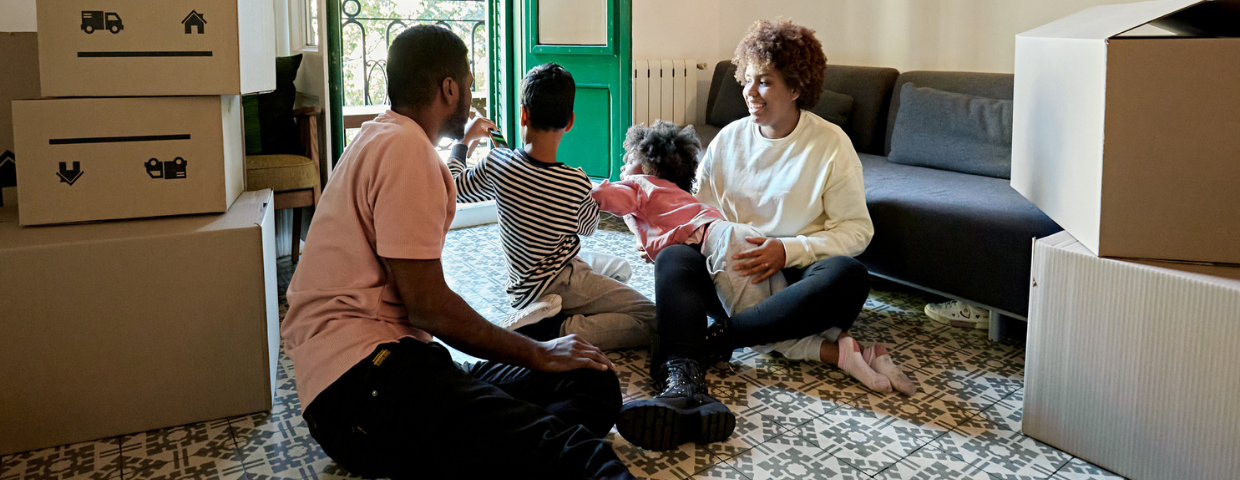
A stack of cardboard boxes in a living room.

Image Source: Getty Images


Where to Stay While You Sell Your Home 

In Your Home

There is the option to stay in your home while you sell it. If your home is still on the market, understand that a fully staged home will be fundamentally different from the one you’re used to. Once you’ve sold your home, there are additional options for staying as well. By working closely with your agent, you can negotiate a longer closing period or a rent-back agreement with the new owners. A rent-back agreement is an agreement between the two parties in which the seller rents their old home from the buyer for an agreed-upon period of time before the new buyers move in, allowing for a smooth transition to take place. Depending on the buyer’s urgency to move in and the competitiveness of the market, a rent-back agreement may not be feasible, but in the right situation it presents a mutually beneficial solution.

Apartment or Condo

Renting an apartment or condo while you wait to get into your new home can help make the transition easier. To avoid unpacking all your belongings only to have to pack them back up when it’s time to move again, try to find furnished listings in your area, or search for units that offer furnishing at an added cost. Although paying rent is an added expense, this set-up can help you stay organized throughout the moving process.

Friends & Family

If you have friends or family nearby that have space to accommodate you, they may be open to the idea of taking you in until you’re able to move into your new home. In this scenario, you’ll likely need to store your household items elsewhere, which will come with an added cost. Of all the options, this is typically the least expensive.

Short-Term Rentals

The short-term rental market offers a flexible approach to finding somewhere to stay. Filtering your results by location will allow you to select a place that won’t disrupt your daily routine. If you won’t be moving into your new home for an extended period of time, you can choose a rental with amenities accommodate your longer-term needs. Keep in mind, the cost of short-term rentals can easily add up, and in some cases may be more expensive than renting an apartment or condo.

Hotel

Another popular option for riding out the interim period between houses is staying at an extended-stay hotel. These hotels usually offer amenities that accommodate long-term living like a kitchen, living space, laundry services, a refrigerator, internet, and more.

For more information on selling your home, visit the Selling Page on our blog. To get an idea of what your home is worth, try our free home value calculator at the link below:


What Is My Home Worth?

Design June 9, 2021

Designing Your Backyard for BBQs

Summer is the season of spending long days and nights out in the backyard and making home-cooked meals on the barbecue. Whether classic BBQ dishes like ribs and hamburgers or skewered grilled vegetables are more your style, these tips will help get your backyard in prime shape for grilling season.

Designing Your Backyard for BBQs

Some homeowners may choose to make their barbecue the focal point of their backyard, while others view it as something to accentuate more central features like a deck, patio, or outdoor kitchen. The grill alone will take up significant space, not to mention the crowd it can attract. With that in mind, avoid situating it in areas of high foot traffic, such as near the stairs of your deck or along a main walking path. You should also provide ample room between the barbecue and your backyard seating.

A simple charcoal grill is ideal for small spaces. It also allows you to be flexible with your barbecue setup. If you are hosting a gathering, you can simply move the grill if need be and rearrange your backyard to accommodate the occasion. Built-in barbecues provide a more robust grilling setup, while freeing up space on the deck or patio. Though built-ins are typically more expensive than a standalone grill, they are a hub for outdoor entertainment. For homeowners who enjoy grilling in the shade, or those who live in climates where it sometimes rains in the summer, covered barbecues may be the way to go. Pergolas, canopies, and awnings are all popular options for providing cover. Outdoor kitchens are the most comprehensive grilling setup. With countertop space, a sink, and the barbecue all within reach, all the prep work for your cookout can be done outside, right next to the grill.


An outdoor kitchen with a sink, barbecue, and dishwasher.

Image Source: Getty Images


Once you’ve chosen the best barbecue for your backyard, it’s time to start designing around it. The right combination of seating will add the social touch to your barbecuing setup. Bench seating is a popular option for barbecuing on the deck, while tables and chairs out in the backyard lawn create more of a picnic-style feel. Installing a fire pit will bring an added element to you outdoor entertaining, helping to make the transition from an afternoon or evening barbecue into a night spent under the stars. Experiment with different fire pit styles to match the surrounding elements of your backyard. For those with built-in barbecues and outdoor kitchens, consider matching your fire pit’s stonework to tie the backyard together.

Buying June 7, 2021

5 Mistakes to Avoid After Pre-Approval

Getting pre-approved is a great first step for buyers, but there can be a number of hurdles in the process. Here are a few cautionary steps that can be taken to make the experience as smooth and worry-free as possible.

Pre-Approval

Getting pre-approved has many benefits for buyers: it strengthens their buying power, assists in identifying their price range, helps communicate their preparedness to sellers, and, once their offer is accepted, helps to speed up the closing process.

Pre-approval is broken down into two steps: pre-qualification and pre-approval. During pre-qualification, buyers will share their financial information with their bank or lender to understand the approximate loan amount they can expect to qualify for. The pre-approval process is a little more involved, as the lender will conduct a thorough review of the buyer’s financial health to give them a more detailed picture of how much they can borrow, estimated monthly costs, and what interest rate they can expect on their loan.


A woman holds a tablet, analyzing her finances.

Image Source: Getty Images


5 Mistakes to Avoid After Pre-Approval

Being pre-approved doesn’t mean buyers are all set. There are certain mistakes that can throw buyers off course, and in some cases, lead to a denial of financing. Here are five common mistakes that can do just that:

  1. Large Purchases

    Any large purchases—credit or cash—made after getting pre-approved can easily cause trouble for buyers. Making a large credit purchase equates to increasing debt, which raises a buyer’s debt-to-income ratio. Large cash purchases decrease a buyer’s cash-readiness from the time when they were pre-approved. In both scenarios, the lender may call into question a buyer’s ability to make their mortgage payments.

  1. Quitting or Changing Jobs

    Knowing that a buyer has a stable source of income is important to lenders. Accordingly, it is best for a buyer to wait until after the home loan process is complete before taking steps to change their employment. Not only could changing jobs potentially put their mortgage pre-approval at risk, but it could also delay their settlement, since it takes time to prove a new salary.

  1. Unpaid Bills

    Missing bill payments can be especially harmful to a buyer’s candidacy in the time between getting pre-approved and closing on the home. During pre-approval, lenders are using your ability to pay bills on time to help them paint a picture of your finances and it’s important to keep that picture consistent. 

  1. New Credit

    Opening new credit accounts will likely change a buyer’s credit score, which may cause adjustments in their interest rate. Lenders, upon seeing a new line of credit, even a store credit card, may elect to review the buyer’s risk of non-payment.

  1. Paying Off Debt

    While most people would think paying off debt is a good thing, if a buyer pays off any significant loans or credit card debt after pre-approval, their lender will want to know where the money came from. The decrease in debt will also have an effect on the buyer’s debt-to-income ratio, which may alter their creditworthiness.

The period of time between pre-approval and closing on a home can be a tedious one for buyers. Before making any significant financial decisions, it’s helpful for buyers to speak with their lender to get an idea of how it may impact their financial standing. The complexities of this process also highlight the importance of working with an experienced agent.

For assistance planning a home purchase, connect with a Windermere Real Estate agent here:

Selling June 4, 2021

Preparing Your Equestrian Property for Sale

Selling a horse property is quite different to selling your typical single-family home and can present some unique challenges. Therefore, when marketing a property like this, there are certain things to consider in order to achieve a successful sale. Because equestrian properties aren’t usually located in heavily populated areas, when buyers take the time to visit your property, you need to do everything you can to make a lasting impression. Having an equestrian property is a major responsibility, but if you convey to interested buyers the value and joy it can bring, it will help with getting your property sold. Here are some ways you can prepare your equestrian property for sale.

Sell the Lifestyle

How your property is described and positioned in the marketing assets is key. You are selling a lifestyle, so it’s worthwhile to talk up the experience that comes from owning such a unique property. Elaborate on nearby vets, feed lots, co-ops and grocery stores. Describe the nearby trail rides and point out if there are neighborhood riding clubs.  Paint the picture of what a potential buyer’s life could look like when they buy your property. Will they be enjoying the sunset on the patio overlooking the pasture? Does a stream trickle by the patio creating a relaxing ambiance? Can you watch the horses play in the field from the bedroom window? These are the visuals images that can capture a buyer’s imagination.

Organize your Documents

There are certain legal documents and records that come with owning and operating an equestrian property. Make sure you have the title and any land surveys or improvement location certificates ready to go as you prepare the property for sale. In addition to legal documents, make sure your agricultural records are current and updated. This includes plant health analyses, well permits, water or mineral rights, grazing leases or anything relating to natural resources on your property. Many buyers will ask to see records of past water and utility bills as well. This will make the process that much easier when you know the logistics have been taken care of.

Stage for Buyers

More than likely, the buyers who are touring your property either own horses or have been around equestrian properties before. Therefore, you will want to make sure the property appeals to horse owners. This includes making sure your fencing is intact, locks are secure, the barn is clean, and the pastures are mowed to perfection. This will also show buyers that they too can make the property look exactly the way they envision.

The Price is Right

A major factor in attracting buyers is the listing price. It’s important to work closely with an Equestrian Advisor who specializes in selling horse properties to ensure that yours is priced accurately. When potential buyers see that your equestrian property is properly priced, they are more likely to view it as a good investment. If you plan to include any equipment like a tractor, mower or other large items in the sale, price those separately and do not include them in the list price of your home. This will ensure that your property is listed at an appropriate price and that buyers will pay the necessary sales tax on those items outside of closing.

Selling June 2, 2021

Selling a Home with Pets

For pet owners, it’s hard to imagine their home without a furry friend. However, when it comes time to sell, showcasing the qualities of a home should take precedence over the pets that live in it. This creates additional steps in the process of preparing your home for sale, but it makes all the difference in the minds of buyers.

Selling a Home with Pets

Staging Your Home

A well-staged home makes it appealing to the widest variety of buyers and has significant ROI potential when it hits the market. However, having a pet can complicate the staging process. Buyers may lose interest in the home if they see traces of pets, so it’s a good idea to hide any and all signs of their presence.

It’s especially important to hide evidence of your pet in marketing photos. Prepare for your home’s listing photos by cleaning and vacuuming, making sure all pet stains are gone and any pet-related damage is repaired. Stow any pet carriers, cages, toys, food bowls, and other supplies that may hinder the photographer’s ability to capture the essence of a room.

Showing Your Home

Before inviting potential buyers inside, it’s best to give your home a deep clean to improve your home’s air quality, and to rid your carpets, flooring, and surfaces of pet odors and any dirt they may have tracked in over time. If you’re using your own furniture, vacuum and clean everything to extract as much fur and pet dander as possible. Talk to your agent to see if it’s a better idea to stage your home with rented furniture. If your pets have caused any damage in the home, make repairs or replacements as needed. After tending to your home’s interior, don’t forget to clean up after your pets in your yard as well. Fill in any holes in the lawn, freshen up your flower beds, and tidy up any areas of the landscaping where your pets may have dug.

After you’ve prepared your home for showings, there’s the question of what to do with your pets once buyers actually start taking tours. Ask a family member, friend, pet sitter, or neighbor to watch your pets while the showings take place. If you’re not able to find someone to watch them, form a strategy to temporarily relocate your pets during showings. If they must stay in the home, garage, or backyard during tours, it’s best to give buyers advanced notice that there are pets on the property. Talk to your agent about posting signage communicating their presence so that there are no surprises as guests make their way through the house.

Taking all these precautions will help to present your home in the best light without detracting certain buyers, for whom the signs of a pet may cause them to lose interest. On the other hand, if any buyers inquire about how the home can accommodate their pet, you and your agent will be more than ready to answer any questions they may have.

Selling Your Home

For more information on the process of selling your home, visit the Selling Page on our blog. To get an idea of what your home is worth, try our free home value calculator below:

What Is My Home Worth?

Design May 26, 2021

7 Weekend Home Projects

So many projects, so little time. That tends to be the mantra for homeowners with an ever-growing to-do list and limited availability to accomplish their tasks. Fortunately, the weekend is an opportunity to dig into certain projects and see them to their completion by the time the weekdays come around again. These seven weekend home projects can be accomplished within a couple of days and will make a dent in your to-do list.

7 Weekend Home Projects

1. Upgrade Your Kitchen Cabinets

Giving your kitchen cabinets a facelift is a simple way to give your kitchen a makeover. When staining wood cabinets, begin by removing the cabinet doors and hardware, then wipe the doors to clear away and dust and dirt. After applying and removing wood stripper, sand the doors to get them primed and ready for a new stain. When painting cabinets, choose a color that works well with your appliances. As you pack up the contents of the cabinets keep your most frequently used items nearby so you can access them during your  project. To add a finishing touch to your weekend cabinet makeover, shop around for new hardware and drawer inserts.


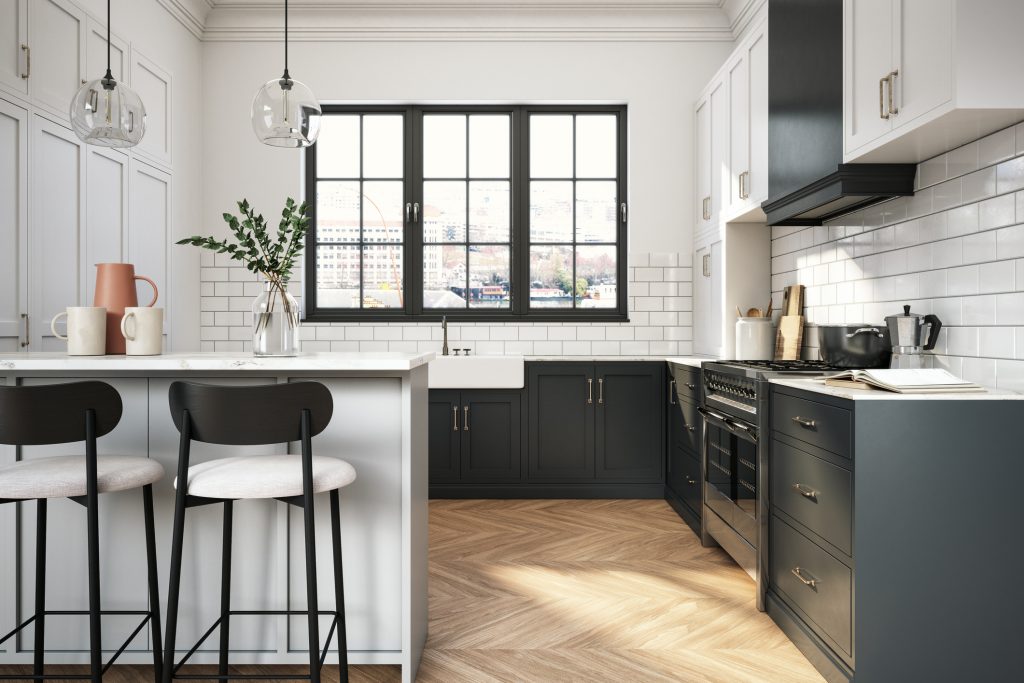
A kitchen with dark blue cabinets and white tile.

Image Source: Getty Images


2. Refresh Your Front Entry

Your home’s front entry is the key to making a lasting first impression and helps to enhance your curb appeal. Make a statement by giving your front door a fresh coat of boldly colored paint, look for stylish house numbers, and add classic front entry elements like a sitting bench or swing for ultimate comfort.

3. Improve Your Home Office

Whether you work remotely or in person, much can be done in a weekend to improve the functionality of your home office. Creating an environment conducive to your productivity helps to separate your office from the rest of your home, maintaining a balance between your work life and your home life. Situate your desk near a window to attract natural light. If the room has no windows, orient your seating so you’re facing the open space of the room. Experiment with therapy lights, ergonomic chairs, and soothing décor to make your office as comfortable as can be.

4. Curate Your Bathroom

In one weekend your bathroom can be transformed into a sanctuary of self-care. Refinishing your tub is a cost-effective alternative to a replacement. Start by removing any and all hardware, then sand the whole surface, filling in any cracks or holes with putty. Once you’ve sanded down the putty, apply multiple layers of primer and topcoat following the manufacturer’s instructions and buff the surface. Replace your vanity’s cabinet hardware and drawer pulls, matching them with your shower rod, faucet and shower head to tie the room together. Switch out your shower curtain and carpets for bold colors to liven up the space or choose neutral tones to create an organic feel.


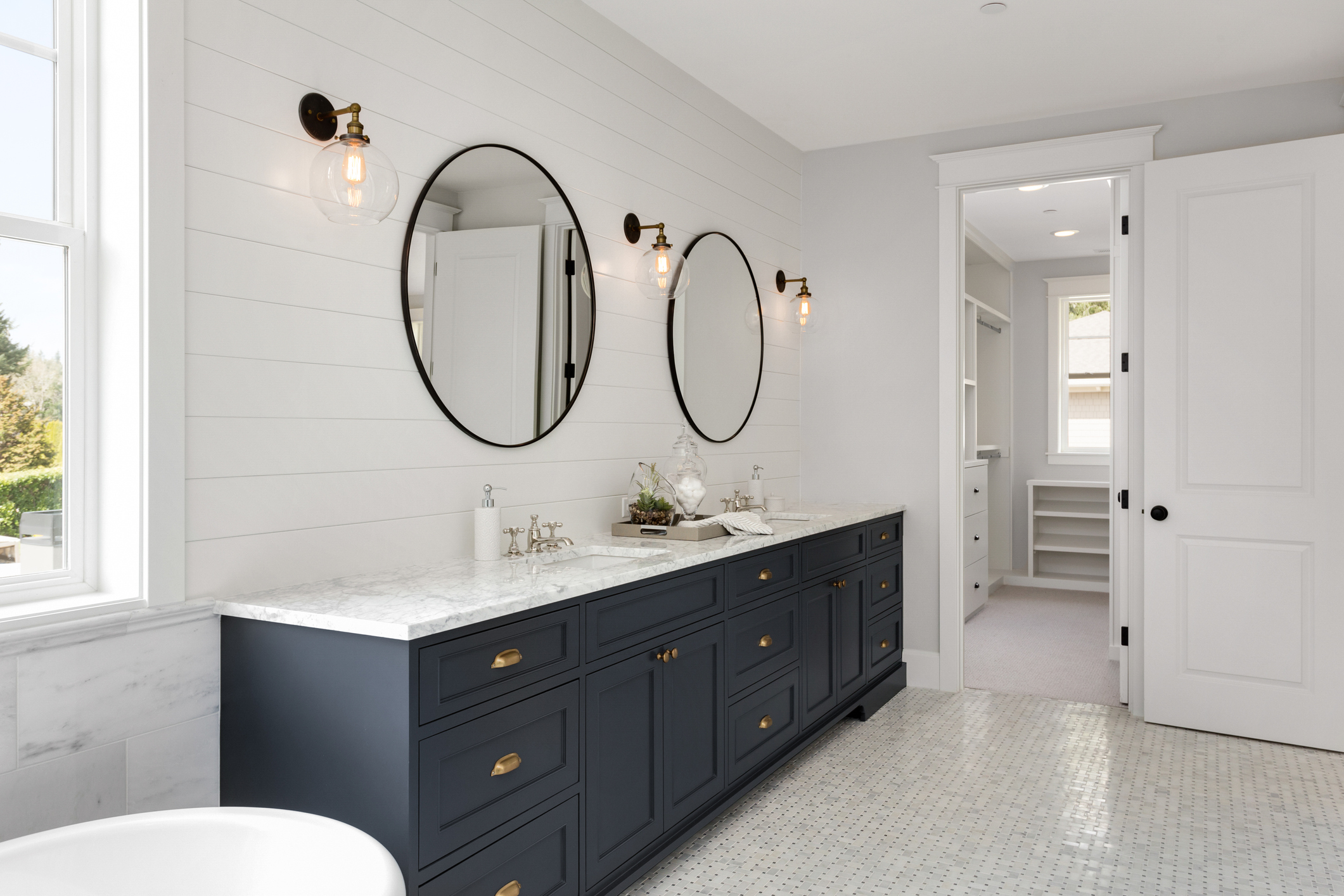
A bathroom with a dark blue vanity, white walls, and white tile.

Image Source: Getty Images


5. Organize Room-By-Room

Spending a weekend organizing each room of the house is sure to make a big difference in the look and feel of your home. Bookcases and coffee tables are magnets for clutter in the living room. Start by emptying everything and sort the items into three piles: keep, dispose, donate, (this method of organization will do wonders for your closets and bedroom as well), and invest in storage bins to keep the space tidy. In the bathroom, organize the medicine cabinet and vanity drawers first. Get rid of expired medication, makeup, and toiletries. Take the same approach to your shower. Once you’ve gone through everything, reassess your shower shelving to fit your newly organized inventory. After working your way through your kitchen cabinets, consider either a hanging or wall-mounted pot and pan rack to save space.

6. Fix Up Your Fence

Whether your fence needs a simple wash, a new sealant or stain, or repair, tending to it will freshen up your yard while also extending the life of your fence. Power washers are a helpful tool in getting your fence clean before re-staining, but a sprayer that’s too powerful could damage the wood. Let the fence dry for one to two days before applying the stain. As long as any damage that needs repair is contained to a section of the fence, a weekend should be plenty of time to get it fixed. To replace any damaged rails, pry them off their posts with a crowbar or cut the damaged section out with a handsaw. When repairing fence posts, be sure to remove any rails that are connected to it.

7. Build a Fire Pit

Common fire pit materials include brick, stone, or cinder blocks. Outline your fire pit before you start digging. Once the hole is dug six to eight inches deep, fill in the hole with gravel until it is level with the ground. Choose your materials, fix the stones into the ground, compact them together, and enjoy your time by the fire. Check for local burn bans or regulations.