Coastal interior design captures the calm elegance of life by the water. It’s bright, breezy, and effortlessly connected to nature, drawing inspiration from the textures and warmth of the shore, the shifting blues of the sea, and the weathered charm of driftwood and dune grass. This style invites the outdoors in, creating spaces that feel open, welcoming, and dreamy, no matter how far you are from the coastline.
Defining Features of Coastal Interior Design
Natural Materials
Coastal design embraces organic textures that feel relaxed and lasting, mirroring the landscape along the shoreline. Wicker and rattan furniture bring a light, casual elegance, while woven jute or sisal rugs add earthy texture underfoot. Weathered or reclaimed wood, whether used in furniture, ceiling beams, or accent walls, offers a sun-worn character that feels authentic to seaside living. Glass elements, including vases, oversized mirrors, and light fixtures, reflect light and mimic the clarity of water, while stone or pebble accents can subtly reference the beach and coastline. Even fabrics play a role, typically with cotton, linen, and other breathable, natural fibers, keeping the look feeling fluid and inviting.
A Coastal Color Palette
The colors of the coast bring this style to life. Crisp whites and soft creams create a fresh, open backdrop, while sandy beiges and sun-bleached wood tones add warmth and a lived-in ease. Layered into this foundation are sea-inspired blues in every shade, from the pale, airy blue of a summer sky to the rich, grounding depth of navy. Small pops of teal, aqua, seafoam green, and even coral can bring a burst of energy, infusing the space with the vibrant, refreshing spirit of life by the water.
Light, Airy Spaces
Abundant natural light is central to coastal interiors. Large windows, double-glass French doors, and open layouts blur the lines between inside and out. Sheer linen drapes catch the breeze, while white or pale walls reflect light to make rooms feel even more expansive. One of the advantages of using natural materials in coastal design is that they age gracefully, gaining character over time while preserving the fresh, airy feel that helps define this style.
Subtle Nautical Touches
Coastal design often incorporates gentle, well-chosen nods to the sea. Rope accents woven into mirrors or light fixtures, bowls of collected shells, or artwork featuring surfboards, sailboats, and marine life can all bring a hint of nautical charm. Avoid an overly beachy look by balancing nautical accents with clean lines and neutral tones. These elements should evoke the feeling of the coast rather than recreate it literally, keeping the space elegant, storied, and timeless.
Built-In Charm
Architectural details like white-washed built-in shelving, wood-clad ceilings, or wall paneling give coastal homes a sense of craftsmanship and permanence. These features provide the perfect stage for displaying curated coastal finds like sea glass, ceramics, or woven baskets.
Bringing the Look into Your Home
You don’t need an ocean view to enjoy the beauty of coastal design. Start with a light, neutral foundation and layer in soft blues, sandy tones, and natural textures. Choose furniture that feels comfortable and unfussy, and incorporate elements that remind you of the shore, whether that’s a woven jute rug in the bedroom, a driftwood coffee table, or a few well-placed nautical pieces.
Candles or diffusers with fresh, sea-inspired scents can enhance the atmosphere, creating the sensory experience of a salty ocean breeze. And if you’re looking for real-life inspiration, a visit to Seabrook, WA, can spark ideas with its homes and community spaces being a masterclass in blending classic coastal styles with modern living.
For more design inspiration, tips, and trends, visit the design section of our blog.
These Seabrook listings showcase how coastal style blends comfort, light, and seaside charm.
This is the latest in a series of videos with Windermere Principal Economist Jeff Tucker, where he delivers the key economic numbers to follow to keep you well-informed about what’s going on in the real estate market.
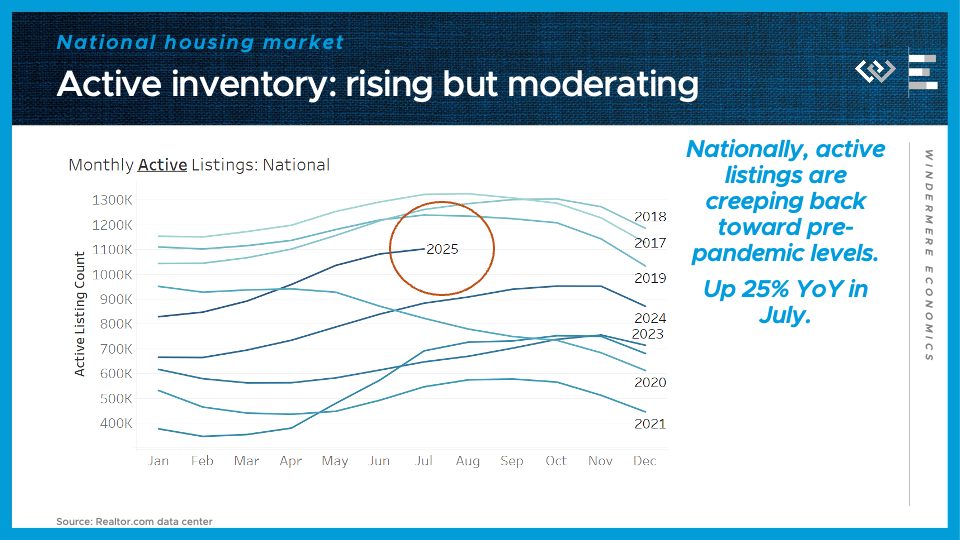
I’ll start this month by checking in on our most important barometer of the housing market: inventory. Active listings continued to grow in July, but at least nationally, they are still below somewhat below pre-pandemic levels for this time of year.
At the end of July, there were just over 1.1 million active listings on the market – below the 1.23 million on the market in July 2019, but up from 884,000 at this time last year.
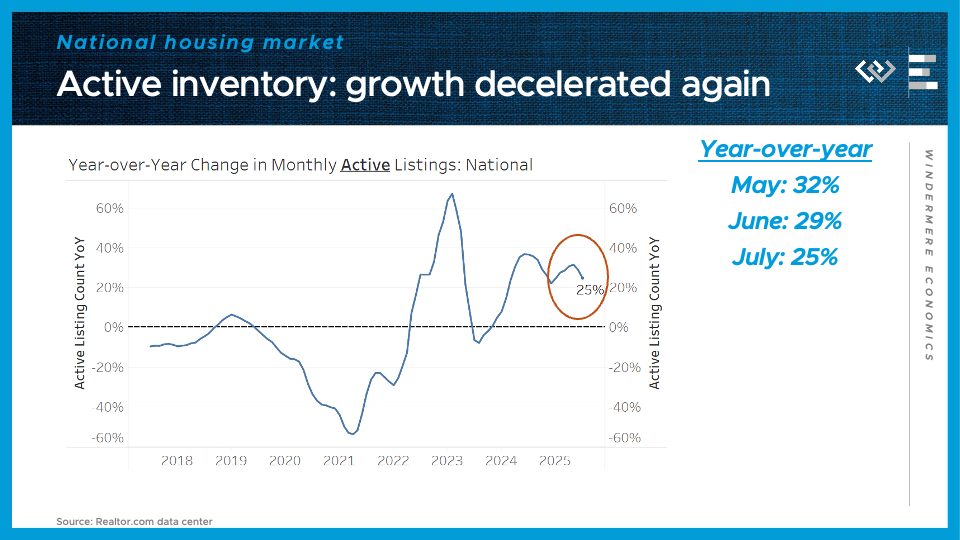
That makes for 25% year-over-year growth, which marks another month of deceleration from a peak of 32% annual growth in May. This continues to make this spring look like an inflection point, where inventory is still growing but at an ever-slower pace.
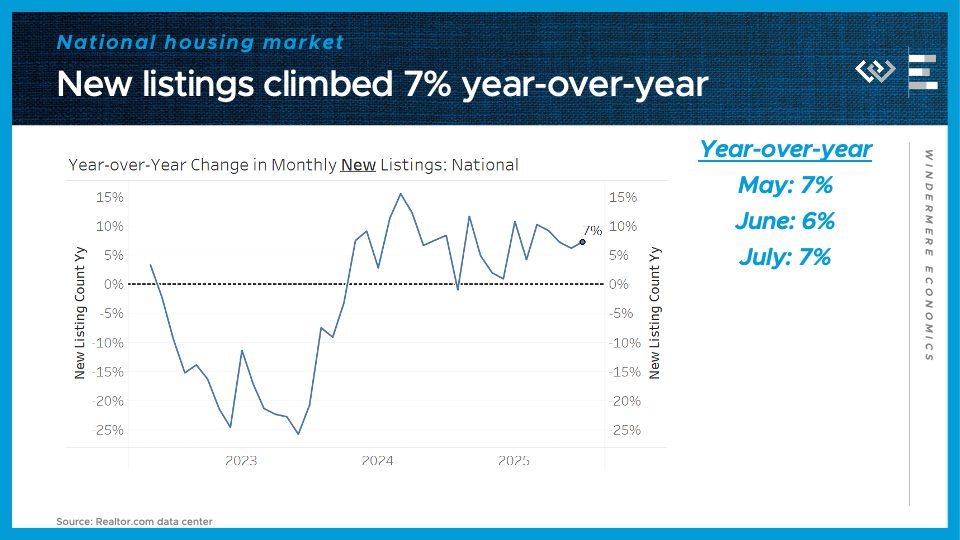
Maybe surprisingly, we didn’t see any deceleration in the flow of new listings in July – it was up 7% year-over-year, or slightly more than June’s 6%. So if inventory growth is slowing, like we just saw, it points to another rising trend this year: de-listings, or expired listings, where sellers are not getting an acceptable offer and just choosing to walk away.
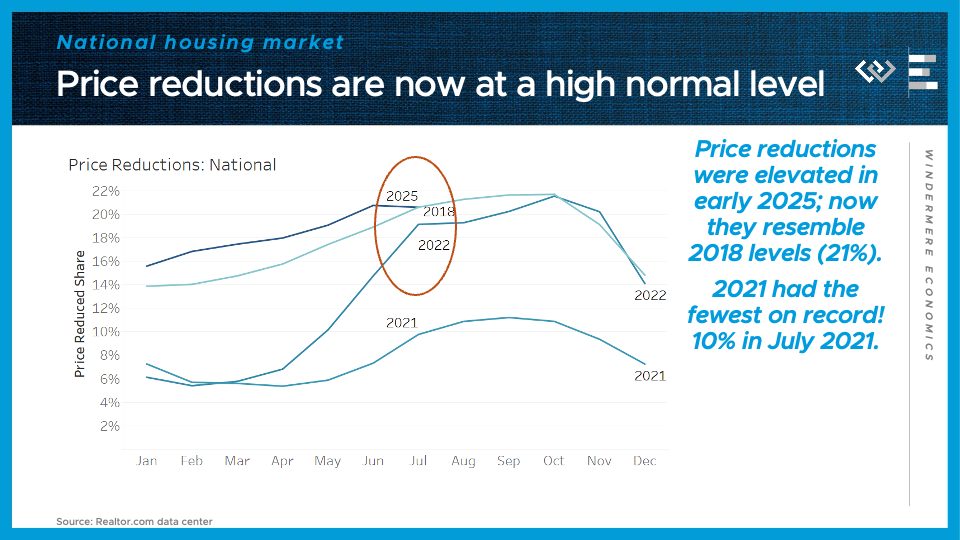
Another sign of sellers being unwilling to bend any further: price reductions. This is the share of active listings where the seller has reduced their asking price. It’s been elevated all year long, but it abruptly stopped rising in July, which is seasonally unusual — so now it’s actually at the exact same share we saw at this time in 2018, 21%, and not far from the share in July 2022.
All in all, the housing market has clearly swung in buyers’ favor, but these signs of an inflection point suggest the momentum in that direction is slowing down.
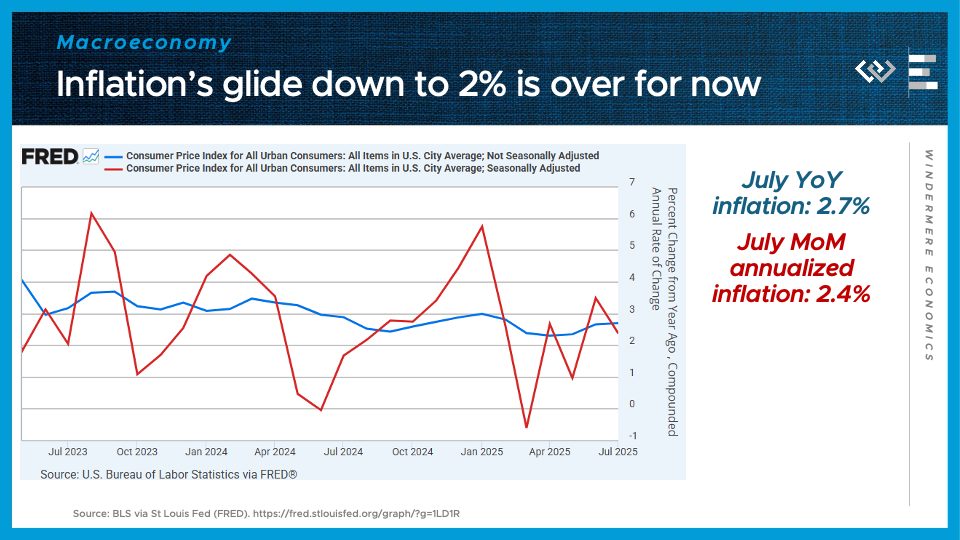
Turning to the macroeconomy, we have a couple of worrying signals of at least a mild form of macroeconomists’ least favorite condition: stagflation. Starting with the “flation” part, we see that inflation is stubbornly stuck closer to 3% than the Fed’s 2% target.
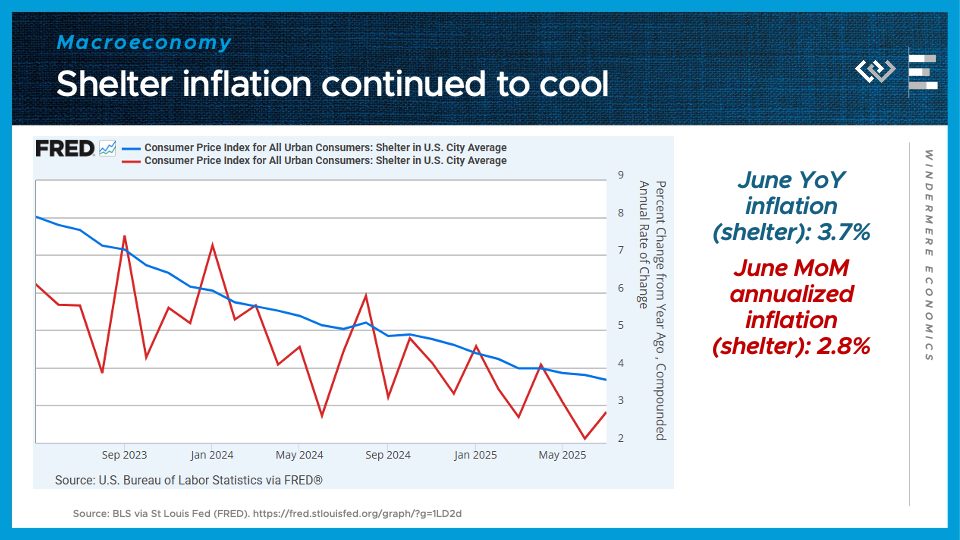
Shelter inflation has kept cooling in a kind of zigzag pattern, finally approaching 2%.
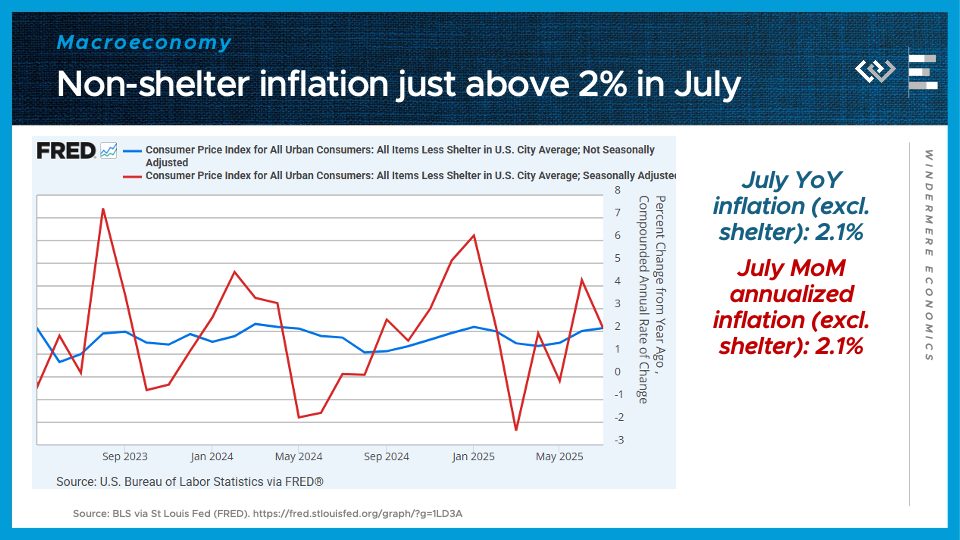
But the rest of the CPI basket, everything BUT shelter, is once again growing at – just barely – faster than 2% annualized.
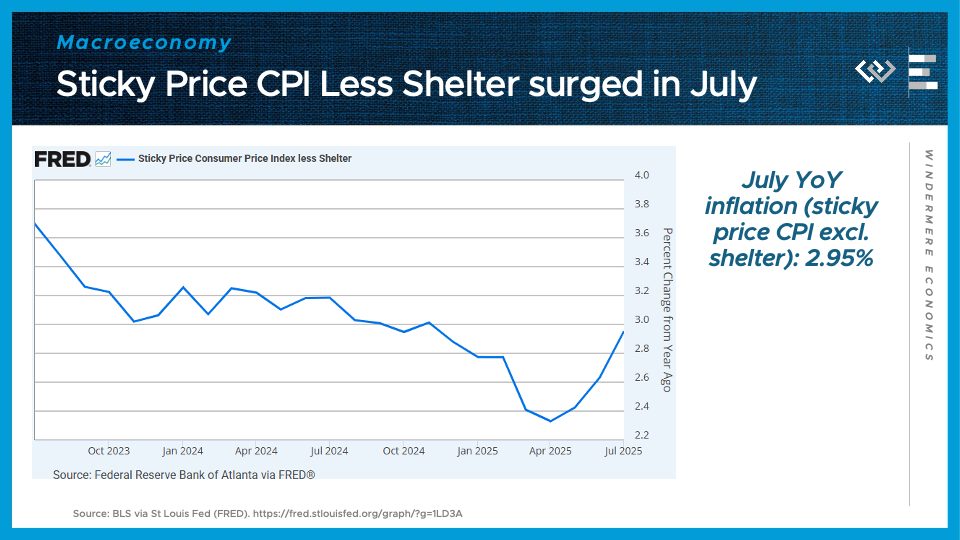
And an especially predictive part of the price index, called the sticky price index less shelter, accelerated sharply to almost 3% annual growth.
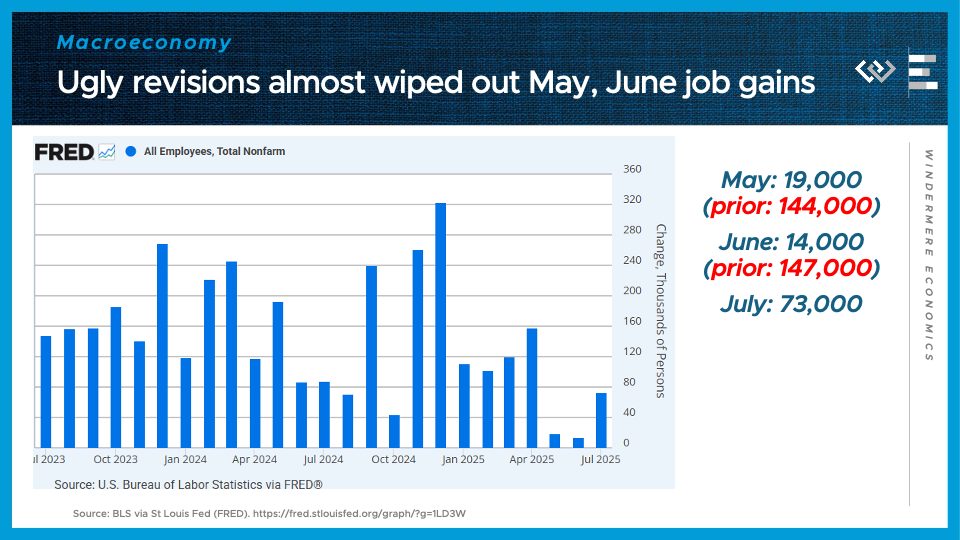
Turning to the stagnation side of things, the jobs report for July, released on August 1st, came in way below expectations. The most concerning part is that job gains for May and June were revised down radically, almost wiping out the healthy job gains the BLS reported just last month. Month-to-month revisions are a normal part of how the Bureau of Labor Statistics reports payroll gains and losses, and a pattern of sharply negative revisions often heralds the beginning of a recession.
Stagflation presents the Fed with a dilemma: the very weak jobs report would give them reason to cut interest rates, but resurgent inflation might give them pause. Markets are betting on at least one interest rate cut, starting in September, but after that it’s anybody’s guess where the data will guide their next decisions.
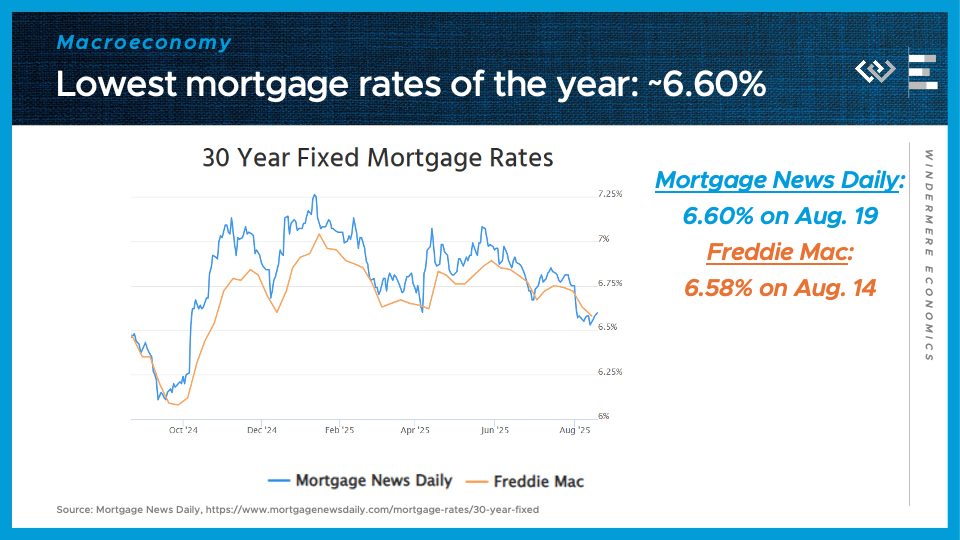
For the housing market, though, what’s most important is mortgage rates, and those have already fallen in the wake of the weak jobs report. Rates swooned, down to just over 6.5%, and while they’ve recovered slightly, this range of around 6.6% is still the best we’ve seen in 2025, so I’ll count that as progress. Buyers seem to be set up for another favorable early autumn housing market – more inventory, plenty of price reductions, and at least some mortgage rate relief.
Selling a home begins with understanding how much it’s worth. After an initial assessment, you may want to make some updates to increase the value of your property. There are several ways to do that, including boosting your curb appeal or making renovations with significant ROI potential. As you research potential projects, keep in mind that making your home more sustainable can boost its value to potential buyers. In today’s market, many buyers are looking for eco-conscious features that offer long-term savings, lower utility bills, and improved health and comfort at home. Making the right green upgrades can help your home stand out. Talk with your agent to identify which of these five upgrades makes sense for your home before it hits the market.
Five Green Upgrades that Increase Your Home Value
1. Energy-Efficient Appliances
It’s no secret that appliances use a significant amount of energy, which means there is plenty of opportunity to cut back on their output. Installing energy-efficient appliances can do wonders for creating a more eco-friendly home, while appealing to buyers who value sustainability. And as many cities move toward energy codes that limit or eliminate the use of natural gas, energy-efficient electric appliances are becoming an important part of future-proofing your home. When shopping around, look for appliances with high-efficiency or Energy Star certifications. They may cost more to purchase, but their ability to generate long-term savings is a concrete selling point.
2. Tankless Water Heater
As the shift toward eco-friendly appliances has picked up steam, so too has the preference for tankless water heaters. Whereas standard storage tank water heaters keep a reservoir of hot water at the ready, tankless water heaters heat your home’s water supply on demand. It’s similar to a new car that shuts off its engine when sitting idle, as opposed to an older car whose engine is running all the time. Tankless water heaters don’t come without their share of costs. An upfront investment will be required for purchase and installation, but it will deliver immediate savings on energy bills.
3. Solar Panels
There are many benefits to going solar, but for sellers, the positive effect solar energy has on home values is chief among them. A solar-capable home is a surefire way to drum up buyer interest. By taking care of the upfront installation costs, you allow the buyer to focus on the benefits of solar energy, i.e., the long-term energy savings, the reduced utility bills, and the reduction in the property’s carbon footprint. Depending on your location, you may also be eligible for local or federal tax credits, utility rebates, or other incentives that can offset these installation costs. Work closely with your real estate agent to understand how solar energy has affected home prices in your area to get an idea of the project’s ROI potential.
4. Water Filtration
Installing a home water filtration system is one of the best ways to cut down on your home’s waste while increasing its value. These filtration systems appeal to buyers for a variety of reasons. Of course, there are an array of health benefits to having filtered water running through the entire house. Buyers can be assured that the water is safe to drink, they will be bathing and showering in clean water, and there is a reduced risk of plumbing issues due to contaminated water. Beyond the personal health benefits, it can also cut down on bottled water costs and the amount of landfill waste produced within the home. Some whole-home water filtration systems also come with smart sensors that track usage, detect leaks, and monitor filter lifespan, adding a layer of convenience and long-term savings for homeowners.
5. Energy-Efficient Windows
Alternatives to traditional windows have become more popular in recent years. Energy-efficient windows are better insulated, which helps to regulate temperatures inside the home and protects against harmful ultraviolet rays. Their ability to help regulate your home’s heating and cooling leads to energy savings and reduced carbon emissions. Energy-saving windows can be highly valuable to potential buyers, especially if you live in a climate with extreme temperatures.
In addition to temperature regulation, many buyers also appreciate how modern energy-efficient windows help with soundproofing—a big plus in urban or suburban neighborhoods.
Bonus Upgrades to Consider
If you’re looking to go a step further, here are a few more eco-friendly upgrades that may increase your home’s value and appeal:
Smart thermostats automatically adjust heating and cooling based on your schedule, saving energy and offering buyers convenience.
Upgrading to high-efficiency insulation in walls, attics, or crawl spaces can significantly reduce energy costs.
With electronic vehicles becoming more common, having a dedicated outlet or charging setup at home is a huge plus for future-minded buyers.
For more tips on the selling process, visit the selling section of our blog.
Looking to boost your home’s market value with smart, sustainable upgrades? A Windermere agent can help you decide which projects will give you the best return in your neighborhood.
Click the button below to connect with an experienced Windermere Real Estate agent.
In the process of buying or selling a home, you’ll frequently come across the term “MLS.” The Multiple Listing Service (MLS) is a group of regional databases of homes for sale accessible only to real estate agents and brokers. Their ability to access the MLS makes it easier for buyers to find the right home and for sellers to market their listings.
What is the Multiple Listing Service (MLS)?
The purpose of an MLS is to facilitate real estate transactions by connecting real estate agents and making it easy for them to share information about active listings and sold home data. For buyers and sellers, your agent’s access to the MLS means you’ll be connected to the largest network of homes and listing information on the market.
There are over 500 independent MLSs across the United States, with each MLS showing the homes for sale in a particular geographic region. Listing agents add their clients’ listings to the database—providing photos and detailed information about the property—so buyer’s agents can show them to their clients. The MLS allows for customizable searches, which agents use to easily identify the homes that match their clients’ criteria. The vast amount of historical data available on the MLS is what your agent will use to conduct their Comparative Market Analysis (CMA) to competitively price your home. The listing data in the MLS is fed to real estate brokerage websites, such as Windermere.com, so that buyers can search for homes on their own as well.
Benefits of the Multiple Listing Service (MLS)
Selling a home is a numbers game. The more potential buyers you can reach, the more likely you are to find the right buyer in a timely manner. After your agent conducts their CMA to determine the value of your home, they’ll upload the listing to the MLS. Here, they can add additional information beyond what you would find in a typical listing description, such as showing times, contact information, and more. The MLS provides maximum visibility for sellers by connecting them to buyer’s agents who are actively searching for listings. In today’s market, many MLS platforms offer mobile-friendly tools and agent apps, making it even easier to track showing requests, market updates, and search results on the go. Some even use AI to help agents identify pricing trends or recommend homes that match specific client needs.
The MLS has also helped to make the industry more equitable. Many MLSs enforce policies that promote fair and equitable access to listing data. This includes rules that require agents to submit a listing to the MLS within 24 hours of public marketing, along with principles from the Fair Display Guidelines, which aim to ensure that property listings are represented transparently and are easily accessible. Small real estate brokerages have access to the same MLS info as large companies, putting everyone on a level playing field.
For buyers, the MLS means greater transparency. Agents can set up auto-alerts based on your criteria and ensure you’re seeing listings as soon as they go live. Because the MLS is updated in real-time by licensed agents, it’s often more reliable than national search portals when it comes to availability and details.
What is an MLS number?
An MLS number is a unique code for each home listed on the market. It makes it easier for agents to communicate regarding a specific property. This number also helps agents quickly pull up detailed reports, schedule showings, and share links directly with their clients. If you ever have a question about a home you’ve seen, providing the MLS number ensures your agent can locate it fast.
To learn more about the MLS, or for answers to your buying and selling questions, connect with a local, experienced Windermere agent today:
Hi. I’m Jeff Tucker, principal economist at Windermere Real Estate, and this is a Local Look at the July 2025 data from the Northwest MLS.
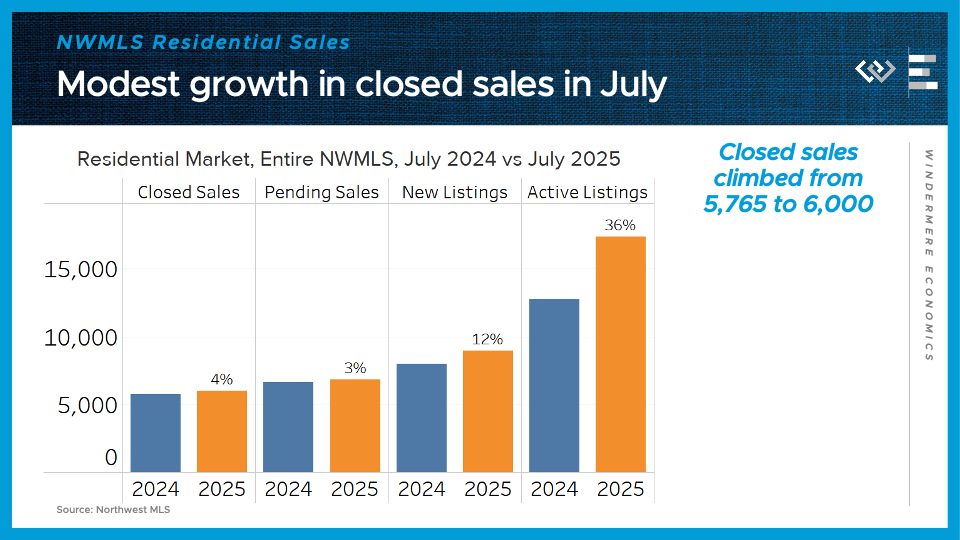
After a bit of a roller coaster in the second quarter following the April rollout of Trump’s tariffs, July just looked slow and steady, especially in sales: We saw 4% more closed residential sales across the Northwest MLS in July than last year, and 3% more pending sales.
On the supply side, there were 12% more new listings than July of last year, and the month ended with 36% more active listings than last July. That’s almost identical to the pace of growth we saw in June.
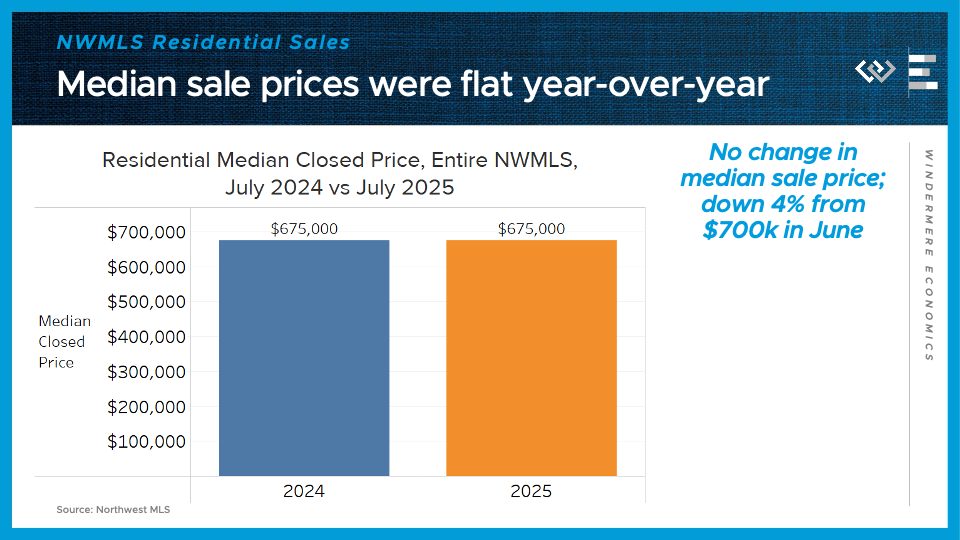
Finally: the most steady number across the Northwest MLS: median sale price, which was exactly the same as last July: $675,000. The growth of active listings has been weighing down price appreciation, and has now brought it down to 0.
This is yet more data showing a market where buyers are gaining negotiating leverage.
Now I’ll take a closer look at the four counties encompassing the greater Seattle area.
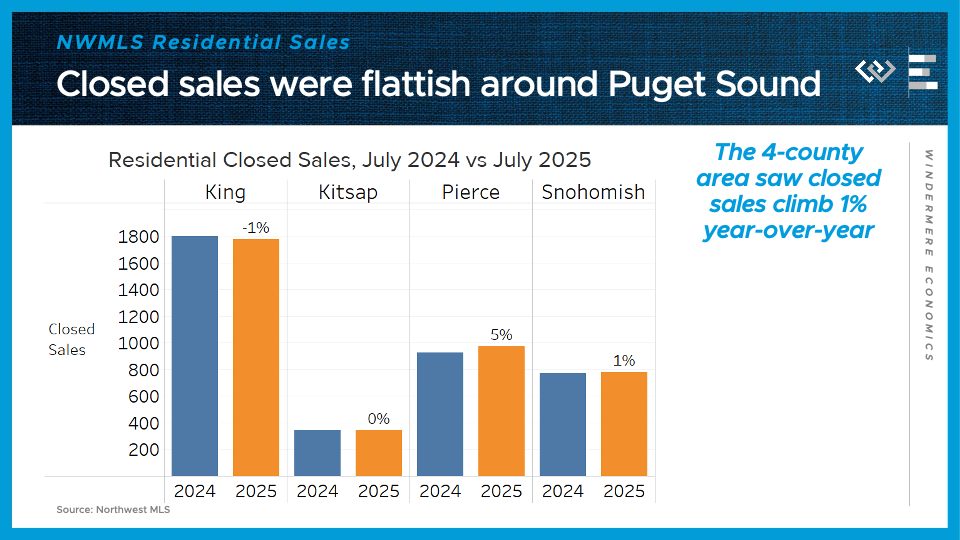
Closed sales climbed here by 1% from last year, led by growth in Pierce County, which offset a tiny decline in King County.
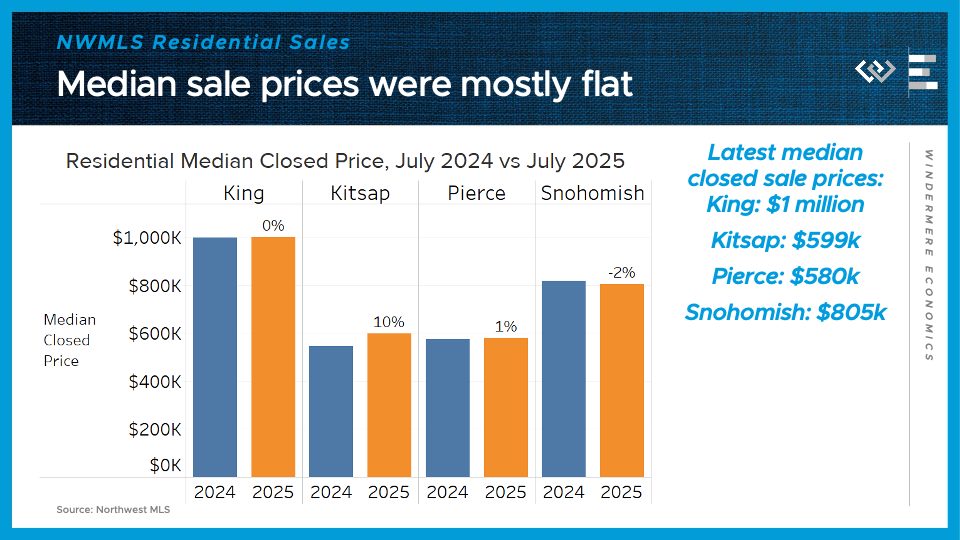
Median sale prices were exactly flat year-over-year here in King County at $1 million; up 10% in Kitsap to almost $600,000; up 1% in Pierece and down 2% in Snohomish County.
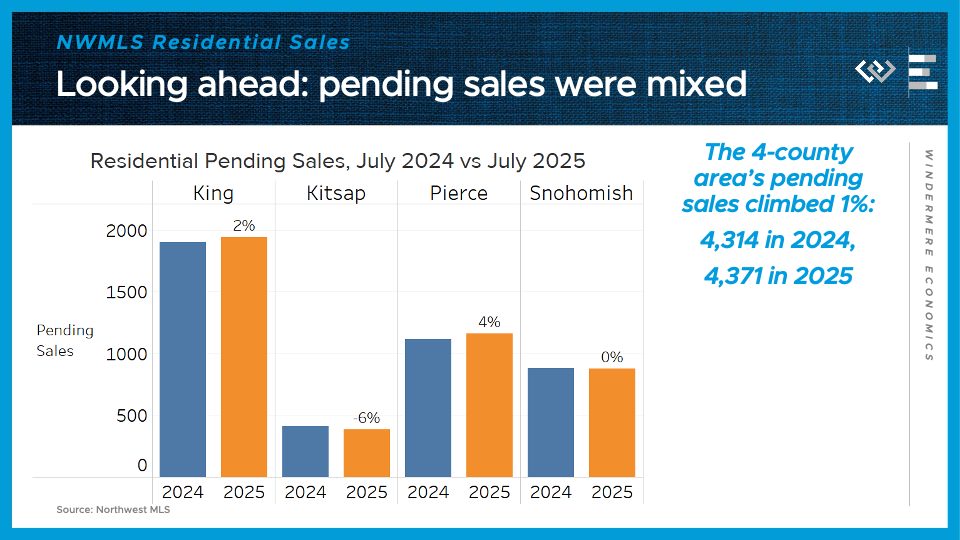
Looking ahead, pending sales climbed a modest 1% across the region, including a 2% gain in King County.
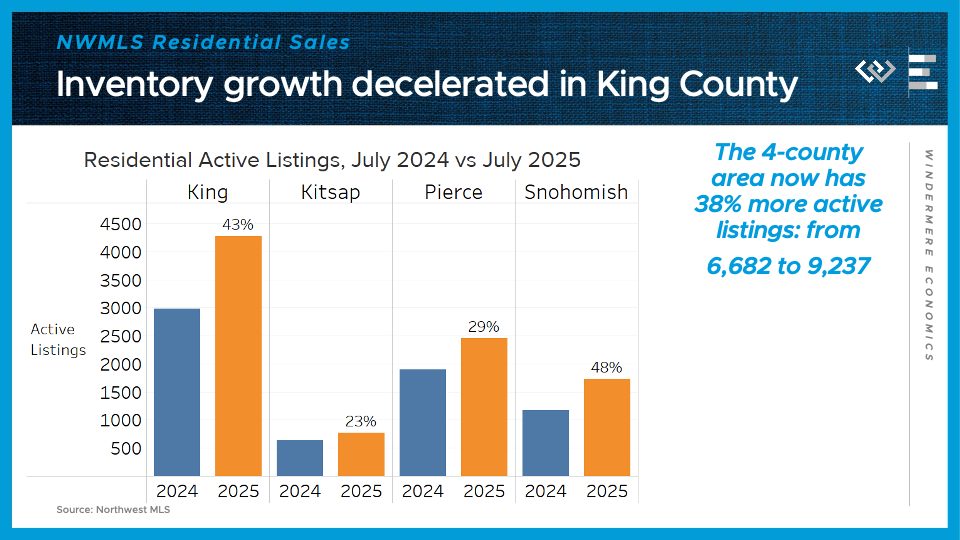
On the supply side, the 4-county greater Seattle area had over 9,000 active listings at the end of July, or 38% more than the same time last year. This is continuing the deceleration in inventory growth since we had 45% year-over-year gains in May; most of the deceleration is thanks to King County, where inventory was up 50% just a couple months ago.
All in all, this market looks like a return to a “new normal” where buyers have gained the upper hand, at least enough to grind price appreciation a halt, but not nearly enough to bring prices down as much as they’d like. Inventory is still up, but not accelerating toward a glut. And new listings are continuing to deliver a lot of new options for buyers here in the dog days of summer.
There’s something about slipping into a freshly made bed that just feels right. Crisp sheets, fluffed pillows, and a neatly folded duvet can turn even the simplest bedroom into a relaxing retreat. But before you get to the cozy part, it helps to know a few behind-the-scenes tricks, starting with how to properly fold a fitted sheet.
Whether you’re staging your home for buyers, organizing the linen closet, setting up a guest room, or want to bring more intention into your everyday routine, these tips can help you fold, layer, and care for your bedding like a pro.
The Secret to Folding a Fitted Sheet
Fitted sheets are notoriously frustrating to fold. But with a few simple steps, you can turn that tangled ball of fabric into a smooth, crisp square that stacks neatly in your linen closet.
1. Find the Corners
Hold the sheet lengthwise with the shorter sides hanging down and the longer sides running horizontally across your body. Place one hand inside each of the top two corners and flip the corners inside out. Turn the sheet to make sure the seams are facing you and the elastic is facing away.
2. Tuck the Top Corners
Take the corner in your right hand and fold it over the corner in your left hand, so the two corners are neatly tucked into each other, creating a pocket. Switch hands so that the pocket is now in your right hand.
3. Repeat with the Bottom Corners
With your right hand still inside the pocket you just made, reach down along the elastic with your left hand and locate the other pocket created by the bottom two corners. Holding both pockets in front of you, clap your hands together, tucking one pocket into the other. All four corners should now be tucked into each other, forming a rounded square shape.
4. Flatten and Shape
Place the sheet on a flat surface and square it off, smoothing and tucking any loose edges as you go. The elastic should form a “J” shape.
5. Fold It Up
From the bottom of the “J”, fold the sheet into thirds. Then fold the long rectangle into thirds again. The result should be a compact, tidy square that stacks easily in your linen closet.
This is the latest in a series of videos with Windermere Principal Economist Jeff Tucker, where he delivers the key economic numbers to follow to keep you well-informed about what’s going on in the real estate market.
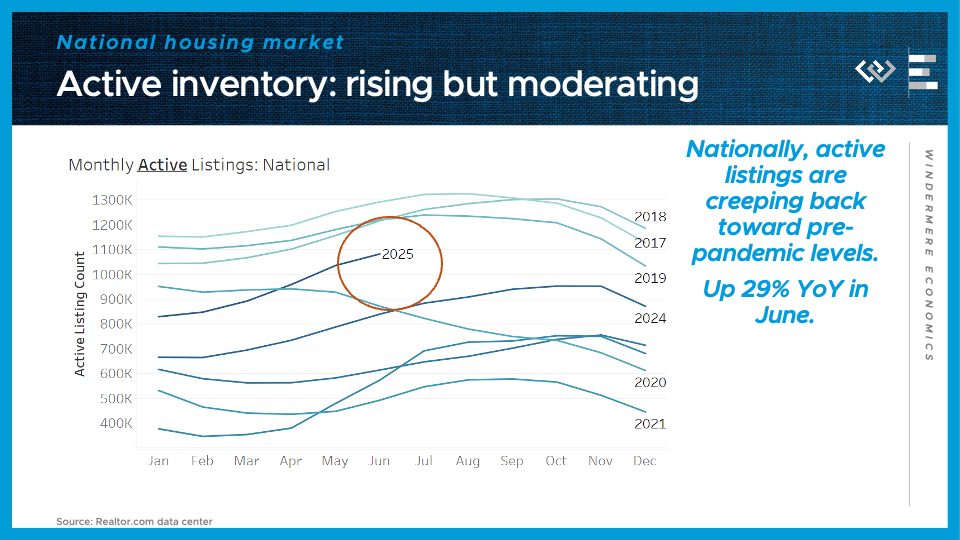
This month I’ll take a closer look at inventory, which is our best barometer of whether the market is trending in sellers’ or buyers’ favor. Nationwide, inventory is still working its way back up toward pre-pandemic levels, but at a somewhat moderating pace.
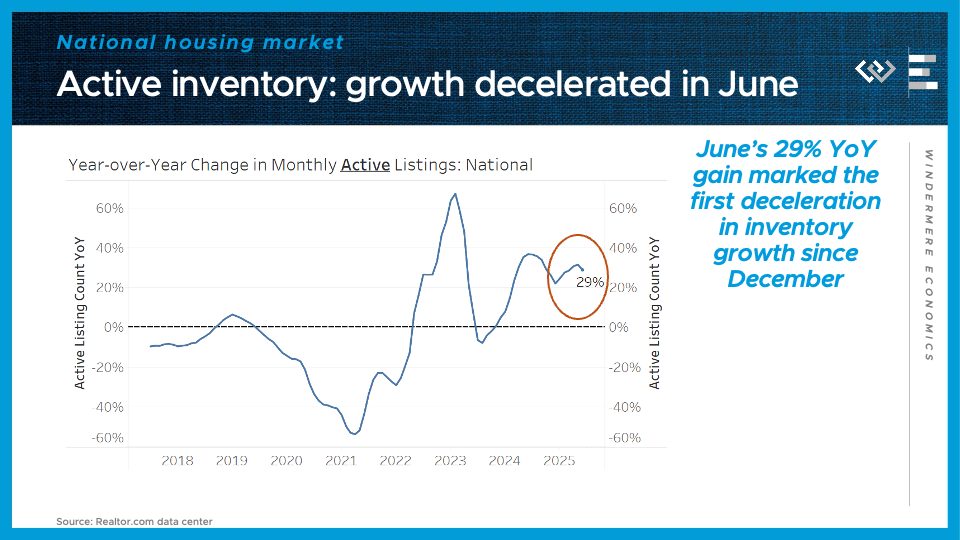
At the end of June, there were about 1 million, 83 thousand active listings on the market, or 29% more than last year. That IS substantial growth, but it’s a step down from the 32% year-over-year gain we saw in May – which marks the first deceleration in this metric since December 2024. This could be a blip, or it could be an inflection point where we see the inventory growth start to slow back down.
That inventory growth has been swinging the pendulum of negotiating power in buyers’ favor, putting downward pressure on sale prices. Now if inventory growth stalls out, that could help to prevent prices from dropping much below year-ago levels.
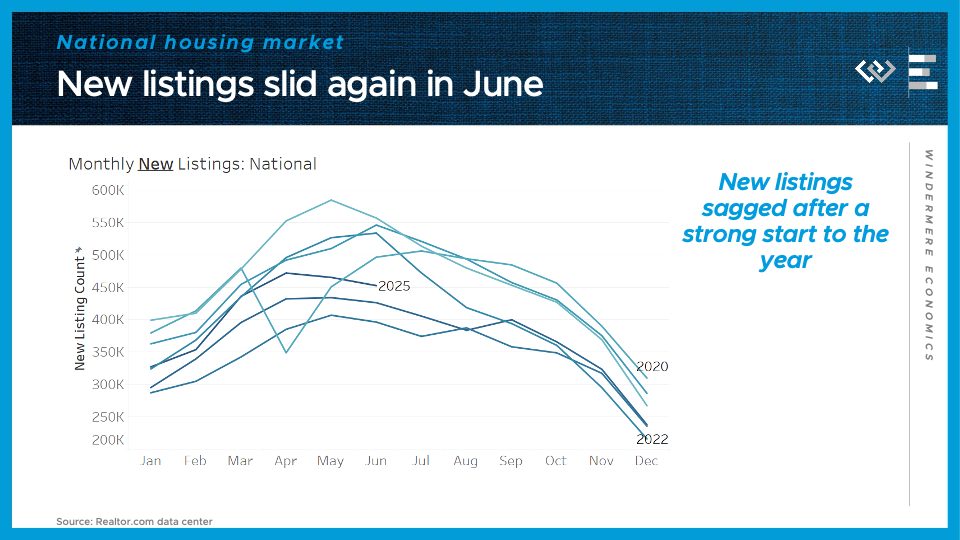
The reason WHY inventory growth has begun to slow seems to lie with sellers: they came roaring in to 2025 with a healthy rebound of new listings, but they’ve dropped off over the course of Q2.
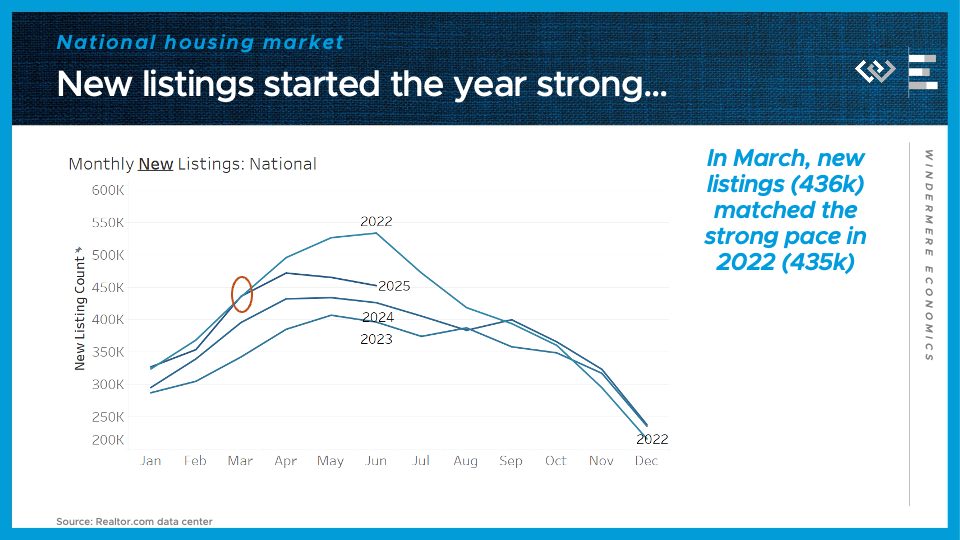
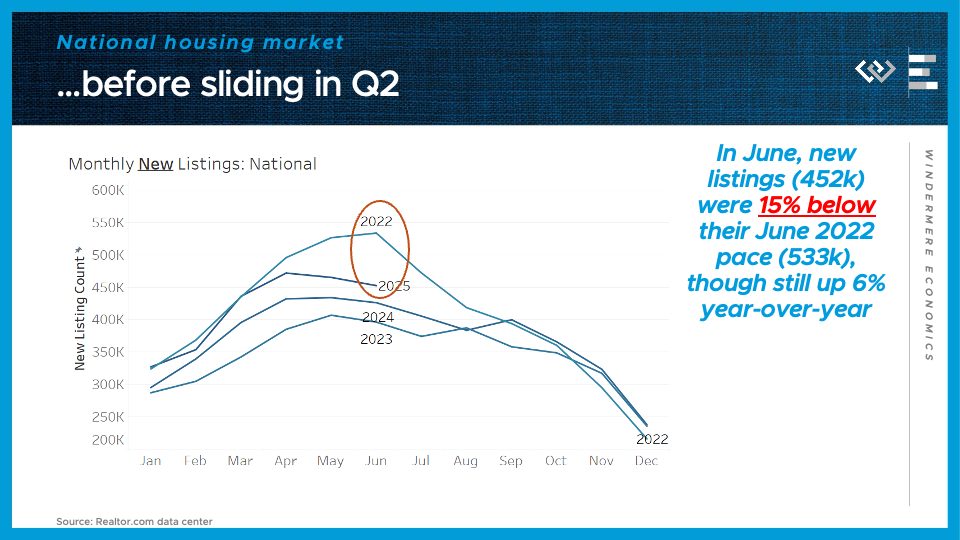
If we just keep the last few years on this chart of new listings, we can see the year started as strong as 2022… but now owners have pulled back from listing as much. It’s not a total sellers’ strike, but in June there were 15% fewer new listings than in June 2022, or only about 6% more than this time last year.
If this trend continues – sellers backing away from the market – it could insulate prices from declining, but at the cost of fewer transactions in the second half of the year.
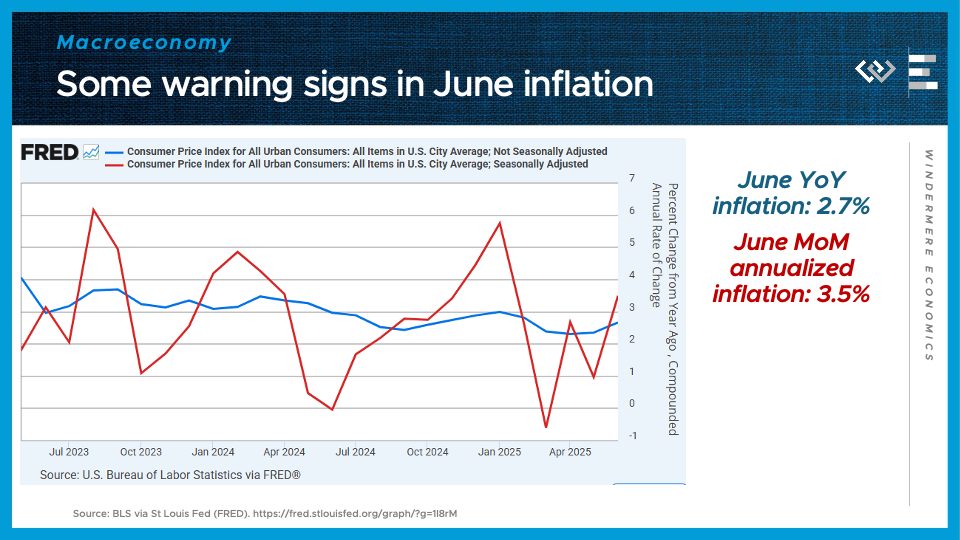
Turning to the macroeconomy, the CPI report for inflation in June started to raise some yellow flags. The annualized monthly growth rate of prices jumped to 3.5%, and the year-over-year change in CPI from last June was only 2.7%.
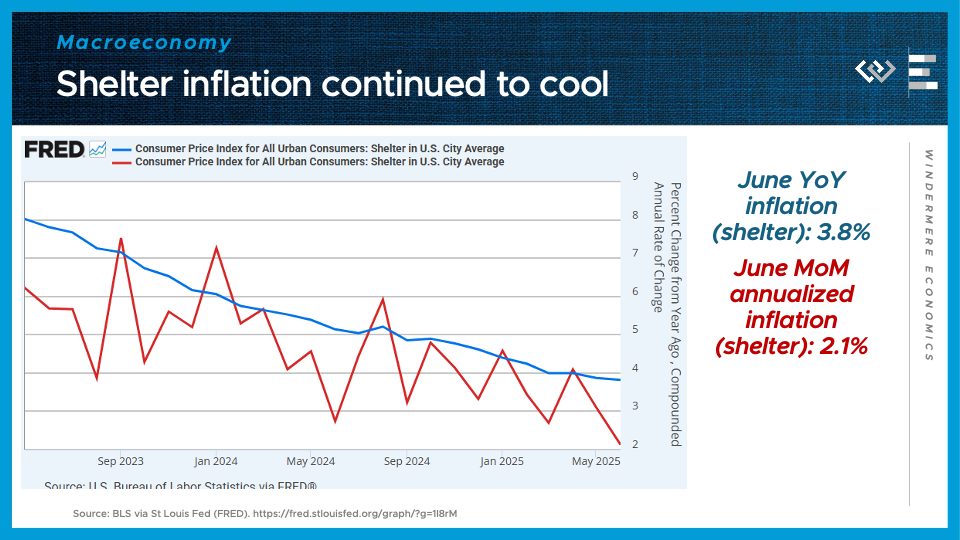
Now, shelter inflation HAS been a major contributor to elevated inflation for the last few years, but it has been decelerating, and that continued in June: in fact, shelter inflation ticked down to its lowest monthly pace in years, at just 2.1% annualized.
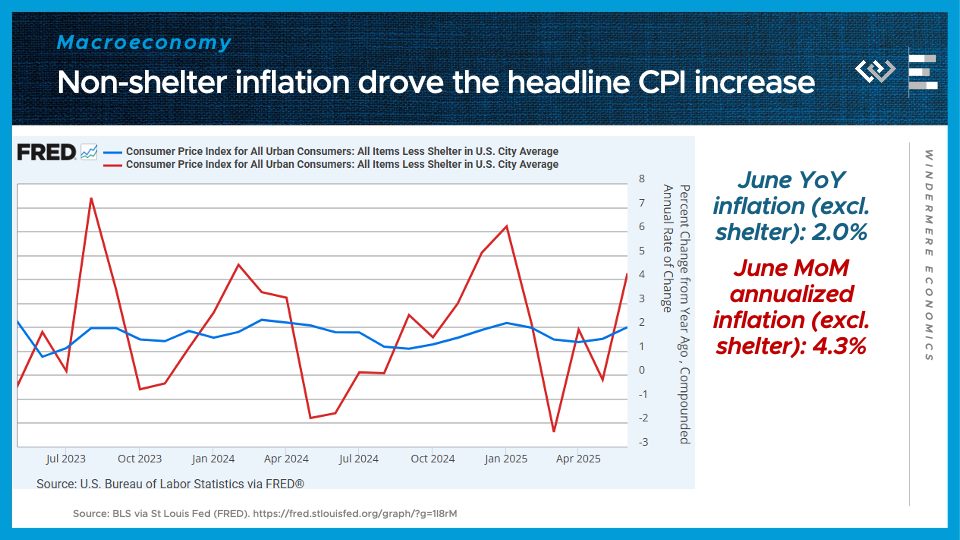
The rest of the CPI basket, excluding shelter, is what drove inflation higher: back up to just over 2% for the first time in months. The rise in non-shelter inflation, especially inflation for other services, could lead the Fed to keep their rate cut plans on hold.
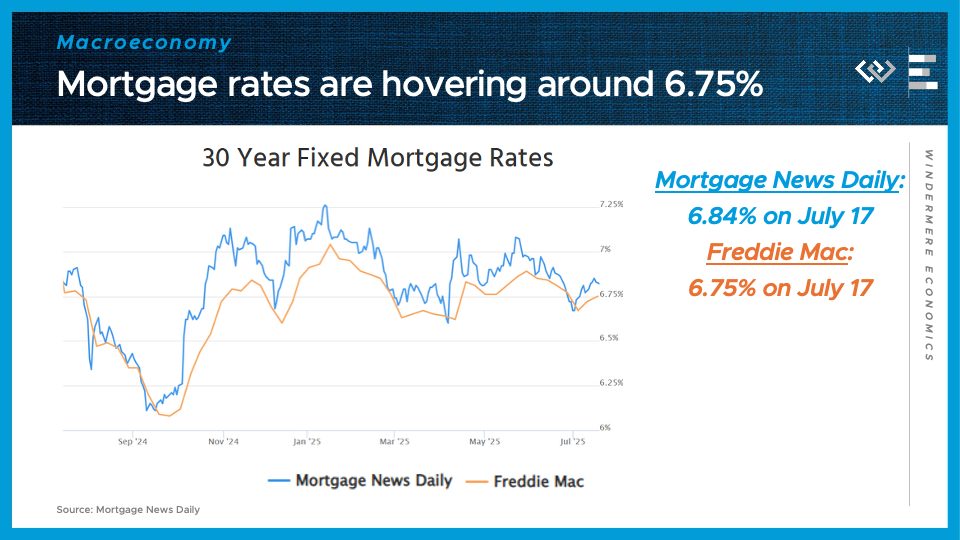
Speaking of interest rates, it still feels like Groundhog Day, with 30-year mortgage rates bouncing around 6 and three-quarters percent. There was a modest decline late in June, but that was erased by mid-July. Between strong economic growth, rebounding inflation, and higher debt issuance by the Treasury, I just don’t see much reason to expect mortgage rates to fall dramatically, until some of those factors change. This is still a higher-for-longer world when it comes to long-term interest rates.
For pet owners, it’s hard to imagine their home without a furry friend. However, when it comes time to sell, showcasing the qualities of a home should take precedence over the pets that live in it. This creates additional steps in the process of preparing your home for sale, but it makes all the difference in the minds of buyers.
Selling a Home with Pets
Staging Your Home
A well-staged home makes it appealing to the widest variety of buyers and has significant ROI potential when it hits the market. However, having a pet can complicate the staging process. Buyers may lose interest in the home if they see traces of pets, so it’s a good idea to hide any signs of their presence.
It’s especially important to hide evidence of your pet in marketing photos. Prepare for your home’s listing photos by cleaning and vacuuming, making sure all pet stains are gone and any pet-related damage is repaired. Stow any pet carriers, cages, toys, food bowls, and other supplies that may hinder the photographer’s ability to capture the essence of a room.
Showing Your Home
Before inviting potential buyers inside, it’s best to give your home a deep clean to improve your home’s air quality and to rid your carpets, flooring, and surfaces of pet odors and any dirt they may have tracked in over time. Provided you’re using your own furniture, vacuum and clean everything to extract as much fur and pet dander as possible. Talk to your agent to see if it’s a better idea to stage your home with rented furniture. If your pets have caused any damage in the home, make repairs or replacements as needed. After tending to your home’s interior, don’t forget to clean up after your pets in your yard as well. Fill in any holes in the lawn, freshen up your flower beds, and tidy up any areas of the landscaping where your pets may have dug.
After you’ve prepared your home for showings, there’s the question of what to do with your pets once buyers start taking tours. Ask a family member, friend, pet sitter, or neighbor to watch your pets while the showings take place. If you’re not able to find someone to watch them, form a strategy to temporarily relocate your pets during showings. If they must stay in the home, garage, or backyard during tours, it’s best to give buyers advanced notice that there are pets on the property. Talk to your agent about posting signage communicating their presence so that there are no surprises as guests make their way through the house.
Taking all these precautions will help to present your home in the best light without deterring certain buyers, for whom the signs of a pet may cause them to lose interest. On the other hand, if any buyers inquire about how the home can accommodate their pet, you and your agent will be more than ready to answer any questions they may have.
Selling Your Home
For more information on the process of selling your home, visit the Selling Page on our blog. To get an idea of what your home is worth, try our free home value calculator below:
Hi. I’m Jeff Tucker, principal economist at Windermere Real Estate, and this is a Local Look at the June 2025 data from the Northwest MLS.
Here are the four key metrics I watch to track supply and demand in the market: closed and pending sales, which tell us a lot about demand; and listings – new and active – which tell us a lot about supply.
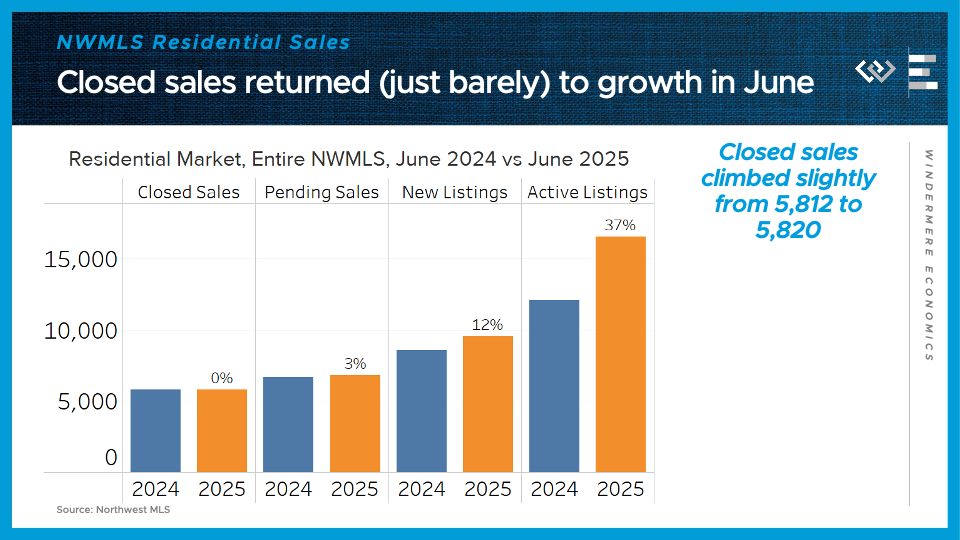
Last month I highlighted the year-over-year decline in closed sales in May, as fallout from the stock market dip and economic turmoil in April; now I’m happy to share that like the stock market, the housing market has rebounded after that speed bump in May. Closed residential sales across the Northwest MLS in June were almost exactly the same as their year-ago level. Pending sales of single-family homes climbed 3% year-over-year.
On the supply side, about 12% more new listings hit the market this June, and the tally of active listings ended the month 37% higher than June 2024’s inventory. That’s a lot more inventory, but the pace of year-over-year growth is slightly slower than the 39% we saw last month.
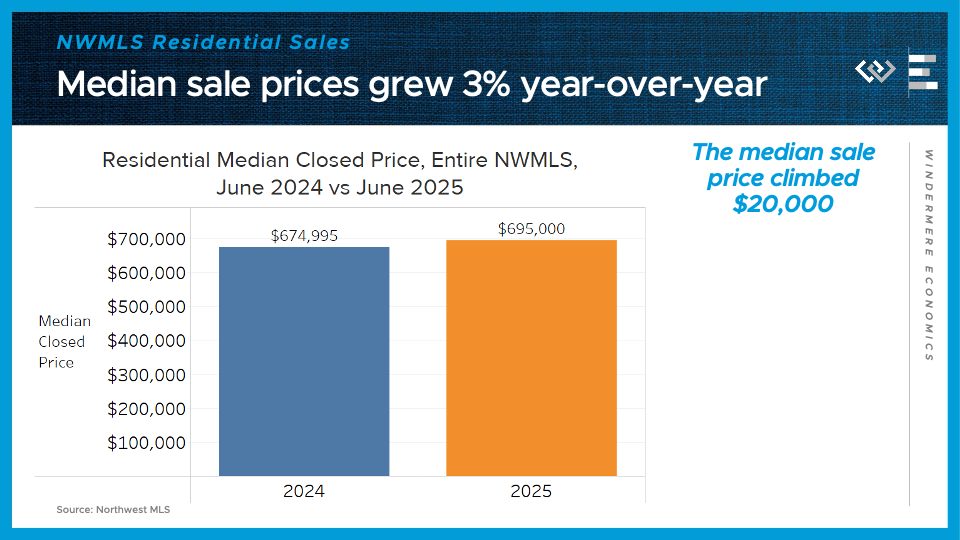
Finally: the median price for closed single-family home sales actually climbed 3% from last year, to $695,000. That reverses the 1% decline in May, and actually sets a new high-water mark for the year, above the $680,000 price level in April.
So putting it all together, buyers around Washington came back to the table in June after stepping away in May, and they helped drive more sales and higher prices. Looking ahead, the high level of inventory we’ve got on the market at the midpoint of the year suggests that buyers will get more negotiating power later this summer.
Now I’ll dig into details for the four counties encompassing the greater Seattle area.
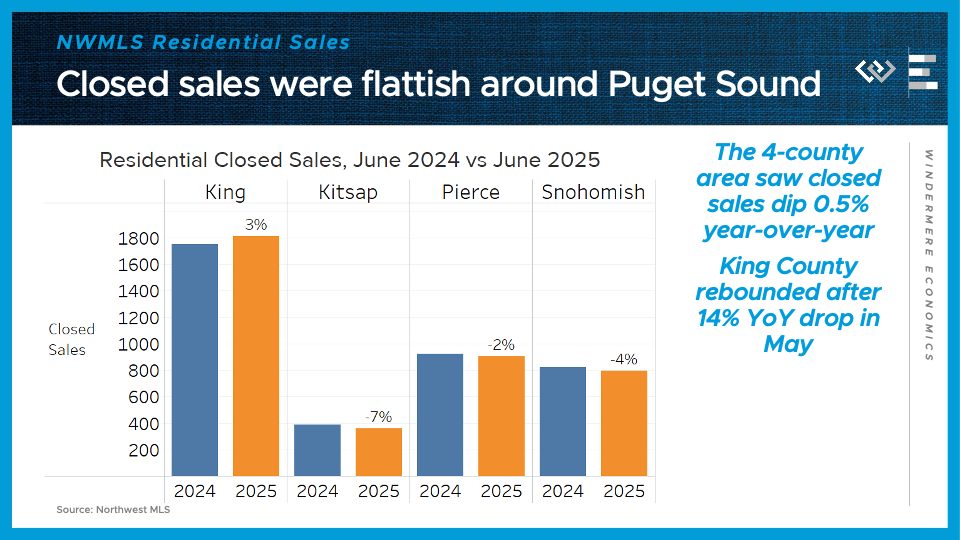
Residential closed sales dipped by just half of one percent year over year here in the 4-county region, thanks to a 3% gain in King County mostly offsetting some small declines in the other counties. That gain for King County was especially notable after it posted a whopping 14% year-over-year decline in May, suggesting that some buyers got back into the market after pressing “pause” earlier this spring.
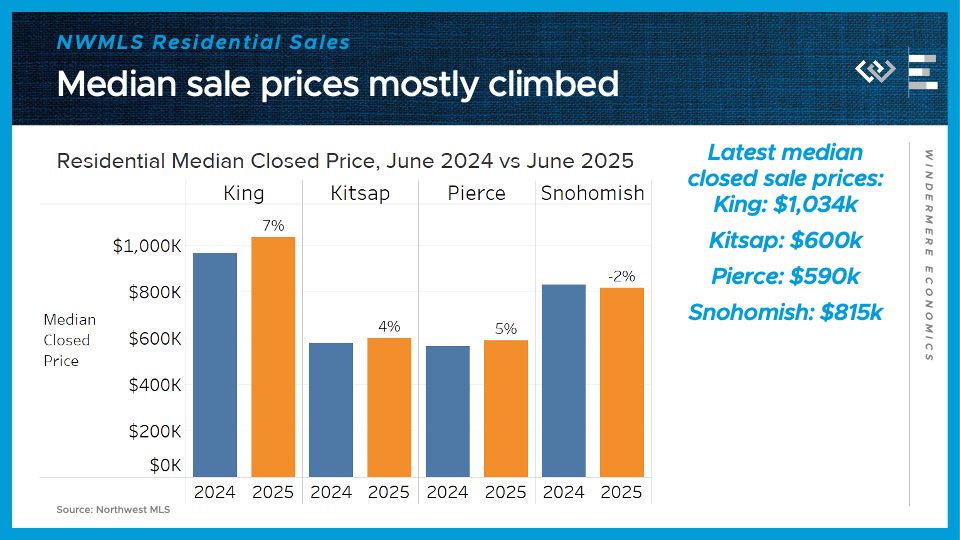
Similarly, King County saw the biggest gain in median sale price, climbing 7% from a year ago and now back over a million dollars. Kitsap and Pierce saw prices climb 4% and 5%, while prices dipped 2% in Snohomish County.
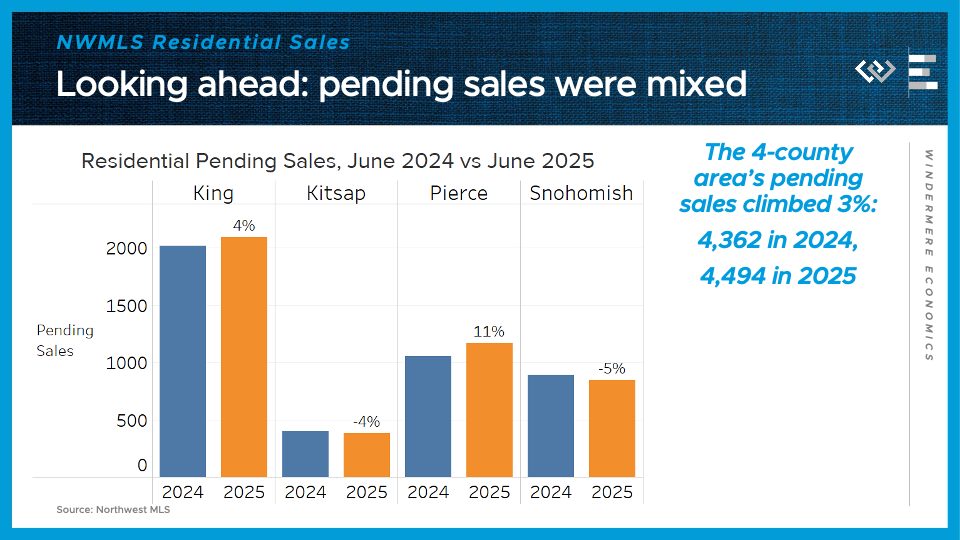
Looking ahead, pending sales returned to modest year-over-year increases, totaling 3% across the region, led by 11% more in Pierce and 4% more in King County, offset somewhat by declines of 4% in Kitsap and 5% in Snohomish County.
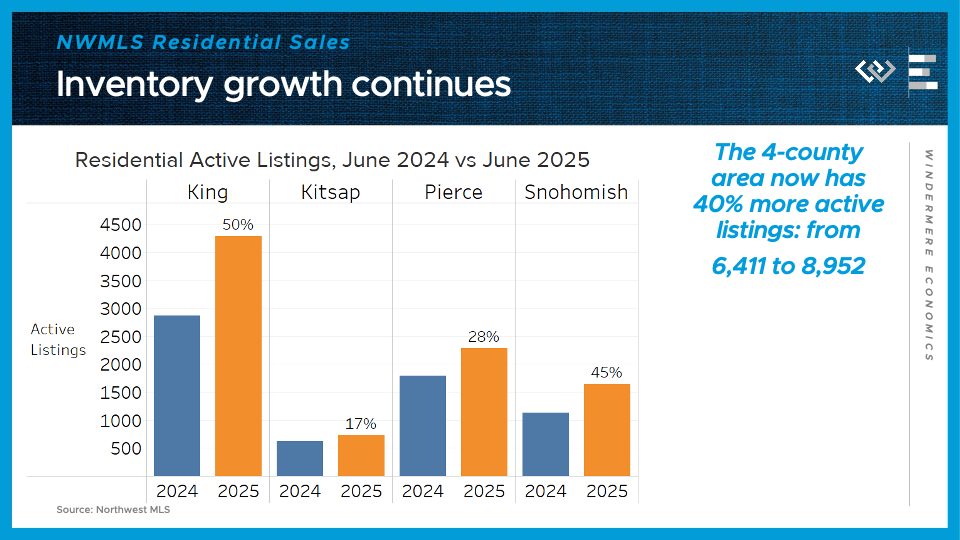
On the supply side, the 4-county greater Seattle area had almost 9,000 active listings at the end of June, or 40% more than the same time last year. Still, if that sounds dramatic, it’s a small percentage gain than the 45% year-on-year growth in May, suggesting that the inventory buildup is decelerating.
All in all, this report confirmed that greater-Seattle-region buyers came back to the table in June – not in huge numbers, but more like a return to the new normal of sales activity, after many buyers had pressed “pause” in April. Now, the usual seasonal cooldown in demand is likely to begin, just as summer heats up. That will help swing the pendulum in favor of the buyers who keep house-hunting into the second half of the year, and I expect that higher inventory will also start to put some competitive pressure on sellers who haven’t yet gotten an offer.
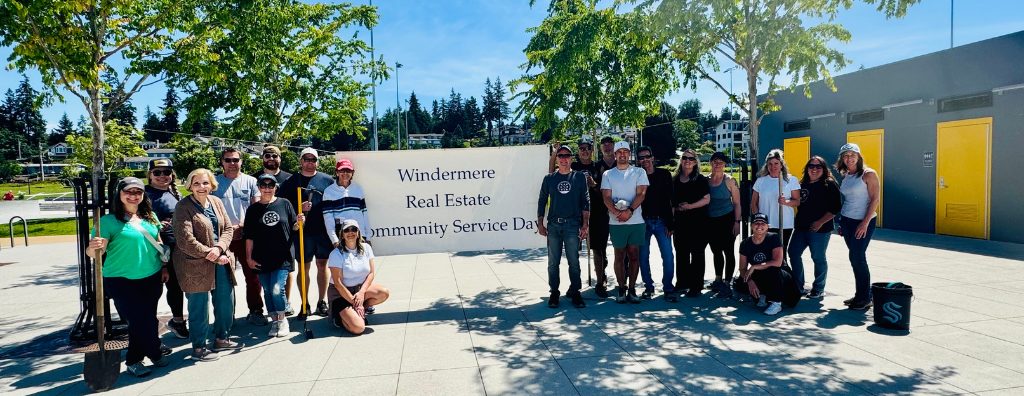
Since 1984, Windermere offices have closed their doors for one special day each June to roll up their sleeves and give back. Community Service Day unites agents, staff, and franchise owners across our network in a shared mission: to support the places we live and work through hands-on projects that strengthen communities and bring people together.
This year marked Windermere’s 41st annual Community Service Day, and our teams came out in full force. From painting barns and tuning bikes to organizing diapers and digging garden beds, each office contributed something meaningful and close to their hearts.
Here’s a look at how a few of our offices showed up this Community Service Day.
Community Service Day 2025
California
Windermere Signature Properties,formerly Lyon Real Estate, got a jump start on Community Service Day this year, kicking things off in April and setting the tone for what was to come. It was their first year taking part in this cherished Windermere tradition, they embraced it wholeheartedly, bringing the energy, care, and community spirit to every project. From park cleanups and food banks to care packages and foster youth support, their impact spanned the entire Sacramento area.
Davis
Auburn
Fair Oaks
In Auburn, agents took to the Auburn Recreation District, where they painted benches, tended the rose garden, and brought new life to the local park. The Davis / Woodland office partnered with the local YOLO Diaper Bank to assemble and organize donations and presented a $5,000 Windermere Foundation check to support families facing diaper insecurity. Meanwhile, the Roseville / Granite Bay and Fair Oaks offices teamed up with All About Hope, helping put together “Hope Boxes” filled with art supplies and creativity tools for children facing trauma and hospitalization. And at Compassionate Planet in Rocklin, the West Roseville / Rocklin team helped transform the organization’s new barn workshop—a space designed to provide job training and life skills to aged-out foster youth and at-risk young adults.
Whether they were painting, packing, or planting, Windermere Signature Properties made a memorable debut, bringing our Community Service Day values to life through meaningful, hands-on work that reflects the true spirit of Windermere.
Oregon
Windermere offices across Oregon made a significant impact this year, taking on a wide variety of projects that reflect their deep roots in the communities they serve. In Salem, agents and staff from Windermere Pacific West Properties spent their second year in a row volunteering with Marion Polk Food Share at the organization’s Youth Farm. This year, they helped replant rows of peppers, eggplants, and other fresh produce that will later be harvested and distributed to local food pantries and partnering health clinics. Marion Polk Food Share plays a vital role in the region’s hunger relief efforts, supporting over 70 local partner agencies and distributing millions of meals each year. With the rising cost of groceries and ongoing challenges around food access, this kind of work remains essential in communities of every size.
Pacific West Properties
Heritage
Bend
Also in Salem, the team from Windermere Heritage spent their day caring for Minto-Brown Island Park, one of the city’s most treasured outdoor spaces. Their efforts focused on preserving the park’s natural beauty, removing invasive plants, clearing pathways, and maintaining the surrounding green space to ensure it remains a safe, accessible place for the community to gather, explore, and connect with nature.
In Bend, the Windermere Realty Trust team dedicated their Community Service Day to The Giving Plate, a local nonprofit committed to providing food assistance with dignity and compassion, because how people are treated matters just as much as the help they receive. After a tour of the nonprofit’s Community Store, volunteers got to work restocking shelves and preparing the space for open hours so that every guest would experience a welcoming, well-stocked, and thoughtfully presented environment.
Montana
In Montana, Windermere offices brought their A-game, showing just how powerful small-town care and collaboration can be. From Bozeman to Missoula to Hamilton, agents teamed up with local nonprofits to make a lasting difference for their neighbors.
Bozeman
Missoula
Hamilton
In Bozeman, agents, owners, and staff from the Windermere Great Divide office partnered with the HRDC and Gallatin Valley Food Bank to support the Story Mill Learning Garden, a public access garden designed to foster food security, sustainability, and education. They filled the day by tending to garden beds and replanting fresh produce that is open to all and serves as both a vital fresh food source and a hands-on learning environment for the community.
The Windermere Missoula team headed over to the YWCA of Missoula, a global nonprofit dedicated to eliminating racism, empowering women, and advancing justice and dignity for all. With paintbrushes and tools in hand, they built a new storage shed and stained the surrounding fences—improvements that help create a more welcoming and functional environment for women and families seeking shelter and support services.
A bit farther south in Hamilton, participants from Windermere Hamilton showed up for the Haven House Food Bank, where they tackled a landscaping project at the request of the organization’s board. Originally planning to repaint the interior, the team quickly shifted gears to address the overgrown shrubbery, clearing and cleaning up the exterior to improve the property’s appearance and accessibility. They also helped relocate food donations that had been delivered to the wrong location, proving that a little flexibility and a lot of heart can go a long way for a nonprofit that relies on community support.
Utah
Utah
Heading East to Utah, Windermere offices carried the same spirit of service into a new setting, coming together to support a local initiative that blends education, agriculture, and community into one impactful mission. Windermere’s Utah offices united for a meaningful day of service at Roots Charter High Schoolin West Valley City, a one-of-a-kind, farm-based school where students care for animals, grow food, and gain hands-on life skills through agricultural learning. Agents and staff spent the day weeding garden beds, feeding chickens, and painting the school’s interior. The day was made even more memorable by a visit from the West Valley City Mayor Karen Lang, who stopped by to thank volunteers and show her support. As Utah Foundation Director Amy Dobbs shared, “While our work in real estate can indeed change financial trajectories, Community Service Day is a profound reminder that our greatest investment is in people.” The work completed that day left a lasting impression, not just on the school, but on every volunteer who walked away, reminded of what it means to be rooted in community.
Idaho
Across Idaho, Windermere offices showed up in ways that were thoughtful, hands-on, and deeply connected to the local communities they serve. From outdoor spaces to food banks and free bike tune-ups, these powerhouse teams took on projects that reflect the everyday needs and outdoor lifestyle of their communities.
In Coeur d’Alene, agents spent the day at Canopy Village, a trauma-responsive safe haven for children and families who have experienced abuse, neglect, or crisis. The team humped into painting, weeding, planting flowers, and repairing bikes, bringing warmth and care to a space that plays a vital role in helping children and families feel safe, supported, and full of hope. After their hard work, volunteers were treated to lunch and a presentation from the Canopy Village staff about the organization’s mission and the growing impact of its programs.
Clickhereto watch Windermere Coeur d’Alene in action!
Lewiston
Sun Valley
Over south in Lewiston, the Windermere Lewiston / Divide Property Management office joined forces with the Idaho Food Bank to help provide nourishment to families across the region. Volunteers bagged oatmeal and oranges for distribution, working side by side in a fast-paced assembly line that made the hours fly by. With every bag sealed and sorted, they moved one step closer to helping local families put food on the table.
In Sun Valley, agents continued their annual Bike Tune Week, a much-anticipated partnership with the Black Tie Ski and Bike Shop. Together, they offered free bike maintenance for clients and community members alike. In a place where biking is practically a way of life, this tradition blends practically with generosity, making it easier for locals to ride safely, confidently, and stay connected to the community all season long.
Washington
Throughout Washington, Windermere agents and staff leaned into what matters most: showing up for their neighbors and investing time, energy, and care into the places they call home.
Whatcom
Mount Baker
Bellevue Commons
Lori Gill & Associates
Over in the north, Windermere Whatcom lent a hand at Lions Camp Horizon, a nonprofit offering a summer camp experience for teens and adults with developmental disabilities. During their time at the camp, volunteers power-washed, painted, landscaped, and tidied up the grounds to help ensure campers are welcomed into a secure, clean, and joyful environment where they can feel safe to step outside of their comfort zones.
In Seattle, the Mount Baker office partnered with Wellspring Family Servicesfor a neighborhood cleanup, walking nearby streets to collect litter and debris. With homelessness being a cause close to the hearts of many Windermere agents, supporting an organization that works to end family homelessness through early intervention and prevention made Mount Baker’s project all the more meaningful.
On the Eastside, the Bellevue Commons office carried on one of Windermere’s longest-running Community Service Day traditions, volunteering for the 24th year at the Little Bit Therapeutic Riding Center. From cleaning horse paddocks and prepping for upcoming events to painting and gardening, the team’s efforts supported a nonprofit that provides equine-assisted therapy for individuals with disabilities. It’s a partnership that is rooted in care, consistency, and a deep connection to the community.
And in Renton, the Lori Gill & Associates team spent the day serving at Vision House, an organization dedicated to breaking the cycle of homelessness for families in need. Supporting families and youth facing housing insecurity is a mission that deeply resonates with Windermere’s values, and the team’s impact was tangible, completing nearly three weeks’ worth of work in just one afternoon by gardening, spreading mulch, and making the outdoor spaces more welcoming and beautiful for the residents.
Read more about Windermere’s philanthropic efforts, past Community Service Day events, the Windermere Foundation, and more on our blog: Windermere Blog.

 Facebook
 X
X
 Pinterest
 Copy Link