The past year has been an exciting one for all of us at Windermere. We have so much to be thankful for, not the least of which is the opportunity to help our clients with all of their buying and selling needs. We would love to hear about your greatest accomplishments in 2012 and how you express your gratitude. In the meantime, here are some Windermere events from the past year for which we are very proud – and thankful.
Celebrating 40 Years
This year, Windermere celebrated our 40th anniversary – forty years of working together with top-notch franchise owners, agents, and clients. In celebration of this milestone, we kicked off 2012 with an anniversary party and educational Symposium for our team. These events provided us with the opportunity to catch up with old friends, roll out some new initiatives, and have a little fun kicking off what was to become a great year!
The 2012 Real Estate Market
The real estate market finally started showing signs of life this year. The most recent Standard & Poor’s/Case-Shiller index reports that markets throughout the U.S. have shown sustained gains which are evidence of steady housing recovery. We’ve been cautiously optimistic at Windermere, but our best gauge on the market is our agents, and they are reporting a significant increase in activity. So much so, that many markets are experiencing stiff competition for homes and double digit increases in home prices. Despite the fluctuations in the real estate market, buying a home always has been – and always will be – about much more than stats and percentages. It’s about finding a house you can call “home”, and we are thankful to our clients for entrusting us with this dream.
Building Better Communities
Many Windermere offices went above and beyond in 2012 to support their local communities by hosting clothing drives, food drives, fundraisers, charity dinners, and so much more. You can see a list of the projects our offices worked on over the past year at www.windermereandyou.org. We’re incredibly thankful for the generosity of our agents, owners, staff, and other friends of the Windermere Foundation – because of your contributions and support this year, we will donate more than one million dollars back to the communities in which we live and work.
Community Service Day
Every year, Windermere closes its offices for one day to help make a positive difference in our local communities. Projects include cleaning, landscaping, and painting senior citizens centers, facilities for physically and mentally challenged children and adults, public parks and schools, low income housing and emergency shelters, and more. We are so grateful for the opportunity to spend a day alongside our colleagues, community partners, and neighbors helping those who need it most.
Expanding the Windermere Family
This year, Windermere welcomed 10 new franchises to our network of offices. This included our first offices ever in Alaska and Los Cabos, Mexico. The recovering real estate economy also enabled some of our existing franchise owners to expand their businesses by opening additional offices. It brings us great pride to see this type of growth within the Windermere family and we hope to see more of it in the coming year.
We are so thankful to be a part of a team that is incredibly passionate about the work they do and the communities they support. We would love to hear from you. What are you most thankful for this year?
Last week we shared tips for preventive home maintenance to help you and your home fare better through the winter months. This week we want to take this topic a bit further by focusing on disaster preparedness. No one wants to think about disasters, but being organized can help bring you and your family a peace of mind. Here are some tips for preparing for events, such as major winter storms, natural disasters, and evacuations. In the coming weeks, we will have more on how to stock an emergency kit and manage property damage.
Power Outages
Power outages are relatively common during large weather-related events; however, losing power for a few days can be highly inconvenient – and even dangerous. If you aren’t in immediate danger, you will want to make sure you are prepared with some basic necessities to survive the cold, darkness, and boredom that can accompany days without electronic stimulants.
· Keep a supply of flashlights and batteries on hand. These items easily find their way to the back of drawers, or misplaced in rooms. Make sure they are easy to find in absolute darkness. Keep flashlights in your bed side table and use a magnet to secure a flashlight to your fridge. Keep plenty of batteries on hand; in the case of an emergency, batteries can be very difficult to find.
· Don’t rely on candles. Candles are dangerous if you have pets or small children, and they can also cause a fire if not properly attended.
· Have a crank or battery powered AM/FM radio available so you can keep up on the news.
· Use your cell phone sparingly or use a charger with an alternative energy source to make sure your phone is fully changed during an emergency situation.
· When preparing for the winter season, make sure you stock up on food that is easy to eat without the help of a microwave or stove.
· Keep your refrigerator cold. The more often you open the fridge, the more quickly the temperature will rise and your food will spoil. Here is a useful guide for how long food will last after an outage.
· If you have small children, keep a stock of activities to entertain them without the aid of electricity.
· You may be able to use a BBQ if the weather is permitting or if you have a covered patio. It is very important to remember to never bring your BBQ inside for food consumption or heat. Using a BBQ or generator inside can lead to carbon monoxide poisoning.
Natural Disasters
In the instance of a natural disaster, such as a tsunami or earth quake, turn off your water heater and gas tanks. Gas leaks can be very dangerous, so if you smell gas or hear a blowing or hissing noise, you will want to leave the premises immediately and call your gas provider. If you are concerned for your family’s safety in your home, follow an evacuation plan (see “Evacuations” below).
If you are preparing for a major wind storm or hurricane/tornado, you may actually have some forewarning. In that instance, here are some helpful tips:
· Secure furniture to walls. If you live in earthquake prone territories (or have small children), securing tall bookshelves to your wall is a must. This will reduce damage and decrease the odds that someone will get injured.
· Bring outdoor items inside, including your patio furniture, pots, barbeques, etc. These items could get lost or cause greater damage to your property.
· In high wind situations, use storm shutters or board up your windows to prevent trees or other objects from causing damage.
· Fill your bathtub with clean water. In the event that water is shut off, this will be valuable for flushing the toilet and personal hygiene.
· If you have a fireplace or a wood burning stove, stock up on firewood to ensure your home stays warm.
Evacuations
During a weather-related emergency, your first priority is usually to stay in the safety of your own home. But sometimes this is not possible. With the help of your family, it’s a good idea to make an evacuation plan. Here are some possible issues to consider:
· Come up with a plan. If something should happen, it is best that everyone knows what the drill is ahead of time. Have a plan about where the family meets, a backup place to stay, and if you have family pets, how they will be evacuated, as well.
· A designated place to meet if your family cannot evacuate together.
· Designate a spot in your house and store all important documentation together, so someone can grab copies of birth certificates, home inventory, insurance documents, etc.
· Create a list of other important items you would like to take in case of an emergency, such as family heirlooms, a toy, a laptop, etc. Each person should know what those special items are, and be able to grab them quickly.
· And don’t forget to practice your plan together as a family.
In the coming weeks, watch for our blog on how to properly stock and store an emergency kit, as well as manage property damage.
Windermere Real Estate is proud to partner with Gardner Economics on this analysis of the Western Washington real estate market. This report is designed to offer insight into the realities of the housing market. Numbers alone do not always give an accurate picture of local economic conditions; therefore our goal is to provide an explanation of what the statistics mean and how they impact the Western Washington housing economy. We hope that this information may assist you with making an informed real estate decision. For further information about the real estate market in your area, please contact your Windermere agent.
Regional Economics
As the weather starts to turn in Washington, so do its economy and real estate markets. In all, I was quite pleased with this report inasmuch as it shows, in aggregate, continued improvement on all fronts, but there are headwinds that need to be acknowledged.
The counties included within this report increased the employment base by 50,000 over the past 12 months. That said, we actually lost 7,300 jobs between Q2 and Q3. At present, I am not too worried about this as I am seeing some wild seasonal fluctuations in some government employment sectors that should be ironed out by year’s end. I will, however, be closely watching the figures over the next couple of months.
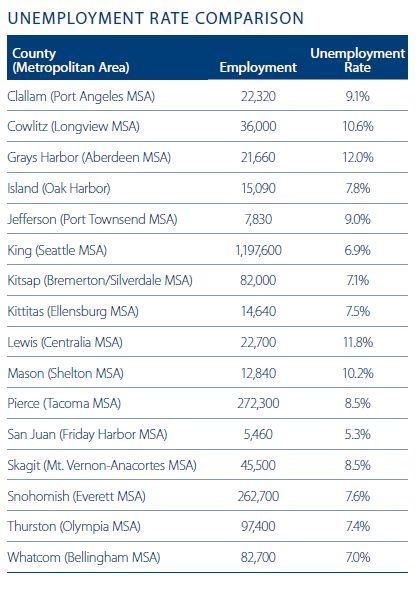
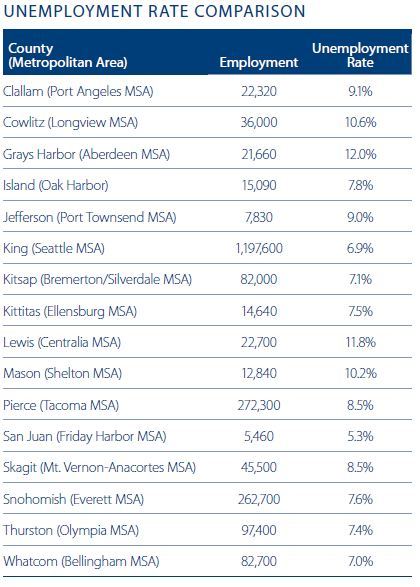
As previously stated, between September of 2011 and September of 2012, the area added 50,000 jobs—a 2.3% growth rate, which comfortably exceeded the state and nation. In our region, eight counties expanded their employment base, one remained flat, and seven showed modest contraction (a total of 3,620 jobs were shed in these counties).
Year-over-year, Whatcom County (+4.2%) grew at the greatest rate—I believe this to be due to the value of the Canadian dollar versus the “greenback”! This was followed by Snohomish and King Counties, which both expanded their job base by 3.1%. Job losses in other counties were modest, with San Juan (-5.9%), Grays Harbor (-4.2%), Kittitas (-4.1%), and Jefferson (-3.7%) Counties suffering the largest percentage losses.
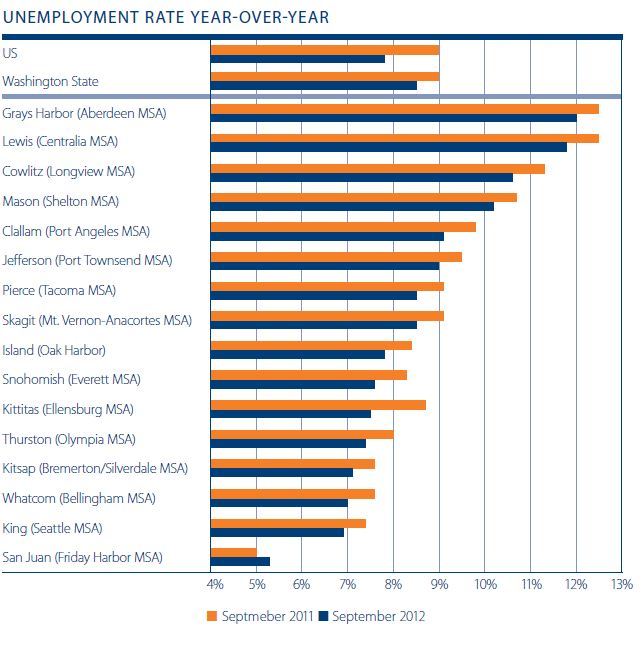
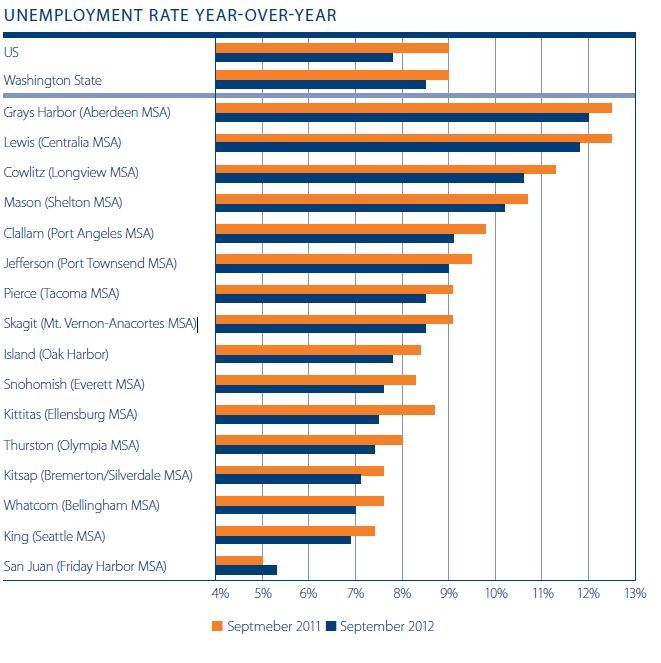
When we look at the unemployment rate across the region, all counties—with the exception of San Juan County—saw the unemployment rates drop from a year ago, a trend that we have been seeing since early this year. Inasmuch as this is certainly pleasing, I do note that we have not been seeing any expansion in the civilian workforce which, undoubtedly, is having an effect on the overall unemployment rate.
The latest data is positive but the expansion appears to be losing some steam. As a result, I am going to leave the economy with the “B” grade that I gave it in the last quarter.
It is not unusual that, in an election year, the private sector tempers its hiring until it knows who will be occupying the White House. I believe that this is the case here in Washington as much as it is anywhere else. Whether we will see marked improvement in the fourth quarter is uncertain, however, I feel optimistic that our market will continue to outperform other West Coast markets as well as the U.S. as a whole.
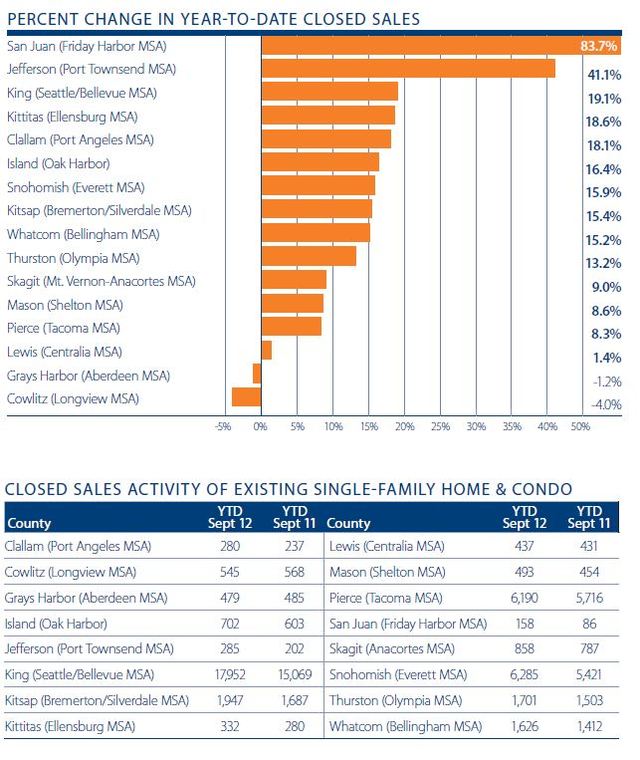
The market has registered 40,270 home sales year-to-date in 2012—an impressive increase of 15.3% over the number of sales seen in the same period in 2011. In the third quarter, there were close to 15,500 transactions completed—another impressive figure.
All but two counties exhibited improving sales velocities over the same period in 2011. The counties where there were fewer sales, Grays
Harbor and Cowlitz, are an anomaly as both are small areas and the absolute contraction was equally small.
Of the 16 counties contained within this report, half reported doubledigit improvements in sales volumes when compared to the same period a year ago.
From a transactional standpoint, the data is positive but we are starting to see a slowdown in aggregated sales. The second quarter of the year showed an astonishing improvement of 44% in transactions when compared to the first quarter. The growth rate in Q3 has slowed to 6%. As I stated in my last report, “Choice in many markets has become limited which, if it does not improve, will likely lead to a slowdown in transactions in the second half of 2012.”
I am afraid that my fears appear to be turning into reality. I believe it unlikely that we will see much improvement as we move through the fall months, and I am now looking for signs that we will see a strong spring market relative to new listings. We certainly need it.
Regional Real Estate
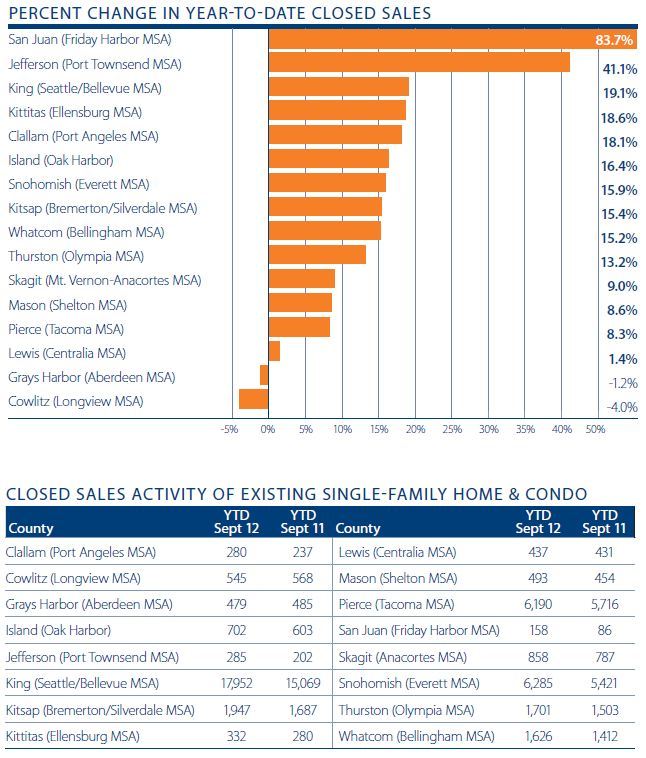
The market has registered 40,270 home sales year-to-date in 2012—an impressive increase of 15.3% over the number of sales seen in the same period in 2011. In the third quarter, there were close to 15,500 transactions completed—another impressive figure.
All but two counties exhibited improving sales velocities over the same period in 2011. The counties where there were fewer sales, Grays Harbor and Cowlitz, are an anomaly as both are small areas and the absolute contraction was equally small.
Of the 16 counties contained within this report, half reported doubledigit improvements in sales volumes when compared to the same period a year ago. From a transactional standpoint, the data is positive but we are starting to see a slowdown in aggregated sales. The second quarter of the year showed an astonishing improvement of 44% in transactions when compared to the first quarter. The growth rate in Q3 has slowed to 6%.
As I stated in my last report, “Choice in many markets has become limited which, if it does not improve, will likely lead to a slowdown in transactions in the second half of 2012.” I am afraid that my fears appear to be turning into reality. I believe it unlikely that we will see much improvement as we move through the fall months, and I am now looking for signs that we will see a strong spring market relative to new listings. We certainly need it.
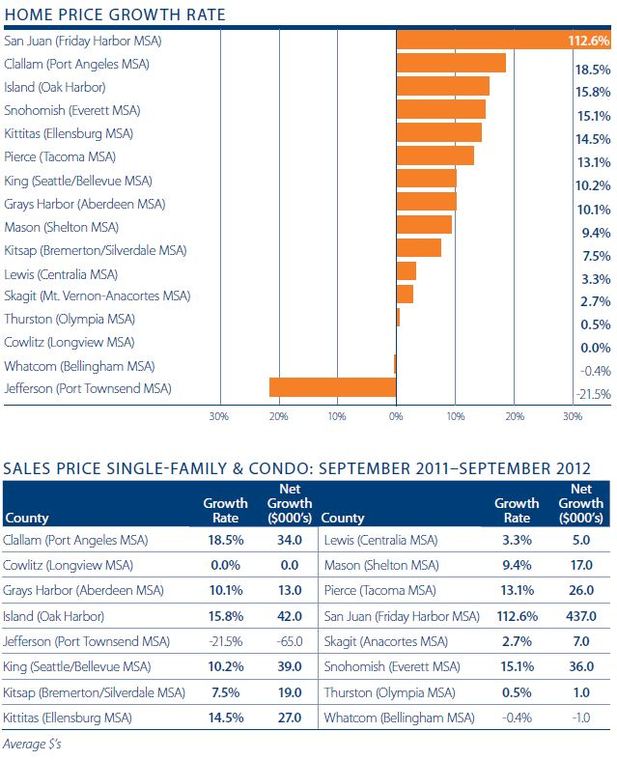
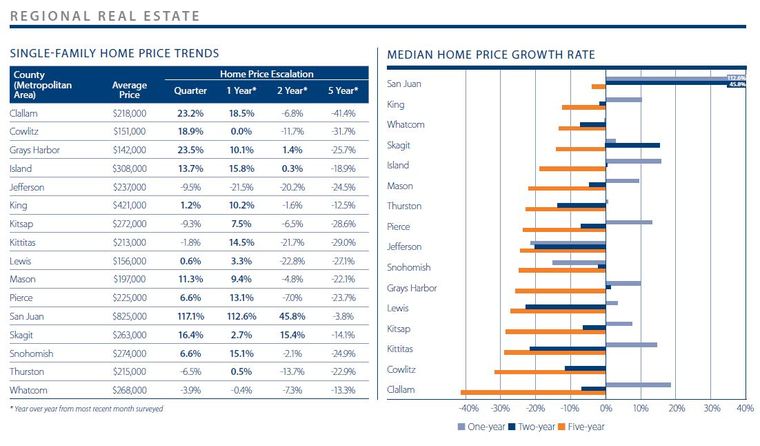
As is shown in the chart to the right, 13 counties saw the average sales prices at levels above that seen a year ago (up from 10 in my last report), just two were lower, and one was static. In aggregate, prices of homes sold in the counties analyzed have turned around with prices 6% higher than those seen in September of 2011. This figure excludes the volatile San Juan County. If we include it, prices paid for homes grew by a whopping 17% year-over-year!
Excluding San Juan County, of the counties that saw appreciation, the most pronounced gains were seen in Clallam (+18.5%), Island (+15.8%), Snohomish (+15.1), and Kittitas (+14.5%). Declines were seen in Jefferson (-21.5%) and Whatcom (-0.4%).
I was also pleased to see that there are some counties where sale prices are now higher than they were two years ago. This is important, as the early summer of 2010 represented the end of the First Time Homebuyer tax credit that functioned to artificially (but temporarily) support home prices.
The choice of homes available to purchase is woefully low across the region and does not look as if it is likely to increase any time soon. Because of this fact, and regardless of the solid price growth that we are witnessing, I cannot raise my grade above the “C” that I gave it last quarter.
Conclusions
There were a lot of interesting data points in this latest report that certainly gave me much to chew on. It is human nature to think positively about the future but to still keep an eye on the past. The economy and real estate market in Washington continue to exhibit positive growth, but the rate of growth has started to taper.
Now, some of this can certainly be attributed to seasonal fluctuations, as well as the current political environment, but it is important to put this into context. Our region continues to outperform not only all other West Coast markets, but also the United States as a whole. The headwinds that do exist, mainly in the form of low levels of housing for sale, are likely to be temporary.
I mentioned that it is in our nature to be of a positive disposition while, at the same time, waiting for something to go awry. Much has been talked about the “shadow inventory” of distressed housing that could flood the market and cause prices to start to sink again.
Inasmuch as there are certainly a substantial number of homes that are in this predicament, I do not see that it is likely that the banks that own these assets will list them en-masse. The market needs homes to buy and there are certainly more buyers than sellers in the market. Distressed inventory will actually play an important part in the housing recovery.
About Matthew Gardner
Mr. Gardner is a land use economist and principal with Gardner Economics and is considered by many to be one of the foremost real estate analysts in the Pacific Northwest.
In addition to managing his consulting practice, Mr. Gardner is a member of the Pacific Real Estate Institute; chairs the Board of Trustees for the Washington State Center for Real Estate Research; the Urban Land Institutes Technical Assistance Panel; and represents the Master Builders Association as an in-house economist.
He has appeared on CNN, NBC and NPR news services to discuss real estate issues, and is regularly cited in the Wall Street Journal and all local media.
This Sunday, November 11, is Veterans Day – a special day set aside to honor those who have served our country through the armed forces. Here at Windermere, we are very blessed to work with many Veterans, as real estate agents, clients, and members of the communities we serve. We would love to hear your stories about the Veterans you have in your life and how you will be honoring them this weekend.
To our Veterans, thank you for your service and dedication. We are proud to work alongside you.
When we work together, we truly can make a huge difference in the lives of our neighbors!
Ten of our offices in the greater Seattle area team up every year for fundraising and giving. This year they exceeded everyone’s expectations, giving $140,000 to organizations and programs that benefit low-income and homeless families in their local communities. Here are some of the organizations they supported this year:
If you have purchased or sold your home through Windermere, you are a part of the Windermere Foundation. Each of our offices raises funds through transaction donations, fundraising efforts, and personal contributions. The funds they raise go back to their communities, to benefit local nonprofit organizations and programs that support low-income and homeless families. We are starting a new series to highlight the organizations and programs that benefit from the Windermere Foundation. If you have a story you would like to share, email foundation@windermere.com. Or you can donate at www.windermereandyou.org.
It is storm season, and between British Columbia earthquakes, Hawaiian Island tsunamis and East Coast “Frankenstorms”, it is time to take a few minutes to think about storm preparedness and making sure you and your home are as ready as possible for whatever nature throws your way this fall and winter.
Over the next few weeks we will share some valuable tips on preventive home maintenance, disaster preparedness and post-winter storm cleanup.
Preventive home maintenance:
Control where the water goes. Water in the wrong place can do a whole lot of damage. Start by ensuring your gutters and downspouts are doing their job. Don’t attempt this task yourself if you have a multi-story house with a deep roof; hire a professional instead. Your gutter maintenance will depend on your property. If you have tall trees nearby that can drop needles or leaves, you will want to check your gutters quarterly.
First, make sure your gutters are secured, flush to the roof. Repair or replace sagging and broken portions of the gutters. Then clean out your gutters and downspouts, checking that outlet strainers are in good shape and firmly in place. Finally, ensure that your downspouts direct water away from the house, not straight into the foundation. You may want to consider gutter/downspout extensions to redirect water away from your foundation.
If you have a sump pump under your home, test it. Run a hose to be sure draining water travels directly to the pump (dig small trenches if needed), and that the pump removes the water efficiently and expels it well away from the house.
Check your roof, doors and windows. Now that the rain has started again, check your roof for any leaks. Check the underside, looking for moisture on joints or insulation. You can mark any damp spots and have a professional come out and repair any leaks. Don’t wait for wet spots to appear on the ceiling; the damage will be much more expensive if the insulation and dry wall is soaked. Waiting can also lead to larger problems such as mold, a health hazard.
Also check your windows and doors to ensure they are properly sealed. If you feel any drafts, isolate the location using the match trick. You may want to use silicon to repair any gaps between the frame and wall, or if the window itself is drafty you can use weather stripping. With doors, you may want to use weather stripping, or if you have a large gap at the bottom of your door, a draft dodger may be a simple solution.
Maintaining your heating and cooling systems. Fall is a smart time to have your home’s heating and air-conditioning systems checked and tuned up if necessary. Don’t wait for extreme temperatures to arrive, when service companies are slammed with emergency calls. Between maintenance calls, keep your system performing optimally by cleaning and/or replacing air filters.
If you have a wood-burning fireplace, a professional inspection and cleaning will help prevent potentially lethal chimney fires and carbon monoxide poisoning. Even if you don’t use your fireplace often, always keep a supply of dry firewood or sawdust composite logs so you have a backup source of heat in case of an emergency.
Next week we will have more information about preparing your family and your home for winter storms, from power outages to natural disasters.
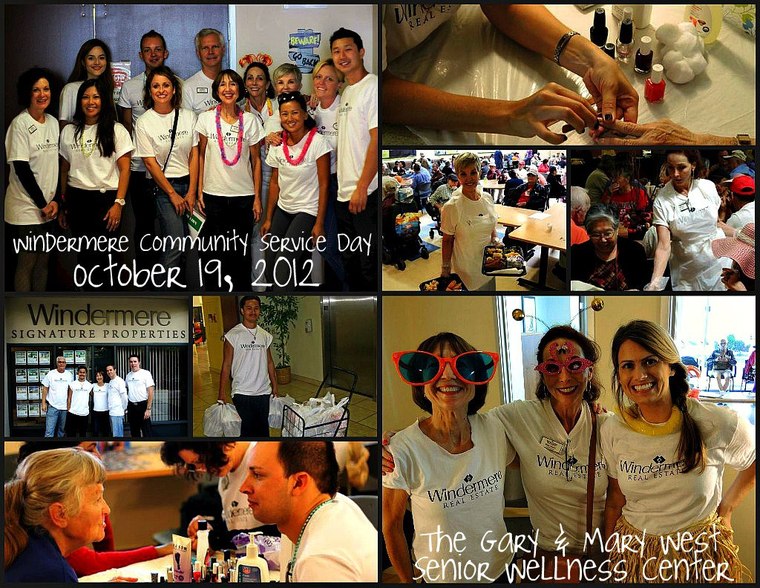
Last Friday, Windermere offices in California, Nevada, and Arizona took some time off from selling houses to make a big difference in their communities. Over the past week, we have heard some remarkable stories about the rewards of volunteering as a part of our annual Community Service Day.
Southern California
Windermere Downtown San Diego spent the day at the Gary and Mary West Senior Center. Agents and owners worked together to serve more than 600 senior residents lunch, as well as an additional 200 lunches for home delivery; they also organized other fun activities throughout the day.
“We hope to continue to inspire by example the tradition of donating and volunteering in our community where we live and work.”
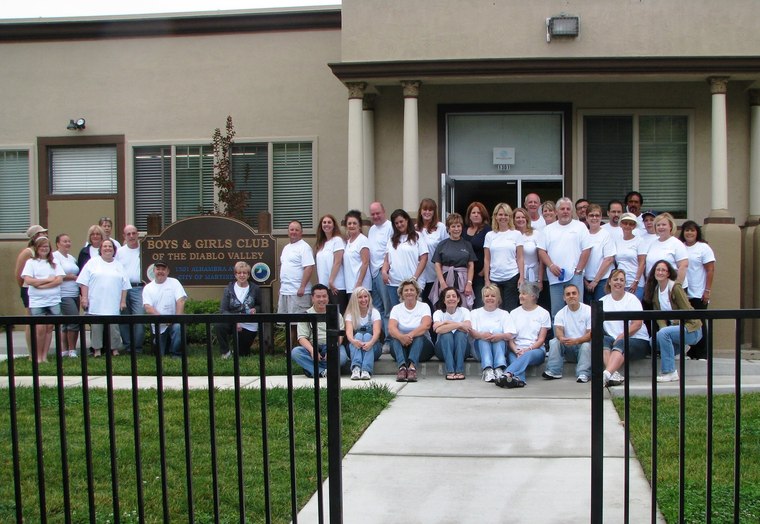
This year, the Windermere Clayton, Diablo, and Bay Area offices teamed up to help the Boys and Girls Club of Diablo Valley. All three offices worked together to help clean and restore the center.
Nevada
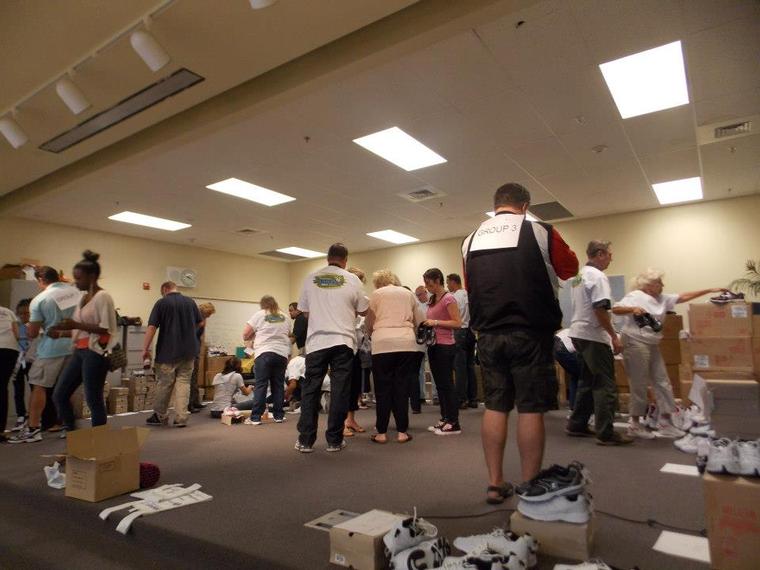
Windermere Offices in Henderson, Anthem Hills, and Lake Las Vegas teamed up to make a big difference for local elementary students at the Twin Lakes Elementary School in Las Vegas. Agents and staff spent the day cleaning up the school, including refreshing interior doors with new paint. The offices also elected to donate more than 725 new pairs of shoes to the students, most of who are on assistance programs.
Arizona
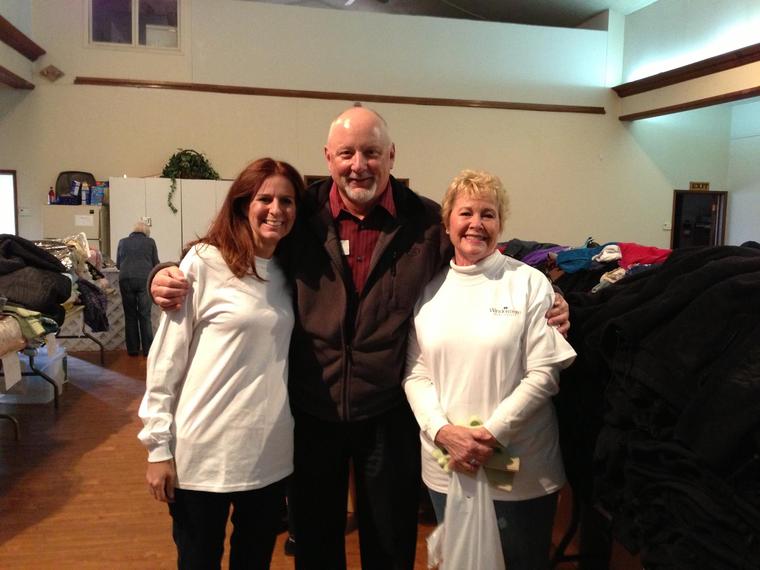
Windermere Prescott has spent the last few weeks collecting warm winter clothing, and spent their community service day packing up jackets and blankets to help local families stay warm for the winter.
And the Winners of the Photo Contest are…
Last week we also announced that each office that posted a photo on the Windermere Real Estate Facebook page would be entered in a “Photo Challenge”. The following offices participated and have earned a $100 donation to their Foundation fund:
Arizona:
Prescott
California:
· Clayton
· El Sobrante
· Walnut Creek
· Diablo
· Bay Area
Nevada:
· Lake Las Vegas
· Henderson
· Anthem Hills)
The office with the most “likes” on their photo won an additional $1,000 donation benefiting their Windermere Foundation fund which supports low-income and homeless families.
The winners of this contest are our Northern California group! Windermere offices in Clayton, Diablo, and the Bay Area all worked together to encourage agents, friends and clients to vote, collecting 170 “votes” on their photo
Congratulations to all our Windermere offices for the great Community Service Day!
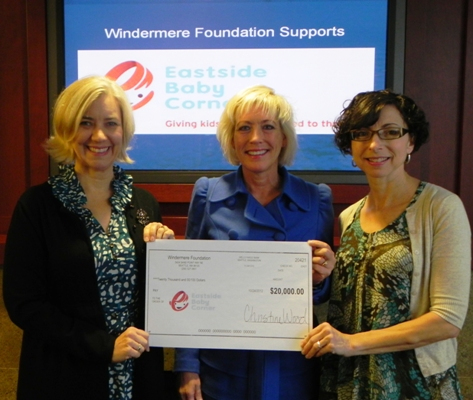
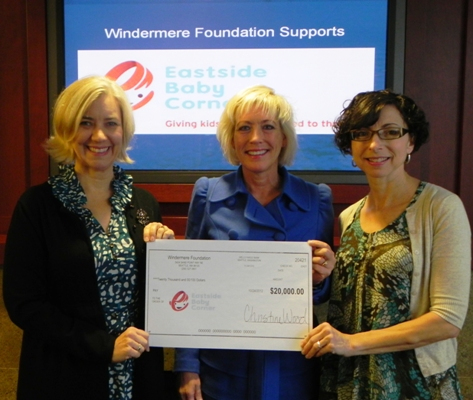
Thanks to you and the wonderful support the Windermere Foundation has received so far this year, we have raised over $885,000 – up 13% from this time last year! Funds raised will be distributed to qualifying social service organizations dedicated to serving low-income and homeless families throughout the western U.S.
Our amazing agents, staff, and owners, along with public supporters, continue to generously contribute both time and money to the Foundation.
Here are a few of the great programs that recently received Foundation support:
Friends of the Children of King County received funds from the Seattle-Oak Tree office. Friends of the Children supports the most at-risk youth in its community to help them shape a secure future by giving them skills necessary to become successful and productive members of society. They are the only youth development program in the country breaking the cycle of poverty and violence by selecting the most vulnerable children in kindergarten, and making a 12 year “no matter what” commitment to their success through high school graduation. This bond helps uncover the child’s potential and builds a lifelong foundation for success through friendship, education and advocacy.
Assistance League of Everett received much-needed support for their Operation School Bell program which provides new school clothing to low-income students grades K to 12, throughout Snohomish County.
“In the fourth year of the longest and deepest recession in 70 years, the demand for new school clothing for low-income students is almost without precedent. Last year, and in response to a record level of need, we served 2,958 students through the traditional In-facility program and another 802 through the innovative and highly effective Teen Retail program.”
– Assistance League
Backpack Projects
Thank you to all of the offices that helped get backpacks to low-income children this fall.
“We are grateful for your support of Readiness to Learn Foundation’s ‘Back to School Project!’ Thanks to you and other community members, we are able to provide children with a sound start to their school year. Your donation will be used to fund this important program that allows children to start school with new backpacks, supplies and clothing gift cards. Thank you for helping ensure that children begin the school year with a solid foundation!”
– Readiness to Learn Foundation
As always, thank you for your continued support of the Windermere Foundation. Many homeless and low-income families are receiving basic necessities because of your commitment to helping others.
Best,
Christine Wood
Windermere Foundation
Want to read more news about the Foundation?
Become a fan on Facebook to learn and share your stories about all the amazing things the Foundation is doing throughout the year.
On Friday, October 19th, Windermere offices in Arizona, California, and Nevada will be closed for a very special reason. For the past 28 years, Windermere has dedicated the third Friday of October to our annual Community Service Day*. On that day, you will find our team doing a variety of projects, including cleaning, landscaping, and painting at local community centers and schools, collecting coats for low-income and homeless families and working with local nonprofit organizations to ensure kids in our communities are getting the resources they need.
This year we want to do a little bit more. For each office that posts their Community Service Day photographs and videos on the Windermere Real Estate Facebook page, (www.facebook.com/WindermereRealEstate) the Windermere Foundation will donate $100 dollars to that office’s Foundation fund, to benefit low-income and homeless families. We encourage you to “like” your local offices Facebook page, as well as your favorite Community Service Day photos. The office with the most photo/video “likes” and comments will receive a $1,000 donation for the Windermere Foundation charity of their choice. The contest will end next Wednesday, October 24th.
*Windermere’s Northwest offices hold their Community Service Day in June
Windermere Office Projects for October 2012:
Arizona
Prescott
"Warm for Winter Coat Drive"
Prescott Valley
"Warm for Winter Coat Drive"
Scottsdale
"Warm for Winter Coat Drive"
California
Clayton
The Boys & Girls Club in Martinez
El Sobrante
The El Sobrante Boys & Girls Club
San Diego- Downtown
Food drive and serving lunches to more than 600 seniors
Firstly, let’s get a little scholarly and break down the job numbers that came out last week:
These figures drew a ton of attention in the media because, on the surface, they were rather bullish! The good news, according to the report, was that the U.S. created 114,000 new jobs in September. Furthermore, the data for August was revised to show that, rather than the employment base expanding by 94,000 jobs, the actual figure was 142,000 jobs. What was even more astounding, however, was that the unemployment rate was slashed from 8.1% to 7.8%!
So what the heck is going on here?
I am not going to comment on potential conspiracy theories about the “books being cooked” because it insults the economic process that I am closely linked to. Rather, I’m going to focus on how the data is gathered. The government does this in two ways. The first is the household survey (a.k.a. Current Population Survey) and the second is the Current Employment Statistics survey – also known as the payroll survey. One calculates the unemployment rate, while the other calculates the number of jobs created in a certain timeframe.
The household survey is a monthly sample survey of approximately 60,000 households, while the C.E.S. survey is far larger and addresses 141,000 business and government agencies that cover approximately 486,000 establishments (or businesses).
According to the latest household survey, the number of employed adults increased by a whopping 873,000, while the number of adults saying they are either unemployed or looking for work increased by 418,000. The number of unemployed workers fell 456,000 and, therefore, the unemployment rate fell 0.3 percentage points to 7.8%. Much of this was due to the number of part-time workers that soared by 582,000. The payroll survey, however, increased by just 114,000 – the reported figure in the jobs report.
As an aside, it was also pleasing to see that there was a large decrease (-206,000) in unemployment among 20- to 24-year-olds. I am sure that there are a few readers of this blog who have children living back at home after having graduated from college. Hopefully these numbers are an indication that they will be headed off soon!
So what does this all mean? Well, my take on it is that the market continues to exhibit growth in jobs, but I suspect we will see some major revisions to these numbers as we head into the winter. That said, at this point, the glass is certainly half full.
The decision to buy a home rests on many factors. In addition to the obvious ones – the ability to qualify for a loan, finding a home that you want to buy, seeing a housing market that is either stable or starting to appreciate – we need confidence in the economy and, specifically, the job market. During the past couple of years, we haven’t had this confidence but that is starting to change. Our confidence in the job market is improving and, therefore, our consideration of buying a major asset, such as a home, has started to improve as well.
My belief in this statement is supported by home sales data from many parts of the country that continues to exhibit stability – albeit with woefully low levels of inventory – and modest increases in home values.
Confidence appears to be returning and this, in turn, is likely to become self-perpetuating. One month’s data is insufficient to state that all is better now, but improving job numbers are key to confidence, and confidence is key when it comes to the housing market.

 Facebook
 X
X
 Pinterest
 Copy Link