Some of the best gifts received are the ones least expected. Across the country we’re seeing stories about generous individuals giving anonymously to help brighten the holidays for those in need – like paying off the balances of layaway bills or paying for a family’s extended stay at a motel so that they won’t end up in the streets. These acts of kindness and giving are truly inspiring.
We are fortunate to be part of a network of individuals who are committed to helping those in need in their communities, and who have such a tremendous capacity for giving. We are grateful for all the Windermere agents that make the Windermere Foundation possible. Through their contributions and donations from the community, the Foundation is able to provide support to local social service agencies that help low-income and homeless families.
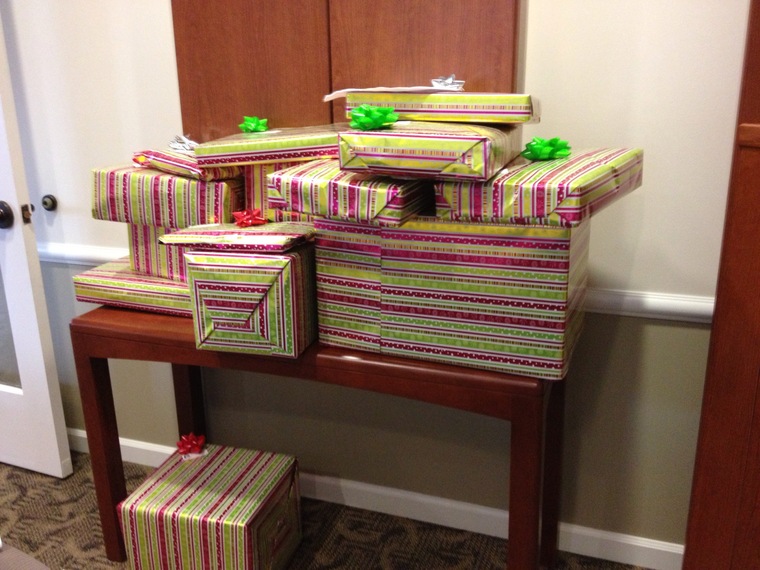
Many of our Windermere offices throughout our network adopted families this holiday season, providing them with toys, clothes, gift cards and other items for Christmas. Here is just a sample of this season’s efforts…
Pioneer Services of Lynnwood
Twenty-one boys, living in group homes run by Pioneer Services of Lynnwood, were adopted by agents at the Windermere Lynnwood office and received Christmas presents. In addition, families receiving family preservation services also received $2,500 worth of gift cards for Top Foods. Thanks to the agents of Windermere Lynnwood for making this possible!
Navos
Families adopted through Navos received gift certificates to purchase shoes at Target and shop for groceries at Fred Meyer. And the kids received everything on their Christmas wish lists thanks to the Windermere Relocation and Referral Services office in Seattle.
Port Orchard Rotary Group
Five families received Christmas gifts thanks to the Windermere Port Orchard office. A list of three needs and three wants were fulfilled and were delivered to the Rotary group for wrapping. The adopted families picked up their gifts, along with their Christmas dinners at the local fire station.
Salvation Army
A family of seven and a family of four received gifts through the Salvation Army thanks to the Windermere Ballard office. This is the 18th year in a row that the office has adopted two families for the holidays.
YWCA
A family selected by the YWCA was adopted by the Windermere Property Management/Lori Gill & Associates office this year. Agents shopped and delivered to the families at the YWCA Family Village.
Windermere Annual Coat & Blanket Drive
From November through the month of December, Windermere offices throughout Oregon and Southwest Washington collected warm coats and blankets for homeless and low-income families to be distributed during the holidays by local social service organizations. Thank you to the 33 Windermere offices that made this possible!
Mercer Island Youth and Family Services
Through the MIYFS, the Windermere Mercer Island offices adopted three families, with a total of eight kids for the holidays. Each child received three presents and a $50 QFC card. Each family also received an additional $50 QFC card.
Everett Boys & Girls Club
For the agents at the Windermere Alderwood office, one of their favorite things to do this time of year is to volunteer at Christmas House. This year they got to be there on opening day to help shoppers select items and bring their bundles to their cars.
Eastside Baby Corner
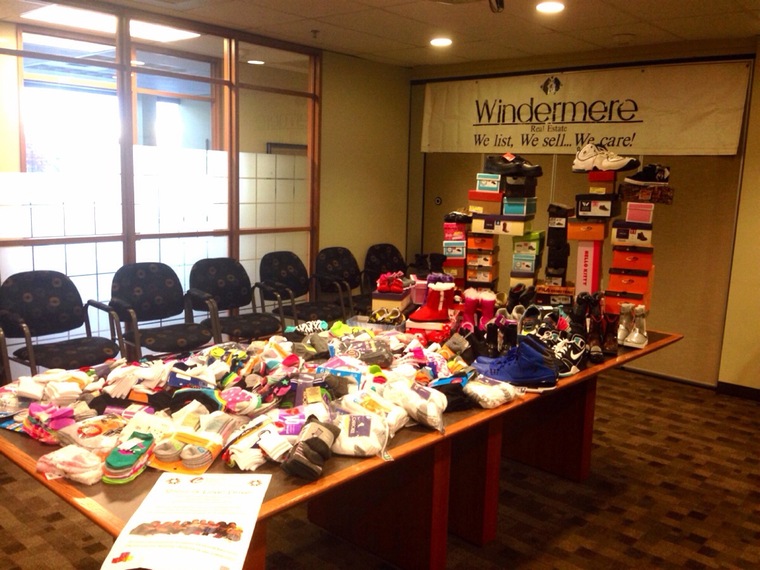
Windermere Bellevue West office worked with Eastside Baby Corner, gathering donations for their “Socks of Love” drive, benefitting children from birth to 12 years of age. Thanks to the donations collected by the office, they were able to provide 550 pairs of socks and 78 pairs of shoes!
Coeur d’Alene Christmas Event
It’s been a holiday tradition for the past 22 years for agents and staff at the Windermere offices in Coeur d’Alene, Idaho to plan, shop, wrap, and prepare for their annual Christmas event for those in need in the Coeur d’Alene area. Recipients this year received a wide range of gifts: food, toys, furniture, new mattresses, clothing, and much more.
Arlington Food Bank
Windermere Arlington office sponsored three families for Christmas through the Arlington Food Bank, courtesy of Arlington High School's DECA program.
Bellevue Boys & Girls Club
Each year, the Windermere Bellevue Commons office adopts families in need for the holidays through the Bellevue Boys & Girls Club. This year they shopped and wrapped gifts for 13 families.
Kingston Community
Windermere Kingston office adopted 11 families in the local community for the holidays. Agents shopped for and wrapped gifts for to distribute to the families, which included 33 children.
Thank you for supporting the Windermere Foundation! Have a wonderful holiday!
The holidays are in full throttle and the year is quickly coming to an end. You have a few days left to get some last minute gifts/improvements for your home and reap the rewards of the tax benefits in your 2013 taxes. Some credits will be expiring at the end of the year, so you may not get the benefit if you wait. Here is a list of some of the home-related deductions and credits you may be able to take advantage of (be sure to check with your accountant if you have questions about eligibility for deductions and credits).
Home improvements:
Residential Energy Property Credit:
The US government will reward certain home improvements that increase energy efficiency. If you are willing to make major improvements to your primary residence, you can get credit for 10-30 percent on some improvements. Improvements include energy-efficient windows, roofs and doors, heating, ventilation and air conditioning systems, and adding insulation, geothermal heat pumps, solar energy systems, small residential wind turbines, and residential fuel cells.
Give yourself the gift of dedicated workspace! Homeowners and renters can deduct $3 per square foot, up to 500 square-feet of your home office. You must be able to prove that you use your office regularly and consistently and that it is your primary place of business. For more information about simplified and regular deductions go here.
Transportation:
Plug-in Electric Drive Vehicle Credit:
Some new plug-in electric vehicles qualify for a credit of $2,500 to $7,500 depending on the battery capacity.
Transit parity tax break:
If you commute, you may be able to put aside $245 per month tax-free for public transportation fees or parking. This tax break will be adjusted in 2014.
Property Donations:
If you donate a portion of your property or an easement to a conservation agency you can receive an enhanced tax break. This break primarily benefits modest-income landowners and farmers, helping to ease rural development. More information is available here.
For more information about 2013 taxes, deductions, breaks and credits and view forms go to www.IRS.gov, or consult with your trusted CPA.
Windermere Real Estate is proud to partner with Gardner Economics on this analysis of the Oregon and Southwest Washington real estate market. This report is designed to offer insight into the realities of the housing market.
Numbers alone do not always give an accurate picture of local economic conditions; therefore our goal is to provide an explanation of what the statistics mean and how they impact the Oregon and Southwest Washington housing economy. We hope that this information may assist you with making an informed real estate decision. For further information about the real estate market in your area, please contact your Windermere agent.
Regional Economics:
This report is a little late as, along with many others, we were at the mercy of the Federal government shutdown in early October. This shutdown did not just delay our employment data, but September figures were not deemed important for the time being and, therefore, there was no count at all.
As such, we were forced to use August’s figures which, although certainly not perfect, still provide us with some indications as to the direction of our regional economy.
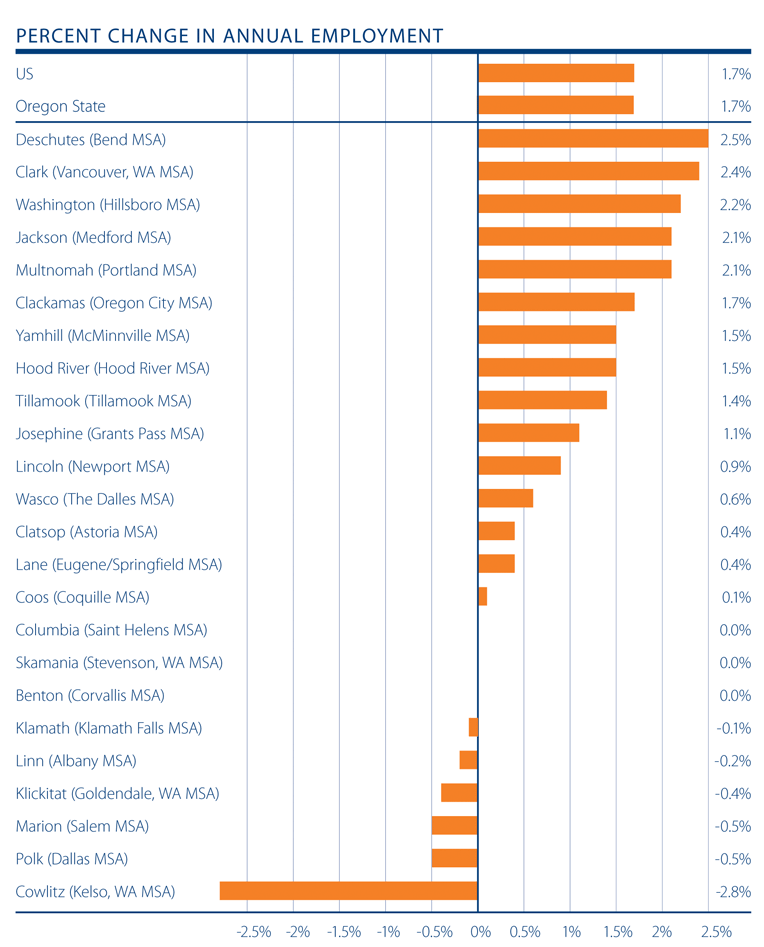
On an annualized basis (August 2012 vs. August 2013), the market added 23,196 jobs, representing a growth rate of 1.36 percent. This was a little shy of both the state growth rate of 1.7 percent and the U.S. rate of 1.65 percent.
When compared to August of 2012, employment growth was most pronounced in the Bend area (+2.5%). This was followed by Clark (+2.4%),
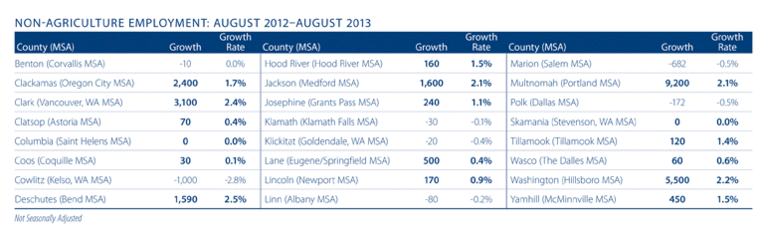
Washington (+2.2%), and Multnomah and Jackson Counties, both of which saw an increase of 2.1 percent. On an absolute basis, Multnomah County maintains its position as the driving force behind job growth with the addition of 9,200 positions over the past 12 months. This was again followed by Washington County (5,500) and Clark County where employment grew by 3,100 positions.
On the negative side, job losses totaled 1,994 spread across seven counties.
Losses were again most pronounced in Cowlitz County, with employment contracting by 1,000 jobs. The other county which shed a substantial number of jobs was Marion, where employment contracted by 682 positions. Losses in other counties were fairly modest and they came in more rural areas.
With regards to improving employment, we continue to see the divide between the growth of urban and rural counties. Larger, more metropolitan counties continue to recover, but less populous areas are lagging.
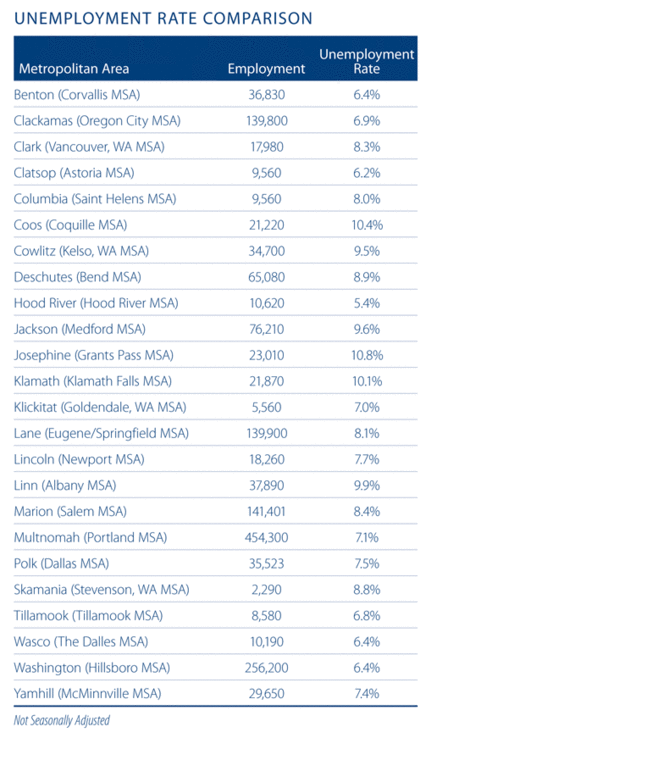
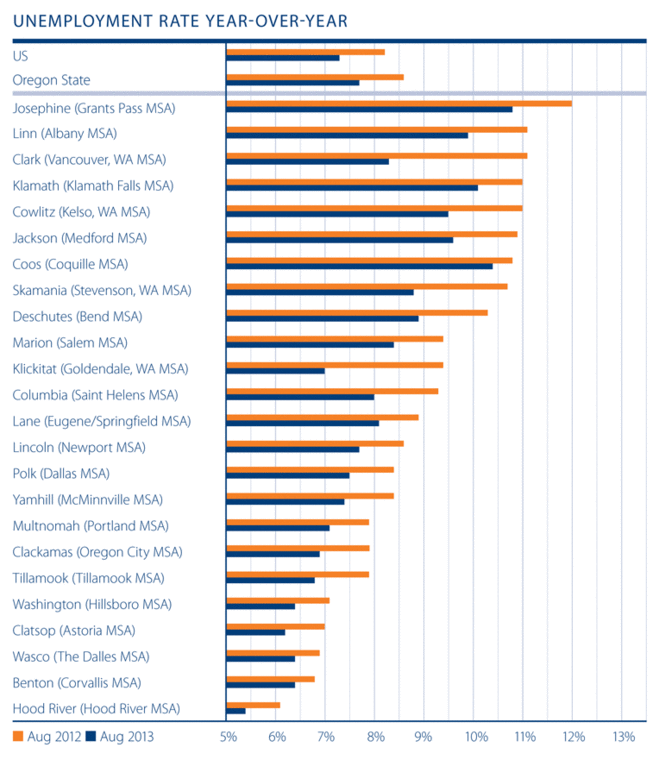
The unemployment rate continues to drop in every county that was analyzed, which is a trend that started over a year ago. This is positive and I was also pleased that the number of counties whose unemployment rate was above 10 percent has now shrunk from seven to three.
Of the counties that saw shrinking unemployment rates, the greatest improvement was seen in Clark County, where the unemployment rate dropped by 2.8 percent to 8.3 percent. This was followed by Klickitat (-2.4%) and Skamania (-1.9%) Counties.
To date, most counties considered in this report have seen a growth in employment, but the numbers suggest that growth going forward will be focused on denser, more populated markets.
I am maintaining the “C-” grade that I gave last quarter. I want to see more broad-based growth which is clearly not present at the moment.
Regional Real Estate
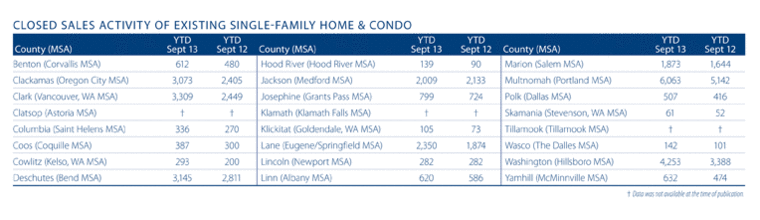
Regular readers of the Gardner Report will note that the third quarter report excludes three counties—Clatsop, Klamath and Tillamook—which are usually included. Data issues precluded us from gathering information on these counties, but we hope to resume inclusion of these markets in our next report. We would add that the absence of these counties does not fundamentally change our analysis.
In the third quarter of 2013, the region reported 11,064 home sales—a modest decline of six percent over the second quarter of the year, but still a 17 percent increase over the same period in 2012. Year to date, there have been over 30,000 home sales, an increase of close to 5,000 units when compared to the same period a year ago.
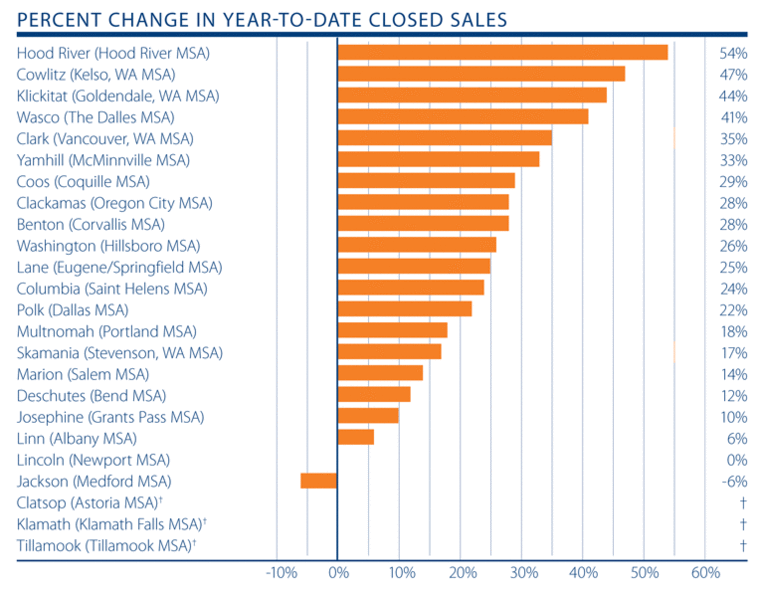
The greatest growth in home sales was again seen in Hood River County (+54%), and this was followed by Cowlitz (+47%), Klickitat (+44%), and Wasco (+41%) Counties. Of the counties that saw home sales increase, only one—Linn—did not see double-digit growth (+6%).
There was just one county that saw home sales drop when compared to 2012, and this was in the Medford market which contracted by six percent. Home sales in Lincoln County matched sales from a year ago.
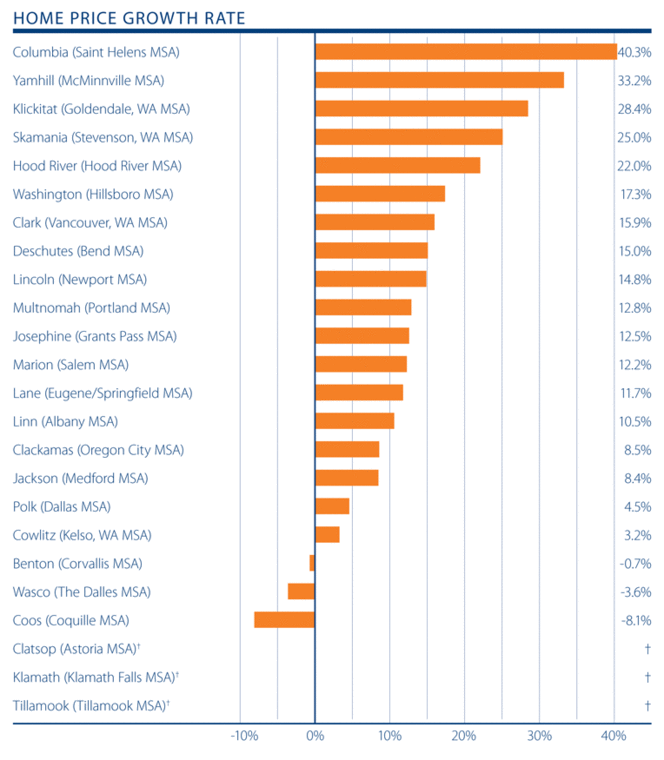
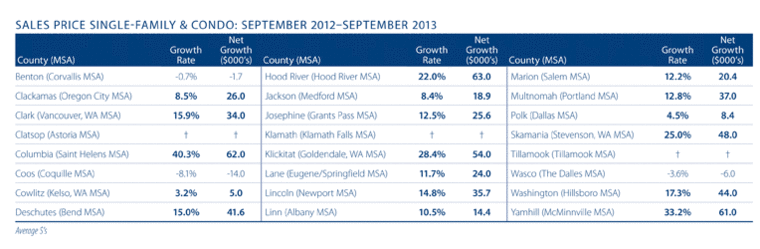
When we look at home prices, 18 of the markets analyzed registered year-over-year price increases with three showing declines in values from a year ago. In aggregate, home sales appreciated by 13.2 percent over the same period in 2012. It’s worth noting that this is a very healthy rate of appreciation.
The greatest price growth was seen in Columbia County where prices jumped by 40.3 percent over the same period in 2012. Frenetic price movements are typical for smaller counties and this is certainly the case here. There were several other counties where price growth exceeded the total market. These were Yamhill (+33.2%), Klickitat (+28.4%), Skamania (+25%), and Hood River (+22%). There were just four counties that saw price increases below 10 percent.
There were three counties where prices saw declines. Coos County saw the greatest drop (-8.1%), but we again put this down to the fact that it is a fairly small market. The other markets where prices dropped were Wasco (-3.6%) and Benton (-0.7%) Counties, which are also fairly small markets.
In general, the market continues to recover relative to price, but it is becoming apparent that the rate of appreciation is starting to slow. The spread between list and sale prices in many counties became somewhat disconnected between the fall of 2012 and this summer. The market has reacted to this and, in many cases, we are starting to see the average list price contract as buyers become more selective. This is not a surprise as there is now greater choice in the market with higher levels of available inventory.
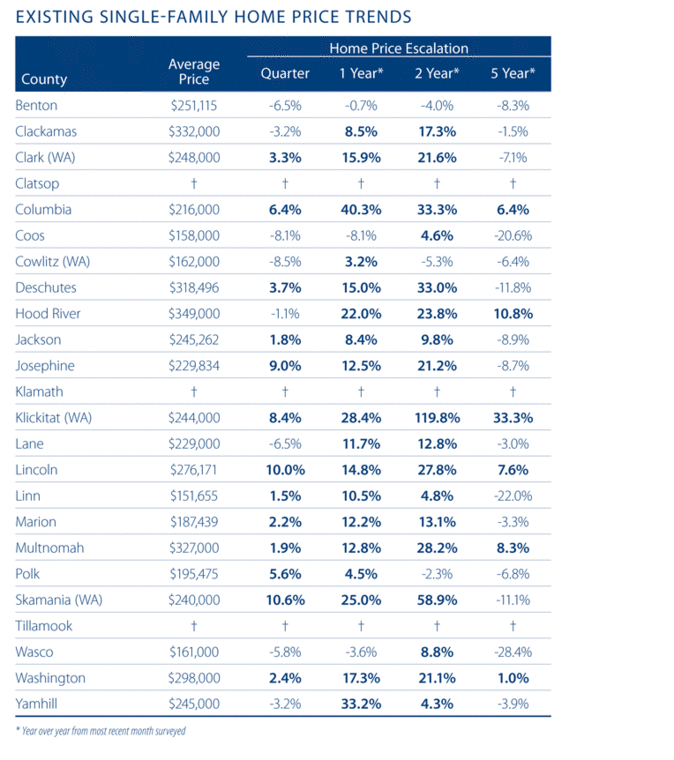
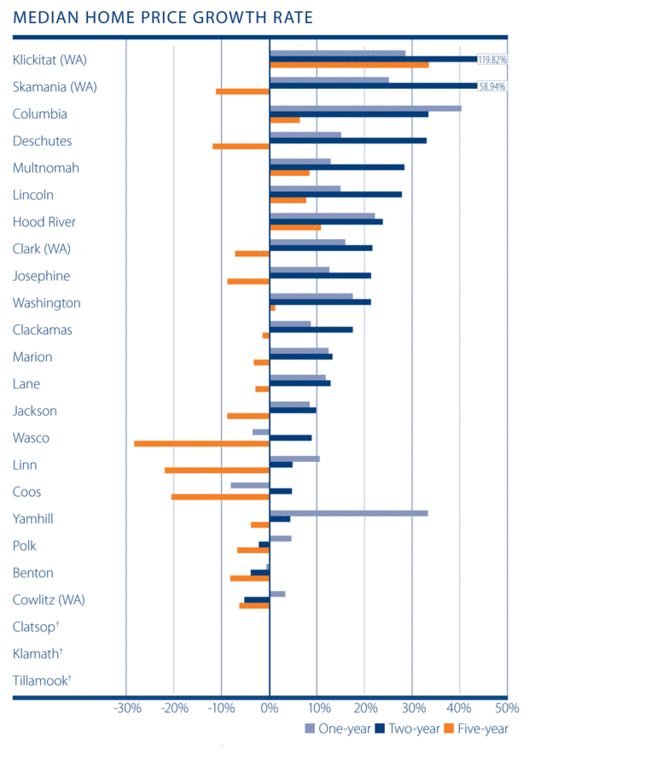
This phenomenon will lead to slowing price growth which, in and unto itself, is not a bad thing. The market is recovering and, as is seen in the price escalation chart, many counties are getting close to, or even exceeding, the prices that were achieved in 2008.
The rapid, albeit brief, jump in mortgage rates that was seen in third quarter may well have pulled some sales forward. It will be interesting to see what effect this may have on transactions in the fourth quarter of the year.
I am not yet ready to raise the grade for the real estate markets from the “C+” that I have given it for the past two quarters. Inventory levels are improving but the market appears to remain somewhat cautious.
Conclusions
Much like the rest of the nation, Oregon’s economy continues to improve with each passing month. Recent job growth in Oregon’s private sector has been faster than national private sector job growth, but the state rate of total growth matches that of the U.S., which is hardly aggressive.
In the markets covered by this report, employment growth has also not outperformed with a year-over-year growth rate of 1.4 percent. This can, in part, be attributed to contraction or lack of substantive growth in several more rural counties.
I still anticipate that the Oregon housing market will see modestly rising employment and that, by year’s end, we will see a growth rate of around 1.9 percent – essentially matching the country in percentage terms.
A positive for the employment picture is the ongoing recovery in the housing market. However, this is somewhat offset by continued reduction in government employment. I anticipate that the larger job centers within Multnomah, Washington, and Clackamas Counties will continue to take a disproportionate percentage of total growth while smaller counties continue to lag.
The housing market continues to improve; however, I would not be surprised to see the pace of improvement start to taper as we head into the winter months. I stated in my last report that I expected to see price growth moderate. And while annual appreciation in many counties remains substantial, I still anticipate this to be the case.
This should not be seen as a bad sign, but I will be keeping a close eye on how the market adapts to higher levels of inventory, as well as the specter of increasing interest rates that are sure to come in 2014.
About Matthew Gardner
Mr. Gardner is a land use economist and principal with Gardner Economics and is considered by many to be one of the foremost real estate analysts in the Pacific Northwest.
In addition to managing his consulting practice, Mr. Gardner chairs the Board of Trustees at the Washington Center for Real Estate Research at the University of Washington; sits on the Urban Land Institutes Technical Assistance Panel; is an Advisory Board Member for the Runstad Center for Real Estate Studies at the University of Washington; and is the Editor of the Washington State University’s Central Puget Sound Real Estate Research Report.
He is also the retained economist for the Master Builders Association of King & Snohomish Counties. He has twenty-five years of professional experience in the U.K. and U.S.
He has appeared on CNN, NBC and NPR news services to discuss real estate issues, and is regularly cited in the Wall Street Journal and all local media.
When Windermere opened its doors in 1972, real estate was a very different business. Sales contracts were written on cocktail napkins and sealed with a handshake. There were no websites, iPhone apps or, in some cases, even yard signs, so you had to rely entirely on your agent to show you what was for sale. Back then, there was a lot of emphasis placed on competition and sales quotas. This created a proprietary culture that valued winning agent-of-the-month over building long-term relationships with clients – and it didn’t do our industry any favors in terms of credibility.
When our dad started Windermere, he set out to change this. His focus was to put relationships before sales quotas. Relationships that last not just for a transaction, but for a lifetime. It was an aggressive undertaking, but he eventually built an office – and an entire company – of like-minded professionals who understood the importance of truly great service.
Fast forward forty years and much has changed in real estate. The cocktail napkins have been replaced by digital contracts and the home search process has moved almost entirely online. We’ve also seen the rise of technology companies that offer real estate services of one kind or another. However, despite all the bells and whistles, most of these companies look at buyers and sellers as leads, not as people who are about to embark upon a major financial and emotional decision. We love what technology has done for real estate, but Windermere’s business lives and dies by the relationships we have with our clients and our community. It’s one of the only things that hasn’t changed over the last four decades.
You’ve probably heard the saying, “The more things change, the more they stay the same”. We couldn’t agree more. It’s impossible for us to predict what the future holds for real estate, no more than our dad could have predicted where we’d be today back in 1972. But, it’s probably safe to say that technology will continue to change our industry in new and exciting ways – just as relationships will remain central to Windermere’s core values for generations to come.
Condominium homes are a great, low-maintenance choice for a primary residence, second home, or investment property. This alternative to the traditional single-family home has unique issues to consider before buying, as well as unique benefits. Here’s some background information to help you decide whether purchasing a condo is a good match for you.
The popularity of condominiums with baby boomers and young professionals continues to surge. Condo sales are up 23 percent from 2013 with a medium price of $209,600 according to the National Association of Realtors. Many buyers are realizing that condominium homes can be a great way to enjoy the benefits of home ownership combined with extensive amenities and a low-maintenance lifestyle.
Increasingly, condos are not just for first-time homebuyers looking for a less expensive entry into the housing market. Empty-nesters and retirees are happy to give up mowing the lawn and painting the house. Busy professionals can experience luxury living knowing their home is safe and well-maintained while they are away on business. If you are considering buying a condominium for a home, here are a few things you should know:
Condominium basics:
With condominiums, you own everything in your unit on your side of the walls. Individual owners hold title to the condominium unit only, not the land beneath the unit. All owners share title to the common areas: the grounds, lobby, halls, parking areas and other amenities. A homeowners’ association (HOA) usually manages the complex and collects a monthly fee from all condominium owners to pay for the operation and maintenance of the property. These fees may include such items as insurance, landscape, and grounds upkeep, pool maintenance, security, and administrative costs.
The owners of the units in a condominium are all automatic members of the condo association. The association is run by a volunteer Board of Directors, who manage the operations and upkeep of the property. A professional management company may also be involved in assisting the board in their decisions. The condo association also administers rules and regulations designed to ensure safety and maintain the value of your investment. Examples include whether or not pets are allowed and the hours of use for condominium facilities, such as pools and work-out rooms. Should a major expense occur, all owners are responsible for paying their fair share of the expense.
The pros and cons of condominium living:
The condominium lifestyle has many benefits, but condominium ownership isn’t for everyone. Part of it depends on your lifestyle. Condominium living may not be optimum for large families with active kids. The other factor is personal style. By necessity, condominium associations have a number of standardized rules. You need to decide whether these regulations work for you or not. Here are some points to keep in mind if you’re considering condominium living.
Cost: Condominium homes typically cost less than houses, so they’re a great choice for fist-time buyers. However, because condominiums are concentrated in more expensive locations, and sizes are generally smaller than a comparable single-family home, the price per square foot for a condominium is usually higher.
Convenience: People who love living in condominiums always cite the convenience factor. It’s nice to have someone else take care of landscaping, upkeep, and security. Condominium homes are often located in urban areas where restaurants, groceries, and entertainment are just a short walk away.
Luxury amenities: May condominiums offer an array of amenities that the majority of homeowners couldn’t afford on their own, such as fitness centers, clubhouses, wine cellars, roof-top decks, and swimming pools. Lobbies of upscale condominiums can rival those of four-star hotels, making a great impression on residents.
Privacy: Since you share common walls and floors with other condominium owners, there is less privacy than what you’d expect in a single-family home. While condominiums are built with noise abatement features, you may still occasionally hear the sound of your neighbors.
Space: With the exception of very high-end units, condominiums are generally smaller than single-family homes. That means less storage space and often, smaller rooms. The patios and balconies of individual units are usually much smaller as well.
Autonomy: As a condominium owner, you are required to follow the laws of the associations. That means giving up a certain about of control and getting involved in the group decision-making process. Laws vary greatly from property to property, and some people may find certain rules too restrictive. If you long to paint your front door red or decorate your deck with tiki lanterns, condominium living might not be for you.
Things to consider when you decide to buy:
Condominium homes vary from intimate studios to eclectic lofts and luxury penthouses. The right condominium is the one that best fits your lifestyle. Here are a few questions to ask to determine which condominium is right for you.
How will you use it?
Will your condominium be your primary residence? A second home? An investment property? While a studio may be too small for a primary residence, it might be a perfect beachfront getaway. Also consider how your lifestyle may change over the next five to seven years. If you are close to retirement, you may want to have the option of turning a vacation condominium into your permanent home.
Where would you like to live?
Some people love the excitement and sophistication of urban living. Others dream of skiing every weekend. Whether it’s the sound of the surf or the lure of the golf course, a condominium home affords you the ability to live a carefree lifestyle in virtually any setting.
What amenities are most important to you?
The variety of condominium amenities increases each year. Decide what you want, and you can be assured of finding it. Most urban and resort condominiums have an enticing array of extras, from spas to movie screening rooms to tennis courts.
What are your specific needs?
Do you have a pet? Some associations don’t allow them; others have limitations on their size. Parking can be a major issue, especially in dense, urban areas. How many spaces do you get per unit? Do you pay extra if you have more vehicles?
Finally, once you’ve found a property you like, examine the association’s declaration, rules, and bylaws to make sure they fit your needs. The association will provide you with an outline of their monthly fees and exactly what they cover so you can accurately budget your expenses.
Review the association board’s meeting minutes from the past year to get an idea of any issues the association is working on. An analysis of sales demand and property appreciation compared to like units may help ensure that you make the best possible investment.
Do you deck the halls of your home with cherished family holiday decorations or are you drawn to the sleek minimalist lines of contemporary holiday displays? For those of you who might be looking for ways to give life to old decorations or you simply need some inspiration to add to your current repertoire, we have added a Modern Holiday Décor board to our Pinterest page. You can find many more home ideas at www.Pinterest.com/WindermereRE
Hanukah
Hanukah came early this year so you may want to consider updating your menorah for next year. Here are some sleek modern designs:
For many of us, the holidays give us an opportunity to spend special time with our parents. This can be a great time to check in, not only on life events, but also a good time to look for and address any health concerns you may have for your aging parents.
As folks age, they experience cognitive and physical changes that mean they need more help to stay in their current home. Or, it may be time to start discussing future living options, from improvements to their current home, a move to a retirement community, or an assisted living facility. Here are some tips on how to assess your parents and other loved ones needs:
Watching and listening
If you have two parents, try to spend time alone with each one. Sometimes one spouse feels they need to take care of the other all by themselves. In our family, my mother took on all of caretaking when our dad got dementia. She covered for him for many years. She wouldn’t consider hiring help nor ask for much help. Finally she reached the breaking point and just couldn’t deal with it a minute longer. Then we had to make an emergency placement to an assisted living facility. That was not fun. I wished we had stepped in sooner and had time to find a place on a more relaxed timeline.
Use the holidays as a time to touch base. The goal is not to decide anything specific. It’s an emotional and tender time of year. You can check on your parent’s status and safety just by being there, chatting and watching.
Basic Needs and Cognitive issues
Offer to help make a meal with your parent and see how that goes. Are they able to start a dish, pull all the ingredients together, and follow through with cooking it? Is there a fridge full of really old bits of food? What is out on the counters? People who are having cognitive problems frequently cannot follow through a complex set of tasks to produce a meal. Are there dishes from two weeks ago in the sink or on the counter? They may need something like Meals on Wheels or someone to cook for them a few times a week. A cleaner/helper could come in every other day to help around meal times.
Driving
Go for a drive to the store and have your parent do the driving. Are they driving too slowly or not able to take in the activity around them? Most older people will stop driving at night long before they are willing to give up driving altogether. You can point out the different options for transport, such as taxis, Access, or friends.
Home Safety
Watch their balance and ability to move around the house. Are there clear pathways to walk without tripping? Are there throw rugs? Throw rugs are actually one of the biggest hazards in a home for an older person. Is the bathroom safe? Does it have grab bars? A raised toilet seat? When discussing the need to put in safety precautions, like bars or removing some of the clutter, it is helpful to let your older parent know that falls are the most common reason that folks wind up in the hospital–and have to move from their home. If they can keep from falling they will last much longer at home.
Medical Needs
Do a quick cruise through the medicine cabinet. Check dates on meds. If your parent is taking a lot of medications, have a discussion about how that is going for them and if they have a pill box to organize their meds. Make a list of what their meds are so that, if you have an emergency doctor visit with them, you will have all that information at hand.
Having “the talk”
Sometimes the holidays, or just after, are a good time to have “the talk” about what your parent is concerned about as they get older. It is a time for listening, not telling. Be sensitive to what they want and respect their need to make their own decisions. We all are afraid of losing our independence. Do they want to stay in their home? A majority do. What steps can you take now to help them do that? Prepare yourself ahead of time with some options that might be acceptable to them. Or would they like to move to a community where they can get more help as they need it? Family dynamics are so different. Some families would never consider having their parent in a community where others take care of them, and yet, some parents would never want their own children to have to take care of them. There are lots of options. Start talking about it early and make a plan.
Penny Bolton has been helping people make a move successfully in Seattle since 1991. A lifelong resident, she is known for her knowledge of the market and for her determination to get her clients their best outcome whether buying or selling. She and her business partner, Rebecca Evans, are famous within the real estate community for their thorough preparation of their listings and their professional representation of their buyers.
On November 16, attendees from selected Spokane area schools, Anna Ogden Hall, a women’s shelter, and Family Promise, a homeless transition program, were able to select boots at the Windermere Annual Boots & Gloves event. This event has been put on each year since 1999, through a long standing partnership with Windermere and Big 5 Sporting Goods. At the event, 119 pairs of boots were selected and 114 packages of socks were distributed to those who attended. (Gloves were not available this year due to inventories not being available in time for the event.) Agents from all the Spokane area Windermere offices were there to assist the kids while they picked out their boots and a package of socks.
“Every year for the past 10 plus years, the Windermere Foundation has been providing shoes and socks every fall for former or currently homeless families. Each child gets to choose any pair of shoes on the entire wall. As the shock wears off and the smile bursts across their faces, the moment is priceless.” ~ Steve Allen, Director of Family Promise
Many of our Windermere offices throughout our network were hard at work this month, helping local organizations in their communities. Here are just a few:
Napa Coat Drive Windermere Napa office participated in Napa’s America Recycles Day on November 16, helping to collect coats for children and adults. Items collected were to be distributed to those in need through the Salvation Army.
Thanksgiving for Mukilteo families Windermere Mukilteo office adopted two families for the holidays through Columbia Elementary School. The office assembled a Thanksgiving food basket for a family of four and a family of six.
Coats for Nickelsville Windermere Ballard office collected clean, reusable coats in November to be donated to the displaced residents of Nickelsville.
Socks of Love Windermere Bellevue West office worked with Eastside Baby Corner, gathering donations in November for the “Socks of Love” drive, benefitting children from birth to 12 years of age.
Coat & Blanket Drive Windermere offices throughout Oregon and Southwest Washington are collecting new or gently used coats and blankets in November through December 20 for their annual coat and blanket drive. Click here for locations.
Food Drive for Eloise Cooking Pot Food Bank Windermere Tacoma-North, Tacoma-Professional Partners, and Tacoma-University Place offices held a food drive to benefit the communities of east and south Tacoma, WA. On November 21, they delivered 1,613 items to the Eloise Cooking Pot Food Bank. Items collected were distributed with other food items for the Thanksgiving holiday.
Thanksgiving for Yelm family Windermere Yelm office worked with a community agency and the Yelm Chamber of Commerce to select a family in need to help for Thanksgiving. Donations made by the agents were collected to fund a Thanksgiving meal and other holiday items.
Holiday Support for Treehouse Windermere Mount Baker office dedicates the month of November each year to Treehouse, an organization which provides clothes, toys, and school supplies, and access to critical extracurricular activities and community resources to children in foster care. Agents donate and collect funds in order to shop for items such as clothes, toys, electronics, and personal grooming items for Treehouse.
Food Drive for South Kitsap Helpline Windermere Port Orchard office collected and delivered 591 pounds of food to South Kitsap Helpline in support of their food drive.
Gig Harbor Basket Brigade Windermere Gig Harbor, Gig Harbor-Downtown, and Gig Harbor-Key Peninsula offices were drop off points for the Gig Harbor Basket Brigade in November. Last year, the offices put together over 500 food baskets for local families in need.
Food Drive for Hopelink – Kenmore Windermere Northlake office is holding a holiday tree lighting event and free Santa photos on November 30. They will be collecting nonperishable food items at this event to be donated to Hopelink in Kenmore.
Coat Drive for Union Gospel Mission Windermere Seattle-Wall Street office collected coats this month for the Union Gospel Mission.
University Food Bank Backpack Drive Windermere Wedgwood office collected single-serving and take home nonperishable foods, plus young teen toiletry items for the University Food Bank in support of their Packs for Kids program. These items are used for weekend backpacks to assist children on free and reduced lunch programs at local schools.
Thanksgiving Food Baskets –Whatcom County Windermere Bellingham-Bakerview, Bellingham-Fairhaven, Birch Bay-Blaine, and Lynden offices collected items for 60 Thanksgiving food baskets for families in need throughout Whatcom County. Agents from all of the Windermere Whatcom offices donated items for the baskets, which were delivered to local women care shelters and the Opportunity Council in Bellingham for distribution.
The Windermere Foundation is grateful this Thanksgiving holiday – and throughout the year – for the continued support from our Windermere offices, community partners and friends.
When making an important decision like buying a new home, personal circumstances are often a driving force. Whether you are a first-time homebuyer, need more space for your growing family, downsizing to fit an empty nest, or looking for a retirement property, finding the right information, the right real estate agent, and the right properties that fit your needs are all important parts of that process. Based on recent studies by the National Association of REALTORS® on generational trends, we can identify the best resources to help you in any phase of your life.
Among all generations, the first step most buyers take when searching for a home is online. Younger generations tend to find the home they eventually purchase online, while older generations generally find the home they purchase through their real estate agent.
Across generations, home ownership still represents a significant step in achieving the American Dream. According to a study by LearnVest, an online financial resource, 77 percent of those surveyed believed that buying a home of their own was, “first and foremost in achieving the American Dream”.
Millennials:
1980-2000
Also known as Generation Y or the Echo Boomers because this generation almost equals the baby boomers in population. This age group is the second largest group of recent homebuyers, representing 28 percent according to the National Association of REALTORS . Seventy nine percent of homebuyers in this age are purchasing their first home. According to the 2012 Trulia American Dream Study, ninety three percent of renters in this generation plan on purchasing a home someday.
When considering a home purchase, Millennials (and some Generation X buyers) place a high value on convenience to work, affordability, and the quality of school district. This generation is the most likely to choose an urban center as the location of their first home. According to market research by Gfk Roper, this group is most interested in their home being a social hub, with a focus on entertainment and amenities.
When looking for a real estate agent, Millennials are most likely to looks to friends and family for a referral. They generally place a high value on an agent’s honesty and trustworthiness because they are often relying on their agent to walk them through the home purchase process for the first time.
Generation X:
1965-1979
As the largest group of recent homebuyers, the LearnVest findings suggest that 72 percent of Americans in this generation are already homeowners. They also represent the largest group of home sellers, with a substantial percentage of the group looking to upgrade their home to accommodate their growing families or increase investment. Experts in the real estate industry expect this group to lead in the recovered real estate market.
Generation X households are more likely to have a dual income, with both adult members in the household working. According to a study by GfK Roper, a market research company, this generation placed state-of-the-art kitchens at the top of their priorities, as well as large closets and amenities for organization, since many Gen Xers have children living in their homes. They are less concerned about formality in their home and have less interest in formal dining and living rooms.
Baby Boomers:
1946-1964
Interestingly enough, the NAR study finds that as the age of the homebuyer increases, the age of the home being purchased declines. Baby boomers and older buyers are looking for newer construction, with less need for renovations or large maintenance issues. This generation ranks state-of-the-art kitchens, whirlpool baths, walk-in closets, and hobby spaces high on their list of must-haves, according to GfK Roper.
The boomer generation is also looking to the future for both themselves and their aging parents, “fourteen percent of homebuyers over the age of 48 are looking to purchase senior-related homes, for themselves or others” according to the NAR study. Boomer parents are becoming accustomed to (or preparing for) an empty nest, so this group may be downsizing or looking for a home that specifically fits their needs.
Silent Generation:
1925-1945
This generation of buyers places a bigger emphasis on finding a home closer to friends, family, and health facilities. While this generation uses the Internet to find their home in the early stages of a home search, they work more directly with a trusted real estate agent to find the home that specifically fits their needs. A home purchase for members of this generation will likely not be a first-time experience so they are less willing to compromise on the price, size, or condition of a home. This generation is generally more satisfied with the homebuying and selling process because they have been through it before and know what to expect. According to the Trulia American Dream study, this group is also most likely to have realistic assumptions about the cost of a home and mortgage.
Windermere Real Estate is proud to partner with Gardner Economics on this analysis of the Western Washington real estate market. This report is designed to offer insight into the realities of the housing market. Numbers alone do not always give an accurate picture of local economic conditions; therefore our goal is to provide an explanation of what the statistics mean and how they impact the Western Washington housing economy. We hope that this information may assist you with making an informed real estate decision. For further information about the real estate market in your area, please contact your Windermere agent.
Regional Economics
This report is a little late as, along with many others, we were at the mercy of the Federal government shutdown in early October. This shutdown did not just delay our employment data, it was also decided that September figures were not important and, therefore, there was no count at all!
As such, we were forced to use August’s figures which, while certainly not perfect, at least provide us with some indications as to the direction of our regional economy.
Looking at total employment, the numbers continue to impress with the overall area adding 53,960 new jobs over the past 12 months—up from the 50,670 seen between July 2012 and July 2013.
Total employment growth over the past year was seen in all but eight counties. I have to say that it continues to frustrate me that we still have several counties where employment gains remain hard to find. Although the job losses were very limited—other than in Cowlitz County—I will still rest easier when I see these secondary markets improving their employment bases.
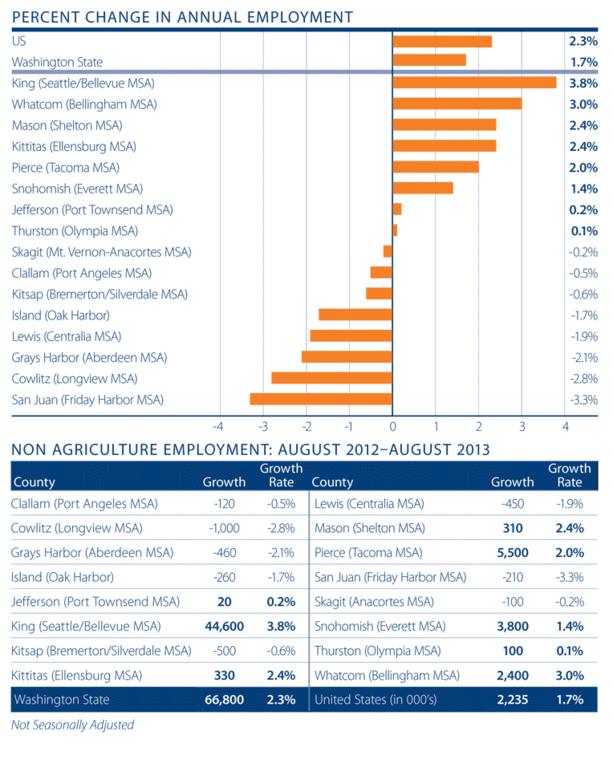
Unsurprisingly, King County (+3.8%) maintains its top position relative to employment growth. This was, somewhat surprisingly, followed by Whatcom County (+3%). Mason (+2.4%), Kittitas (+2.4%), and Pierce (+2%) rounded out the other top-performing counties.
As I mentioned earlier, job losses were generally modest, with San Juan (-3.3%), Cowlitz (-2.8%), Grays Harbor (-2.1%), and Lewis (-1.9%) Counties suffering the greatest percentage losses. In aggregate, the counties that saw contraction in employment lost a total of 3,100 jobs.
In terms of absolute numbers, we continue to see the bifurcation of employment growth within the state, with the central Puget Sound region (King, Pierce, and Snohomish Counties) now home to 79.2 percent of all regional jobs, up from 78.7 percent a year ago. This tri-county market has added 53,960 jobs over the past 12 months, representing all but 60 net jobs gained over the past year. The tri-county area also added 20,100 jobs over the past three months, while the balance of the market lost 4,290 positions.
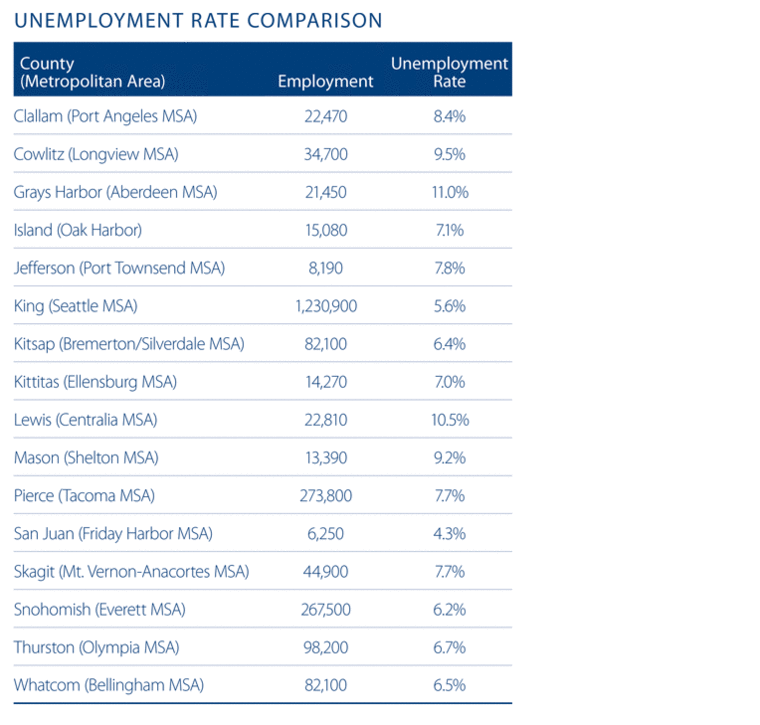
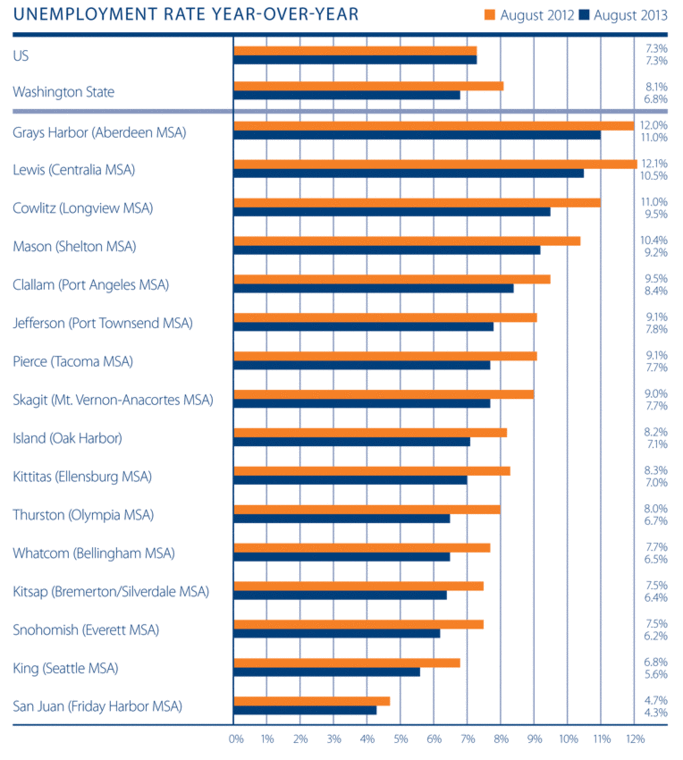
When we look at the unemployment rate in the region, every county did show improvement in their unemployment rates when compared to a year ago, and all but two have lower unemployment when compared to three months ago.
The only counties that saw their unemployment rates rise over the past quarter were King and Snohomish. This was a little surprising and, when we looked closer at the data, there were no clear reasons why the number of unemployed people grew by almost 30 percent in both counties. There was no growth in the labor force that would explain it so we are, for now, putting it down to being an anomaly that will correct in the next month or two.
Year over year, the greatest drop in unemployment was seen in Lewis County where the rate dropped by 1.6 percent. This was followed by Cowlitz County where unemployment dropped by 1.5 percent, and Tacoma which dropped by 1.4 percent. The smallest improvement was seen in San Juan County where the rate improved by a modest 0.4 percent.
In general, the employment picture remains positive and, with total employment growth of 2.5 percent, we remain well above the U.S. rate of 1.7 percent. That said, I still want to see a more broad-based improvement in jobs. Many counties in the state are not improving at the rate that I would like to see. As such, I can only maintain the “B+” grade that I gave last quarter.
Regional Real Estate
It was a funny summer. Interest rates started to climb in June, and this certainly had an effect on the housing market with sales increasing nicely. What was also pleasing to see was a corresponding growth in listing activity.
As compared to September of 2012, listings in the region are up by 7.5 percent, and are now 12.4 percent higher than seen at the end of the second quarter of 2013.
The greatest growth in listings was seen in Snohomish County, which saw a remarkable 36 percent increase in units for sale when compared to a year ago. Every other county measured increases in the single digits, with just three counties reporting fewer homes for sale than a year ago. These were Skagit (-3%), and Cowlitz and Jefferson which each saw available inventories less than one percent lower than a year ago.
Most counties added to the stock of homes for sale, but some notable exceptions were in Island (-5%) and Jefferson (-4%) Counties.
I would temper this with the fact that listings in the region are still 43 percent lower than seen in September of 2008—just as the market was correcting.
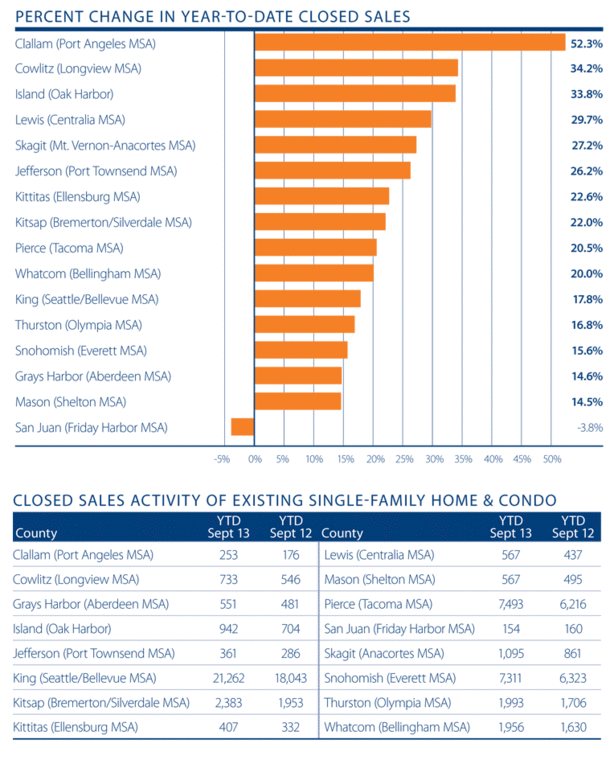
When we look at sales activity, the region reported 48,203 home sales in the first three quarters of 2013—a 19.2 percent improvement over the same period in 2012. And when compared to the previous quarter, sales were up by a very reasonable 4.6 percent.
In the third quarter, sales essentially rose across the board with the greatest increase coming in San Juan County, where the market reported 48 percent more homes in the quarter than in Q2. (The total increase, however, was from 44 to 65 sales). This was followed by Grays Harbor (+44%), Jefferson (+37%), and Mason (+30%) Counties. Very slight contraction was seen in Snohomish and Skagit Counties, but sales were less than one percent lower than seen in the previous quarter.
Listings and sales are both on the rise and it will be interesting to see how the year finishes. During third quarter we saw interest rates rise and then pull back. Did this “pull” some sales forward that would otherwise have happened later in the year? Only time will tell.
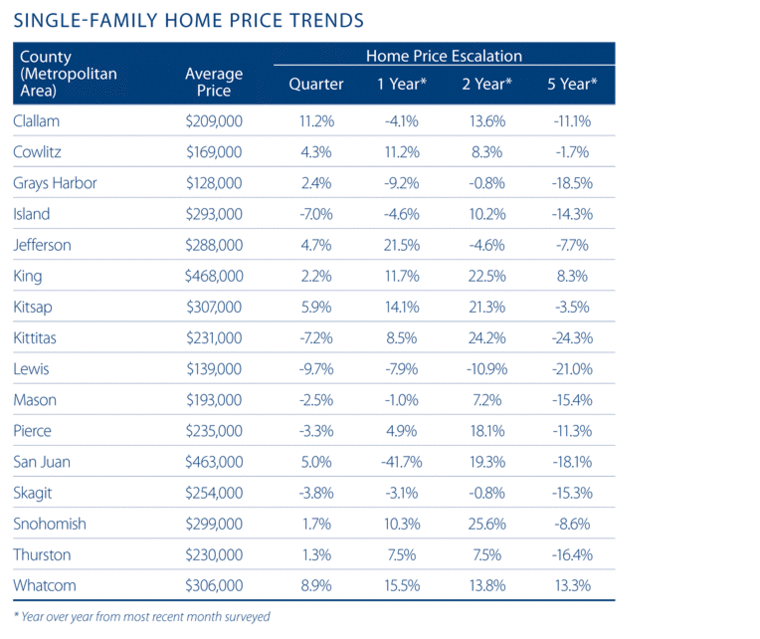
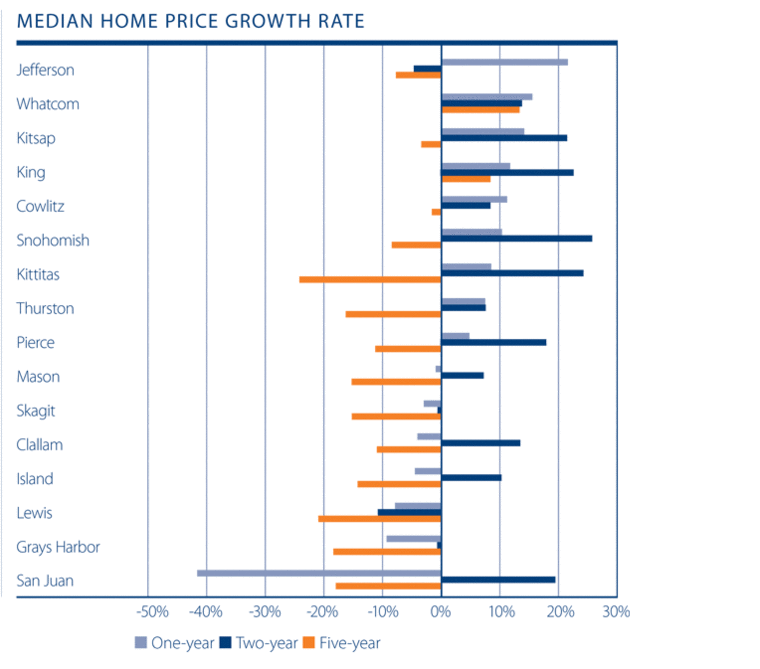
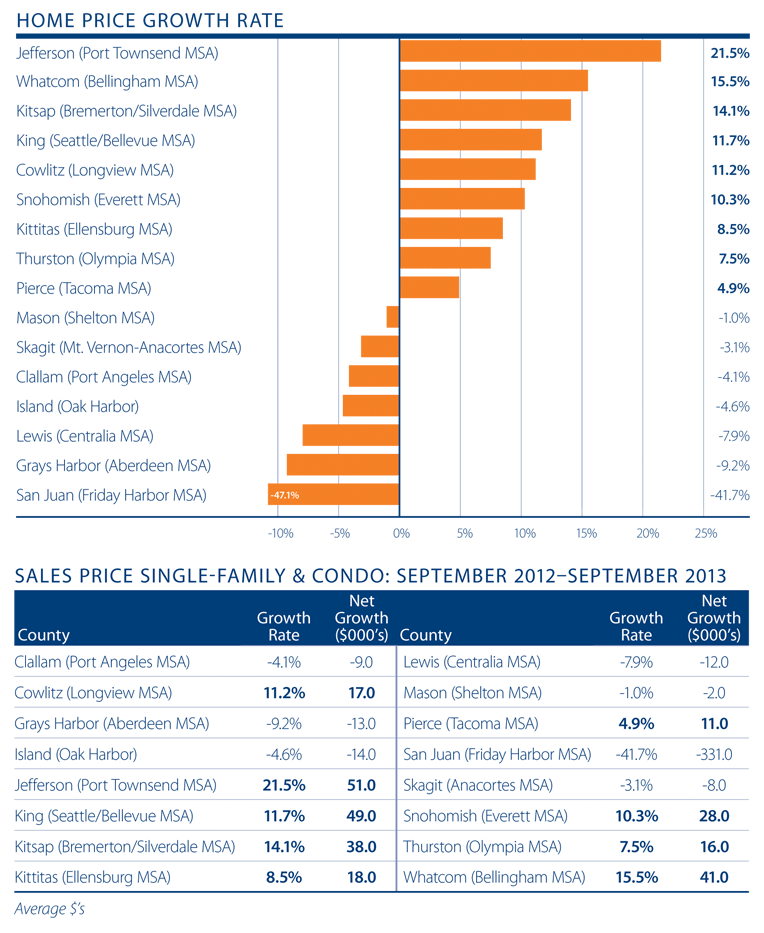
As shown in the chart below, nine counties saw the average sales prices at levels above that seen a year ago, with seven exhibiting prices below that seen in September of 2012. In aggregate, the average price of homes sold in the counties analyzed was nine percent higher at the end of the third quarter of 2013 than seen a year before.
Of the counties that saw appreciation, the most pronounced gains were seen in Jefferson County where prices rose by 21.5 percent. Significant gains were also seen in Whatcom (+15.5%), Kitsap (+14.1%), King (+11.7%), Cowlitz (+11.2%), and Snohomish (+10.3%) Counties. Declines were seen in the notoriously volatile San Juan County where home prices were 42 percent lower than a year ago. Price drops were also seen in Grays Harbor (-9.2%), Lewis (-8%), Island (-4.6%), Clallam (-4.1%), Skagit (-3%), and Mason (-1%) Counties.
When we look at the market versus the previous quarter, ten counties saw prices rise with six contracting. On the positive side, sales in the quarter grew the fastest in Clallam County where prices were 11.1 percent higher than seen at the end of Q2. Substantial increases were also seen in Whatcom (+8.9%), Kitsap (+5.9%), and San Juan (+5%) Counties. The most pronounced decline was seen in Lewis County where prices fell by 9.7 percent. Losses were also seen in Kittitas (-7.2%), Island (-7%), Skagit (-3.8%), Pierce (-3.3%), and Mason (-2.5%) Counties.
When compared to the housing market from two years ago, all but four counties saw home price growth, and we are now—five years later—starting to see some price growth versus September of 2008 when housing prices were at their peak.
The market has entered what I will refer to as a period of calm. The double-digit price growth that we have experienced over the past year or so is set to taper—which is not a bad thing. It is pleasing to see an increase in homes for sale in many markets throughout Washington. The market is demonstrating stability, and buyers are increasingly comfortable with the view that home buying is not an inherent risk.
I am upping the grade from a “C+” to a “B-”. Prices are calming and, although interest rates are sure to rise in 2014, the increase will not be parabolic. Rather, I believe that rising rates, along with higher inventory levels, will encourage those that are still on the fence, to get off.
Conclusions
The economy and the housing market both continue to improve, but there are headwinds that need to be addressed.
The health of the housing market relies heavily on the greater economy. When the region, and the country as a whole, grows economically, jobs are created, wealth increases, and this has a direct effect on homeownership.
Recent events in the “other” Washington continue to be a concern. For now, the effects of the sequester, debt ceiling, and Affordable Health Care for America Act remain unknown. In as much as the government went back to work after a brief respite, and agreed to temporarily increase the debt ceiling, a more permanent solution was not enacted. This causes uncertainty in the private sector, which is very important since private companies are the ones who have essentially created all the jobs that have been seen over the past five years.
Why do I mention this? Until we get resolution to the issues that face the nation, we will not grow at our potential. This affects all of us, because it can lead us to adjust our spending patterns —which can include our home buying decisions—as we tend to fear what we do not know.
I do believe that our government will come up with long-term solutions to these problems; however, until they do, many will still keep tight hold of their spending “reins”. That said, the current economic environment is certainly better than it has been for several years. As long as we believe that our elected officials will address the bigger issues that face the nation, we will continue to exhibit economic growth, but not at the rate which I would like to see.
About Matthew Gardner
Mr. Gardner is a land use economist and principal with Gardner Economics and is considered by many to be one of the foremost real estate analysts in the Pacific Northwest.
In addition to managing his consulting practice, Mr. Gardner chairs the Board of Trustees at the Washington Center for Real Estate Research at the University of Washington; sits on the Urban Land Institutes Technical Assistance Panel; is an Advisory Board Member for the Runstad Center for Real Estate Studies at the University of Washington; and is the Editor of the Washington State University’s Central Puget Sound Real Estate Research Report.
He is also the retained economist for the Master Builders Association of King & Snohomish Counties. He has twenty-five years of professional experience in the U.K. and U.S.
He has appeared on CNN, NBC and NPR news services to discuss real estate issues, and is regularly cited in the Wall Street Journal and all local media.

 Facebook
 X
X
 Pinterest
 Copy Link

 Navos
Navos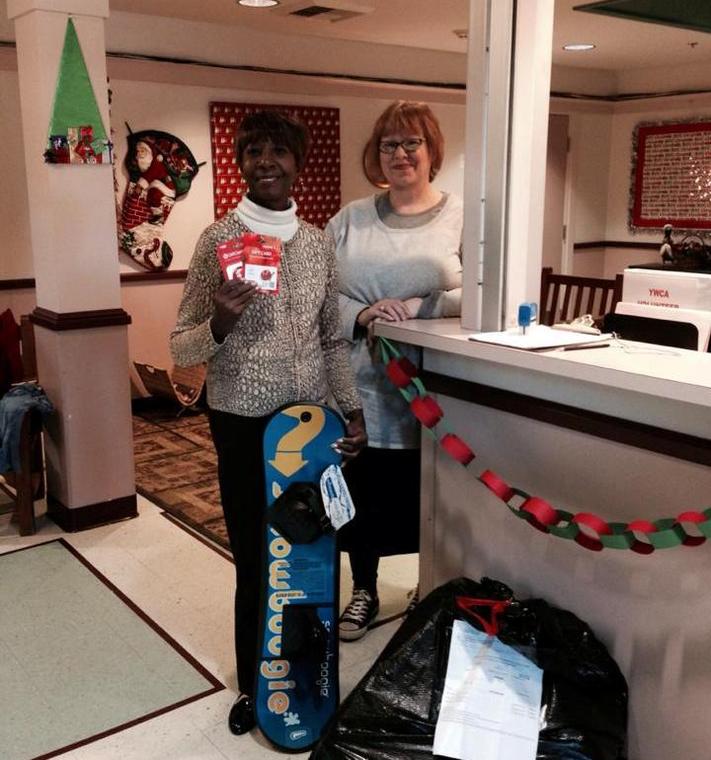









 Mr. Gardner is a land use economist and principal with Gardner Economics and is considered by many to be one of the foremost real estate analysts in the Pacific Northwest.




































 Penny Bolton has been helping people make a move successfully in Seattle since 1991. A lifelong resident, she is known for her knowledge of the market and for her determination to get her clients their best outcome whether buying or selling. She and her business partner, Rebecca Evans, are famous within the real estate community for their thorough preparation of their listings and their professional representation of their buyers.

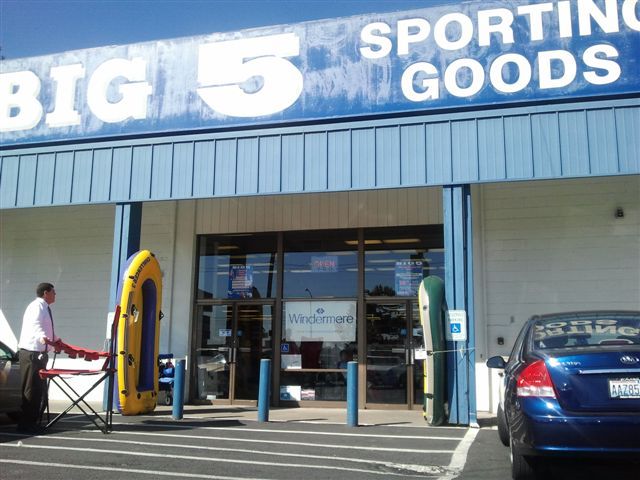 On November 16, attendees from selected Spokane area schools, Anna Ogden Hall, a women’s shelter, and Family Promise, a homeless transition program, were able to select boots at the Windermere Annual Boots & Gloves event. This event has been put on each year since 1999, through a long standing partnership with Windermere and Big 5 Sporting Goods. At the event, 119 pairs of boots were selected and 114 packages of socks were distributed to those who attended. (Gloves were not available this year due to inventories not being available in time for the event.) Agents from all the Spokane area Windermere offices were there to assist the kids while they picked out their boots and a package of socks.
 Napa Coat Drive
 Food Drive for South Kitsap Helpline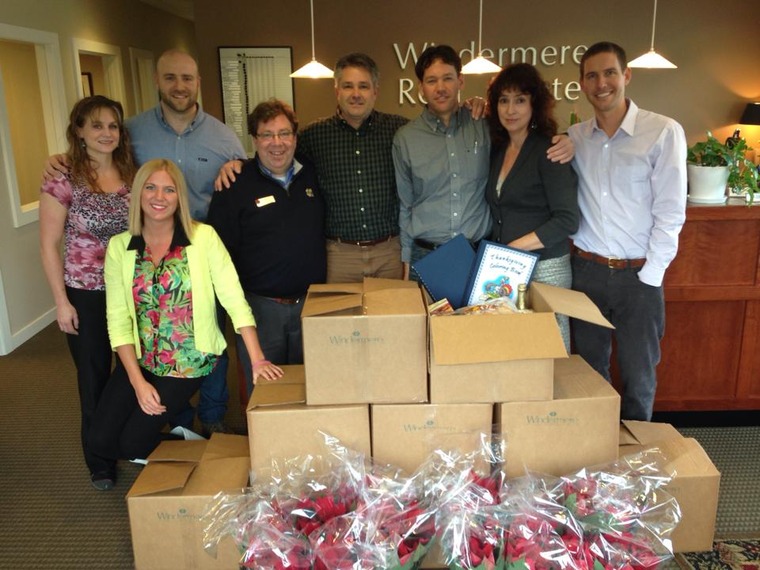

 Year over year, the greatest drop in unemployment was seen in Lewis County where the rate dropped by 1.6 percent. This was followed by Cowlitz County where unemployment dropped by 1.5 percent, and Tacoma which dropped by 1.4 percent. The smallest improvement was seen in San Juan County where the rate improved by a modest 0.4 percent.