Buying October 10, 2014

In the market to buy a home? Make a list and check it twice.

Are you thinking of buying a home, and you aren’t sure exactly where to start? Here is a checklist to help you get ready to make your home dreams come true:

Decide where you want to live! Are you where you want to be? Generally, you will want to plan on staying in your home for at least 5-7 years in order for you investment to pay off, so it’s important to look at homes in an area that will meet your needs over the long term. 

Explore the market. Once you know where you will be looking for homes, you can start to explore. Get to know the neighborhoods, the school districts, the local businesses, and community amenities.

Make a list of what you need and want. Create a list of the things in a home that are most important to you. Like the number of bedrooms/bathrooms, home features, commute times, etc. Then make a list of things that you would like to have, but aren’t as important, such as a fireplace, a large back yard, or a pool. It may help you to create a Pinterest board with your favorite home features that you can share with your agent when you’re ready to start looking.

Search for comparable houses in your market. Once you know where you’d like to buy and what type of house you’re looking for, you can start to realistically assess how much it will cost. Use an online search tool like windermere.com to see what’s for sale in your preferred neighborhood(s) and the value of the homes.

Take a good look at your finances. Once you have an idea of what homes cost, you can start figuring out how much money you need for a down payment, monthly mortgage payments, property taxes, etc. Make sure to check your credit score to ensure that everything is in order before applying for a home loan.

Develop your financial plan. Determine how much you need to save for your down payment and create a plan and timeline to achieve this goal. Outstanding debt can drag down your credit score, so make sure that paying down debt is a part of your plan.  

Find a real estate agent! Once you’ve met your financial goals, it’s time to find a real estate agent. The best place to start is by asking friends and family for a referral. You can also search on real estate websites, like windermere.com, to find an agent that specializes in the area you are looking to live.

Get pre-approved for your home loan. Your agent should be able to refer you to a mortgage representative who can assist with the financing of your new home. The first step is to get pre-approved so that you know exactly how much home you can afford. Not only does this allow you to refine your home search, but it can also give you a competitive advantage when there are multiple buyers bidding on the same property.  

Start shopping! This process involves everything from searching for homes online to visiting open houses on the weekends. But perhaps the most important part of this process is going on a good-old-fashioned home tour with your real estate agent. Looking for homes online lets you search more efficiently, but there’s nothing like seeing the home – and its surroundings – first hand.

The bidding process. The bidding process differs from region to region and season to season, but ultimately you should look to your agent to help you develop a plan based on your priorities and financial abilities. Depending on the market where you’re buying, there could be multiple buyers bidding for the same home, so it’s a good idea to have a well thought out strategy ahead of time.

Offer acceptance & earnest money. Once a seller accepts your offer you are required to put down an earnest money deposit to show that you are committed to purchasing the house. This money is held jointly by the seller and the buyer in a trust or escrow account. The earnest money goes towards your down payment and closing costs upon the closing of the home sale.

Home inspection. Most home sales are pending until a home inspection is completed. This is when a home inspector checks the condition of a home, such as the foundation, roof, windows, insulation, electrical, and heating components. If a home inspection turns up the need for repairs, it can end up being a tool for re-negotiations with the seller.  

Home appraisal. This is an all-important step to getting the financing you need for your new home. An appraisal is performed to assess the true value of a home, which in turn, determines how much a lender is willing to give you to buy it. Appraisals protect banks from getting stuck with property that's worth less than they've invested. And it protects you from paying too much for a house simply because it was love at first sight.

Purchase your home insurance. A standard homeowner’s insurance policy typically covers your home, your belongings, injury or property damage to others, and living expenses if you are unable to live in your home temporarily because of an insured disaster.

Closing! The closing marks the final step of the home purchase process. This is when the deed to a property is legally transferred from the seller to the buyer who then takes possession of the home. In simple terms, this is when you get the keys to your new home and you can officially move in.

If you have any additional questions about the home buying process, contact a local real estate agent

Selling October 3, 2014

Selling Your Home? Go Through This Safety Checklist With Your Real Estate Agent


Selling your home can be stressful for many reasons. Not only are you trying to get the best financial return on your investment, but you might also be working on a tight deadline. There’s also the pressure to keep your home clean and organized at all times for prospective buyers.  One thing you can be sure of when selling your home is that there will be strangers entering your space, so it’s important for you and your agent to take certain safety precautions.


  • Go through your medicine cabinets and remove all prescription medications.
  • Remove or lock up precious belongings and personal information. You will want to store your jewelry, family heirlooms, and personal/financial information in a secure location to keep them from getting displaced or stolen.
  • Remove family photos. We recommend removing your family photos during the staging process so potential buyers can see themselves living in the home. It’s also a good way to protect your privacy.  
  • Check your windows and doors for secure closings before and after showings. If someone is looking to get back into your home following a showing or an open house, they will look for weak locks or they might unlock a window or door.
  • Consider extra security measures such as an alarm system or other monitoring tools like cameras.
  • Don’t show your own home! If someone you don’t know walks up to your home asking for a showing, don’t let them in. You want to have an agent present to show your home at all times. Agents should have screening precautions to keep you and them safe from potential danger.

Talk to your agent about the following safety precautions: 

  • Do a walk-through with your agent to make sure you have identified everything that needs to be removed or secured, such as medications, belongings, and photos.
  • Go over your agent’s screening process:
    • Phone screening prior to showing the home
    • Process for identifying and qualifying buyers for showings
    • Their personal safety during showings and open houses
  • Lock boxes to secure your keys for showings should be up to date. Electronic lockboxes actually track who has had access to your home.
  • Work with your agent on an open house checklist:
    • Do they collect contact information of everyone entering the home?
    • Do they work with a partner to ensure their personal safety?
  • Go through your home’s entrances and exits and share important household information so your agent can advise how to secure your property while it’s on the market.

Your safety, as well as that of your agent and your home, is of paramount importance when selling a property. For more information, visit:

http://www.mercurynews.com/los-gatos/ci_26509084/realtors-issue-safety-tips-folks-who-are-selling

http://realtormag.realtor.org/sales-and-marketing/feature/article/2014/09/safety-talk-you-need-have-clients


Living September 12, 2014

Here’s Your Fall Home Maintenance Checklist:

Fall is an ideal time to tackle maintenance projects both inside and outside. Here are a few ideas to get you started:

Gutters top to bottom: Water in the wrong spots can do a lot of damage. Start by ensuring that gutters and downspouts are doing their job. (Don’t attempt this task yourself if you have a two-story house with a steep roof; hire a professional instead.) If your home is surrounded by deciduous trees you may need to clean out your gutters a few times a year, especially in the fall. Check to make sure your gutters are flush with the roof and attached securely, repairing any areas that sag or where the water collects and overflows. Clean out the gutters and downspouts, checking that outlet strainers are in good shape, and are firmly in place. Finally, check that your downspouts direct water away from your house, not straight along the foundation.

If you haven’t already, you may want to consider installing gutter guards. Gutter guards create a barrier so water can get through to your gutters, but debris cannot, limiting gutter buildup (and the time you spend cleaning out your gutters). There are DIY installation kits available or you can always hire a professional to install a gutter guard system.

If you have a sump pump under your house, now is a good time to test it. Run a hose to be sure draining water travels directly to the pump (dig small trenches if needed), and that the pump removes the water efficiently and expels it well away from the foundation. For more information about how sump pumps work go to howstuffworks.com.

Check for leak: The best opportunity to catch leaks is the first heavy rain after a long dry spell, when roofing materials are contracted. Check the underside of the roof, looking for moisture on joints or insulation. Mark any spots that you find and then hire a roofing specialist to repair these leaks. What you don’t want to do is wait for leaks to show up on your ceiling. By then, insulation and sheet rock have been damaged and you could have a mold problem too.

Don’t forget the basement. Check your foundation for cracks, erosion, plants growing inside, broken windows, and gaps in window and door weathering.  Make sure to properly seal any leaks while the weather is nice. This will ensure materials dry properly.

Pest Prevention: Rodents are determined and opportunistic, and they can do tremendous amounts of property damage (and endanger your family’s health). As temperatures cool, take measures to prevent roof rats and other critters from moving in. Branches that touch your house and overhang your roof are convenient on-ramps for invaders, so trip back branches so they’re at least four feet from the house. If you do hear scuttling overhead or discover rodent droppings in your attic, crawl space or basement, take immediate action. The website http://www.thisoldhouse.com has several helpful articles on the topic.

Maintain your heating and cooling systems: Preventative maintenance is especially crucial for your home’s heating and air-conditioning systems. Fall is a smart time to have your systems checked and tuned up if necessary. Don’t wait for extreme temperatures to arrive, when service companies are slammed with emergency calls. Between tune-ups, keeps your system performing optimally by cleaning and/or replacing air filters as needed.

If you have a wood-burning fireplace, a professional inspection and cleaning will help prevent potentially lethal chimney fires and carbon monoxide poisoning. Even if you don’t use your fireplace often, always keep a supply of dry firewood or sawdust-composite logs so you have a backup heat source in an emergency.

Insulate & seal: Insulating your home is a cost-efficient investment, whether you’re trying to keep the interior warm in the winter or cool in the summer. Aside from more major improvements like energy-efficient windows and insulation, there are some quick fixes that do-it-yourselfers can tackle. If an exterior door doesn’t have a snug seal when closed, replace the weather stripping; self-adhesive foam stripping is much simpler to install than traditional vinyl stripping. If there is a gap under the door (which can happen over time as a house settles), you may need to realign the door and replace the vinyl door bottom and/or door sweep. Air also sneaks inside through electrical outlets and light switches on exterior walls. Dye-cut foam outlet seals placed behind the wall plates are a quick and inexpensive solution.


Market News August 28, 2014

Oregon and Southwest Washington Real Estate Market Update

Windermere Real Estate is proud to partner with Gardner Economics on this analysis of the Oregon and Southwest Washington real estate market. This report is designed to offer insight into the realities of the housing market. Numbers alone do not always give an accurate picture of local economic conditions; therefore our goal is to provide an explanation of what the statistics mean and how they impact the Oregon and Southwest Washington housing economy. We hope that this information may assist you with making an informed real estate decision. For further information about the real estate market in your area, please contact your Windermere agent.

Regional Economics

Oregon job growth in the areas contained in this report slowed a little in the second quarter with the addition of 31,509 jobs, or an increase of 1.8%. That said, during the quarter, employment rose by 17,508 jobs (+1%) which is still not a bad figure.

When compared to the second quarter of 2013, growth was strongest in Klamath County, where employment grew by 4.9 percent (1,090 jobs). This was followed by Clark (+4.2%) and Deschutes (+3%) Counties.

Job losses were somewhat more widespread than those seen a year ago; however, the total losses amounted to only 1,030 positions. The largest declines were seen in the Medford market where there was a loss of 630 jobs.

At the end of 2013, I suggested that the region should add 35,000 jobs in 2014 and we appear to still be pretty much on track to achieve that figure.

In line with our last report, the unemployment rate continues to drop and now every county in the region has an unemployment rate below that seen a year ago. Additionally, the rate is also lower than seen at the end of the first quarter, which suggests that the market is improving in both the near- and longer-term.

It is also worth noting that all of the counties within this report can now say that their unemployment rate is below ten percent. This is a key psychological barrier and, as regular readers will be aware, I had worried that many counties appeared to be stuck above this threshold. This is now no longer the case.

If there is something that still concerns me it is that the state, after adding close to 44,000 jobs in 11-straight months of growth, saw payroll employment shrink by 4,300 jobs in June. And what’s even more disconcerting is that the construction industry dropped by 3,600 jobs at a time when, traditionally, employment should be growing.

Could this just be an anomaly? Maybe! However, because of this, I cannot raise my grade for the region’s economy above the “C+” that I gave it last quarter.

Regional Real Estate

Inventory constraints appear to be a major factor in the marketplace right now, with over half of the counties in this report showing a reduction in closed sales when compared to the first half of 2013.

For the most part the declines were rather modest, but it is not the direction that I was looking for. In my estimation, either the anticipated spring “bounce” did not appear or, as is more likely the case, sales in the first quarter were particularly slow, which is reflected in the decline in home sales for the first half of this year. I am not going to jump to judgment quite yet, but this is something that I will be keeping my eye on.

When compared to the first half of 2013, sales rose in eight counties with Clatsop and Cowlitz Counties up by an impressive 19.4 and 19.2 percent, respectively. The most substantial declines were seen in Columbia County where sales dropped by 13.3 percent. Other markets where sales dropped quite precipitously were Benton and Wasco Counties.

What is clear is that, while sales are getting harder to come by, prices are still moving higher with the average sale price growing from $275,100 to $291,200—an increase of 5.8 percent.

Looking at individual counties, a vast majority saw sale prices which were higher than those seen a year ago. The most impressive gains were seen in Klamath (+19.3%), Klickitat (+16.5%), and Columbia (+13.5%) Counties. A majority of counties saw prices rise by single digits, which is still respectable given inventory constraints.

There were three counties where prices fell, with Skamania County seeing the greatest drop in value versus a year ago (-24.3%). We attribute this to the fact that it is a very small market with less than 25 home sales on average every quarter. The two other markets where prices dropped very slightly were Lincoln (-2.3%), and Hood River (-1.0%) Counties.

Looking back a bit further, all but two counties in the region saw home prices exceed those shown in the second quarter of 2012. Additionally, 15 of 23 counties surveyed saw prices in the second quarter exceed those seen in the second quarter of 2009.

In all, the market is plodding along relatively well but, as is always the case, some areas are doing better than others. The lack of inventory is a concern and, purely because of this, I am maintaining a “C+” grade for now.

Conclusions

The unemployment rate in Oregon continues to trend lower but remains well above its pre-recession level; however, long-term unemployment (people who were unemployed for more than six-months) dropped to 40,700—the lowest number since 2008.

The markets covered by this report are seeing their labor forces grow, which is encouraging. More people are either looking for work or have obtained positions. I think that the temporary slowdown that was seen in June is just a blip and that the market will return to positive employment growth as we move through the rest of the summer.

The recovery in the housing markets in the region is certainly uneven. Price growth is at levels that I had expected, but the slowdown in home sales is not what I wanted to see. Interest rates remain at very low levels, but buyers continue to be frustrated by the lack of choice in the market.

I mentioned in my last report that I was hopeful that the region would start adding to its supply of homes for sale, but that has not yet happened. There is still time, but with the pre-school-year slowdown, the third quarter might not meet expectations in terms of inventory or sales. That said, it is clear that the market wants to grow. The question, given the clear supply constraints that exist, is can it? For now, that remains to be seen.

About Matthew Gardner

Mr. Gardner is a land use economist and principal with Gardner Economics and is considered by many to be one of the foremost real estate analysts in the Pacific Northwest.

In addition to managing his consulting practice, Mr. Gardner chairs the Board of Trustees at the Washington Center for Real Estate Research at the University of Washington; sits on the Urban Land Institutes Technical Assistance Panel; is an Advisory Board Member for the Runstad Center for Real Estate Studies at the University of Washington; and is the Editor of the Washington State University’s Central Puget Sound Real Estate Research Report.

He is also the retained economist for the Master Builders Association of King & Snohomish Counties. He has twenty-five years of professional experience in the U.K. and U.S.

He has appeared on CNN, NBC and NPR news services to discuss real estate issues, and is regularly cited in the Wall Street Journal and all local media.

Market News August 19, 2014

Western Washington I 2014 Second Quarter Market Update

Windermere Real Estate is proud to partner with Gardner Economics on this analysis of the Western Washington real estate market. This report is designed to offer insight into the realities of the housing market. Numbers alone do not always give an accurate picture of local economic conditions; therefore our goal is to provide an explanation of what the statistics mean and how they impact the Western Washington housing economy. We hope that this information may assist you with making an informed real estate decision. For further information about the real estate market in your area, please contact your Windermere agent.

Regional Economics

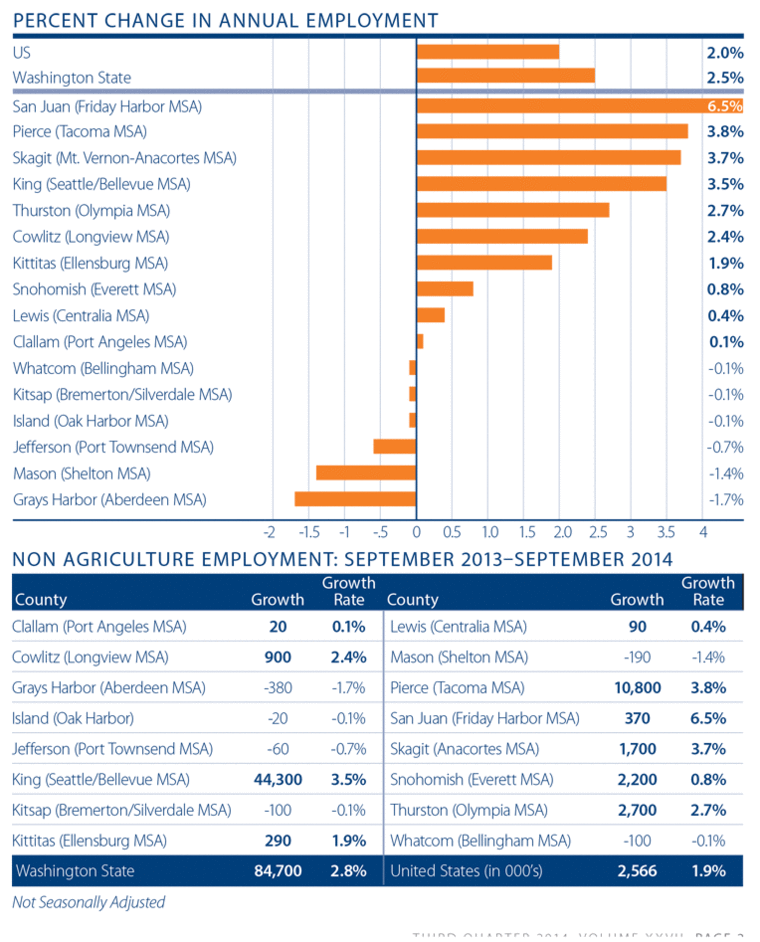
The post-recession job recovery continues unabated in Western Washington, with all of the counties contained within this report either exceeding their pre-recession peak or approaching it. Washington State added just shy of 84,700 jobs over the past 12-month period, representing a very respectable annual growth rate of 2.8 percent. In total, all of the counties covered added 64,190 jobs (also a 2.8 percent increase over a year ago). If there was a spring bump, it certainly came in the second quarter, with the area adding 52,180 jobs.

The tri-county area of King, Snohomish, and Pierce Counties still dominates in terms of total growth, adding 42,400 jobs in second quarter—an increase of 60,300 jobs compared to a year ago. King County employment is now four percent higher than its pre-recession peak; Snohomish is one percent higher, and Pierce County now matches its 2008 peak employment numbers.

Looking more closely at the county figures, King County (+4.0%) maintains its top position in terms of employment growth; this is followed by Pierce County (+3.5%), and Cowlitz County which continues to outperform with the addition of 800 jobs (+2.2%).

In Western Washington, losses were seen only in Grays Harbor County which shed 180 jobs over the past year. That said, this county added 720 jobs in second quarter indicating a quite substantial turnaround. Employment in Jefferson and Kitsap Counties matched that seen a year ago but, again, both counties added jobs in the quarter.

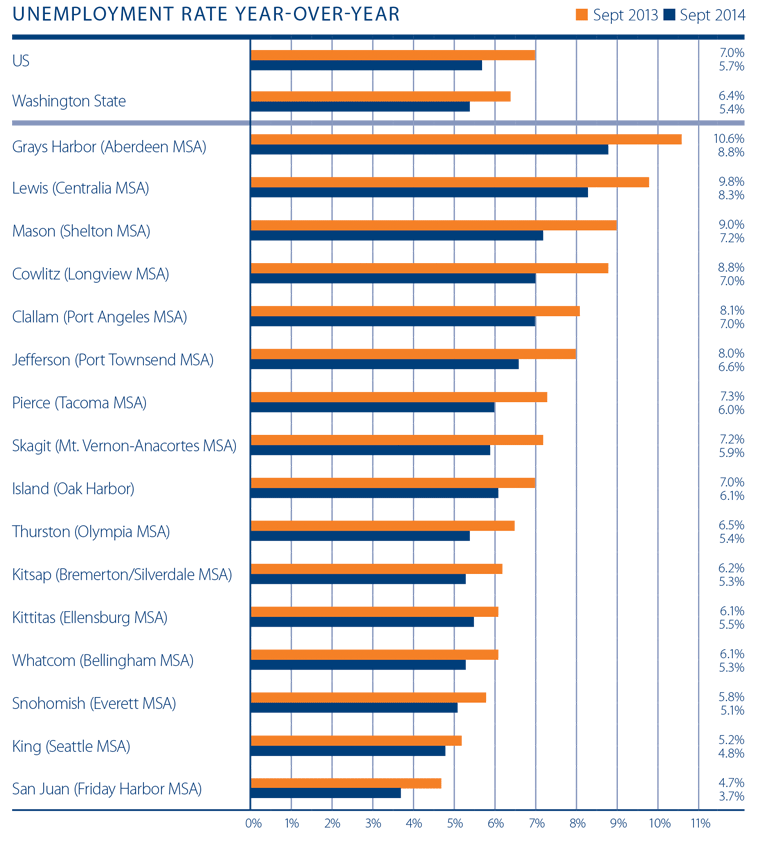
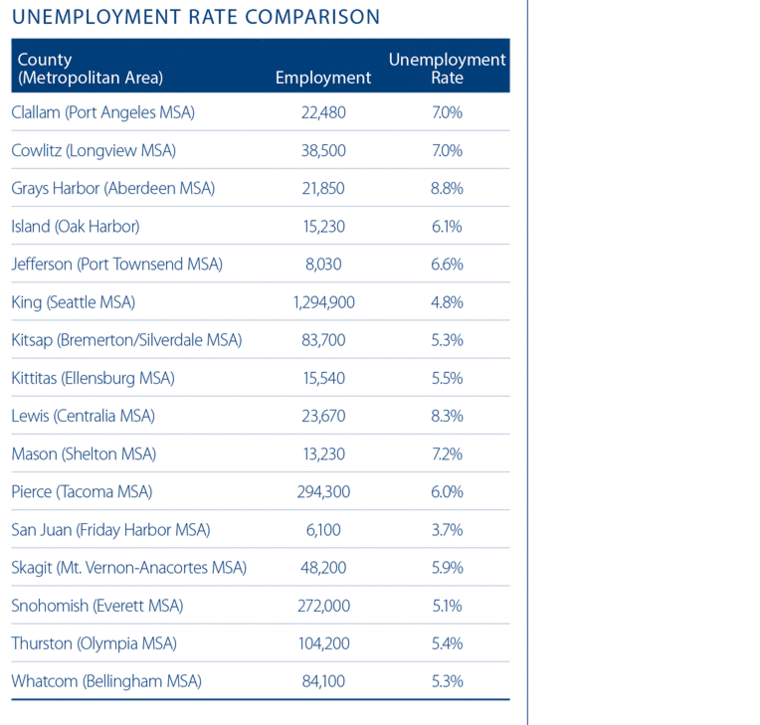
Turning our attention to unemployment rates in the region, I am not surprised to see all counties showing improvement in total unemployment. This is particularly important because the labor force grew over the past year, albeit modestly. What this means is that the drop in the unemployment rate is a function of job creation and not a slowdown in people looking for work.

When compared to June of 2013, the greatest declines in the unemployment rate were in Cowlitz County where the rate dropped by 3.4 percent to 7.1 percent. This was followed by Grays Harbor County where the rate dropped from 11.8 to 8.5 percent. Unemployment dropped by 3.2 percent in Mason and Lewis Counties. The unemployment rate in counties throughout Western Washington also improved when compared to last quarter.

Thus far in 2014, employment growth has exceeded my expectations; however, the growth is still bifurcated with very solid expansion in the core central Puget Sound area, but not necessarily across the entire state. Because of this, I am maintaining the “B+” grade that I have given the employment situation for the past year.

Regional Real Estate

In my first quarter report, I suggested that I was disappointed with the number of homes for sale and hoped that we would see improvement in inventory levels as we moved further into the spring selling season. Well, I am happy to report that my hopes were met, with a 33 percent increase in housing inventory compared to last quarter—and a 7.7 percent increase over a year ago.

The greatest growth in listings year-over-year was seen in Snohomish County, registering a 36 percent increase in homes for sale. This was followed by Thurston County where the total number of homes for sale was 25 percent higher than a year ago, and Pierce County rounded out the top three with a 21 percent increase. Only three counties reported an annual decrease in listing activity during second quarter. The largest decline was seen in Jefferson County (-13%), while Island and Lewis Counties both dropped by 10 percent.

When comparing first and second quarters of this year, every county reported more homes for sale. The greatest increase was seen in Kittitas County where inventory levels grew by 50 percent. This was followed by Whatcom (+44%), King (+41%), and Thurston (+40%) Counties. The smallest increase was seen in Lewis County at a still respectable 14 percent increase over first quarter of this year.

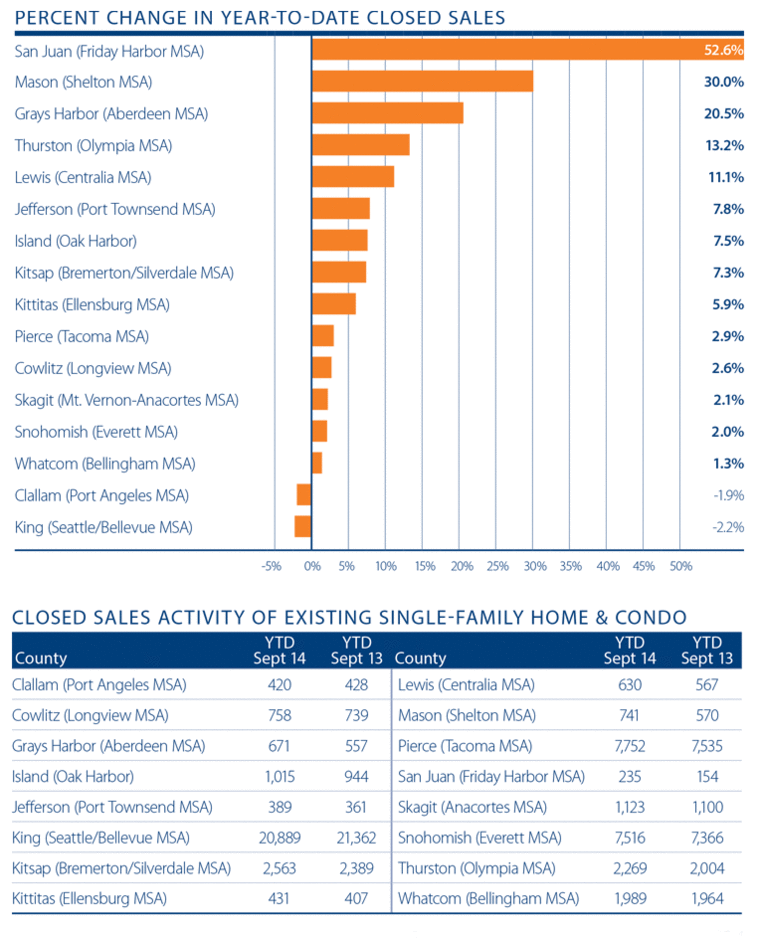
When we look at sales activity, 29,885 homes sold in the first half of 2014—a modest increase of 1.3 percent over the first half of 2013. However, during second quarter, sales growth followed the rise in listings, reporting a substantial 51.8 percent increase compared to first quarter. In the second quarter, there were over 18,000 home sales—compared to 11,870 last quarter.

Year-to-date, home sales grew the fastest in San Juan County (+69.7%), possibly suggesting that the vacation home market may have recovered. This was followed by Grays Harbor County (+34.5%) and Mason County (+28.1%).

There were four counties where home sales fell compared to the first half of 2013: Clallam County (-2.7%), Whatcom County (-2.4%), King County (-2.3%), and Skagit County (-1.5%). I believe these numbers to be due to the low inventory levels.

As mentioned earlier, when compared to the first quarter of 2014, home sales were solidly higher. This growth was most pronounced in San Juan County where sales were up by a substantial 85 percent. This was followed by King County (+61%), Skagit County (+58%), and Mason County (+54%). The slowest sales growth was seen in Grays Harbor County (+9%).

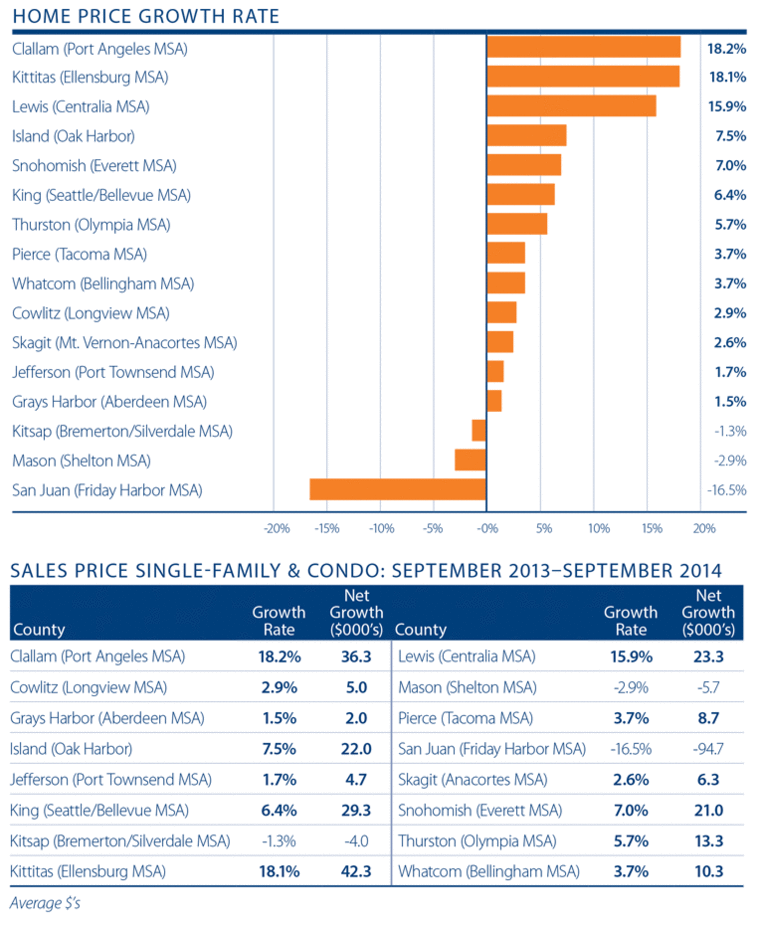
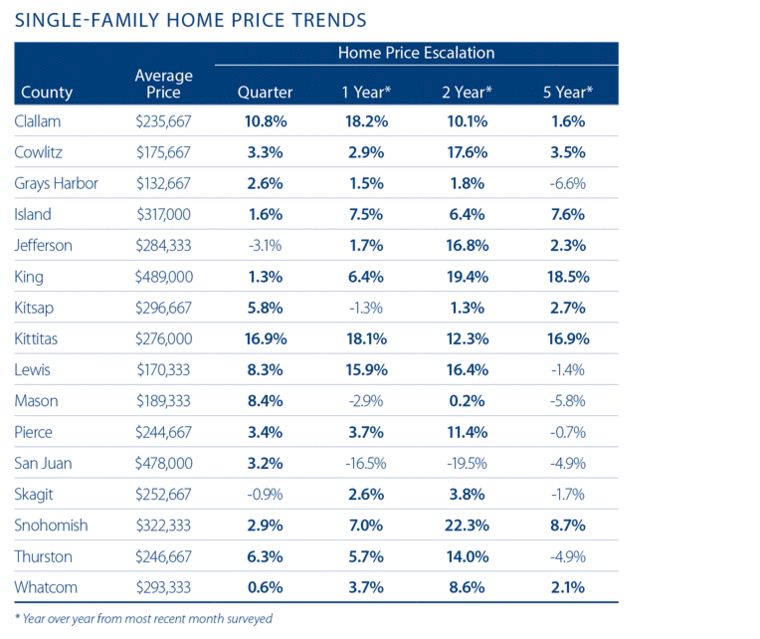
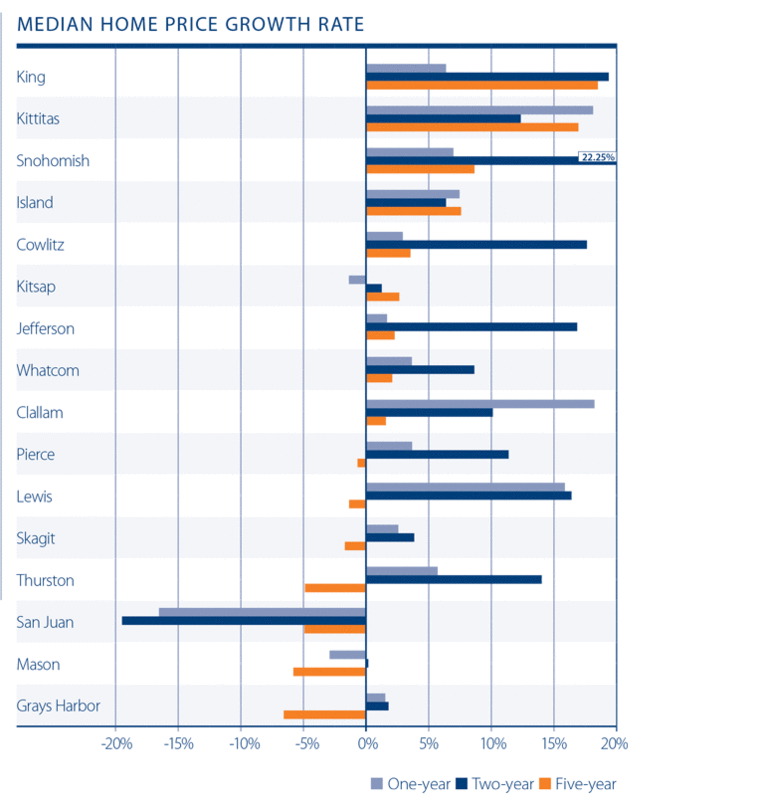
The average home price in Western Washington in the first half of 2014 was $355,335—up by 4.6 percent over the first half of 2013. As is seen in the chart to the right, all but four counties saw average sales prices rise compared to a year ago. Price growth has been tapering over the past year, but remains generally positive.

When we look at individual counties, the strongest annual gains were in Lewis County where prices rose by 9.7 percent. There were also significant gains seen in Snohomish County (+7.9%), Island County (+7.3%), King County (+7.2%), and Clallam County (+7%).

Compared to the first quarter of 2014, home prices were also higher in all but one county. The greatest growth was seen in Jefferson County (+14.7%), followed by Mason County (+13.8%) and Cowlitz County (+12%). There were an additional three counties that saw double-digit gains in sale prices. Home prices fell in just one county, and this was the always-volatile San Juan County, where prices for the quarter were down by 3.9 percent.

Even though rising home prices slowed in the second quarter, I am very pleased to see the growth in listing activity. As such, it’s time to up the grade for the housing market to a “B+” from the “B” grade given last quarter.

Conclusions

The economy in our region continues to improve. The ongoing low-interest rate policy of the Federal Reserve has helped fuel a turnaround in the housing market. Even with the increases in mortgage rates last summer, financing costs remain well below historical averages, with the 30-year fixed-rate mortgage averaging 4.2 percent in the second quarter of this year. Rates have dropped through the quarter and I do not expect to see any form of rapid rise through the summer months. That said, I do anticipate that interest rates will start to climb modestly through the balance of this year and into 2015.

Shifting to the new construction housing market, I have a cautiously optimistic view for economic growth in the next few years. With the exception of multifamily rentals, the new home sector remains well below potential, and will likely persist in that state for a couple of years, but continue to doggedly improve. Interestingly, the lack of new home construction bodes well for the resale market, as I expect that we will start to see additional demand coming from new households moving out of rental housing and into homeownership. This will lead to additional demand for single-family homes.

The housing market is starting to get more balanced, thanks to slowing price growth combined with somewhat greater choices for buyers. That said, we still have a long way to go. To give you some perspective, there were 33,258 homes for sale in Western Washington in June of 2009, and in June of 2014, there were just 20,670!

I expect that the summer will continue to be good to us with higher levels of inventory leading to further increases in sales activity. Mortgage lending has started, at long last, to become modestly easier, which will also do its part to add to the continued improvement of the housing market and the overall economy.

About Matthew Gardner

Mr. Gardner is a land use economist and principal with Gardner Economics and is considered by many to be one of the foremost real estate analysts in the Pacific Northwest.

In addition to managing his consulting practice, Mr. Gardner chairs the Board of Trustees at the Washington Center for Real Estate Research at the University of Washington; sits on the Urban Land Institutes Technical Assistance Panel; is an Advisory Board Member for the Runstad Center for Real Estate Studies at the University of Washington; and is the Editor of the Washington State University’s Central Puget Sound Real Estate Research Report.

He is also the retained economist for the Master Builders Association of King & Snohomish Counties. He has twenty-five years of professional experience in the U.K. and U.S.

He has appeared on CNN, NBC and NPR news services to discuss real estate issues, and is regularly cited in the Wall Street Journal and all local media.


More August 11, 2014

August Perspectives: Summer Splash at Green Lake

There’s nothing quite like Seattle in August – it’s our favorite time of the year. That’s because you can usually count on blue skies, warm temperatures, and minimal rain, making it the ideal place to do just about anything outdoors. It’s also the time of year when families start getting ready to send their kids back to school. Sadly, for some kids, going back to school represents a time of stress because they don’t have something that most of us take for granted – a pair of shoes.

Studies show that when kids feel good about their appearance, it improves both their self-esteem and their performance in school. We think every child deserves to start the school year on the right foot, so with your help, we’re determined to make that happen.


On August 16, in partnership with Seattle Parks and Recreation and the George Pocock Rowing Foundation, Windermere is hosting a free family event at Green Lake called the Windermere Summer Splash. This day-long event kicks off first thing in the morning with a Junior Rowing Race and Corporate Cup Regatta that will see some iconic Seattle companies face off. Other highlights include food vendors, live entertainment, giveaways, and a whole host of kid-friendly activities. And if you’re game, you and your kids can also try your hand at rowing, canoeing, kayaking, and stand-up paddle boarding.

What does all of this have to do with kids who need shoes? Well, in addition to celebrating summer fun and healthy activities for families, we’re holding a sneaker drive for low-income youth called “Kicks for Kids”. Bring a pair of new or gently used sneakers (kids sizes 1-9) to the event and our friends at Gentle Giant Moving Company will make sure they’re delivered to the King County Boys and Girls Club, and Mary’s Place, in time for the first day of school. Can’t make it to the Summer Splash? No problem. Just drop off the sneakers at any local Windermere office between now and August 15.

We hope to see you (and your kicks) next Saturday. For more information about the Windermere Summer Splash event, please visit www.WindermereSummerSplash.com.

More August 7, 2014

Please Donate to Our Kicks for Kids Sneaker Drive

While many kids enjoy the final days of summer, their families are getting ready for the upcoming school year. Sadly, the thought of going back to school can be a stressful time for some kids, because they don’t have something that most of us take for granted—a pair of shoes.

Studies show that when kids feel good about their appearance, it improves both their self-esteem and their performance in school. We think every child deserves to start the school year on the right foot, and we’re determined to make that happen through our “Kicks for Kids” shoe drive. We will be collecting shoes from August 1 through August 15 to benefit kids through the King County Boys & Girls Clubs and Mary's Place.

You can help make a difference in the lives of local low-income kids by dropping off a pair of new or gently used tennis shoes (kids’ sizes 1–9) at one of our participating Windermere offices. You can also bring them to the Windermere Summer Splash event on August 16 at Green Lake in Seattle.

Thank you for your support and for helping children get a great start on the school year!

More August 4, 2014

Mid-Year Foundation Report

Helping children get through the school year and more.

Thanks to your donations, the Windermere Foundation has been able to disburse nearly $840,000 to non-profit organizations throughout our network, during the first half of 2014. This included 269 grants, with an average grant size of $3,121—grants that support programs like weekend meals for school kids.

Did you know that one in five children go to bed hungry each night? And weekends are even worse for those children that depend on subsidized school lunches for their meals. But thanks to you, local children received support from services like the Healthy HIP program, which provides backpacks filled with nutritious food to school children who would otherwise go hungry on the weekends.

Children like Joseph, who received a backpack filled with food for the weekend. And do you know what happened when he took it home? He didn’t eat any of it. Instead, he just lined it up and stared at it. You see, it had been such a long time since Joseph had seen so much food; he wasn’t sure if, or when, it would happen again. He didn’t know how long he had to make it last. Only after being assured that he didn’t have to worry, and that there would be more food for him next week if he needed it, did he eat and eat until he couldn’t eat anymore.

So thank you. Your generosity is making a real difference for children like Joseph.

Through the first half of this year, the Windermere Foundation collected over $673,000 in donations. Of those funds, 62 percent raised were through individual contributions and fundraisers, and 38 percent were raised through Windermere agent sales transactions. So far, we have raised over $27 million since 1989. But we still need your help to reach our fundraising goal of $30 million by the end of 2015. Check out our Windermere Foundation Timeline for some of our giving and fundraising milestones.

If you’d like to help, go to https://store.windermere.com/content/foundation-donation to make a donation.

Living July 17, 2014

Indoor Air Quality Basics

Most of us tend to think of air pollution as something that occurs outdoors where car exhaust and factory fumes proliferate, but there’s such a thing as indoor air pollution, too.  Since the 1950s, the number of synthetic chemicals used in products for the home has increased drastically, while at the same time, homes have become much tighter and better insulated. As a result, the EPA estimates that indoor pollutants today are anywhere from five to 70 times higher than pollutants in outside air.

Luckily, there are many ways to reduce indoor air pollution. We all know that buying organic and natural home materials and cleaning supplies can improve the air quality in our homes, but there are several other measures you can take as well.

How pollutants get into our homes

Potentially toxic ingredients are found in many materials throughout the home, and they leach out into the air as Volatile Organic Compounds, or VOCs. If you open a can of paint, you can probably smell those VOCs. The “new car smell” is another example of this. The smell seems to dissipate after a while, but VOCs can actually “off-gas” for a long time, even after a noticeable smell is gone.

We all know to use paint and glue in a well-ventilated room, but there are many other materials that don’t come with that warning. For instance, there are chemicals, such as formaldehyde, in the resin used to make most cabinets and plywood particle board. It’s also in wall paneling and closet shelves, and in certain wood finishes used on cabinets and furniture. The problems aren’t just with wood, either. Fabrics—everything from draperies to upholstery, bedding, and carpets—are a potent source of VOCs.

The good news about VOCs is that they do dissipate with time. For that reason, the highest levels of VOCs are usually found in new homes or remodels. If you are concerned about VOCs, there are several products you can buy that are either low- or no-VOC. You can also have your home professionally tested.

How to reduce VOCs in your home

Make smart choices in building materials.

  • For floors, use tile or solid wood—hardwood, bamboo, or cork – instead of composites.
  • Instead of using pressed particle board or indoor plywood, choose solid wood or outdoor-quality plywood that uses a less toxic form of formaldehyde.
  • Choose low-VOC or VOC-free paints and finishes.

Purify the air that’s there.

  • Make sure your rooms have adequate ventilation, and air out newly renovated or refurnished areas for at least a week, if possible.
  • Clean ductwork and furnace filters regularly.
  • Install air cleaners if needed.
  • Use only environmentally responsible cleaning chemicals.
  • Plants can help clean the air: good nonpoisonous options include bamboo palm, lady palm, parlor palm, and moth orchids.
  • Air out freshly dry-cleaned clothes or choose a “green” cleaner.

Fight the carpet demons.

  • Choose “Green Label” carpeting or a natural fiber such as wool or sisal.
  • Use nails instead of glue to secure carpet.
  • Install carpet LAST after completing painting, wall coverings and other high-VOC processes.
  • Air out newly carpeted areas before using.
  • Use a HEPA vacuum or a central vac system that vents outdoors.

Prevent Mold.

  • Clean up water leaks fast.
  • Use dehumidifiers, if necessary, to keep humidity below 60 percent.
  • Don’t carpet rooms that stay damp.
  • Insulate pipes, crawl spaces, and windows to eliminate condensation.
  • Kill mold before it gets a grip with one-half cup of bleach per gallon of water.

We hope this information is helpful. If you would like to learn more about VOCs and indoor air quality, please visit: http://www.epa.gov/iaq/. 

More July 9, 2014

Announcing the Winner of the Community Service Day Facebook Challenge!

On June 20, Windermere offices in Washington, Oregon, Idaho, Montana, Hawaii, Alaska, and Utah all took a day off from selling homes to help make a difference in their local communities. Our offices were challenged to share photos and videos from their community service day event on the Windermere Real Estate Facebook page, and in turn, they received a $100 donation to the Windermere Foundation charity of their choice.

To add some competition to this challenge, we offered an additional $1,000 charitable contribution to the office with the most Facebook “likes” and comments. So, who won?

With a total of 206 likes and comments on their photo, the winner of the CSD Facebook photo challenge is Windermere North (Lynnwood)! Owner, Lena Maul, and her team will be donating the $1,000 prize to “Pathways for Women” which provides shelter for homeless women and their children through their local YWCA.

Windermere offices from throughout the region participated in the CSD Facebook photo challenge, here is just a sample. To see all entries, check out the Windermere Facebook page and look through the “posts to page”. Thank you to all of our offices for participating and sharing your stories.

Eastern Washington: Tri-Cities/Richland “First annual Health and Safety Fair”

Utah: Head Start

Hawaii: Kona, Humane Society

Idaho: Coeur d’Alene Children’s Village

Oregon: Southwest Portland Boys and Girls Club

Montana: Helena Food Share