Facebook
 X
X
 Pinterest
 Copy Link
What Are Energy Star Appliances?
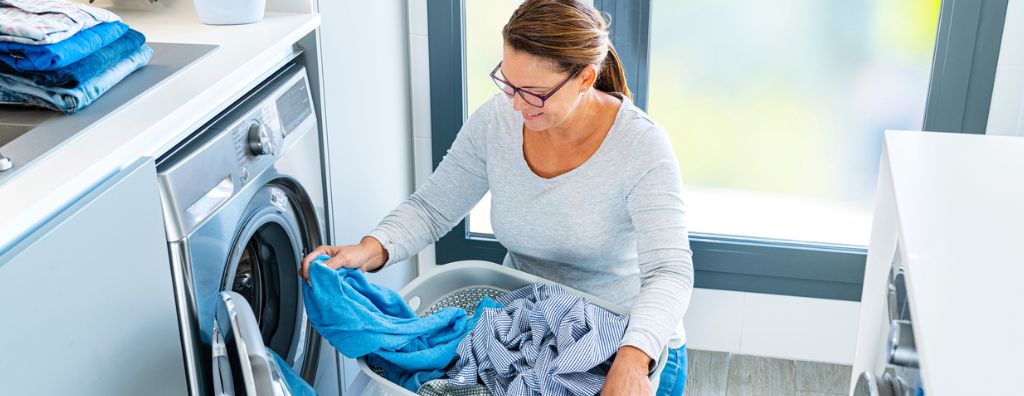
What would life be like without appliances? Our reliance on our dishwashers, laundry machines, etc. makes them an integral part of our homes. They keep the house clean and ensure that the well-oiled machine that is your home life continues to run smoothly. Fortunately, Energy Star appliances are more sustainable than others and can save you money on your utility bills.
What are Energy Star appliances?
Energy Star products use less energy than other home appliances. Because they are more energy efficient, they help to protect the environment by reducing harmful emissions. These products adhere to strict guidelines set forth by the U.S. Environmental Protection Agency (EPA) and U.S. Department of Energy. Over the lifespan of these home appliances, you can save significantly on energy costs.
You’ll find the Energy Star badge on common home appliances such as refrigerators and dishwashers, but over the years, the program has expanded to other systems throughout the home including HVAC systems, water heaters, TV sets, and more.
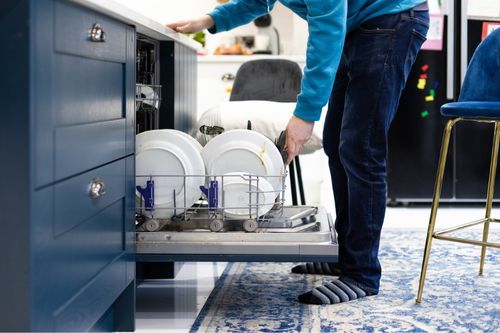
Image Source: Getty Images – Image Credit: SolStock
These appliances accomplish improvements in sustainability through various product features. Here are just a few examples of their efficiency gains compared to non-certified appliances, courtesy of the Energy Star Appliances Brochure.
- Certified refrigerators are about 15% more energy-efficient
- Certified freezers use about 10% less energy
- Certified dehumidifiers use 15% less energy (roughly $175 lifetime savings)
- Certified air cleaners are 40% more energy-efficient (roughly $25 annual utility bills savings)
- Certified dishwashers are 10% more energy-efficient and 20% more water-efficient (average 1,900 gallons of water savings over product lifetime)
- On average, certified laundry machines can cut energy costs by one-third and water costs by more than half
To truly make improvements in your energy output, it’s helpful to establish a baseline. By sorting through your utility bills, you’ll gain an understanding of how your household’s energy output is distributed, allowing you to identify areas for improvement. Using these special appliances is just one way to accomplish more sustainable living at home. By combining these products with other eco-friendly practices, you’ll see your energy expenses decrease while feeling a sense of pride that you’re doing your part to protect the environment.
To maximize your appliances, it’s important to keep them clean. Read the following blog post on appliance cleaning tips to keep them highly efficient for their entire life cycle.
7 Tips for Cleaning Your Appliances
Featured Image Source: Getty Images – Image Credit: fcafotodigital
7 Tips for Cleaning Your Appliances

Your appliances help your home run like a well-oiled machine. But without the proper cleaning and maintenance, they can make your life more complicated. When thinking about the most helpful cleaning tips around the house, we often center our efforts on open, high-foot-traffic areas. However, spending some time cleaning your appliances will have your home feeling fresher than ever.
7 Tips for Cleaning Your Appliances
1. Cleaning Your Refrigerator
Your refrigerator is the lifeblood of your food supply. A clean refrigerator equates to fresher food and a healthier household. Start by clearing the shelves and bins so you can access the tough-to-reach spots and corners. Wipe everything down with soap and warm water or try an equal-parts mixture of vinegar and water as a cleaning solution. This is also a good time to reorganize your refrigerator to cut down on food waste.
2. How to Clean Your Microwave
One simple cleaning hack can have your microwave looking brand new. Fill a microwave-safe bowl or container with water and heat it up until it starts to boil. Turn off the microwave and let the heated water sit for at least five minutes, then safely remove it. By heating up the water, the food particles caked on the walls of your microwave will be much easier to wipe away. To eliminate germs, disinfect your microwave’s handle and buttons.
3. Espresso Machine / Coffee Maker
If your coffee maker is kaput, your whole morning routine gets thrown off. Whether you use a stovetop coffee maker, French press, espresso machine, or a good old coffee pot, performing regular maintenance will decrease bacteria and mold growth. Periodically separate the removable parts of your coffee maker and wash them thoroughly with warm soap and water. If you have a coffee press, run the parts through the dishwasher occasionally to prevent buildup in the mesh.
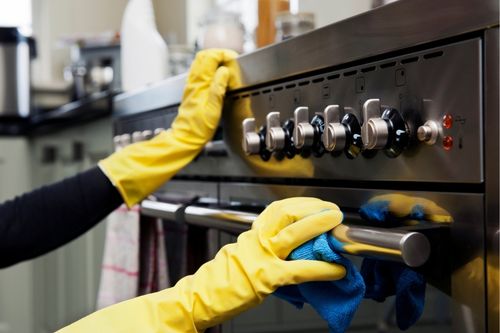
Image Source: Getty Images – Image Credit: kirstyokeeffe
4. Dishwasher Cleaning Tips
If your dishwasher isn’t clean, your dishes won’t be either. Get it in pristine condition with a few simple cleaning tips. After cleaning all food scraps and gunk from the drain, wipe down the gaskets with warm soapy water. Though there are a variety of dishwasher cleaning products available, you can give your appliance a thorough deep cleaning with vinegar and baking soda. Fill a dishwasher safe container with one to two cups of vinegar and place it in the top rack. Run a cycle without dishwasher detergent nor other dishes. Once the cycle is complete, sprinkle roughly a cup of baking soda along the bottom rack and run another cycle.
5. How to Clean Your Stove Top
No matter how tidy you are as you cook your stove top will collect debris and buildup from splattering oil, butter, and food particles. Throw on some rubber gloves and get ready to give it some elbow grease. Soaking food buildup with warm water will break it down and make cleanup easier. Use a hard plastic scraper to get gas or electric stove tops totally clean, and use a warm, soapy sponge to make your glass top range sparkle. If your stove has removable burners, remove them and soak them in water to make them shine like new.
6. Cleaning Your Washing Machine
Seeing stains in your freshly washed loads of laundry? It’s time to give your washing machine some TLC. Fortunately, your washing machine can do most of the cleaning work itself. Add a little vinegar to the drum and run a cycle on your machine’s hottest setting. Many newer models come with self-cleaning features and higher energy efficiency ratings to save water on each load.
7. Dryer Cleaning Tips
Don’t forget about your dryer, too! Dryer maintenance is largely a matter of cleaning out the lint traps regularly (after each use) and vacuuming the mesh. Without proper maintenance, your dryer can get clogged, leaving your washed clothes damp. And if enough dryer lint builds up, it could start a fire.
For more helpful cleaning tips, read our blog post on commonly missed cleaning spots throughout your home:
6 Commonly Missed Cleaning Spots
Featured Image Source: Getty Images – Image Credit: dusanpetkovic
13 Appliance Tips & Hacks for Household Chores

Modern home appliances make our lives so much easier: They tackle dreaded household chores, saving us time and effort. There are lots of ways to use them, however, that you may not have thought of before. From cleaning your ceiling fixtures in the dishwasher to vacuuming your pet, here are 13 little-known tricks for getting more than your money’s worth from your appliances.
Gas Appliances vs. Electric Appliances

Appliances are broken down into two main categories: gas- and electric-powered. You may be more familiar with one or the other based on personal experience, but when it comes time to choose appliances for your home, you’ll likely be weighing a variety of factors including the conversion costs, operation costs, safety, sustainability, and more. The following breakdown of the differences between gas and electric appliances can help inform your decision about what is ultimately best for your home.
What is the difference between gas and electricity?
Homes with natural gas are powered by a series of pipeline connections. The gas lines flowing from the property lead out to and connect with a larger pipeline farther away. Homes can also be powered by propane gas, which is stored in a tank on the property.
Electric power flows from generators to substations and eventually to individual homes, carried by transmission and distribution lines. In short, gas can power a variety of appliances in your home, but it won’t power your lights or electronics, whereas electricity can do both.
What is the difference between gas appliances and electric appliances?
The costs of gas and electric appliances vary region-to-region, both in upfront and operation costs. Having said that, gas is the more efficient heating fuel, and using gas appliances could save you up to 30 percent on your utility bill (consumeraffairs.com). Keep in mind that gas furnaces tend to be noisier but will usually heat up your home quicker, while electric furnaces are quieter but may take more time to warm your home.
So, what do you do if you want to convert your home from one fuel to the other? To switch from electric to gas, you’ll need to route gas lines, purchase the new appliances, and install them. Switching from gas to electric will require installing an electric line and capping the gas line(s). Each of these conversion methods will require an investment, so be sure to budget for these costs before you switch.
Gas and electric have their own unique safety hazards. With gas, you’ll need to take a couple extra steps to protect your home’s air quality. You’ll want to make sure you have a good ventilation system and that your carbon monoxide alarm is functioning properly to alert you of any potential poisoning from the furnace or the appliances themselves. With electric appliances, you won’t run the risk of a gas leak, but if the appliance’s wiring is faulty or neglectfully maintained, it could start a fire.
Image Source: Getty Images – Image Source: SolStock
Gas vs. Electric Range
The range tends to be the focal point of the gas-versus-electric debate for many homeowners. While some prefer the quick-heating power of an open-flame gas stove, others view an electric stove as safer for their household and therefore better. While some enjoy the even-heating quality of an electric oven, others prefer gas ovens with traditional coil burners. Electric stoves are usually easier to maintain; especially glass tops since you only have to clean one smooth surface.
Gas vs. Electric – Dryer & Fireplace
In general, gas dryers can heat up faster than electric dryers, which means they are more efficient and can save you money on your energy bills. However, gas dryers tend to be more expensive than their electric counterparts.
Electric fireplaces are usually cheaper to install but may not be as effective as gas fireplaces for heating larger spaces. And apart from all the financials, some people simply enjoy the feeling of a natural flame (gas) coming from the hearth, while the electric heating element appeals to others.
At the end of the day, choosing between gas and electric appliances depends on your situation. Saving on energy bills may be your number one priority, or perhaps you can’t stand the idea of not cooking on an open flame. Whatever your choice, it’s helpful to know the pros and cons of each option.
8 Tips for a More Energy Efficient Home
Whether they are motivated by rising energy costs or a desire to cultivate a more sustainable home, homeowners are constantly searching for ways they can go green, reduce their home’s energy waste, and save money in the process. Here are some simple methods for a more energy-efficient home.
8 Tips for a More Energy Efficient Home
1. Determine Your Energy Output
A natural first step in your energy-efficient journey is to get a gauge of how much energy your home is currently using and where it is being used. Analyze your recent bills to get a picture of your home’s energy consumption and the habits that are tied to that level of usage. From there, you can determine what kinds of cutbacks can be made to save energy. You might also consider hiring a professional energy auditor to fully inspect your home’s energy practices and identify where there’s room for improvement.
2. Laundry Room Best Practices
Adjusting your methods in the laundry room is an easy way to make an impact on your home’s energy output. When it’s sunny, air-dry your clothes to save energy. Most of the energy consumption generated by doing laundry comes from the heating of the water, so use cold water when possible. Wait until you have a full load before running the washer to maximize your laundry room’s efficiency.
3. Install Energy-Efficient Lighting
Replacing incandescent lights with newer, more energy-efficient options is a productive step towards reducing your home’s energy waste. A change of lightbulbs is a relatively cheap solution compared to more expensive energy-saving methods like replacing appliances. Because energy-efficient lightbulbs use less energy than standard bulbs, they commonly last much longer as well.
4. Check Your Windows
Excessive air conditioning and heating are often the culprits behind wasteful energy practices. Weatherstripping and caulking your windows help to regulate the flow of air, keeping your home warmer in the colder months and cooler in the hotter months. Old, drafty windows let in air that can increase your home’s energy usage, regardless of the season. The upfront investment in purchasing new windows will pay off in the long run and will help to reduce energy waste.
5. Check Your HVAC Unit
A fine-tuned HVAC system is critical to making your home as energy efficient as it can be. Maintenance of your HVAC unit periodically to make sure it’s running in tip–top shape and to avoid replacements, which can be quite expensive. The cleaner your HVAC filters, the more efficiently they can run. The filters should be swapped out a maximum of every three months, more often if you use it year-round or if you have pets at home.
6. Insulate Your Home
A well-insulated home can deliver significant savings on heating and cooling costs. Walls and windows are common areas where air can escape, but so are pipes and ducts. Wrapping all these areas in insulation will pave the way for saving energy throughout the house.
7. Turn Down Your Thermostat
Turning down your thermostat is an effective method of reducing energy consumption. Even lowering it by one degree will lower your furnace’s energy output and can make a difference in your home’s overall energy efficiency. Remember to clean your furnace filter often. A clean filter will allow your home’s heating system to run more efficiently and cost-effectively.
8. Set Energy Efficiency Goals
Once you’ve begun to implement some of these strategies to make your home more energy-efficient, you’ll discover new ways to reduce your home’s energy waste while saving money. Set goals for your home’s overall energy output in a given month or set a target number you’d like to see on your next energy bill. Track your home’s progress in energy efficiency and the savings you’ve generated over time to see the difference you’ve made.
Saving in the Laundry Room
When it comes to household expenses, staying at home has brought about savings in some areas, while increasing expenses in others. The laundry room has likely seen an uptick in usage, with its associated costs following suit. Save your energy and money by keeping these tips in mind as we continue to adapt to being home more often.
13 Appliance Tips & Hacks for Household Chores
Modern home appliances make our lives so much easier: They tackle dreaded household chores, saving us time and effort. There are lots of ways to use them, however, that you may not have thought of before. From cleaning your ceiling fixtures in the dishwasher to vacuuming your pet, here are 13…
Beyond Alexa – Other Smart Appliances You Can Use In Your Home

The nation’s largest home-building company, Lennar, now integrates Amazon’s “Alexa” smart speaker system as a function in new homes they construct. In the United States alone there are reportedly at least 39 million privately owned smart speakers, and the growth seems likely to only continue.
Back To The Future: 2015 Home Technology Trends

This past weekend in Las Vegas, NV the International CES tradeshow took place. Your inner geek is going to freak out when you see some of the things that were shown.