Facebook
 X
 Pinterest
 Copy Link

Hi, I’m Jeff Tucker, principal economist at Windermere Real Estate, and these are the numbers to know, right now.
The first number to know this month is 4.1%, the unemployment rate in October.
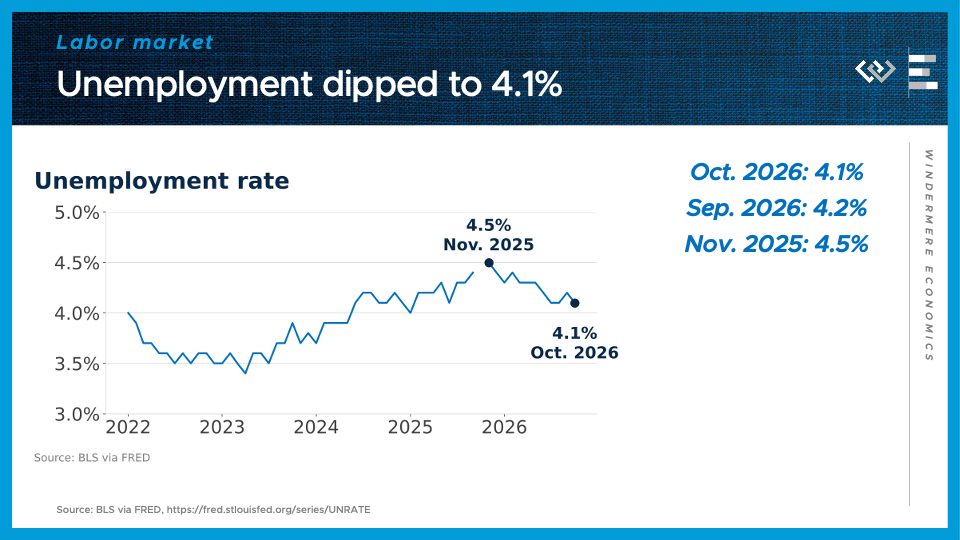
That is down a tenth of a point from September, and down from a recent high of 4.5% last November. Last month I said the uptick to 4.2% might be an early sign of a labor market cooldown, but October didn’t back that up. In fact, the unemployment rate has stayed in a narrow range between 4.1% and 4.3% since March.
The next number to know: 165,000.
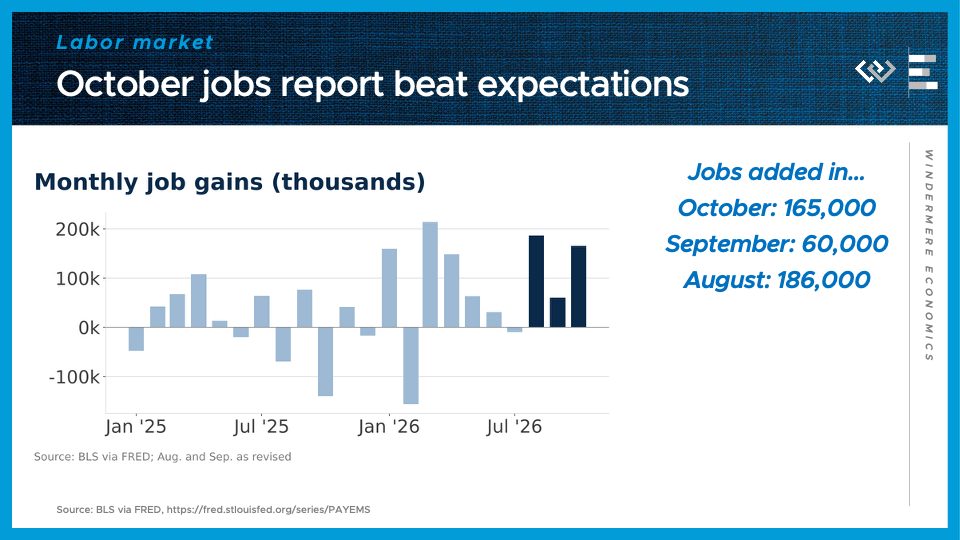
That is how many jobs employers added in October, more than double the consensus forecast. On top of that, the Bureau of Labor Statistics revised August and September up by a combined 84,000 jobs. Combined with the unemployment rate, these jobs numbers show that the economic expansion is still on track. One reason it may not feel great to workers, though, is that average hourly earnings were up just 3.1% from a year ago, which is less than recent inflation.
That brings me to the next number to know: 0.4%.
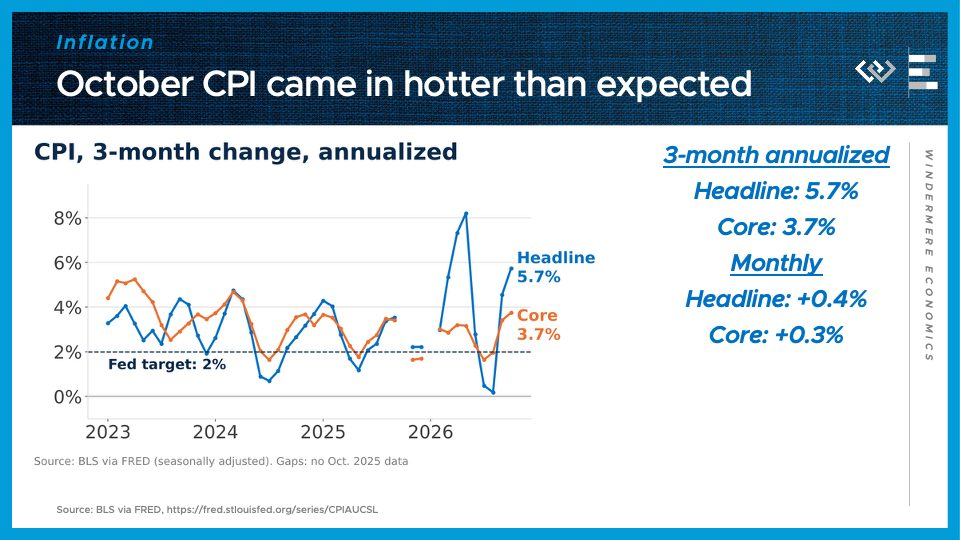
That is how much consumer prices rose in October, according to the Bureau of Labor Statistics. That came in hotter than the 0.3% economists were expecting. Core prices, which strip out food and energy, rose 0.3%. You won’t find the usual year-over-year inflation rate in this report, because last year’s government shutdown left a hole where the October 2025 prices should be. So instead, I like to look at the change in prices over the last three months, annualized. On that basis, headline inflation is running at 5.7% and core inflation at 3.7%, both well above the Fed’s 2% target, and core inflation hasn’t run that hot over a three-month stretch since the spring of 2024. When the Fed sees hot inflation like this, combined with reassuring job market data, they are now quite likely to continue hiking rates at their next meeting in December.
That brings us to mortgage rates.
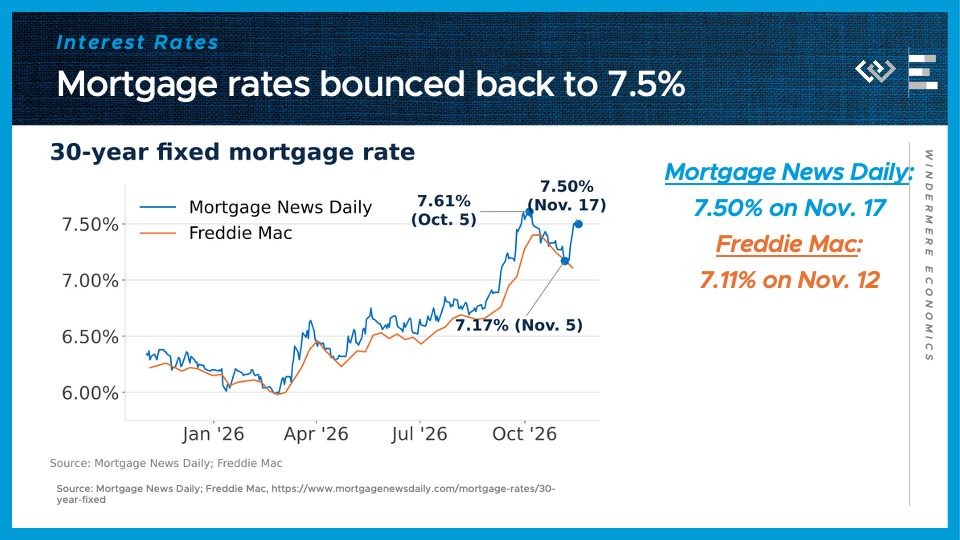
Homebuyers got a brief breather in early November, when the 30-year fixed rate dipped as low as 7.17%, down from a peak of 7.61% in early October. That relief didn’t last long. Rates started climbing again on November 10, the day the hot inflation report came out, and stood at 7.5% on November 17. Freddie Mac’s weekly survey, which tends to lag a bit, came in at 7.11% on November 12. Either way you measure it, mortgage rates are running about a point higher than this time last year.
And we can see the effect of those higher rates in our next number: 3.75 million.
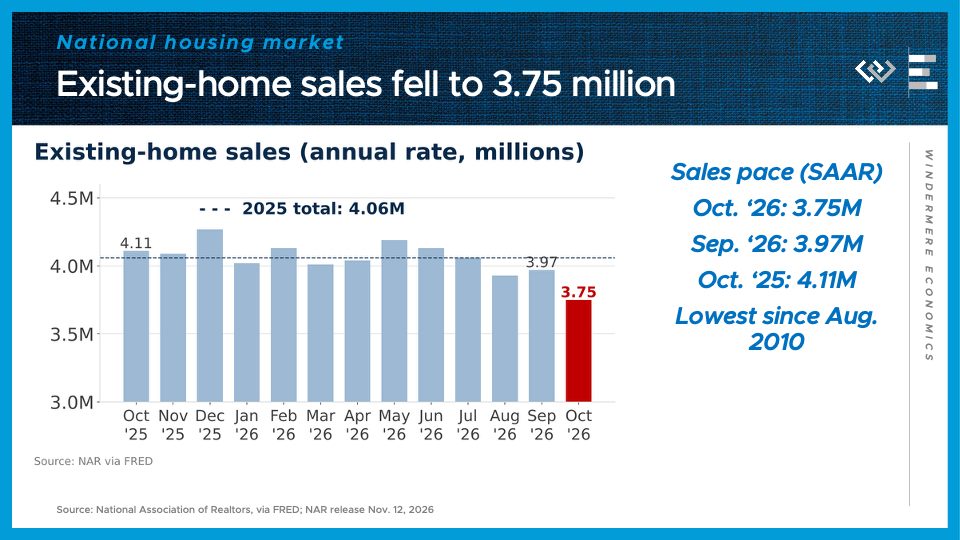
That is the annualized pace of existing-home sales in October, according to the NAR. Sales fell 8.8% from October of last year, and that is the slowest sales pace since August of 2010. For the last three years, existing-home sales have bounced around 4 million a year, so this marks a significant downgrade in sales volume. The timing lines up with the spike in mortgage rates in late September and early October, when a lot of these deals went under contract. Remarkably, prices are holding steady: the median sale price ticked up 0.4% from a year ago.
With fewer buyers in the market, homes for sale are piling up. Our next number: 1,184,000.
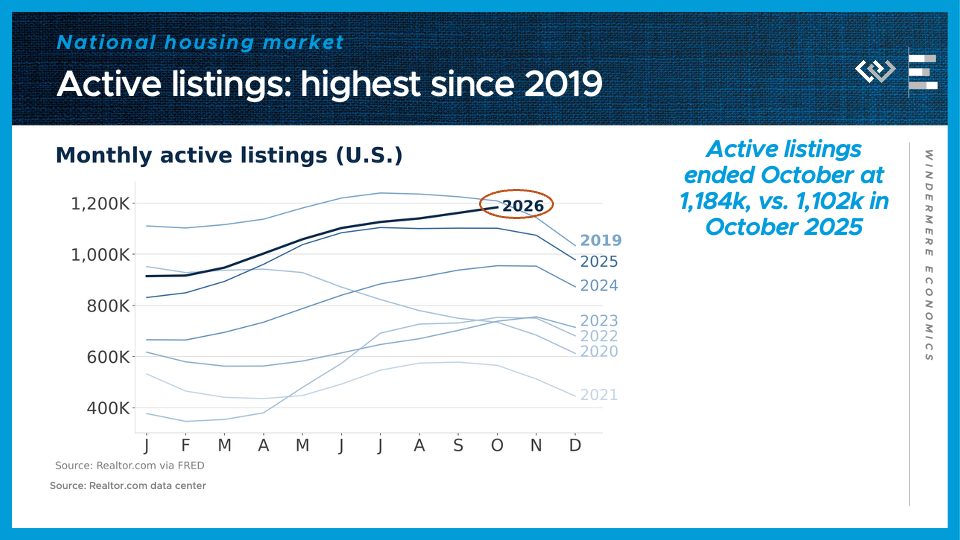
That is how many active listings were on the market nationally at the end of October, according to Realtor.com. That is up from about 1,102,000 in October of last year, and it’s the highest count for any month since October 2019. In other words, national inventory is now within about 2% of where it stood before the pandemic.
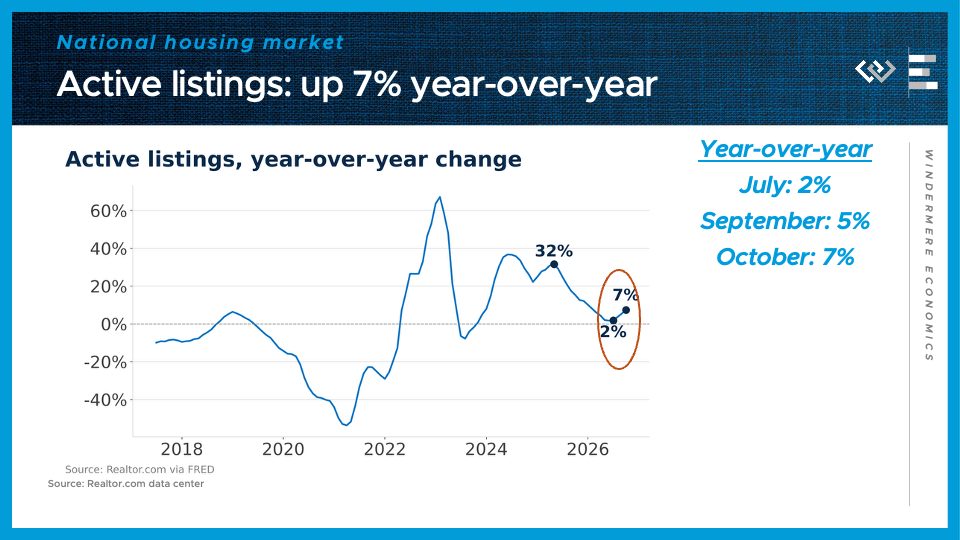
Put another way, active listings were up 7% year-over-year in October. That growth rate has picked up from just 2% as recently as July. Meanwhile, Realtor.com reported that the number of homes under contract fell more than 10% from a year ago. For buyers who can manage today’s rates, that means more choices and more room to negotiate than they’ve had in several years. For sellers, especially heading into the slower holiday season, pricing the home right from the start matters more than it has in a long time.