BuyingLiving October 23, 2019

How to Cover Unexpected Costs with a Personal Loan

Owning a home comes with its rewards — it’s an investment, a cozy haven to kick-up your feet after a long day of work, and a welcoming place to bring family and friends together. Although all of this makes homeownership fulfilling, owning a home also opens the door for unexpected (but necessary) expenses.

If you’ve suddenly been hit with a home improvement project that’s pinching your budget, like a roofing issue or heater malfunction, a personal loan might be an option to help cover the cost.

What is a personal loan?

A personal loan is an installment loan that’s typically issued by a bank, credit union or online lender. According to the Federal Reserve, the average interest rate on a two-year personal loan is 10.22% but varies depending on your credit score and other criteria. Some lenders offer repayment terms anywhere from 12 months to five years.

A benefit of using a personal loan for emergency home improvement projects is that the approval process is generally quick so you can address urgent home repairs sooner. Some online lenders can run a credit check, approve your application and send funds your way with a couple of days. The approval process for banks and credit unions, on the other hand, can take anywhere from a couple of days to a couple of weeks, if the lender needs additional information.

How to find a personal loan

If you’ve decided that a personal loan makes sense to fund your next home project, make sure you’re aware of these next steps.

1. Assess your budget


The last thing you need is taking out a personal loan only to realize after the fact that you can’t afford to repay it. Calculate how much you realistically need for your home improvement project, giving yourself a reasonable buffer for unforeseen repair expenses (e.g. permit fees, price changes for a specific material, etc.)

Then, tally your monthly income and financial obligations to ensure you still have enough cash on hand to keep the lights on and make monthly installments toward your loan. Using a spreadsheet or budgeting app can help you track these numbers easily.

2. Know your credit score


Generally, you need a good credit score to get approved for a personal loan. Your credit score is one of the key factors that lenders use to determine whether your application is approved, and a higher credit score results in a lower interest rate offer.

Check your credit score with the three credit bureaus to ensure there isn’t an error or suspicious activity that might inadvertently lower your credit score. For a free credit report, go to AnnualCreditReport.com to see where your credit stands before moving forward in the process.

3. Compare rates and terms


When you’ve confirmed that you have a good credit score that can get you competitive interest rates, it’s tempting to accept a loan from the first lender that approves you. But like other major purchases, it’s important to shop around.

Compare interest rates, annual percentage rates (APR), and term durations available, and read the fine print for any conditions or fees that might offset any benefits.

To start, try reaching out to your existing financial institution first to see what they can offer; sometimes credit unions, in particular, offer rate incentives for loyal members. Also, consider using a personal loan aggregator website to compare offers from multiple online lenders at once (just do your due diligence to ensure the site is legitimate).

4. Submit an application


If you’re ready to submit an application, you can either complete a form online or apply in-person, depending on your lender. Although all lenders require different information to process a loan application, some common information to prepare ahead of time include:

  • Personal information
  • Income 
  • Employment information
  • Reason for the loan
  • Amount you want to borrow


To minimize any delays on your end, it’s helpful to prepare copies of verification documents, such as a driver’s license, proof of address like a utility statement, information about your home and pay stubs. Your prospective lender will likely reach out to you if they need any other information to make a decision.

Although it’s always best to have emergency savings set aside for a sudden home improvement project, turning to a personal loan is a useful option when you’re pressed for funds and time. As urgent as your project might feel, however, always take the time to do your research to ensure you’re making the right move for your situation.

Market News October 22, 2019

Western Washington Real Estate Market Update

The following analysis of the Western Washington real estate market is provided by Windermere Real Estate Chief Economist, Matthew Gardner. We hope that this information may assist you with making better-informed real estate decisions. For further information about the housing market in your area, please don’t hesitate to contact your Windermere agent.


ECONOMIC OVERVIEW

Washington State employment has softened slightly to an annual growth rate of 2%, which is still a respectable number compared to other West Coast states and the country as a whole. In all, I expect that Washington will continue to add jobs at a reasonable rate though it is clear that businesses are starting to feel the effects of the trade war with China and this is impacting hiring practices. The state unemployment rate was 4.6%, marginally higher than the 4.4% level of a year ago. My most recent economic forecast suggests that statewide job growth in 2019 will rise by 2.2%, with a total of 88,400 new jobs created.


HOME SALES

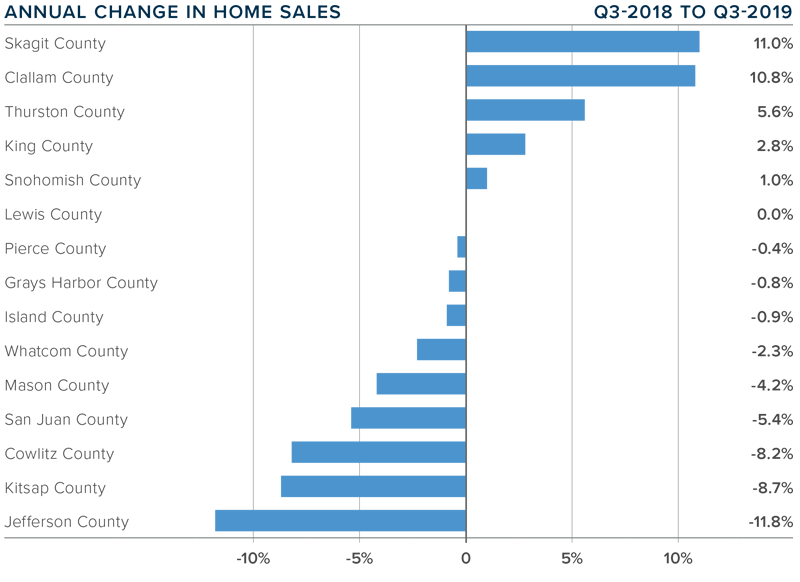
  • There were 22,685 home sales during the third quarter of 2019, representing a slight increase of 0.8% from the same period in 2018 and essentially at the same level as in the second quarter.
  • Listing activity — which rose substantially from the middle of last year — appears to have settled down. This is likely to slow sales as there is less choice in the market.
  • Compared to the third quarter of 2018, sales rose in five counties, remained static in one, and dropped in nine. The greatest growth was in Skagit and Clallam counties. Jefferson, Kitsap, and Cowlitz counties experienced significant declines.
  • The average number of homes for sale rose 11% between the second and third quarters. However, inventory is 14% lower than in the same quarter of 2018. In fact, no county contained in this report had more homes for sale in the third quarter than a year ago.


HOME PRICES

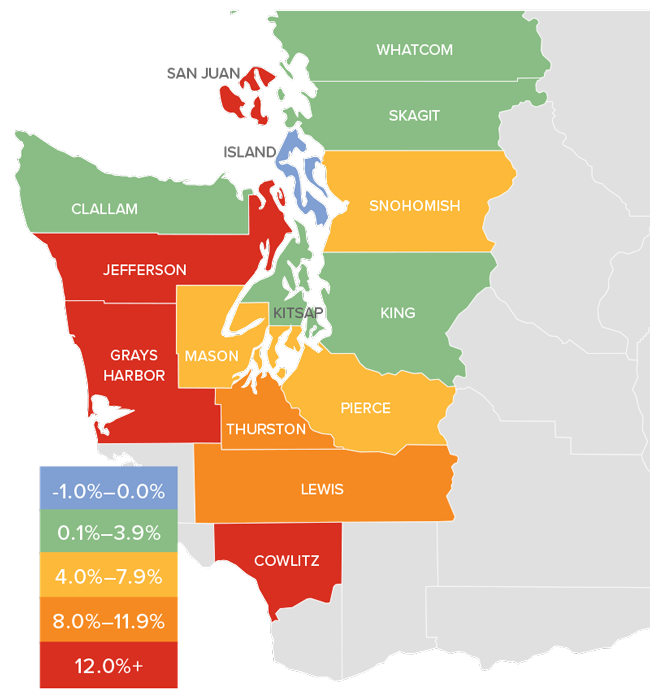
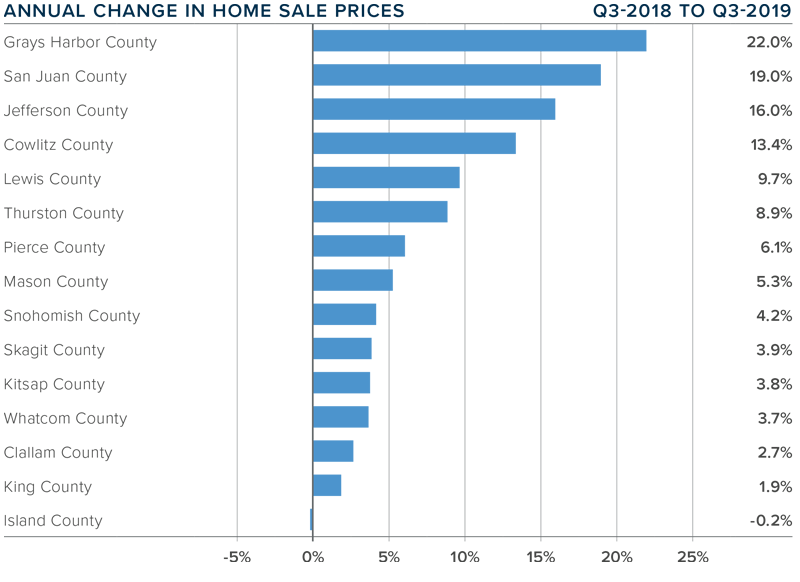
  • Home price growth in Western Washington notched a little higher in the third quarter, with average prices 4.2% higher than a year ago. The average sales price in Western Washington was $523,016. It is worth noting, though, that prices were down 3.3% compared to the second quarter of this year.
  • Home prices were higher in every county except Island, though the decline there was very small.
  • When compared to the same period a year ago, price growth was strongest in Grays Harbor County, where home prices were up 22%. San Juan, Jefferson, and Cowlitz counties also saw double-digit price increases.
  • Affordability issues are driving buyers further out which is resulting in above-average price growth in outlying markets. I expect home prices to continue appreciating as we move through 2020, but the pace of growth will continue to slow.


DAYS ON MARKET

  • The average number of days it took to sell a home dropped one day when compared to the third quarter of 2018.
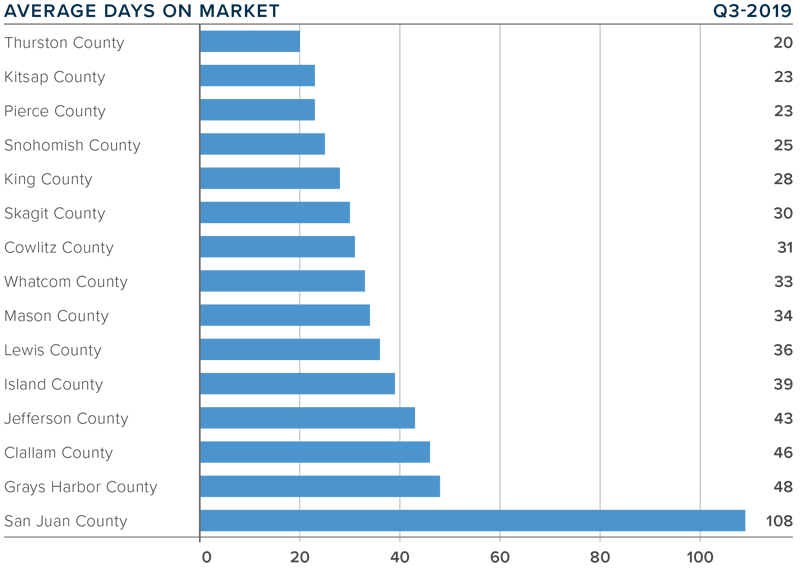
  • Thurston County was the tightest market in Western Washington, with homes taking an average of only 20 days to sell. There were six counties where the length of time it took to sell a home dropped compared to the same period a year ago. Market time rose in six counties, while two counties were unchanged.
  • Across the entire region, it took an average of 38 days to sell a home in the third quarter. This was down 3 days compared to the second quarter of this year.
  • Market time remains below the long-term average across the region and this trend is likely to continue until more inventory comes to market, which I do not expect will happen until next spring.


CONCLUSIONS

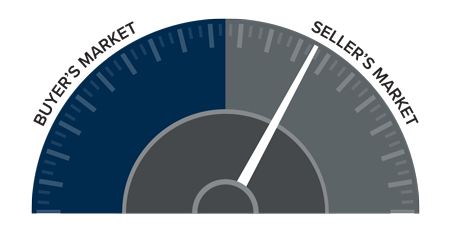
This speedometer reflects the state of the region’s real estate market using housing inventory, price gains, home sales, interest rates, and larger economic factors. I am leaving the needle in the same position as the first and second quarters, as demand appears to still be strong.

The market continues to benefit from low mortgage rates. The average 30-year fixed rates is currently around 3.6% and is unlikely to rise significantly anytime soon. Even as borrowing costs remain very competitive, it’s clear buyers are not necessarily jumping at any home that comes on the market. Although it’s still a sellers’ market, buyers have become increasingly price-conscious which is reflected in slowing home price growth.


ABOUT MATTHEW GARDNER

As Chief Economist for Windermere Real Estate, Matthew Gardner is responsible for analyzing and interpreting economic data and its impact on the real estate market on both a local and national level. Matthew has over 30 years of professional experience both in the U.S. and U.K.



In addition to his day-to-day responsibilities, Matthew sits on the Washington State Governors Council of Economic Advisors; chairs the Board of Trustees at the Washington Center for Real Estate Research at the University of Washington; and is an Advisory Board Member at the Runstad Center for Real Estate Studies at the University of Washington where he also lectures in real estate economics.

BuyingSelling October 21, 2019

Your Beginner’s Guide to Home Appraisals

Appraisals are used as a reliable, independent valuation of a tract of land and the structure on it, whether it’s a house or a skyscraper. Designed to protect buyers, sellers, and lending institutions, appraisals are an important part of the buying/selling process.

Below, you will find information about the appraisal process, what goes into them, their benefits and some tips on how to help make an appraisal go smoothly and efficiently.

Your Beginner’s Guide to Home Appraisals

Appraised Value vs. Market Value

The appraiser’s value is determined by using a combination of factors such as comparative market analyses and their inspection of the property to determine if the listing price is typical for the area.

Market value, on the other hand, is what a buyer is willing to pay for a home or what homes of comparable value are selling for.

If you are in the process of setting the price of your home, you can gain some peace-of-mind by consulting an independent appraiser. Show them comparative values for your neighborhood, relevant documents, and give them a tour of your home, just as you would show it to a prospective buyer.

What information goes into an appraisal?

Professional appraisers consult a range of information sources, including multiple listing services, county tax assessor records, county courthouse records, and appraisal data records, in addition to talking to local real estate professionals. 

They also conduct an inspection. Typically, an appraiser’s inspection focuses on:

  • The condition of the property and home, inside and out.
  • The home’s layout and features.
  • Home updates.
  • Overall quality of construction.
  • Estimate of the home’s square footage (the gross living area “GLA”; garages and unfinished basements are estimated separately).
  • Permanent fixtures (for example, in-ground pools, as opposed to above-ground pools).

After the inspection, the appraiser of a typical single-family home will create their report including their professional opinion on what the price of the home should be.

You might hear the lender ask for two reports, the “Sales Comparison Approach” and the “Cost Approach.” These two approaches use different methodologies to find the appropriate value of the home, and help the lender confirm the home’s price.

Who pays and how long does it take?

The buyer usually pays for the appraisal unless they have negotiated otherwise. Depending on the lender, the appraisal may be paid in advance or incorporated into the application fee; some are due on delivery and some are billed at closing. Typical costs range from $275-$600, but this can vary from region to region.

An inspection usually takes anywhere from 15 minutes to several hours, depending on the size and complexity of your property. In addition, the appraiser spends time pulling up county records for the values of the houses around you. A full report is sent to your loan officer, real estate agent, and/or lender in about a week.

If you are the seller, you won’t get a copy of an appraisal ordered by a buyer. Under the Equal Credit Opportunity Act, however, the buyer has the right to get a copy of the appraisal if they request it. Typically, the requested appraisal is provided at closing.

What if the appraisal is too low?

A low appraisal can present a problem when there’s a large difference between what you’ve agreed to pay and the appraisal price.

Usually, the seller’s agents and the buyer’s agent will respond by looking for recent sold and pending listings of comparable homes. Sometimes this can influence the appraisal. If the final appraisal is well below what you have agreed to pay, you can re-negotiate the contract or cancel it. 

Where do you find a qualified appraiser?

Your bank or lending institution will find and hire an appraiser; Federal regulatory guidelines do not allow borrowers to order and provide an appraisal to a bank for lending purposes. If you want an appraisal for your own personal reasons and not to secure a mortgage or buy a homeowner’s insurance policy, you can do the hiring yourself. You can contact your lending institution and they can recommend qualified appraisers and you can choose one yourself or you can call your local Windermere Real Estate agent and they can make a recommendation for you. Once you have the name of some appraisers you can verify their status on the Federal Appraisal Subcommittee website.

Tips for Hassle-Free Appraisals:

To ensure the appraisal process is smooth and efficient, provide your appraiser with the information and documents he or she needs to get the job done. The documents you will need include:

  • A brief explanation of why you’re getting an appraisal
  • The date you’d like your appraisal to be completed
  • A copy of your deed, survey, purchase agreement, or other papers that pertain to the property
  • A sketch of the property with the property’s dimensions. These are usually available online from the county assessors.
  • If you have a mortgage, provide the information about your lender, the year you got your mortgage, the amount, the type of mortgage (FHA, VA, etc.), your interest rate, and any additional financing you have.
  • A copy of your current real estate tax bill, statement of special assessments, balance owing and on what (for example, sewer, water)
  • Tell your appraiser if your property is listed for sale and if so, your asking price and listing agency.
  • If it’s a multiple offer situation, provide the appraiser with the other offers to prove the demand for the home.
  • Any personal property that is included in the sale, like appliances and other fixtures.
  • If you’re selling an income-producing property, a breakdown of income and expenses for the last year or two and a copy of leases.
  • A copy of the original house plans and specifications.
  • A list of recent improvements and their costs.
  • Any other information you feel may be relevant.

By doing your homework, compiling the information your appraiser needs, and providing it at the beginning of the process, you can minimize unnecessary delays. To connect with an experienced Windermere Real Estate agent, get started by clicking the button below.


More October 16, 2019

Our Favorite Real Estate Podcasts


Podcasts are a growing medium as listeners search for new sources of entertainment and information. In 2018 there were about 550,000 podcasts, in 2019 there are more than 750,000. Listeners are growing too, an estimated 20 million more people in the U.S. are listening to podcasts this year as compared to2018.

This growth in audio entertainment inspired us to pull together a few of our favorite real estate podcasts. Whether you’re interested in investing in real estate, looking to make a move to a new home, or just want to know what’s happening in the market, here are our recommendations:


For Investors:

The Millennial Real Estate Investor

Find your niches in Real Estate with Dan Mackin and Ben Welch, who host experts with stories about their investing successes and challenges. Learn from the experienced guests on this show the many ways to get into investing and succeed at it.

Listen to Millennial Real Estate Investor wherever you get your podcasts (Icon linked):


Cash Flow Connection

If you’re drawn to the commercial side of real estate, Cash Flow Connections with host, Hunter Thompson, is an informative podcast that interviews leading investors, sponsors and managers. Learn about all the aspects of commercial real estate from all viewpoints to find the right fit for you.

Windermere’s Chief Economist, Matthew Gardner, was just interviewed about the state of the real estate market, and what to expect in the next recession (hint: it won’t be driven by housing). You can listen to that episode here.

Listen to Cash Flow Connection wherever you get your podcasts:


For Those About to Move

Windermere Home and Wealth

Host Brian Bushlach interviews business owners, local guides, and Windermere agents in each episode about different areas throughout the Western U.S. and what they have to offer to those who live or visit there. Learn about what’s attracting newcomers to the area, and what the local real estate market looks like. This podcast is sure to stir your wanderlust.

Listen to Windermere Home and Wealth wherever you get your podcasts:


Finding Home with 106.1 KISS FM

Join first-time home buyers, and radio personalities, Anthony and Carla Marie from 106.1 KISS FM, as they walk through the home buying journey with their Windermere agents. This podcast is both entertaining and informative as they ask the questions you’ve always wanted answers to. With their knowledgeable real estate agents by their sides, they’re taking you along as they get approved, look for houses, and even put an offer on a home.

Listen to Finding Home on iHeartRadio:


Stay Informed

Housing Developments

Hosted by National Association of Home Builders CEO Jerry Howard and Chief Lobbyist Jim Tobin, this podcast covers updates in the housing market and building industry across the nation. Learn from experts in the field about recent laws and the news of the industry.

Listen to Housing Developments wherever you get your podcasts:


Real Estate News with Kathy Fettke

This podcast is aimed at real estate investors who want to stay curren on the latest real estate news. Presented in bite sized episodes, listeners can learn about laws, regulations, and economic events that affect real estate and their local market.

Listen wherever you get your podcasts:


Living October 7, 2019

Prepare Your Home for Winter

As the days shorten, you can mitigate many mid-winter headaches with some preemptive prep. Proper weatherizing can help protect your home from preventable damage, save money on energy costs, and, most importantly, keep you and your loved ones safe and warm throughout the winter season. Here is a useful checklist to manage your weatherization project. Setting aside some time on a couple of weekend days should be more than enough to knock this out:


Cracks & Leaks

Examine your entire house for any cracks and leaks, from your roof to your baseboards, to your basement and foundation. With unpredictable winter weather, these cracks and leaks are how the outside gets in, causing cold drafts and water damage.

Luckily, most cracks don’t require a professional to handle it. Depending on your house type and age, it’s likely you’ll be able to do it yourself with supplies from your local hardware store.


Windows & Doors: 

Gaps and breaks in windows and doors is another way to let the winter in your home, and they can let heat escape, raising your heat bill throughout the season.

Make sure seals are tight and no leaks exist. If you have storm windows, make sure you put them on before the cold season begins. Additionally, add weather-strips and or a door sweep to prevent drafts and keep the heat in.


Rain Gutters: 

Clean your rain gutters of any debris. In colder climates, the buildup will cause gutters to freeze with ice, crack and then leak.

Once you have removed the residue from the drains, test them by running hose water to make sure cracks and leaks have not already formed. Even in warmer locales, the buildup can put undue stress on your roof and home.


Pipes: 

Protecting your pipes from freezing should be your number one priority this winter. A burst pipe can quickly become a disaster in any home.

Remember to turn off your exterior water source and take in your hose. Internally, wrapping your pipes is a recommended precaution to take.


Heating System: 

Annual checks are vital in avoiding dangers such as house fires. Replace filters if you use a furnace and clear out any vents and ducts that carry heat through them. If you have baseboard heat, wipe them of dust and remove any debris that might catch fire.


Fireplace & Wood Burning Stoves: 

Make sure to have chimneys and air vents cleaned early in the season if you are planning on warming your home with a wood-burning source. When your fireplace is not in use make sure to close the damper, some resources estimate an open damper can increase energy consumption by as much as 30%, increasing your bill about $200.


Outside: 

Bring your patio furniture inside or cover it for the winter. Don’t forget other, smaller items such as your tools, including the hose and planting pots. Clear out any piles around the side of your house, checking for cracks and holes in your home and foundation as you go so to avoid providing shelter for unwelcome guests over the cold season.

If your property has large trees check for loose branches and call someone to trim back any limbs that may fall in your yard, on your roof or even damage a window.


Emergency Kit: 

Lastly, make sure your emergency kit is up to date with provisions, batteries, fresh water, food for animals, entertainment for kids – especially if you live in an area prone to power outages.

For a more complete emergency preparedness guide, visit https://www.ready.gov/winter-weather.

Buying October 2, 2019

5 Deal Breakers That Can Blindside Home Buyers


Purchasing a home can be a complex endeavor for even the most well-prepared home buyer.  You’ve diligently saved for your down payment, followed the market, researched agents and now you are ready to make an offer on your dream home.  Don’t let these 5 “Deal Breakers” come between you and your new home.

  1. Big Purchases on Credit. It is tempting to buy the furniture for your new home or a new car for the garage before the sale closes. Take care if you are making these purchases on credit. Large purchases on credit can have a major impact on your credit profile which effects your mortgage application. It’s a better plan to wait until after closing or pay cash for these transactions or you may be putting that furniture in a different living room than you originally picked them out for.
  2. Overpaying. Before your bank will approve your mortgage they will appraise the home you are purchasing.  If they feel you are overpaying they are likely to decline your mortgage application. If you find yourself in this situation consult with your agent on renegotiating your offer to be more in line with the bank’s appraised value.
  3. Purchasing too close to Foreclosure. If you are making an offer on a house that is facing foreclosure be sure to have a closing date set before the foreclosure date. Have your agent work with the lender to structure closing before the house goes back to the bank and into foreclosure.
  4. IRS liens. You’ve heard the old saying “Death and Taxes”.  Back taxes and liens can derail your attempts to get financing for a mortgage so be sure to have your books in order before filing your loan application.
  5. Comprehensive Loss Underwriting Exchange (CLUE). CLUE is a database of insurance claims for both people and property.  Your home insurance rates are determined by the information about you and the property you plan to purchase which is contained in this report. Past claims for water damage, falling trees and even dog bites from present and past owners can multiply your insurance rates. Consult your agent about the CLUE report for your future home as soon as possible once your home purchase offer is accepted. 
  6.  

When purchasing a home there will be challenges which you can plan for and the unexpected hurdles.  By educating yourself as a consumer and choosing a well trained real estate agent you can avoid many of the pitfalls of 21st-century home ownership.


What about you? Tell us if you have had any “deal breaker” experiences.

Selling September 30, 2019

10 Tips to Minimize Stress When Selling Your Home

When I was growing up, my family must have moved a dozen times. After the first few moves, we had it down to a science: timed out, scheduled, down to the last box. Despite our best efforts, plans would change, move-out and move-in days would shift, and the experience would stress the entire family out. Despite the stress, we always managed to settle in our new home and sell our old one before the start of school.

With a lot of planning and scheduling, you can minimize the stress of selling your house and moving. Here are some tips:

Plan Ahead

Know when you want to be moved out and into your new home and have a backup plan in case it falls through. Before you sell your home, familiarize yourself with local and state laws about selling a home so you’re not caught by surprise if you forget something important.

Lists and schedules are going to be your new best friend through the process. Have a timetable for when you want to sell your house when you have appraisers, realtors, movers, etc. over. Also, keep one for when your things need to be packed and when you need to be moved into the new place. I suggest keeping it on an Excel sheet so you can easily update it as the timeline changes (and it will – stuff happens).

Use Resources

First time selling a house? Check out some great resources on what you need to know. US News has excellent, step-by-step guides on what you need to know to sell. Appraisers and realtors can also be good resources, and since you’ll be working with them through the process, be sure to ask them questions or have them point you to resources.

Appraisal

Have your house appraised before you sell so you know your budget for your new home. This will help you look for an affordable home that meets your family’s needs. It will also help you maximize the amount you can receive for your old home. You can also learn useful information from an appraisal, such as which repairs need to be made, if any.

Repairs

Does your house need repairs before you move? If so, figure out whether you’ll be covering them, or whether your buyers will (this will be a part of price negotiations, so factor it in with your home budget). Will you need to make repairs in your new house, or will that be covered? Either way, make sure you know which repairs need to be made – and either be upfront with buyers about them or make them before you sell.

Prepare to Move

If you’re moving to a new town or a new state, you need to prepare more than just a new home. Research doctors and dentists, places to eat, and what to do for fun. If you have school-aged children, look at the local school district or private school options – not only to learn how to enroll your kids, but also to get a feel for the school culture, see what extracurricular activities your kids can do, what standards/learning methods your kids’ new school will implement, etc.

Packing

Think: how soon are you moving, what will you need to use before you move, what can get boxed and what needs to stay out?  The sooner you’re moving out, the sooner you need to pack, but if you have time, just take a day per weekend to organize a room, pack what you want to take and arrange to donate what you want to get rid of.

Downsizing

Moves are a great time to purge old, unwanted and unused stuff from your home. Sometimes, it’s necessary if you’re moving into a smaller space. Either way, as you pack each room, think about whether you use what you’re packing to take with you. If you do, pack it to go. If not, put it in a separate box to go to your local donations place. You can also call some organizations to have your unwanted things picked up, no hassle.

If You Have Kids

Moving with kids can be extra stressful. Be sure to include them in the process. This is a wonderful opportunity to teach younger children about moving and prepare them for the changes it brings. Older children can help out with responsibilities, like packing their room or researching their new town.

Your New Place

Moving into a new place takes some planning as well. Once you’ve bought your new home or condo, design at least a basic outline for where your stuff will be set up. Make necessary repairs and decorate (painting, for example) before you unpack. Ideally, you should have some time to do these things before, but if you don’t, don’t be in a hurry to unpack everything – it can be a hassle to paint if you have all your furniture and bookshelves up!

Staying In Touch and Making New Friends

Finally, moving can mean good-byes with family and/or friends. Social media is a great way to keep in touch with people after you’ve moved, but distance can still weaken these old relationships. Make some time to call or message your old friends to keep in touch. Pair that work with a concerted effort to meet new people. See what hobbies or groups are in your new area and start there. It doesn’t seem like a lot, but it can make your new house a home and make your new town a community you can enjoy.

Patrick Bailey is a professional writer mainly in the fields of mental health, addiction, and living in recovery. Patrick is currently a writer for Mountain Springs Recovery as well as on his own blog.

Selling September 25, 2019

The Impact of Staging Your Home

For more than 20 years, the benefits of staging a home have been well documented. Numerous studies show that staging helps sell a home faster and for a higher price. According to the National Association of REALTORS®, 88 percent of home buyers start their search online, forming impressions within three seconds of viewing a listing. When a home is well staged, it photographs well and makes the kind of the first impression that encourages buyers to take the next step.

Studies also indicate that buyers decide if they’re interested within the first 30 seconds of entering a home. Not only does home staging help to remove potential red flags that can turn buyers off, but it also helps them begin to imagine living there. Homes that are professionally staged look more “move-in ready” and that makes them far more appealing to potential buyers.

According to the Village Voice, staged homes sell in one-third less time than non-staged homes. Staged homes can also command higher prices than non-staged homes. Data compiled by the U.S. Department of Housing and Urban Development indicate that staged homes sell for approximately 17 percent more than non-staged homes.

A measurable difference in time and money

In a study conducted by the Real Estate Staging Association in 2007, a group of vacant homes that had remained unsold for an average of 131 days were taken off the market, staged, and relisted. The newly staged properties sold, on average, in just 42 days, – which is approximately 68 percent less time on the market.

The study was repeated in 2011, in a more challenging market, and the numbers were even more dramatic. Vacant homes that were previously on the market for an average of 156 days as unstaged properties, when listed again as staged properties, sold after an average of 42 days—an average of 73 percent less time on the market.

Small investments, big potential returns

Staging is a powerful advantage when selling your home, but that’s not the only reason to do it. Staging uncovers problems that need to be addressed, repairs that need to be made, and upgrades that should be undertaken. For a relatively small investment of time and money, you can reap big returns. Staged properties are more inviting, and that inspires the kind of peace-of-mind that gets buyers to sign on the dotted line. In the age of social media, a well-staged home is a home that stands out, gets shared, and sticks in people's minds.

What’s more, the investment in staging can bring a higher price. According to the National Association of REALTORS, the average staging investment is between one percent and three percent of the home’s asking price, and typically generates a return of eight to ten percent.

In short, less time on the market and higher selling prices make the small cost of staging your home a wise investment.

Interested in learning more? Contact your real estate agent for information about the value of staging and referrals for professional home stagers.

More September 19, 2019

Windermere is Now on Spotify!


Americans spend about 32 hours a week listening to music, and for Millennials that number is even higher. Since so many activities connected to our homes are enhanced by music, we want to fuel the joy and memories of those experiences through home-inspired playlists on our very own Spotify channel.

Check out Windermere’s new Spotify channel where you can find playlists for every aspect of what it means to be home. Cleaning house? Check. Hosting a dinner party? Check. Chilling on the front porch? We have tunes for that too, and more. We invite you to follow, share, and enjoy!

Start following the Windermere Spotify channel today!

BuyingSelling September 18, 2019

Mistakes to Avoid When Buying and Selling a Home

There’s nothing more exciting, rewarding, and fulfilling than buying a home. However, it’s a complex transaction; there are a number of steps along the path that can confuse, betwixt, and befuddle even the most seasoned buyers and sellers.

How can you avoid those potential pitfalls and common mistakes? Look to your real estate professional for advice and keep these guidelines in mind:


BUYERS

#1 Review your credit reports ahead of time

Review your credit report a few months before you begin your house hunt, and you’ll have time to ensure the facts are correct and be able to dispute mistakes before a mortgage lender checks your credit. Get a copy of your credit report from Experian, Equifax, and TransUnion. Why all three? Because, if the scores differ, the bank will typically use the lowest one. Alert the credit bureaus if you see any mistakes, fix any problems you discover, and don’t apply for any new credit until after your home loan closes.

#2 Get pre-approved

Before getting serious about your hunt for a new house, you’ll want to choose a lender and get pre-approved for a mortgage (not just pre-qualified—which is a cursory review of your finances—but pre-approved for a loan of a specific amount). Pre-approval lets sellers know you’re serious. Most importantly, pre-approval will help you determine exactly how much you can comfortably afford to spend.

#3 Know what you want

You and your real estate agent should both be clear about the house you want to buy. Put it in writing. First, make a list of all the features and amenities you really want. Then, number each item and prioritize them. Now, divide the list into must-haves and really-wants.

#4 Account for hidden costs

In addition to the purchase price of the home, there are additional costs you need to take into consideration, such as closing costs, appraisal fees, and escrow fees. Once you find a prospective home, you’ll want to:

  • Get estimates for any repairs or remodeling it may need.
  • Estimate how much it will cost to maintain (gas, electric, utilities, etc.).
  • Determine how much you’ll pay in taxes monthly and/or annually.
  • Learn whether there are any homeowner’s or development dues associated with the property.

#5 Get an inspection

Buying a home is emotionally charged—which can make it difficult for buyers to see the house for what it truly is. That’s why you need impartial third parties who can help you logically analyze the condition of the property. Your agent is there to advise you, but you also need a home inspector to assess any hidden flaws, structural damage or faulty systems.

#6 Evaluate the neighborhood and location

When house hunting, it’s easy to become overly focused on the number of bedrooms and bathrooms, the condition of the home and its amenities while overlooking the subtleties of the surrounding neighborhood. Take time to check crime reports, school options, churches and shopping. If schools are a key factor, do more than simply research the statistics; speak with the principal(s) and chat with the parents waiting outside.


SELLERS

#1 Avoid becoming emotional or sentimental about the sale

Once you decide to sell your house, it’s time to strip out the emotion and look at it as a commodity in a business transaction. If you start reminiscing about all the good times you had and the hard work you invested, it will only make it that much harder to successfully price, prepare, and market the home.

#2 Fix problems (or price accordingly)

Homes with deferred maintenance and repair issues can take far longer to sell and can be subject to last-minute sale-cancellations. These homes also often sell for less than their legitimate market value. If you simply can’t afford to address critical issues, be prepared to work with your agent to price and market your home accordingly.

#3 Don’t overprice your home (and/or refuse to negotiate)

Getting top dollar is the dream of every seller. But it’s essential that you let the market dictate that price, not your emotions or financial situation. Allow your agent to research and prepare a market analysis that factors in the value of similar homes in the area, and trust those results.

#4 Use quality photos

The vast majority of prospective buyers today search for homes online first. In order to make a good first impression, you need a wealth of high-quality photos of your home and surrounding grounds. You may also need to consider professional staging in order to position your home in the best possible light for prospective buyers.

The process of buying or selling a home can have plenty of twists and turns, but with some smart decision making, you can avoid the most common mistakes and pitfalls.

Click the button below to connect with an experienced Windermere Real Estate agent.