“The more that you read, the more things you will know. The more that you learn, the more places you’ll go.”
–I Can Read with My Eyes Shut! by Dr. Seuss
I am sure many of us share a common memory of reading Dr. Suess, from childhood, or as parents and grandparents. Dr. Suess (Theodor Seuss Geisel)was born this day in 1904 and published 44 children’s books in his lifetime. Originally, he was called to write and illustrate books because he found the literature given to children to teach basic reading was boring. His work has inspired, and continues to inspire, readers of every age.
Many of our offices across the West have supported literacy programs over the years, as well as organizations that help fill in the gaps; after-school and education programs that provide additional support for children in need. Today is an exciting day to celebrate reading and education. Not only is reading an important foundation for life-long learning, but it also opens the door to creativity and imagination, worlds only literature can create.
Today is a great day to share your favorite books with a child you know. What is your favorite book from childhood? What are your favorite books to share with your children or grandchildren?
Choosing to put your house on the market is rarely easy, but if you must sell to move onto the next phase of your life, then you want to make sure your house is purchase-ready to get the most out of your investment. If you aren’t sure if you are ready to sell, you can always consider becoming a landlord or finding a property manager to handle tenants. But if you have decided to put your house on the market, it is time to let go of sentimentality and start thinking of it as a house again–not your home. Here are some tips for getting your house ready to sell and placing it on the market:
Do an audit: Go through the house, making notes of any projects that need to be completed, and anything that needs to be replaced, repainted or repaired. Here is a good checklist to get you started. If you are unsure about any major problems, you may want to hire an inspector to look at your home prior to putting it on the market so you can fix all issues and avoid getting stuck in heavy negotiations.
Start with a blank canvas: Look at your home from the perspective of a potential buyer. You will want to neutralize your space so anyone interested in the house can see its full potential. Keep in mind that you may love your red wall, wall-to-wall carpet or lavish art, but others may find it hard to see beyond the decorations to imagine their own taste in the house. Neutralizing the space can be as easy as painting the walls a soft white, paring down possessions or scaling back on updates. Once your home is turn-key with the basics, start to think about the updates that will make the most difference in your return on investment.
Get the most bang for your buck: If you are considering upgrades to increase the value of your home, stick to projects that will make the most sense, such as increasing the curb appeal by re-painting or replacing an outdated front door and upgrading the landscaping with easy-to-maintain plants and pathways. The first impression your home makes on a buyer is key to selling your home quickly. If your appliances are out-of-date, you may want to consider upgrading to energy-efficient models, which will appeal to a wider set of buyers. Avoid laying down new carpet; if the carpet needs replacing, consider wood flooring, as more people are replacing carpets with hardwood these days. Also keep in mind that your aesthetic will likely be different than those looking at your home, so avoid updates to the kitchen and bathroom that may offend the next homeowner. They will consider the need to replace these as a part of their offer. For more ideas on projects that bring a return, go here.
Find a listing agent: Once you are ready to put your home on the market, find a listing agent you trust will promote your home and bring the most return. Interview a number of agents to learn about their methods of marketing your home to other agents and potential buyers. They should be knowledgeable about the area, the market, comparable listings, staging and marketing techniques that will work best for you. Look at potential agents’ past listings to see the techniques they employ, the photographs and language they use to market the homes, how long homes have been on market and what their listings look like.
Price your home to sell: Pricing your house right the first time will help it sell faster. The great news is there are plenty of buyers looking to purchase homes right now, and this trend should continue. The concern for many homeowners ready to sell is that their expectations for the selling price of the home will not necessarily be met. Increase your chances of getting your home off the market fast by working with your listing agent to price your home right. Your listing agent will factor in a number of considerations when helping you determine the best price for your home, including comparable homes that have sold in the area or similar locations, the type of home, neighborhood, condition, etc.
Staging: Now that you have gotten through most of the process for putting your home on the market, look at your home through fresh eyes. Staging your home is a fine balance between making your home inviting and setting a canvas for the next homeowner to envision the space with their stuff and to fit their life. Your home should look inhabited but clean, uncluttered but not sterile. Whether you work with a stager or do most of the set up yourself, you will have to get rid of the clutter and pare down all your belongings to the essential.
Thin out your closets; full closets look small.
Remove all personal items, photographs, trophies and excessive collections so prospective buyers can envision the home as theirs.
Pare down all your belongings to keep your home efficient and cleaning easy.
Pay attention to the details; you want your home to be welcoming in every way.
Putting your home on the market can be stressful, but you can minimize stress by following these tips and other ideas for getting your home ready to sell. The better prepared you are prior to listing your home, the easier it will be to sell to prospective buyers. In the end, realistic expectations about how long it will take to prepare your home to go to market, what renovations will get you the best return, and what is the right price to motivate buyers will help your home sell quickly, saving you money in the long run.
What are your home-related resolutions for 2011? How are you doing on reaching your goals?
If you are ready to make the move towards purchasing your first home or upgrading to a new home, there are some considerations you should keep in mind to make the process easier. The housing inventory is up in most markets with the start of the new year, giving you more options. Whether you are just starting to save for your future home or you are ready to start searching, here are some tips you may find useful:
Assess your financial situation: If you have just started thinking about purchasing a home, now is a good time to do some research to see how close you are to accomplishing this dream. Check your credit score, assess your debt, and make a plan for paying down your credit cards and loans. Look at homes in your area of interest to gauge the general market value of those with features you want, and use a mortgage calculator to estimate what the down payment, monthly mortgage payment and property taxes will be. Now that you know where you are starting from, you can begin (or continue) the process.
Ready, set, save: With your estimated home costs in hand, you can determine what amount you need to save before you can make a purchase. There are some great online and mobile tools to help you create and track your monthly budget so you can maximize your savings every month; mint.com is a great option. If you already have enough savings for a down payment, make sure your monthly income can support your future mortgage payments by saving the difference in expenses for a period of time.
Create a plan: Before you start shopping for your home, be sure to have a plan. You probably already have an idea of what you are looking for, but you can make your search easier by creating a list of what features are necessary and desired for your home. We all have priorities for our homes, be it location, size, style, number of rooms, amenities or countless other features, so make sure you know what you are looking for and what you can’t live without. If you have a deadline for moving, keep it front-of-mind as you go through the process.
Find an agent: Once you (and your partner and your children) know what you are looking for in your home, find a real estate agent that can help you find the right place for you. Selecting an agent is a personal process, as well as financial relationship. If you have friends or family that have worked with an agent for their own real estate needs, ask for referrals. If you don’t know an agent yet, you can find an office local to the area where you are interested in buying, and interview brokers. Keep in mind you will be spending a lot of time with your agent, so you need to feel confident he or she understands your needs; the deal-breakers, wish list, budget and timeline. A good agent will work with you in refining these to reflect the reality of the market, and guide you through the entire process from pre-approval, home searching, closing and resources, to get you into your new home.
Pre-approval: If you already have a real estate agent, they can help you find a lending officer. You can also work with your bank of choice to find a loan that works for your financial situation and start the approval process. The amount the bank is willing to loan you will determine the top-cost of the home you can purchase.
Purchasing Process: Your agent will be able to guide you through the purchasing process, from pre-approval, to purchase and sale agreement, to inspection, financing and closing. If this is your first home, keep in mind there are some factors that affect the purchase of your home. If you are looking at a short sale, a foreclosure or bank owned home, the process will take longer than a traditional home sale from the owner or developer of the property. Be prepared to work with your broker heavily during closing, as the negotiating process is a critical aspect of getting the home you want for the best price. Your agent can also offer you tips to avoid hiccups during your financing process, such as avoiding any major purchases until after your home has closed; even furniture purchases for your new home can create financing issues. To learn more information about the home-purchasing process, go here.
Setting up a home: Once you have closed on your home purchase and are ready to start making your new home yours, create another checklist to make your transition as easy as possible. Your agent will likely have some useful resources for you, from moving companies, to local utilities and near-by amenities, that can help make the process smooth and efficient. If you are moving with small children, here are some tips to help you through the process and give your kids the best transition possible. Once you are moved and settled, you can start the process of creating the dwelling of your dreams.
“Thank you very much for your generous support of Intermountain in 2010. What you have made possible is of immeasurable value! Through your generosity, you restore hope for children who are among the most severely impacted from early childhood trauma. We are indebted to folks like you who have made possible this remarkable work of healing through healthy relationships. You are part of a growing legacy of renewed health for our most precious resource – our children!”
Intermountain
Helena, MT
Greetings from the Windermere Foundation,
Happy 2011! While 2010 may be behind us, we have amazing stories to share with you about how your support of the Windermere Foundation translated into meaningful and necessary help for so many struggling families. Collectively, we raised $1,279,350 in 2010 – this is up 7% compared to 2009. And since 1989 over 22 million dollars has been raised, allowing us to help thousands of low-income and homeless families with the most basic needs.
While the past year presented challenges for many, it proved to be especially trying for anyone near the border of poverty. Thankfully, our generous agents, owners, managers and staff have continued their support of the Foundation, allowing much-needed funds to be distributed to many social service agencies committed to assisting low-income and homeless families throughout the West. As you know, the Foundation has been funded by a percentage of every transaction across the network since the beginning. For the past eleven years the above-and-beyond donations by offices, brokers, staff and public have exceeded the transaction revenue. Last year 63% of the Foundation revenue came from above-and-beyond contributions. The money we raise goes right back into our communities through great organizations and programs. Without you this couldn’t happen, so thank you! I’d like to share a couple of stories that illustrate what we are able to do when we tap into our collective network.
Windermere Kids at the Y
In 2006, the Windermere Foundation and the YMCA partnered to create Windermere Kids at the Y, a tuition-assistance and volunteer program that provides low-income children with quality after-school enrichment programs and the all-important summer camp experience. The Windermere Foundation has dedicated over a half million dollars to this important cause – helping hundreds of kids through our first network-wide program. This is a unique partnership in that not only does the YMCA benefit by receiving much needed funds, but several offices and brokers also volunteer their time by hosting parties for the kids, helping with tutoring, or just hanging out with the kids.
Adopt-a-Family Program
Nearly 50 Windermere offices participated in adopting families during the holiday season. Agents shopped, wrapped, and delivered gifts and food to hundreds of families in need of a little holiday cheer. The generosity of offices, brokers and participating community members was really remarkable. To learn more about the surprises this year, go here.
Fundraisers in 2010
Many of our Windermere offices held fundraisers throughout the year, from bowl-a-thons to golf tournaments and annual soirées. The fundraisers benefit the organizations in the direct community, and your participation is appreciated not only by the Foundation but also by the families and children who benefit from your hard work.
Second Annual Wine Tasting Fundraiser
In October, seven South King County, WA offices joined together to throw their second annual Wine Tasting Fundraiser to support the emergency funds for local Foundation organizations. The event was held at the Fairwood Golf & Country Club. The night included live music, dinner, an auction and wines selected by a Master Sommelier. This dedicated group of brokers worked together to raise over $10,000 for the second year running. Congratulations to the Auburn, Burien, Federal Way, Kent, Maple Valley, Renton and West Campus offices!
Bridge Meadows Update
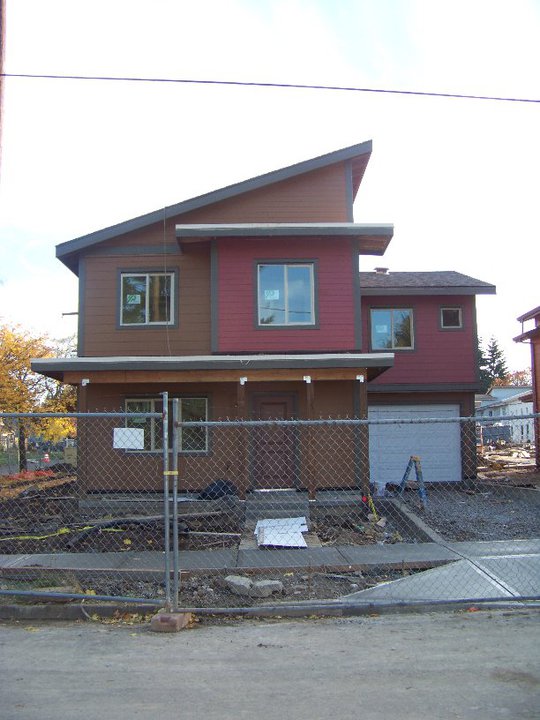
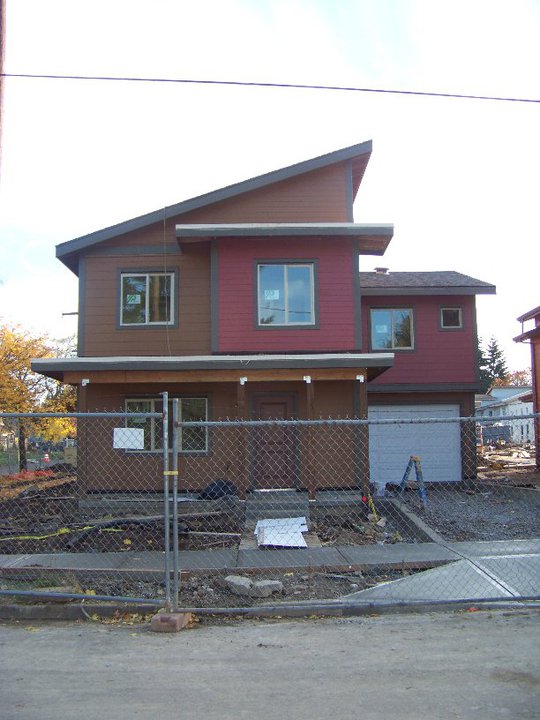
A big success this year was the Bridge Meadows Project supported by the Windermere Cronin & Caplan offices in Oregon. Windermere pledged to raise $250,000 over a four-year period to support this low-income housing project and surpassed the pledge mark this year. To see photos of the building in progress, go here.
The Windermere House
“The Windermere Team gift made it possible for children to know they are loved, families to thrive and elders to know their lives have meaning. Thank you for the generosity of the Windermere Team to make dreams come true. You are heros!” – Derenda Schubert, Executive Director, Bridge Meadows www.bridgemeadows.org
Upcoming Events
Last year the Windermere Foundation first annual video contest was a tremendous success, with 24 offices sending in final video of their community projects supporting the Foundation mission. Five winners were selected from the pool and their videos can be found on the Foundation YouTube channel. Each winning office was given a $2,000 prize to award to their Foundation organization of choice. We will be launching our second annual video contest later this year, so stay tuned for details.
Foundation Cards
Valentine’s Day is right around the corner, and if you are looking for cards for your friends and family that benefit the Foundation, look no further. The Foundation has teamed up with trueIMAGE Publishing to create beautiful cards with children’s art, and 10% of all proceeds benefit the Foundation! Pick from 12 different styles or order a variety pack. These cards are perfect year-round for personal notes as well as special occasions. To order go here: http://trueimagepublishing.com/store/index.php/cards.html
Thank you for your continuing support of the Windermere Foundation!
Your home is a reflection of your tastes, your lifestyle and your ambition, and many of us are regularly transforming our homes one way or another to fit our adjusting needs. Whether it is refreshing a room to fit your style, reorganizing a closet to accommodate the holiday excess, going green to save the planet and a couple of bucks or a complete renovation of your kitchen- homes take maintenance. Some projects come about on a whim, but if you have any plans to make your nest nestier here are some ideas for not getting too overwhelmed by the process- no matter how large or small the changes you want to make:
Get Organized: Whether it is your closets, books, pantry or your entire basement identifying the problem is the first step. Once you know where to focus your energy think about the purpose your space should fulfill, what you want it to look like and how you can keep it organized for the long-term. Sometimes getting organized is a matter of doing a little bit every day, or it is finding the right storage solution. Once you know what the problem is you can identify your steps, timeline and budget. Ultimately, getting rid of the clutter and holding onto items you love the most and use will keep your spaces easy to manage year round.
Do a little every day: Everyone has a different method to managing home madness; some have a weekly cleaning routine, some focus room by room others pile everything in the closet until they have to deal with it. If you have a goal of getting rid of old possessions and clutter, remodeling your home office or keeping your home cleaner spend five to thirty minutes a day working to achieve your goal. Here is a good idea for keeping your home clean by doing a little every day, rather than spending your weekend playing catch up.
Beautification/ Gardening: This year my big goal is to finally start our edible garden, but I have been overwhelmed by all the steps- from finding the right containers for the garden, deciding what to plant, when to start the starts, etc. Each region has different gardening challenges; the plants that thrive in Seattle are different than Spokane or San Diego so if you are planning on a garden make sure you familiarize yourself with local resources that will give you advice specific to your area. If you have any landscaping projects, keep in mind advance planning is paramount to making this affordable, timely and sustainable. If you are planning on putting your house on the market eventually, make beautification a priority and plan your exterior in a way that will increase the curb appeal of your home in the future.
Home Improvement Projects: If you have an ongoing list of home improvement projects, make sure you have the right tools in your toolbox and prioritize and plan. You don’t want to spend every weekend working on dripping faucets so create a routine. When looking at the year ahead, think about seasonality of the projects. It is important to know when to ask for help from a professional in order to have repairs done right in the first place to avoid putting yourself at risk or the safety of your home.
Go Green: If your resolution this year is to save money and the planet by reducing your carbon footprint there are projects you can do large and small. Start with an energy audit, that way you know where your energy is actually being used- you may be surprised. Easy fixes start with replacing light bulbs with CFLs and buying energy cords that limit vampire appliances to use energy when they aren’t in use. If you are replacing your old appliances with newer energy efficient models, make sure you check into recycling programs in your area. Go here for more green resolution ideas.
Renovations: Whether you are doing the renovations yourself or working with a contractor, projects of scale are never easy. Make sure you plan for the inconvenience of going without a kitchen as well as the details of putting your new kitchen in place. Also, before investing in a renovation, make sure you will get a return on your investment when you resell. If you are looking to increase the value and marketability of your home check out this list before you start tearing down walls.
This is the second post in our four-part home resolution series. Find the first article on how to identify and plan for your new year’s goals here.
The transition from the holidays and 2010 is behind us now, and we are well into the first month of the new year. Once 2011 officially started, I believe I heard a collective sigh of relief echoing throughout the following days. 2010 was a good year, much better than we had anticipated it being–for most of us anyway. 2011 feels like a beacon of light, illuminating the path to an auspicious year ahead; a new year, a new decade and what seems to be the worst is behind us.
For some people the New Year is just a party or another day, for others it is a time of reflection and resolutions, and for others it is a benchmark–a way to remember annual projects. I am not really a resolutions person myself; I figure if I do not make it, I cannot break it. I do, however, remind myself to up the ante on what I should be doing anyway and to plan for goals and projects ahead.
The hard part is sticking to the plan after the luster of the New Year starts to fade. For the rest of January we will be offering resources on making and keeping home resolutions, whether you want to update your current home, start saving and shopping for your first house or sell the home you have. Here are some tips to get you started making your home resolutions:
Resolutions 101
Everyone’s list of things to accomplish in the upcoming year is different, but one thing is pretty universal: most of us are too ambitious for our own good. The best thing to do is make reasonable goals for yourself and work towards accomplishing them one at a time. So be realistic. You may not renovate your entire home, but in all likelihood you can finish your kitchen remodel. You may start the year with plenty of momentum; just remember to pace yourself when it comes to big goals–it’s a marathon, not a sprint. Here are some tips to keep your goals in check:
Set a goal: I find it useful to create a bucket list of all the things I want to do and prioritize the most important, most time consuming and most expensive. Your goals and what you do to accomplish them will differ whether you are making your home more your style, saving to buy or preparing to sell. From this list you can prioritize the goals in order by urgency, seasonality, and difficulty. If you cannot fit all your projects in this year, move them to the rolling 2012 bucket list.
Make a budget: Do your research and make an informed budget. If you are looking to renovate, you will want to make a plan, check resources and make an informed budget. If you are looking to save up for your down payment on a home, you will want to assess how much you need to have saved in order to have enough to put down, and create a budget plan. Creating a budget is a great way to keep your finances in check and keep your projects as affordable as possible.
Set benchmarks: If you have a big goal, breaking it up into smaller bites is the best way to stay motivated. If you can do a little bit every week to keep your home clean and tackle an organization project, you are more likely to sustain the momentum than if you attempt a complete overhaul. Also, there’s one great thing about goal setting, budget making and project planning: the more you practice, the better you become!
Stay motivated: Your resolutions may already be going by the wayside now that we are caught back up in life-as-always. It may help to write out your resolutions in a central place–a document on your computer desktop, a list on your fridge, or benchmark reminders in your mobile calendar. The key is to keep your resolutions at the top of your mind so you can work towards them a little bit every day/week. For more advice on how to keep your momentum, go here.
The new year offers the chance of renewed energy to accomplish the goals from past years and start fresh projects. This is the first post in a four-blog series about setting home resolutions, come back to see more information on making your existing home more personal, and buying and selling your home in 2011.
A wise family member has always said you should plan to keep a house for at least seven years to ensure a good return on your investment. But owning a home is much more than a financial investment. It’s about family, about belonging, about security. Your home is your sanctuary. Especially during this time of uncertainty, it is comforting to come home every day.
During this most recent holiday season, our home was a gathering place for friends and family. Holiday gifts were the very least of it. Rather, it was about the gift of truly feeling at home: a crowd in the kitchen, a full guest room, kids in sleeping bags in the family room, extra shoes in the front entryway, board-game marathons at the dining room table, commotion, clutter and chaos. Memories being made.
Over the years we’ve painted and repainted, remodeled and replanted – all to satisfy our desire to make our home “just right.” It will never be perfect, but it will always reflect who we are, and provide a sense of belonging and well-being.
Beyond improving our own home, we’ve also made an investment in our neighborhood. We have neighbors who have become good friends – and remained so even after some have moved away. We take pride in our community, and we do what we can to make it vibrant and safe, and a welcoming place for everyone.
Now that the holiday decorations are down, only the memories remain. But our home will continue to be a gathering place throughout the year, for occasions big and small, special and ordinary. Making memories is a year-round thing.
As we start this new year, we’re looking ahead with hope and optimism. There will be challenges for sure – what they’ll be we can’t even imagine. But we are sustained by the idea that whatever’s going on, we can go home. And the emotional value of that is priceless.
As we approach the end of 2010, I like to pause and reflect on the events of the year relative to both the economy as a whole, and the real estate markets in particular.
Of course, the year is not quite over but, as this will be my last post in 2010 I thought it would be good to look back at the year that is rapidly disappearing in the rear view mirror, and also to ponder what 2011 may bring.
The U.S. economy has a very big influence on a great number of things; from jobs, housing, savings and general sense of well being. . There is no question the last few years have been tough on many people. The economy has been improving over the past few months, and we should see continued improvement over the next year. If you are considering selling your home or making a purchase, you may find the following economic indicators helpful to your planning.
GDP – The Gross Domestic Product represents the value of goods and services that are created inside the U.S. The third quarter of this year saw our economy expand by 2.5 percent annually – below the 3 percent that is indicative of solid expansion. I anticipate that, firstly, we will not drop back into recession in 2011, but that growth will remain under par for the first half of the year. However, the quantitative easing that is currently underway will start to have an effect in the second half of the year, and we will likely end 2011 at an expansion rate of 2.8 percent. The GDP is an indicator of standard of living. As this increases, people will generally have more money to spend and enhanced peace of mind.
Employment – From peak employment of 137.9 million in December 2007, to a trough of 129.6 million two years later, this country lost 8.4 million non agricultural jobs. Since that time, we have recovered somewhat but are still shy by 7.4 million positions. Unemployment remains stubbornly high (9.8 percent in November) and finding work is far from easy. I believe that next year will see the overall unemployment rate drop, but the improvement will be slow; if we end the year at around 8.5 percent I will be happy. Businesses are still wary of hiring until they see tangible signs of improvement and, even when they do, I don’t anticipate they will head off on a big hiring spree. Layoffs will continue to decline and virtually peter out by the end of 2011. As unemployment rates slowly drop, homeowners will be more solvent, easing fears of foreclosure and increasing confidence in the market place.
Real Estate – The real estate market has certainly showed that not all markets are created equal. Modeling price changes across the country is no easy task – forecasting the effects of loan modifications alone throws calculations into a tailspin – but I expect that the hardest hit markets (Phoenix, Las Vegas, etc. have likely bottomed. Other markets (such as Houston) have some way to go yet. I am looking for an additional 5 percent decline across the U.S. before I will call a bottom for home prices. We will likely see this by the third quarter of 2011.
Consumer Confidence – There has been a marked improvement in consumer confidence in recent months. A better 2011 is clearly showing up in the numbers. With a better outlook on the horizon and incremental improvements all around, we are all starting to feel better about the recovery and we will see this reflected in the market place.
Inflation – There are two things that are required to be in place for inflation to take foot– wage growth and a stable employment situation– and we have neither. I am not concerned at all over inflation in the short-term and believe that core inflation will stay below 1 percent in 2011. With inflation and interest rates closely tied, minimal inflation will be beneficial to home buyers and will keep the cost of home improvements from becoming prohibitive. That said, it is likely that the Fed’s asset purchase program will expire in June.
Interest Rates – This has been a bit of a touchy subject in recent weeks as rates have been rising despite the Federal Reserve’s decision to continue to buy treasuries – which should have allowed rates to remain very low. Why is this? Believe it or not, it’s because investors are seeing too many positive signs in the economy and are leaving the relative safety of treasuries for the greater yields found in the equity markets. I think that we will see some stability in rates early in the year and that they will not head drastically higher. That being said, rates will trend higher in 2011. This will play into the housing markets for the obvious reasons.
So there we have it! I believe that the light at the end of the tunnel is, in fact, the end of the tunnel and not a train heading my direction! Economic recoveries, and certainly recoveries in real estate, are not all created equal and our current situation is certainly not as dire as it has been, but neither are we out of the woods yet. I am, as ever, hopeful that the U.S. will show resilience and that better days are, indeed, ahead.
What are your reflections on 2010? What are you most looking forward to in 2011?
Best wishes for the holidays and here’s looking forward to a healthy and happy 2011!
I recently read this great story about the Kansas City Secret Santa. Every year for twenty-six years, an anonymous man dressed in red or a Santa disguise would hand out $100 bills to people in need of help. His identity was disclosed in 2006, shortly before he died of cancer. People all over the world, inspired by his story, are now are carrying on the tradition of benevolent Santa. This story made me think about the amazing stories we hear every day at the Windermere Foundation.
We hear stories of families in tremendous need, stories of people’s willingness to give, and the joy and surprise of receiving support when other doors have closed. We hear stories that are heart-wrenching, awe-inspiring, hopeful and chill-inducing. There are Secret Santas amongst us; we have seen a few at work. We are indebted and inspired by the people we work with and their great capacity for giving. We feel pretty lucky to do what we do, and we’re grateful for all the Windermere agents that make the Foundation possible.
Families in need come to the Foundation through various means. Some families are referred to us directly through social service agencies; some receive support through organizations with which our offices partner as a part of their commitment to community; and sometimes we hear about a family going through so much and we reach out ourselves. The particular story I want to share with you must have been kismet.
Christine Wood, our Foundation director, received an email from a friend last week — a forward from a local teacher she knew who was the kindergarten instructor to the younger of two sisters. The teacher had become concerned about her young student missing so much school, and upon inquiry she found out the older of the two sisters has been going through a grueling four rounds of chemotherapy over the last seven months.
Their mother, who generally cleans houses to support her two young daughters, has lost her steady job in order to ensure her oldest daughter can make it through treatments at Children’s Hospital. She is a single mother and has few resources to support her daughters, and as a result of their circumstances they are homeless.
They have tried every route of support, but have slipped through the cracks of various social services — likely due to the increased need of services as well as reduced resources. The family has moved several times and has had temporary housing with friends and Ronald McDonald House; but they are primarily living out of their car. Due to this instability, the youngest daughter has had to move schools three times.
In October the older sister, Lizeth, was featured on a KOMO news special when her Grandmother fulfilled her wish by coming to visit from Mexico. Lizeth has a very rare form of Leukemia. She received a bone marrow transplant this week, increasing her chance of survival; however the prognosis is still not great.
This family’s need for support is large. The immediate needs have been a working car and money for rent and basic needs. Early this week, we contacted one of our own secret Santas, who has consistently opened their heart to Foundation causes and provided when we couldn’t. As luck would have it, they recently acquired a new car and were preparing to sell their lightly used car THAT DAY. Within two days, we were able to deliver a new car to this wonderful family in need.
This was a tremendous and inspiring gift from one of our own agents, and one outside the scope of what most of us can give. But support at any level can make a tremendous difference for needy families, and we are truly grateful to all of the secret Santas who have reached out to help. If you too are interested in helping this family, donations can be made at Key Bank under the Lizeth Gonzalez Fund or through the Windermere Foundation (please indicate that you would like your donation designated for the Lizeth Gonzalez fund). Our goal is to ensure this family has the financial support they need, as well as some holiday cheer.
Of course, this is just one of many heart-wrenching stories of need, and just a few of the countless ways in which help is given throughout the year. For example, many Windermere offices participate in an annual adopt-a-family program, purchasing gifts, groceries, basic-need items and more for families going through hard times. We are grateful for all the generous support our offices, agents and neighbors provide for our communities.
Stories like these truly give us a sense of hope. Particularly this time of year, we are inspired by the secret Santas amongst us.
Thank you for your support of the Windermere Foundation! Have a wonderful Holiday and a Happy New Year.
In December of 1900, The Ladies Home Journalpublished an article titled “What May Happen in the Next Hundred Years.” It is fascinating. The author, John Elfreth Watkins, interviewed the “wisest and most careful men in our greatest institutions” and arrived at 29 predictions they felt would happen by 2001.
One of their predictions was titled “Man Will See Around the World.” It read, in part: “Persons and things of all kinds will be brought within focus of cameras connected electrically with screens at opposite ends of circuits, thousands of miles at a span.”
To me that sounds like the Internet.
It is December again, and beyond all of the holiday festivities it is also prediction season. It’s that time of year when prognosticators everywhere wax eloquent on what might happen next year and beyond. Looking back, history is full of predictions from silly to bizarre, and from incredibly wrong to amazingly correct.
Of course, the economy is continually predicted to implode, explode, crash and skyrocket — sometimes in the same year. In early 1929, a Yale economics professor said, “Stocks have reached a permanently high plateau.” Oops.
Then there was William Thomsen, who was the Royal Society President in the late 1890s. He hit the prediction trifecta: “Radio has no future.” “X-Rays are clearly a hoax.” “The aeroplane is scientifically impossible.”
So history has proven that it’s a tricky business to predict anything. Yet much has been written this year about the housing industry and its demise. As someone who works in this industry, I do not believe the naysayers. In fact, I have history on my side.
As this year winds down and we look ahead, I think about the famous Kierkagaard quote: “Life must be understood backwards; but… it must be lived forward.” Predictions will always be just that. But if you study history, you can usually find data that will help you understand the future.

 Facebook
 X
X
 Pinterest
 Copy Link