Facebook
 X
X
 Pinterest
 Copy Link

Hi, I’m Jeff Tucker, principal economist at Windermere Real Estate, and these are the numbers to know right now.
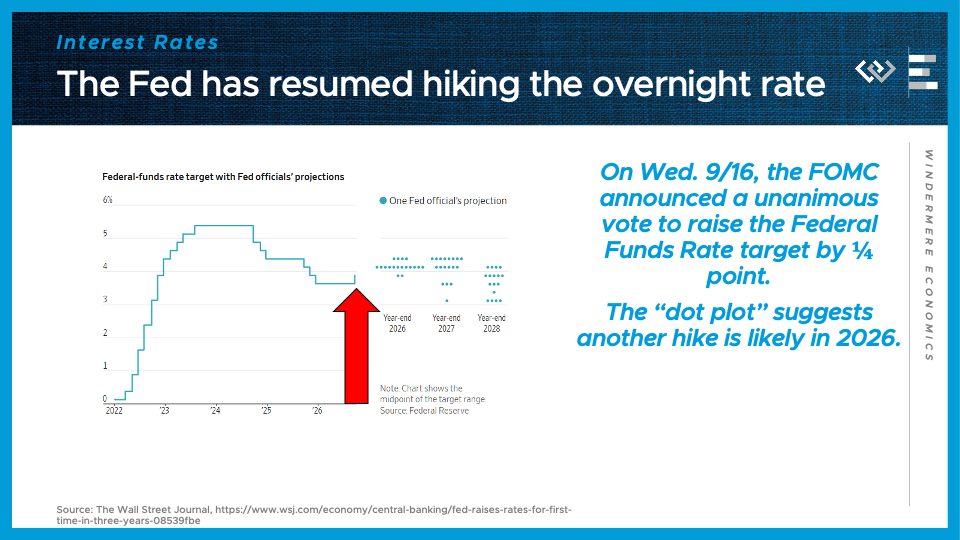
The first number to know this month: a quarter point. That’s how much the Federal Reserve Open Market Committee just voted to raise their target for the overnight Federal Funds Rate, announced at their meeting on September 16. It’s the first hike since 2023, when the Fed completed a dramatic hiking cycle from essentially 0% to over 5%, and it brings the upper end of their target range back up to 4%. The Summary of Economic Projections from committee members suggests it’s likely not the last hike we’ll see from the Fed this year, as the median member expects the appropriate rate by the end of the year to be another quarter point higher.
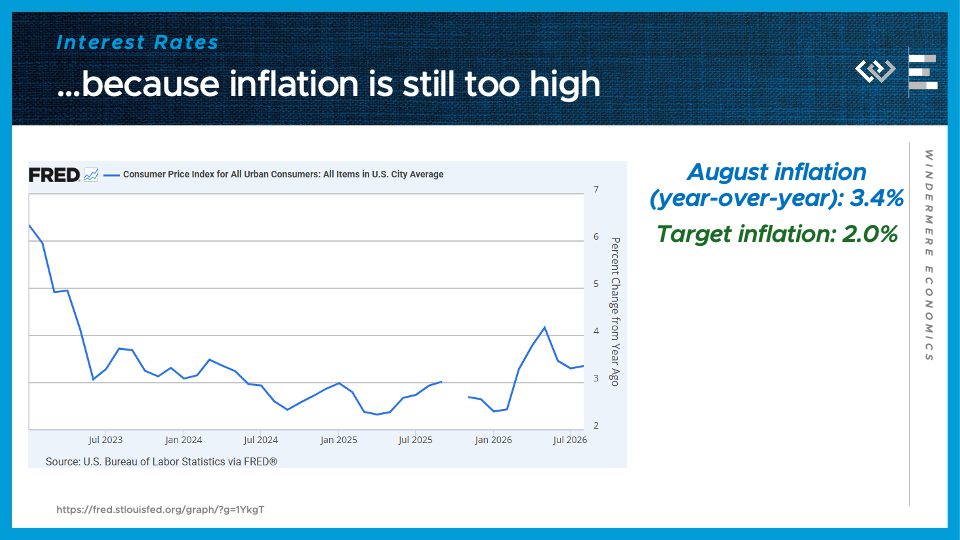
Why is the Fed pivoting from cutting to hiking? One major reason is our next number to know: the inflation rate, which stood at 3.4% year-over-year in August, or well above the Fed’s target of 2%. Since economic data from the labor market and overall economic growth have all looked stronger this summer, the Fed is understandably turning their attention back to fighting inflation, as the new chairman Kevin Warsh promised when he was appointed this year.
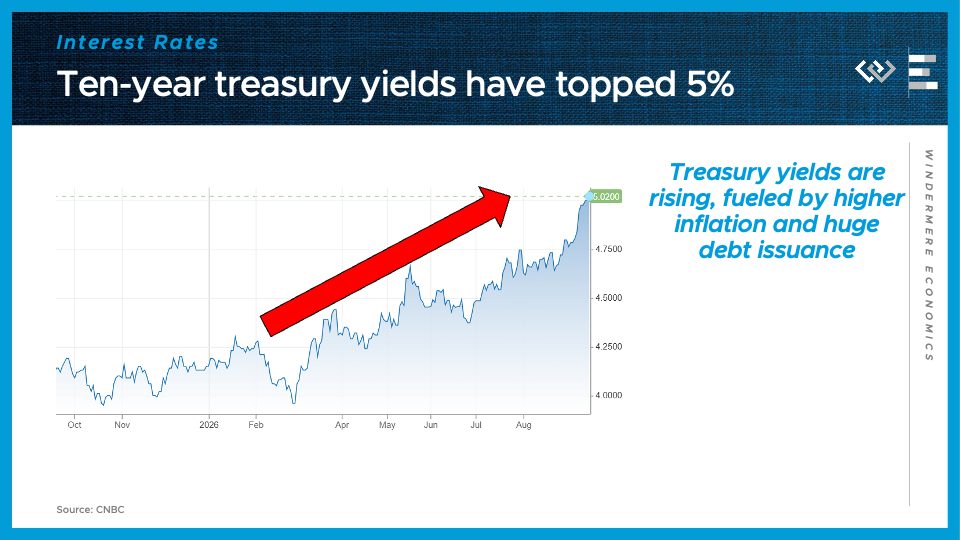
The next number to know this month: 5%. That is the yield that Ten-Year Treasuries reached on September 15, now the highest in two decades. All around the world, we are seeing higher borrowing costs, thanks to higher inflation, a strong investment boom driven by AI, and huge amounts of debt issued by governments running deficits.
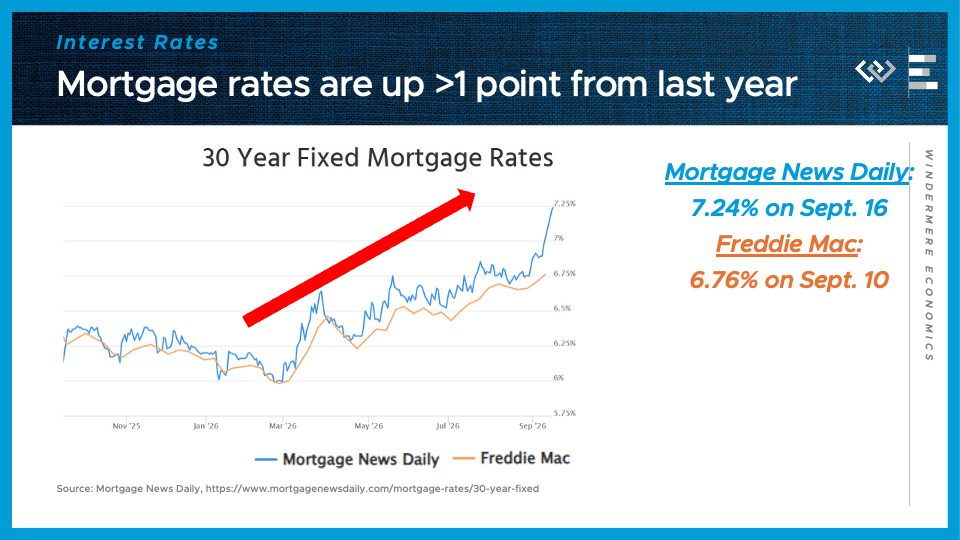
The ten-year Treasury is usually a benchmark for mortgage rates, and now, depending on the source, mortgage rates stand as much as a full point higher than last year: at roughly 7 and a quarter percent, according to Mortgage News Daily. There is no question that high mortgage borrowing costs are slowing housing market demand this fall.
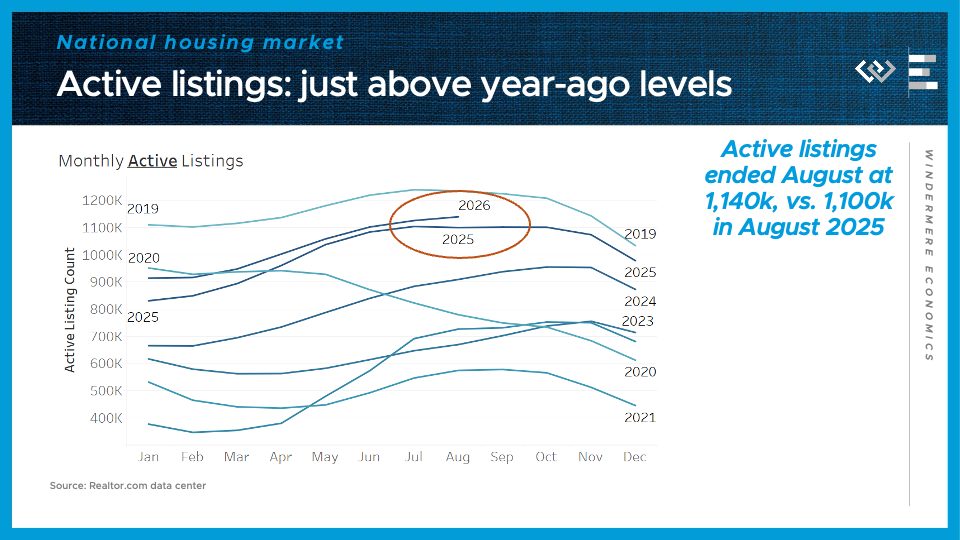
The fourth number to know: 1,140,000. That is how many active listings were on the market nationally at the end of August, according to Realtor.com. That is just above the 1.1 million active listings in August of last year.
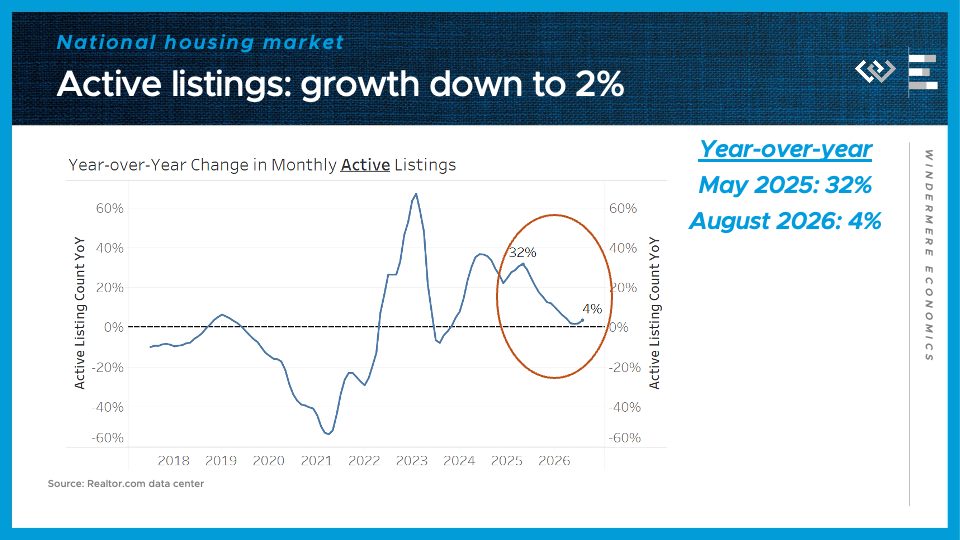
You can see a bit of a gap opening up, and that’s reflected in our next number: 4%, which was the year-over-year growth in active listings. It may represent a turning point, where buyers are shying away, leaving a growing pool of inventory on the market, which should cool down price appreciation this fall.
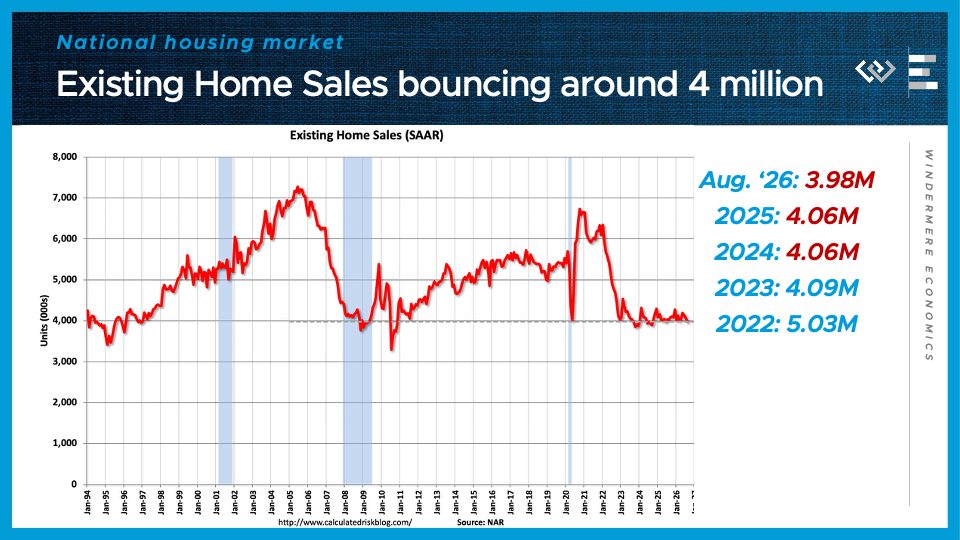
Finally, the NAR reported disappointing August existing-home sales at a 3.98 million annualized run rate, or slightly below the pace it was running earlier in the summer. That’s another sign that the run-up in mortgage rates is beginning to drag a little bit on home purchase demand. Looking forward, the combination of diminished purchase demand and higher inventory should mean extra favorable conditions for those buyers who can afford to forge ahead with purchases this fall. But it means a little bit more difficult selling conditions for those 1.14 million folks trying to sell a home right now.